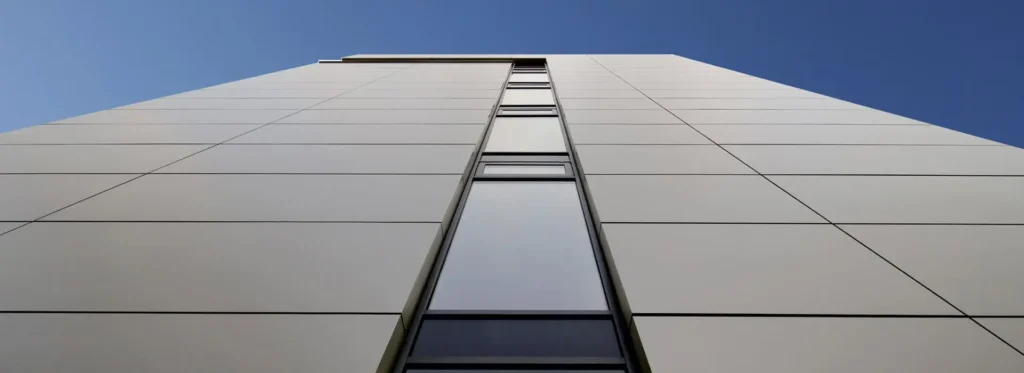
An aluminum curtain wall is a non-load-bearing exterior wall system fixed to the outside of a building’s structural frame. It carries no floor or roof loads.
Its job is to keep weather out, control heat transfer, and give the building its exterior appearance.
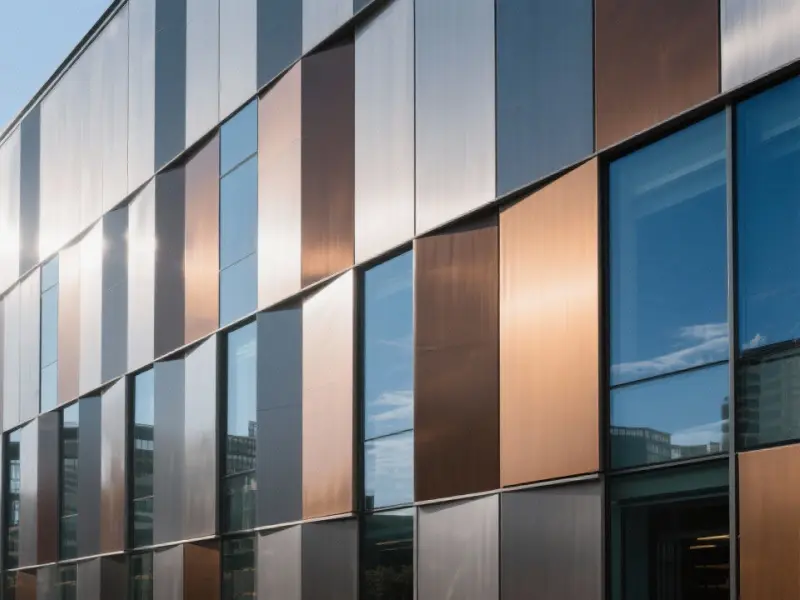
The frame is built from extruded aluminum profiles. Glass, aluminum panels, stone, or composite infill fills the openings between the frame members. The system is fixed to floor slabs or structural columns at each level.
Aluminum is the standard frame material for curtain walls worldwide. It is lightweight, corrosion-resistant, easy to extrude into complex profiles, and accepts both anodized and powder-coated finishes in any color.
How a Curtain Wall Differs from a Storefront
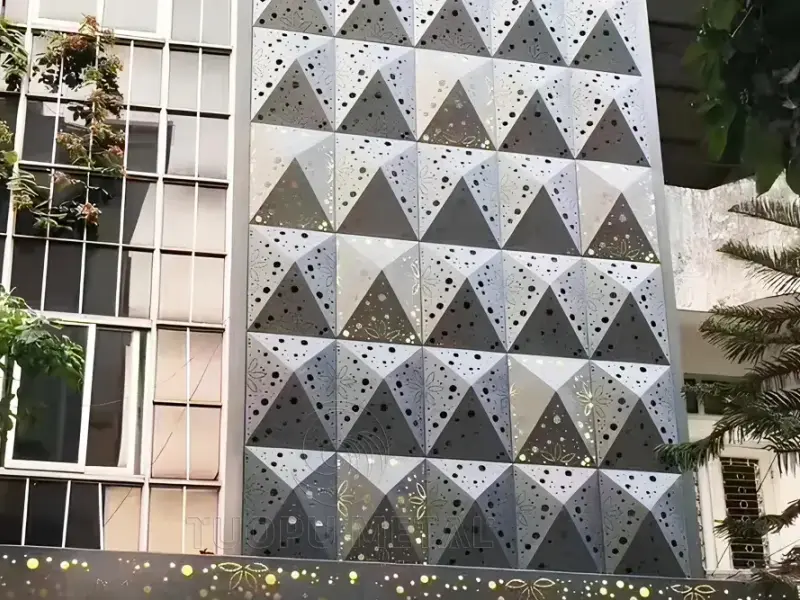
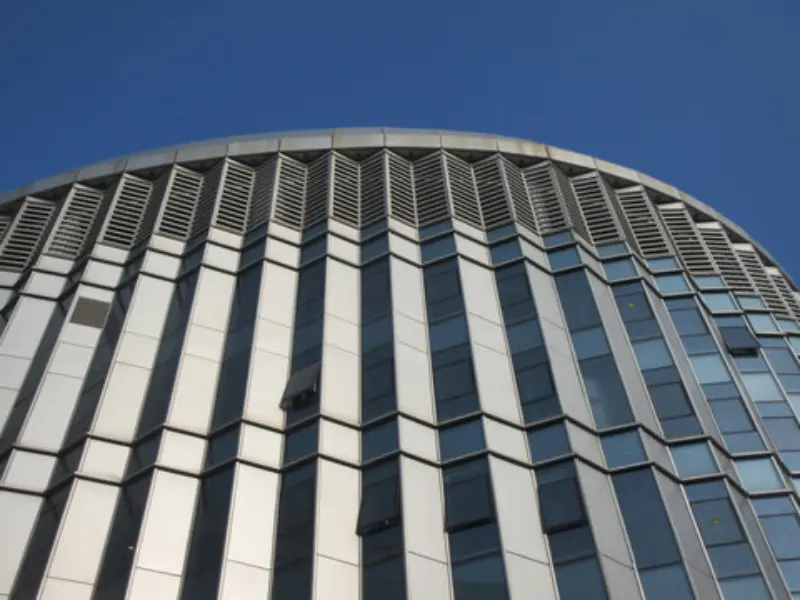
Many buyers confuse curtain wall with storefront. They look similar but they are built differently.
| Feature | Aluminum Curtain Wall | Aluminum Storefront |
|---|---|---|
| Height | Multi-story — spans floor to floor | Single story — ground level only |
| Load | Non-load-bearing, spans between floors | Sits on a sill, supported at base |
| Water management | Drained and pressure-equalized | Simple gasket seal |
| Wind resistance | High — engineered for full building height | Moderate — ground level only |
| Thermal performance | Full thermal break standard | Partial or no thermal break |
| Glazing size | Large, engineered lites | Smaller standard sizes |
| Cost | Higher | Lower |
| Typical use | Office towers, high-rise buildings | Retail, low-rise commercial, entries |
A storefront is a simpler, lower-cost system for ground-level use. A curtain wall is a full engineered system designed to handle wind load, thermal movement, and water at any height.
Types of Aluminum Curtain Wall Systems
There are several distinct curtain wall system types. Each suits different building types, budgets, and design goals.
Stick-Built Curtain Wall
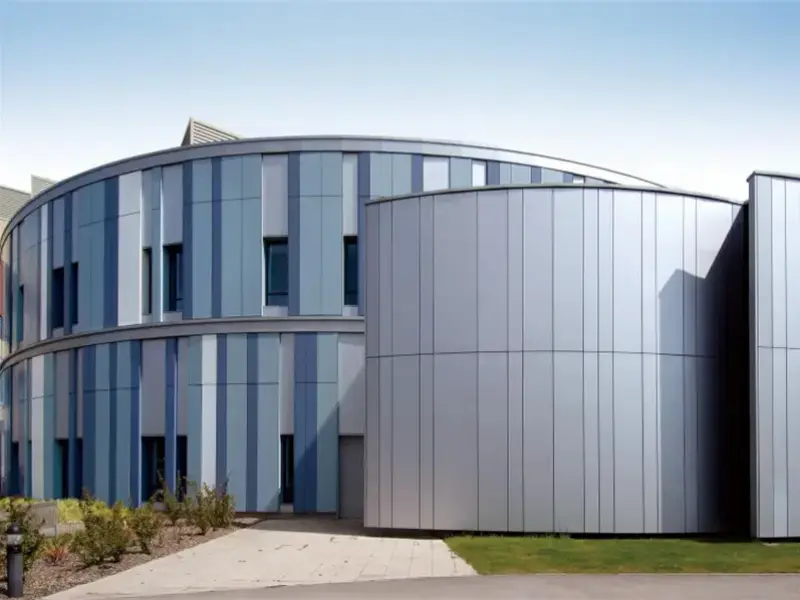
The most common type for mid-rise and commercial buildings. Individual aluminum mullions and transoms are shipped to site and assembled piece by piece. Glass or panel infill is installed after the frame is in place.
Common on buildings up to 20–30 stories
Frame members fixed to building structure one at a time
Flexible for irregular building geometry
Lower factory cost, higher site labor cost
Unitized Aluminum Curtain Wall
Factory-assembled units — typically one floor height × one bay wide — are shipped complete and stacked on the building facade. Each unit locks into the one above and below with an interlocking joint.
- Units assembled and glazed in controlled factory conditions
- Fast site installation — no scaffolding-intensive frame work
- Higher quality control than stick-built
- Better suited for repetitive high-rise facades
- Higher factory cost, lower site labor cost
| Feature | Stick-Built | Unitized |
|---|---|---|
| Assembly location | On-site | Factory |
| Site speed | Slower | Fast |
| Quality control | Variable | High and consistent |
| Cost structure | Lower material, higher labor | Higher material, lower labor |
| Best for | Low to mid-rise, irregular shapes | High-rise, repetitive facades |
| Weather sealing | Joint-sealed on site | Pre-tested interlocking joint |
| Typical panel size | Custom cut on site | 1 floor × 1 bay module |
Glazed Aluminum Curtain Wall System
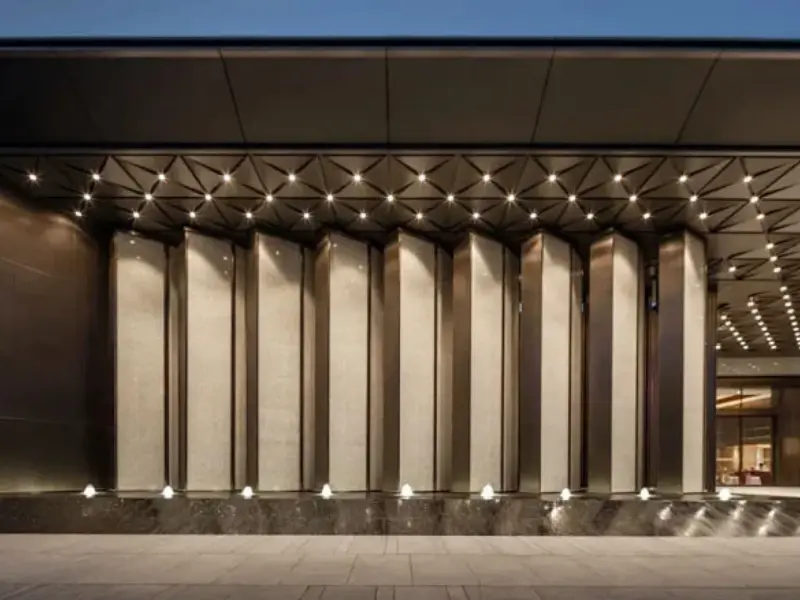
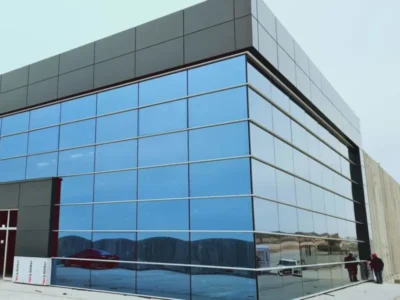
The glazed aluminum curtain wall is the most common commercial building facade type. Glass infill panels fill the frame openings. The glass can be single, double, or triple glazed depending on the thermal and acoustic requirements.
The aluminum frame is designed to hold the glass with pressure plates, structural silicone, or a combination of both. The glazed aluminum curtain wall system handles thermal expansion, condensation drainage, and wind-driven rain through a pressure-equalized rainscreen design.
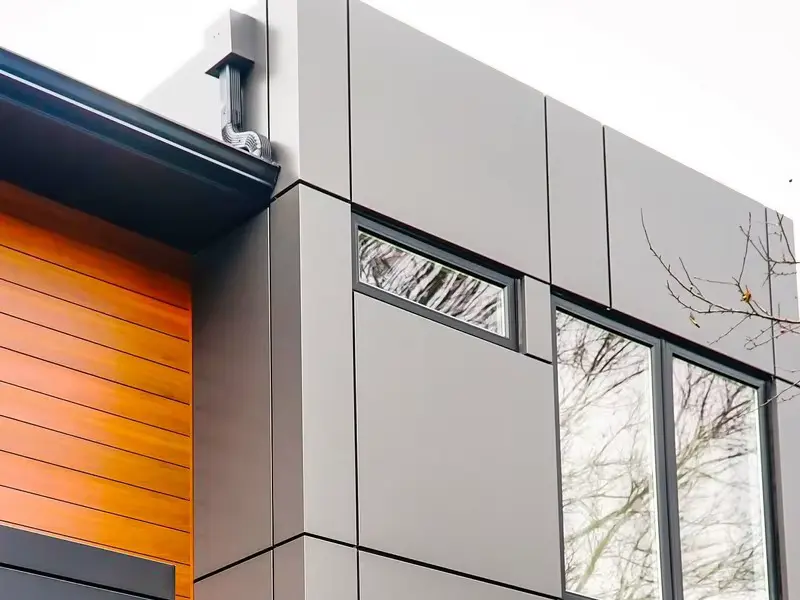
Aluminum Panel Curtain Wall
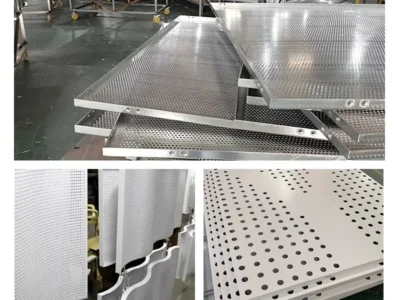
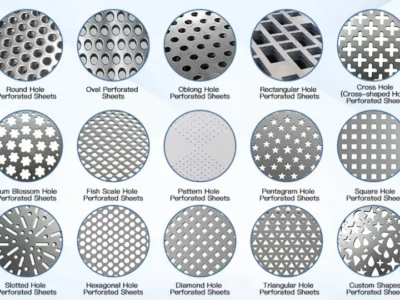
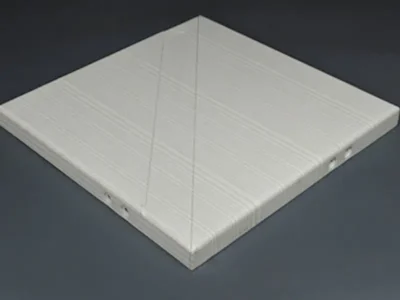
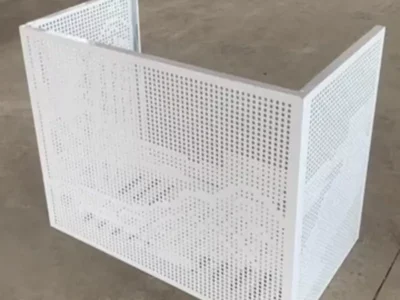
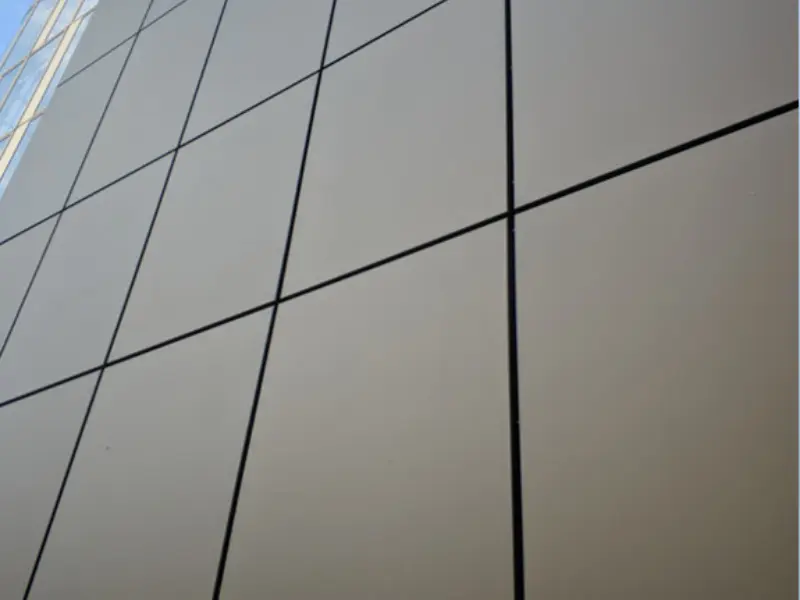
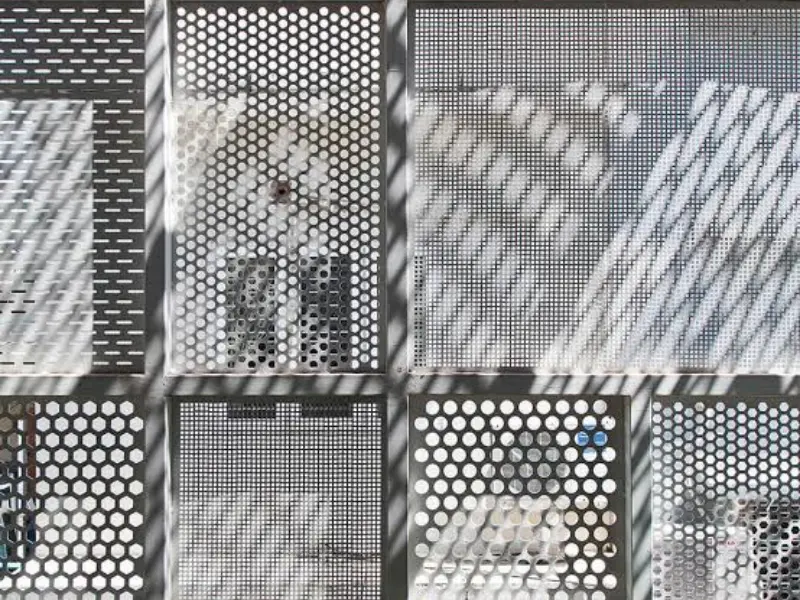
Opaque aluminum panels replace glass in some or all of the infill openings. Panel types include:
- Aluminum composite panels (ACP)
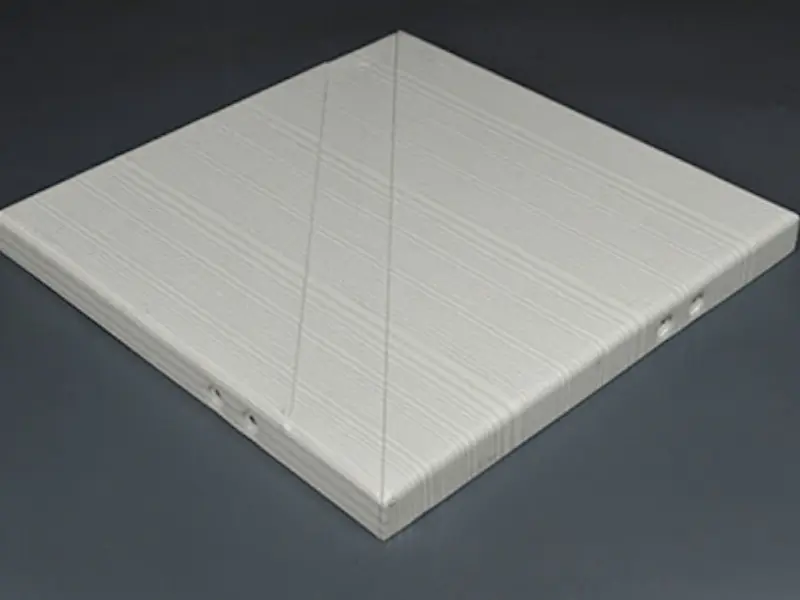
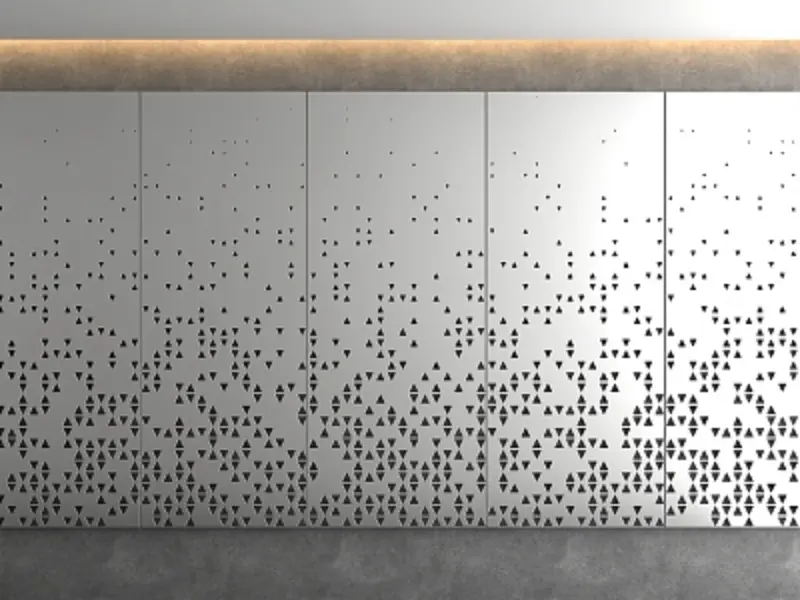
- Solid aluminum panels (2–6 mm)
- Aluminum honeycomb panels
- Anodized aluminum flat panels
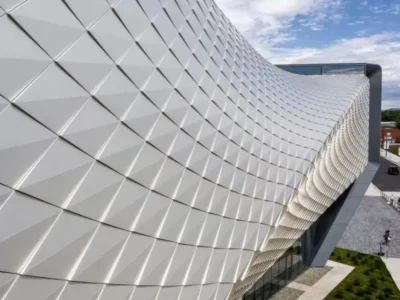
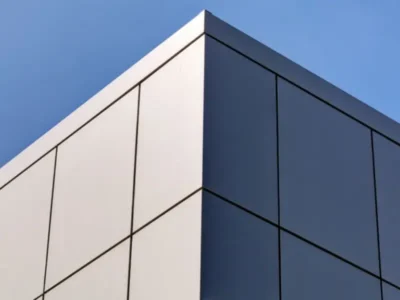
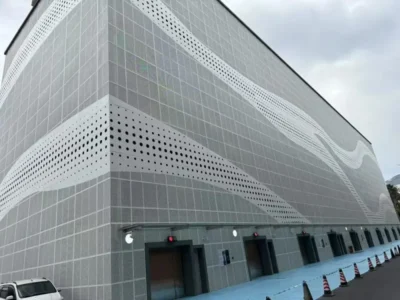
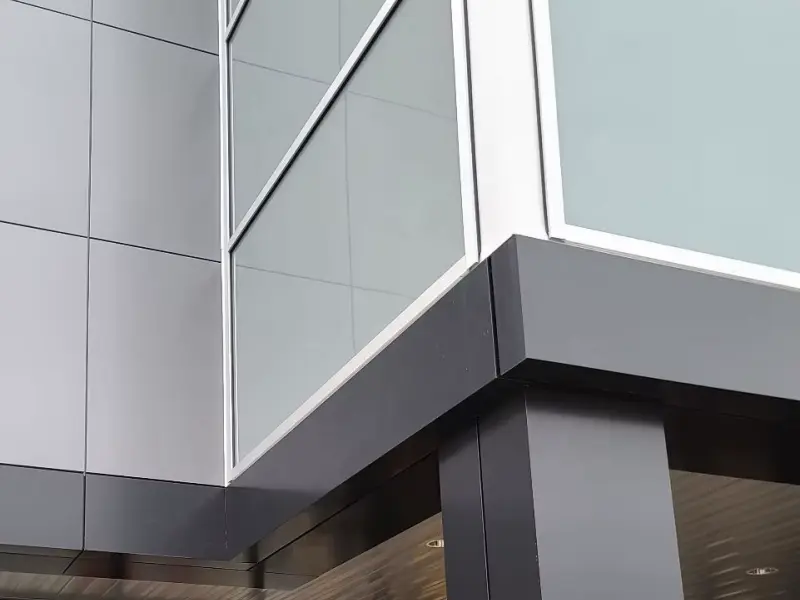
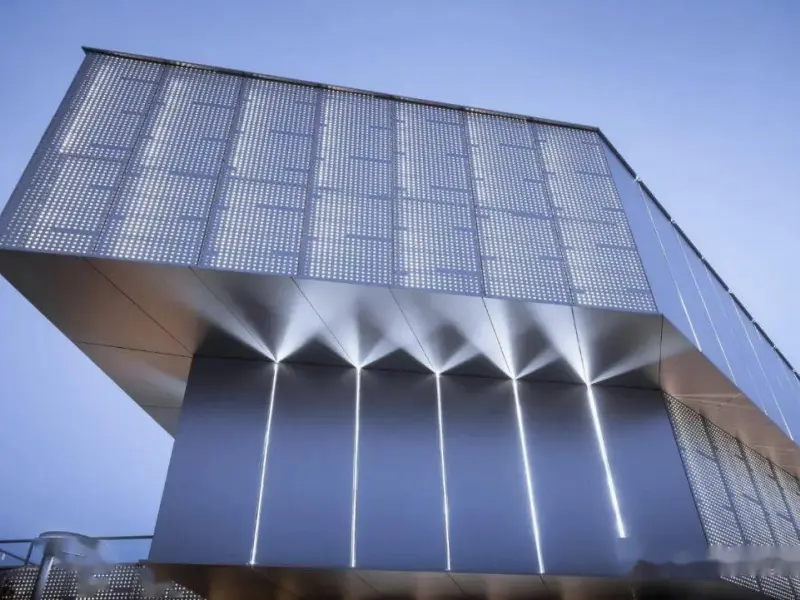
Panel curtain walls are used on spandrel areas between floors, on building cores, and on facades where privacy or solar control requires an opaque skin.
Aluminum-Framed Curtain Wall with Mixed Infill
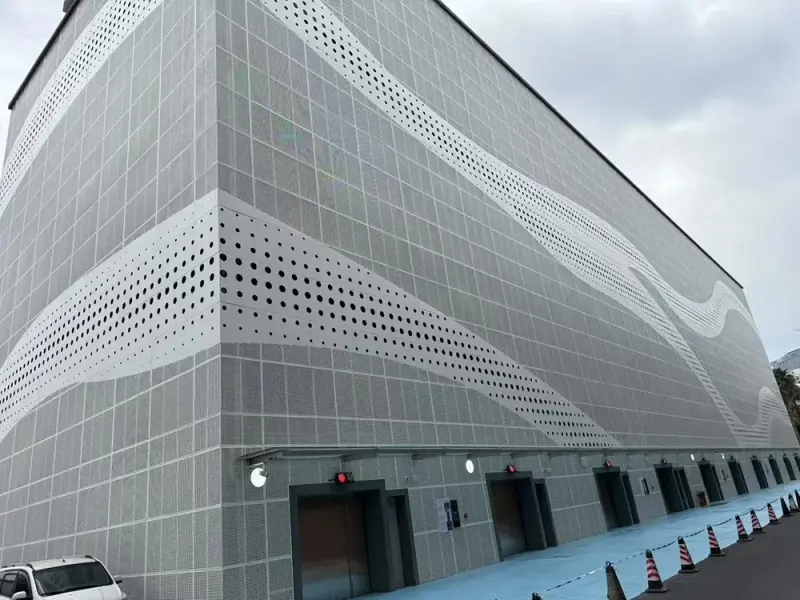
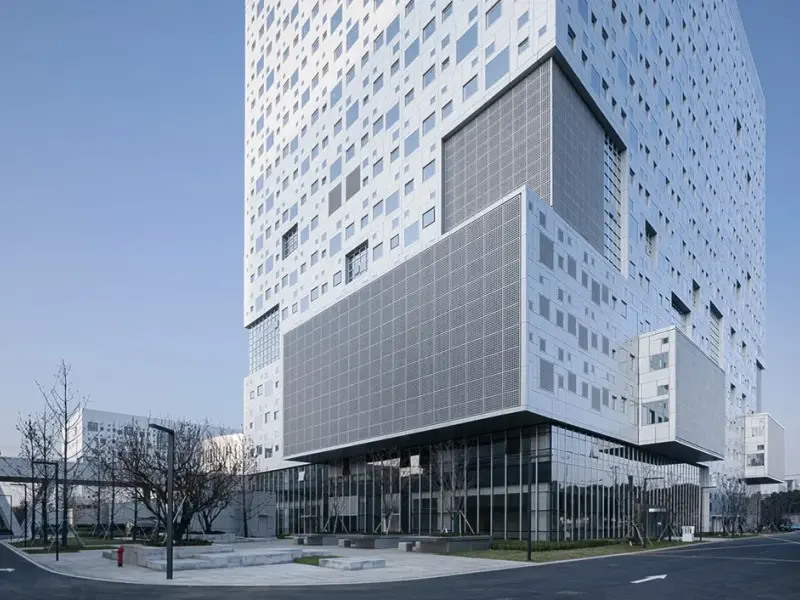
A single curtain wall frame system can carry both glass and panel infill in the same grid. This is the standard on most commercial office buildings — glass vision zones at eye level, panel spandrels at floor-to-ceiling zones.
Anodized Aluminum Curtain Wall
The frame profiles are anodized rather than powder-coated. Anodizing is an electrochemical process that converts the aluminum surface into a hard oxide layer. It is harder than paint, more resistant to scratching, and does not chip or peel.
- Standard anodize classes: Class 1 (AA-M12C22A41) for exterior
- Common colors: clear anodize (bright silver), champagne, bronze, dark bronze, black
- Anodize thickness: 18 microns minimum for exterior Class 1
- Preferred for coastal environments and high-traffic areas
Aluminum Curtain Wall Profiles
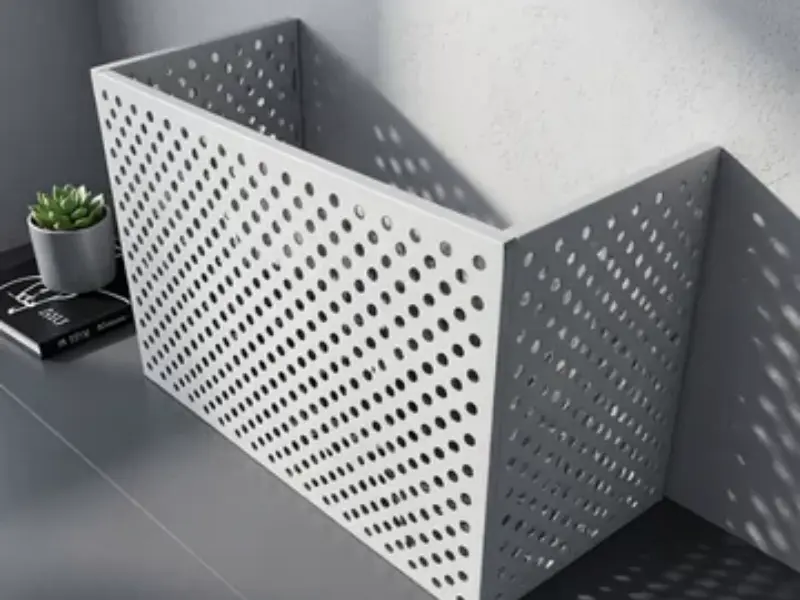
The aluminum curtain wall frame is made from extruded profiles. Profile depth and shape determine the system’s structural capacity and visual appearance.
| Profile Type | Depth Range | Key Function |
|---|---|---|
| Mullion (vertical) | 50 – 200 mm | Carries wind load to building structure |
| Transom (horizontal) | 50 – 150 mm | Supports glass weight, separates lites |
| Pressure plate | 15 – 40 mm | Clamps glass into frame |
| Cover cap | 15 – 50 mm | Covers pressure plate, gives visual finish |
| Thermal break insert | 14 – 34 mm | Polyamide bar that separates inner and outer frame |
| Sill / head closer | Custom | Closes bottom and top of frame at floor/ceiling |
| Corner mullion | Custom | 90° or custom angle corner detail |
| T-mullion | Custom | In-line mullion for two-sided glass support |
Most profiles are extruded from 6063-T5 or 6063-T6 alloy. These deliver a smooth, consistent surface finish and extrude well into complex shapes.
Alloy & Temper for Curtain Wall Profiles
| Alloy | Temper | Tensile Strength | Key Property | Use |
|---|---|---|---|---|
| 6063 | T5 | ~185 MPa | Good surface, standard extrusion | Most curtain wall profiles |
| 6063 | T6 | ~215 MPa | Higher strength, same surface | Heavy mullions, structural members |
| 6061 | T6 | ~310 MPa | High structural strength | Long-span mullions, high-wind zones |
| 6005A | T5 | ~260 MPa | Between 6063 and 6061 | Medium structural demand |
| 6082 | T6 | ~310 MPa | European structural standard | EU market structural profiles |
For standard commercial buildings, 6063-T5 covers most requirements. For high-rise buildings with large glass lites and high wind loads, 6063-T6 or 6061-T6 is specified for the main mullion members.
Curtain Wall Section & Detail Reference
Good curtain wall detail design prevents water ingress, controls thermal bridging, and allows for thermal movement.
Thermal Performance Details
| Detail | Standard Requirement |
|---|---|
| Thermal break | Polyamide PA66 GF25 insert, min 14 mm depth |
| U-value (typical double-glazed) | 1.5 – 2.0 W/m²K |
| U-value (triple glazed, enhanced) | 0.8 – 1.2 W/m²K |
| Condensation control | Drained cavity, thermal break on frame |
| Air permeability class | Class 4 (EN 12152) |
| Water tightness class | Class E1050 (EN 12154) |
| Wind resistance class | C5 (EN 13116) |
Movement & Fixing Details
| Detail | Standard Approach |
|---|---|
| Anchor bracket type | Two-point anchor — fixed and sliding |
| Movement allowance per floor | ±6 – 12 mm vertical |
| Horizontal movement | ±3 – 6 mm |
| Slab edge clearance | 25 – 50 mm |
| Bracket material | Stainless steel or hot-dip galvanized |
| Fixing bolt | M12 – M20 stainless steel |
Aluminum Curtain Wall Design Guide — Key Parameters
When specifying a system, these parameters need to be defined before detailing begins.
- Building height and wind zone classification
- Seismic zone requirements
- Thermal performance target (U-value, condensation risk)
- Fire resistance rating at spandrel zones
- Glazing specification (type, thickness, coating)
- Panel infill type and thickness at spandrel
- Frame finish — anodized color and class, or powder coat color
- Module size (mullion spacing, floor-to-floor height)
- Drainage detail preference (open joint or silicone sealed)
- Deflection limit for mullions (typically L/175 or L/200)
Application Areas
Commercial Office Buildings
- High-rise tower facades with full-height glass
- Mid-rise office building exteriors
- Corporate campus buildings
- Mixed-use podium facades
- Co-working and business park buildings
Hospitality & Retail
- Hotel exterior glazed facades
- Shopping center glass frontages
- Luxury retail store entrances
- Airport terminal glazed walls
- Convention center and exhibition hall facades
Healthcare & Education
- Hospital atrium and corridor glazing
- University library and public building facades
- Research facility and laboratory exteriors
- School and college multi-story buildings
Transport & Infrastructure
- Airport departure and arrival hall facades
- Train station and transit hub glazed walls
- Ferry terminal and port building facades
- Multi-story car park glazed stair and lift towers
Residential & Mixed-Use High-Rise
- Luxury residential tower facades
- Serviced apartment glazed exteriors
- Mixed-use podium retail and residential tower
- Student housing blocks
Cultural & Civic Buildings
Sports arena glazed facade sections
Museum and gallery exterior glazing
Government office and civic center facades
Library and community center buildings
US Aluminum Curtain Wall Market
The US aluminum curtain wall market follows AAMA (American Architectural Manufacturers Association) standards. Key standards include:
| Standard | Scope |
|---|---|
| AAMA 501 | Methods of test for exterior walls |
| AAMA 502 | Voluntary specification for field testing |
| AAMA 2605 | PVDF coating — high performance |
| AAMA 2604 | Powder coat — standard performance |
| AAMA 611 | Anodized finishes |
| ASTM E283 | Air infiltration testing |
| ASTM E331 | Water penetration testing |
| ASTM E330 | Structural performance testing |
| NFPA 285 | Fire propagation on exterior walls |
| AAMA CW-DG-1 | Aluminum curtain wall design guide manual |
The AAMA aluminum curtain wall design guide manual (CW-DG-1) is the primary reference document used by architects and engineers across North America for curtain wall specification and detailing.
What Our Factory Provides
Our facility manufactures a full range of aluminum products for curtain wall and facade applications. We work directly with curtain wall fabricators, facade contractors, developers, and architectural suppliers worldwide.
Aluminum Extrusion for Curtain Wall Profiles
We extrude curtain wall mullion, transom, pressure plate, cover cap, anchor bracket, and sill profiles from 6063-T5 and 6063-T6 alloy.
Profiles are available in standard curtain wall shapes and custom designs produced from client drawings. Minimum billet diameter is 7 inch. Maximum circle size is 450 mm. We produce complex multi-void thermal break profiles and standard solid sections.
Aluminum Sheet & Panel for Infill
We supply aluminum sheet and fabricated panels for spandrel and panel infill applications. Products include:
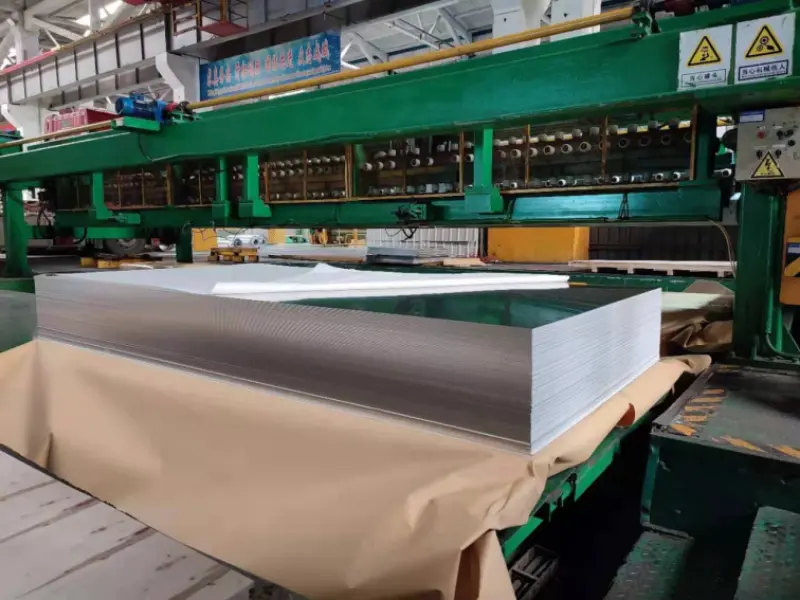
- Solid aluminum panels: 2 mm, 3 mm, 4 mm, 5 mm thickness in alloy 3003, 5052
- Aluminum composite panels (ACP): PE core and A2 mineral core, 4 mm and 6 mm
- Aluminum honeycomb panels: 10–50 mm total thickness, large format
- Pre-painted sheet: PVDF coat and polyester coat in full RAL range
Aluminum Curtain Wall Surface Finishing
We offer in-house surface finishing for both profiles and panels:
- Anodizing: Class 1 (18 micron) and Class 2 (10 micron). Colors: clear silver, champagne, bronze, dark bronze, black
- Powder coating: Standard and PVDF options. Full RAL range. Horizontal and vertical oven lines
- PVDF coating: 70% PVDF resin, three-coat system, 25-year coating warranty available
- Wood grain transfer: Sublimation transfer print on anodized or powder-coated profiles
Custom Profile Fabrication
We produce custom aluminum extrusion profiles for curtain wall systems from client-supplied drawings or existing sample profiles. Tooling is designed and produced in-house. Lead time for new tooling is 15–25 days. We accept projects in any alloy from the 6000-series and selected 5000-series alloys.
Thermal Break Profiles
We assemble thermally broken curtain wall profiles using PA66 GF25 polyamide thermal break bars. Thermal break depths from 14 mm to 34 mm. Assembled profiles are pull-out tested to EN 14024 before shipment.
Value-Added Processing
Our factory also provides:
- CNC cutting to length with mitered ends
- Punching and drilling to drawing
- Bending and rolling for curved facade profiles
- Assembly of complete unitized panel frames on request
- Custom packaging for export — profiles protected with PE film and packed in wooden crates or steel bundles
Why Work With Our Factory
- Direct factory pricing — no trading company markup
- Full range under one roof — extrusion, finishing, fabrication
- In-house tooling for custom profiles
- Export experience — documented projects in North America, Europe, Middle East, Southeast Asia
- Quality documentation — mill certificates, coating test reports, SGS inspection on request
- Sample service — finished sample profiles shipped before bulk order confirmation
- Technical support — drawing review and profile optimization available before tooling
FAQ
What is an aluminum curtain wall?
It is a non-load-bearing exterior wall system fixed to the outside of a building’s structural frame. The frame is made from extruded aluminum profiles. Glass, aluminum panels, or other infill fills the openings. The system spans from floor to floor and is attached to the building structure at each level. It keeps weather out and gives the building its exterior appearance.
What are the main types of aluminum curtain wall?
The two main categories are stick-built and unitized. Stick-built systems are assembled on site from individual extrusions. Unitized systems are factory-assembled into complete floor-height modules and stacked on the building. Within these two categories, systems can be glazed, panel-infill, or mixed. They can also be standard or thermally broken depending on the climate and energy code requirements.
What alloy is used for curtain wall profiles?
6063-T5 is the standard alloy for most curtain wall profiles. It extrudes well into complex shapes and produces a clean surface for anodizing. For structurally demanding applications — tall buildings, large glass lites, high wind zones — 6063-T6 or 6061-T6 is specified for greater strength.
What is the difference between a glazed and a panel curtain wall?
A glazed curtain wall uses glass infill in the frame openings. A panel curtain wall uses opaque aluminum panels. Most commercial buildings use both — glass in the vision zone and aluminum panels in the spandrel zone. The frame system is often the same for both infill types.
What is a unitized aluminum curtain wall?
A unitized curtain wall is assembled into complete modules in a factory before being shipped to site. Each module is typically one floor height and one bay wide. On site, the units stack vertically and lock together with an interlocking joint. This system gives faster installation and better quality control compared to stick-built, and is the preferred choice for high-rise buildings with repetitive floor-to-floor facades.
What is the difference between aluminum curtain wall and aluminum storefront?
A curtain wall spans multiple floors and is engineered to handle full building-height wind loads, thermal movement, and water management at any height. A storefront is a ground-level system that sits on a floor sill and handles lower structural and weather demands. Storefront systems are simpler and less expensive.
Curtain wall systems are more complex and required for multi-story glazed facades.
What finish is best for an aluminum curtain wall in a coastal environment?
Class 1 anodizing (minimum 18 micron anodize thickness) is the most durable finish for coastal use. It provides a hard surface that resists salt spray better than paint. For painted finishes in coastal locations, PVDF (70% resin) coating is the preferred choice — it is significantly more resistant to UV fading and salt corrosion than standard polyester powder coat.
What does a thermal break do in a curtain wall profile?
A thermal break is a low-conductivity insert — usually a polyamide PA66 GF25 bar — that separates the inner and outer aluminum sections of a mullion or transom. Aluminum conducts heat easily. Without a thermal break, the cold outside temperature conducts through the frame into the warm interior, causing condensation on the inside of the frame and increasing heat loss. A thermal break stops this heat pathway and is required by most modern energy codes for occupied buildings.
How are curtain wall mullions fixed to the building?
Mullions attach to the building structure through aluminum or stainless steel anchor brackets fixed to the slab edge or structural columns. Each bracket has a fixed point and a sliding point. The sliding point allows the mullion to move up and down as the building deflects and the aluminum expands and contracts. This movement accommodation prevents the frame from buckling or pulling out of its fixings over time.
Can aluminum curtain wall panels be replaced individually?
Yes. One of the advantages of curtain wall design is that individual glass panes or infill panels can be removed and replaced without taking down the whole system. On stick-built systems, the pressure plate is removed and the glass is lifted out. On unitized systems, the full module can be removed from the interlocking joint if needed. This makes maintenance and glass replacement straightforward over the building’s service life.