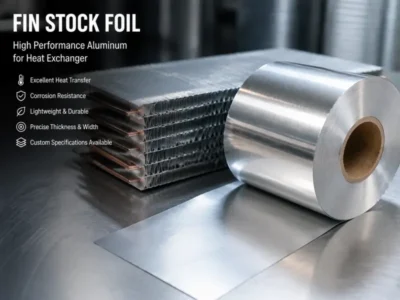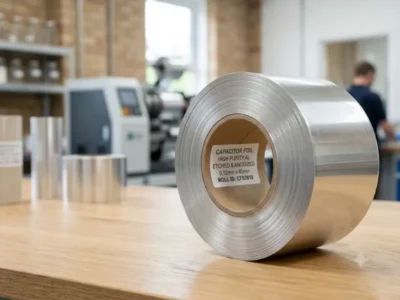
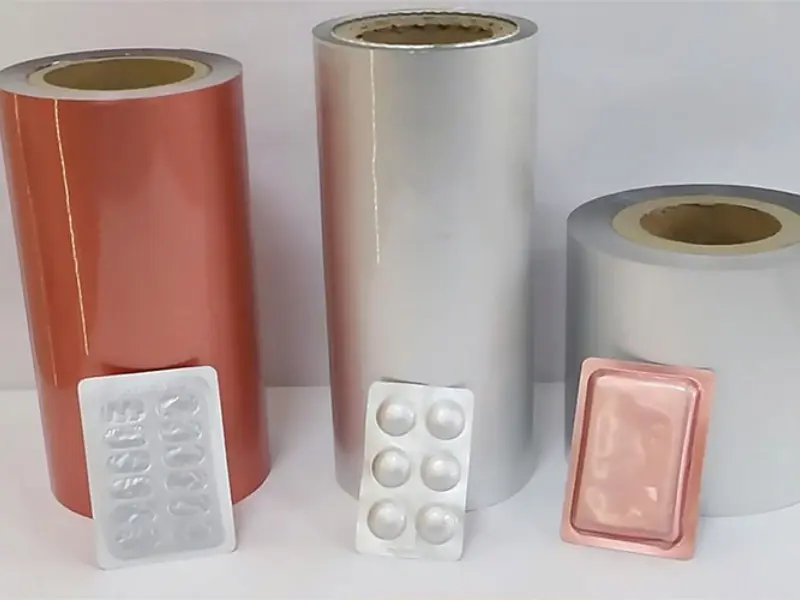
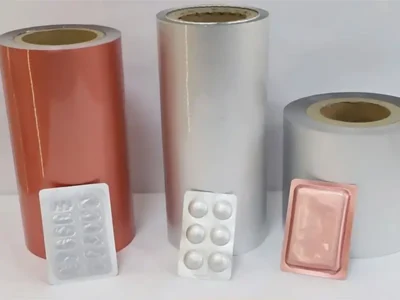
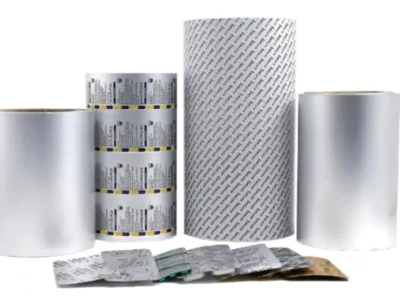
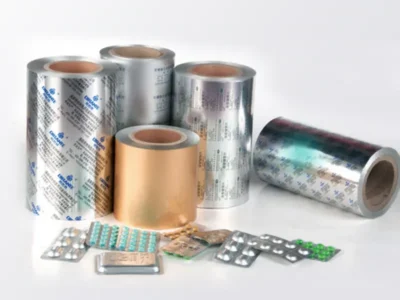
Aluminum blister foil is a thin, flexible packaging material used primarily in the pharmaceutical and food industries.
It forms the backing layer in blister packs, holding tablets, capsules, or small items in sealed cavities.
When a user presses a tablet through, the foil breaks cleanly — that’s the key property that sets it apart from other foil types.
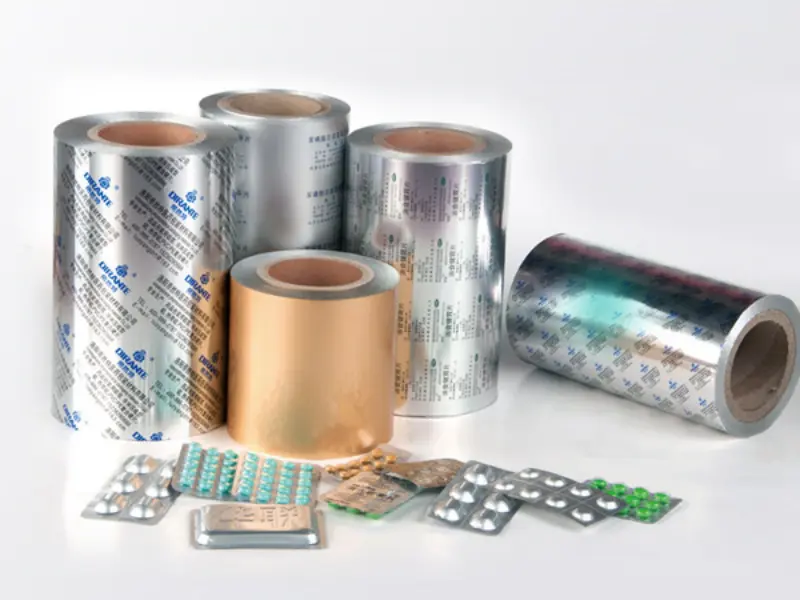
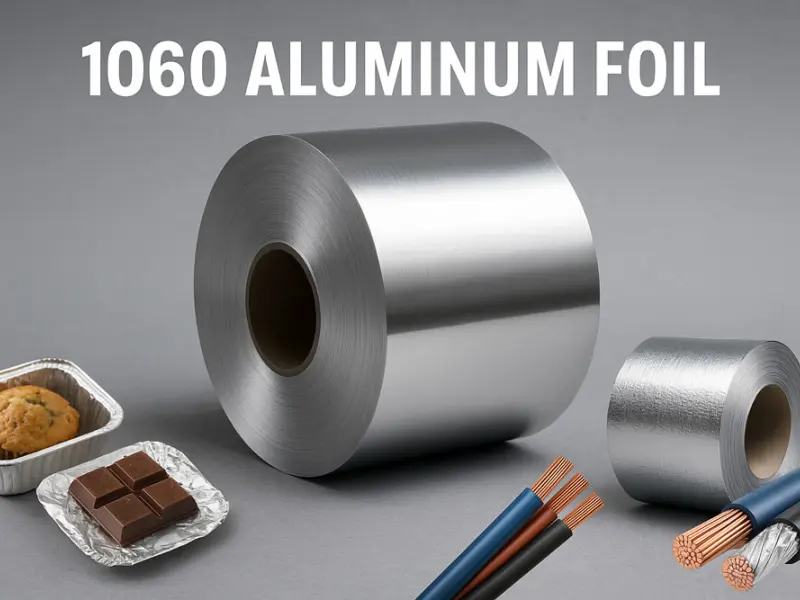
This material combines three qualities in one sheet: barrier protection, breakability, and printability.
It blocks moisture, oxygen, and light while remaining easy to push through by hand.
Alloy Options: 8011 vs 8021 vs 8079
Three aluminum alloys dominate blister foil production. Each has a different composition that affects softness, formability, and barrier performance.
| Alloy | Key Character | Best Use |
|---|---|---|
| 8011 | Good formability, cost-effective | General pharmaceutical blister |
| 8021 | High elongation, softer feel | Cold-form blister, alu-alu foil |
| 8079 | Excellent barrier, fine grain | High-barrier drug packaging |
8011 Aluminum Blister Foil
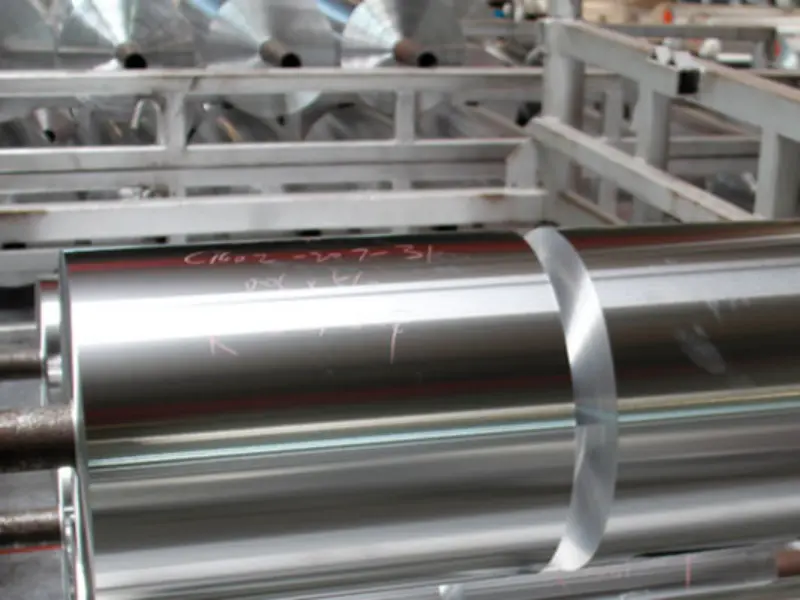
8011 is the most widely used alloy in standard blister packs. It offers reliable formability and works well with printing inks and lacquer coatings. Cost is lower than 8021 or 8079, making it a common choice for high-volume pharmaceutical lines.
8021 Aluminum Blister Foil
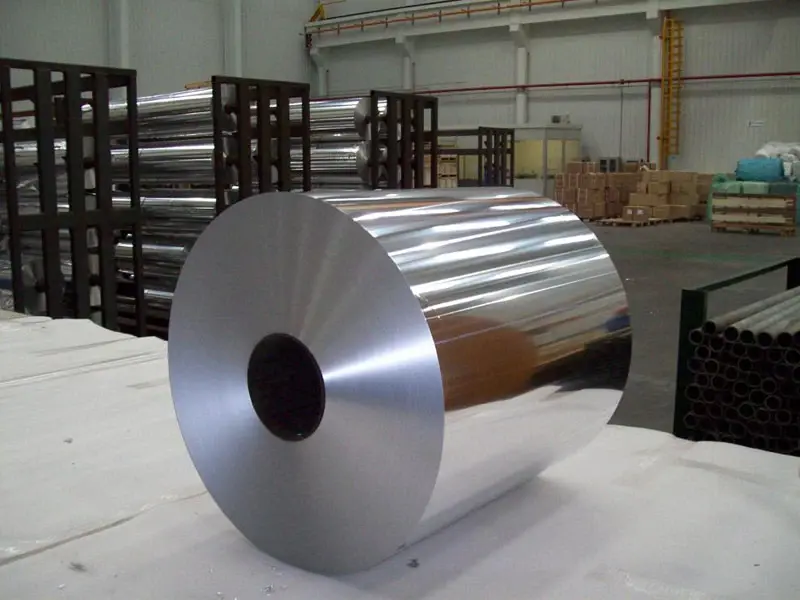
8021 has higher elongation than 8011. This means it stretches more before tearing, which makes it suitable for cold-form blister packaging — where the foil is pressed into deep cavities without heat. It is also the alloy most often used in alu-alu (OPA/Alu/PVC) laminate structures.
8079 Aluminum Blister Foil
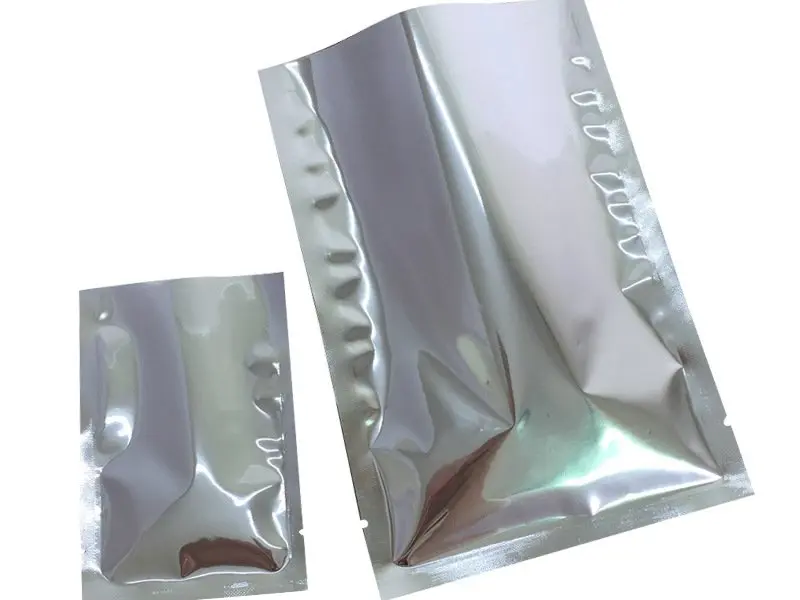
8079 Aluminum Blister Foil contains a slightly different iron and silicon balance. The result is a finer grain structure and a tighter surface finish. This helps it achieve very low pinhole counts, which matters when packaging moisture-sensitive drugs.
Temper Comparison
Temper affects how stiff or soft the foil is. Blister foil is typically supplied in three temper states.
| Temper | Hardness Level | Typical Thickness | Application |
|---|---|---|---|
| O (Annealed) | Softest | 0.02–0.065 mm | Cold-form, alu-alu blister |
| H14 | Semi-hard | 0.025–0.05 mm | Tropical blister, push-through |
| H18 | Full hard | 0.02–0.03 mm | Standard push-through blister |
O temper foil is fully annealed — it bends without cracking and forms deep pockets. H18 is work-hardened and snaps cleanly when pressed. H14 sits in between and is used where moderate stiffness is needed.
Aluminum Blister Foil Thickness Range and What It Means
Aluminum Blister Foil Thickness is one of the most important specs to define early. It controls barrier performance, breakability, and weight.
| Thickness (microns) | Thickness (mm) | Typical Role |
|---|---|---|
| 20 µm | 0.020 | Lightweight push-through, standard tablets |
| 25 µm | 0.025 | General pharmaceutical blister |
| 30 µm | 0.030 | Improved barrier, standard drugs |
| 40 µm | 0.040 | Cold-form base layer |
| 45 µm | 0.045 | OTC blister with extra stiffness |
| 60 µm | 0.060 | Alu-alu cold-form blister |
| 65 µm | 0.065 | High-barrier deep-draw applications |
Thinner foil (20–25 µm) is easier to push through but offers slightly lower moisture protection. Thicker foil (60–65 µm) is used in cold-form blisters where the pack must protect sensitive drugs in tropical climates.
Full Technical Specifications
| Parameter | Value |
|---|---|
| Alloy | 8011 / 8021 / 8079 |
| Temper | O, H14, H18 |
| Thickness | 0.015–0.080 mm |
| Width | 100–1,600 mm |
| Form | Coil |
| Surface | Mill finish |
| Standards | ISO, SGS, ASTM, ENAW |
Product Types by Structure
Blister foil is not a single product. It comes in several laminate and coating configurations depending on the end use.
Plain Aluminum Blister Foil
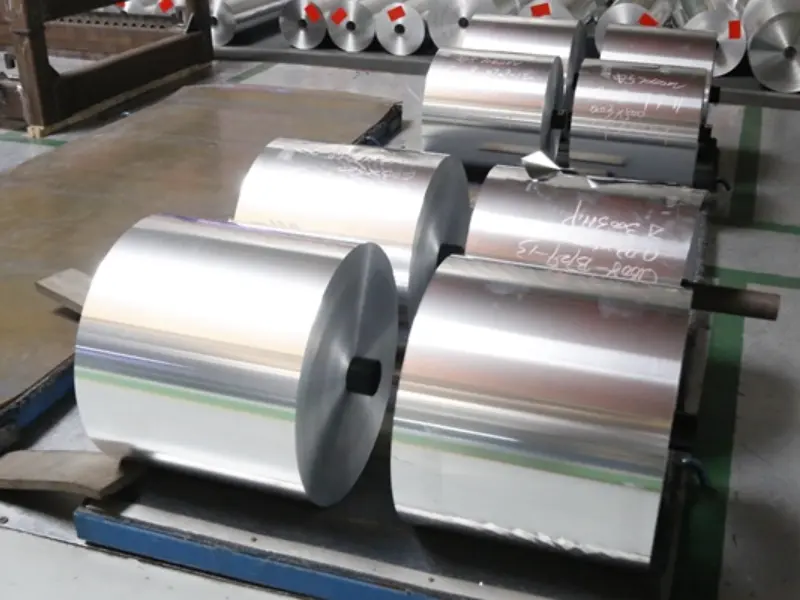
This is uncoated, mill-finish foil in a single layer. It is used as a raw input for converters who apply their own coatings. Alloys: 8011, 8079. Thickness: 20–30 µm.
Heat-Seal Lacquer Coated Foil
One side is coated with a heat-seal lacquer (HSL). This allows the foil to bond to a PVC or PVDC base film under heat and pressure. This is the most common form of finished blister lidding foil.
- Lacquer weight: typically 3–6 g/m²
- Bonding temp: 140–200°C depending on lacquer type
- Used on: standard tablet blister lines
Printed Blister Foil
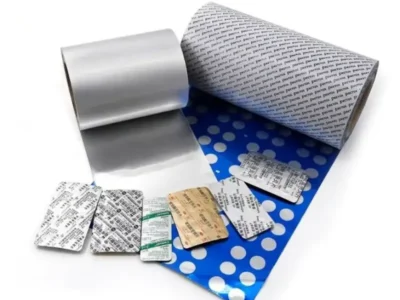
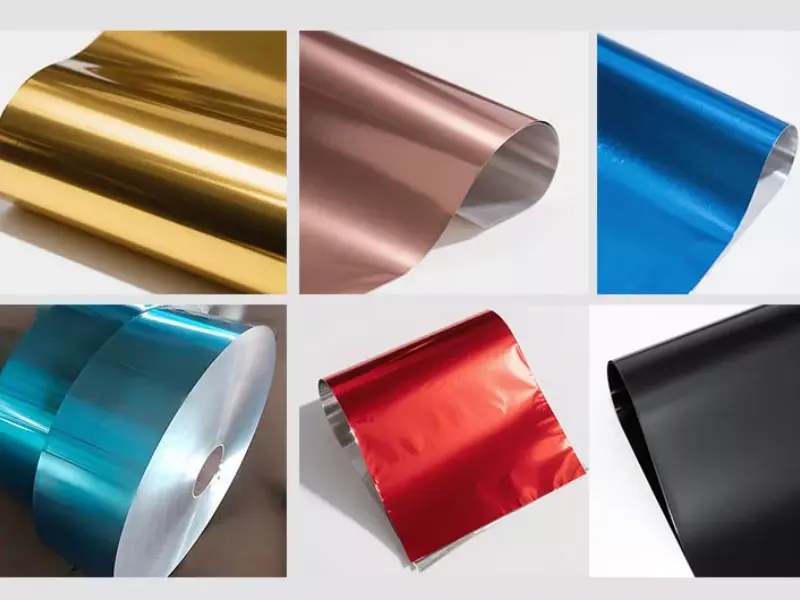
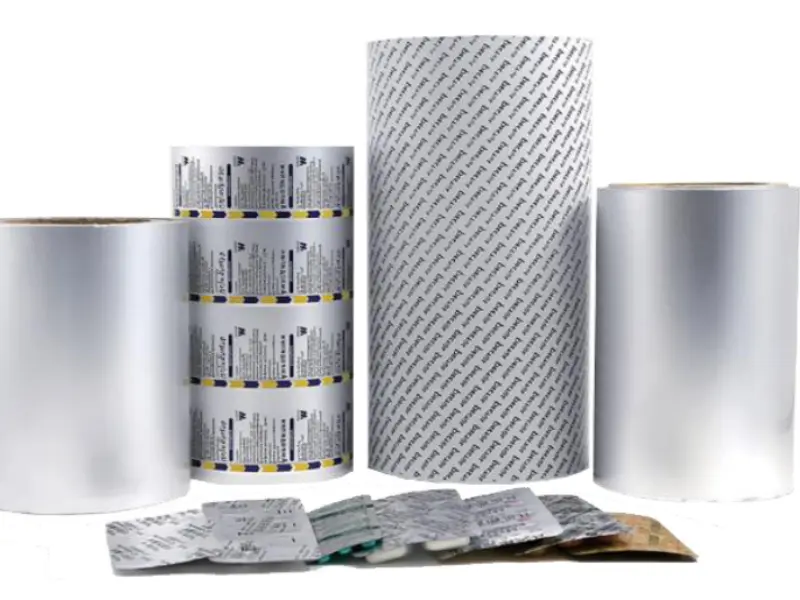
The outer surface of Aluminum Blister Foil can carry printed text, branding, batch numbers, or expiry dates. Printing is done by gravure or flexo methods before the lacquer coat. This version is common for branded pharmaceutical products.
Cold-Form Blister Foil (Alu-Alu)
This is a laminate: OPA (oriented polyamide) / Aluminum / PVC. The aluminum layer is typically 8021-O at 45–65 µm. It forms into cavities without heat. This type offers the highest moisture and oxygen barrier of all blister formats.
- No PVC required on the lid side
- Suitable for humidity-sensitive APIs
- Heavier and more expensive than standard blister
Tropical Blister Foil
A variant designed for markets with high heat and humidity. The lacquer and coating layers are selected for performance at 40°C / 75% RH (ICH Zone IV conditions). Often uses H14 temper at 25–30 µm.
Key Properties at a Glance
- High barrier: blocks moisture, oxygen, and light
- Breakable: clean push-through without jagged edges
- Printable: accepts gravure and flexo inks
- Heat-sealable: bonds to PVC, PVDC, and PE films
- Sterilization compatible: works with gamma and EtO processes
- Chemically inert: does not react with most drugs
Aluminum Blister Foil Application Areas
Aluminum Blister Foil is used across multiple industries, though pharmaceutical packaging accounts for the largest share.
Pharmaceutical
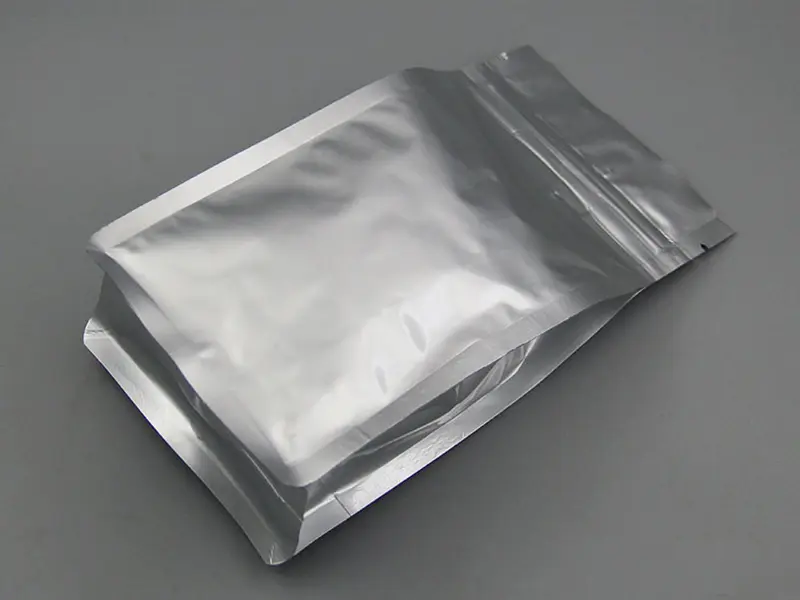
- Tablet and capsule blister packs
- Unit-dose packaging for hospitals
- Veterinary drug packaging
- Cold-form alu-alu blister for moisture-sensitive drugs
Food & Nutraceuticals
- Vitamin and supplement blisters
- Chewing gum strips
- Single-serve condiment packaging
- Confectionery display packs
Consumer & Industrial
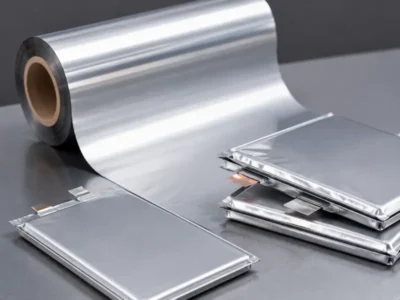
- Battery cell packaging
- Small hardware items (screws, hooks)
- Cosmetics and personal care samples
- Electronic components protection
Alloy-by-Alloy Comparison for Blister Use
| Feature | 8011 | 8021 | 8079 |
|---|---|---|---|
| Elongation | Moderate | High | Moderate-High |
| Pinhole resistance | Good | Good | Excellent |
| Formability | Good | Excellent | Good |
| Cold-form suitability | Limited | Best | Good |
| Printability | Good | Good | Good |
| Cost level | Low | Medium | Medium-High |
For standard push-through Aluminum Blister Foil packs, 8011 is the cost-efficient default. For cold-form or alu-alu applications, 8021 in O temper is the industry standard. For the tightest barrier requirements, 8079 is worth the premium.
Aluminum Blister Foil Thickness vs. Barrier Performance
| Thickness | WVTR (approx.) | Oxygen Barrier | Typical Pack Type |
|---|---|---|---|
| 20 µm | ~0.5 g/m²/day | Moderate | Standard blister |
| 25 µm | ~0.3 g/m²/day | Good | General pharma |
| 30 µm | ~0.1 g/m²/day | Good | Improved barrier |
| 45 µm | ~0.02 g/m²/day | Excellent | Cold-form base |
| 60–65 µm | <0.01 g/m²/day | Highest | Alu-alu blister |
WVTR = water vapor transmission rate. Lower is better for moisture-sensitive drugs.
Typical Product: 8021 Aluminum Blister Foil
The 8021 alloy in O temper is the most requested specification for blister packaging globally. Here are its standard parameters:
| Parameter | Value |
|---|---|
| Alloy | 8021 |
| Temper | O |
| Thickness | 0.040–0.065 mm |
| Width | 100–1,600 mm |
| Surface | Mill finish |
| Key application | Cold-form blister, alu-alu packaging |
How Blister Foil Is Made
Understanding the process helps with quality evaluation.
Rolling and Annealing
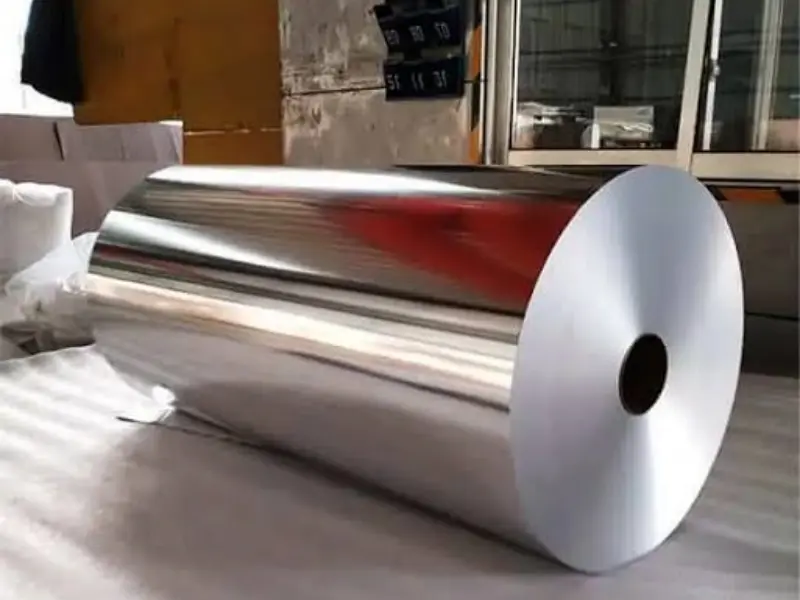
Aluminum ingot is rolled down to target thickness in multiple passes. For O temper, the foil goes through a final annealing oven to relieve work hardening and maximize softness and elongation.
Surface Treatment
Mill finish means the surface is left as-rolled without additional polishing. Some grades receive a cleaning pass to reduce residual rolling oil before coating.
Slitting
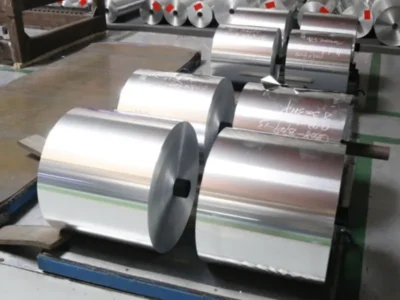
Wide master coils (up to 1,600 mm) are slit to customer-specified widths. Tolerance on width is typically ±1 mm. Edge quality matters for machine feeding on blister lines.
Coating and Printing
Converters apply heat-seal lacquer, print layers, and primer coats depending on the final specification. The foil supplier typically delivers plain or primed coils for converter processing.
What Is the Structure of Blister Foil?
Aluminum blister foil is not always used as a simple piece of aluminium foil. In pharmaceutical packaging, the foil may work together with coatings, printing layers, and sealing systems.
A typical structure can include:
Aluminum base foil
↓
Printing or primer layer
↓
Protective coating
↓
Heat-seal coating, when required
The exact structure depends on the packaging machine, medicine, forming material, and sealing method.
This is why buyers should not compare blister foil only by thickness. The surface treatment and coating system are also important.
Aluminum Foil Thickness and Barrier Performance
Thickness is one of the main factors when selecting blister packaging foil.
| Thickness | General feature | Suitable direction |
|---|---|---|
| 0.020 mm | Very thin | Light packaging structures |
| 0.025 mm | Thin | Selected pharmaceutical packaging |
| 0.030 mm | Medium | General blister packaging |
| 0.035 mm | Medium | Higher barrier requirement |
| 0.040 mm | Thicker | More demanding packaging |
| 0.050 mm | Heavy | Special packaging structures |
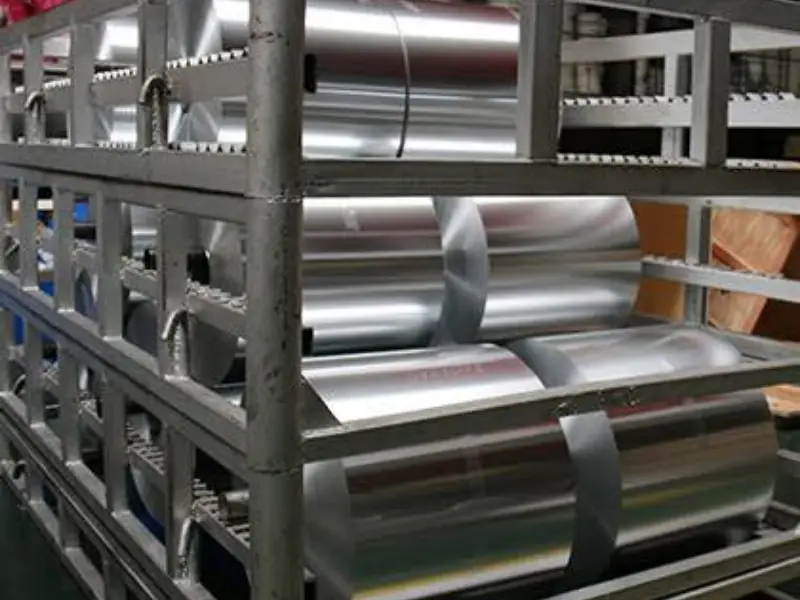
The actual thickness should be selected according to the packaging design.
A thicker foil may provide greater mechanical strength, but it also increases material consumption and cost. For this reason, the thinnest foil is not always the best choice.
Why Temper Matters in Pharmaceutical Foil
Aluminum blister foil can be supplied in different tempers depending on the production process.
| Temper | General characteristic |
|---|---|
| O | Soft and highly formable |
| H18 | Harder and more rigid |
| Other H tempers | Available according to alloy and specification |
The temper affects tensile strength, elongation, flexibility, and processing behavior.
For a packaging project, the correct temper should be selected together with the thickness and coating system.
Common Alloys Used for Blister Foil
Different aluminium alloys can be selected according to the final packaging structure.
| Alloy | General characteristic | Possible use |
|---|---|---|
| 8011 | Good flexibility and processing | Pharmaceutical and packaging foil |
| 8021 | Good barrier performance | Pharmaceutical packaging |
| 8079 | Good formability | Flexible packaging and special foil |
| 1235 | High aluminium purity | Packaging and converting |
The final alloy should match the required standard, coating, forming process, and customer specification.
For pharmaceutical packaging, material documentation and quality requirements should be confirmed before production.
8011 vs 8021 Aluminum Blister Foil
8011 and 8021 are both widely discussed when selecting pharmaceutical packaging foil.
| Feature | 8011 | 8021 |
|---|---|---|
| Formability | Good | Very good |
| Flexibility | Good | Very good |
| Barrier properties | Excellent | Excellent |
| Packaging use | Broad | Pharmaceutical-focused |
| Cost position | Competitive | Can be higher |
| Customization | Available | Available |
The better choice depends on the packaging structure and production requirements rather than alloy number alone.
Blister Foil vs Cold Form Foil
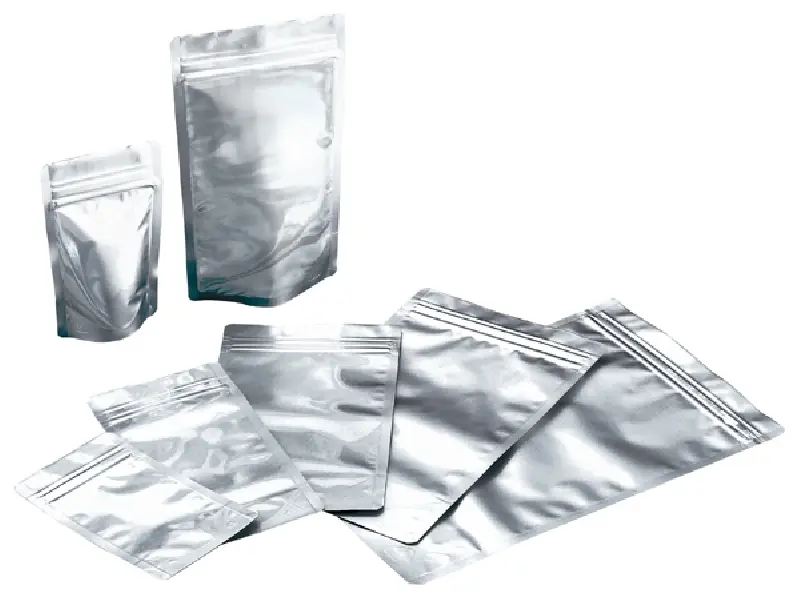
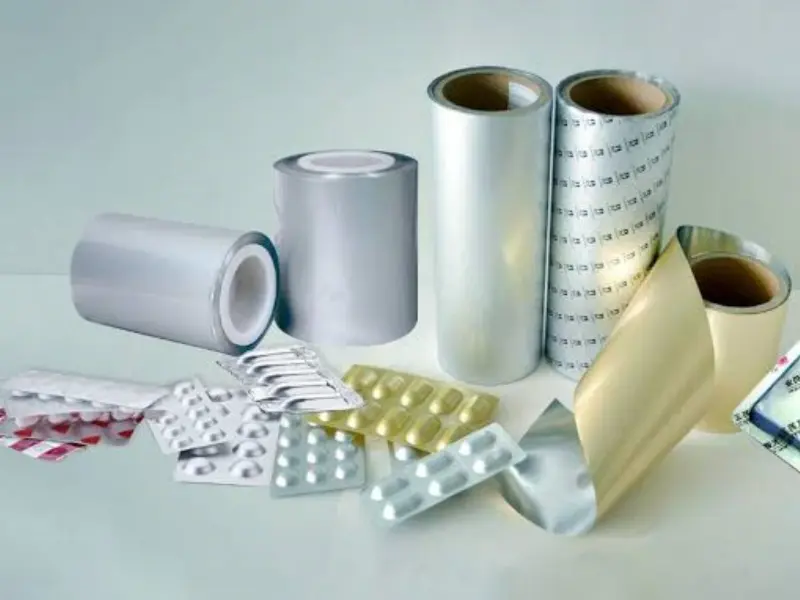
These two products are often confused, but they serve different packaging structures.
Blister Foil
Blister foil is commonly used as the lidding side of a blister package.
The aluminium foil is sealed to the forming material after the product is placed inside the cavity.
Cold Form Foil
Cold form foil is used as part of a deeper barrier structure.
It normally combines aluminium foil with other layers to create a strong barrier package.
| Point | Blister Foil | Cold Form Foil |
|---|---|---|
| Main role | Lidding | Forming structure |
| Structure | Usually simpler | Multi-layer structure |
| Forming | Limited | Deep forming |
| Barrier | Excellent | Very high |
| Typical packaging | Tablets and capsules | High-barrier pharmaceutical packs |
This distinction is useful when preparing a purchasing specification.
Aluminum Blister Foil vs PVC Blister Packaging
Aluminium foil and PVC perform different functions.
| Property | Aluminium Foil | PVC |
|---|---|---|
| Light barrier | Excellent | Limited |
| Moisture barrier | Excellent | Lower |
| Gas barrier | Excellent | Lower |
| Metal detection | Possible | No |
| Flexibility | Depends on temper | High |
| Main role | Barrier/lidding | Forming material |
In many pharmaceutical blister packs, these materials work together rather than replace each other.
The final package may therefore contain an aluminium lidding foil and a polymer forming layer.
Printed and Plain Blister Foil
Blister foil can be supplied in plain or printed form.
Plain Foil
Plain foil provides a simple metallic appearance and can be suitable for applications where printing is completed separately.
Printed Foil
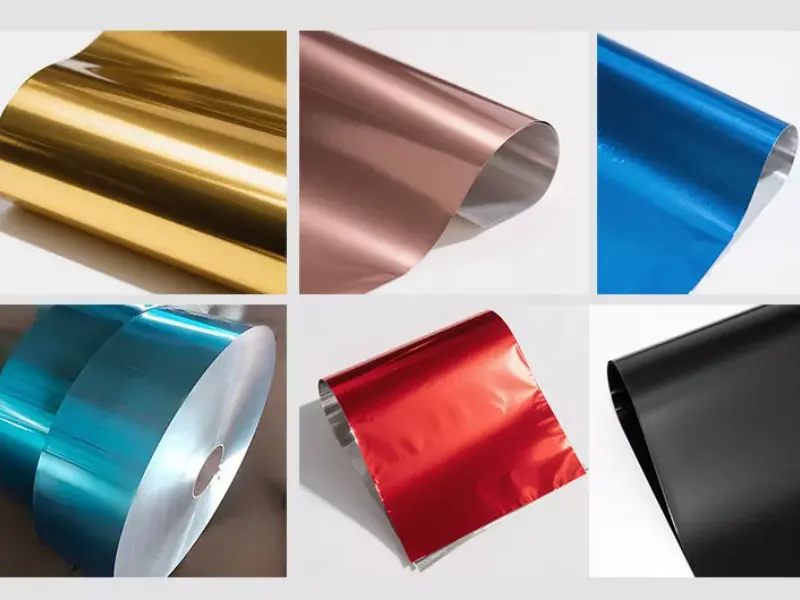
Printed foil can carry information such as:
- Product name
- Brand name
- Dosage information
- Batch information
- Manufacturer details
- Warning information
- Decorative elements
Printing also helps with product identification and packaging design.
Surface Coating Options
The coating system can be customized according to the packaging process.
| Surface option | Main purpose |
|---|---|
| Plain aluminium | Basic foil surface |
| Primer coated | Supports printing |
| Printed surface | Product information |
| Heat-seal coated | Sealing with forming material |
| Protective coated | Surface protection |
The coating must be compatible with the packaging material and sealing temperature.
A Simple Blister Foil Production Flow
A typical production route can be presented in a simple format:
Aluminium coil
↓
Rolling
↓
Annealing
↓
Surface cleaning
↓
Coating
↓
Printing, if required
↓
Slitting
↓
Inspection
↓
Packaging
↓
Shipment
Different factories may use different processes and equipment.
The important point is that each stage can influence the final foil quality.
What Should Be Checked Before Production?
A good purchasing specification should define the material before production starts.
| Item | Example |
|---|---|
| Alloy | 8011 / 8021 |
| Temper | O / H18 |
| Thickness | According to project |
| Width | Custom |
| Core ID | Custom |
| Surface | Plain / Printed / Coated |
| Coating | According to sealing system |
| Printing | Yes / No |
| Roll direction | Confirm before production |
| Packaging | Export standard |
This simple checklist can reduce misunderstandings between the buyer and supplier.
Why Roll Width Is Important
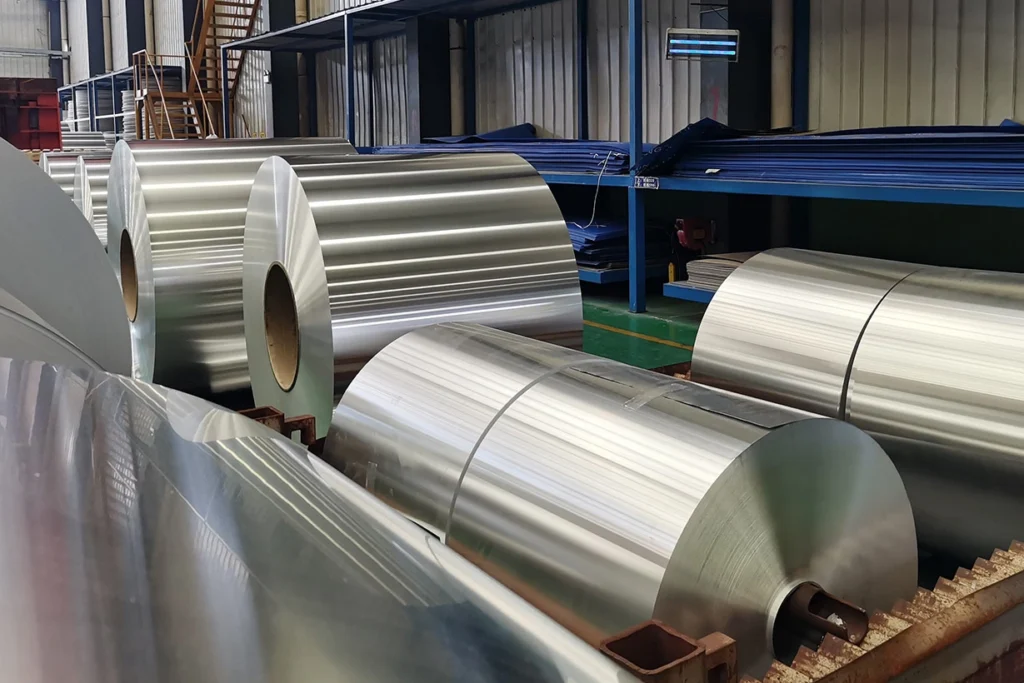
Width affects both the packaging machine and material waste.
If the foil is too narrow, it may not fit the production line.
If it is much wider than necessary, more material may be wasted during slitting.
A good supplier can discuss the required jumbo roll width and finished roll width before production.
Jumbo Roll
↓
Slitting
↓
Required Width
↓
Packaging Machine
This is especially useful for high-volume pharmaceutical packaging.
Core Diameter and Roll Specifications
Roll specifications should not be ignored.
Common purchasing information includes:
- Core inner diameter
- Outer roll diameter
- Roll width
- Net weight
- Gross weight
- Winding direction
- Joint requirements
- Roll identification
The correct core size helps ensure compatibility with the customer’s converting or packaging equipment.
How Printing Quality Affects the Final Product
For printed blister foil, printing quality is more than appearance.
Clear printing helps operators and customers identify the product.
Important points include:
→ Color consistency
→ Text clarity
→ Registration accuracy
→ Surface cleanliness
→ Ink adhesion
→ Print position
For repeat orders, keeping the same printing specification can help maintain brand consistency.
Moisture, Light, and Oxygen Protection
One of the main reasons aluminium foil is used in pharmaceutical packaging is its barrier performance.
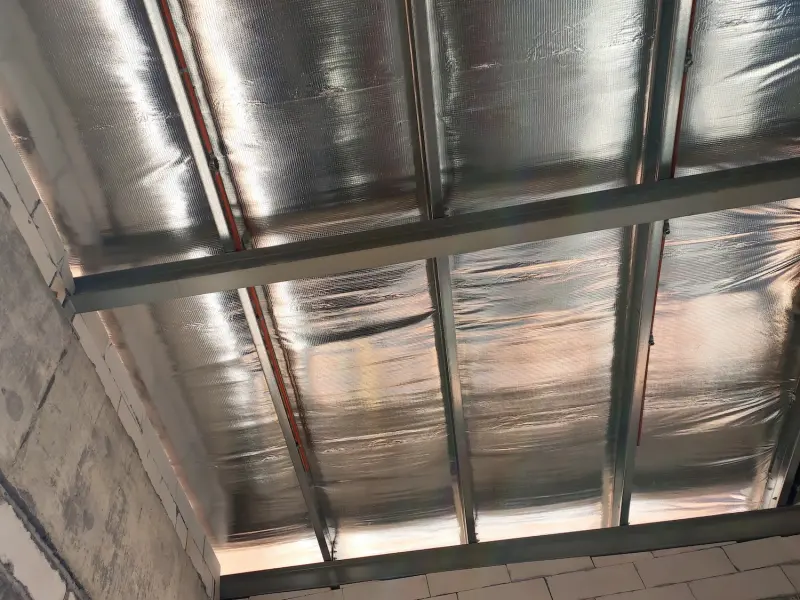
It can help protect packaged products from:
Light
↓
Moisture
↓
Oxygen
↓
External contamination
This is especially important for products that are sensitive to environmental conditions.
The actual protection of the finished package depends on the complete packaging structure, sealing quality, and storage conditions.
Quality Control Points for Blister Foil
A factory can check several characteristics during production.
| Quality point | What to inspect |
|---|---|
| Thickness | Dimensional consistency |
| Width | Width tolerance |
| Surface | Scratches and contamination |
| Pinholes | Barrier-related defects |
| Coating | Coverage and adhesion |
| Printing | Text and color |
| Roll winding | Smooth winding |
| Core | Correct dimensions |
| Packaging | Protection during transport |
For pharmaceutical packaging, customers may also require specific quality documents and inspection records.
Storage Conditions Before Use
Aluminum blister foil should be protected before it reaches the packaging machine.
Good storage practice can include:
→ Keep rolls in a dry environment
→ Avoid direct water contact
→ Protect the surface from contamination
→ Keep original packaging intact when possible
→ Avoid unnecessary handling
→ Allow the material to reach suitable processing conditions before use
The exact storage requirements should follow the supplier’s technical recommendations and the customer’s quality system.
What Affects the Price of Aluminum Blister Foil?
The price is influenced by several factors.
| Cost factor | Effect on quotation |
|---|---|
| Aluminium market | Changes raw material cost |
| Alloy | Different material cost |
| Thickness | Changes material weight |
| Width | Changes production and slitting |
| Coating | Adds processing |
| Printing | Adds printing cost |
| Order quantity | Affects production efficiency |
| Roll size | Affects processing |
| Packaging | Affects shipping protection |
| Destination | Changes freight cost |
For this reason, a reliable quotation should be based on a complete specification.
How to Reduce Packaging Foil Cost
Cost reduction does not always mean choosing a thinner foil.
A better approach is to optimize the whole packaging structure.
Correct alloy
Correct thickness
Suitable coating
Optimized roll width
Efficient order quantity
=
Better overall packaging cost
For large orders, optimizing slitting widths can also reduce production waste.
A Practical Buying Checklist
Before ordering aluminum blister foil, buyers can check these points:
Material
→ Alloy and temper confirmed
Dimensions
→ Thickness and width confirmed
Roll
→ Core diameter and roll weight confirmed
Surface
→ Plain, coated, or printed
Sealing
→ Compatible with the forming material
Printing
→ Artwork and print requirements confirmed
Quality
→ Inspection requirements confirmed
Packaging
→ Export packaging confirmed
Documentation
→ Required certificates and quality documents confirmed
This makes the purchasing process clearer and reduces the chance of specification errors.
What Makes a Good Blister Foil Supplier?
A good supplier should provide more than a competitive price.
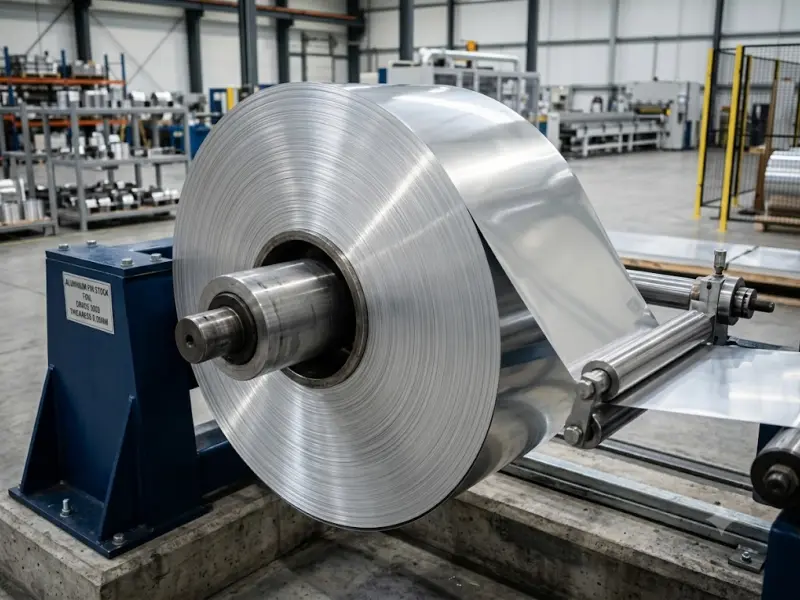
Look for:
Quality inspection
Stable raw material sourcing
Consistent thickness
Controlled surface quality
Reliable coating
Accurate printing
Stable roll winding
Flexible slitting
Custom widths
Export packaging
Technical communication
For pharmaceutical packaging, consistency is especially important because the material may be used in high-speed packaging lines.
Custom Aluminum Blister Foil From Factory
Our factory can provide aluminum foil solutions for different packaging requirements.
Available options can include:
| Custom item | Options |
|---|---|
| Alloy | 8011 / 8021 / other agreed grades |
| Temper | O / H18 and other suitable conditions |
| Thickness | Custom |
| Width | Custom |
| Roll length | Custom |
| Core | Custom |
| Surface | Plain / coated / printed |
| Slitting | Available |
| Packaging | Export packaging |
| Order quantity | According to production requirements |
Customers can send their existing foil specification, drawing, roll information, or packaging requirement for review.
From Material Selection to Finished Roll
For a new packaging project, the process can be kept simple:
Step 1 → Confirm the packaging structure
Step 2 → Select alloy and temper
Step 3 → Confirm thickness
Step 4 → Confirm width and roll specifications
Step 5 → Select coating and printing
Step 6 → Confirm quality requirements
Step 7 → Produce samples if needed
Step 8 → Start bulk production
This approach helps both the supplier and buyer understand the project before mass production.
A Better Way to Compare Suppliers
Do not compare only:
Price / kg
Instead, compare:
Material + Coating + Printing + Roll Size + Quality + Packaging + Service
A slightly higher material price may provide better surface quality, tighter specifications, or more stable production.
For pharmaceutical packaging, consistent quality can be more important than a small difference in the initial material price.
Frequently Asked Questions
What Is the Difference Between Blister Foil and Regular Aluminum Foil?
Regular household or industrial foil is made for heat transfer, cooking, or wrapping. Blister foil is engineered specifically for pharmaceutical packaging. It has tighter thickness tolerances, lower pinhole counts, and is produced under cleaner conditions. It is also coated for heat-sealing in most end-use forms.
Which Alloy Is Best for Cold-Form Blister?
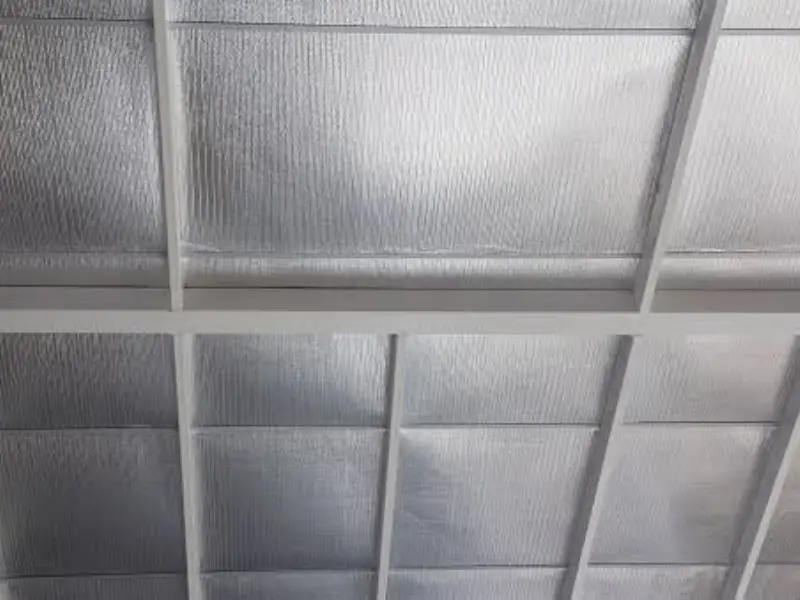
8021 in O temper is the standard choice. Its high elongation allows forming into deep cavities. 8079 is sometimes used when an even tighter barrier is needed. 8011 is generally not recommended for cold-form due to lower elongation.
What Thickness Should I Use for Tropical Markets?
For ICH Zone IV climates (40°C / 75% RH), a minimum of 25–30 µm push-through foil with high-barrier PVDC base film is common. For the most sensitive drugs, cold-form 60–65 µm alu-alu blister eliminates the need for a polymer base entirely.
Can Blister Foil Be Printed?
Yes. The outer surface can be printed with batch numbers, expiry dates, product names, and dosage instructions. Gravure printing is standard for long runs. The print is applied before heat-seal lacquer coating so it is protected inside the laminate structure.
What Width Is Available?
Standard production widths run from 100 mm to 1,600 mm. Most blister lines use slit coils in the 100–300 mm range. Wide coils are supplied to converters who slit them to final width.
What Standards Does This Foil Comply With?
Production follows ISO quality systems. Material testing is done under ASTM standards. European supply meets ENAW designations. SGS third-party testing is available on request for chemical composition, thickness, and mechanical properties.
How Is Blister Foil Shipped?
Foil is wound onto paper or plastic cores and wrapped for moisture protection. Coils are packed in cartons or on pallets. Shipping in a humidity-controlled environment is recommended for O temper grades to avoid surface oxidation.
What Is the Minimum Order Quantity?
MOQ varies by supplier and specification. For standard alloys and tempers (8011-H18, 8021-O), smaller trial orders are usually available. Custom widths or special coating specs typically require larger minimum quantities.
Why Aluminum Is the Material of Choice for Blister Packaging
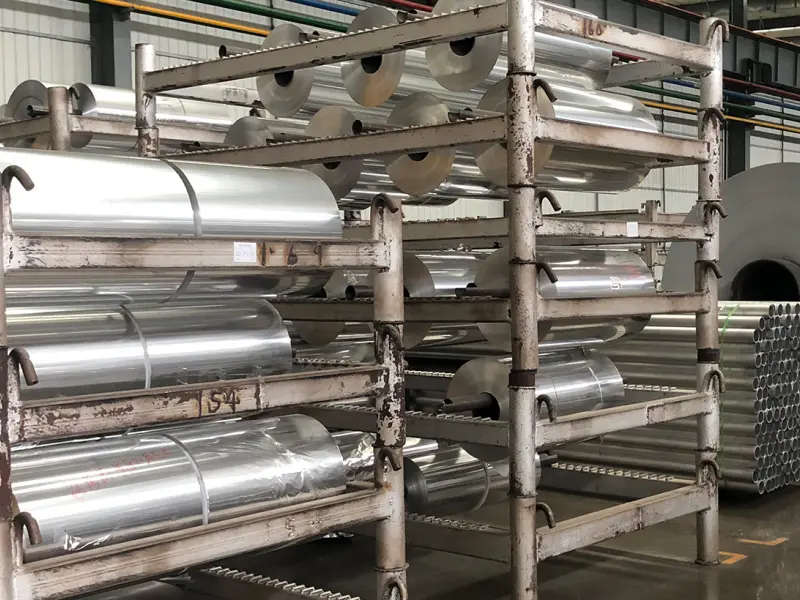
Several competing materials exist — paper, PVDC, and various polymer films — but aluminum remains dominant in pharmaceutical blister for clear reasons.
It is recyclable, which supports sustainability goals
It provides a complete barrier to moisture and oxygen at thicknesses above 25 µm
It is chemically inert and does not interact with drug compounds
It is easy to print, lacquer, and laminate
It breaks cleanly on push-through without leaving sharp edges
Polymer-only blister packs offer some advantages in forming depth and weight, but they cannot match aluminum’s barrier performance at equivalent cost.
Selecting the Right Specification
Use this quick-reference guide when choosing between options:
| Requirement | Recommended Spec |
|---|---|
| Standard tablet, dry climates | 8011-H18, 20–25 µm |
| Standard tablet, humid climates | 8011-H14, 25–30 µm |
| Cold-form alu-alu blister | 8021-O, 45–65 µm |
| Highest barrier, tropical | 8079-O, 60 µm |
| OTC retail blister, printable | 8011-H18, 25 µm, printed + HSL |
| Nutraceutical blister | 8011-H14, 25–30 µm |