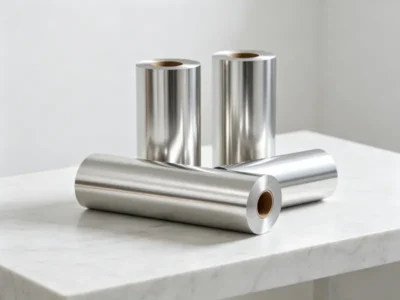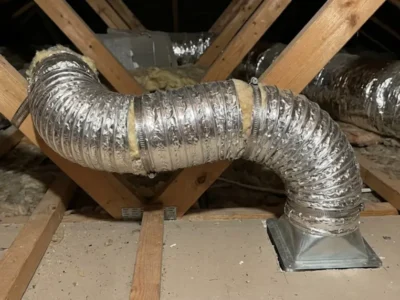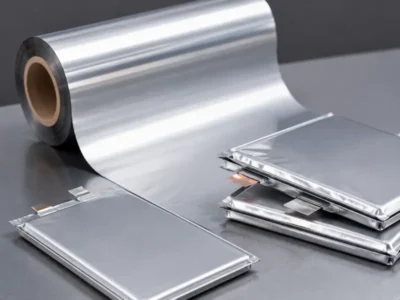
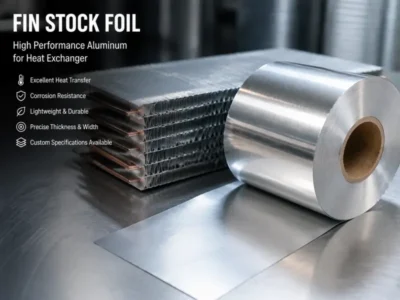
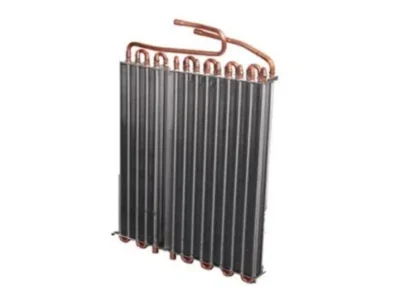
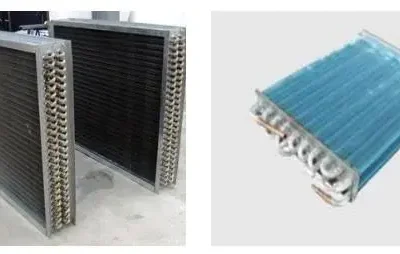
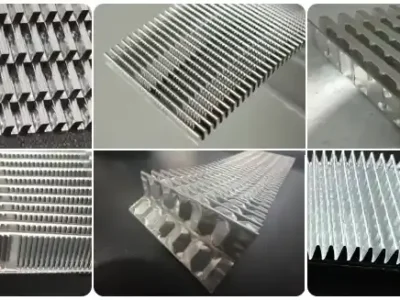
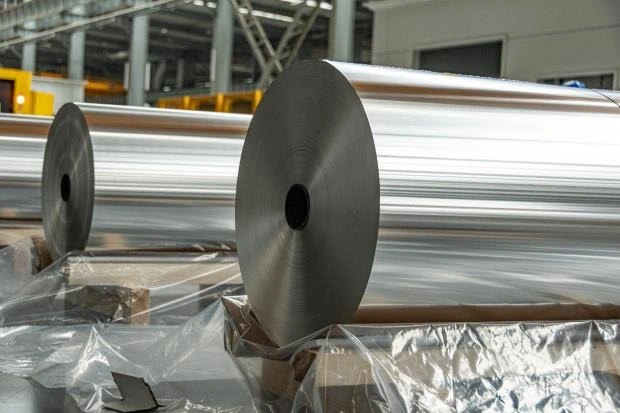
Factories that build heat exchangers need thin aluminum that carries heat fast.
That material is fin stock foil. It sits between tubes in radiators, air conditioners, and industrial coolers.
The foil forms the fins that pull heat from one fluid and push it into another. Without this foil, your car engine overheats and your office stays hot.
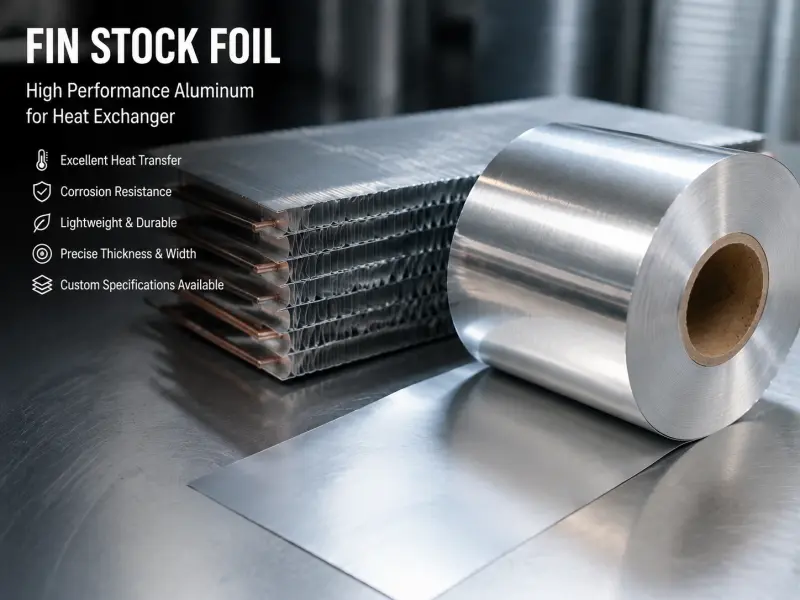
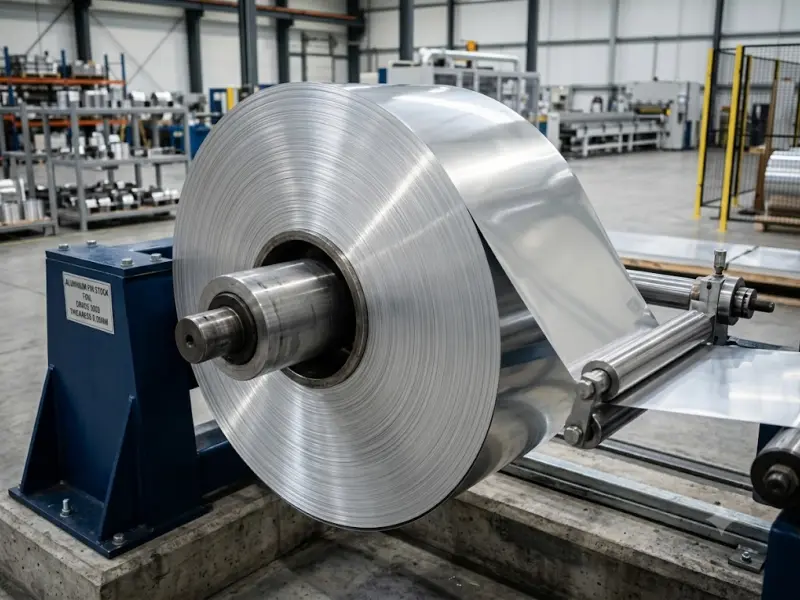
What Fin Stock Foil Does in a Heat Exchanger
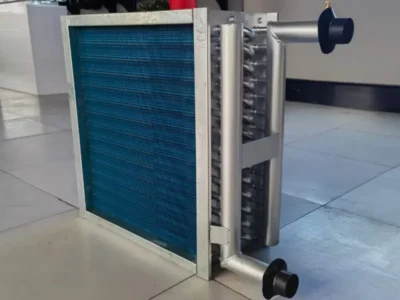
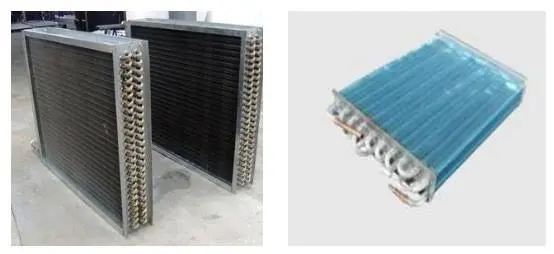
A heat exchanger moves thermal energy. Hot coolant runs through flat tubes. Air blows across fins attached to those tubes. The fins grab heat from the tubes and release it into the air stream.
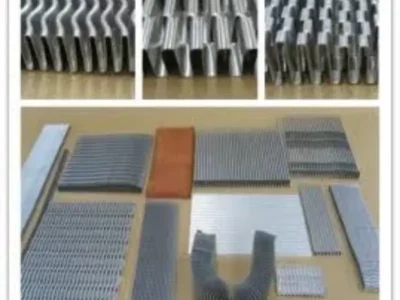
Aluminum fin stock makes those fins. It must be thin to save weight and cost. It must conduct heat quickly. It must survive brazing furnaces where temperatures hit 600°C. And it must resist corrosion from coolant, humidity, and road salt.
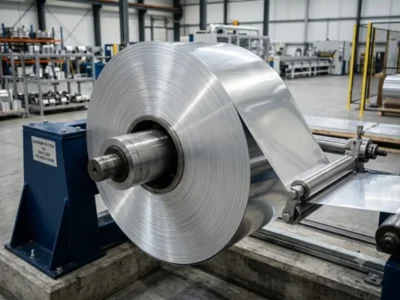
Mills roll this foil from cast aluminum slabs. They control thickness down to microns. Then they add coatings or cladding layers so the fins bond to tubes during brazing.
Alloy Guide: Picking the Right Metal
Not all aluminum moves heat the same way. The alloy changes conductivity, strength, and how the foil behaves in a furnace.
Common Alloys for Fin Stock Foil
| Alloy | Purity | Conductivity | Strength | Best Use |
|---|---|---|---|---|
| 1050 | 99.5% Al | Excellent | Low | Standard HVAC, low-cost radiators |
| 1060 | 99.6% Al | Excellent | Very low | Maximum heat transfer, soft fins |
| 1100 | 99.0% Al | Very good | Low | General heat exchangers, chemical resistance |
| 3003 | 98.6% Al | Good | Medium | Higher pressure systems, structural fins |
| 8011 | 98.8% Al | Good | Medium | Coated fin stock, food-grade coolers |
Pure Aluminum for Maximum Transfer
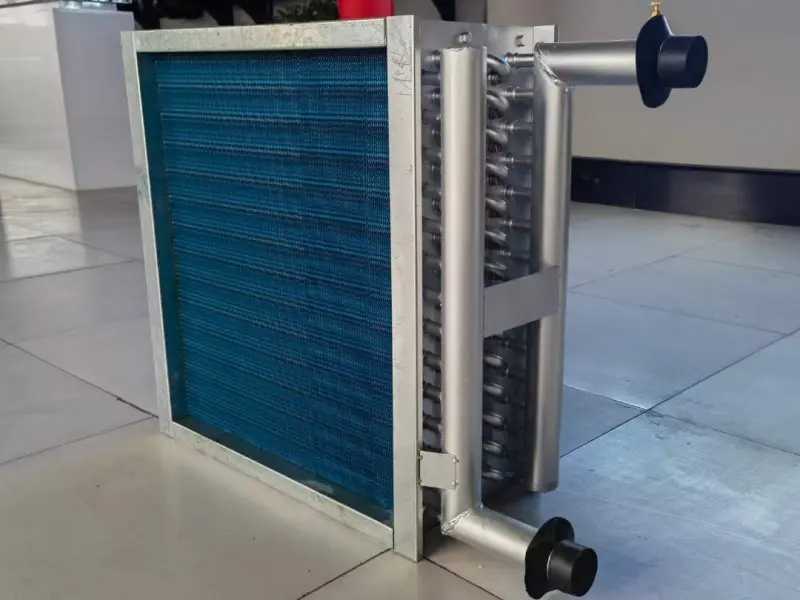
1050 fin stock foil and 1060 fin stock foil carry the highest thermal conductivity. They are nearly pure aluminum. If your design prioritizes heat flow over strength, these grades win. They are also the cheapest per kilogram.
3003 for Tougher Fins
3003 fin stock aluminum foil adds manganese. The fins hold their shape better under air pressure and vibration. Car radiators and truck charge air coolers often use 3003 because road bumps flex the core.
8011 for Coated Applications
8011 fin stock foil contains iron and silicon. It forms a stable surface for hydrophilic and hydrophobic coatings. Air conditioner makers prefer this alloy when they need blue or gold coated fins.
Temper States: Soft or Stiff
The temper tells you how hard the foil feels and how it forms into corrugated fins.
| Temper | Name | Feel | Typical Thickness | Use Case |
|---|---|---|---|---|
| O | Annealed | Very soft, bends easily | 0.08 – 0.15 mm | Complex fin shapes, low stress |
| H14 | Half hard | Some spring | 0.10 – 0.20 mm | Standard HVAC coils |
| H18 | Full hard | Stiff, holds shape | 0.05 – 0.10 mm | High-density radiators |
| H22 | Quarter hard | Soft, stabilized | 0.10 – 0.18 mm | Brazing applications |
| H24 | Half hard, stabilized | Balanced | 0.08 – 0.15 mm | Automotive radiators |
| H26 | Three-quarter hard | Stronger | 0.06 – 0.12 mm | Heavy-duty truck coolers |
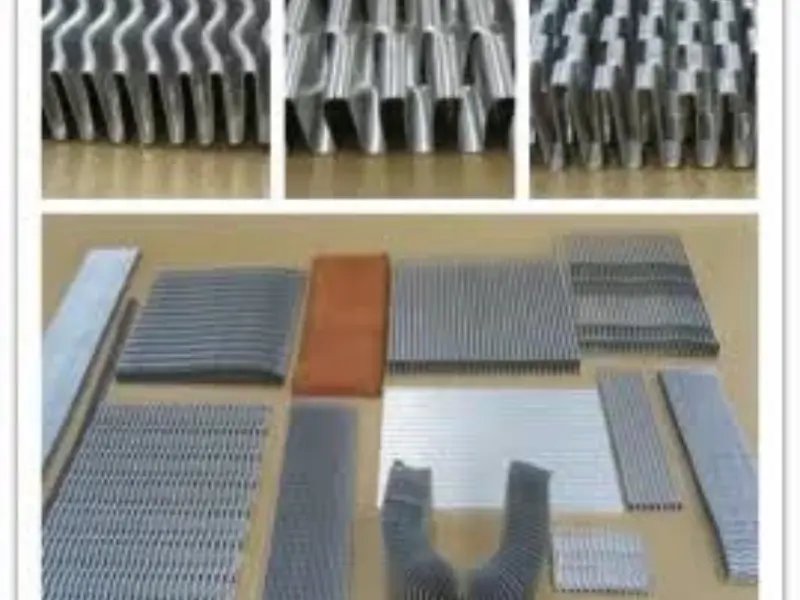
Soft tempers like O form into wavy fins without cracking. Hard tempers like H18 stay flat and spaced evenly in high-speed assembly lines. For brazing, H22 and H24 are common because they balance formability with stability in the furnace.
Thickness Options and What They Mean
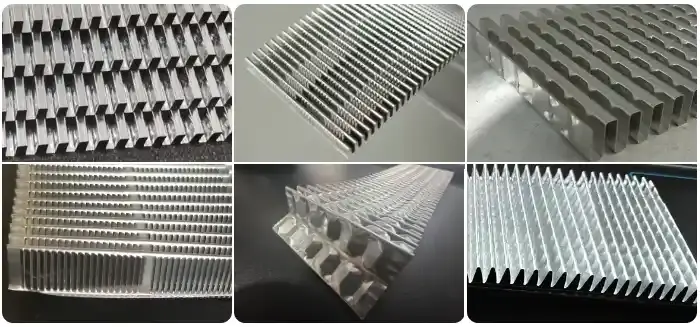
Thickness controls heat transfer speed, pressure drop, and material cost.
Standard Thickness Chart
| Thickness (mm) | Thickness (microns) | Fins per Inch | Best For |
|---|---|---|---|
| 0.05 mm | 50 | 8 – 12 | Micro-channel coolers, compact radiators |
| 0.08 mm | 80 | 6 – 10 | Residential air conditioners |
| 0.10 mm | 100 | 5 – 9 | Automotive radiators, standard HVAC |
| 0.13 mm | 130 | 4 – 8 | Industrial heat exchangers |
| 0.15 mm | 150 | 4 – 7 | Heavy equipment, high-pressure coils |
| 0.20 mm | 200 | 3 – 6 | Truck radiators, marine coolers |
Thinner foil transfers heat faster because the thermal path is shorter. But thin fins bend or corrode through faster. Thicker fins last longer but block more airflow. Engineers balance these numbers in their thermal models.
Mills do not just ship bare metal. They offer several product formats to match your assembly process.
Types of Fin Stock Foil You Can Buy
Bare Fin Stock Foil
No coating. No cladding. Just aluminum. This is the lowest cost option. It works when the tubes and fins will be mechanically assembled or welded instead of brazed. Bare foil is also the starting point for coating lines that run in-house.
Hydrophilic Coated Fin Stock
A thin layer of epoxy or acrylic with ceramic fillers coats the aluminum. The surface attracts water. Condensation spreads into a thin film instead of beading into droplets.
→ Better heat transfer in cooling mode
→ Reduced noise from water droplets hitting the fan
→ Anti-corrosion barrier against salts and acids
→ Common in blue or gold colors
Air conditioner evaporators almost always use hydrophilic fin stock foil.
Hydrophobic Coated Fin Stock
The coating repels water. Oil or wax-based layers cause water to bead up and roll off.
→ Prevents ice buildup in freezers
→ Reduces moisture retention in humid climates
→ Self-cleaning effect as water carries dust away
Refrigerator evaporators and cold storage coils use hydrophobic fin stock aluminum foil.
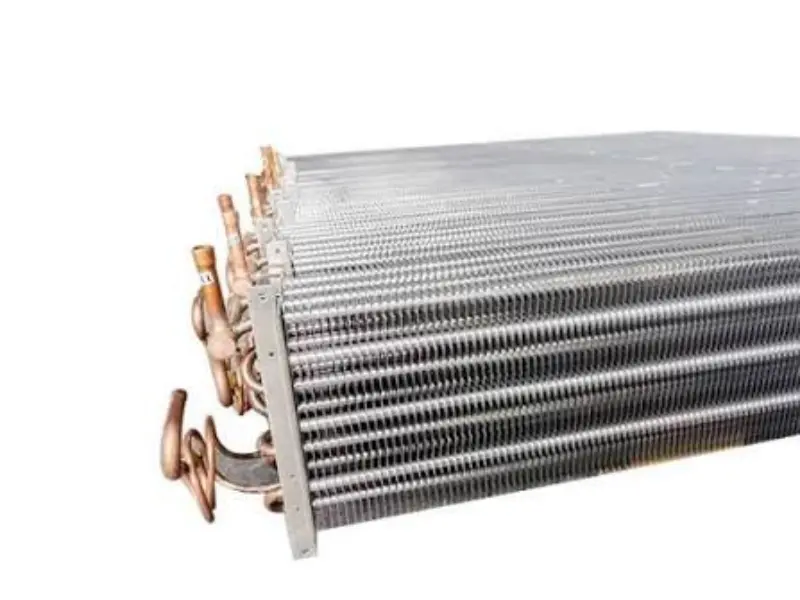
Epoxy or Phenolic Coated Fin Stock
A heavier polymer layer protects against aggressive environments.
→ Survives salt spray in marine coolers
→ Resists acid rain in outdoor telecom units
→ Adds rigidity to thin fins
This is often called anti-corrosion fin stock or gold epoxy coated foil.
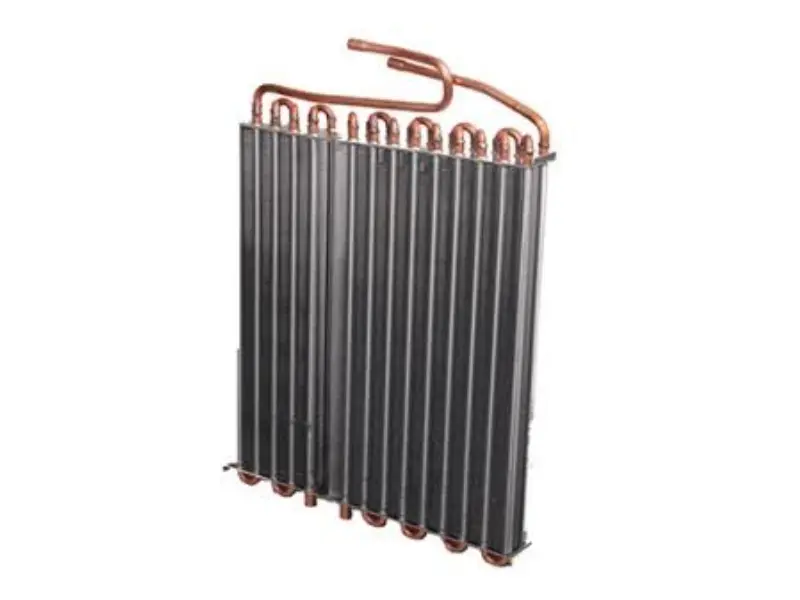
Clad Fin Stock Foil
The foil has a skin of lower-melting alloy on one or both sides. Typically, a 3003 core carries a 4343 or 4045 cladding layer.
→ The cladding melts during brazing and bonds the fin to the tube
→ No separate flux or filler needed in controlled atmosphere brazing
→ Stronger joints than mechanical assembly
→ Common in automotive and industrial radiators
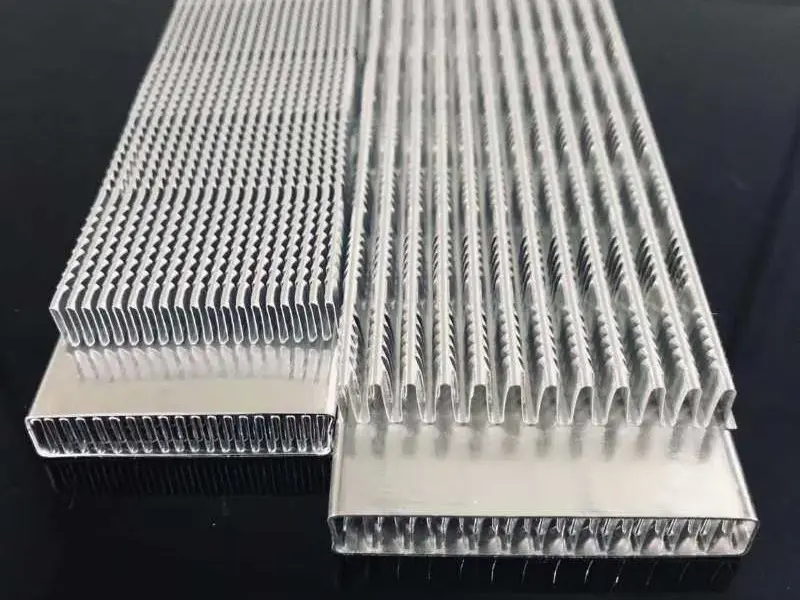
Bare vs. Coated vs. Clad: Side by Side
| Feature | Bare Fin Stock | Hydrophilic Coated | Clad Fin Stock |
|---|---|---|---|
| Cost per kg | Lowest | Medium | Highest |
| Assembly method | Mechanical, welding | Mechanical, adhesive | Brazing |
| Corrosion resistance | Standard | High | Medium |
| Heat transfer | Maximum | Slightly reduced | Good |
| Color | Silver | Blue, gold, black | Silver |
| Best environment | Clean, indoor | Humid, residential | Engine bays, industrial |
If you run a brazing furnace, clad is the only logical choice. If you assemble window units in a humid climate, hydrophilic coating pays for itself in efficiency gains.
Width and Coil Specs for Production Lines
Fin corrugating machines need continuous coil. The width must match your tooling.
| Width (mm) | Width (inch) | Typical Use |
|---|---|---|
| 100 mm | 3.9 in | Small automotive cores, custom coils |
| 200 mm | 7.9 in | Residential AC fins |
| 300 mm | 11.8 in | Standard radiator production |
| 400 mm | 15.7 in | Large industrial coils |
| 500 mm | 19.7 in | Heavy equipment heat exchangers |
| 1000 mm+ | 39.4 in+ | Wide HVAC coils, slitting downstream |
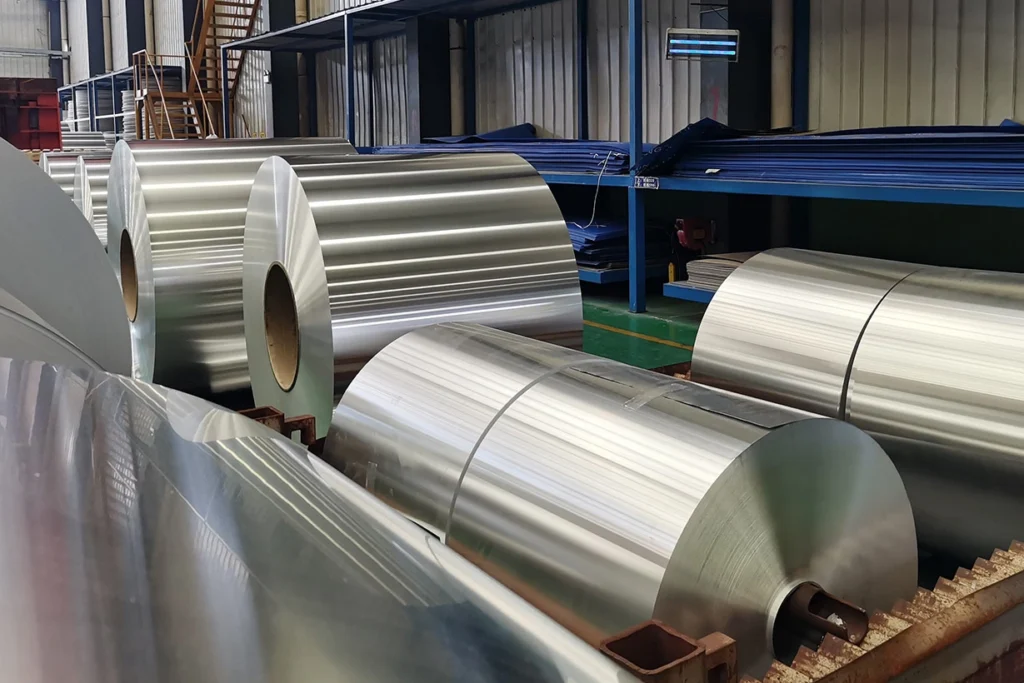
Core inner diameters are usually 150 mm, 200 mm, or 300 mm. Outer coil diameters run from 800 mm to 1500 mm depending on foil thickness and line speed.
Applications Where Fin Stock Foil Works
Automotive
→ Car radiators transfer engine heat to ambient air
→ Charge air coolers drop compressed air temperature
→ Oil coolers keep transmission fluid stable
→ AC condensers release cabin heat
→ Heater cores warm passenger compartments
Residential and Commercial HVAC
→ Split system evaporator coils absorb indoor heat
→ Condenser coils reject heat outdoors
→ Heat pump coils reverse roles by season
→ Dehumidifier coils pull moisture from air
Refrigeration
→ Refrigerator evaporator coils cool the freezer box
→ Walk-in cooler fins maintain food temperature
→ Ice machine heat exchangers freeze water fast
→ Cold storage blast freezers handle extreme loads
Industrial and Power
→ Generator radiator banks cool engine coolant
→ Hydraulic oil coolers protect excavators
→ Compressor aftercoolers drop air temperature
→ Solar thermal collectors absorb radiant heat
Electronics
→ Server rack heat sinks use micro-fins
→ LED cooling modules spread thermal load
→ Power inverter heat exchangers manage waste heat
→ Battery thermal management systems in EVs
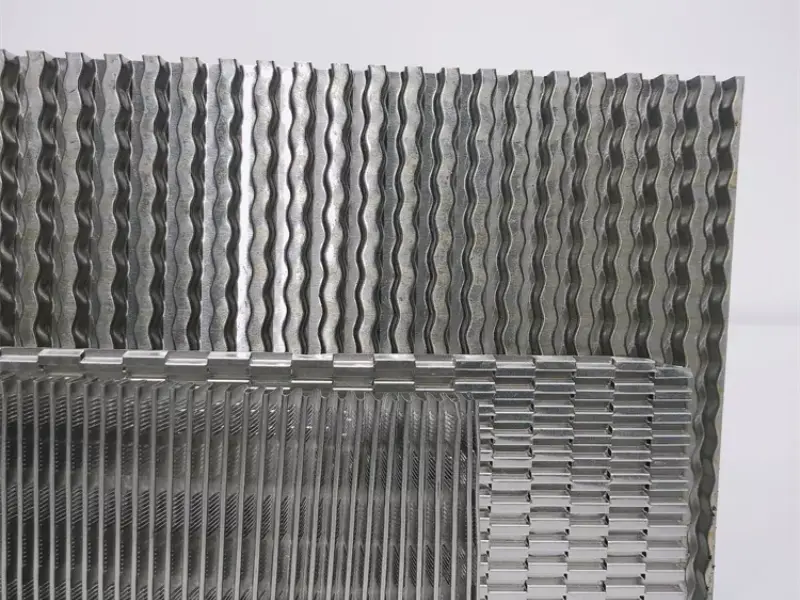
Alloy Comparison for Specific Heat Exchanger Jobs
| Job Requirement | Best Alloy | Temper | Why |
|---|---|---|---|
| Maximum thermal efficiency | 1060 | O | Purest aluminum, lowest resistance |
| Lowest material cost | 1050 | H14 | Cheap, easy to corrugate |
| Brazed automotive radiator | 3003 clad with 4343 | H24 | Strong core, self-brazing skin |
| Corrosive coastal AC unit | 8011 with epoxy coat | H22 | Coating blocks salt, alloy forms well |
| High-vibration truck cooler | 3003 | H26 | Manganese adds fatigue resistance |
| Micro-channel flat tube coil | 1050 | H18 | Thin, stiff fins fit tight spaces |
How Foil Quality Affects Brazing Results
Brazing joins fins to tubes by melting a filler metal. The furnace atmosphere is nitrogen. The temperature window is narrow.
Poor quality brazing fin stock causes problems:
- Oil residue on foil creates voids in joints
- Inconsistent thickness leads to uneven heat distribution
- High iron content causes brittle intermetallic layers
- Wavy edges jam corrugating machines
Good mills supply foil with:
- Clean, degreased surfaces
- Tight thickness tolerance of ±3 microns
- Low hydrogen content to prevent porosity
- Properly annealed grain structure for uniform expansion
Fin Stock Foil vs. Copper Foil
Some engineers still specify copper for certain heat exchangers. Here is how aluminum wins most fights.
| Factor | Aluminum Fin Stock | Copper Foil |
|---|---|---|
| Density | 2.7 g/cm³ | 8.9 g/cm³ |
| Weight for same fin pack | One third | Heavy |
| Thermal conductivity | 200+ W/m·K | 400 W/m·K |
| Cost per kg | Low | High |
| Oxidation in air | Self-limiting oxide | Turns green, needs coating |
| Brazing compatibility | Excellent with NOCOLOK | Requires special flux |
| Recyclability | High value scrap | High value scrap |
Copper conducts heat better. But aluminum costs less, weighs less, and resists atmospheric corrosion without turning green. For most air-to-fluid exchangers, aluminum fin stock is the smarter choice.
Storage and Handling Rules
This foil is thin. It damages easily. Follow these steps.
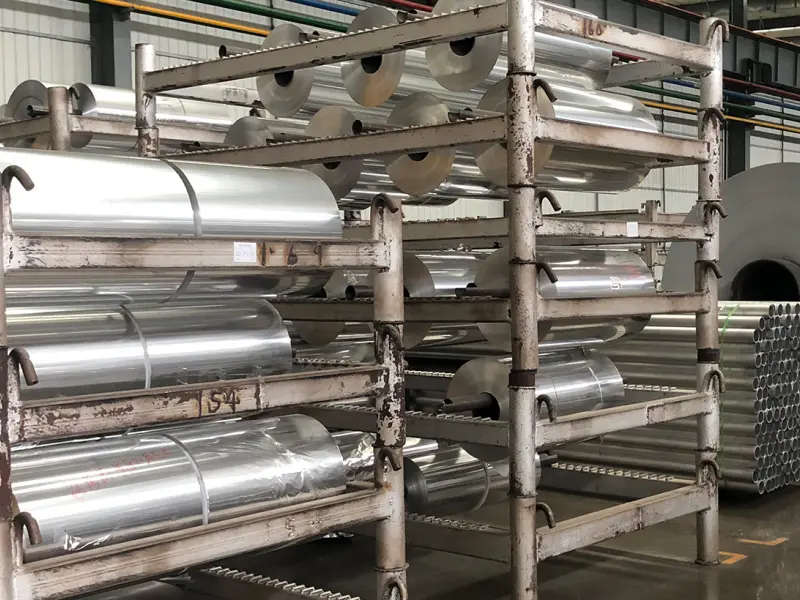
Slit coils on clean equipment to avoid contamination
Store coils indoors away from moisture
Keep temperature stable to avoid condensation
Handle with gloves; skin oil hurts brazing
Do not stack heavy objects on coil edges
Use within six months if coated; epoxy can age
Common Fin Stock Foil Types
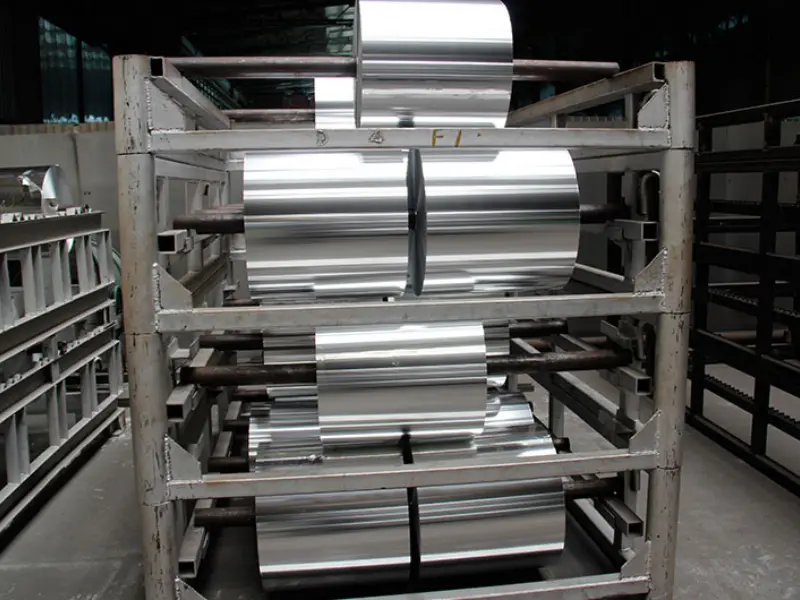
Bare Fin Stock Foil
→ Standard aluminum foil used for general heat exchanger production.
Hydrophilic Fin Stock Foil
→ Coated with a special hydrophilic layer to improve water drainage and prevent corrosion.
Anti-Corrosion Fin Stock Foil
→ Designed for humid and outdoor environments with improved durability.
Automotive Fin Stock Foil
→ Used in vehicle radiators, condensers and cooling systems requiring higher strength.
High Strength Fin Stock Foil
→ Suitable for large heat exchangers and industrial refrigeration equipment.
Main Applications
- Air conditioner evaporator fins
- Air conditioner condenser fins
- Refrigerator cooling systems
- Automotive radiators
- Automotive condensers
- Heat exchanger equipment
- HVAC systems
- Industrial refrigeration units
- Cooling towers and ventilation equipment
- Commercial refrigeration systems
Product Advantages
→ Excellent heat transfer efficiency
→ Lightweight material for energy-saving equipment
→ Good stamping and forming performance
→ Reduces manufacturing defects during fin production
→ Improves heat exchanger service life
→ Suitable for automatic fin forming machines
→ Available with customized coating solutions
→ Reliable performance in different environmental conditions
Typical Fin Stock Foil Production Process
Aluminum Casting
↓
Hot Rolling
↓
Cold Rolling
↓
Annealing Treatment
↓
Surface Coating (Optional)
↓
Slitting
↓
Quality Inspection
The controlled production process ensures stable thickness, smooth surface quality and excellent forming performance for heat exchanger applications.
FAQ: What Buyers Ask
What alloy is best for brazing radiators?
3003 clad fin stock is the industry standard. The 3003 core gives strength. The 4343 cladding layer melts at a lower temperature and bonds the fin to the tube. Use temper H24 for a good balance of formability and furnace stability.
How thin can fin stock foil go?
Mills regularly produce fin stock foil down to 0.05 mm for micro-channel heat exchangers. Below that, handling becomes difficult and corrosion risk rises. Most automotive and HVAC fins sit between 0.08 mm and 0.13 mm.
What is the difference between hydrophilic and hydrophobic fin stock?
Hydrophilic fin stock attracts water. It spreads condensation into a film that improves heat transfer. Air conditioners use this. Hydrophobic fin stock repels water. It prevents ice buildup and helps water drain away. Freezers and cold rooms use this.
Can I use bare aluminum fin stock in a saltwater environment?
Bare aluminum corrodes in salt spray. You should choose epoxy-coated fin stock or specify a higher-grade alloy like 3003 with a protective layer. Bare 1050 will pit quickly near the ocean.
What does clad fin stock mean?
Clad means the foil has a sandwich structure. A core of 3003 carries a thin skin of 4343 or 4045 aluminum-silicon alloy. During brazing, only the skin melts. It flows into the joint and solidifies as the furnace cools. The core never melts, so the fin keeps its shape.
Is 8011 better than 3003 for air conditioners?
For coated indoor evaporators, 8011 fin stock is common. It accepts hydrophilic coatings well and costs less than 3003. For outdoor condensers and automotive radiators, 3003 is stronger and resists vibration better. The answer depends on the unit type.
How do I calculate how much foil I need?
Measure the fin face area. Multiply by the fin density. Multiply by the average fin height factor. Then add 8 to 12 percent for scrap during corrugation and trimming. Your coil supplier can run the exact numbers if you send the core drawing.
What temper works best for high-speed corrugating?
H18 and H24 run well on fast lines. They are stiff enough to hold a sharp corrugation profile. O temper can wrinkle or collapse if the rollers run too fast. Test a sample coil before committing to a full order.
Does fin stock foil need degreasing before brazing?
Yes. Even mill-applied lubricants can leave residue. Most brazing lines include a degreasing stage. If you buy foil with heavy forming oil, plan for a wash step. Some mills offer pre-cleaned foil ready for the furnace.
Can fin stock foil be recycled?
Yes. Aluminum recycles forever. Scrap from corrugating, rejected coils, and end-of-life heat exchangers all go back to the smelter. Coated foil must have the epoxy burned off first, but the aluminum itself retains full value.