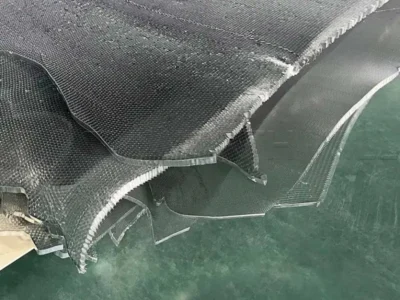
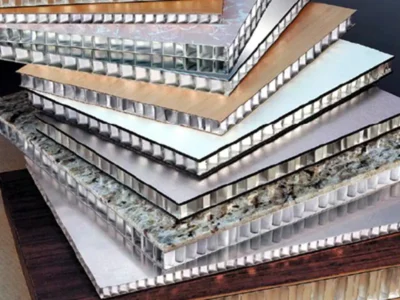
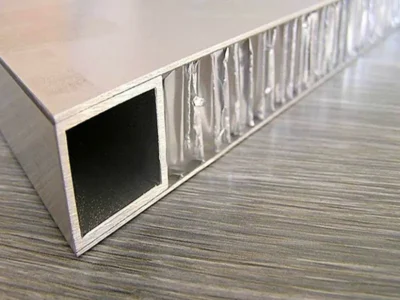
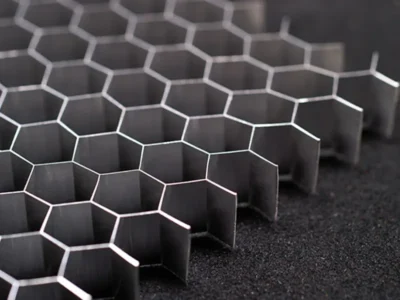
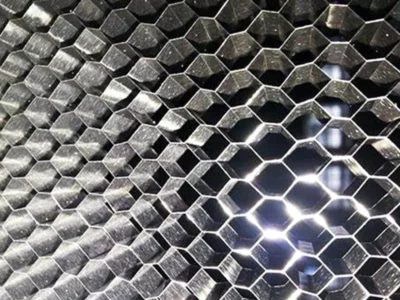
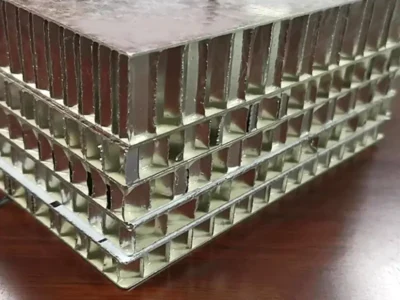
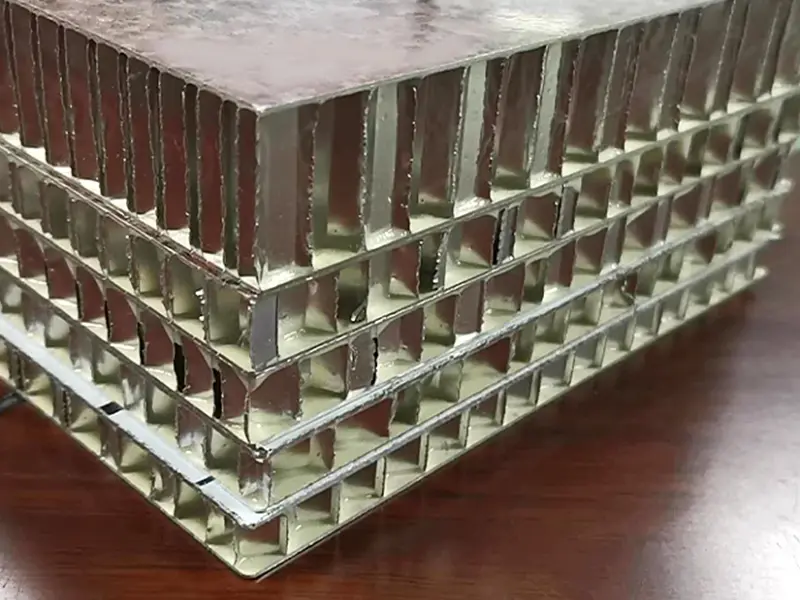
Aluminum honeycomb panel is a sandwich structure material. It consists of two thin aluminum face sheets bonded to a hexagonal honeycomb core. This design creates exceptional strength-to-weight ratio .
The panels are lightweight yet rigid. They resist bending and deformation under load. The honeycomb core structure mimics nature’s most efficient load-bearing patterns.
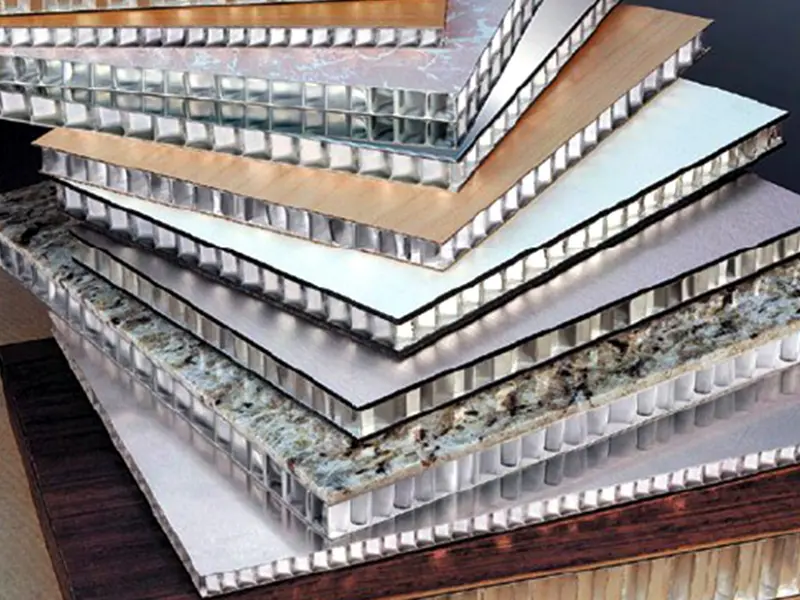
Core Material Types
3003 Aluminum Honeycomb Core
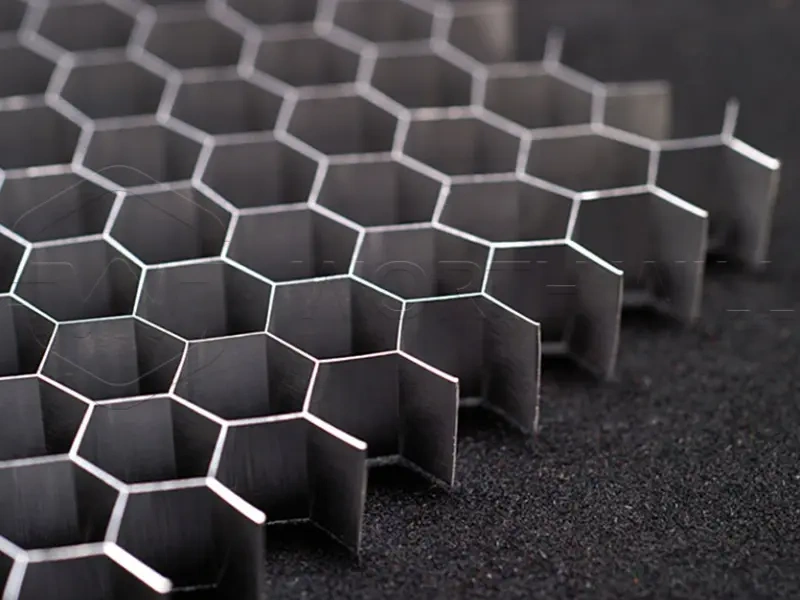
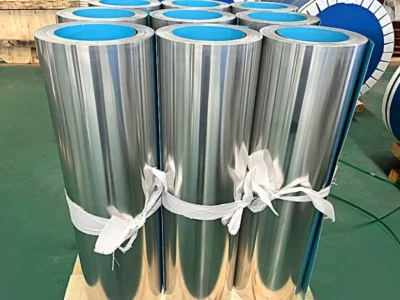
3003 alloy is the standard material for honeycomb cores. It contains manganese for strength and corrosion resistance .
Specifications:
- Aluminum content: 96.8–99%
- Manganese content: 1.0–1.5%
- Density: 19–52 kg/m³
- Service temperature: up to 175°C (350°F)
This alloy offers excellent strength-to-weight ratio. It works well for general-purpose applications .
5052 Aluminum Honeycomb Core
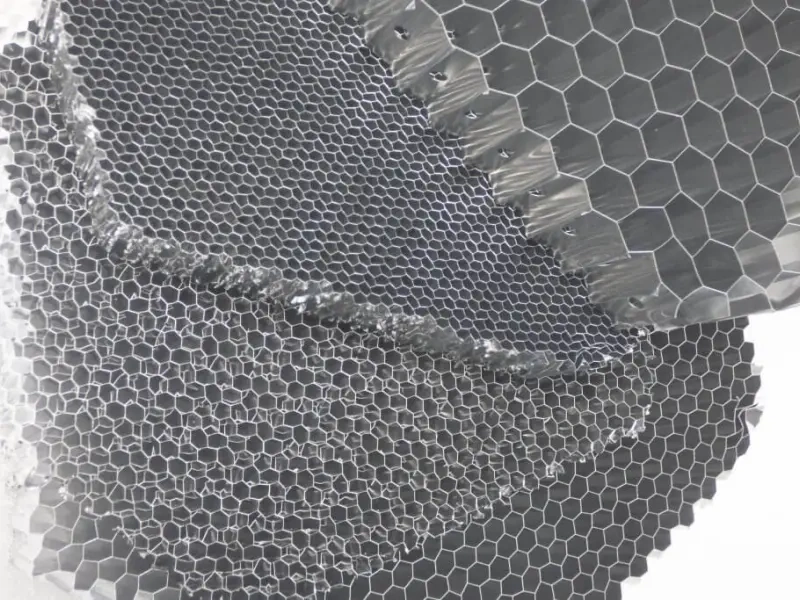
5052 alloy contains magnesium for superior corrosion resistance. It performs better in marine and harsh environments .
Specifications:
- Magnesium content: approximately 2.5%
- Better corrosion resistance than 3003
- Higher strength in H32 temper
- Ideal for coastal and offshore applications
Face Sheet Alloys
| Alloy | Thickness Range | Characteristics | Best For |
|---|---|---|---|
| 3003 | 0.5–3.0 mm | Good formability, economical | Interior panels, standard cladding |
| 3005 | 0.5–3.0 mm | Better strength than 3003 | Exterior facades, structural panels |
| 5005 | 0.5–3.0 mm | Excellent corrosion resistance | Marine environments, coastal buildings |
| 5052 | 0.5–4.0 mm | High strength, weldable | Aerospace, heavy-duty applications |
Standard Specifications
Panel Dimensions
| Parameter | Standard Range | Custom Options |
|---|---|---|
| Thickness | 6–200 mm | Up to 300 mm |
| Length | 1,220–6,000 mm | Up to 12,000 mm |
| Width | 1,220–1,500 mm | Up to 2,000 mm |
| Face sheet thickness | 0.5–3.0 mm | Up to 4.0 mm |
Cell Size Options
| Cell Size (mm) | Cell Size (inch) | Density (kg/m³) | Application |
|---|---|---|---|
| 3.2 | 1/8 | 80–130 | High strength, aerospace |
| 4.8 | 3/16 | 50–80 | Structural panels, flooring |
| 6.35 | 1/4 | 30–52 | General cladding, partitions |
| 9.5 | 3/8 | 20–35 | Lightweight, interior use |
| 12.7 | 1/2 | 15–25 | Non-structural, decorative |
Product Types
1. Standard Honeycomb Panel
Standard panels use 3003 alloy for both core and face sheets. They provide balanced performance for most applications.
Specifications:
- Core: 3003 aluminum, 6.35 mm cell
- Face sheets: 0.8–1.5 mm thick
- Total thickness: 10–50 mm
- Finish: Mill finish or anodized
2. High-Strength Honeycomb Panel
High-strength panels use 5052 alloy face sheets. They handle heavier loads and impacts.
Specifications:
- Core: 3003 or 5052 aluminum
- Face sheets: 1.0–3.0 mm, 5052 alloy
- Total thickness: 15–100 mm
- Temper: H32 or H34
3. Fire-Resistant Honeycomb Panel
Fire-rated panels use special core materials. They meet strict building safety codes .
Specifications:
- Core: Mineral wool or intumescent-treated aluminum
- Fire rating: Class A (ASTM E84)
- Face sheets: 0.8–2.0 mm
- Temperature resistance: up to 1,200°C
4. Acoustic Honeycomb Panel
Acoustic panels include sound-absorbing layers. They reduce noise transmission in buildings .
Specifications:
- Core: Perforated aluminum with acoustic backing
- NRC rating: 0.7–1.0
- Face sheets: Perforated or slotted
- Thickness: 25–100 mm
5. Thermal Insulation Panel
Insulation panels combine honeycomb structure with thermal barriers .
Specifications:
- Core: PU or PIR foam-filled honeycomb
- Thermal conductivity: 0.022–0.05 W/m·K
- Face sheets: 0.5–2.0 mm
- R-value: R-4 to R-8 per inch
Surface Finish Options
| Finish Type | Thickness | Characteristics | Applications |
|---|---|---|---|
| Mill finish | Base metal | Natural aluminum look | Industrial, hidden areas |
| Anodized | 5–25 microns | Corrosion resistant, decorative | Exterior cladding, trim |
| Polyester paint | 15–25 microns | Cost-effective, color variety | Interior panels, signage |
| PVDF coating | 25–35 microns | Superior UV resistance, 20+ year life | High-end facades, roofing |
| Wood grain | 25–35 microns | Decorative timber appearance | Interior design, furniture |
Mechanical Properties
| Property | Typical Value | Test Method |
|---|---|---|
| Compressive strength | 1–7 MPa | ASTM C365 |
| Shear strength | 0.5–3.0 MPa | ASTM C273 |
| Flexural strength | 150–300 MPa | ASTM C393 |
| Peel strength | ≥ 25 N/mm | ASTM D1781 |
| Flatness | ≤ 1.5 mm/m | – |
Application Areas
Aluminum honeycomb panels serve multiple industries :
- Building Facades: Curtain walls, exterior cladding, column covers
- Interior Design: Partitions, ceilings, wall panels, furniture
- Transportation: Aircraft interiors, train partitions, ship bulkheads
- Exhibitions: Display stands, stage sets, modular booths
- Cleanrooms: Wall and ceiling systems for controlled environments
- Marine: Yacht interiors, offshore platform cladding
- Signage: Large-format signs, channel letters, billboards
Quality Standards
| Standard | Description |
|---|---|
| ASTM B209 | Aluminum sheet and plate specification |
| ASTM C365 | Compressive strength of sandwich cores |
| ASTM C393 | Flexural properties of sandwich constructions |
| ASTM E84 | Surface burning characteristics (fire rating) |
| AMS 4983 | Aerospace-grade honeycomb materials |
| EN 13501-1 | European fire classification |
| ISO 9001 | Quality management systems |
Advantages of Aluminum Honeycomb Panels
- Lightweight: Up to 70% lighter than solid aluminum panels
- High strength: Excellent load-bearing capacity for the weight
- Rigid: Maintains flatness over large spans
- Fire resistant: Non-combustible aluminum construction
- Corrosion resistant: Natural oxide layer protects the metal
- Thermal insulation: Air pockets reduce heat transfer
- Acoustic damping: Absorbs sound and reduces noise
- Recyclable: 100% recyclable material
- Customizable: Various sizes, thicknesses, and finishes available
Installation Methods
Adhesive Bonding
Structural adhesives bond panels directly to substrates. This method provides even stress distribution .
Best for: Aerospace, automotive body panels, architectural facades
Mechanical Fastening
Screws, bolts, or rivets secure panels through pre-drilled holes. This allows disassembly for maintenance .
Best for: Equipment enclosures, serviceable structures, temporary installations
Framing Systems
Panels insert into extruded aluminum or steel frames. This protects edges and provides clean lines .
Best for: Wall systems, ceiling tiles, modular partitions
Ordering Guide
When ordering aluminum honeycomb panels, specify these parameters:
| Parameter | Your Selection |
|---|---|
| Core alloy | 3003 or 5052 |
| Cell size | 3.2–12.7 mm |
| Core density | 15–130 kg/m³ |
| Face sheet alloy | 3003, 3005, 5005, 5052 |
| Face sheet thickness | 0.5–4.0 mm |
| Panel thickness | 6–200 mm |
| Panel size | Standard or custom |
| Surface finish | Mill, anodized, painted, PVDF |
| Fire rating | Standard or Class A |
Storage and Handling
- Store panels flat in dry conditions
- Avoid stacking heavy objects on panels
- Handle with clean gloves to prevent surface marking
- Protect edges from impact damage
- Keep away from moisture until installation
- Use proper lifting equipment for large panels
Aluminum honeycomb panels and Cores for sale
Aluminum honeycomb panels provide an optimal combination of light weight and high strength. Various core densities and face sheet options match different performance requirements. Surface treatments extend service life and enhance appearance.
Contact suppliers with your project specifications. They can recommend the right core density, face sheet thickness, and finish for your application. Whether you need cladding for a high-rise building or panels for aircraft interiors, aluminum honeycomb delivers reliable performance.