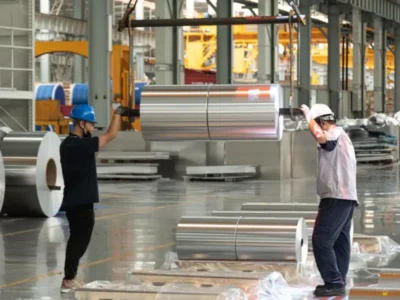

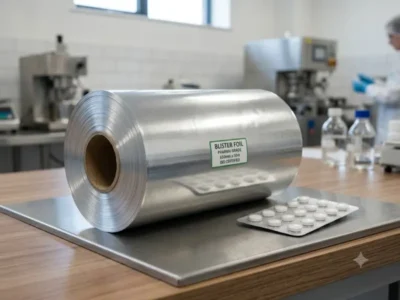

What Is Blister Foil?
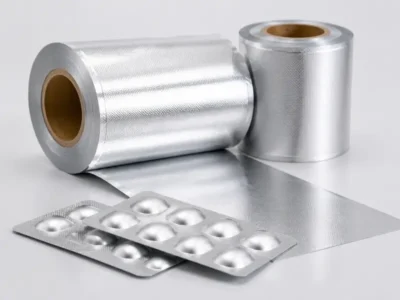
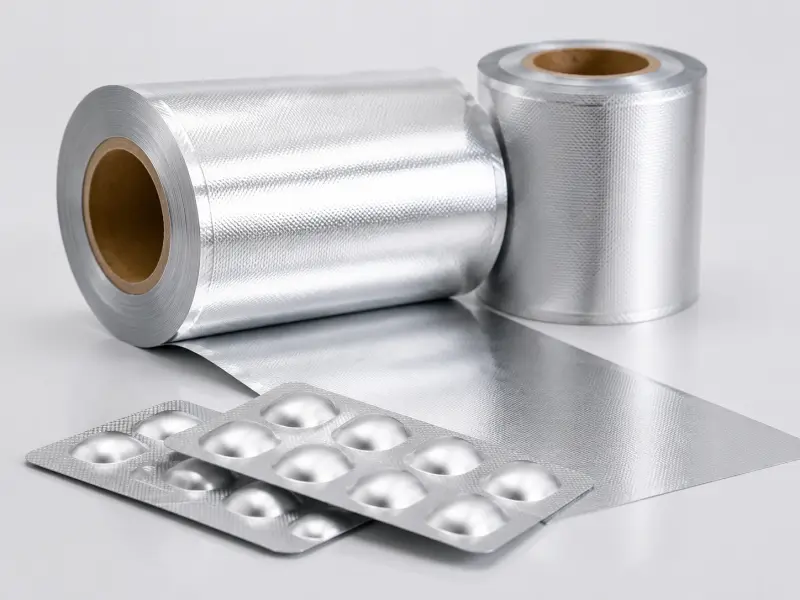
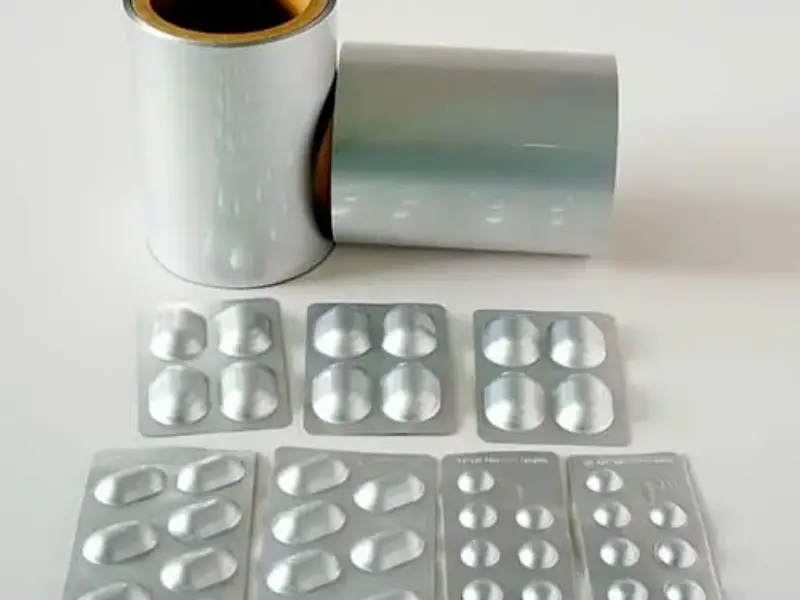
Blister foil is a thin metal or laminate sheet that seals pre-formed plastic or aluminum cavities. These cavities hold tablets, capsules, and small consumer goods.
When you push a pill through the back of a medicine card, you feel the resistance ofblister foil. It tears in a controlled way so the product stays clean.
The meaning of blister foil is simple. It acts as a barrier against moisture, oxygen, and light. Most pharmaceutical companies rely on aluminium blister foil because it blocks these elements better than plastic alone.
You will also hear it called blister lidding foil or blister pack foil. The name changes, but the job stays the same.
It covers the open side of a blister pack and keeps the contents safe until use.
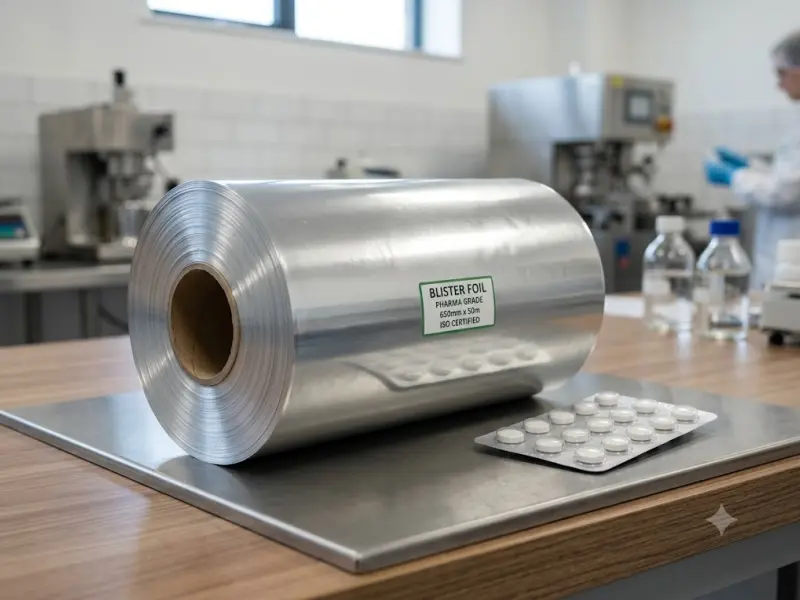
How Blister Foil Works in Packaging
A blister packaging machine forms pockets in a base material. This base can be PVC, PVDC, PET, or cold-form aluminum laminate.
The machine drops the product into each pocket. Then it lays a sheet of blister foil over the top. Heat and pressure seal the foil to the base. The result is a row of protected doses.
There are two main sealing styles.
Push-through lidding uses hard-temper aluminum. The user pushes the tablet through the foil. Peel-open lidding uses softer foil or multi-layer laminates. The user peels the cover back.
Pharmaceutical blister foil printing machines often add batch numbers and expiry dates during this process. Some lines also print eye marks on blister foil so automatic cutters know where to separate each card.
Blister Foil vs Strip Foil: What Sets Them Apart
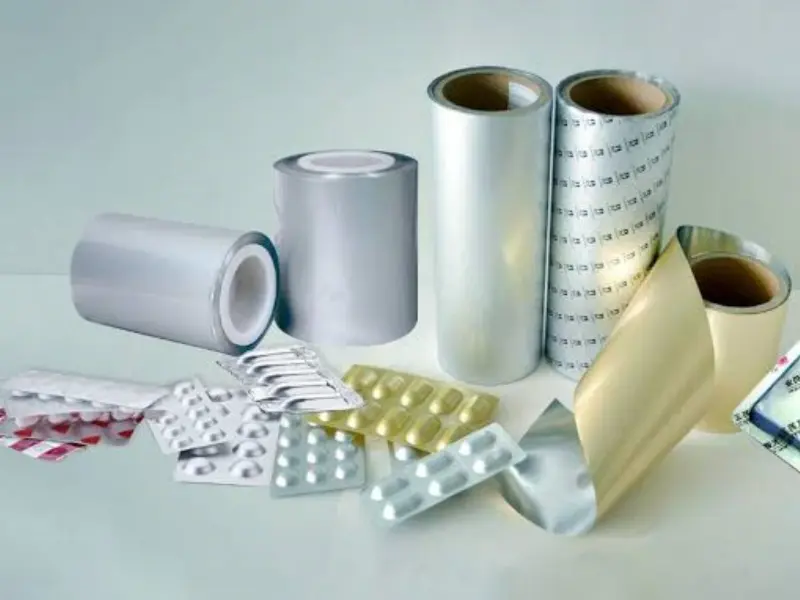
Buyers often confuse blister foil with strip foil. Both package pills, but they work differently.
| Feature | Blister Foil | Strip Foil |
|---|---|---|
| Shape | Seals over raised cavities | Seals between two flat webs |
| Structure | Lid + formed base | Two flexible layers sandwich the dose |
| Base Material | PVC, PVDC, PET, or Alu-Alu laminate | Aluminum foil or foil laminate |
| Visibility | Product visible through plastic base | Usually fully opaque |
| Opening Style | Push-through or peel | Tear along perforations |
| Protection | Good; Alu-Alu offers maximum barrier | Good; double aluminum blocks light and moisture |
| Machine Cost | Higher due to forming molds | Lower; simpler tooling |
Blister packs give physical protection. The rigid cavity stops tablets from crushing. Strip packs are lighter and use less material per dose. Strip packaging is common in hospital unit-dose programs. Blister packaging dominates retail pharmacy and over-the-counter sales.
Types of Blister Foil by Structure
Not all blister foil is the same. Your product determines which type you need.
PTP Aluminium Blister Foil

PTP stands for push-through pack. This is the standard blister lidding foil. It uses hard aluminum with a heat-seal coating on one side. The coating faces the PVC base. The outer side stays bright or matte for printing. PTP foil is thin, usually between 20 and 25 microns. It is the most common type for tablets and capsules.
Alu-Alu Cold Form Foil
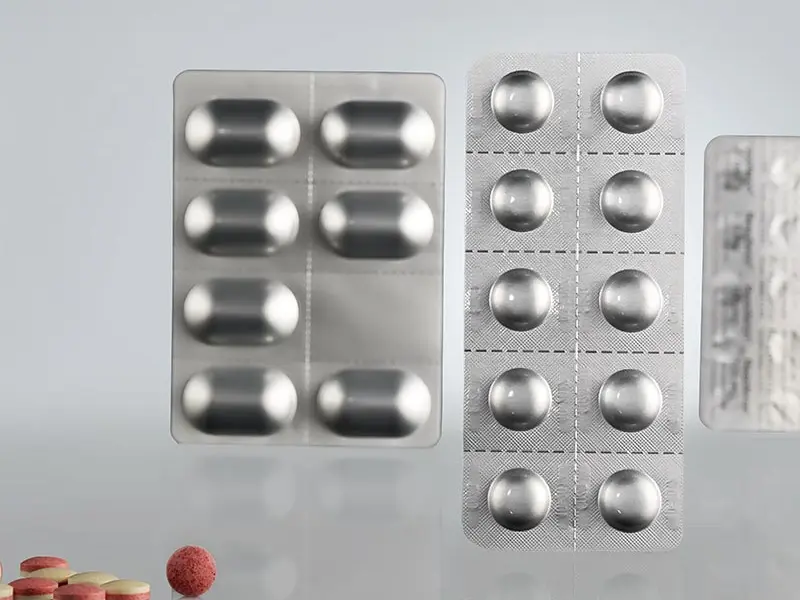
Alu-Alu foil does not use plastic. Both the cavity and the lid are aluminum laminates. A cold-forming press shapes the bottom layer into pockets. The top layer seals over them. This structure gives the best barrier against water vapor and oxygen. It is ideal for moisture-sensitive drugs. Thickness ranges from 140 to 160 microns for the base laminate. The lidding foil is thinner but still aluminum-based.
PVC Blister Foil Base
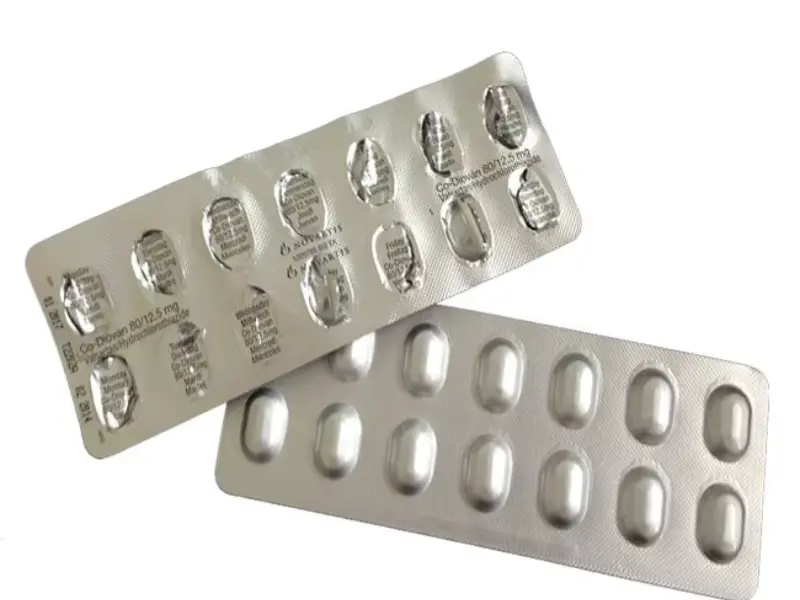
PVC blister foil is not a lidding material. It is the bottom web that forms the pocket. Some buyers search for PVC blister foil when they mean the whole package. Clear PVC lets the user see the product. It costs less than aluminum but blocks less moisture. Manufacturers often pair it with PVDC or COC films to improve barrier levels.
Printed Blister Foil

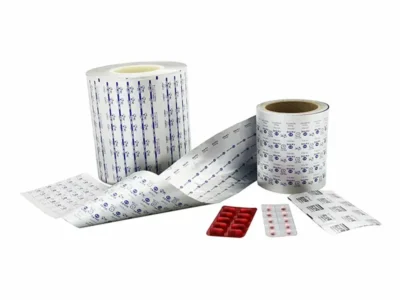
Printed blister foil carries branding, dosage instructions, and regulatory data. Printers use food-grade inks on the outer surface. A protective varnish sits over the print. Printed aluminium blister foil helps patients identify medicines and supports marketing. Some suppliers offer holographic prints for anti-counterfeit protection.
Plain Blister Foil
Plain blister foil has no print. It is silver on both sides or bright on one side and matte on the other. It costs less than printed options. Some buyers use plain foil for generic products or for export markets that require local-language over-labeling.
Aluminium Blister Foil Alloy and Temper Guide
Aluminium blister foil specifications depend on alloy and temper. These factors control strength, flexibility, and seal performance.
| Alloy | Temper | Typical Use | Key Trait |
|---|---|---|---|
| 8011 | H18 | PTP lidding foil | Hard, strong push-through |
| 8011 | O / H14 | Peelable lidding | Softer, easier to peel |
| 8079 | O | High-barrier lidding | Excellent formability |
| 8021 | O / H18 | Cold-form base foil | Deep draw capability |
| 1235 | O | Flexible laminates | High purity, good seal |
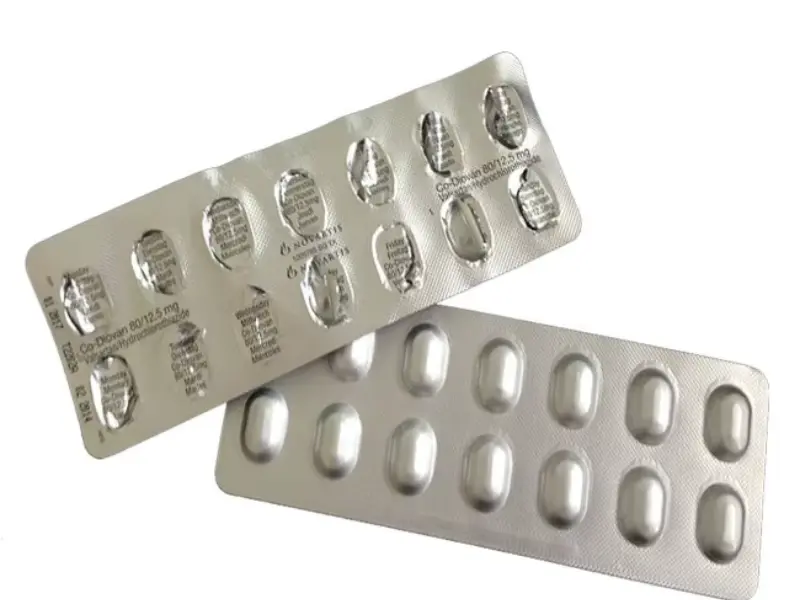
Alloy 8011 is the workhorse for most blister pack aluminum foil. It balances cost and performance. Alloy 8079 offers better elongation. It works well when the foil must stretch during sealing. Alloy 8021 is common in Alu-Alu cold-form applications because it handles deep drawing without tearing.
Temper matters just as much as alloy. H18 means hard temper. It resists puncture and lets the user push a tablet through cleanly. O temper means soft or annealed. It suits peel-open packs and complex shapes. H14 and H24 are half-hard options used when you need middle-ground flexibility.
Blister Foil Thickness Standards
Thickness controls barrier strength, machinability, and cost. Here is how typical ranges break down.
| Thickness (Microns) | Thickness (mm) | Common Application |
|---|---|---|
| 15 – 20 | 0.015 – 0.020 | Lightweight PTP lidding |
| 20 – 25 | 0.020 – 0.025 | Standard pharmaceutical lidding |
| 25 – 30 | 0.025 – 0.030 | Heavy lidding, large capsules |
| 40 – 60 | 0.040 – 0.060 | Peelable or multi-layer lids |
| 140 – 160 | 0.140 – 0.160 | Alu-Alu cold-form base |
Standard blister foil thickness for most tablets is 20 to 25 microns. Some European markets now test 15-micron foil to reduce aluminum use. Thicker lids seal better on rough surfaces. Alu-Alu base foil must be much thicker because it forms the pocket itself.
Printed Blister Foil and Eye Mark Features
Modern blister foil printing uses rotogravure or flexographic presses. These machines handle fine text and brand colors. The print sits on the outer surface. A heat-seal lacquer coats the inner surface. The lacquer must not interfere with the ink.
Eye marks on blister foil are small printed rectangles. Sensors on the packaging machine read these marks. They tell the cutter where to separate cards or where to place text. Without eye marks, registration drifts and packs look uneven. Most pharmaceutical blister foil printing machines include eye-mark detection as standard.
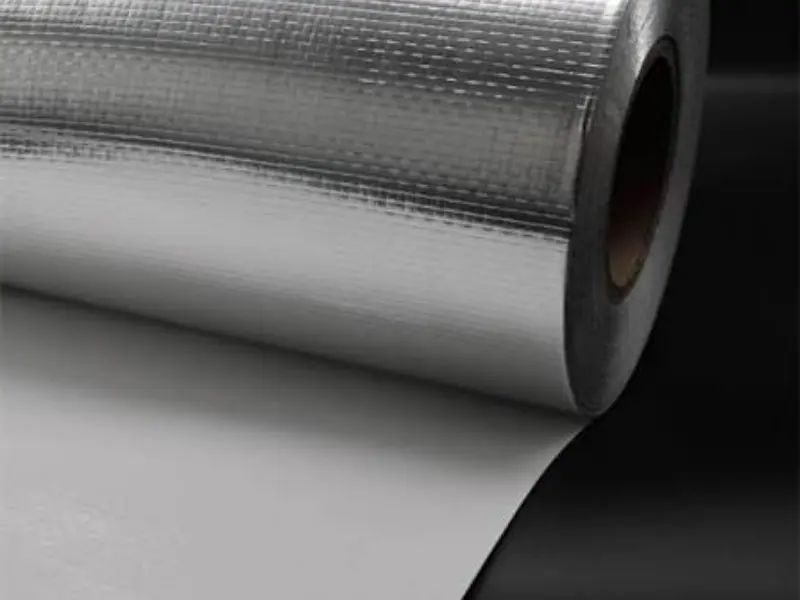
Common Blister Foil Types
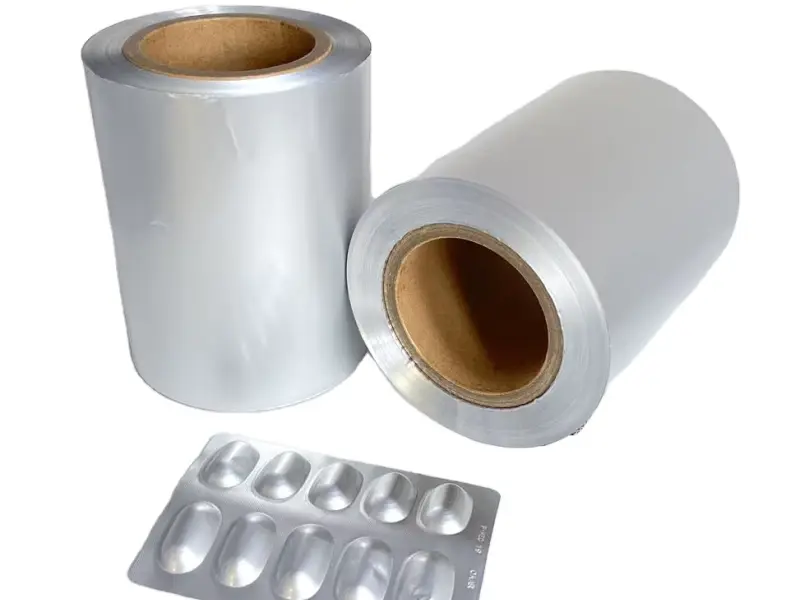
Plain Blister Foil
→ Basic aluminum foil used for pharmaceutical packaging after coating and printing.
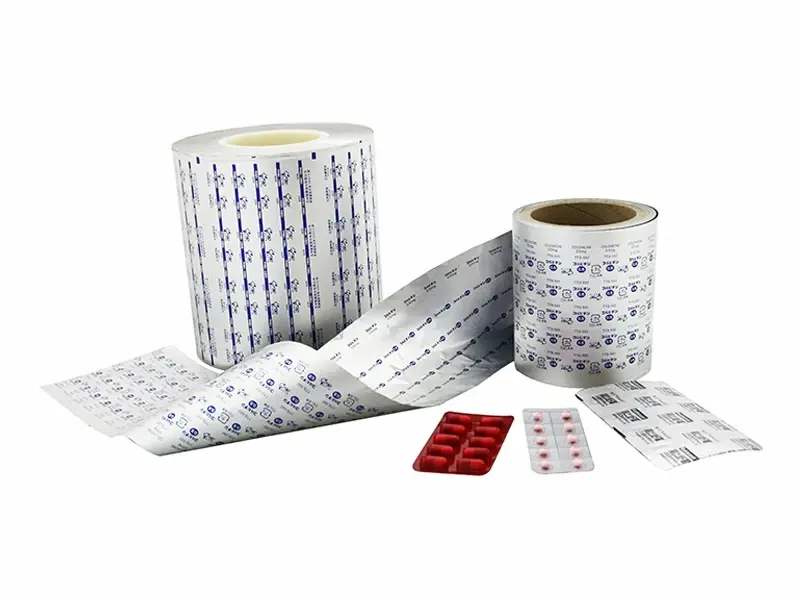
Printed Blister Foil
→ Printed with logos, product information, batch numbers and brand designs.
Heat Seal Blister Foil
→ Coated with heat-sealing lacquer for bonding with PVC or PVDC blister films.
Cold Forming Blister Foil
→ Uses special aluminum structures for stronger protection requirements.
Tropical Blister Foil
→ Designed for high humidity and high-temperature environments.
Main Applications
- Tablet blister packaging
- Capsule blister packaging
- Pharmaceutical packaging
- Vitamin packaging
- Medical products packaging
- Healthcare product packaging
- Nutritional supplement packaging
- Small-dose medicine packaging
- Hospital and pharmacy packaging
Product Advantages
→ Protects medicines from moisture and oxygen
→ Prevents light damage to sensitive products
→ Improves product shelf life
→ Excellent sealing performance
→ Suitable for automatic blister packing machines
→ Provides clean and professional packaging appearance
→ Supports customized printing and coating solutions
Typical Blister Foil Structure
Aluminum Foil
↓
Printing Layer
↓
Protective Coating
↓
Heat Seal Lacquer Layer
↓
PVC / PVDC Film
This multi-layer structure provides reliable protection for pharmaceutical products during storage and transportation.
Where Industries Use Blister Foil
Blister foil packaging appears in many sectors. The format protects small items from contamination and tampering.
- Pharmaceuticals: Tablets, capsules, soft gels, and lozenges
- Nutraceuticals: Vitamins, protein pills, and herbal supplements
- Medical devices: Contact lenses, diagnostic strips, and small syringes
- Food: Chewing gum, chocolate pieces, and single-serve candies
- Electronics: Memory cards, batteries, and small sensors
- Hardware: Screws, drill bits, and fishing hooks
- Cosmetics: Single-use serum capsules and sample packs
Pharmaceutical use dominates global demand. Regulatory rules force drug makers to prove shelf-life stability. Aluminium blister foil meets these rules better than most plastics.
Blister Foil Packaging Machines
A blister foil packaging machine combines forming, filling, and sealing into one line. Small tabletop units process 1,000 to 5,000 packs per hour. Industrial rotary machines reach 300,000 packs per hour or more.
Key machine types include:
- Flat-plate machines: Good for Alu-Alu cold forming
- Rotary machines: High speed for PVC or PVDC bases
- ** roller machines**: Compact footprint for medium batches
Most machines accept foil widths from 60 mm to 900 mm. Wider rolls reduce changeover time but need stronger unwind tension. If you run printed blister foil, choose a machine with automatic eye-mark registration.
Blister Foil Manufacturers in India: Market Overview
India exports blister foil to Africa, the Middle East, Europe, and the Americas. Local aluminium blister foil manufacturers offer both plain and printed grades. Major production clusters sit in Gujarat, Maharashtra, and Delhi NCR.
Indian suppliers typically stock:
- 20-micron plain blister foil for generic drugs
- 25-micron printed aluminium blister foil for branded products
- Alu-Alu cold-form laminates for moisture-sensitive formulations
- VMCH-coated and heat-seal-lacquer-coated options
Many blister foil manufacturers in India hold ISO, FDA, and SGS certifications. Lead times range from two to six weeks depending on order size and print complexity. Domestic buyers often pay per kilogram. Export buyers may negotiate roll-based pricing.
The blister foil HSN code in India is 76071995. This falls under Chapter 76 for aluminum and articles thereof. If you import or export blister foil from India, you use this code for customs and GST filing.
How to Calculate Blister Foil Needs
Blister foil calculation starts with pack dimensions. Measure the length and width of one blister card. Add a seal margin of 3 to 5 mm on each side. Then use this simple method.
First, find the foil area per card. Multiply the total length by the total width. Second, count how many cards you need per batch. Third, multiply the area by the card count. Fourth, add 5 to 10 percent for trim waste and machine startup.
For weight-based buying, you also need foil density. Aluminum weighs about 2.7 grams per cubic centimeter. Multiply the area by the thickness to get volume. Then multiply by density. Your supplier can confirm the exact number because coatings add slight weight.
Example: A card measures 90 mm by 55 mm. With margins, it becomes 100 mm by 65 mm. That is 6,500 square millimeters, or 0.0065 square meters. For a run of 100,000 cards, you need 650 square meters of foil. At 25 microns thick, the aluminum alone weighs roughly 43.9 kilograms. Add 10 percent waste. You should order about 48 kilograms.
Blister Aluminium Foil Price Factors
Blister aluminium foil price changes based on several inputs. The London Metal Exchange (LME) aluminum price sets the base. Then the mill adds processing fees for rolling, annealing, and coating.
Printed foil costs more than plain foil. Extra colors need extra print stations. Holographic security films raise the price further. Alu-Alu cold-form laminates use more material, so they cost more than standard PTP lids.
Order volume also matters. A 500-kilogram minimum order quantity (MOQ) is common from Indian suppliers. Jumbo-roll buyers get better per-kilogram rates than small-roll buyers.
Scrap and Recycling
Aluminium blister foil scrap comes from trim waste, rejected rolls, and post-consumer packs. Clean production scrap has high recycling value. It goes back to melting furnaces without separation. Post-consumer packs that include plastic layers need special recycling lines. Some European programs now separate aluminum from PVC using pyrolysis.
Frequently Asked Questions
What is the use of blister foil?
Blister foil seals medicine and consumer goods into pre-formed pockets. It blocks moisture, light, and oxygen. It also shows if someone has opened the pack.
What is the difference between blister foil and strip foil?
Blister foil covers raised cavities. Strip foil seals between two flat webs. Blister packs give more physical protection. Strip packs use less material and cost less to tool.
What is a blister wrap?
A blister wrap is another name for the lidding material that closes a blister pack. It can be aluminum foil, paper-backed foil, or a multi-layer laminate.
What is a foil pill packaging called?
Foil pill packaging is called a blister pack, push-through pack, or PTP pack. The foil layer itself is blister foil or blister lidding foil.
What is the HSN code for blister foil in India?
The blister foil HSN code in India is 76071995. This code covers aluminum foil used for pharmaceutical and industrial packaging.
Which alloy is best for pharmaceutical blister foil?
Alloy 8011 in H18 temper is the most common choice for push-through pharmaceutical blister foil. Alloy 8079 in O temper works well for peelable lids. Alloy 8021 is preferred for Alu-Alu cold-form bases.
How thick is standard blister foil?
Standard PTP blister foil thickness is 20 to 25 microns. Some markets now use 15 microns. Alu-Alu cold-form base foil runs 140 to 160 microns.
Can blister foil be printed?
Yes. Suppliers offer printed blister foil with batch codes, logos, and instructions. Printers use food-safe inks and add a protective varnish. Eye marks help machines cut and align the packs.
What coatings go on blister foil?
Common coatings include heat-seal lacquer, VMCH primer, and polylacquer. The coating faces the base material. It melts under heat and bonds the foil to PVC, PVDC, or aluminum.
Is plain blister foil cheaper than printed?
Yes. Plain blister foil skips the print step. It suits generic products or markets that use paper inserts for instructions.