Aluminum Foil Solutions for HVAC Insulation and Duct Systems
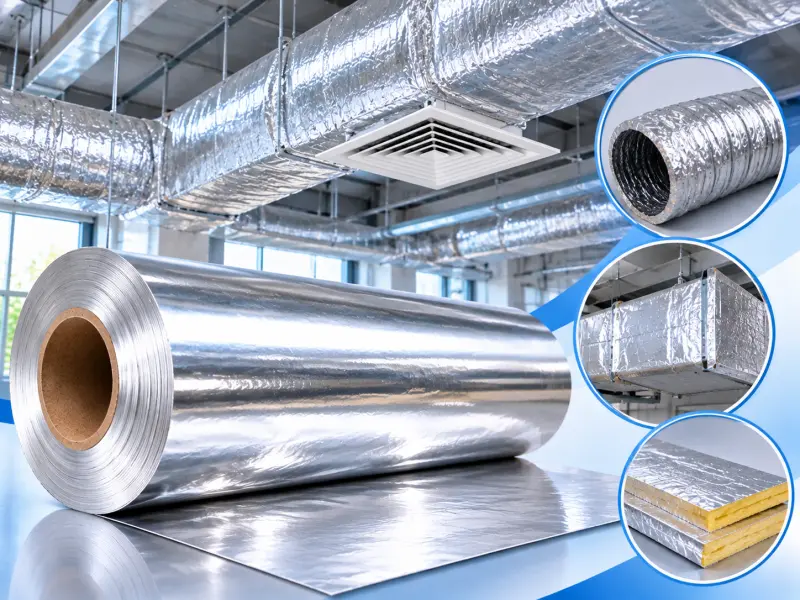
Aluminum foil for HVAC is widely used in heating, ventilation, and air conditioning systems. It is applied to insulation materials, air ducts, flexible ducts, pipe wraps, vapor barriers, and reflective insulation products.
The foil surface helps reflect radiant heat. It can also reduce moisture transfer and protect insulation materials from dust, water vapor, and mechanical damage. Because aluminum foil is lightweight and easy to process, it is suitable for both residential and commercial HVAC projects.
HVAC foil is usually supplied in jumbo rolls, slit rolls, laminated rolls, embossed foil, coated foil, and reinforced foil. The right material depends on the insulation type, duct design, installation environment, and required performance.
Selection path → Confirm the HVAC application → Choose alloy and temper → Select thickness → Check lamination or coating → Confirm roll width and packaging.
What Is Aluminum Foil for HVAC?
HVAC aluminum foil is a thin aluminum material used as a facing, barrier, or protective layer in HVAC insulation systems. It may be used alone or laminated with kraft paper, fiberglass scrim, polyethylene film, foam, mineral wool, glass wool, rubber insulation, or other materials.
The foil can improve the appearance and performance of insulation products. It is often placed on the outside surface of duct insulation or pipe insulation.
Basic Functions of HVAC Foil
| Function | How Aluminum Foil Helps |
|---|---|
| Heat reflection | Reflects radiant heat |
| Vapor barrier | Helps reduce moisture movement |
| Surface protection | Protects insulation from dust and damage |
| Fire performance | Aluminum itself is non-combustible |
| Appearance | Provides a clean metallic finish |
| Light weight | Adds little weight to insulation systems |
| Processing | Easy to laminate, cut, wrap, and tape |
| Durability | Supports long-term indoor HVAC use |
Aluminum foil does not replace insulation by itself. It is normally used with insulation materials to improve moisture control, heat reflection, and surface protection.
Why HVAC Systems Use Aluminum Foil
Heating and cooling systems often work in areas with temperature changes and humidity. Ducts and pipes may pass through ceilings, walls, basements, rooftops, machine rooms, and outdoor service areas.
Without proper insulation and vapor protection, condensation may form on cold surfaces. This can reduce insulation performance and may cause moisture problems.
Main Advantages of Aluminum Foil for HVAC
- Reflects radiant heat
- Supports vapor control
- Helps reduce condensation risk
- Protects insulation surfaces
- Lightweight and easy to install
- Suitable for duct and pipe wrapping
- Compatible with many insulation materials
- Available in different thicknesses
- Can be laminated with paper, scrim, or plastic film
- Supports custom roll widths
- Suitable for large-scale insulation production
Practical Benefits for Contractors and Manufacturers
| Benefit | Value in HVAC Projects |
|---|---|
| Easy handling | Helps reduce installation time |
| Flexible material | Fits ducts, pipes, and curved surfaces |
| Good barrier layer | Helps protect insulation from moisture |
| Bright surface | Makes inspection easier in some areas |
| Custom sizes | Reduces cutting waste |
| Roll supply | Suitable for continuous processing |
| Laminated structure | Adds tear resistance and strength |
Common HVAC Aluminum Foil Product Types
Different HVAC projects require different foil structures. Some products focus on heat reflection. Others focus on vapor resistance, puncture resistance, or lamination strength.
Plain Aluminum Foil for Insulation
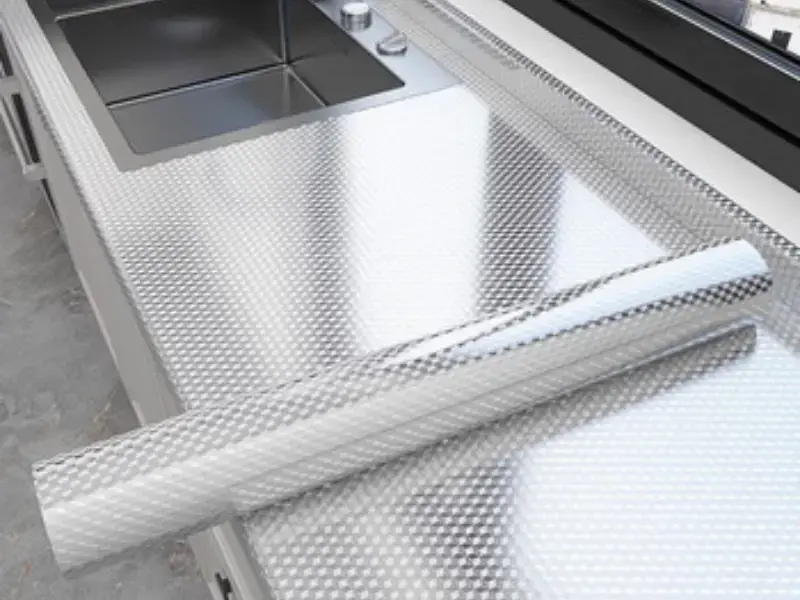
Plain foil is supplied without added layers. It is commonly used for lamination, wrapping, and industrial insulation production.
It has a bright metallic surface and good flexibility. It can be processed into insulation facing, duct wrap, pipe wrap, and reflective barrier products.
| Feature | Plain HVAC Aluminum Foil |
|---|---|
| Surface | Bright or matte aluminum surface |
| Common alloy | 1235, 8011, 1100 |
| Common temper | O temper |
| Typical thickness | 0.006 mm to 0.050 mm |
| Main use | Lamination and insulation facing |
| Processing | Slitting, embossing, coating, laminating |
Kraft Paper Laminated Aluminum Foil
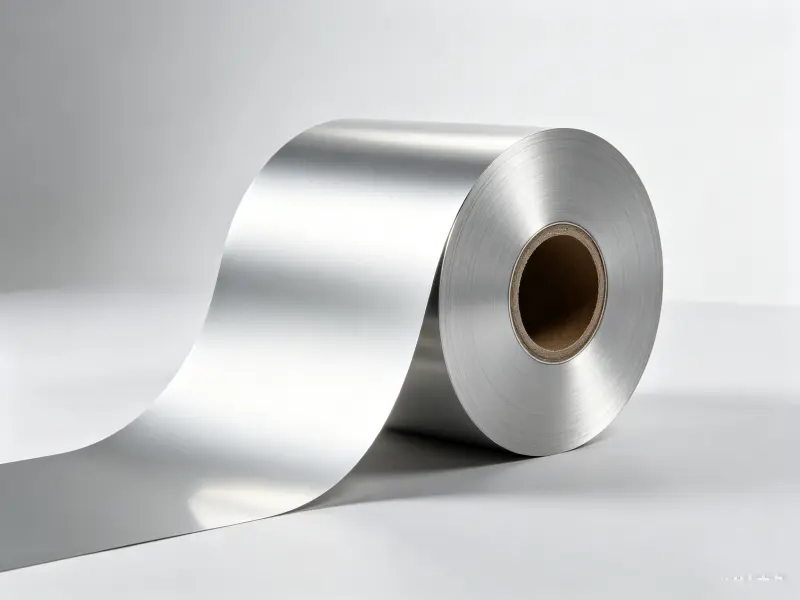
Kraft paper laminated foil combines aluminum foil with kraft paper. The paper layer adds stiffness and supports handling during installation.
This type is often used for fiberglass insulation, duct insulation, wall insulation, and general building insulation.
| Layer | Main Purpose |
|---|---|
| Aluminum foil | Heat reflection and vapor barrier |
| Adhesive layer | Bonds the materials |
| Kraft paper | Adds strength and handling support |
| Optional scrim | Improves tear resistance |
Kraft-faced foil is often selected for indoor HVAC insulation. For high-humidity areas, buyers should check the vapor barrier and adhesive performance.
Foil Scrim Kraft Facing
Foil Scrim Kraft, often called FSK facing, is a common insulation facing material. It combines aluminum foil, fiberglass scrim, and kraft paper.
The scrim layer improves tensile strength and tear resistance. This makes the product suitable for duct wrap, fiberglass insulation, mineral wool insulation, and HVAC duct systems.
| Layer | Function |
|---|---|
| Aluminum foil | Reflective and vapor barrier surface |
| Fiberglass scrim | Reinforcement and tear resistance |
| Kraft paper | Strength and insulation-facing support |
| Adhesive | Bonds the complete structure |
Reinforced Aluminum Foil
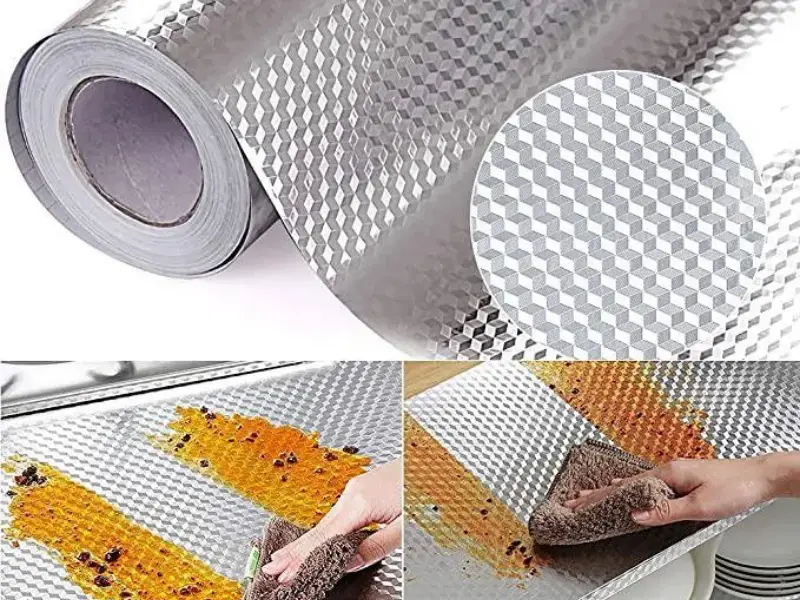
Reinforced foil may use fiberglass mesh, woven fabric, or other strengthening layers. It is designed for applications that need better puncture resistance and higher mechanical strength.
It can be used in large duct systems, industrial insulation, pipe jackets, and insulation products that face rough handling.
Embossed Aluminum Foil for HVAC
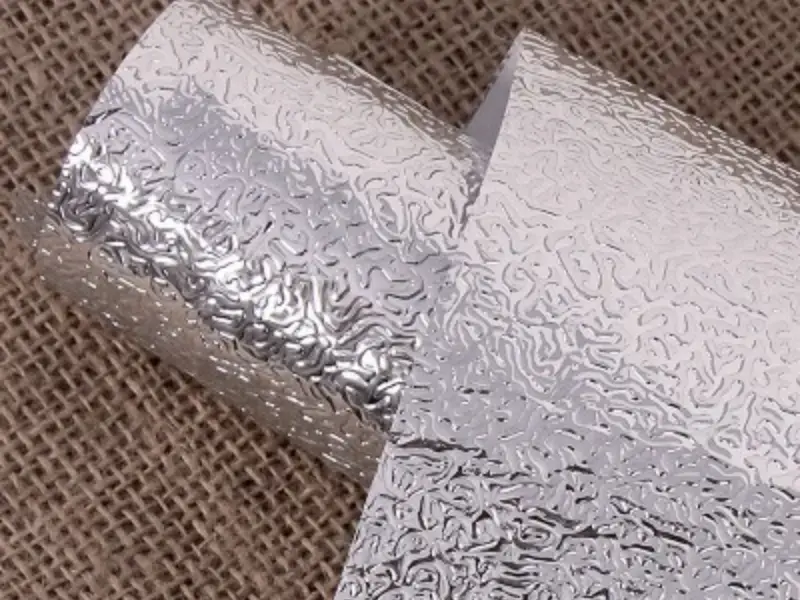
Embossed foil has a textured surface. The texture can improve appearance and reduce glare. It may also help hide small scratches caused during transport or installation.
Embossed aluminum foil is often used for insulation facing, flexible ducts, appliance insulation, and decorative HVAC surfaces.
| Embossed Pattern | Common Use |
|---|---|
| Stucco pattern | Pipe and duct insulation |
| Orange peel pattern | Appliance and insulation facing |
| Fine embossed pattern | Flexible insulation products |
| Custom texture | Special HVAC or building products |
Coated Aluminum Foil for HVAC
Coated foil has an added protective or functional layer. Coatings may improve corrosion resistance, adhesion, sealing, printing, or surface durability.
| Coating Type | Main Purpose |
|---|---|
| Protective coating | Reduces surface oxidation |
| Acrylic coating | Supports bonding and lamination |
| Heat-sealing coating | Used in special insulation products |
| Anti-corrosion coating | Suitable for humid environments |
| Colored coating | Improves product identification |
| PE coating | Supports vapor barrier structures |
Aluminum Foil Tape
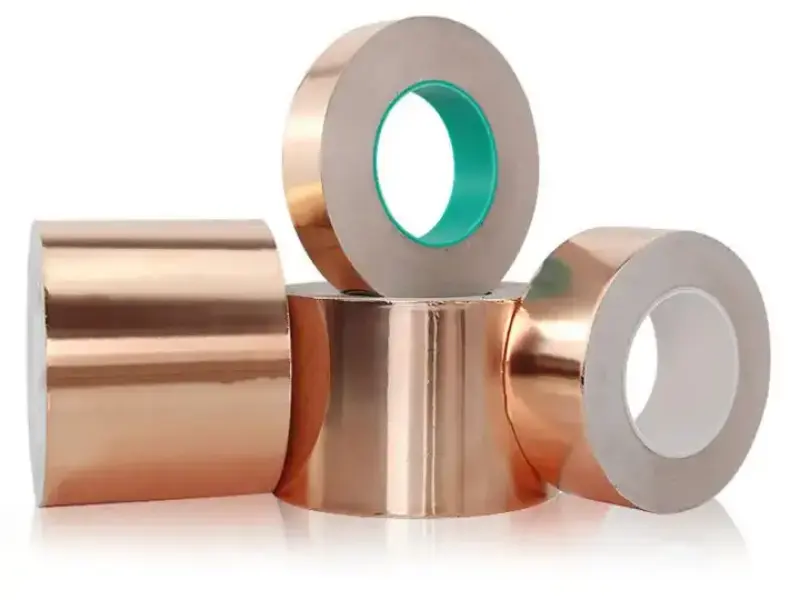
Aluminum foil tape is widely used in duct sealing, insulation joint sealing, HVAC repair, and reflective insulation installation.
It usually includes aluminum foil, pressure-sensitive adhesive, and release liner.
| Feature | HVAC Foil Tape Benefit |
|---|---|
| Aluminum backing | Reflective and moisture-resistant surface |
| Adhesive layer | Supports quick installation |
| Release liner | Protects adhesive before use |
| Flexible design | Fits corners and curved ducts |
| Width options | Matches different joint sizes |
Foil tape should be selected based on service temperature, adhesive strength, surface type, and installation conditions.
Aluminum Foil Alloys for HVAC Applications
Different aluminum alloys offer different levels of strength, formability, corrosion resistance, and processing performance.
Common Alloy Grades
| Alloy | Main Feature | Typical HVAC Use |
|---|---|---|
| 1050 | High aluminum purity and good formability | General insulation foil |
| 1060 | Good conductivity and corrosion resistance | Reflective insulation |
| 1100 | Good corrosion resistance and workability | HVAC facing and wrapping |
| 1235 | Soft and easy to roll | Laminated insulation foil |
| 3003 | Higher strength | Selected insulation jackets |
| 8011 | Good strength and flexibility | HVAC foil and foil tape |
| 8079 | Good flexibility and strength | Laminated foil products |
1235 Aluminum Foil for HVAC
1235 aluminum foil is common in HVAC insulation products. It is soft, lightweight, and suitable for rolling and lamination.
It is often used for foil-faced insulation, flexible duct materials, reflective insulation, and laminated barrier products.
8011 Aluminum Foil for HVAC
8011 aluminum foil offers a useful balance of strength and flexibility. It is widely used for insulation facing, foil tape, household foil, food packaging, and industrial foil products.
For HVAC use, 8011 can be suitable for laminated materials and products that need better handling strength.
1100 Aluminum Foil for HVAC
1100 aluminum foil has good corrosion resistance and forming performance. It can be used for general insulation facing and industrial thermal protection products.
3003 Aluminum Foil for HVAC
3003 aluminum contains manganese. It has higher strength than 1000 series aluminum. It may be selected for heavier insulation jackets, equipment protection, and projects where more rigidity is needed.
Temper Conditions for HVAC Foil
Temper indicates the hardness condition of aluminum. The temper affects bending, flexibility, tear resistance, and forming performance.
Common Tempers
| Temper | Condition | Suitable HVAC Product |
|---|---|---|
| O | Soft and annealed | Laminated foil and flexible insulation |
| H14 | Half-hard | Selected industrial foil |
| H18 | Hard condition | Foil with higher stiffness needs |
| H22 | Partially annealed | Semi-rigid insulation products |
| H24 | Stable and formable | Special HVAC jackets |
O temper is the most common option for flexible HVAC aluminum foil. It is easy to laminate, wrap, fold, and process.
Harder foil may be useful when the finished product needs more shape retention.
HVAC Aluminum Foil Thickness Options
Foil thickness should match the project requirement. Thin foil is often used in laminated products. Thicker foil can provide better durability and puncture resistance.
Typical Thickness Range of Aluminum Foil for HVAC
| Thickness | General Type | Common Use |
|---|---|---|
| 0.006 mm to 0.009 mm | Thin foil | Laminated insulation facing |
| 0.009 mm to 0.012 mm | Light foil | Flexible duct and HVAC wraps |
| 0.012 mm to 0.016 mm | Standard foil | General insulation products |
| 0.016 mm to 0.025 mm | Strong foil | Reinforced facing and foil tape |
| 0.025 mm to 0.050 mm | Heavy foil | Pipe wraps and equipment insulation |
| 0.050 mm to 0.200 mm | Thick aluminum layer | Industrial jackets and protection panels |
The correct thickness depends on the insulation material, installation method, mechanical stress, moisture level, and customer specification.
Roll Width and Supply Formats
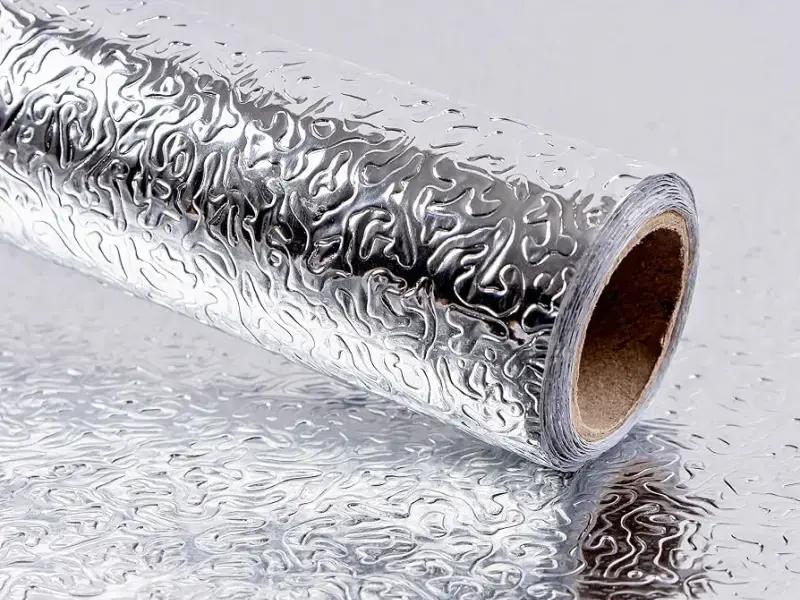
An aluminum foil supplier can provide foil in jumbo rolls, slit rolls, small rolls, sheets, and laminated rolls.
Common Jumbo Roll Specifications
| Item | Typical Range |
|---|---|
| Width | 100 mm to 1,650 mm |
| Thickness | 0.006 mm to 0.200 mm |
| Inner diameter | 76 mm, 152 mm, or custom |
| Roll weight | Based on customer equipment |
| Surface | Bright, matte, embossed, or coated |
| Packaging | Moisture-proof export packaging |
Finished Product Formats of Aluminum Foil for HVAC
| Product Form | Typical Use |
|---|---|
| Jumbo foil roll | Further lamination or converting |
| Slit foil roll | Foil tape and narrow insulation products |
| Laminated roll | Duct insulation and building insulation |
| Pre-cut foil sheet | Small insulation work and repair |
| Foil tape roll | Duct seam sealing |
| Embossed foil roll | Insulation facing and appliance use |
| Reinforced foil roll | Heavy-duty HVAC insulation |
Custom width can improve production efficiency. It can also reduce trimming waste during lamination and converting.
HVAC Applications for Aluminum Foil
Aluminum foil is used in many parts of an HVAC system. The final selection depends on temperature, moisture, installation location, and insulation design.
Air Duct Insulation
- Rectangular duct insulation
- Round duct insulation
- Flexible duct insulation
- Return air duct wrap
- Supply air duct wrap
- Ceiling duct insulation
- Basement duct insulation
- Industrial duct systems
Foil-facing can help protect duct insulation and reduce moisture movement. It can also provide a clean external surface.
Pipe Insulation of Aluminum Foil for HVAC
- Chilled water pipes
- Hot water pipes
- Refrigerant lines
- Steam pipes
- Condensate pipes
- Industrial process pipes
- Outdoor insulated pipes
- Mechanical room piping
For cold pipes, vapor barrier performance is important. If moisture reaches the insulation, condensation problems may develop.
HVAC Equipment Protection
- Air handling units
- Fan coil units
- Chillers
- Heat pumps
- Rooftop units
- Ventilation equipment
- Mechanical room equipment
- Refrigeration systems
Aluminum foil may be used as a facing layer or insulation jacket around equipment.
Building Insulation Systems
Metal building insulation
Wall insulation
Roof insulation
Attic insulation
Ceiling insulation
Garage insulation
Warehouse insulation
Cold storage insulation
Flexible Duct Manufacturing
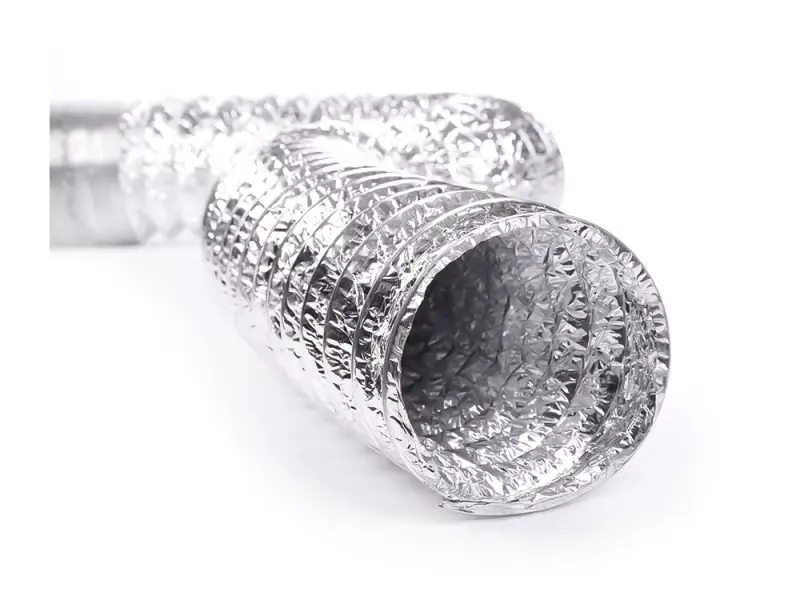
Flexible ducts often use multilayer structures. Aluminum foil may be laminated with polyester film, insulation wool, wire helix, and outer jackets.
| Flexible Duct Layer | Main Role |
|---|---|
| Inner foil layer | Supports air channel protection |
| Polyester film | Adds strength |
| Steel wire | Creates duct shape |
| Glass wool layer | Provides insulation |
| Outer foil layer | Adds vapor and surface protection |
Aluminum Foil for HVAC Compared with Other Facing Materials
Aluminum Foil vs Kraft Paper Facing
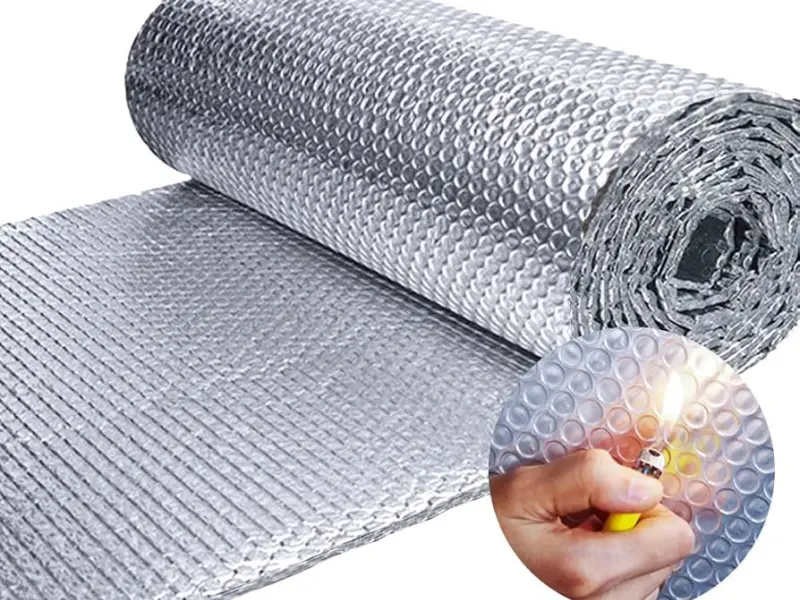
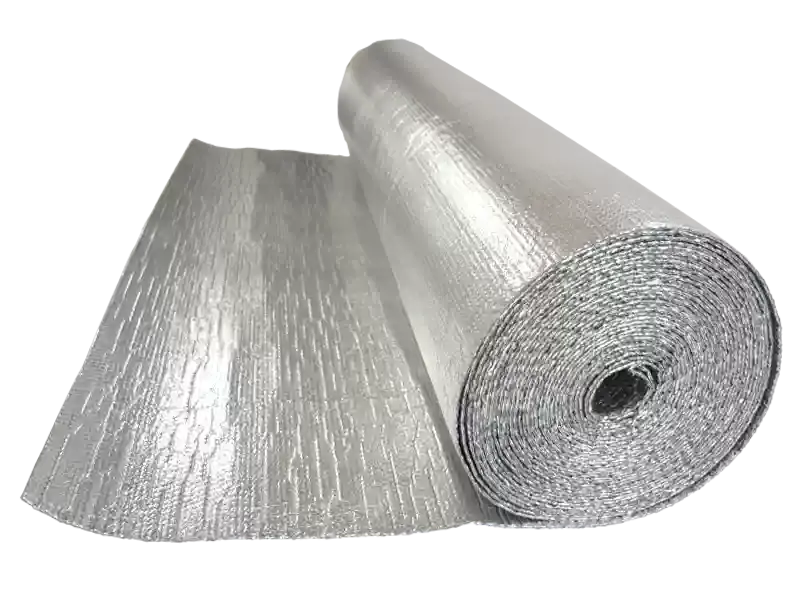
| Feature | Aluminum Foil | Kraft Paper |
|---|---|---|
| Moisture resistance | High | Limited without coating |
| Heat reflection | High | Low |
| Vapor barrier function | Good | Limited |
| Surface durability | Good | Moderate |
| Appearance | Bright metallic | Brown paper finish |
| Tear resistance | Depends on thickness | Depends on paper weight |
Kraft paper is often combined with foil. The paper adds strength, while the foil provides a reflective and moisture-resistant layer.
Aluminum Foil vs Plastic Film
| Feature | Aluminum Foil | Plastic Film |
|---|---|---|
| Heat reflection | Excellent | Lower |
| Light barrier | Excellent | Depends on film |
| Vapor barrier | Excellent when intact | Good to excellent |
| Temperature resistance | High | Depends on polymer type |
| Puncture resistance | Moderate | Varies by material |
| Lamination use | Very common | Very common |
Plastic film can be flexible and affordable. Aluminum foil provides stronger radiant heat reflection and full light blocking.
Aluminum Foil vs Galvanized Steel Jacket
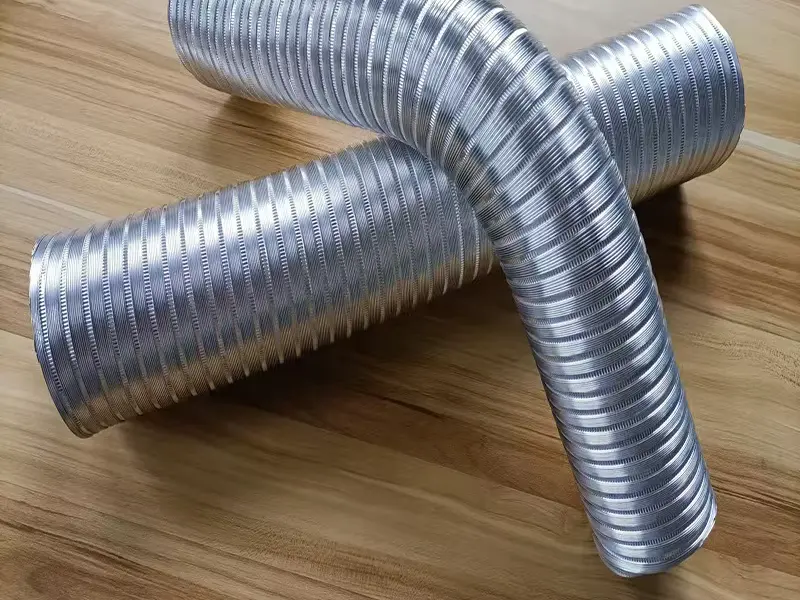
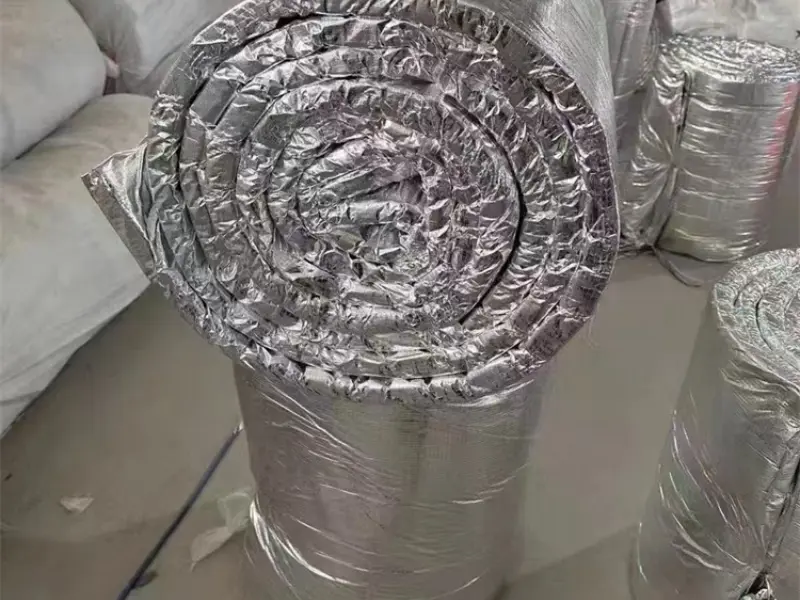
| Feature | Aluminum Foil | Galvanized Steel Jacket |
|---|---|---|
| Weight | Very low | Higher |
| Flexibility | High | Lower |
| Best use | Flexible insulation and facing | Heavy-duty pipe protection |
| Installation | Easy to wrap and tape | Requires mechanical fastening |
| Mechanical strength | Moderate | High |
| Cost level | Depends on thickness | Depends on steel gauge |
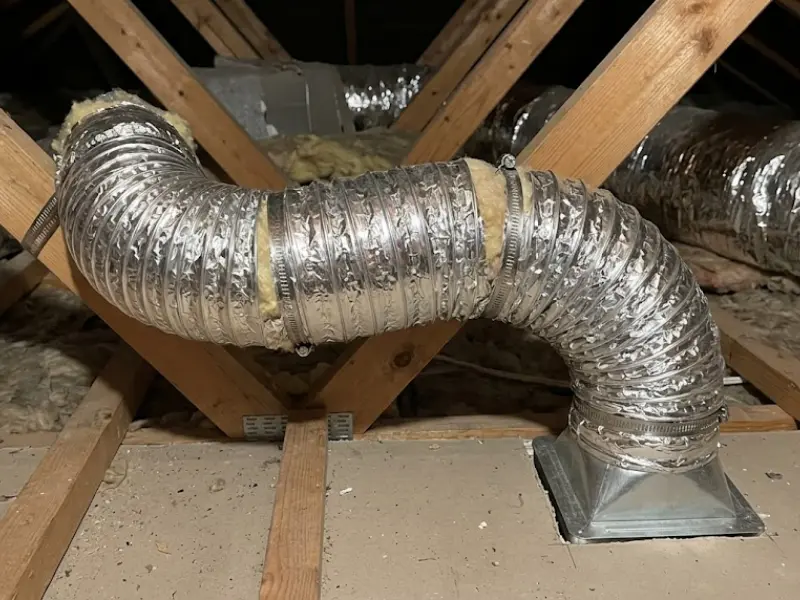
Aluminum foil is suitable for lightweight insulation facing. Galvanized steel jackets are often used where high mechanical protection is needed.
Vapor Barrier Performance in HVAC Systems
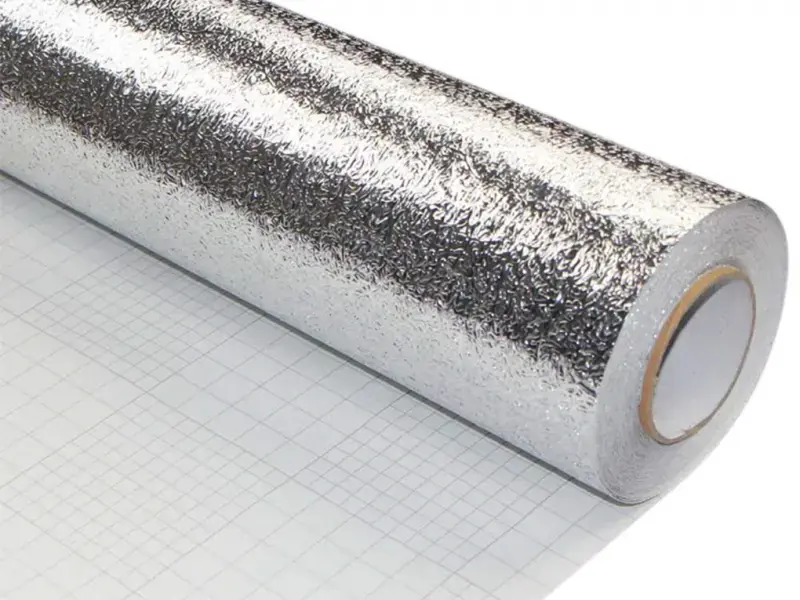
A vapor barrier helps slow the movement of water vapor through insulation. This is especially important on cold surfaces, such as chilled water pipes and air-conditioning ducts.
When warm humid air touches a cold surface, moisture can condense. This may lead to wet insulation, mold risk, corrosion, and lower energy efficiency.
Where Vapor Barriers Matter Most
- Chilled water pipe insulation
- Refrigerant pipe insulation
- Cold storage systems
- Air-conditioning duct insulation
- High-humidity buildings
- Swimming pool facilities
- Coastal projects
- Food processing plants
- Hospitals and laboratories
A complete vapor barrier system depends on more than the foil. Seams, joints, tape, adhesive, and installation quality are also important.
Installation reminder → Seal every joint carefully. An open seam can allow moisture to enter the insulation system.
Reflective Performance and Thermal Control
The shiny surface of aluminum foil can reflect radiant heat. This feature is useful in roofs, walls, duct insulation, and HVAC systems exposed to heat sources.
However, reflective foil works best when it faces an air space. If foil is pressed tightly against another material, its radiant reflection effect may be reduced.
Typical Reflective Insulation Uses of Aluminum Foil for HVAC
| Application | Main Benefit |
|---|---|
| Roof insulation | Helps reduce radiant heat gain |
| Attic insulation | Supports indoor temperature control |
| Duct wrap | Helps protect insulation surface |
| Wall cavity insulation | Adds a reflective layer |
| Equipment insulation | Reduces radiant heat exposure |
| Flexible duct | Supports a lightweight barrier layer |
The overall thermal performance of an HVAC system depends on insulation thickness, insulation type, installation quality, air leakage, and building design.
Aluminum Foil Tape for Air Duct Sealing
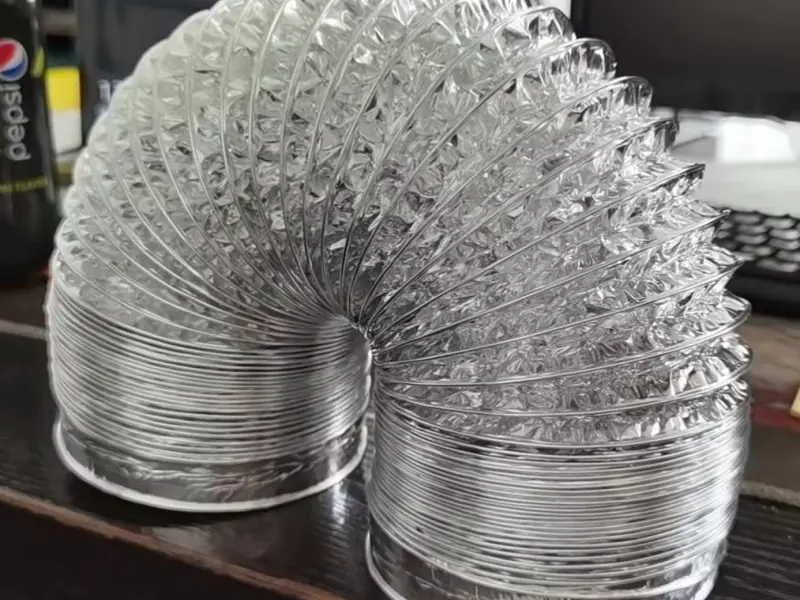
Foil tape is a practical product for sealing joints in duct insulation and reflective insulation systems. It can also be used for repairs and edge sealing.
Common Foil Tape Types
| Tape Type | Typical Use |
|---|---|
| Standard aluminum foil tape | General duct sealing |
| Reinforced foil tape | Heavy-duty insulation joints |
| High-temperature foil tape | Hot air ducts and equipment |
| Acrylic adhesive foil tape | Long-term HVAC use |
| Rubber adhesive foil tape | Fast initial adhesion |
| Embossed foil tape | Better handling and appearance |
| FSK tape | Foil-facing insulation seams |
Points to Check Before Buying Foil Tape
- Foil thickness
- Total tape thickness
- Adhesive type
- Temperature resistance
- Peel strength
- Width
- Roll length
- Release liner quality
- Surface compatibility
- Indoor or outdoor use
The tape should be applied to a clean and dry surface. Dust, oil, moisture, and uneven surfaces can reduce adhesion.
Custom Options from an HVAC Aluminum Foil Supplier
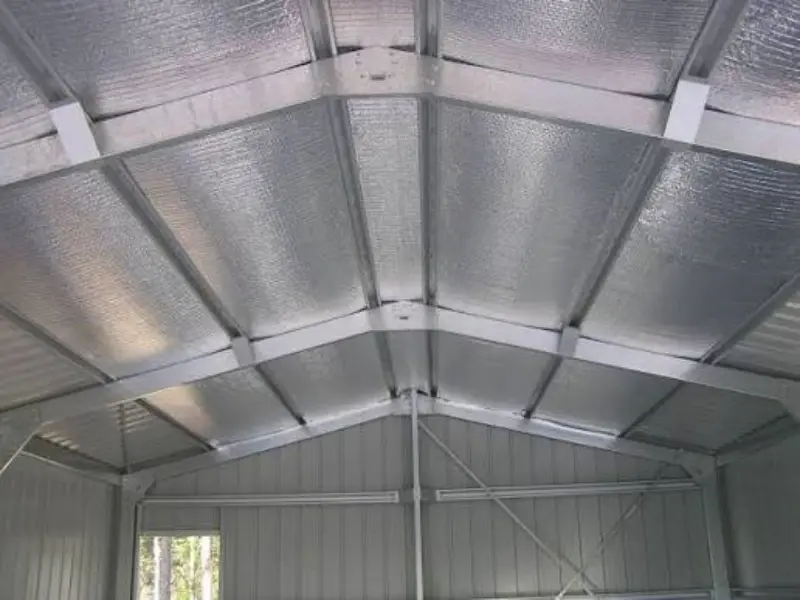
HVAC projects often need customized foil products. Standard rolls may not match every insulation line or duct system.
Available Custom Services
- Custom alloy
- Custom temper
- Custom thickness
- Custom width
- Custom roll weight
- Slitting service
- Rewinding service
- Embossed surface
- Kraft paper lamination
- Fiberglass scrim reinforcement
- PE film lamination
- Acrylic coating
- Protective coating
- Custom printing
- Custom carton packaging
- Export pallet packaging
Product Specification Example of Aluminum Foil for HVAC
| Item | Example Specification |
|---|---|
| Product | HVAC insulation aluminum foil |
| Alloy | 8011 |
| Temper | O |
| Thickness | 0.014 mm |
| Width | 1,200 mm |
| Surface | Embossed |
| Lamination | Kraft paper and fiberglass scrim |
| Roll weight | Custom |
| Use | Duct insulation facing |
| Packing | Moisture-proof paper and wooden pallet |
This is only an example. The final specification should be based on the insulation material and installation environment.
Quality Control for HVAC Aluminum Foil
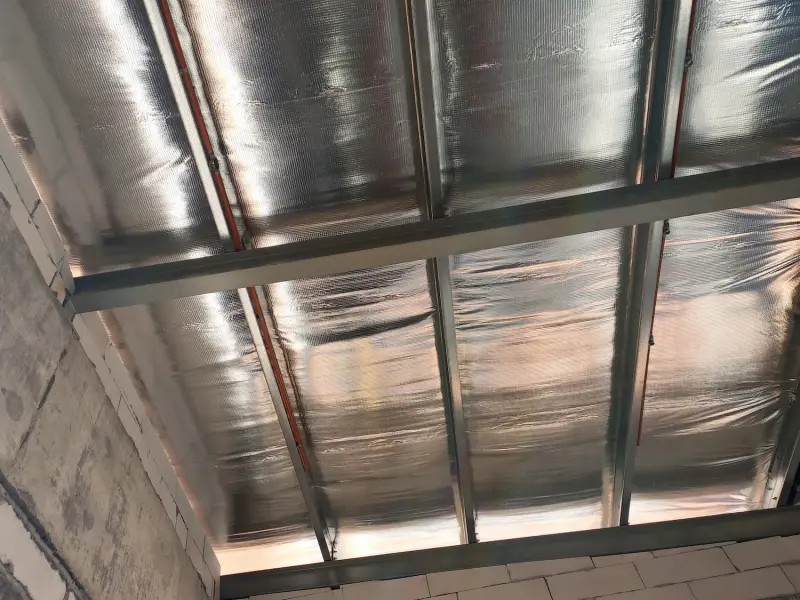
Foil quality can affect lamination, tape production, insulation performance, and final appearance.
Important Inspection Points
| Inspection Item | Why It Matters |
|---|---|
| Alloy grade | Confirms material composition |
| Thickness tolerance | Supports stable production |
| Width tolerance | Matches converting equipment |
| Surface cleanliness | Helps bonding and lamination |
| Pinholes | Important for vapor barrier performance |
| Tensile strength | Supports handling and processing |
| Elongation | Helps prevent tearing during wrapping |
| Embossing quality | Ensures a consistent appearance |
| Coating adhesion | Supports long-term performance |
| Roll winding | Prevents converting problems |
| Edge condition | Reduces tears and wrinkles |
| Packaging inspection | Protects rolls during shipping |
Why Pinhole Control Matters

Very thin aluminum foil may contain small pinholes. Too many pinholes can reduce barrier performance.
For HVAC insulation facing, buyers should confirm the pinhole requirement based on the thickness and final product structure. A laminated structure can provide additional protection.
How to Choose the Right HVAC Foil
The best aluminum foil for HVAC depends on where and how it will be used.
Selection Checklist
- Is the product for duct insulation, pipe insulation, or building insulation?
- Is vapor control required?
- Will the product face high humidity?
- Is a reinforced structure needed?
- What insulation material will be used?
- Is the foil used indoors or outdoors?
- Is an embossed finish preferred?
- Is lamination required?
- What thickness is suitable?
- What roll width matches the production line?
- Is foil tape needed for seam sealing?
- Are special fire or building standards required?
Quick Product Selection Guide
| HVAC Requirement | Suggested Product |
|---|---|
| General duct insulation | Plain or kraft-laminated aluminum foil |
| Fiberglass duct wrap | Foil Scrim Kraft facing |
| High-humidity area | Reinforced foil with sealed joints |
| Flexible duct production | Laminated foil roll |
| Chilled pipe insulation | Vapor barrier foil facing |
| Industrial equipment | Thick foil or reinforced aluminum foil |
| Insulation seam sealing | Aluminum foil tape |
| Premium finished appearance | Embossed aluminum foil |
| Outdoor protection | Coated foil with suitable jacket system |
Storage and Handling Recommendations
Aluminum foil should be protected from water, dust, impact, and large temperature changes.
Basic Storage Tips
- Store rolls in a clean and dry warehouse
- Keep rolls off the floor
- Use pallets for stable storage
- Keep outer packaging closed before use
- Avoid water and high humidity
- Prevent impact damage to roll edges
- Do not place heavy objects on foil rolls
- Use clean equipment during handling
- Check roll direction before installation
- Follow first-in, first-out inventory control
For laminated foil products, avoid high heat and direct sunlight during long storage. Adhesive and coating performance may be affected by unsuitable storage conditions.
Frequently Asked Questions


What is aluminum foil used for in HVAC systems?
Aluminum foil is used for duct insulation, pipe insulation, flexible duct production, vapor barriers, reflective insulation, foil tape, equipment insulation, and building insulation.
Does aluminum foil improve HVAC insulation?
Aluminum foil can improve the insulation system by reflecting radiant heat and providing a vapor-resistant facing layer. It works best when used with suitable insulation materials.
Which aluminum alloy is suitable for HVAC foil?
1235 and 8011 are common choices. 1100 can also be used for general insulation products. 3003 may be selected for products that need higher strength.
What temper is used for HVAC aluminum foil?
O temper is widely used because it is soft, flexible, and easy to laminate or wrap around ducts and pipes.
What thickness is common for HVAC aluminum foil?
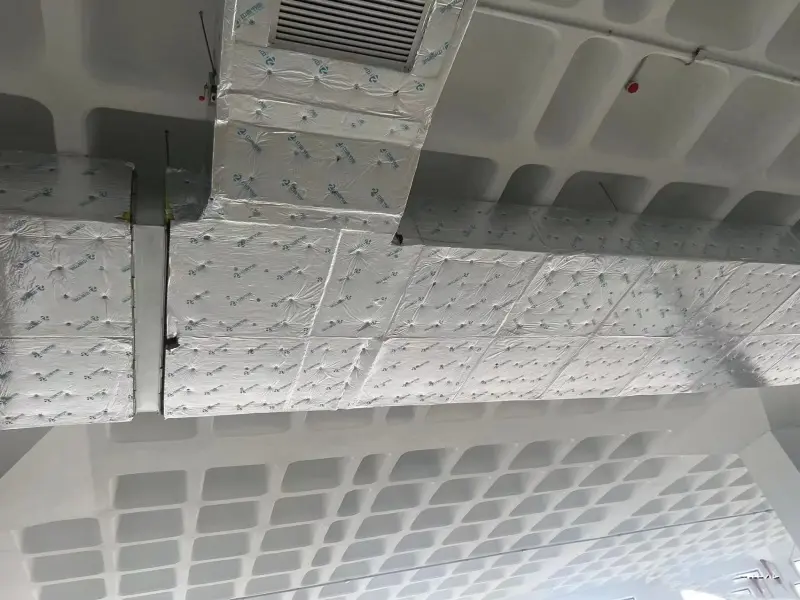
Common thicknesses range from 0.006 mm to 0.050 mm. Thin foil is often used for laminated insulation facing. Thicker foil may be used for reinforced products and equipment protection.
What is Foil Scrim Kraft facing?
Foil Scrim Kraft facing is a laminated material made from aluminum foil, fiberglass scrim, and kraft paper. It is commonly used for duct insulation and fiberglass insulation systems.
Can aluminum foil be used as a vapor barrier?
Yes. Aluminum foil can help reduce water vapor transfer when it is intact and installed with properly sealed seams and joints.
Is embossed aluminum foil better for HVAC insulation?
Embossed foil can improve appearance and reduce visible handling marks. The right choice depends on the insulation design and customer preference.
What is the difference between aluminum foil and foil tape?
Aluminum foil is the raw or laminated material used for insulation facing. Foil tape includes an adhesive layer and is used to seal insulation joints, duct seams, and repair areas.
Can HVAC foil be laminated with fiberglass?
Yes. Aluminum foil can be laminated with fiberglass scrim or fiberglass insulation products. This can improve tear strength and make the material easier to handle.
Can aluminum foil be used for outdoor HVAC equipment?
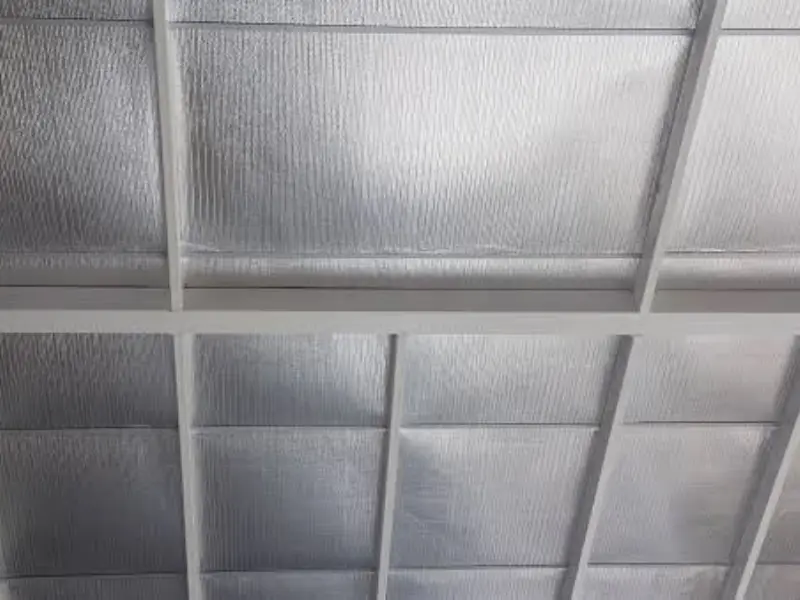
It can be part of an outdoor insulation system, but outdoor use usually needs extra protection. Consider coating, weather exposure, mechanical damage, UV exposure, and a suitable outer jacket.
How do I request a quotation for HVAC aluminum foil?
Provide the application, alloy, temper, thickness, width, roll weight, surface type, lamination structure, quantity, packaging requirement, and delivery location.
Choose Suitable Aluminum Foil for HVAC Projects
Aluminum foil for HVAC is a useful material for insulation facing, duct systems, pipe wrapping, vapor barriers, flexible ducts, and foil tape. It is lightweight, reflective, easy to laminate, and available in many specifications.
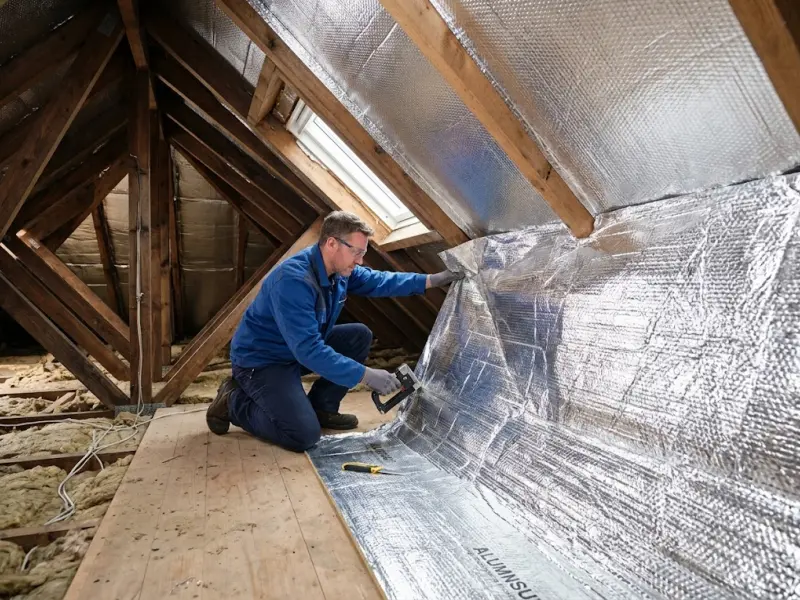
For standard insulation products, plain foil or kraft-laminated foil may be suitable. For duct wrap and fiberglass insulation, Foil Scrim Kraft facing is a common choice. For high-humidity areas, reinforced foil with carefully sealed joints can provide better protection.
The final product should match the system design. Confirm the alloy, temper, thickness, roll width, surface finish, laminate structure, and installation conditions before ordering.