Why Builders Choose Aluminum Foil for Insulation
Heat moves in three ways. It travels through conduction, convection, and radiation.
Traditional insulation like fiberglass blocks conduction well. But it does little to stop radiant heat.
This is where aluminum foil for insulation makes a real difference.
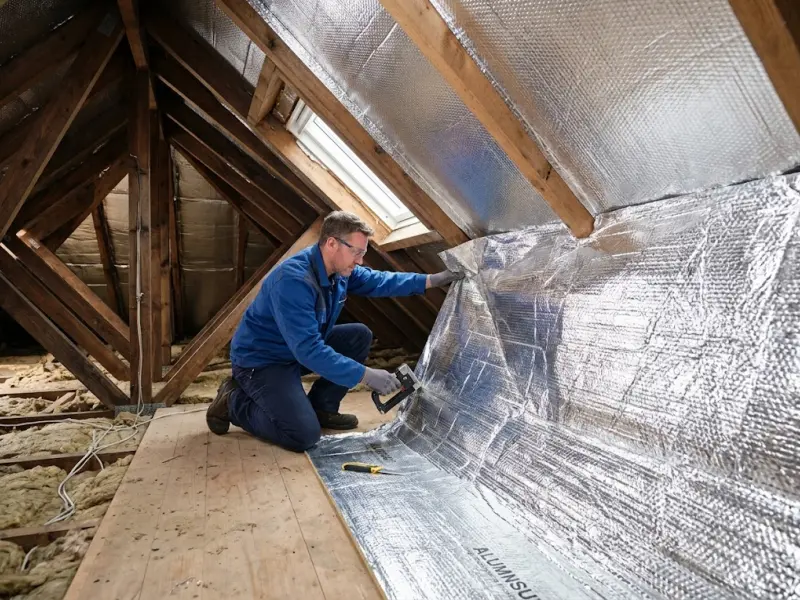
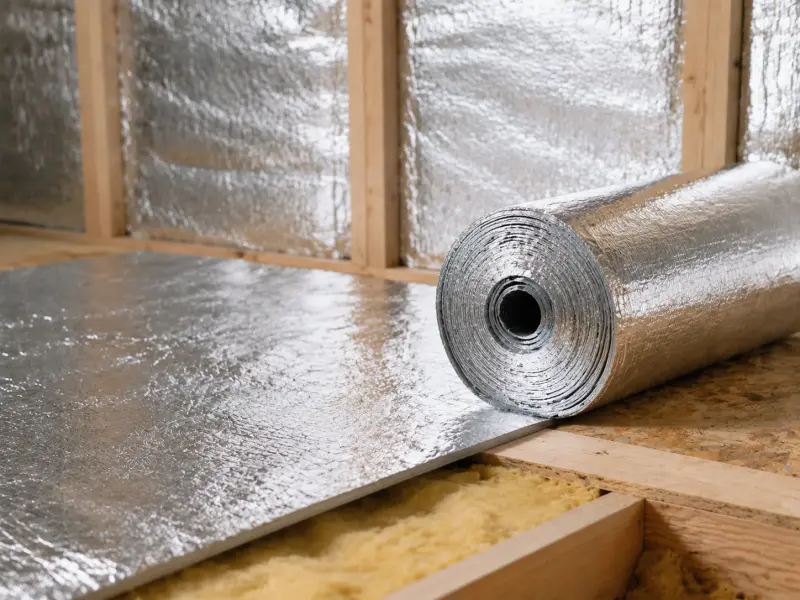
Aluminum foil reflects up to 97% of radiant heat. It bounces thermal energy back to its source.
This keeps indoor spaces cooler in summer and warmer in winter. The material is thin, light, and easy to handle. It does not absorb moisture. It does not rot. It does not attract pests.
Builders and homeowners use aluminum foil insulation in roofs, walls, floors, and ducts.
The product works as a radiant barrier. It also works as a vapor barrier when sealed properly. Its low emissivity surface stops heat from escaping through radiation.
Core Types of Aluminum Foil Insulation Products
The Aluminum foil for insulation market offers several construction styles. Each type suits different jobs. Understanding the differences helps you pick the right product.
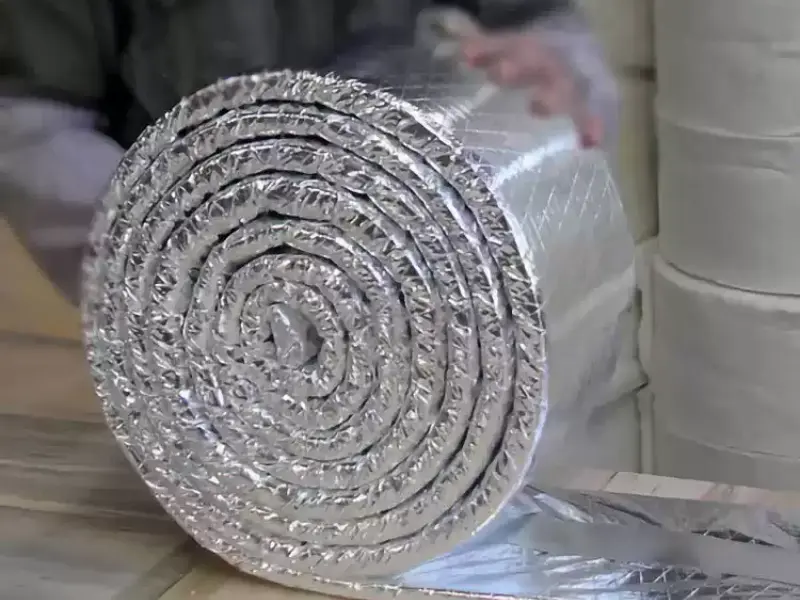
Pure Aluminum Foil Rolls
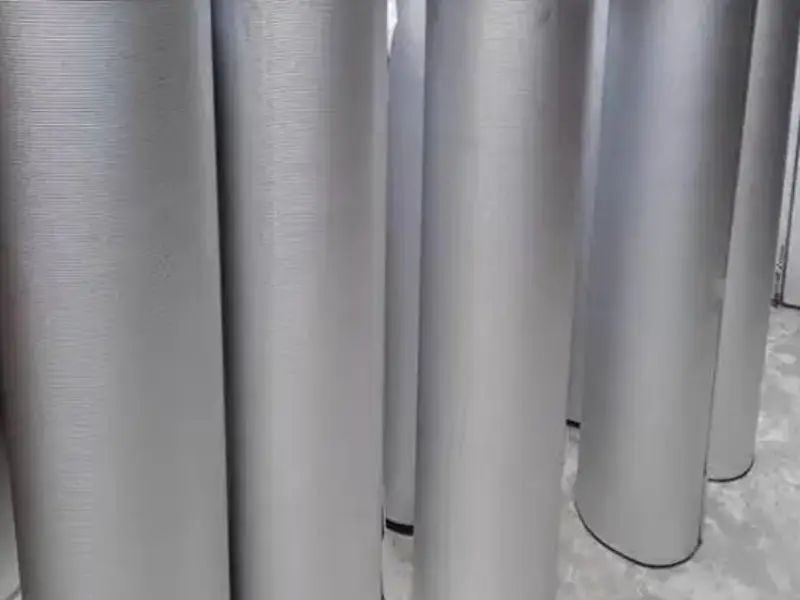
This is the simplest form. It is just a thin sheet of aluminum. Users staple it to rafters or frame members. It works best in attic spaces where there is an air gap.
| Feature | Specification |
|---|---|
| Material | Pure aluminum or aluminum alloy |
| Thickness range | 0.007 mm – 0.15 mm |
| Reflectivity | 95% – 97% |
| Weight | Very light |
| Best use | Attic radiant barriers |
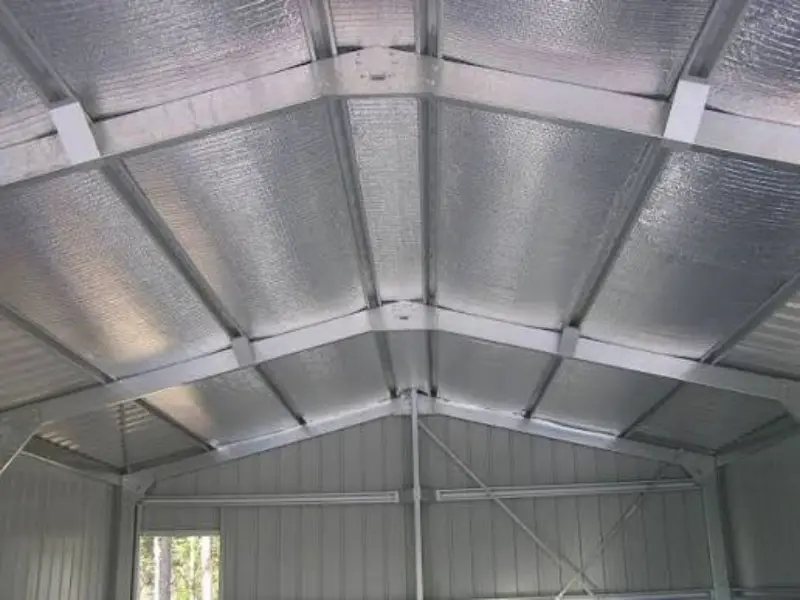
Foil-Faced Bubble Insulation
This product sandwiches air bubbles between two layers of aluminum foil. The bubbles add an insulating air space. The foil reflects heat from both sides.
| Feature | Specification |
|---|---|
| Structure | Foil / bubble / foil |
| Bubble diameter | 6 mm – 25 mm |
| Thickness total | 3 mm – 10 mm |
| R-value contribution | Low to moderate |
| Best use | Metal buildings, garage doors |
Foil-Scrim-Kraft (FSK) Laminate
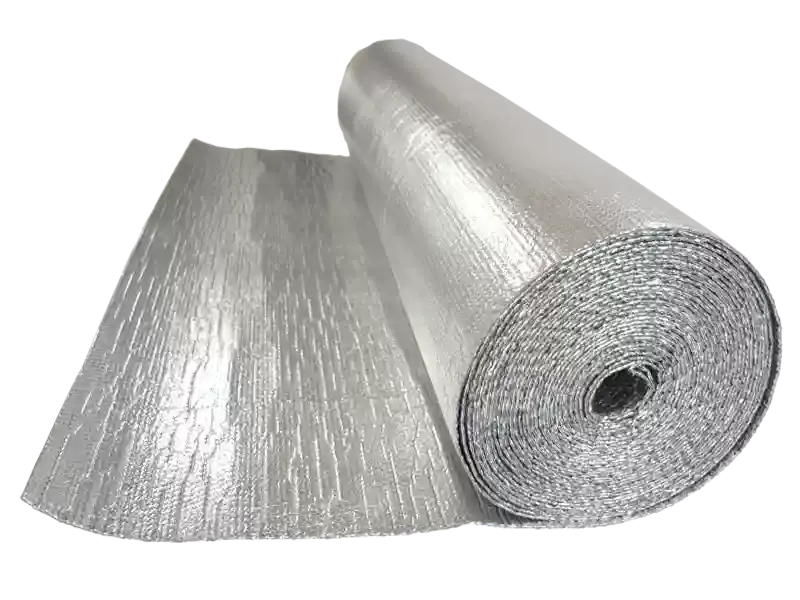
FSK combines aluminum foil with fiberglass scrim and kraft paper. The scrim adds strength. The kraft paper helps with handling and adhesion.
| Feature | Specification |
|---|---|
| Structure | Foil / scrim / kraft |
| Scrim pattern | 3×1 mm or 5×5 mm |
| Foil thickness | 0.007 mm – 0.025 mm |
| Tensile strength | High |
| Best use | Duct wrapping, pipe insulation facing |
Foil-Woven Fabric
This type bonds aluminum foil to woven polyethylene or fiberglass fabric. The woven layer gives excellent tear resistance.
| Feature | Specification |
|---|---|
| Structure | Foil / woven fabric / foil |
| Fabric weight | 60 – 140 gsm |
| Tear strength | Very high |
| Flexibility | Excellent |
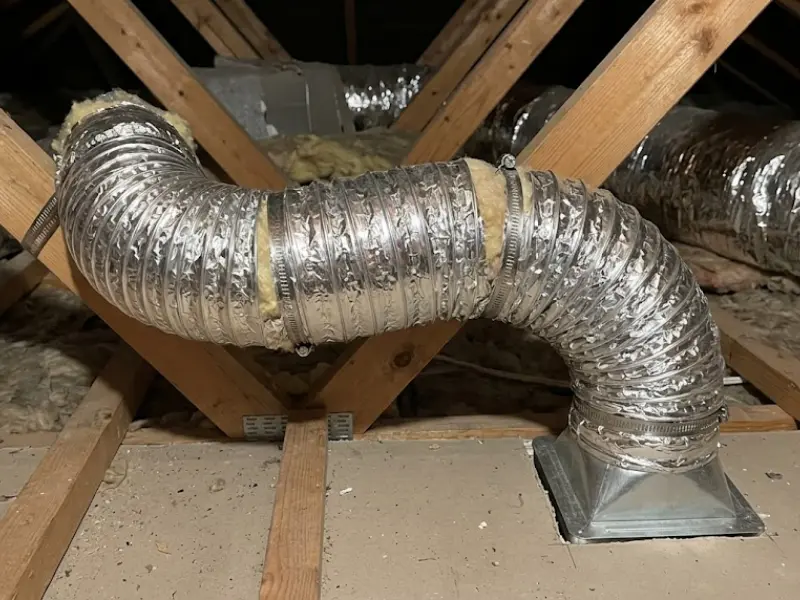
| Best use | Flexible ductwork, removable jackets |
Perforated Aluminum Foil
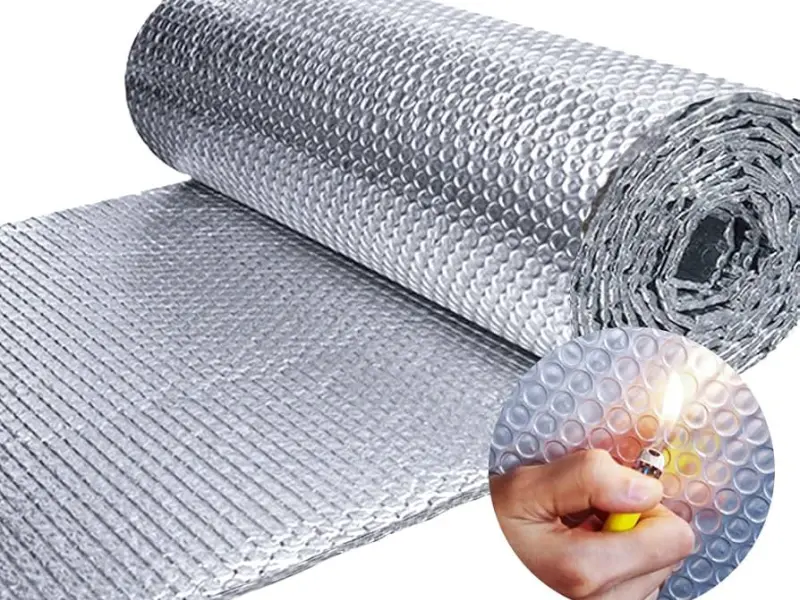
Standard foil blocks moisture. Perforated foil has tiny holes. It allows vapor to pass while still reflecting heat.
| Feature | Specification |
|---|---|
| Hole pattern | Micro-perforations |
| Open area | 0.5% – 2% |
| Breathability | Yes |
| Reflectivity | 90% – 95% |
| Best use | Wall cavities that need drying |
Aluminum Alloys Behind the Foil
Not all aluminum foil for insulation uses the same metal. The alloy affects strength, flexibility, and cost.
Alloy 1050 Aluminum foil for insulation
This is pure aluminum with 99.5% minimum content. It is soft and very formable. It offers excellent corrosion resistance.
| Property | Value |
|---|---|
| Aluminum purity | 99.5% |
| Tensile strength | 60 – 100 MPa |
| Elongation | 25% – 35% |
| Corrosion resistance | Excellent |
| Typical temper | O, H18 |
Alloy 1145 Aluminum foil for insulation
Similar to 1050 but with slightly lower purity. It is widely used for thin foil applications.
| Property | Value |
|---|---|
| Aluminum purity | 99.45% |
| Tensile strength | 70 – 110 MPa |
| Common thickness | 0.009 mm – 0.05 mm |
| Formability | Excellent |
| Typical temper | O, H19 |
Alloy 1235 Aluminum foil for insulation
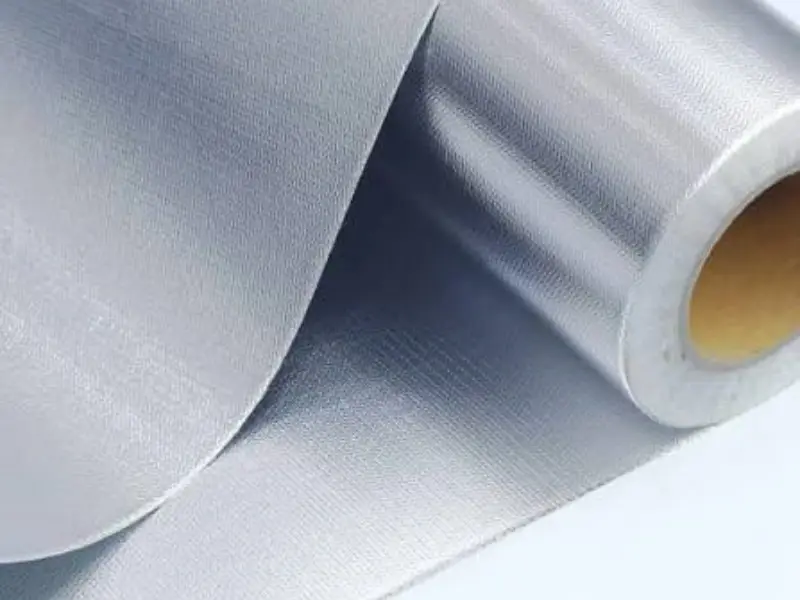
This alloy has very high purity. It is the standard choice for flexible packaging and insulation facing.
| Property | Value |
|---|---|
| Aluminum purity | 99.35% |
| Tensile strength | 60 – 95 MPa |
| Foil gauge range | 0.006 mm – 0.2 mm |
| Surface quality | Very clean |
| Typical temper | O, H14, H18 |
Alloy 8011 Aluminum foil for insulation
This is an aluminum-iron-silicon alloy. It is stronger than pure aluminum grades. It handles better during lamination.
| Property | Value |
|---|---|
| Aluminum content | 98% |
| Tensile strength | 125 – 165 MPa |
| Hardness | Higher than 1xxx series |
| Lamination suitability | Excellent |
| Typical temper | O, H22, H24 |
Alloy 8079 Aluminum foil for insulation
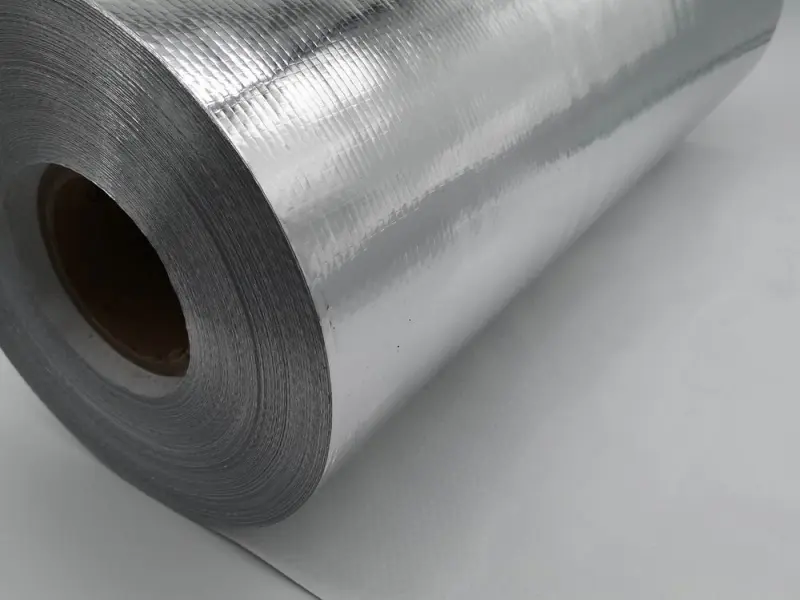
This alloy contains iron and silicon. It offers superior strength and barrier properties. It is common in heavy-duty insulation applications.
| Property | Value |
|---|---|
| Aluminum content | 98% |
| Tensile strength | 130 – 170 MPa |
| Barrier performance | Excellent |
| Heat resistance | Good |
| Typical temper | O, H18 |
Temper and Thickness Breakdown
The temper tells you how hard or soft the foil is. The thickness determines how much heat it blocks and how easy it is to tear.
Aluminum foil for insulation Temper Options Explained
| Temper | Name | Characteristics |
|---|---|---|
| O | Annealed (soft) | Maximum flexibility, easy to wrap around pipes |
| H14 | Strain hardened | Moderate stiffness, good for flat applications |
| H18 | Full hard | Maximum stiffness, best for rigid panels |
| H22 | Partially annealed | Balance of strength and formability |
| H24 | Half hard | Common for laminated products |
Aluminum foil for insulation Thickness Guide by Application
| Thickness | Common Use | Handling Notes |
|---|---|---|
| 0.007 mm – 0.015 mm | Lightweight radiant barriers | Very delicate, tears easily |
| 0.02 mm – 0.03 mm | Standard FSK facing | Easy to laminate, good strength |
| 0.04 mm – 0.05 mm | Heavy-duty duct wrap | Resists punctures during install |
| 0.07 mm – 0.10 mm | Industrial pipe jackets | Handles mechanical stress well |
| 0.12 mm – 0.15 mm | Structural insulation boards | Rigid, holds shape under load |
Thinner foil costs less but needs more care during installation. Thicker foil lasts longer and resists damage.
Product Variations by Surface Finish
The surface treatment changes how the foil performs and looks.
Plain Bright Aluminum foil for insulation
This is the standard finish. It has a mirror-like shine. It reflects the most heat.
Matte Finish Aluminum foil for insulation
The surface is dulled. It reflects slightly less heat but reduces glare during installation.
Embossed Aluminum foil for insulation
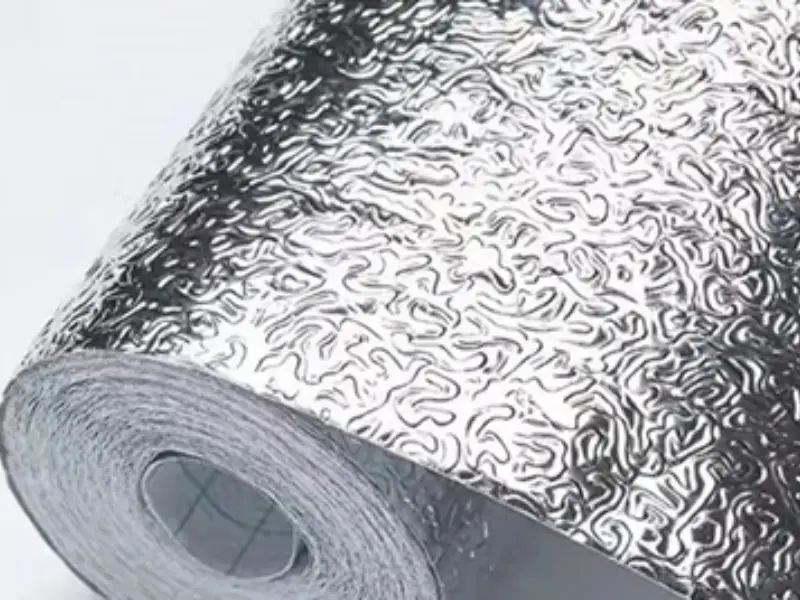
The surface has a textured pattern. This increases surface area and improves grip. It also helps the foil stay in place when stapled.
| Finish Type | Reflectivity | Glare Level | Best For |
|---|---|---|---|
| Bright | 96% – 97% | High | Maximum thermal performance |
| Matte | 93% – 95% | Low | Worker comfort, reduced glare |
| Embossed | 94% – 96% | Medium | Better adhesion, less slipping |
Head-to-Head Comparison: Foil vs. Traditional Insulation
Many buyers wonder how aluminum foil insulation compares to fiberglass, foam, or mineral wool.
Thermal Performance Comparison
| Factor | Aluminum Foil | Fiberglass | Spray Foam |
|---|---|---|---|
| Primary heat block | Radiation | Conduction | Conduction + convection |
| R-value per inch | Low alone | R-3 to R-4 | R-6 to R-7 |
| Works with air gap | Required | Not required | Not required |
| Moisture resistance | Excellent | Poor (absorbs) | Good |
| Installation speed | Very fast | Moderate | Slow (curing needed) |
| Lifespan | 20 – 30 years | 15 – 20 years | 25 – 30 years |
| Cost per square foot | Low to moderate | Low | High |
Alloy Comparison for Insulation Use
| Alloy | Strength | Cost | Best Application |
|---|---|---|---|
| 1050 | Low | Lowest | Simple radiant barriers |
| 1145 | Low | Low | Thin foil facings |
| 1235 | Low | Low-Medium | Laminated products |
| 8011 | Medium | Medium | Reinforced insulation |
| 8079 | Medium-High | Medium-High | Heavy-duty industrial use |
Foil Construction Comparison
| Construction | Durability | Flexibility | Cost | Typical R-Value Add |
|---|---|---|---|---|
| Pure foil | Low | High | Lowest | Minimal |
| Foil-bubble-foil | Medium | Medium | Medium | R-1 to R-3 |
| FSK | High | Low | Medium | Minimal (facing only) |
| Foil-woven | Very high | High | Higher | Minimal |
| Perforated foil | Medium | High | Medium | Minimal |
The applications for aluminum foil for insulation span many industries. Here are the most common uses.
Where Aluminum Foil Insulation Delivers Results
Residential Attics and Roofs
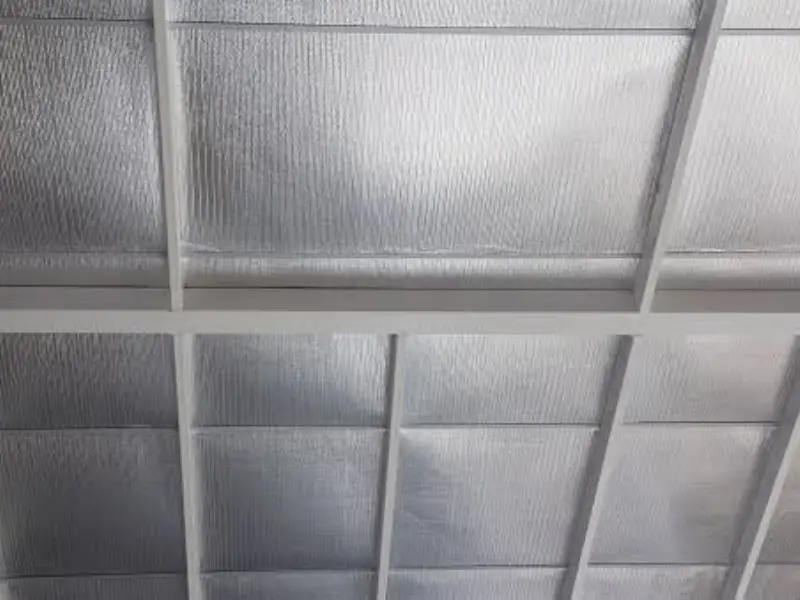
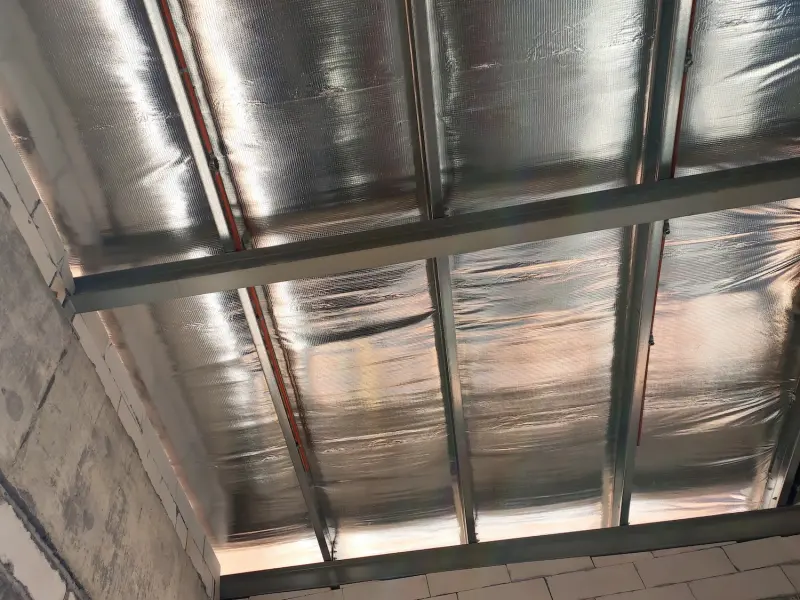
Homeowners install radiant barrier foil under roof rafters. This blocks solar heat before it enters the living space. Attic temperatures can drop by 20 to 40 degrees Fahrenheit. Energy bills for cooling fall significantly.
- Stapled to underside of roof rafters
- Laid over attic floor insulation
- Combined with proper ventilation
Commercial Building Roofs
Large flat roofs absorb massive amounts of heat. Faced insulation boards with aluminum foil backing stop this heat transfer. The foil faces the interior air space.
- Metal building roof systems
- Warehouse ceiling assemblies
- Retail store roofing
HVAC Duct Systems
Air moving through ducts gains or loses heat. Foil-faced duct wrap insulates the metal ductwork. FSK tape seals the seams. This keeps conditioned air at the right temperature.
- Flexible duct jackets
- Rigid duct board facing
- External duct wrap
Industrial Pipe Insulation
Hot pipes lose energy. Cold pipes gain heat and sweat. Aluminum foil facing protects the insulation underneath. It acts as a vapor barrier and reflects radiant heat.
- Steam pipe lagging
- Chilled water lines
- Process piping in factories
Automotive Heat Shields
Car engines generate extreme heat. Aluminum foil laminates protect nearby components. They reflect heat away from sensitive parts.
- Exhaust system shields
- Transmission tunnel liners
- Under-hood protection
Cold Storage and Refrigeration
Cold rooms must keep heat out. Foil-faced insulation panels line the walls and ceilings. The foil surface faces the cold interior. It reflects any heat that penetrates the outer shell.
- Walk-in coolers
- Freezer warehouses
- Refrigerated transport containers
Agricultural Buildings
Barns and poultry houses need temperature control. Foil insulation keeps these structures cooler in summer. It also reduces condensation on metal surfaces.
Greenhouse shading systems
Poultry house ceilings
Dairy barn walls
Understanding R-Value and Reflective Performance
R-value measures resistance to conductive heat flow. Aluminum foil for insulation has a low R-value by itself. It is very thin. But R-value is not the whole story.
Foil works by reflecting radiant heat. This is measured by emissivity. Standard building materials have high emissivity. They absorb and re-emit heat. Aluminum foil has very low emissivity. It emits only 3% to 5% of the heat that hits it.
When installed with an air space of at least ¾ inch, foil insulation performs like R-3 to R-6 in blocking radiant heat. In hot climates, this reflective performance often matters more than conductive R-value.
| Climate Type | Foil Insulation Benefit |
|---|---|
| Hot climates | Excellent – blocks incoming solar heat |
| Mixed climates | Good – works year-round with proper design |
| Cold climates | Moderate – helps keep heat inside when facing inward |
Installation Best Practices
Getting the most from aluminum foil insulation requires correct installation.
Maintain the Air Gap
Foil must face an air space to work. If it touches another surface, it conducts heat instead of reflecting it. Always leave a gap of at least 19 mm (¾ inch).
Face the Foil Correctly
In hot climates, the foil faces the roof or exterior. In cold climates, it can face the interior to reflect heat back into the room. Check the building science for your region.
Seal the Seams
Use foil tape at all overlaps. This creates a continuous vapor barrier. Unsealed seams let moisture pass. Moisture reduces insulation value and can cause mold.
Avoid Compression
Do not compress bubble foil or faced batts. Compression eliminates the air spaces that provide insulation value.
Wear Protection
Bright foil reflects intense light. Wear sunglasses and gloves during installation. The edges of thick foil can cut skin.
Common Mistakes to Avoid
Even good products fail when installed wrong. Watch out for these errors.
Installing without an air gap. Foil pressed against drywall or sheathing acts as a conductor. It will not reflect heat.
Using the wrong side. Some products have different coatings on each side. Always check which face should point toward the heat source.
Ignoring vapor flow. In mixed climates, vapor can move in both directions. Perforated foil may be better than solid foil in walls.
Choosing too thin a foil for the job. A 0.007 mm foil tears during installation on a windy roof. Use heavier gauge for exposed applications.
Overlapping incorrectly. Gaps between sheets let heat and moisture through. Overlap by at least 50 mm and tape every seam.
Aluminum foil for insulation For Sale
Aluminum foil for insulation is a proven, cost-effective way to control heat flow. It reflects radiant energy that other materials miss.
It is light, durable, and easy to install. The key is choosing the right alloy, thickness, and construction for your specific project.
From attic radiant barriers to industrial pipe jackets, foil insulation plays a critical role in modern building science. Pair it with traditional insulation for the best results.
Always maintain the required air gap. Seal the seams properly. Follow these steps, and your building will stay more comfortable while using less energy.
How Aluminum Foil Works in an Insulation System
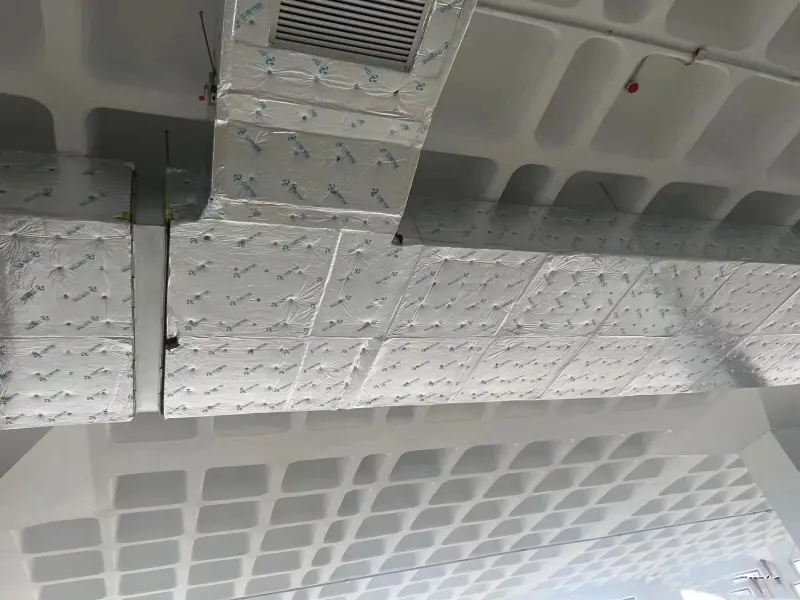
Aluminum foil is not normally the main insulation material. Its main role is to work with the insulation layer and improve the overall performance of the system.
The foil surface can reflect radiant heat. When it is used with a suitable air space, it can help reduce heat transfer caused by thermal radiation.
This makes aluminum foil useful with different insulation materials, including fiberglass, mineral wool, foam insulation and other building insulation systems.
A simple insulation structure can be understood as:
Aluminum foil surface → insulation layer → building or equipment surface
Each layer has a different function. The insulation layer helps slow heat transfer, while the foil can provide a reflective surface and additional protection.
What Should You Consider Before Buying Insulation Foil?
Choosing insulation foil is not only about thickness. The correct product depends on where the foil will be used and how it will be installed.
| Selection factor | Why it matters |
|---|---|
| Alloy | Affects strength and forming |
| Temper | Influences flexibility and hardness |
| Thickness | Affects durability and handling |
| Width | Should match the insulation system |
| Surface | Plain, embossed, coated or laminated |
| Roll length | Influences installation efficiency |
| Moisture resistance | Important for many insulation systems |
| Tear resistance | Useful during installation |
| Temperature conditions | Important for industrial use |
| Installation method | Determines suitable foil structure |
For a small residential project, a thin flexible product may be enough. Industrial insulation may require a thicker aluminum jacket or reinforced structure.
Aluminum Foil vs Other Insulation Facing Materials
Aluminum foil is only one type of insulation facing. Different projects may require different materials.
| Material | Reflective surface | Moisture barrier | Weight | Typical use |
|---|---|---|---|---|
| Aluminum foil | Excellent | Good | Low | Insulation facing |
| Kraft paper | Low | Limited | Low | Interior insulation |
| Plastic film | Medium | Good | Very low | Moisture protection |
| Aluminum laminate | Excellent | Excellent | Low | Insulation systems |
| Aluminum jacketing | Excellent | Excellent | Medium | Pipe and equipment |
This comparison shows why aluminum foil is often selected when both a metallic surface and lightweight construction are required.
Plain Aluminum Foil or Embossed Aluminum Foil?
The surface design can change the performance and appearance of the finished insulation system.
Plain aluminum foil
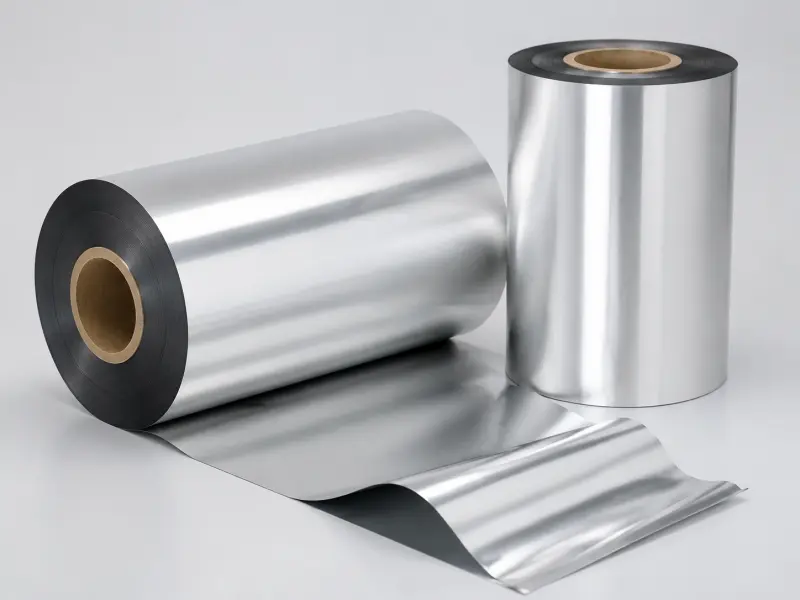
Plain foil has a smooth surface. It is often selected when a clean metallic appearance and simple processing are required.
It can be used for:
Flexible insulation products
Insulation facing
HVAC systems
Laminated insulation
Building insulation
Embossed aluminum foil
Embossing creates a textured surface. This can improve the appearance and may provide additional surface stiffness.
Common patterns include:
- Stucco
- Orange peel
- Pebble
- Other custom patterns
For pipe insulation and exposed industrial insulation, embossed aluminum jacketing is often more suitable than very thin plain foil.
Thin Foil vs Heavy Aluminum Jacketing
Not every insulation project needs the same aluminum thickness.
| Product level | Main characteristic | Suitable direction |
|---|---|---|
| Very thin foil | Flexible and lightweight | Laminated insulation |
| Medium foil | Better handling strength | Building insulation |
| Thick sheet | Higher mechanical strength | Equipment insulation |
| Aluminum jacketing | Strong exterior protection | Pipes and industrial systems |
This distinction is important for buyers. A thin insulation foil should not automatically be used as a replacement for a rigid aluminum jacket.
Why Width Matters When Ordering Aluminum Foil
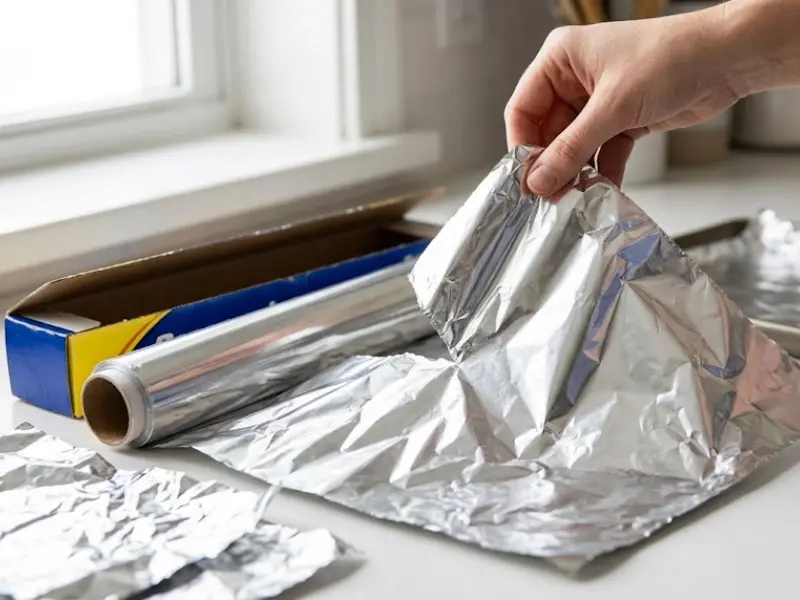
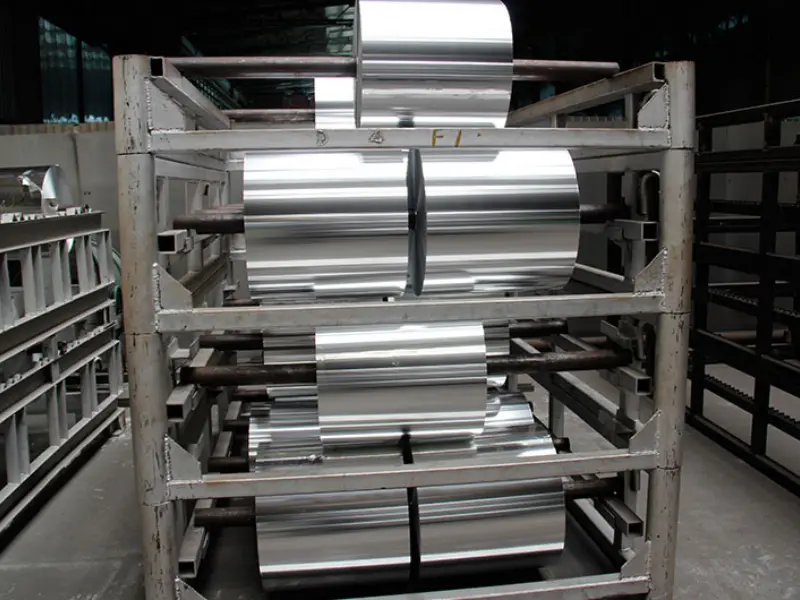
Width is often overlooked during purchasing.
A suitable width can reduce cutting and joining during installation. It may also reduce material waste.
For example, insulation manufacturers may require wide jumbo rolls for automatic production, while installers may prefer narrower rolls for easier handling.
Typical width requirements can vary widely:
| Buyer | Possible requirement |
|---|---|
| Insulation manufacturer | Jumbo roll |
| HVAC contractor | Medium-width roll |
| Building contractor | Standard roll |
| Pipe insulation company | Narrow or slit roll |
| Distributor | Multiple widths |
Custom slitting can be useful when standard widths do not match the production line.
Roll Length and Installation Efficiency
Roll length can affect labor efficiency.
A longer roll means fewer roll changes during installation. However, very large rolls can also become more difficult to move manually.
For this reason, the best roll size depends on the installation method.
Small roll → easier handling
Medium roll → balance between handling and efficiency
Jumbo roll → high-volume industrial production
For factories producing insulation materials, jumbo aluminum foil rolls can be more efficient because they reduce frequent material changes.
Aluminum Foil for Different Temperature Conditions
Temperature is another factor to consider.
Aluminum itself can withstand a wide range of temperatures, but the complete insulation system includes adhesives, laminates, coatings and other materials.
Therefore, the temperature rating should be evaluated as a complete system rather than based only on the aluminum foil.
For industrial applications, buyers should provide:
- Working temperature
- Peak temperature
- Continuous operating temperature
- Indoor or outdoor use
- Contact with chemicals
- Moisture conditions
This information helps the manufacturer recommend a more suitable material structure.
Aluminum Foil and Moisture Control
One reason aluminum foil is widely used with insulation is its ability to act as part of a moisture-resistant facing system.
When properly sealed, the foil layer can help limit the movement of moisture and vapor through the insulation assembly.
However, the foil itself is not enough if there are open joints or damaged areas.
Good installation should pay attention to:
→ Overlapping joints
→ Sealing tape
→ Penetrations
→ Corners
→ Damaged areas
→ Connections between sections
The final result depends on both the material and the installation quality.
How Surface Finish Changes the Product
Different surfaces can give the same aluminum base material a different function and appearance.
| Surface finish | Main feature |
|---|---|
| Mill finish | Simple metallic surface |
| Bright finish | Higher visual reflectivity |
| Embossed | Textured and more decorative |
| Laminated | Adds another functional layer |
| Coated | Adds color or surface protection |
| Brushed | Decorative metallic appearance |
For insulation manufacturers, the best surface is often determined by the final product structure rather than appearance alone.
Aluminum Foil in Residential vs Industrial Projects
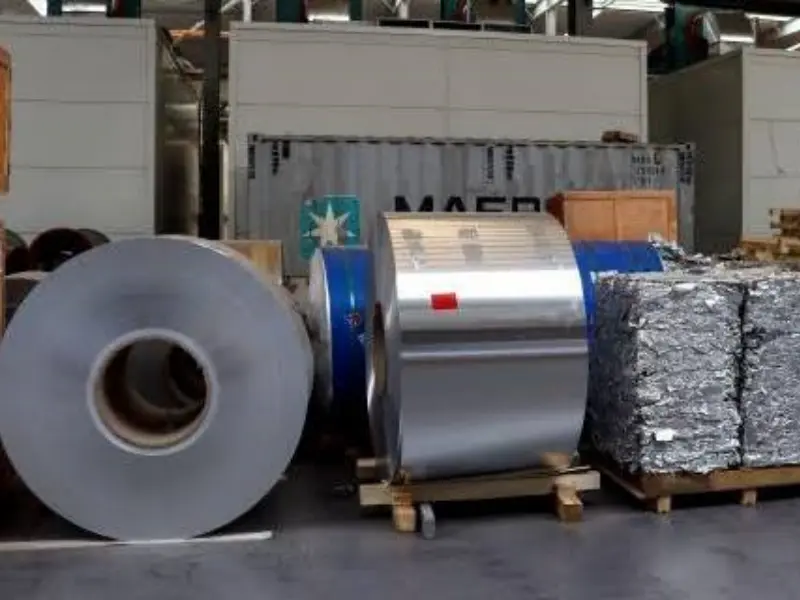
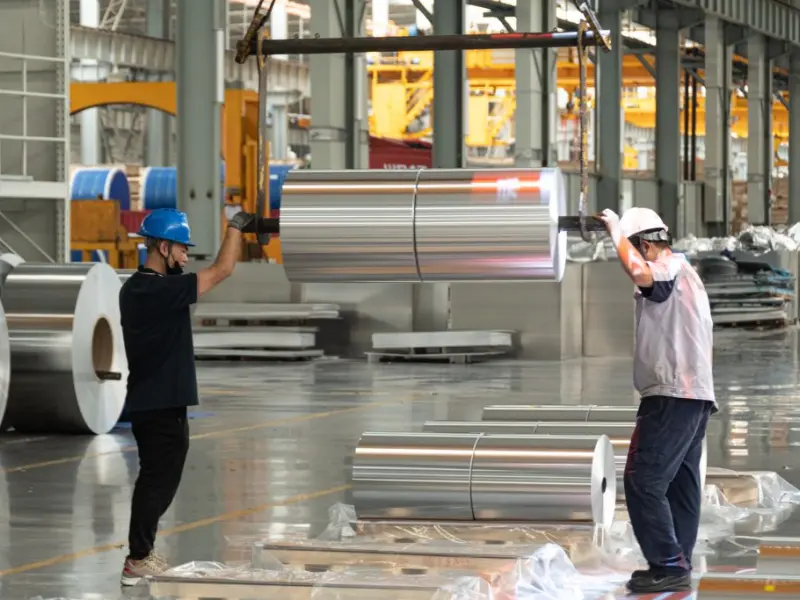
The requirements are very different between these two markets.
Residential insulation
Residential projects often focus on:
- Easy installation
- Lightweight material
- Clean appearance
- Easy cutting
- Standard roll sizes
- Cost control
Industrial insulation
Industrial projects may require:
- Higher mechanical strength
- Greater thickness
- Larger rolls
- Embossed surfaces
- Weather resistance
- Chemical resistance
- Custom dimensions
This is why the same aluminum foil specification should not be used for every insulation project.
A Simple Way to Match the Material to the Project
You can use this quick selection table when preparing an inquiry.
| Project condition | Material direction |
|---|---|
| Lightweight insulation | Thin aluminum foil |
| Insulation laminate | Plain or laminated foil |
| Flexible insulation | Thin, easy-to-form foil |
| Exposed pipe insulation | Aluminum jacketing |
| Outdoor equipment | Thicker protective aluminum |
| Decorative insulation | Embossed or coated surface |
| Large factory production | Jumbo roll |
| Custom production | Slit-to-width roll |
This makes it easier for buyers to explain their requirements before requesting a quotation.
What Makes a Good Insulation Foil Supplier?
Price is important, but it is not the only factor when buying aluminum foil for insulation.
A reliable supplier should be able to provide consistent:
Material → Thickness → Width → Surface → Roll length → Packaging → Delivery
For large orders, consistency between different production batches is especially important.
A professional manufacturer should also be able to support custom requirements instead of offering only standard sizes.
Custom Aluminum Foil for Insulation
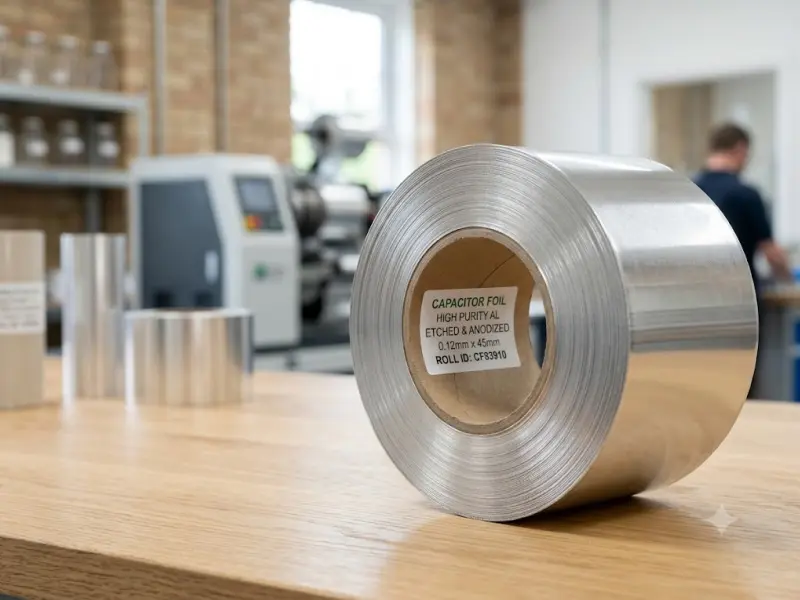
Different insulation manufacturers often use different production lines. A standard specification may not always fit the machine.
Custom options can include:
| Custom item | Possible options |
|---|---|
| Alloy | 1050 / 1060 / 1100 / 3003 |
| Temper | O / H14 / H16 / H18 |
| Thickness | Custom |
| Width | Custom |
| Roll ID | 75 / 150 / 300 mm or custom |
| Surface | Plain / bright / embossed |
| Roll weight | Custom |
| Packaging | Export standard |
| Slitting | Available |
Custom production can help reduce unnecessary trimming and material waste.
Common Buying Mistakes to Avoid
Choosing thickness only by price
A cheaper thin foil may not provide enough strength for a demanding application.
Ignoring roll dimensions
The correct width and inner diameter can make a large difference during production.
Using the same foil for every application
Building insulation and industrial pipe insulation have different requirements.
Forgetting the surface requirement
Plain and embossed aluminum foil can behave differently during processing.
Not confirming packaging
Long-distance transportation requires suitable protection against moisture, impact and deformation.
From Aluminum Foil to Complete Insulation Jacketing
For projects that require stronger external protection, aluminum foil can be only one part of the solution.
A complete insulation jacketing system may include:
Insulation material
↓
Moisture or vapor barrier
↓
Aluminum foil / laminated layer
↓
Protective aluminum jacketing
↓
Joint and fastening system
This layered approach is common in industrial insulation because different materials perform different functions.
Factory Supply for Different Insulation Requirements
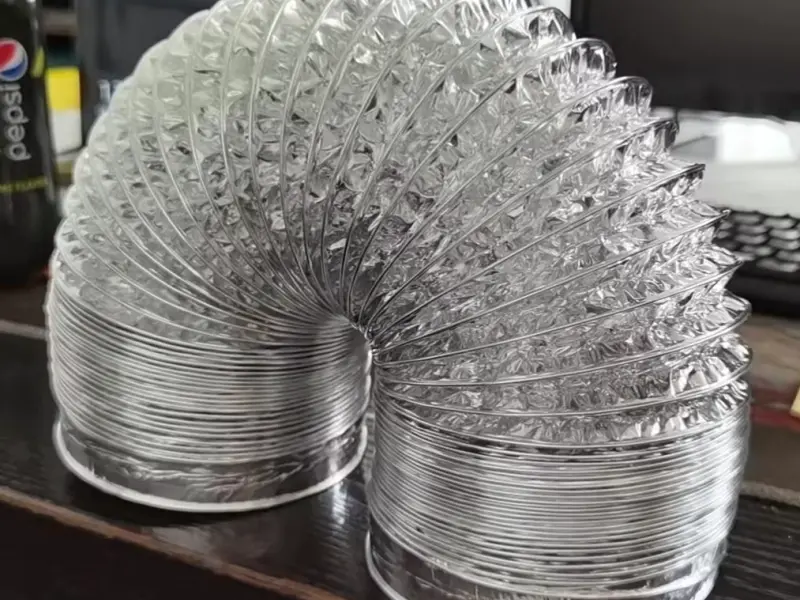
Our aluminum product range can cover different insulation-related requirements, from thin foil rolls to thicker aluminum jacketing.
We can supply:
- Aluminum foil rolls
- Embossed aluminum foil
- Stucco embossed aluminum
- Aluminum insulation jacketing
- Aluminum pipe jacketing
- PSMB aluminum jacketing
- Laminated aluminum foil
- Aluminum coil
- Aluminum sheet
- Slit aluminum strips
Different alloys, thicknesses, widths and surface finishes can be discussed according to the final application.
For buyers who already have a technical drawing or existing specification, the material can be matched to the required dimensions.
A Better Way to Compare Aluminum Insulation Materials
Instead of asking only “What is the price of aluminum foil?”, buyers can compare the complete specification:
| Item | Supplier A | Supplier B | Supplier C |
|---|---|---|---|
| Alloy | |||
| Thickness | |||
| Width | |||
| Temper | |||
| Surface | |||
| Roll weight | |||
| Core ID | |||
| Packaging | |||
| MOQ | |||
| Lead time |
This gives a much better picture of the real purchasing cost than comparing price per kilogram alone.
Frequently Asked Questions
Does aluminum foil insulation really work?
Yes. It works by reflecting radiant heat. In attics, it can reduce cooling costs by 5% to 10%. In metal buildings, the savings are often higher. It does not replace conductive insulation. It complements it. For best results, use foil with fiberglass or foam in the assembly.
What thickness of aluminum foil is best for insulation?
The best thickness depends on the job. For attic radiant barriers, 0.01 mm to 0.02 mm is enough. For duct wrap facing, 0.025 mm to 0.05 mm handles better. For industrial pipe jackets, 0.07 mm or thicker resists damage. Thicker foil costs more but lasts longer and installs easier.
Can I use aluminum foil insulation in walls?
Yes, but with care. Walls have limited space. Standard foil needs an air gap to work. Some builders use foil-faced foam board in walls. Others use perforated foil to let walls breathe. In very cold climates, improper vapor barriers can trap moisture. Always follow local building codes.
Is foil insulation fire resistant?
Aluminum itself does not burn. It melts at 660 degrees Celsius. However, the backing materials matter. Bubble wrap and kraft paper can burn. FSK facing has limited flammability. For fire-rated assemblies, look for products with Class A or Class 1 fire ratings. Never use standard bubble foil near open flames or heaters.
How long does aluminum foil insulation last?
Quality foil insulation lasts 20 to 30 years. It does not degrade from moisture or pests. UV exposure can dull the surface over time. But in attics and wall cavities, it stays effective for decades. The backing material may fail before the foil does. FSK and woven fabrics last longer than plain kraft paper.
What is the difference between a radiant barrier and foil insulation?
These terms overlap but mean slightly different things. A radiant barrier is a thin sheet of foil installed in an attic. It blocks radiant heat. Foil insulation usually refers to products where foil is laminated to another material like bubble wrap or foam. The added layers provide some conductive insulation too. Both use aluminum foil to reflect heat.
Can aluminum foil insulation reduce noise?
Not effectively. Foil is thin and dense. It reflects sound rather than absorbing it. For noise reduction, combine foil with fiberglass or acoustic foam. The mass of the foil may block some high-frequency sound. But it is not a soundproofing material by design.
Is reflective foil insulation better than fiberglass?
They do different jobs. Fiberglass blocks conductive heat. Foil blocks radiant heat. In an attic, the best system uses both. Fiberglass on the attic floor stops heat from rising into the house. A radiant barrier under the roof stops solar heat from entering the attic. One is not better than the other. They work together.
Can I install aluminum foil insulation myself?
Yes. Most products are DIY-friendly. You need a staple gun, foil tape, and a utility knife. Wear long sleeves and gloves. The foil edges are sharp. For large commercial jobs, hire a contractor. They have the equipment to install wide rolls safely and quickly.
Does the color of the foil matter?
Most insulation foil is silver or natural aluminum color. This gives the highest reflectivity. Some products have white or colored coatings on one side. These reduce reflectivity slightly but may be needed for aesthetic reasons. For pure thermal performance, bare bright aluminum is best.
Explore aluminum foil for insulation: types, alloys (1050, 8011, 8079), thickness specs, temper options, and applications. Compare foil insulation products and find the right fit for your project.
aluminum foil for insulation, reflective foil insulation, radiant barrier foil, thermal insulation aluminum foil, foil faced insulation, HVAC foil wrap, aluminum foil insulation roll, FSK foil insulation, bubble foil insulation, insulation foil thickness