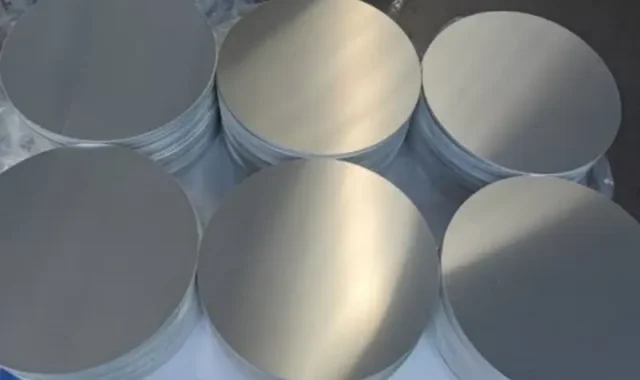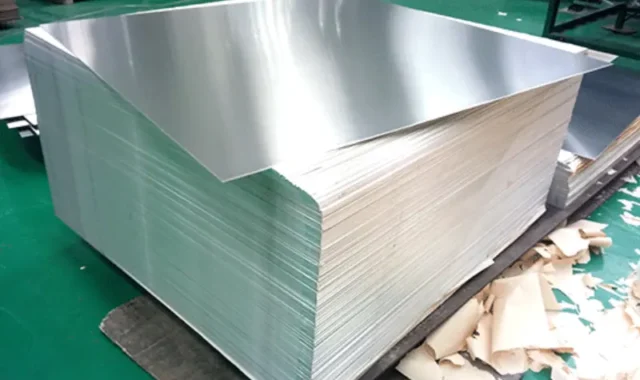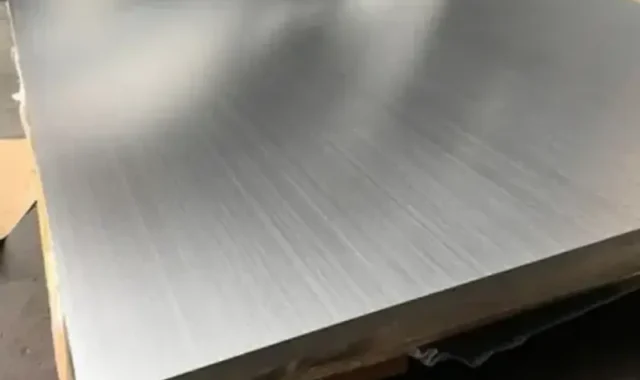
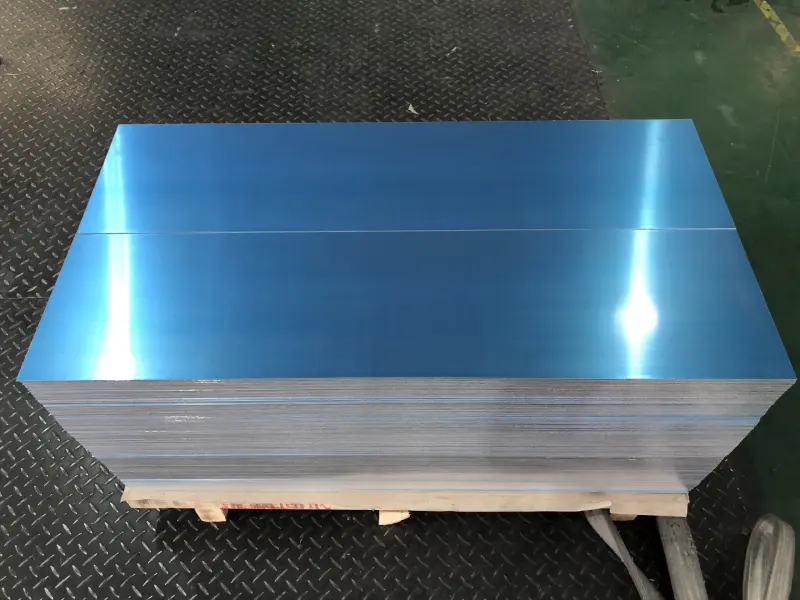
Aluminum sheet for sign industry is a flat panel of aluminum used to make signs, displays, and advertising boards. It comes in many alloys, thicknesses, finishes, and colors. Sign makers cut, bend, print, paint, or coat the sheet to create custom signs.
The sign industry uses aluminum because it is light, durable, and easy to work with. It does not rust. It lasts for years outdoors. It also accepts paint, vinyl, and digital prints very well.
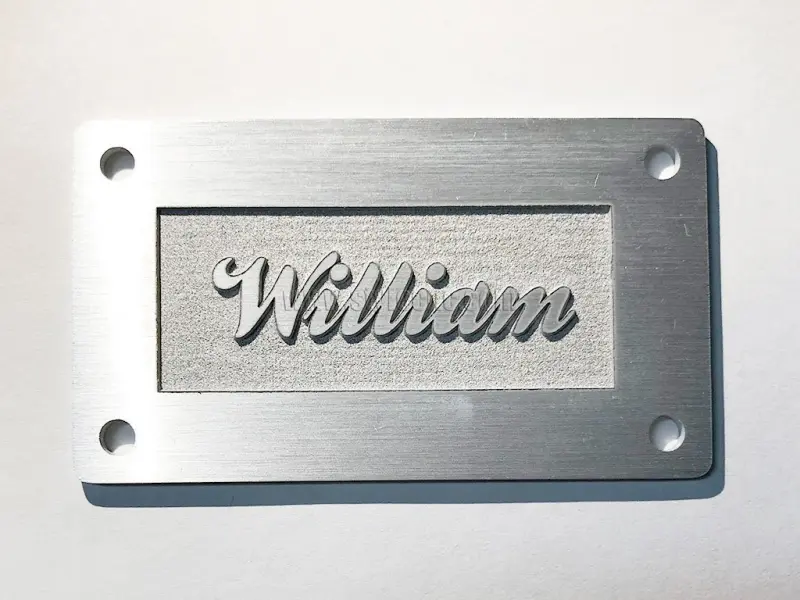
Why Aluminum for Signs?
- Light weight: Easy to lift, mount, and ship.
- No rust: Works outdoors for decades without corrosion.
- Easy to fabricate: Cuts, drills, bends, and welds with standard tools.
- Many finishes: Mill, brushed, painted, anodized, or coated.
- Many colors: Pre-painted sheets match any brand.
- Recyclable: Can be reused without quality loss.
- Cost effective: Lower cost than stainless steel for most sign work.
Types of Aluminum Sheet by Alloy for Signs
The alloy changes strength, corrosion resistance, and price.
1000 Series: Pure Aluminum
These sheets have over 99% aluminum. They are soft and affordable.
| Alloy | Aluminum Content | Price Level | Best For |
|---|---|---|---|
| 1050 | 99.5% | Lowest | Budget signs, indoor panels, testing |
| 1060 | 99.6% | Lowest | Reflective signs, decorative work |
| 1100 | 99.0% | Low | General signs, easy forming, blanks |
Use these for indoor signs, small displays, and budget projects. They form easily but lack strength for large outdoor signs.
3000 Series: Aluminum-Manganese
These sheets add manganese for better strength. They are the most common for general sign work.
| Alloy | Added Element | Price Level | Best For |
|---|---|---|---|
| 3003 | Manganese | Low-Mid | Standard signs, panels, HVAC covers |
| 3004 | Manganese + Magnesium | Low-Mid | Canopies, awnings, siding |
| 3105 | Manganese + Magnesium | Low-Mid | Painted signs, trim, downspouts |
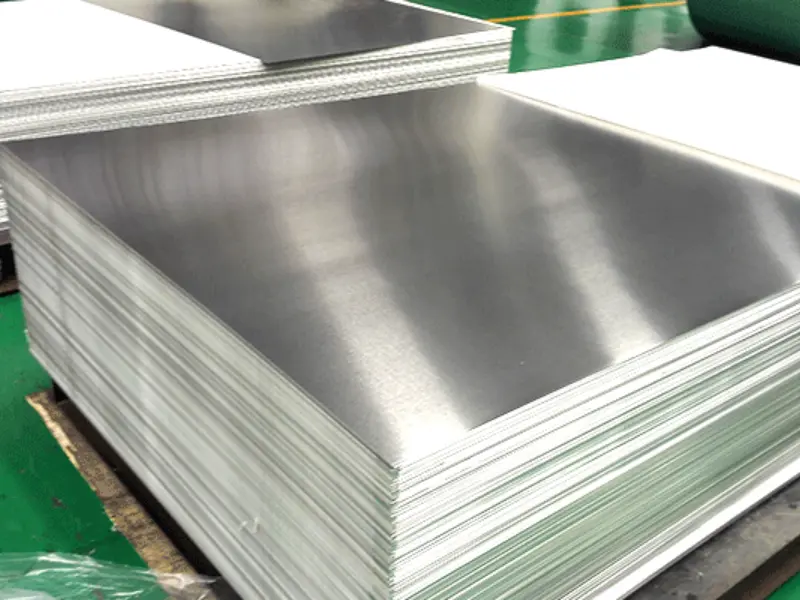
3003 H14 is the standard alloy for sign blanks. It balances cost and workability. It accepts paint and vinyl well. 3105 is popular for pre-painted sign stock because it holds paint better.
5000 Series: Aluminum-Magnesium
These sheets resist salt water and weather. They are stronger than 3000 series.
| Alloy | Added Element | Price Level | Best For |
|---|---|---|---|
| 5005 | Magnesium | Mid | Architectural signs, good paint adhesion |
| 5052 | Magnesium | Mid-High | Marine signs, coastal signs, heavy-duty |
| 5083 | Magnesium | High | Large structural signs, offshore |
5052 H32 is the top pick for outdoor signs in harsh climates. It resists salt spray and industrial pollution. It is also used for traffic signs and highway markers.
6000 Series: Aluminum-Magnesium-Silicon
These are heat-treatable alloys. They are the strongest option for structural signs.
| Alloy | Added Element | Price Level | Best For |
|---|---|---|---|
| 6061 | Mg + Si | High | Structural frames, large monuments |
| 6063 | Mg + Si | High | Extruded sign frames, architectural trim |
6061 T6 is used for large sign structures, monument bases, and frames that carry heavy loads. It machines well but is harder to bend than 3003 or 5052.
Temper States for Sign Aluminum Sheets
Temper shows how hard the sheet is. It affects cutting, bending, and forming.
| Temper | Description | Hardness | Best For |
|---|---|---|---|
| O | Fully annealed, soft | Very soft | Deep drawing, complex shapes |
| H12 | Quarter hard | Soft | Light forming, decorative |
| H14 | Half hard | Medium | Standard signs, most popular |
| H16 | Three-quarter hard | Medium-Hard | Stiffer panels, less forming |
| H18 | Full hard | Hard | Flat panels, maximum stiffness |
| H22 | Quarter hard, stabilized | Soft | Better than H12 |
| H24 | Half hard, stabilized | Medium | Popular for painted signs |
| H32 | Quarter hard, stabilized | Medium | Marine signs, stable shape |
| H34 | Half hard, strain hardened | Medium-Hard | Good balance, automated |
| T4 | Heat treated, natural age | Medium-Hard | Formed after treatment |
| T6 | Heat treated, fully aged | Hard | Structural, no forming after |
H14 and H24 are the most common tempers for sign work. They are stiff enough for flat signs but soft enough to bend and route.
Thickness Guide for Sign Aluminum Sheets
Thickness affects rigidity, weight, and wind resistance.
| Thickness | Gauge | Weight (kg/m²) | Best For |
|---|---|---|---|
| 0.4 mm | 0.016″ | 1.08 | Small indoor signs, labels |
| 0.5 mm | 0.020″ | 1.35 | Indoor signs, light panels |
| 0.6 mm | 0.024″ | 1.62 | Standard indoor signs |
| 0.8 mm | 0.032″ | 2.16 | Medium signs, column wraps |
| 1.0 mm | 0.040″ | 2.70 | Standard outdoor signs, popular |
| 1.2 mm | 0.050″ | 3.24 | Larger signs, more rigidity |
| 1.5 mm | 0.063″ | 4.05 | Heavy outdoor signs, traffic |
| 2.0 mm | 0.080″ | 5.40 | Large signs, structural panels |
| 3.0 mm | 0.125″ | 8.10 | Monument signs, heavy-duty |
| 4.0-6.0 mm | 0.157-0.236″ | 10.80-16.20 | Structural bases, frames |
0.040 Inch Aluminum Sheet for Signs
The 0.040 inch (1.0 mm) aluminum sheet is the most common thickness for outdoor signs. It is rigid enough for most jobs. It is light enough for easy mounting. It works with vinyl, paint, and digital prints. It is the standard for traffic signs and commercial signage.
0.063 Inch Aluminum Sheet for Signs
The 0.063 inch (1.5 mm) aluminum sheet is for heavy-duty signs. It resists wind and impact better than 0.040″. It is used for traffic control signs, large building signs, and areas with high wind loads.
0.080 Inch Aluminum Sheet for Signs
The 0.080 inch (2.0 mm) aluminum sheet is for very large signs and structural panels. It is used for monument signs, pylon signs, and billboard faces. It needs stronger mounting hardware.
Standard Sizes for Sign Aluminum Sheets
| Size | Dimensions | Common Use |
|---|---|---|
| Small blank | 12″ x 18″, 18″ x 24″ | Parking signs, directional |
| Medium blank | 24″ x 36″, 30″ x 40″ | Standard commercial signs |
| Large blank | 36″ x 48″, 48″ x 96″ | Large building signs |
| Full sheet | 48″ x 96″ (4′ x 8′) | Most common stock size |
| Full sheet | 48″ x 120″ (4′ x 10′) | Large format stock |
| Full sheet | 60″ x 120″ (5′ x 10′) | Extra large format |
| Custom cut | Any size | Routed, laser, or shear cut |
Surface Finishes for Sign Aluminum Sheets
| Finish | Description | Best For |
|---|---|---|
| Mill finish | Natural rolled surface | Industrial, welding, painting |
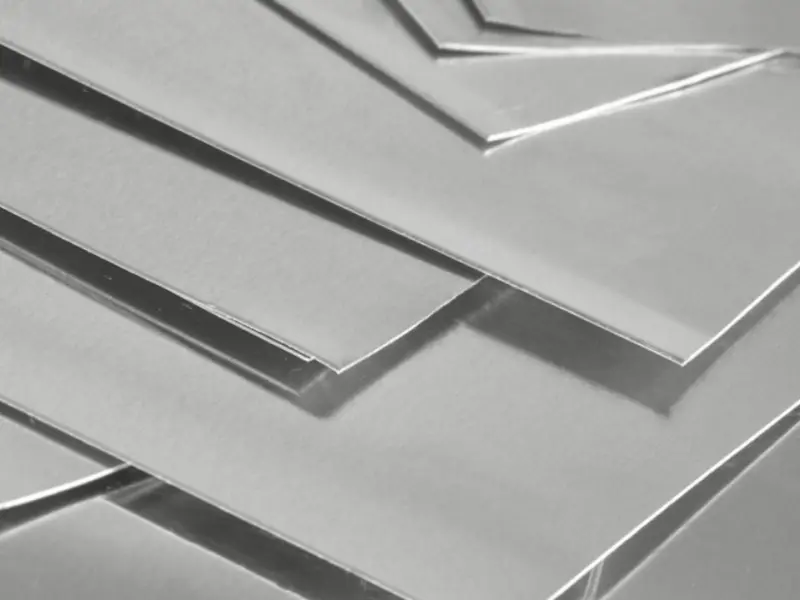
| Brushed | Fine lines, matte look | Modern signs, decorative |
| Mirror | Highly reflective | Premium signs, special effects |
| Anodized | Oxide layer protection | Outdoor, architectural, durable |
| Painted (PE) | Polyester coated | Indoor, budget, short-term |
| Painted (PVDF) | Fluorocarbon coated | Outdoor, long-term, UV resistant |
| Color coated | Pre-painted in color | Fast production, brand matching |
| Embossed | Textured pattern | Anti-slip, decorative, roofing |
| Stucco | Orange peel texture | Reduces glare, adds strength |
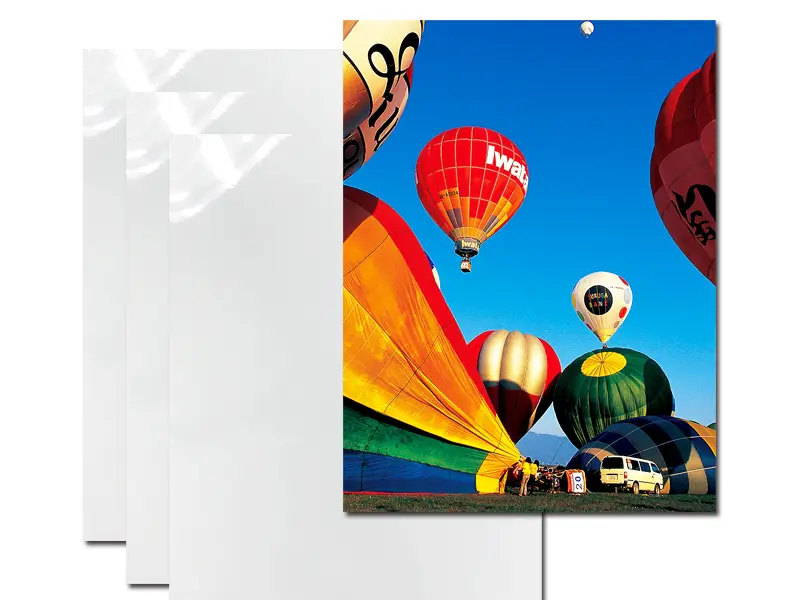
Pre-Painted Aluminum Sign Sheets
Pre-painted sheets save time and give consistent color. Common stock colors include black, white, red, blue, green, yellow, orange, brushed silver, and brushed gold. Custom colors match any RAL or Pantone code. Minimum order for custom color is usually 2,000 kg or more.
Comparison: Aluminum Sheet vs Other Sign Materials
| Feature | Aluminum Sheet | Aluminum Composite | Steel | PVC / Plastic |
|---|---|---|---|---|
| Weight | Light | Very light | Heavy | Very light |
| Outdoor life | 15-25 years | 10-15 years | 5-10 years | 5-10 years |
| Corrosion resistance | Excellent | Good | Poor (rusts) | Good |
| Rigidity | Good | Very good | Excellent | Poor |
| Paint adhesion | Excellent | Good | Good | Fair |
| Cost | Medium | Medium | Low | Very low |
| Recyclability | 100% | Partial | 100% | Low |
| Fire safety | Non-combustible | Varies | Non-combustible | Melts |
Aluminum sheet wins on durability, recyclability, and paint adhesion. Aluminum composite (ACM) is more rigid but harder to recycle. Steel is cheaper but rusts. Plastic is cheap but fades and warps.
Applications of Aluminum Sheet in the Sign Industry
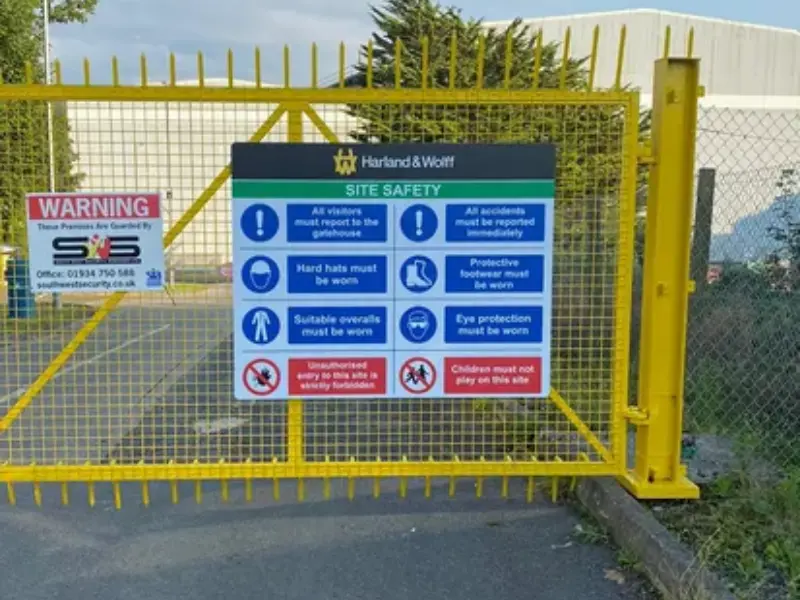
Commercial and Retail Signs
- Storefront signs and fascia
- Shopping mall directory signs
- Restaurant and café signage
- Bank and office building signs
- Gas station price signs and canopies
Traffic and Safety Signs
- Regulatory signs (stop, yield, speed limit)
- Warning signs (curve, pedestrian, construction)
- Guide signs (highway exit, directional)
- Parking signs and permits
- School zone signs
Outdoor Advertising
- Billboard faces and structures
- Bus shelter advertising panels
- Transit vehicle wraps and panels
- Stadium and arena signage
- Event banners and backdrops
Architectural and Building Signs
- Building identification letters
- Lobby and reception signs
- Wayfinding and directional systems
- ADA compliant signs
- Monument and pylon signs
Industrial and Safety
- Factory identification signs
- Warehouse labeling and marking
- Safety warning and caution signs
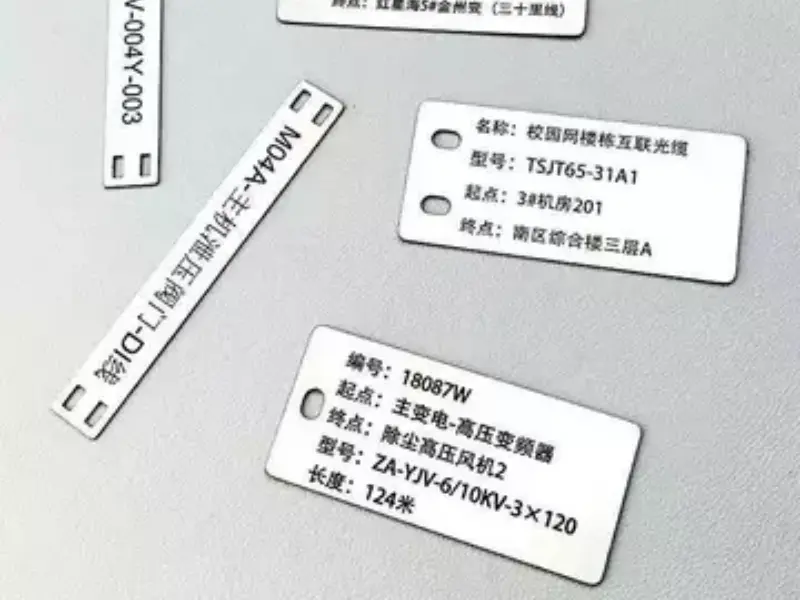
- Equipment nameplates
- Loading dock and traffic control
Digital and Printed Signs
- UV printed metal signs
- Sublimation printed panels
- Screen printed signs
- Vinyl applied signs
- Direct to substrate printing
How to Choose Aluminum Sheet for Your Sign Project
Step 1: Pick the Right Alloy
For indoor signs and budget work, use 1100 or 3003. For outdoor signs in normal climates, use 3003 H14 or 3105. For coastal or harsh environments, use 5052 H32. For structural frames and monuments, use 6061 T6.
Step 2: Select the Right Thickness
Small indoor signs: 0.5-0.8 mm. Standard outdoor signs: 1.0 mm (0.040″). Heavy outdoor signs: 1.5 mm (0.063″). Large structural signs: 2.0-3.0 mm. Match thickness to wind load and sign size.
Step 3: Choose the Finish
For painted signs, use mill finish or pre-painted. For modern look, use brushed or anodized. For long outdoor life, use PVDF coated. For budget indoor work, use PE coated or mill finish.
Step 4: Pick the Size
Order standard sizes to save money. Order custom cut sizes for specific projects. Full 4′ x 8′ sheets are the most economical for high-volume work.

How to Select Your Sign Sheet: A Quick Visual Flow
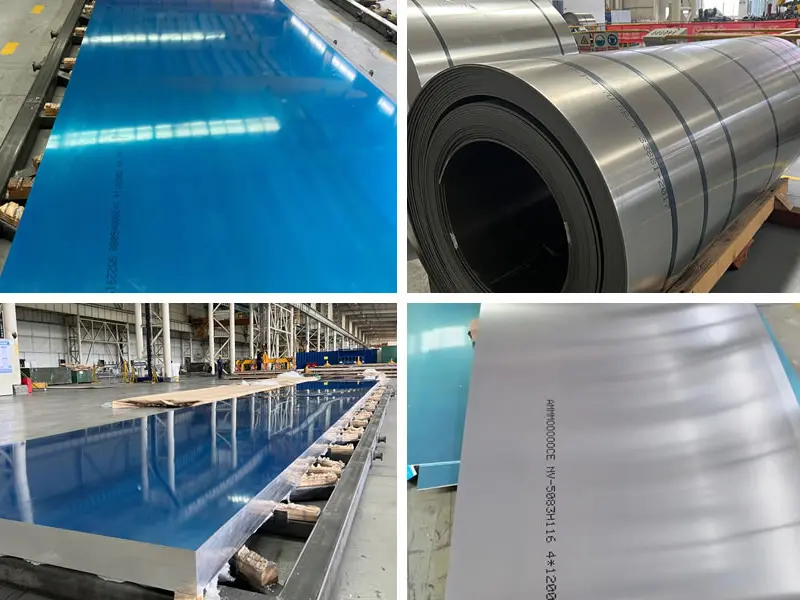
Finding the right aluminum sheet depends on your project goals. Use this simple guide to map out your selection:
Select Sign Location (Indoor or Outdoor)→Pick Alloy Grade (1100, 3003, or 5052)→Choose Sheet Thickness (0.040″ to 0.125″)→Select Surface Finish (Painted, Mill, or Brushed)→Apply Graphics (Direct UV Print, Vinyl, or Reflective Sheet)
Alloy Grades and Tempers for Professional Signs
Not all aluminum sheets are the same. Different alloys provide unique strengths, flexibility, and rust resistance. We use three primary alloy grades for sign manufacturing.
Commercial Pure Aluminum (Alloy 1100)
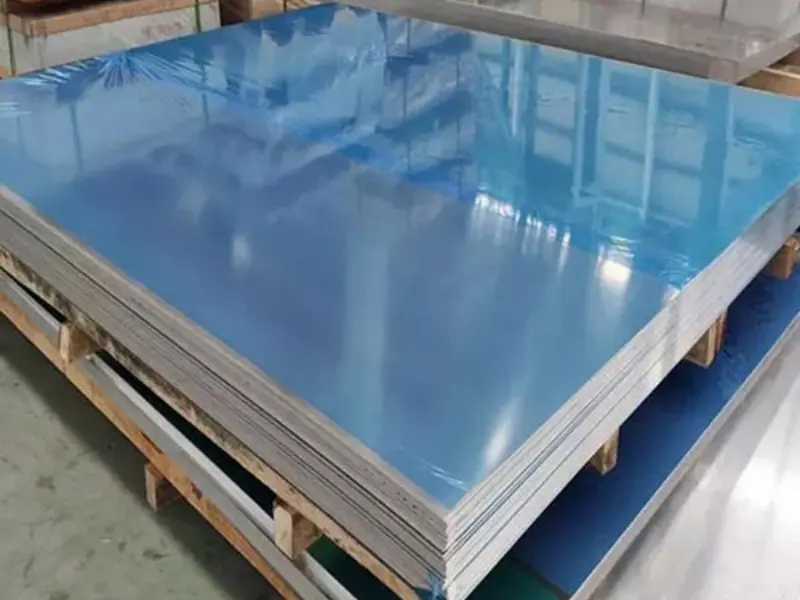
Alloy 1100 contains at least 99.0% pure aluminum. It is highly workable and ductile.
Best Used For: Embossed signs, license plate blanks, and simple decorative plaques.
Default Temper: Usually supplied in H14 temper.
Key Feature: Extremely easy to bend, shape, and punch. It has excellent resistance to chemical corrosion.
Standard Sign Grade (Alloy 3003)
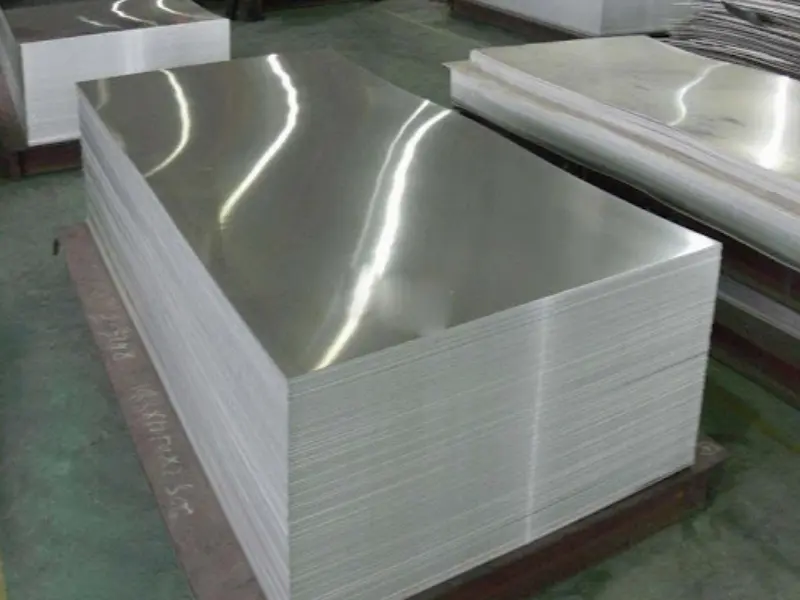
Alloy 3003 is an aluminum-manganese alloy. This is the most popular grade for general commercial signage.
Best Used For: Real estate signs, highway guide boards, and storefront paneling.
Default Temper: Supplied in H14 or H16 temper.
Key Feature: It is roughly 20% stronger than pure aluminum. It bends nicely without cracking.
Marine and Structural Grade (Alloy 5052)
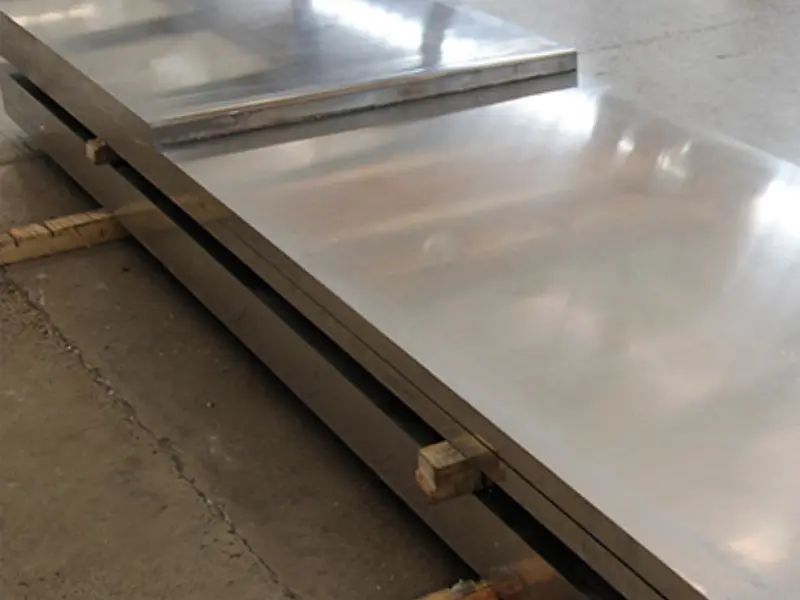
Alloy 5052 is an aluminum-magnesium alloy. It offers superior strength and excellent saltwater resistance.
Best Used For: Road traffic signs, coastal signs, high-end architectural signs, and industrial warning plates.
Default Temper: Usually processed in H32 or H38 temper.
Key Feature: Very stiff and highly resistant to wind load and salt-fog environments.
Material Grade Comparison
| Material Property | Alloy 1100 | Alloy 3003 | Alloy 5052 |
|---|---|---|---|
| Main Element | Pure Aluminum (Al≥99.0%) | Manganese (Mn≈1.2%) | Magnesium (Mg≈2.5%) |
| Yield Strength | Low (≈115 MPa) | Moderate (≈145 MPa) | High (≈195 MPa) |
| Wind Resistance | Fair | Good | Excellent |
| Formability | Excellent | Very Good | Moderate |
| Coastal Life | Moderate | Good | Outstanding |
Diverse Product Types to Attract Customers
We manufacture several surface styles. This allows sign shops to skip extra prep work and save production time.
Pre-Painted Aluminum Sign Sheets
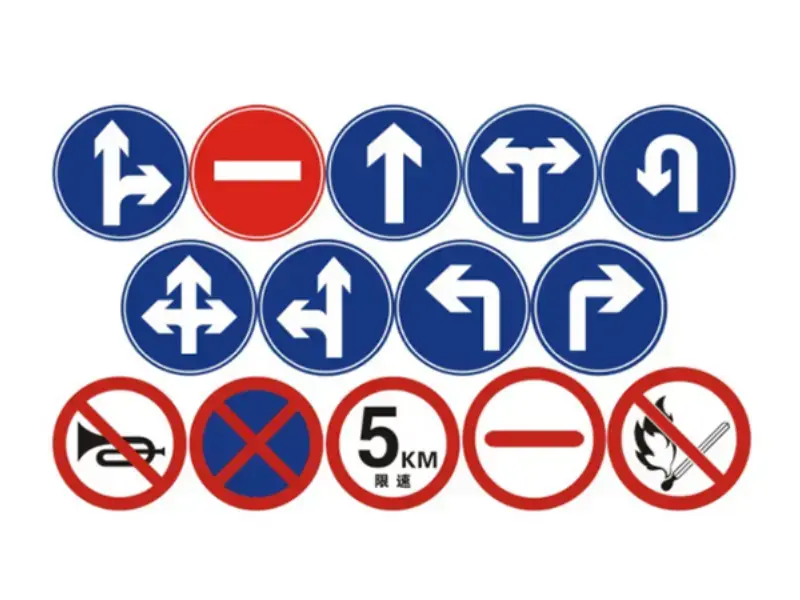
Our pre-painted sheets have a baked-on polyester or fluorocarbon (PVDF) paint finish. This finish is applied on our continuous coil-coating lines.
Protective Film: Every painted sheet comes with a peel-off plastic masking film. This protects the painted surface from scratches during cutting and shipping.
Popular Colors: High-gloss white, matte white, deep black, bright red, warning yellow, and safety blue.
Double-Sided Coating: We can paint one side or both sides. Double-sided painted sheets let you create two-way hanging signs easily.
Anodized Sign Board Sheets
Anodizing is an electrochemical process. It grows a hard, protective aluminum oxide layer on the metal surface.
- Visual Appeal: It has a deep, metallic, premium look.
- Weather Shield: Anodized surfaces do not chalk, peel, or rust, even under direct solar radiation.
- Top Choice For: Executive office signs, hotel directory boards, and luxury brand plaques.
Brushed Aluminum Sheets
Brushed sheets feature a directional satin pattern. This pattern is created by mechanically brushing the metal.
- Sophisticated Texture: The surface scatters light beautifully. It hides fingerprints and minor scratches.
- Modern Aesthetic: Ideal for high-tech office displays, indoor retail signage, and premium lobby graphics.
Mill Finish Sign Sheets
Mill finish is the raw metal directly from the rolling mill, without any extra coatings.
- Cost-Efficient: This is our most economical option.
- Maximum Versatility: It is perfect for sign shops that have their own painting booths or apply heavy vinyl adhesive wraps.
Digital Specifications and Standard Dimensions
Sign shops work with standard US and metric measurements. We supply aluminum sheets in exact dimensions to minimize scrap waste.
Common Thickness Gauges for Sign Blanks
| Gauge Number | Metric Thickness (mm) | Decimal Inch Thickness (in) | Recommended Sign Types |
|---|---|---|---|
| Gauge 24 | 0.63 mm | 0.025 in | Small license plates, indoor door labels |
| Gauge 22 | 0.81 mm | 0.032 in | Real estate yard signs, metal labels |
| Gauge 18 | 1.01 mm | 0.040 in | Standard outdoor signs, real estate panels |
| Gauge 16 | 1.27 mm | 0.050 in | Stiffer construction signs, mid-sized posters |
| Gauge 14 | 1.60 mm | 0.063 in | Medium road traffic signs, parking signs |
| Gauge 12 | 2.03 mm | 0.080 in | Heavy-duty municipal traffic signs |
| Gauge 10 | 3.18 mm | 0.125 in | Structural signs, high-wind highway guide signs |
Standard Sheet Sizes
Our warehouse stocks standard sheet sizes for immediate shipping. We also offer custom length cutting (cut-to-length) from coils.
- Standard US Sizes: 4×8 feet, 4×10 feet, and 5×10 feet.
- Standard Metric Sizes: 1220×2440 mm, 1220×3050 mm, and 1500×3000 mm.
Surface Treatment Performance Comparison
How do different surfaces perform over time? This comparison helps you choose the right finish based on your sign’s environment.
| Surface Type | Outdoor Lifespan | UV Fade Resistance | Screen Printing Prep Required | Direct UV Flatbed Printing |
|---|---|---|---|---|
| Pre-Painted (White) | 5 to 10 Years | Excellent | None (Clean & Ready) | Outstanding |
| Anodized | Over 15 Years | Perfect | Mild cleaning needed | Good (Needs specialized ink) |
| Brushed | 3 to 5 Years (unsealed) | Perfect (no paint) | Mild cleaning needed | Excellent (creates metal show-through) |
| Mill Finish | 1 to 3 Years (will oxidize) | N/A | Degreasing required | Not recommended without a primer |
How Aluminum Sign Blanks Are Processed
A standard aluminum sheet undergoes several steps before it becomes a finished sign on the street:
Raw Aluminum Sheet→Leveling & Flattening→Shearing / CNC Routing to Shape→Rounding Corners (to avoid sharp edges)→Punching Mounting Holes→Surface Cleaning→Applying Graphic (Print or Film)
Where Sign Boards Perform in the Field
Our aluminum sheets are versatile. They are used in many different public and private spaces.
- Municipal and Highway Traffic Signs: Heavy-duty 0.080 inch and 0.125 inch sheets coated with reflective sheets to guide nighttime drivers.
- Commercial Real Estate Panels: Lightweight 0.040 inch pre-painted sheets mounted on wooden posts to show property sales.
- Storefront Channel Letters: Easily bent 3003−H14 strips used to shape three-dimensional illuminated building letters.
- Gas Station Canopy Fascias: Large-format color-coated sheets used to wrap external overhead structures.
- Industrial Safety Signs: Corrosion-resistant 5052 sheets carrying warning messages inside chemical plants and offshore oil rigs.
- License Plate Blanks: Highly ductile 1100 aluminum sheets designed for high-speed pressing and reflective film lamination.
Fabrication Tips for Sign Makers
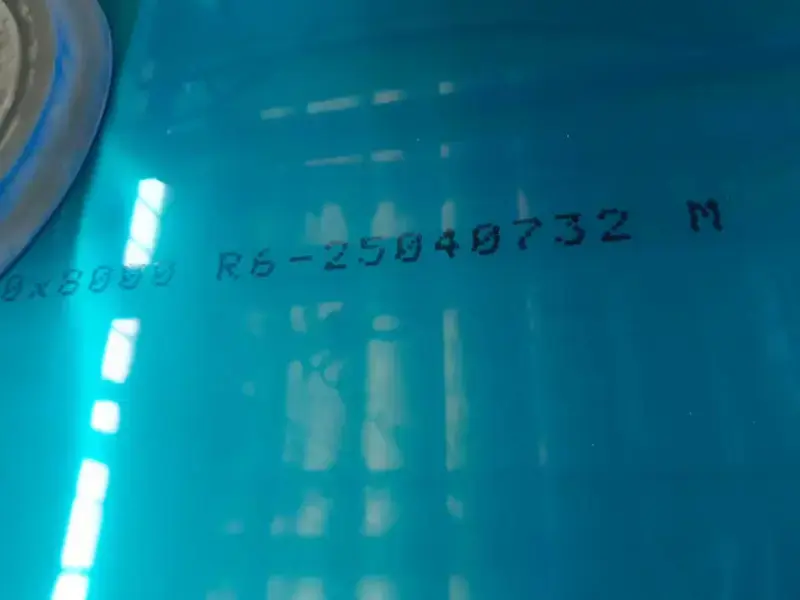
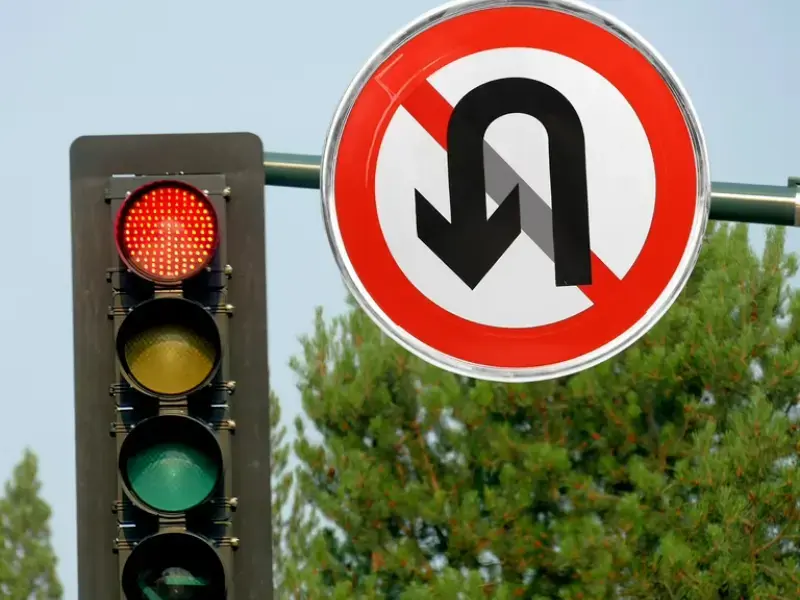
Avoiding Sharp Edges
When shearing heavy sheets like 0.080 inch aluminum, the sheared edge can be sharp. Use a corner rounder tool with a 0.5 inch (12.7 mm) or 1.5 inch (38.1 mm) radius. This makes the sign safe to handle during installation.
Drilling and Punching
Aluminum is soft. Use high-speed steel (HSS) drill bits. Keep drill speeds moderate. This prevents the metal from melting or binding to your bit.
- Standard hole size for mounting: 3/8 inch (9.5 mm) diameter holes.
- Standard placement: Centered at the top and bottom, or in all four corners, spaced 1.5 inches from the edges.
Direct-to-Substrate Printing
If you use a UV flatbed printer, select our pre-painted white sign blanks. These sheets undergo a special chemical treatment. This treatment helps UV-curable inks stick tightly without peeling.
Ordering Guide: Get Your Custom Sign Sheets Fast
To speed up your ordering process, please prepare the following specifications for our sales team:
Select Alloy Grade (1100,3003, or 5052)→Define Sheet Thickness (e.g., 0.040 in)→Select Sheet Dimensions (e.g., 4×8 ft)→Specify Color / Finish (e.g., Double-Sided White)→Input Order Quantity (Number of sheets or tons)
We offer fast shipping, safe wooden pallet packaging, and reliable quality control. Contact us today to receive a free quote and find the perfect aluminum sheets for your signage projects.
Quality Checks When Buying Sign Aluminum Sheets
- Mill test certificate confirms alloy and temper
- Flatness within tolerance, no waves or buckles
- Surface free of scratches, stains, and oil
- Edges clean cut with no burrs
- Coating uniform with no streaks or bubbles
- Color match to sample or specification
- Packaging protects from moisture and damage
FAQ
What alloy is best for outdoor signs?
3003 H14 is the standard for most outdoor signs. It balances cost and performance. For coastal areas or harsh climates, upgrade to 5052 H32 for better corrosion resistance.
What thickness should I use for a standard road sign?
0.040 inch (1.0 mm) is the standard thickness for most traffic and commercial signs. For high-wind areas or larger signs, use 0.063 inch (1.5 mm) or 0.080 inch (2.0 mm).
Can I paint aluminum sign sheets?
Yes. Aluminum accepts paint very well. For best results, use a conversion coating or primer before painting. Pre-painted sheets save time and give more consistent results.
How long do aluminum signs last outdoors?
Bare aluminum signs last 15-20 years. Painted signs last 10-15 years. PVDF-coated signs last 20-25 years. Anodized signs last 20-30 years. Actual life depends on climate and exposure.
What is the difference between mill finish and brushed finish?
Mill finish is the natural surface from rolling. It has a slight texture. Brushed finish has fine lines scratched into the surface. Brushed gives a modern, matte look. Mill finish is cheaper and better for painting.
Can I weld aluminum sign sheets?
Yes. 3003 and 5052 weld well with TIG or MIG. Use 4043 or 5356 filler wire. Clean the joint before welding. 6061 also welds but loses strength in the weld zone unless heat-treated after.
What is the standard size for sign aluminum sheets?
48″ x 96″ (4 feet by 8 feet) is the most common stock size. 48″ x 120″ (4′ x 10′) and 60″ x 120″ (5′ x 10′) are also common. Custom sizes are available from most suppliers.
How do I cut aluminum sign sheets?
For thin sheets up to 1 mm, use tin snips or a shear. For thicker sheets, use a jigsaw with metal blade, band saw, or router. For precision work, use a laser cutter or water jet. Wear safety gear.
What is the price of aluminum sheet for signs?
Prices vary by alloy, thickness, and finish. Standard 3003 H14 mill finish costs about $2.50-3.00 per kg. Pre-painted sheets cost $3.00-4.00 per kg. 5052 H32 costs $3.00-3.50 per kg. Bulk orders reduce per-unit cost.
Can I use aluminum composite material instead of solid sheet?
Yes. ACM (like Dibond or Alumalite) is lighter and more rigid than solid sheet. It is good for large flat signs. However, it is harder to recycle and may delaminate over time. Solid aluminum sheet is more durable for long-term outdoor use.
Aluminum sheet for sign industry of signage
Aluminum sheet for sign industry offers a versatile and durable solution for all types of signage. It comes in many alloys, tempers, thicknesses, finishes, and sizes. The right choice depends on your sign type, location, budget, and fabrication method.
Use 3003 H14 for standard sign work. Pick 5052 H32 for coastal or harsh environments. Choose 6061 T6 for structural frames and monuments. Match thickness to wind load and sign size. Select finish based on desired look and outdoor life.
With the right aluminum sheet, your signs will look professional, last for years, and withstand the elements. Buy from certified suppliers. Test samples before bulk orders. Keep stock on hand for rush jobs.