Aluminum Sheet for Construction has become a core material in modern construction. Architects specify it for facades, roofing, curtain walls, ceilings, and interior panels. Contractors use it because it is light, does not rust, and lasts decades with minimal upkeep.
What Is Aluminum Sheet for Construction
Aluminum construction sheet is a rolled flat product made from aluminum alloy, processed to a specific thickness, surface finish, and temper for use in building and architectural applications.
Unlike structural steel, which carries primary building loads, aluminum sheet in construction mainly serves as cladding, roofing, ceiling, flooring, insulation cover, and decorative panel material.
Why Modern Buildings Use Aluminum
→ Weight: Aluminum weighs one third as much as steel at the same thickness. This reduces structural load on frames and foundations.
→ No rust: Aluminum forms a natural oxide layer that self-repairs. No paint is needed in many environments, and no rust treatment is required over the building’s life.
→ Long life: Properly specified aluminum cladding lasts 30–50 years with no significant degradation. PVDF-coated panels carry 20–25 year coating warranties.
→ Fabrication: Aluminum cuts, bends, rolls, and welds with standard tools. On-site customization is easy compared to steel or stone cladding.
→ Appearance: Anodized, brushed, mirror, and coated finishes give architects a wide visual range — from industrial to premium residential.
Product Structure
| Layer | Material | Function |
|---|---|---|
| Base layer | Aluminum alloy (1xxx–5xxx series) | Structural strength and flatness |
| Surface treatment | Anodize, conversion coat, or primer | Adhesion and corrosion protection |
| Coating layer | PVDF, PE, or anodize | Weather resistance, color, appearance |
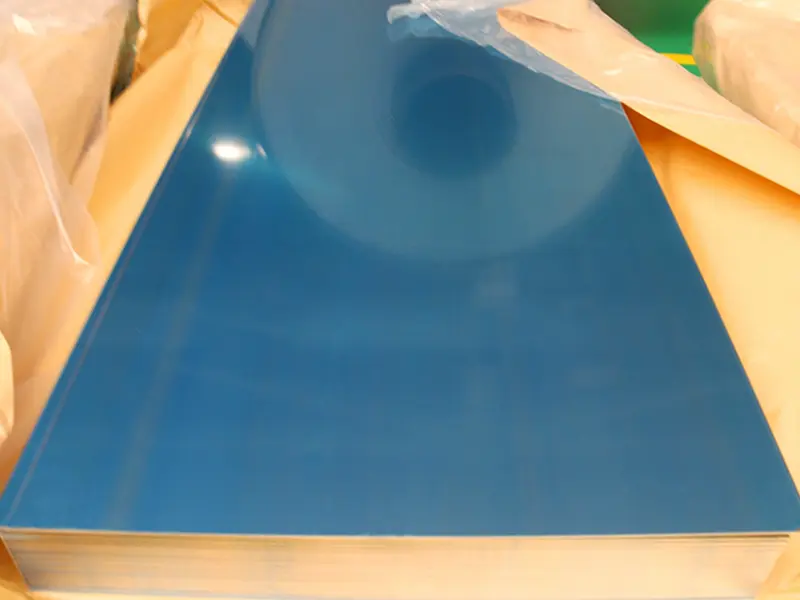
| Protective film | PE film | Prevents scratches during transport and installation |
Not every product has all four layers. Mill finish sheet has no coating. Anodized sheet skips the paint layer. PVDF-coated sheet has all four.
Types of Aluminum Sheet Used in Construction
Mill Finish Aluminum Sheet for Construction
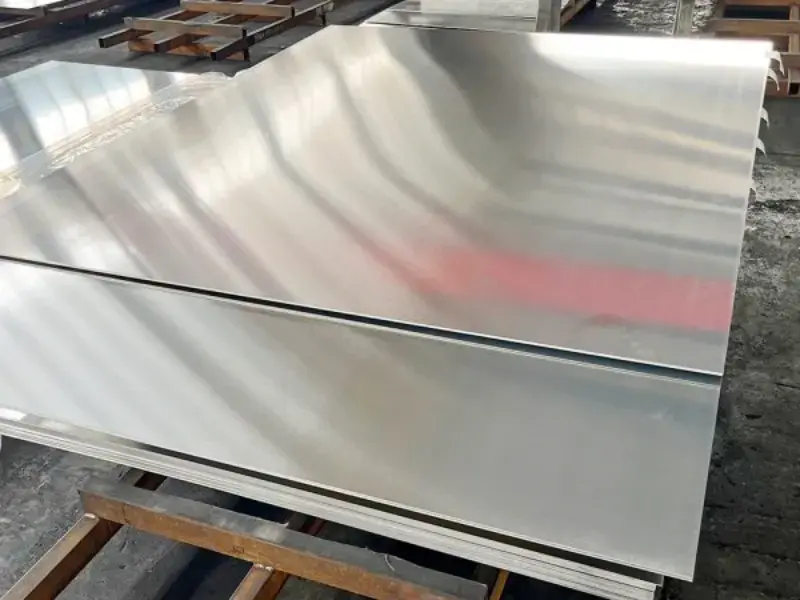
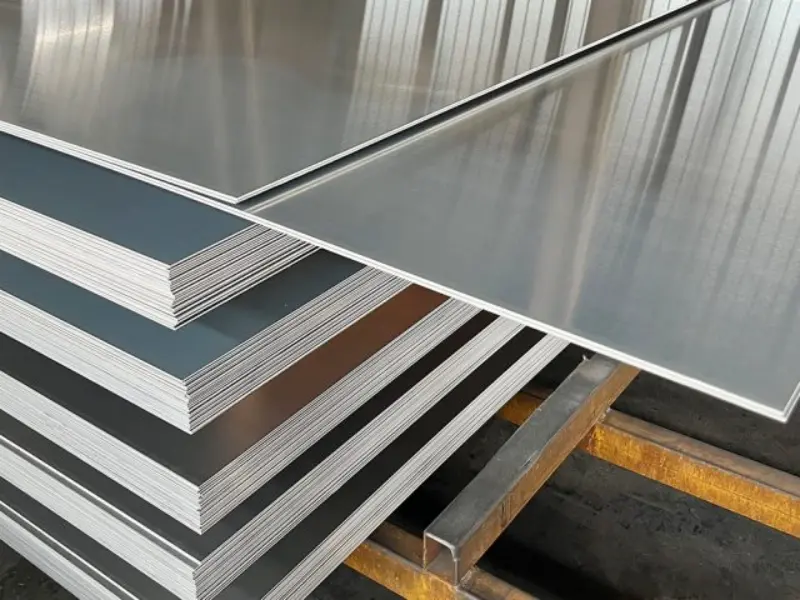
Mill finish is the natural surface that comes off the rolling line. No coating, no treatment beyond what the production process leaves. The surface is slightly dull silver. It is the lowest-cost option and suits applications where the sheet will be painted on-site, hidden inside a structural assembly, or used in industrial settings where appearance is not a priority.
Best for: industrial building liners, hidden structural components, substrate for site-applied paint, general construction
Anodized Aluminum Sheet for Construction
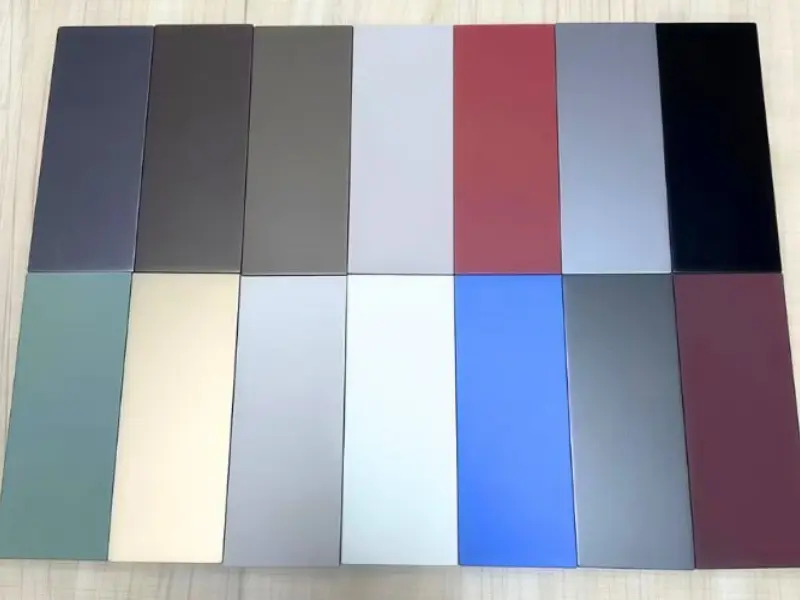
Anodizing is an electrochemical process that thickens the natural oxide layer to 10–25 microns. This creates a harder surface, better corrosion resistance, and a uniform finish that accepts color. Clear anodize keeps the silver metallic look. Color anodize produces black, gold, bronze, and champagne tones.
Best for: building facades, curtain wall infill panels, window and door frames, premium interior wall panels, elevator cabs
| Anodize Grade | Thickness | Service Life | Application |
|---|---|---|---|
| Decorative | 8–10 microns | 10–15 years | Interior panels |
| Architectural | 15–20 microns | 20–25 years | Facade, curtain wall |
| Hard anodize | 25–50 microns | 25+ years | High-traffic, wear surfaces |
PVDF Coated Aluminum Sheet
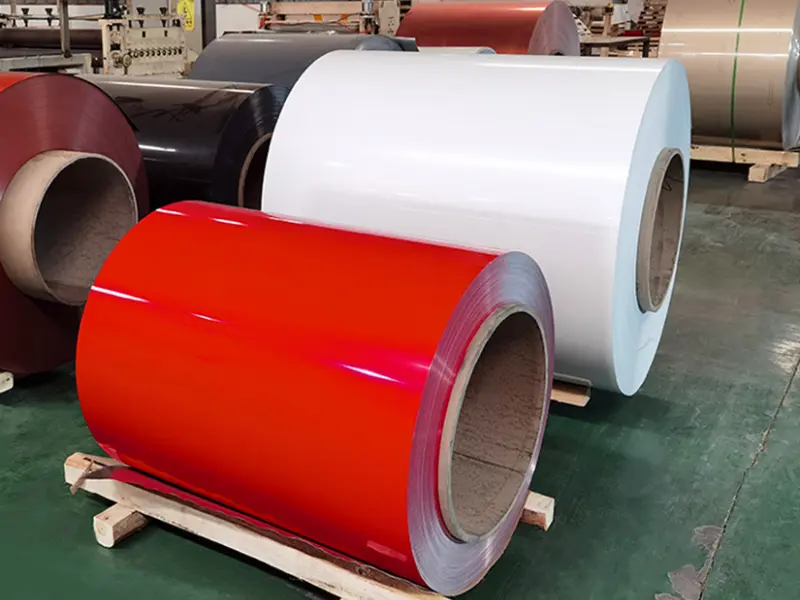
PVDF (polyvinylidene fluoride) Aluminum Sheet for Construction, sold under the brand name Kynar, is the premium coating for exterior architectural aluminum. It resists UV radiation, color fade, chemical attack, and temperature cycling. High-rise cladding and curtain wall panels worldwide use PVDF as the standard for outdoor color retention.
Best for: high-rise building facades, curtain wall panels, exterior cladding in coastal or industrial environments
| Coating | Layers | Outdoor Life | Color Retention |
|---|---|---|---|
| Polyester (PE) | 2-coat | 10–15 years | Good |
| SMP (Silicon Modified Polyester) | 2-coat | 15–20 years | Better |
| PVDF (Kynar) | 2-coat or 3-coat | 20–25 years | Excellent |
| PVDF + metallic | 3-coat | 20–25 years | Premium |
Embossed Aluminum Sheet
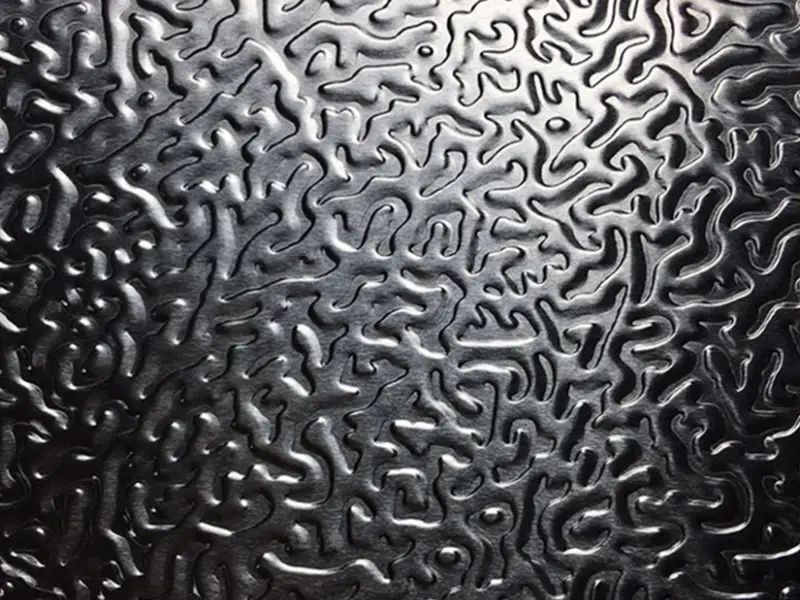
An embossing roll Aluminum Sheet for Construction presses a texture pattern into the aluminum surface during or after rolling. Common patterns include stucco, orange peel, and diamond. The texture adds visual interest, hides minor surface blemishes, and in some applications adds stiffness.
Types and uses:
| Pattern | Alloy | Thickness | Best Application |
|---|---|---|---|
| Stucco | 1100, 3003 | 0.4–2.0mm | Refrigerator liners, insulation jacketing, decoration |
| Orange peel | 1100, 3003 | 0.3–1.5mm | Decorative wall panels, interior cladding |
| Diamond tread | 3003, 5052 | 1.5–6.0mm | Floor plates, step covers, anti-slip surfaces |
| Five-bar tread | 3003, 5052 | 2.0–6.0mm | Industrial flooring, ramp surfaces |
Perforated Aluminum Sheet
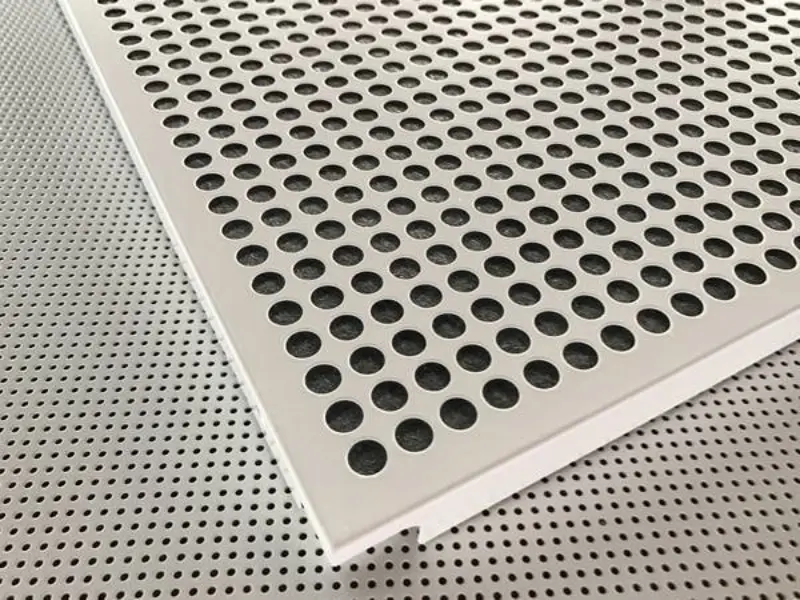
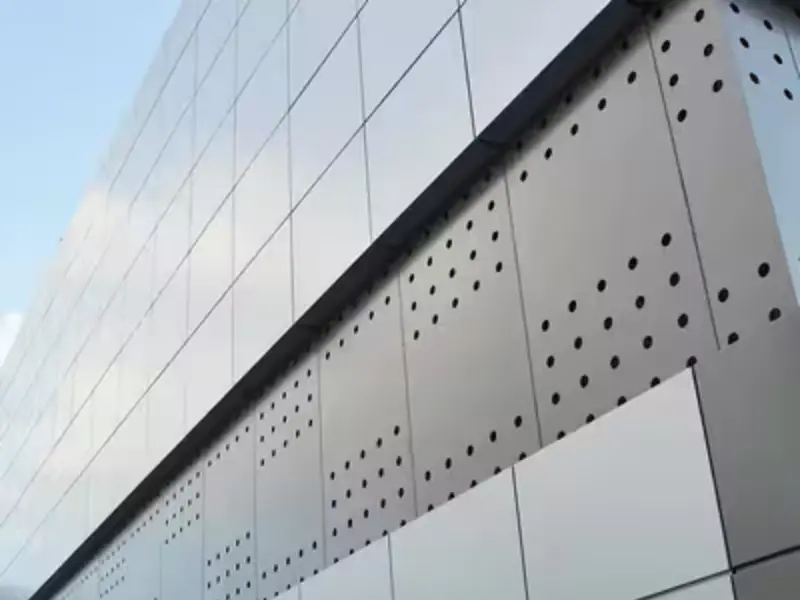
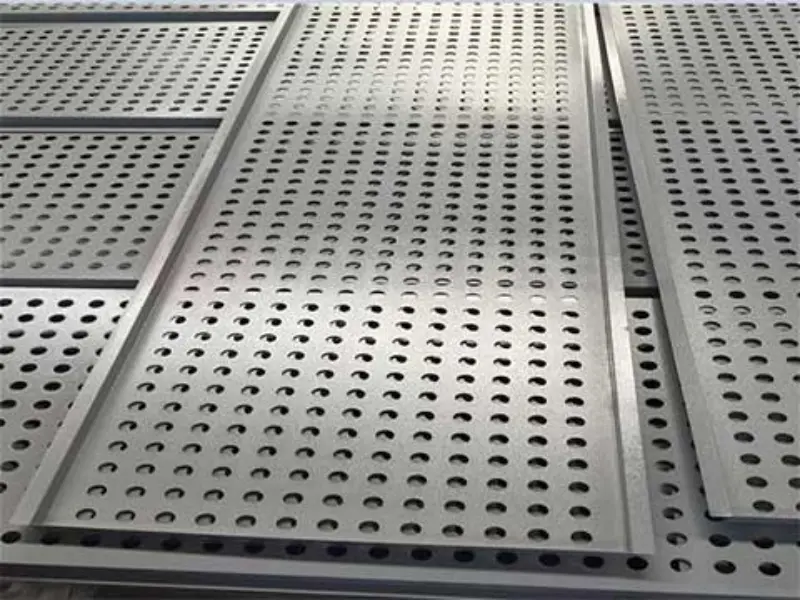
Regular hole patterns punched or drilled through the sheet. The perforations reduce weight further, allow air and light to pass through, and create decorative visual effects. Architects use perforated aluminum for sun shading screens, ventilated facade panels, acoustic ceiling tiles, and interior feature walls.
Best for: facade sun shading systems, ventilated cladding, acoustic ceilings, decorative screens, balustrade infill panels
Brushed Aluminum Sheet
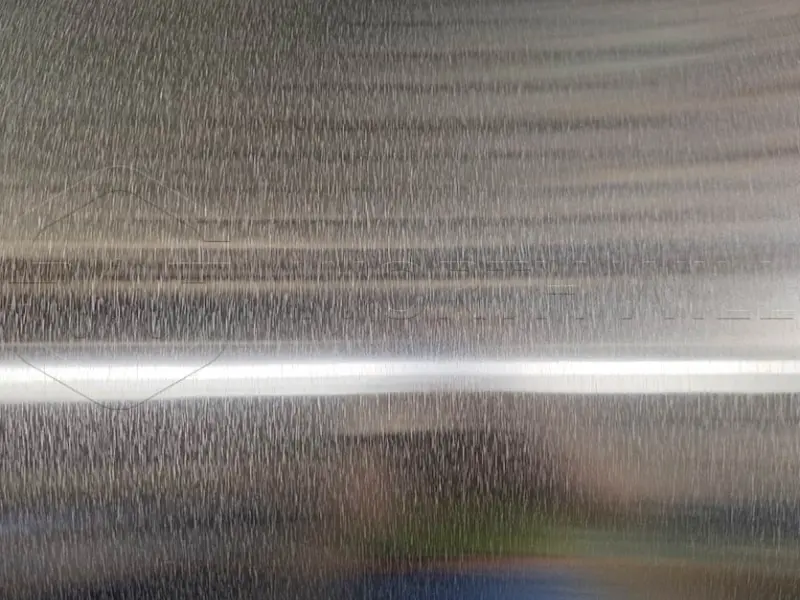
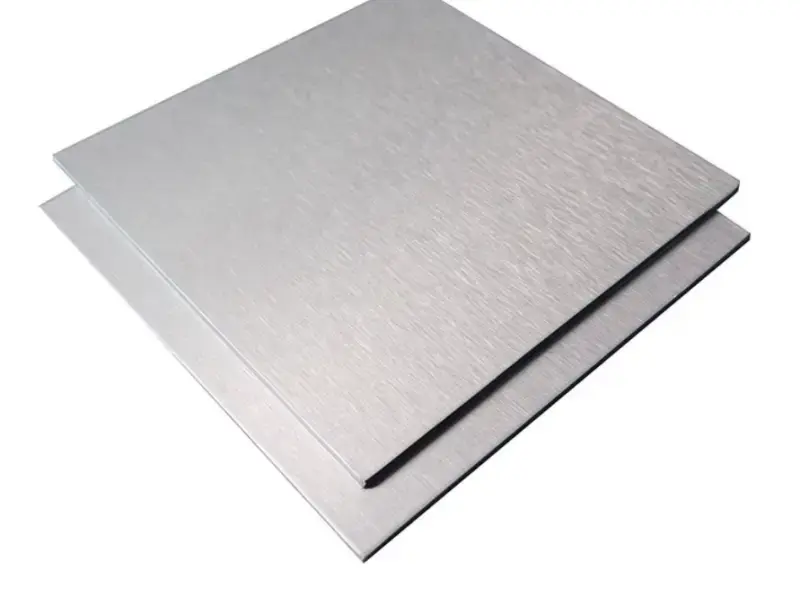
A mechanical brushing process creates fine parallel lines across the surface. Brushed finishes hide fingerprints and minor scratches well. Common in interior cladding, elevator panels, retail interior fit-out, and signage backplates. Available in silver brushed and, on some alloys, with color overlay.
Mirror Aluminum Sheet
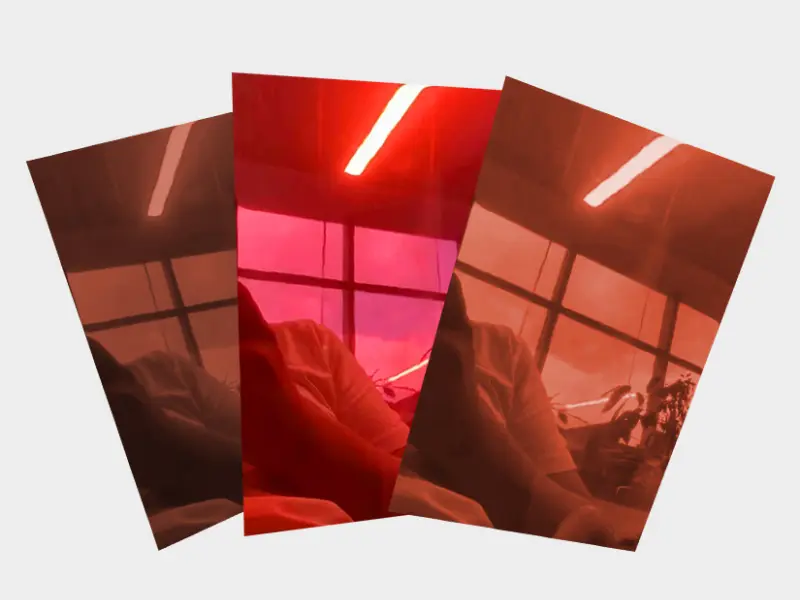
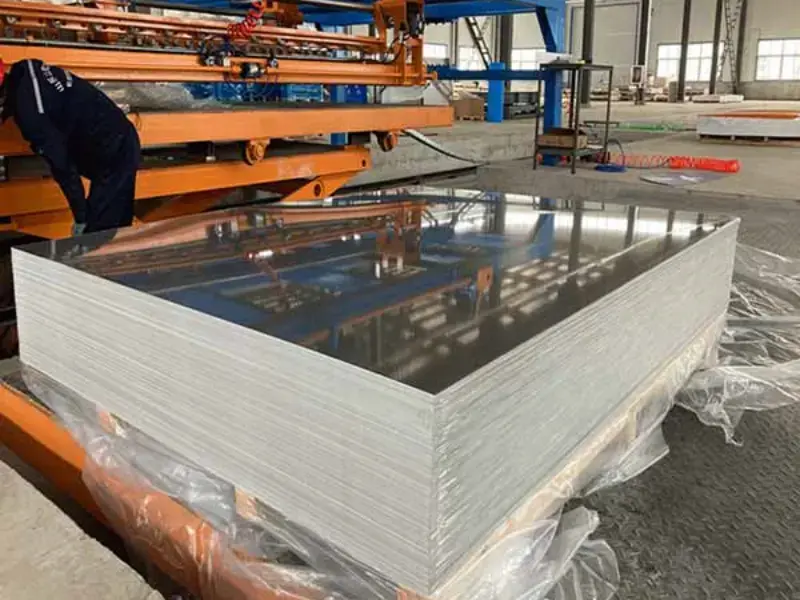
High-purity alloys (1060, 1100) polished to a reflective surface. Reflectivity reaches 80–95% depending on grade. Used for decorative interior walls, light reflector panels, artistic architectural features, and high-end retail interiors.
Best Aluminum Alloys for Construction
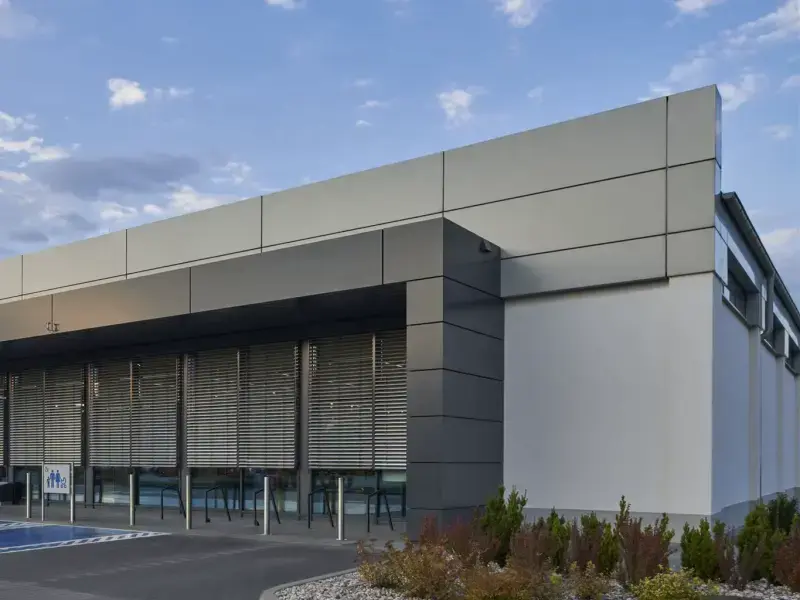
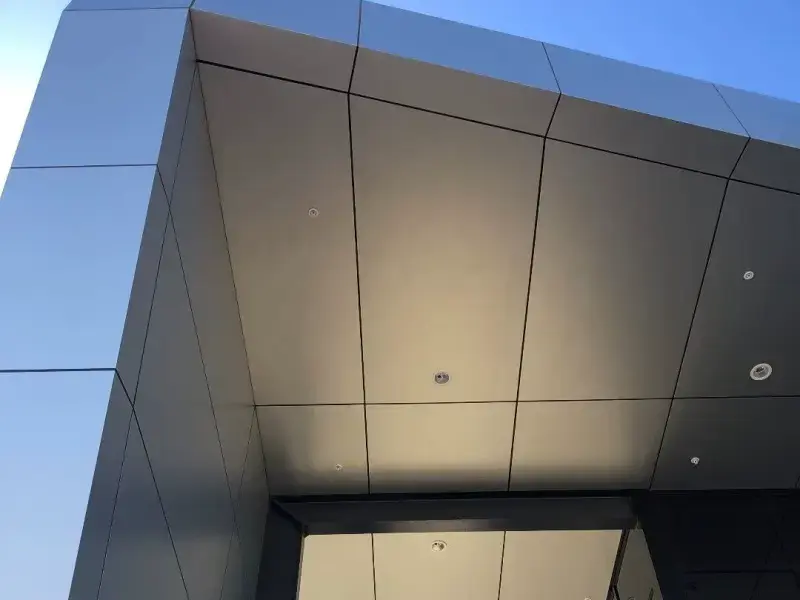
1050 and 1060 Aluminum Sheet for Construction— Pure Aluminum Series
High-purity alloys with excellent formability and smooth surface. Strength is low, which makes them unsuitable for structural or load-bearing panels. They excel in interior decoration, ceiling tiles, and reflective applications.
| Property | 1050 | 1060 |
|---|---|---|
| Aluminum purity | 99.5% | 99.6% |
| Temper | O, H14 | O, H14 |
| Tensile strength | 70–100 MPa | 70–100 MPa |
| Formability | Excellent | Excellent |
| Best use | Interior ceiling, decoration | Reflectors, decorative panels |
3003 Aluminum Sheet for Construction— The Most Widely Used Construction Alloy
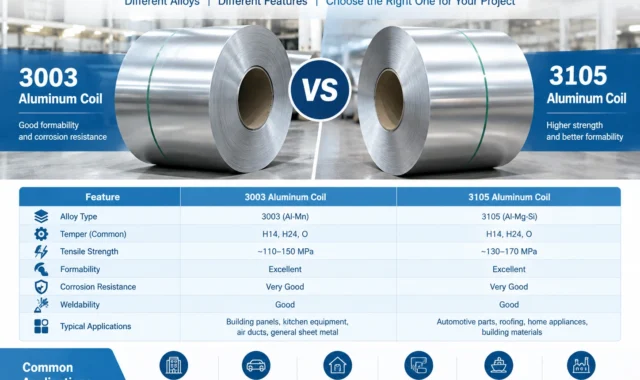
3003 Aluminum Sheet for Construction adds manganese to improve strength over pure aluminum. It is the most ordered alloy for roofing, gutters, wall panels, and general construction sheet. Good corrosion resistance, good formability, and a competitive price make it the default choice for most non-structural building applications.
Typical specs: 3003-H14 or 3003-H16, thickness 0.5mm–3.0mm
Best for: residential and commercial roofing, wall cladding substrate, gutter systems, soffit panels, ceiling tiles
3105 Aluminum Sheet for Construction— Residential Roofing and Exterior Panels
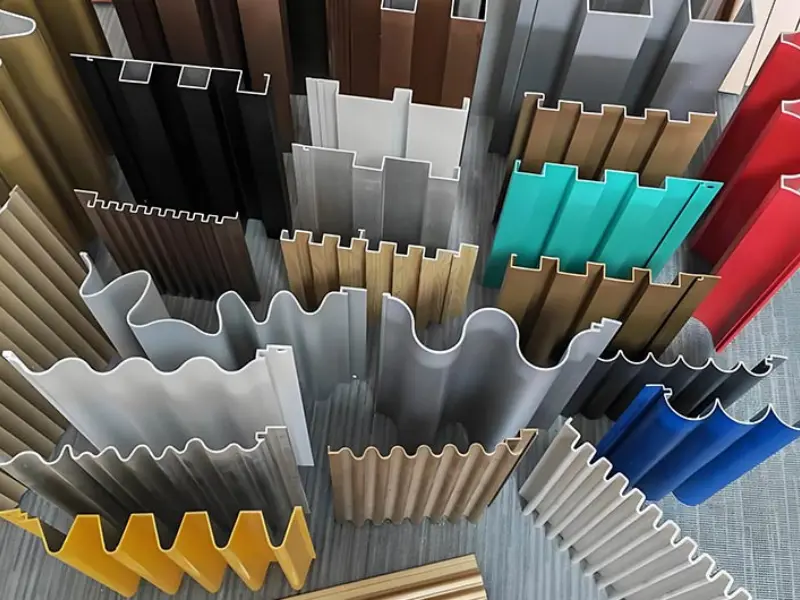
3105 Aluminum Sheet for Construction is similar to 3003 but with slightly different alloy additions that improve corrosion resistance and forming characteristics for thin-gauge applications. It is common in residential roofing coil that gets pre-painted and roll-formed into profiles.
Best for: pre-painted roofing coil, residential cladding, gutter profiles, downpipe systems
5052 Aluminum Sheet for Construction— Outdoor and Marine Construction
5052 Aluminum Sheet for Construction contains magnesium for higher strength and excellent corrosion resistance in saltwater and chemical environments. For construction in coastal areas, industrial zones, or anywhere with aggressive weather, 5052 outperforms 3003.
| Feature | 3003-H14 | 5052-H32 |
|---|---|---|
| Tensile strength | 150 MPa | 228 MPa |
| Yield strength | 145 MPa | 193 MPa |
| Corrosion resistance | Good | Excellent |
| Coastal / marine suitability | Limited | Yes |
| Cost | Base | +15–25% |
Best for: facade panels in coastal buildings, industrial structures, outdoor wall cladding, marine building components
5083 — Heavy Industrial Construction
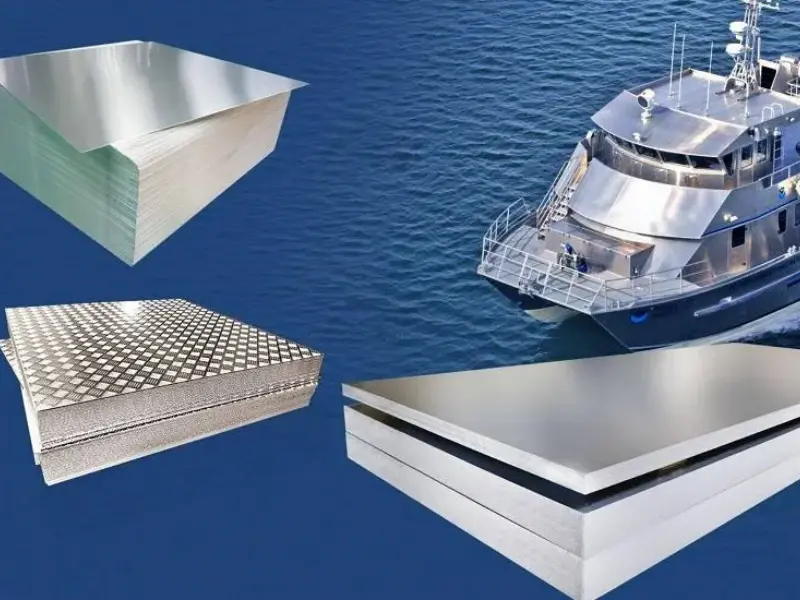
5083-H116 Aluminum Sheet for Construction is used where structural loads and corrosion demands are both high. Industrial plants, shipyard buildings, chemical facility cladding, and offshore structures specify 5083 for its high strength and marine-grade corrosion resistance.
Best for: industrial plant structures, chemical facility cladding, heavy-load floor plates, marine infrastructure
Aluminum Sheet for Construction Alloy Selection Summary
| Alloy | Strength | Formability | Corrosion Resistance | Best Building Use |
|---|---|---|---|---|
| 1050 / 1060 | Low | Excellent | Good | Interior ceiling, decoration |
| 3003 | Medium | Good | Good | Roofing, general panels |
| 3105 | Medium | Good | Good | Residential roofing, exterior |
| 5052 | High | Good | Excellent | Facade, coastal, outdoor |
| 5083 | Very High | Moderate | Excellent | Industrial, heavy structures |
Thickness Guide for Construction Aluminum Sheet
Thin Gauge — 0.3mm to 1.0mm
Light and flexible. Suits interior applications where the sheet is supported by a frame or substrate. Not suitable for unsupported spans or outdoor structural panels.
| Thickness | Weight per m² | Typical Application |
|---|---|---|
| 0.3mm | ~0.81 kg | Decorative overlays, interior liners |
| 0.5mm | ~1.35 kg | Ceiling tiles, interior wall panels |
| 0.8mm | ~2.16 kg | Soffit panels, interior cladding |
| 1.0mm | ~2.71 kg | Light exterior panels, roofing accessories |
Medium Gauge — 1.2mm to 3.0mm
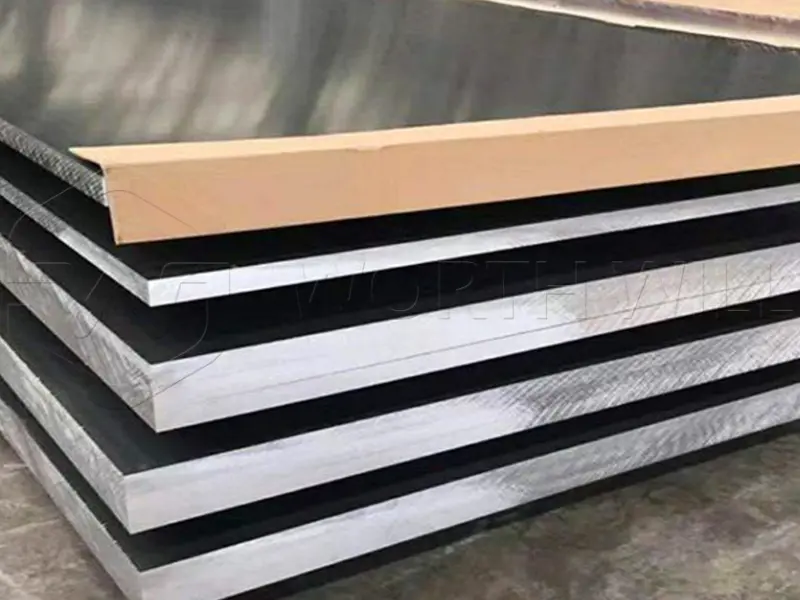
The most commonly used range in construction. Provides enough stiffness for wall panels and roofing without excessive weight.
| Thickness | Weight per m² | Typical Application |
|---|---|---|
| 1.2mm | ~3.24 kg | Residential wall panels, lightweight facade |
| 1.5mm | ~4.05 kg | Standard exterior wall cladding |
| 2.0mm | ~5.40 kg | Commercial facade panels, curtain wall infill |
| 2.5mm | ~6.75 kg | Heavy-duty exterior panels |
| 3.0mm | ~8.10 kg | Curtain wall systems, structural cladding |
Heavy Plate — 4.0mm to 10mm+
For structural and load-bearing applications in construction. Floor plates, structural brackets, industrial building components.
| Thickness | Weight per m² | Use |
|---|---|---|
| 4.0mm | ~10.8 kg | Structural floor plates, access platforms |
| 5.0mm | ~13.5 kg | Industrial floor, heavy-duty ramps |
| 6.0mm+ | ~16.2 kg+ | Structural components, machine bases |

Applications Across Building Types
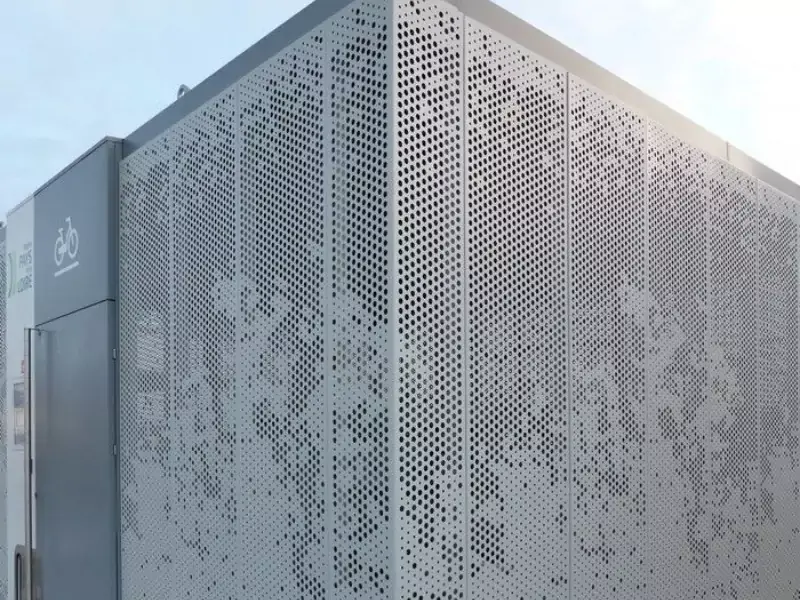
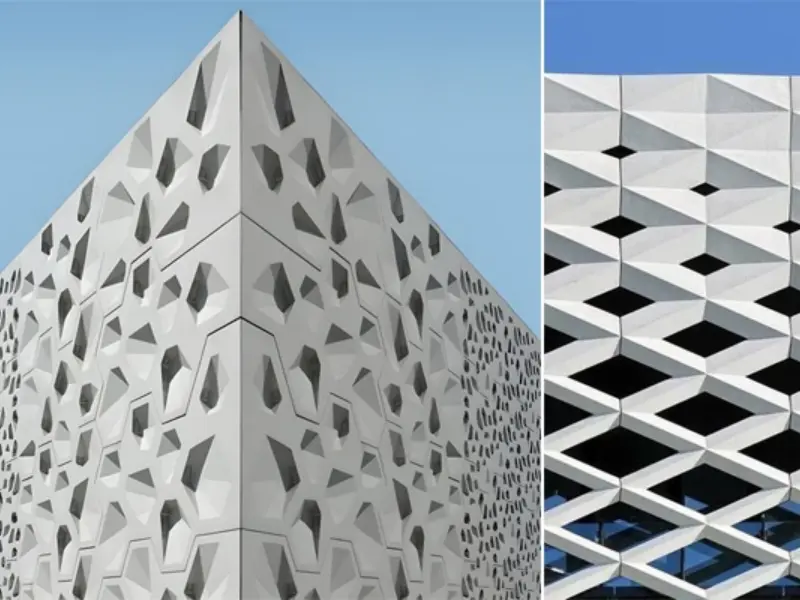
Building Facades and Curtain Walls
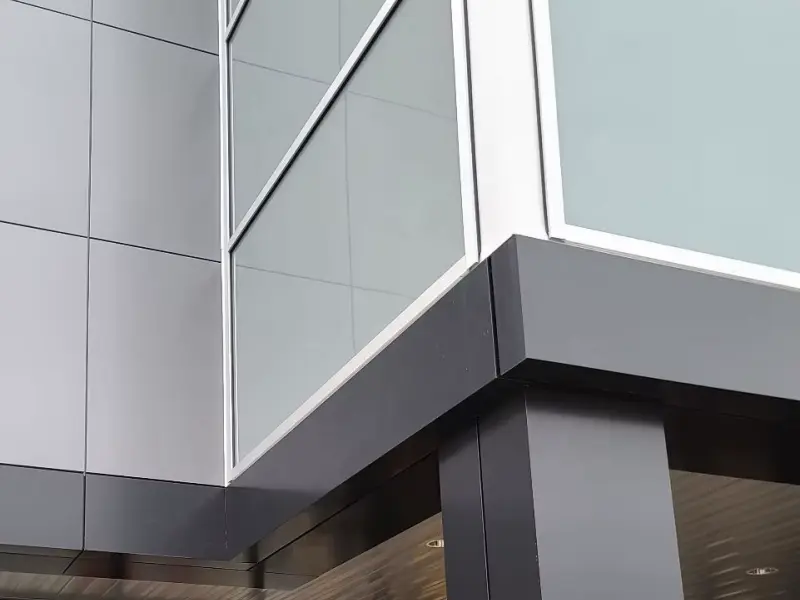
Aluminum is the dominant material for modern building facades. Pre-painted or PVDF-coated panels attach to a subframe system. Curtain wall systems use aluminum framing profiles (6063-T5 extrusions) with aluminum or glass infill panels.
- High-rise curtain wall → 3003 or 5052, 2.0–3.0mm, PVDF coated
- Ventilated facade panels → 3003-H14 or 5052-H32, 2.0–4.0mm
- Decorative facade screens → perforated 3003, 1.5–3.0mm
- Rainscreen cladding → 3003 or 5052, 1.5–3.0mm, anodized or PVDF
Roofing Systems
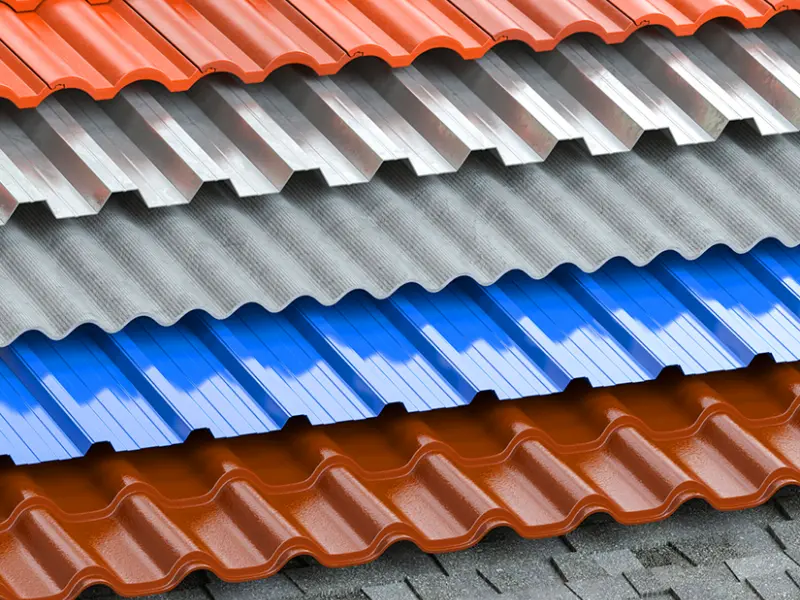
Aluminum roofing is standard in commercial and industrial buildings. Standing seam profiles, corrugated roofing, and flat roof edge trim all use aluminum sheet as the base material.
Roof edge flashings and gutters → 3003 or 3105, 0.6–1.0mm
Residential standing seam → 3003-H16 or 3105-H24, 0.6–0.9mm, pre-painted PE
Commercial corrugated roofing → 3003-H16, 0.7–1.0mm, pre-painted
Industrial roofing → 3003 or 5052, 1.0–1.5mm
Ceiling Systems
Interior aluminum ceilings appear in airports, offices, retail stores, hospitals, and public transit stations. Products include lay-in tiles, strip ceilings, and custom curved panels.
- Open cell ceiling tiles → 1060-H14 or 3003-H14, 0.5–0.8mm
- Continuous strip ceiling → 1060 or 3003, 0.5–0.8mm
- Acoustic perforated ceiling → 3003, 0.6–1.0mm
- Decorative curved panels → 3003 or 5052, 1.0–2.0mm
Interior Wall Cladding
Hotels, offices, retail stores, and high-end residential projects use aluminum wall panels for both decorative and protective purposes.
- Brushed aluminum wall panels → 3003 or 1060, 1.0–2.0mm
- Mirror accent panels → 1060 or 1100 polished, 0.8–2.0mm
- Anodized lobby panels → 3003-H14, 1.5–3.0mm, architectural anodize
- Painted interior panels → 3003-H14 or 3105, 0.8–1.5mm, PE coated
Insulation Jacketing
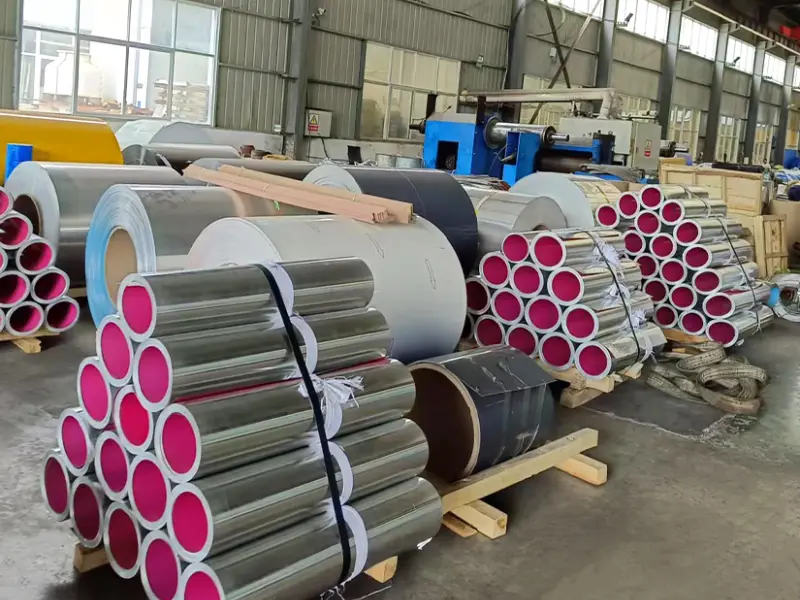
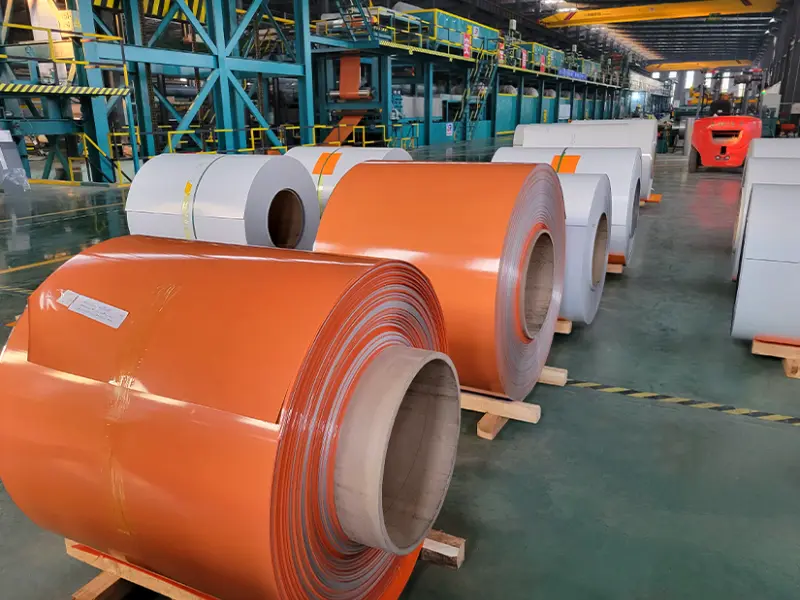
Aluminum jacketing covers pipe insulation, duct insulation, and vessel insulation in industrial and commercial buildings. The aluminum skin protects the insulation from moisture, mechanical damage, and UV. Stucco-embossed 3003 is the standard product for this application.
- Pipe jacketing → 3003-H14, stucco embossed, 0.4–0.8mm
- Vessel jacketing → 3003 or 3105, 0.5–1.0mm
- HVAC duct wrap → 3003, smooth or stucco, 0.3–0.6mm
Aluminum vs Other Construction Materials
Aluminum vs Steel Cladding Sheet
| Feature | Aluminum Sheet | Carbon Steel Sheet |
|---|---|---|
| Weight (1.5mm per m²) | ~4.1 kg | ~11.8 kg |
| Corrosion | Self-protecting oxide | Rusts without coating |
| Coating durability | PVDF: 20–25 years | Paint: 5–10 years |
| Installation | Easy — lightweight | Harder — heavier |
| Maintenance | Very low | Regular repainting needed |
| Recyclable | Yes — high scrap value | Yes |
| Cost per ton | Higher | Lower |
Aluminum vs Stainless Steel
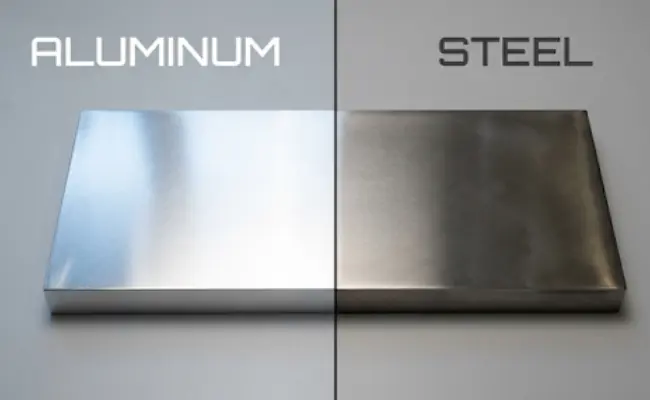
| Feature | Aluminum | Stainless Steel |
|---|---|---|
| Weight (same thickness) | ~2.7 g/cm³ | ~7.9 g/cm³ |
| Cost | Lower | Much higher |
| Processing | Easier to cut and form | Harder to machine |
| Appearance (polished) | Good | Better |
| Weldability | Good (with correct filler) | Good |
| Typical use | Cladding, roofing, ceiling | Handrails, feature walls, premium facade |
Aluminum vs Composite Panels (ACP)
Aluminum composite panels (ACP) have thin aluminum skins bonded to a plastic core. They are lighter and cheaper than solid aluminum but carry fire risk concerns (PE core) and lower structural integrity.
| Feature | Solid Aluminum Sheet | ACP (Composite Panel) |
|---|---|---|
| Fire resistance | Better | Depends on core (PE vs mineral) |
| Structural rigidity | Better per thickness | Better per weight |
| Cost | Higher | Lower |
| Recyclability | Full aluminum | Limited (mixed materials) |
| Use for high-rise | Yes | Restricted in some markets |
In many countries, regulations now restrict ACP with PE core above certain building heights. Solid aluminum or mineral-core composite is required for high-rise facade applications.
Price Reference for Construction Aluminum Sheet
By Alloy and Surface (Mill Direct, 2024–2025)
| Product | Alloy | Thickness | Price Per Ton (USD) |
|---|---|---|---|
| Mill finish plain sheet | 3003-H14 | 1.5mm | 2,500–2,900 |
| Mill finish plain sheet | 5052-H32 | 2.0mm | 2,800–3,300 |
| Pre-painted PE coated | 3003/3105 | 0.7mm | 2,800–3,200 |
| PVDF coated sheet | 3003/5052 | 2.0mm | 3,300–4,000 |
| Anodized sheet (clear) | 3003/1060 | 1.5mm | 3,000–3,700 |
| Embossed stucco | 3003 | 0.5mm | 2,600–3,000 |
| Perforated sheet | 3003 | 1.5mm | 2,800–3,400 |
Factors That Move the Price
→ Alloy: 5052 costs 15–25% more than 3003. 5083 costs 30–40% more. → Surface treatment: PVDF adds USD 400–700/ton vs mill finish. Anodize adds USD 300–550/ton. → Thickness: Below 0.5mm, conversion cost rises sharply. Above 3mm, cost per ton drops slightly. → Order size: Mill direct orders above 10 tons unlock the lowest price tier. → Color: Standard RAL colors (white, grey, dark grey) are stocked. Custom colors add lead time and cost.
Choosing the Right Sheet — Decision Guide
By Building Application
| Application | Recommended Alloy | Surface | Thickness |
|---|---|---|---|
| Interior ceiling tiles | 1050 / 1060 | Mill or PE coated | 0.5–0.8mm |
| Interior wall panels | 3003 | Anodized or brushed | 1.0–2.0mm |
| Residential roofing | 3003 / 3105 | PE coated | 0.6–1.0mm |
| Commercial facade | 3003 / 5052 | PVDF coated | 1.5–3.0mm |
| High-rise curtain wall | 5052 | PVDF coated | 2.0–3.0mm |
| Coastal building | 5052 | PVDF or anodized | 1.5–3.0mm |
| Industrial cladding | 3003 / 5052 | Mill or PE coated | 1.0–2.0mm |
| Insulation jacketing | 3003 | Stucco embossed | 0.4–0.8mm |
| Structural floor plate | 5052 / 5083 | Tread plate or mill | 3.0–6.0mm |
By Environment
- Standard outdoor, temperate climate: 3003-H14 with PE or PVDF coating
- Coastal or saltwater exposure: 5052-H32 with PVDF coating or clear anodize
- Industrial or chemical environment: 5052 or 5083 with PVDF coating
- Indoor, dry environment: 1060 or 3003 mill finish or anodized
- High-rise building (above 24m): Solid aluminum with PVDF coating (check local fire code for ACP restrictions)
Buying Aluminum Sheet from China for Construction Projects
Why Chinese Mills Are the Main Supply Source
China accounts for the majority of global rolled aluminum production. Integrated mills with smelting, rolling, and coating equipment produce construction aluminum at costs 20–35% below comparable European or North American supply. Most major construction projects in Southeast Asia, the Middle East, Africa, and Latin America source aluminum sheet directly from Chinese mills.
Specifications to Confirm Before Ordering
| Item | Options |
|---|---|
| Alloy | 1050 / 1060 / 3003 / 3105 / 5052 |
| Temper | O / H14 / H16 / H24 / H32 |
| Thickness | 0.3mm – 10mm |
| Width | Standard or custom slit |
| Surface | Mill / PE / PVDF / anodized / embossed |
| Color (if coated) | RAL code or Pantone reference |
| Size | Standard 4×8 ft / 1220×2440mm or custom |
| MTR required | Yes — specify ASTM B209 or EN 485 |
Standard Export Packaging
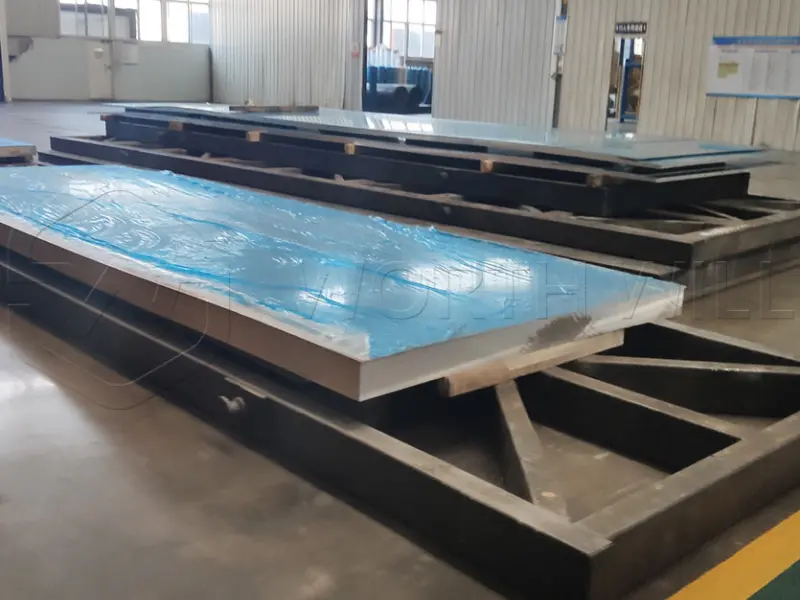
- PE protective film on sheet face
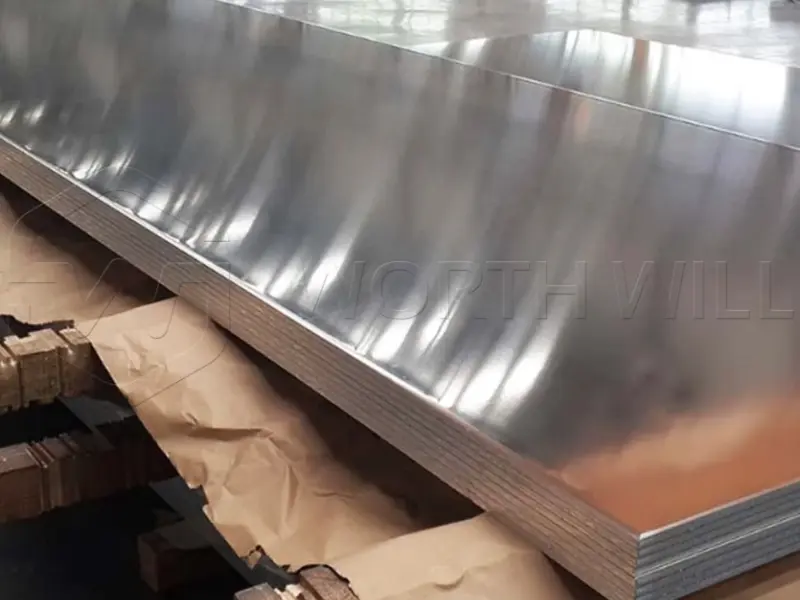
- Interleaved paper between sheets
- Sheets stacked in cartons on fumigated export pallets
- Strapping, corner protectors, moisture barrier wrap for sea freight
Frequently Asked Questions
What Is the Best Aluminum Sheet for Construction
There is no single best alloy — it depends on the application. For most exterior panels and roofing, 3003-H14 or 3003-H16 with PE or PVDF coating is the right starting point. For coastal environments or high-load applications, 5052-H32 gives better corrosion resistance and strength. For interior ceiling and decorative panels, 1060-H14 gives the smoothest surface at the lowest cost.
What Thickness Is Used for Aluminum Wall Panels in Buildings
Standard exterior wall cladding panels use 1.5mm to 2.0mm in 3003 or 5052. High-rise curtain wall infill panels typically use 2.0mm to 3.0mm for better rigidity and wind load performance. Interior wall panels use 1.0mm to 1.5mm since they do not carry wind or weather loads.
Is Aluminum Better Than Steel for Building Cladding
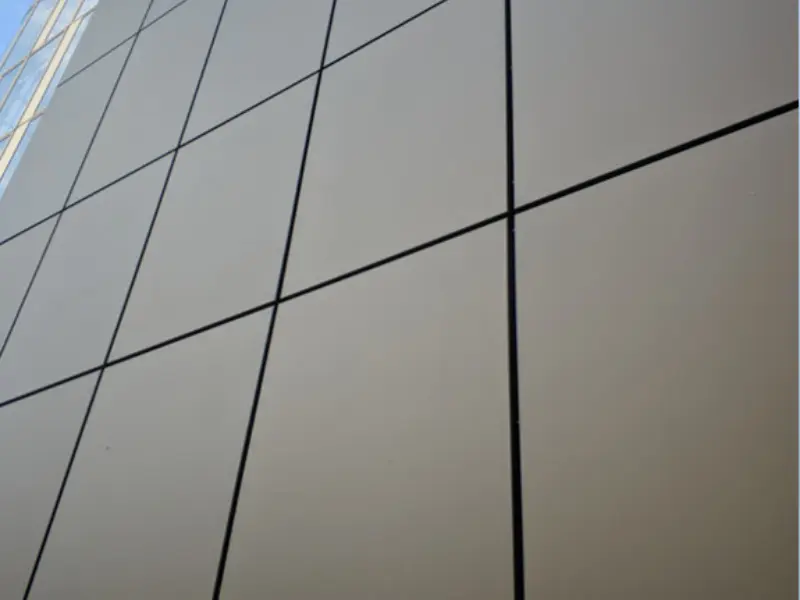
For cladding applications, yes in most cases. Aluminum is three times lighter, requires no rust treatment, and maintains its appearance longer. A PVDF-coated aluminum panel is warranted for 20–25 years; a steel panel needs repainting every 5–10 years. The higher initial cost of aluminum is typically recovered through lower maintenance over a 15–20 year building life.
Which Alloy Is Best for Building Facades
5052-H32 with PVDF coating is the strongest and most weather-resistant option for exterior facades, especially in coastal or industrial environments. 3003-H14 with PVDF covers most standard commercial buildings at lower cost. For premium architectural anodize finish, 3003 or 5005 alloy gives the best result.
Can Aluminum Sheets Be Customized for Construction Projects
Yes. Chinese mills offer full customization — alloy, temper, thickness, width, length, surface finish, and color. Custom color matching to RAL or Pantone codes is standard for PVDF-coated orders. Minimum order for custom color is typically 3–5 tons. Standard colors (white, light grey, dark grey, silver metallic) ship with shorter lead time.
Final Notes for Specifiers and Procurement Teams
Aluminum sheet specification for construction comes down to four decisions: alloy, temper, thickness, and surface finish.
For most projects: 3003-H14, 1.5–2.0mm, PVDF-coated covers exterior wall and roof panels. Add 5052 wherever salt air, chemical exposure, or higher structural demand applies. Use 1060 or 3003 for interior ceiling and decorative work where strength is secondary to surface quality.
Request a mill test report with every order. Confirm the coating specification in writing — not just “PVDF” but the paint brand, dry film thickness, and gloss level. And for large facade projects, arrange third-party inspection before shipment.