What Is 6061 Aluminum Plate?
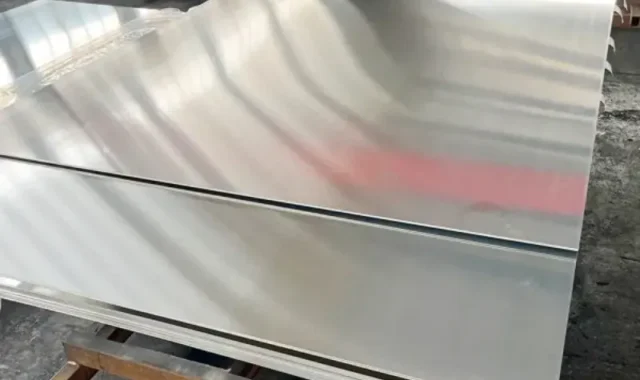
6061 aluminum plate is a heat-treatable alloy made from aluminum, magnesium, and silicon. It is one of the most versatile aluminum alloys in the world. The T6 temper is the most common form. It offers a strong balance of strength, corrosion resistance, and machinability.
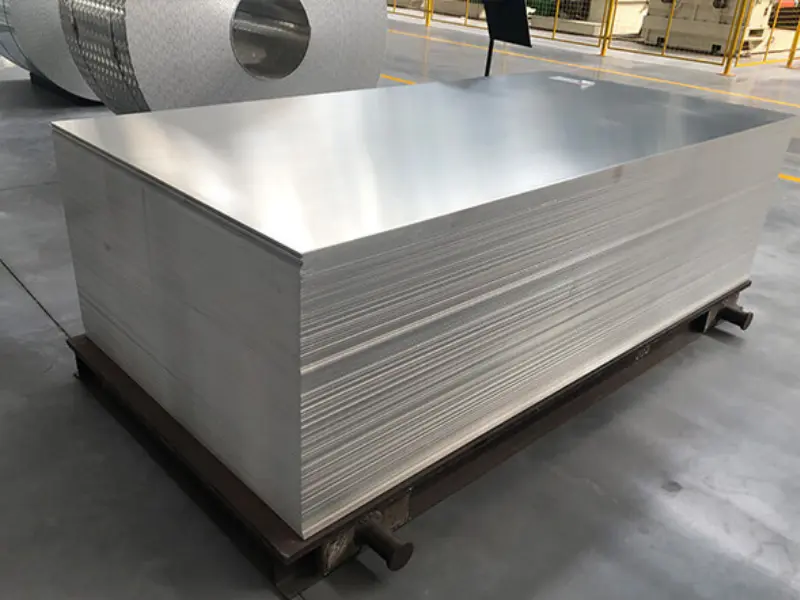
This alloy is used in aerospace structures, building frames, marine parts, and industrial machinery. The 6061 aluminum plate is popular because it welds well, machines easily, and resists rust in most environments.
Why 6061 Aluminum Plate Leads the Market
How to Choose a Supplier for 6061 Aluminum Plate
Engineers and buyers choose 6061 aluminum plate for clear reasons:
Wide availability: Stocked by most metal suppliers globally.
Good strength-to-weight ratio: Strong but light, ideal for moving parts.
Excellent corrosion resistance: Works in marine and outdoor settings.
Superior weldability: Joins easily with standard welding methods.
Easy to machine: Produces clean cuts and smooth finishes.
Cost-effective: Lower price than 7075 or 2024 alloys.
Not all suppliers offer the same quality. Use this checklist:
Read reviews from other buyers in your industry
Verify alloy certification and mill test reports
Check temper availability (T6, T651, T6511)
Confirm thickness tolerances meet your needs
Ask for flatness guarantees on precision plate
Review cutting services and tolerances
Check minimum order quantities and lead times
Look for aerospace certifications if needed (AMS, ASTM)
Request samples for machining or welding tests
Confirm return policy for defective material
Chemical Composition of 6061 Aluminum Plate
The alloy formula gives 6061 its balanced properties.
| Element | Content Range | Function |
|---|---|---|
| Silicon (Si) | 0.40–0.80% | Forms Mg2Si for strength |
| Magnesium (Mg) | 0.80–1.20% | Main strengthening element |
| Copper (Cu) | 0.15–0.40% | Adds extra strength |
| Chromium (Cr) | 0.04–0.35% | Controls grain structure |
| Manganese (Mn) | Max 0.15% | Improves corrosion resistance |
| Iron (Fe) | Max 0.70% | Impurity control |
| Zinc (Zn) | Max 0.25% | Kept low for stability |
| Titanium (Ti) | Max 0.15% | Refines grain size |
| Aluminum (Al) | Remainder | Base metal |
The silicon and magnesium combine to form Mg2Si particles. These particles strengthen the metal during heat treatment.
Temper and Hardness States
The temper code shows how the metal was treated. This affects strength, hardness, and workability.
| Temper Code | Description | Tensile Strength | Yield Strength | Best Application |
|---|---|---|---|---|
| O | Annealed, soft | 125 MPa | 55 MPa | Deep forming, bending |
| T4 | Solution treated, naturally aged | 240 MPa | 145 MPa | Moderate forming, welding |
| T6 | Solution treated, artificially aged | 310 MPa | 276 MPa | Structural parts, machining |
| T651 | Stress-relieved T6 | 310 MPa | 276 MPa | Precision machining, tooling |
| T6511 | Stress-relieved extruded | Similar to T651 | Similar to T651 | Extruded profiles, shafts |
The T6 temper is the standard for most 6061 aluminum plate applications. It provides peak strength with good workability. The T651 temper adds stress relief for parts that need tight tolerances during machining.
Thickness and Size Guide
6061 aluminum plate comes in many thicknesses. The right choice depends on the load and application.
| Thickness | Weight per m² | Typical Width | Typical Length | Best Use |
|---|---|---|---|---|
| 6 mm (0.25″) | ~16.2 kg | 1000–2500 mm | 2000–6000 mm | Light brackets, panels |
| 10 mm (0.4″) | ~27.0 kg | 1000–2500 mm | 2000–6000 mm | Frames, small structures |
| 12 mm (0.5″) | ~32.4 kg | 1000–2500 mm | 2000–6000 mm | Machine bases, fixtures |
| 16 mm (0.63″) | ~43.2 kg | 1000–2500 mm | 2000–6000 mm | Structural beams, supports |
| 20 mm (0.8″) | ~54.0 kg | 1000–2500 mm | 2000–6000 mm | Heavy frames, tooling plates |
| 25 mm (1.0″) | ~67.5 kg | 1000–2500 mm | 2000–6000 mm | Mold bases, press plates |
| 30 mm (1.2″) | ~81.0 kg | 1000–2500 mm | 2000–6000 mm | Large molds, machine beds |
| 40 mm (1.6″) | ~108.0 kg | 1000–2500 mm | 2000–6000 mm | Heavy machinery, anvils |
| 50 mm (2.0″) | ~135.0 kg | 1000–2500 mm | 2000–6000 mm | Structural columns, blocks |
| 75 mm (3.0″) | ~202.5 kg | 1000–2500 mm | 2000–6000 mm | Forging dies, massive parts |
| 100 mm (4.0″) | ~270.0 kg | 1000–2500 mm | 2000–6000 mm | Heavy press tools, foundations |
Standard plate widths are 1000 mm, 1250 mm, 1500 mm, and 2000 mm. Lengths go up to 6000 mm or 12000 mm. Custom sizes are available from most suppliers.
Comparison: 6061 Aluminum Plate vs. Other Alloys
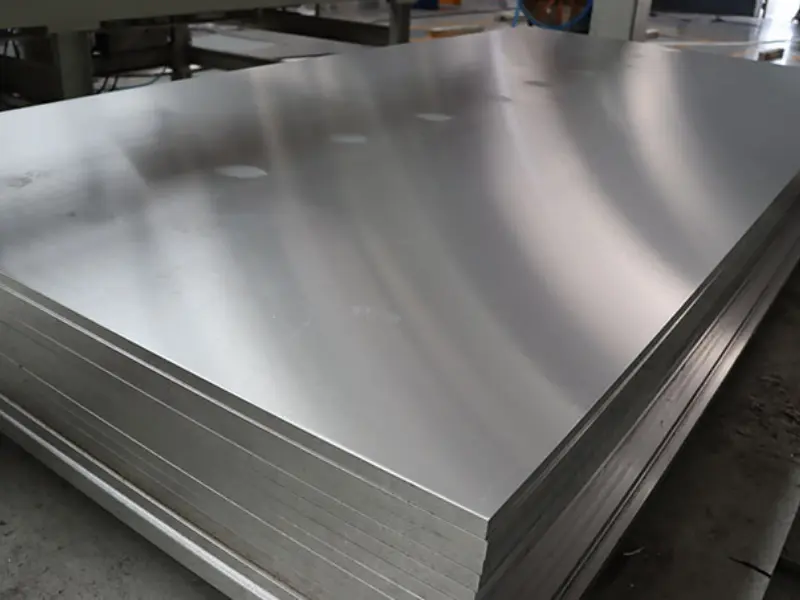
Buyers often compare 6061 to other aluminum grades. Here is how they differ.
| Feature | 6061-T6 | 7075-T6 | 5052-H32 | 2024-T3 |
|---|---|---|---|---|
| Tensile strength | 310 MPa | 572 MPa | 230 MPa | 480 MPa |
| Yield strength | 276 MPa | 503 MPa | 190 MPa | 345 MPa |
| Corrosion resistance | Excellent | Fair | Superior | Poor |
| Weldability | Excellent | Poor | Excellent | Poor |
| Machinability | Good | Fair | Good (gummy) | Superior |
| Formability | Good | Poor | Superior | Fair |
| Cost level | Medium | Very high | Low | High |
| Best use | General structure | High strength, aerospace | Marine, sheet metal | Aircraft skin, fatigue |
6061 aluminum plate is the best all-rounder. It is cheaper than 7075 and easier to work with. It is stronger than 5052 and more corrosion-resistant than 2024. For most projects, 6061 is the smart first choice.
Product Type Showcase
Standard Structural Plate
Precision Machining Plate (T651)
Tooling and Jig Plate
Marine Grade Plate
Same alloy but with extra attention to corrosion testing. Used for boat hulls, decks, and marine hardware. The 6061 aluminum plate resists salt water better than many alloys, though 5052 and 5083 are preferred for hulls.
Aerospace Structural Plate
Certified to AMS 4027 or equivalent standards. Full traceability and testing documentation. Used for aircraft frames, wing ribs, and landing gear parts. The T651 temper is often required for precision aerospace components.
Armor and Ballistic Plate
Thick 6061 aluminum plate heat-treated to special specifications. Used for vehicle armor, protective shields, and ballistic panels. The alloy offers good hardness with lighter weight than steel armor.
Anodized Decorative Plate
Plate pre-finished with anodized coating in various colors. Used for architectural panels, trim, and decorative parts. The 6061 alloy anodizes very well, producing a smooth, durable oxide layer.
Perforated and Patterned Plate
Standard plate with holes, slots, or patterns cut by CNC or punching. Used for platforms, screens, and ventilation panels. The 6061 aluminum plate machines cleanly for precise hole patterns.
Welded Assembly Plate
Plate cut and prepared for welding into larger structures. Used for frames, tanks, and pressure vessels. The excellent weldability of 6061 makes it ideal for fabricated assemblies.
Cast Plate Alternative
Some suppliers offer cast versions of 6061 aluminum plate. These have lower internal stress and better machinability. Used for large mold bases and machine beds where stability is key.
Application Areas for 6061 Aluminum Plate


This alloy serves many industries. Here are the main uses:
- Aerospace: Aircraft frames, wing spars, landing gear, fuel tanks, cabin structures
- Construction: Building frames, bridges, towers, scaffolding, window frames
- Marine: Boat decks, masts, railings, hardware, dock structures
- Automotive: Chassis parts, drive shafts, suspension arms, wheels
- Industrial machinery: Machine bases, tooling plates, fixtures, robot arms
- Mold making: Injection molds, blow molds, thermoform molds, die cast dies
- Electronics: Heat sinks, enclosures, mounting brackets, chassis
- Transportation: Truck beds, trailer frames, railway cars, bike frames
- Medical equipment: Surgical tables, imaging machine frames, wheelchairs
- Consumer goods: Furniture, sports equipment, camera bodies, musical instruments
Packaging and Shipping
Proper packing protects plate during transport.
| Packing Item | Purpose |
|---|---|
| Paper interleaving | Prevents sheets from scratching |
| Plastic film wrap | Protects surfaces from moisture |
| Wooden pallet | Supports heavy weight |
| Steel banding | Secures load during transit |
| Corner protectors | Guards edges from damage |
| VCI paper (optional) | Prevents corrosion in humid transit |
Standard export packing uses wooden pallets with steel bands. Large orders ship by container. Small orders may use reinforced crates. Always store 6061 aluminum plate flat in a dry area.
FAQ
What is the difference between 6061-T6 and 6061-T651
T6 is standard heat-treated plate. T651 goes through an extra stretching step to remove internal stress. T651 stays flatter during machining. It is the better choice for precision parts and tooling plates.
Can 6061 aluminum plate be welded
Yes. 6061 has excellent weldability. Use 4043 or 5356 filler rod. Note that the weld zone loses some strength. Without post-weld heat treatment, the joint strength drops to near the O temper level.
How does 6061 compare to steel in strength
6061-T6 has about one-third the strength of mild steel but weighs only one-third as much. For weight-sensitive designs, 6061 aluminum plate often replaces steel with minimal strength loss.
What thickness should I choose for a machine base
For small machines, 20 mm to 30 mm is typical. For large CNC machines, 40 mm to 75 mm provides the needed rigidity. The exact thickness depends on the machine weight and cutting forces.
Is 6061 aluminum plate suitable for outdoor use
Yes. 6061 resists atmospheric corrosion well. For marine or industrial environments, anodizing or painting adds extra protection. In salt spray, 6061 performs better than 2024 but not as well as 5052.
Can I bend 6061 aluminum plate
Yes, but the T6 temper is stiff. For tight bends, use the O temper or heat to soften first. The minimum bend radius for T6 is about 3 times the thickness. For O temper, it is 0.5 times the thickness.
What is the fire rating of 6061 aluminum plate
Aluminum does not burn. It melts at 582°C to 652°C. 6061 aluminum plate is non-combustible and meets most building fire codes. It does not emit toxic fumes when heated.
How do I prevent galvanic corrosion with 6061
Avoid direct contact with dissimilar metals like steel or copper. Use insulating washers, paint, or sealant between joints. In marine use, seal all edges and fasteners.
What certifications should I request
For general use, ASTM B209 is standard. For aerospace, request AMS 4027 or AMS-QQ-A-250/11. For marine, DNV or ABS certifications may be needed. Always ask for a mill test report.
Can 6061 aluminum plate be recycled
Yes. Aluminum is 100% recyclable without quality loss. Scrap 6061 can be remelted and reused. Recycling uses only 5% of the energy needed to produce new aluminum.