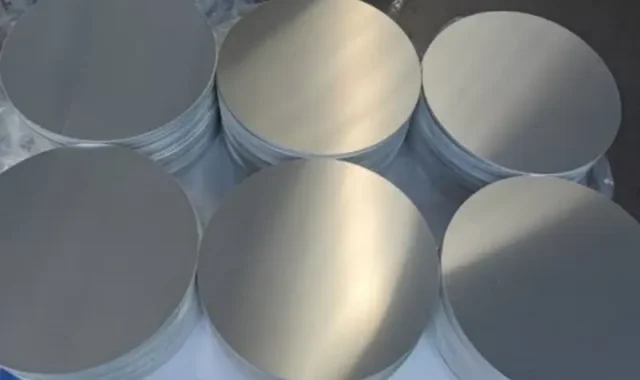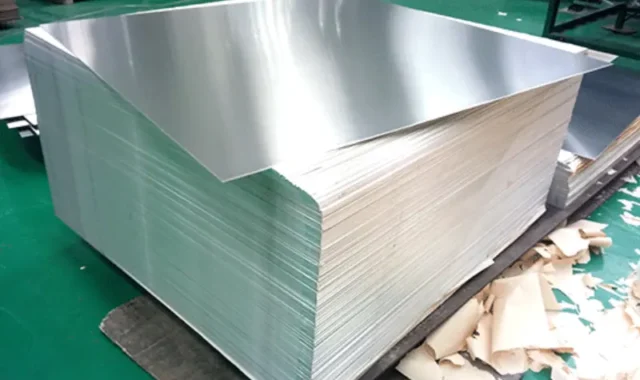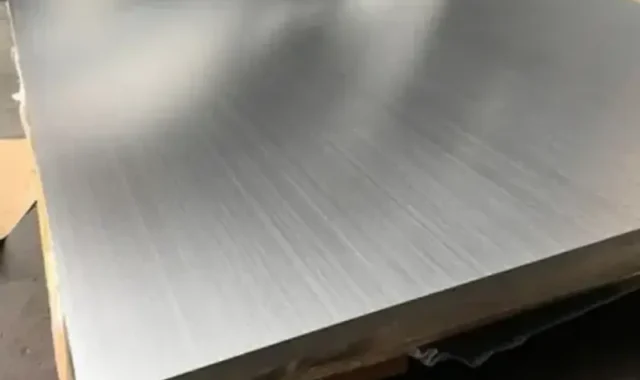
A 4×8 aluminum sheet is a flat-rolled aluminum product measuring 4 feet wide by 8 feet long — the most universally recognized dimension in the global aluminum trade.
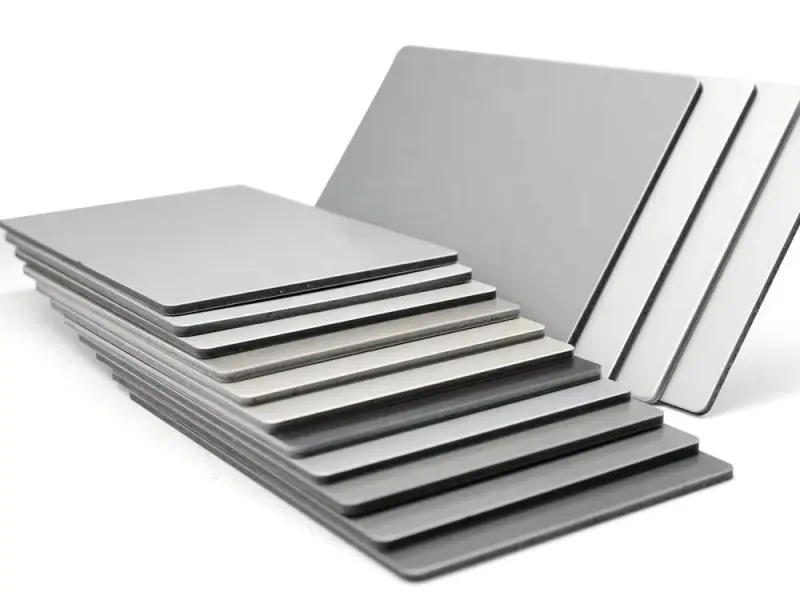
While the footprint stays fixed, every other variable — alloy, thickness, temper, and surface finish — can be customized to match your exact project requirements.
| Dimension | Imperial (US) | Metric |
|---|---|---|
| Width | 4 ft | 1,219 mm |
| Length | 8 ft | 2,438 mm |
| Area | 32 sq ft | 2.973 m² |
| Thickness Range | 0.006″ – 0.5″ | 0.15 mm – 12.7 mm |
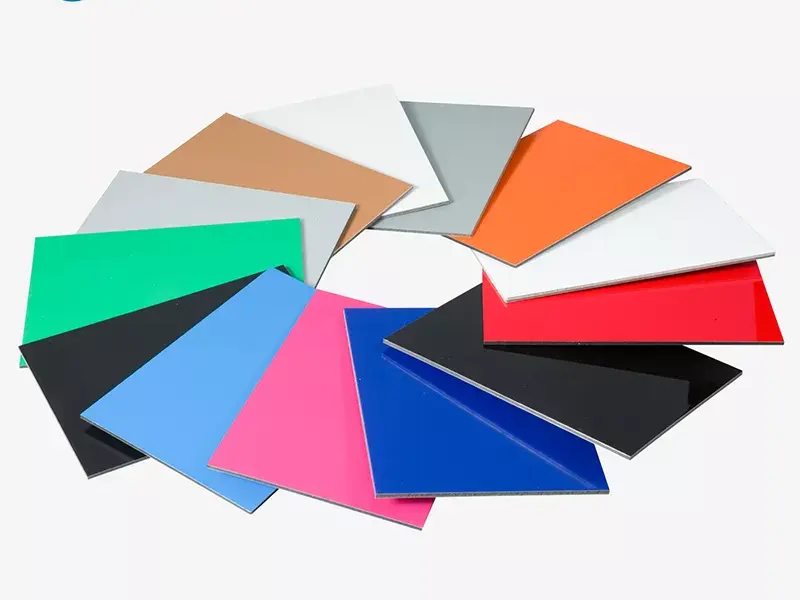
Why 4×8 ft became the global standard: This dimension aligns with standard building frameworks, fits efficiently into shipping containers, and is compatible with virtually every CNC router, laser cutter, and press brake on the market. Mills optimize material yield around this size, which means less trimming waste and lower per-unit cost for buyers.
Aluminum Alloys for 4×8 Sheets: Which One Do You Need?
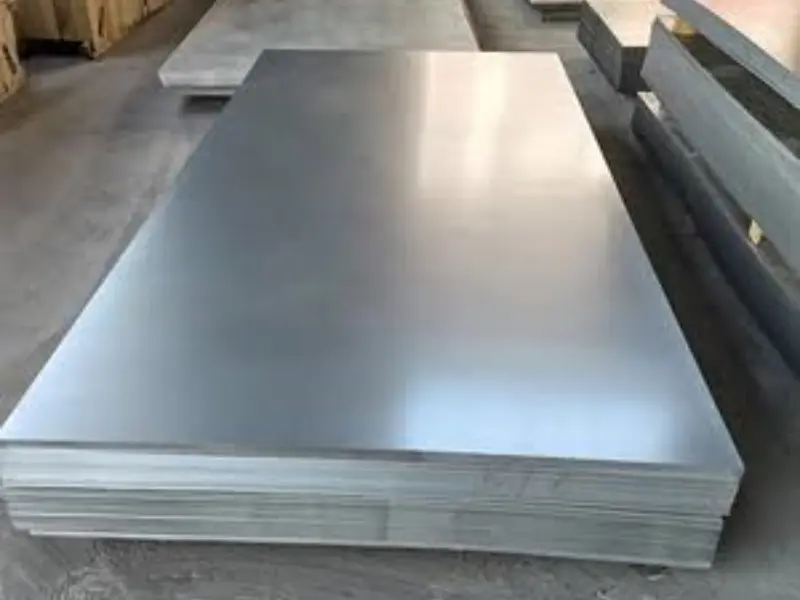
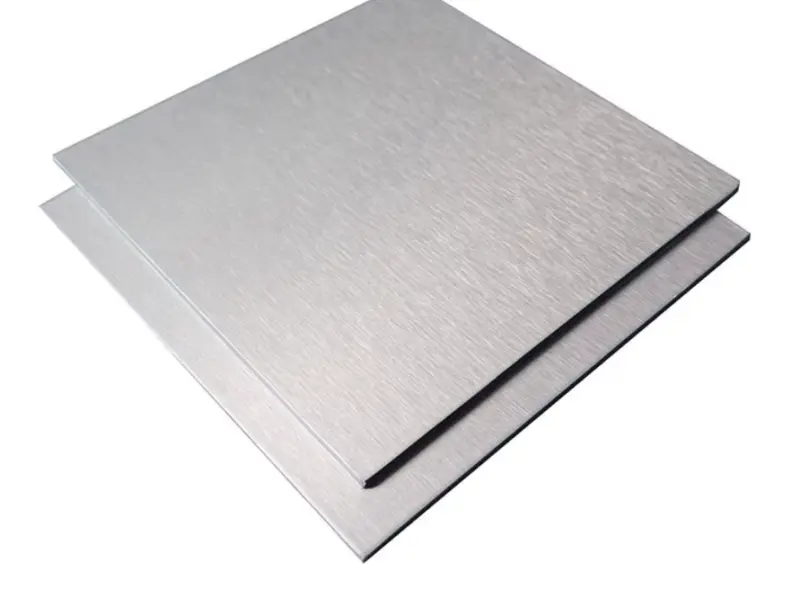
Choosing the right alloy is the single most important decision when buying aluminum sheet. Here’s how the four most common options compare:
| Alloy | Series | Strength | Corrosion Resistance | Best For | Price Tier |
|---|---|---|---|---|---|
| 1050/1060 | 1000 (Pure Al) | Low | Excellent | Decoration, Electrical | $ (Lowest) |
| 3003 | 3000 (Mn) | Medium | Good | General Fabrication | $$ (Economy) |
| 5052 | 5000 (Mg) | High | Excellent | Marine, Automotive | $$$ (Mid-Range) |
| 6061-T6 | 6000 (Mg-Si) | Very High | Good | Structural, Aerospace | $$$$ (Premium) |
4×8 aluminum sheet Quick selection guide:
- 1050/1060 aluminum sheet — Choose when you need maximum formability for deep drawing, or when electrical/thermal conductivity is critical (heat sinks, capacitor housings, decorative trim).
- 3003 aluminum sheet — The default choice for 80% of applications. Roofing, HVAC ductwork, wall cladding, and general fabrication all run on 3003 because it delivers the best balance of strength, workability, and price.
- 5052 aluminum sheet — Specify for anything exposed to saltwater, chemicals, or outdoor weathering. Boat hulls, trailer siding, and fuel tanks rely on this marine-grade alloy.
- 6061-T6 aluminum sheet— Use where structural rigidity matters. In T6 temper, this alloy approaches mild steel in strength while weighing 60% less — ideal for machinery bases, automotive chassis, and aerospace components.
4×8 aluminum sheet Thickness Options and What They Mean for Your Project
Thickness directly drives weight, strength, and cost. The table below shows the weight of a single 4×8 sheet at common gauges, along with typical applications:
| Thickness (mm) | Weight per Sheet (kg) | Typical Use |
|---|---|---|
| 0.5 | ~4.0 | Signage, Electronics housings |
| 1.0 | ~8.0 | Ceiling panels, HVAC ductwork |
| 2.0 | ~16.0 | Wall cladding, Truck body panels |
| 3.0 | ~24.1 | Structural panels, Platforms |
| 4.0 | ~32.1 | Heavy machinery guards |
| 5.0 | ~40.1 | Marine hull sections |
| 6.0 | ~48.1 | Armor plating, Mold bases |
How to calculate weight yourself:Weight (kg) = 2.438 × 1.219 × Thickness (mm) × 2.7
Simplified: Weight ≈ 8.024 × Thickness (mm)
Pro tip: Don’t over-specify thickness. A 2mm 5052 sheet often performs as well as a 3mm 3003 sheet at lower weight and cost. Match the alloy to the load, not just the gauge.
Physical Properties That Make Aluminum Stand Out
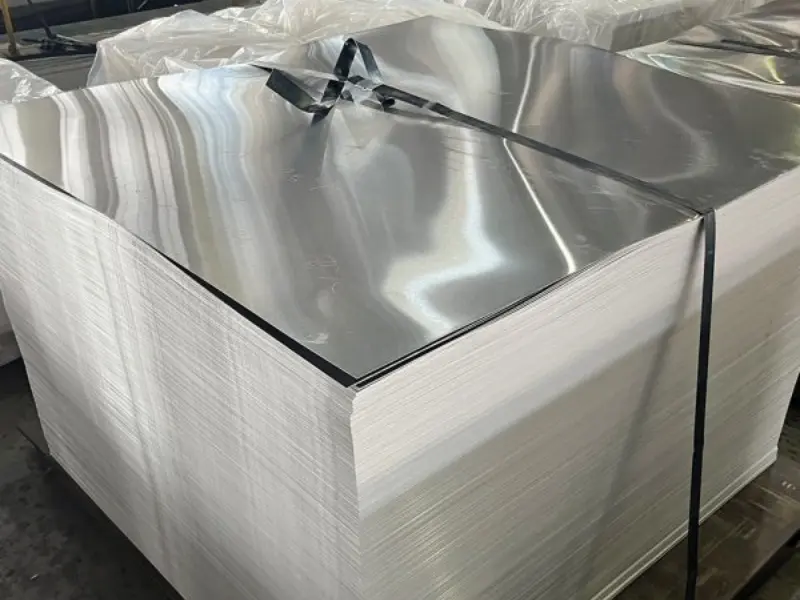
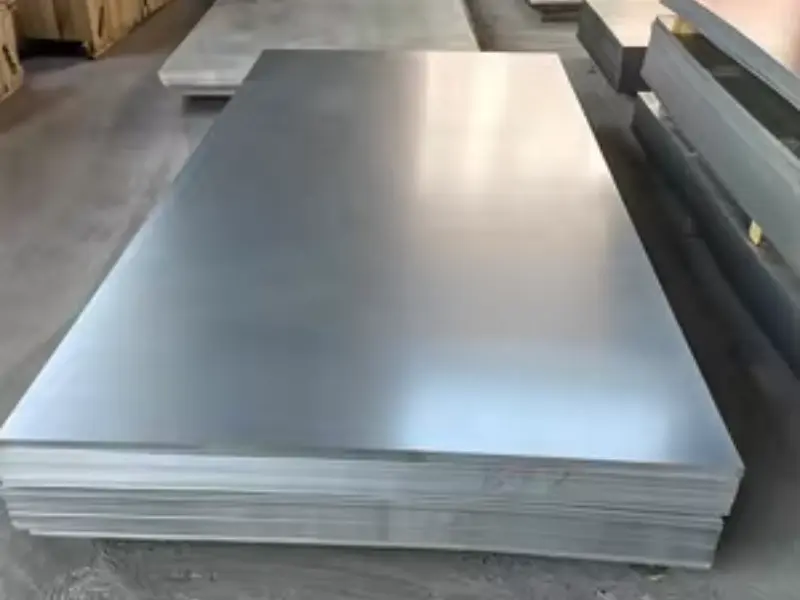
Lightweight advantage: At 2.7 g/cm³, aluminum weighs roughly one-third of steel. A full 4×8 sheet of 3mm aluminum is about 24 kg — the same thickness in steel would exceed 70 kg. This difference slashes shipping costs, simplifies on-site handling, and reduces structural load requirements.
Strength-to-weight ratio: Aluminum alloys like 6061-T6 and 7075 deliver structural performance comparable to steel while maintaining that 3:1 weight advantage. This is why electric vehicle manufacturers are replacing steel body panels with aluminum — every kilogram saved extends battery range.
Corrosion resistance: Aluminum forms a self-healing oxide layer (Al₂O₃) that protects the base metal from atmospheric corrosion for decades. In aggressive environments, anodizing or coating extends service life to 20+ years without maintenance.
Thermal and electrical conductivity: Pure aluminum grades (1050, 1060) conduct heat at 205–237 W/(m·K) and electricity at ~61% IACS — making them ideal for heat exchangers, LED backplates, and electrical busbars.
4×8 aluminum sheet Surface Finishes: From Raw Mill to Mirror Polish
| Surface Finish | Appearance | Durability | Cost Add-on | Best Application |
|---|---|---|---|---|
| Mill Finish | Natural metallic | Basic | Base price | Hidden structural parts |
| Brushed | Satin directional | Moderate | +5–10% | Interior design, appliances |
| Anodized | Hard colored layer | Excellent (20+ yrs) | +15–25% | Exterior architectural cladding |
| Painted (PVDF) | Gloss/matte color | Excellent (20+ yrs) | +20–30% | Roofing, facades, billboards |
| Painted (PE) | Gloss color | Good (10–15 yrs) | +10–15% | Interior signage, decoration |
| Mirror Polished | High reflectivity (>80%) | Moderate | +30–50% | Lighting reflectors, luxury decor |
When to upgrade your finish:
- Mill finish is fine for parts that will be painted or hidden from view.
- Anodizing is essential for exterior architectural work where color stability and scratch resistance matter.
- PVDF coating is the gold standard for roofing and coastal applications — it resists UV degradation and chalking for two decades.
- Mirror polish is reserved for optical and decorative applications where reflectivity is the primary function.
Where 4×8 Aluminum Sheets Are Used
| Industry | Recommended Alloy | Typical Thickness | Surface Finish |
|---|---|---|---|
| Construction | 3003, 5052 | 1.0 – 3.0 mm | Anodized / Painted |
| Automotive | 5052, 6061 | 1.5 – 4.0 mm | Mill / Painted |
| Marine | 5052, 5083 | 3.0 – 6.0 mm | Mill / Anodized |
| Signage | 1050, 3003 | 0.5 – 2.0 mm | Painted / Brushed |
| Machinery | 6061-T6 | 3.0 – 12 mm | Mill |
| Electronics | 1050, 1060 | 0.3 – 1.0 mm | Mill / Brushed |
| DIY / Home | 3003, 5052 | 1.0 – 3.0 mm | Any finish |
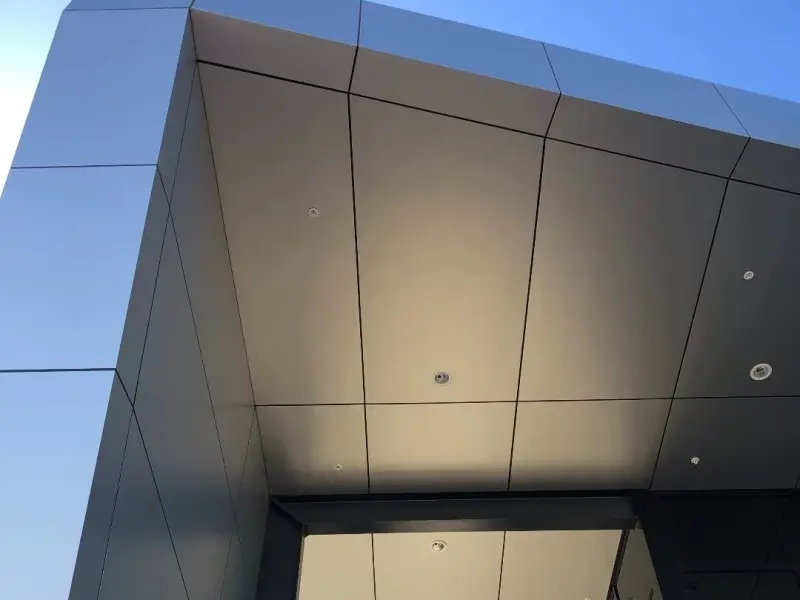
Construction and building: Roofing panels, curtain walls, ceiling systems, and facade cladding dominate this segment. The 4×8 size covers large areas with minimal seams, and anodized or PVDF-coated variants give architects unlimited color options.
Automotive: Body panels, hoods, door skins, and EV battery enclosures all benefit from aluminum’s weight savings. The shift to electric vehicles has accelerated demand — lighter vehicles travel farther on the same battery charge.
Marine and shipbuilding: 5052 and 5083 alloys resist saltwater corrosion and fatigue cracking. The 4×8 dimension is ideal for covering hull sections and decking with minimal welding.
Signage and advertising: The flat, lightweight, and weatherproof nature of aluminum makes it the substrate of choice for billboards, storefront lettering, and exhibition displays. Painted finishes ensure graphics stay vibrant for years.
Why the 4×8 Size Dominates Global Trade
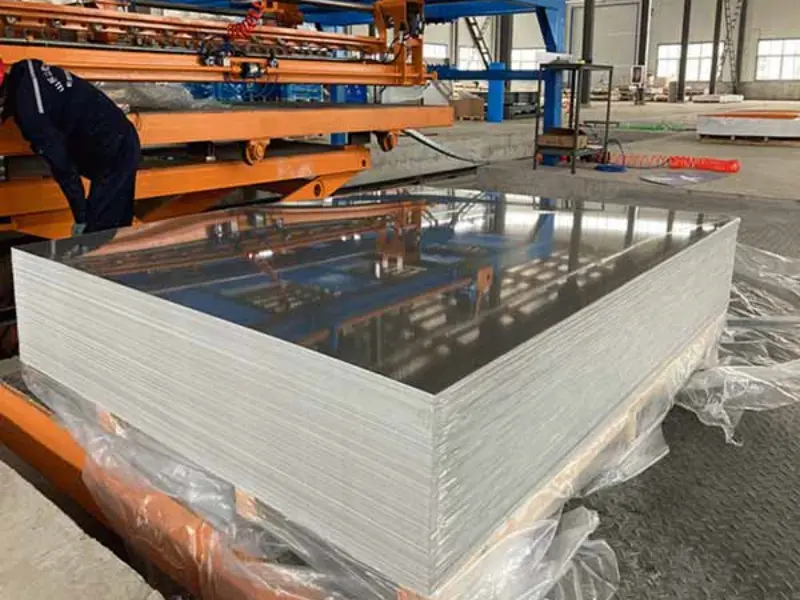
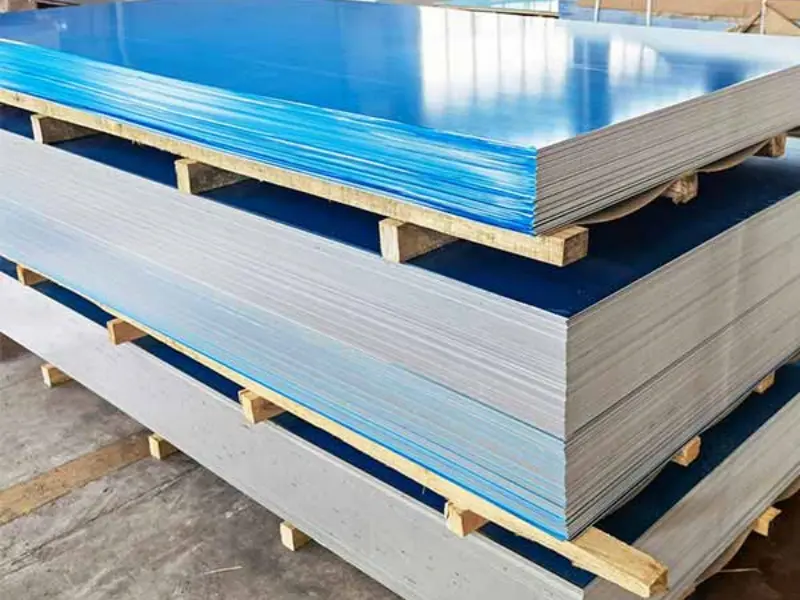
The popularity of the 4×8 aluminum sheet isn’t accidental — it’s the result of decades of supply chain optimization:
- Standardized for global trade: Every major mill in China, the US, Europe, and the Middle East stocks 4×8 as the default dimension. This universality eliminates custom tooling and reduces procurement risk.
- Transportation efficiency: A standard 20-foot container holds roughly 500–600 sheets (1–2mm thickness). The 4×8 footprint maximizes container space without requiring oversized handling equipment.
- Equipment compatibility: CNC routers, laser cutters, plasma tables, and press brakes are universally calibrated to 4×8. No custom fixturing, no wasted setup time.
- Cost efficiency: Continuous production runs at standard dimensions minimize edge trimming and scrap, driving down per-unit cost compared to custom sizes.
4×8 aluminum sheet Pricing Guide for 2026
Based on current market data, here are the typical export price ranges from Chinese suppliers:
| Alloy Series | FOB Price (USD/ton) | Price per kg | Lead Time |
|---|---|---|---|
| 1000 Series | $1,900 – $2,300 | ~$2.1 – $2.5 | 7–10 days |
| 3000 Series | $2,100 – $2,700 | ~$2.3 – $2.9 | 7–10 days |
| 5000 Series | $2,350 – $2,800 | ~$2.5 – $3.1 | 10–14 days |
| 6000 Series | $2,800 – $3,200 | ~$3.0 – $3.5 | 14–21 days |
What drives price volatility:
- LME aluminum ingot prices account for 60–70% of the final sheet cost. In Q1 2026, ingot prices rose approximately 9–10% due to energy cost inflation and supply constraints.
- Processing costs (rolling, annealing, cutting) add 20–30%.
- Surface treatments can increase base price by 10–50% depending on the finish.
- Order volume is critical — full container load (FCL) orders unlock the best pricing tiers. Retail distributors in the US typically mark up factory prices by 30–60%.
Cost per sheet vs. cost per kg:
Suppliers usually quote by the kilogram for export orders. To estimate your per-sheet cost: multiply the sheet weight (from the thickness table above) by the price per kg. Always verify that the supplier uses standard density (2.7 g/cm³) in their calculations.
Sourcing from China: What Importers Should Know
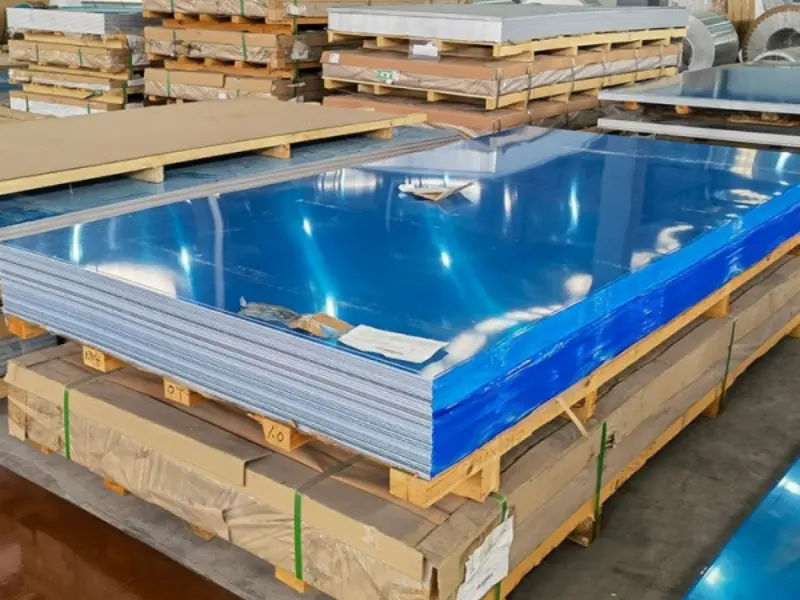
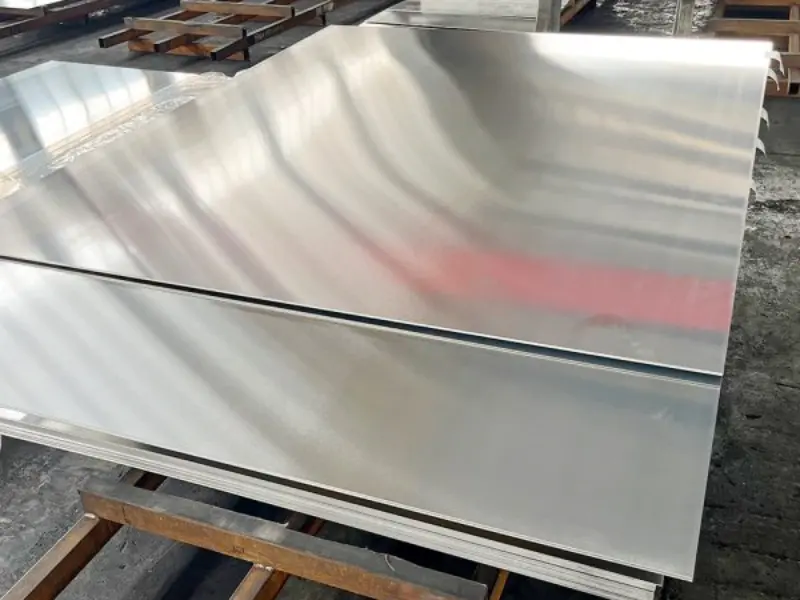
China produces over half of the world’s primary aluminum and dominates rolled aluminum sheet exports. Here’s why Chinese suppliers are competitive:
- Factory-direct pricing — No distributor markup; prices track closely to LME ingot costs.
- Massive production capacity — Major mills in Henan, Shandong, and Guangdong operate at scales that ensure consistent availability and short lead times.
- Full alloy and thickness range — From 0.15mm foil to 25mm plate, across 1000–7000 series alloys.
- Export expertise — Established suppliers provide ASTM/EN/GB-compliant mill test certificates, SGS inspection reports, and complete customs documentation.
How to Choose the Right Sheet for Your Project

Follow this decision framework:
Step 1 — Select the alloy based on environment and mechanical needs:
- Indoor / decorative → 1050, 1060
- General fabrication → 3003
- Marine / corrosive → 5052, 5083
- Structural / high-strength → 6061-T6
Step 2 — Choose thickness using structural calculations. Avoid over-specifying — a 2mm 5052 sheet often outperforms a 3mm 3003 sheet at lower cost.
Step 3 — Pick the surface finish based on exposure and aesthetics:
- Hidden / structural → Mill finish
- Exterior long-term → Anodized or PVDF
- Decorative interior → Brushed or mirror
Step 4 — Verify quality before ordering:
- Request mill test certificates (MTRs) with chemical composition and mechanical properties.
- Specify flatness and thickness tolerance standards (ASTM B209 or EN 485).
- For critical applications, arrange third-party inspection (SGS, Bureau Veritas).
- Confirm ISO 9001 certification from the supplier.
Manufacturing Process at a Glance
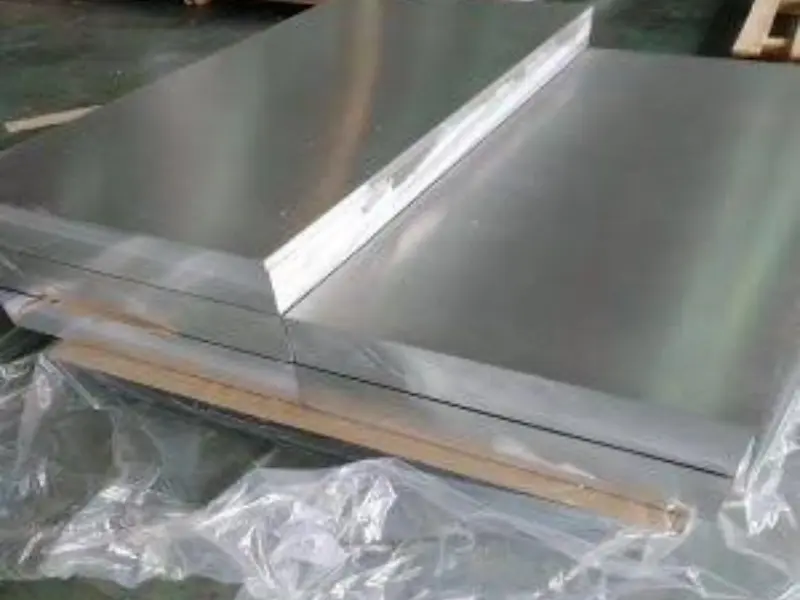
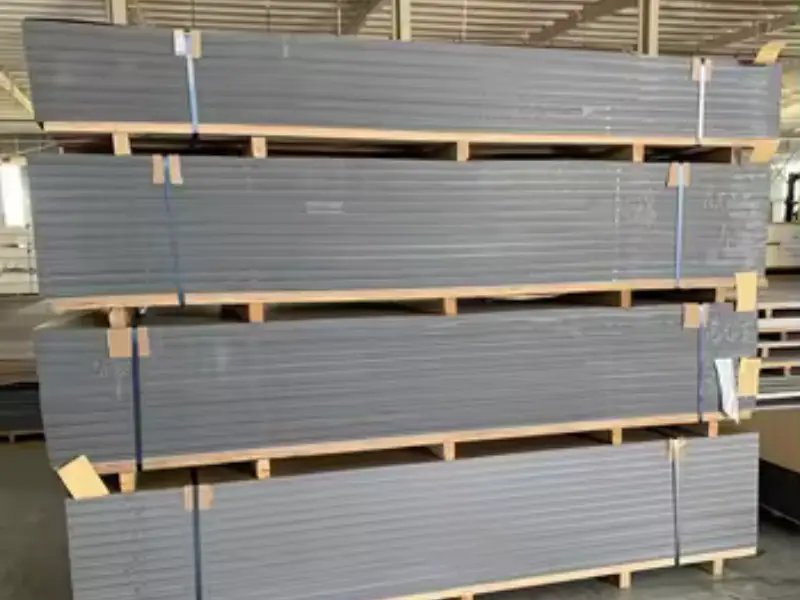
The journey from raw aluminum to a finished 4×8 sheet involves several precision-controlled stages:
- Melting & Casting — Primary ingots or recycled scrap are melted at ~660°C and cast into rolling slabs.
- Hot Rolling — Slabs are heated to 400–500°C and reduced to 2–6mm through multiple rolling passes.
- Cold Rolling — The strip is further reduced to final thickness at room temperature, increasing strength through work hardening.
- Heat Treatment — Alloys like 6061 undergo solution treatment and aging (T6 temper) to achieve maximum strength.
- Shearing — The coil is leveled and cut into standard 4×8 sheets (1,219 × 2,438 mm).
- Surface Protection — Protective PVC film is applied before packaging to prevent scratches.
Packaging and Shipping Best Practices
| Aspect | Standard Practice | Notes |
|---|---|---|
| Surface Protection | Blue/clear PE film on one or both sides | Peel off before installation |
| Palletizing | Fumigated wooden pallets with steel strapping | Required for ISPM-15 compliance |
| Moisture Protection | VCI film or kraft paper wrapping | Prevents corrosion during sea transit |
| Container Loading | 500–600 sheets per 20ft container (1–2mm) | Optimize for weight distribution |
| Shipping Method | Sea freight (15–40 days) | Air freight only for urgent samples |
Shipping cost considerations:
For thin sheets, volumetric weight often exceeds actual weight — you pay for container space, not just metal mass. For thick plates, actual weight drives freight costs. Plan container loading to maximize both space and weight limits.
4×8 vs. Other Sizes and Materials
Size Comparison
| Size | Dimensions | Coverage | Availability | Cost Efficiency |
|---|---|---|---|---|
| 4×8 | 1,219 × 2,438 mm | 2.973 m² | Universal stock | Best |
| 4×10 | 1,219 × 3,048 mm | 3.716 m² | Limited stock | Premium pricing |
| Custom | Per specification | Variable | Made-to-order | Highest cost |
Verdict: The 4×8 size remains the most cost-effective choice for importers due to economies of scale, universal equipment compatibility, and optimized logistics.
Material Comparison
| Property | Aluminum | Steel | Stainless Steel | Composite Panel |
|---|---|---|---|---|
| Density (g/cm³) | 2.7 | 7.85 | 8.0 | ~1.5 |
| Weight vs. Steel | 33% of steel | Baseline | Similar to steel | Lightest |
| Corrosion Resistance | Excellent (self-healing) | Requires coating | Excellent | Depends on core |
| Strength-to-Weight | Superior | Moderate | Moderate | Low |
| Cost per kg | $$$ | $ | $$$$ | $$ |
| Recyclability | 100% | 100% | 100% | Limited |
| Typical Lifespan | 20–30 years | 15–25 years (coated) | 30–50 years | 10–15 years |
When to choose aluminum over alternatives:
- vs. steel: When weight reduction and corrosion resistance justify the higher material cost (transportation, marine, aerospace).
- vs. stainless steel: When you need large-area coverage without the 2–3× price premium (cladding, roofing, signage).
- vs. composite panels: When structural integrity, fire resistance, or load-bearing capacity is required.
Common Problems and How to Avoid Them
| Problem | Cause | Prevention |
|---|---|---|
| Surface scratches | Handling during transport | Insist on double-sided protective film; inspect upon receipt |
| Thickness tolerance issues | Mill calibration variance | Reference ASTM B209 or EN 485 in contracts; request MTRs |
| Color inconsistency (coated) | Batch-to-batch paint variation | Order from single production batch; specify ΔE ≤ 1.0 tolerance |
| Supplier delivery delays | Poor production planning | Work with ISO-certified suppliers; include penalty clauses |
Frequently Asked Questions
What does “4×8 aluminum sheet” mean exactly?
It refers to a sheet measuring 4 feet wide by 8 feet long (1,219 mm × 2,438 mm) — the most common standard size in global aluminum trade.
What thicknesses are available?
Standard production covers 0.15mm (ultra-thin) up to 25mm (heavy plate). The most commonly ordered range is 0.5mm–6.0mm.
Can 4×8 aluminum sheets be cut or bent easily?
Yes. Aluminum is highly workable. Sheets under 3mm cut easily with hand shears, circular saws, or laser cutters. Bending is straightforward on standard press brakes, though minimum bend radius varies by alloy and temper.
Which alloy is the most popular?
3003 accounts for the majority of general-purpose sales due to its unbeatable combination of strength, formability, corrosion resistance, and cost.
Is the 4×8 size available worldwide?
Yes. This dimension is universally stocked by mills and distributors across every continent. It is the de facto global standard.
4×8 aluminum sheet Supplier
The 4×8 aluminum sheet represents the intersection of practicality, standardization, and performance. Its universal dimensions streamline global trade, its alloy versatility covers virtually every application, and its lightweight durability delivers long-term value across construction, transportation, marine, and industrial sectors.
For importers, the winning strategy is straightforward:
- Source factory-direct from China to access competitive pricing and the full range of alloys and finishes.
- Specify exact requirements — alloy, temper, thickness, and surface finish — to avoid mismatches and costly rework.
- Order in full container loads to minimize per-unit shipping costs and secure volume discounts.
- Verify supplier credentials through ISO 9001 certification, mill test certificates, and third-party inspection when necessary.
- Monitor LME aluminum prices and lock in contracts during favorable market windows to protect margins.
By following these guidelines, buyers can secure high-quality 4×8 aluminum sheets that deliver superior performance, decades of service life, and excellent return on investment.