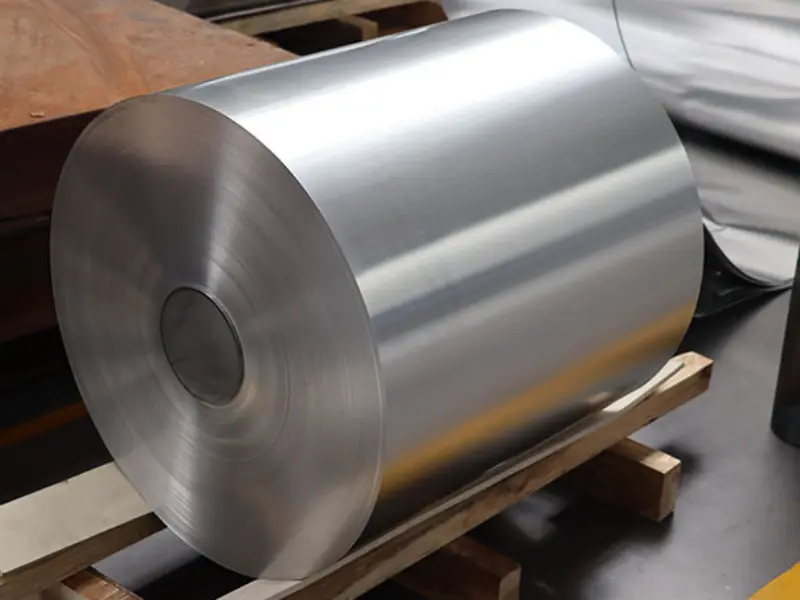
Aluminum Foil Price per Ton in 2026 Are you looking for the latest aluminum foil price? Whether you are a buyer for a packaging factory or a global trader, understanding the price per ton is essential. In 2026, the market for aluminum foil is changing due to energy costs and high demand.
1. How is the Aluminum Foil Price Calculated?
The aluminum foil price is not just one fixed number. It is usually made of two main parts. When you ask a manufacturer for a quote, they look at these factors:
- LME Aluminum Base Price: This is the cost of raw aluminum on the London Metal Exchange. It changes every day.
- Processing Fee (Fabrication Cost): This is the cost to turn a raw aluminum ingot into a thin foil. It includes labor, electricity, and machinery wear.
Table 1: Price Component Breakdown
| Component | Estimated Cost (USD) | Influence Level |
|---|---|---|
| LME Base Metal | $$$2,200 – $2,600$$ per ton | Very High |
| Processing Fee | $$$500 – $1,800$$ per ton | Medium |
| Surface Treatment | $$$100 – $300$$ (Optional) | Low |
| Total Estimated Price | $$$2,700 – $4,500$$ | Final Quote |
Note: Thinner foils (like 6 microns) have a much higher processing fee than thick foils.
2. Technical Specifications and Alloy Types
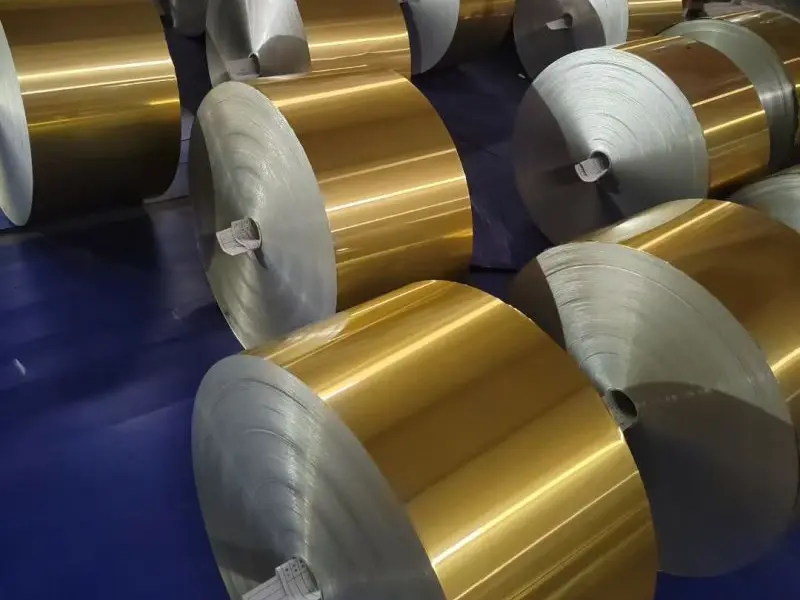
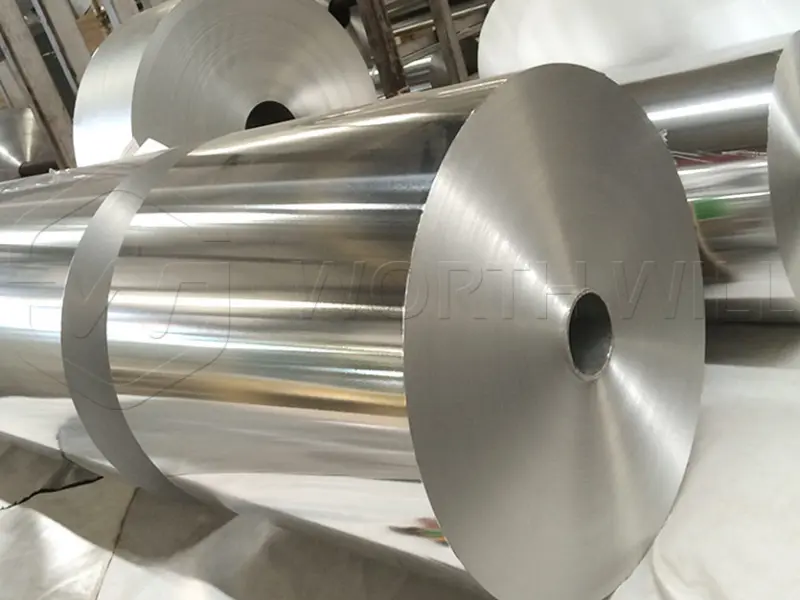
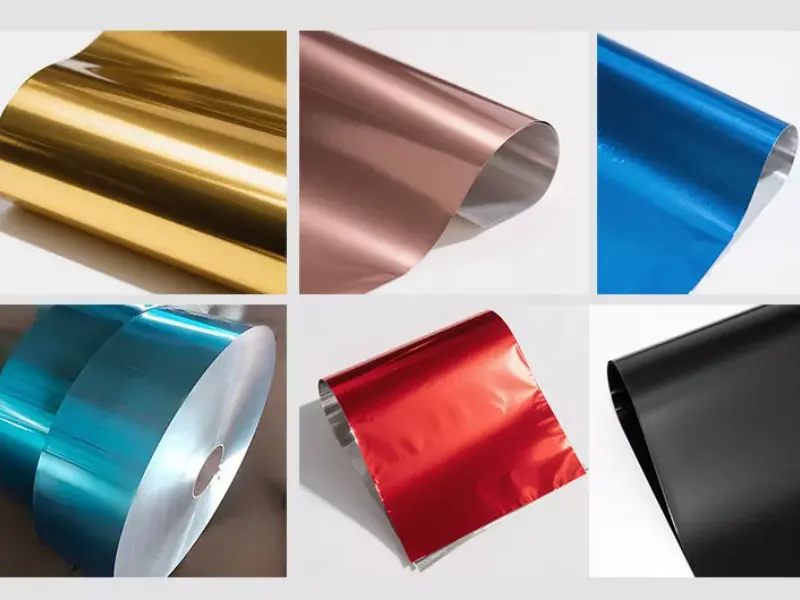
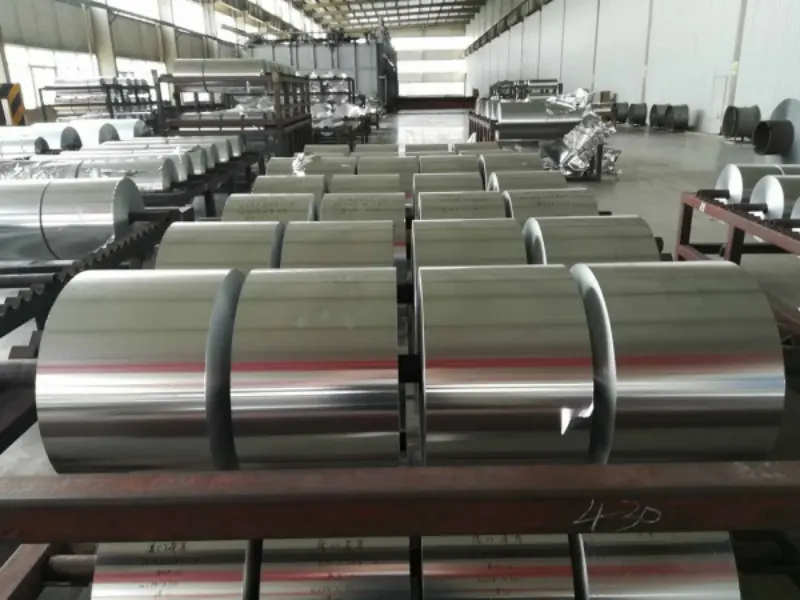
The aluminum foil price varies depending on the alloy and temper you choose. Different jobs require different types of metal.
Key Alloys in the 2026 Market
- Alloy 8011: The “standard” for household and pharma use. It is very versatile.
- Alloy 1235: The “soft” choice. It is at least $$99.35%$$ pure aluminum. It is great for cigarettes and flexible packaging.
- Alloy 3003: The “strong” choice. It has manganese, making it perfect for food containers and trays.
- Alloy 8079/8021: High-end alloys for medical “cold form” packaging.
Table 2: Digitized Specifications by Product Type
| Product Category | Alloy | Thickness ($$\text{mm}$$) | Common Temper |
|---|---|---|---|
| Household Foil | 8011 | $$0.008 – 0.020$$ | O (Soft) |
| Flexible Packaging | 1235 / 8079 | $$0.006 – 0.009$$ | O (Soft) |
| Container Foil | 3003 / 8011 | $$0.030 – 0.150$$ | H22 / H24 |
| Pharma Blister | 8011 | $$0.020 – 0.030$$ | H18 (Hard) |
| Cable Shielding | 1235 / 8011 | $$0.012 – 0.200$$ | O / H18 |
3. Major Product Types and Their Uses
To get the best aluminum foil price, you must match the product type to your specific application. Here are the most common types available this year:
Household Foil Rolls
This is what most people use in their kitchens. It is usually soft (O temper) so it can wrap around food easily. It is excellent for baking, roasting, and keeping food fresh in the fridge.
Laminated Aluminum Foil
Manufacturers bond 8011 or 1235 foil to paper, PE, or PET films. This creates a “triple-layer” protection. It is used for milk cartons, juice boxes, and coffee pouches. The lamination adds cost but provides a 100% barrier against oxygen.
PTP and Cold Form Pharma Foil
These are high-tech foils. PTP (Push-Through Packaging) is the silver back of a pill pack. Cold Form foil is even thicker ($$45 – 60 \text{ microns}$$) and can be pressed into shapes without cracking.
Battery Foil
With the rise of Electric Vehicles ($$EVs$$), battery foil is in high demand. It uses Alloy 1060 or 1235. It must be very clean with zero oil residue to work inside a lithium-ion battery.
4. Why Does the Price Change? (2026 Trends)
If you see a sudden jump in the aluminum foil price, it is usually caused by one of these four factors:
1. Energy Prices
Aluminum production uses a lot of electricity. When oil or gas prices go up, the cost of smelting aluminum goes up immediately.
2. Global Logistics
Shipping a container from Asia to Europe or America can cost between $$$2,000$$ and $$$8,000$$. These freight costs are often added to the “CIF” price of the foil.
3. Supply and Demand
As more countries ban single-use plastics, businesses are switching to aluminum because it is $$100%$$ recyclable. This high demand can keep prices firm.
4. Thickness Complexity
- Ultra-Thin ($$0.006 \text{ mm}$$): Harder to roll. More breaks in the machine. Higher price.
- Standard ($$0.015 \text{ mm}$$): Easy to roll. Lowest processing fee.
- Thick ($$0.100 \text{ mm}$$): High metal weight. Price follows the LME very closely.
5. Application Areas for 8011/1235 Foil
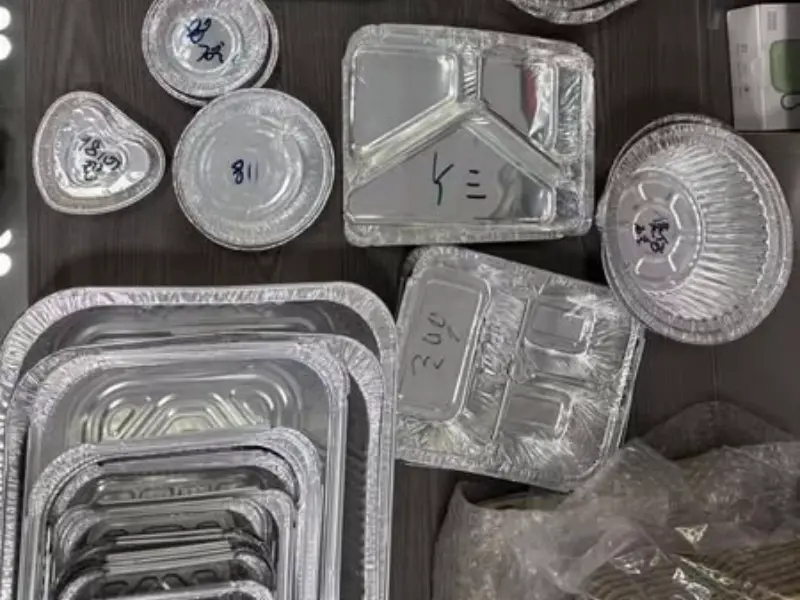
Aluminum foil is used everywhere. Here are the main industries buying foil by the ton:
- Food Service: Catering rolls for hotels, BBQ sheets, and airline meal trays.
- Medicine: Sterile packaging for pills, creams, and surgical tools.
- Electronics: Heat shields in smartphones and insulation in power cables.
- Construction: Foil-backed insulation boards to keep buildings warm and fire-safe.
- Automotive: Radiators and heat exchangers for engine cooling.
6. Quality Standards: What to Look for
When you pay the aluminum foil price for high-quality goods, you should expect certain standards. Do not accept lower quality just to save a few dollars.
Surface Quality
The surface must be “A-Grade.” This means no black oil spots, no scratches, and no “bright lines.” For printing, the surface tension (dyne level) must be high.
Pinholes
In very thin foil ($$6 – 9 \text{ microns}$$), tiny holes called “pinholes” can appear. A good manufacturer keeps these to a minimum (less than $$20$$ per square meter) to ensure the foil remains moisture-proof.
Table 3: Quality Checklist for Buyers
| Feature | Target Standard | Why it Matters |
|---|---|---|
| Thickness Tolerance | $$\pm 3%$$ | Ensures your machines don’t jam. |
| Tensile Strength | High ($$125 – 165 \text{ MPa}$$) | Prevents the foil from tearing during use. |
| Wettability | Grade A | Needed for glue or ink to stick. |
| Elongation | $$\ge 2%$$ | Allows the foil to stretch without breaking. |
7. How to Get a Discount on Aluminum Foil
Buying by the ton allows you to negotiate. Here is how to get a better aluminum foil price:
- Increase Volume: Ordering 20 tons (one container) is always cheaper than 5 tons because of shipping efficiency.
- Standardize Sizes: If you use standard widths like $$300 \text{ mm}$$ or $$450 \text{ mm}$$, the manufacturer doesn’t have much “scrap” metal, so they charge less.
- Timing: Watch the LME charts. If the base metal price drops, try to lock in your contract that day.
- Long-term Contracts: If you sign a one-year deal, manufacturers often give a discount on the processing fee.
8. Summary: Finding Value in 2026
The aluminum foil price in 2026 is a balance between raw metal costs and the precision of the manufacturing process. For basic food use, 8011 O foil is the most cost-effective. For high-tech electronics or medicine, 1235 or 8021 alloys are worth the extra investment.
Always ask your supplier for a Mill Test Certificate (MTC). This document proves that the alloy and temper you paid for are exactly what you received. By focusing on both price and technical specs, you can find the perfect aluminum foil for your business needs.