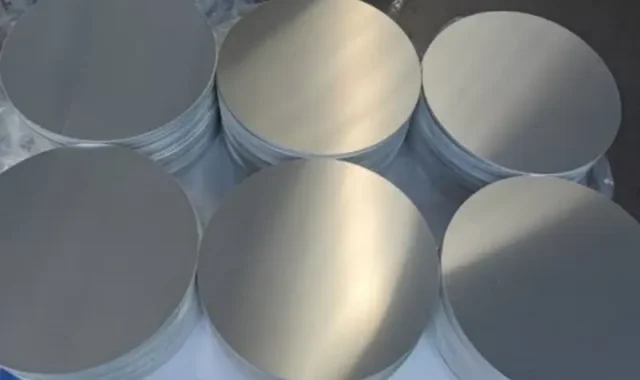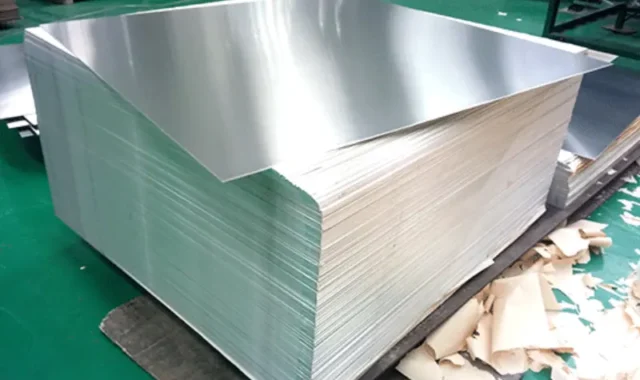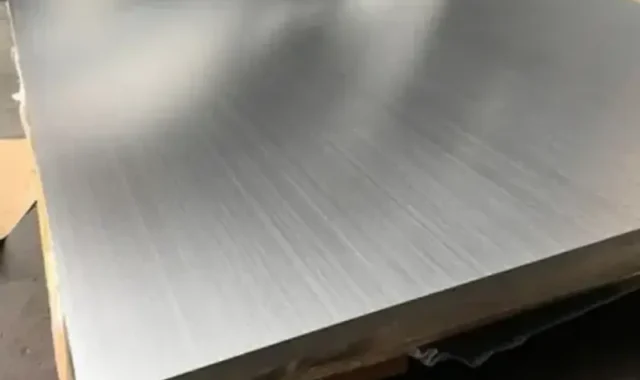
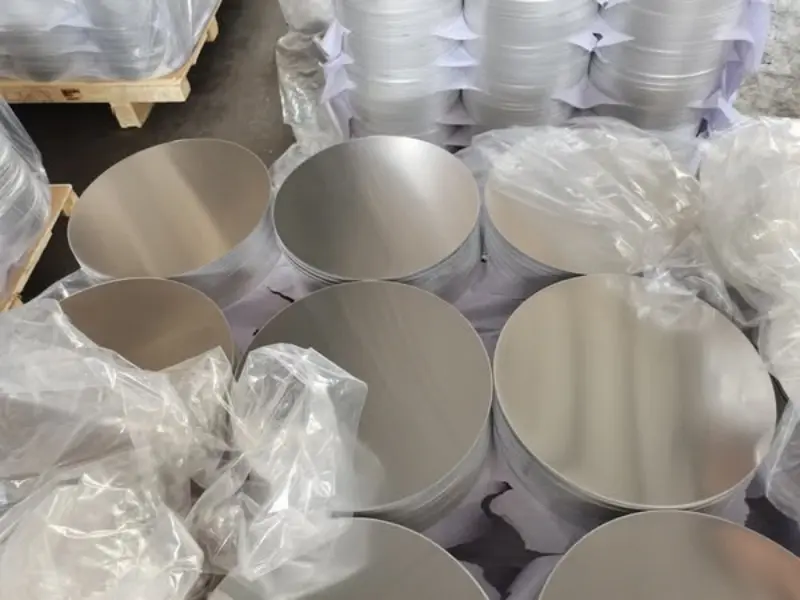
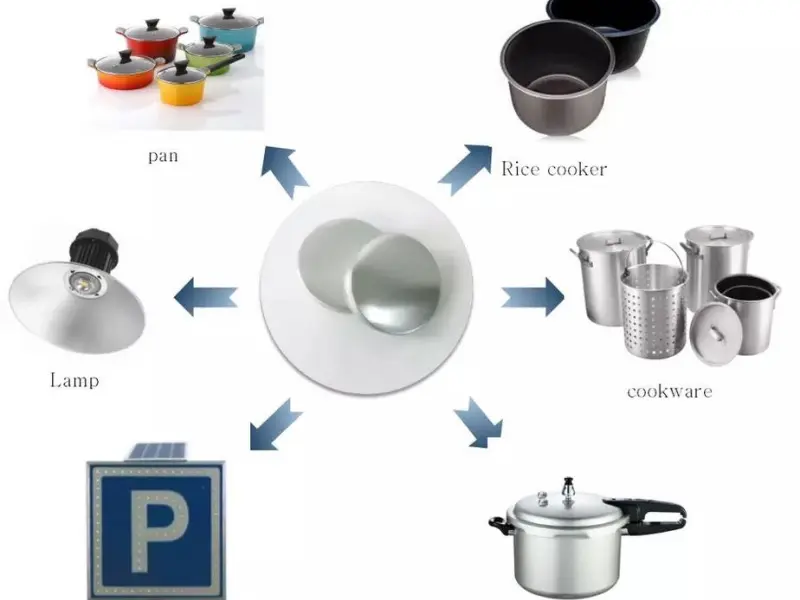
When you see a round frying pan, a shiny lampshade, or a circular traffic sign, you are looking at a product made from an aluminum circle in metal alloy discs. These flat, round pieces of metal are the starting point for thousands of everyday items.
Choosing the right aluminum circle in metal alloy discs is critical. You must consider the thickness, the diameter, and most importantly, the “alloy” or metal mixture.
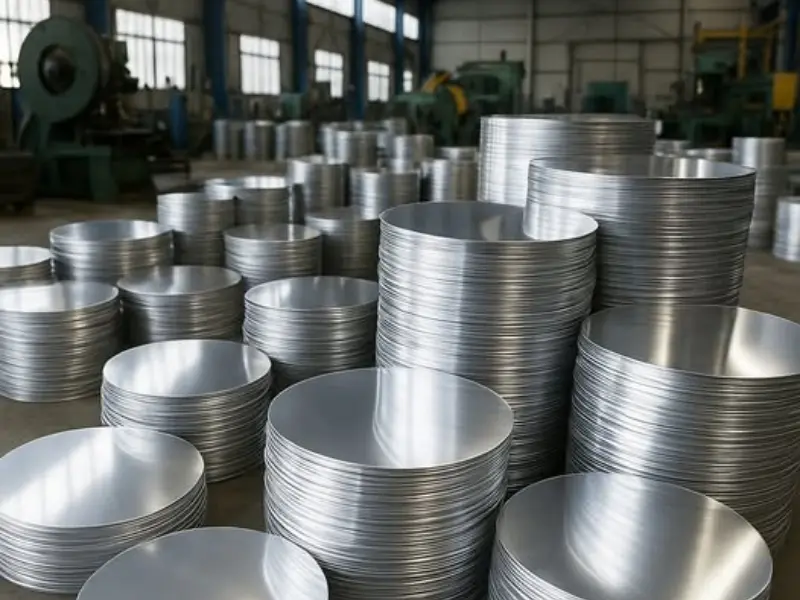

What are Aluminum Alloy Discs?
In the metal industry, these are often called “aluminum circles” or “blanks.”
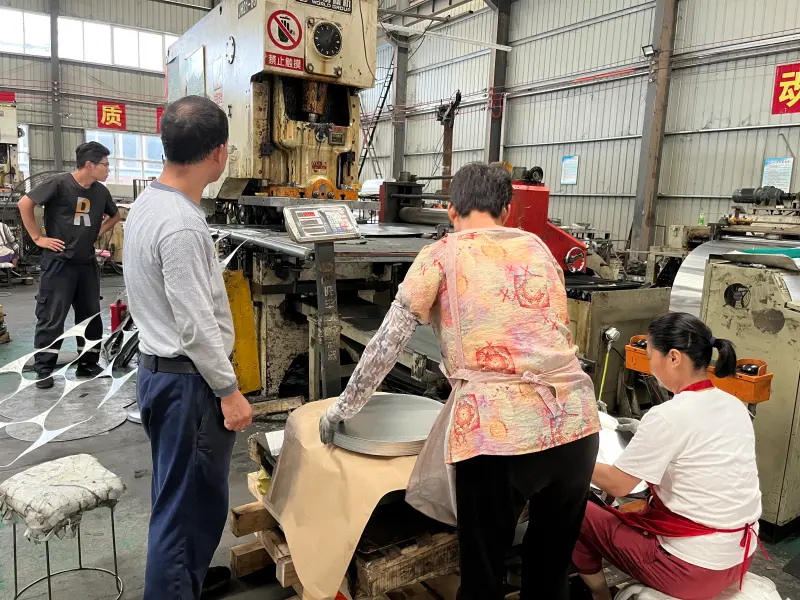
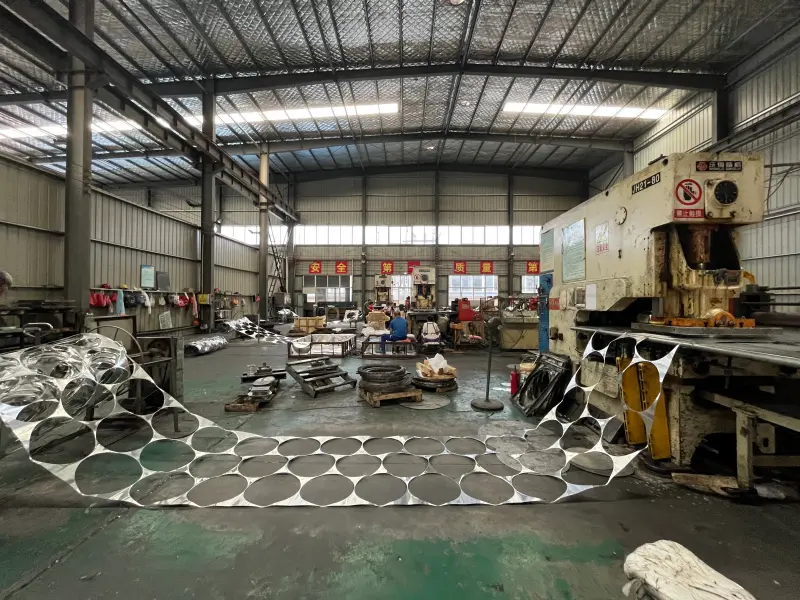
They are punched out of large aluminum coils or sheets using a circular die.
Because aluminum is light, strong, and does not rust, these discs are the top choice for industries that use “spinning” or “deep drawing” to shape metal.
Technical Specifications for Tank Production
The success of your tank depends on choosing the right alloy and temper. If the metal is too hard, it will crack during shaping. If it is too soft, the tank will dent easily.
Aluminum Circle in Metal Alloy Discs For Tanks
Common Alloys for Aluminum Tank Circles
| Alloy Series | Strength | Best For | Features |
|---|---|---|---|
| Alloy 1050 | Low | Water tanks / Small pots | 99.5% pure; very easy to shape. |
| Alloy 3003 | Medium | Fuel tanks / Cookware | Added manganese for extra durability. |
| Alloy 5052 | High | Marine / Chemical tanks | Excellent resistance to salt water and chemicals. |
| Alloy 5083 | Very High | Pressure vessels | High strength for heavy-duty industrial tanks. |
Temper and State
H14 / H24: Half-hard. Used for flatter tank components or signs that do not require heavy stretching.
O (Annealed): This is the “Soft” state. It is essential for aluminum circles for tanks that undergo deep drawing to prevent cracking.
Main Applications of Aluminum Circles in Tank Manufacturing
The aluminum circle for tanks is used across many industries. Here are the most common ways these discs are utilized:
1. Transportation and Fuel Tanks
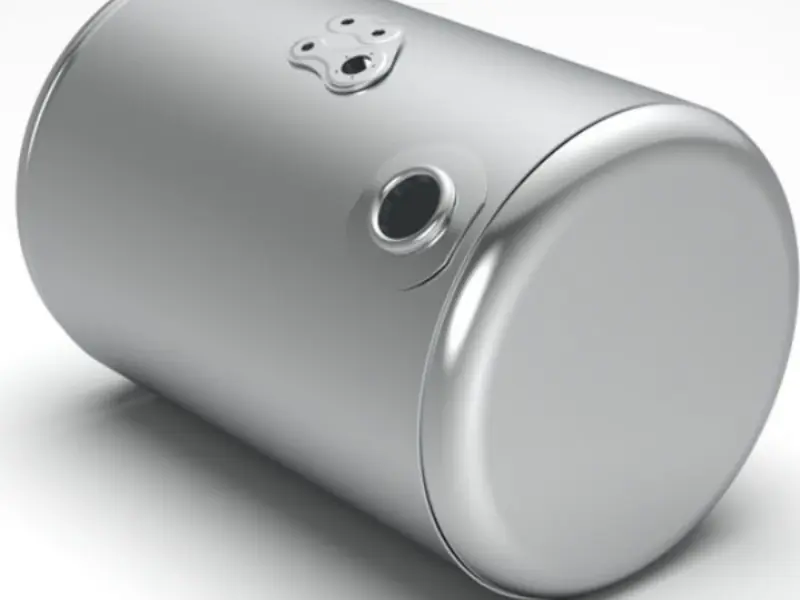
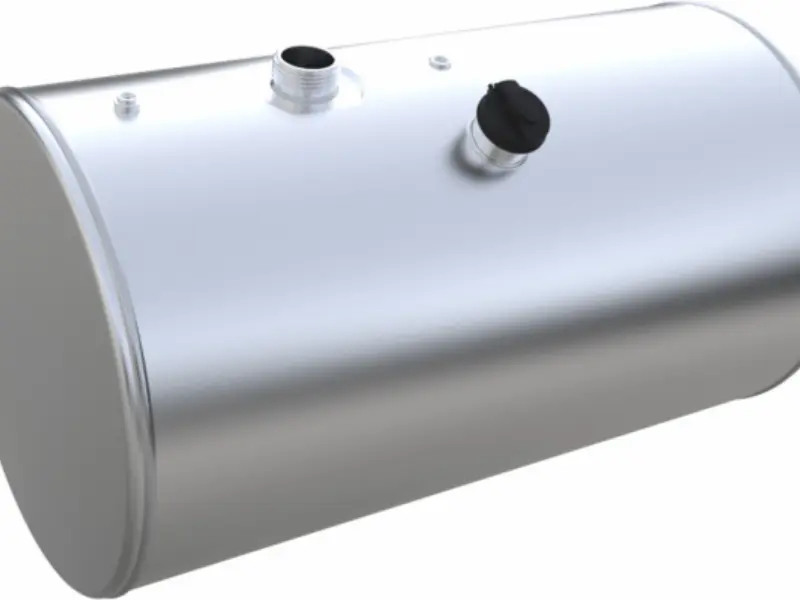
Oil Tanker Components: Internal baffles and end-caps for liquid transport.
Truck Fuel Tanks: Used for the circular ends (caps) of diesel tanks to save weight.
Air Brake Tanks: Found in heavy-duty vehicles for compressed air storage.
2. Industrial and Chemical Storage
- Water Storage: Large-diameter circles are spun into domes for water heater tanks.
- Chemical Vats: Used in factories where steel would be corroded by the chemicals.
- Pressure Vessels: Thicker Alloy 5083 circles are used for tanks that hold pressurized gas.
3. Professional Cookware (Deep Tanks)
- Stock Pots: Extra-deep tanks used in commercial kitchens.
- Pressure Cookers: Circles that are drawn into a deep shape to handle high-pressure steam.
- Soup Vats: Large-scale food production tanks.
4. Specialized Equipment
- Diving Tanks: Impact-extruded from thick aluminum discs.
- Fire Extinguishers: Seamless bodies made from high-strength aluminum circles.
- Filter Housings: Circular caps for industrial water and oil filtration systems.
Aluminum Circle in Metal Alloy Discs for tanks Size and Dimension Ranges
We provide a wide variety of dimensions to fit different tank diameters. Whether you are making a small oxygen tank or a large storage vat, we have the right size.
| Specification | Standard Range | Custom Options |
|---|---|---|
| Thickness | 0.5mm to 6.0mm | Up to 10.0mm available |
| Diameter | 100mm to 1200mm | Precision cutting for exact fit |
| Surface Finish | Mill Finish / Bright | PE film protection available |
| Tolerance | +/−1mm | High-precision dies used |
Comparison: Deep Drawing vs. Spinning for Tanks
How you shape the aluminum circle for tanks depends on your equipment and the depth of the tank.
| Feature | Deep Drawing | Metal Spinning |
|---|---|---|
| Speed | Very Fast (High Volume) | Slower (Low to Medium Volume) |
| Tooling Cost | High (Requires expensive dies) | Lower (Requires a simple mandrel) |
| Tank Depth | Can make very deep, tall tanks | Best for shallow domes or cones |
| Surface Quality | Very smooth and consistent | May have slight spinning marks |
| Best Alloy | 1050-O or 3003-O | 1100-O or 3003-H14 |
Key Features of Our Aluminum Circle in Metal Alloy Discs
To ensure your tank manufacturing process is efficient, our products focus on:
Clean Surface: No oil spots or scratches that could interfere with welding or coating.
No Burrs: Our punching process leaves clean edges, preventing injury and machine damage.
Fine Grain Size: We control the metal grain to prevent the “orange peel” effect during stretching.
Flatness: Every aluminum circle for tanks is leveled to ensure it fits perfectly into your press or lathe.
Technical Specifications: Alloys and Tempers
The performance of an aluminum circle in metal alloy discs depends on its chemical recipe. Different alloys offer different levels of strength and flexibility.
Common Aluminum Alloys for Discs
| Alloy Series | Key Elements | Main Characteristics |
|---|---|---|
| 1000 Series | 99.0%+ Aluminum | Very soft, excellent conductivity, easy to shape. |
| 3000 Series | Manganese added | 20% stronger than 1000 series, great for cookware. |
| 5000 Series | Magnesium added | High strength, excellent corrosion resistance in salt water. |
| 8000 Series | Other elements | Used for specialized industrial applications. |
Understanding the Temper (The “State”)
The “Temper” tells you how hard or soft the metal is. For an aluminum circle in metal alloy discs, the temper is very important for the shaping process.
- O (Annealed): This is the softest state. It is perfect for “deep drawing” (making deep pots or cylinders).
- H12 / H14: Half-hard. Good for shallow shapes and flat signs.
- H18: Fully hard. Used for flat products that need to stay very rigid.
Digital Specifications: Sizes and Measurements
We provide a wide range of sizes to ensure you have the right fit for your machinery.
| Parameter | Standard Range | Custom Capability |
|---|---|---|
| Thickness | 0.3mm to 10.0mm | Up to 15.0mm |
| Diameter | 100mm to 1200mm | Up to 1500mm |
| Tolerance | +/−1mm | Precision cutting available |
| Surface Finish | Bright or Matte | Mill finish |
Different Types of Aluminum Circle in Metal Alloy Discs
Not all discs are created equal. We categorize them based on how they will be used in the factory.
1. Deep Drawing Quality Discs
These discs are usually made of Alloy 1050 or 3003 in the O temper. “Deep drawing” means the metal is stretched into a deep shape, like a tall stockpot. These discs have a very fine grain size. This prevents the “orange peel” effect (a rough surface) when the metal is stretched.
2. Spinning Quality Discs
Spinning involves rotating the disc at high speeds on a lathe while a tool shapes it. These discs need to be consistent in thickness. They are popular for making cone-shaped items like lampshades or funnel components.
3. Anodizing Quality Discs
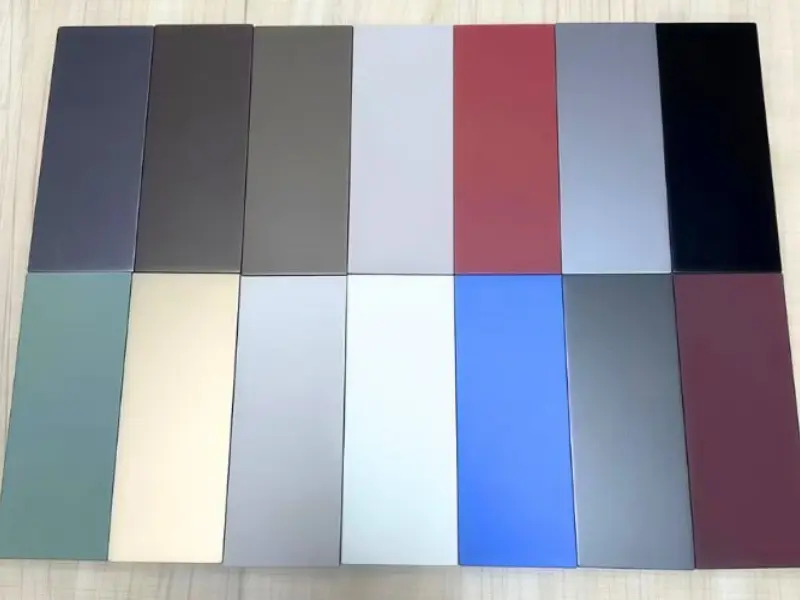
If you plan to color your aluminum (like a blue or red reusable water bottle), you need “Anodizing Quality.” These discs are kept very clean during production. There are no scratches or oil spots that could ruin the chemical coloring process.
4. Non-Stick Coating Discs
These are used for high-end frying pans. The surface of the aluminum circle in metal alloy discs is slightly roughened or specially cleaned. This helps the Teflon or ceramic coating stick to the metal perfectly and stay there for years.
Key Applications forAluminum Circle in Metal Alloy Discs
The aluminum circle in metal alloy discs is used in almost every sector of modern life.
Cookware and Kitchenware
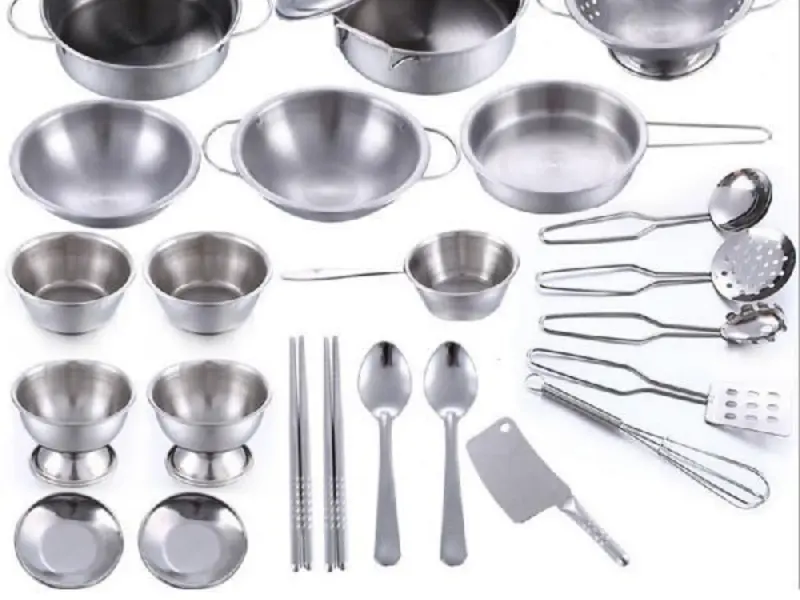
- Frying Pans and Woks: The most common use.
- Pressure Cookers: Uses thicker discs for safety.
- Rice Cooker Liners: Usually made from 1000 series aluminum.
- Coffee Pots: Requires deep-drawing quality metal.
Lighting and Decoration
- Recessed Lighting: The “cans” in the ceiling.
- Industrial Lampshades: Large, spun aluminum covers.
- Wall Cladding: Decorative circular panels for modern buildings.
Industrial and Safety
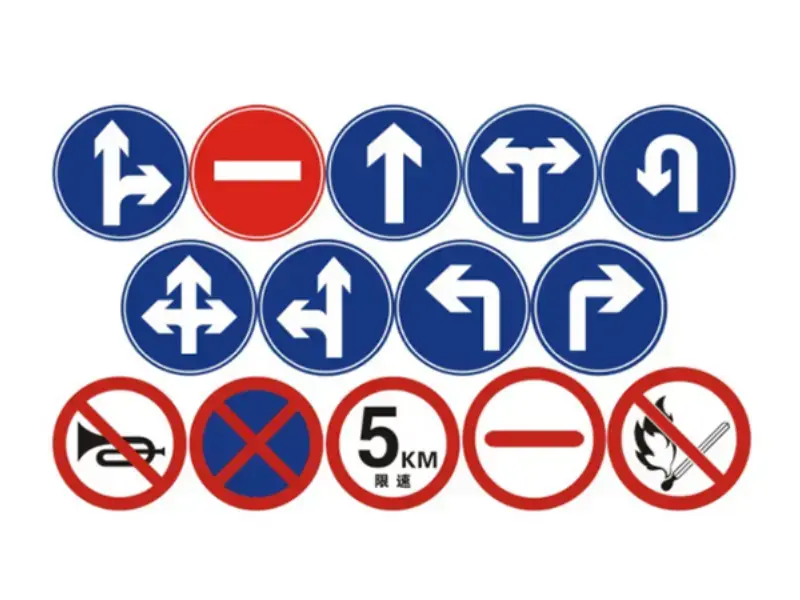
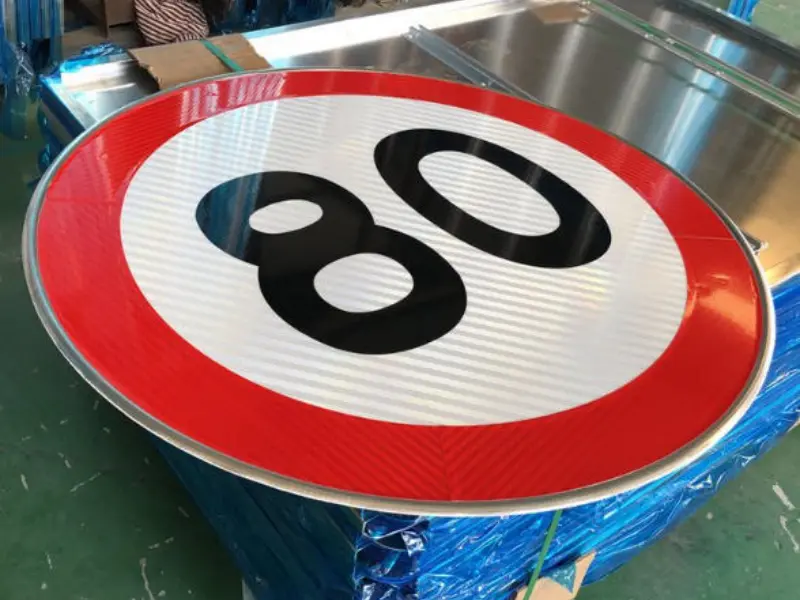
- Traffic Signs: Round “Stop” or “Yield” signs.
- Gas Cylinders: Impact-extruded from thick aluminum discs.
- Capacitor Shells: Used in electronics and power systems.
Comparison: Aluminum Discs vs. Stainless Steel Discs
Why do many manufacturers choose an aluminum circle in metal alloy discs instead of stainless steel?
| Feature | Aluminum Alloy Disc | Stainless Steel Disc |
|---|---|---|
| Weight | Very Light | Very Heavy |
| Heat Conductivity | Excellent (Heats up fast) | Poor (Heats up slowly) |
| Cost | More affordable | Expensive |
| Shaping | Easy (Saves tool life) | Difficult (Fast tool wear) |
| Rust | Does not rust | Does not rust |
Quality Control: What to Look For
When you buy aluminum circle in metal alloy discs, quality is about more than just the size.
Surface Quality
The surface should be smooth. Look for any “black oil spots,” scratches, or dents. If the disc has scratches, those marks will become much bigger once you stretch or spin the metal.
Edge Quality
Check the edges for “burrs” (sharp, rough bits of metal). High-quality discs are punched with sharp dies, leaving a clean, smooth edge. This protects your workers’ hands and your machines.
Grain Size Control
If the grain of the metal is too large, the metal will crack during the drawing process. Good suppliers test the “grain size” to ensure the metal can stretch without breaking.
Why Aluminum Circles Are Used for Tank Components
An aluminum circle is a round aluminum blank prepared for further forming or fabrication.
The round shape can be useful when the final tank component also has a circular or curved structure.
Instead of cutting a round part from a rectangular sheet, a ready-made aluminum circle can reduce unnecessary cutting work.
Round blank → Forming → Shaping → Finishing → Tank component
This makes aluminum circles useful for manufacturers that produce tank parts in repeated sizes.
The Shape of the Blank Can Affect Material Waste
Material utilization is an important point in tank manufacturing.
| Starting material | Cutting direction | Possible result |
|---|---|---|
| Rectangular sheet | Round cutting | More edge waste |
| Aluminum coil | Circle blanking | Better production efficiency |
| Pre-cut circle | Direct forming | Less preparation work |
| Custom circle | Matched to tooling | Reduced cutting loss |
For high-volume production, using a suitable blank diameter can help reduce material waste.
The actual savings depend on the product size, cutting method, nesting layout, and production volume.
Diameter Selection Is More Important Than It Looks
The diameter of the aluminum circle should match the forming process.
A circle that is too small may not provide enough material for the finished component.
A circle that is too large may increase material use and trimming work.
| Blank diameter | General direction |
|---|---|
| 100–300 mm | Small tank components |
| 301–600 mm | Medium components |
| 601–1000 mm | Larger formed parts |
| 1001–1500 mm | Large circular components |
| 1500 mm+ | Special production |
These ranges are only a general guide.
The required blank size should be calculated from the finished dimensions and forming allowance.
Thickness Should Follow the Tank Design
Thickness is not selected by diameter alone.
The tank’s size, working environment, forming method, and required strength should also be considered.
| Thickness | General direction |
|---|---|
| 0.8–1.5 mm | Lightweight components |
| 1.6–2.5 mm | General formed parts |
| 3.0–5.0 mm | More rigid components |
| 6.0 mm+ | Heavy-duty applications |
A larger tank does not always require a thicker aluminum circle.
The final thickness should be based on the engineering requirements of the tank.
1050, 1060, 1100 or 3003 Aluminum Circle in Metal Alloy Discs For Tanks?
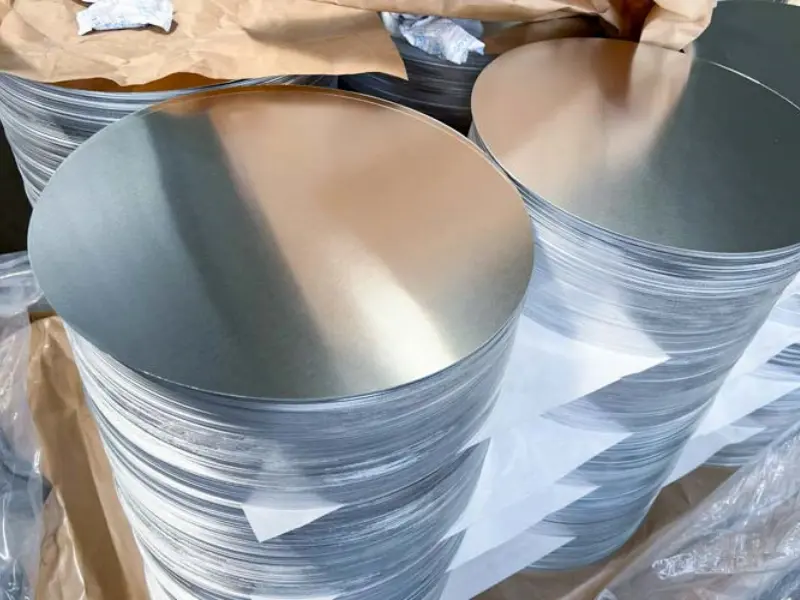
Different aluminum alloys can be considered for different forming requirements.
| Alloy | Main feature | General direction |
|---|---|---|
| 1050 | Excellent ductility | Deep forming |
| 1060 | High aluminum content | Forming and general use |
| 1100 | Good formability | General fabrication |
| 3003 | Higher strength | Formed tank components |
| 5052 | Higher strength | More demanding applications |
For highly formed parts, ductility is important.
For components that need more strength, 3003 or 5052 may be considered.
The best alloy depends on the actual tank design.
O Temper vs H14: Which Is Better for Forming?
Temper has a direct effect on forming performance.
| Temper | Condition | Forming direction |
|---|---|---|
| O | Soft | Excellent |
| H12 | Partially hardened | Very good |
| H14 | Half hard | Good |
| H16 | Harder | Moderate |
| H18 | Hard | Lower |
For deep drawing or complex forming, softer material is generally easier to work with.
For flatter components that need more rigidity, a harder temper may be considered.
Deep Drawing Performance Matters
Some tank components require deep drawing rather than simple pressing.
During deep drawing, the aluminum circle is pushed into a die to create a deeper shape.
The material needs good ductility to prevent:
- Cracking
- Wrinkling
- Uneven walls
- Surface damage
- Excessive thinning
For this reason, alloy, temper, thickness, die design, lubrication, and forming speed should be considered together.
Aluminum Circle in Metal Alloy Discs For Tanks Spinning vs Deep Drawing

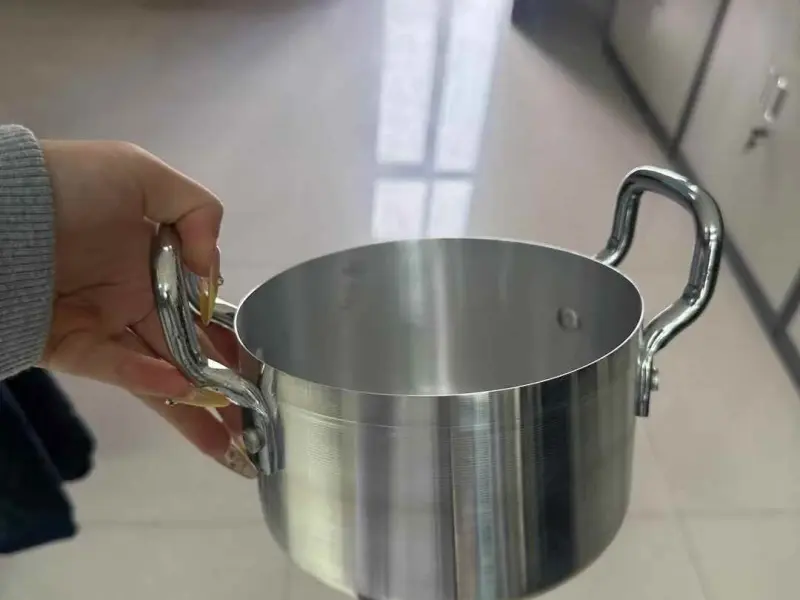
Different production methods can require different aluminum circle specifications.
| Process | Main characteristic | Material consideration |
|---|---|---|
| Deep drawing | Uses punch and die | Good ductility |
| Spinning | Rotates blank during forming | Excellent formability |
| Stamping | Press forming | Suitable temper |
| Roll forming | Continuous shaping | Consistent thickness |
| Cutting | Produces final blank | Accurate dimensions |
If the customer already knows the forming process, it is easier for the manufacturer to recommend the right material.
Why Surface Quality Matters
A tank component may be formed, coated, polished, or otherwise processed after blanking.
Surface defects can become more visible during forming.
Before production, buyers can specify requirements for:
→ Scratches
→ Oil stains
→ Oxide marks
→ Edge quality
→ Flatness
→ Surface uniformity
A clean surface is especially useful when the finished tank component will remain visible.
Edge Quality Can Affect Production
The edge of an aluminum circle is not only a cosmetic detail.
A poor edge can create problems during forming or handling.
| Edge condition | Possible issue |
|---|---|
| Sharp edge | Handling risk |
| Burr | Extra finishing work |
| Uneven edge | Poor forming result |
| Clean cut edge | Easier processing |
| Custom edge treatment | Special requirements |
For high-volume production, consistent edge quality can help maintain stable processing.
Standard Circle or Custom Circle?
Standard aluminum circles are useful when the required diameter matches an existing production size.
Custom circles can be better when the finished component has a special dimension.
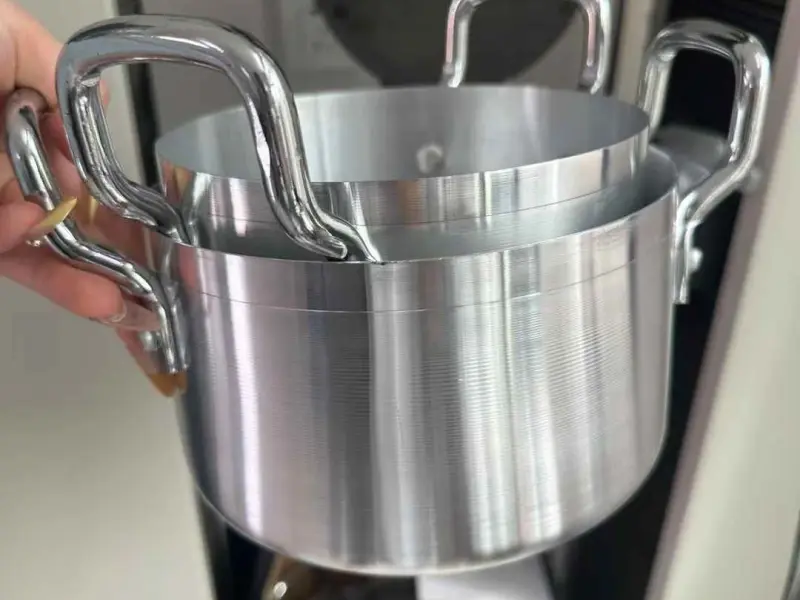
Standard Aluminum Circles
→ Faster quotation
→ Common sizes
→ Suitable for regular products
→ Easier stock management
Custom Aluminum Circles
→ Exact diameter
→ Custom thickness
→ Special alloy
→ Special tolerance
→ Reduced trimming
For repeated production, custom blank sizes may help reduce processing waste.
Aluminum Circle vs Cut-to-Size Sheet
There are two common ways to obtain a round blank.
| Feature | Aluminum Circle | Cut from Sheet |
|---|---|---|
| Shape | Ready-made round blank | Requires cutting |
| Preparation | Less work | More work |
| Edge | Factory cut | Depends on cutting process |
| Waste | Can be lower | Usually higher |
| Large quantity | Very suitable | Less efficient |
| Custom diameter | Available | Available |
For manufacturers producing many identical circular components, ready-made circles can simplify production.
Aluminum Circle vs Aluminum Disc
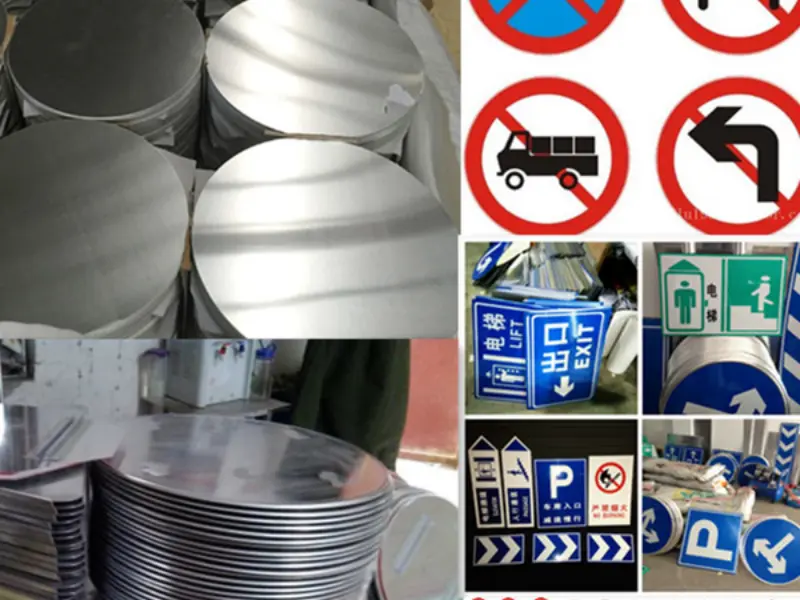
The terms aluminum circle and aluminum disc are sometimes used interchangeably.
However, product descriptions can vary between suppliers.
In many cases, an aluminum circle refers to a flat round blank prepared for forming.
An aluminum disc may refer to a finished or semi-finished round component.
For purchasing, it is better to confirm:
Diameter + Thickness + Alloy + Temper + Application
rather than relying only on the product name.
Matching the Blank to the Tooling
Tooling dimensions can affect the required circle size.
A simple production process may look like this:
Finished tank component
↓
Forming depth
↓
Die diameter
↓
Blank diameter
↓
Material thickness
↓
Alloy and temper
This approach is more reliable than selecting a circle only by its outside diameter.
A Simple Material Selection Matrix
For customers who are not sure which alloy to choose, a quick comparison can help.
| Requirement | Recommended direction |
|---|---|
| Maximum formability | 1050 / 1060 |
| General forming | 1100 |
| More strength | 3003 |
| Higher strength requirement | 5052 |
| Deep drawing | Softer temper |
| Simple forming | O / H12 / H14 |
| Decorative surface | Clean surface quality |
| High-volume production | Consistent dimensions |
These are general recommendations. The final selection should follow the tank design and production process.
How to Reduce Production Loss
A good blank design can improve material efficiency.
Finished diameter
↓
Forming allowance
↓
Trimming allowance
↓
Final blank diameter
The goal is not simply to make the blank as small as possible.
The blank must contain enough material for forming and trimming.
Too little material can cause forming problems.
Too much material can increase waste.
What Information Should Be Sent for a Quote?
A complete inquiry helps the manufacturer prepare a more accurate quotation.
| Required information | Example |
|---|---|
| Alloy | 3003 |
| Temper | O |
| Thickness | 2.0 mm |
| Diameter | 600 mm |
| Surface | Mill finish |
| Tolerance | Customer requirement |
| Quantity | 10 MT |
| Forming method | Deep drawing |
| Final product | Tank component |
A drawing is helpful for complex parts.
A sample can also be provided for repeat production.
Quality Checks for Tank Aluminum Circles
Before shipment, buyers can check several basic points.
✓ Diameter
✓ Thickness
✓ Alloy
✓ Temper
✓ Flatness
✓ Surface quality
✓ Edge condition
✓ Quantity
✓ Packaging
For large orders, inspection standards can be agreed before production.
Packaging for Large Aluminum Circles
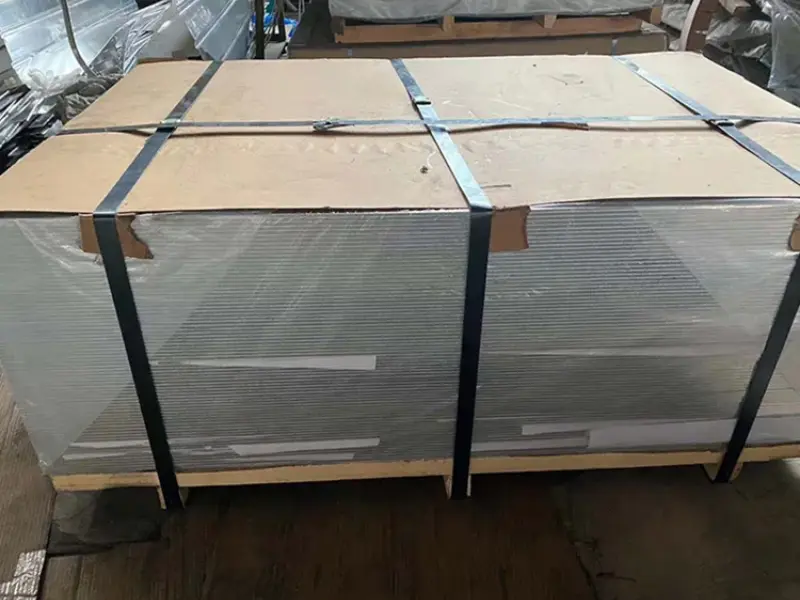
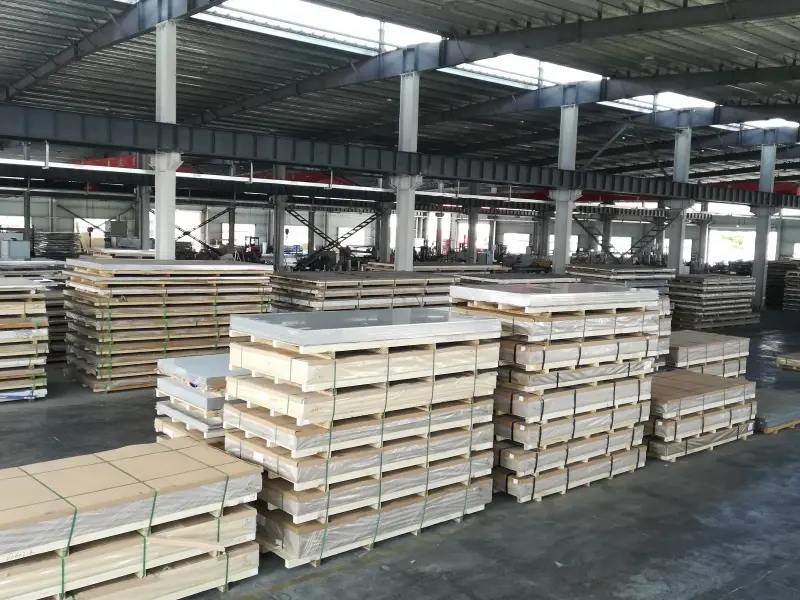
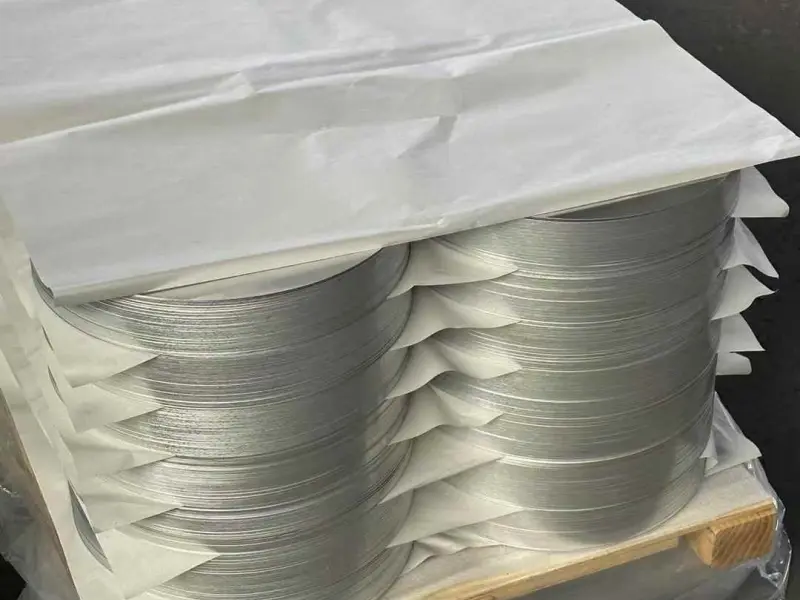
Packaging should protect the circles during handling and transportation.
Common methods include:
→ Wooden pallets
→ Wooden cases
→ Paper separation
→ Plastic protection
→ Moisture-resistant wrapping
→ Steel or plastic strapping
For overseas shipment, packaging should be selected according to the transportation method and destination.
Factory Supply for Custom Aluminum Tank Circles
Our factory can supply aluminum circles for different tank and forming requirements.
Available options can include:
| Item | Options |
|---|---|
| Alloy | 1050 / 1060 / 1100 / 3003 / 5052 |
| Temper | O / H12 / H14 / H24 and others |
| Diameter | Customized |
| Thickness | Customized |
| Surface | Mill / polished / coated |
| Edge | Standard / customized |
| Tolerance | According to requirement |
| Packing | Export packaging |
| Production | Standard or custom |
For special tank components, customers can send drawings, samples, or tooling dimensions for evaluation.
A Practical Buying Route for Tank Aluminum Discs
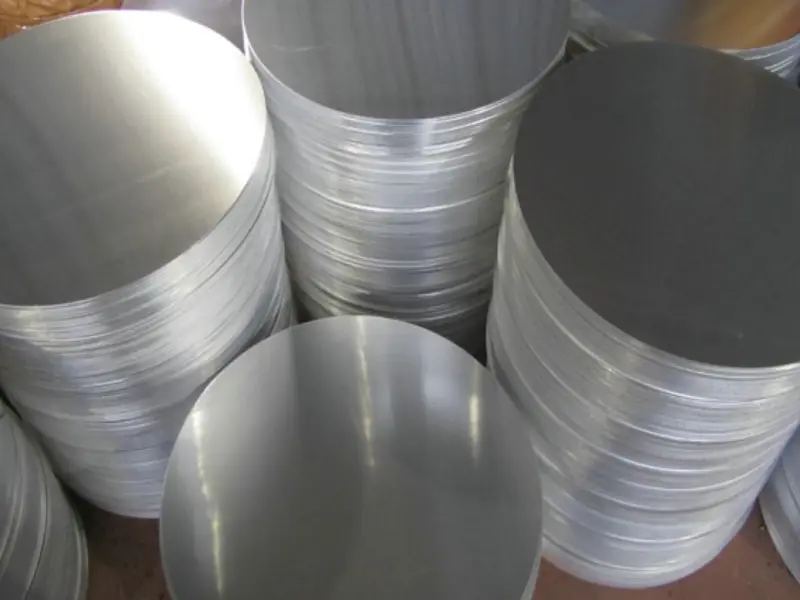
Instead of starting with the question “What is the price?”, it is better to follow a simple selection route.
What is the finished component?
↓
What is the forming method?
↓
What diameter is required?
↓
What thickness is required?
↓
Which alloy provides the right balance?
↓
Which temper fits the forming process?
↓
What surface quality is required?
↓
How many pieces are needed?
This approach makes the quotation more accurate and helps avoid buying unsuitable material.
Frequently Asked Questions (FAQ)
Can I order custom diameters?
Yes. While there are standard sizes like 200mm or 300mm, we can create custom dies for any diameter you need for your specific product.
Which alloy is best for a frying pan?
Alloy 3003 is usually the best. It is stronger than 1050, so the pan will not warp when it gets hot on a stove.
Are these discs environmentally friendly?
Yes. Aluminum is 100% recyclable. Any scrap metal left over from the punching process is melted down and turned into new aluminum.
Can I weld an aluminum circle to a tank body?
Yes. Alloys like 3003, 5052, and 5083 are all excellent for welding. You should match the filler wire to the specific alloy of the circle.
How do I choose the right thickness?
This depends on the internal pressure of the tank. For low-pressure water tanks, 1.2mm−2.0mm is common. For high-pressure vessels, you may need 4.0mm or more.
What is the “Deep Drawing Quality” (DDQ)?
DDQ refers to an aluminum circle for tanks that has been specially annealed and has a specific grain structure. This allows the metal to be stretched into a very deep cylinder without breaking.