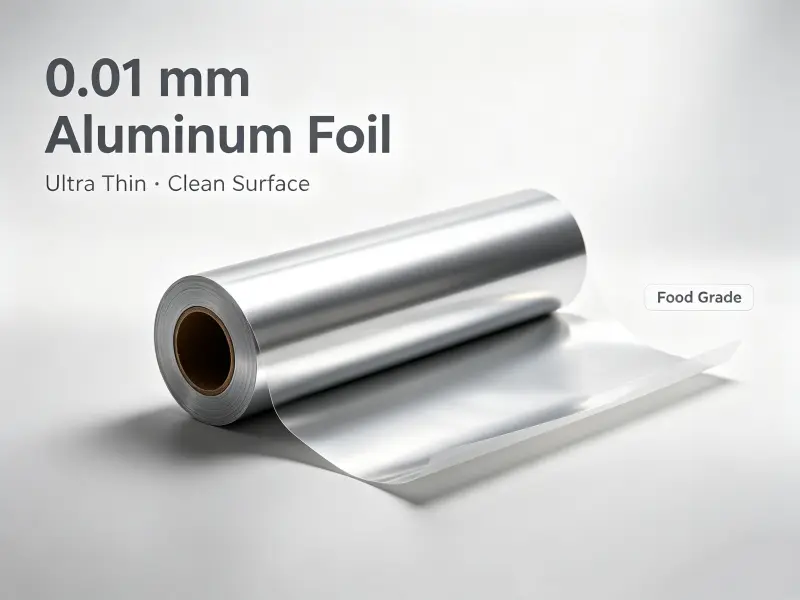
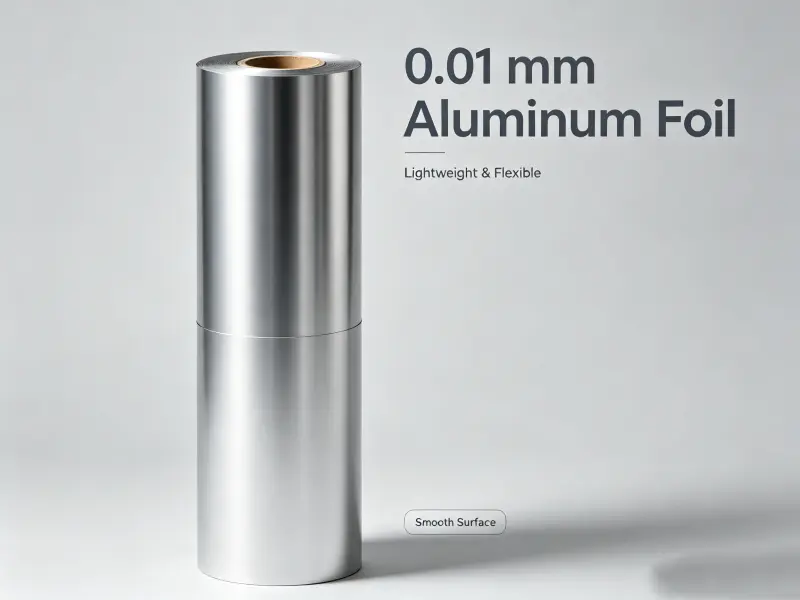
0.01 mm aluminum foil is an ultra-thin aluminum foil with a thickness of only 0.01 mm, or 10 microns. It is used when a very thin, light, and flexible metal material is needed.
This thickness is much thinner than common household foil. It is mainly supplied in rolls and can be slit into narrow aluminum foil strips according to the customer’s production needs.
Depending on the application, 0.01 mm aluminum foil can be made from different alloys and tempers. Surface condition, width, roll weight, core size, and packaging can also be customized.
For industrial buyers, the most important point is not only the 10 micron thickness. The foil must also have good surface quality, stable thickness, clean edges, and suitable mechanical properties.
What Does 0.01 mm Aluminum Foil Mean?
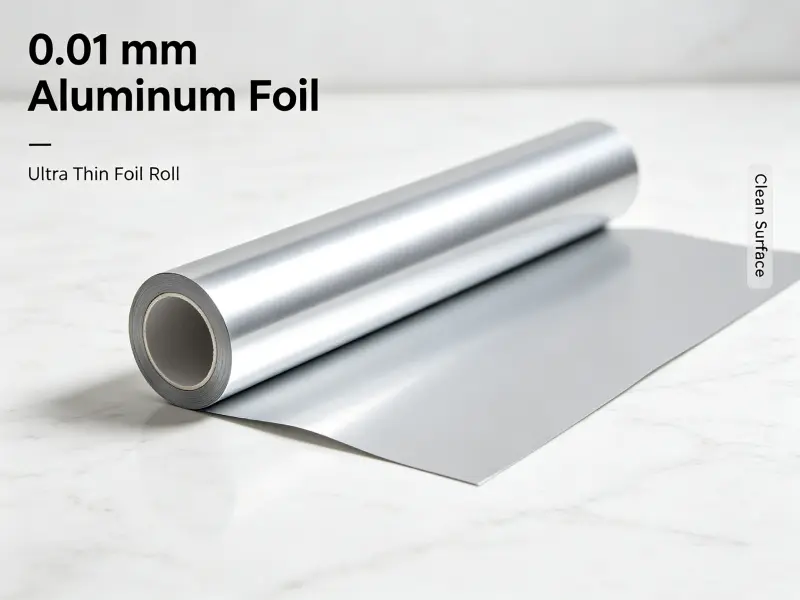
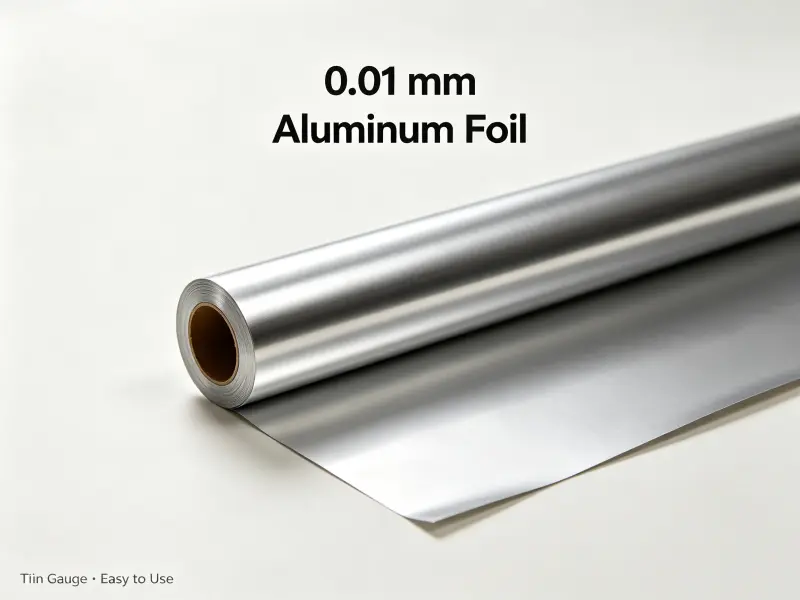
0.01 mm means the foil has a nominal thickness of 0.01 millimeters.
It is equal to:
| Measurement | Value |
|---|---|
| Millimeter | 0.01 mm |
| Micron | 10 μm |
| Meter | 0.00001 m |
| Inch | Approx. 0.00039 in |
| Gauge | Depends on the standard |
At this thickness, aluminum foil is extremely flexible.
It can be bent, folded, wound, laminated, slit, and formed into different products.
Because the material is so thin, production control becomes very important.
Aluminum Ingot → Rolling → Annealing → Slitting → Inspection → Packing
Each step can affect the final foil quality.
0.01 mm Aluminum Foil Compared With Other Thicknesses
Thickness is one of the easiest ways to classify aluminum foil.
| Foil Thickness | Microns | General Direction |
|---|---|---|
| 0.006 mm | 6 μm | Ultra-thin applications |
| 0.008 mm | 8 μm | Lightweight industrial use |
| 0.010 mm | 10 μm | Ultra-thin foil |
| 0.012 mm | 12 μm | Flexible packaging |
| 0.015 mm | 15 μm | Packaging and industrial |
| 0.020 mm | 20 μm | General foil |
| 0.030 mm | 30 μm | Stronger foil applications |
| 0.050 mm | 50 μm | Industrial foil |
| 0.080 mm | 80 μm | Heavier foil |
| 0.100 mm | 100 μm | Thick foil |
The thinner the foil, the lower its weight per square meter.
However, thinner does not always mean better.
The correct thickness depends on the final product.
Why Choose 10 Micron Aluminum Foil?
A 10 micron foil can reduce material weight while still providing the basic properties of aluminum.
It can offer:
- Very low weight
- High flexibility
- Good barrier performance
- Good thermal conductivity
- Good electrical conductivity
- Easy slitting
- Easy laminating
- Good reflectivity
- Compact roll storage
This makes it useful for applications where every gram or micron matters.
Main Aluminum Alloy Options
The alloy should be selected according to the application.
Common aluminum foil alloys include 1050, 1060, 1070, 1235, 3003, and 8011.
| Alloy | General Character | Typical Direction |
|---|---|---|
| 1050 | High aluminum content | Industrial foil |
| 1060 | High purity and good formability | Electrical and general use |
| 1070 | High aluminum content | Specialty applications |
| 1235 | Good foil processing performance | Packaging and laminated foil |
| 3003 | Higher strength | Industrial applications |
| 8011 | Good strength and formability | Packaging and household foil |
Not every alloy is suitable for every 0.01 mm application.
The rolling process and final temper are also important.
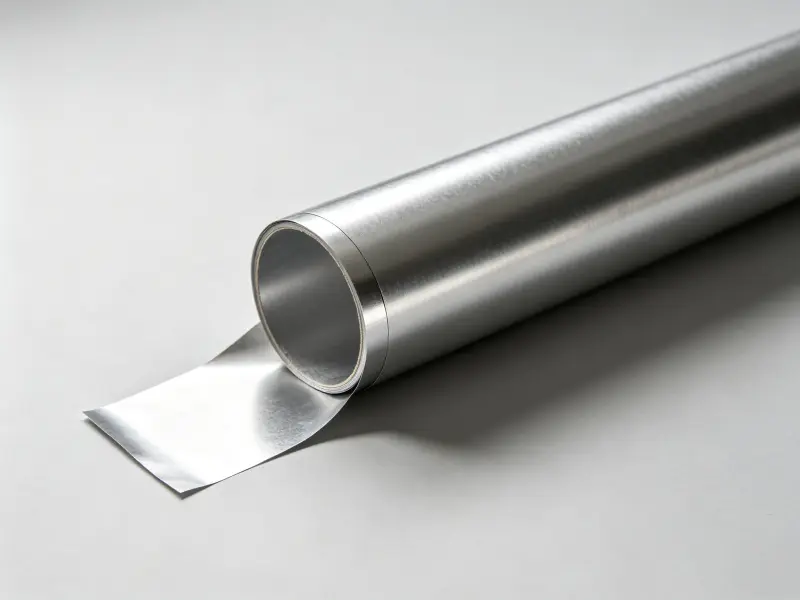
1050 Aluminum Foil at 0.01 mm
1050 aluminum has high aluminum content and good formability.
It can be considered when the product needs a clean surface and easy processing.
Potential uses include:
- Electrical applications
- Laminated materials
- Thermal insulation
- Industrial wrapping
- Decorative materials
The final properties depend on the production standard and temper.
1060 Aluminum Foil at 10 Microns
1060 aluminum contains a high level of aluminum.
It offers good conductivity and formability.
For applications that require very thin foil with good processing performance, 1060 can be a useful option.
Buyers should confirm whether the required temper and mechanical properties are suitable for their production line.
1235 0.01 mm Aluminum Foil
1235 is commonly associated with aluminum foil products.
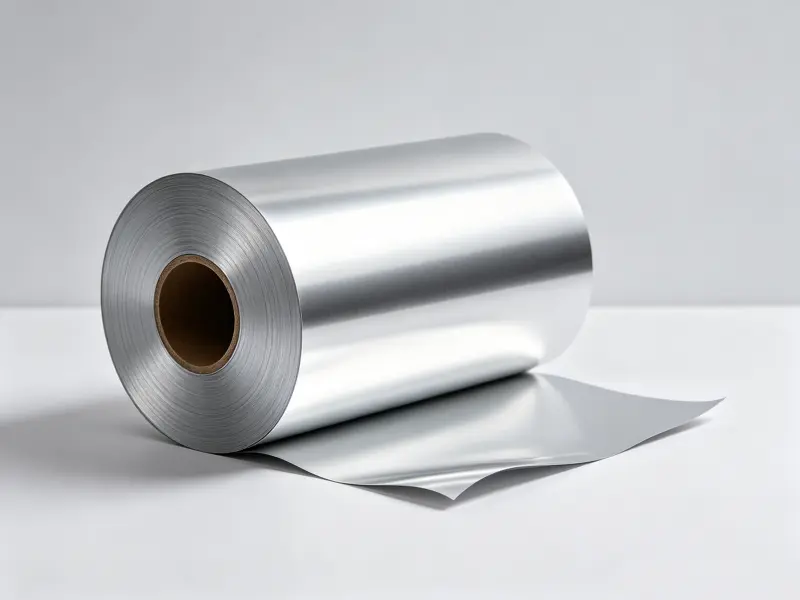
It can provide good flexibility and foil processing characteristics.
It may be considered for:
- Laminated packaging
- Flexible materials
- Industrial wrapping
- Electrical insulation
- Composite products
For 0.01 mm foil, the exact alloy should be matched with the customer’s converting process.
8011 0.01 mm Aluminum Foil
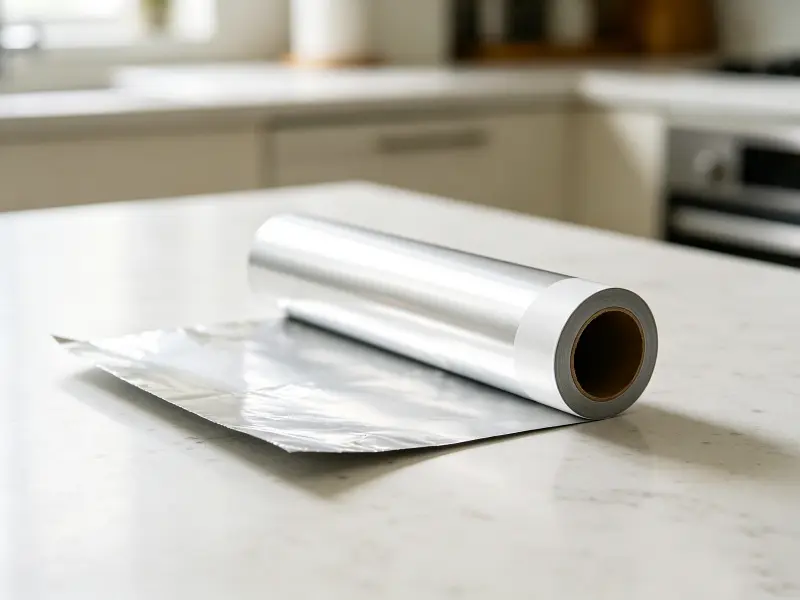
8011 is widely used in foil products because of its useful balance of strength and formability.
It can be used in different packaging and industrial products.
However, a 10 micron 8011 foil should still be evaluated by sample testing before bulk production.
Aluminum Foil Temper
Temper describes the condition of the aluminum after rolling and heat treatment.
Common foil tempers include:
| Temper | General Character |
|---|---|
| O | Soft |
| H12 | Partially hardened |
| H14 | Medium hardness |
| H16 | Higher hardness |
| H18 | Hard |
| H22 | Partially annealed |
| H24 | Strain hardened and partially annealed |
For very thin foil, soft material is often useful when flexibility is the main requirement.
A harder temper may be considered when better handling strength is needed.
The correct temper should be confirmed according to the application.
Soft Foil vs. Harder Foil
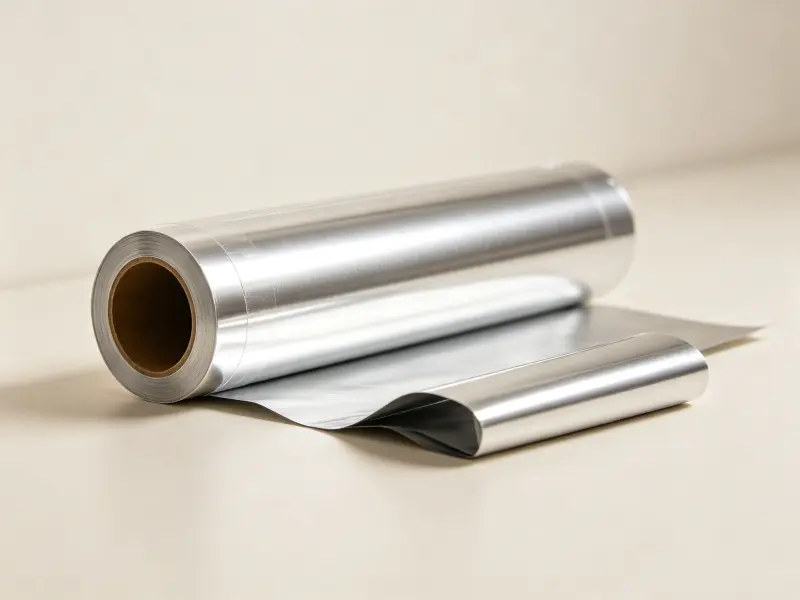
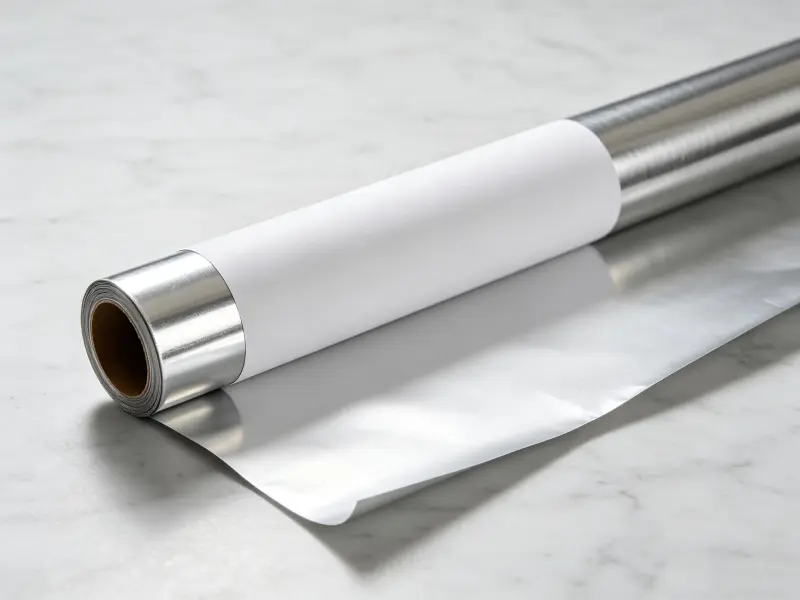
The temper can change how the foil behaves during processing.
| Feature | Soft Foil | Harder Foil |
|---|---|---|
| Flexibility | High | Lower |
| Forming | Easier | More difficult |
| Handling | More delicate | Easier |
| Folding | Easy | More spring-back |
| Slitting | Application dependent | Application dependent |
| Strength | Lower | Higher |
At only 0.01 mm, the difference in handling can be important.
A foil that works well in one machine may not work well in another.
Plain 0.01 mm Aluminum Foil
Plain aluminum foil has a clean metallic surface without additional coating.
It is often selected when the foil will be laminated, wrapped, slit, or processed further.
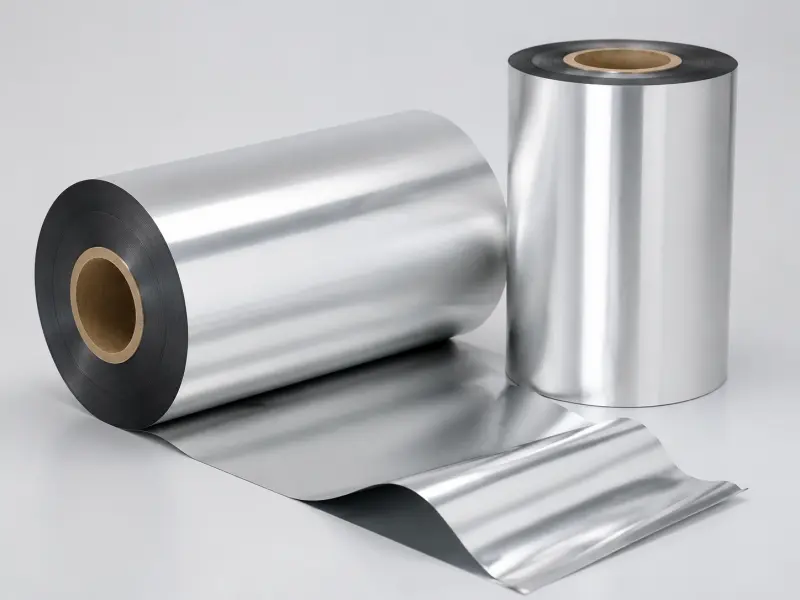
The surface may be:
- Bright
- Mill finish
- One-side bright
- Two-side bright
- Matte after processing
The exact appearance depends on the rolling process and product specification.
Bright Side and Matte Side
Aluminum foil can have different surface appearances because of the rolling process.
During the final rolling stage, two layers may be rolled together.
This can create different surface brightness on the two sides.
| Surface | Appearance |
|---|---|
| Bright Side | More reflective |
| Matte Side | Less reflective |
| Double Bright | High surface brightness |
| Special Finish | Application dependent |
For most industrial applications, surface appearance should be discussed together with the final use.
0.01 mm Aluminum Foil for Lamination
One important use is lamination.
Thin foil can be combined with:
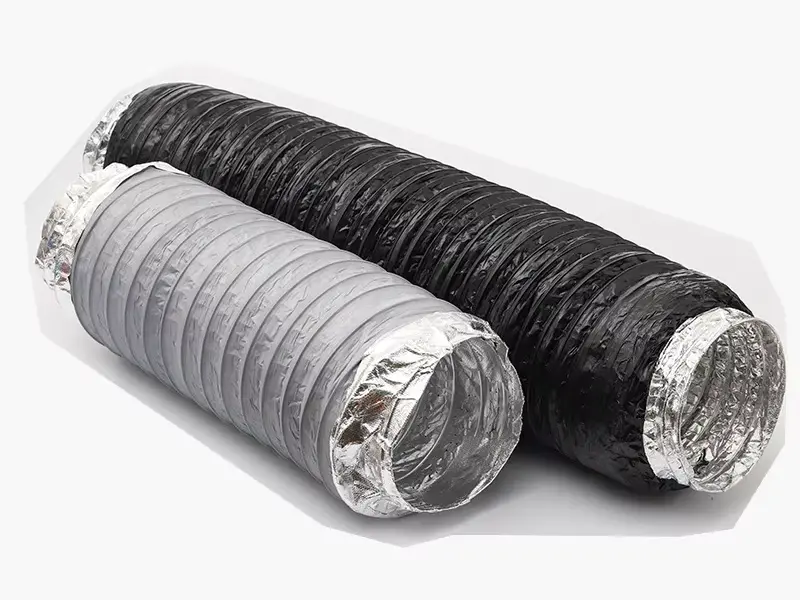
Aluminum Foil + PE Film
or
Aluminum Foil + Paper
or
Aluminum Foil + Plastic Film
or
Aluminum Foil + Other Substrate
The aluminum layer can provide barrier, heat reflection, and metallic properties.
The laminated structure can then be used for packaging, insulation, labels, and industrial materials.
Barrier Performance in Thin Foil
Aluminum foil is known for its barrier properties.
It can help protect products from:
- Light
- Moisture
- Oxygen
- Odors
- External contamination
The final barrier performance depends on the complete structure.
A 10 micron aluminum layer may perform differently from a thicker foil or a laminated structure.
For this reason, buyers should evaluate the entire packaging system rather than looking at thickness alone.
0.01 mm Aluminum Foil for Insulation
Thin aluminum foil can be used as a reflective layer in insulation systems.
Its reflective metallic surface can help reduce radiant heat transfer when correctly installed with an appropriate air space or insulation structure.

Potential applications include:
- Building insulation
- HVAC insulation
- Roof insulation
- Pipe insulation
- Duct systems
- Thermal barrier materials
For insulation products, the foil may be laminated with other materials.
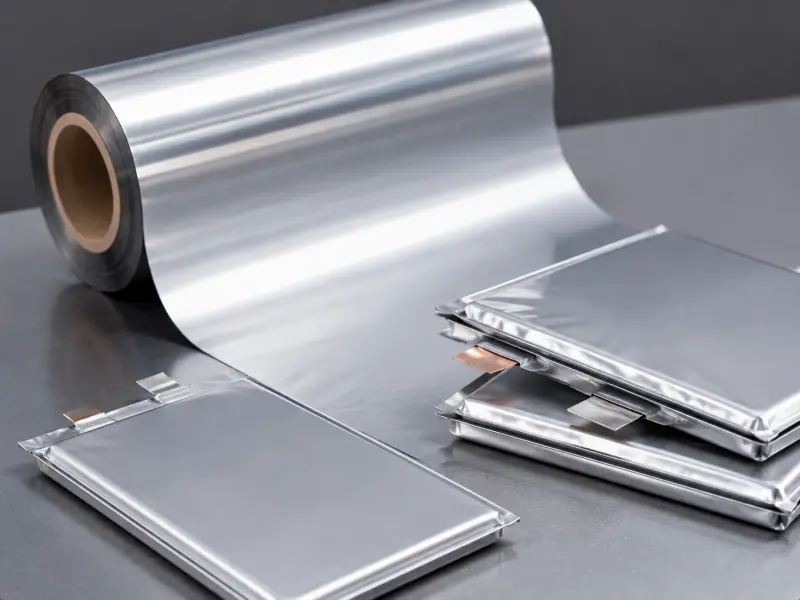
0.01 mm Foil for Electrical Applications
0.01 mm Aluminum Foil has good electrical conductivity.
Thin aluminum foil can therefore be used in selected electrical and electronic applications.
Possible uses include:
- Electrical shielding
- Conductive layers
- Cable materials
- Laminated electrical products
- Battery-related components
However, electrical applications often have strict requirements for alloy, thickness tolerance, surface cleanliness, burr control, and conductivity.
The exact specification should be confirmed before production.
Aluminum Foil for Cable and Shielding
Foil used for cable shielding is often processed into a narrow strip or laminated with other materials.
A typical structure may look like:
Aluminum Foil → Polymer Film → Cable Shielding Layer
For this type of product, edge quality is very important.
A supplier may need to control:
Roll tension
Width tolerance
Burr height
Edge cracks
Surface cleanliness
Thickness
0.01 mm Aluminum Foil for Packaging
0.01 mm Aluminum Foil can be used as one layer in flexible packaging.
Applications may include:
- Food packaging
- Pharmaceutical packaging
- Sachets
- Pouches
- Wrappers
- Laminated bags
- Industrial packaging
For packaging, 10 micron foil may be selected when the structure needs a thin aluminum barrier layer.
The final packaging design determines whether 10 μm is sufficient.
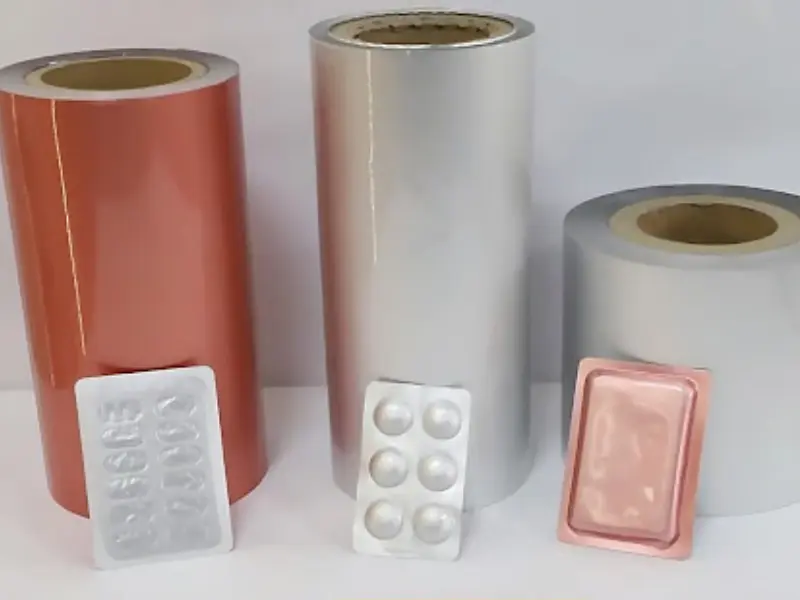
0.01 mm Aluminum Foil for Pharmaceutical Packaging
Pharmaceutical packaging can require high-quality foil with controlled surface and thickness.
The foil may be laminated or coated before forming the final package.
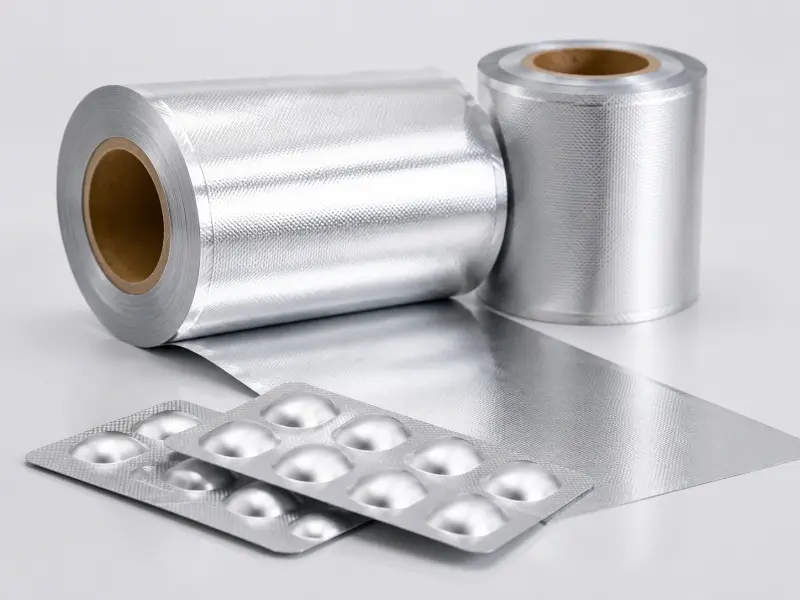
Important factors include:
- Clean surface
- Stable thickness
- Pinholes
- Strength
- Coating compatibility
- Lamination performance
For pharmaceutical applications, buyers should clearly specify the required standard and quality level.
0.01 mm Foil for Household Products
Thin aluminum foil can also be processed into consumer products.
Possible applications include:
- Food wrapping
- Cooking materials
- Baking products
- Household packaging
- Disposable products
For direct food-contact products, the material should meet the applicable regulations and standards for the target market.
0.01 mm Aluminum Foil for Decorative Uses
The reflective surface of aluminum can also be used for decorative products.
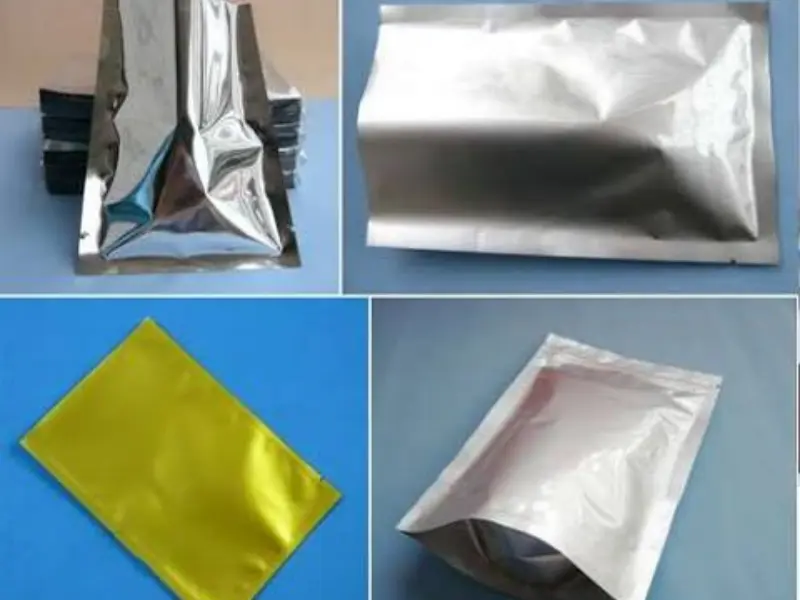
Possible uses include:
- Decorative laminates
- Gift packaging
- Labels
- Metallic effects
- Printing materials
- Craft products
The foil may be coated, printed, laminated, or embossed after rolling.
Foil Width Options of 0.01 mm Aluminum Foil
A 10 micron foil can be supplied in different widths.
| Width Type | Example |
|---|---|
| Narrow Strip | 10–100 mm |
| Small Roll | 100–300 mm |
| Medium Roll | 300–800 mm |
| Wide Roll | 800–1,500 mm |
| Master Coil | According to mill capacity |
| Custom Slit Width | Customer specification |
The actual width range depends on the supplier’s rolling and slitting equipment.
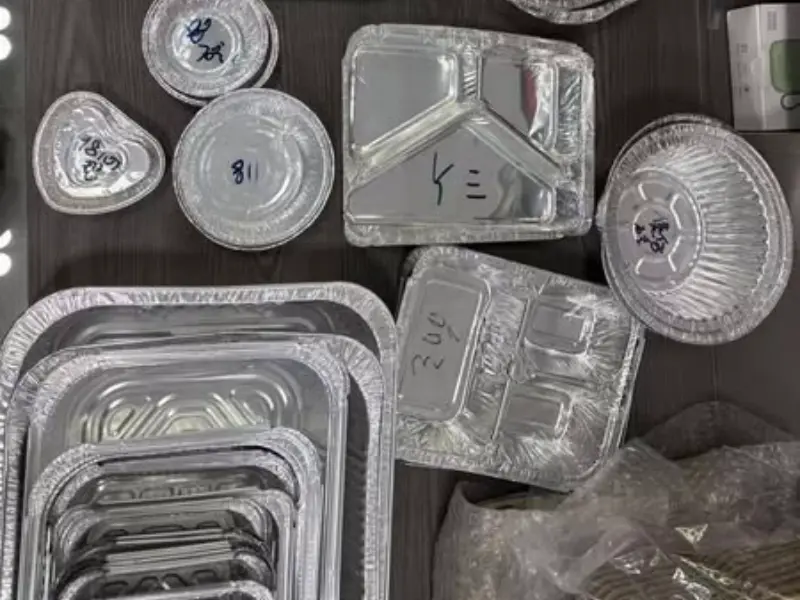

Narrow Slit Aluminum Foil
Some customers do not need a wide roll.
They may need narrow aluminum foil strips for further processing.

For example:
Master Roll → Slitting → 20 mm → 30 mm → 50 mm → 100 mm
Slit width tolerance becomes important for automated production.
Narrow strips are often used in cable, electrical, packaging, and specialty industrial products.
Roll Weight and Core Options
Roll weight affects transportation and machine handling.
A buyer may specify:
- Net weight
- Gross weight
- Outer diameter
- Inner diameter
- Core material
- Core diameter
- Roll length
- Roll direction
A simple specification table can look like this:
| Parameter | Example |
|---|---|
| Thickness | 0.010 mm |
| Width | 500 mm |
| Alloy | 1235 |
| Temper | O |
| Core ID | 76 mm |
| Roll OD | Customer requirement |
| Roll Weight | Customer requirement |
| Surface | Plain |
| Packing | Export standard |
Why Thickness Tolerance Matters
When the foil is only 10 microns thick, small thickness changes can have a greater impact on production.
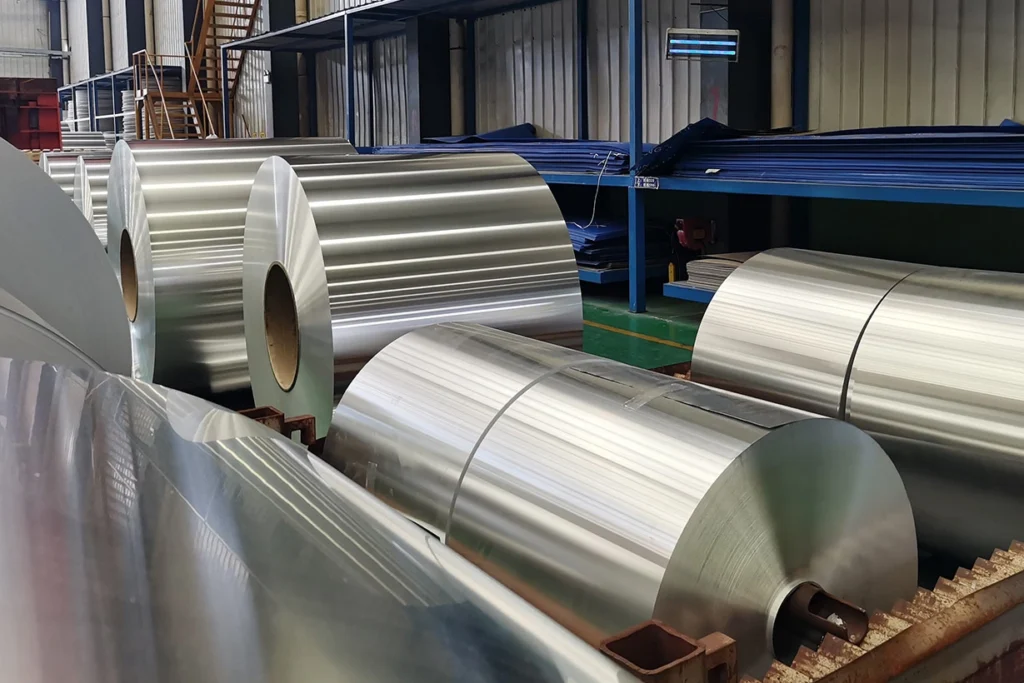
Thickness control can affect:
- Roll weight
- Lamination
- Printing
- Forming
- Conductivity
- Barrier performance
- Material consumption
For high-volume production, stable thickness is usually more important than simply reaching the nominal value.
Pinholes in 0.01 mm Aluminum Foil
Pinholes are an important quality point for very thin foil.
A pinhole is a tiny opening in the foil.
The acceptable level depends on the end use and quality standard.
For barrier applications, pinhole control can be especially important.
Quality inspection may include:
Raw Material Check → Rolling Inspection → Surface Inspection → Pinholes → Thickness → Slitting → Final Inspection
The required inspection method should be agreed before production.
Edge Quality Is Important
At 10 microns, the foil can be delicate.
Poor slitting can create:
- Burrs
- Cracks
- Uneven edges
- Telescoping rolls
- Edge waves
- Roll instability
Good slitting equipment and proper tension control can help produce cleaner rolls.
This is especially important for customers using high-speed converting equipment.
0.01 mm vs. 0.02 mm Aluminum Foil
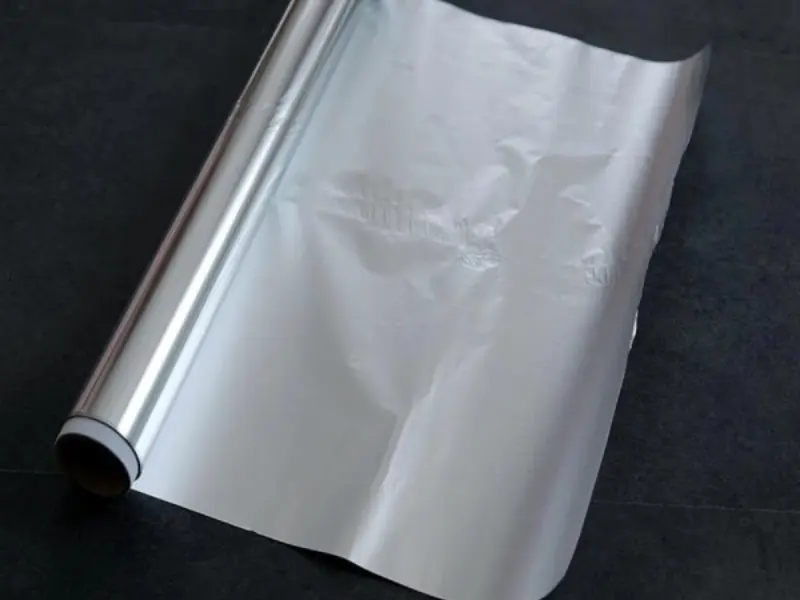
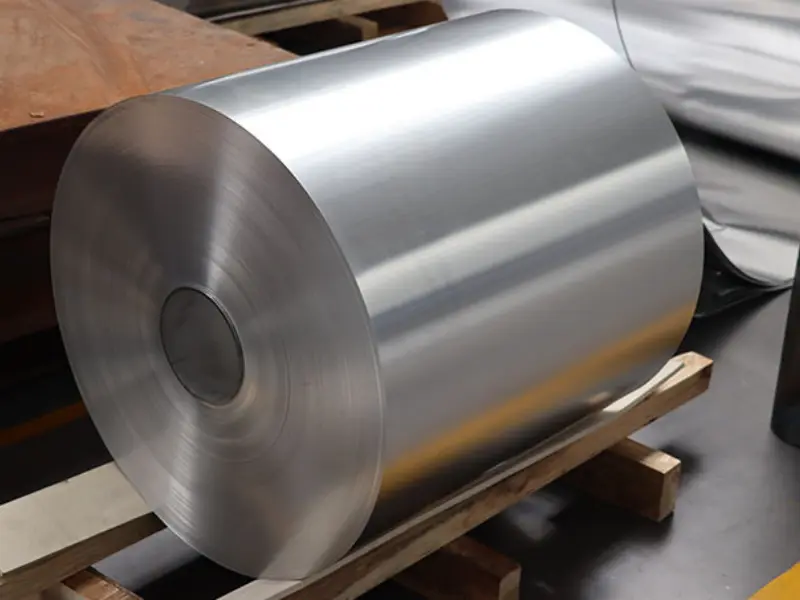
The difference looks small, but the foil thickness is actually doubled.
| Feature | 0.01 mm | 0.02 mm |
|---|---|---|
| Thickness | 10 μm | 20 μm |
| Weight | Lower | Higher |
| Flexibility | Higher | Lower |
| Handling Strength | Lower | Higher |
| Material Cost | Lower per area | Higher per area |
| Barrier Layer | Thin | Thicker |
| Processing | More delicate | Easier in some processes |
Choose 0.01 mm when the application can work with an ultra-thin layer.
Choose 0.02 mm when additional handling strength is required.
0.01 mm vs. 0.05 mm Aluminum Foil
These two products serve very different requirements.
| Feature | 0.01 mm | 0.05 mm |
|---|---|---|
| Thickness | 10 μm | 50 μm |
| Flexibility | Very high | Lower |
| Rigidity | Very low | Higher |
| Weight | Very low | Higher |
| Handling | More delicate | Easier |
| Typical Direction | Thin layers | Industrial foil |
A 50 micron foil should not be selected simply because it is easier to handle.
The correct choice depends on the customer’s process.
How to Select the Right 10 Micron Foil
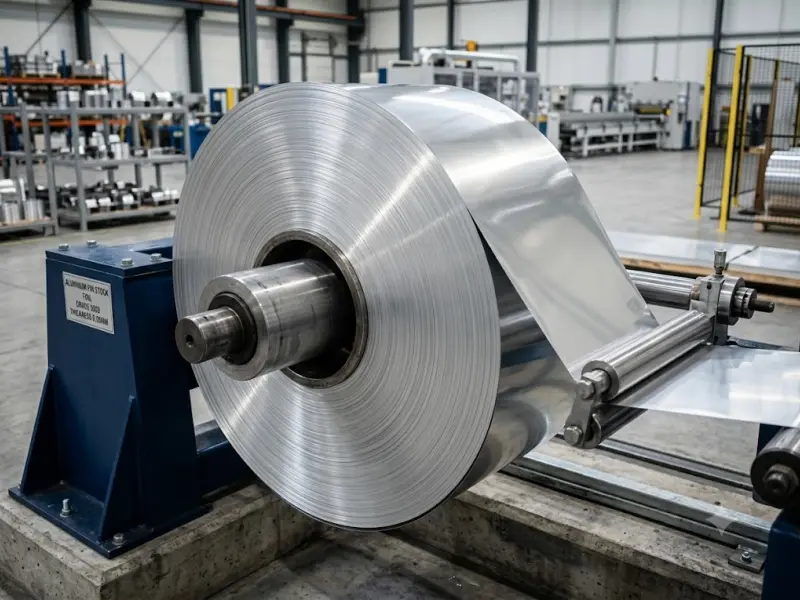
A simple selection path is:
Application
↓
Required Barrier / Conductivity / Flexibility
↓
Alloy
↓
Temper
↓
Thickness
↓
Width
↓
Surface
↓
Roll Weight
↓
Slitting Requirement
↓
Packing
This approach can prevent unnecessary changes after production begins.
Processing Options for 0.01 mm Foil
Depending on the production line, thin foil may be supplied for further processing.
Common processes include:
- Slitting
- Laminating
- Coating
- Printing
- Embossing
- Rewinding
- Cutting
- Forming
Some customers purchase master rolls and perform their own converting.
Others prefer finished narrow rolls.
Master Roll or Slit Roll?

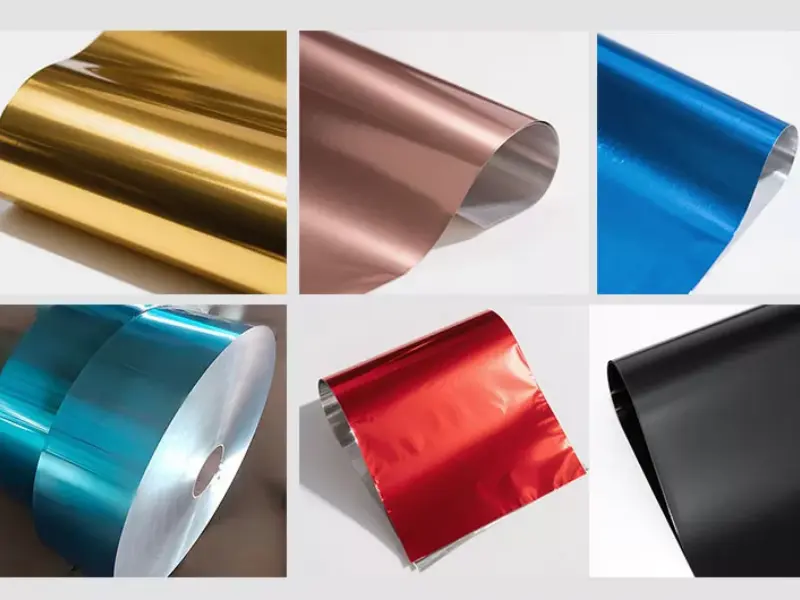
The choice depends on the customer’s equipment.
| Product | Suitable Buyer |
|---|---|
| Master Roll | Large converter |
| Jumbo Roll | Industrial production |
| Slit Roll | Narrow-width processing |
| Small Roll | Small production |
| Custom Roll | Special equipment |
Master rolls can offer better material utilization.
Slit rolls can reduce the customer’s processing work.
Factors That Affect 0.01 mm Aluminum Foil Price
The price depends on more than the aluminum market.
Important factors include:
- Alloy
- Temper
- Thickness
- Width
- Roll weight
- Order quantity
- Slitting
- Surface requirements
- Packaging
- Quality standard
- Delivery location
- Freight cost
For an accurate quotation, buyers should provide a complete specification.
How to Request a Quotation
A clear inquiry can save time.
For example:
Product: 0.01 mm Aluminum Foil
Thickness: 0.010 mm
Alloy: 1235
Temper: O
Width: 500 mm
Surface: Plain
Roll Weight: 100–300 kg
Core: 76 mm
Quantity: 5 tons
Application: Lamination
Packing: Export Packing
The supplier can then confirm whether the requested specification is suitable for production.
Quality Checklist for Buyers
Before placing a large order, buyers can check the following points.
| Item | What to Check |
|---|---|
| Thickness | Actual thickness and tolerance |
| Alloy | Material certificate |
| Temper | Correct condition |
| Width | Slitting tolerance |
| Surface | Clean and uniform |
| Pinholes | Within agreed level |
| Edge | No excessive burrs |
| Roll | Stable winding |
| Core | Correct size |
| Packing | Suitable for transport |
A sample roll is useful when the foil will be used on a high-speed production line.
Storage of Thin Aluminum Foil
0.01 mm Aluminum Foil should be protected from moisture and physical damage.
Good storage conditions can help prevent problems such as condensation, oxidation, and roll deformation.
Recommended practices include:
- Keep rolls dry
- Avoid direct water contact
- Use suitable packaging
- Store away from sharp objects
- Avoid heavy impact
- Allow temperature adjustment before opening moisture-sensitive packaging
For long-distance shipping, moisture-resistant export packaging can be important.
Who Buys 0.01 mm Aluminum Foil?
This ultra-thin foil can be supplied to different industries.
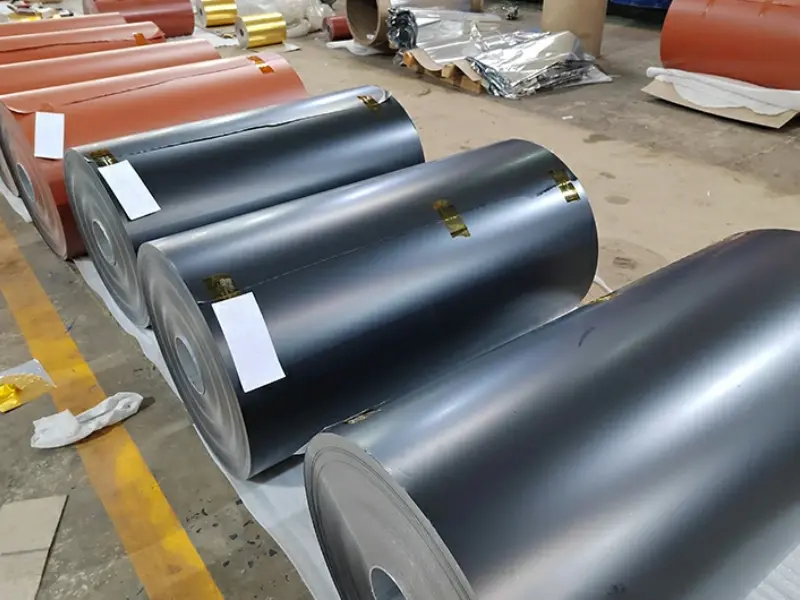
Typical buyers include:
- Packaging manufacturers
- Flexible packaging companies
- Cable manufacturers
- Electrical material producers
- Insulation manufacturers
- Laminating factories
- Printing companies
- Pharmaceutical packaging companies
- Industrial material distributors
- Converting companies
Each industry can require a different combination of alloy, temper, width, and surface.
Custom 10 Micron Aluminum Foil
A standard 0.01 mm foil may not meet every production line.
Custom supply can include:
Alloy → Temper → Thickness → Width → Surface → Roll Weight → Core → Slitting → Packing
For regular buyers, keeping the same specification across orders can help maintain stable production results.
A Practical Product Specification
A typical industrial specification may look like this:
| Specification | Example |
|---|---|
| Product | 0.01 mm Aluminum Foil |
| Thickness | 10 μm |
| Alloy | 1235 |
| Temper | O |
| Width | 500 mm |
| Surface | Plain |
| Roll Type | Jumbo Roll |
| Core | 76 mm |
| Application | Lamination |
| Quantity | 5 MT |
| Packaging | Export Wooden Pallet |
The final specification should always be confirmed according to the customer’s actual application.
Frequently Asked Questions

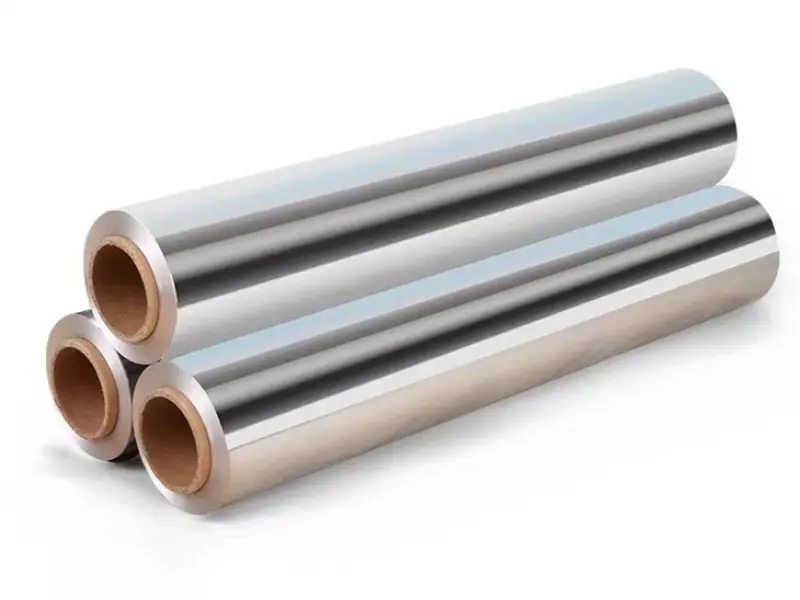
How thick is 0.01 mm aluminum foil?
0.01 mm aluminum foil is 10 microns thick. It is an ultra-thin aluminum foil product.
Is 0.01 mm aluminum foil very thin?
Yes. At only 10 microns, it is much thinner than many standard industrial and household foil products.
What alloys can be used for 0.01 mm aluminum foil?
Common options may include 1050, 1060, 1070, 1235, 3003, and 8011. The best alloy depends on the final application.
What temper is available for 10 micron aluminum foil?
Depending on the alloy and production process, O, H12, H14, H16, H18, and other tempers may be available.

Can 0.01 mm aluminum foil be supplied in rolls?
Yes. It is normally supplied as a roll because the material is very thin and flexible.
Can 0.01 mm aluminum foil be slit into narrow widths?
Yes. Slitting can be used to produce narrow strips for cable, electrical, packaging, and other industrial applications.
Is 0.01 mm aluminum foil suitable for lamination?
Yes. It can be used as an aluminum layer in laminated structures. The suitable adhesive and substrate should be confirmed according to the final product.
Can 10 micron aluminum foil be used for insulation?
Yes. It can be used as a reflective aluminum layer in certain insulation structures.
Is 0.01 mm aluminum foil suitable for electrical applications?
It can be used in selected electrical and shielding applications. Conductivity, surface quality, thickness tolerance, and edge quality should be confirmed.
Does thinner aluminum foil always cost less?
Not necessarily. Price also depends on alloy, width, order quantity, processing, quality requirements, and market conditions.
What is the difference between 0.01 mm and 0.02 mm foil?
0.01 mm is 10 microns, while 0.02 mm is 20 microns. The 0.02 mm foil is twice as thick and generally provides better handling strength.

Can the width be customized?
Yes. Aluminum foil can be supplied in master roll widths or slit into customer-specified widths, subject to production capability.
Can I order a sample before bulk production?
Yes. Sample testing is recommended for applications involving lamination, printing, electrical processing, or high-speed converting.
What information should I provide when asking for a quotation?
Provide thickness, alloy, temper, width, surface, roll weight, core size, quantity, application, and packing requirements.
Get the Right 0.01 mm Aluminum Foil for Your Application
A 10 micron foil is a highly specialized material.
The best product is not simply the thinnest aluminum foil available.
The correct combination should be:
Application → Alloy → Temper → Thickness → Width → Surface → Roll Design → Quality Standard
For packaging, the focus may be barrier performance and lamination.
For electrical applications, conductivity and edge quality may be more important.
For insulation, surface and lamination compatibility may be the key points.
For slitting applications, thickness stability and roll quality can be critical.
Providing the complete specification before production helps the supplier recommend a suitable product.
Request a 0.01 mm Aluminum Foil Quotation
For a fast quotation, send:
Thickness + Alloy + Temper + Width + Roll Weight + Quantity + Application
For example:
0.010 mm × 500 mm × 1235 O × Plain Surface × 5 MT
This gives the supplier the basic information needed to check production feasibility and prepare a quotation.