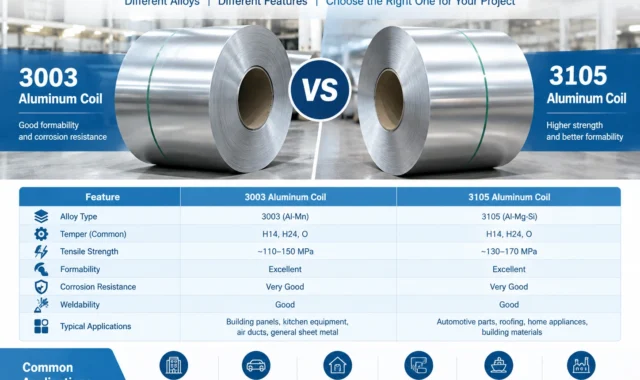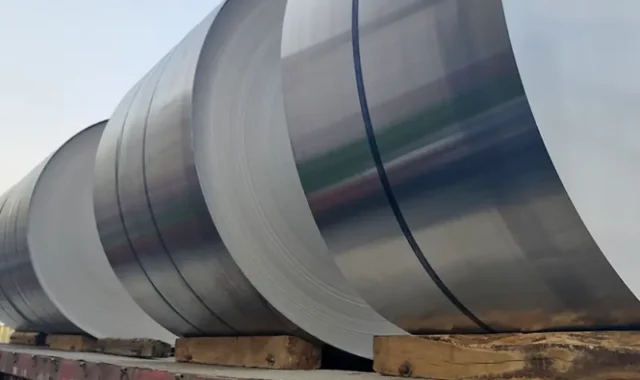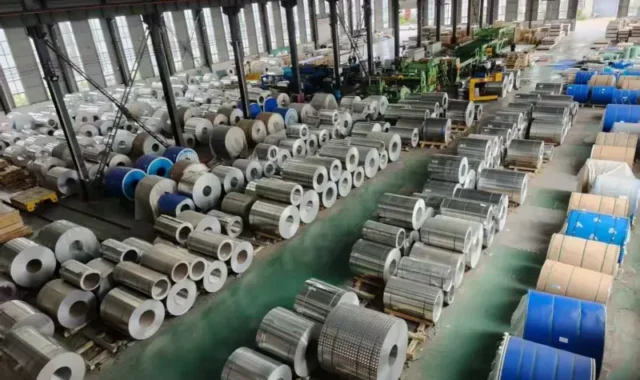
When you look for 3003 vs 5052 Aluminum Sheet materials, you often see two common names: 3003 aluminum sheet and 5052 aluminum sheet. Both are very popular in the world of manufacturing. However, they have different strengths, costs, and uses.
Choosing the right alloy can save you money and make your product last longer.
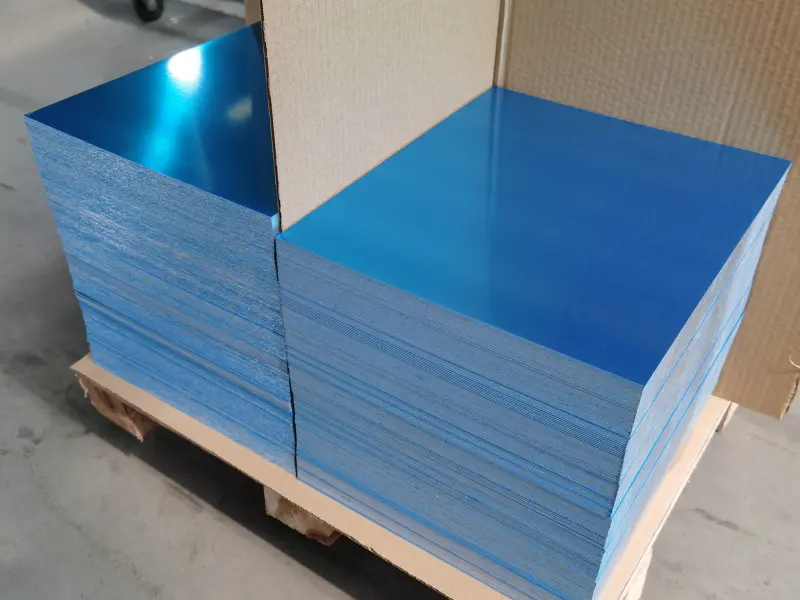
Understanding the Basics
Aluminum is rarely used in its pure form. Instead, it is mixed with other metals to make alloys. These “add-ins” change how the metal behaves.
What is 3003 Aluminum?
The 3003 series belongs to the manganese alloy family. It is a general-purpose aluminum. It is known for being very easy to work with and having great resistance to rust.
What is 5052 Aluminum?
The 5052 series is a magnesium alloy. It is much stronger than the 3003 series. It is often called “Marine Grade Aluminum” because it stays strong even in salty water.
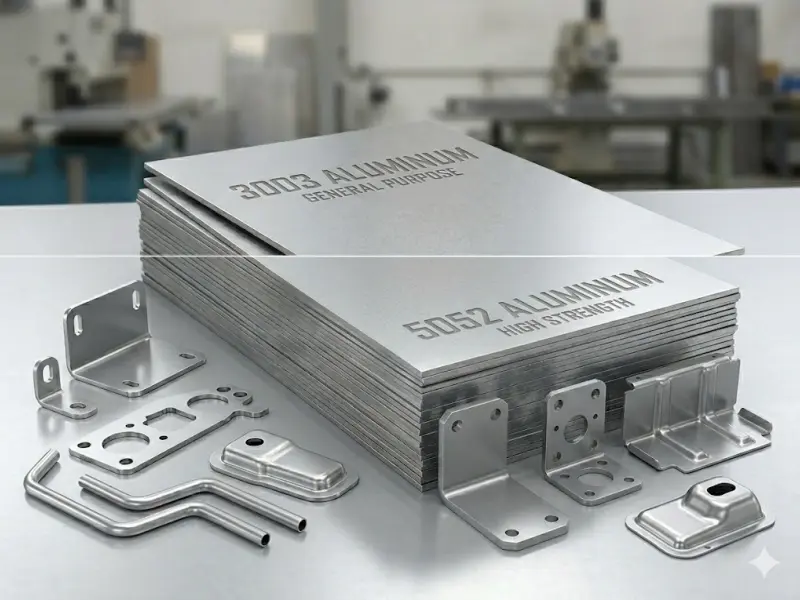
Chemical Composition Comparison
The main difference lies in what is inside the metal. Here is a small breakdown of their chemical components.
| Element | 3003 Aluminum (%) | 5052 Aluminum (%) |
|---|---|---|
| Aluminum (Al) | 96.8 to 99.0 | 95.7 to 97.7 |
| Manganese (Mn) | 1.0 to 1.5 | 0.1 max |
| Magnesium (Mg) | None | 2.2 to 2.8 |
| Copper (Cu) | 0.05 to 0.20 | 0.1 max |
| Chromium (Cr) | None | 0.15 to 0.35 |
As shown above, 3003 uses Manganese for strength, while 5052 uses Magnesium. This small change makes a big difference in the final product.
Physical and Mechanical Properties
Strength is a major factor when choosing a metal sheet. If you need a part to hold weight, you need to look at the “Yield Strength.”
Strength and Hardness Table
| Property | 3003-H14 | 5052-H32 |
|---|---|---|
| Tensile Strength | 145 MPa | 230 MPa |
| Yield Strength | 125 MPa | 195 MPa |
| Elongation | 8 to 10% | 12 to 18% |
| Brinell Hardness | 40 | 60 |
From this table, we can see that 5052 aluminum sheet is significantly stronger than 3003 aluminum sheet.
Deep Dive into 3003 Aluminum Sheet
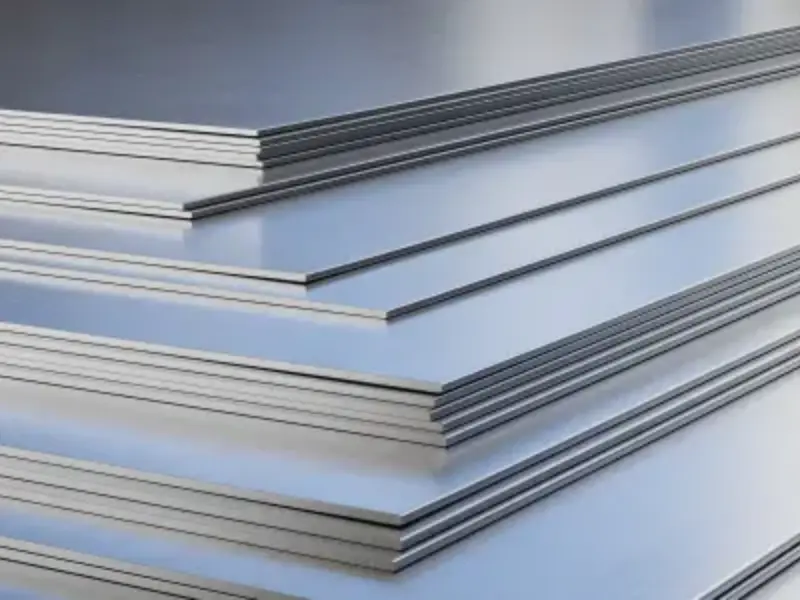
The 3003 alloy is the most widely used aluminum alloy. Why? Because it is affordable and very easy to shape.
Common Tempers for 3003
- 3003-O: Fully annealed, very soft.
- 3003-H14: Half hard, the most common temper for general use.
- 3003-H24: Similar to H14 but with slightly different processing.
Why choose 3003?
- Workability: You can bend, spin, and draw it easily without cracking.
- Corrosion Resistance: It handles weather and chemicals very well.
- Cost-Effective: It is cheaper than the 5000 series.
- Weldability: It can be welded using all standard methods.
Applications of 3003 Aluminum
- Kitchenware: Pots, pans, and baking sheets.
- Storage Tanks: Fuel tanks and chemical containers.
- Building: Roofing, siding, and gutters.
- HVAC: Heat exchangers and air conditioning parts.
- Trim: Decorative parts for cars and buildings.
Deep Dive into 5052 Aluminum Sheet
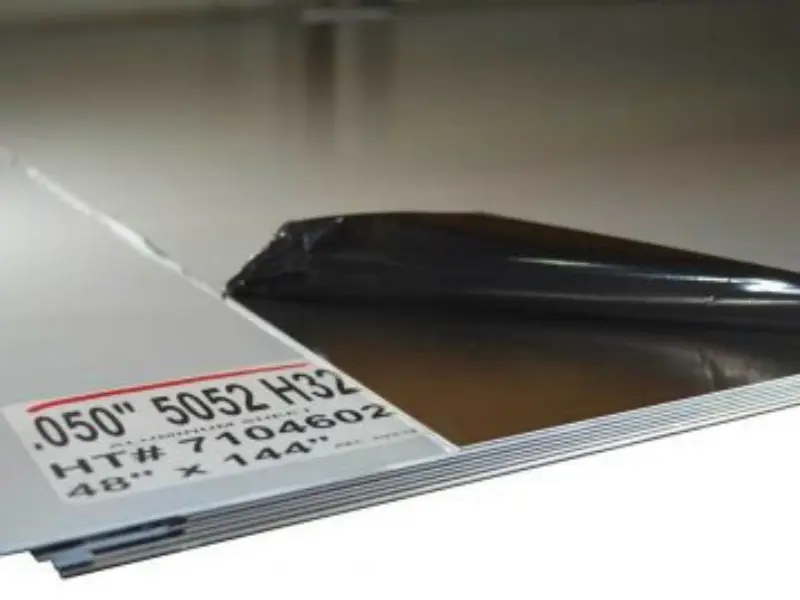
If you need something tougher, 5052 is the answer. It is one of the strongest non-heat-treatable alloys available.
Common Tempers for 5052
- 5052-H32: Stabilized, the standard temper for sheets.
- 5052-H34: Harder than H32, used for high-strength parts.
- 5052-O: Soft version used for complex forming.
Why choose 5052?
- Marine Performance: It is excellent in saltwater environments.
- Fatigue Strength: It can handle vibrations and stress for a long time.
- Bending: Even though it is strong, it has great finishing qualities.
- Anodizing: It takes color very well during the anodizing process.
Applications of 5052 Aluminum
- Marine Industry: Boat hulls, decks, and marine hardware.
- Transportation: Truck trailers, bus bodies, and fuel lines.
- Electronics: Computer chassis and high-end enclosures.
- Appliances: High-quality refrigerator liners and panels.
- Signage: Road signs and heavy-duty billboards.
Key Differences: 3003 vs 5052
To make it simple, let’s look at the three main categories where they differ most.
Corrosion Resistance
Both have great rust resistance. However, 5052 is much better when salt is involved. If your product is for a coastal city or a boat, choose 5052 aluminum sheet. For indoor use or normal rain, 3003 aluminum sheet is fine.
Formability and Bending
3003 is softer. If you are making a complex shape like a deep pot, 3003 is better. 5052 can still be bent, but it has a higher “spring-back” rate, meaning it wants to go back to its original shape more than 3003 does.
Price
Usually, 3003 is cheaper than 5052. The magnesium in 5052 makes the material cost go up. If your project doesn’t need high strength, using 3003 can save you a lot of money on large orders.
Product Specifications and Types
Manufacturers offer these alloys in many forms. Depending on your needs, you might want a specific surface finish.
Available Sizes and Specifications
| Specification | Details |
|---|---|
| Thickness Range | 0.2mm to 6.0mm (Sheet) / 6.0mm+ (Plate) |
| Standard Widths | 1000mm, 1219mm, 1250mm, 1500mm |
| Standard Lengths | 2000mm, 2438mm, 2500mm, 3000mm |
| Surface Finish | Mill Finish, Bright, Brushed, Mirror |
Different Product Types
Aluminum Tread Plate (Checkered Plate)
Both alloys are available as tread plates. You often see these on the floors of ambulances or toolboxes.
- 3003 Tread Plate: Good for decoration and light-duty flooring.
- 5052 Tread Plate: Best for industrial ramps and docks where strength is needed.
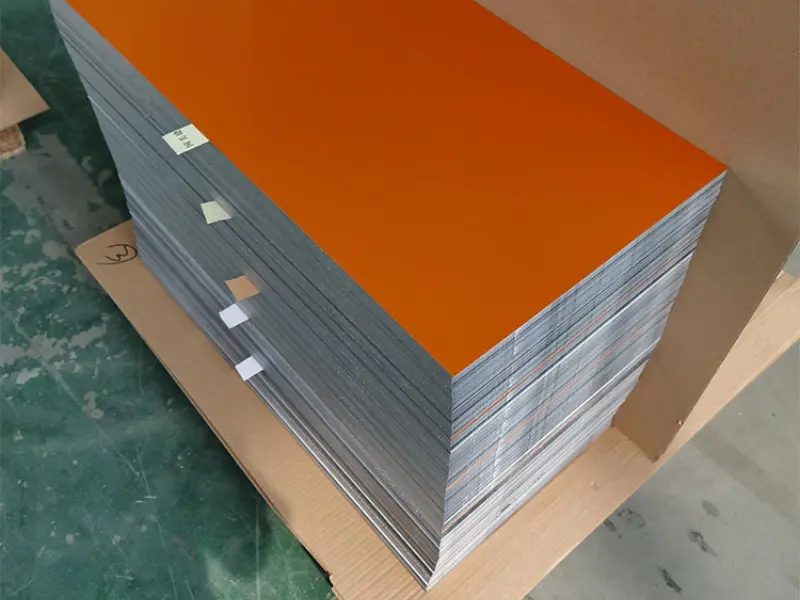
Color Coated Aluminum Sheet
These are painted with PE or PVDF coatings.
- Used for roofing and facades.
- Provides extra protection against the sun and rain.
Perforated Aluminum Sheet
This is a sheet with holes in it.
- Used for filters, soundproofing, and decorative screens.
- 3003 is often used because it is easier to punch holes without wearing out the machine.
Stucco Embossed Aluminum Sheet
This has a “peel” texture. It is great for hiding scratches and fingerprints.
- Commonly used in refrigerator interiors and cold storage walls.
How to Choose the Right One?
To choose between 3003 vs 5052 aluminum sheet, ask yourself these four questions:
Is it for marine use?
If yes, always choose 5052. Saltwater will damage 3003 much faster than 5052.
Does it need to be very strong?
If you are building a structure that carries weight or faces high wind, choose 5052. If it is just a cover or a light container, 3003 is better.
What is your budget?
If you are manufacturing millions of small parts and strength isn’t critical, 3003 will significantly lower your production costs.
Does it need deep drawing?
If you are making a deep cup or a rounded tank, 3003 is the most “forgiving” metal. It stretches well without tearing.
Summary Table: A Quick Reference
| Feature | 3003 Aluminum Sheet | 5052 Aluminum Sheet |
|---|---|---|
| Main Alloy | Manganese (Mn) | Magnesium (Mg) |
| Strength | Medium | High |
| Corrosion | Good (General) | Excellent (Marine) |
| Forming | Excellent | Good |
| Welding | Very Good | Very Good |
| Typical Use | Kitchenware, HVAC | Boats, Truck parts |
| Cost | Lower | Higher |
3003 vs 5052 Aluminum Sheet Supplier for Sale
Both 3003 aluminum sheet and 5052 aluminum sheet are excellent materials. The decision depends entirely on your specific application.
- Use 3003 for everyday items, indoor projects, and when you need to keep costs low.
- Use 5052 for industrial parts, marine environments, and high-stress situations.
If you are looking for a reliable aluminum sheet supplier, make sure to check the certificates. Always ask for the “Mill Test Certificate” (MTC) to ensure you are getting the exact alloy and temper you paid for.
Whether you need a mill finish, a checkered plate, or a color-coated sheet, knowing the difference between these two alloys will help you build better products. If you are still not sure, you can always test a small sample of both to see which one performs better in your machines.