When you start a new project, picking the right metal is the first step. Two of the most common materials are 6061 aluminum sheet and 5052 aluminum sheet. Both are very useful, but they serve different purposes.
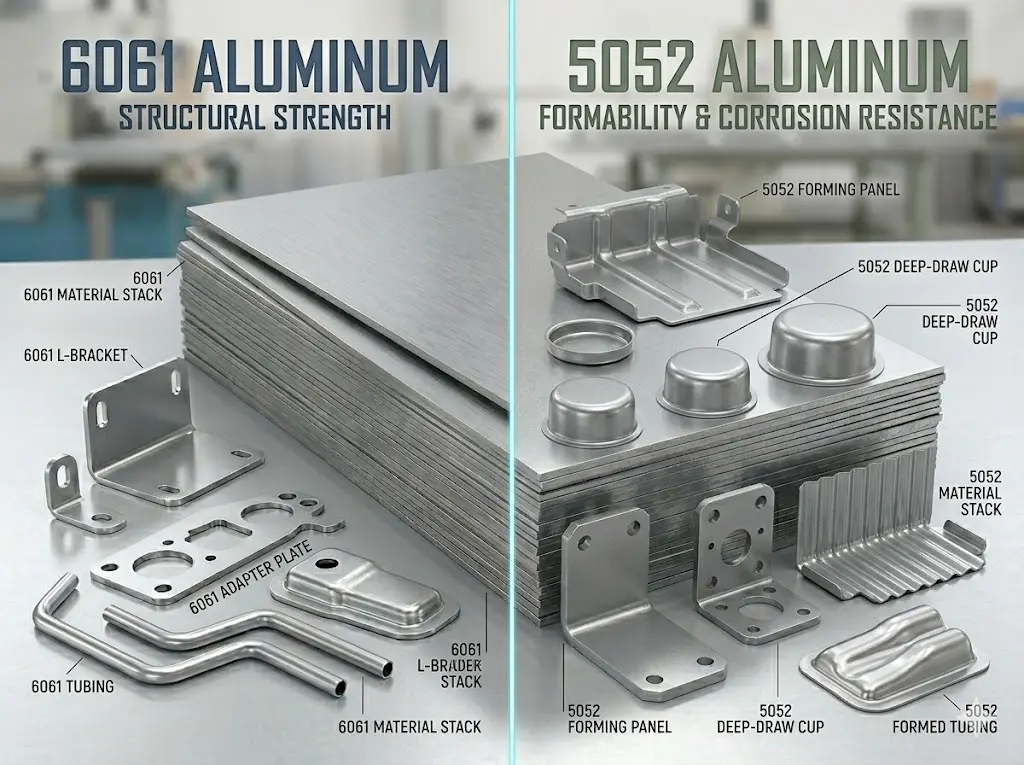
One is built for strength and structure. The other is built for bending and resisting rust.
Understanding the Difference: 6061 vs 5052
The main difference between these two is how they are made and what they are made of. 6061 aluminum is a heat-treatable alloy. This means it gets its strength from a heating process. 5052 aluminum is a non-heat-treatable alloy. It gets its strength from “work hardening” or cold working.
Chemical Composition Comparison
The “ingredients” in the metal change how it reacts to welding, bending, and salt.
| Element | 6061 Aluminum (%) | 5052 Aluminum (%) |
|---|---|---|
| Magnesium (Mg) | 0.8 to 1.2 | 2.2 to 2.8 |
| Silicon (Si) | 0.4 to 0.8 | 0.25 max |
| Chromium (Cr) | 0.04 to 0.35 | 0.15 to 0.35 |
| Copper (Cu) | 0.15 to 0.40 | 0.10 max |
| Iron (Fe) | 0.7 max | 0.40 max |
As you can see, 6061 has more Silicon. This makes it stronger but harder to bend. 5052 has more Magnesium, which makes it great for resisting corrosion.
Mechanical Properties and Strength
Strength is the most important factor for structural jobs. We usually compare 6061-T6 with 5052-H32 because these are the most common states (tempers) sold in the market.
| Property | 6061-T6 Aluminum | 5052-H32 Aluminum |
|---|---|---|
| Tensile Strength | 310 MPa (45,000 psi) | 230 MPa (33,000 psi) |
| Yield Strength | 276 MPa (40,000 psi) | 195 MPa (28,000 psi) |
| Shear Strength | 205 MPa | 138 MPa |
| Hardness (Brinell) | 95 | 60 |
6061 aluminum sheet is clearly the winner for strength. However, 5052 aluminum sheet is much better if you need to bend the metal without it snapping.
All About 5052 Aluminum Sheet
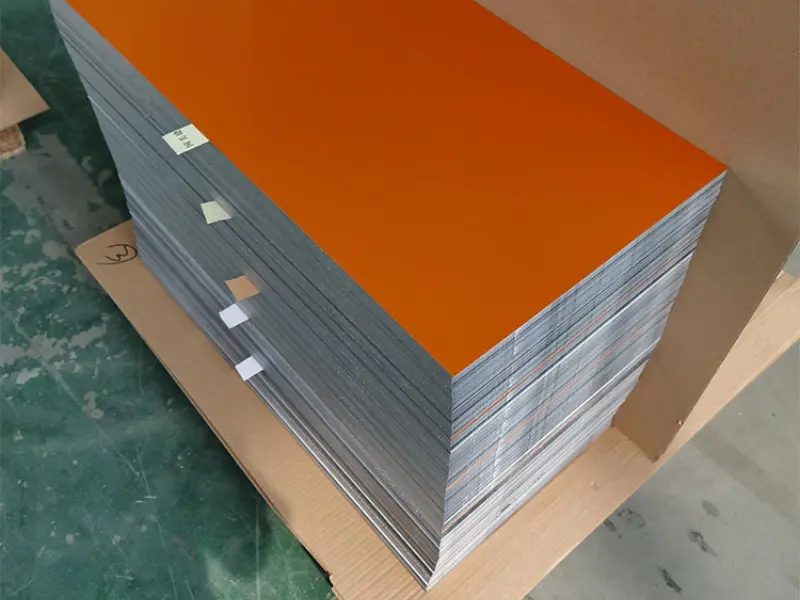
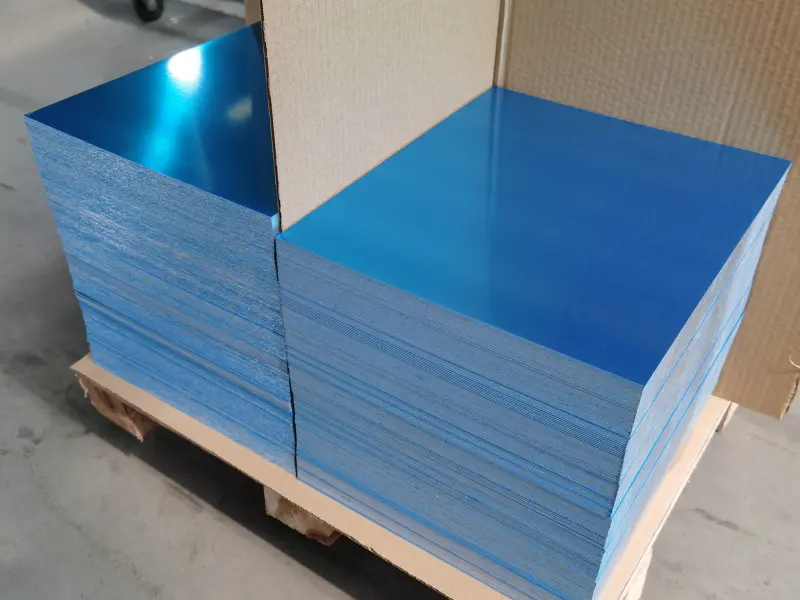
The 5052 alloy is often called “Marine Grade Aluminum.” It is the highest-strength alloy of the more common non-heat-treatable grades.
Key Features of 5052
- Corrosion Resistance: It is excellent against salt water and industrial chemicals.
- Workability: It is very easy to draw or weld into complex shapes.
- Fatigue Strength: It can handle a lot of vibration without cracking.
- Surface Finish: It has a very smooth, clean look.
Common Product Types for 5052
- 5052-H32 Aluminum Sheet: The standard for general sheet metal work.
- 5052-O Soft Aluminum: Used for very complex forming.
- 5052 Aluminum Coils: Used for large-scale manufacturing of tanks and panels.
- Marine Grade Plates: Thicker versions used for boat hulls.
Applications of 5052 Aluminum
- Marine Industry: Boat parts, fuel tanks, and hulls.
- Transportation: Truck trailers and bus bodies.
- Kitchen Equipment: Cabinets, appliances, and food processing tools.
- Electronics: High-end laptop cases and chassis.
- Signage: High-quality street signs that must last a long time.
All About 6061 Aluminum Sheet
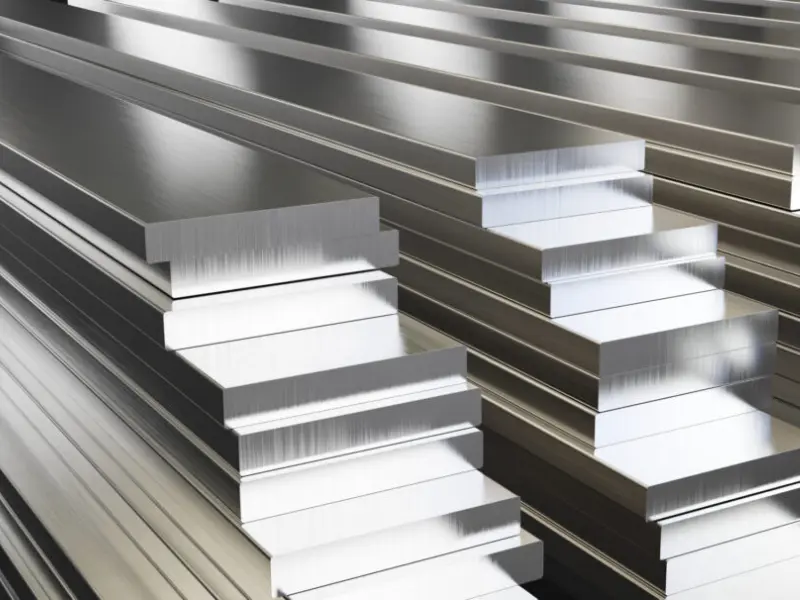
The 6061 alloy is the “workhorse” of the aluminum world. If you are building something that needs to hold weight, this is usually the choice.
Key Features of 6061
- Structural Strength: It provides high strength-to-weight ratios.
- Machinability: It is easy to cut, drill, and mill in a machine shop.
- Anodizing: It takes protective coatings very well.
- Weldability: It can be welded easily, though it loses some strength near the weld.
Common Product Types for 6061
- 6061-T6 Aluminum Sheet: The most popular “hard” aluminum sheet.
- 6061-T4 Aluminum: A slightly softer version with better natural aging.
- 6061 Aluminum Plate: Thicker material for heavy-duty machinery parts.
- Precision Ground Plate: Used for making molds and tools.
Applications of 6061 Aluminum
- Aerospace: Small aircraft parts and structural frames.
- Construction: Bridge components and tower structures.
- Automotive: Car frames, wheels, and spacers.
- Bicycles: High-quality bike frames and components.
- Furniture: Heavy-duty outdoor chairs and tables.
Deep Comparison: Machining, Bending, and Welding
Machining Performance
If your project requires a lot of CNC milling or drilling, 6061 aluminum sheet is much better. It produces “chips” that break away easily. 5052 aluminum is “gummy.” It tends to stick to the cutting tools and is harder to machine cleanly.
Bending and Forming
This is where 5052 aluminum sheet shines. You can bend it to a sharp angle (90 degrees) with a small radius, and it will not crack. If you try to bend 6061-T6 too sharply, it will likely snap or develop tiny cracks along the bend line.
Welding
Both can be welded using TIG or MIG methods. However, because 6061 is heat-treated, the heat from the weld will soften the metal near the joint. You may need to heat-treat it again after welding to get the strength back. 5052 does not have this problem as much.
Available Specifications and Sizes
When buying these products, you need to know the standard sizes available in the industry.
| Specification Type | 5052 Range | 6061 Range |
|---|---|---|
| Thickness (mm) | 0.5mm to 10mm | 1.0mm to 300mm |
| Standard Widths (mm) | 1000, 1219, 1250, 1500 | 1000, 1219, 1500 |
| Standard Lengths (mm) | 2000, 2438, 3000 | 2000, 2438, 3000 |
| Tempers | O, H32, H34, H111 | O, T4, T6, T651 |
Different Surface Types
- Mill Finish: The natural look of the metal from the factory.
- Brushed Finish: Has a lined texture, great for decorative parts.
- Anodized Finish: A hard, colored layer that stops scratches.
- Checkered/Tread Plate: Often found in 5052 for slip-resistant floors.
Different Product Shapes and Forms
While we focus on sheets, these alloys come in many forms to suit different industries.
Aluminum Diamond Plate
This is very common in the 5052 alloy. It is used for dock ramps and toolboxes. It is strong enough to walk on and resists rust from the rain.
Perforated Aluminum Sheet
You can find both 6061 and 5052 with holes punched in them.
- 5052 Perforated: Used for filters and marine screens.
- 6061 Perforated: Used for architectural grates and structural vents.
Aluminum Coil
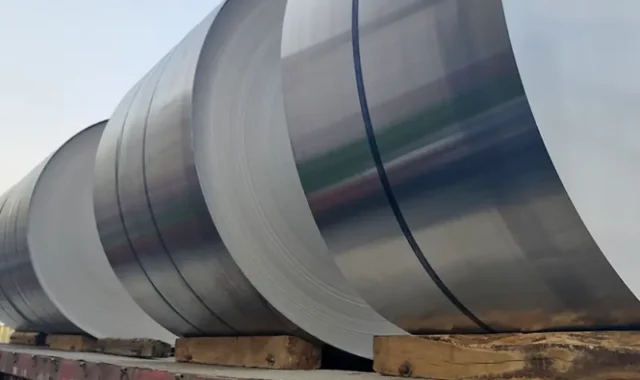
If you are a large manufacturer, you buy 5052 aluminum coil. This allows for continuous feeding into a machine to make thousands of parts, like soda can tabs or small brackets.
Summary: Which One Should You Buy?
To make it easy, follow these simple rules:
Choose 5052 Aluminum Sheet if:
- You need to bend the metal into a specific shape.
- The product will be used near the ocean or in wet areas.
- You are making a tank, a container, or a boat.
- You want a smoother surface finish for painting.
Choose 6061 Aluminum Sheet if:
- You are building a frame or a structure that must carry a load.
- You need to machine the part on a CNC mill.
- Weight-to-strength ratio is your top priority.
- The part will not require sharp bends.
6061 vs 5052 aluminum sheet supplier for sale
The battle of 6061 vs 5052 aluminum sheet does not have one winner. It depends on what you are building. 6061 is the king of structures and machining. 5052 is the king of the sea and the bending machine.
Before you order, always check the thickness and the “temper” (like T6 or H32). Using the wrong temper can make the metal too soft or too brittle for your project. As a professional aluminum supplier, we suggest looking at your total costs, including machining and finishing, before making the final choice. Both alloys are cost-effective and highly recyclable, making them a great choice for the environment too.