What Distributors Need to Know Before Stocking Aluminum Sheet
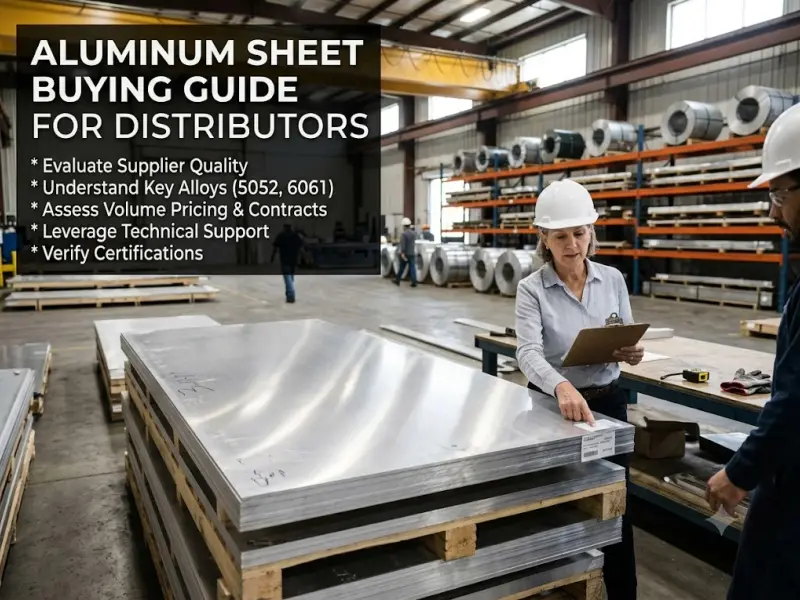
Aluminum Sheet Buying Guide for Distributors is one of the most requested items in metal distribution.
It is light, it does not rust, and it works in almost every industry. But not all aluminum sheet is the same.
If you stock the wrong alloy or temper, you will sit on inventory that no one wants.
Alloy Families: The Core of Every Purchase Decision
Aluminum alloys are grouped into series. The first number tells you the main alloying element. Each series behaves differently. Here is a quick map for your sales team.
The 1000 Series: Pure Aluminum
These sheets are almost pure aluminum. They bend easily and resist corrosion in normal air. They are soft and not meant for heavy loads. Most distributors stock 1100 for chemical tanks, reflective panels, and decorative trim.
| Property | Value |
|---|---|
| Aluminum content | 99.0% or higher |
| Strength | Low |
| Formability | Excellent |
| Typical tempers | O, H14 |
| Best seller | 1100-H14 |
The 3000 Series: Manganese Alloys
3003 is the workhorse of this group. It costs less than most other alloys and handles moisture well. It is the go-to grade for roofing, cooking equipment, and fuel tanks. If you only stock one general-purpose sheet, make it 3003-H14.
| Property | Value |
|---|---|
| Key element | Manganese |
| Strength | Moderate |
| Corrosion resistance | Good |
| Typical tempers | H14, H22, O |
| Best seller | 3003-H14 |
The 5000 Series: Magnesium Alloys
5052 and 5083 live here. These alloys resist saltwater. That makes them the first choice for marine work, coastal construction, and chemical environments. They also weld nicely. 5052-H32 is a staple for any distributor who serves boat builders or tank fabricators.
| Property | Value |
|---|---|
| Key element | Magnesium |
| Strength | Medium to high |
| Saltwater resistance | Excellent |
| Typical tempers | H32, H112, O |
| Best sellers | 5052-H32, 5083-H116 |
The 6000 Series: Magnesium-Silicon Alloys
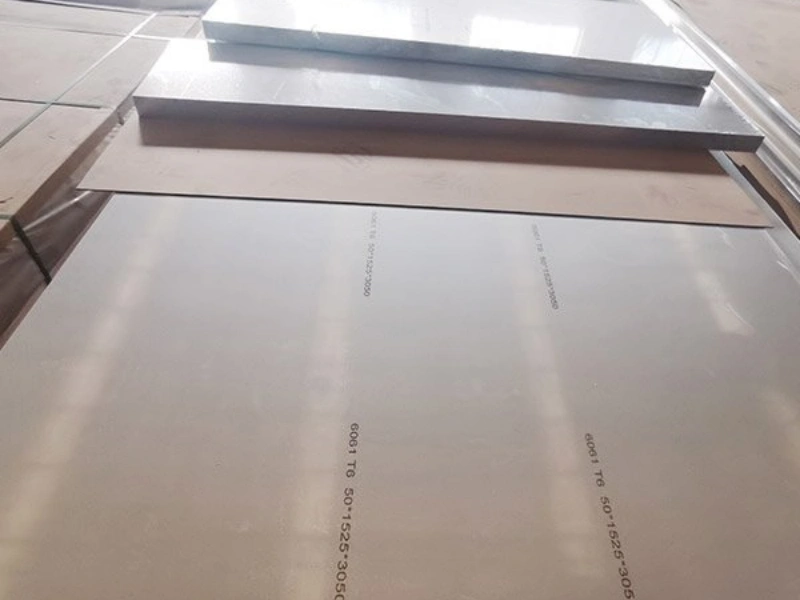
6061 is the star of this family. It has good strength and machines like a dream. You can anodize it for color and extra protection. It is popular for structural parts, frames, and tooling plates. 6061-T6 is a must-stock item for any distributor who sells to machine shops.
| Property | Value |
|---|---|
| Key elements | Magnesium + Silicon |
| Strength | Medium to high |
| Machinability | Excellent |
| Typical tempers | T6, T651 |
| Best seller | 6061-T6 |
The 7000 Series: Zinc Alloys
7075 is the strongest common aluminum alloy. Aircraft builders and military suppliers use it where every pound matters. It costs more and is harder to form, but the strength is unmatched. Most distributors special-order this grade rather than keeping it on the shelf.
| Property | Value |
|---|---|
| Key element | Zinc |
| Strength | Very high |
| Formability | Limited |
| Typical tempers | T6, T651 |
| Best seller | 7075-T6 |
Temper Codes: What the Letters and Numbers Mean
The temper tells you how the metal was treated after rolling. This changes hardness, strength, and how easy it is to bend. Your customers will ask for temper by name, so your team needs to know the difference.
| Temper | Meaning | Typical Use | Bend Risk |
|---|---|---|---|
| O | Soft, annealed | Deep drawing, spinning | Very low |
| H12 | Quarter hard | General forming | Low |
| H14 | Half hard | Panels, signs, roofing | Low to moderate |
| H22 | Quarter hard, strain-hardened and annealed | Better formability than H14 | Low |
| H32 | Quarter hard, stabilized | Marine sheet, fuel tanks | Low |
| T4 | Solution heat-treated, naturally aged | Parts that need forming after heat treat | Moderate |
| T6 | Solution heat-treated, artificially aged | Structural frames, machined parts | High |
| T651 | T6 plus stress relieved by stretching | Precision tooling plate | High |
If a customer needs to bend the sheet, warn them away from T6. It is strong but cracks easily in tight bends. H14 or O temper is safer for folding and brake work.
Thickness and Gauge: The Numbers That Move Inventory
Thickness is usually called out in gauge, inches, or millimeters. Gauge numbers can confuse buyers because a higher gauge means a thinner sheet. Here is the map your sales team should keep at the counter.
| Gauge | Inch | mm | Common Use | Typical Alloy |
|---|---|---|---|---|
| 22 ga | 0.025 | 0.64 | Ductwork, light covers | 3003, 5052 |
| 20 ga | 0.032 | 0.81 | Sign blanks, trim | 3003, 5052 |
| 18 ga | 0.040 | 1.02 | Wall panels, backsplashes | 3003, 5052 |
| 16 ga | 0.051 | 1.29 | Trailer skin, cabinets | 3003, 5052 |
| 14 ga | 0.064 | 1.63 | Truck beds, ramps | 5052, 6061 |
| 1/8″ | 0.125 | 3.18 | Structural brackets, flooring | 5052, 6061 |
| 3/16″ | 0.188 | 4.76 | Heavy-duty platforms | 6061, 5083 |
| 1/4″ | 0.250 | 6.35 | Tooling plate, machine bases | 6061-T6, 7075 |
Thicker sheets cost more per unit and weigh more. But they also carry heavier loads and resist dents. Most distributors find that 0.032″ to 0.125″ moves the fastest because those sizes cover the widest range of jobs.
If you only stock plain flat sheet, you are leaving money on the table. Here are the product types that keep customers coming back.
Product Types: Stock More Than Just Flat Sheet
Flat Sheet and Plate
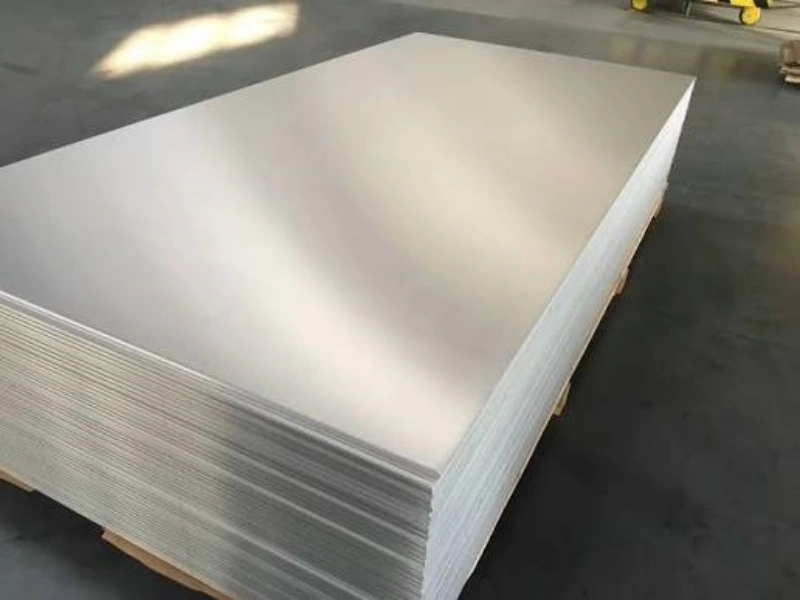
This is the basic panel. Smooth on both sides. Ready to cut, drill, weld, or bend. Available in almost every alloy and temper. Sheet is thin, usually under 0.25 inch. Plate is 0.25 inch and thicker.
Tread Plate
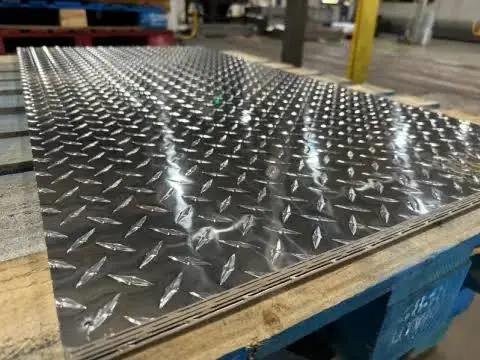
One side has a raised pattern. The pattern gives grip. Workers use it for stairs, walkways, and trailer floors. The most common pattern is five-bar. Diamond and three-bar patterns are also easy to find. 3003 and 6061 are the most common alloys for tread plate.
Perforated Sheet
Holes are punched or laser-cut through the sheet. Round holes are standard, but square, slot, and hex patterns exist. The open area lets air, light, and sound pass through. Architects and HVAC contractors buy perforated sheet for screens, vents, and facades.
Expanded Metal
The sheet is slit and stretched into a mesh. No material is removed, so there is no waste. It is lighter than solid sheet but still strong. Used for guards, grilles, and filters. Often sold in 5052 or 6061.
Honeycomb Panel
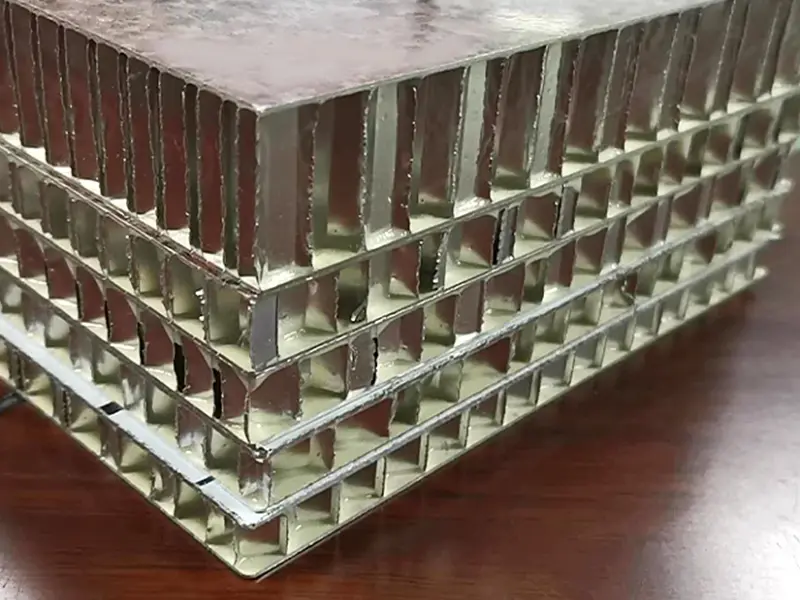
Two thin aluminum skins sandwich an aluminum honeycomb core. The result is extremely stiff and very light. These panels are common in aerospace, rail cars, and high-end furniture. Most distributors do not stock these but can special-order them for large projects.
Composite Panel (ACM)
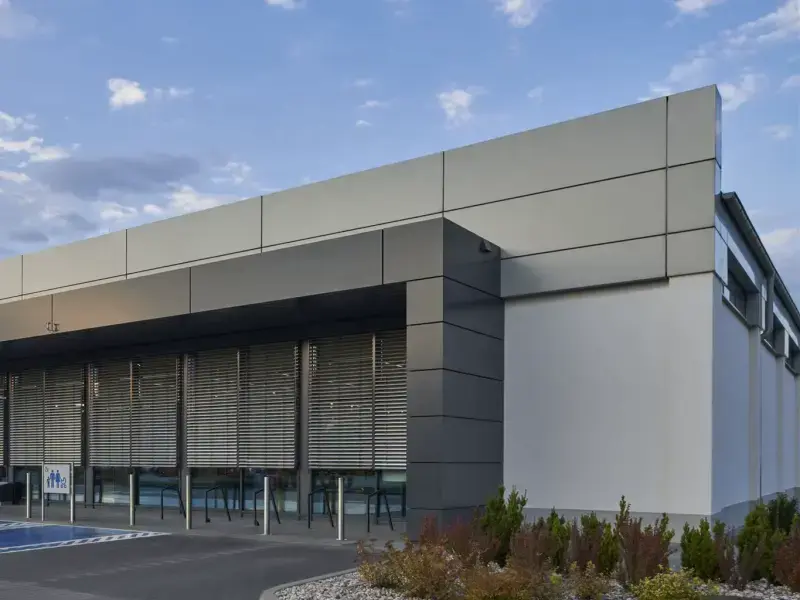
A thin aluminum skin on both sides of a plastic core. It is rigid, flat, and easy to print on. Sign makers and building cladding contractors use ACM panels every day. Common thicknesses are 3 mm and 4 mm, not gauge.
Anodized Sheet
An electrochemical coating becomes part of the metal. It will not peel or chip like paint. Architects love anodized sheet for building exteriors because it lasts decades. You can stock clear anodized or colored finishes like bronze and black.
Painted and Color-Coated Sheet
PVDF and polyester coatings give aluminum a durable color layer. Building panels, roofing, and signage are the main markets. Common colors include white, silver, and custom brand colors. These sheets often come with a protective film on the surface.
Brushed and Mirror Finish Sheet
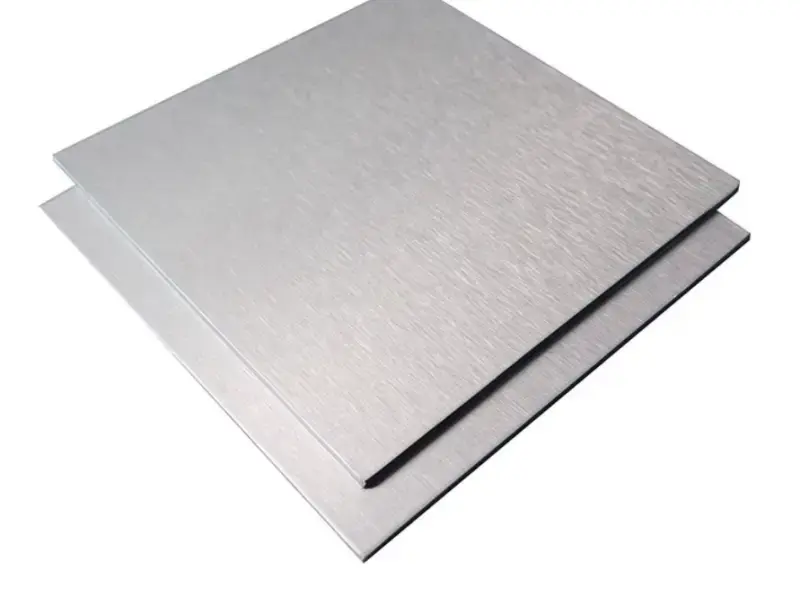
Brushed sheet has a linear scratch pattern. Mirror sheet is highly reflective. Both are used for elevators, interior walls, appliances, and decorative trim. 3003 and 5005 are the most common base alloys for these finishes.
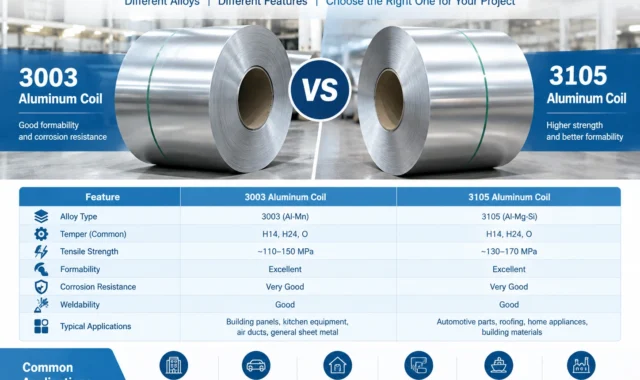
Alloy Face-Off: A Side-by-Side Look for Distributors
Your customers will ask which alloy is best. Here is a comparison table you can share at the counter or email as a PDF.
| Alloy | Strength | Corrosion | Weld | Form | Machine | Cost Tier | Best Market |
|---|---|---|---|---|---|---|---|
| 1100 | Low | Good | Good | Excellent | Poor | Low | Chemical, decorative |
| 3003 H14 | Moderate | Good | Good | Good | Fair | Low | Roofing, HVAC, general |
| 5052 H32 | Moderate | Excellent | Excellent | Good | Fair | Medium | Marine, tanks, trailers |
| 5083 H116 | High | Excellent | Excellent | Fair | Fair | Medium-High | Shipbuilding, offshore |
| 6061 T6 | High | Good | Good | Fair | Excellent | Medium | Structural, machined parts |
| 7075 T6 | Very High | Fair | Poor | Poor | Good | High | Aerospace, military |
If a customer works near the ocean, point them to 5052 or 5083. If they need to machine complex parts from solid sheet, 6061 T6 is hard to beat. For simple panels where cost matters most, 3003 H14 gets the job done.
Thickness Comparison: What Works Where
Different jobs need different thicknesses. Here is how distributors can guide their buyers.
| Thickness Range | Best For | Typical Buyer |
|---|---|---|
| 0.016″ – 0.032″ | Trim, flashing, light covers, packaging | HVAC, sign shops |
| 0.040″ – 0.063″ | Wall panels, trailer sides, cabinets | Construction, transport |
| 0.080″ – 0.125″ | Structural brackets, flooring, platforms | Industrial, marine |
| 0.188″ – 0.250″ | Machine bases, tooling plate, heavy frames | Machine shops, aerospace |
| 0.375″ and up | Mold bases, structural pads, armor | Defense, heavy industry |
Most distributors find that the 0.032″ to 0.125″ range turns over fastest. That band covers signs, trailers, roofing, and light structural work. Heavy plate above 0.25″ moves slower but carries higher margins.
Industries Driving Aluminum Sheet Demand
These are the buyers who walk through your door every week.
- Construction: Wall cladding, roofing, soffits, fascia, and flashing
- Transportation: Trailer sides, truck beds, RV panels, and bus skins
- Marine: Boat decks, hull plating, docks, and gangways
- Automotive: Body panels, interior trim, and heat shields
- Signage: Billboards, storefront letters, and display boards
- Food Service: Backsplashes, countertops, and equipment enclosures
- Industrial: Machine guards, electrical panels, and conveyor covers
- Aerospace: Interior partitions, flooring, and cargo liners
- Energy: Solar panel frames and wind turbine components
- Furniture: Tables, cabinets, and decorative wall art
If you know which industries are active in your region, you can stock the right alloys and tempers before the orders come in.
How to Read a Mill Test Report (MTR)
Every coil or sheet bundle should arrive with an MTR. This document proves the metal meets spec. Here is what to check.
| Field on MTR | What It Means | Why It Matters |
|---|---|---|
| Heat number | The batch ID from the mill | Traceability if there is a defect |
| Alloy and temper | The grade and condition | Confirms you got what you ordered |
| Thickness | Actual measured thickness | Tolerance checks for your customer |
| Tensile strength | How much load it can take | Safety for structural jobs |
| Yield strength | Where permanent bending starts | Design limits for engineers |
| Elongation | How much it stretches before breaking | Formability indicator |
| Chemical analysis | Percentage of each element | Confirms alloy type |
Keep MTRs on file. If a customer has a quality issue, the heat number is your first line of defense.
Storage and Handling Tips for Your Warehouse
Aluminum is soft compared to steel. It scratches and dents if you are not careful. Poor storage also leads to rejects and returns.
- Store sheets flat on a level rack. Do not lean them against a wall for long periods. They can warp.
- Keep different alloys separate. Mixed scrap loses value if you need to send it back.
- Use clean gloves when moving brushed or mirror sheets. Finger oils leave marks.
- Cover the stack if it sits near an open door. Even aluminum can stain in polluted or salty air.
- Lift thick plates with spreader bars. Single-point lifting can bend the sheet.
- Keep the warehouse dry. Moisture between sheets can cause water staining.
Cutting and Fabrication Basics to Share with Customers
Your customers will ask what tools they need. Here is a quick guide you can print and hand out.
| Method | Best For | Notes |
|---|---|---|
| Shear | Thin sheets, straight cuts | Fast, clean edge |
| Circular saw with carbide blade | Thicker sheets, straight cuts | Use wax lubricant to prevent chip welding |
| Band saw | Curves, thick plate | Slow but accurate |
| Water jet | Intricate shapes, no heat | No distortion, higher cost |
| Laser | Precision parts, thin to medium | Fast, narrow kerf |
| Plasma | Thick plate, rough cuts | Fast, leaves a heat-affected zone |
For drilling, use sharp bits and a backing board to prevent burrs on the exit side. When bending, use a press brake with the right die radius. Too tight a bend will crack the metal, especially in T6 temper.
Welding Aluminum: What Your Customers Should Know

Aluminum welding is different from steel. The oxide layer melts at a higher temperature than the base metal. You must clean the joint with a stainless brush before striking an arc.
| Process | Best For | Filler Alloy |
|---|---|---|
| MIG (GMAW) | Long seams, production work | 4043 or 5356 |
| TIG (GTAW) | Precision, thin sheet, repairs | 4043 or 5356 |
| Friction stir | Large panels, no filler | None |
Preheat thick sections to reduce cracking. Keep travel speed steady. If the puddle looks dirty or sooty, stop and clean again.
Pricing Factors Every Distributor Should Track
Aluminum prices move daily with the London Metal Exchange (LME). But there is more to your margin than just the metal price.
| Factor | How It Affects Your Cost |
|---|---|
| Alloy type | 7075 costs more than 3003 because of raw material content |
| Temper | Heat-treated tempers like T6 add processing cost |
| Thickness | Thicker material uses more metal per square foot |
| Width and length | Standard sizes cost less than custom slit or cut-to-length |
| Finish | Anodized, painted, or brushed adds labor and material cost |
| Quantity | Mill orders in full truckloads get the best per-pound price |
| Lead time | Rush orders or air freight add premium charges |
Track the LME daily. When prices dip, that is the time to buy forward and lock in inventory costs.
FAQ: Questions Distributors Hear Every Day
What is the difference between aluminum sheet and aluminum plate?
Sheet is thin, usually under 0.25 inch thick. Plate is 0.25 inch and thicker. The terms are not strict, but mills and suppliers use them to separate product lines. Most distributors stock both.
Which aluminum alloy should I stock for general purpose sales?
3003-H14 is the safest bet. It has good formability, resists corrosion, and works in roofing, signs, and tanks. It is also the most affordable common alloy.
Is 5052 or 6061 better for outdoor use?
5052 is better near saltwater or in humid climates because it resists corrosion. 6061 T6 is stronger and machines better, but it needs protection in harsh environments. For coastal areas, stock 5052-H32.
Can aluminum sheet be bent?
Yes, if you pick the right temper. O temper bends the easiest. H14 and H32 handle moderate bends. T6 temper is brittle and may crack in tight bends. Always ask your customer about forming before you sell them T6.
How much does a sheet of aluminum weigh?
Aluminum weighs about one-third as much as steel. A 4×8 sheet of 0.063″ 5052 weighs roughly 22 pounds. A 1/4″ plate of the same size weighs about 88 pounds. Use this to quote freight costs.
Will aluminum rust?
No. Aluminum does not rust like iron. It forms a thin oxide layer that protects the metal underneath. In salty or acidic air, it can pit, so choose marine-grade alloys for those areas.
Can aluminum sheet be painted?
Yes. Clean it first, apply an etching primer, then use a quality topcoat. For outdoor building panels, PVDF coil coating lasts the longest. Many distributors stock pre-painted sheet to save their customers time.
What does T6 mean?
T6 means the aluminum was solution heat-treated and then artificially aged. This gives it high strength but makes it harder to bend. It is the most common temper for 6061 structural sheet.
Should I stock aluminum coil or flat sheet?
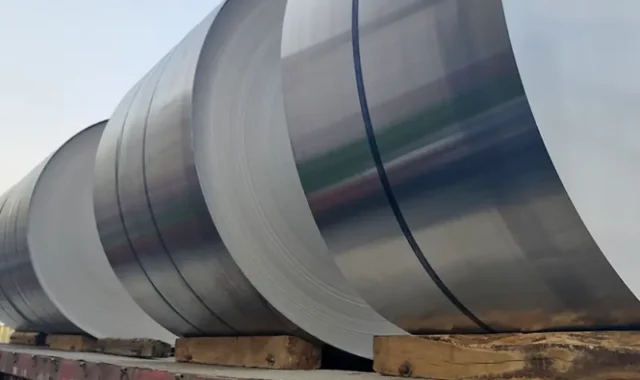
Coil is best for customers who run roll-forming lines or need long continuous lengths. Flat sheet is better for shops that cut blanks on a shear or laser. Many distributors stock both to cover all bases.
How do I know if my supplier sent the right alloy?
Check the MTR. It lists the chemical composition and mechanical properties. You can also send a sample to a lab for spectrographic analysis if you suspect a mix-up.