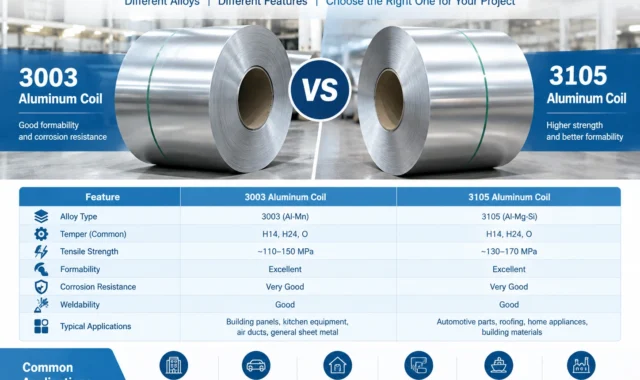
A 4×8 aluminum sheet is one of the most common aluminum sheet sizes used in construction, manufacturing, transportation, signage, trailers, roofing, fabrication, and general metalworking.
The name “4×8” refers to a sheet that is approximately 4 feet wide and 8 feet long, equal to about 48 x 96 inches or 1219 x 2438 mm.
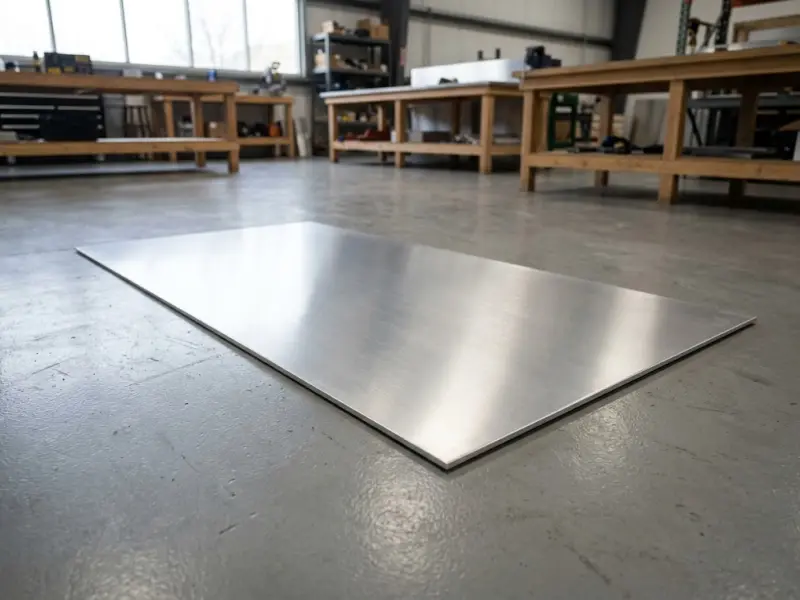
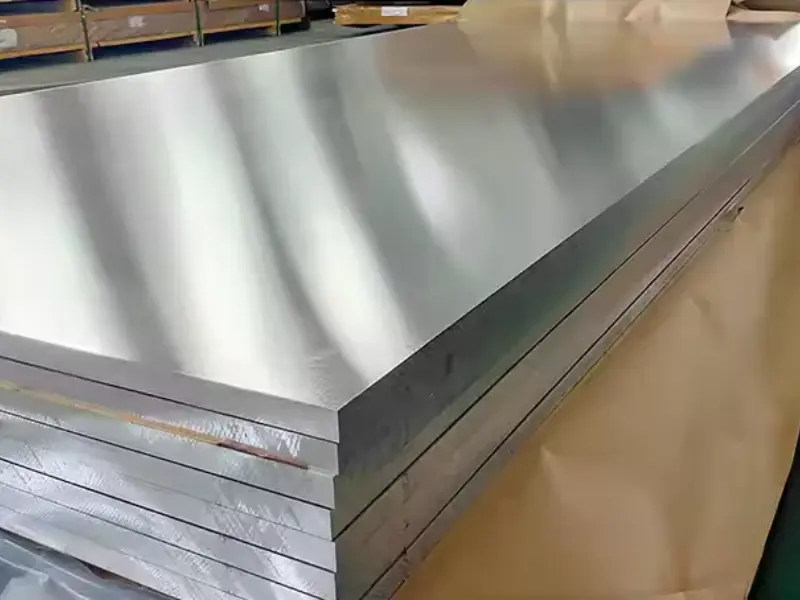
This size is popular because it is easy to transport, store, cut, and use with standard fabrication equipment. It is also large enough to cover many panels with fewer joints.
The right sheet depends on more than size. Alloy, temper, thickness, surface finish, strength, and application should also be considered before ordering.
4×8 Aluminum Sheet Size at a Glance
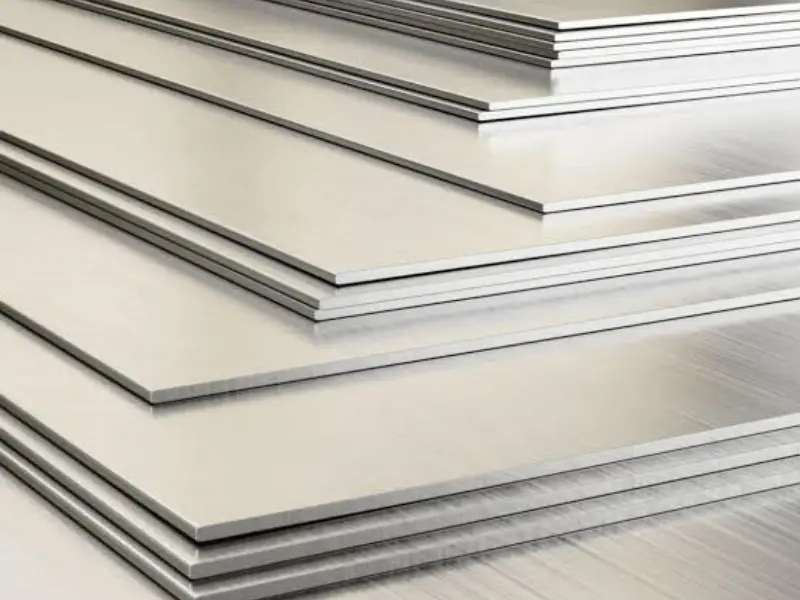
The standard size is:
4 ft × 8 ft
48 in × 96 in
1219 mm × 2438 mm
Small differences can occur because of production tolerances and the selected standard.
| Size | Imperial | Metric Approx. |
|---|---|---|
| Width | 4 ft | 1219 mm |
| Length | 8 ft | 2438 mm |
| Area | 32 sq. ft. | 2.97 m² |
| Area in square inches | 4608 in² | — |
A 4×8 sheet is often a practical choice for projects designed around standard North American panel dimensions.
Common 4×8 Aluminum Sheet Thicknesses
Thickness has a direct effect on weight, rigidity, forming, and cost.
| Thickness | Approx. Inch Size | Typical Use |
|---|---|---|
| 0.020″ | 0.5 mm | Light decoration |
| 0.025″ | 0.64 mm | Trim and light panels |
| 0.032″ | 0.81 mm | Signage and fabrication |
| 0.040″ | 1.02 mm | Panels and general use |
| 0.050″ | 1.27 mm | Trailers and fabrication |
| 0.063″ | 1.60 mm | Medium-duty panels |
| 0.080″ | 2.03 mm | Industrial panels |
| 0.090″ | 2.29 mm | Transportation |
| 0.100″ | 2.54 mm | Heavy fabrication |
| 0.125″ | 3.18 mm | Structural and industrial use |
| 0.1875″ | 4.76 mm | Heavy-duty applications |
| 0.250″ | 6.35 mm | Aluminum plate applications |
Not every alloy is available in every thickness. For a large order, the exact combination should be confirmed before production.
4×8 Aluminum Sheet Alloy Options
Aluminum alloy affects strength, corrosion resistance, weldability, and formability.
| Alloy | Common Temper | Main Character |
|---|---|---|
| 1050 | O, H14 | Very good formability |
| 1060 | O, H14 | High aluminum content |
| 1100 | O, H14 | Good corrosion resistance |
| 3003 | O, H14, H16 | Good balance |
| 3004 | O, H14 | Higher strength |
| 5052 | H32, H34 | Strong and corrosion resistant |
| 5083 | H116, H321 | High strength |
| 6061 | T6 | High strength |
The alloy should be selected according to the finished product.
A sheet for a decorative panel may not need the same mechanical properties as a sheet for a trailer or industrial structure.
1050 4×8 Aluminum Sheet
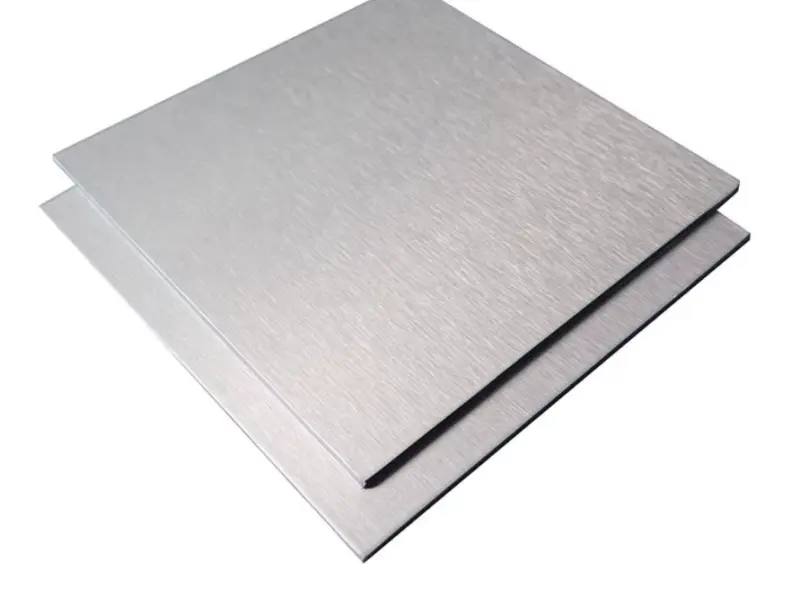
1050 is a high-aluminum-content alloy with excellent formability.
It is suitable for products that need bending or simple forming.
Typical uses include:
- Decorative panels
- Reflectors
- Electrical components
- Insulation covers
- General fabrication
- Heat-related applications
The soft 1050-O condition can be useful when substantial forming is required.
1060 4×8 Aluminum Sheet
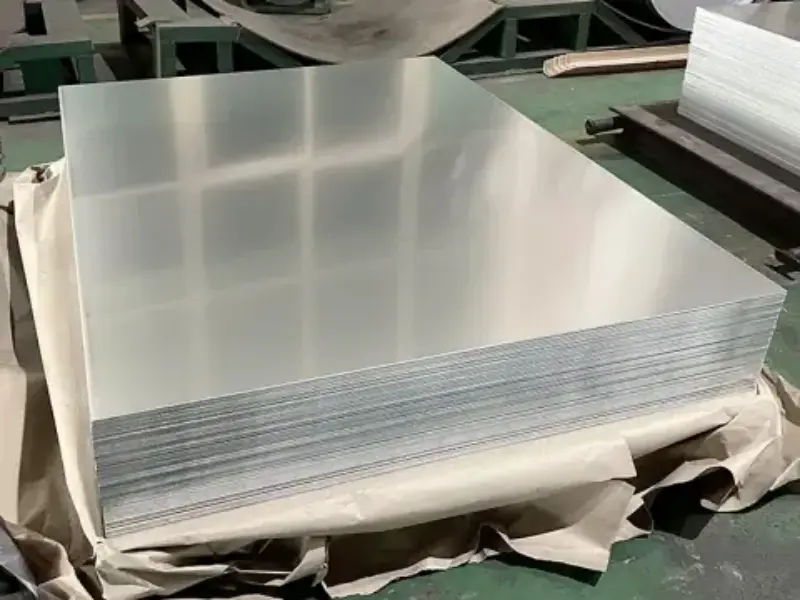
1060 offers high aluminum content and good electrical and thermal conductivity.
It can be used for:
→ Electrical applications
→ Heat transfer products
→ Decorative panels
→ General fabrication
→ Insulation systems
→ Light-duty components
It is not normally selected when high mechanical strength is the main requirement.
3003 4×8 Aluminum Sheet
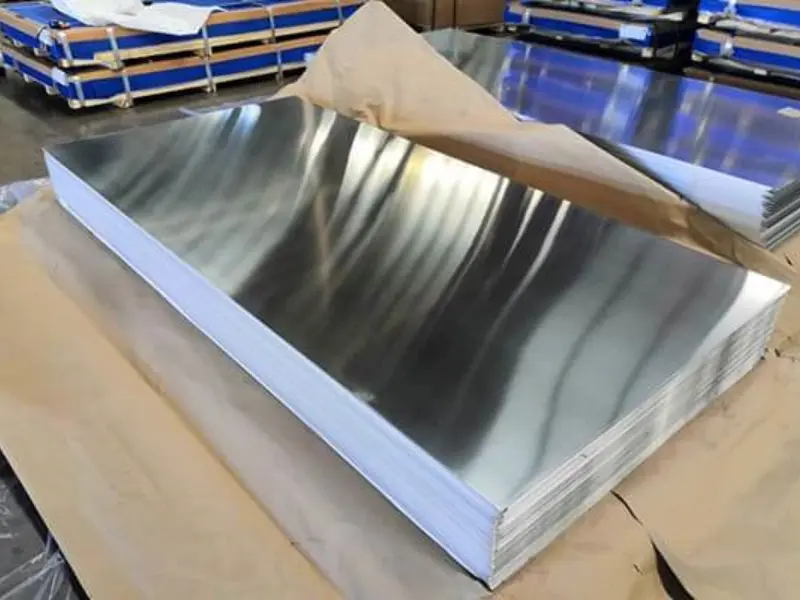
3003 is one of the most commonly used aluminum alloys for general-purpose sheet products.
It contains manganese and offers a useful balance of strength and formability.
Applications include:
- Roofing
- HVAC
- Kitchen equipment
- Wall panels
- Gutters
- Trailer components
- General fabrication
For many buyers, 3003 is a practical middle-ground option.
5052 4×8 Aluminum Sheet
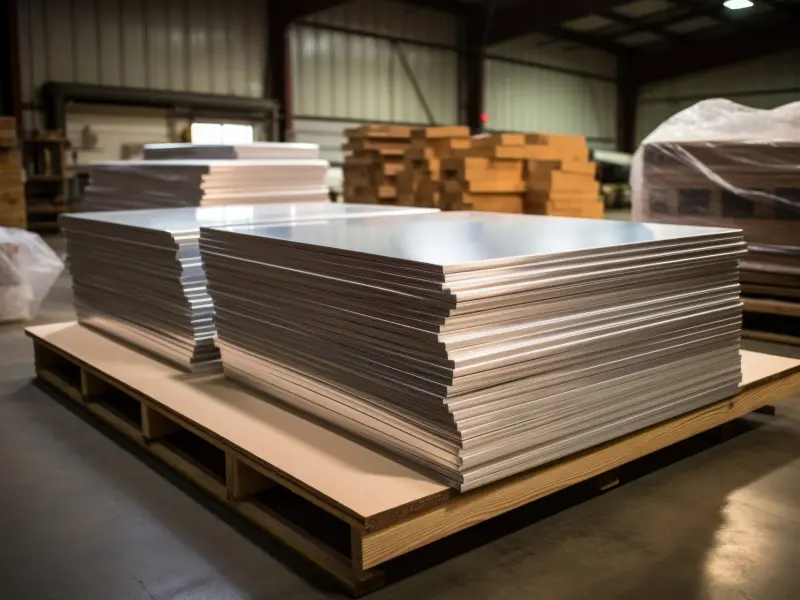
5052 is widely used when greater strength and good corrosion resistance are needed.
Common applications include:
- Trailer siding
- Truck bodies
- Marine components
- Fuel tanks
- Industrial panels
- Equipment covers
- Transportation parts
5052-H32 is particularly common for fabricated aluminum products.
6061 4×8 Aluminum Sheet and Plate
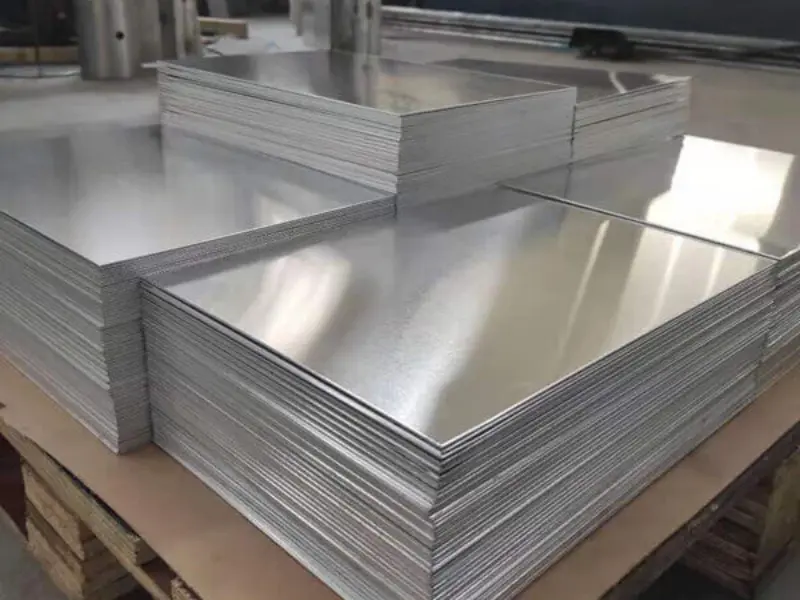
6061 is known for its higher strength.
It is often selected for applications where structural performance matters.
Typical uses include:
- Machine components
- Industrial structures
- Transportation equipment
- Fabricated frames
- Heavy-duty components
However, 6061-T6 is less suitable for severe forming than softer aluminum tempers.
Choosing the Right Aluminum Temper
The temper describes the condition of the aluminum.
| Temper | General Description | Formability |
|---|---|---|
| O | Annealed | Excellent |
| H12 | 1/4 hard | Good |
| H14 | 1/2 hard | Moderate |
| H16 | 3/4 hard | Lower |
| H18 | Full hard | Low |
| H32 | Stabilized | Moderate |
| H34 | Stabilized, higher strength | Lower |
| T6 | Heat treated | Limited forming |
For bending and forming, a softer temper is normally easier to work with.
For rigid panels, a harder temper can provide better resistance to deformation.
4×8 Aluminum Sheet for Trailers
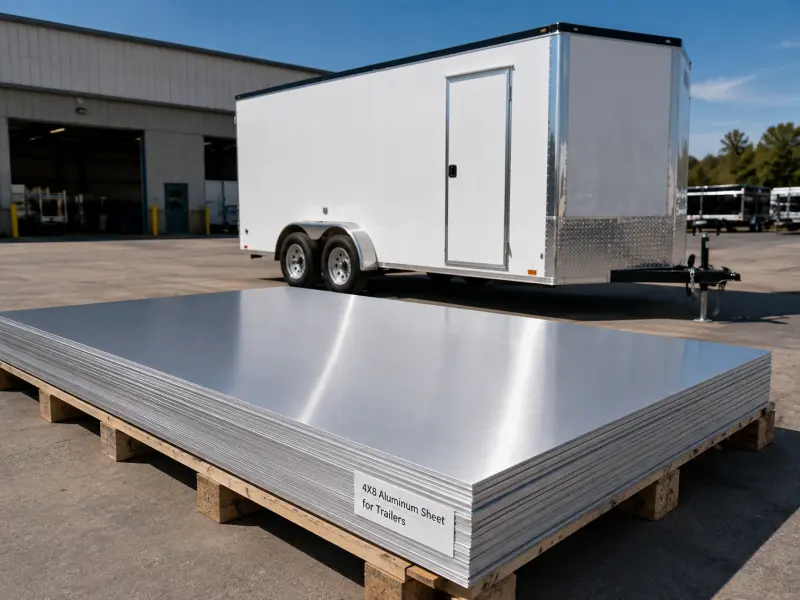
Trailer manufacturers often use 4×8 aluminum sheets because the dimensions work well for side panels and other large surfaces.
Common alloys include:
5052 → 3003 → 6061
The exact alloy depends on whether the sheet is used for siding, flooring, structural parts, or interior panels.
A typical trailer siding specification might be:
| Item | Example |
|---|---|
| Alloy | 5052 |
| Temper | H32 |
| Thickness | 0.050″ |
| Width | 48″ |
| Length | 96″ |
| Surface | Mill finish |
Thicker sheets can be selected when more rigidity is needed.
4×8 Aluminum Sheet for Roofing
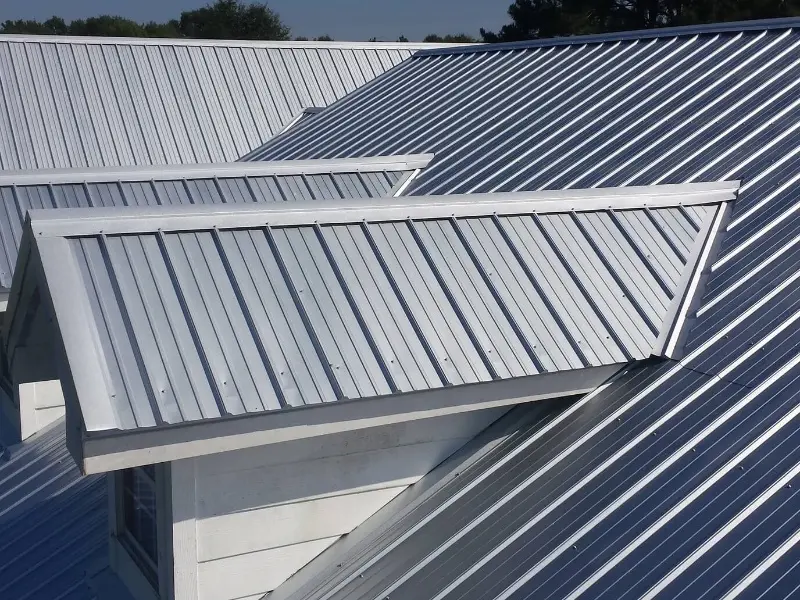
Aluminum roofing offers low weight and good corrosion resistance.
4×8 sheets can be used for:
- Roofing panels
- Roof flashing
- Ridge caps
- Roof repairs
- Architectural roofing
- Metal building components
The final thickness depends on the roof design.
For roofing that will be formed, the alloy should have enough ductility for the required bends.
4×8 Aluminum Sheet for Wall Panels
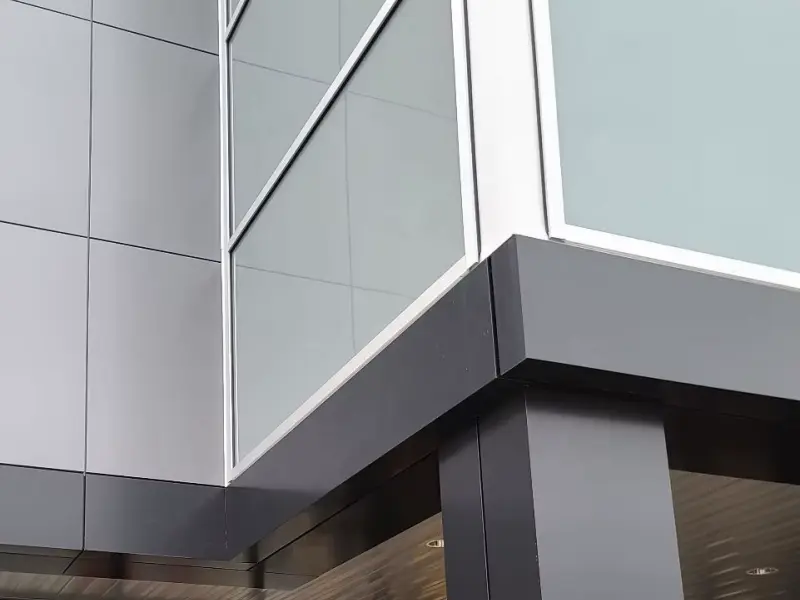
Large aluminum sheets can be used for wall cladding and architectural panels.
Typical applications include:
→ Commercial buildings
→ Industrial buildings
→ Residential construction
→ Interior walls
→ Facade systems
→ Decorative panels
Painted, anodized, and mill-finish surfaces are all available depending on the project.
4×8 Aluminum Sheet for Signage
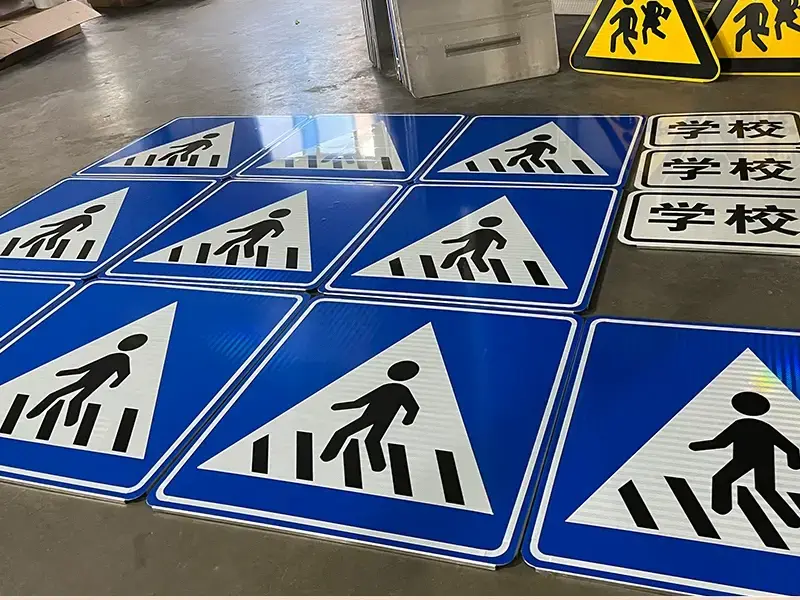
The 4×8 size is convenient for large signs.
Aluminum offers:
- Low weight
- Good outdoor durability
- Easy cutting
- Easy drilling
- Good printability
- Good corrosion resistance
Common alloys include 3003 and 5052.
The sheet can be cut into smaller signs or used as a complete panel.
4×8 Aluminum Sheet for Truck Bodies
Aluminum sheets are used in truck and transportation equipment because they reduce weight.
Applications include:
- Truck side panels
- Truck boxes
- Equipment bodies
- Interior panels
- Access doors
- Protective covers
5052 is often considered when a combination of strength, corrosion resistance, and formability is required.
4×8 Aluminum Sheet for HVAC
Aluminum is widely used in heating, ventilation, and air-conditioning equipment.
Applications include:
- Duct panels
- Equipment covers
- Ventilation components
- Air-conditioning housings
- Insulation jacketing
- Heat-transfer components
3003 is a common choice for many HVAC applications because it offers good formability and corrosion resistance.
4×8 Aluminum Sheet for Insulation
Aluminum sheet can be used as a protective outer layer for insulation.
It can be installed over:
- Rock wool
- Mineral wool
- Glass wool
- PIR insulation
- PU insulation
- Thermal insulation systems
Smooth or stucco embossed aluminum can be selected depending on the installation environment.
4×8 Aluminum Sheet for Kitchen Equipment

Aluminum is used in commercial and industrial kitchen equipment.
Possible products include:
- Kitchen panels
- Equipment covers
- Shelves
- Cooking equipment
- Food-processing components
- Ventilation components
For products that require forming, 3003 is often a practical choice.
4×8 Aluminum Sheet for Fabrication
General fabrication is another major use.
The sheet can be:
Cut → Bent → Drilled → Stamped → Welded → Assembled
Possible products include:
- Boxes
- Covers
- Cabinets
- Panels
- Brackets
- Machine guards
- Equipment housings
The alloy and temper should match the fabrication process.
4×8 Aluminum Sheet Surface Finishes
The surface can be supplied in several forms.
Mill Finish Aluminum Sheet
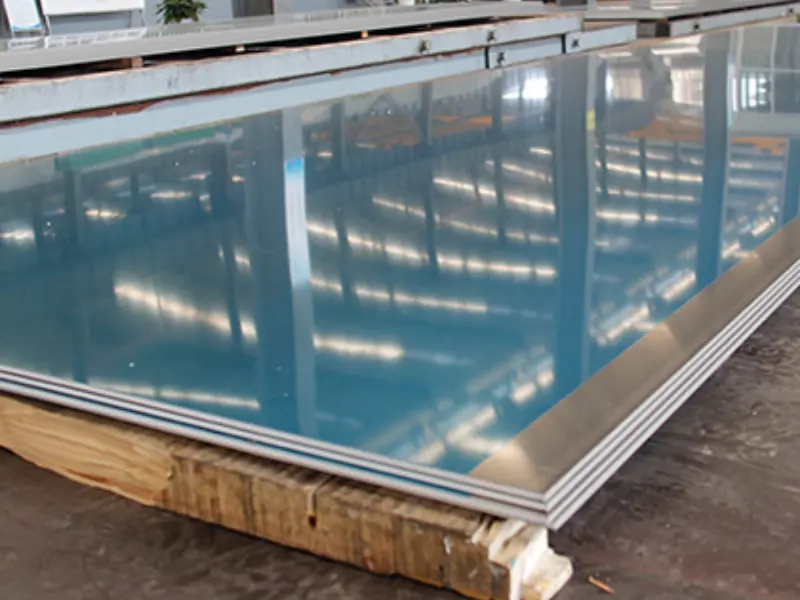
This is the standard unfinished aluminum surface.
It is suitable for general fabrication and applications where the aluminum will receive additional processing.
Anodized Aluminum Sheet
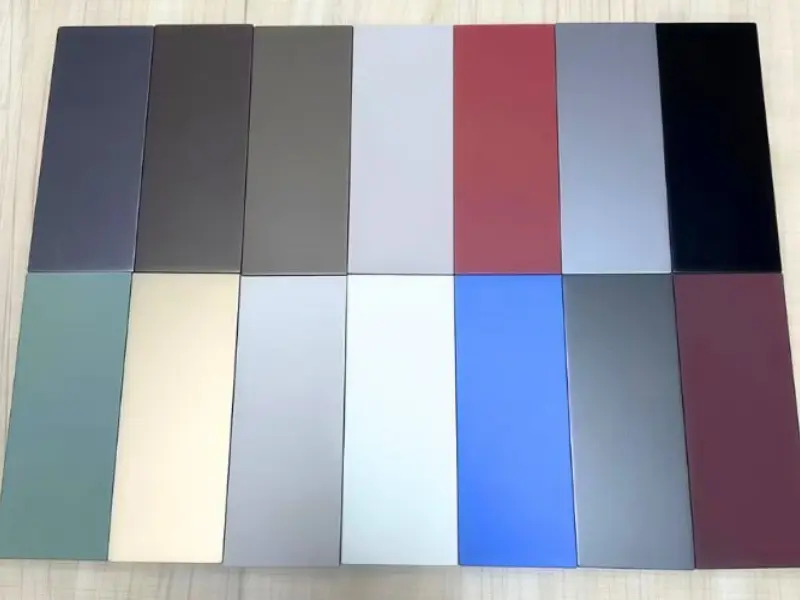
Anodizing creates a controlled oxide layer.
It can provide:
- Better surface appearance
- Improved surface durability
- Decorative colors
- A metallic finish
Anodized sheets are often used in architecture and interior design.
Painted Aluminum Sheet
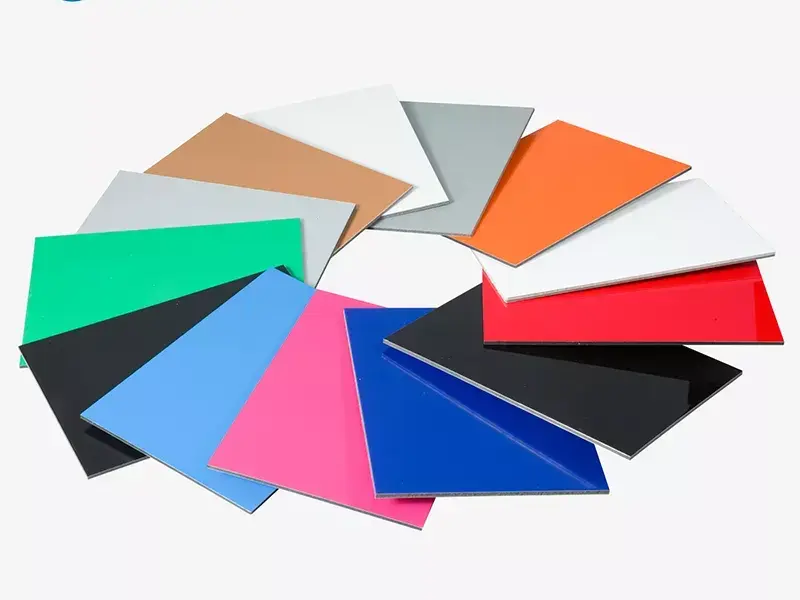
Painted aluminum can be supplied in many colors.
Common options include:
- White
- Black
- Gray
- Blue
- Red
- Green
- Brown
- Custom colors
It is commonly used for roofing, wall panels, signage, and decoration.
Stucco Embossed Aluminum Sheet
Stucco embossed aluminum has a textured surface.
The pattern can help hide minor scratches and provide a decorative appearance.
Applications include:
→ Insulation jacketing
→ HVAC
→ Roofing
→ Wall protection
→ Decorative panels
4×8 Aluminum Diamond Plate
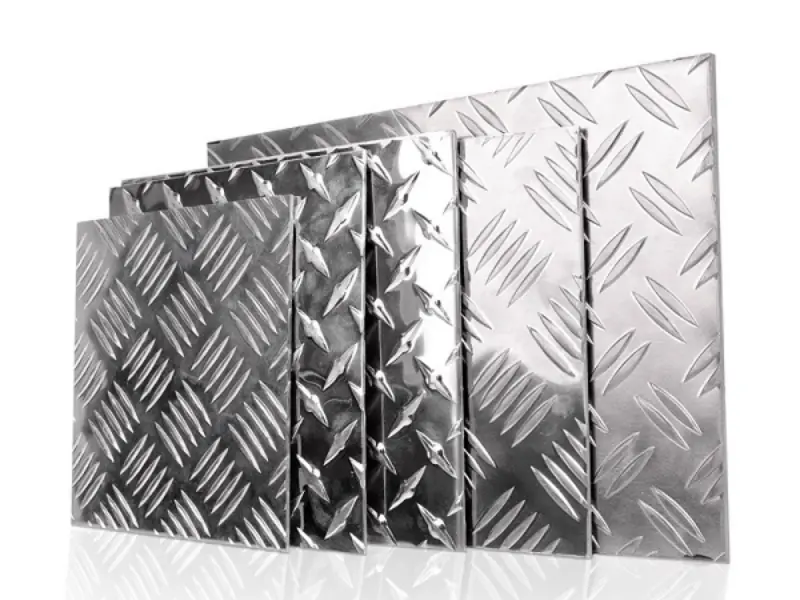
Diamond plate has a raised pattern on one side.
The pattern provides a more textured surface and can also improve visual appearance.
Common applications include:
- Trailer floors
- Truck steps
- Toolboxes
- Ramps
- Walkways
- Vehicle interiors
- Industrial platforms
Common alloys include 3003 and 5052.
4×8 Aluminum Checker Plate
Checker plate is another term used for patterned aluminum sheet.
Depending on the market, buyers may use:
- Aluminum checker plate
- Aluminum tread plate
- Aluminum diamond plate
- Aluminum floor plate
When ordering, it is better to confirm the exact pattern.
4×8 Aluminum Sheet vs 4×10 Aluminum Sheet
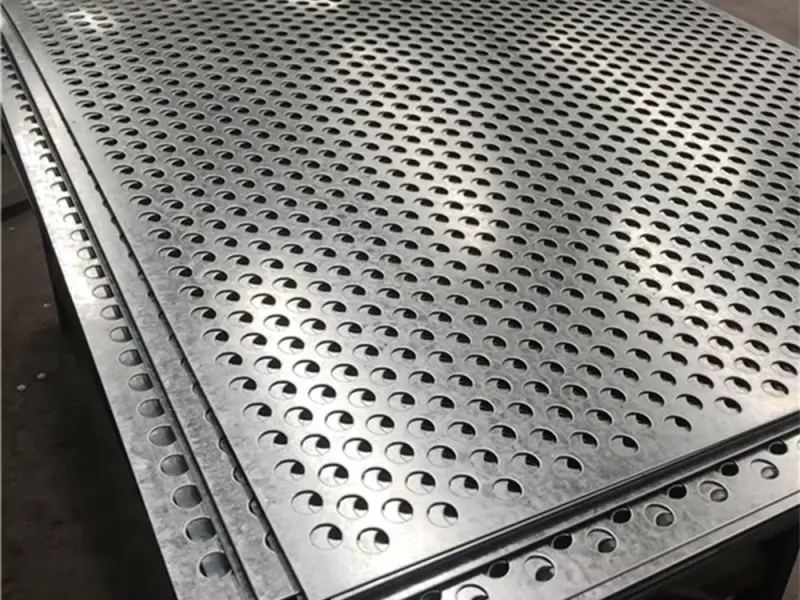
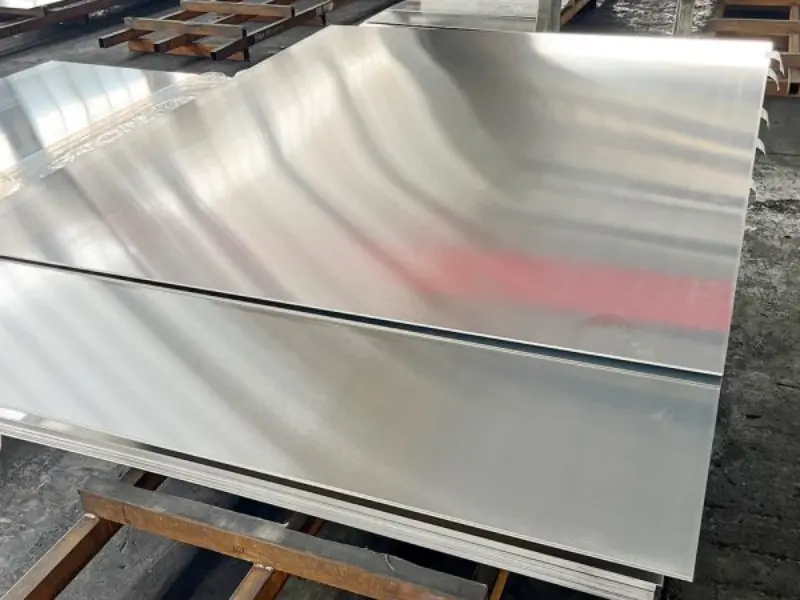
The main difference is length.
| Feature | 4×8 Sheet | 4×10 Sheet |
|---|---|---|
| Width | 4 ft | 4 ft |
| Length | 8 ft | 10 ft |
| Area | 32 sq. ft. | 40 sq. ft. |
| Handling | Easier | More difficult |
| Storage | Easier | Requires more space |
| Large panels | Good | Better |
A 4×10 sheet can reduce seams for some large projects.
A 4×8 sheet is easier to handle and is widely supported by standard fabrication equipment.
4×8 Aluminum Sheet vs 5×10 Aluminum Sheet
| Feature | 4×8 | 5×10 |
|---|---|---|
| Area | 32 sq. ft. | 50 sq. ft. |
| Handling | Easier | More difficult |
| Large coverage | Good | Excellent |
| Storage | Easier | Requires more space |
| Standard fabrication | Very common | Project dependent |
The best size depends on the finished panel dimensions.
4×8 Aluminum Sheet vs 4×4 Aluminum Sheet
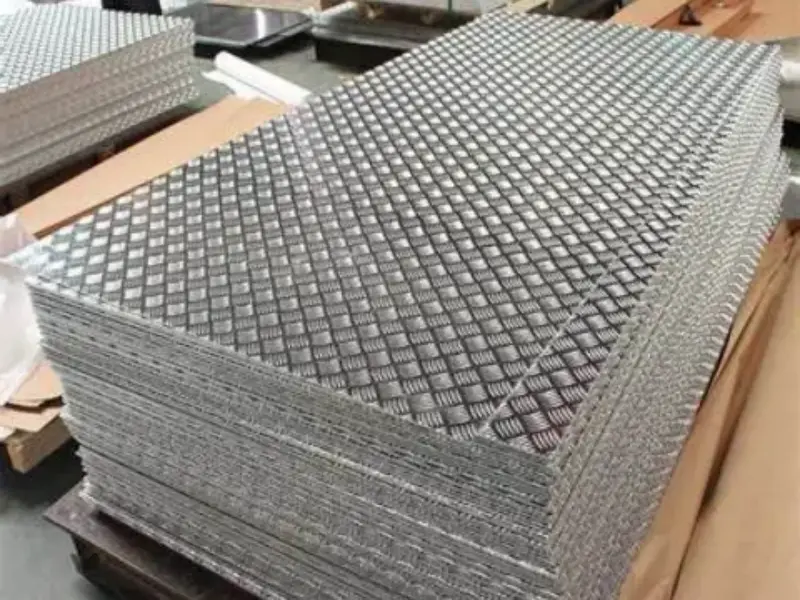
A 4×4 sheet has half the length.
| Feature | 4×4 | 4×8 |
|---|---|---|
| Width | 4 ft | 4 ft |
| Length | 4 ft | 8 ft |
| Area | 16 sq. ft. | 32 sq. ft. |
| Handling | Very easy | Easy |
| Large panels | Limited | Better |
For large wall panels, trailer siding, and signs, 4×8 is often more convenient.
Aluminum Sheet Weight by Thickness
The approximate weight can be estimated using the density of aluminum.
A 4×8 sheet has an area of about 2.97 m².
| Thickness | Approx. Weight per 4×8 Sheet |
|---|---|
| 0.5 mm | 4.0 kg |
| 0.8 mm | 6.4 kg |
| 1.0 mm | 8.0 kg |
| 1.2 mm | 9.6 kg |
| 1.5 mm | 12.0 kg |
| 2.0 mm | 16.0 kg |
| 2.5 mm | 20.0 kg |
| 3.0 mm | 24.0 kg |
| 4.0 mm | 32.0 kg |
| 5.0 mm | 40.0 kg |
| 6.0 mm | 48.0 kg |
These figures are theoretical estimates based on approximately 2.70 g/cm³ density. Actual weight can vary with alloy and dimensional tolerances.
How to Calculate 4×8 Aluminum Sheet Weight
A simple formula is:
Weight = Length × Width × Thickness × Density
For a 4×8 aluminum sheet:
2.438 m × 1.219 m × Thickness × 2700 kg/m³
For example, a 2 mm sheet is approximately:
2.438 × 1.219 × 0.002 × 2700 ≈ 16.0 kg
This calculation is useful when estimating shipping weight and material requirements.
How Much Does a 4×8 Aluminum Sheet Cost?
The price depends on more than sheet size.
The main factors are:
Aluminum market price
↓
Alloy
↓
Temper
↓
Thickness
↓
Surface finish
↓
Quantity
↓
Processing
↓
Packaging
↓
Shipping
For example, a plain 3003 aluminum sheet and a PVDF-coated 5052 sheet can have very different prices even when both are 4×8.
Large orders can also have different unit prices from small orders.
How to Buy 4×8 Aluminum Sheets
A good inquiry should contain the key specifications.
| Requirement | Example |
|---|---|
| Product | 4×8 Aluminum Sheet |
| Alloy | 5052 |
| Temper | H32 |
| Thickness | 0.063″ |
| Width | 48″ |
| Length | 96″ |
| Surface | Mill finish |
| Quantity | 500 sheets |
| Application | Trailer siding |
| Packaging | Wooden pallet |
This information helps a supplier provide a more accurate quotation.
Custom 4×8 Aluminum Sheet Options

Although 4×8 is a standard size, buyers can customize many other parameters.
Possible options include:
- Custom alloy
- Custom temper
- Custom thickness
- Custom width
- Custom length
- Anodized surface
- Painted surface
- PVDF coating
- PE coating
- Diamond pattern
- Stucco pattern
- Brushed finish
- Mirror finish
- Protective film
If the project requires a special size, it may be more efficient to compare standard sheets with custom-cut sheets.
Cutting a 4×8 Aluminum Sheet
A 4×8 sheet can be cut using different methods.
Shearing
Suitable for straight cuts and large-volume work.
Saw Cutting
Useful for accurate straight cuts and thicker material.
CNC Cutting
Suitable for complex shapes and repeated parts.
Laser Cutting
Useful for detailed shapes, depending on thickness and equipment.
Waterjet Cutting
Can be used for various aluminum thicknesses and complex profiles.
The cutting method should match the thickness, tolerance, and production volume.
Bending 4×8 Aluminum Sheet
Bending is common in fabrication.
The bending result depends on:
- Alloy
- Temper
- Thickness
- Bend radius
- Tooling
- Grain direction
- Bending method
For example, 5052-H32 is widely used in fabricated components because it offers a useful balance of strength and formability.
Harder materials may require a larger bend radius.
Welding 4×8 Aluminum Sheet
Aluminum sheet can be welded using suitable equipment.
Common methods include:
- MIG welding
- TIG welding
Weldability depends on the alloy.
For welding projects, the filler material and welding procedure should be selected according to the base alloy.
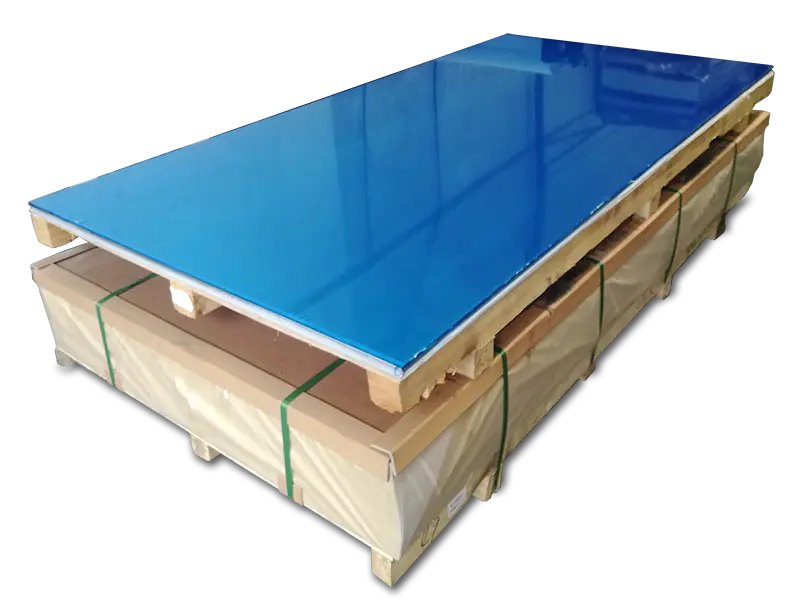
Packaging 4×8 Aluminum Sheets
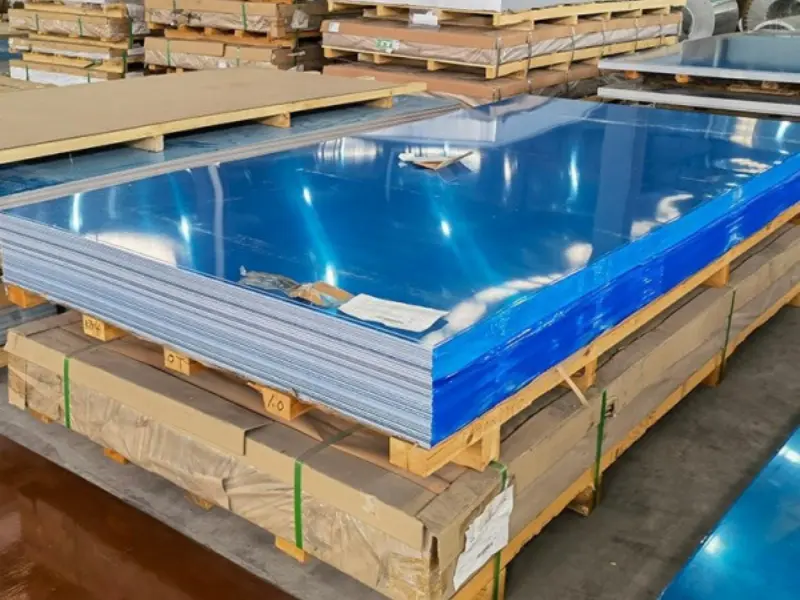
Proper packaging protects sheets during transportation.
Common methods include:
- Wooden pallets
- Wooden cases
- Waterproof paper
- Plastic film
- Edge protection
- Steel straps
- Protective PE film
For decorative or polished sheets, additional surface protection may be required.
Quality Inspection
A professional supplier should check the main specifications before shipment.
Typical inspections include:
→ Alloy
→ Temper
→ Thickness
→ Width
→ Length
→ Flatness
→ Surface condition
→ Quantity
→ Packaging
For large projects, buyers may request material certificates and inspection reports.
Common 4×8 Aluminum Sheet Products
A supplier may offer several products under the same size category.
4×8 Plain Aluminum Sheet
Best suited for:
→ General fabrication
→ Panels
→ Equipment
→ Construction
4×8 Diamond Aluminum Sheet
Used for:
→ Trailers
→ Truck steps
→ Flooring
→ Toolboxes
4×8 Stucco Embossed Aluminum Sheet
Used for:
→ Insulation
→ HVAC
→ Decorative applications
4×8 Anodized Aluminum Sheet
Used for:
→ Architecture
→ Interior decoration
→ Panels
4×8 Painted Aluminum Sheet
Used for:
→ Roofing
→ Wall cladding
→ Signage
→ Decoration
4×8 Aluminum Plate
Used for:
→ Machinery
→ Industrial components
→ Heavy fabrication
Product Selection Guide
The easiest way to choose a sheet is to start with the application.
Trailer siding
→ 5052-H32
→ 0.050–0.080″
→ Mill finish or painted
Roofing
→ 3003 / 3105
→ Around 0.040–0.080″
→ Painted or coated
General fabrication
→ 3003 / 5052
→ 0.040–0.125″
→ Mill finish
Heavy-duty fabrication
→ 5052 / 6061
→ 0.125″ and above
→ Mill finish
Signage
→ 3003 / 5052
→ 0.032–0.063″
→ Painted or anodized
HVAC
→ 3003
→ Around 0.032–0.063″
→ Mill finish or coated
Insulation
→ 1050 / 1060 / 3003
→ Thin sheet
→ Smooth or stucco embossed
Final Guide to 4×8 Aluminum Sheet
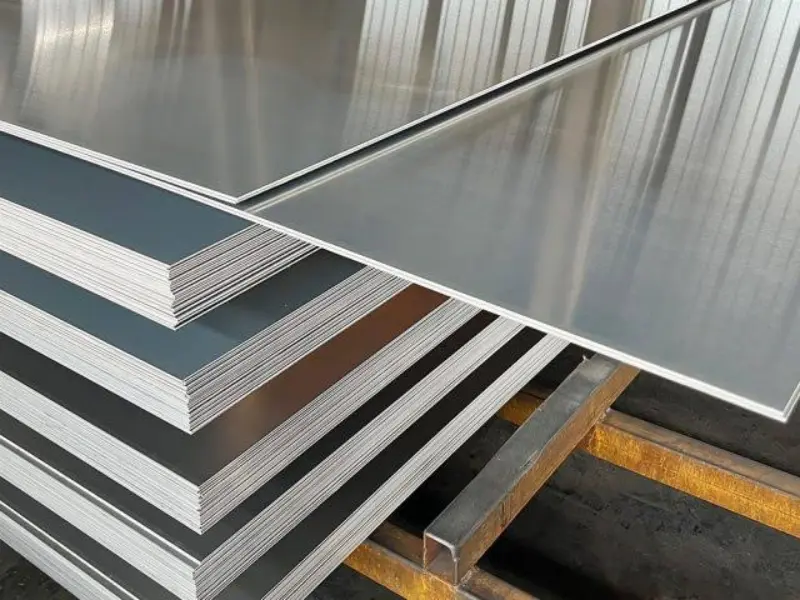
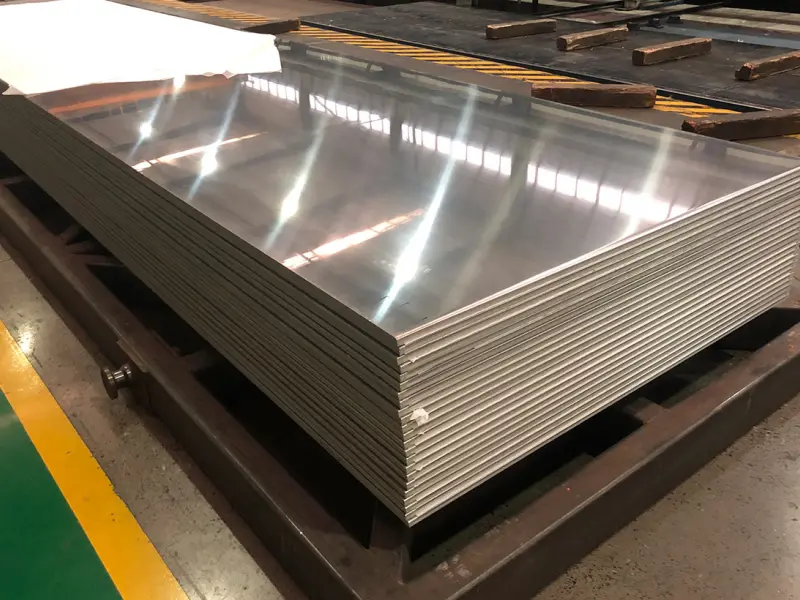
A 4×8 aluminum sheet is a practical standard size for many commercial and industrial projects.
Its popularity comes from a simple combination:
Standard size → Easy handling → Easy cutting → Wide alloy selection → Many surface options
For light fabrication, 1050, 1060, or 3003 may be suitable.
For trailers, transportation equipment, and outdoor components, 5052 is often considered.
For higher-strength applications, 6061 or other engineering alloys may be selected.
Thickness should be based on the required rigidity, forming process, and final load.
Surface finish should also match the application. Mill finish works well for general fabrication, while anodized, painted, diamond, and stucco finishes provide different functional or decorative properties.
Before purchasing, provide the supplier with:
Alloy + Temper + Thickness + Width + Length + Surface + Quantity + Application
For example:
5052-H32 × 0.063″ × 48″ × 96″ × Mill Finish × 500 Sheets
This type of specification makes quotation and production much easier.
FAQ About 4×8 Aluminum Sheet
What are the dimensions of a 4×8 aluminum sheet?
A standard 4×8 aluminum sheet is approximately 48 × 96 inches, or 1219 × 2438 mm.
How much does a 4×8 aluminum sheet weigh?
The weight depends on thickness. A 1 mm sheet is approximately 8 kg, while a 2 mm sheet is approximately 16 kg.
What is the most common aluminum alloy for 4×8 sheets?
3003 and 5052 are common choices, but 1050, 1060, 1100, 3004, 3105, 5083, and 6061 are also available for specific applications.
Is 5052 aluminum good for trailers?
Yes. 5052 is widely used for trailer and transportation components because it offers good corrosion resistance and useful strength.
Is 3003 aluminum suitable for roofing?
Yes. 3003 can be used for various roofing and building products when the selected temper and thickness meet the design requirements.

What thickness should I use for a trailer?
There is no single thickness for every trailer. Around 0.050″, 0.063″, and 0.080″ are commonly considered for different trailer components, but the correct choice depends on the design.
What is 0.032 aluminum sheet in millimeters?
0.032 inch is approximately 0.81 mm.
What is 0.063 aluminum sheet in millimeters?
0.063 inch is approximately 1.60 mm.
What is 0.125 aluminum sheet in millimeters?
0.125 inch is approximately 3.18 mm.
Is 4×8 aluminum sheet suitable for outdoor use?
Yes. Aluminum has good corrosion resistance. For demanding outdoor applications, the alloy and surface finish should be selected according to the environment.
Can 4×8 aluminum sheets be used for signs?
Yes. Aluminum is widely used for commercial, traffic, advertising, and industrial signage.
What is the difference between aluminum sheet and aluminum plate?
The terms are often based on thickness and industry usage. Thicker aluminum products are commonly called plate, while thinner products are usually called sheet.
Can a 4×8 aluminum sheet be cut?
Yes. It can be sheared, saw cut, CNC cut, laser cut, or waterjet cut depending on the application.
Can a 4×8 aluminum sheet be bent?
Yes. The suitable bending method depends on alloy, temper, thickness, bend radius, and tooling.
Can 4×8 aluminum sheets be painted?
Yes. Aluminum sheets can be painted or supplied with factory-applied coatings.
Can I order a different size?
Yes. Custom sizes can be supplied depending on the manufacturer’s equipment and order quantity.