What Is an Aluminium Sheet Roll?
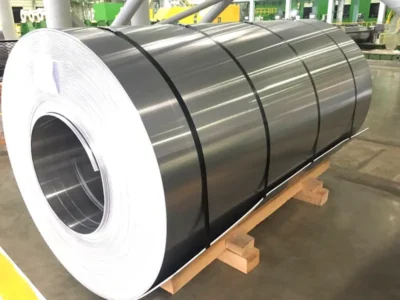
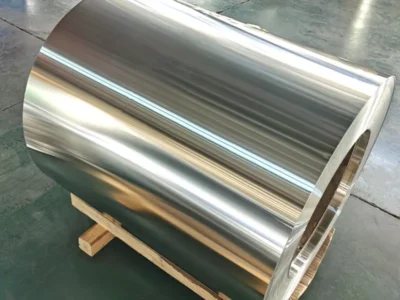
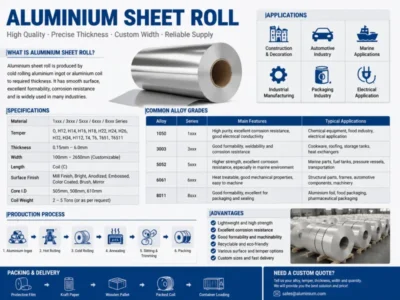
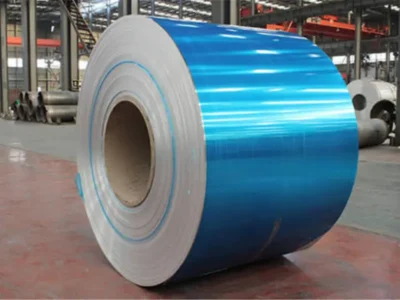
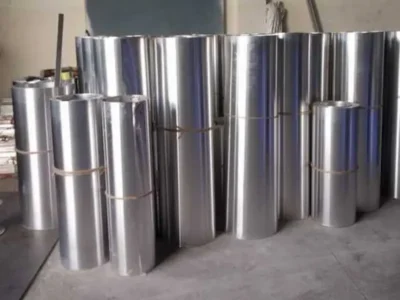
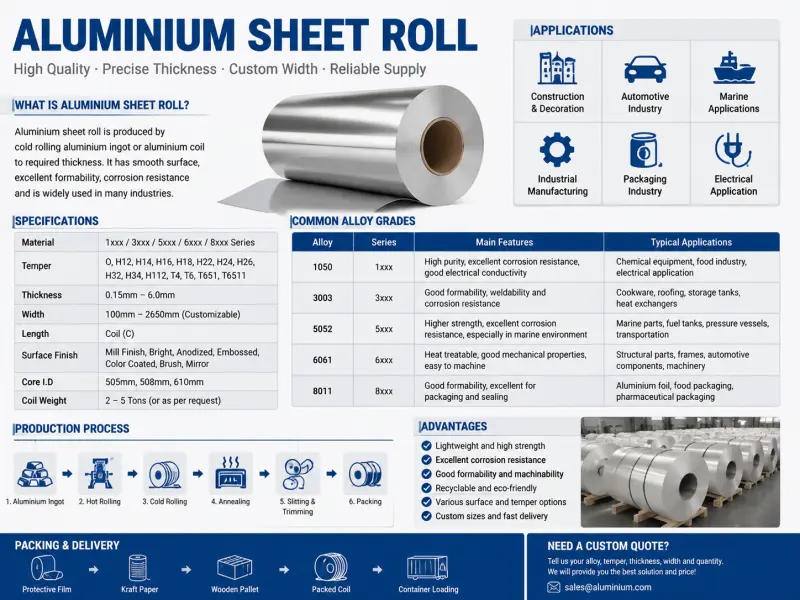
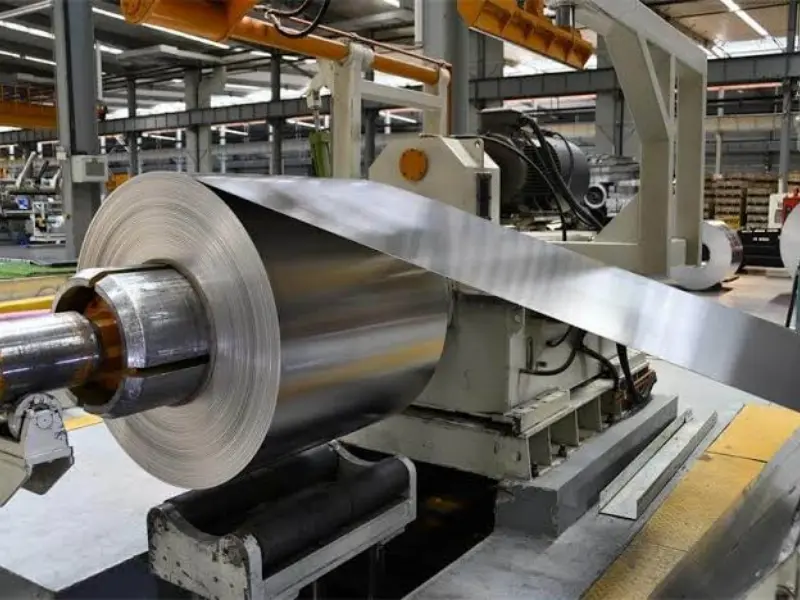
An aluminium sheet roll is a long strip of aluminium alloy wound into a coil.
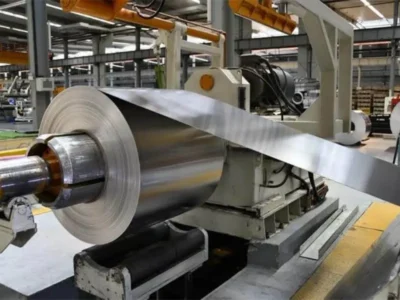
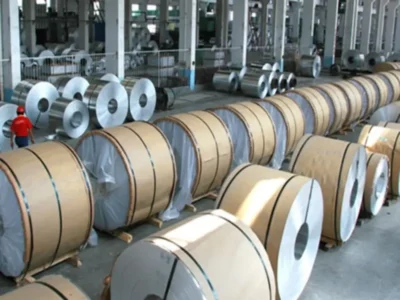
Factories produce these rolls by feeding aluminium ingots through hot and cold rolling mills.
The result is a continuous length of flat metal that can be unrolled, cut, and formed as needed.
Rolls are the preferred format when buyers need large volumes of material for automated production lines.
Unlike cut sheets, rolls reduce waste. There are no off-cuts from standard sheet sizes.
The material feeds straight into roll formers, stamping presses, and slitting machines. This makes rolls ideal for high-speed manufacturing.
Why Choose Rolls Over Cut Sheets?
Lower Material Waste
Cut sheets leave scrap at the edges. Rolls can be slit to exact width before they reach your factory. This saves money on raw material.
Faster Production
Rolls feed continuously into machines. There is no stop-start loading of individual sheets. Output per hour goes up.
Better Storage
A coil takes less floor space than a stack of loose sheets. It stays clean and flat when stored on a rack.
Custom Widths
Suppliers can slit a master coil into any width from 6 mm up to 1,800 mm. This gives buyers exact sizes without paying for extra metal.
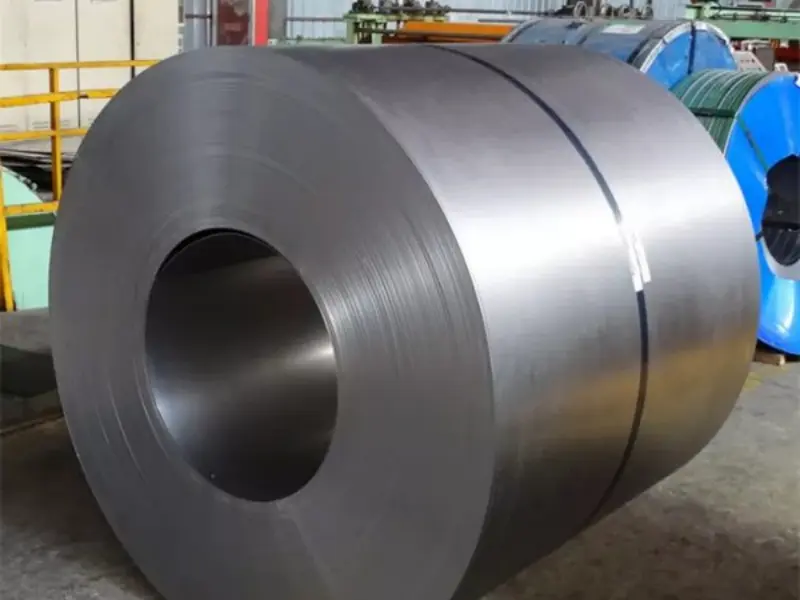
Aluminium Sheet Roll Standard Coil Dimensions
| Parameter | Common Range |
|---|---|
| Thickness | 0.1 mm to 4.0 mm (standard); up to 8.3 mm on request |
| Width | 6 mm to 1,879 mm |
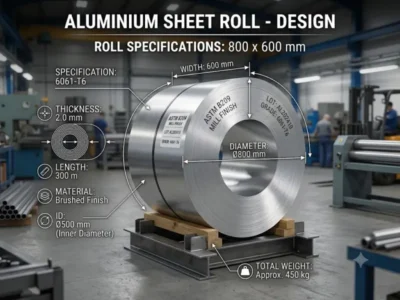
| Inner Diameter | 152 mm, 203 mm, 254 mm, 305 mm, 406 mm, 508 mm, 610 mm |
| Outer Diameter | Up to 1,981 mm maximum |
| Coil Weight | Up to 7.9 kg per mm of width |
| Standard Widths | 1,000 mm, 1,220 mm, 1,250 mm, 1,500 mm |
Note: Tighter tolerances than standard commercial specs are available on request.
Alloy Families for Sheet Rolls
Aluminium rolls come in many alloy grades. The first digit of the four-digit number tells you the main alloying element.
| Series | Main Element | Typical Traits |
|---|---|---|
| 1000 | None (pure Al) | Soft, highly reflective, excellent corrosion resistance |
| 3000 | Manganese | Good formability, better strength than 1000 series |
| 5000 | Magnesium | Higher strength, excellent marine corrosion resistance |
| 6000 | Magnesium + Silicon | Heat-treatable, strong, good machinability |
| 8000 | Iron / Silicon | Foil and packaging grades |
Pure Aluminium Rolls: 1050, 1060, 1100
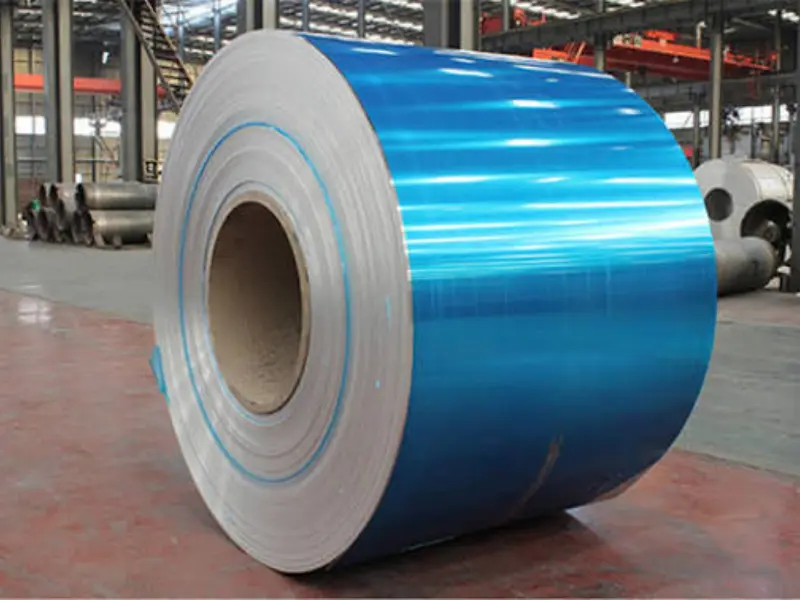
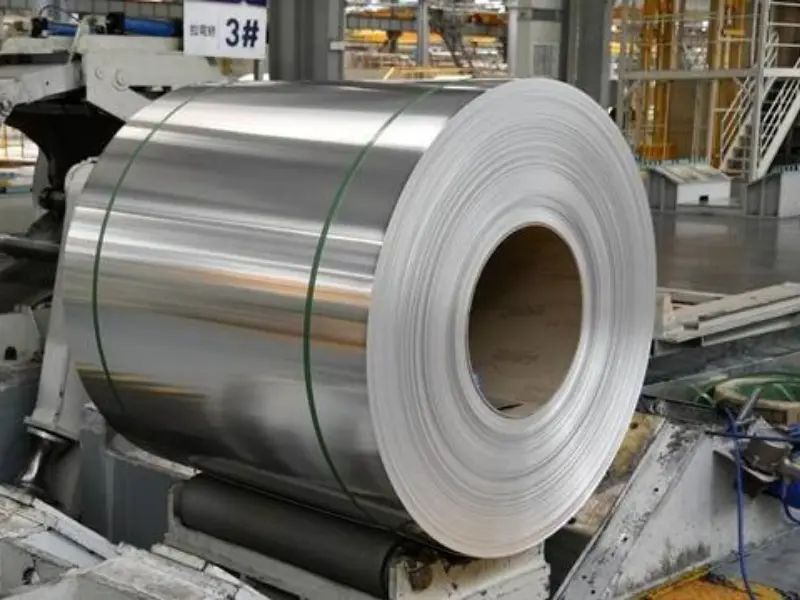
These grades contain 99% or more aluminium. They are the softest and most formable options.
1050 Aluminium Sheet Roll
| Property | Value |
|---|---|
| Aluminium Content | 99.5% |
| Temper Range | O, H12, H14, H16, H18, H22, H24 |
| Tensile Strength (O) | 60 – 100 MPa |
| Best For | Reflectors, electrical conductors, chemical equipment |
| Price Level | Lowest |
Why It Sells: 1050 is the cheapest coil grade. It bends easily and takes a bright polish. Many buyers use it for lighting reflectors and solar panels.
1060 Alloy Aluminium Sheet Roll
| Property | Value |
|---|---|
| Aluminium Content | 99.6% |
| Temper Range | O, H12, H14, H18, H24 |
| Tensile Strength (O) | 60 – 100 MPa |
| Best For | Sublimation blanks, capacitor foil, heat exchangers |
Why It Sells: Slightly purer than 1050. It rolls flatter and holds coating better. Popular for printed and coated products.
1100 Alloy Aluminium Sheet Roll
| Property | Value |
|---|---|
| Aluminium Content | 99.0% |
| Temper Range | O, H12, H14, H16 |
| Tensile Strength (O) | 75 – 105 MPa |
| Best For | Cooking utensils, food handling, signage, roofing |
Why It Sells: The commercial standard for pure aluminium. It has better strength than 1050 while keeping the same ease of work.
3003 Alloy: The Workhorse Roll
3003 is the most widely used alloy in coil form. Manganese adds strength without hurting formability.
| Property | Value |
|---|---|
| Main Alloy Element | Manganese (1.0 – 1.5%) |
| Temper Range | O, H12, H14, H16, H18, H22, H24, H26 |
| Tensile Strength (H14) | 140 – 180 MPa |
| Yield Strength (H14) | 115 – 150 MPa |
| Density | 2.73 g/cm³ |
| Heat Treatable | No |
Top Applications:
- Roofing and gutter systems
- HVAC ducting and fins
- Cooking pans and non-stick cookware
- Truck and trailer panels
- Chemical storage tanks
- Building facades and ceilings
Why Factories Love It: 3003 sits in the sweet spot. It is stronger than pure aluminium but still easy to stamp and bend. It also takes paint and anodizing very well.
5052 Alloy Aluminium Sheet Roll: Marine-Grade Strength
5052 belongs to the 5000 series. Magnesium gives it much better corrosion resistance and strength.
| Property | Value |
|---|---|
| Main Alloy Element | Magnesium (2.2 – 2.8%) |
| Temper Range | O, H32, H34, H36, H38, H111, H112 |
| Tensile Strength (H32) | 230 – 280 MPa |
| Yield Strength (H32) | 190 – 240 MPa |
| Density | 2.68 g/cm³ |
| Heat Treatable | No |
Top Applications:
- Boat hulls and marine decking
- Fuel tanks and oil lines
- Electronic chassis and enclosures
- Pressure vessels
- Truck and trailer siding
- Coastal architectural trim
Why It Sells: 5052 resists salt spray better than almost any non-heat-treatable alloy. The H32 temper allows tight bends without cracking. This is the go-to grade for outdoor and marine rolls.
6061 Alloy Aluminium Sheet Roll: Structural Power
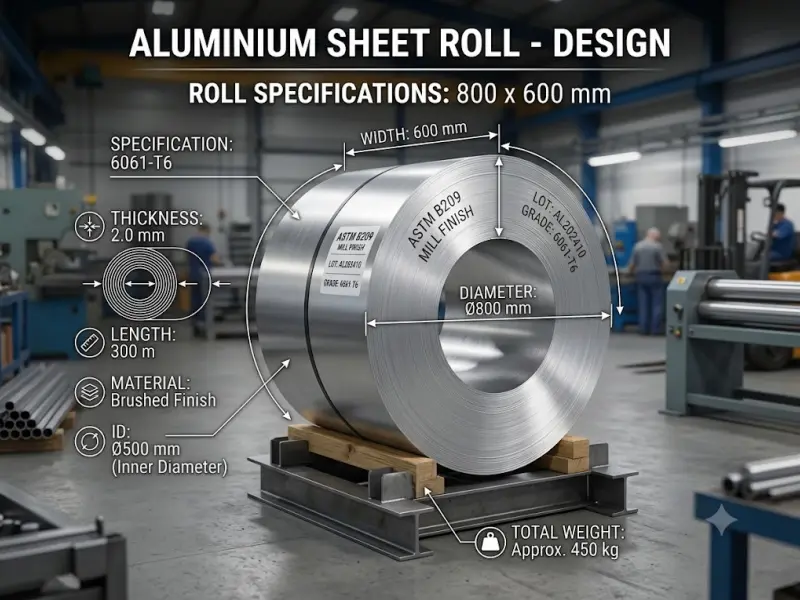
6061 is heat-treatable. It contains both magnesium and silicon. After T6 treatment, it becomes one of the strongest standard coil grades.
| Property | Value |
|---|---|
| Main Alloy Elements | Magnesium (0.8 – 1.2%), Silicon (0.4 – 0.8%) |
| Temper Range | O, T4, T6, T651 |
| Tensile Strength (T6) | 290 – 310 MPa |
| Yield Strength (T6) | 240 – 280 MPa |
| Density | 2.70 g/cm³ |
| Heat Treatable | Yes |
Top Applications:
- Aerospace structural parts
- Automotive chassis components
- Bridge and walkway panels
- Industrial machinery frames
- Precision tooling plates
- Bicycle frames
Trade-Off: 6061-T6 is strong but harder to bend. For forming, order T4 or O temper. Bend first, then heat treat to T6 if needed.
5005 and 5754 Aluminium Sheet Roll: The Middle Ground
5005 Alloy
| Property | Value |
|---|---|
| Main Alloy Element | Magnesium (0.5 – 1.1%) |
| Temper Range | O, H14, H32, H34, H38 |
| Best For | Architectural anodizing, auto body panels |
| Key Trait | Excellent surface finish after anodizing |
Why It Sells: 5005 is the top pick when you need a decorative anodized look. It anodizes more evenly than 5052.
5754 Alloy Aluminium Sheet Roll
| Property | Value |
|---|---|
| Main Alloy Element | Magnesium (2.6 – 3.6%) |
| Temper Range | O, H12, H14, H22, H24, H111, H112 |
| Tensile Strength (H22) | 220 – 270 MPa |
| Best For | Ship structures, vehicle bodies, tanks, roofing |
Why It Sells: Stronger than 5052 with similar corrosion resistance. Good for welded structures in harsh environments.
Alloy Comparison for Sheet Rolls
| Feature | 1050 | 3003-H14 | 5052-H32 | 5005-H34 | 5754-H22 | 6061-T6 |
|---|---|---|---|---|---|---|
| Strength | Very Low | Low | Medium | Medium | Medium-High | High |
| Formability | Excellent | Very Good | Very Good | Good | Good | Fair (T6) |
| Corrosion Resistance | Very Good | Good | Excellent | Very Good | Excellent | Good |
| Marine Use | Poor | Poor | Excellent | Good | Excellent | Moderate |
| Weldability | Good | Good | Excellent | Good | Excellent | Good |
| Machinability | Poor | Poor | Poor | Poor | Fair | Very Good |
| Anodizing Quality | Good | Fair | Fair | Excellent | Good | Good |
| Price Level | Lowest | Low | Medium | Medium | Medium-High | Higher |
| Best For | Reflectors, foil | General sheet metal | Marine, outdoor | Decorative trim | Welded tanks | Structural parts |
Aluminium Sheet Roll Temper Codes Explained
The letters after the alloy number tell you how the metal was treated. This affects hardness and how the roll behaves in your machines.
| Temper | Meaning | Best Use |
|---|---|---|
| O | Fully annealed, soft | Deep drawing, complex bends |
| H12 | Quarter hard | Light forming, general use |
| H14 | Half hard | Most common for sheet metal work |
| H16 | Three-quarter hard | Higher strength, less bendable |
| H18 | Full hard | Maximum cold-worked strength |
| H22 | Quarter hard, annealed after hardening | Better formability than H12 |
| H24 | Half hard, annealed after hardening | Stable, good for deep drawing |
| H32 | Quarter hard, stabilized | Common for 5052, excellent for bending |
| T4 | Heat treated, naturally aged | Medium strength, better formability |
| T6 | Heat treated, artificially aged | Maximum strength, harder to bend |
Practical Tip: If your roll former or press brake struggles with T6 temper, ask for T4. You can heat treat after forming if extra strength is needed.
Aluminium Sheet Roll Surface Finishes for Rolls
The look and performance of a roll change based on surface treatment.
| Finish | Description | Typical Use |
|---|---|---|
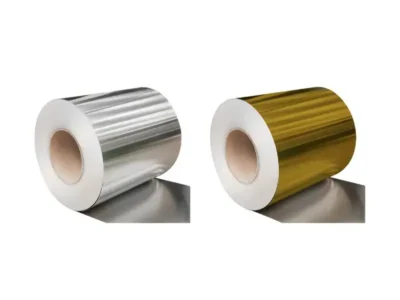
| Mill Finish | As-rolled, slightly dull | Industrial parts, hidden panels |
| Bright Rolled | Highly reflective, smooth | Reflectors, lighting, solar |
| Matte | Low gloss, non-reflective | Ceilings, wall panels |
| Brushed | Fine parallel lines | Appliances, decorative trim |
| Anodized | Hard oxide layer, color options | Outdoor facades, marine |
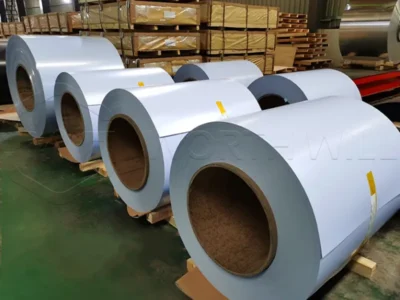
| Pre-Painted | Factory-applied paint or powder | Roofing, siding, signage |
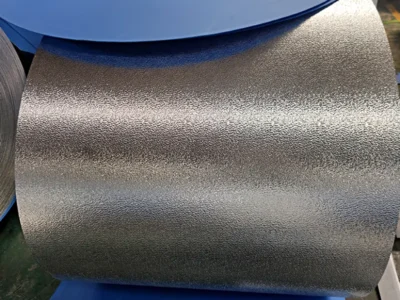
| Embossed / Stucco | Textured pattern | Insulation cladding, anti-slip |
| Chequered / Tread | Diamond or 5-bar pattern | Flooring, ramps, walkways |
| Polished / Mirror | Mirror-like shine | Decorative, display, luxury |
Pre-Painted and Coated Rolls Aluminium Sheet Roll
Many buyers order rolls with factory-applied coatings. This saves a production step.
| Coating Type | Thickness | Best For | Color Options |
|---|---|---|---|
| PE (Polyester) | ≥16 microns | Indoor, short-term outdoor | Wide range |
| PVDF | ≥25 microns | Long-term outdoor, harsh weather | Wide range |
| Epoxy | Varies | Industrial, chemical resistance | Limited |
| Polyurethane | Varies | High wear areas | Limited |
Color Choices: Solid colors, metallic, high gloss, stone look, timber grain, brush effect, mirror, and custom RAL shades.
Aluminium Sheet Roll Thickness Guide for Common Applications
| Thickness | Weight per m² | Best Use | Machine Type |
|---|---|---|---|
| 0.1 – 0.2 mm | 0.27 – 0.54 kg | Foil, packaging, flexible ducts | Slitting, laminating |
| 0.3 – 0.5 mm | 0.81 – 1.35 kg | Flashing, fins, tags, labels | Roll forming, stamping |
| 0.6 – 0.8 mm | 1.62 – 2.16 kg | Guttering, small panels, trims | Roll forming, brake press |
| 0.9 – 1.2 mm | 2.43 – 3.24 kg | Roofing, siding, ducting | Roll forming, profiling |
| 1.5 – 2.0 mm | 4.05 – 5.40 kg | Structural panels, tanks, guards | Press brake, welding |
| 2.5 – 4.0 mm | 6.75 – 10.80 kg | Heavy-duty parts, marine plating | CNC, welding, machining |
Roll Forming vs Stamping: Which Process Fits?
| Factor | Roll Forming | Stamping |
|---|---|---|
| Best Shape | Long profiles with constant cross-section | Complex 3D shapes, cutouts |
| Setup Cost | Higher die cost | Lower die cost for simple parts |
| Speed | Very fast, continuous | Slower, stop-start |
| Material Waste | Very low | Higher, off-cuts from blanks |
| Best Thickness | 0.3 mm to 3.0 mm | 0.5 mm to 6.0 mm |
| Typical Products | Roofing profiles, door frames, rails | Panels, brackets, enclosures |
Verdict: Use roll forming for long runs of linear parts. Use stamping for complex shapes and lower volumes.
Slitting and Cut-to-Length Services
Most suppliers offer in-house processing. This turns a master coil into ready-to-use strips or sheets.
| Service | Input | Output | Tolerance |
|---|---|---|---|
| Slitting | Master coil up to 1,800 mm wide | Strips from 6 mm wide | ±0.1 mm width |
| Cut-to-length | Coil of any width | Flat sheets, any length | ±1.0 mm length |
| Blanking | Coil strip | Precise flat blanks | ±0.5 mm |
| Edge dressing | Slit strip | Smooth, burr-free edges | Ra 3.2 or better |
Benefit: Buy one large coil. Get back multiple sizes ready for your production line. No need to invest in slitting equipment.
Weight and Shipping Facts
Coils are heavy. Knowing the weight helps with logistics planning.
| Coil Spec | Approximate Weight |
|---|---|
| 1,000 mm wide × 1.0 mm thick × 1,500 mm OD | ~3,200 kg |
| 1,220 mm wide × 0.5 mm thick × 1,200 mm OD | ~1,600 kg |
| 1,250 mm wide × 2.0 mm thick × 1,800 mm OD | ~9,500 kg |
| 1,500 mm wide × 0.8 mm thick × 1,500 mm OD | ~4,800 kg |
Shipping Tip: A standard 20-foot container holds about 20,000 kg of coil. A 40-foot container holds about 26,000 kg. Always confirm with your freight forwarder.
Applications by Industry
Building and Construction
- Roofing panels and standing seam profiles
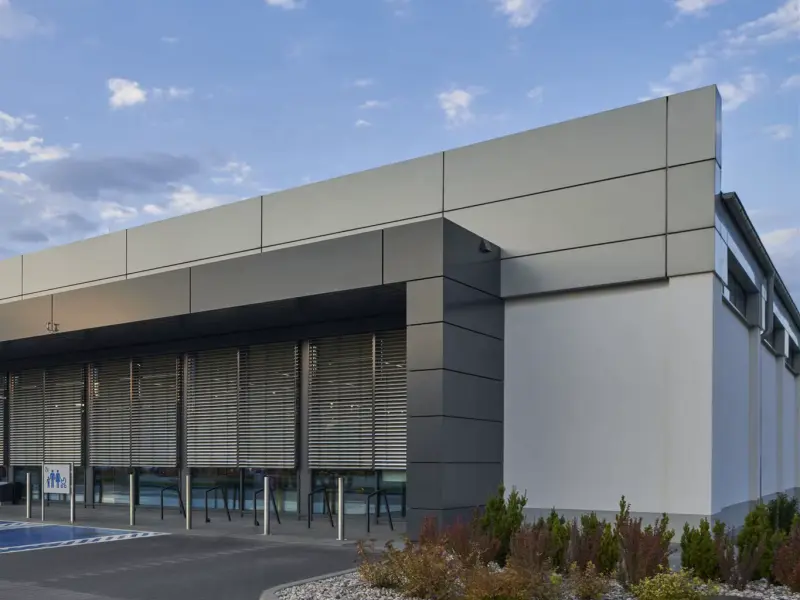
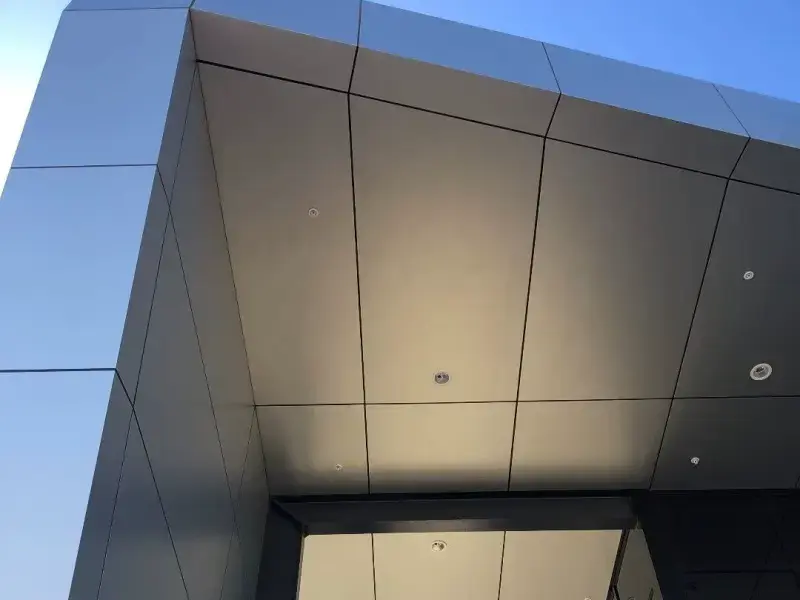
- Wall cladding and facade systems
- Guttering and downpipes
- Ceiling tiles and suspended grids
- Flashing and trim work
- Insulation jacketing
Automotive and Transport
- Body panels and fenders
- Fuel tanks and lines
- Trailer and truck siding
- Bus and rail interior panels
- Heat shields and baffles
- Battery enclosure liners
Marine and Offshore
- Boat hull plating
- Deck covering and grating
- Cabin interior panels
- Fuel and water tanks
- Gangways and ladder rungs
- Offshore platform cladding
HVAC and Thermal
- Air conditioning fins and coils
- Ducting and ventilation systems
- Heat exchanger plates
- Radiator cores
- Thermal insulation cladding
- Refrigeration units
Electrical and Electronics
- Transformer windings
- Bus bars and conductors
- LED heat sinks
- Shielding enclosures
- Circuit board backing
- Solar panel frames
Food and Packaging
- Can bodies and ends
- Foil containers and lids
- Bottle caps and closures
- Candy and chocolate wrappers
- Pharmaceutical blister packs
- Flexible packaging laminates
Industrial Machinery
Tooling and fixture parts
Machine guards and covers
Conveyor belts and chutes
Tanks and pressure vessels
Chemical processing equipment
Filter housings
Coil vs Cut Sheet: Cost Comparison
| Factor | Sheet Roll (Coil) | Cut Sheet |
|---|---|---|
| Material Cost per kg | Lower | Higher |
| Processing Waste | Very low | Higher |
| Labour for Loading | Less (continuous feed) | More (sheet by sheet) |
| Storage Space | Compact | Needs more floor area |
| Setup Flexibility | Needs slitting or cut-to-length | Ready to use |
| Best Order Size | 5 tons and up | Any quantity |
| Lead Time | 2 – 4 weeks | Often in stock |
Verdict: Coils win on price and efficiency for large, repeat orders. Cut sheets win for small jobs and one-off projects.
Quality Checks Before You Buy
| Test | What to Look For | Pass/Fail |
|---|---|---|
| Visual inspection | No scratches, dents, or oil stains | Pass |
| Thickness gauge check | Within ±0.03 mm of spec | Pass |
| Width measurement | Within ±1.0 mm of order | Pass |
| Coil edge check | No burrs, no waves, no camber | Pass |
| Tensile test report | Matches alloy and temper spec | Pass |
| Coating adhesion (if painted) | No peeling after tape test | Pass |
| Flatness test | No buckles or edge waves | Pass |
Always Request: Mill Test Certificate (MTC) with chemical composition and mechanical properties. This proves the coil meets ASTM B209 or EN 573 standards
Aluminium Sheet Roll Storage and Handling Tips
- Store coils on their side on a rack. Do not stack flat.
- Keep indoors, away from moisture and salt air.
- Use a coil car or crane for heavy rolls. Do not roll by hand.
- Protect edges with corner guards during transport.
- Apply light oil if storing for more than three months.
Frequently Asked Questions
What is the minimum order for aluminium sheet rolls?
Most factories accept 5 tons per size as a minimum. Some stockists sell smaller quantities from slit stock. For custom alloys or special tempers, 10 tons or more may be required.
Can I order a mixed container with different alloys?
Yes. Many suppliers load multiple coil types in one container. This helps buyers who need several grades but want to share shipping costs.
How do I know which temper to choose?
Start with your forming process. If you need deep draws or tight bends, choose O or H22 temper. If you need stiffness and strength, choose H14, H24, or T6. Test a sample before committing to a full coil.
What is the difference between hot-rolled and cold-rolled coil?
Hot-rolled coil is formed at high temperature. It is thicker and has a rougher surface. Cold-rolled coil is formed at room temperature. It is thinner, smoother, and has tighter tolerances. Most sheet rolls for fabrication are cold-rolled.
Can aluminium rolls be welded?
Yes. All the alloys listed here can be welded. TIG and MIG are the most common methods. Use 4043 or 5356 filler wire. Clean the surface before welding to remove oxide and oil.
Do rolls come with protective film?
Yes, most suppliers offer PE film on one or both sides. This prevents scratches during handling and transport. The film peels off easily before processing.
How long does delivery take?
Stock coils ship in 3 to 7 days. Custom-slit or special alloy coils take 2 to 4 weeks. Export orders add shipping time of 2 to 6 weeks depending on destination.
What standards should the coil meet?
Common standards include ASTM B209, EN 485, EN 573, and ISO 6361. For food contact, look for FDA or EU food-safe certification. For marine use, ask for DNV or ABS approval.
Can I get colour-matched pre-painted coils?
Yes. Most paint lines can match RAL colours or provide custom shades. Minimum order for custom colour is usually 5 tons. Standard colours may have lower minimums.
Why does my coil have edge waves?
Edge waves happen when the coil is slit too narrow or tension is uneven. Good suppliers level and tension the coil before shipping. Reject coils with waves over 3 mm per metre.
Choosing the Right Roll for Your Job
| Your Need | Recommended Alloy | Recommended Temper | Typical Thickness |
|---|---|---|---|
| General sheet metal, low cost | 1050 or 1100 | H14 | 0.5 – 1.0 mm |
| Roofing, gutters, cladding | 3003 | H14 or H24 | 0.6 – 1.2 mm |
| Marine, outdoor, salt exposure | 5052 | H32 | 0.8 – 2.0 mm |
| Decorative anodized trim | 5005 | H34 or O | 0.8 – 1.5 mm |
| Structural, machined parts | 6061 | T6 | 1.5 – 4.0 mm |
| Welded tanks, heavy duty | 5754 | H22 or H111 | 1.5 – 3.0 mm |
| Reflectors, solar, lighting | 1050 or 1060 | H18 or bright rolled | 0.2 – 0.5 mm |
| Food packaging, foil | 8011 | O | 0.01 – 0.2 mm |