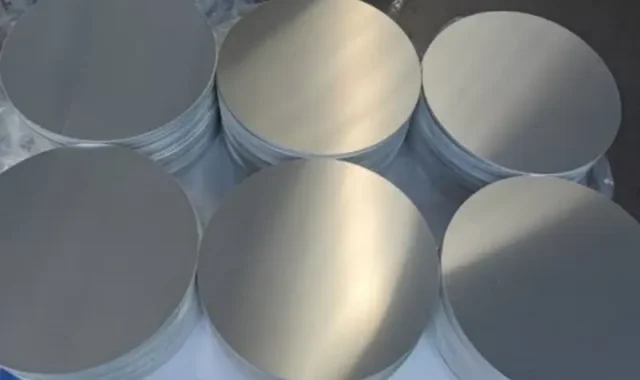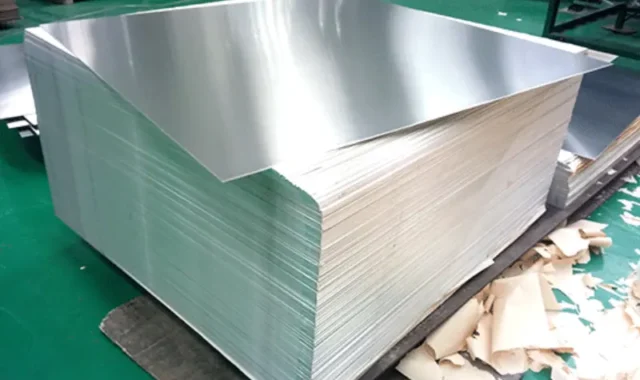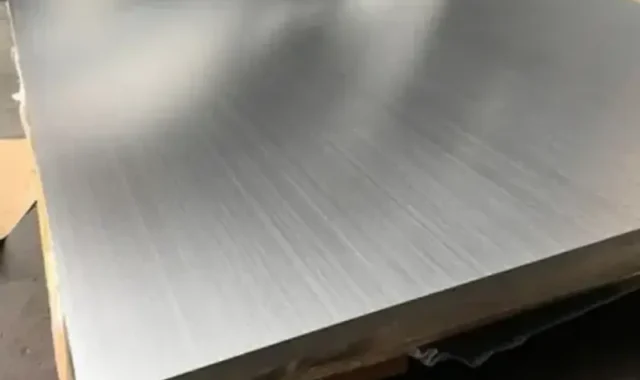
Aluminium coil price changes every week. It moves with the LME spot price, shifts with alloy grade, and varies widely between a small spot order and a long-term mill contract.
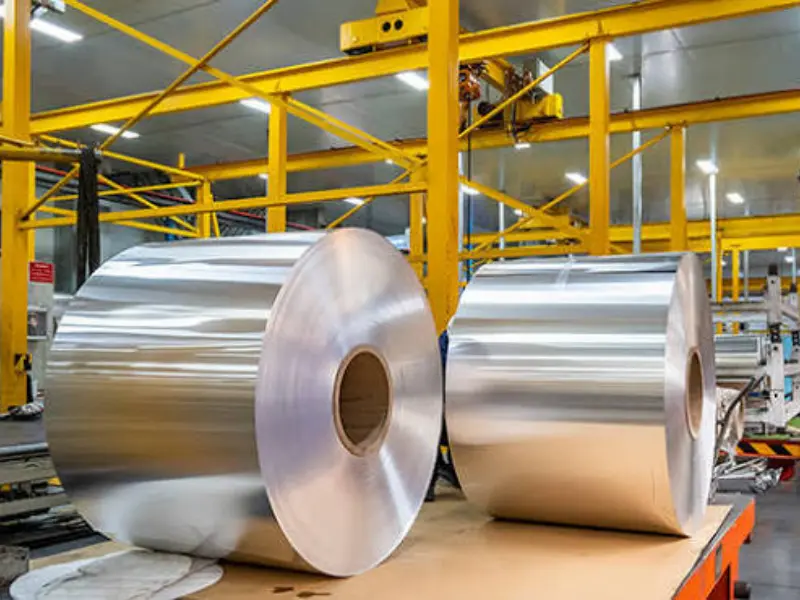
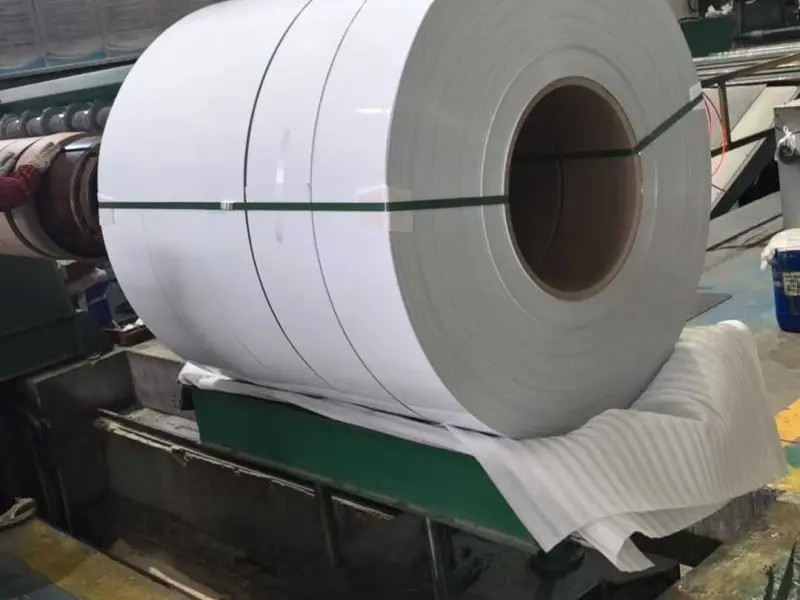
What Drives Aluminium Coil Price
Before comparing quotes, it helps to understand what actually builds the price you see on a proforma invoice.
The LME Base Price
London Metal Exchange (LME) aluminium trades daily. The spot price is the starting point for every mill quote worldwide. In 2023–2025, LME aluminium ranged between USD 2,100 and USD 2,700 per metric ton. Mills add a conversion premium on top of this base.
Conversion Premium (Fabrication Cost)
The conversion premium covers rolling, annealing, slitting, and coating. It varies by:
- Alloy complexity (pure 1xxx series has a lower premium than 7xxx series)
- Temper (O temper costs less to produce than T6)
- Thickness (thinner gauge requires more rolling passes — higher cost)
- Width (wider coils need wider rolling equipment)
All-In Price Formula
All-in price = LME base + regional premium + conversion premium + surface/coating add-on
This is the number that matters for landed cost calculations. Always ask suppliers to break down each component so you can compare quotes on the same basis.
Aluminium Coil Price by Alloy — 2025–2026 Reference
Different alloys carry different premiums above LME. Here is a practical reference table for mill direct pricing on standard coil, mill finish, O or H temper.
| Alloy | Temper | Price Range (USD/ton) | Main Use |
|---|---|---|---|
| 1050 | O | 2,300–2,700 | Reflectors, chemical equipment |
| 1060 | O | 2,300–2,750 | Sublimation blanks, cables, foil |
| 1100 | O / H14 | 2,350–2,800 | General sheet, cooking utensils |
| 3003 | H14 / H16 | 2,500–2,950 | Roofing, gutters, general fabrication |
| 3004 | H32 | 2,600–3,050 | Can body stock, packaging |
| 3105 | H24 | 2,550–3,000 | Pre-painted coil, gutter profiles |
| 5052 | H32 | 2,800–3,300 | Marine, pressure vessels, fuel tanks |
| 5083 | H116 | 3,100–3,700 | Ship hulls, cryogenic tanks |
| 6061 | T6 | 3,300–3,900 | Structural, machined parts |
| 8011 | O | 2,400–2,850 | Pharmaceutical foil, lidding, caps |
| 8079 | O | 2,450–2,900 | Flexible packaging foil, battery foil |
Prices above are factory direct estimates for orders of 20+ metric tons. Smaller orders carry a 10–25% premium. Specialty tempers (T651, H116) add 5–15% to base alloy price.
Price by Thickness — How Gauge Affects Cost
Thinner gauge coil costs more per ton to produce. More rolling passes, tighter tension control, and higher scrap risk at the mill all push the conversion premium up as thickness drops.
| Thickness Range | Typical Premium vs Base | Notes |
|---|---|---|
| 3.0 mm – 6.0 mm | Base (0%) | Hot-rolled, low conversion cost |
| 1.5 mm – 2.9 mm | +3–8% | Cold rolled, standard range |
| 0.8 mm – 1.4 mm | +8–15% | More rolling passes needed |
| 0.3 mm – 0.7 mm | +15–30% | Precision cold rolling |
| 0.1 mm – 0.2 mm | +30–55% | Foil range, high precision |
| 0.02 mm – 0.09 mm | +60–120% | Ultra-thin foil, battery / pharmaceutical |
For a buyer sourcing 3003-H14 at 0.5mm versus 1.5mm, expect to pay 15–25% more per ton at the thinner gauge — even for the same alloy and temper.
Price by Width — Coil Width Impact
| Width Range | Price Impact | Notes |
|---|---|---|
| 100 – 500 mm | +5–12% vs standard | Slit coil, extra slitting cost |
| 500 – 1000 mm | Base price | Standard slit range |
| 1000 – 1500 mm | Base price | Wide mill coil |
| 1500 – 2000 mm | +3–8% | Requires wide rolling mill |
| 2000 – 2650 mm | +8–15% | Specialty wide coil, limited mills |
Narrow slit coil (below 500mm) costs more because it requires an extra slitting operation after rolling. Very wide coil (above 1500mm) requires specific equipment not available at all mills.
Aluminium Coil Types and Price Tiers
Plain Mill Finish Coil — Entry Price
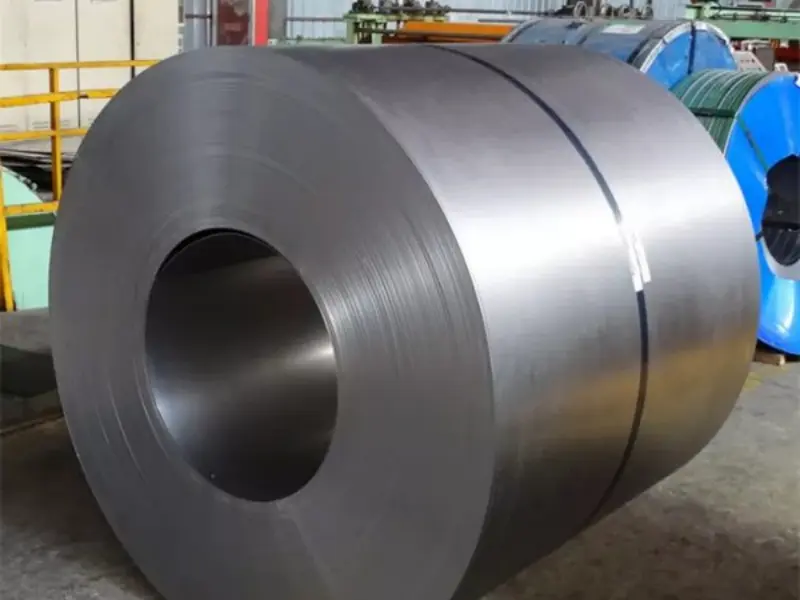
Mill finish coil comes directly off the rolling line with no surface treatment. This is the base product and carries the lowest price. It suits applications where the coil gets further processed, painted, or formed before the final surface matters.
Common orders: roofing sheet substrate, stamping blanks, heat exchanger fin stock, deep-draw container stock.
Price level: Lowest — LME + conversion only
Pre-Painted Aluminium Coil (PPGI / PPAL) — Mid Tier
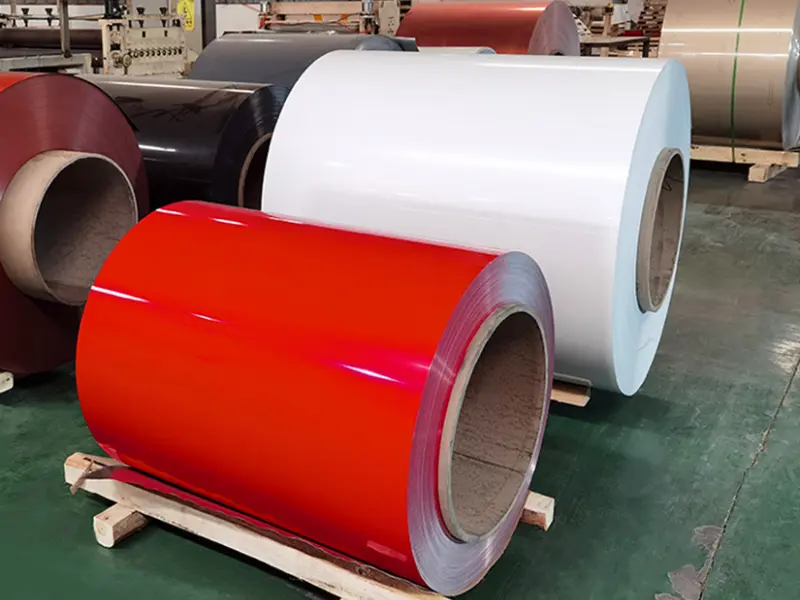
Pre-painted coil has a primer and topcoat applied on a continuous coil coating line before shipping. The buyer receives coil ready to roll-form or press into final profile without further painting.
Coating systems affect price significantly:
| Coating Type | Layers | Outdoor Life | Price vs Mill Finish |
|---|---|---|---|
| Polyester (PE) | 2-coat | 10–15 years | +USD 200–350/ton |
| Silicon Modified Polyester (SMP) | 2-coat | 15–20 years | +USD 280–420/ton |
| PVDF (Kynar) | 2-coat | 20–25 years | +USD 400–650/ton |
| Epoxy primer only | 1-coat | Indoor use | +USD 100–180/ton |
Pre-painted coil is widely used in roofing, wall cladding, garage doors, window profiles, and home appliance panels.
Anodized Aluminium Coil — Premium Tier
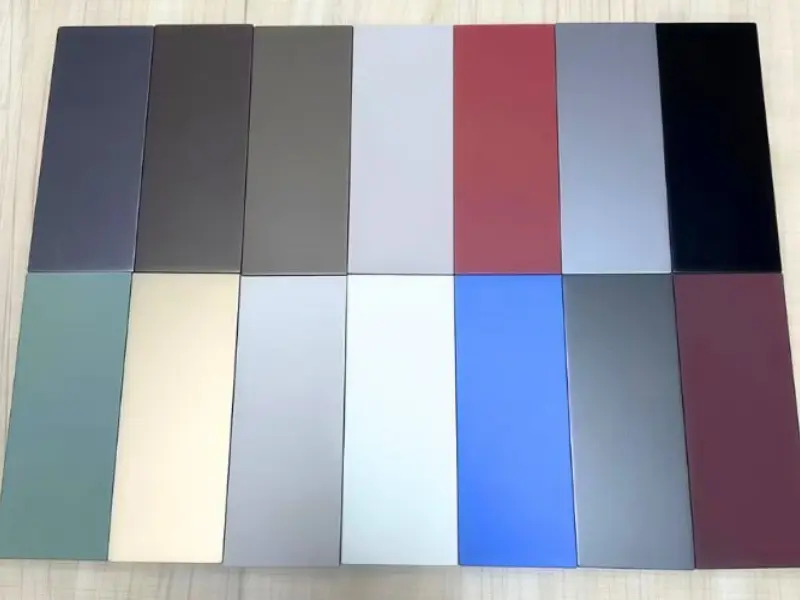
Anodizing adds an electrochemical oxide layer to the coil surface. It improves hardness, scratch resistance, and decorative appearance. Clear anodize keeps the natural silver tone. Color anodize produces black, gold, bronze, and custom shades.
Anodized coil costs significantly more than mill finish:
| Anodize Type | Thickness | Price Premium vs Mill Finish |
|---|---|---|
| Clear (natural) | 10–15 microns | +USD 350–550/ton |
| Clear (architectural) | 20–25 microns | +USD 500–750/ton |
| Color (black, gold) | 10–25 microns | +USD 600–900/ton |
Used in: architectural curtain wall, window and door frames, furniture profiles, consumer electronics housings.
Embossed Aluminium Coil
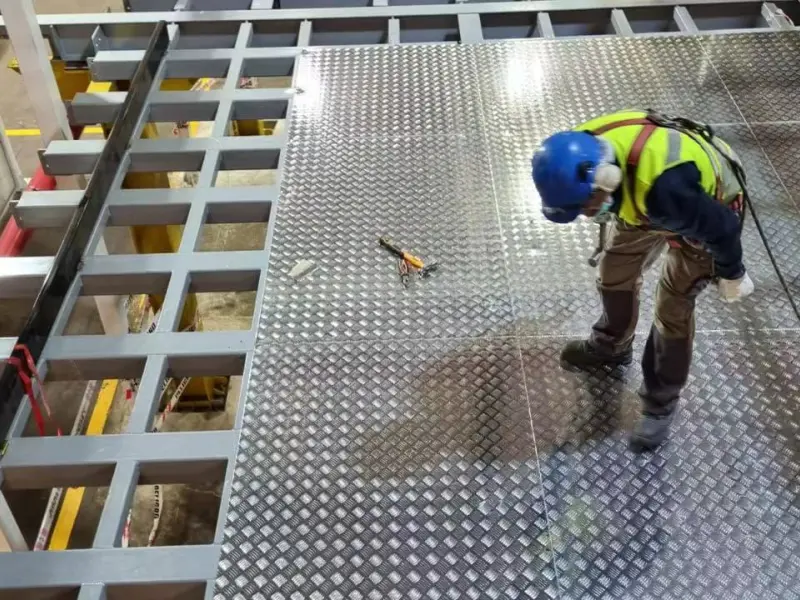
An embossing roll presses a pattern into the coil surface after rolling. Common patterns include stucco, diamond, orange peel, and five-bar tread. Embossed coil costs slightly more than plain due to the extra process step.
| Pattern | Common Use | Premium vs Plain |
|---|---|---|
| Stucco | Refrigerator liners, decoration | +5–10% |
| Diamond tread | Flooring, ramps, truck decks | +8–12% |
| Orange peel | Decorative panels, insulation jacket | +5–8% |
| Five-bar tread | Industrial flooring, step plates | +8–12% |
Foil-Grade Aluminium Coil
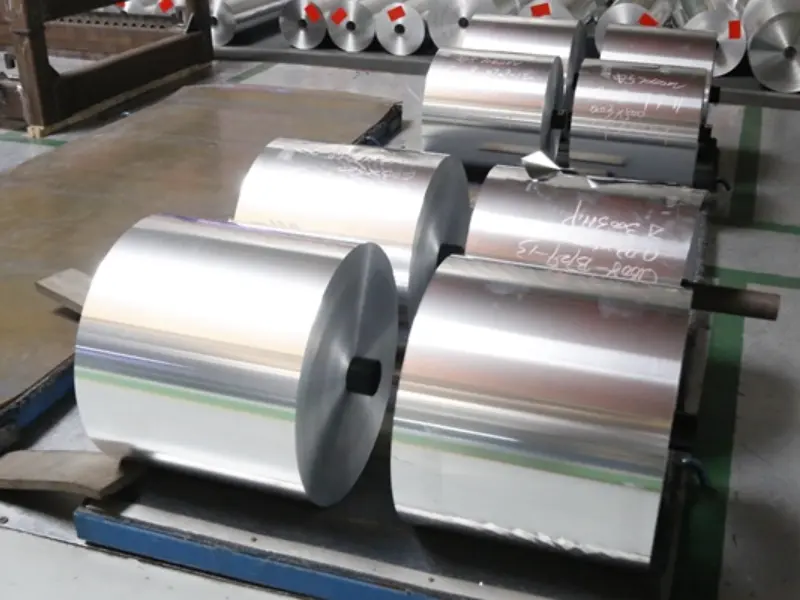
Foil coil (below 0.2mm) sits at the high end of conversion cost but is priced per ton the same way as thick coil — LME plus premium. The premium is higher due to the precision rolling required.
| Foil Grade | Thickness | Main Use | Price Range (USD/ton) |
|---|---|---|---|
| Household foil | 0.009–0.015mm | Kitchen, food wrap | 3,200–3,800 |
| Pharmaceutical foil | 0.016–0.025mm | Blister packs, lidding | 3,400–4,000 |
| Battery foil | 0.010–0.016mm | Li-ion current collector | 3,800–4,800 |
| Flexible packaging | 0.006–0.009mm | Laminate pouches | 3,600–4,500 |
| Fin stock | 0.05–0.12mm | Heat exchanger fins | 2,900–3,400 |
Applications and Which Alloy Suits Each
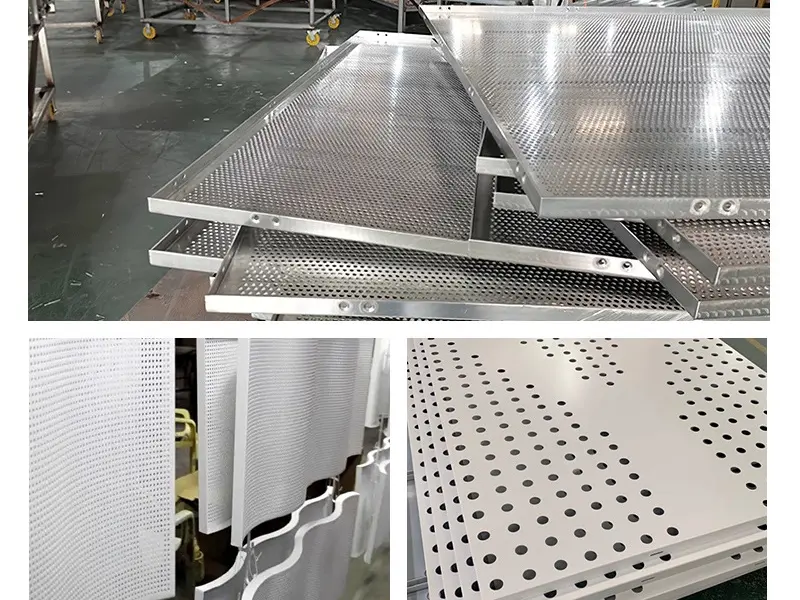
Construction and Architecture
- Roofing and wall cladding → 3003-H14, 3105-H24, pre-painted PE or PVDF
- Curtain wall → 3003, 5052 with anodized or PVDF coating
- Ceiling tiles → 3003-H16, embossed stucco or plain
- Fascia and soffit → 3003 or 3105, pre-painted
- Rainwater goods (gutters) → 3003-H14 or 3105-H24
Packaging Industry
- Pharmaceutical blister foil → 8011-O, 1235-O
- Food container lidding → 8011-O, 3003-O
- Flexible packaging laminate → 8079-O, 1235-O
- Bottle caps and closures → 8011-H14, 1100-H14
- Honey and jam packaging foil → 8011-O
Automotive and Transportation
- Heat shields and thermal barriers → 1100, 3003
- Truck body panels → 5052-H32, 5754-H22
- Trailer liners → 5052, 3003 bright finish
- EV battery housing → 5052, 6061
- Radiator fin stock → 1100, 3003
Electrical and Energy
- Transformer winding → 1060-O, 1070-O (high conductivity)
- Cable wrapping → 1060, 8011
- Capacitor foil → 1070, 1085 (ultra-pure)
- Solar panel frame → 6063-T5 extrusion coil (slit strip)
- Li-ion battery current collector → 1235-O, ultra-thin
HVAC and Industrial
- Heat exchanger fins → 1100-O, 3003-O (fin stock)
- Insulation jacketing → 3003-H14, stucco embossed
- Duct lining → 3003-H16
- Chemical storage → 3003, 5052
- Marine equipment → 5083-H116, 5052-H32
Price Comparison: Small Order vs Bulk
The gap between retail and mill pricing is significant. Here is a realistic comparison using 3003-H14 coil, 1.0mm thickness, mill finish.
| Order Size | Price Per Ton | Total Cost (10 ton example) |
|---|---|---|
| 1–2 tons (spot, local) | USD 3,200–3,800 | USD 32,000–38,000 |
| 3–5 tons (distributor) | USD 2,900–3,300 | USD 29,000–33,000 |
| 10–20 tons (importer) | USD 2,600–2,950 | USD 26,000–29,500 |
| 20–50 tons (mill direct) | USD 2,500–2,750 | USD 25,000–27,500 |
| 50+ tons (contract) | USD 2,300–2,600 | USD 23,000–26,000 |
A buyer moving from a local 2-ton spot order to a 20-ton direct mill order saves 20–30% per ton on the same product. For a business ordering 50+ tons per year, consolidating into fewer larger orders is the single biggest lever on cost.
How to Read a Supplier Price Quote
Not all quotes are comparable. These items should appear in every quote you compare:
| Quote Item | What to Check |
|---|---|
| Alloy and temper | Must match your spec exactly |
| Thickness tolerance | ± 0.05mm vs ± 0.15mm — matters for precision work |
| Width tolerance | ± 1mm is standard; ask if you need tighter |
| Coil weight | OD (outer diameter) and ID (inner diameter) |
| Surface | Mill finish, one side bright, two side bright |
| Edge condition | Mill edge vs slit edge |
| MTR (mill test report) | Included or extra charge |
| Packaging | Eye-to-wall, eye-to-sky, pallet type |
| Payment terms | T/T 30% deposit + 70% before shipment is standard |
| Lead time | Days from order confirmation to ready to ship |
Buying Aluminium Coil from China
Why Chinese Mills Are Price Competitive
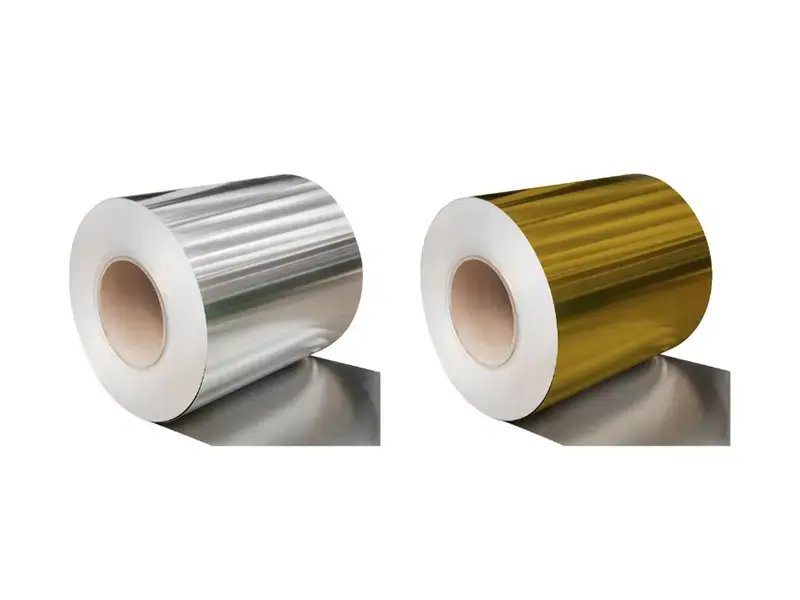
China accounts for over 55% of global primary aluminium production. Integrated mills that own smelters, rolling lines, and coating equipment operate at scale that smaller converters cannot match on cost. For buyers in Southeast Asia, the Middle East, South America, and Africa, Chinese mill pricing is typically 20–40% below comparable European mill or North American distributor pricing on the same spec.
Factory Direct vs Trading Company
| Feature | Factory Direct | Trading Company |
|---|---|---|
| Price | Lowest | 8–20% higher |
| MOQ | 5–20 tons per spec | 2–5 tons |
| Customization | Full | Limited |
| MTR quality | Original mill certificate | May reissue |
| Payment flexibility | Less flexible | More flexible |
| Mixed specs per order | Harder | Easier |
For high-volume, single-spec orders — go factory direct. For smaller mixed orders across several alloys and thicknesses — a trading company that works with multiple mills gives more flexibility.
Standard MOQ by Product Type
| Product | Typical MOQ (factory direct) |
|---|---|
| Plain mill finish coil (1xxx, 3xxx) | 5 tons per spec |
| Pre-painted coil (PE or PVDF) | 3–5 tons per color per spec |
| Anodized coil | 2–3 tons per spec |
| Foil coil (below 0.2mm) | 3–5 tons per spec |
| Embossed coil | 3–5 tons per pattern |
| Slit narrow strip (below 300mm) | 2–3 tons per width |
Packaging and Shipping Cost Impact
Export Packaging Options
- Eye-to-wall: coil stands upright on the flat face — standard for sea freight
- Eye-to-sky: coil lies flat with the hole facing up — used for some press feeding systems
- Steel or wooden pallets with stretch wrap and corner protectors
- Moisture barrier wrap for all sea freight shipments
Freight Cost Estimate
Shipping cost adds real dollars to landed price. For buyers outside China:
| Route | Transit Time | Freight Cost Estimate (20-ton FCL) |
|---|---|---|
| China → US West Coast | 14–18 days | USD 1,800–2,800 |
| China → US East Coast | 28–35 days | USD 2,200–3,400 |
| China → Europe (NW) | 25–32 days | USD 1,600–2,600 |
| China → Middle East | 18–25 days | USD 1,200–1,800 |
| China → Southeast Asia | 7–14 days | USD 600–1,200 |
| China → South America | 28–42 days | USD 2,500–4,000 |
Freight market rates shift seasonally. Add 15–20% buffer to estimates when planning landed cost.
What Affects Price Quarter to Quarter
LME Price Movement
LME aluminium moves on: global energy prices (aluminium smelting is energy-intensive), Chinese production output, US dollar strength, and macroeconomic demand signals. In volatile periods, mill prices can shift 5–10% within a single month.
Regional Premium Fluctuations
Regional premiums (Midwest US premium, European Duty-Paid premium) add to LME on top of the base price. These premiums respond to local inventory levels and trade policy changes — US tariffs on aluminium imports, for example, raise the Midwest premium.
Alloy Availability
When a specific alloy is in short supply — as 5083 was during the 2021–2022 marine demand surge — premiums spike above historical norms. Buyers with forward contracts are protected; spot buyers pay market price.
Frequently Asked Questions
What Is the Current Aluminium Coil Price Per Ton
LME aluminium in mid-2025 trades in the USD 2,300–2,600 range. All-in mill price for standard 3003-H14 coil runs USD 2,500–2,950 per ton for 20-ton orders. Prices shift weekly — ask your supplier for a quote tied to a specific LME date or use a fixed price if the market is moving fast.
How Much Does Pre-Painted Aluminium Coil Cost Compared to Plain
A standard PE-coated pre-painted coil (3005 or 3003 base, white, 2-coat) adds approximately USD 250–400 per ton above the plain mill finish price. PVDF-coated coil adds USD 400–650 per ton. The coating cost is fixed regardless of LME movement.
What Is the Minimum Order for Aluminium Coil from a Chinese Factory
Most Chinese rolling mills set MOQ at 5 tons per spec (alloy + temper + thickness + width). Some accept 2–3 ton trial orders for new customers. Foil-grade coil MOQ is typically 3–5 tons due to the specialized rolling equipment involved.
Does Alloy Type Affect Price Significantly
Yes, significantly. The price gap between 1060-O (low alloy, low conversion cost) and 6061-T6 (heat-treated, high-strength) can be USD 600–1,200 per ton on the same LME day. Within common construction alloys (3003, 3105), the difference is smaller — USD 100–250 per ton.
How Do I Compare Quotes from Different Suppliers
Ask every supplier to quote the same spec: alloy, temper, thickness with tolerance, width with tolerance, surface finish, coil ID/OD, and packaging type. Then compare on an all-in delivered price basis — mill price plus freight plus customs duty at your port. A lower mill price with higher freight can still cost more landed.
Can I Lock in a Price for Future Orders
Yes. Most mills offer forward contracts at a fixed price or at LME plus a fixed premium. Fixed-price contracts suit buyers who have confirmed downstream orders. LME-linked contracts suit buyers comfortable with market movement. Frame agreements (quarterly volume commitment at a negotiated premium) are common for buyers ordering 50+ tons per year.
Final Notes for Buyers
Aluminium coil price has three moving parts: the LME base, the conversion premium, and the surface or coating add-on. The LME base you cannot control. The conversion premium you can minimize by choosing the right alloy and standard thickness for your application. The coating cost you manage by ordering only what the end product actually needs.
For new buyers, the fastest way to reduce cost is to consolidate order volume and move from spot purchasing to quarterly frame agreements with a single mill. For experienced buyers, the next lever is optimizing gauge tolerance and switching from narrow slit coil (higher cost) to wider coil that you slit in-house.
Get at least three quotes for each order. Compare on delivered cost, not mill gate price. And always request the mill test report before payment — not after shipment.