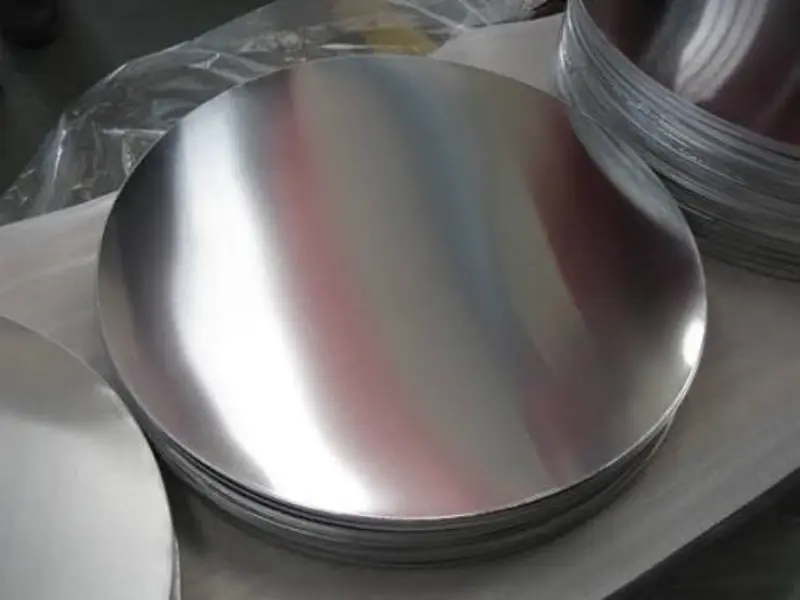
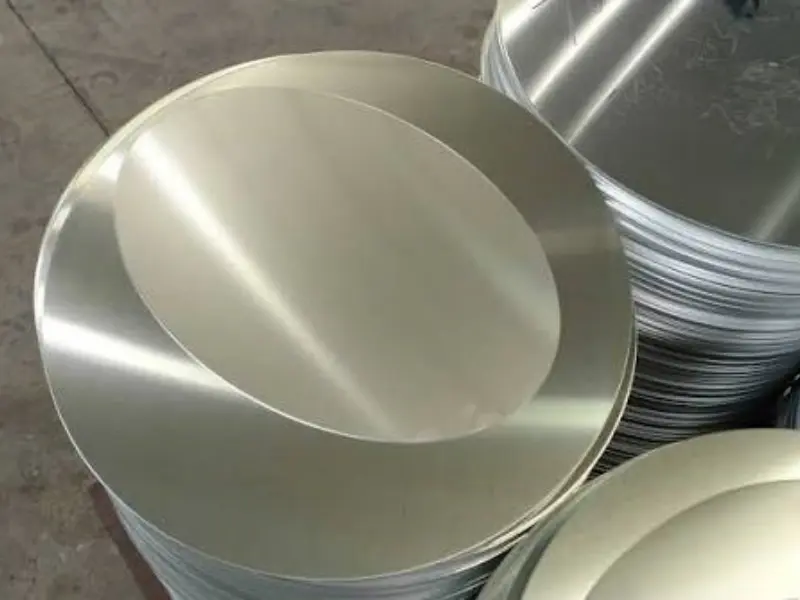
Aluminum circle for cookware is the round aluminum disc that pot and pan factories use as their starting material.
It gets deep-drawn or spun into the finished shape of a pot, pan, or lid before any coating or polishing begins.
Why Aluminum Is Used for Cookware
Aluminum heats up fast and spreads heat evenly across the base of a pan. That even heat is why so many cookware brands build their product line around it, instead of steel or cast iron.
- Heats and cools quickly, giving better temperature control
- Much lighter than steel or cast iron cookware
- Naturally resists rust and corrosion
- Easy to draw into deep pot shapes without cracking
- Lower material cost than stainless steel
Cookware Circle Basics
A cookware circle starts as a flat, round blank cut from aluminum coil or sheet. Factories load the blank into a spinning lathe or a stamping press, where it gets pulled into the shape of a pot, pan, or lid.
The blank’s alloy, temper, and thickness all affect how deep it can be drawn before the metal cracks or thins out too much at the base.
What Makes a Good Cookware Blank
- Even thickness across the entire disc
- Smooth, defect-free surface before drawing
- Soft enough temper to handle deep forming
- Consistent diameter for automated production lines
Thickness Reference by Cookware Type
Thickness changes with the size and use of the finished piece. Heavier cookware needs a thicker starting circle.
| Thickness (mm) | Thickness (in) | Cookware Type |
|---|---|---|
| 1.0 – 1.5 | 0.039 – 0.059 | Lids, light frying pans |
| 1.8 – 2.5 | 0.071 – 0.098 | Standard pots and pans |
| 3.0 – 4.0 | 0.118 – 0.157 | Heavy-duty pots, commercial cookware |
| 5.0 – 6.0 | 0.197 – 0.236 | Thick-base pans for induction cooktops |
Thicker circles resist warping on high heat, which matters for pans used on commercial stoves or induction cooktops.
Alloy Options for Cookware Circles
Different cookware styles call for different alloys, based on draw depth and final use.
| Alloy | Temper | Best For |
|---|---|---|
| 1050 | O | Very deep draws, high-purity needs |
| 1060 | O | Spinning, thin-wall pots |
| 3003 | O / H14 | Standard pots, pans, and lids |
| 3004 | O | Slightly stronger pans, better dent resistance |
| 5052 | H32 | Structural or heavy-duty cookware parts |
3003 is the most common alloy in cookware production. It draws well, holds up to daily use, and keeps material costs reasonable for mass production.
Alloy Choice, Simple Breakdown
- 1050 / 1060: choose for the deepest draws and the softest forming
- 3003: the standard, all-purpose pick for most pots and pans
- 3004: a step up in strength, used for pans that need better dent resistance
- 5052: reserved for heavier, structural cookware components
Temper and Formability
Temper decides how far a circle can stretch before it tears during the drawing process.
| Temper | Hardness | Forming Behavior |
|---|---|---|
| O (annealed) | Softest | Best for deep draws, least likely to crack |
| H12 | Light hard | Shallow forming, flatter shapes |
| H14 | Medium hard | Lids, trays, shallow pans |
| H16 | Firmer | Rarely used for cookware, more rigid parts |
Aluminum Circle for Cookware O temper is standard for pots and deep pans. H14 fits shallow items like lids and serving trays, where less stretching is needed.
Diameter Chart for Common Cookware
Circle diameter is picked to match the mold size and the extra material needed to form the walls of the pot or pan.
| Diameter (mm) | Diameter (in) | Typical Product |
|---|---|---|
| 120 – 200 | 4.7 – 7.9 | Small pans, lids |
| 250 – 350 | 9.8 – 13.8 | Standard frying pans, saucepans |
| 400 – 550 | 15.7 – 21.7 | Large pots, stockpots |
| 600 – 900 | 23.6 – 35.4 | Commercial and catering cookware |
Diameter is usually larger than the final product size, since extra metal is needed to form the sidewalls during drawing or spinning.
Aluminum Circle for Cookware Product Types
Cookware circles are sold in several finish and preparation levels, depending on how far along the buyer wants the material before it enters their own line.
Mill Finish Cookware Circles
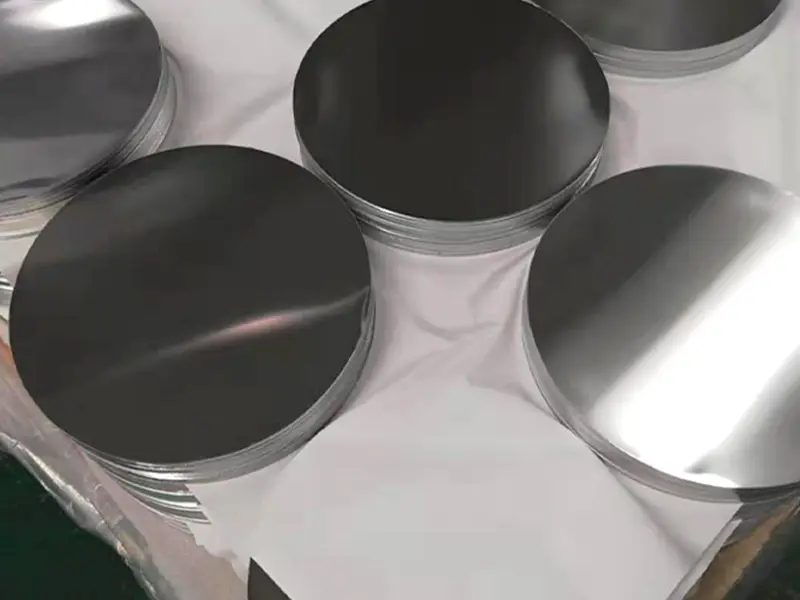
Plain circles with no polishing or coating applied.
Base material for painted or coated cookware lines
Most affordable starting option
Common when the factory does its own polishing later
Mirror Polished Circles
Circles pre-polished to a bright, reflective shine.
- Saves a polishing step on the buyer’s production line
- Common for premium-look stainless-style aluminum cookware
- Slightly higher cost than mill finish
Non-Stick Pre-Coated Circles
Circles coated with a non-stick layer before shipping.
- Reduces coating steps at the cookware factory
- Common in high-volume frying pan production
- Coating type and color available on request
Induction Bottom Clad Circles
Multi-layer discs with a magnetic steel or stainless layer bonded to the aluminum base.
- Allows aluminum cookware to work on induction cooktops
- Combines aluminum’s heat spread with a magnetic base layer
- Slightly thicker and heavier than standard aluminum circles
Anodized Cookware Circles
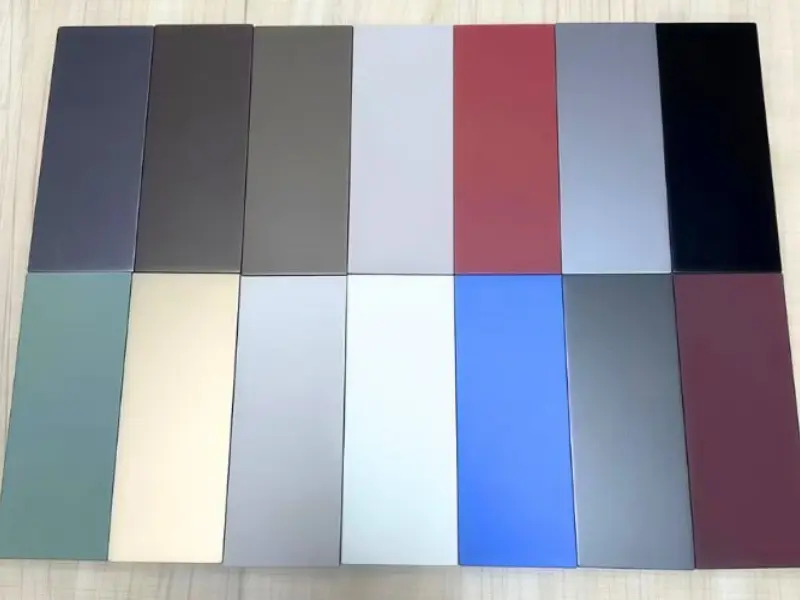
Circles treated with an anodized layer for a hard, sealed surface.
Available in natural or dark anodized tones
Adds scratch and corrosion resistance
Common in hard-anodized cookware lines
Mirror Polished vs. Mill Finish Circles
Buyers often weigh the cost of pre-polished circles against handling polishing in-house.
| Factor | Mirror Polished | Mill Finish |
|---|---|---|
| Surface | Bright, reflective | Plain, dull |
| Ready to use | Yes, no extra step | Needs polishing later |
| Cost | Higher | Lower |
| Best for | Premium cookware lines | Budget or coated product lines |
Mirror polished circles save time for buyers making shiny, premium-look cookware. Mill finish suits factories planning to paint, coat, or anodize the surface anyway.
Choosing the Right Circle Type
→ Making standard frying pans? 3003 O temper mill finish is the common, cost-effective choice. → Building induction-ready cookware? Choose a clad circle with a magnetic bottom layer. → Producing premium polished cookware? Mirror polished circles cut out an extra factory step. → Need a non-stick pan line? Pre-coated circles save a coating step on your production floor. → Making deep stockpots? 1050 or 1060 in O temper handles the deepest draws best.
3003 vs. 3004 Cookware Circles
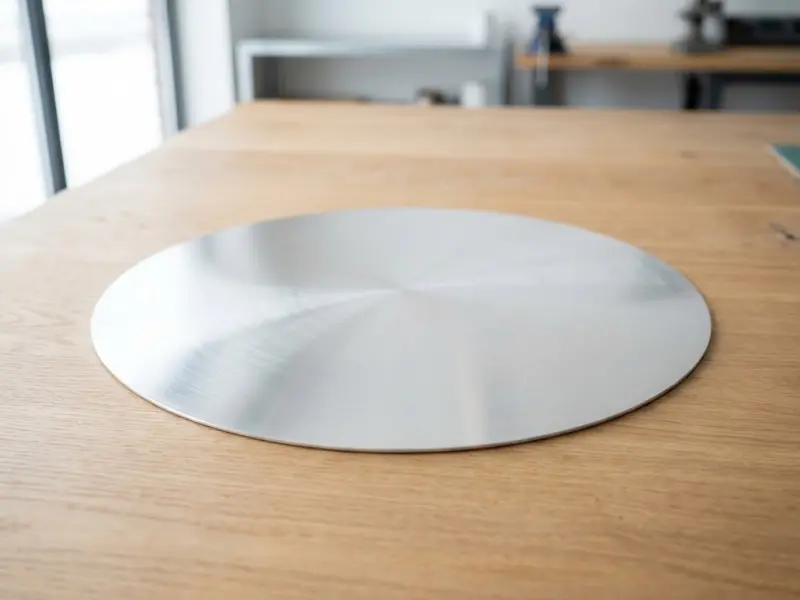
Both alloys are common in cookware, but 3004 offers a small strength boost over 3003.
| Factor | 3003 Circles | 3004 Circles |
|---|---|---|
| Strength | Standard | Slightly higher |
| Dent resistance | Good | Better |
| Formability | Very good | Good |
| Cost | Standard | Slightly higher |
| Common use | General cookware | Pans needing extra durability |
3003 remains the default for most cookware lines. 3004 is worth the small price step-up for pans that see rougher daily handling.
Applications of Aluminum Circle for Cookware
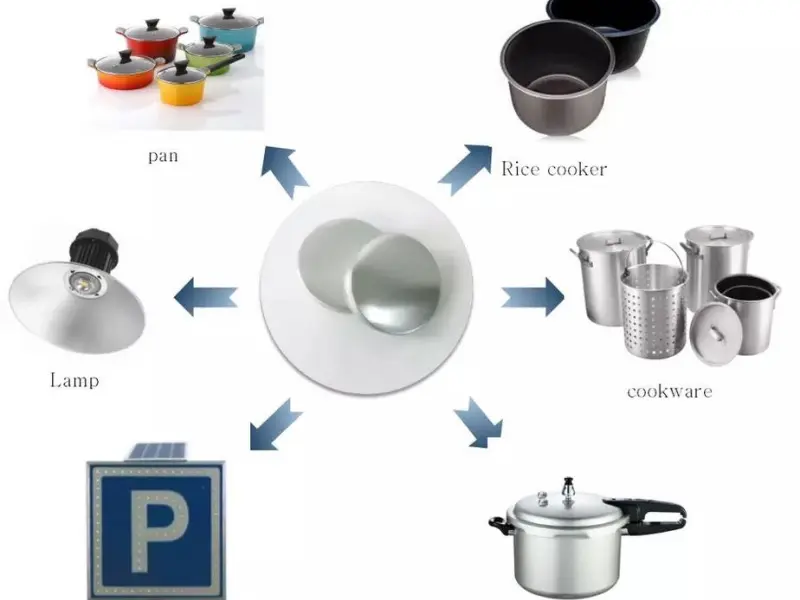
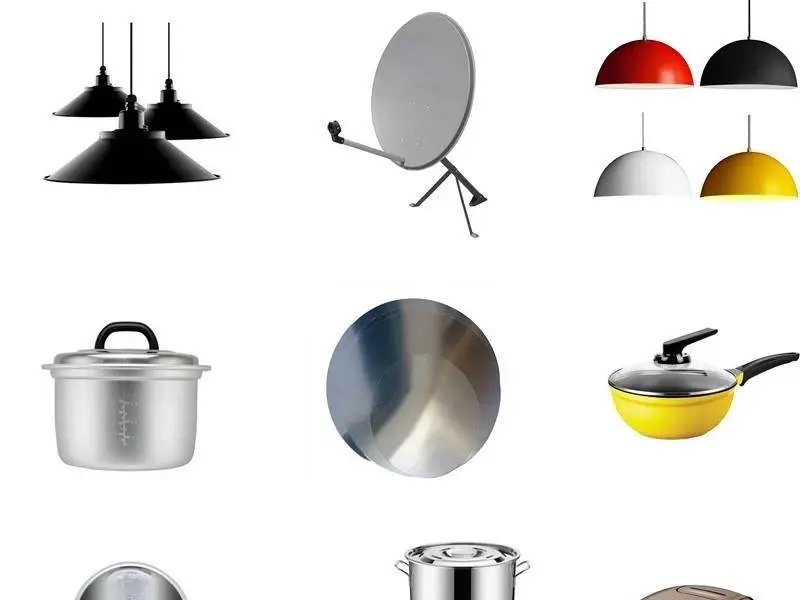
Aluminum circle for cookware supports a wide range of kitchenware products.
Commercial catering cookware
Frying pans and skillets
Saucepans and stockpots
Woks and deep pans
Pot and pan lids
Baking trays and pizza pans
Pressure cooker bodies
Steamer trays and inserts
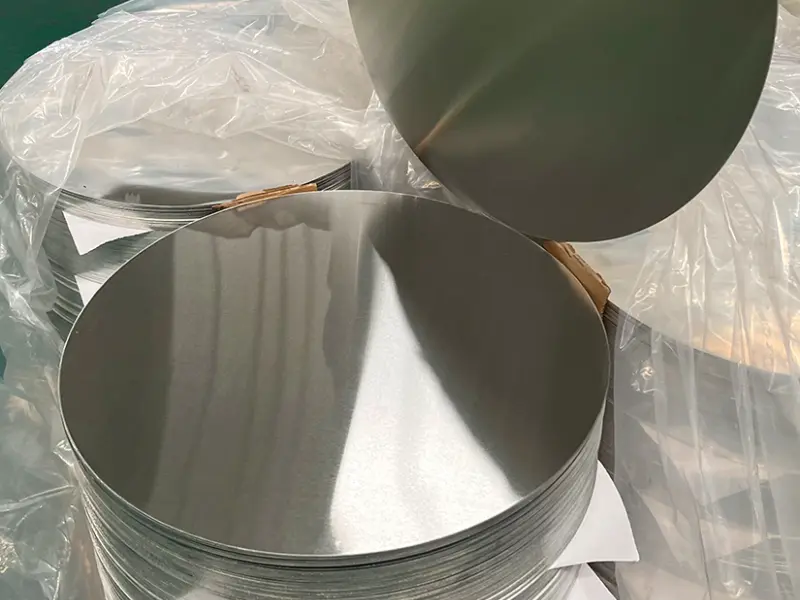
Why Cookware Factories Choose Aluminum Circles
Fast, Even Heating
Aluminum spreads heat quickly and evenly, reducing hot spots compared to some other metals.
Lightweight Finished Products
Aluminum cookware is easier to lift, pour, and clean than heavier steel or cast iron alternatives.
Wide Forming Range
Soft-temper circles allow deep drawing into pots, shallow spinning for lids, and everything in between.
Coating and Finish Flexibility
Circles can be left plain, polished, anodized, or pre-coated, giving factories flexibility to match their finished product line.
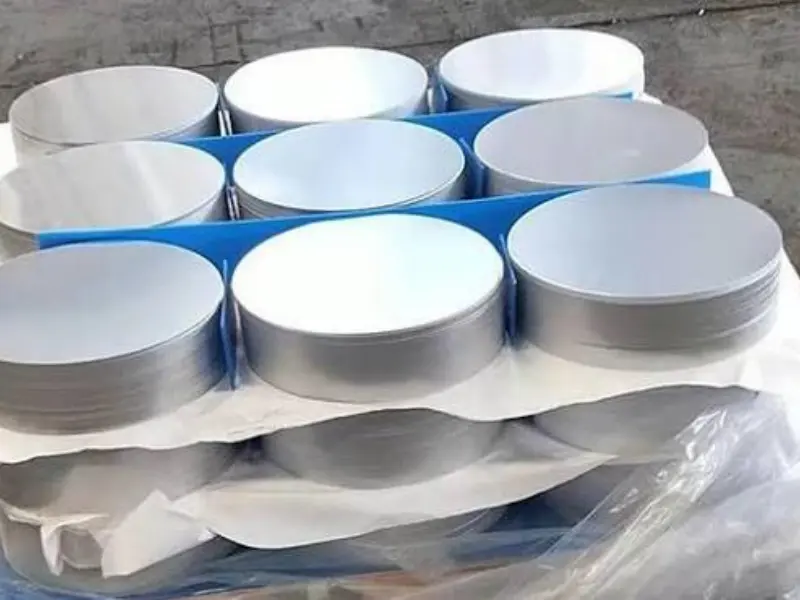
Packaging and Delivery Aluminum Circle for Cookware
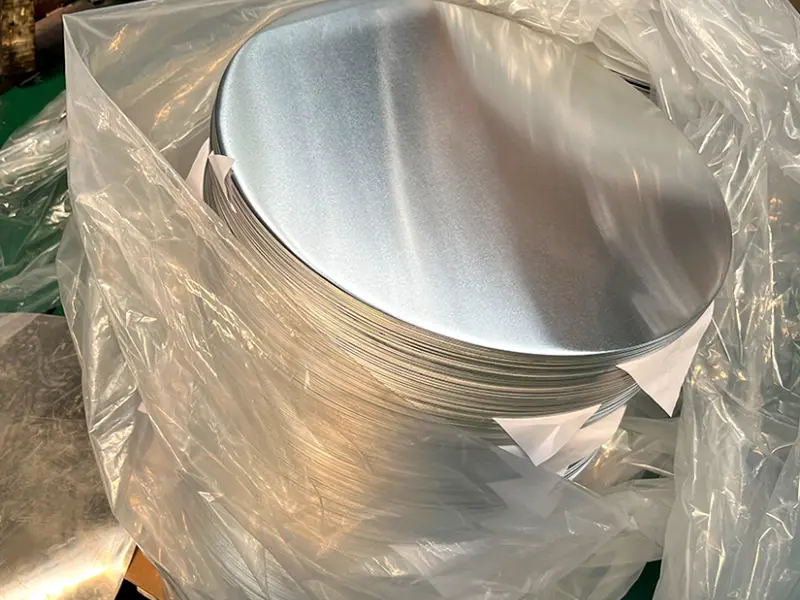
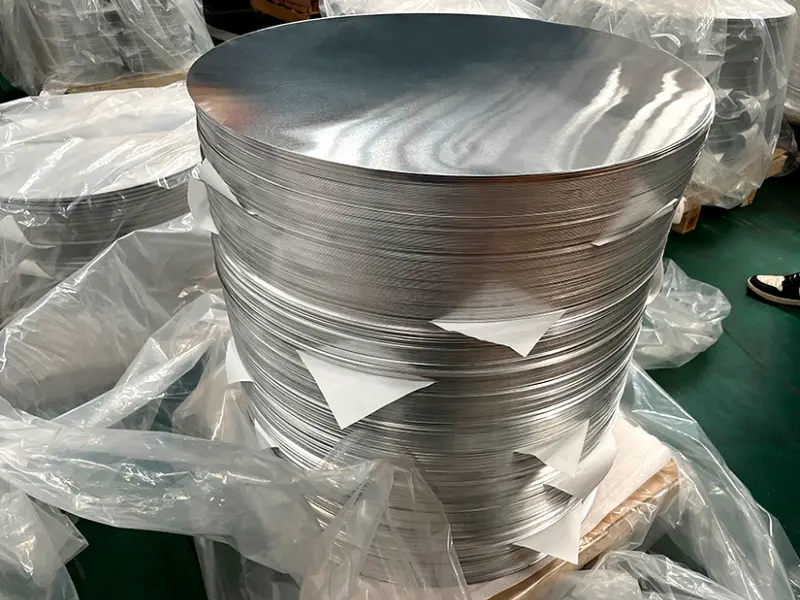
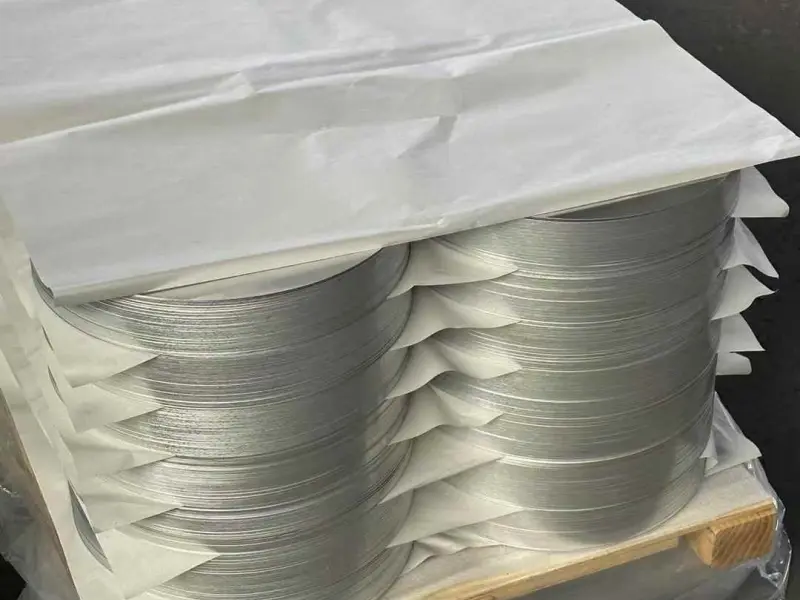
Circles are packed carefully to keep the surface free from scratches before forming.
- Stacked with interleaved paper between circles
- Banded into fixed-count bundles
- Wood pallet or crate packing for export shipments
- MOQ and lead time depend on alloy, thickness, and diameter
Why Aluminum Circles Are Used for Cookware Manufacturing
Aluminum circles are a convenient starting material for many cookware products. Their round shape matches the basic shape of pots, pans, trays, and other kitchen products.
Instead of cutting a square sheet into a round blank, manufacturers can use a ready-made aluminum circle.
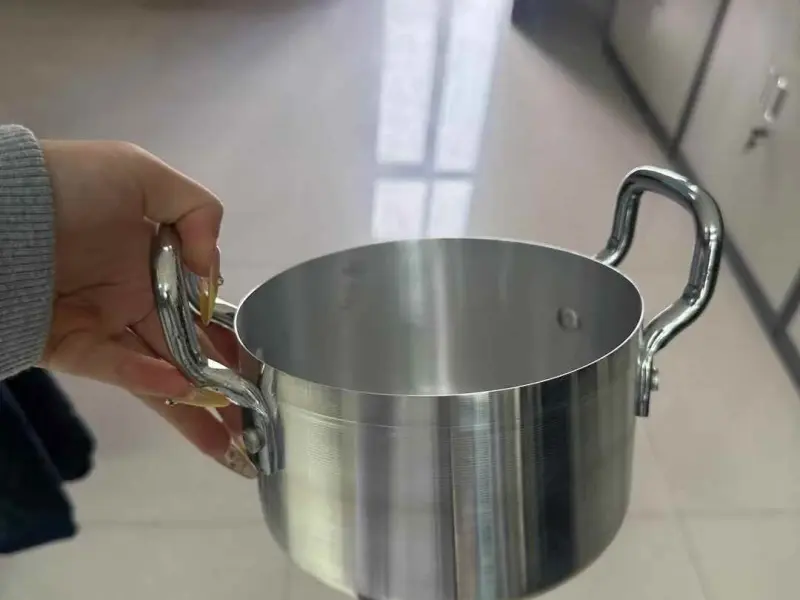
Aluminum coil or sheet
↓
Circle cutting
↓
Edge inspection
↓
Deep drawing or spinning
↓
Trimming
↓
Surface treatment
↓
Finished cookware
This process can help reduce material waste and make production more consistent.
The Shape of the Blank Matters
A good cookware blank should have a stable shape before forming.
| Blank condition | Possible result |
|---|---|
| Correct diameter | More consistent forming |
| Good flatness | Better positioning |
| Clean edge | Less risk during forming |
| Uniform thickness | More stable wall thickness |
| Good surface | Better finished appearance |
For mass production, consistency between each aluminum circle is important.
Aluminum Circle Diameter and Cookware Size
The diameter of the blank is related to the final product size, but it is not always the same as the finished pan diameter.
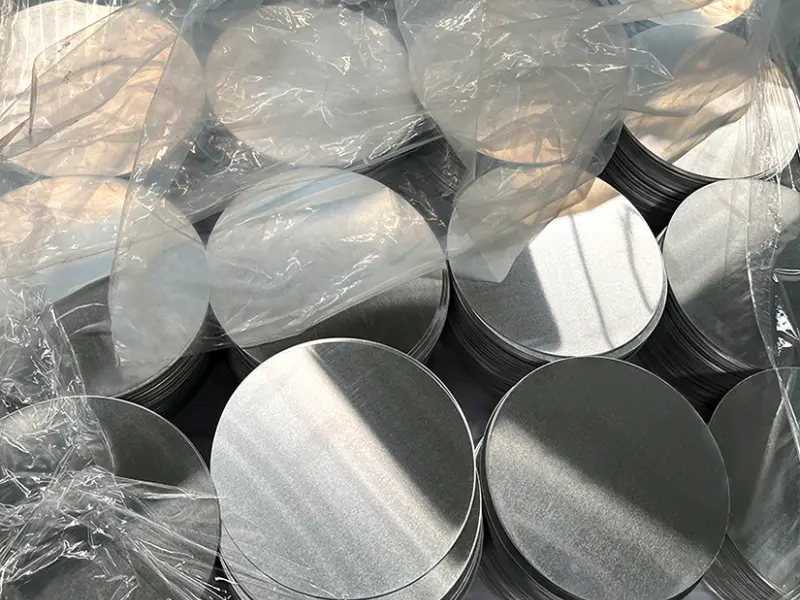
The required blank can be larger because the material needs to flow during forming.
Blank diameter
→ forming allowance
→ wall height
→ trimming allowance
→ final cookware size
The exact blank diameter should therefore be calculated according to the cookware design and forming method.
How to Choose the Right Aluminum Alloy
Different cookware products may use different aluminum alloys.
| Alloy | General characteristic | Cookware direction |
|---|---|---|
| 1050 | High aluminum content | Basic formed products |
| 1060 | Excellent formability | Simple cookware |
| 1070 | High purity | Special forming needs |
| 1100 | Good formability | General kitchen products |
| 3003 | Better strength | Pots and pans |
| 3004 | Good strength and forming | Deeper formed cookware |
| 5052 | Higher strength | Special components |
For deep drawing, formability is especially important. For cookware that needs more strength, a 3xxx series alloy may be considered.
1050 vs 3003 Aluminum Circle
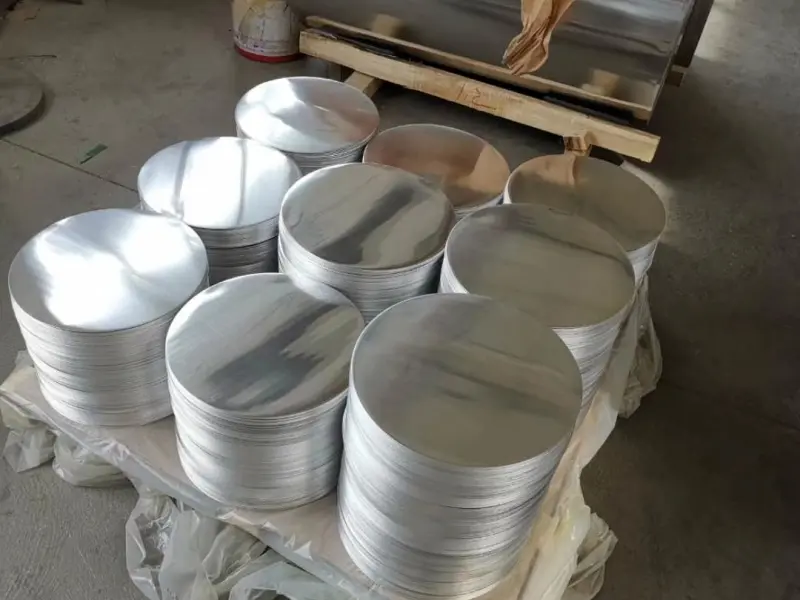
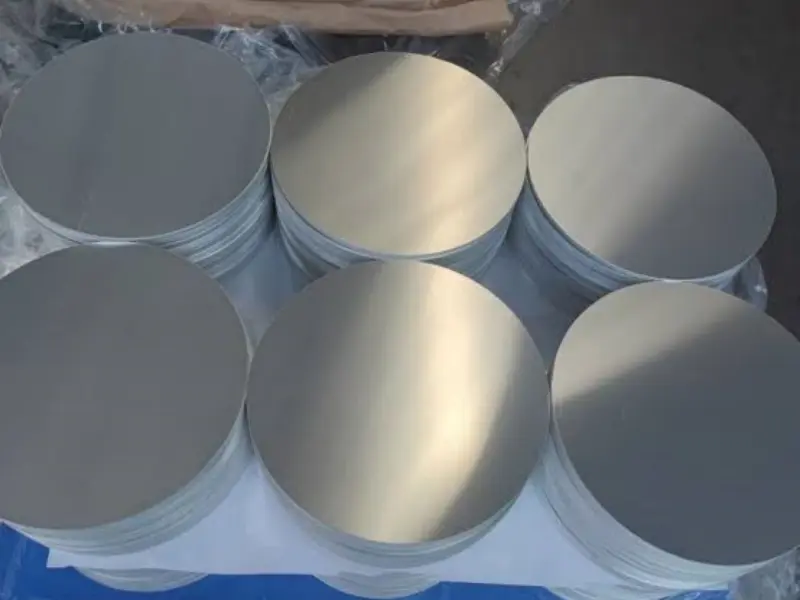
The choice between 1050 and 3003 Aluminum Circle for Cookware is common in cookware production.
| Feature | 1050 | 3003 |
|---|---|---|
| Formability | Excellent | Very good |
| Strength | Lower | Higher |
| Aluminum content | Higher | Lower |
| Deep drawing | Good | Good |
| General cookware | Suitable | Suitable |
| Heavy-duty products | Limited | Better suited |
1050 Aluminum Circle for Cookware can work well when easy forming is the main requirement.
3003 Aluminum Circle for Cookware is often considered when the finished cookware needs a stronger base.
Why Temper Is Important
Temper affects how the aluminum circle behaves during forming.
For cookware production, softer tempers are often considered when deep drawing or spinning is required.
| Temper | General behavior |
|---|---|
| O | Soft and highly formable |
| H12 | Partially hardened |
| H14 | Medium strength |
| H18 | Harder condition |
The suitable temper depends on the alloy, forming process, blank thickness, and final product design.
For deep-drawn cookware, the material should be selected with the forming process in mind rather than choosing temper based only on strength.
Thickness and Cookware Performance
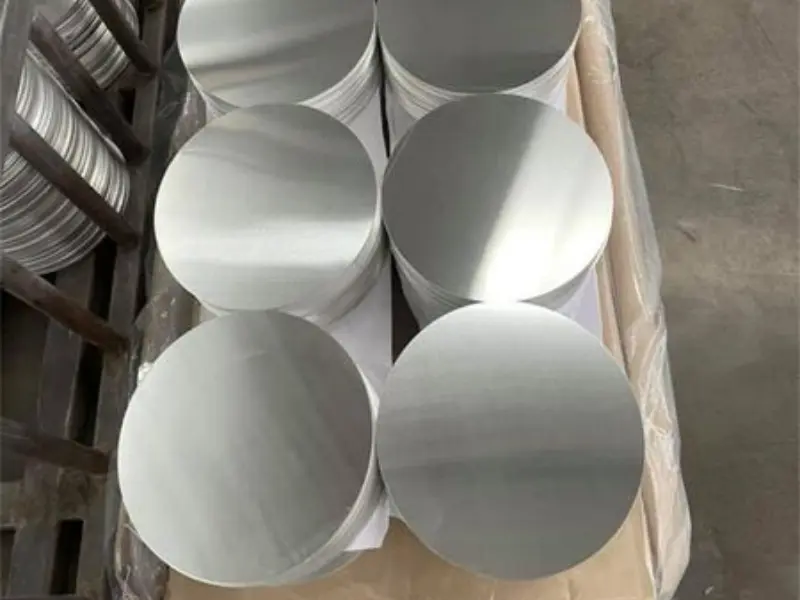
Thickness affects more than the weight of the cookware.
It can influence:
- Forming behavior
- Bottom rigidity
- Heat distribution
- Product weight
- Deformation resistance
- Finished appearance
A simple comparison:
| Thickness | Typical direction |
|---|---|
| 0.5 mm | Lightweight cookware |
| 0.8 mm | Light to medium products |
| 1.0 mm | General cookware |
| 1.2 mm | More rigid products |
| 1.5 mm | Heavy cookware |
| 2.0 mm | Special applications |
These values are reference ranges. The actual thickness should be selected according to the product design.
Thickness vs Blank Diameter Aluminum Circle for Cookware
A larger cookware blank does not automatically require a thicker aluminum circle.
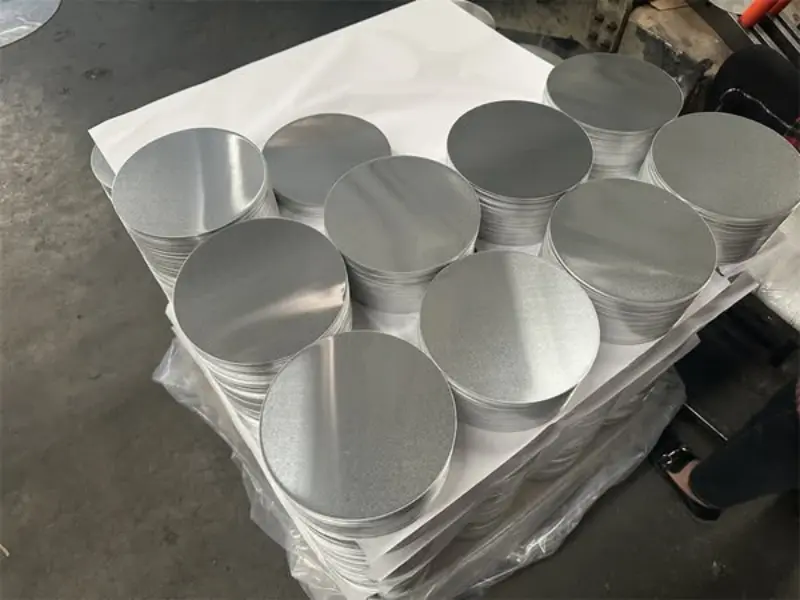
The correct combination depends on:
Blank diameter
Material thickness
Alloy
Forming depth
Cookware design
For example, a shallow pan and a deep stock pot may use different material specifications even if their opening diameters are similar.
Deep Drawing Performance of Aluminum Circle for Cookware
Deep drawing is an important process for cookware manufacturing.
The aluminum circle is placed into a forming die. Pressure then changes the flat blank into a three-dimensional shape.
A basic process looks like this:
Flat aluminum circle
↓
Die positioning
↓
Pressing
↓
Material flow
↓
Cup or pan shape
↓
Trimming
Good formability helps reduce problems such as cracking, wrinkles, and uneven walls.
Aluminum Circle for Spinning
Some cookware products are produced through metal spinning.
In this process, the circular blank rotates while a forming tool gradually shapes it.
This method can be useful for:
- Bowls
- Pans
- Pots
- Large containers
- Special kitchen products
The material should have suitable ductility and surface quality for the spinning process.
Pressing vs Spinning Aluminum Circle for Cookware
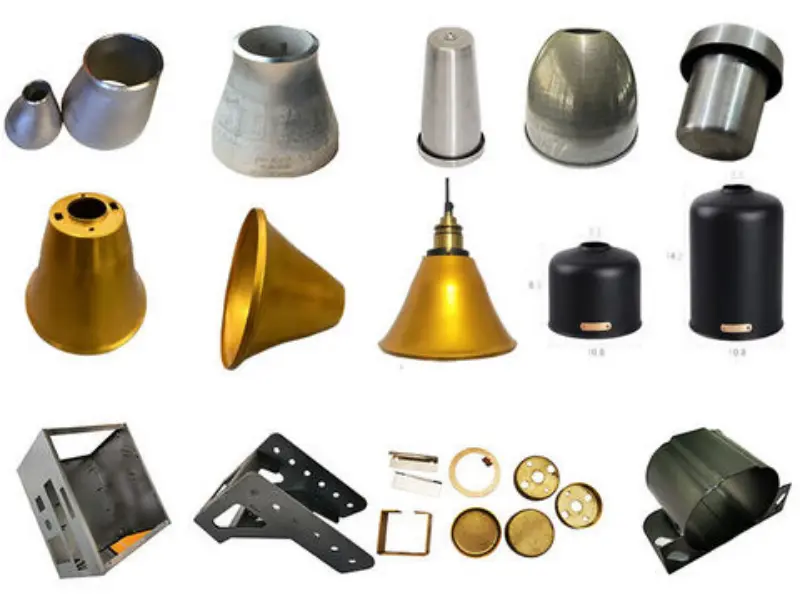
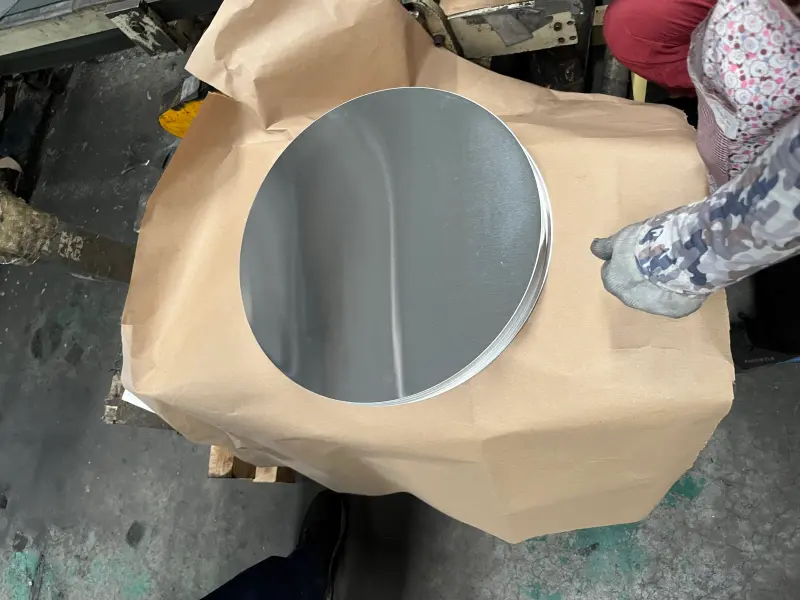
Different production methods have different advantages.
| Point | Deep Drawing | Spinning |
|---|---|---|
| Production volume | High | Low to medium |
| Tooling | More tooling | Flexible tooling |
| Shape consistency | High | Depends on operator/process |
| Complex shapes | Good | Good for selected designs |
| Custom orders | Less flexible | More flexible |
| Mass production | Excellent | Usually less suitable |
The best blank specification depends on the customer’s production line.
Surface Quality Before Forming
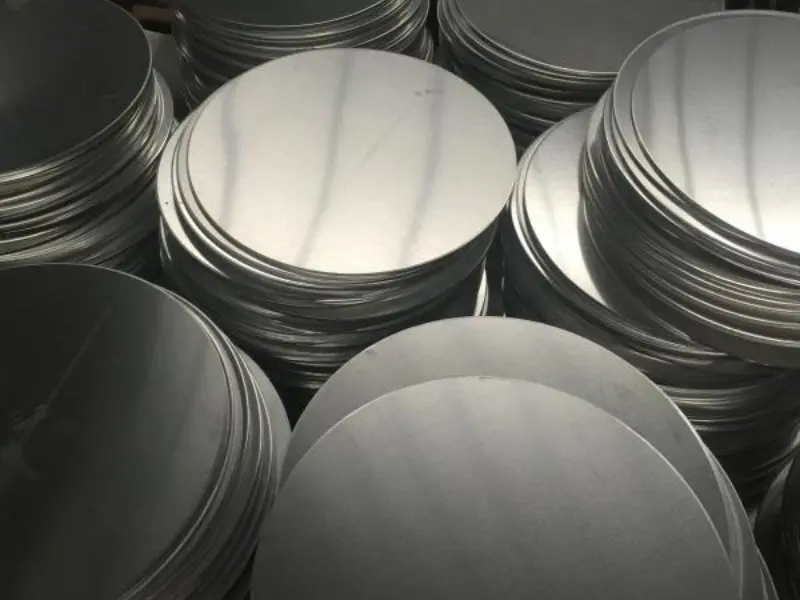
Surface quality is especially important for cookware.
A defect on the blank may become more visible after forming.
Important points include:
→ No deep scratches
→ No dents
→ No oil contamination
→ No obvious black spots
→ Uniform surface
→ Clean edges
A clean surface helps improve the appearance of the finished cookware.
Edge Quality Can Affect Production
The edge of an aluminum circle is another detail worth checking.
A rough or poorly cut edge can create problems during forming or handling.
| Edge condition | Production consideration |
|---|---|
| Smooth edge | Better handling |
| Uniform edge | More consistent forming |
| Burr-free edge | Safer processing |
| Irregular edge | May require additional processing |
For high-volume production, stable cutting quality can save time.
Standard Aluminum Circles vs Custom Blanks
Not every cookware manufacturer needs the same blank.
Standard Aluminum Circles
Standard sizes can be useful for regular products.
They are simple to order and easy to store.
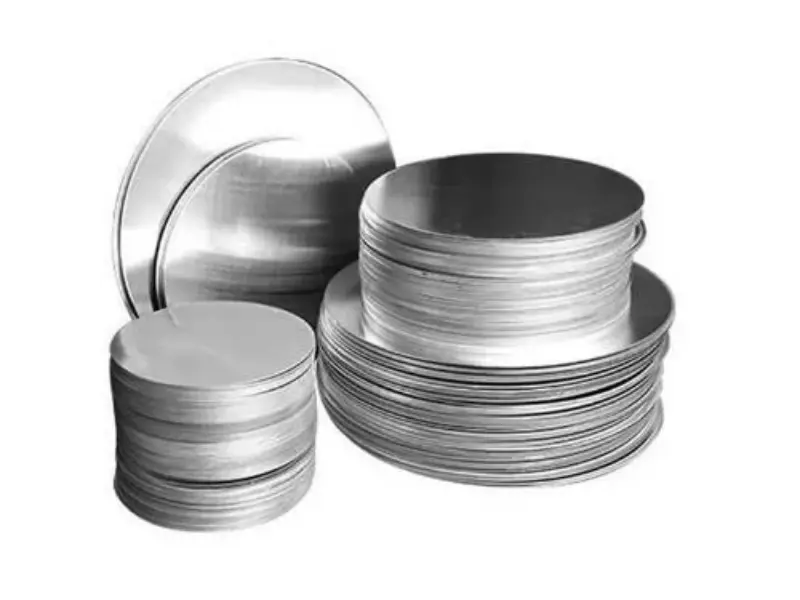
Custom Aluminum Blanks
Custom sizes can be better when the product has a specific design.
Possible requirements include:
- Custom diameter
- Custom thickness
- Special alloy
- Specific temper
- Special surface
- Tight dimensional tolerance
- Large production quantity
Custom cutting can help reduce unnecessary material processing.
How Custom Diameter Can Reduce Waste
Consider a production line that requires a specific blank diameter.
Using a suitable circle size can be more efficient than starting with a large square sheet and cutting it again.
Standard sheet Aluminum Circle for Cookware
→ cutting
→ round blank
→ leftover material
Compared with:
Aluminum coil Aluminum Circle for Cookware
→ optimized circle cutting
→ cookware blank
The second route may help improve material utilization, especially for large-volume production.
Common Cookware Shapes
Aluminum circles can be used as blanks for many round products.
Frying pans
→ Flat or slightly curved body
Sauce pans
→ Deeper side wall
Cooking pots
→ Larger forming depth
Pizza pans
→ Shallow shape
Baking trays
→ Large diameter
Serving trays
→ Light forming
Food containers
→ Round or deep-drawn body
Kitchen bowls
→ Spinning or drawing
Different products may require different blank sizes and material conditions.
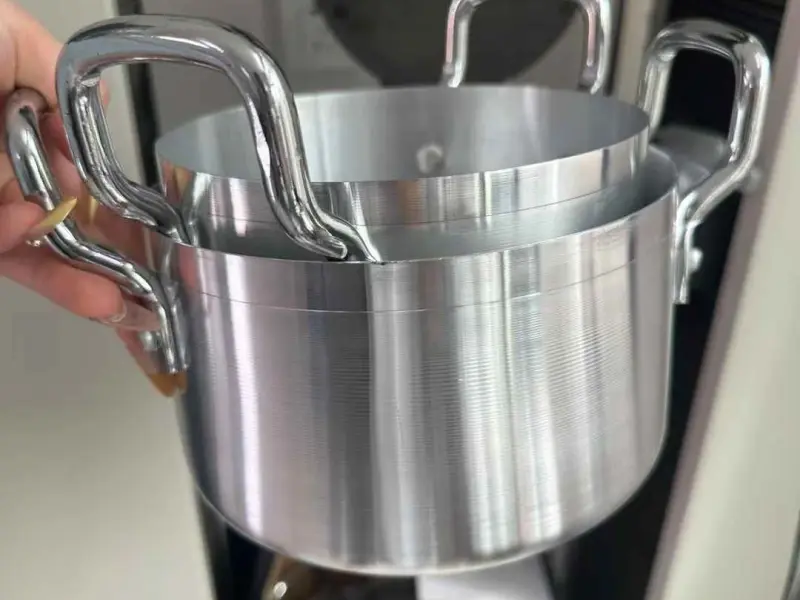
From Blank to Finished Pan
The aluminum circle is only the first step.
A typical production route may include:
1. Aluminum circle
↓
2. Cleaning
↓
3. Deep drawing or spinning
↓
4. Trimming
↓
5. Bottom processing
↓
6. Surface treatment
↓
7. Coating if required
↓
8. Handle assembly
↓
9. Final inspection
This makes the quality of the original blank important to the whole production chain.
Coated Cookware Needs a Good Base
Some cookware receives a non-stick or other functional coating after forming.
The aluminum substrate should have a suitable surface for later processing.
A typical structure may be:
Aluminum base
↓
Surface preparation
↓
Primer or treatment
↓
Functional coating
↓
Final cookware
The exact coating system depends on the cookware manufacturer and product requirements.
For non-stick cookware, the aluminum substrate provides the basic shape and mechanical body.
Aluminum Circle for Non-Stick Cookware
The final performance depends on the complete cookware structure, not only the aluminum grade.
Factors include:
- Aluminum alloy
- Blank thickness
- Forming method
- Surface preparation
- Coating system
- Bottom construction
- Final processing
This is why material selection should be discussed together with the production process.
Food Contact Considerations
Cookware is used directly in food preparation, so material selection should follow the requirements of the destination market.
The buyer should confirm:
- Applicable food-contact requirements
- Alloy specification
- Surface condition
- Coating requirements
- Manufacturing process
- Documentation requirements
For export orders, customers should provide the required standard or compliance specification before production.
Aluminum Circle for Induction Cookware
Induction cookware may require a special bottom structure.
Aluminum itself is not a ferromagnetic material, so induction cookware commonly uses an additional magnetic layer or suitable base construction.
A simplified structure can be:
Aluminum cookware body
↓
Bonded or assembled base
↓
Magnetic layer
↓
Induction cooking surface
For induction products, the aluminum circle is selected based on the cookware body and the manufacturer’s forming process.
Flatness Is More Important Than It Looks
Flatness can affect the next processing step.
A flat aluminum circle is easier to position before forming.
It can also help maintain consistent contact with tooling.
| Material condition | Production effect |
|---|---|
| Good flatness | Easier positioning |
| Stable shape | Better automation |
| Uneven blank | May affect forming |
| Warped blank | More handling problems |
This is particularly relevant for automated production lines.
What Does a Cookware Manufacturer Need From a Supplier?
A cookware factory normally cares about more than price.
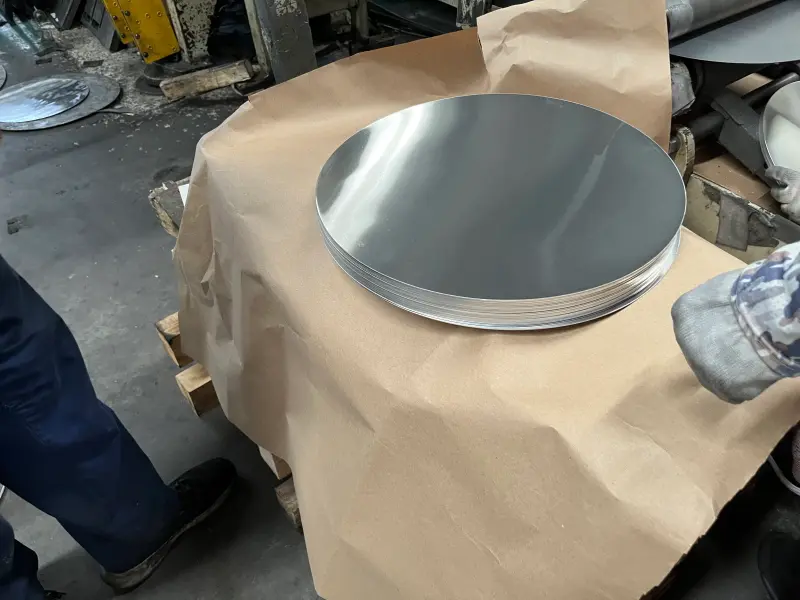
The supplier should be able to discuss:
Material
→ Alloy and temper
Size
→ Diameter and thickness
Surface
→ Finish and cleanliness
Processing
→ Cutting tolerance and edge quality
Quantity
→ Trial order or bulk production
Packing
→ Protection during transportation
Delivery
→ Production and shipping schedule
This makes communication much easier before an order is placed.
A Better Way to Compare Suppliers
When comparing two aluminum circle suppliers, use the same specification.
| Comparison point | Supplier A | Supplier B |
|---|---|---|
| Alloy | ✓ | ✓ |
| Temper | ✓ | ✓ |
| Thickness | ✓ | ✓ |
| Diameter tolerance | Check | Check |
| Flatness | Check | Check |
| Surface quality | Check | Check |
| Edge quality | Check | Check |
| Packing | Check | Check |
| Lead time | Check | Check |
| Total cost | Check | Check |
This approach gives a more useful comparison than looking at the price per ton alone.
What Affects the Price of Aluminum Circles?
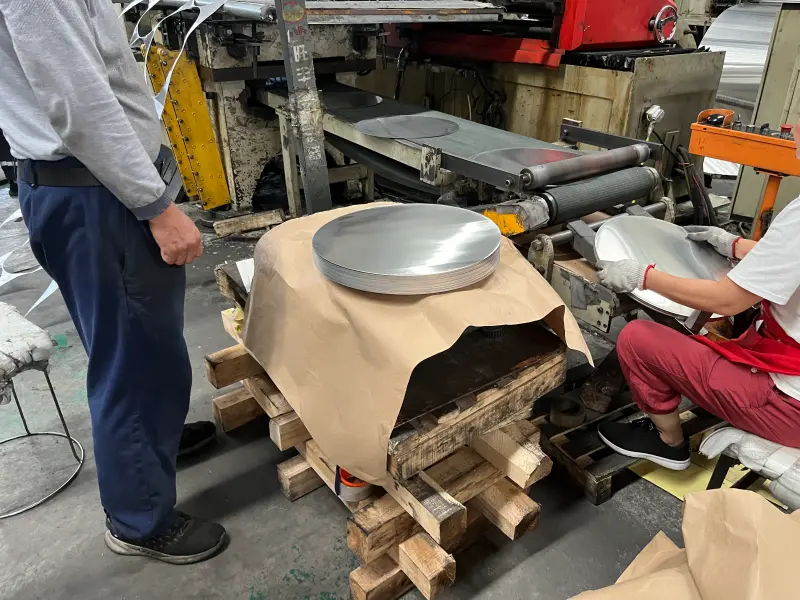
The price is usually affected by several factors.
Aluminum market price
Alloy
Temper
Thickness
Diameter
Processing
Surface requirements
Order quantity
Packing
Therefore, an aluminum circle price should be quoted from a complete specification.
Trial Order Before Mass Production
For a new cookware design, a trial order can be useful.
The manufacturer can test:
- Forming depth
- Drawing performance
- Surface condition
- Edge quality
- Dimensional stability
- Production speed
- Finished appearance
After the blank passes the production test, the same specification can be used for larger orders.
Factory Supply for Cookware Aluminum Circles
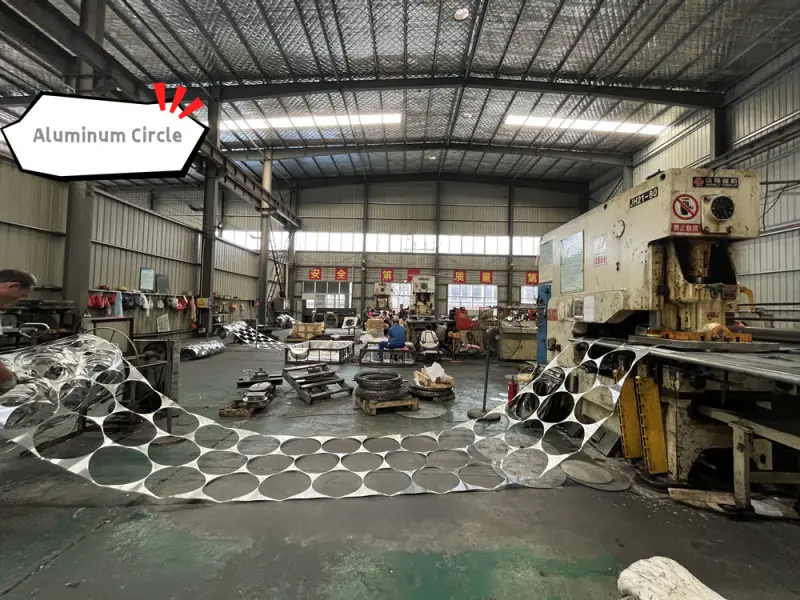
Our factory can supply aluminum circles for different cookware and metal forming requirements.
Available options can include 1050, 1060, 1070, 1100, 3003 and other aluminum alloys, with different tempers, thicknesses, diameters, surface finishes, and packing methods.
We can also supply related aluminum products such as aluminum sheet, aluminum plate, aluminum coil, aluminum strips, aluminum discs, and custom-cut aluminum blanks.
For cookware manufacturers, we can discuss blank diameter, thickness, alloy, temper, forming requirements, surface condition, quantity, and packaging before production.
From Aluminum Sheet to Ready-to-Use Blank
For manufacturers who want to reduce preparation work, a ready-cut circle can be more convenient.
Aluminum sheet or coil
→
Precision circle cutting
→
Inspection
→
Packing Aluminum Circle for Cookware
→
Delivery to cookware factory
The customer can then move directly to the forming process.
This is especially useful for production lines that use a large number of identical blanks.
A Simple Specification Example
For quotation, customers can send a specification like this:
| Item | Example |
|---|---|
| Alloy | 3003 |
| Temper | O / H14 |
| Diameter | 300 mm |
| Thickness | 1.0 mm |
| Surface | Mill finish |
| Edge | Smooth cut |
| Quantity | 5 tons |
| Application | Frying pan |
| Packing | Export wooden pallet |
The actual specification should be adjusted according to the cookware design and forming process.
Frequently Asked Questions
What alloy is best for cookware circles?
3003 aluminum is the standard choice, offering a good balance of formability and strength for most pots and pans.
What thickness is used for frying pans?
1.8mm to 2.5mm is common for standard frying pans, while thicker circles suit heavy-duty or commercial cookware.
Can aluminum circles be used for induction cookware?
Yes, but a plain aluminum circle will not work alone. A clad circle with a magnetic steel or stainless layer is needed for induction cooktops.
What is the difference between 3003 and 3004 circles?
3004 offers slightly more strength and dent resistance than 3003, though both are common cookware alloys.
Do cookware circles come pre-coated with non-stick material?
Yes. Pre-coated circles are available, saving a coating step for high-volume frying pan and cookware production.
What temper works best for deep-drawn pots?
O temper, the fully annealed state, offers the most flexibility and is the standard choice for deep-drawn pots and stockpots.