Gutters need metal that will not rust, warp, or crack under years of sun and rain.
Aluminum coil for gutter production is the standard choice for seamless gutter machines, K-style gutter lines, and half-round gutter forming.
What Is Aluminum Coil for Gutter
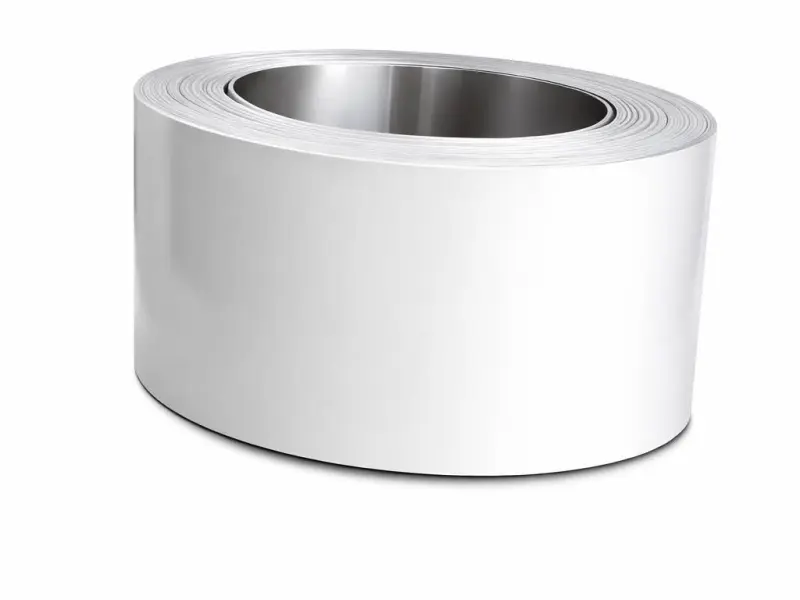
Aluminum coil for gutter is a coil-formed aluminum sheet, wound on a core, used to feed portable or shop-based gutter forming machines.
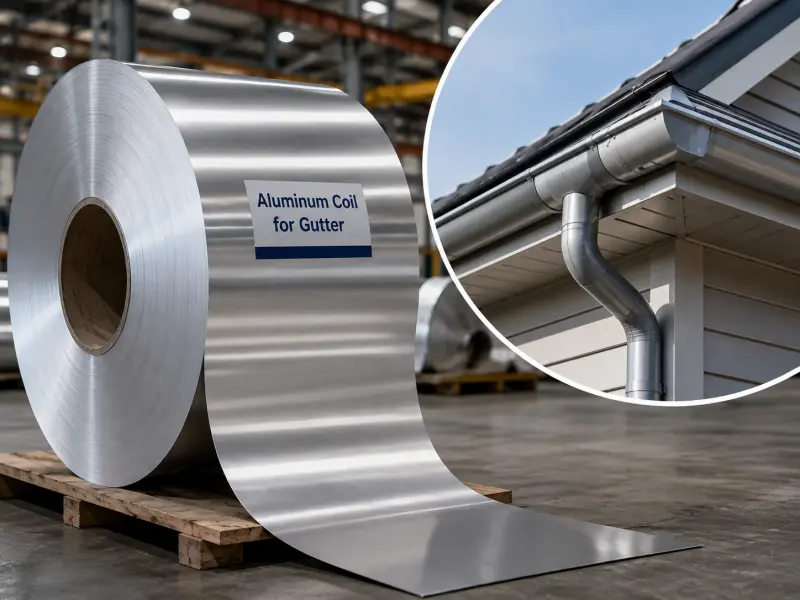
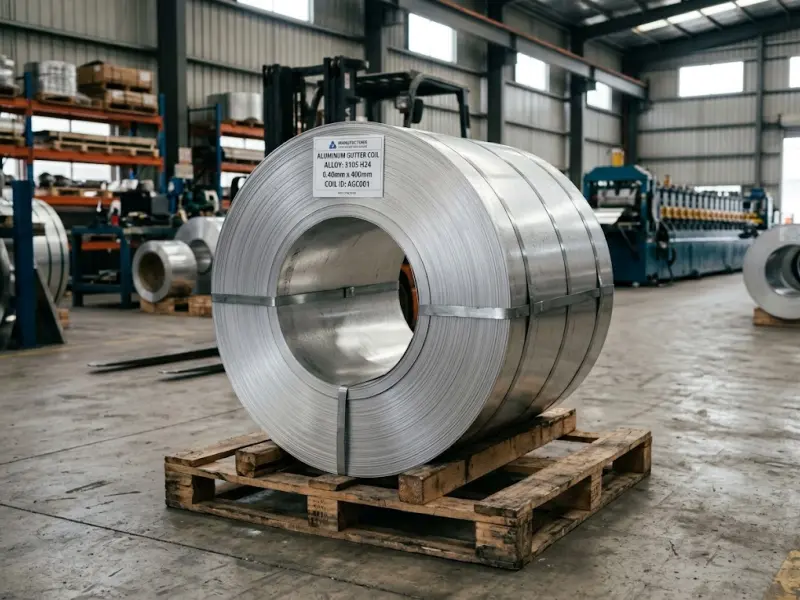
The coil unrolls flat, then passes through rollers that shape it into a finished gutter profile in one continuous run. This method avoids seams, which lowers the risk of leaks.
Most gutter installers buy coil in fixed widths that match a specific gutter size, such as 5-inch or 6-inch K-style. The coil comes on a spool, ready to load onto a portable forming machine at the job site.
Why Aluminum Over Other Metals
- Aluminum will not rust like steel
- It is lighter, so it is easier to lift and form on-site
- It holds paint and coating well
- It costs less than copper or zinc
- It resists cracking in cold weather better than vinyl
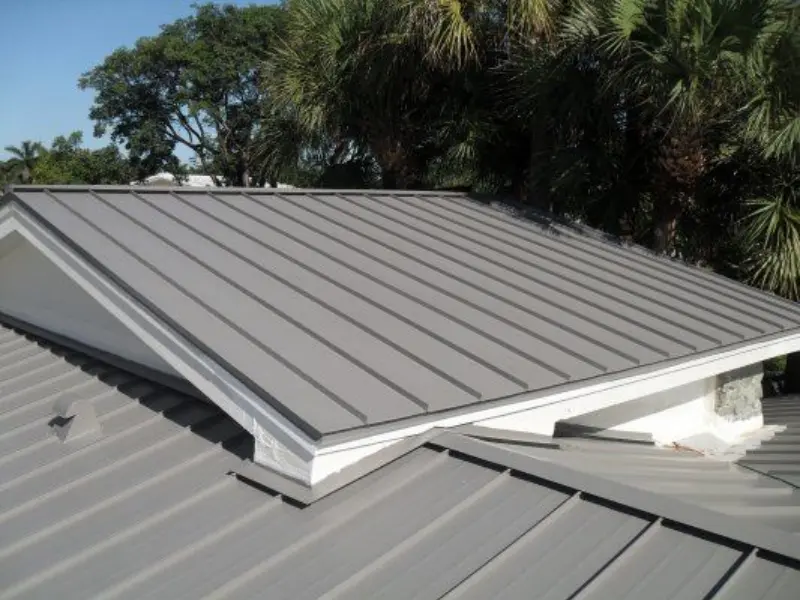
Alloy and Temper Options
Alloy choice affects strength, formability, and paint adhesion. Below is a quick reference table for the alloys most often used in gutter coil.
| Alloy | Temper | Typical Use | Key Trait |
|---|---|---|---|
| 3003 | H14 / H24 | Standard residential gutters | Good balance of strength and bend ease |
| 3105 | H14 / H24 | Painted gutter coil | Common alloy for coil coating lines |
| 5052 | H32 | Heavy-duty or commercial gutters | Higher strength, stiffer profile |
| 1100 | O / H14 | Budget gutter runs | Very soft, easy to form, lower strength |
Most gutter fabricators pick 3003 or 3105 in H14 temper. This combination bends cleanly through a forming machine without cracking at the seams.
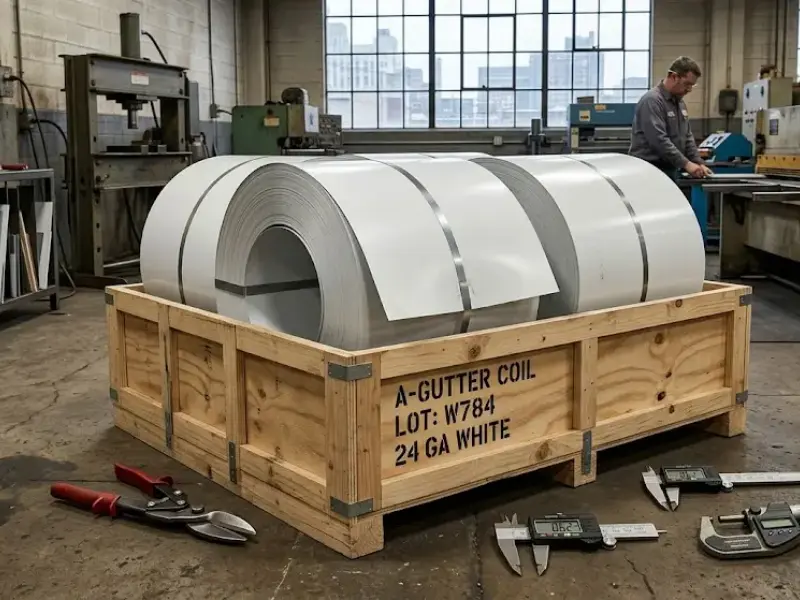
Temper Guide, Simple Version
H32 temper: firmer, used where the gutter profile needs to hold its shape under load
O temper: softest, easiest to bend, lowest strength
H14 temper: medium-hard, the most common pick for gutter coil
H24 temper: similar hardness to H14, made by a different rolling process
Thickness and Gauge Reference
Gutter coil thickness is usually listed in inches or in gauge number. A thicker coil resists denting but costs more and weighs more on the coil.
| Gauge | Thickness (in) | Thickness (mm) | Common Application |
|---|---|---|---|
| .027 | 0.027 | 0.69 | Light residential gutters |
| .032 | 0.032 | 0.81 | Standard K-style gutters |
| .040 | 0.040 | 1.02 | Commercial and heavy-snow regions |
| .050 | 0.050 | 1.27 | Custom, high-wear gutter systems |
.032-inch coil is the most requested thickness for standard homes. .027-inch coil is a lighter, more budget option for milder climates.
Coil Width and Coil Weight
Width depends on the gutter style being formed. A wider coil is needed for larger K-style or half-round profiles.
| Gutter Style | Coil Width | Approx. Coil Weight (per 500 ft) |
|---|---|---|
| 5-inch K-style | 20 inch | 195–210 lbs |
| 6-inch K-style | 24 inch | 235–255 lbs |
| 5-inch half-round | 16.5 inch | 165–180 lbs |
| 6-inch half-round | 19.5 inch | 190–205 lbs |
Coil weight changes with alloy and gauge, so these numbers are approximate. Exact weight should be confirmed with the mill before ordering.
Aluminum Coil for Gutter Product Types
Buyers usually choose between a few main coil finishes. Each type suits a different budget and look.
Mill Finish Aluminum Coil
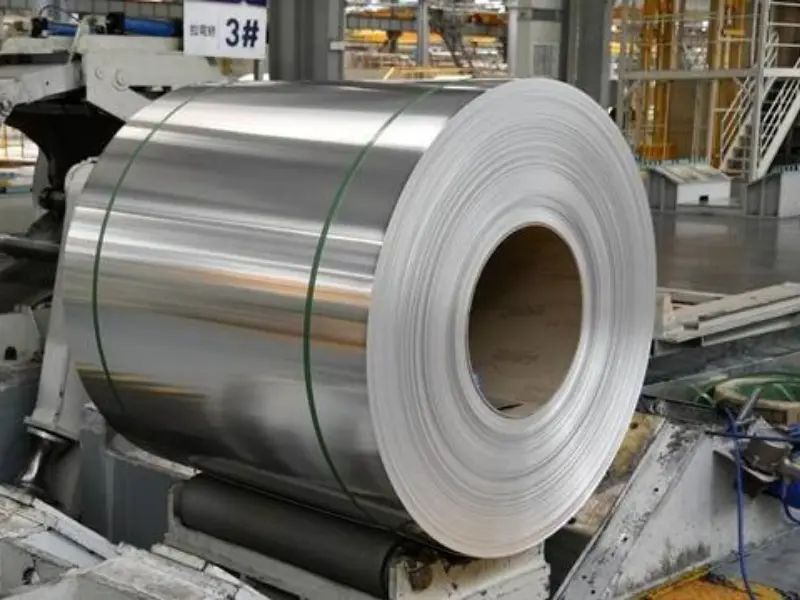
This is bare aluminum, straight off the rolling mill. It has a plain, silver-gray surface with no paint or coating.
Not ideal for coastal areas without added protection
Lowest cost option
Often used where the gutter will be painted after install
PE Coated Gutter Coil
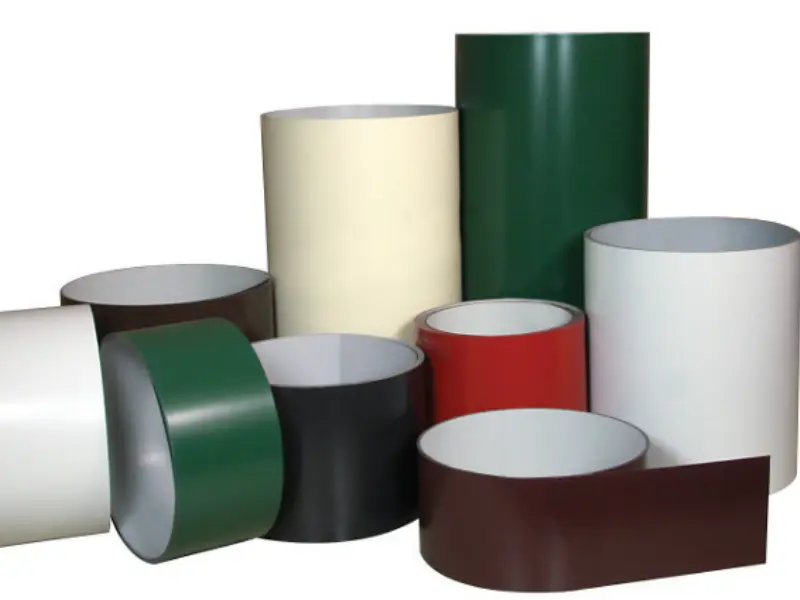
PE (polyester) coating adds a painted finish in a wide range of colors. This is the most common type sold to gutter installers.
Mid-range price point
Good UV resistance for outdoor use
Wide color range, matched to common roof and trim colors
PVDF Coated Gutter Coil
PVDF coating is a higher-grade paint system, known for holding color longer under strong sun.
Higher price than PE coating
Best fade resistance of the coated options
Often chosen for commercial buildings or hot climates
Embossed Aluminum Coil for Gutter
Embossing presses a light texture pattern into the coil surface.
- Hides small dents and scratches better than a flat surface
- Slightly more grip during handling
- Available in mill finish or painted versions
Color-Coated Coil by Finish Type
| Finish Type | Surface Look | Fade Resistance | Price Tier |
|---|---|---|---|
| Mill Finish | Plain metallic | N/A (unpainted) | Lowest |
| PE Coated | Smooth, painted | Moderate | Mid |
| PVDF Coated | Smooth, painted | High | Higher |
| Embossed + PE | Textured, painted | Moderate | Mid |
Aluminum Coil for Gutter vs. Steel Coil
Some fabricators compare aluminum against galvanized steel before choosing coil stock. The table below lines up the main differences.
| Factor | Aluminum Coil | Steel Coil |
|---|---|---|
| Rust risk | None | Yes, if coating is scratched |
| Weight | Lighter | Heavier |
| Forming ease | Easier on portable machines | Needs more force |
| Cost per foot | Higher | Lower |
| Lifespan | 20–30+ years | 15–20 years typical |
Aluminum wins on weight and rust resistance. Steel can be cheaper up front but often needs replacement sooner in wet climates.
Aluminum Coil for Gutter for sale
Applications
Gutter coil is not only used for standard house gutters. It shows up across several related building trades.
Gutter guard frame stock
Residential seamless gutters
Commercial building gutter systems
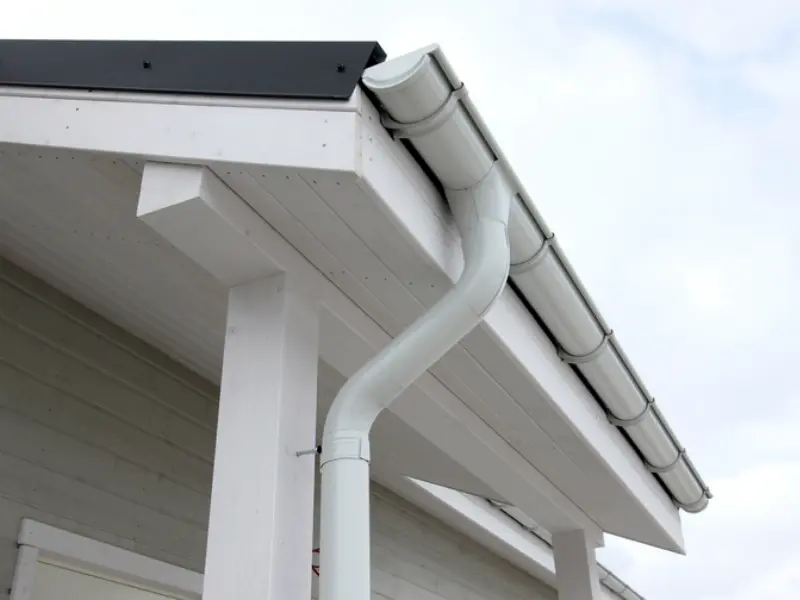
Half-round gutter profiles for historic homes
Fascia and trim coil matching
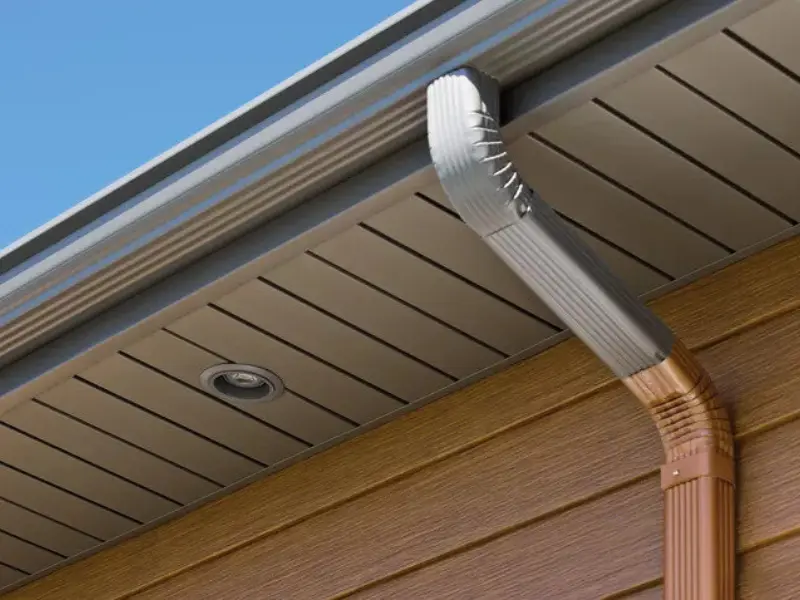
Downspout fabrication
Custom box gutters for large roofs
How Gutter Coil Is Formed On-Site
Understanding the forming process helps explain why coil quality matters so much.
Loading the Coil
The coil is mounted on a spindle at the back of the forming machine. It must sit flat and true, or the finished gutter will twist.
Feeding Through Rollers
The metal passes through a series of shaped rollers. Each roller bends the coil a little further toward the final gutter profile.
Cutting to Length
Once the gutter exits the machine, it is cut to the exact length needed for that section of roofline. This keeps the run seamless from end to end.
Choosing the Right Coil for Your Project
Picking the correct coil comes down to a few quick questions.
→ Coastal or humid area? Choose PVDF coating for better long-term color hold. → Tight budget? Mill finish or PE coated 3003-H14 is a solid, low-cost pick. → Heavy snow load region? Step up to .040-inch gauge for added stiffness. → Matching existing trim color? PE coated coil offers the widest stock color range. → Commercial project? 5052-H32 gives extra strength for larger spans.
How to Choose Aluminum Coil for Gutter Manufacturing
Choosing gutter coil is not only about thickness and price. The material should match the gutter profile, forming machine, climate, coating system, and expected service life.
A practical selection process is:
Gutter design → Coil width → Thickness → Alloy → Temper → Coating → Color → Slitting → Packaging
For manufacturers, stable coil quality is important because small changes in thickness or flatness can affect roll forming and the final gutter shape.
Gutter Coil Selection at a Glance
| Project requirement | Important factor | Common choice |
|---|---|---|
| Residential gutters | Formability and appearance | 3003 / 3105 |
| Commercial gutters | Durability and coating | 3105 |
| Large gutter systems | Width and thickness | Custom specification |
| Coastal areas | Corrosion resistance | Suitable alloy + coating |
| High-volume production | Coil consistency | Factory jumbo coil |
| Custom colors | Paint system | PE / PVDF |
| Easy roll forming | Temper | H14 / H24 |
| Replacement work | Matching size and color | Custom coil |
The final specification should be based on the gutter profile and forming equipment.
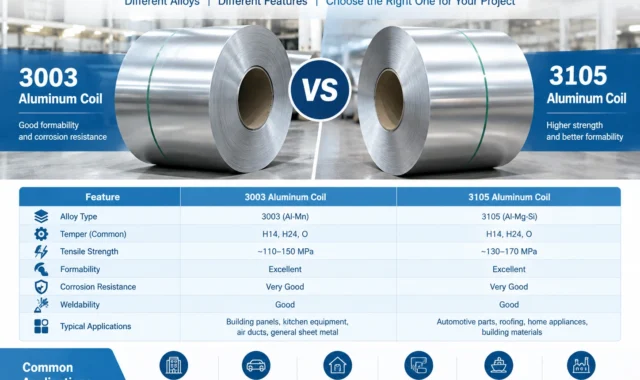
3003 vs 3105 Aluminum Coil for Gutters
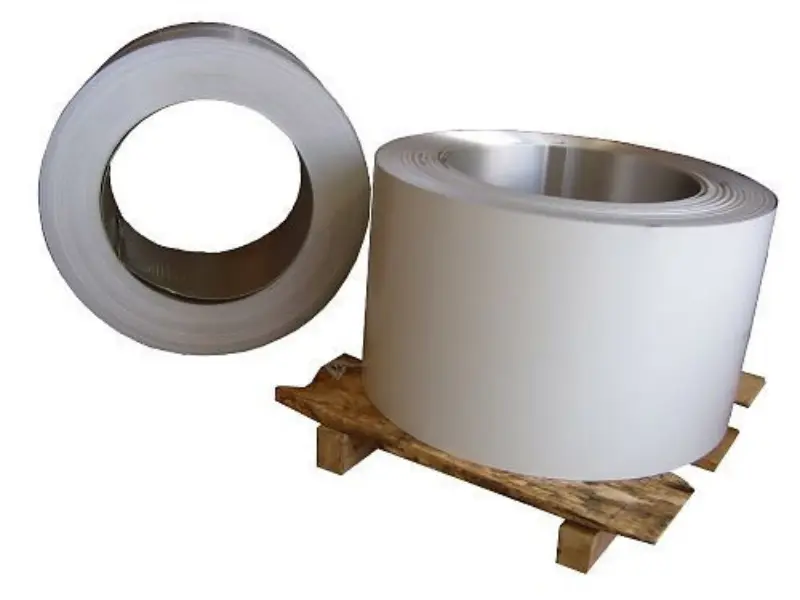
3003 and 3105 are both commonly considered for formed aluminum products.
| Property | 3003 | 3105 |
|---|---|---|
| Formability | Excellent | Excellent |
| Corrosion resistance | Good | Very good |
| Strength | Medium | Medium |
| Roll forming | Excellent | Excellent |
| Painting | Good | Good |
| Outdoor use | Good | Very good |
| Gutter production | Suitable | Very suitable |
3003 Aluminum Coil for Gutter
3003 aluminum offers good formability. It can be a practical option for gutter profiles that require bending and roll forming.
3105 Aluminum Coil for Gutter
3105 aluminum is also widely considered for painted building products. It offers a useful balance between formability, strength, and outdoor corrosion resistance.
For large production orders, the final alloy should be selected according to the customer’s equipment and gutter design.
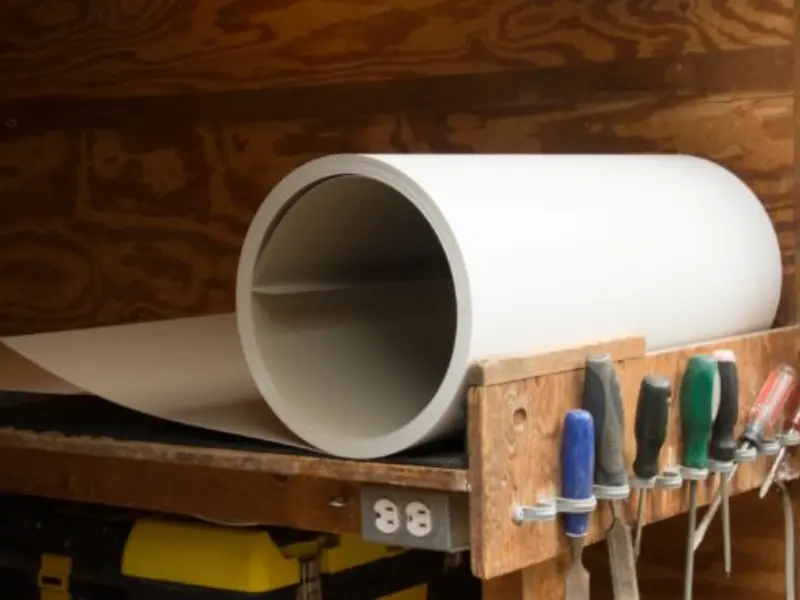
How Thickness Affects Aluminum Gutter Coil
Thickness affects the rigidity, weight, forming behavior, and final appearance of the gutter.
| Thickness | General direction | Possible use |
|---|---|---|
| 0.50 mm | Lightweight | Light residential gutters |
| 0.60 mm | Balanced | General gutter production |
| 0.70 mm | Higher rigidity | Residential and commercial |
| 0.80 mm | Stronger | Larger gutter systems |
| 0.90–1.00 mm | Heavy-duty | Special applications |
These values are general references. Actual thickness should be selected according to the gutter size, profile, support spacing, and local requirements.
A thicker coil is not always better. Excess thickness can increase material cost and may require changes to forming equipment.
Aluminum Gutter Coil Width and Slitting
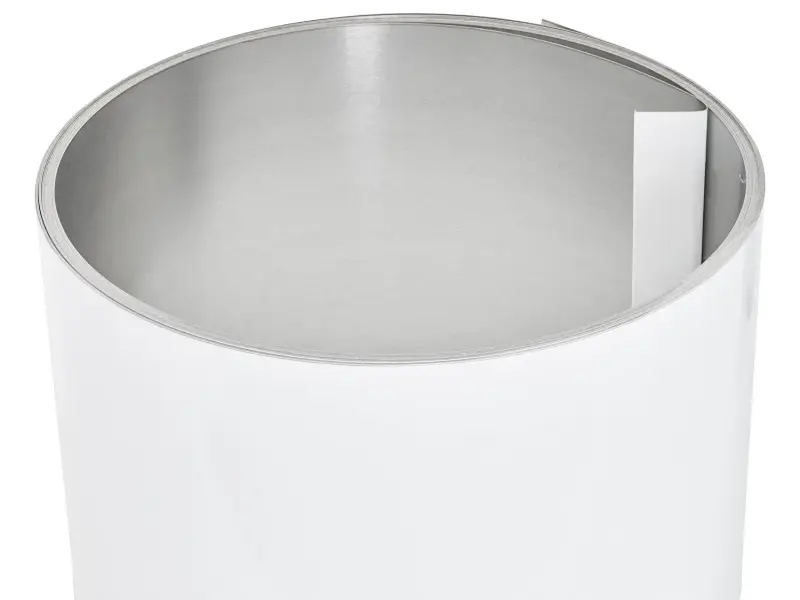
Width is one of the most important purchasing points for gutter manufacturers.
The coil width should match the required blank width after forming.
For example:
Master Coil
↓
Slitting
↓
Required Coil Width
↓
Roll Forming
↓
Finished Gutter
Using the correct width can reduce edge waste and improve production efficiency.
A manufacturer may supply master coils and slit coils according to the customer’s requirements.
Why Coil Flatness Matters in Gutter Production
Flatness can affect the forming process.
If the strip has excessive waviness or edge problems, it may cause:
- Uneven feeding
- Profile deformation
- Surface marks
- Forming instability
- Higher scrap rates
- Difficulty during automatic production
For this reason, gutter manufacturers should pay attention to both thickness tolerance and flatness, not only the nominal coil size.
PE vs PVDF Coating for Gutter Coil
The coating affects the appearance and outdoor performance of painted aluminum gutter coil.
| Feature | PE | PVDF |
|---|---|---|
| Cost | Lower | Higher |
| Color selection | Wide | Wide |
| General outdoor use | Good | Excellent |
| UV resistance | Good | Very good |
| Color retention | Good | Better |
| Premium projects | Moderate | Suitable |
| Long-term appearance | Good | Excellent |
PE coating is often a practical choice for standard gutter products.
PVDF Aluminum Coil for Gutter can be considered for projects where long-term color retention and weather resistance are more important.
Choosing the Right Gutter Coil Color
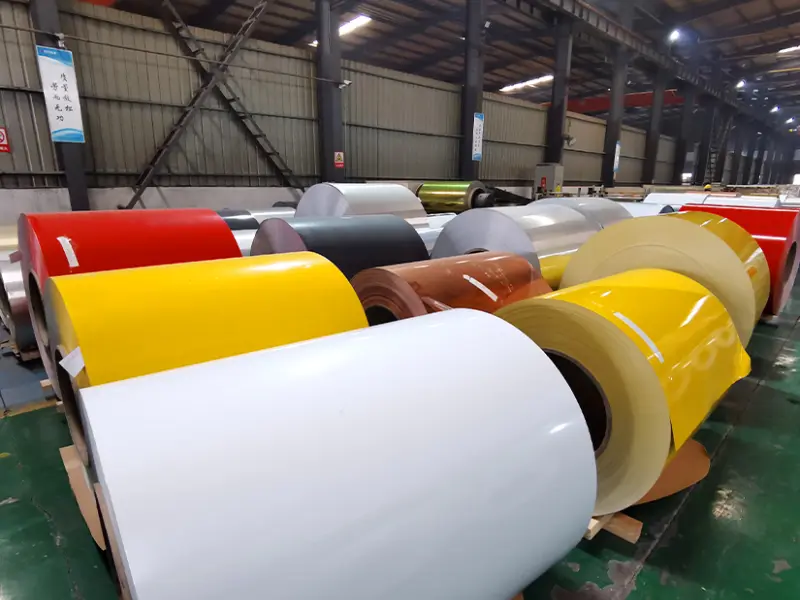
Color is an important part of a finished gutter system.
Common colors include:
Custom RAL colors
White
Black
Brown
Gray
Silver
Bronze
Green
Red
A matching gutter color can improve the appearance of the entire roof system.
For distributors, popular standard colors can be stocked. For manufacturers with large projects, custom colors can be produced according to the required color reference.
Gutter Coil for Different Climates
The local environment can affect material selection.
Coastal Areas
Salt and moisture can increase corrosion risk. A suitable alloy and coating system should be considered.
Hot and Sunny Areas
Strong UV exposure can affect coating performance. A suitable exterior coating can help maintain color and surface appearance.
Cold Areas
Temperature changes can cause material expansion and contraction. Proper gutter design and installation are important.
High-Rainfall Areas
The gutter system must handle the expected water flow. Material selection should be combined with correct gutter size and drainage design.
Aluminum Gutter Coil vs Steel Coil
Both aluminum and steel can be used for gutter production.
| Feature | Aluminum Coil | Steel Coil |
|---|---|---|
| Weight | Lower | Higher |
| Corrosion resistance | Naturally good | Requires protection |
| Formability | Good | Good |
| Handling | Easy | Heavier |
| Painting | Excellent | Excellent |
| Outdoor use | Excellent | Good with proper coating |
| Rust risk | Very low | Higher if coating is damaged |
Aluminum is attractive when low weight and corrosion resistance are important.
Steel may be selected when higher rigidity or a different cost structure is required.
Why Coil Consistency Matters for Roll Forming
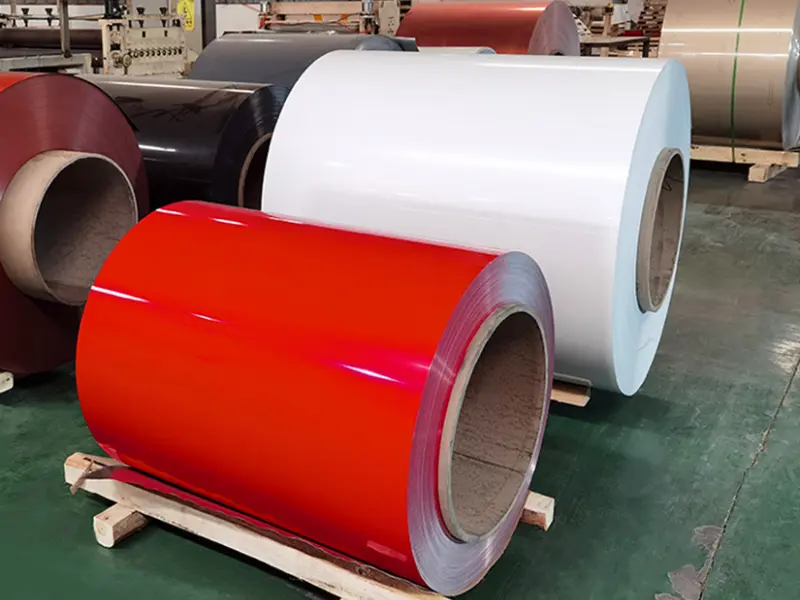
Gutter production often uses continuous roll forming.
The coil passes through several forming stations before becoming the final profile.
Uncoiling
→ Leveling
→ Feeding
→ Roll Forming
→ Cutting
→ Finished Gutter
Stable coil properties help keep the production process consistent.
Changes in thickness, hardness, width, or surface quality can affect the final profile.
How to Reduce Waste in Gutter Coil Production
Material waste can have a noticeable effect on manufacturing cost.
A simple approach is:
Gutter profile
↓
Required blank width
↓
Coil width calculation
↓
Slitting plan
↓
Roll forming
The closer the coil width is to the required production width, the less unnecessary edge material may be generated.
For high-volume production, optimized slitting can improve material utilization.
Aluminum Gutter Coil for Large-Volume Production
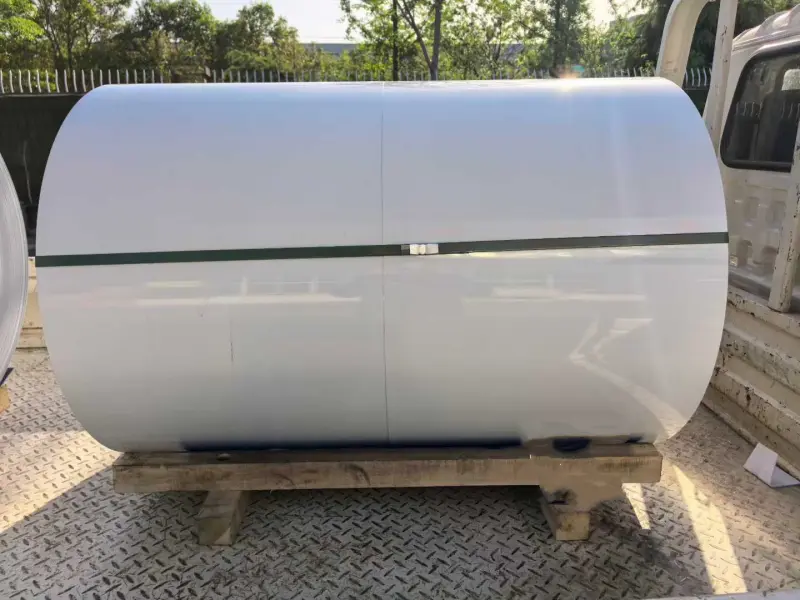
Large gutter manufacturers often need stable coil supply rather than small quantities of standard sheets.
Jumbo coils can provide several advantages:
- Continuous production
- Fewer coil changes
- Higher production efficiency
- Reduced handling
- Easier automated feeding
- Better production planning
The suitable coil weight depends on the customer’s uncoiler and forming line.
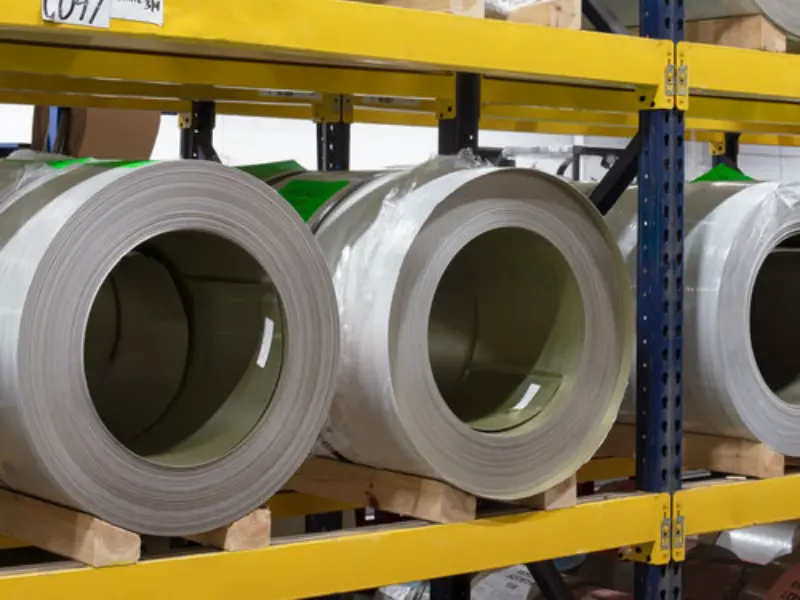
Before ordering jumbo coils, the supplier should confirm the maximum coil weight, inner diameter, outer diameter, and width requirements.
Inner Diameter and Outer Diameter of Gutter Coil
Coil dimensions should match the customer’s production equipment.
| Item | Common consideration |
|---|---|
| Inner diameter | Must match the uncoiler |
| Outer diameter | Limited by equipment |
| Coil weight | Must match lifting capacity |
| Coil width | Match forming or slitting |
| Coil length | Depends on thickness and weight |
Incorrect coil dimensions can create handling and production problems even when the aluminum itself meets the required specification.
Aluminum Gutter Coil for Replacement and Repair
Gutter coil is also useful for replacement work.
A contractor may need to match an existing gutter system by:
→ Width
→ Thickness
→ Color
→ Surface finish
→ Gutter profile
For repair projects, color matching can be especially important because the new gutter should visually match the existing roof and trim.
Custom-width painted aluminum coil can be useful when standard stock does not match the original system.
What Affects Aluminum Gutter Coil Price?
The price of gutter coil depends on more than the aluminum market price.
| Factor | Effect on Cost |
|---|---|
| Aluminum alloy | Different grades may vary |
| Thickness | More material increases weight |
| Coil width | Custom widths affect processing |
| Coating | Paint system affects cost |
| Color | Standard colors are usually easier to produce |
| Coil size | Jumbo production affects handling |
| Slitting | Additional processing |
| Quantity | Larger orders can improve efficiency |
| Packaging | Export protection adds cost |
| Freight | Weight and volume affect shipping |
For this reason, buyers should compare the complete specification instead of only asking for a simple price per kg.
How to Compare Aluminum Gutter Coil Suppliers
A good supplier should provide more than a low price.
Check:
Material
→ Alloy
→ Temper
→ Thickness
→ Width tolerance
Surface
→ Coating type
→ Coating thickness
→ Color
→ Surface quality
Coil
→ Inner diameter
→ Outer diameter
→ Coil weight
→ Slitting accuracy
Service
→ Custom production
→ Inspection
→ Packaging
→ Delivery
This gives buyers a better way to compare suppliers.
Quality Control Before Gutter Coil Shipment
Before shipment, the coil can be checked for several key points.
| Inspection item | Purpose |
|---|---|
| Alloy | Confirm material grade |
| Temper | Confirm forming condition |
| Thickness | Check tolerance |
| Width | Check slitting accuracy |
| Surface | Check scratches and defects |
| Coating | Check paint quality |
| Color | Check consistency |
| Coil ID | Match customer equipment |
| Coil weight | Confirm loading requirements |
| Packaging | Protect during transport |
For larger orders, inspection reports and material certificates can be provided according to project requirements.
Factory Supply for Aluminum Gutter Coil
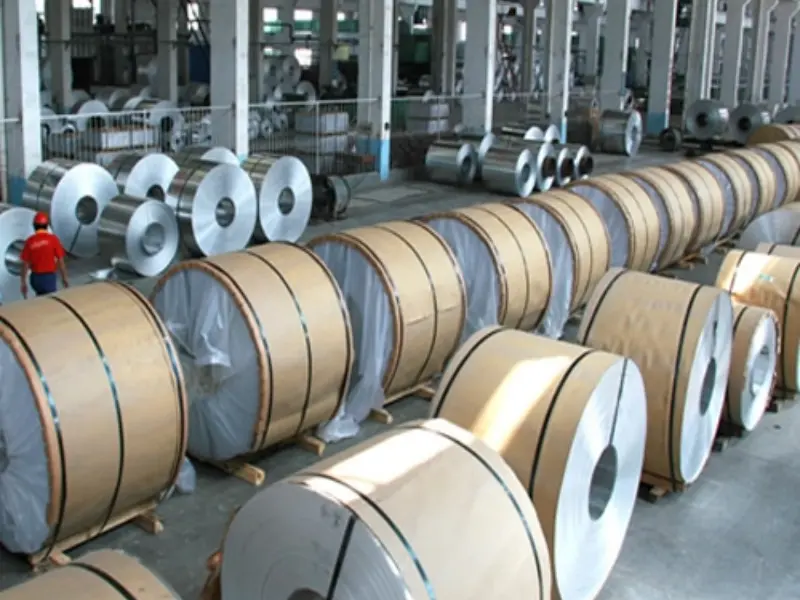

We can supply aluminum coil for different gutter manufacturing requirements.
Available Aluminum Coil for Gutter options can include:
- 3003 aluminum coil
- 3105 aluminum coil
- Different tempers
- Mill finish aluminum coil
- PE coated aluminum coil
- PVDF coated aluminum coil
- Custom colors
- Custom widths
- Slit coils
- Jumbo coils
- Protective film
- Export packaging
Customers can specify alloy, temper, thickness, width, coating, color, coil dimensions, quantity, and packaging requirements.
For gutter manufacturers, distributors, roofing suppliers, and building material companies, customized aluminum coil can be prepared according to the production line and project requirements.
A Quick Gutter Coil Buying Checklist
Before placing an order, confirm these points:
✓ Gutter profile
What type and size of gutter will be produced?
✓ Alloy
Does the material need 3003, 3105, or another grade?
✓ Temper
Is the coil suitable for the forming process?
✓ Thickness
Does it provide the required rigidity?
✓ Width
Does it match the blank width?
✓ Coating
PE, PVDF, or another coating system?
✓ Color
Standard color or custom color?
✓ Coil dimensions
Does the ID and OD match the machine?
✓ Coil weight
Can the uncoiler handle the coil?
✓ Quantity
Is the order suitable for slit or jumbo coil production?
Packaging and Delivery
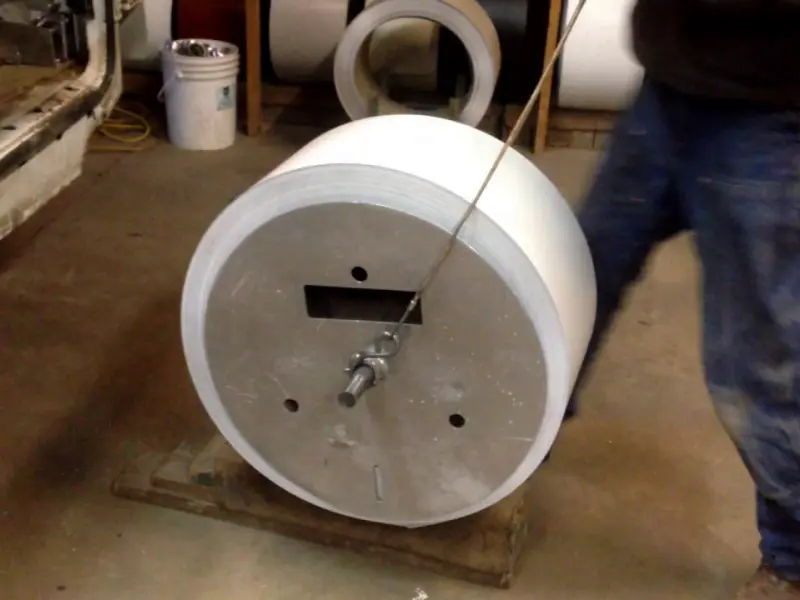
Aluminum Coil for Gutter is normally wound on a steel or wood core and wrapped for shipping protection.
- Standard coil weight: 500 ft to 1,000 ft per roll
- Packing: moisture-proof wrap plus edge protection
- Pallet or crate packing for ocean freight
- MOQ and lead time vary by alloy, coating, and order size
Frequently Asked Questions
What thickness of aluminum coil is best for gutters?
.032-inch is the most common gauge for standard residential gutters. Thicker .040-inch coil suits heavy snow or commercial jobs.
What alloy is used for gutter coil?
3003 and 3105 are the most common alloys. Both form easily and hold paint well.
How long does painted gutter coil last?
PE coated coil typically lasts 15–20 years before noticeable fading. PVDF coated coil can hold color for 25–30 years.
Can gutter coil be custom colored?
Yes. Most suppliers offer color matching against a standard color chart or a customer-supplied sample.
What is the standard coil width for gutters?
20 inches is standard for 5-inch K-style gutters, and 24 inches is standard for 6-inch K-style gutters.
Is mill finish coil good for gutters?
Mill finish works well if the gutter will be painted after forming, or in dry climates where UV exposure is less of a concern.