How to Choose the Right 3003 Checkered Plate for Your Project
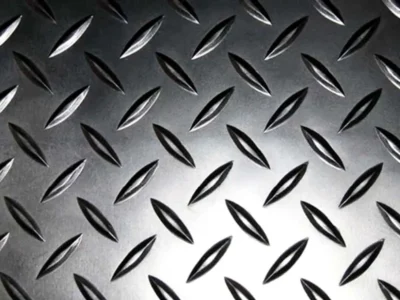
The right 3003 Aluminum Checkered Plate depends on more than thickness. Buyers also need to consider the plate size, temper, surface pattern, forming method, and final use.
For example, a thin sheet may be easier to cut and bend, while a thicker plate can provide better rigidity for floors and platforms.
The required surface finish also depends on whether the plate will be used indoors, outdoors, or in a visible architectural area.
A simple selection process can help:
End use → Required thickness → Alloy and temper → Sheet size → Surface pattern → Cutting and forming → Quantity
This approach helps reduce material waste and makes the final product easier to fabricate.
3003 Checkered Plate by Material Selection
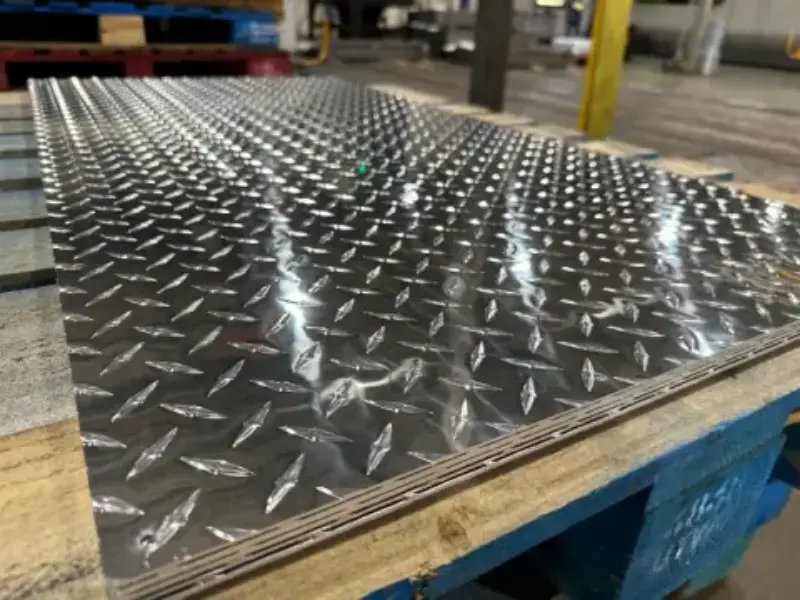
3003 3003 Aluminum Checkered Plate is often selected when a project needs a practical combination of formability, corrosion resistance, and light weight.
Different aluminum grades can look similar after processing, but their performance can be different. For this reason, buyers should confirm the alloy before placing a large order.
| Aluminum Grade | Typical Character | Common Direction |
|---|---|---|
| 1050 | High purity, very formable | General sheet work |
| 3003 | Good formability and corrosion resistance | Checkered sheets, flooring, fabrication |
| 5052 | Higher strength than 3003 | Marine and heavier-duty fabrication |
| 6061 | Strong and heat-treatable | Structural components |
| 5083 | High strength and marine performance | Marine and heavy fabrication |
For projects where easy forming is important, 3003 can be a practical option. When higher mechanical strength is the main requirement, 5052, 5083, or 6061 may be considered instead.
Common Thickness Choices for 3003 Checkered Plate
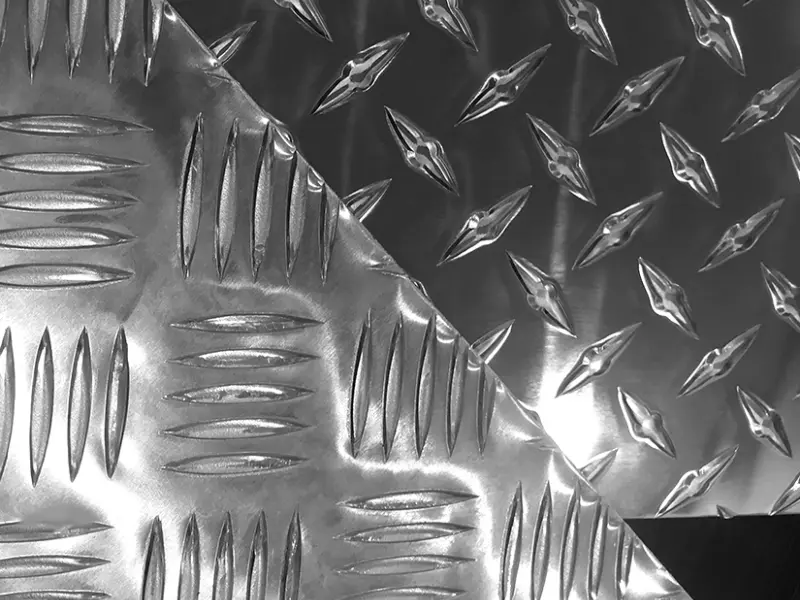
Thickness of 3003 Aluminum Checkered Plate has a direct effect on weight, stiffness, cutting, bending, and installation.
Instead of choosing the thickest plate available, buyers normally select a thickness based on the expected load and installation method.
| Nominal Thickness | Typical Use |
|---|---|
| 1.0 mm | Decorative panels and light fabrication |
| 1.2 mm | Wall protection and general fabrication |
| 1.5 mm | Equipment panels and interior flooring |
| 2.0 mm | Walkways and protective surfaces |
| 2.5 mm | Medium-duty platforms |
| 3.0 mm | Industrial flooring and ramps |
| 4.0 mm | Heavy-duty fabrication |
| 5.0 mm+ | High-load applications |
Actual availability can vary by supplier, pattern, temper, and sheet size.
Pattern Height and Surface Geometry Matter
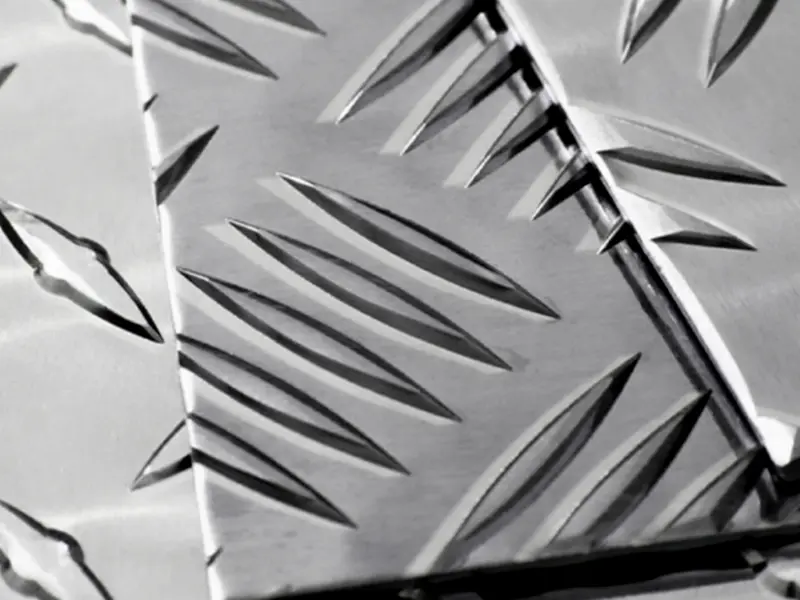
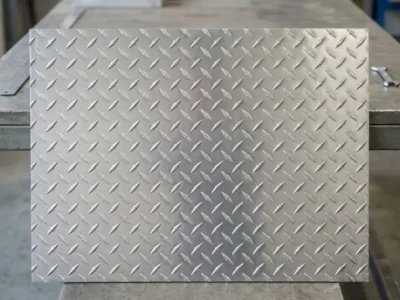
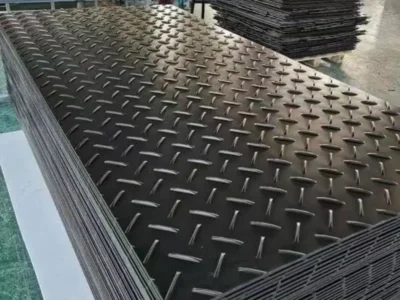
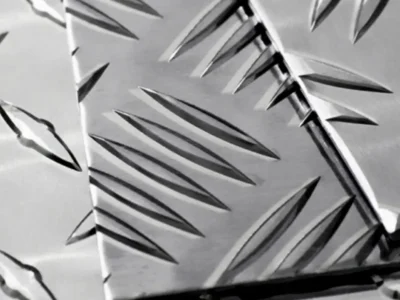
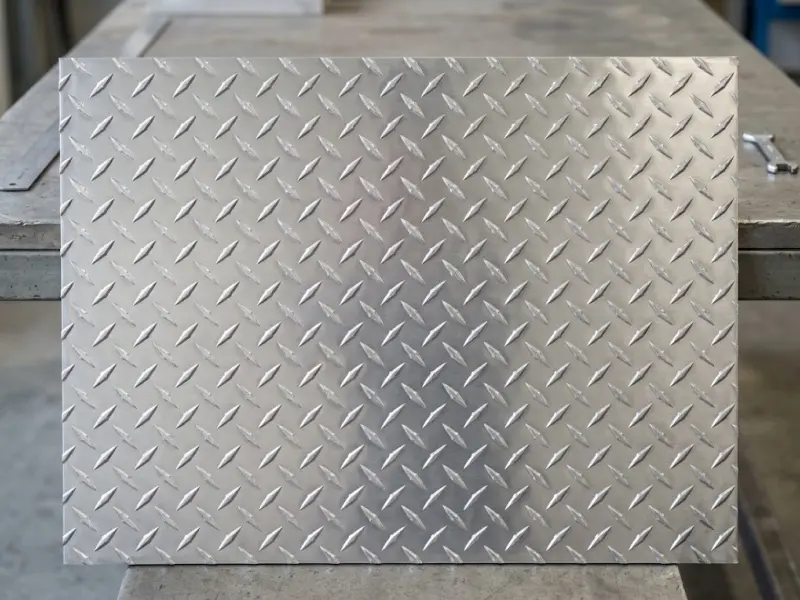
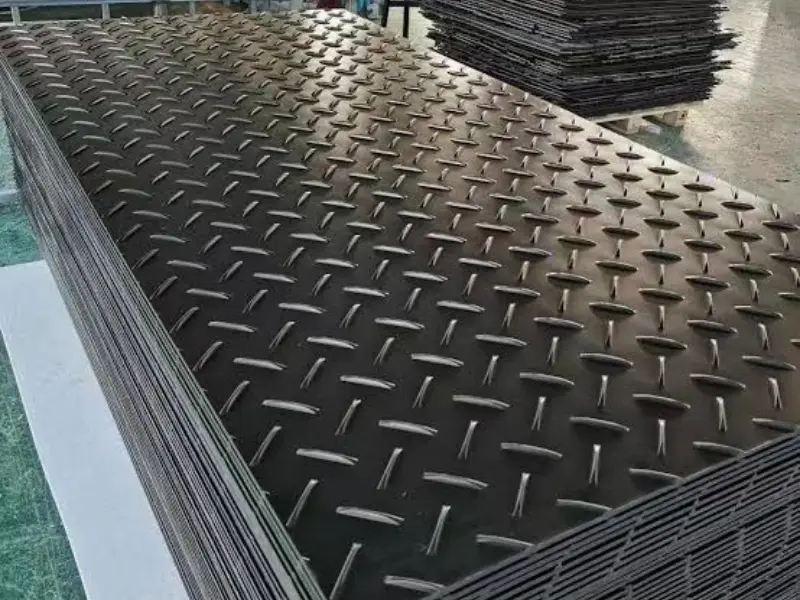
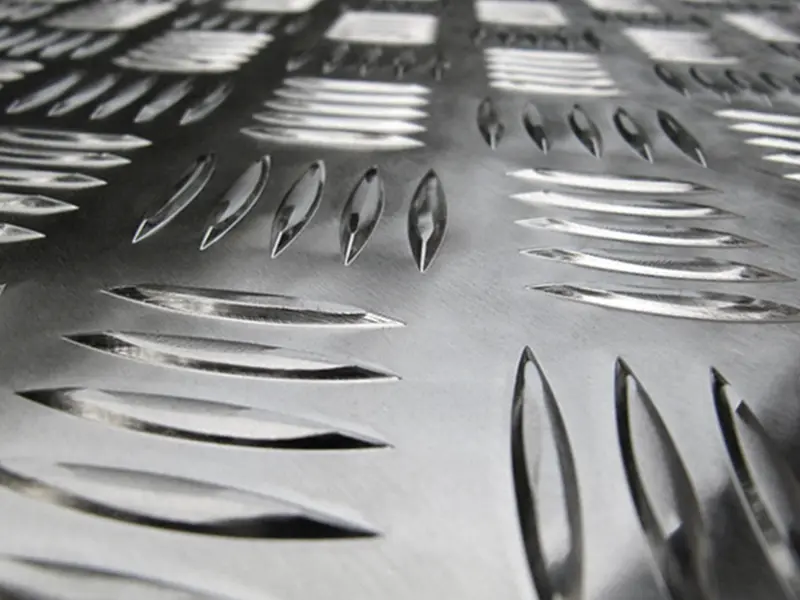
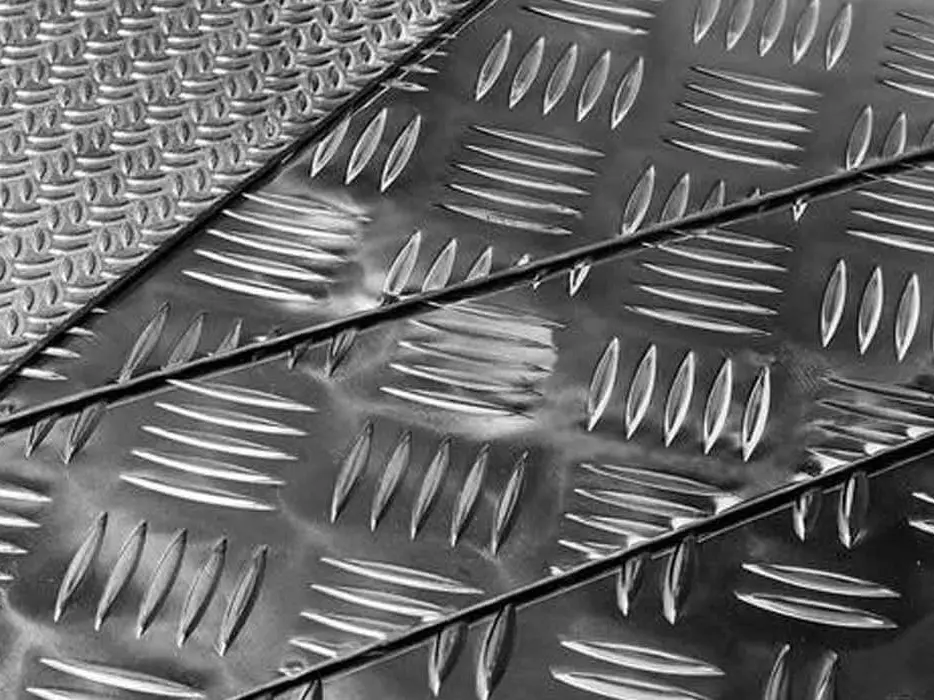
The raised pattern of 3003 Aluminum Checkered Plate is not only a visual feature. It changes the surface texture and can influence grip, cleaning, and overall appearance.
A common checkered plate has a raised pattern formed during the rolling process. Different manufacturers may offer different pattern shapes and dimensions.
Popular Surface Patterns
| Pattern Style | Visual Character | Suitable Use |
|---|---|---|
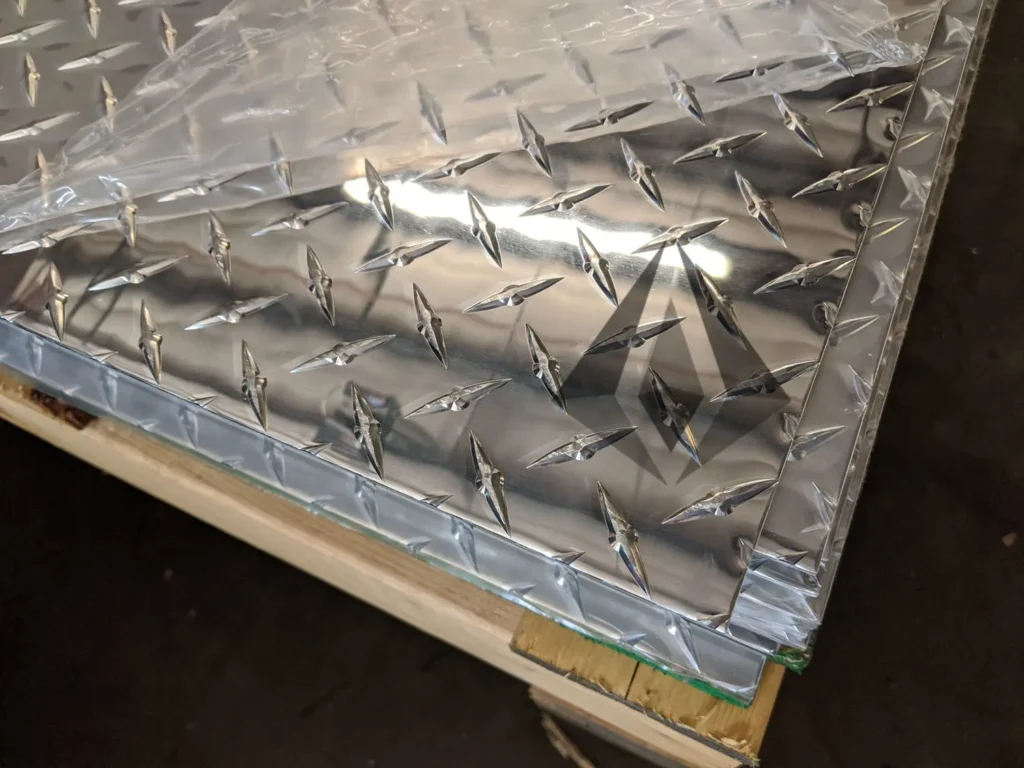
| Diamond | Classic raised diamond | Floors, steps, ramps |
| 1-Bar | Simple linear pattern | Decorative and industrial panels |
| 2-Bar | Repeated directional design | Flooring and platforms |
| 3-Bar | Strong visual texture | Commercial and industrial areas |
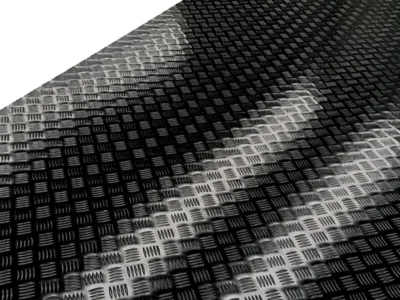
| 5-Bar | More pronounced pattern | Heavy-duty flooring |
For replacement projects, matching the existing pattern is important. A different pattern may create differences in appearance or surface height.
4×8, 4×10 3003 Aluminum Checkered Plate and Other Sheet Sizes
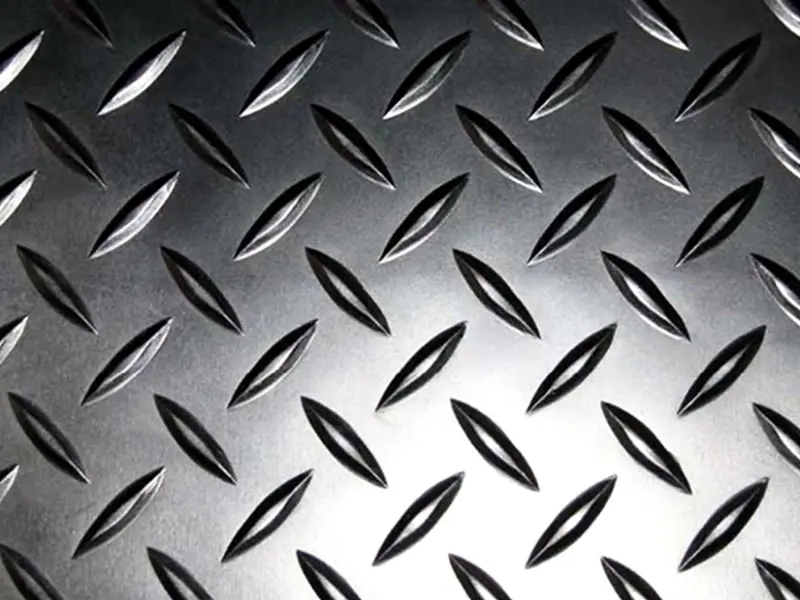
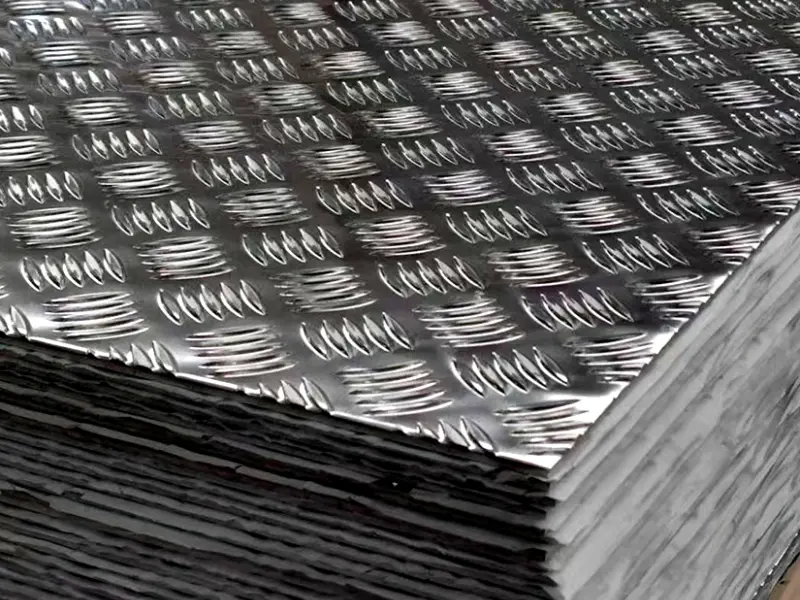
Large sheet sizes can reduce the number of joints during fabrication. They can also improve material utilization when the finished parts are large.
| Sheet Size | Approx. Area |
|---|---|
| 4 × 8 ft | 32 sq. ft. |
| 4 × 10 ft | 40 sq. ft. |
| 4 × 12 ft | 48 sq. ft. |
| 5 × 10 ft | 50 sq. ft. |
| 5 × 12 ft | 60 sq. ft. |
Metric sizes are also widely used.
Common options include:
- 1000 × 2000 mm
- 1220 × 2440 mm
- 1250 × 2500 mm
- 1500 × 3000 mm
- 1500 × 6000 mm
Custom dimensions can be discussed when standard sizes do not match the cutting plan.
Weight Estimation Before Ordering
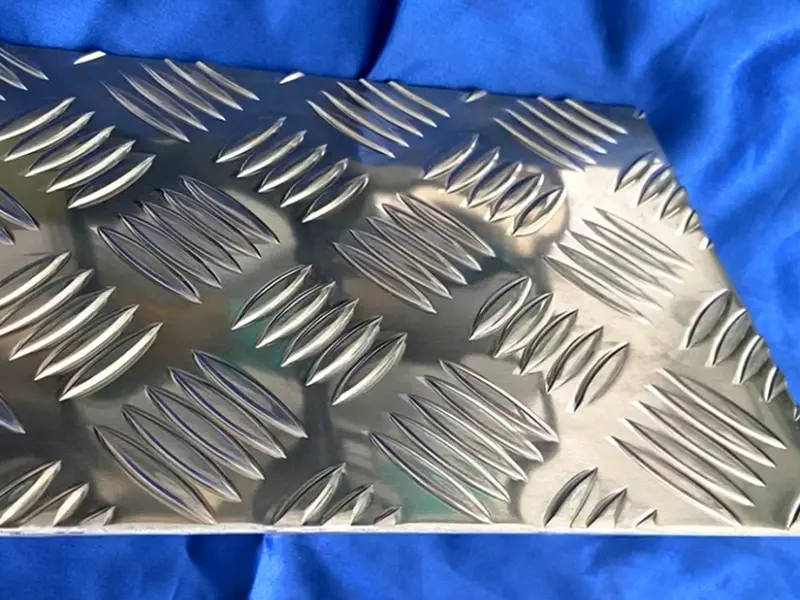
Weight is an important factor when buying aluminum plate in bulk.
A simple estimate can be made from the sheet dimensions, thickness, and aluminum density. However, checkered plate weight may differ from plain sheet weight because the raised pattern adds material.
For transport planning, buyers should consider:
Base sheet weight + raised pattern material + packaging weight = approximate shipping weight
This is especially useful for export orders because freight cost is often affected by total shipment weight and volume.
Cutting 3003 Checkered Plate
3003 checkered plate can be cut with common metalworking equipment.
Typical methods include:
- Circular saw cutting
- Band saw cutting
- CNC cutting
- Laser cutting
- Shearing
- Waterjet cutting
The best method depends on thickness, quantity, edge requirements, and production speed.
For large production orders, CNC cutting can provide repeatable dimensions. For simple straight cuts, shearing can be more efficient.
Bending and Forming Considerations
One reason 3003 aluminum is used in fabrication is its good formability.
The final bending result depends on several factors:
| Factor | Effect |
|---|---|
| Thickness | Thicker plate needs more force |
| Temper | Changes forming behavior |
| Bend radius | Affects cracking risk |
| Pattern direction | Can affect forming |
| Tool condition | Influences surface quality |
A trial bend is recommended for unfamiliar material combinations or tight bend requirements.
Where 3003 Checkered Plate Can Replace Plain Aluminum Sheet
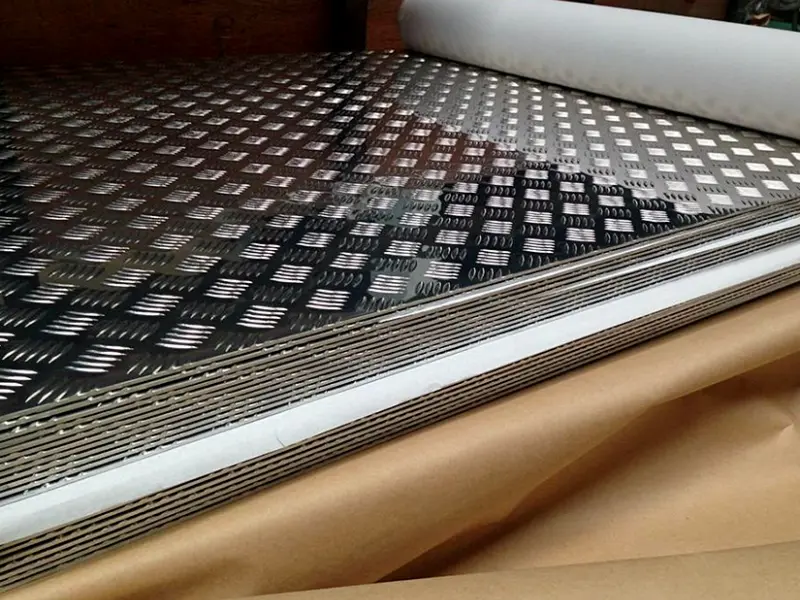
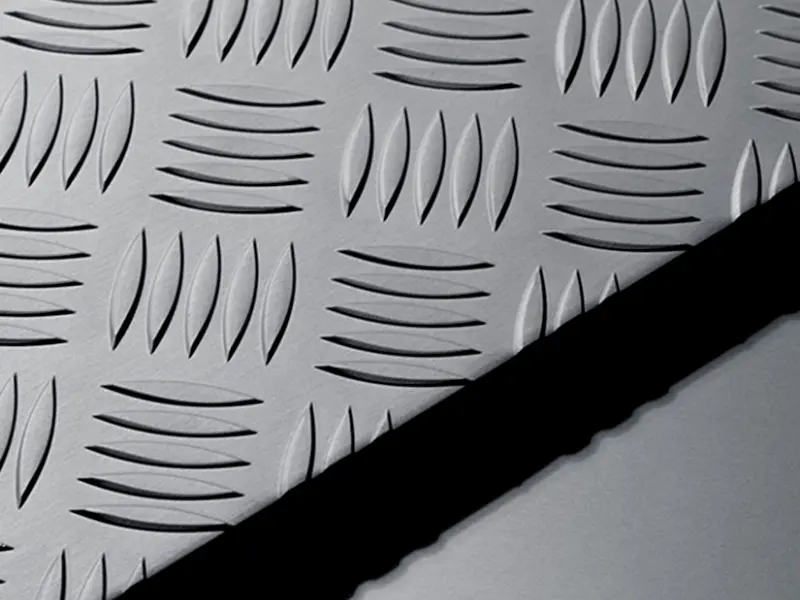
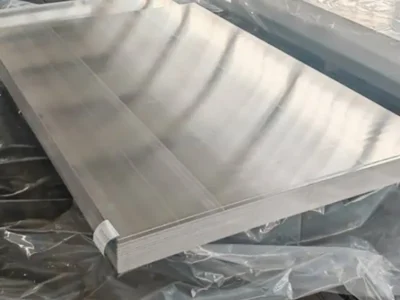
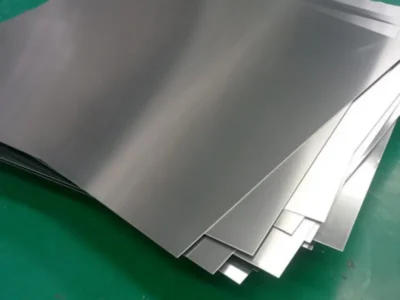
Plain aluminum sheet provides a smooth surface. Checkered plate adds a raised texture.
This makes the two products suitable for different purposes.
| Feature | Plain Aluminum Sheet | 3003 Checkered Plate |
|---|---|---|
| Surface | Smooth | Raised pattern |
| Appearance | Clean and flat | Textured |
| Grip | Limited | Better surface texture |
| Cleaning | Very easy | Depends on pattern |
| Decorative use | Very common | Common |
| Flooring use | Limited | Common |
| Protection panels | Good | Good |
If the surface will be walked on or used as a protective layer, the textured option may be more suitable.
3003 vs 5052 Checkered Aluminum Plate
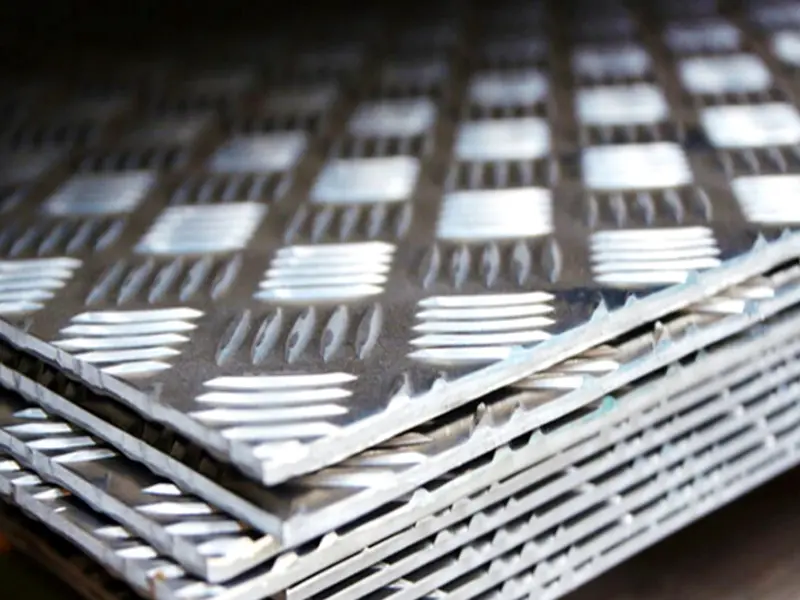
3003 and 5052 are two grades that buyers may compare when selecting patterned aluminum plate.
| Point | 3003 | 5052 |
|---|---|---|
| Formability | Good | Good |
| Corrosion Resistance | Good | Very good |
| Strength | Moderate | Higher |
| Welding | Good | Good |
| General Fabrication | Excellent | Excellent |
| Marine Use | Limited compared with 5052 | More suitable |
| Cost Consideration | Often economical | May cost more |
For general flooring, panels, and fabrication, 3003 can be a practical choice. For applications exposed to demanding environments or requiring higher strength, 5052 may be preferred.
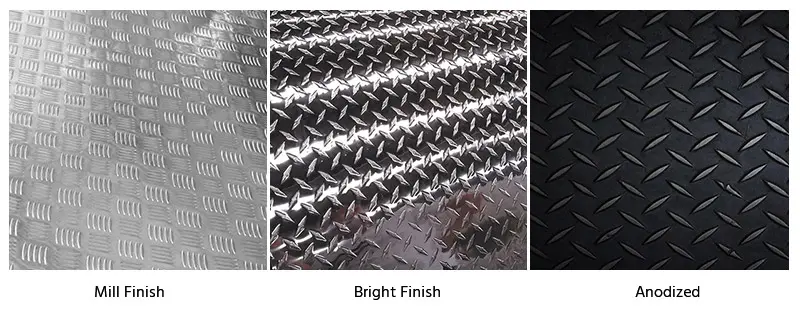
Surface Finish Options Beyond the Standard Mill Finish
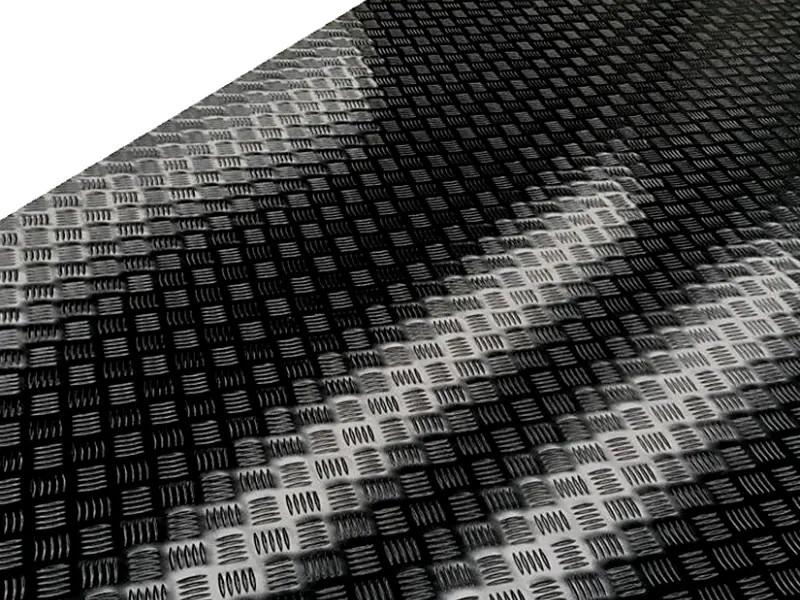
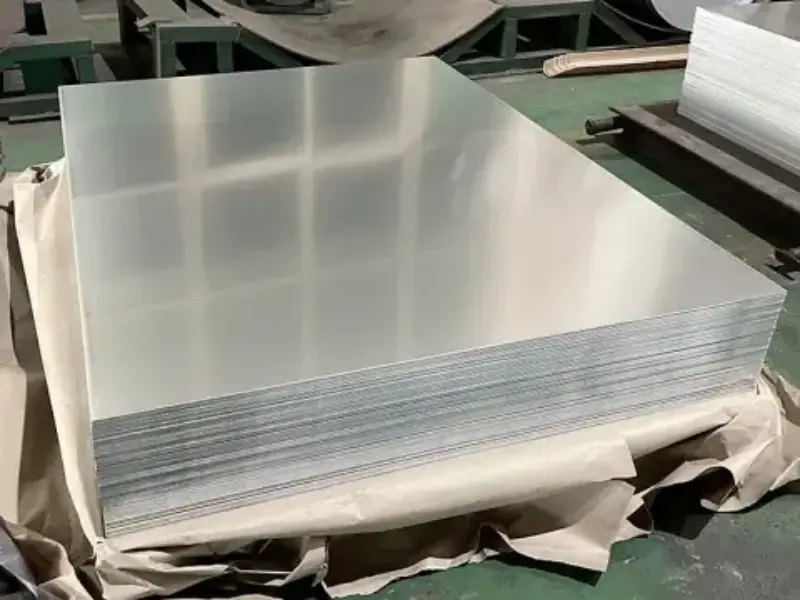
The traditional checkered surface is usually supplied with a mill finish, but additional finishing may be available depending on the product and supplier.
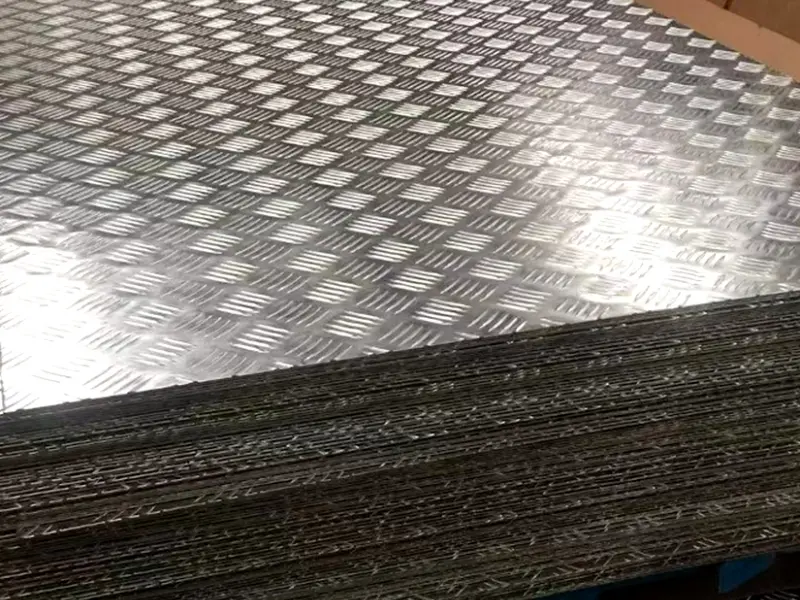
Possible options include:
- Mill finish
- Anodized surface
- Painted surface
- Powder-coated surface
- Brushed finish
Finishing should be selected according to the environment and appearance requirements.
Outdoor projects may need additional surface protection, especially when color consistency and long service life are important.
Fabrication Services Can Reduce Production Time
Many buyers do not need full-size sheets only. They may need material that is already prepared for installation.
Depending on the supplier, processing options may include:
→ Cut-to-size sheets
→ CNC cutting
→ Drilled holes
→ Slotted panels
→ Bent sections
→ Edge trimming
→ Protective film
→ Custom packaging
Buying processed material can reduce cutting work at the customer’s facility.
It can also reduce material waste when the cutting plan is prepared before production.
What Information Should Be Included in a Purchase Request?
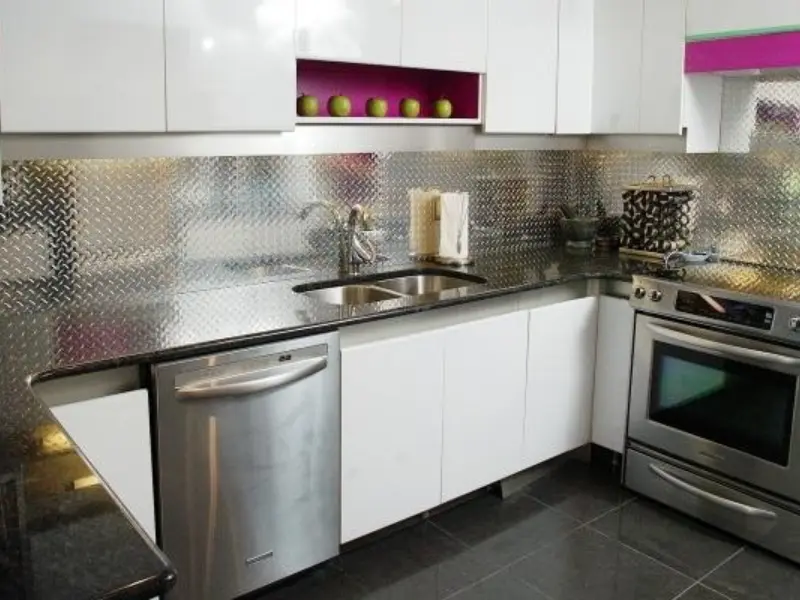
A clear inquiry helps suppliers provide a more accurate quotation.
Instead of asking only for a price, buyers can provide the following information:
| Required Information | Example |
|---|---|
| Product | 3003 aluminum checkered plate |
| Alloy | 3003 |
| Temper | H14 / H16 / H22 / H24 |
| Thickness | 2.0 mm |
| Width | 1220 mm |
| Length | 2440 mm |
| Pattern | Diamond |
| Surface | Mill finish |
| Quantity | 100 sheets |
| Processing | Cut to size |
| Destination | Country / Port |
This format makes it easier to compare quotations from different suppliers.
Small Orders vs Bulk Orders 3003 Aluminum Checkered Plate
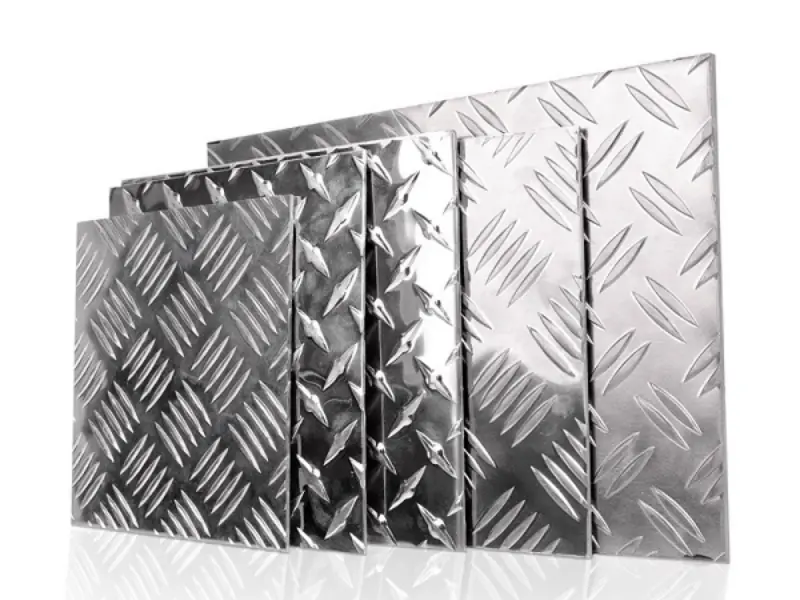
The purchasing strategy can be different for small and large orders.
For Small Projects of 3003 Aluminum Checkered Plate
Small buyers usually focus on:
- Available stock
- Standard dimensions
- Fast delivery
- Cutting service
- Low minimum order quantity
Standard sizes are often easier to source and may have shorter lead times.
For Bulk Orders
Large projects usually focus more on:
- Stable alloy supply
- Consistent pattern
- Thickness tolerance
- Surface quality
- Production capacity
- Packaging
- Container loading
- Long-term price stability
For repeated orders, it is useful to keep the same alloy, temper, pattern, dimensions, and quality requirements.
Packaging for International Shipping
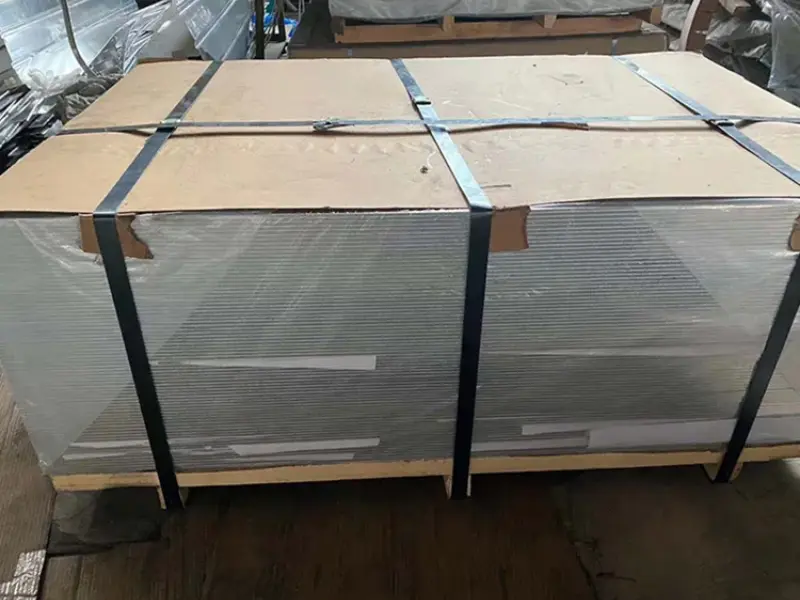
Aluminum checkered sheets should be packed to reduce scratches, bending, moisture exposure, and movement during transportation.
A typical export package may include:
Protective paper → Plastic film → Edge protection → Wooden pallet or wooden case → Steel straps
For container shipments, the loading method also matters. Heavy stacks should be placed securely to reduce movement during transportation.
Buyers should confirm packaging requirements before production, especially for long-distance sea freight.
Quality Checks Before Shipment
A pre-shipment inspection can help identify problems before the material leaves the factory.
Important points of 3003 Aluminum Checkered Plate may include:
| Inspection Item | What to Check |
|---|---|
| Alloy | Matches purchase order |
| Thickness | Measured at required points |
| Width & Length | Within agreed tolerance |
| Pattern | Correct design and height |
| Surface | No major scratches or dents |
| Flatness | Suitable for intended fabrication |
| Quantity | Matches packing list |
| Packaging | Suitable for transport |
For large orders, buyers may also request material certificates or third-party inspection.
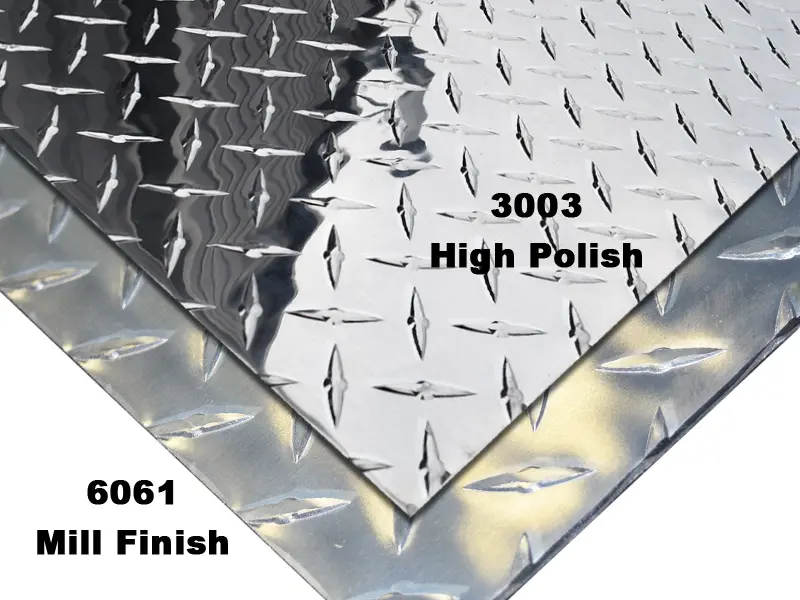
Common 3003 Aluminum Checkered Plate Types
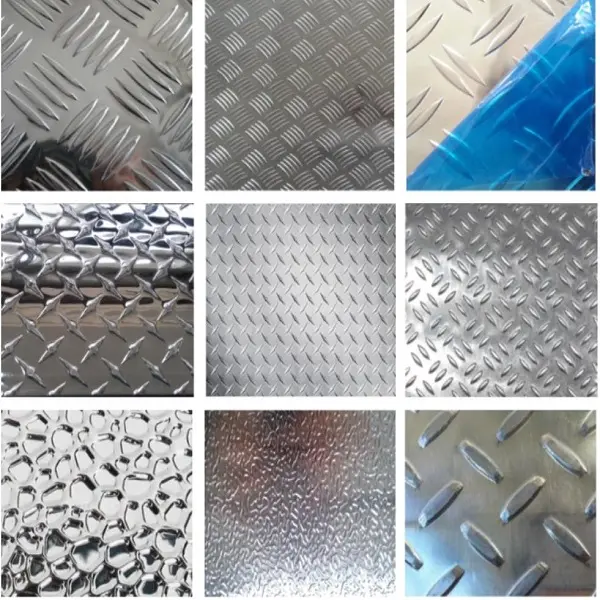
3003 Diamond Checkered Plate
→ The diamond pattern provides good slip resistance and is widely used for floors, steps, ramps and vehicle platforms.
3003 1 Bar Checkered Plate
→ Features a simple raised bar pattern. Suitable for flooring, decorative panels and equipment protection.
3003 2 Bar Checkered Plate
→ Provides a regular textured surface with a clean appearance for industrial and architectural applications.
3003 3 Bar Checkered Plate
→ Offers a stronger visual pattern and good anti-slip performance for platforms and walkways.
3003 5 Bar Checkered Plate
→ Provides a dense raised pattern for demanding flooring and transportation applications.
Bright Finish Checkered Plate
→ Features a bright aluminum surface for applications where appearance is also important.
Main Applications
- Industrial flooring
- Factory walkways
- Stairs and stair treads
- Loading platforms
- Truck floors
- Trailer floors
- Vehicle steps
- Truck toolboxes
- Ramps
- Warehouse platforms
- Machine protection panels
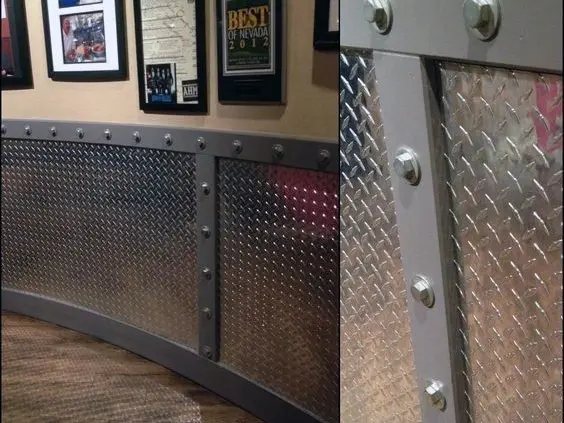
- Wall protection
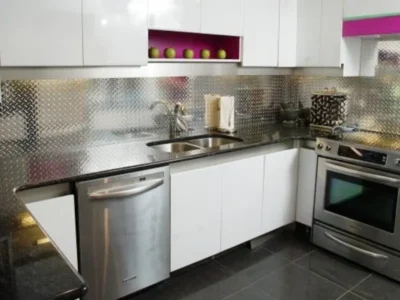
- Decorative panels
- Marine and transportation equipment
Product Advantages of 3003 Aluminum Checkered Plate
→ Better slip resistance than plain aluminum sheet
→ Good corrosion resistance
→ Lightweight and easy to handle
→ Good strength and durability
→ Easy to cut and fabricate
→ Suitable for welding and bending
→ Raised pattern improves surface grip
→ Attractive metallic appearance
→ Suitable for indoor and outdoor use
→ Multiple patterns and custom sizes available
Why Buyers Choose Factory-Direct Supply
Purchasing directly from a manufacturer can be useful for projects with special dimensions or regular demand.
A factory-direct supplier may provide:
→ More alloy and temper choices
→ Custom sheet dimensions
→ Production-based pricing
→ Processing services
→ Export packaging
→ Technical support
→ Repeat-order consistency
However, buyers should compare more than the quoted unit price. Material specification, tolerance, surface quality, packaging, and delivery terms can all affect the real purchase cost.
A Practical Buying Checklist
Before confirming an order, check these points:
✓ Alloy confirmed
✓ Temper confirmed
✓ Thickness confirmed
✓ Pattern confirmed
✓ Sheet size confirmed
✓ Quantity confirmed
✓ Surface finish confirmed
✓ Processing requirements confirmed
✓ Packaging confirmed
✓ Delivery terms confirmed
✓ Quality documents confirmed
A complete specification can prevent many common problems during production and installation.
Product Options at a Glance
| Category | Options |
|---|---|
| Alloy | 3003, 5052, 6061, others |
| Temper | H14, H16, H22, H24, etc. |
| Pattern | Diamond, 1-bar, 2-bar, 3-bar, 5-bar |
| Thickness | Approx. 1.0–6.0 mm+ |
| Width | Standard or custom |
| Length | Standard or custom |
| Finish | Mill, anodized, painted |
| Cutting | Standard or CNC |
| Packaging | Pallet, wooden case, export package |
The exact combination depends on the intended use and production capability.
A Better Way to Compare Aluminum Checkered Plate Quotes
The lowest price is not always the lowest purchasing cost.
For a useful comparison, look at:
Material grade + thickness + actual sheet size + pattern + quantity + processing + packaging + shipping
For example, one supplier may quote a lower price but use a different thickness or exclude cutting and packaging. Another supplier may offer a slightly higher unit price with better dimensional control and complete export packaging.
A specification-based comparison gives buyers a clearer picture.
Final Notes for Project Buyers
3003 aluminum checkered plate is a versatile material for projects that need a textured aluminum surface with good formability and corrosion resistance.
The best specification depends on the job. Thickness, alloy, temper, pattern, dimensions, and processing should be selected together.
For a simple project, a standard 4 × 8 ft sheet may be enough. For industrial or commercial orders, custom sizes and processing can improve material use and reduce installation work.
When requesting a quotation, provide the complete specification rather than only the product name. This helps the supplier understand the project and gives you a more useful quotation.
Frequently Asked Questions
Can 3003 checkered plate be cut to custom sizes?
Yes. It can be supplied in standard sheets or processed into custom dimensions, depending on the supplier’s equipment and order quantity.
Is 3003 checkered plate suitable for outdoor use?
It can be used outdoors in many situations because aluminum has good natural corrosion resistance. The actual suitability depends on the environment, exposure, and required service life.
What is the difference between 3003 and 5052 checkered plate?
The main difference is mechanical performance. 5052 generally offers higher strength, while 3003 provides good formability and is widely used for general fabrication.
Can the checkered surface be painted?
Yes, suitable surface preparation and a compatible coating system are important for good adhesion and durability.
What is the most common sheet size?
4 × 8 ft is a common commercial size, but 4 × 10 ft, 4 × 12 ft, metric sizes, and custom dimensions may also be available.
Can I order 3003 checkered plate with CNC cutting?
Many suppliers can provide CNC or other cutting services. The available service depends on plate thickness, drawing requirements, and order quantity.