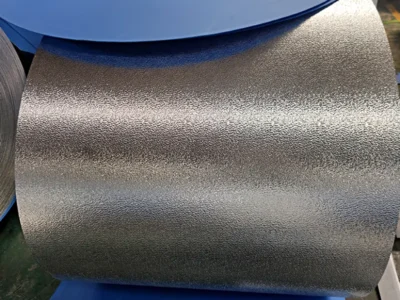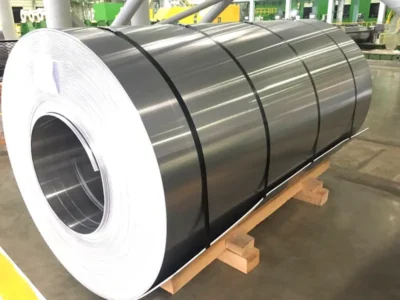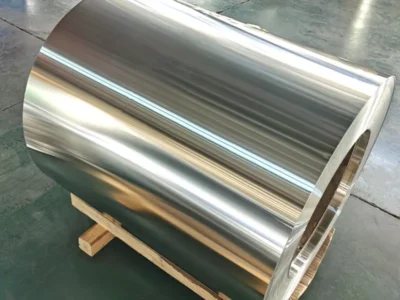
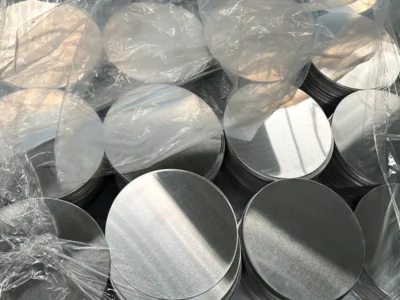
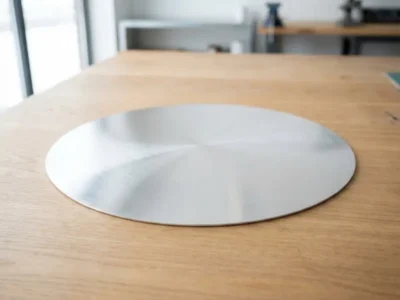
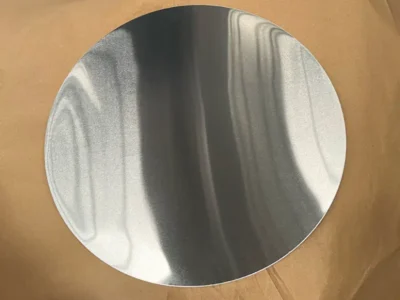
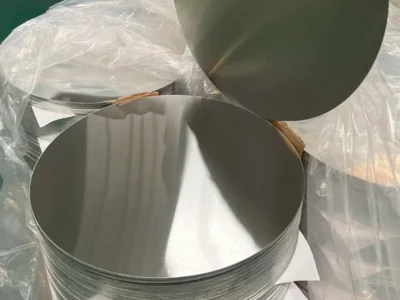
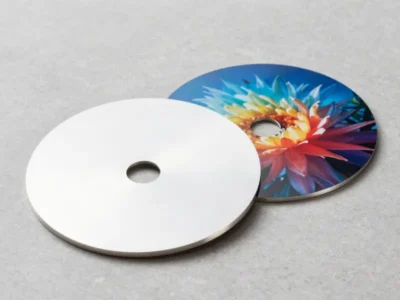
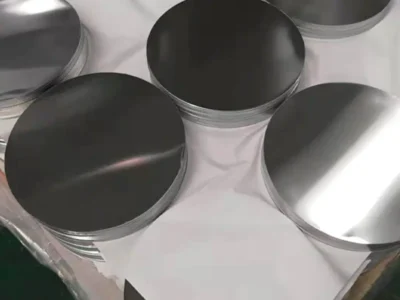
An aluminum circle disc is a round aluminum blank used for forming, stamping, spinning, and machining. It is widely used in cookware, lighting, road signs, industrial parts, and decorative products.
Compared with a rectangular aluminum sheet, a pre-cut round disc is easier to use when the final product has a circular shape. It can reduce cutting work and material waste.
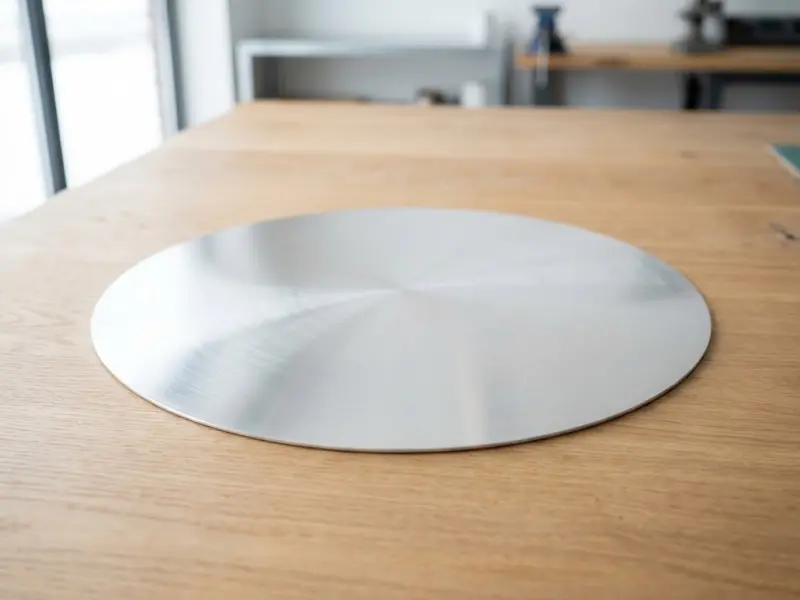
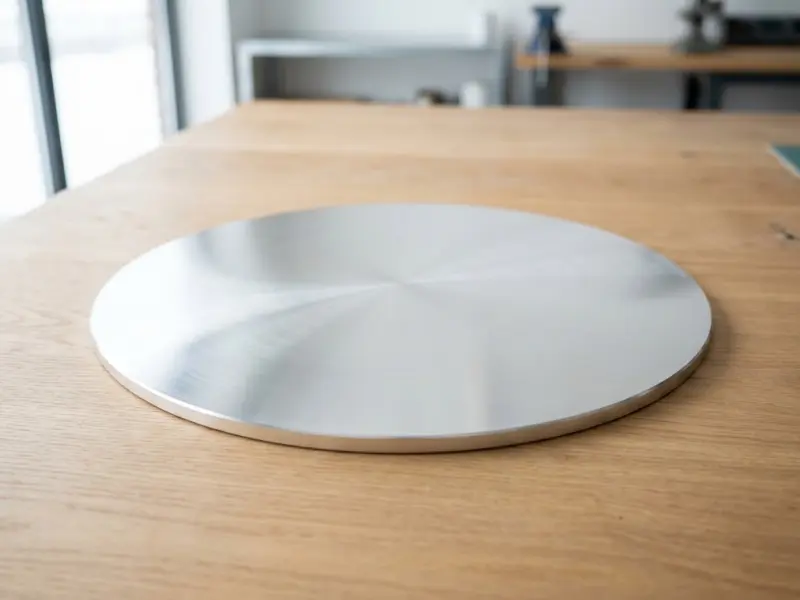
For large production orders, the right alloy, temper, thickness, and diameter can also improve forming efficiency.
The term aluminum circle disc is often used together with aluminum circle, aluminum disc, aluminum round blank, and round aluminum sheet. In practical purchasing, the exact specifications are more important than the name.
Aluminum Circle Disc at a Glance
| Item | Common Options |
|---|---|
| Product | Aluminum Circle Disc |
| Shape | Round |
| Common Alloys | 1050, 1060, 1070, 3003 |
| Common Tempers | O, H12, H14, H16, H18 |
| Thickness | 0.3–6.0 mm |
| Diameter | 50–1000 mm+ |
| Surface | Mill finish, polished, anodized |
| Edge | Smooth, standard, customized |
| Processing | Stamping, deep drawing, spinning |
| Main Markets | Cookware, lighting, signs, industry |
Custom sizes can be supplied according to production requirements.
What Is an Aluminum Circle Disc?
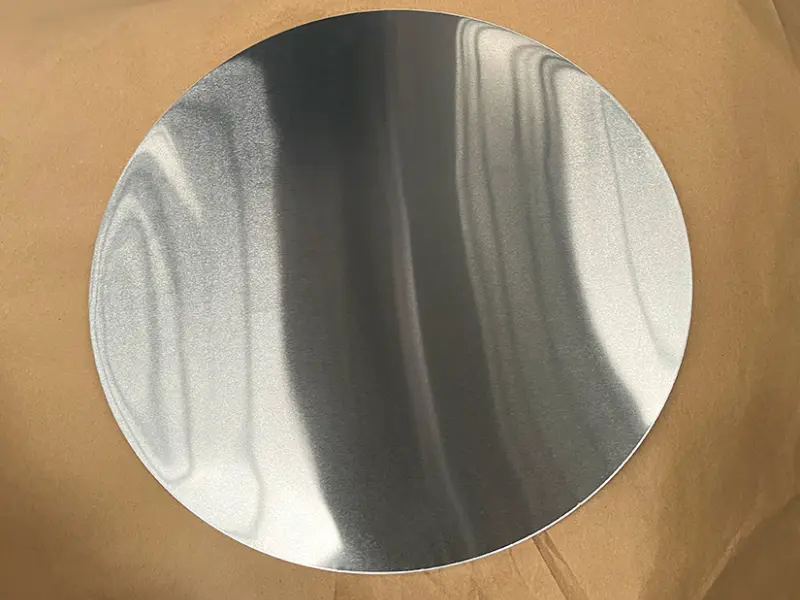
An aluminum circle disc is a round piece of aluminum cut from a sheet or coil. It is normally used as the starting material for another manufacturing process.
A typical production route is:
Aluminum Coil → Leveling → Blanking → Circle Disc → Edge Inspection → Surface Treatment → Packing
For cookware, the disc may then go through deep drawing or spinning. For lighting products, it may be stamped or pressed into a reflector shape.
The design of the final product should determine the material specification.
Why Use a Round Aluminum Blank?
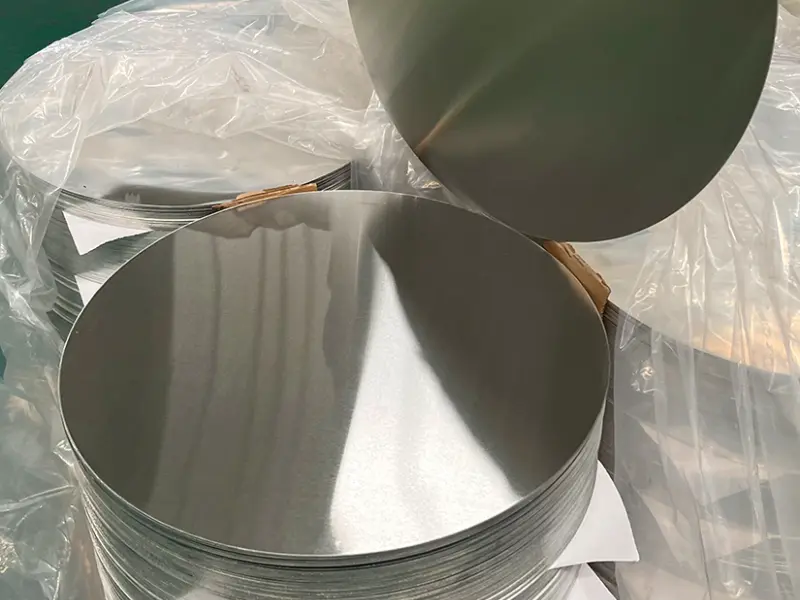
A round blank is useful when the finished product is also round.
Instead of starting with a large rectangular sheet:
Rectangular Sheet → Cutting → Round Blank → Forming
the manufacturer can purchase:
Aluminum Coil/Sheet → Ready-Made Circle Disc → Forming
This can save processing time.
It may also reduce scrap because the blank is already cut close to the required shape.
This is particularly useful for high-volume cookware and lighting production.
Common Aluminum Circle Disc Sizes
Diameter is one of the first specifications buyers normally provide.
| Diameter | Typical Use |
|---|---|
| 50 mm | Small components |
| 80 mm | Small stamped parts |
| 100 mm | Hardware and signs |
| 150 mm | Lighting parts |
| 200 mm | Small cookware |
| 250 mm | Pans and components |
| 300 mm | Cookware |
| 400 mm | Large cookware |
| 500 mm | Industrial parts |
| 600 mm | Large formed parts |
| 800 mm | Industrial applications |
| 1000 mm+ | Special projects |
The available diameter depends on production equipment and material thickness.
Aluminum Circle Disc Thickness Options
Thickness affects weight, stiffness, forming behavior, and cost.
| Thickness | Typical Direction |
|---|---|
| 0.30 mm | Lightweight products |
| 0.40 mm | Small blanks |
| 0.50 mm | Lighting and signs |
| 0.60 mm | General forming |
| 0.80 mm | Cookware and components |
| 1.00 mm | Pans and industrial parts |
| 1.20 mm | Medium-duty products |
| 1.50 mm | Stronger formed parts |
| 2.00 mm | Heavy cookware and components |
| 3.00 mm | Industrial applications |
| 4.00–6.00 mm | Special heavy-duty parts |
Thin discs are easy to handle and have lower weight.
Thicker discs provide more rigidity but normally require greater forming force.
1050 Aluminum Circle Disc
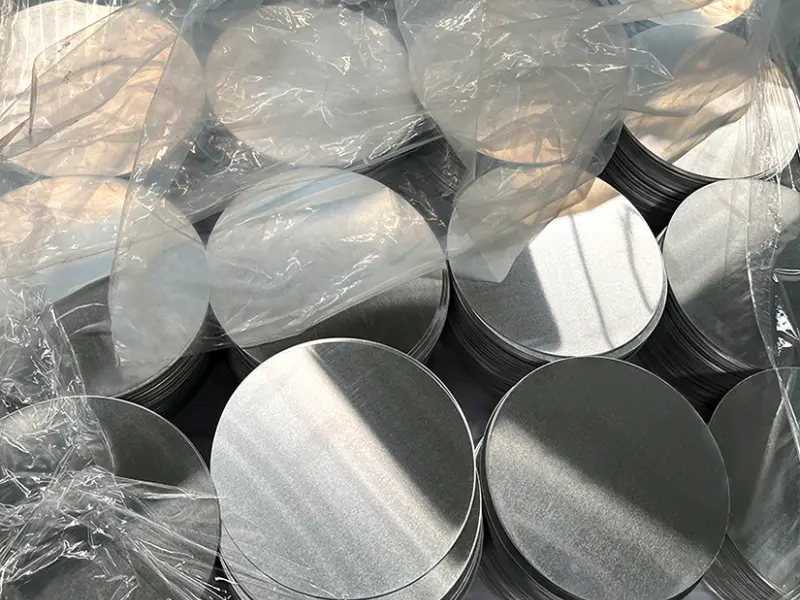
1050 aluminum is a high-purity commercial aluminum alloy.
It is known for good ductility and easy forming. This makes it suitable for applications where the blank must be pressed, stamped, or formed.
Typical uses include:
- Cookware
- Lighting components
- Reflectors
- Decorative products
- General stamped parts
- Heat-related components
For deep drawing, 1050-O can be considered when high formability is required.
1060 Aluminum Circle Disc
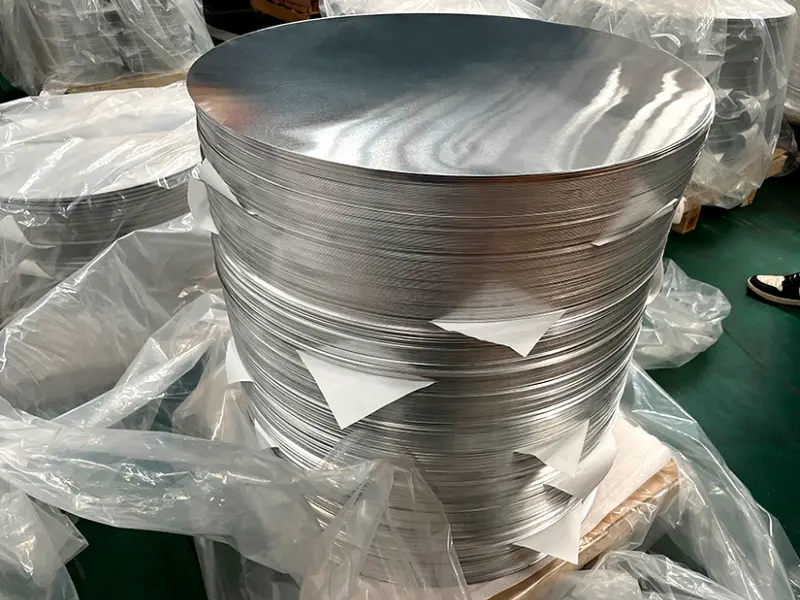
1060 aluminum is another popular choice for round aluminum blanks.
It provides good formability, corrosion resistance, and thermal conductivity.
Common uses include:
→ Cooking utensils
→ Lamp reflectors
→ Lighting housings
→ Traffic signs
→ Decorative parts
→ Industrial components
The surface quality of 1060 aluminum is also suitable for products where appearance is important.
1070 Aluminum Circle Disc
1070 aluminum has a very high aluminum content.
It offers good electrical and thermal conductivity and can be used for certain forming applications.
Potential uses include:
- Electrical components
- Heat-transfer parts
- Reflective products
- Stamped components
- Special industrial parts
The final application should determine whether 1070 is more suitable than 1050 or 1060.
3003 Aluminum Circle Disc
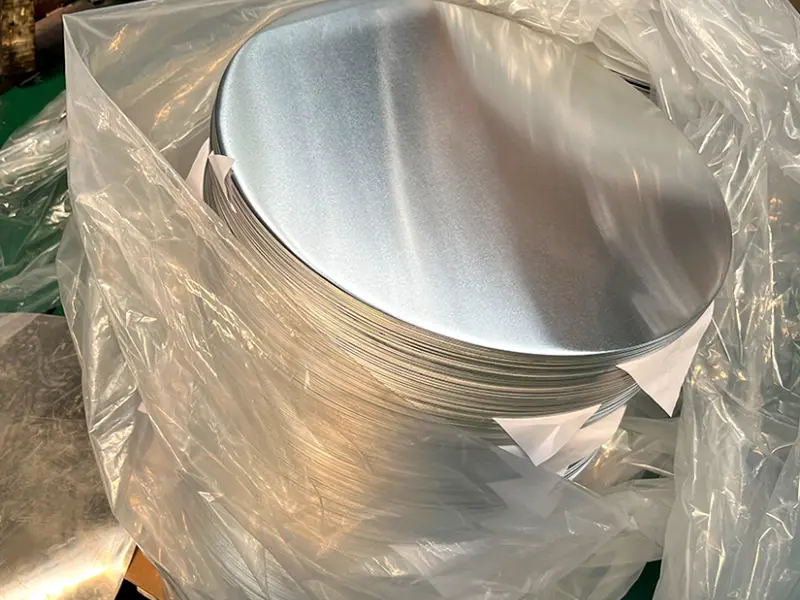
3003 aluminum contains manganese and normally provides higher strength than common 1xxx-series aluminum.
It is widely used where a combination of formability and strength is needed.
Typical applications include:
- Frying pans
- Cooking pots
- Kitchen equipment
- Heat exchangers
- Industrial containers
- Stamped components
For cookware, 3003-O is often considered because the soft temper supports forming.
1050 vs 1060 vs 3003 Aluminum Circle Disc
The three alloys are not interchangeable for every application.
| Alloy | Formability | Relative Strength | Common Use |
|---|---|---|---|
| 1050 | Excellent | Lower | General forming |
| 1060 | Excellent | Lower | Cookware and lighting |
| 3003 | Very good | Medium | Cookware and industrial parts |
Choose 1050 or 1060 when forming and surface quality are major concerns.
Choose 3003 when additional strength is useful.
The final selection should also consider the forming tool and production speed.
Aluminum Circle Disc Temper Options
Temper affects hardness and forming performance.
| Temper | General Character |
|---|---|
| O | Soft, highly formable |
| H12 | Lightly hardened |
| H14 | Medium hardness |
| H16 | Harder |
| H18 | Hard |
For deep drawing, a soft temper is often preferred.
For flat components that need greater stiffness, a harder temper may be more suitable.
The exact temper should be confirmed with the forming process.
Aluminum Circle Disc for Deep Drawing
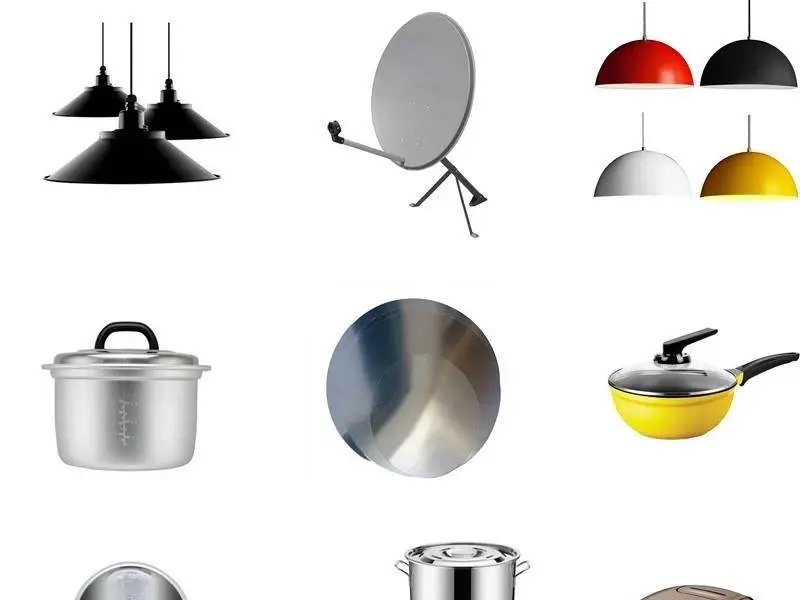
Deep drawing is one of the most important applications for round aluminum blanks.
The basic process is:
Round Blank
↓
Die + Punch
↓
Press Forming
↓
Deep-Drawn Aluminum Product
The material must have enough ductility to move through the die without excessive cracking or wrinkling.
This makes alloy, temper, thickness, and surface condition important.
A suitable material can help manufacturers maintain stable production when making thousands of pieces.
Aluminum Circle Disc for Cookware
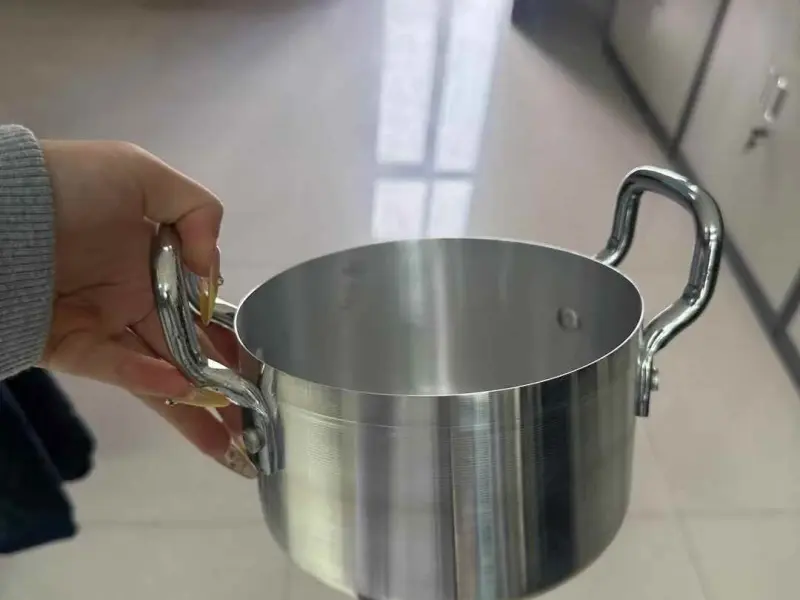
Cookware is a major market for aluminum round blanks.
The disc can be formed into:
- Frying pans
- Sauce pans
- Cooking pots
- Stock pots
- Pizza pans
- Baking trays
- Food containers
- Pressure cooker components
A common specification may look like:
3003-O / 2.0 mm / Ø300 mm
A lighter cookware product may use:
1050-O / 1.0 mm / Ø250 mm
These are examples only. The correct specification depends on the final product design.
Aluminum Disc for Frying Pans
Frying pans require good forming performance and suitable thickness.
The round blank is placed into a forming machine and shaped into the pan body.
Important factors include:
Alloy → Temper → Thickness → Diameter → Surface → Forming Method
A softer material may be preferred for deep drawing.
For non-stick cookware, additional coating is usually applied after forming.
Aluminum Disc for Cooking Pots
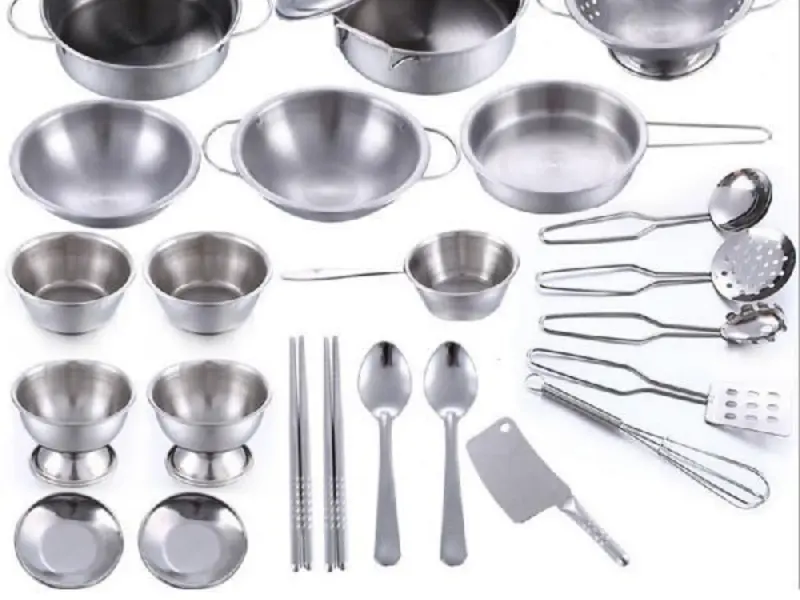
Large cooking pots require larger blanks.
The manufacturing process may involve deep drawing, spinning, or other forming methods.
For large diameters, flatness and material uniformity are important.
A poor-quality blank may create problems during forming, such as:
- Cracks
- Wrinkles
- Uneven walls
- Surface marks
- Dimensional variation
Choosing the correct material before production can reduce these risks.
Aluminum Circle Disc for Lighting
Aluminum round blanks are widely used in lighting products.
Possible applications include:
- LED light housings
- Lamp reflectors
- Downlights
- Ceiling lights
- Industrial lights
- Street-light components
- Decorative lamps
Aluminum is useful in lighting because it is lightweight and has good thermal conductivity.
For reflectors, surface appearance can also be important.
Aluminum Disc for Lamp Reflectors
A reflector normally needs a smooth surface.
The disc can be stamped, pressed, or spun into a curved shape.
A typical process can be:
Aluminum Disc → Spinning/Stamping → Surface Treatment → Reflector
Possible surface treatments include polishing and anodizing.
A high-quality surface can improve the appearance of the finished lighting product.
Aluminum Circle Disc for Traffic Signs
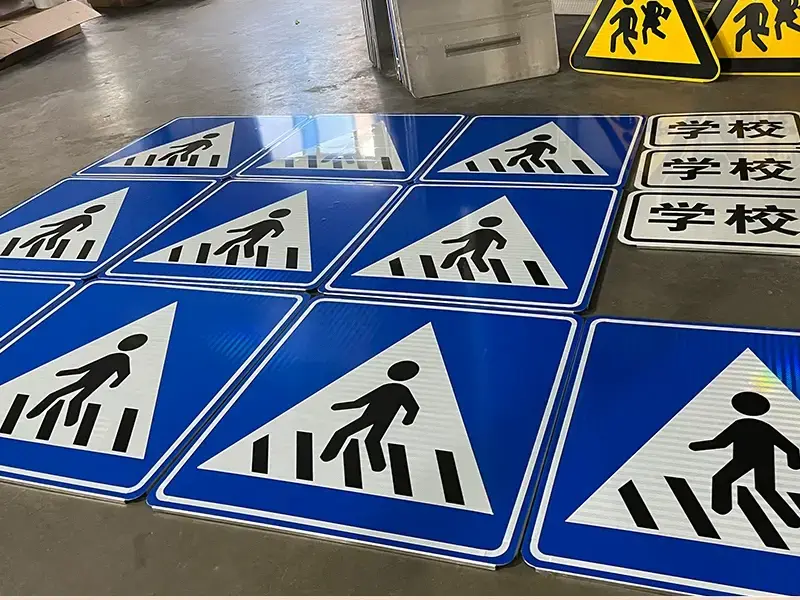
Round aluminum blanks are also used for road and traffic signs.
The blank can be processed before printing or applying reflective film.
Common products include:
→ Speed-limit signs
→ Warning signs
→ Parking signs
→ Direction signs
→ Road information signs
Outdoor signs need good corrosion resistance and suitable surface quality.
The final dimensions should follow the applicable local standards.
Aluminum Circle Disc for Industrial Parts
Industrial manufacturers use aluminum discs for many custom components.
Possible products include:
- Covers
- End plates
- Housings
- Machine components
- Heat-transfer parts
- Containers
- Decorative metal parts
- Circular mechanical components
Industrial buyers often require tighter dimensional tolerances.
For these orders, technical drawings can help the manufacturer understand the required dimensions.
Aluminum Disc for Heat Transfer
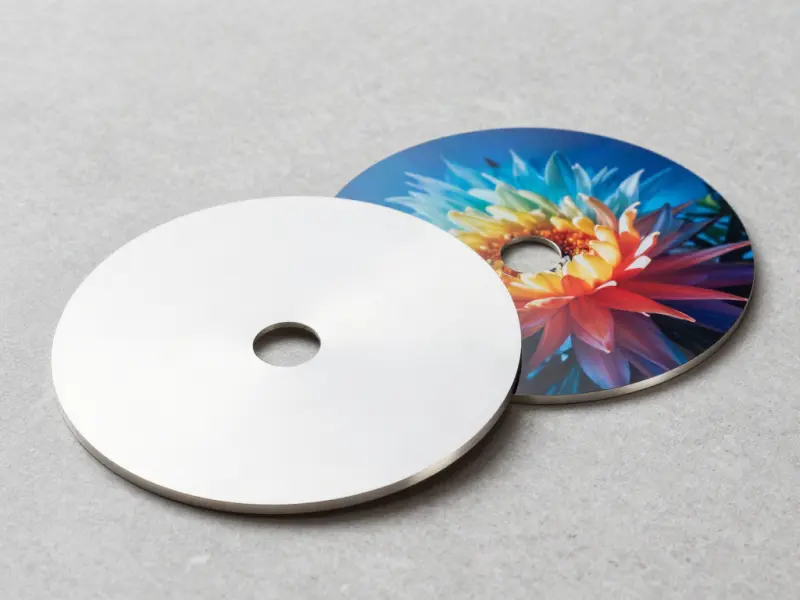
Aluminum has good thermal conductivity, which makes it useful for some thermal products.
Round blanks can be processed into components related to heat transfer.
Potential advantages include:
- Low weight
- Good thermal conductivity
- Corrosion resistance
- Easy machining
- Good forming performance
The final design determines whether a circle disc, sheet, plate, extrusion, or another aluminum form is the best choice.
Aluminum Circle Disc Surface Options
Surface finish is another important purchasing specification.
Mill Finish
Mill finish is the standard aluminum surface.
It provides a natural metallic appearance and is suitable for many industrial products.
It is often selected when the disc will receive additional processing.
Polished Aluminum Disc
A polished surface provides a brighter appearance.
It can be used for:
- Reflectors
- Decorative components
- Lighting products
- Display products
- Certain cookware products
Anodized Aluminum Disc
Anodizing creates a controlled oxide layer on the aluminum surface.
It can improve surface appearance and provide additional surface protection.
Protective Film
A protective film can be added when the surface needs protection during transportation and processing.
It can help reduce:
→ Scratches
→ Dust
→ Handling marks
→ Surface damage
The film type should match the next production process.
Smooth Edge and Edge Quality
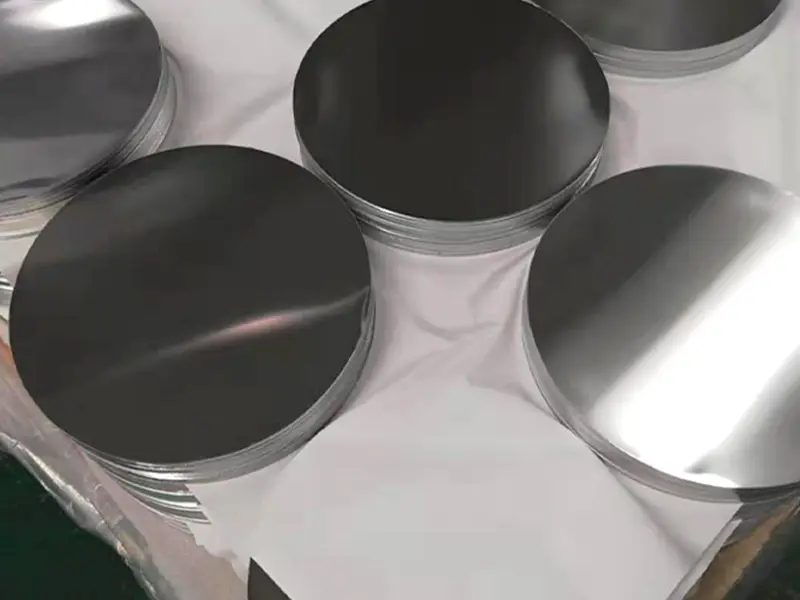
Edge quality is important when a disc will be deeply drawn.
A suitable edge should be:
- Smooth
- Even
- Free from major cracks
- Free from excessive burrs
Poor edge quality may affect the forming process.
For high-volume production, consistent edge quality is especially important.
Aluminum Circle Disc Tolerance
Dimensional tolerance depends on the application.
For simple stamped products, standard tolerance may be sufficient.
For precision forming, closer control may be required.
| Requirement | What to Check |
|---|---|
| Diameter | Actual disc diameter |
| Thickness | Average and local thickness |
| Flatness | Shape before forming |
| Roundness | Circular accuracy |
| Edge | Burrs and cracks |
| Surface | Scratches and marks |
The buyer should specify tolerance requirements before production.
Aluminum Circle Disc for Stamping

Stamping is another common processing method.
The disc is placed into a die and formed under pressure.
It is useful for products that require:
Fast forming + repeatable dimensions + high production volume
The material grade must match the die design.
A disc that is too hard may require more forming force. A disc that is too soft may not provide enough final strength for some applications.
Aluminum Circle Disc for Spinning
Metal spinning is useful for producing round, hollow products.
The disc rotates while a tool gradually forms it over a mandrel.
Typical products include:
- Lamp reflectors
- Bowls
- Covers
- Housings
- Decorative components
- Circular containers
Aluminum is suitable for spinning because many aluminum alloys have good ductility.
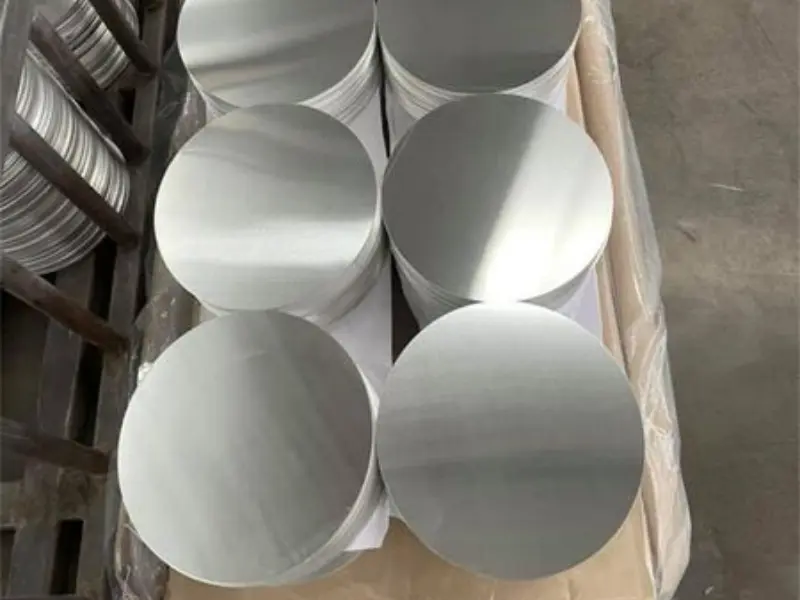
Aluminum Circle Disc vs Aluminum Sheet
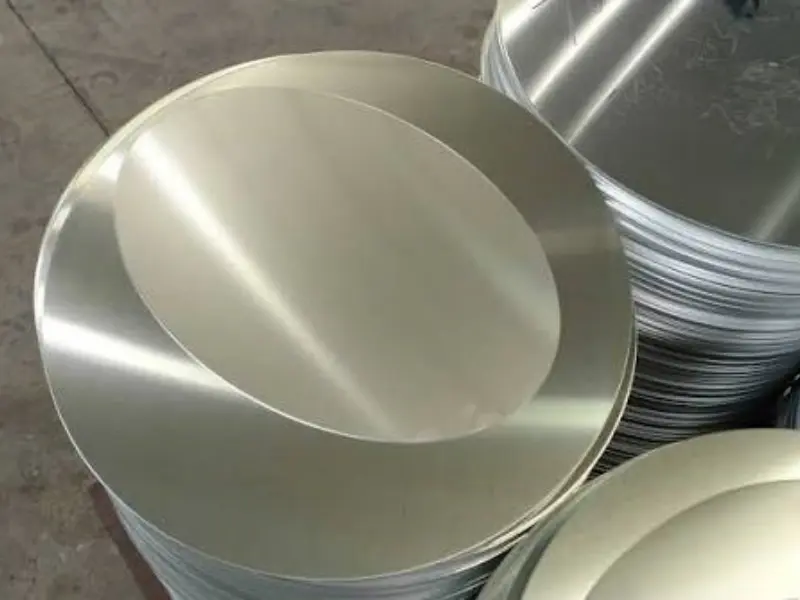
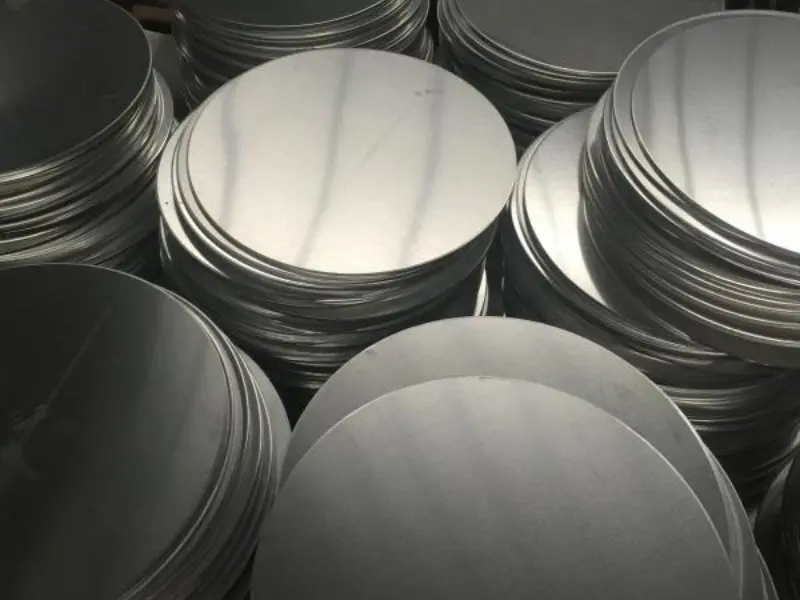
Both products are made from aluminum, but their shapes and uses are different.
| Feature | Circle Disc | Aluminum Sheet |
|---|---|---|
| Shape | Round | Rectangular |
| Cutting Work | Low | May require cutting |
| Round Products | Convenient | Requires preparation |
| Deep Drawing | Ready as blank | Requires cutting |
| Material Waste | Can be lower | Depends on cutting |
| Custom Shape | Limited | More flexible |
For round products, buying pre-cut blanks can simplify production.
Aluminum Circle Disc vs Aluminum Plate
An aluminum plate is normally thicker and is often used for structural, machining, or heavy-duty applications.
| Feature | Circle Disc | Aluminum Plate |
|---|---|---|
| Shape | Round | Usually rectangular |
| Typical Thickness | Thin to medium | Medium to thick |
| Main Process | Forming | Machining/fabrication |
| Cookware | Common | Less common |
| Heavy Industry | Some uses | Very common |
The right product depends on the final component.
Common Types of Aluminum Circle Discs

Different buyers may need different product categories.
Thin Aluminum Circle Discs
Usually around 0.30–0.80 mm.
These are suitable for lightweight products, small components, and some lighting applications.
Medium-Thickness Discs
Usually around 0.80–2.00 mm.
These are widely used for cookware, lighting, signs, and general industrial forming.
Thick Aluminum Discs
Usually around 2.00–6.00 mm or more.
These are used for heavier components and special industrial applications.
Deep Drawing Aluminum Discs
These focus on ductility and stable forming performance.
Soft temper materials are commonly considered for demanding forming work.
Polished Aluminum Discs
These are selected when surface appearance is important.
They can be used for reflectors and decorative products.
Anodized Aluminum Discs
These are used when an anodized surface is required for appearance or surface performance.
How Aluminum Circle Discs Are Made
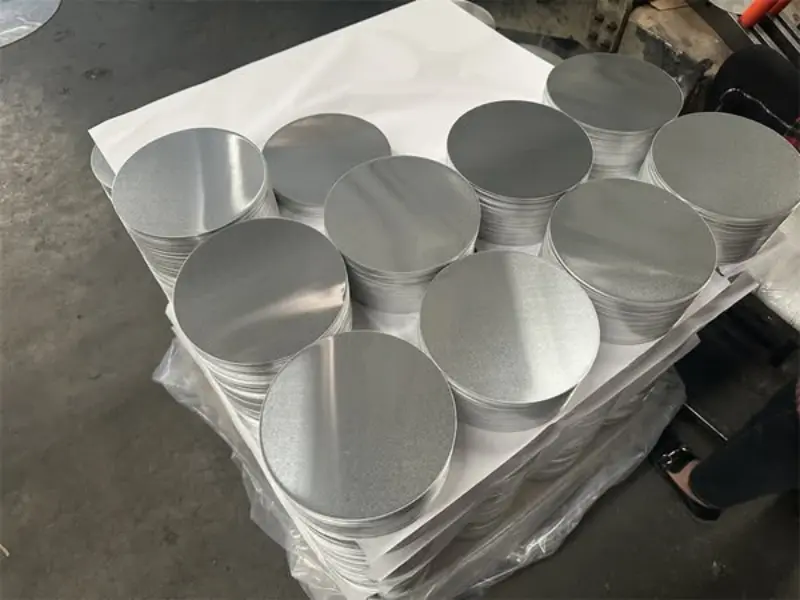
Several production methods can be used.
Punching
A punch and die cut circles from aluminum sheet or coil.
It is efficient for large production quantities.
Mechanical Blanking
Mechanical equipment cuts the required round blanks.
It is widely used for standard sizes and mass production.
Laser Cutting
Laser cutting can be useful for special dimensions or lower-volume orders.
The best production method depends on thickness, diameter, quantity, and required tolerance.
How to Calculate Aluminum Circle Disc Weight
The approximate weight can be calculated from diameter and thickness.
A basic formula is:
Weight = π × Radius² × Thickness × Density
For aluminum, a density of about 2.70 g/cm³ can be used for a basic estimate.
For example, a 300 mm diameter disc with a thickness of 1 mm has an approximate area of:
π × 150² = 70,686 mm²
The weight of one disc is approximately:
70,686 × 1 × 0.00270 ≈ 190.9 g
Therefore, 100 pieces would weigh about:
19.1 kg
Actual weight can vary due to alloy, thickness tolerance, diameter tolerance, and production conditions.
What Affects Aluminum Circle Disc Price?
The price is not based on diameter alone.
Important factors include:
| Factor | Effect on Cost |
|---|---|
| Aluminum Alloy | Different alloys have different prices |
| Thickness | More material means higher weight |
| Diameter | Larger blank uses more aluminum |
| Temper | Processing affects cost |
| Surface | Special finishes may cost more |
| Tolerance | Tighter tolerance may increase processing |
| Quantity | Large orders may have better unit cost |
| Packing | Special packing adds cost |
| Freight | Depends on destination and weight |
For a useful quotation, provide complete specifications rather than only saying “aluminum disc.”
Aluminum Circle Disc Buying Specification
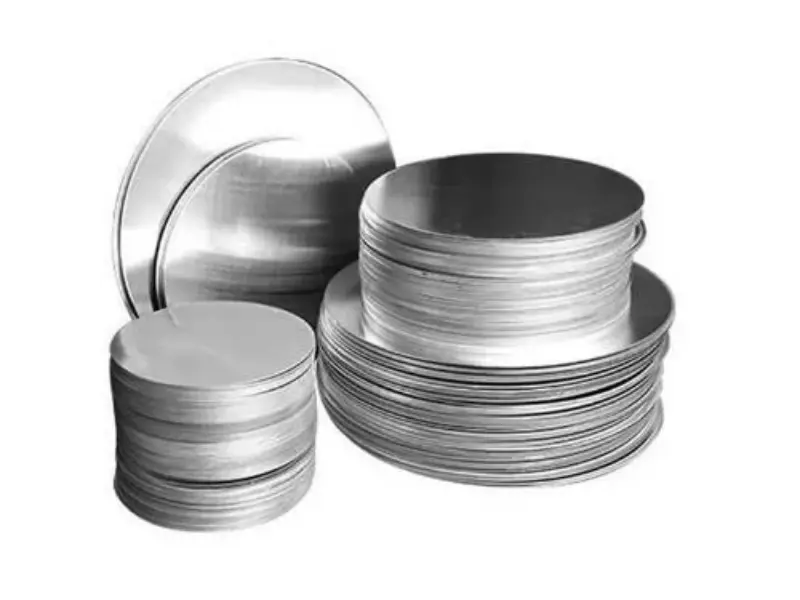
A clear purchase request can look like this:
Alloy: 1060
Temper: O
Diameter: 300 mm
Thickness: 1.0 mm
Surface: Mill Finish
Edge: Smooth
Quantity: 10,000 pcs
Application: Cookware
Packing: Export Pallet
This information allows a supplier to check production feasibility and prepare a more accurate quotation.
Custom Aluminum Circle Discs
A manufacturer can produce custom round blanks for different production lines.
Customization may include:
→ Diameter
→ Thickness
→ Alloy
→ Temper
→ Surface finish
→ Tolerance
→ Protective film
→ Edge requirements
→ Packaging
→ Quantity
For deep-drawing projects, buyers may also provide a drawing of the finished product.
This helps the supplier recommend a suitable material instead of selecting an alloy only from the product name.
Quality Control for Aluminum Circle Discs
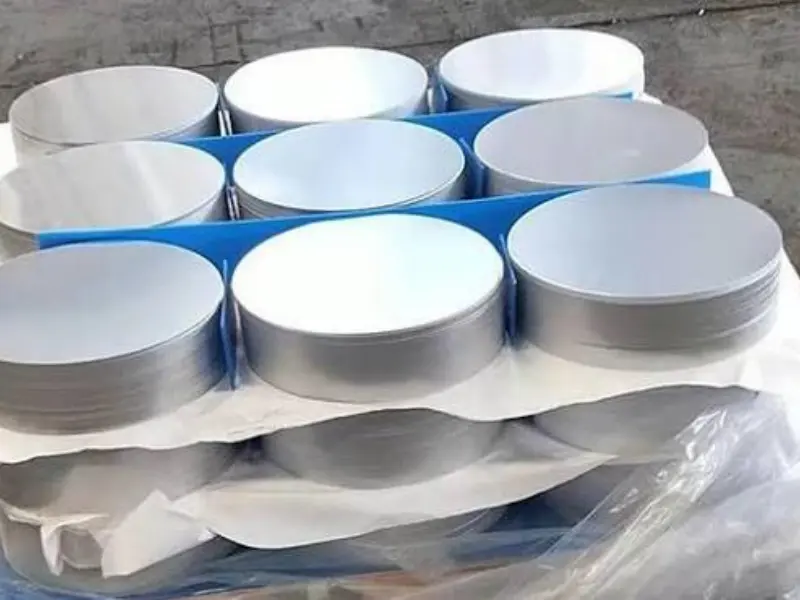
Quality control should cover both the aluminum material and the finished blank.
Typical checks include:
Incoming Aluminum → Alloy Check → Thickness Check → Diameter Check → Surface Inspection → Edge Inspection → Quantity Check → Packing
Important quality points include:
- Correct alloy
- Correct temper
- Stable thickness
- Accurate diameter
- Good flatness
- Clean surface
- Smooth edge
- No major cracks
- No serious scratches
- Consistent batch quality
For large orders, sample inspection before mass production can be useful.
Packaging for Aluminum Circle Discs
Proper packing helps protect the discs during transportation.
Common materials include:
- Kraft paper
- Plastic wrapping
- Cartons
- Wooden pallets
- Wooden cases
- Edge protection
- Steel or plastic straps
Small discs can be packed in cartons.
Large or heavy discs may require stronger pallets.
For export orders, the packaging should be suitable for long-distance transportation and handling.
A Simple Selection Guide
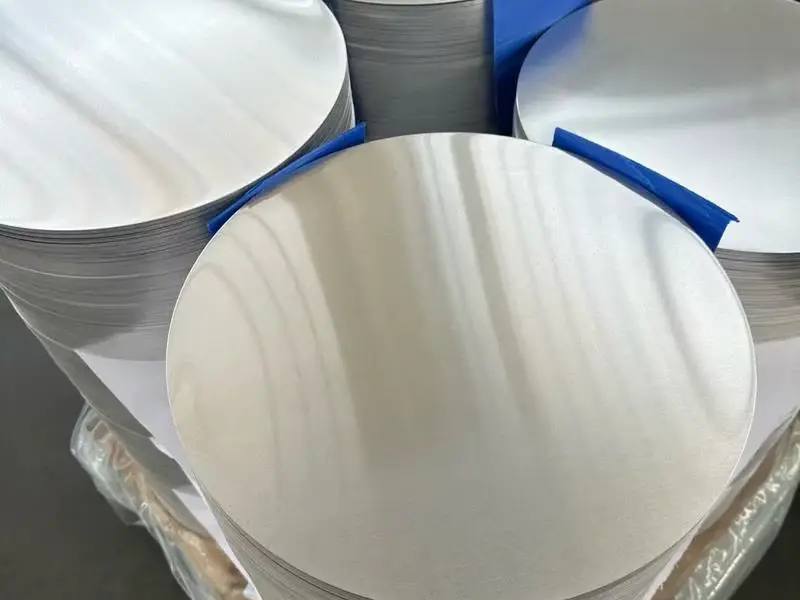
Choosing an aluminum circle disc can follow this path:
Finished Product
↓
Forming Method
↓
Diameter
↓
Thickness
↓
Alloy
↓
Temper
↓
Surface
↓
Tolerance
↓
Quantity
For deep drawing, focus on formability.
For cookware, consider alloy, thickness, temper, and forming performance.
For lighting reflectors, surface quality may be more important.
For traffic signs, thickness, flatness, corrosion resistance, and surface treatment should be considered.
For industrial parts, dimensional tolerance and mechanical requirements may become the main factors.
Aluminum Circle Disc Applications by Industry
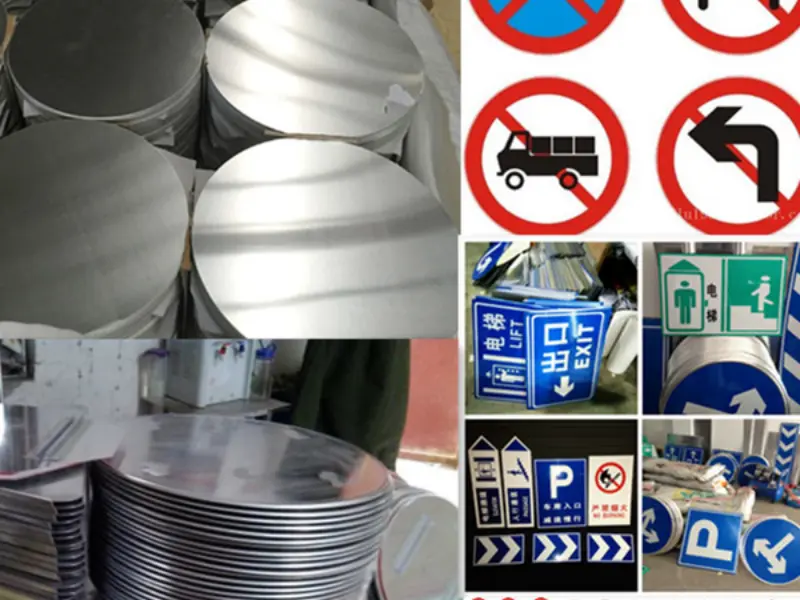
The product can serve many different markets.
Cookware Industry
- Frying pans
- Cooking pots
- Sauce pans
- Baking trays
- Pizza pans
- Food containers
Lighting Industry
- Lamp reflectors
- LED housings
- Ceiling lights
- Downlights
- Street-light components
Signage Industry
- Traffic signs
- Parking signs
- Warning signs
- Road information signs
Industrial Manufacturing
- Covers
- End plates
- Housings
- Machine parts
- Heat-transfer components
- Circular containers
Decorative Products
Display products
Decorative panels
Reflective parts
Interior components
Choosing the Right Aluminum Circle Disc Supplier
A reliable supplier should be able to provide more than a standard aluminum blank.
A good purchasing process should include:
Material Selection → Sample Confirmation → Production → Quality Inspection → Packing → Shipment
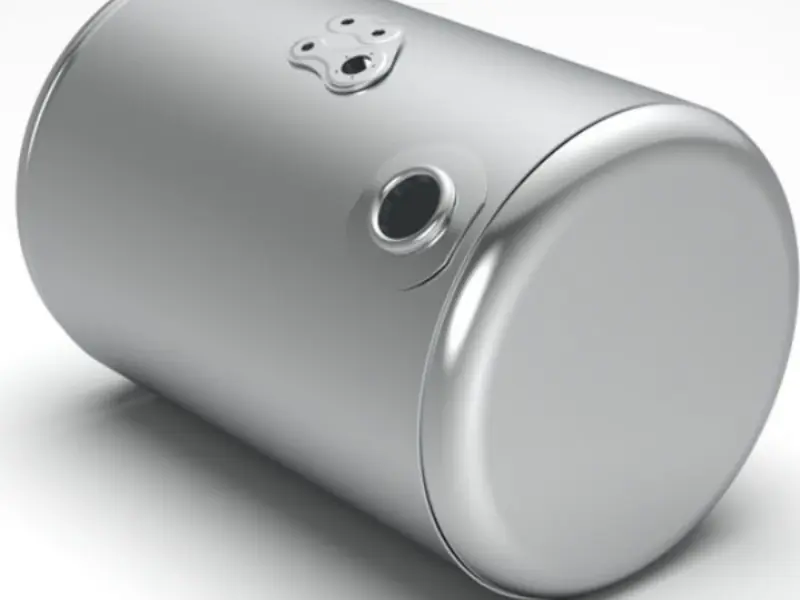
For regular orders, stable alloy composition, thickness, diameter, surface quality, and delivery are important.
For demanding forming applications, it is also useful to confirm the material with a sample before starting large-scale production.
The best specification is not always the cheapest one. A suitable aluminum circle disc should balance price, formability, strength, surface quality, dimensional accuracy, and production efficiency.
Frequently Asked Questions
What is an aluminum circle disc?
It is a round aluminum blank cut from aluminum sheet or coil. It is commonly used for stamping, spinning, deep drawing, cookware, lighting, signage, and industrial components.
What is the difference between an aluminum circle and an aluminum disc?
In most commercial situations, the two terms refer to the same type of round aluminum blank. The required diameter, thickness, alloy, temper, and surface are more important than the name.
Which aluminum alloy is best for circle discs?
1050, 1060, 1070, and 3003 are common options. 1050 and 1060 offer excellent formability, while 3003 provides a useful combination of strength and formability.
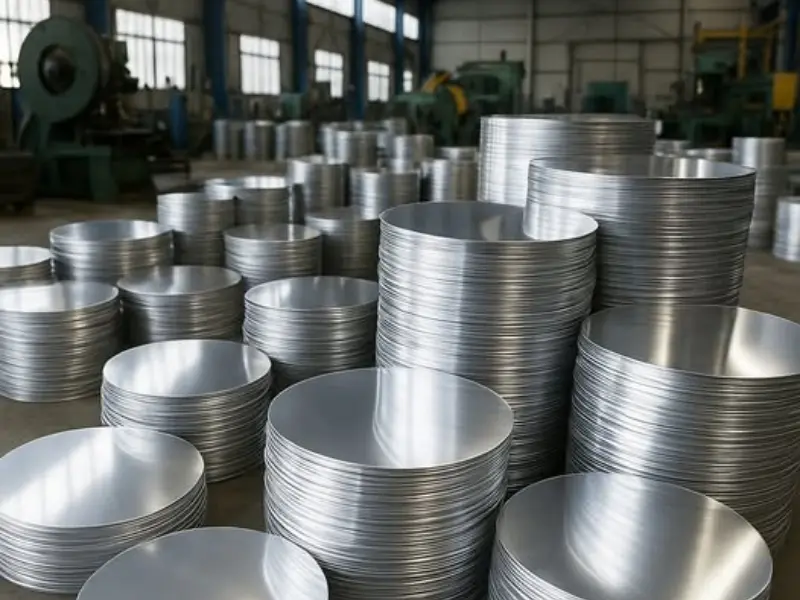
Which aluminum disc is suitable for deep drawing?
A soft temper such as O is commonly considered for deep drawing because it provides good ductility. The final choice depends on the die, forming depth, alloy, and production conditions.
What thicknesses are available?
Common thicknesses range from about 0.3 mm to 6.0 mm, with special thicknesses available for some projects.
Can aluminum circle discs be customized?
Yes. Diameter, thickness, alloy, temper, surface finish, tolerance, edge quality, protective film, and packing can be customized.
Are aluminum circle discs suitable for cookware?
Yes. They are widely used as blanks for frying pans, pots, trays, and other kitchen products.
Can aluminum discs be used for lamp reflectors?
Yes. Aluminum discs can be stamped or spun into reflector shapes. A smooth or polished surface may be selected when appearance and reflectivity are important.
What information is needed for a quotation?
The most useful information is:
Alloy + Temper + Diameter + Thickness + Surface + Quantity + Application
A technical drawing is also helpful for customized products.
How is the weight of an aluminum circle calculated?
Use the diameter, thickness, aluminum density, and quantity. A basic calculation uses approximately 2.70 g/cm³ as the aluminum density.
Can aluminum circle discs be polished?
Yes. Polished surfaces can be supplied for applications such as reflectors, decorative products, and certain lighting components.
Can aluminum circle discs be anodized?
Yes. Anodized finishes can be produced when the application requires a specific surface appearance or additional surface protection.
How should aluminum discs be packed?
They can be packed with kraft paper, plastic, cartons, pallets, or wooden cases. The packing method depends on the disc size, thickness, quantity, and shipping method.