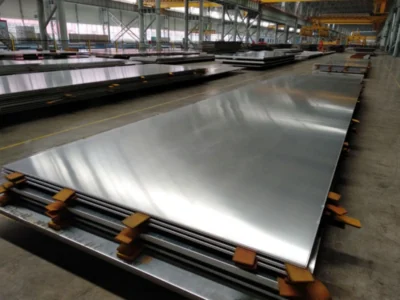
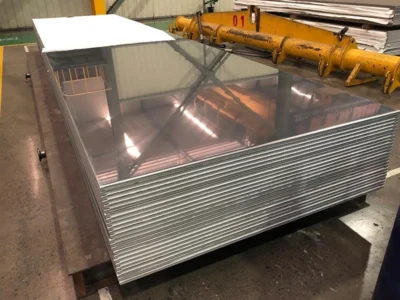
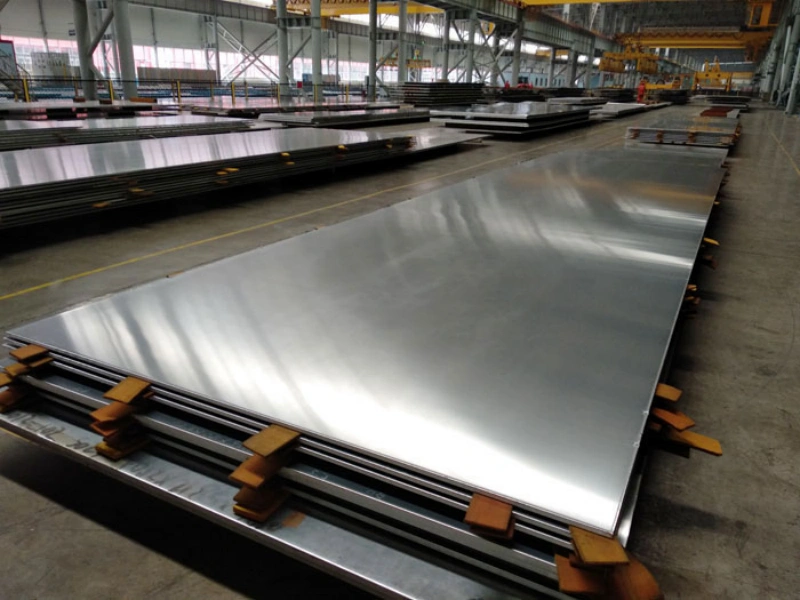
6061 Aluminum Sheet is the most widely used structural aluminum alloy in the world.
Engineers specify it for aerospace components, marine structures, automotive parts, bicycle frames, and precision machined parts.
When you need aluminum that machines cleanly, welds reliably, and holds up under real load — 6061 sheet is usually the starting point.
What Makes 6061 Different from Other Aluminum Alloys
6061 belongs to the 6000 series — magnesium and silicon are the primary alloying elements. This combination gives the alloy a unique set of properties that other common alloys cannot match together.
Chemical Composition
| Element | Content (%) |
|---|---|
| Aluminum (Al) | Balance (~97%) |
| Magnesium (Mg) | 0.80 – 1.20 |
| Silicon (Si) | 0.40 – 0.80 |
| Copper (Cu) | 0.15 – 0.40 |
| Chromium (Cr) | 0.04 – 0.35 |
| Iron (Fe) | Max 0.70 |
| Zinc (Zn) | Max 0.25 |
| Manganese (Mn) | Max 0.15 |
The magnesium and silicon combine during heat treatment to form Mg₂Si precipitates. These fine particles strengthen the alloy through precipitation hardening. That is why 6061 in T6 temper is significantly stronger than 6061 in O temper — the heat treatment does the work.
Why Fabricators Choose 6061 Over Other Alloys
→ Machines cleanly — cuts, drills, and mills without tearing or galling → Welds with common methods — TIG and MIG with 4043 or 5356 filler → Anodizes uniformly — gives a clean, consistent decorative surface → Accepts tight tolerances — holds dimension during and after machining → Structural strength — T6 temper reaches 310 MPa tensile strength → Corrosion resistant — chromium addition gives extra protection vs 2xxx series
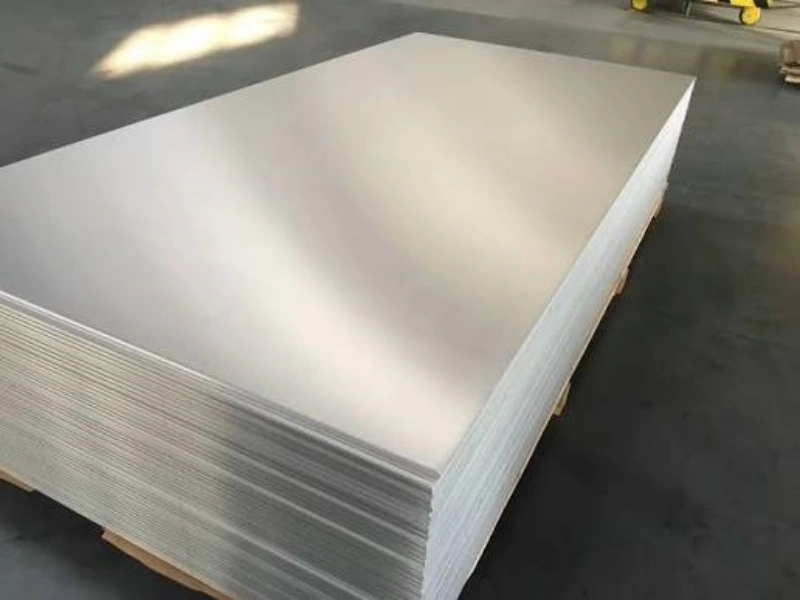
Temper Options — The One Decision That Changes Everything
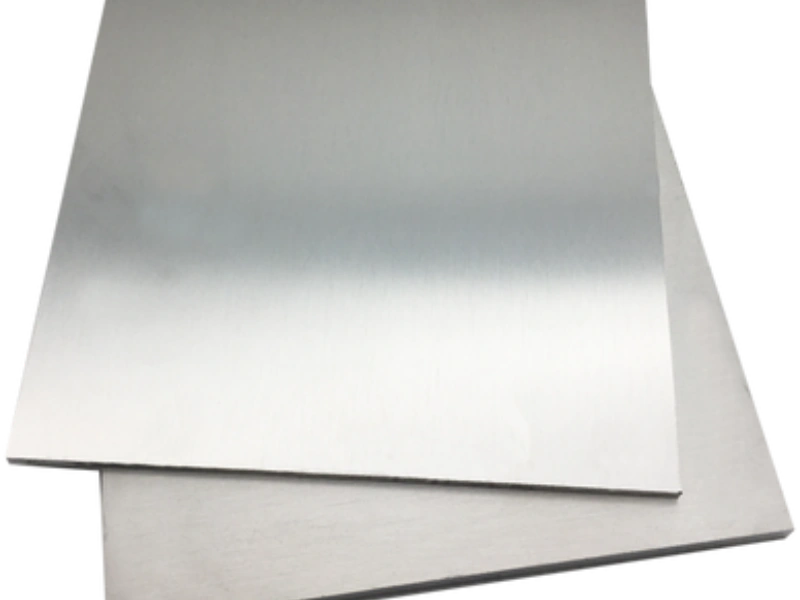
Temper has a bigger effect on 6061 properties than any other variable. The same alloy in different tempers has vastly different strength, hardness, and machinability.
6061-O (Fully Annealed)
Softened by controlled heating and slow cooling. The softest condition available for 6061. Used when the sheet needs to be deep-drawn, bent tightly, or heavily formed before any strength requirement.
| Property | Value |
|---|---|
| Tensile strength | 125 MPa |
| Yield strength | 55 MPa |
| Elongation | 25% |
| Brinell hardness | 30 HB |
6061-T4 (Solution Treated and Naturally Aged)
Solution heat treated then aged at room temperature. Stronger than O temper but not as hard as T6. Formable enough for moderate bending, good corrosion resistance, and can be further aged to T6 after forming.
| Property | Value |
|---|---|
| Tensile strength | 241 MPa |
| Yield strength | 145 MPa |
| Elongation | 22% |
| Brinell hardness | 65 HB |
6061-T6 (Solution Treated and Artificially Aged)
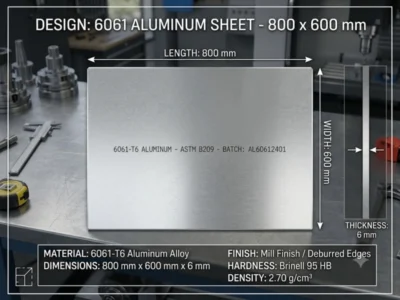
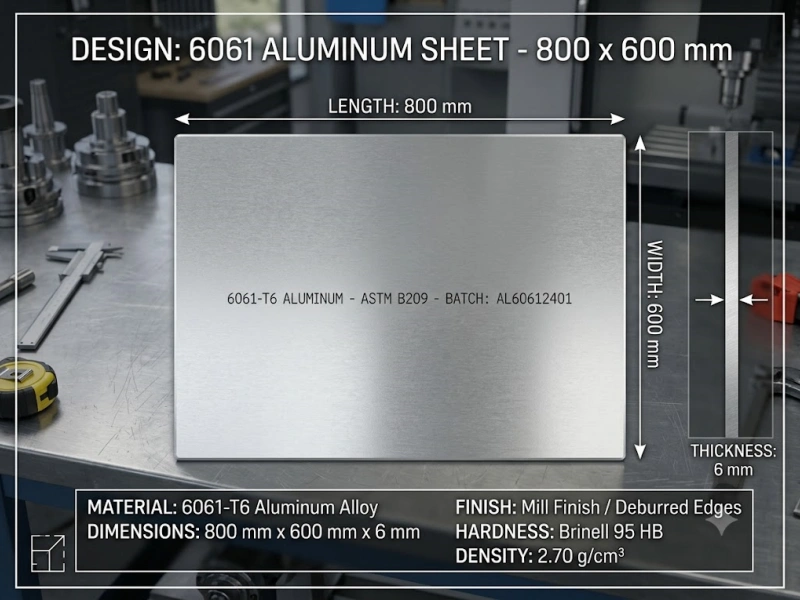
The most widely specified temper. Solution treated at ~530°C, quenched, then artificially aged at ~160°C for 8–12 hours. This sequence maximizes strength. T6 is the default spec for structural, aerospace, and machined parts.
| Property | Value |
|---|---|
| Tensile strength | 310 MPa |
| Yield strength | 276 MPa |
| Elongation | 12% |
| Brinell hardness | 95 HB |
| Shear strength | 207 MPa |
| Fatigue strength | 97 MPa |
6061-T651 (T6 + Stress Relieved by Stretching)
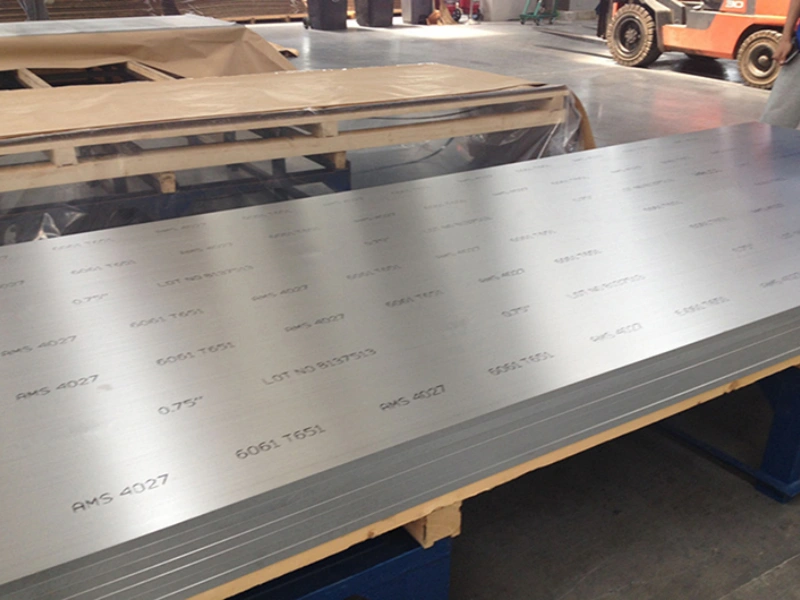
T651 is T6 with a stretching step added after quenching. The stretch removes internal residual stresses that build up during quenching. This temper is essential for precision machining — without stress relief, the plate warps when material is removed from one face.
Best for: CNC machined parts, tool plates, precision components, jigs and fixtures
6061-T4511 and T6511
The “11” suffix means the sheet was stress relieved by both stretching and minor straightening. Same use case as T651 but specifies the straightening step was included. Common in extruded forms and wider plate products.
Temper Comparison at a Glance
| Temper | Strength | Formability | Machinability | Main Use |
|---|---|---|---|---|
| O | Very Low | Excellent | Good | Deep forming, bending |
| T4 | Medium | Good | Good | Moderate forming, further aging |
| T6 | High | Limited | Excellent | Structural, machined parts |
| T651 | High | Limited | Excellent | Precision machining, no warping |
Mechanical and Physical Properties — Numbers That Matter
Key Properties vs Common Alloys
| Alloy / Temper | Tensile (MPa) | Yield (MPa) | Elongation | Machinability | Weldability |
|---|---|---|---|---|---|
| 6061-T6 | 310 | 276 | 12% | Excellent | Good |
| 5052-H32 | 228 | 193 | 12% | Good | Excellent |
| 3003-H14 | 150 | 145 | 8% | Good | Excellent |
| 7075-T6 | 572 | 503 | 11% | Good | Poor |
| 2024-T3 | 483 | 345 | 18% | Good | Poor |
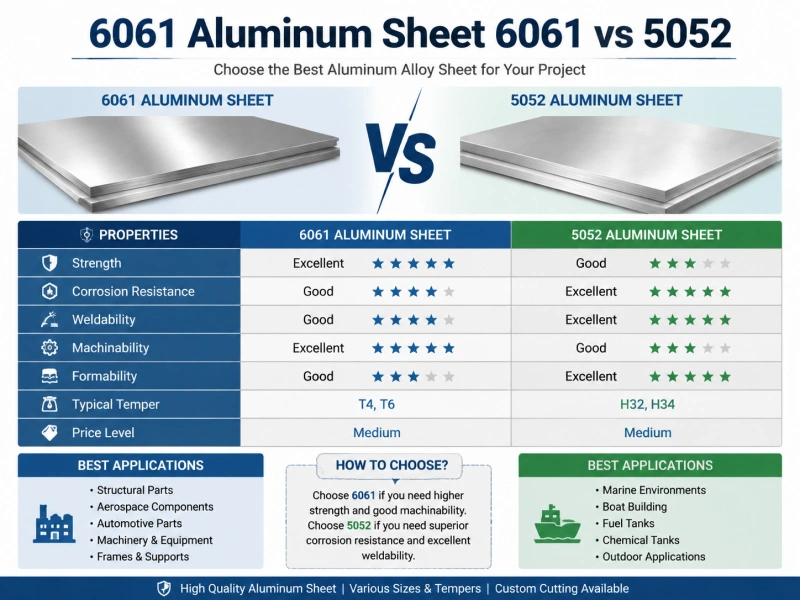
6061-T6 sits in a practical zone. It is strong enough for most structural applications and machines far better than 5052 or 3003. It is not as strong as 7075 or 2024, but it welds and anodizes in ways those alloys cannot match.
Physical Properties
| Property | Value |
|---|---|
| Density | 2.70 g/cm³ |
| Melting range | 582 – 652°C |
| Thermal conductivity | 167 W/m·K |
| Electrical conductivity | 43% IACS |
| Modulus of elasticity | 68.9 GPa |
| Coefficient of thermal expansion | 23.6 µm/m·°C |
Standard Sizes and Thickness Range
Common Sheet Thicknesses
| Thickness | Weight/m² | Typical Application |
|---|---|---|
| 0.5mm | 1.35 kg | Thin formed parts, light panels |
| 1.0mm | 2.70 kg | Light structural panels |
| 1.5mm | 4.05 kg | General structural sheet |
| 2.0mm | 5.40 kg | Enclosures, brackets, panels |
| 3.0mm | 8.10 kg | Structural parts, machined blanks |
| 4.0mm | 10.8 kg | Precision machining substrate |
| 5.0mm | 13.5 kg | Tooling, heavy structural parts |
| 6.0mm | 16.2 kg | Plate-range, structural |
| 8.0mm | 21.6 kg | Heavy machined components |
| 10mm+ | 27+ kg | Structural plate, aerospace parts |
Standard Sheet and Plate Sizes
| Imperial Size | Metric Equivalent | Notes |
|---|---|---|
| 4 × 8 ft | 1220 × 2440 mm | Most common stock size |
| 4 × 10 ft | 1220 × 3050 mm | Longer parts, less waste |
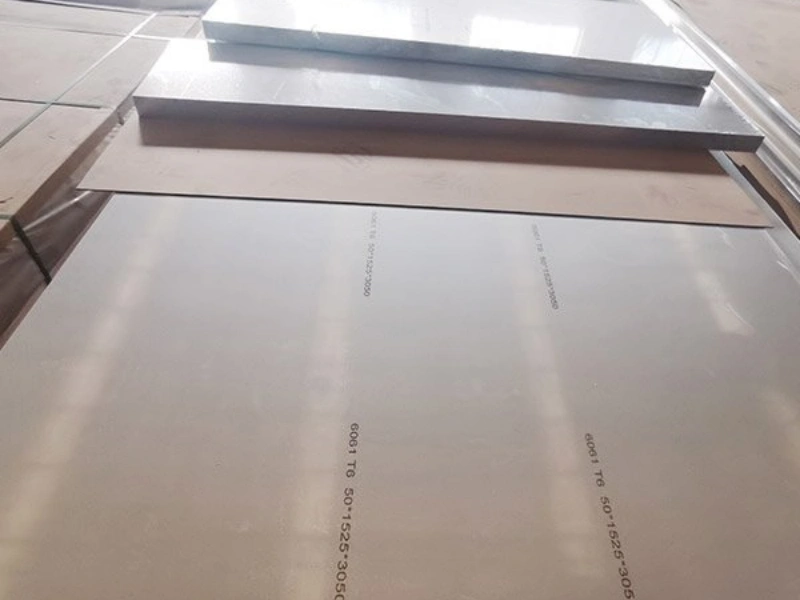
| 5 × 10 ft | 1524 × 3050 mm | Wide format, industrial |
| 4 × 12 ft | 1220 × 3660 mm | Extended length runs |
| 1000 × 2000 mm | — | Asia and Europe |
| 1250 × 2500 mm | — | European fabrication |
| 1500 × 3000 mm | — | Heavy fabrication |
| Custom | Any | OEM cut to order |
Thickness Tolerance (ASTM B209)
| Thickness | Tolerance |
|---|---|
| 0.5mm – 1.0mm | ± 0.08mm |
| 1.0mm – 2.0mm | ± 0.10mm |
| 2.0mm – 4.0mm | ± 0.13mm |
| 4.0mm – 6.0mm | ± 0.15mm |
| 6.0mm – 12mm | ± 0.20mm |
Surface Finishes Available for 6061 Sheet
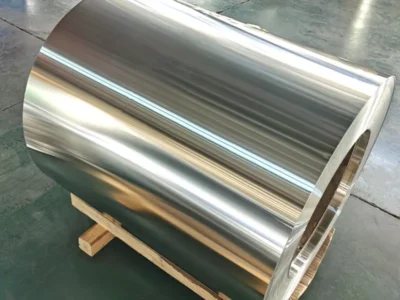
Mill Finish 6061 Aluminum Sheet
Natural surface from the rolling process. Slightly rough texture. Used where the sheet will be machined, painted, or where appearance is not critical. The lowest-cost option.
Anodized 6061 Aluminum Sheet
6061 anodizes exceptionally well. The chromium content helps produce a dense, even oxide layer with minimal pitting. Common anodize specs for 6061:
| Anodize Type | Thickness | Common Use |
|---|---|---|
| Clear architectural | 15–20 μm | Structural panels, window frames |
| Black anodize | 15–25 μm | Electronics housings, automotive trim |
| Hard anodize | 25–50 μm | Wear surfaces, aerospace, tooling |
| Gold / bronze | 10–20 μm | Decorative panels, architectural |
Hard anodize on 6061-T6 gives surface hardness approaching 400 HV — harder than mild steel. This is why it is used for hydraulic cylinder linings, valve bodies, and high-wear mechanical parts.
Brushed Finish 6061 Aluminum Sheet
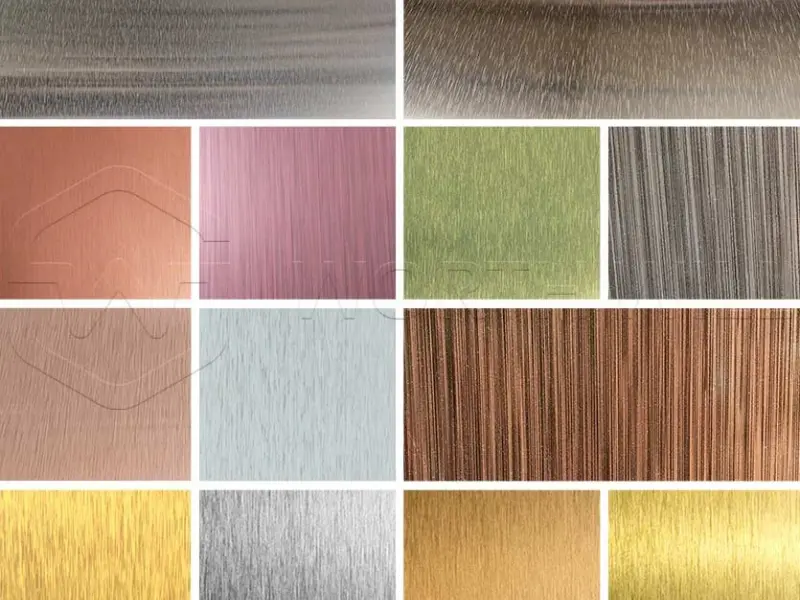
A mechanical brushing step creates fine parallel lines. Commonly combined with a clear lacquer to protect against oxidation. Used in consumer electronics casings, appliance panels, and architectural trim.
Polished / Mirror Finish 6061 Aluminum Sheet
Less common on 6061 than on 1060 or 5005, but achievable. Used in decorative architectural components, custom automotive trim, and display fixtures.
Applications — Where 6061 Sheet Gets Used
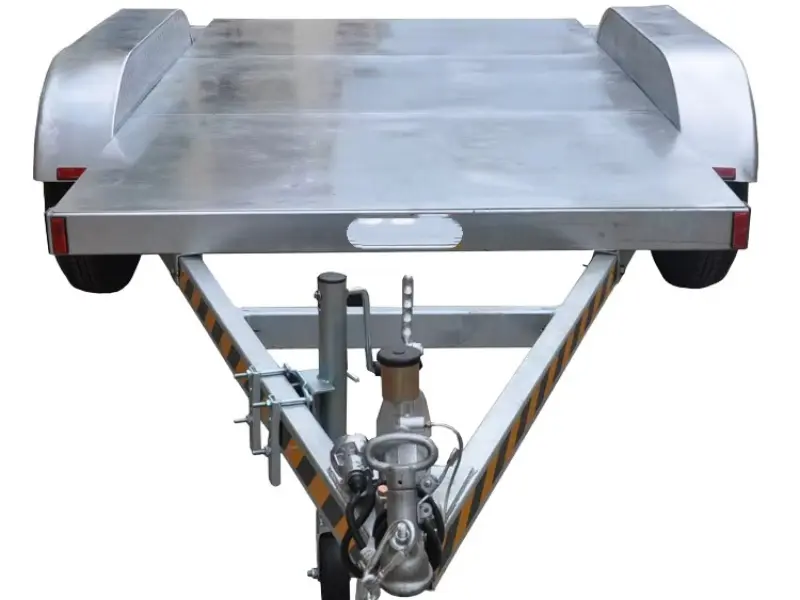
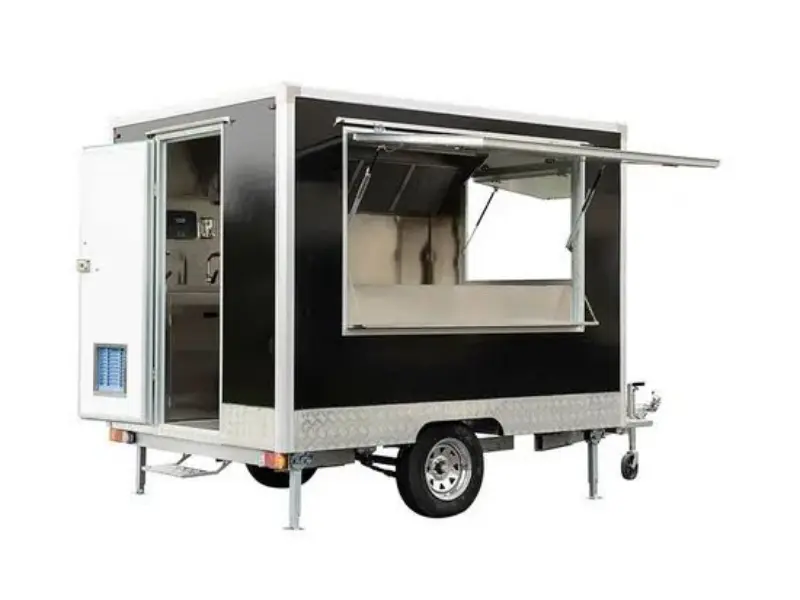
Aerospace and Aviation
6061-T6 was one of the early aerospace aluminum alloys and remains widely used for non-primary structure. Its strength-to-weight ratio and fatigue resistance make it suitable for:
- Wing ribs and skin panels (secondary structure)
- Fuselage frame components
- Floor beam panels
- Interior bracket and fitting stock
- Ground support equipment frames
Marine and Shipbuilding
6061 resists saltwater corrosion better than 2xxx or 7xxx series alloys (which contain copper). It is used for:
- Boat deck fittings and hardware
- Wheelhouse and superstructure panels
- Mast and boom components
- Dock hardware and marine brackets
- Patrol and utility boat structure
Automotive and Motorsport
Weight reduction drives aluminum use in vehicles. 6061-T6 suits:
- Suspension components and control arms
- Wheel spacers and hubs
- Roll cage and frame tubes (extruded sections)
- Engine brackets and mounts
- Custom interior trim panels
Electronics and Precision Equipment
The combination of machinability, anodize quality, and dimensional stability makes 6061 the first choice for:
- Laptop and computer chassis
- Camera bodies and lens housings
- Scientific instrument frames
- Semiconductor equipment components
- Heat sink bases (machined from plate)
Construction and Architecture
6061 plate and sheet serve structural roles in building:
- Curtain wall structural support members
- Column cladding panels
- Balcony and walkway structural components
- Custom architectural feature elements
- Antenna and communication tower brackets
Industrial Machinery and Tooling
- Machine frames and sub-bases
- Jigs and fixtures for CNC operations
- Tooling plates and modular base plates
- Conveyor system structural components
- Hydraulic manifold bodies (machined from plate)
Machining 6061 Sheet — Practical Notes
6061-T6 is one of the most machinable aluminum alloys. It cuts cleanly, holds tight tolerances, and does not gall cutting tools the way some alloys do.
Recommended Cutting Parameters
| Operation | Tool | Speed | Feed Note |
|---|---|---|---|
| CNC milling | Carbide end mill | 3,000–8,000 RPM | High feed, positive rake |
| Drilling | HSS or carbide | 1,500–5,000 RPM | Use cutting fluid |
| Turning | Carbide insert | 200–600 m/min | Sharp edge, positive rake |
| Sawing | Carbide-tipped | Medium speed | Avoid dull blades — aluminum galls |
T651 vs T6 for Machining
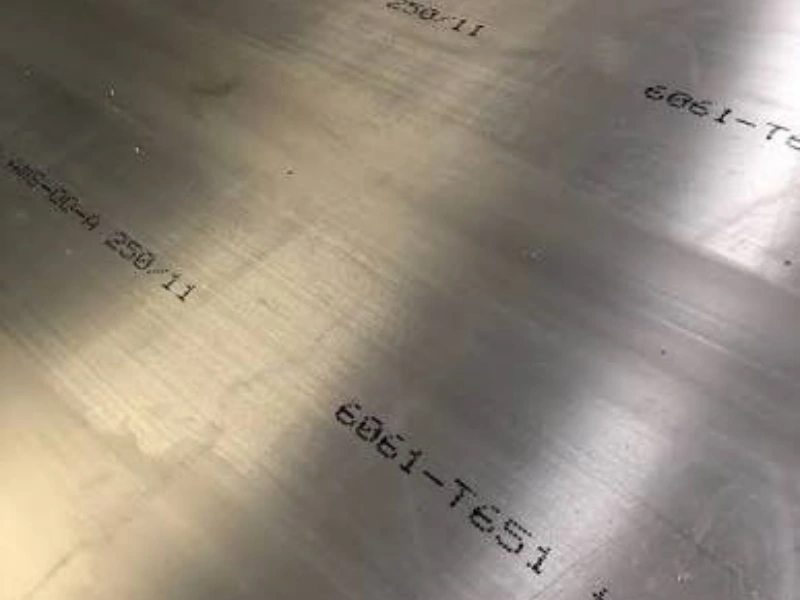
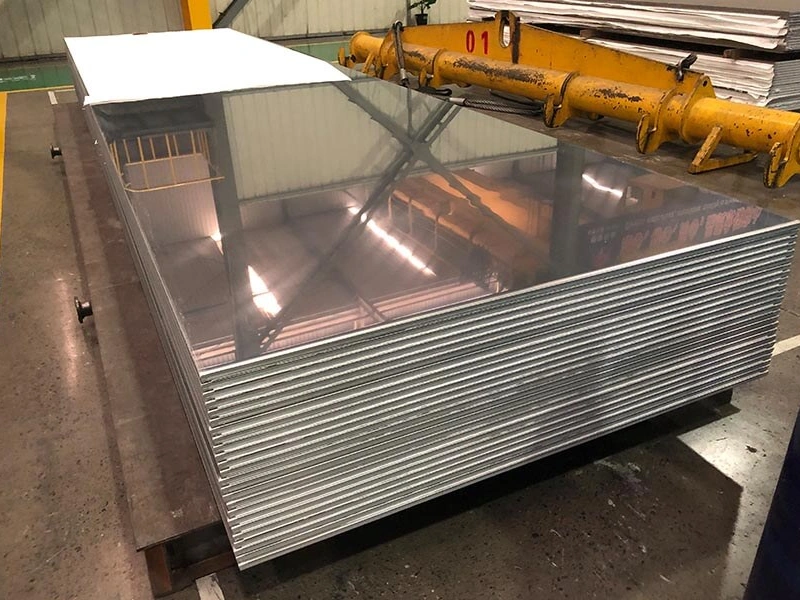
For flat panels that will be heavily machined (removing more than 30–40% of thickness), always specify T651. T6 plate carries residual stress from quenching. When you machine away material, the stress redistributes and the plate bows or twists. T651 removes this stress through a controlled stretch, so the part stays flat through and after machining.
Welding 6061 — What to Know
6061 welds with TIG and MIG using standard aluminum welding equipment. Two filler options:
| Filler Wire | Result | When to Use |
|---|---|---|
| 4043 (Al-Si) | Lower crack risk, easier to weld | General structural welds, cosmetic welds |
| 5356 (Al-Mg) | Higher weld strength | Load-bearing joints, higher strength required |
Heat-affected zone (HAZ) note: Welding 6061-T6 reduces strength in the area immediately beside the weld. The HAZ drops to roughly T4 strength (~241 MPa tensile). For welds in structural load paths, design around this reduced strength or specify post-weld artificial aging to partially restore T6 properties.
6061 vs Other Structural Aluminum Alloys
6061 vs 7075
| Feature | 6061-T6 | 7075-T6 |
|---|---|---|
| Tensile strength | 310 MPa | 572 MPa |
| Weight | Same | Same |
| Weldability | Good | Poor |
| Corrosion resistance | Good | Lower |
| Machinability | Excellent | Good |
| Anodize quality | Excellent | Fair |
| Cost | Lower | Higher (+30–50%) |
| Best use | General structural | Aerospace high-stress parts |
7075 is stronger but harder to weld and corrodes faster without coating. 6061 covers 80%+ of structural aluminum applications at lower cost.
6061 vs 5052
| Feature | 6061-T6 | 5052-H32 |
|---|---|---|
| Tensile strength | 310 MPa | 228 MPa |
| Corrosion in saltwater | Good | Excellent |
| Weldability | Good | Excellent |
| Formability | Moderate | Good |
| Machinability | Excellent | Good |
| Anodize quality | Excellent | Good |
| Best use | Structural, machined | Marine, outdoor panels |
For anything near saltwater, 5052 is the safer corrosion choice. For anything that needs machining or high strength, 6061 wins.
6061 vs 2024
| Feature | 6061-T6 | 2024-T3 |
|---|---|---|
| Tensile strength | 310 MPa | 483 MPa |
| Corrosion resistance | Good | Poor (must be clad) |
| Weldability | Good | Poor |
| Machinability | Excellent | Good |
| Cost | Lower | Higher |
| Primary use | General structural | Aerospace primary structure |
2024 is used where maximum strength is critical and corrosion protection is managed by cladding or coating. 6061 is used where strength is sufficient and ease of fabrication matters.
Price Reference for 6061 Aluminum Sheet
Factory Direct Pricing (2024–2025)
| Temper | Thickness | Surface | Price/ton (USD) |
|---|---|---|---|
| T6 | 1.5mm | Mill finish | 3,200–3,700 |
| T6 | 3.0mm | Mill finish | 3,200–3,800 |
| T651 | 6.0mm | Mill finish | 3,300–3,900 |
| T651 | 10mm | Mill finish | 3,400–4,000 |
| T6 | 2.0mm | Anodized clear | 3,700–4,400 |
| T6 | 3.0mm | Hard anodized | 4,200–5,000 |
What Adds to the Price
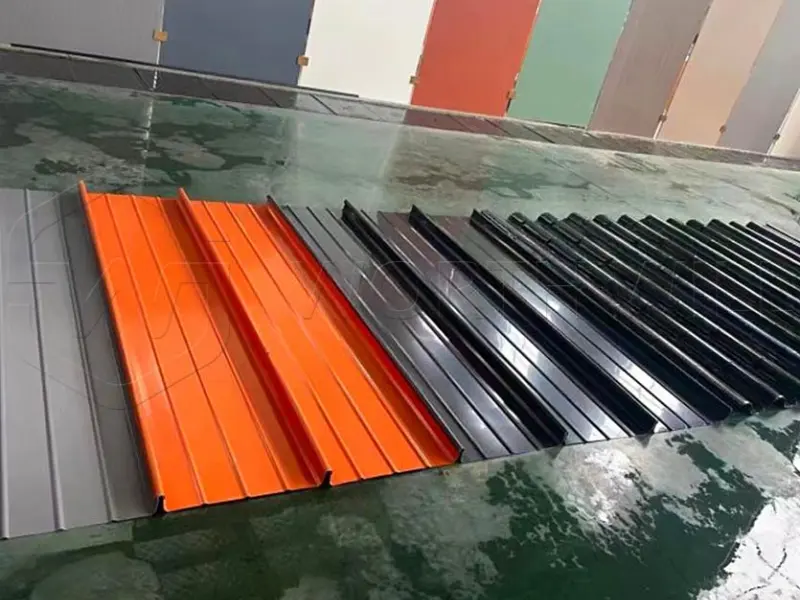
→ Temper: T651 costs 3–8% more than T6 due to stretching step → Thickness under 1.5mm: Rolling cost rises for thin 6061 sheet → Hard anodize: Adds USD 500–900/ton above mill finish → Precision flatness: Plate ground or leveled to tighter spec adds cost → Small orders: Below 2 tons, expect 20–35% premium over mill price → Custom cut: Non-standard sizes add 5–15% cutting charge
Certifications and Standards for 6061
| Standard | Description |
|---|---|
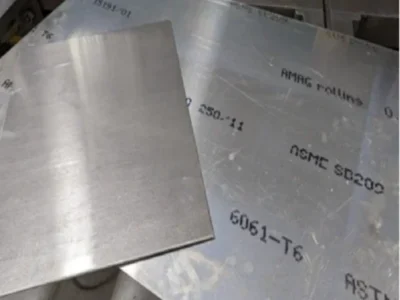
| ASTM B209 | US standard for aluminum sheet and plate |
| EN 573-3 | European chemical composition standard |
| EN 485 | European mechanical properties and tolerances |
| AMS 2770 | Aerospace heat treatment specification |
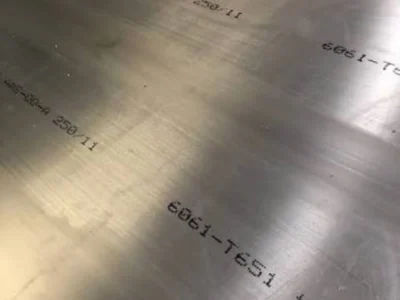
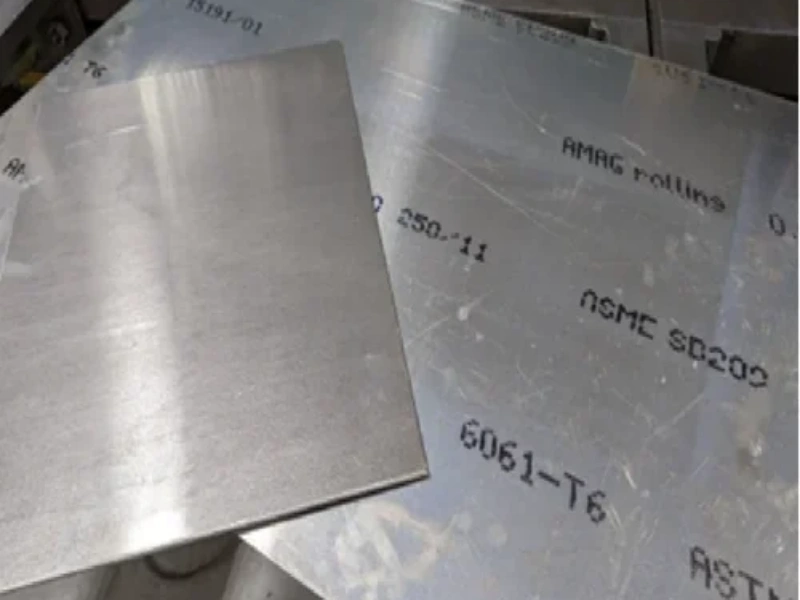
| AMS-QQ-A-250/11 | US military spec for 6061 plate |
| ISO 6361 | International sheet and strip standard |
For aerospace and defense orders, ask for material certified to AMS or MIL spec. For commercial construction and industrial use, ASTM B209 is standard. Always request a mill test report (MTR) showing actual chemical composition and mechanical test results — not just a certificate of conformance.
Chemical Composition and Alloy Properties
To understand why this metal performs so well, we must look at what is inside. The precise blend of elements ensures that the 6061 aluminum plate stays stable under pressure.
Chemical Composition Table
| Element | Content (Percentage) |
|---|---|
| Aluminum (Al) | 95.8% – 98.6% |
| Magnesium (Mg) | 0.8% – 1.2% |
| Silicon (Si) | 0.4% – 0.8% |
| Iron (Fe) | Max 0.7% |
| Copper (Cu) | 0.15% – 0.40% |
| Chromium (Cr) | 0.04% – 0.35% |
| Zinc (Zn) | Max 0.25% |
| Titanium (Ti) | Max 0.15% |
Physical Properties of 6061 Aluminum Sheet
Understanding the physics of the metal helps in choosing the right thickness and size.
- Density: Approximately 2.70 g/cm3 (0.0975 lb/in3).
- Melting Point: Roughly 582 – 652 ∘C (1080 – 1205 ∘F).
- Modulus of Elasticity: 68.9 GPa (10,000 ksi).
- Thermal Conductivity: 167 W/m⋅K.
The “temper” refers to the hardness and strength level achieved through heat treatment or cold working. For 6061 aluminum, the most common tempers are T4, T6, and T651.
Common Tempers for 6061 Aluminum Sheets
6061-T4 Aluminum
This version is solution heat-treated and naturally aged. It offers good formability. It is softer than T6, making it easier to bend or shape into complex curves.
6061-T6 Aluminum
T6 is the most common temper for this alloy. It is solution heat-treated and then artificially aged. This process maximizes the strength of the metal. It is the go-to choice for structural applications where weight and strength are critical.
6061-T651 Aluminum
Similar to T6, but it includes a stress-relieving step by stretching the material. This is crucial for thick plates that need to be machined. It prevents the metal from warping or “springing” during heavy milling.
Diverse Product Types of 6061 Aluminum
Not all 6061 products look the same. Depending on the finish and manufacturing process, you can find several variations.
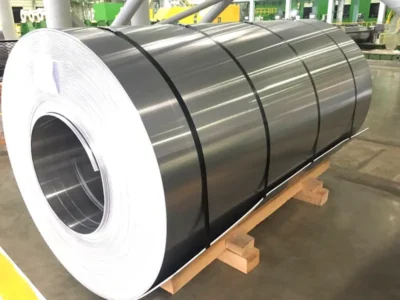
Mill Finish 6061 Aluminum Sheet
This is the raw state of the aluminum as it comes out of the rolling mill. It has a slightly dull, matte appearance. It is cost-effective and perfect for parts that will be painted or hidden inside a structure.
Brushed 6061 Aluminum Sheet
Brushed finishes involve sanding the surface to create a linear grain pattern. This is popular for decorative architectural elements or high-end electronics cases. It helps hide fingerprints and minor scratches.
Anodized 6061 Aluminum Sheet
Anodizing creates a thick oxide layer on the surface. This increases corrosion resistance and allows for vibrant colors like black, blue, or red. It is highly sought after in the automotive and consumer goods industries.
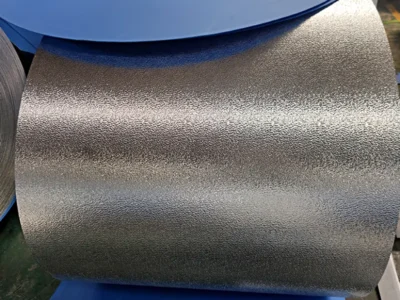
6061 Aluminum Tread Plate
Also known as “Diamond Plate,” this features a raised pattern on one side. It provides excellent slip resistance. You will often see this on truck toolboxes, ramps, and industrial flooring.
Product Specifications and Size Ranges
We offer a wide variety of dimensions to meet your specific project needs. Below is a breakdown of the typical sizes available for 6061-T6 aluminum sheets.
Thickness Range Table
| Type | Thickness (mm) | Thickness (inches) |
|---|---|---|
| Thin Sheet | 0.5 mm – 3.0 mm | 0.020′′ – 0.118′′ |
| Medium Sheet | 3.1 mm – 6.0 mm | 0.122′′ – 0.236′′ |
| Thick Plate | 6.35 mm – 200 mm | 0.250′′ – 8.000′′ |
Standard Dimensions
Custom Cuts: We provide precision waterjet and saw cutting for custom shapes.
Standard Widths: 914 mm, 1219 mm, 1500 mm (36′′, 48′′, 60′′).
Standard Lengths: 2438 mm, 3048 mm, 3657 mm (96′′, 120′′, 144′′).
Key Applications of 6061 Aluminum Sheet

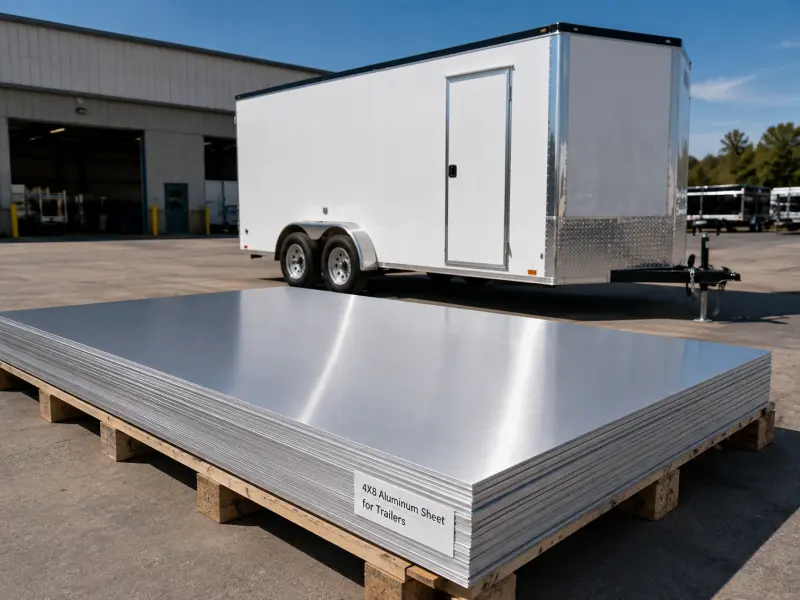
Because of its versatility, you can find this metal in almost every industry. Here are the primary areas where 6061 aluminum plate excels:
Molds for plastics.
Transportation & Automotive:
Truck bodies and trailers.
Chassis components for high-performance cars.
Bicycle frames and components.
Railway car structures.
Aerospace Engineering:
Aircraft skins and wings.
Fuselage components.
Spacecraft fittings.
Marine Industry:
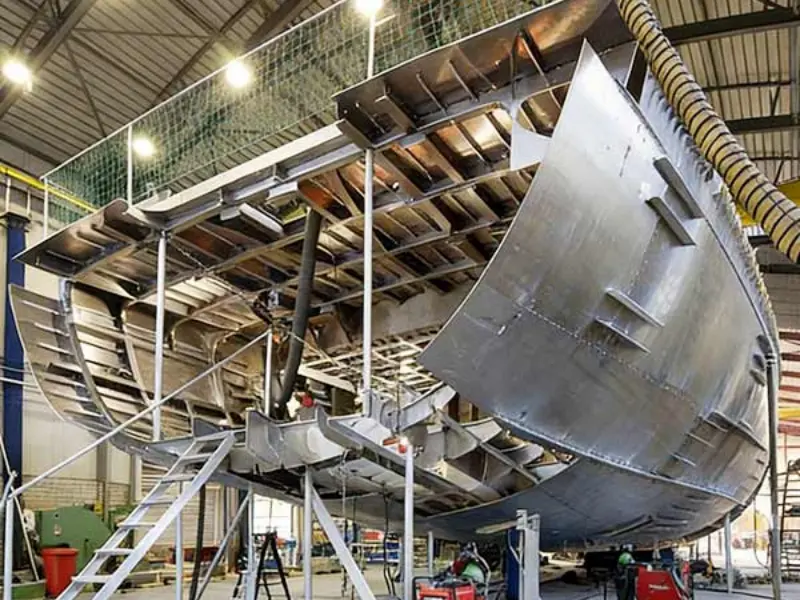
Boat hulls and decks.
Gangways and docks.
Marine hardware due to salt-water resistance.
Structural & Construction:
Bridges and towers.
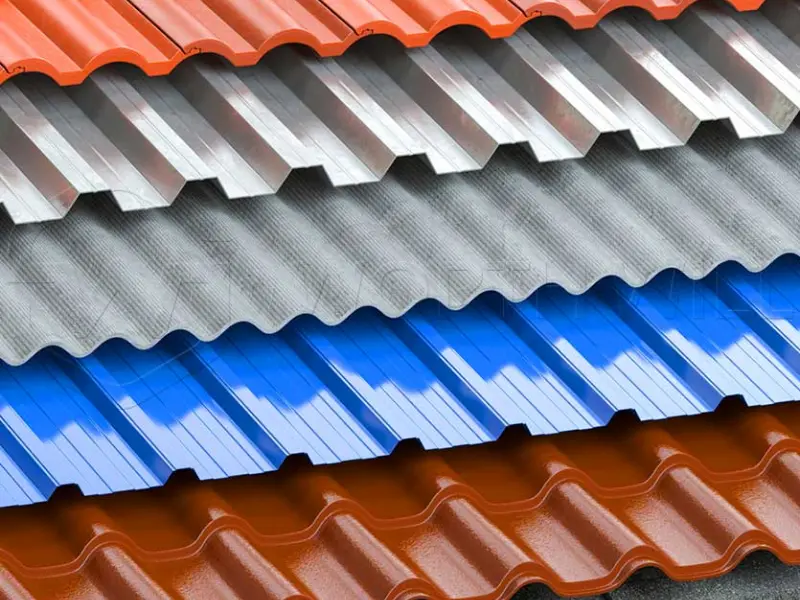
Roofing and siding for industrial buildings.
Heavy-duty shelving and scaffolding.
Machinery & Equipment:
Precision machine parts.
Jigs and fixtures.
Detailed Comparisons: 6061 vs. Other Alloys
Choosing the right alloy can be confusing. Here is how 6061 compares to other popular aluminum grades.
6061 vs. 5052 Aluminum
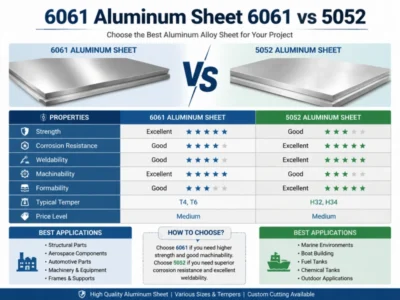
5052 is not heat-treatable. It is much more formable than 6061 but has lower strength.
➜ Choose 6061 if you need high structural strength.
➜ Choose 5052 if you need extreme corrosion resistance in marine environments and require deep drawing.
6061-T6 vs. 6063-T6
6063 is often called “Architectural Aluminum.” It has a smoother surface finish but is only about half as strong as 6061.
➜ Choose 6061 for structural load-bearing parts.
➜ Choose 6063 for window frames, door frames, and trim.
6061 vs. 7075 Aluminum
7075 is one of the strongest aluminum alloys available. However, it is much harder to weld and less resistant to corrosion than 6061.
➜ Choose 6061 for general fabrication and welding.
➜ Choose 7075 for high-stress aerospace parts where strength is the only priority.
Comparison Summary Table
| Property | 6061-T6 | 5052-H32 | 7075-T6 | 6063-T6 |
|---|---|---|---|---|
| Yield Strength | 276 MPa | 193 MPa | 503 MPa | 214 MPa |
| Weldability | Excellent | Excellent | Poor | Excellent |
| Machinability | Good | Fair | Excellent | Fair |
| Corrosion Resistance | High | Very High | Average | High |
Processing and Fabrication Services
We don’t just sell sheets; we help you prepare them for your production line. Our facility offers several processing options for 6061 aluminum plate.
Precision Cutting
- Shearing: Best for thin sheets up to 6 mm.
- Plasma/Laser Cutting: For fast, complex shapes.
- Waterjet Cutting: Best for thick plates to avoid heat-affected zones (HAZ).
Surface Treatment
We provide protective masking (PVC film) on one or both sides to prevent scratches during transport and handling. We also offer deburring to ensure smooth edges for safety.
Bending and Forming
While 6061-T6 is stiff, it can be bent with the right radius. Generally, a bend radius of 3 to 5 times the thickness is recommended to prevent cracking.
6061 Aluminum Sheet Quality Standards and Certifications
Our 6061 aluminum sheet products meet strict international standards. This ensures that the material you receive will perform exactly as expected.
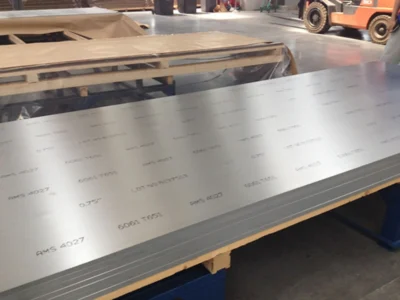
AMS 4027: Aerospace material specification for 6061-T6.
ASTM B209: Standard specification for aluminum and aluminum-alloy sheet and plate.
EN 485: European standard for aluminum sheet, strip, and plate.
Final Notes for Buyers and Engineers
6061 aluminum sheet is a workhorse material. It is not the cheapest option — that would be 3003 or 1060. It is not the strongest — that would be 7075. But it sits at the intersection of strength, machinability, weldability, corrosion resistance, and anodize quality that no other common alloy matches.
For most structural applications: 6061-T6, 3.0mm–6.0mm, mill finish, ordered to ASTM B209 with full MTR.
For CNC machined parts: 6061-T651, thickness to suit your part, confirms stress relief is included.
For decorative architectural use: 6061-T6, 2.0mm–3.0mm, architectural clear anodize.
Get the mill test report. Verify the temper. And for precision machined parts, always ask for T651 — not just T6.
Frequently Asked Questions
What Is 6061-T6 Aluminum Sheet
6061-T6 is 6061 alloy aluminum sheet in the T6 temper — solution heat treated and artificially aged. T6 is the strongest commonly available temper for this alloy. Tensile strength reaches 310 MPa, yield strength 276 MPa. It is the default specification for structural, machined, and precision-fabricated aluminum parts in aerospace, marine, automotive, and industrial applications.
How Does 6061-T6 Compare to 6061-T651
Both have the same chemical composition and nearly identical mechanical properties. The difference is residual stress. T651 has been stress-relieved by stretching after quenching, which removes the internal stresses that build up during heat treatment. For CNC machined parts where tight flatness is required after machining, T651 is the correct choice. For welded structures or lightly machined parts, T6 is fine.
Can 6061 Aluminum Sheet Be Bent or Formed
6061-T6 has limited formability — it can be bent to moderate radii without cracking, but it is not suitable for tight bends or deep drawing. Minimum bend radius is typically 3–4× the material thickness for T6. For tighter bending, use 6061-O (annealed) or switch to 5052-H32, which forms more easily. After forming in O temper, the part can be heat-treated to T6 to recover strength.
What Filler Wire Is Used for Welding 6061 Sheet
4043 (Al-Si) is the most common filler for welding 6061. It gives a lower cracking risk and easy weld flow. 5356 (Al-Mg) gives higher post-weld strength and is used when the welded joint needs to carry more load. Both are compatible with TIG and MIG processes. Avoid using 6061 filler wire with 6061 base metal — the combination increases hot cracking risk.
What Is 6061 Aluminum Sheet Used for in Everyday Products
6061 sheet is in more products than most people realize. Laptop and smartphone chassis, bicycle frames, camera bodies, car wheels, boat fittings, window and door frames, food processing equipment, and medical device housings all use 6061. If a product needs to be lightweight, strong, and either machined or anodized to a clean finish, 6061-T6 is almost always on the short list of materials.
Can 6061 aluminum sheet be welded?
Yes, 6061 is highly weldable using TIG or MIG welding methods. However, keep in mind that the heat from welding can reduce the strength in the heat-affected zone. Post-weld heat treatment is sometimes used to restore strength.
Is 6061 aluminum rust-proof?
Aluminum does not rust like steel, but it can corrode. 6061 has excellent resistance to atmospheric corrosion and good resistance to sea water. Anodizing can further improve this protection.
What is the difference between sheet and plate?
Generally, if the thickness is less than 6.35 mm (0.250′′), it is called a sheet. If it is thicker than that, it is classified as a plate.
Why is 6061-T6 harder to bend than 6061-O?
The “T6” temper means the metal has been hardened. The “O” temper is annealed (soft). If your project requires very tight bends, you might buy 6061-O, bend it, and then heat-treat it to T6 strength.
Is 6061 aluminum food safe?
Generally, yes. 6061 is often used in food processing equipment because it is easy to clean and has good corrosion resistance. However, always check specific local food safety regulations for your application.