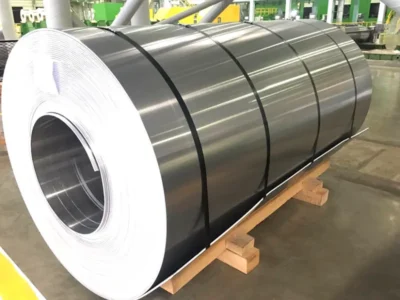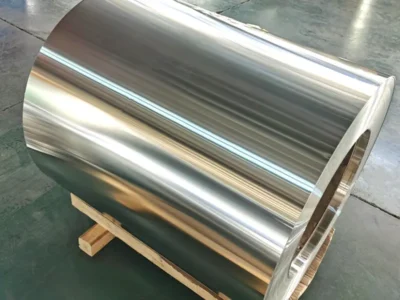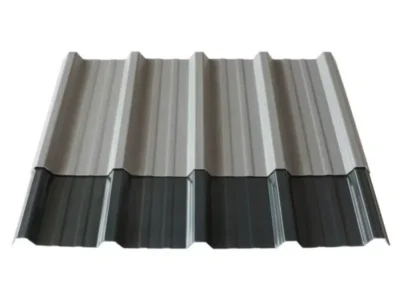
Corrugated aluminum roofing sheet is a popular choice for buildings that need a lightweight, durable, and corrosion-resistant roof. Its wave-shaped profile helps add rigidity to the sheet.
It also allows rainwater to flow off the roof when the panels are installed with a suitable slope.
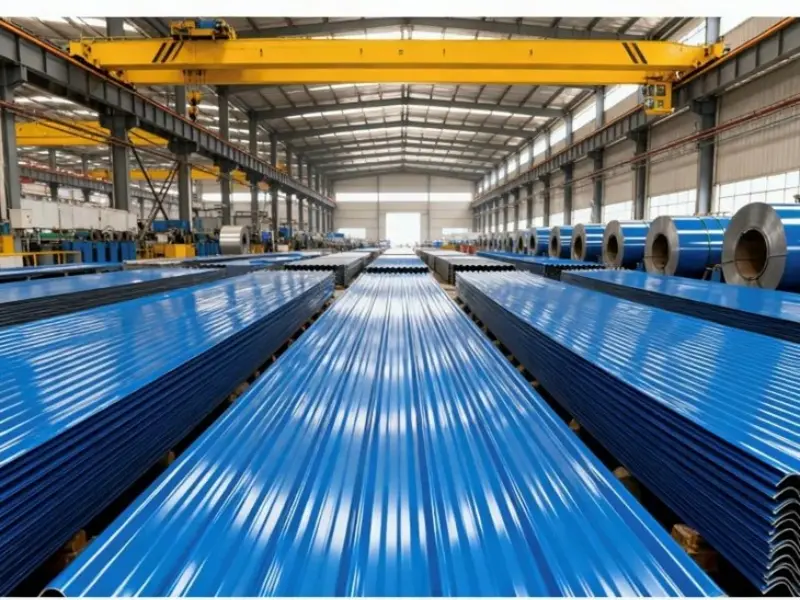
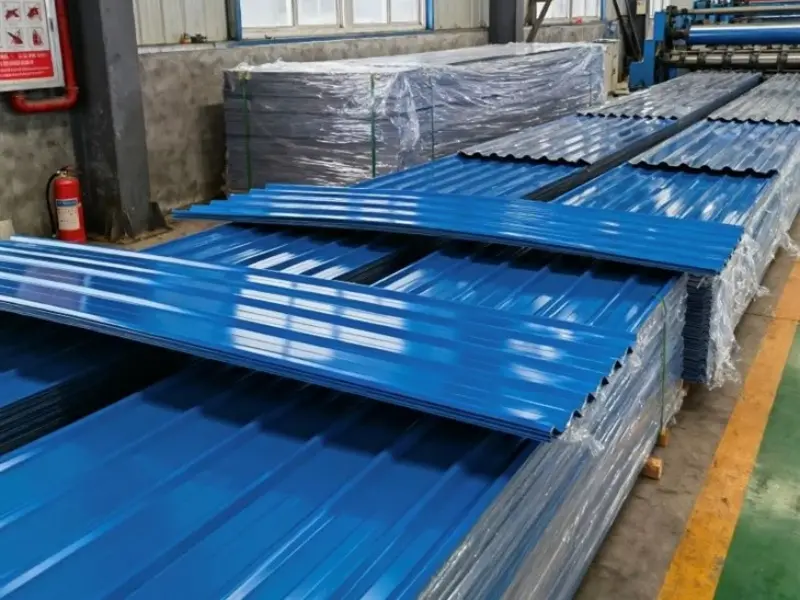
These sheets are used in industrial buildings, warehouses, workshops, agricultural buildings, garages, carports, and residential projects. They are available in different thicknesses, wave heights, widths, alloys, tempers, and surface finishes.
For buyers, choosing the right roofing sheet involves more than selecting a color or price. The profile, aluminum alloy, sheet thickness, roof design, wind conditions, and installation method all affect the final result.
What Is Corrugated Aluminum Roofing Sheet?
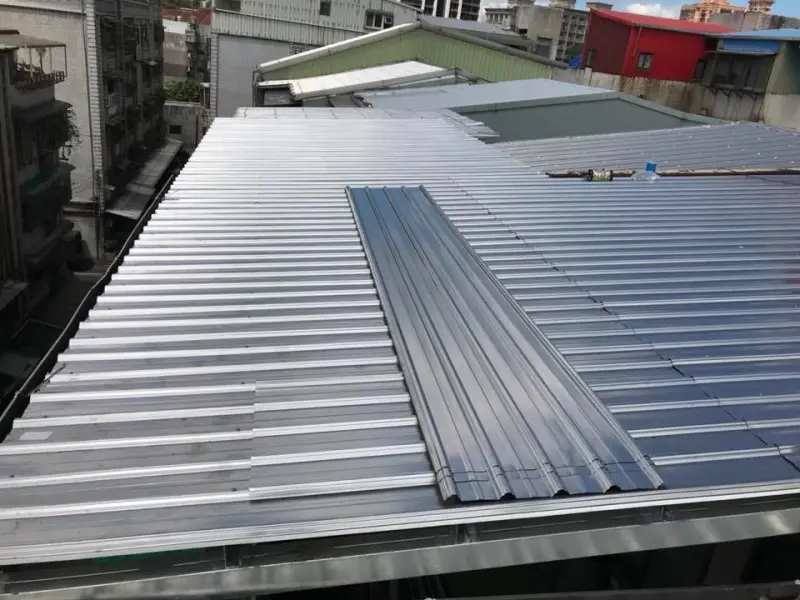
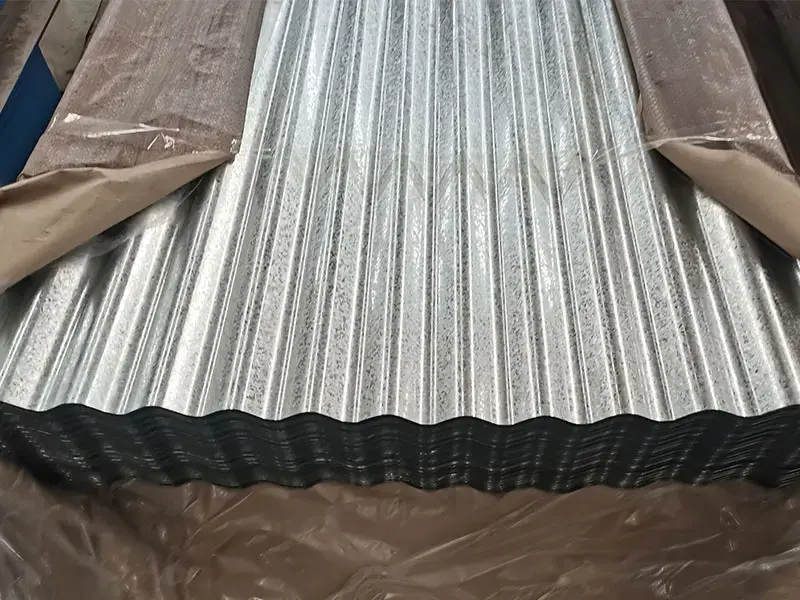
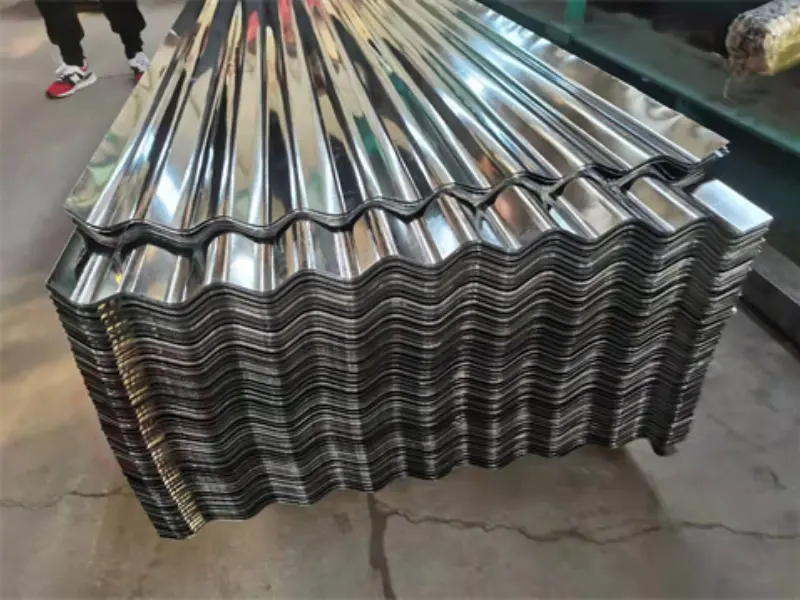
A corrugated aluminum roofing sheet is a flat aluminum sheet formed into a repeating wave or curved profile. The waves increase the sheet’s stiffness compared with a flat sheet of similar thickness.
The panels can be supplied in different lengths and widths. Some are made from mill-finish aluminum, while others have painted, coated, or embossed surfaces.
Aluminum is naturally resistant to corrosion because it forms a thin protective oxide layer. This makes it useful for many outdoor roofing applications. However, the actual service life depends on the alloy, coating, environment, installation, and maintenance.
How Does the Corrugated Profile Work?
The raised and curved sections help the panel resist bending. They also create channels that guide rainwater toward the roof edge.
A corrugated profile can provide several practical benefits:
- Greater stiffness than a flat sheet of the same thickness.
- Relatively low material weight.
- Convenient handling on many construction projects.
- A surface that supports water drainage when properly installed.
- A choice of profiles for different roof designs.
- Compatibility with suitable roofing screws, washers, and support systems.
The profile alone does not determine roof strength. Support spacing, fastener placement, sheet thickness, wind uplift, and installation quality must also be considered.
Main Types of Corrugated Aluminum Roofing Sheet

Differentroof projects require different profiles and finishes. Some buyers prefer traditional rounded waves. Others need deeper corrugations or a colored surface to match the building.
The following types are commonly considered during product selection. Exact dimensions depend on the manufacturer’s tooling and product range.
Traditional Round Corrugated Aluminum Sheet
Traditional corrugated sheets have repeated rounded waves. They are widely used for simple roofs and outdoor structures.
Typical applications include:
- Small warehouses and workshops.
- Farm buildings and equipment shelters.
- Garages and carports.
- Storage sheds.
- Covered walkways.
- Utility buildings.
This profile is suitable for projects where buyers want a familiar roofing appearance and straightforward panel installation.
Deep Corrugated Aluminum Roofing Panels
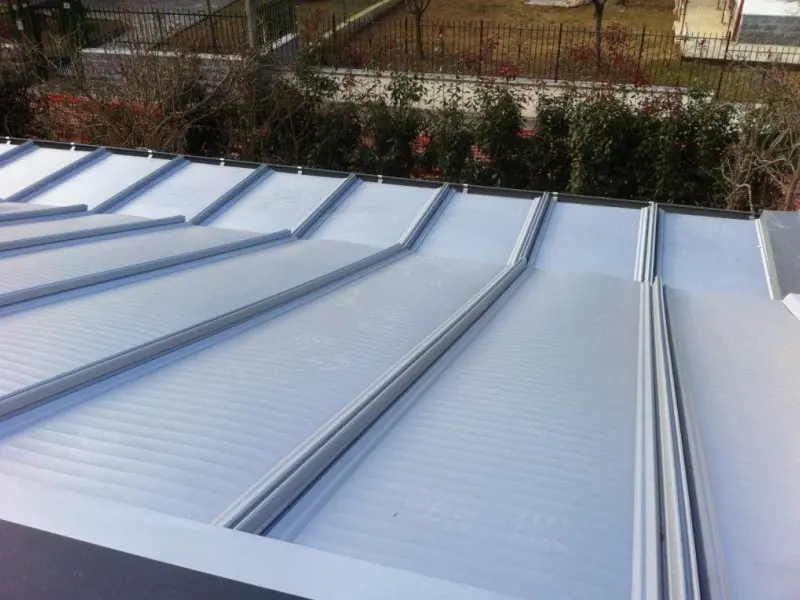
Deep corrugated panels have higher waves than shallow-profile sheets. The deeper profile can improve stiffness, depending on the sheet thickness and corrugation design.
They may be considered for larger roofs, industrial buildings, and projects where the roof span and support arrangement require a more rigid profile.
Deep corrugation does not automatically mean that a panel can span any distance. Buyers should request the manufacturer’s load tables and recommended support spacing.
Shallow Corrugated Aluminum Roofing Sheet
Shallow corrugated sheets have lower waves and a relatively low profile. They can suit small structures, canopies, and projects where a less pronounced roof pattern is preferred.
Their load capacity depends on the complete panel design. A shallow profile may need closer support spacing than a deeper profile under the same loading conditions.
Painted Corrugated Aluminum Roofing Sheet
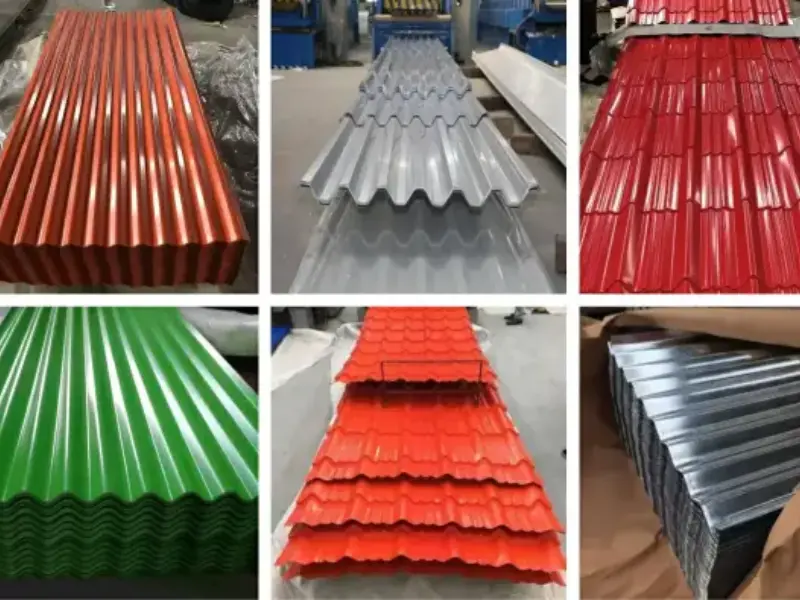
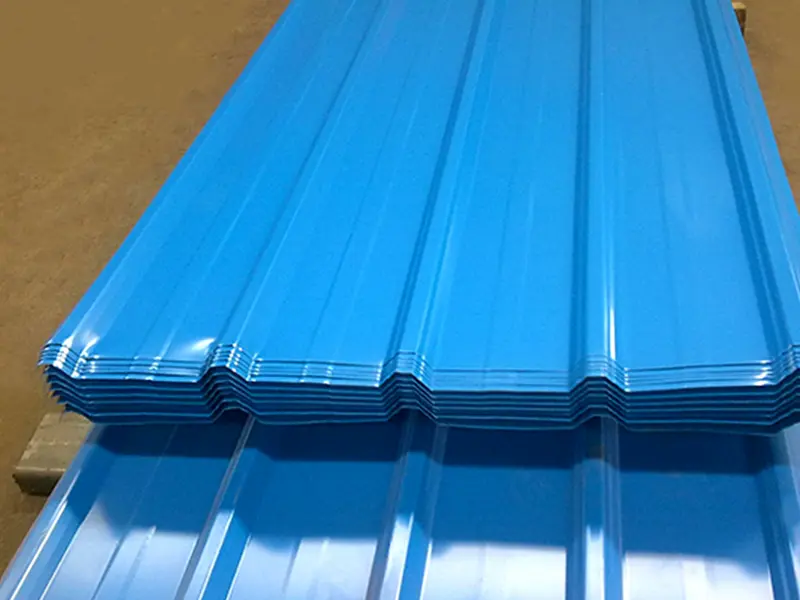
Painted panels combine a formed aluminum profile with a colored surface coating. They can help match a building’s exterior design.
Common color choices may include white, gray, black, blue, green, and red. Available colors depend on the supplier’s coating system.
Painted sheets are useful for commercial buildings, workshops, residential outbuildings, and agricultural structures. Buyers should confirm the coating type, coating thickness, color tolerance, and outdoor weathering requirements.
Mill-Finish Corrugated Aluminum Sheet
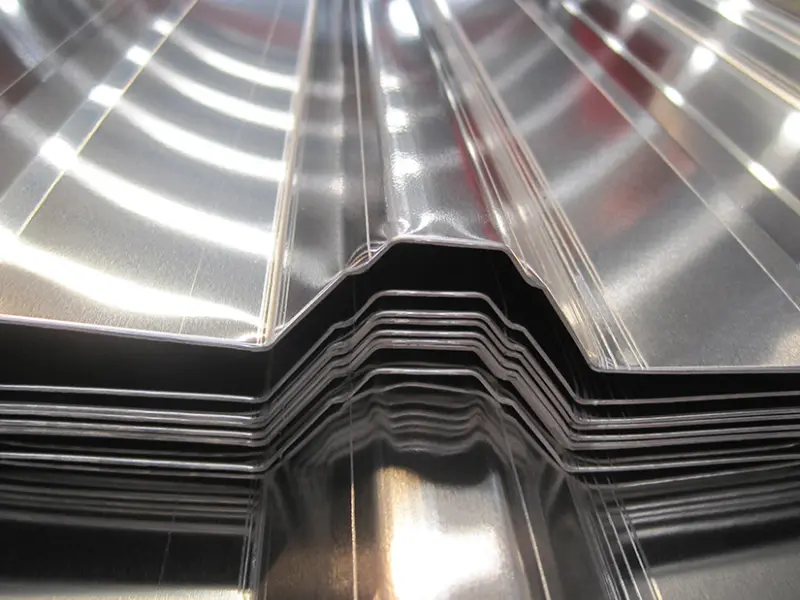
Mill-finish sheets have no decorative paint coating. They retain the natural appearance of processed aluminum.
This option may suit utility buildings, industrial roofs, and projects where a simple metallic finish is acceptable.
Mill-finish aluminum can still show surface marks or natural variations. Buyers should specify the required appearance if visible surface quality is important.
Embossed Corrugated Aluminum Roofing Sheet
Embossed aluminum has a patterned surface created during processing. Depending on the product design, the pattern may change its appearance and surface texture.
Embossed material is more commonly associated with decorative or specialty sheet products. Buyers interested in embossed corrugated roofing should confirm that the supplier can produce the requested combination of profile, alloy, thickness, and finish.
Long-Span Corrugated Aluminum Roof Panels
Long panels reduce the number of horizontal joints along a roof. Fewer joints may simplify installation and reduce potential leak points when the panels are correctly designed and installed.
The maximum practical length depends on transportation, handling, roof geometry, thermal movement, and the manufacturer’s production equipment.
For export orders, buyers should confirm the packing method and maximum shipping length before finalizing specifications.
Corrugated Aluminum Roofing Sheet Specifications
A useful quotation should identify the material dimensions and profile clearly. The word “corrugated” alone is not enough because different suppliers may use different wave shapes.
The following tables show example specification ranges for product selection. They are not universal standards or a guarantee of available stock.
Common Thickness Options
| Nominal thickness | Typical project considerations |
|---|---|
| 0.30 mm | Lightweight covers and selected small structures |
| 0.40 mm | Light-duty roofing where the design permits |
| 0.50 mm | General roofing projects with suitable supports |
| 0.60 mm | Projects requiring a thicker sheet |
| 0.70 mm | More demanding roofing specifications |
| 0.80 mm | Industrial or specialty applications |
| 1.00 mm | Heavy-duty or project-specific requirements |
| 1.20 mm | Specialty roofing and custom fabrication |
Thickness selection should follow the required load capacity and the manufacturer’s technical data. A thin sheet may be economical for a small shelter, but it may not be suitable for a roof exposed to strong winds, heavy maintenance traffic, or large support spacing.
Profile Dimensions Buyers Should Check
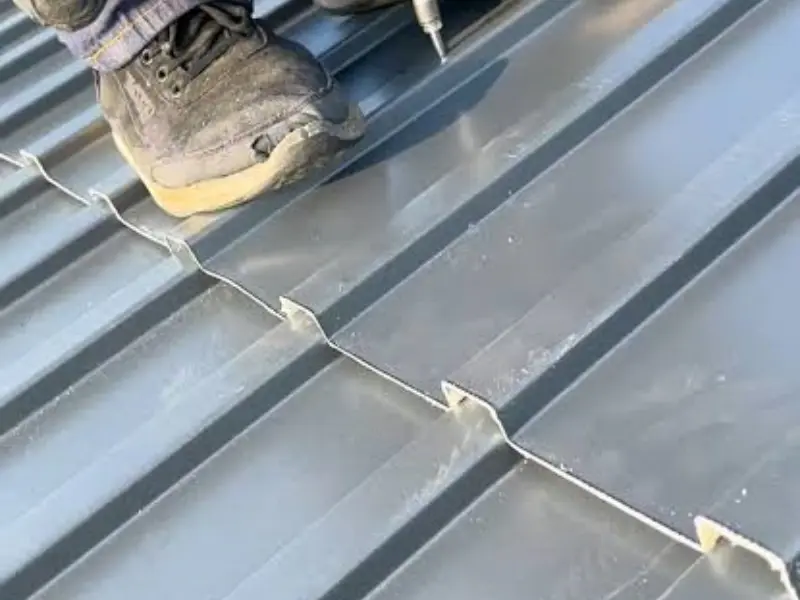
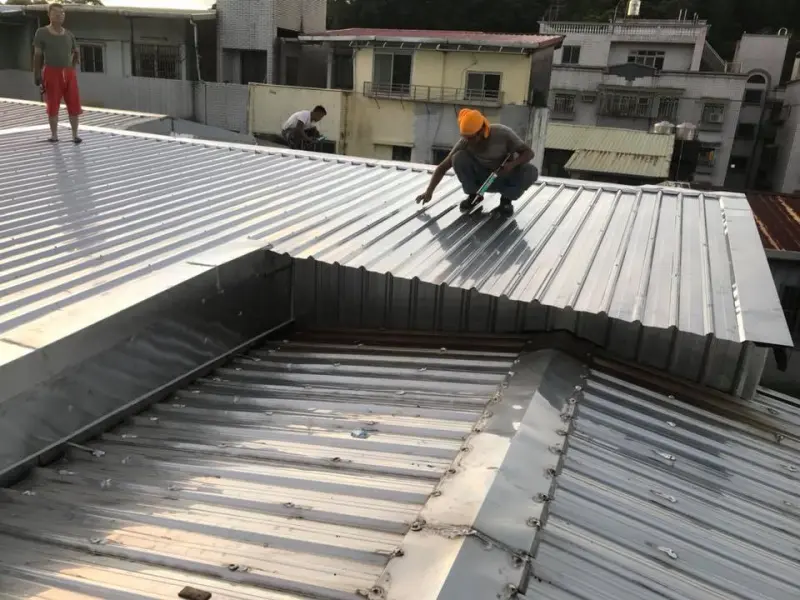
| Specification | What it means |
|---|---|
| Corrugation pitch | Distance from one wave to the next |
| Corrugation depth | Height of each raised wave |
| Overall width | Total width of the formed panel |
| Effective cover width | Width covered after side laps |
| Panel length | Length supplied for each sheet |
| Sheet thickness | Thickness of the aluminum before forming, as specified |
| Side lap | Overlap between adjacent panels |
| End lap | Overlap between panels along the roof slope |
The effective cover width is particularly important for estimating material quantities. The overall width and the effective cover width are not always the same.
Example Corrugation Profiles
| Profile description | Example design range | Possible use |
|---|---|---|
| Shallow wave | About 18–25 mm depth | Small shelters and canopies |
| Medium wave | About 25–35 mm depth | General building roofs |
| Deep wave | About 35–50 mm depth | Projects needing a deeper profile |
| Custom wave | According to drawing | Special construction requirements |
These dimensions are illustrative only. Always confirm the actual profile drawing before ordering.
Aluminum Alloys for Corrugated Roofing Sheets
The alloy affects formability, strength, corrosion behavior, and suitability for forming operations. Not every alloy is available in every thickness or profile.
For roofing, the correct choice depends on the required strength, forming depth, environment, surface finish, and fabrication process.
3003 Aluminum Roofing Sheet

3003 aluminum contains manganese as its main alloying addition. It is known for good corrosion resistance and formability.
It may be suitable for roofing products that need to be formed into repeated waves. It is also used in other general sheet-metal applications.
Buyers should confirm the available temper and mechanical properties before selecting it for a particular roof.
3105 Aluminum Roofing Sheet
3105 aluminum is used in building products and coated sheet applications. It offers a useful combination of formability and corrosion resistance.
It may be considered for painted roofing panels, wall cladding, and other architectural sheet products.
For color-coated corrugated roofing, the coating system and forming quality are as important as the alloy designation.
5052 Aluminum Roofing Sheet
5052 aluminum is known for good corrosion resistance and higher strength than many common non-heat-treatable sheet alloys.
It may be appropriate for specialty roofing or exposed environments when the project specification supports its use. However, it can have different forming requirements from softer roofing alloys.
The buyer should confirm whether the requested profile can be formed from the selected alloy and temper without unacceptable cracking or surface damage.
1050 and 1060 Aluminum Sheet
1050 and 1060 are high-purity aluminum grades with good corrosion resistance and formability. They are often selected for applications where high strength is not the main requirement.
They may be considered for specialty sheet fabrication, but they should not automatically be treated as the best choice for every roof.
For structural roofing requirements, compare their mechanical properties with those of the proposed building-grade alloy.
Alloy Comparison Table
| Alloy | Main characteristics | Roofing selection notes |
|---|---|---|
| 1050 | High aluminum content, good formability | Consider where strength requirements are modest |
| 1060 | High purity, good corrosion resistance | Check structural and profile requirements |
| 3003 | Good formability and corrosion resistance | A common candidate for formed sheet products |
| 3105 | Building-product applications, good formability | Consider for coated roofing systems |
| 5052 | Higher strength and good corrosion resistance | Check forming limits and project requirements |
The alloy designation alone does not establish the finished panel’s load capacity. The temper, thickness, profile, and support design must also be evaluated.
Aluminum Tempers: H14, H24, H32, and O
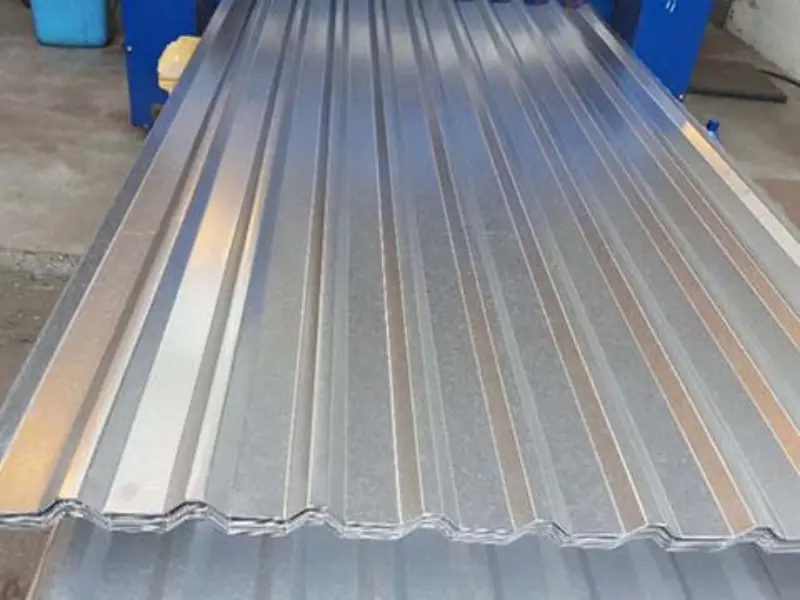
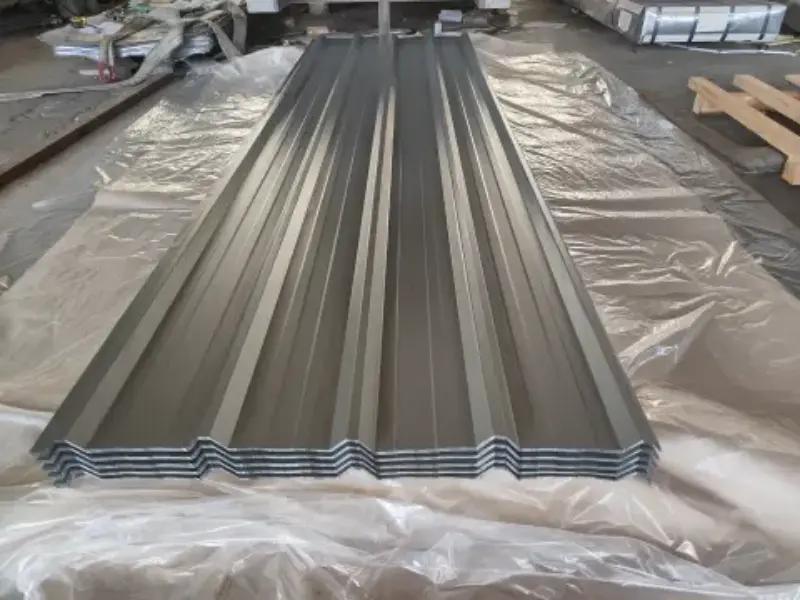
Temper describes the condition of the aluminum after processing. It affects strength, hardness, and formability.
The right temper depends on the selected alloy and the complexity of the corrugated profile.
| Temper | General meaning | Selection consideration |
|---|---|---|
| O | Annealed condition | Softer material with good formability |
| H14 | Strain-hardened and partially annealed condition | May suit formed sheet products |
| H24 | Strain-hardened and partially annealed condition | Used for some building and coated sheet products |
| H32 | Strain-hardened and stabilized condition | Often considered where a balance of strength and formability is needed |
These tempers are not interchangeable across all alloys. Their mechanical properties differ by alloy and product thickness.
Before ordering, request the exact alloy-temper combination, mechanical property requirements, and applicable material standard.
Corrugated Aluminum Roofing Sheet by Surface Finish
Surface finish affects the appearance of the roof and may influence its suitability for a particular environment.
Natural Aluminum Finish
Natural aluminum has a metallic appearance without a decorative paint layer. It may be chosen for agricultural buildings, workshops, storage areas, and utility structures.
Buyers should specify whether the roof needs a uniform visible surface or whether normal mill-finish variation is acceptable.
Color-Coated Aluminum Roofing
Color-coated roofing uses a painted aluminum surface. Depending on the coating system, it may offer a broad choice of colors and help protect the surface.
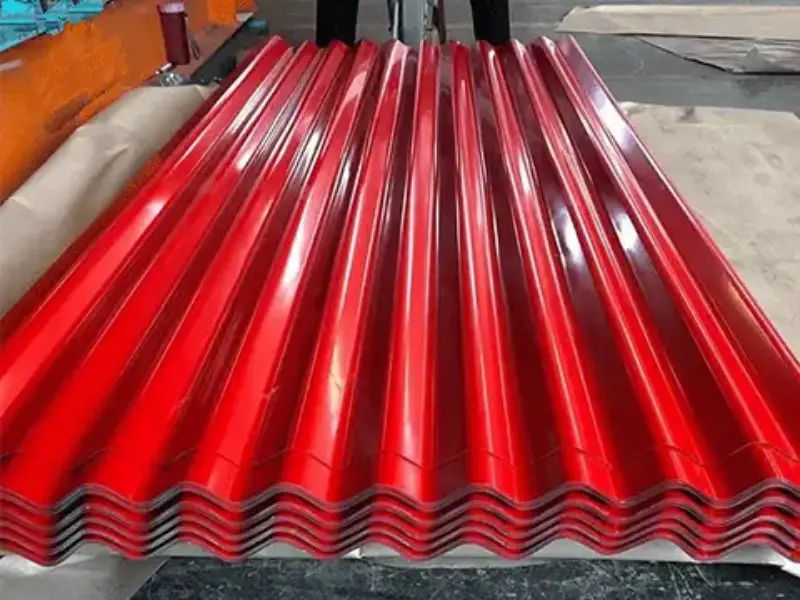
Important purchasing details include:
- Coating type and specified thickness.
- Front and back coating requirements.
- Color reference or approved sample.
- Weathering and corrosion requirements.
- Resistance to scratches during forming and installation.
- Protective film requirements, if available.
PVDF and polyester-based coatings are different systems. Their performance depends on the formulation, coating thickness, pretreatment, and exposure conditions. Buyers should select the system based on the project specification rather than color alone.
Anodized Aluminum Roofing Sheet
Anodizing creates a controlled oxide layer on the aluminum surface. It is used in some architectural aluminum products.
However, anodized corrugated roofing may not be available in every profile or thickness. Buyers should confirm production capability and whether the finished surface can tolerate the intended forming process.
Embossed and Specialty Finishes
Specialty surfaces may be requested for decorative buildings or projects with specific appearance requirements. Availability depends on the supplier’s equipment and product range.
A sample or approved finish reference can help avoid misunderstandings during bulk production.
Corrugated Aluminum Roofing Sheet for Different Applications
The same roofing profile may not be suitable for every building. Project size, weather, roof slope, support spacing, and maintenance requirements should guide the selection.
Industrial Warehouses and Factories
Industrial roofs often cover large areas. Aluminum’s relatively low weight can help reduce the weight of the roofing material itself.
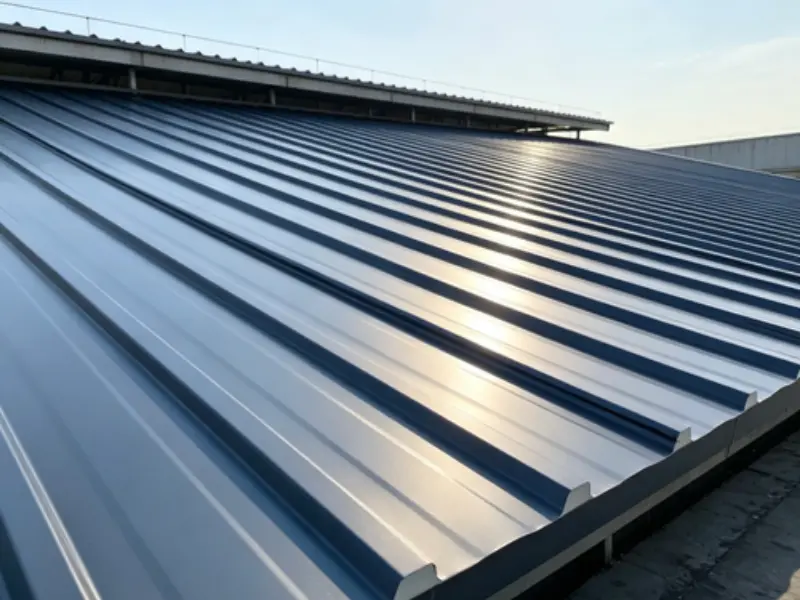
Typical applications include:
- Warehouses and distribution centers.
- Manufacturing facilities.
- Equipment storage buildings.
- Workshop roofs.
- Loading and unloading areas.
- Utility buildings and plant shelters.
For large industrial roofs, confirm wind uplift requirements, support spacing, panel length, drainage design, and fastener specifications.
Agricultural Buildings
Corrugated aluminum sheets may be used for barns, storage sheds, machinery shelters, and selected livestock buildings.
They can be useful where a lightweight roof and practical installation are important.
The building environment still matters. Fertilizers, cleaning chemicals, animal waste, and persistent moisture may increase corrosion risks. Buyers should review the exposure conditions and choose a suitable material and installation system.
Residential Garages and Carports
Lightweight corrugated panels are often considered for garages, carports, garden sheds, and outdoor storage areas.
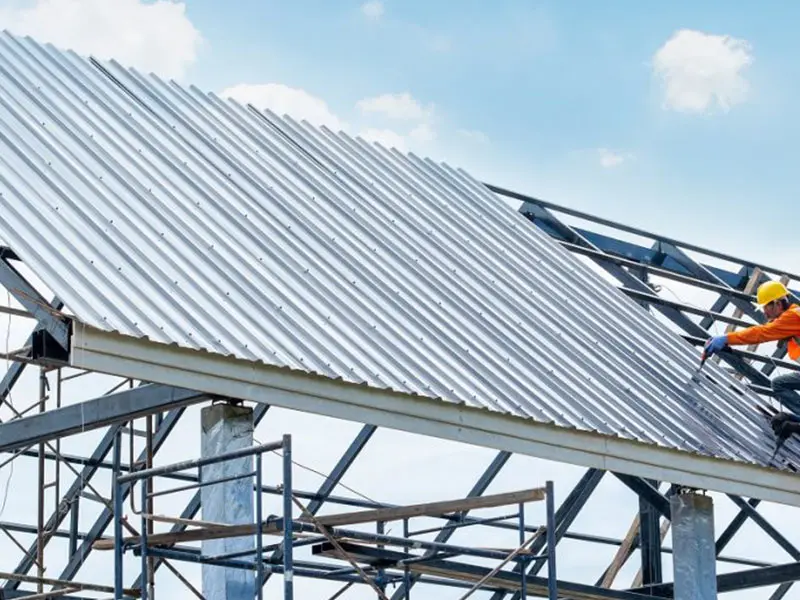
The main selection factors are usually:
- Roof size and slope.
- Required appearance and color.
- Local wind and weather conditions.
- Noise and heat-control expectations.
- Support spacing and fastening details.
Insulation and ventilation may be needed to improve indoor comfort. The roofing sheet alone does not provide the same thermal performance as a complete insulated roof assembly.
Commercial Canopies and Covered Walkways
Corrugated aluminum roofing can be used for entrances, walkways, parking covers, and outdoor waiting areas.
These projects often place greater emphasis on appearance and water drainage. The sheet color, profile depth, edge treatment, and support structure should match the overall design.
Coastal and Humid Environments
Aluminum can be a useful roofing material in many humid environments because it naturally forms a protective oxide layer.
Coastal conditions, however, can expose roofing to salt deposits and other corrosive influences. The full roof assembly must be selected carefully.
Consider the following measures:
- Choose an alloy and finish suitable for the exposure.
- Prevent water from collecting around joints.
- Use compatible fasteners and accessories.
- Avoid direct contact with incompatible metals where galvanic corrosion may occur.
- Follow the recommended cleaning and maintenance schedule.
For severe marine exposure, ask the supplier or project engineer to confirm suitability for the actual site conditions.
Temporary Buildings and Portable Shelters
Corrugated aluminum panels may be used for temporary shelters, site storage, portable workshops, and lightweight utility structures.
The required thickness depends on how the building will be used and how the roof is supported. Temporary structures still need suitable fastening and resistance to local wind conditions.
Aluminum Roofing Sheet vs. Steel Roofing Sheet

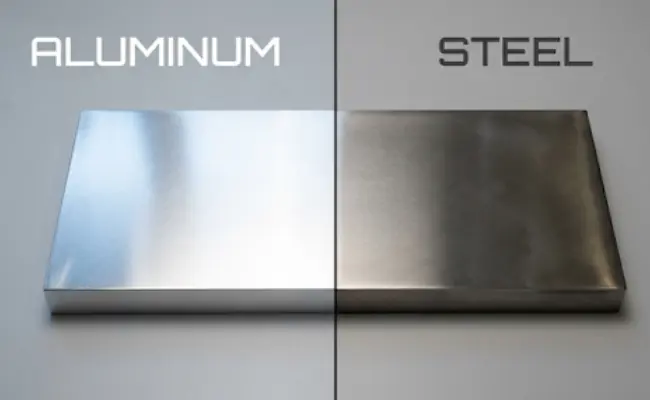
Aluminum and steel are both used for corrugated roofing. Their performance depends on the grade, thickness, coating, profile, and installation details.
| Comparison factor | Aluminum roofing | Steel roofing |
|---|---|---|
| Material weight | Generally lighter at comparable sheet thickness | Generally heavier |
| Corrosion behavior | Naturally forms a protective oxide layer | Often relies on a metallic or paint coating for corrosion protection |
| Strength | Depends on alloy, temper, thickness, and profile | Depends on steel grade, thickness, and profile |
| Forming | Good formability in suitable alloys and tempers | Formability varies by grade and coating |
| Thermal movement | Requires allowance for expansion and contraction | Also expands and contracts with temperature |
| Surface options | Natural, painted, and specialty finishes may be available | Painted and metallic-coated finishes are common |
| Cost | Depends on aluminum price, specification, and fabrication | Depends on steel price, coating, and fabrication |
Aluminum may be preferred when low weight and corrosion resistance are important. Steel may be attractive where its strength, cost, or local availability better fits the project.
Neither material is always the better choice. Buyers should compare complete roofing systems rather than raw sheet prices alone.
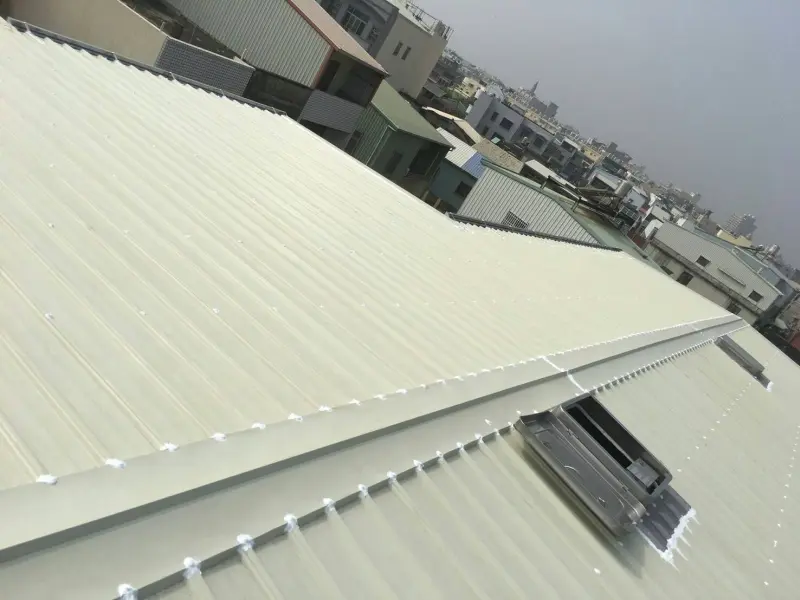
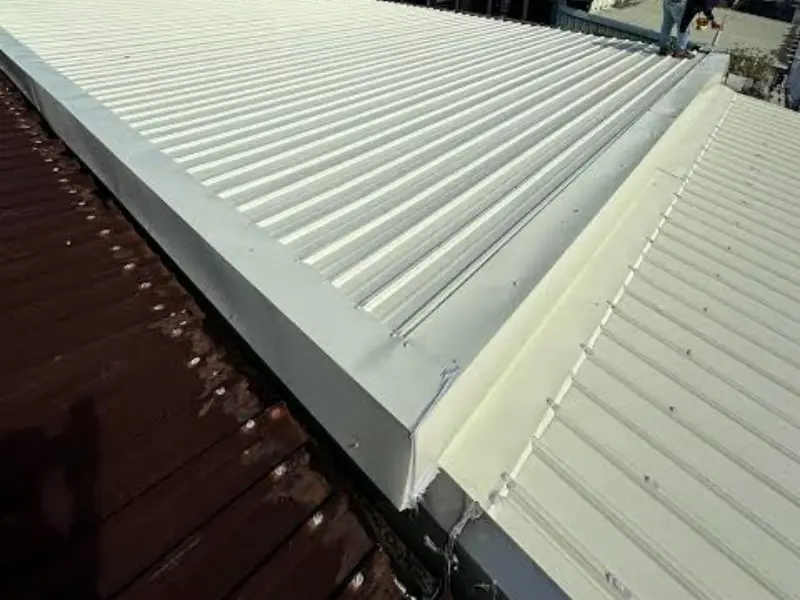
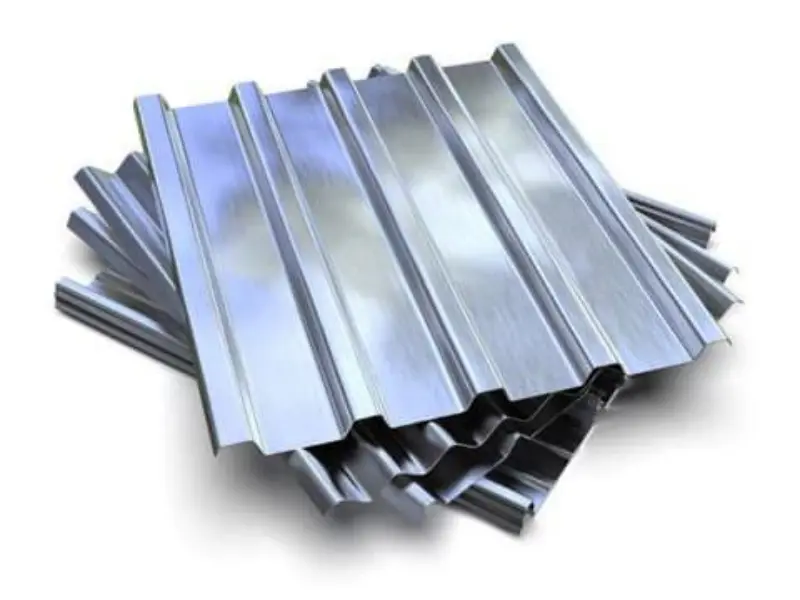
Corrugated Aluminum Roofing Sheet vs. Flat Aluminum Sheet
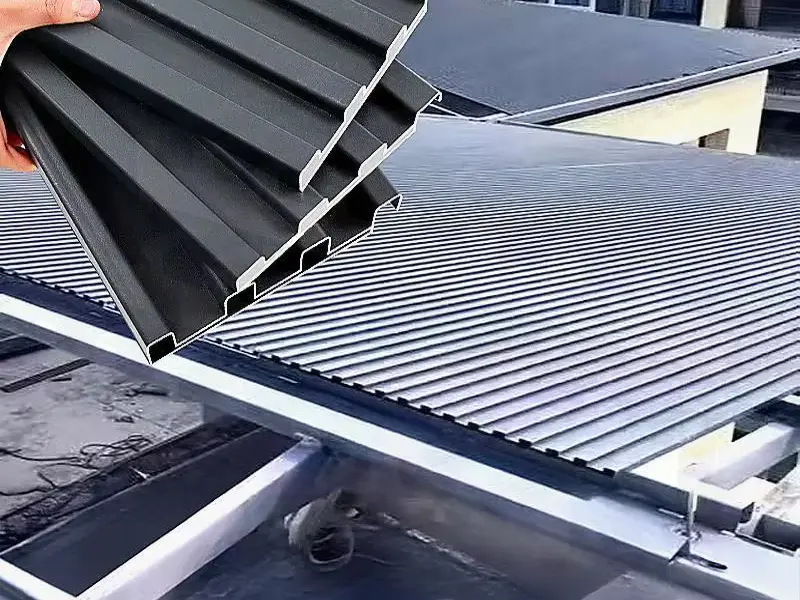
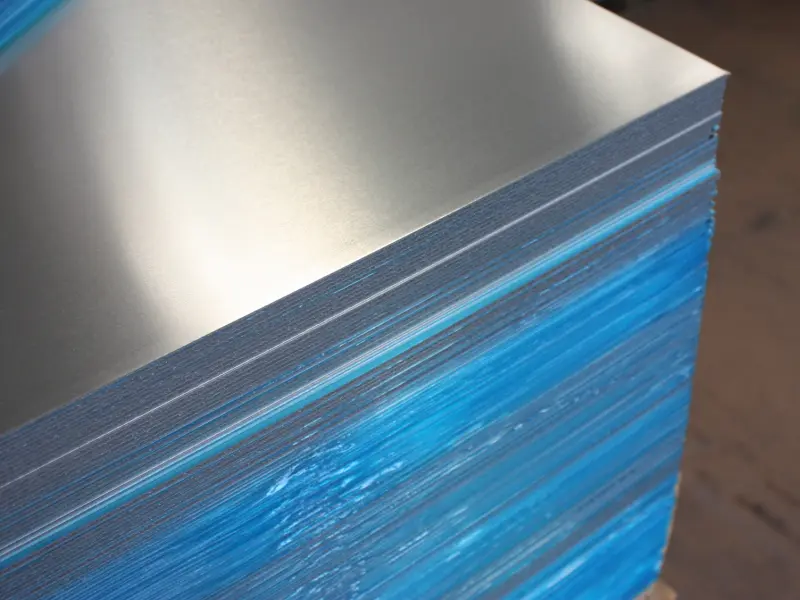
Flat aluminum sheet and corrugated aluminum roofing sheet can use similar base alloys, but they serve different purposes.
| Feature | Corrugated aluminum sheet | Flat aluminum sheet |
|---|---|---|
| Shape | Formed waves | Flat surface |
| Stiffness | Profile adds rigidity | Depends mainly on thickness and support |
| Water drainage | Profile channels help direct water | Requires a suitable roof design |
| Typical use | Roofing and wall cladding | Fabrication, panels, covers, and general sheet work |
| Installation | Uses profile-specific laps and fasteners | Depends on the panel or assembly design |
| Appearance | Repeated wave pattern | Smooth or textured flat surface |
For a roofing project, a formed profile can provide practical stiffness without requiring a flat sheet of the same material thickness to perform the same role. The actual performance must still be checked against design loads.
Corrugated Aluminum Roofing Sheet vs. Trapezoidal Roofing Sheet

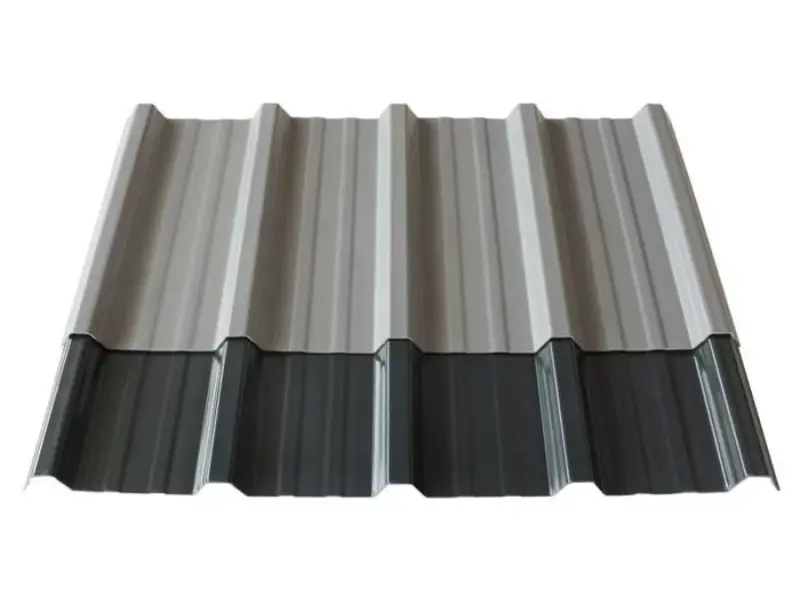
Corrugated and trapezoidal panels are both profiled roofing products, but their shapes differ.
| Feature | Corrugated profile | Trapezoidal profile |
|---|---|---|
| Shape | Repeated rounded waves | Flat sections with angular ribs |
| Appearance | Traditional, curved pattern | More geometric, industrial pattern |
| Rigidity | Depends on wave depth and sheet thickness | Depends on rib geometry and panel design |
| Typical applications | Sheds, canopies, garages, and general roofing | Industrial roofs, commercial buildings, and wall cladding |
| Cover width | Varies by profile | Varies by rib arrangement |
| Compatibility | Requires matching roofing accessories | Requires matching profile-specific accessories |
A trapezoidal panel may be designed for a different span or load requirement from a rounded corrugated panel. Always compare manufacturer load data before making a substitution.
How to Choose the Right Sheet Thickness
Thickness is one of the most important purchasing decisions. A thicker sheet may provide greater resistance to local denting, but thickness alone does not determine the safe span of a roof panel.
Light-Duty Roofing
Sheets around 0.30–0.40 mm may be considered for selected small structures when the profile, support spacing, and local conditions permit.
They should not be selected solely because they cost less. Confirm the panel’s permitted use and installation requirements.
General Roofing Projects
Sheets around 0.50–0.70 mm may be suitable for many general roofing designs, depending on the profile and loading conditions.
Buyers should provide the roof dimensions and project requirements so that the supplier can recommend an appropriate specification.
Heavy-Duty and Project-Specific Roofing

Sheets around 0.80–1.20 mm may be considered for certain demanding or specialty applications. These thicker sheets may have different forming, handling, and fastening requirements.
A qualified designer should confirm the required thickness and support system for buildings exposed to high wind, heavy loads, or other demanding conditions.
How to Calculate Roofing Sheet Requirements
Accurate quantity planning can help reduce waste and unnecessary shipping costs.
For a simple roof, the calculation starts with the roof area. The actual number of panels also depends on effective cover width, panel length, side laps, end laps, and roof geometry.
Basic planning method:
Roof area → Determine effective cover width → Calculate panel quantity → Add suitable allowances for laps and cutting → Confirm the layout
For example, if a panel has an overall width of 1,000 mm but an effective cover width of 900 mm, the coverage calculation should use 900 mm rather than 1,000 mm.
A 10 m roof width would require approximately 12 panels based on effective cover width alone:
10 m ÷ 0.9 m = 11.11 panels, rounded up to 12.
This is a simple illustration. Actual quantities may change because of roof edges, overhangs, end laps, openings, and the installation layout.
Ask the supplier for the profile drawing and effective cover width before placing the order.
Factors That Affect the Price
The price of corrugated aluminum roofing sheet depends on several variables. A quotation based only on thickness may not provide a reliable comparison.
| Price factor | Why it matters |
|---|---|
| Aluminum alloy | Different alloys may have different material costs |
| Temper | Processing condition affects the specification |
| Thickness | Influences material consumption and weight |
| Corrugation profile | Custom tooling or forming requirements may affect cost |
| Panel length | Affects production, handling, and packing |
| Surface finish | Paint and specialty finishes add processing costs |
| Order quantity | Affects production planning and setup costs |
| Packaging | Export packing and protection may change the quotation |
| Shipping destination | Freight and handling vary by route |
| Inspection requirements | Additional testing or documentation may add cost |
When comparing suppliers, request quotations based on the same alloy, temper, thickness, profile, finish, dimensions, quantity, and delivery terms.
This makes it easier to compare the actual products rather than different specifications.
Manufacturing and Quality Checks

Corrugated aluminum roofing sheet production generally includes several processing stages. The exact route depends on whether the material is supplied as bare aluminum or coated coil.
A typical process may follow this sequence:
Aluminum coil selection → Surface inspection → Slitting or cutting → Profile forming → Length cutting → Dimensional inspection → Packing
For pre-painted material, coating is normally applied before the sheet is formed into the final profile.
Important Quality Checks
Before shipment, buyers may request checks for:
- Sheet thickness and dimensional tolerance.
- Profile depth, pitch, and overall width.
- Effective cover width.
- Surface scratches, dents, and coating defects.
- Color consistency for coated panels.
- Edge quality and cutting accuracy.
- Packaging condition and product identification.
Inspection requirements should be agreed upon before production. If the order requires a specific standard, test report, or inspection document, include it in the purchase specification.
Packaging and Export Orders
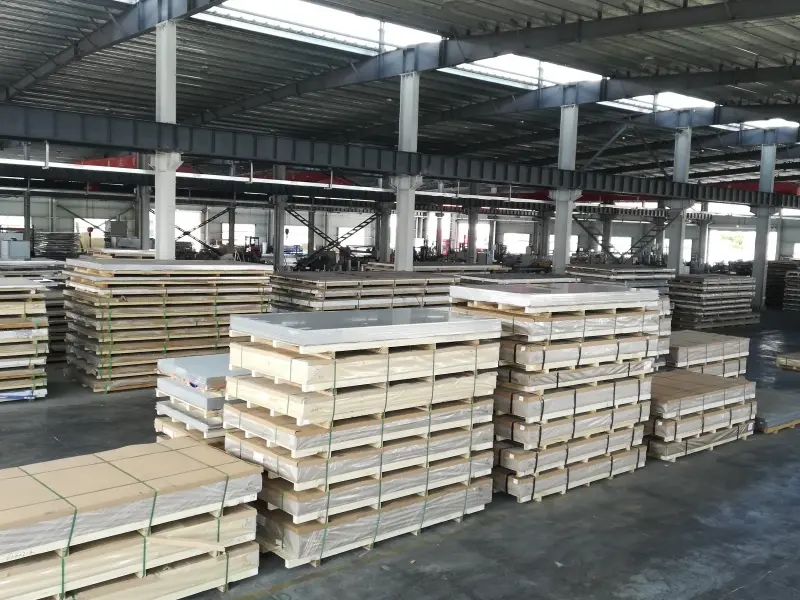
Proper packaging helps protect roofing panels during transport and handling.
Long corrugated sheets need support to prevent bending. Surface protection may also be important for painted panels.
Depending on the product and transport route, export packing may include bundles, protective film, edge protection, moisture-resistant wrapping, and suitable pallets or supports.
Before shipping, confirm:
- Panel length and bundle dimensions.
- Quantity per bundle.
- Surface protection requirements.
- Loading method and container restrictions.
- Shipping marks and product labels.
- Required inspection and shipping documents.
For long panels, transportation length limits may affect the most practical order dimensions. Discuss packing and shipping requirements before production begins.
What Information Should You Send for a Quotation?
A clear inquiry helps the supplier provide a more accurate price and recommend a suitable product.
Use the following checklist when requesting a quote:
- Product: Corrugated aluminum roofing sheet.
- Alloy: For example, 3003 or 3105, subject to availability.
- Temper: Required material condition.
- Thickness: For example, 0.50 mm or 0.70 mm.
- Profile: Corrugation drawing, pitch, and depth.
- Width: Overall width and required effective cover width.
- Length: Required panel length.
- Surface finish: Mill finish, painted, or another specified finish.
- Color: Color reference or approved sample, if applicable.
- Quantity: Number of sheets or total order weight.
- Application: Warehouse, garage, agricultural building, canopy, or another use.
- Destination: Delivery city and country.
- Documents: Required material certificates, inspection reports, or other documents.
If you do not know the correct alloy or thickness, provide the project details first. The supplier can then advise which available specifications may meet the requirements.
Frequently Asked Questions

What is corrugated aluminum roofing sheet used for?
It is used for warehouses, workshops, garages, carports, agricultural buildings, sheds, canopies, covered walkways, and selected commercial or residential roofing projects. The correct product depends on the roof design and local conditions.
Is corrugated aluminum roofing sheet waterproof?
The aluminum sheet itself does not absorb water, but the complete roof can still leak if the panels are poorly installed. Correct roof slope, side laps, end laps, fasteners, washers, flashing, and drainage are important.
What thickness is best for aluminum roofing sheets?
There is no single best thickness for every roof. Options such as 0.40 mm, 0.50 mm, 0.70 mm, and 1.00 mm may be considered for different projects. The final choice should follow the panel load data, support spacing, and local building requirements.
Which aluminum alloy is suitable for corrugated roofing?
Alloys such as 3003 and 3105 may be considered for formed roofing products. Other alloys may be suitable for specific requirements. The supplier should confirm the alloy, temper, forming performance, and required mechanical properties.
Can corrugated aluminum roofing sheets be painted?
Yes. Color-coated aluminum roofing sheets are available in many product ranges. The coating system, color, thickness, and weathering requirements should be confirmed before ordering.
Are aluminum roofing sheets suitable for coastal areas?
They can be suitable for many coastal applications, but salt exposure can increase corrosion risks. The alloy, coating, fasteners, joints, and maintenance plan must be selected for the actual environment.
How long do corrugated aluminum roofing sheets last?
Service life varies with alloy, coating, climate, installation, maintenance, and exposure to corrosive substances. No single lifespan applies to every product. Ask the supplier for performance information relevant to the proposed material and site conditions.
Can I order corrugated aluminum roofing sheets in custom lengths?
Custom lengths may be available, depending on the supplier’s forming equipment, material supply, transport limits, and order quantity. Confirm the maximum practical length before production.
What is the difference between corrugated and trapezoidal aluminum roofing?
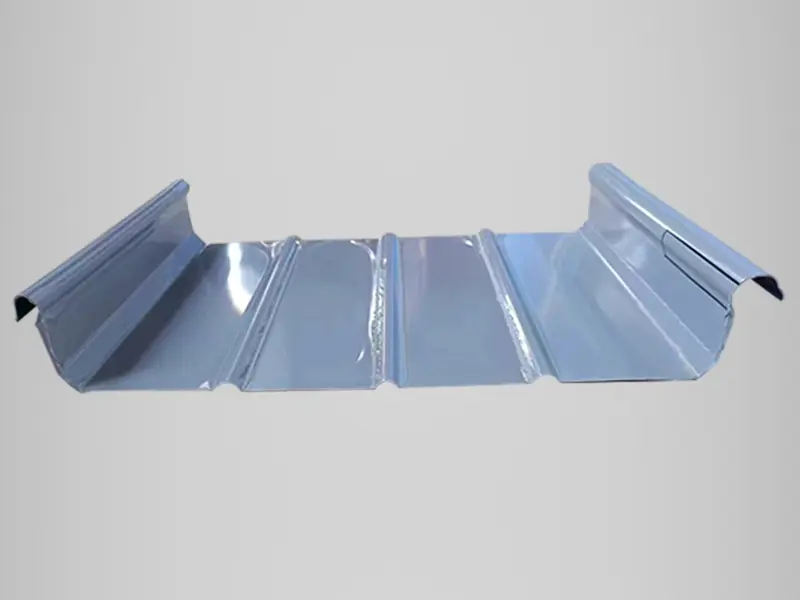
Corrugated roofing has rounded waves, while trapezoidal roofing has angular ribs and flatter sections. Their load performance and effective cover widths differ by design, so buyers should compare technical drawings and load tables.
Are corrugated aluminum sheets suitable for warehouses?
They can be suitable for warehouse roofing when the material, thickness, profile, supports, and fasteners meet the project’s requirements. Large roofs need careful consideration of wind uplift, drainage, and structural loading.
Do aluminum roofing sheets need maintenance?
Yes. Periodic inspection helps identify loose fasteners, blocked drainage paths, surface damage, and incompatible metal contact. Cleaning methods should follow the coating manufacturer’s guidance, especially in coastal or industrial environments.
What information is needed to buy corrugated aluminum roofing sheet in bulk?
Buyers should specify alloy, temper, thickness, profile, width, length, surface finish, color, quantity, packing, destination, and any required documents. A profile drawing or sample can help confirm the intended product.
Find the Right Corrugated Aluminum Roofing Sheet for Your Project

The right roofing sheet should match the building design, required performance, installation method, and budget. Profile depth, thickness, alloy, temper, finish, and effective cover width all affect the final choice.
For commercial and wholesale orders, prepare a clear specification before comparing quotations. If the required profile is not yet defined, share the roof dimensions, intended application, and local exposure conditions with the supplier.
A well-matched product specification can help reduce material waste, simplify installation, and improve the overall performance of the roof.