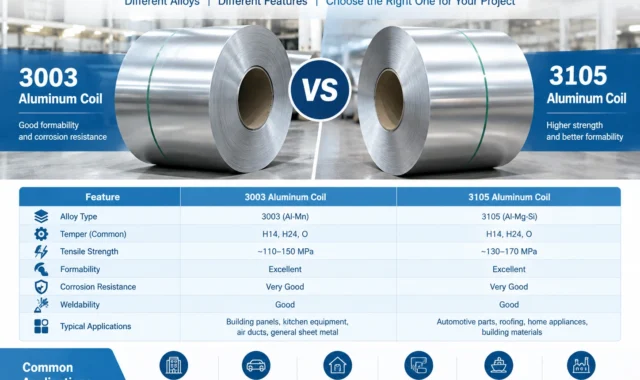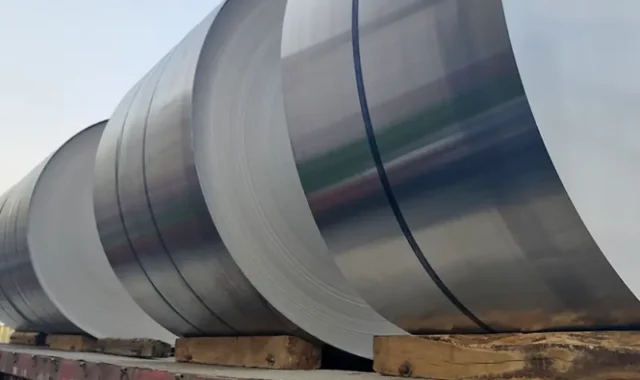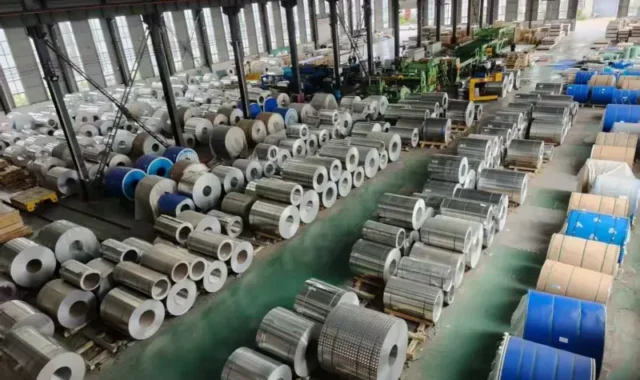
0.032 aluminum sheet is a popular thin aluminum sheet used in construction, transportation, signage, roofing, HVAC, trailers, insulation, electrical products, and general fabrication. The thickness is approximately 0.032 inches, or 0.81 mm.
This thickness offers a useful balance between low weight, flexibility, strength, and easy fabrication. It is thicker than 0.025″ aluminum sheet but thinner than 0.040″ aluminum sheet, making it a practical choice for many medium-duty applications.
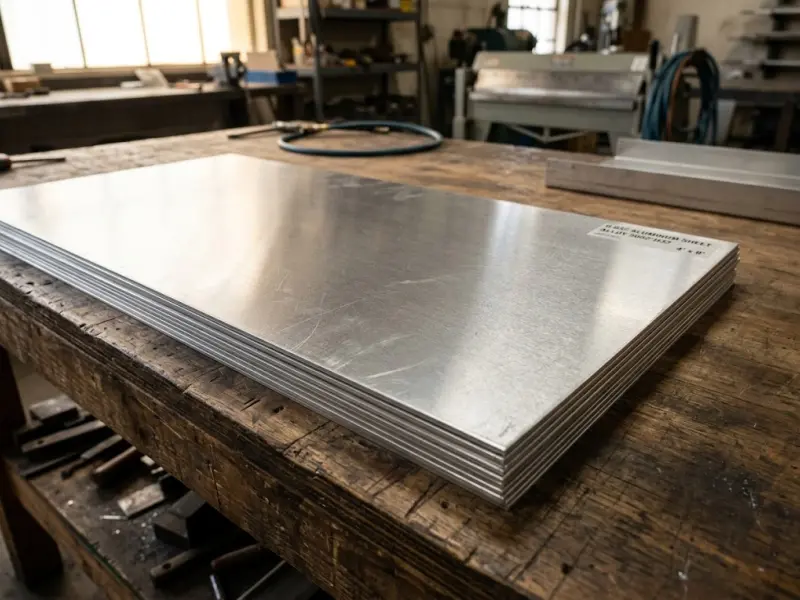
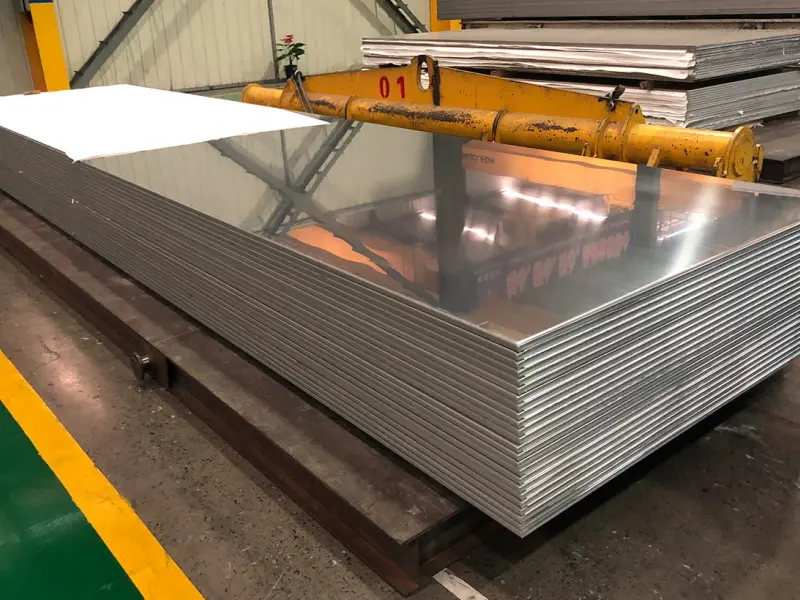
0.032 Aluminum Sheet Specifications
The basic thickness specification is simple.
| Item | Specification |
|---|---|
| Thickness | 0.032 inch |
| Metric thickness | About 0.81 mm |
| Material | Aluminum |
| Common alloys | 3003, 5052, 3105, 3004, 1100, 1060 |
| Common tempers | O, H12, H14, H24, H32, H34 |
| Surface | Mill finish, painted, anodized, brushed |
| Width | Custom |
| Length | Custom |
| Standard size | 4 × 8 ft commonly requested |
| Form | Flat sheet or coil |
| Processing | Cutting, bending, punching, forming |
Actual availability depends on the alloy, temper, width, length, and production method.
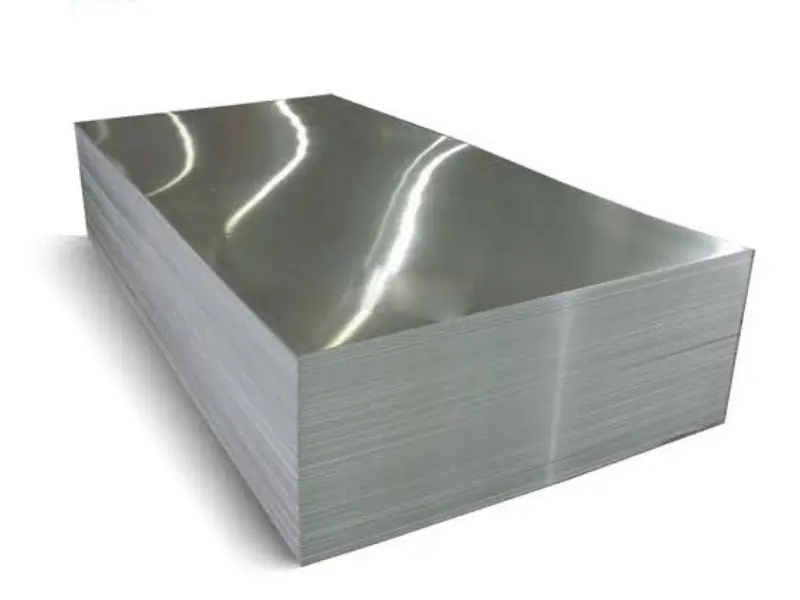
Common Alloys for 0.032 Aluminum Sheet
The alloy should be selected according to the final application.
| Alloy | Typical Characteristic | Common Use |
|---|---|---|
| 1060 | High purity and conductivity | Electrical, decoration |
| 1100 | Good forming | General fabrication |
| 3003 | Good balance of strength and forming | Construction, HVAC |
| 3004 | Higher strength than 3003 | Panels and fabrication |
| 3105 | Good for coated products | Roofing, siding |
| 5052 | Higher strength and corrosion resistance | Trailers, marine, transportation |
The same 0.032″ thickness can perform very differently depending on the alloy.
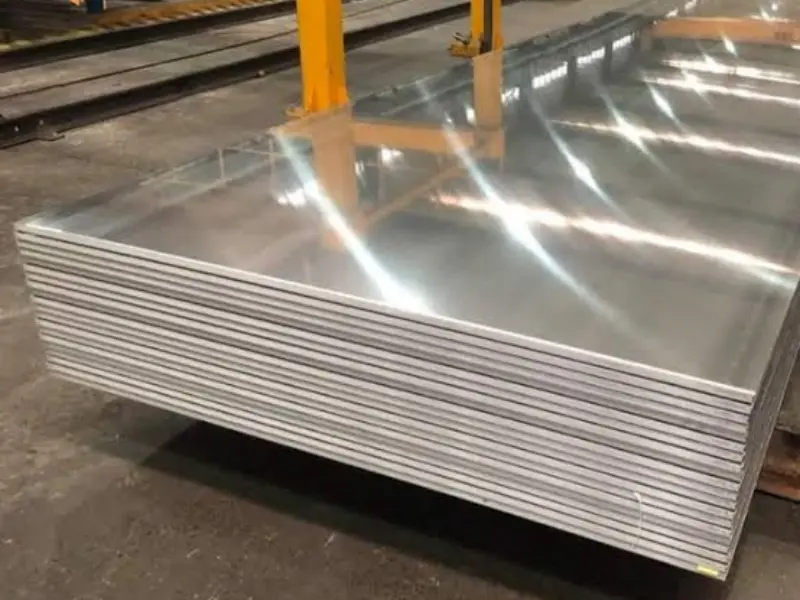
0.032 Aluminum Sheet 3003
3003 is one of the most common choices for general-purpose aluminum sheet.
It contains manganese as the main alloying element.
It offers:
- Good formability
- Moderate strength
- Good corrosion resistance
- Good weldability
- Easy fabrication
Common applications include:
- HVAC panels
- Roofing components
- Wall panels
- Kitchen equipment
- General fabrication
- Decorative products
3003 H14 0.032 aluminum sheet is a useful specification for many general fabrication projects.
How Thick Is 0.032 Aluminum Sheet?
The thickness can be expressed in both inches and millimeters.
| Inch | Approx. Millimeter |
|---|---|
| 0.025″ | 0.64 mm |
| 0.032″ | 0.81 mm |
| 0.040″ | 1.02 mm |
| 0.050″ | 1.27 mm |
| 0.063″ | 1.60 mm |
| 0.080″ | 2.03 mm |
| 0.090″ | 2.29 mm |
| 0.100″ | 2.54 mm |
| 0.125″ | 3.18 mm |
This makes 0.032 aluminum sheet approximately 0.81 mm thick.
When ordering internationally, it is useful to list both measurements:
0.032″ / 0.81 mm aluminum sheet
This reduces confusion between inch and metric specifications.
Why 0.032 Inch Is a Popular Thickness
A 0.032″ sheet is thin enough to keep weight low but thick enough for many panels, covers, signs, and formed parts.
The main advantages are:
→ Lightweight
→ Easy to cut
→ Easy to bend
→ Easy to form
→ Good corrosion resistance
→ Available in many alloys
→ Suitable for painted surfaces
→ Suitable for anodizing
→ Easy to transport
→ Useful for custom fabrication
It is not intended to replace thicker aluminum plate where high structural strength is required.
0.032 Aluminum Sheet 5052
5052 provides higher strength than 3003.
It also offers very good corrosion resistance.
This makes it attractive for transportation and outdoor applications.
Typical uses include:
- Trailer panels
- Truck bodies
- Marine components
- Equipment panels
- Tool boxes
- Vehicle components
- Outdoor enclosures
For applications where the panel may receive impacts or repeated use, 5052 aluminum sheet can be a better choice than softer 1xxx series aluminum.
0.032 Aluminum Sheet 3105
3105 is widely used in building products.
It offers good corrosion resistance and good forming characteristics.
Typical applications include:
- Roofing
- Siding
- Gutters
- Fascia
- Wall panels
- Painted aluminum products
It is particularly suitable when the sheet will receive a factory-applied coating.
0.032 Aluminum Sheet 1100
1100 is a commercially pure aluminum alloy with good formability.
It is suitable for applications that do not require high mechanical strength.
Possible uses include:
- Electrical components
- Decorative panels
- Kitchen products
- Heat transfer products
- General fabrication
0.032 Aluminum Sheet 1060
1060 has a high aluminum content and good conductivity.
It is often selected when electrical or thermal performance is more important than strength.
Possible uses include:
Decorative applications
Electrical equipment
Heat transfer components
Reflectors
Lighting products
Insulation products
Choosing the Right Temper
The temper changes the hardness and formability of the sheet.
| Temper | General Condition | Formability |
|---|---|---|
| O | Annealed | Excellent |
| H12 | Lightly hardened | Very good |
| H14 | Half hard | Good |
| H16 | Harder | Moderate |
| H24 | Hardened and partially annealed | Good |
| H32 | Stabilized | Good |
| H34 | Higher strength | Moderate |
For complex bending, a softer temper may be preferable.
For flat panels that need greater rigidity, a harder temper may be more appropriate.
0.032 Aluminum Sheet O Temper
O temper is the softest common condition.
It provides excellent formability.
It can be considered for:
- Deep forming
- Spinning
- Bending
- Stamping
- Curved panels
- Complex shapes
If the manufacturing process involves significant deformation, O temper is worth discussing with the supplier.
0.032 Aluminum Sheet H14
H14 is a common general-purpose temper.
It offers a balance between strength and formability.
This makes it useful for:
- Signs
- Panels
- HVAC
- Roofing components
- General fabrication
- Decorative products
0.032 Aluminum Sheet H32
H32 is commonly associated with 5xxx series aluminum such as 5052.
It provides a useful combination of strength, formability, and corrosion resistance.
For transportation and outdoor products, 0.032 5052 H32 aluminum sheet is a specification buyers may consider.
0.032 Aluminum Sheet Sizes
The sheet can be supplied in different dimensions.
| Size | Approximate Format | Typical Market |
|---|---|---|
| 12 × 24″ | Small sheet | Fabrication |
| 24 × 48″ | Medium sheet | General use |
| 36 × 48″ | Medium panel | Signage |
| 48 × 96″ | 4 × 8 ft | Construction |
| 48 × 120″ | 4 × 10 ft | Large panels |
| 60 × 120″ | 5 × 10 ft | Industrial |
| Custom | Custom | Project orders |
The 0.032 aluminum sheet 4×8 format is especially popular in the North American market.
0.032 Aluminum Sheet 4×8
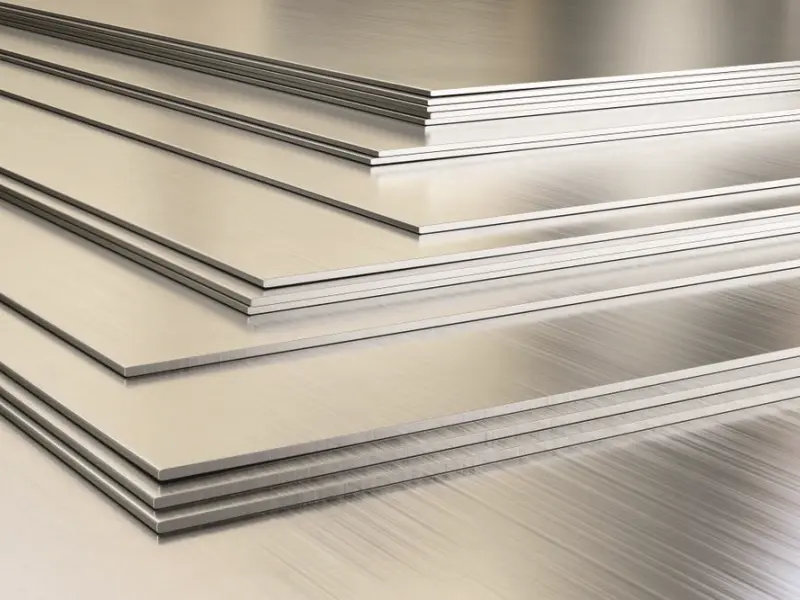
A 4×8 sheet measures:
48 × 96 inches
This format is popular because it works well with standard construction and fabrication layouts.
Typical configurations include:
0.032″ 3003 H14 4×8
0.032″ 5052 H32 4×8
0.032″ 3105 H14 4×8
The correct alloy should be selected according to the application rather than choosing only by size.
0.032 Aluminum Sheet for Trailers
Trailer manufacturers often look for aluminum because reducing vehicle weight can be important.
A 0.032″ sheet can be considered for selected trailer components.
Possible uses include:
- Trailer side panels
- Interior panels
- Door panels
- Roof components
- Trim
- Protective covers
- Utility trailer panels
For higher-impact or more demanding applications, 5052 may be preferred over softer aluminum grades.
0.032 Aluminum Sheet for RVs
RV manufacturers use aluminum for many lightweight components.
Possible applications include:
- Interior wall panels
- Exterior panels
- Roof components
- Storage compartments
- Trim
- Decorative panels
- Equipment covers
The right alloy depends on whether the panel needs to be bent, painted, exposed to weather, or bonded to another material.
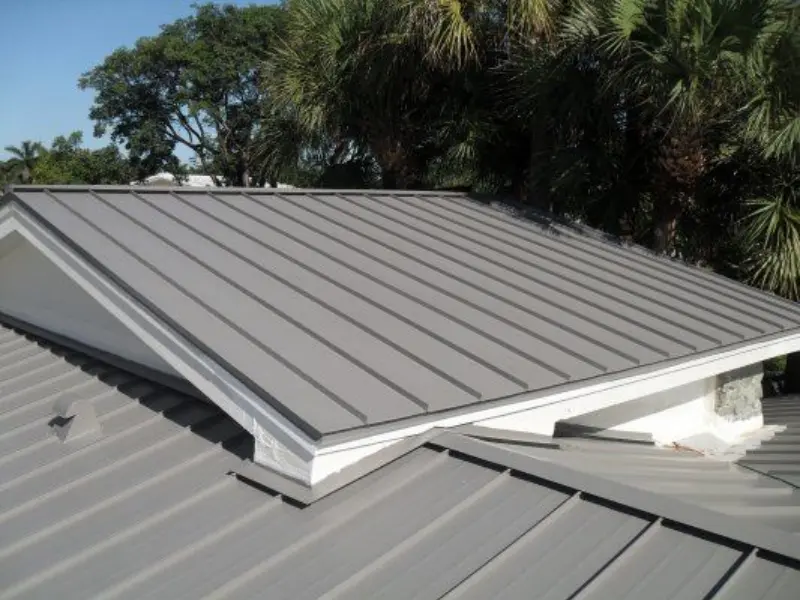
0.032 Aluminum Sheet for Roofing
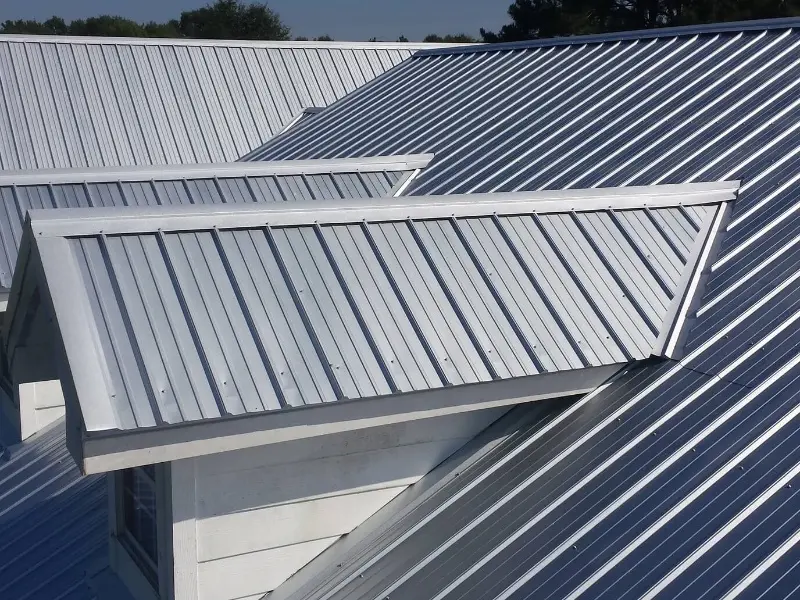
Aluminum roofing products are valued for their low weight and corrosion resistance.
A 0.032″ sheet can be used in selected roofing components and formed products.
Possible applications:
- Roof flashing
- Trim
- Fascia
- Roof edging
- Lightweight roofing panels
- Decorative roofing elements
For structural roofing systems, engineering requirements should determine the final thickness and alloy.
0.032 Aluminum Sheet for Siding
Aluminum siding is used on residential, commercial, and industrial buildings.
3105 and other suitable coated aluminum grades are often considered for siding products.
Typical products include:
- Aluminum siding panels
- Wall cladding
- Soffit
- Fascia
- Exterior trim
- Decorative wall panels
A painted finish can provide both color and additional surface protection.
0.032 Aluminum Sheet for Gutters
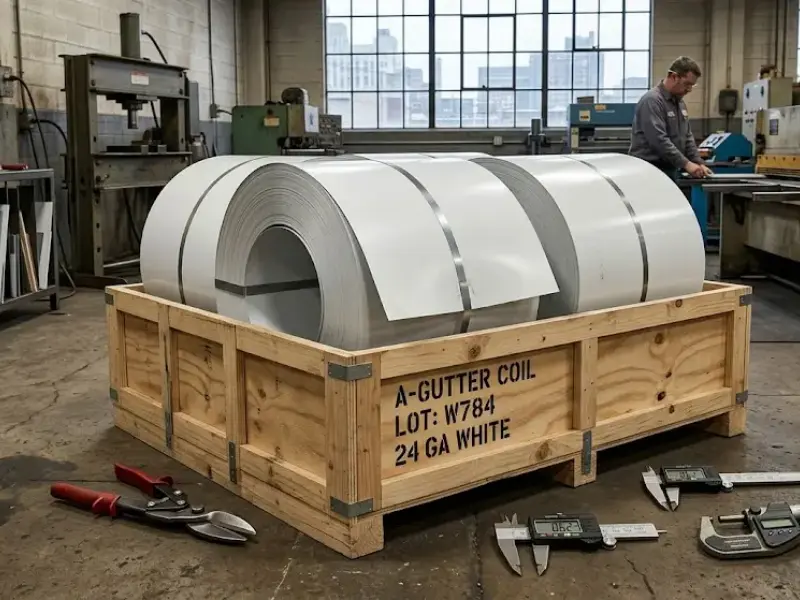
Aluminum is widely used for gutter products.
The material is lightweight and can be formed into long profiles.
Applications include:
- Gutters
- Downspouts
- Gutter covers
- Flashing
- Roof trim
For continuous production, aluminum coil can be more convenient than individual flat sheets.
0.032 Aluminum Sheet for HVAC
HVAC manufacturers use aluminum because it is lightweight and has good thermal conductivity.
Possible applications include:
- Air conditioning panels
- Ventilation components
- Duct covers
- Heat exchanger components
- Equipment housings
- Insulation jacketing
The alloy and temper should be matched to the forming process.
0.032 Aluminum Sheet for Insulation
Thin aluminum sheet can be used as a protective outer layer in insulation systems.
Applications include:
- Pipe insulation
- HVAC insulation
- Industrial equipment insulation
- Building insulation
- Thermal insulation covers
The aluminum surface can help protect insulation from moisture, physical damage, and environmental exposure when used as part of a properly designed system.
0.032 Aluminum Sheet for Signs
Aluminum is a common material for signs because it is light and easy to process.
The 0.032″ thickness can work well for many sign panels.
Applications include:
- Advertising signs
- Traffic-related signs
- Business signs
- Directional signs
- Industrial signs
- Warning signs
- Nameplates
The sheet can be painted, anodized, printed, or laminated.
0.032 Aluminum Sheet for Decorative Panels
The material can also be used for decorative products.
Possible finishes include:
→ Mill finish
→ Brushed
→ Polished
→ Anodized
→ Painted
→ Powder coated
These finishes can create different appearances for interior and exterior projects.
0.032 Aluminum Sheet for Electrical Products

Thin aluminum sheet can be useful for selected electrical products.
Possible uses include:
- Electrical cabinets
- Equipment covers
- Electrical panels
- Reflective components
- Heat dissipation components
- Enclosures
For applications where electrical conductivity is critical, 1060 or 1100 may be considered.
0.032 Aluminum Sheet for Heat Transfer
Aluminum has good thermal conductivity.
This makes thin sheet suitable for some thermal applications.
Possible products include:
- Heat exchanger parts
- Radiator components
- Cooling panels
- HVAC components
- Thermal covers
- Heat transfer plates
For demanding thermal systems, the complete design must be considered rather than selecting material based on thickness alone.
0.032 Aluminum Sheet Surface Options
The same thickness can have very different appearances.
| Finish | Appearance | Typical Use |
|---|---|---|
| Mill finish | Natural metal | Industrial |
| Brushed | Fine lines | Decoration |
| Polished | Bright | Reflective products |
| Anodized | Controlled oxide finish | Architecture |
| Painted | Colored | Roofing and siding |
| PVDF coated | Durable exterior coating | Architecture |
| PE coated | Cost-effective coating | Building products |
A protective PE film can also be added when the surface needs protection during processing and transportation.
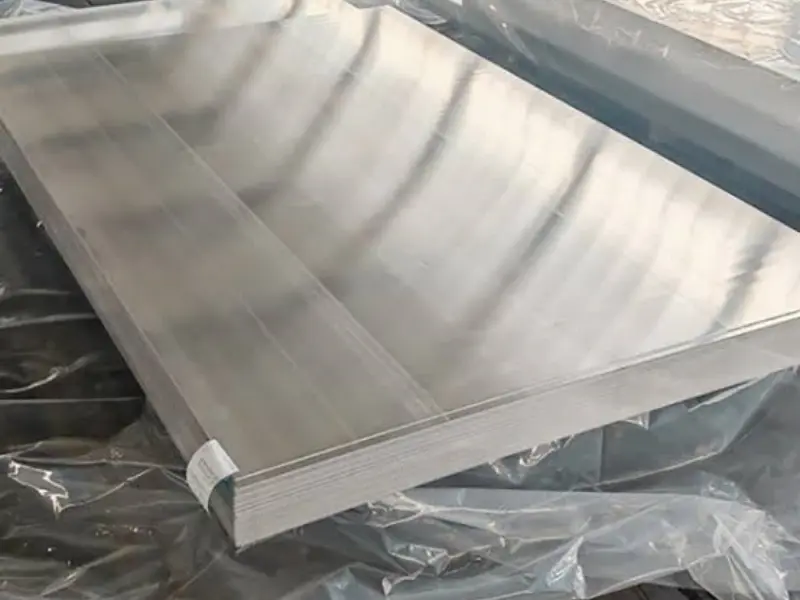
Painted 0.032 Aluminum Sheet
Painted aluminum is popular for exterior building products.
Common colors include:
- White
- Black
- Gray
- Brown
- Blue
- Red
- Green
- Bronze
Painted sheet can be supplied with different coating systems.
For long-term outdoor exposure, the coating specification should be selected according to the environment.
0.032 Aluminum Sheet vs 0.025 Aluminum Sheet
The difference is small but useful.
| Feature | 0.025″ | 0.032″ |
|---|---|---|
| Thickness | 0.64 mm | 0.81 mm |
| Weight | Lower | Higher |
| Rigidity | Lower | Higher |
| Formability | Very good | Very good |
| Impact resistance | Lower | Better |
| Typical use | Light panels | General panels |
If weight is the main concern, 0.025″ may be attractive.
If the panel needs more rigidity, 0.032″ may be a better choice.
0.032 Aluminum Sheet vs 0.040 Aluminum Sheet
The 0.040″ sheet is thicker.
| Feature | 0.032″ | 0.040″ |
|---|---|---|
| Thickness | 0.81 mm | 1.02 mm |
| Weight | Lower | Higher |
| Rigidity | Moderate | Higher |
| Forming | Easier | Slightly harder |
| Impact resistance | Good | Better |
| Cost per sheet | Usually lower | Usually higher |
The choice depends on the required rigidity and weight.
0.032 Aluminum Sheet vs 0.063 Aluminum Sheet
The difference becomes more noticeable.
| Feature | 0.032″ | 0.063″ |
|---|---|---|
| Thickness | 0.81 mm | 1.60 mm |
| Weight | Lower | Almost 2× per unit area |
| Rigidity | Lower | Much higher |
| Formability | Easier | More difficult |
| Structural capability | Limited | Higher |
| Typical use | Panels and covers | Floors and heavy fabrication |
A 0.063″ sheet should not automatically replace a 0.032″ sheet. The additional weight may not be necessary for lightweight applications.
3003 vs 5052 at 0.032 Inch
Both alloys are commonly considered for this thickness.
| Property | 3003 | 5052 |
|---|---|---|
| Strength | Medium | Higher |
| Formability | Excellent | Good |
| Corrosion resistance | Good | Very good |
| Marine use | Limited | Better |
| General fabrication | Excellent | Excellent |
| Trailer use | Possible | Common choice |
| HVAC | Very suitable | Suitable |
3003 is often selected when forming is important.
5052 is often selected when higher strength and corrosion resistance are required.
3105 vs 3003 Aluminum Sheet
These two alloys are useful for building products.
| Property | 3105 | 3003 |
|---|---|---|
| Formability | Good | Very good |
| Strength | Moderate | Moderate |
| Coating suitability | Excellent | Good |
| Roofing | Very suitable | Suitable |
| Siding | Very suitable | Suitable |
| General fabrication | Good | Excellent |
For painted building products, 3105 can be an attractive option.
1060 vs 0.032 3003 Aluminum Sheet
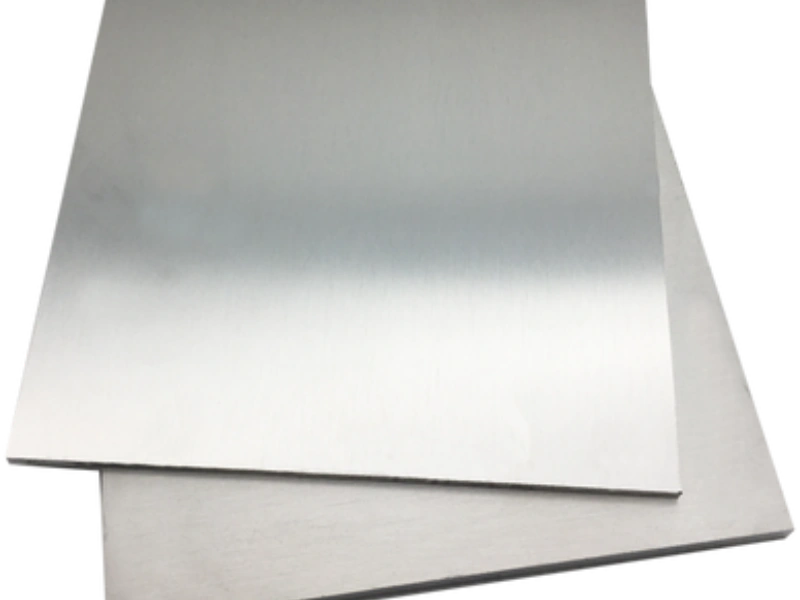
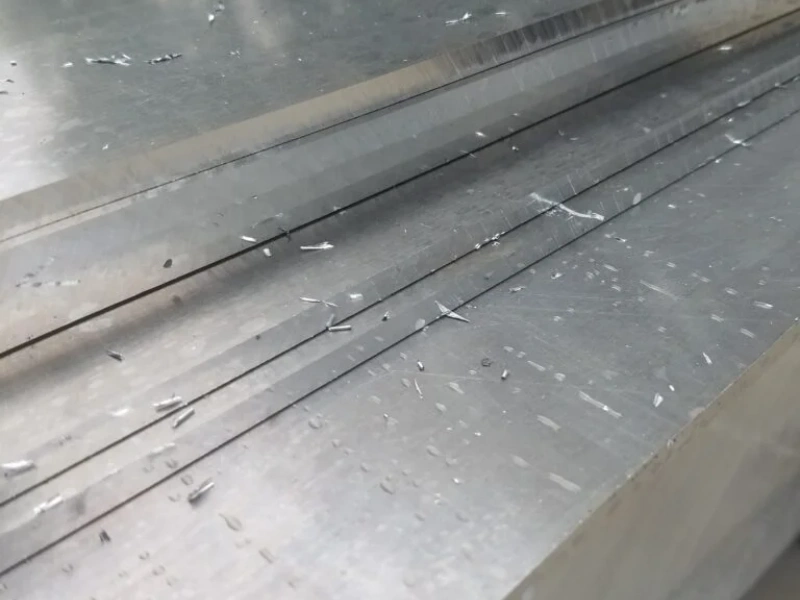
1060 and 3003 have different priorities.
| Property | 1060 | 3003 |
|---|---|---|
| Aluminum purity | Higher | Lower |
| Conductivity | Higher | Lower |
| Strength | Lower | Higher |
| Formability | Excellent | Excellent |
| Heat transfer | Excellent | Good |
| Structural use | Limited | Better |
If conductivity is important, 1060 may be preferred.
If the product needs more strength, 3003 is usually more practical.
How Much Does 0.032 Aluminum Sheet Weigh?
The theoretical weight can be estimated from:
Weight = Length × Width × Thickness × Density
The density of aluminum is approximately:
2.70 g/cm³
For a 4 × 8 ft sheet at 0.032″ thickness, the theoretical weight is roughly 7.5 kg per sheet, with the exact value depending on the alloy and dimensional tolerances.
A supplier can provide the actual or theoretical weight according to the agreed specification.
Is 0.032 Aluminum Sheet Flexible?
Yes, but the degree of flexibility depends on the alloy and temper.
A soft 1060 O or 3003 O sheet will behave differently from 5052 H32.
In general:
Soft temper → easier bending
Harder temper → greater rigidity
Therefore, thickness alone does not determine how easily the sheet bends.
Can 0.032 Aluminum Sheet Be Cut?
Yes.
Common cutting methods include:
- Shearing
- Laser cutting
- CNC cutting
- Waterjet cutting
- Saw cutting
- Punching
The best method depends on production volume, shape, tolerance, and surface requirements.
Can 0.032 Aluminum Sheet Be Bent?
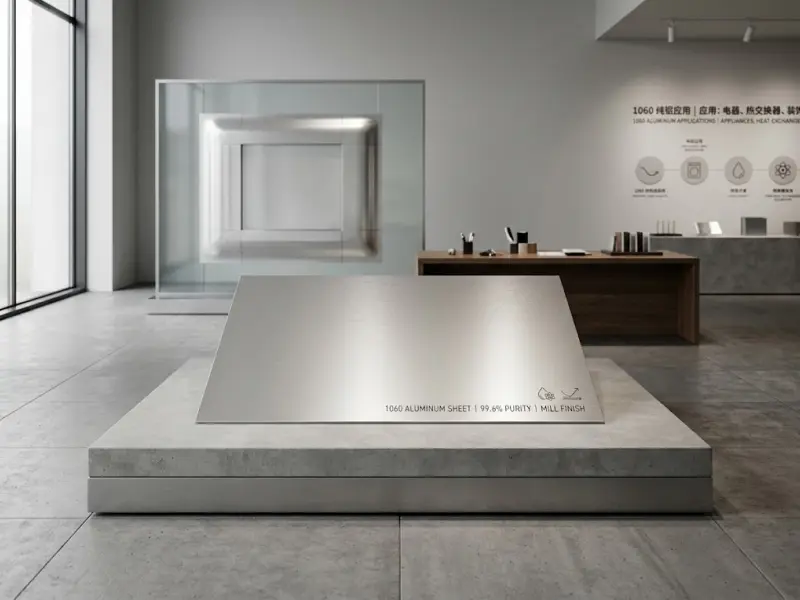
Yes.
The bending performance depends on:
Alloy + Temper + Thickness + Bend Radius + Tooling
For example, 0.032″ 5052 H32 and 0.032″ 1060 O will not have the same bending behavior.
For complex bends, customers should provide a drawing or bending specification.
Can 0.032 Aluminum Sheet Be Welded?
Many aluminum alloys can be welded.
The welding method depends on the alloy and final application.
Common processes include:
- TIG welding
- MIG welding
- Resistance welding
For production parts, the welding procedure should be tested before mass production.
How to Order 0.032 Aluminum Sheet
A complete inquiry should include the following:
| Specification | Example |
|---|---|
| Thickness | 0.032″ |
| Alloy | 5052 |
| Temper | H32 |
| Width | 48″ |
| Length | 96″ |
| Surface | Mill finish |
| Quantity | 1,000 sheets |
| Application | Trailer panels |
| Packaging | Export wooden pallets |
A clear specification helps suppliers provide a more accurate quotation.
Custom 0.032 Aluminum Sheet
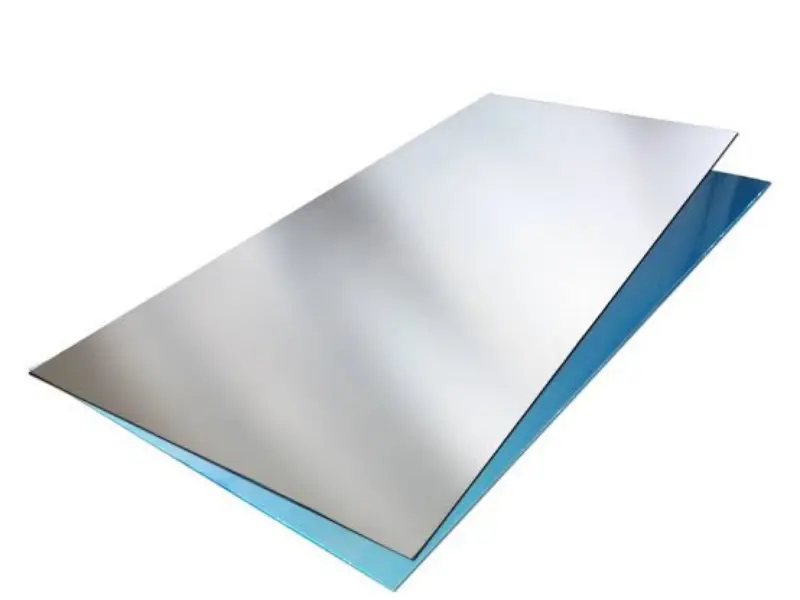
The thickness can remain fixed while other specifications are customized.
Possible options include:
- Custom width
- Custom length
- Custom alloy
- Custom temper
- Custom color
- Custom coating
- Protective film
- Brushed finish
- Anodized finish
- Cut-to-size service
- Special packaging
For large orders, cut-to-size production can reduce scrap and handling costs.
Packaging for Export
Aluminum sheets should be properly protected during transportation.
Common packaging methods include:
→ Waterproof paper
→ Plastic wrapping
→ Wooden pallets
→ Wooden cases
→ Steel straps
→ Corner protection
→ PE protective film
For painted or decorative aluminum, surface protection is particularly important.
Quality Checks Before Purchase
Buyers can check several important items before placing an order.
| Check | Requirement |
|---|---|
| Thickness | 0.032″ / 0.81 mm |
| Alloy | Agreed grade |
| Temper | Agreed condition |
| Width | Required tolerance |
| Length | Required tolerance |
| Surface | Clean and free from serious defects |
| Flatness | Suitable for use |
| Mechanical properties | Meet required standard |
| Packaging | Suitable for shipping |
| Certification | Required documents |
For industrial applications, the supplier should provide the relevant material certificate when required.
Common Product Types in 0.032 Inch
The same thickness can be supplied in different product forms.
0.032 Aluminum Coil
Coil is suitable for continuous manufacturing.
Typical process:
Aluminum coil → Leveling → Cutting → Forming → Finished product
It is useful for high-volume production of gutters, siding, HVAC parts, and other formed components.
0.032 Painted Aluminum Sheet
Painted sheet is suitable for building products and exterior panels.
It can be supplied in standard or custom colors.
0.032 Anodized Aluminum Sheet
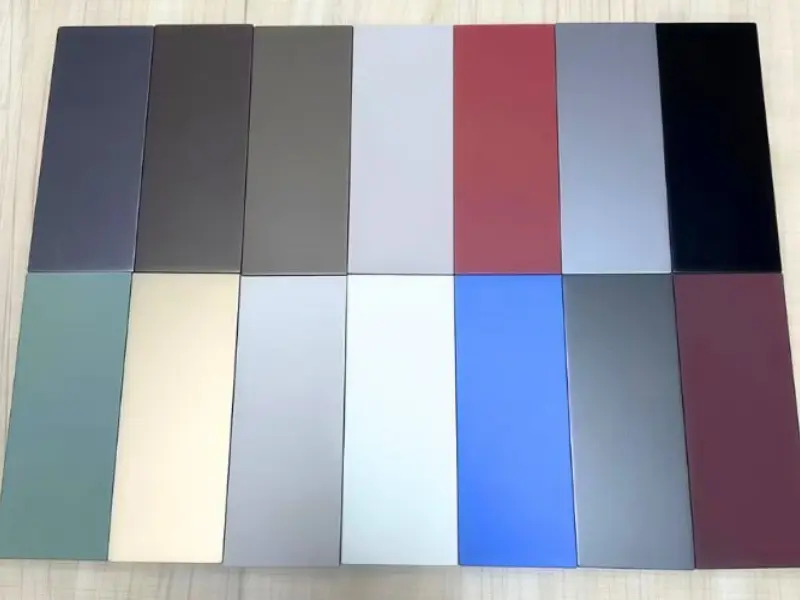
Anodized sheet provides a controlled surface finish.
It is useful for architectural and decorative applications.
0.032 Brushed Aluminum Sheet
Brushed aluminum provides a directional metallic texture.
It is commonly used for interior decoration and equipment panels.
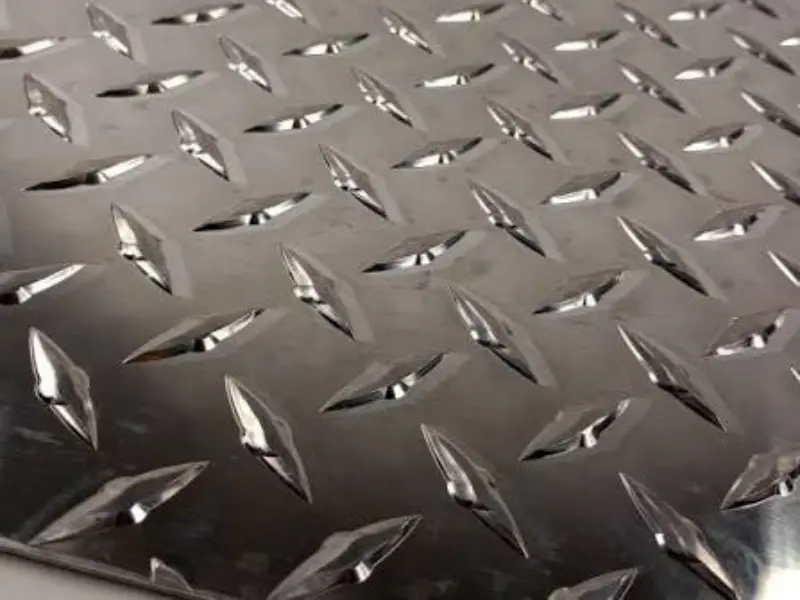
0.032 Aluminum Checker Plate
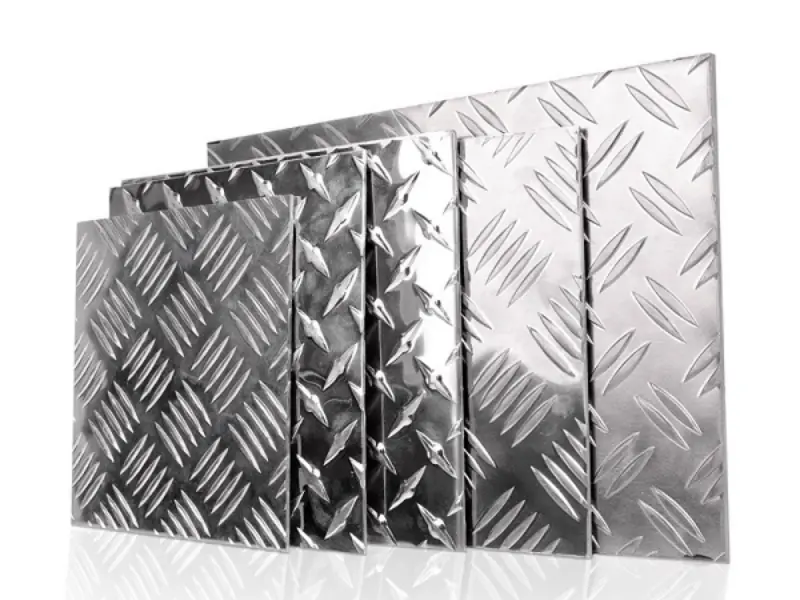
A patterned surface can improve appearance and provide a textured surface.
However, the final thickness should be confirmed because embossed or patterned sheet thickness can be specified in different ways.
0.032 Aluminum Reflector Sheet
Bright or polished aluminum can be considered for reflector applications.
1060 and 1100 are common grades to evaluate when conductivity and reflectivity are important.
FAQ About 0.032 Aluminum Sheet
What is 0.032 aluminum sheet?
It is aluminum sheet with a nominal thickness of 0.032 inch, approximately 0.81 mm.
Is 0.032 aluminum sheet the same as 0.8 mm?
They are very close. 0.032 inch equals approximately 0.813 mm, so it is commonly described as about 0.8 mm.
Is 0.032 aluminum sheet thick enough for a trailer?
It can be suitable for selected trailer panels and components. The correct alloy and temper depend on the trailer design, impact requirements, and structural role of the panel.
What is the best alloy for 0.032 aluminum sheet?
There is no single best alloy. 3003 is useful for general fabrication, 5052 for higher strength, 3105 for many coated building products, and 1060 or 1100 for conductivity-related applications.
Is 0.032 aluminum sheet good for roofing?
It can be used for selected roofing components, trim, flashing, and some formed roofing products. Structural roofing applications should be designed according to the required loads.
Can 0.032 aluminum sheet be used for siding?
Yes. Coated aluminum grades such as 3105 can be considered for siding and other exterior building products.
What is 0.032 aluminum sheet 4×8?
It is a 48 × 96 inch aluminum sheet with a nominal thickness of 0.032 inch.
Is 5052 better than 3003 at 0.032 inch?
Not in every situation. 5052 generally provides higher strength and corrosion resistance, while 3003 often offers easier forming and is widely used for general fabrication.
What temper is best for bending?
A softer temper such as O is generally easier to bend. H12 and H14 provide more strength while retaining useful formability.
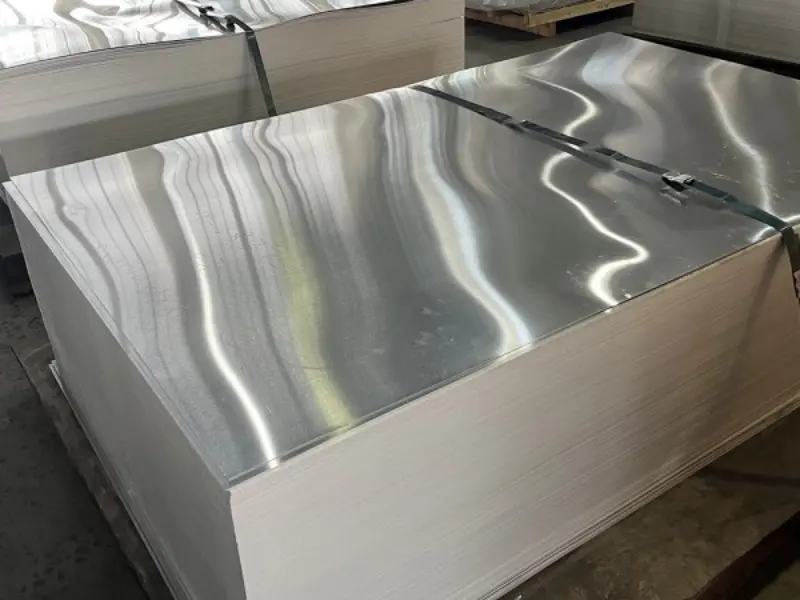
How much does a 4×8 sheet of 0.032 aluminum weigh?
A typical theoretical weight is around 7.5 kg per sheet. The exact value depends on the alloy, dimensions, and thickness tolerance.
Is 0.032 aluminum sheet easy to bend?
Generally yes, but bending performance depends strongly on the alloy and temper. Softer tempers are easier to bend.
What is the difference between 0.032 and 0.040 aluminum?
0.040″ is thicker at about 1.02 mm, while 0.032″ is about 0.81 mm. The 0.040″ sheet provides more rigidity but also weighs more.
What is the difference between 0.032 and 0.063 aluminum?
0.063″ is almost twice as thick as 0.032″. It provides considerably more rigidity but weighs significantly more and generally requires more forming force.
Can 0.032 aluminum be painted?
Yes. It can be supplied as painted aluminum or prepared for painting after fabrication.
Can 0.032 aluminum be anodized?
Yes. Many aluminum grades can be anodized, although the final appearance can vary according to the alloy and surface preparation.
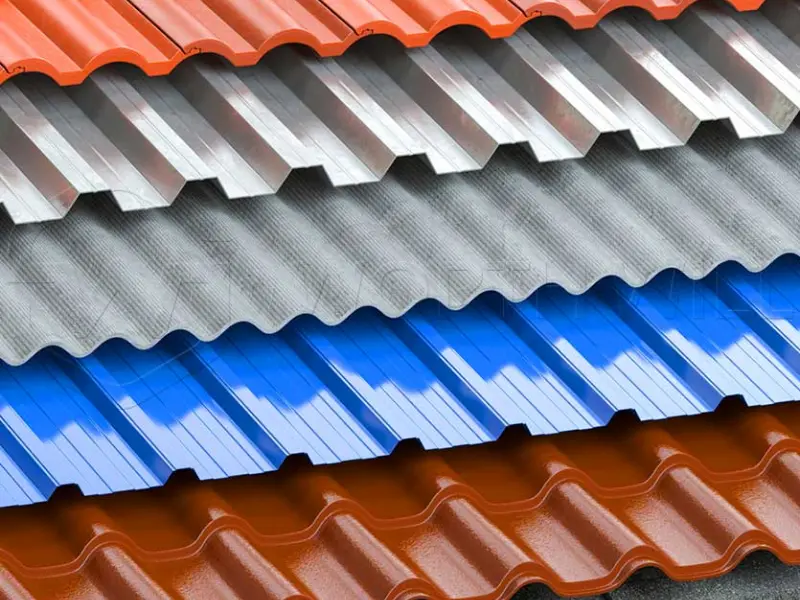
What is 0.032 aluminum sheet used for?
Common applications include trailers, siding, roofing components, gutters, HVAC equipment, signs, insulation covers, decorative panels, electrical equipment, and general fabrication.
Can 0.032 aluminum sheet be cut to size?
Yes. Many suppliers can provide cut-to-size sheets depending on the quantity and required dimensions.
Can I buy 0.032 aluminum sheet in custom colors?
Yes. Painted or coated aluminum can be supplied in standard or custom colors, depending on the coating system and minimum order quantity.
How do I get a price for 0.032 aluminum sheet?
Provide the alloy, temper, thickness, width, length, surface finish, quantity, application, and delivery requirements. These details allow a supplier to prepare a more accurate quotation.
Related Aluminum Products
Customers looking for 0.032 aluminum sheet may also compare:
- 0.025 Aluminum Sheet
- 0.040 Aluminum Sheet
- 0.050 Aluminum Sheet
- 0.063 Aluminum Sheet
- 0.080 Aluminum Sheet
- 0.090 Aluminum Sheet
- 0.125 Aluminum Sheet
- 3003 Aluminum Sheet
- 5052 Aluminum Sheet
- 3105 Aluminum Sheet
- 1060 Aluminum Sheet
- 1100 Aluminum Sheet
- Aluminum Coil
- Aluminum Roofing Sheet
- Aluminum Siding Sheet
- Aluminum Trailer Siding
- Aluminum Checker Plate
- Painted Aluminum Sheet
- Anodized Aluminum Sheet
- Aluminum Insulation Jacketing
Quick Selection Guide for 0.032 Aluminum Sheet
A simple selection process can help:
Need general fabrication?
→ Consider 3003 H14
Need higher strength?
→ Consider 5052 H32
Need coated building products?
→ Consider 3105
Need high conductivity?
→ Consider 1060 or 1100
Need easy forming?
→ Consider O temper
Need a balance between strength and forming?
→ Consider H14 / H32
Need 4 × 8 sheets?
→ Specify 48 × 96 × 0.032″
This makes the purchasing process much clearer.
Final Guide to 0.032 Aluminum Sheet
0.032 aluminum sheet is a useful medium-thin aluminum material for customers who need a balance between weight, flexibility, strength, and cost.
The thickness is approximately 0.81 mm, making it suitable for many applications that do not require heavy aluminum plate.
The alloy should always be selected according to the final use:
3003 → general fabrication and forming
5052 → higher strength and corrosion resistance
3105 → coated building products
1060 → high purity and conductivity
1100 → general-purpose pure aluminum applications
The temper is equally important:
O → maximum formability
H14 → balanced performance
H32 → useful strength and formability
Before ordering, specify:
Alloy → Temper → 0.032″ thickness → Size → Surface → Quantity → Application
This gives the supplier enough information to recommend the right material and prepare a reliable quotation.