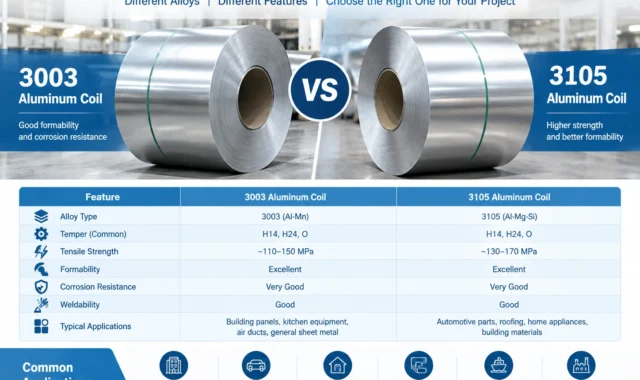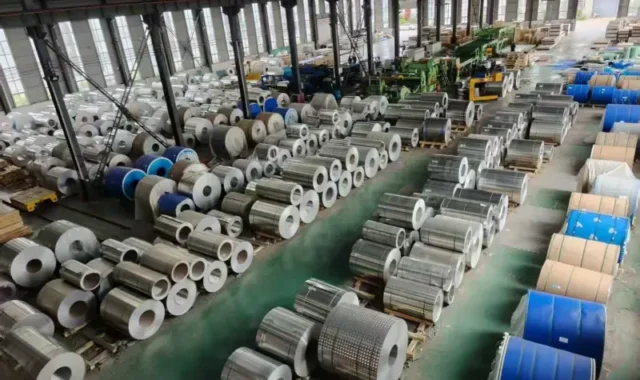
Aluminum strip is widely used in electrical equipment because it is light, conductive, easy to process, and resistant to corrosion. In transformer manufacturing, aluminum strip can be used as a winding conductor and in other current-carrying parts.
The right material must match the electrical, mechanical, thermal, and production requirements of the transformer. Alloy, temper, thickness, width, surface quality, and dimensional tolerance can all affect the final result.
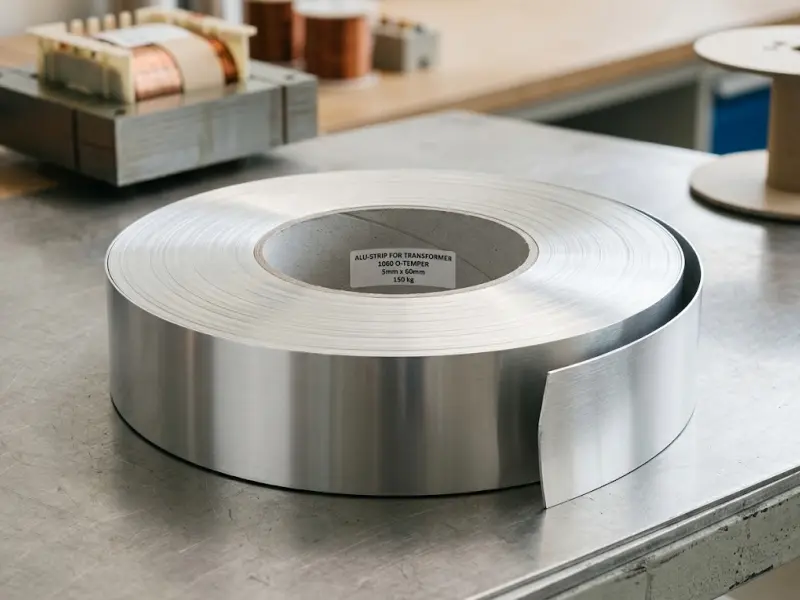

For manufacturers, buying the correct aluminum strip is not only about choosing a metal grade.
It is also about finding a stable material that can run smoothly through slitting, winding, forming, insulation, and assembly processes.
Why Aluminum Strip Is Used in Transformers
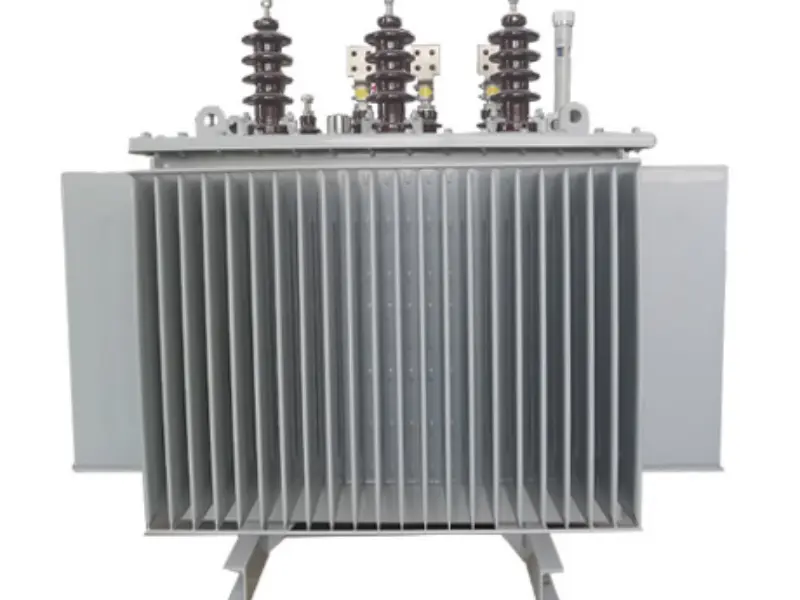
Aluminum has a good combination of electrical conductivity and low weight. This makes it useful where conductor weight and material cost are important.
Compared with copper, aluminum has lower density. A similar conductor made from aluminum can be much lighter. This can help reduce the weight of the finished transformer.
Aluminum also has a natural oxide layer. This surface layer helps protect the metal from normal atmospheric corrosion.
For many transformer designs, aluminum is selected because it offers a practical balance between:
→ Electrical conductivity
→ Low density
→ Material cost
→ Formability
→ Corrosion resistance
→ Thermal performance
→ Easy slitting and winding
The final choice still depends on transformer design and electrical requirements.
Common Aluminum Alloys for Transformer Strip
Not every aluminum alloy is suitable for the same electrical application. Commercially pure aluminum and selected wrought alloys are commonly considered when high conductivity is important.
1050 Aluminum Strip for Transformer
1050 aluminum is a high-purity aluminum grade. It is often selected when electrical conductivity and good forming performance are priorities.
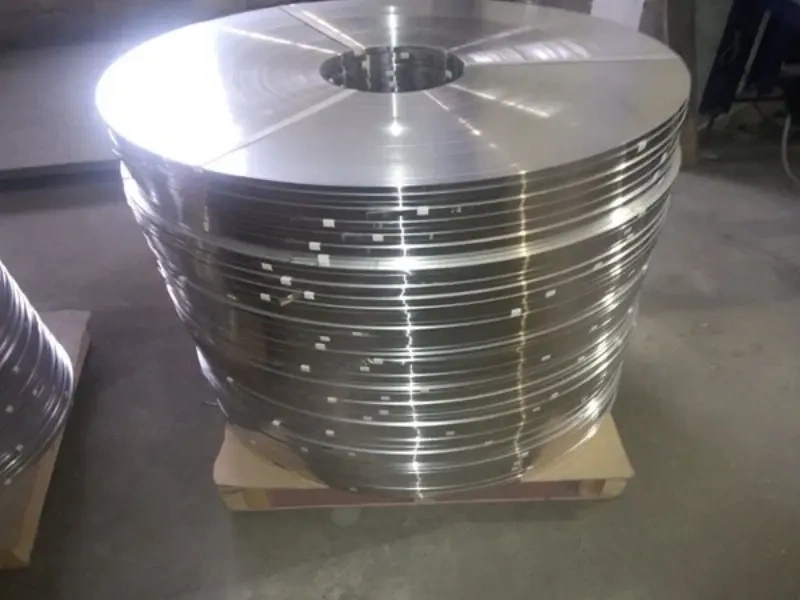
It has relatively low strength compared with many 5xxx and 6xxx series alloys. However, this is not necessarily a problem for applications where conductivity is more important than high structural strength.
Typical characteristics include:
Good suitability for thin strip production
High aluminum content
Good electrical conductivity
Good ductility
Good corrosion resistance
Easy bending and forming
1060 Aluminum Strip for Transformer
1060 is another high-purity aluminum grade. It is often used when a combination of conductivity, ductility, and easy processing is required.
The material can be supplied in different thicknesses and widths depending on the winding design.
1070 Aluminum Strip for Transformer
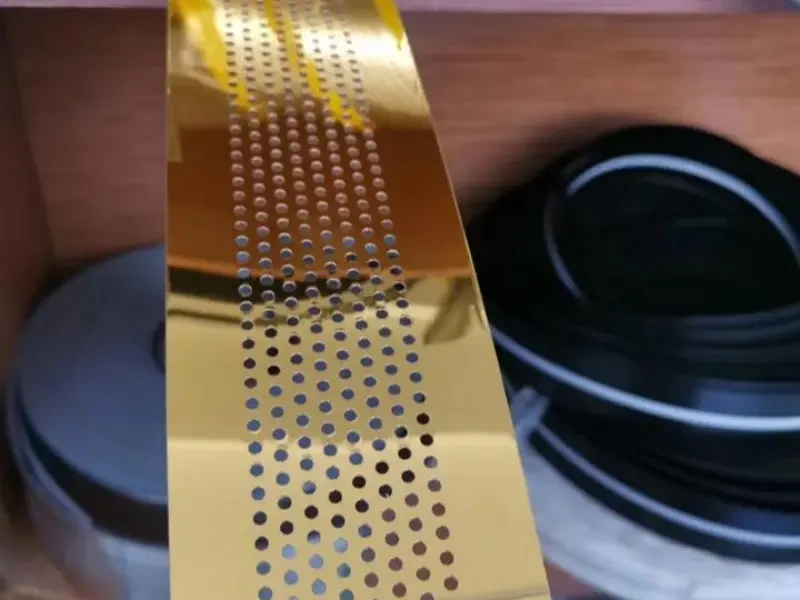
1070 contains a higher level of aluminum than many general-purpose aluminum alloys. It is used in applications where electrical conductivity is an important requirement.
For transformer conductors, high-purity grades such as 1050, 1060, and 1070 may be considered depending on the customer’s electrical and mechanical specifications.
3003 Aluminum Strip for Transformer
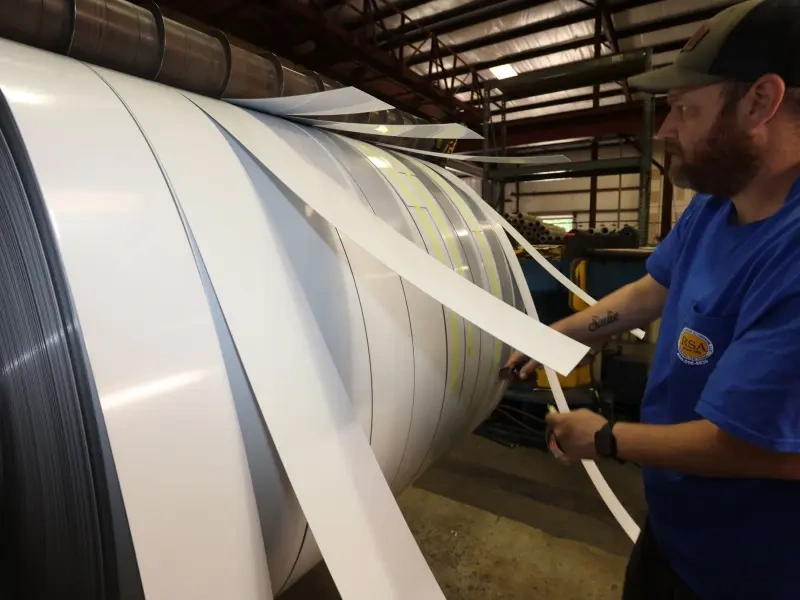
3003 belongs to the 3xxx aluminum series. Manganese is the main alloying element.
It provides better strength than high-purity aluminum while maintaining useful corrosion resistance and formability.
However, when the main requirement is maximum electrical conductivity, a high-purity aluminum grade may be more suitable.
Aluminum Alloy Comparison for Transformer Use
| Alloy | Main Feature | Conductivity | Formability | Typical Consideration |
|---|---|---|---|---|
| 1050 | High purity | High | Excellent | Conductive winding parts |
| 1060 | High purity | High | Excellent | Electrical conductor applications |
| 1070 | Very high aluminum content | Very High | Excellent | High-conductivity requirements |
| 3003 | Higher strength | Moderate | Very Good | When added strength is useful |
| 5052 | Higher strength | Lower | Very Good | More suitable for structural parts |
The table is a general material guide. Actual electrical properties depend on the exact product specification and temper.
Temper Options for Aluminum Transformer Strip
Temper describes the condition of the aluminum after processing.
For transformer strip, temper selection should consider winding tension, bending radius, forming requirements, and dimensional stability.
O Temper Aluminum Strip for Transformer
O temper means annealed aluminum.
This material is soft and highly ductile. It can be useful when the strip needs to bend easily during winding or forming.

Typical features include:
- Soft condition
- High ductility
- Easy forming
- Good bending performance
- Low forming resistance
O temper is often considered when flexibility is more important than strength.
H Temper Aluminum Strip for Transformer
H temper indicates strain-hardened material.
Different H conditions provide different levels of strength and hardness. The suitable condition depends on the winding process and final transformer design.
A harder strip may provide better dimensional stability, while a softer strip can be easier to bend.
Temper Selection Guide
| Temper | Relative Hardness | Forming | Typical Use |
|---|---|---|---|
| O | Low | Excellent | Flexible winding |
| H12 | Low to medium | Very Good | Controlled forming |
| H14 | Medium | Good | General formed strip |
| H18 | Higher | Limited | Applications needing higher strength |
The exact temper should be confirmed against the customer’s production process.
Common Thicknesses of Aluminum Transformer Strip
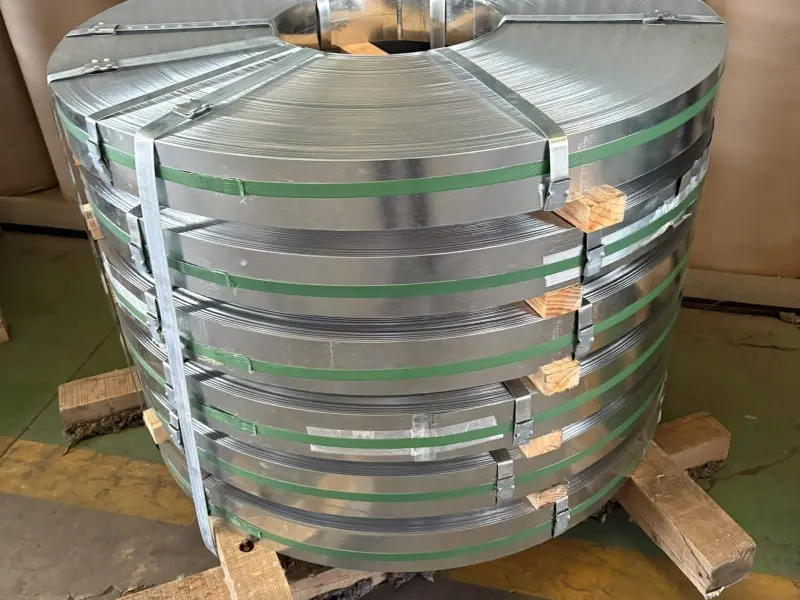
Thickness is one of the most important specifications.
A thinner strip can provide better flexibility and may be suitable for compact winding structures. A thicker strip can provide higher current-carrying capacity per layer but may require a larger bending radius.
Common commercial thickness ranges may include:
| Thickness | Approx. Inch | Typical Consideration |
|---|---|---|
| 0.20 mm | 0.008 in | Thin conductor |
| 0.30 mm | 0.012 in | Compact winding |
| 0.50 mm | 0.020 in | General electrical use |
| 0.80 mm | 0.031 in | Medium section |
| 1.00 mm | 0.039 in | Heavy conductor |
| 1.50 mm | 0.059 in | Higher current design |
| 2.00 mm | 0.079 in | Heavy strip application |
| 3.00 mm | 0.118 in | Special designs |
These are common reference sizes rather than a fixed product list. Custom thicknesses can be produced according to equipment and order requirements.
Width Options for Transformer Aluminum Strip
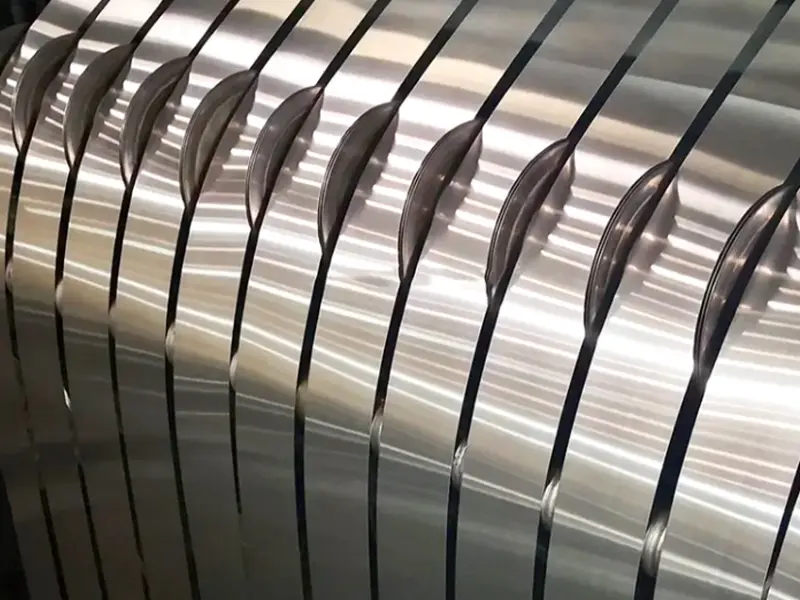
Width is normally selected according to the winding structure.
A transformer manufacturer may require narrow strip for a specific coil design or wider strip for larger conductors.
Typical widths can range from small slitting sizes to several hundred millimeters.
For example:
| Width | Possible Requirement |
|---|---|
| 10 mm | Narrow winding |
| 20 mm | Small conductor |
| 30 mm | Compact transformer |
| 50 mm | Medium winding |
| 80 mm | Wider conductor |
| 100 mm | Large winding |
| 150 mm | Heavy electrical design |
| 200 mm+ | Custom large-width application |
The final width should be selected according to the coil dimensions and winding equipment.
Precision Slitting Matters
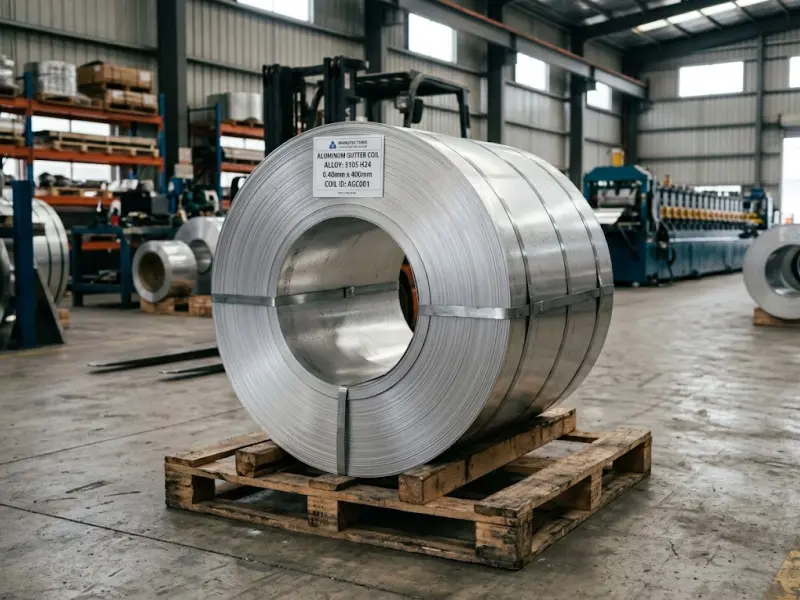
Transformer strip is often supplied as a slit coil.
The slitting process divides a wider aluminum coil into narrow strips. Precision is important because poor slitting can create problems during winding.
Important slitting factors include:
→ Strip width tolerance
→ Edge condition
→ Burr control
→ Coil alignment
→ Winding tightness
→ Surface cleanliness
A clean and stable edge helps reduce the risk of damage during production.
Edge Quality for Transformer Strip
Edge condition can affect the winding process.
A rough edge may create problems when the strip is wound under tension. Excessive burrs can also damage insulation or create local stress points.
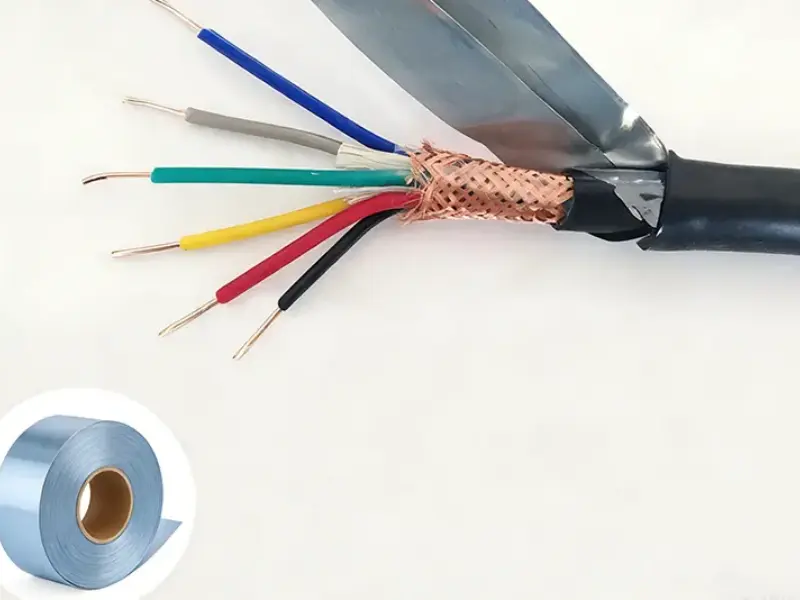
For this reason, customers often specify:
- Smooth slit edges
- Controlled burr height
- Stable strip width
- No serious edge cracks
- No sharp deformation
- Good coil winding
For high-speed winding lines, consistent edge quality becomes even more important.
Surface Quality and Cleanliness
The surface should be clean and suitable for the customer’s insulation system.
Oil, dust, metal particles, and other contaminants can interfere with later processing.
A suitable aluminum strip should normally have:
→ Clean surface
→ Uniform appearance
→ No serious scratches
→ No deep dents
→ No visible cracks
→ No excessive oxidation
→ No harmful contamination
Surface requirements should be discussed before production, especially when the strip will be combined with insulation materials.
Bare Aluminum Strip or Insulated Strip?
Transformer manufacturers may use bare aluminum strip or aluminum conductor strip with insulation.
Bare Aluminum Strip
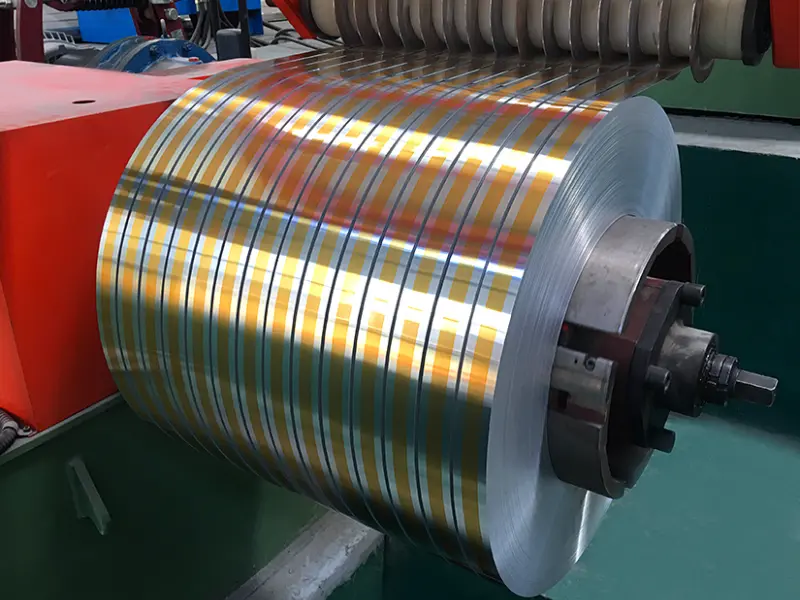
Bare strip is the basic aluminum conductor material.
It can be used when insulation is added during the transformer manufacturing process.
The main advantage is flexibility in production. The customer can select its own insulation system and winding process.
Insulated Aluminum Strip
Insulated strip has an additional insulation layer.
The coating or wrapping system can be selected according to the required electrical and thermal class.
This can simplify production because the conductor arrives ready for winding.
| Type | Main Feature | Production Approach |
|---|---|---|
| Bare strip | No added insulation | Insulation added separately |
| Coated strip | Surface insulation | Ready for winding |
| Wrapped strip | Insulation tape or paper | Designed for specific systems |
The appropriate insulation depends on the transformer design.
Aluminum Strip vs Copper Strip
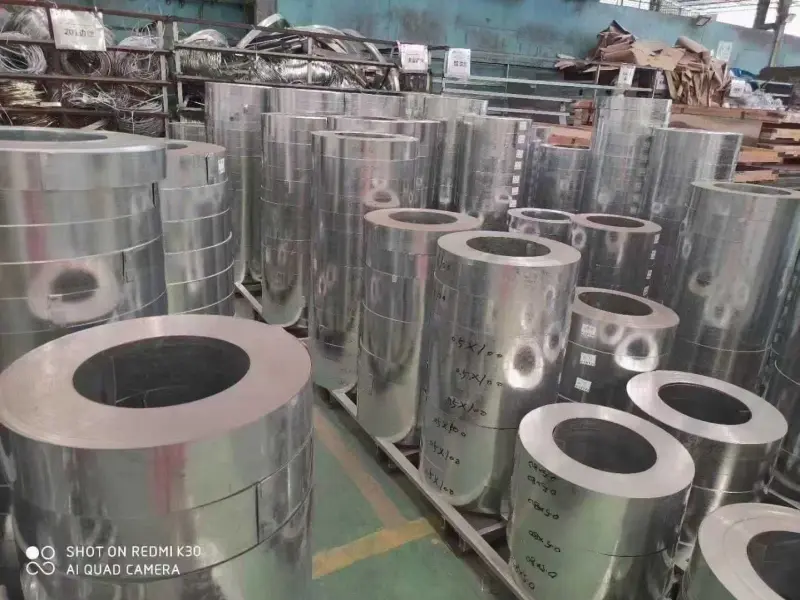
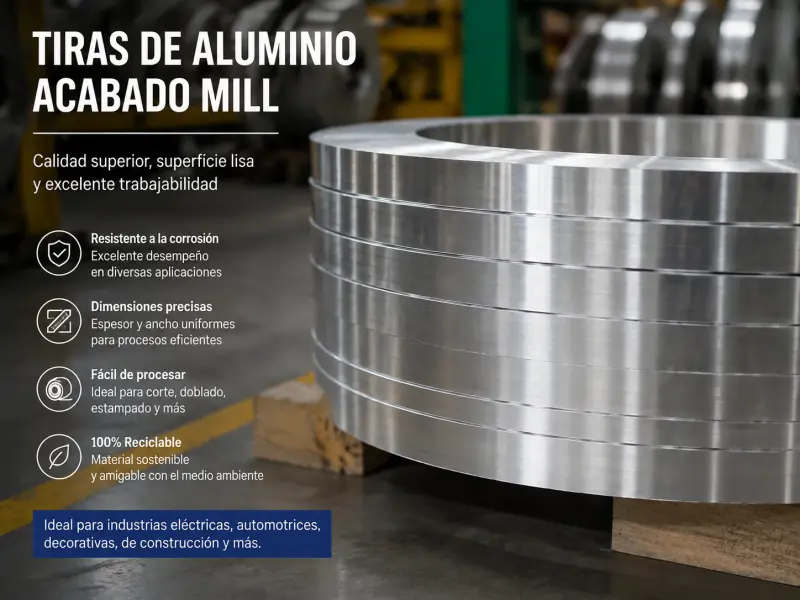
Copper is also widely used for transformer windings. The choice between aluminum and copper depends on the electrical design, size, weight, cost, and manufacturing process.
| Factor | Aluminum | Copper |
|---|---|---|
| Density | Lower | Higher |
| Weight | Lower | Higher |
| Electrical conductivity | Lower | Higher |
| Material cost | Often lower | Often higher |
| Formability | Good | Good |
| Corrosion resistance | Good | Good |
| Thermal expansion | Higher | Lower |
Copper has higher electrical conductivity. Aluminum has much lower density.
Therefore, the conductor dimensions must be designed carefully when changing from copper to aluminum.
When Aluminum Can Be Attractive
Aluminum may be attractive when:
- Low conductor weight is important
- Material cost needs to be controlled
- Larger conductor dimensions are acceptable
- The winding design supports aluminum
- Good corrosion resistance is needed
When Copper May Be Preferred
Copper can be preferred when:
- Compact conductor size is required
- Higher conductivity is needed
- Existing equipment is designed for copper
- Mechanical properties favor copper
The best material depends on the complete transformer design rather than one property.
Aluminum Strip for Dry-Type Transformers
Dry-type transformers are one important area where aluminum conductors may be used.
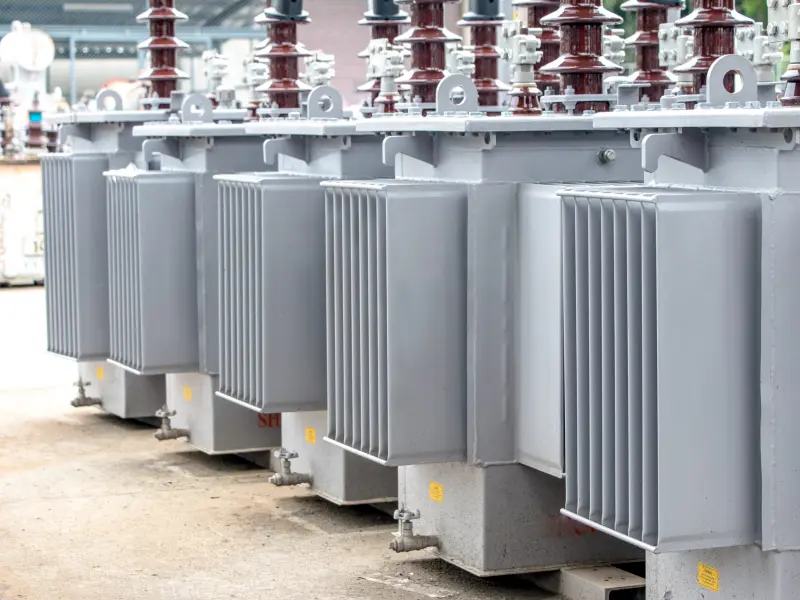
The winding is not immersed in liquid insulation oil. The design therefore depends on solid insulation, air circulation, resin, or other insulation systems.
Aluminum strip can be used in winding structures where its weight and conductivity provide a useful balance.
Possible areas include:
- Distribution transformers
- Industrial transformers
- Building power systems
- Commercial electrical equipment
- Renewable energy systems
The actual conductor specification depends on the transformer manufacturer.
Aluminum Strip for Oil-Immersed Transformers
Oil-immersed transformers use liquid insulation and cooling systems.
Aluminum conductors can also be used in suitable winding designs.
In these systems, conductor size, thermal behavior, insulation, and cooling must work together.
A manufacturer may select aluminum when the lower density and material cost provide an advantage.
Aluminum Strip for Distribution Transformers
Distribution transformers are installed close to electrical users.
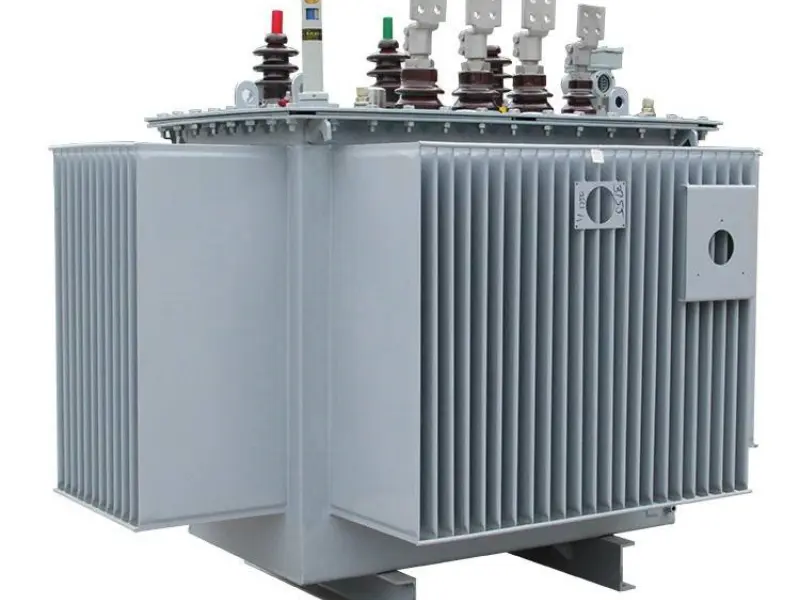
They can be found in:
- Commercial buildings
- Industrial areas
- Residential power networks
- Utility systems
- Infrastructure projects
The conductor design can vary greatly between transformer models.
For this reason, an aluminum strip supplier may need the customer’s exact alloy, thickness, width, temper, coil weight, and surface requirements before quoting.
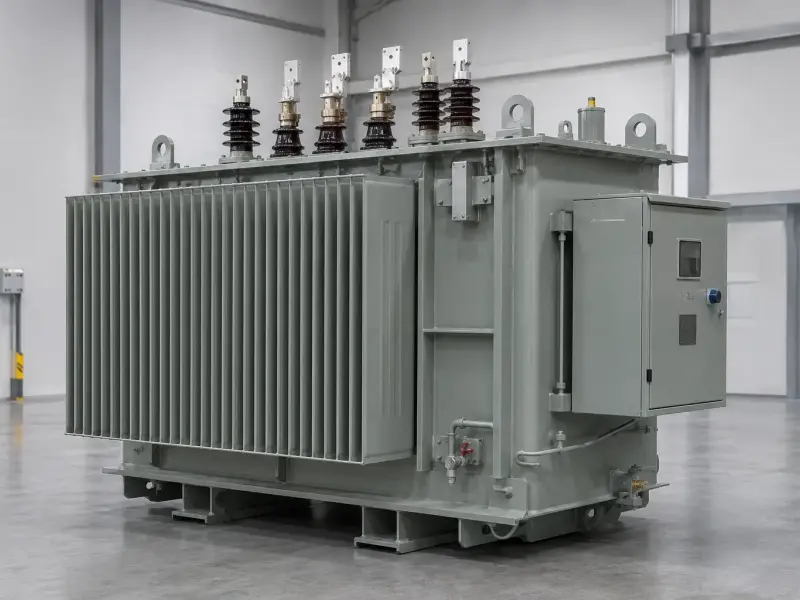
Aluminum Strip for Power Transformers
Large power transformers have more demanding electrical and mechanical requirements.
The conductor dimensions can be larger, and the winding system may be more complex.
For these projects, material consistency becomes important.
Customers may request detailed control of:
→ Chemical composition
→ Electrical conductivity
→ Mechanical properties
→ Thickness tolerance
→ Width tolerance
→ Surface condition
→ Coil weight
→ Slitting quality
A clear technical specification can help reduce production problems.
Common Product Forms
Aluminum conductor material can be supplied in different forms depending on the customer’s equipment.
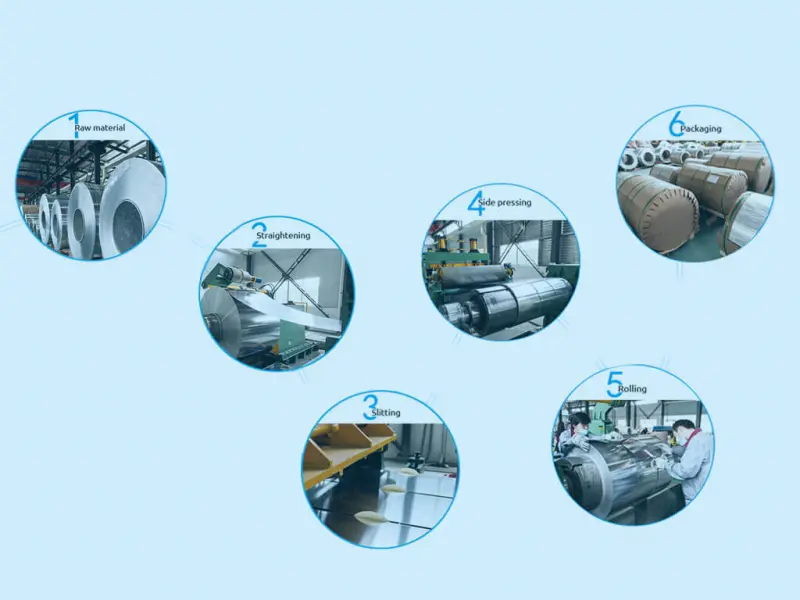
Slit Aluminum Coil
Slit coil is one of the most practical forms for continuous winding.
The coil width is cut to the required size.
Narrow Aluminum Strip
Narrow strip is useful for smaller winding structures and special conductor designs.
Wide Aluminum Strip
Wide strip can be used for larger winding sections.
Custom Aluminum Strip
Custom dimensions can be developed when standard sizes do not fit the winding equipment.
Custom production of Aluminum Strip for Transformer may include:
- Special width
- Special thickness
- Special temper
- Special coil weight
- Special inner diameter
- Special outer diameter
- Customized packaging
How to Select the Right Specification
Choosing aluminum strip should start with the transformer design.

A simple selection process can be shown as:
Transformer design → Current requirement → Conductor size → Alloy → Temper → Thickness → Width → Slitting → Packaging
Each step affects the next one.
Start With Electrical Requirements
First determine the required current and electrical performance.
This helps establish the conductor cross-sectional area.
Check the Winding Space
The available winding space limits the conductor dimensions.
If space is limited, a higher-conductivity material may be preferred.
Select Alloy
High-purity aluminum grades are often considered when conductivity is important.
If additional mechanical strength is required, another alloy may be evaluated.
Select Temper
The temper should match the bending and winding process.
A soft material may be easier to form. A harder material may provide greater dimensional stability.
Thickness Selection Example
Suppose a customer needs a strip for a winding system.
The customer may compare several thicknesses:
| Option | Thickness | Main Point |
|---|---|---|
| A | 0.50 mm | Flexible and compact |
| B | 0.80 mm | Balanced option |
| C | 1.00 mm | More cross-sectional area |
| D | 1.50 mm | Heavy conductor |
| E | 2.00 mm | Large conductor design |
The correct choice cannot be made from thickness alone.
Width and alloy must also be considered.
Coil Weight and Handling
Coil weight affects transportation and production.
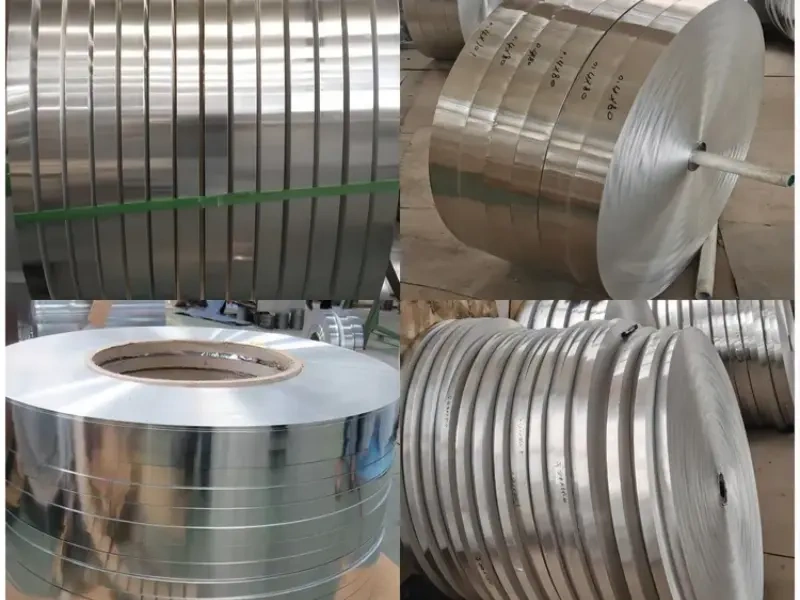
Small coils may be easier for manual handling. Larger coils can improve production efficiency on automated winding lines.
Customers may specify:
- Coil weight
- Coil outer diameter
- Coil inner diameter
- Winding direction
- Coil width
- Packaging method
A stable coil shape helps reduce interruptions during production.
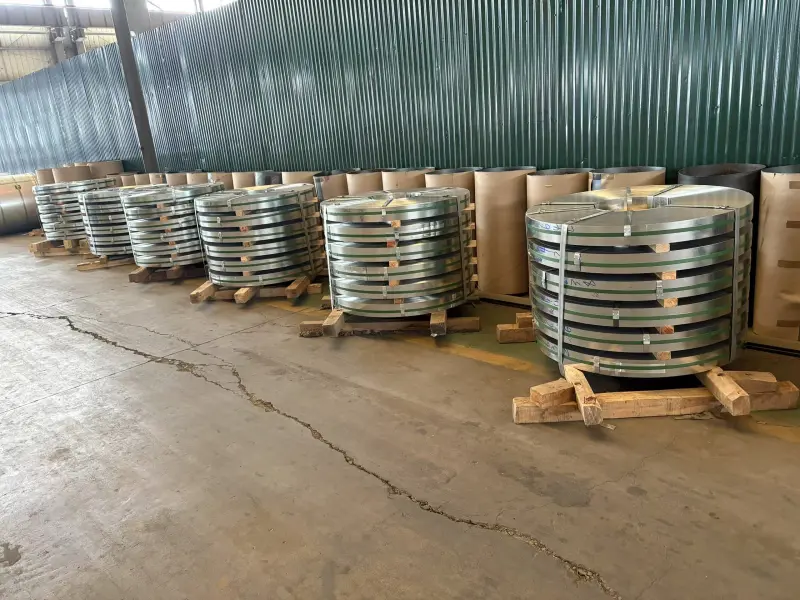
Packaging for Aluminum Transformer Strip
Proper packaging protects the material during transportation.
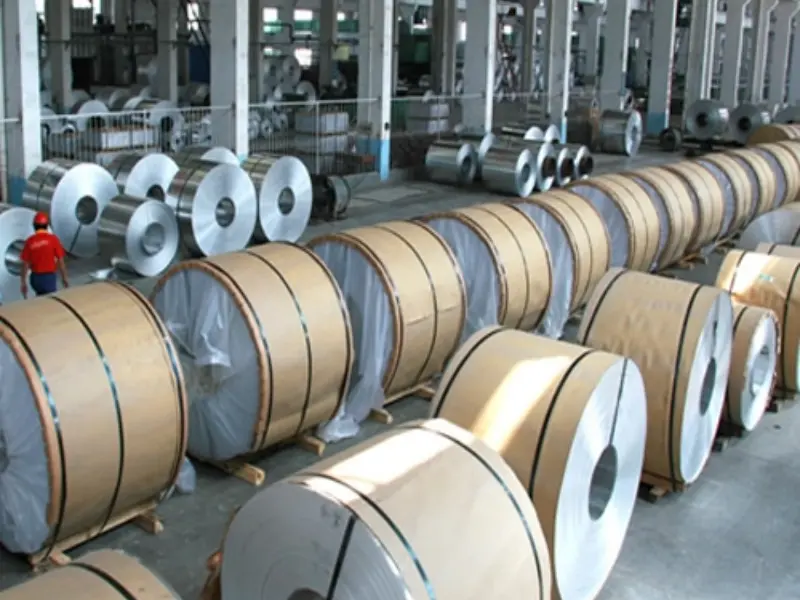
Common packaging methods can include moisture-resistant wrapping, protective paper, edge protection, and strong pallets or cases.
For export shipments, packaging should be selected according to the transport method.
Typical packaging considerations include:
| Item | Purpose |
|---|---|
| Moisture protection | Reduce water exposure |
| Edge protection | Protect slit edges |
| Strong core | Support the coil |
| Outer wrapping | Reduce surface damage |
| Pallet or case | Improve handling |
The package should also allow the customer to identify alloy, size, coil number, and order information.
Quality Control Before Shipment
A reliable supplier of Aluminum Strip for Transformer should check the material before shipment.
Important inspection points can include:
→ Alloy and chemical composition
→ Thickness
→ Width
→ Temper
→ Surface quality
→ Edge quality
→ Coil dimensions
→ Weight
→ Packaging condition
For large transformer projects, inspection documents may also be requested.
Typical Specification Format
A purchasing specification can be written in a simple format.
| Item | Example |
|---|---|
| Product | Aluminum strip |
| Alloy | 1050 / 1060 / 1070 |
| Temper | O / H12 / H14 |
| Thickness | 0.50–2.00 mm |
| Width | 20–200 mm |
| Surface | Mill finish |
| Edge | Slit edge |
| Form | Coil |
| Packing | Export packing |
These values are examples only. The final specification should be based on the customer’s transformer design.
What Makes a Good Supplier?
A suitable supplier should provide more than a low material price.
For transformer production, consistency is important.
A useful supplier evaluation can include:
Material Control
The supplier should be able to provide stable alloy and temper.
Dimensional Control
Thickness and width should remain within the agreed tolerance.
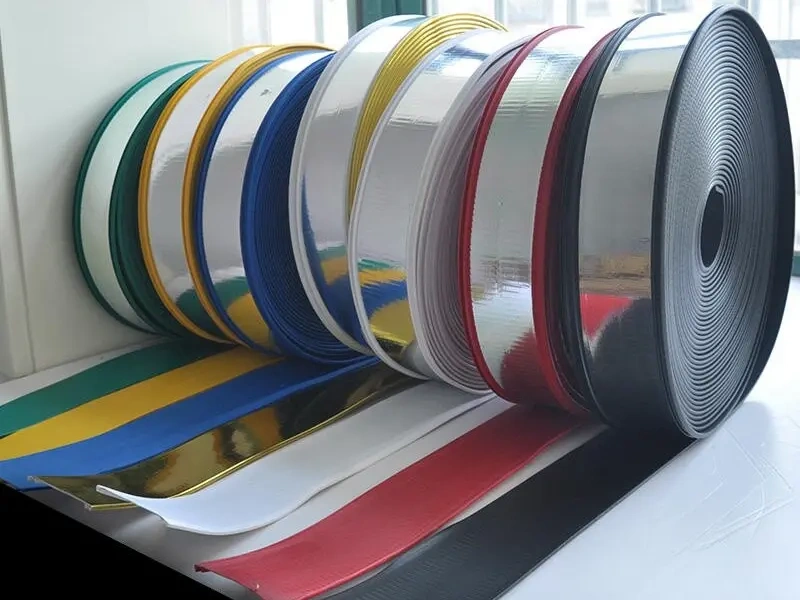
Slitting Capability
The supplier should have suitable equipment for narrow and precision strip.
Coil Control
The finished coil should be wound tightly and evenly.
Packaging
The product should arrive without moisture damage, deformation, or edge damage.
Communication
Technical questions should be answered clearly before production begins.
Custom Aluminum Strip for Transformer Manufacturers
Standard sizes do not always fit every transformer design.
A manufacturer may need a custom aluminum strip with a specific combination of:
Alloy + temper + thickness + width + coil weight + edge condition
Custom production can reduce the need for additional processing at the customer’s factory.
For example, a transformer manufacturer may request a 1060 aluminum strip with a specific width and thickness for a particular winding machine.
Another customer may need 1050 aluminum strip in a soft temper for easy forming.
This is why technical communication is important before quotation.
Why Buy Transformer Strip in Coil Form?
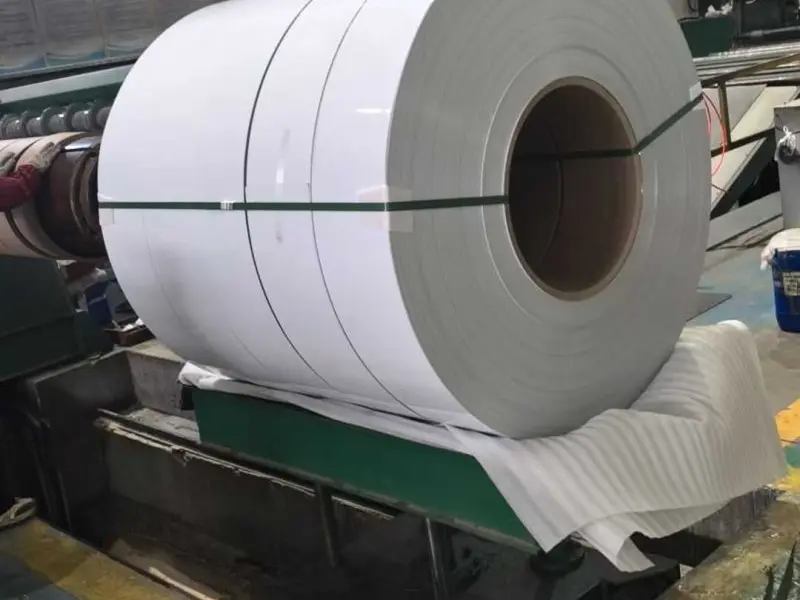
Coil supply provides several production advantages.
→ Continuous winding
→ Less material waste
→ Easier automatic feeding
→ Reduced cutting work
→ Better production efficiency
→ Suitable for high-volume manufacturing
The correct coil size should match the customer’s winding equipment.
Typical Industries Using Aluminum Transformer Strip
The material can support many electrical equipment sectors.
- Transformer manufacturing
- Power distribution
- Industrial electrical systems
- Renewable energy equipment
- Solar power systems
- Wind power systems
- Commercial buildings
- Utility infrastructure
- Electrical control equipment
Different industries may require different alloys, dimensions, and insulation systems.
Ordering Information
Before asking for a quotation, buyers can prepare several basic details.
Product Details
Provide:
- Alloy
- Temper
- Thickness
- Width
- Surface
- Edge type
Coil Details
Also provide:
- Coil weight
- Inner diameter
- Outer diameter
- Quantity
- Packing requirement
Application Details
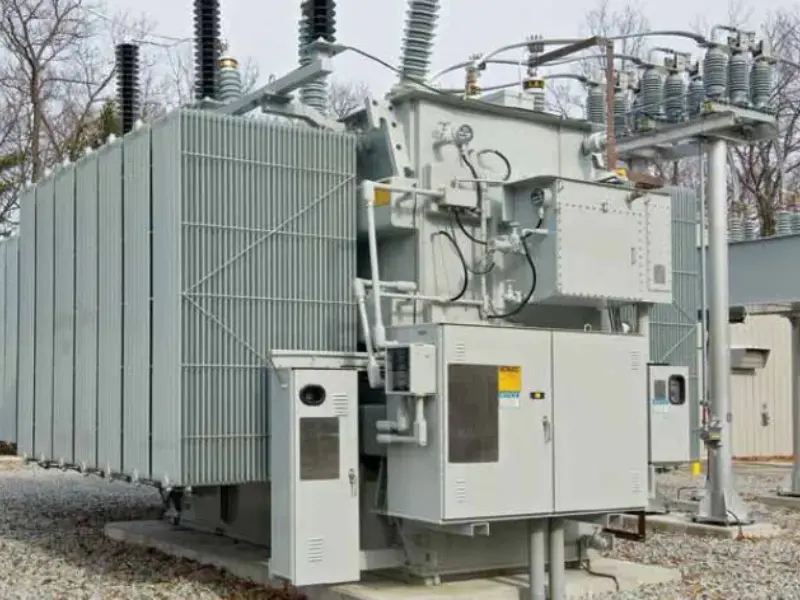
It is useful to tell the supplier whether the strip will be used for:
- Transformer winding
- Electrical conductor
- Dry-type transformer
- Oil-immersed transformer
- Distribution transformer
- Power transformer
This information helps the supplier recommend a more suitable material.
A Simple Buying Checklist
Before placing an order, check the following:
Material
→ Correct alloy
→ Correct temper
→ Required conductivity
Dimensions
→ Thickness
→ Width
→ Tolerance
Processing
→ Slit edge
→ Burr control
→ Coil winding
Packaging
→ Moisture protection
→ Edge protection
→ Export packing
Documents
→ Material certificate
→ Inspection report
→ Packing list
A clear checklist can reduce misunderstandings between buyer and supplier.
Final Selection: Which Aluminum Strip Should You Choose?
There is no single aluminum strip that fits every transformer.
For high-conductivity applications, 1050, 1060, or 1070 may be considered. For applications where more strength is needed, other aluminum alloys may be evaluated.
The best choice depends on the transformer structure, current requirement, winding space, production equipment, insulation system, and cost target.
F
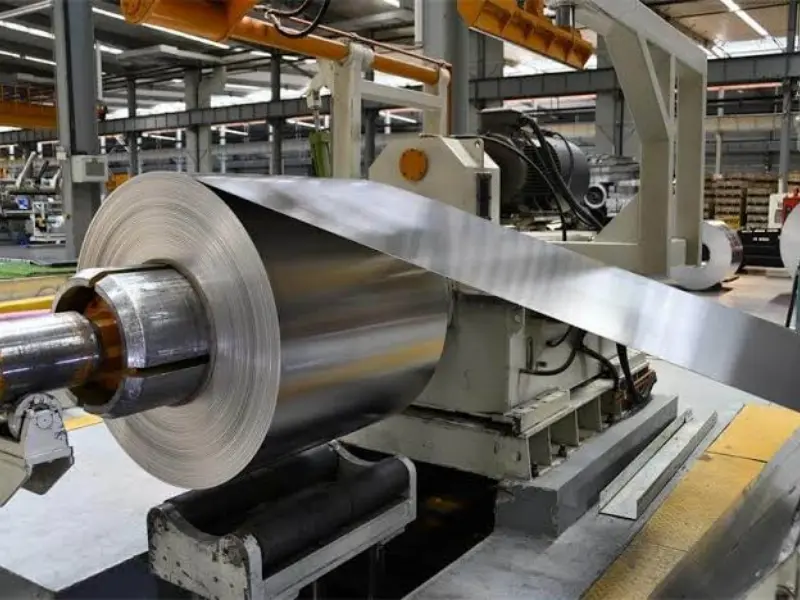
or many buyers, the most important point is not simply finding the cheapest strip. It is finding a stable material that can run consistently through the entire manufacturing process.
A practical selection path is:
Electrical requirement → Alloy → Temper → Thickness → Width → Edge → Coil → Packaging
By controlling these points, transformer manufacturers can choose aluminum strip with better production compatibility and more predictable performance.
Request a Custom Aluminum Strip Specification
If you are sourcing aluminum strip for transformer winding, a custom specification can be prepared based on your requirements.
You can provide the alloy, temper, thickness, width, quantity, coil size, and application. A supplier can then confirm the available specification and production details.
For long-term purchasing, it is also useful to compare material quality, dimensional tolerance, slitting capability, delivery time, packaging, and total cost rather than looking only at the price per kilogram.
Suggested Related Titles
Aluminum Strip for Transformer Winding
1050 Aluminum Strip for Transformer
1060 Aluminum Strip for Transformer Winding
1070 Aluminum Strip for Electrical Transformers
Transformer Aluminum Strip Thickness and Width Guide
Aluminum vs Copper Strip for Transformer Windings
How to Choose Aluminum Strip for Transformer Manufacturing
Custom Aluminum Strip for Transformer Winding
Aluminum Conductor Strip for Dry-Type Transformers
Aluminum Strip Coil for Power Transformer Manufacturers