A Lightweight Facade Panel for Modern Buildings
Aluminum honeycomb panel for facade systems is a strong and lightweight cladding material. It is widely used on commercial buildings, airports, hotels, offices, hospitals, retail centers, transport stations, and high-rise projects.
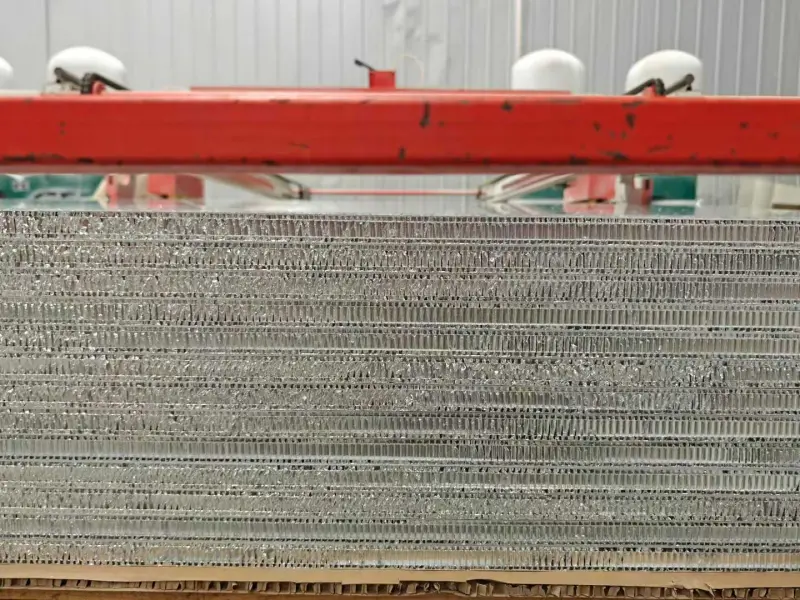
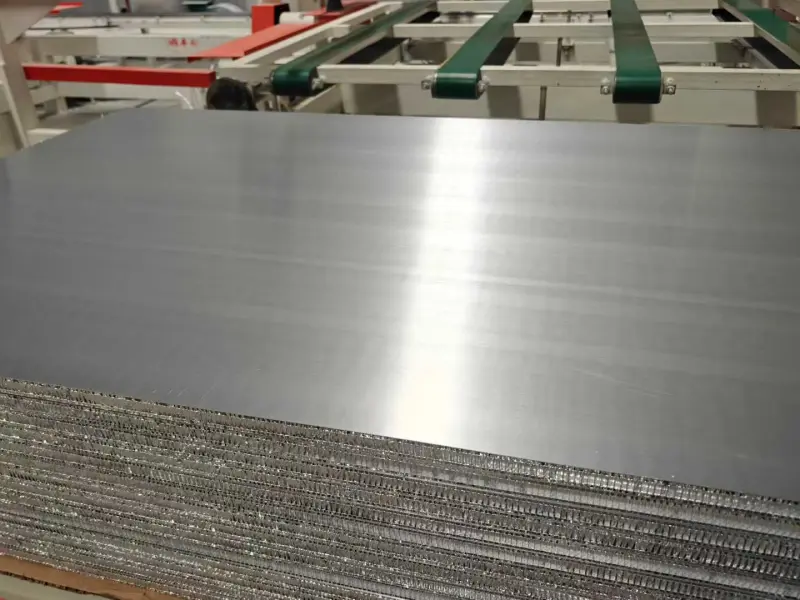
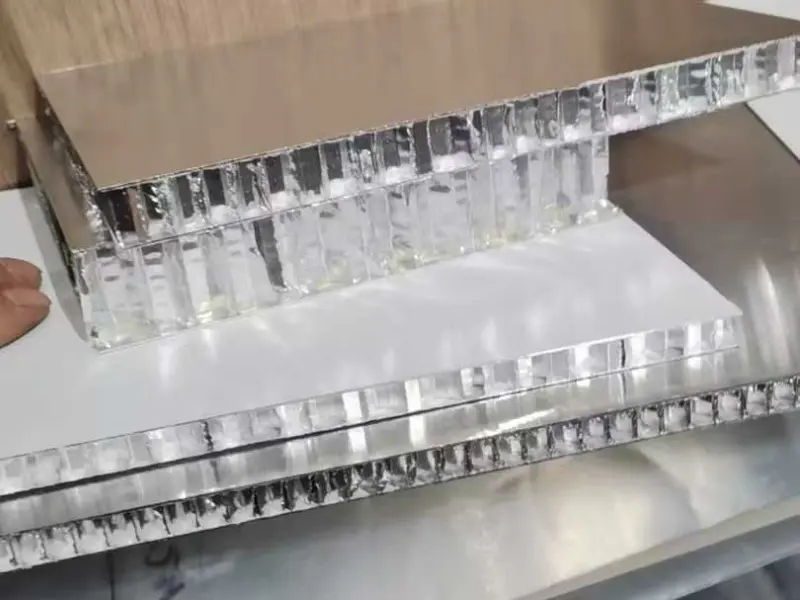
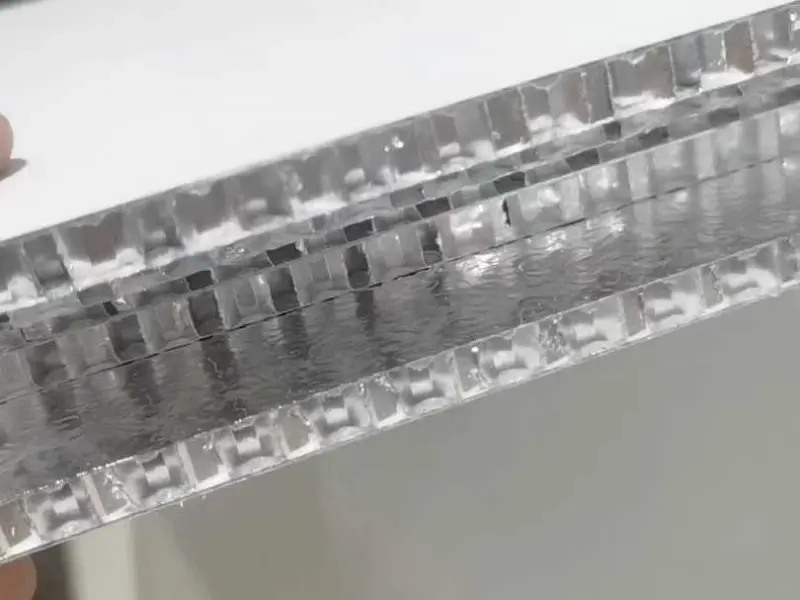
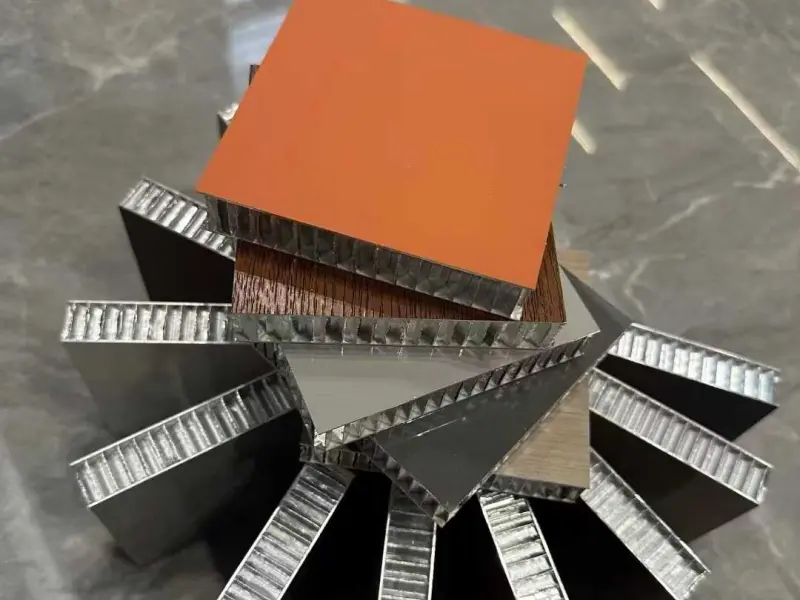
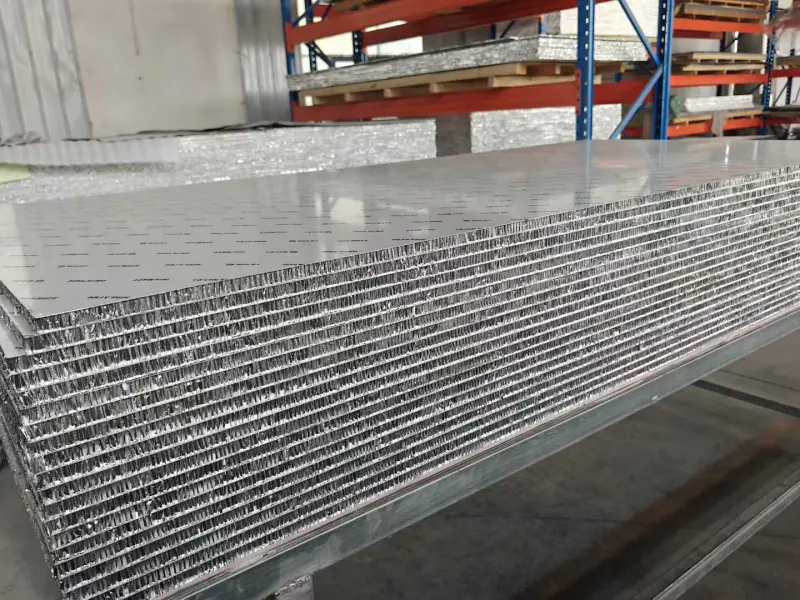
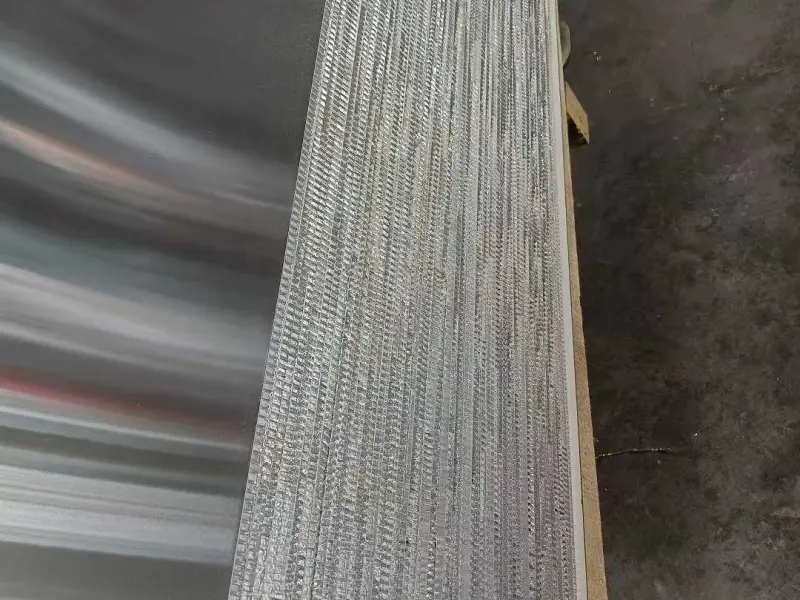
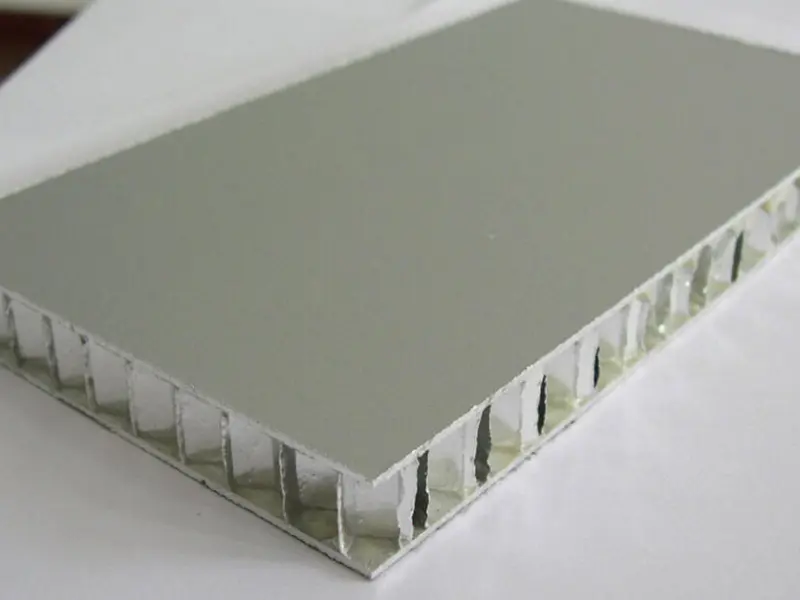
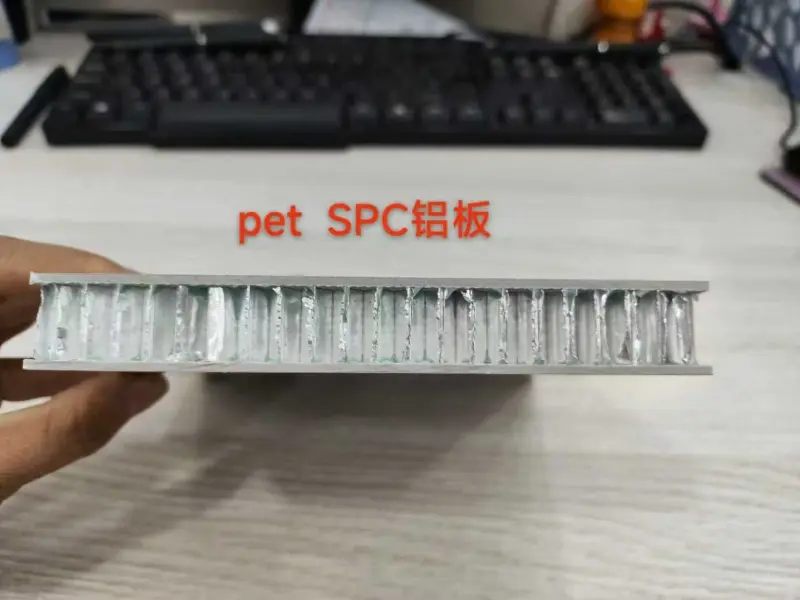
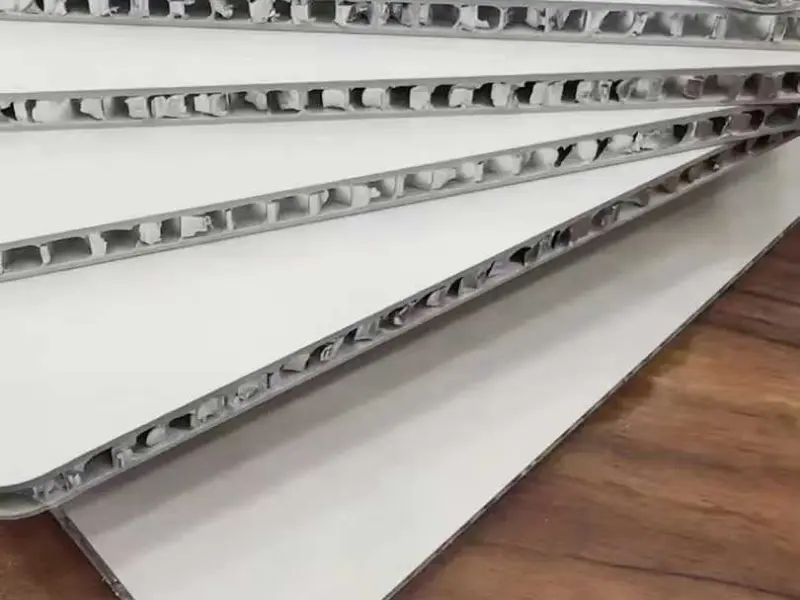
The panel has two aluminum skins with an aluminum honeycomb core inside. This structure gives the panel good stiffness without the weight of a solid aluminum plate. It also creates a smooth surface that suits modern architectural designs.
Facade aluminum honeycomb panels can be produced in different colors, coatings, thicknesses, sizes, and edge designs.
They can be used for exterior walls, soffits, column covers, entrance areas, balcony cladding, curtain walls, and decorative building surfaces.
Facade selection guide → Check project location → Confirm wind load → Select panel thickness → Choose alloy and coating → Design the fixing system.
What Is an Aluminum Honeycomb Facade Panel?
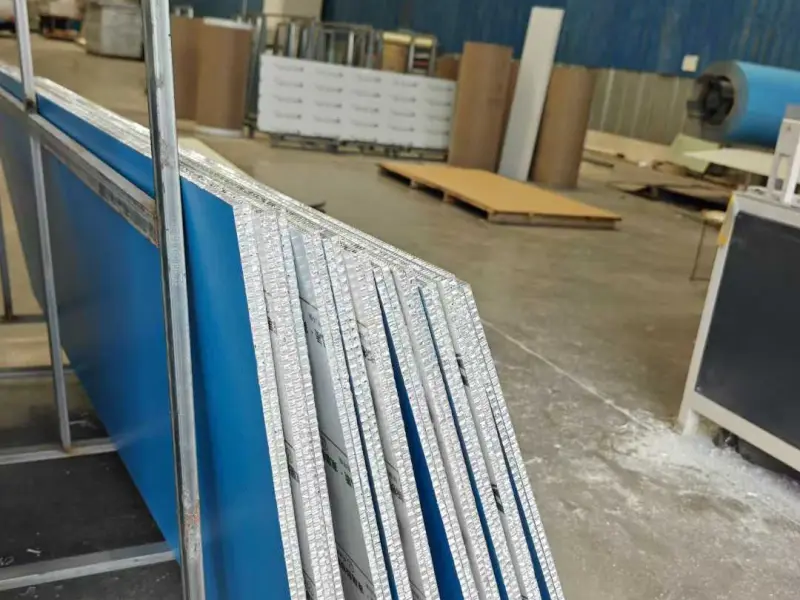
An aluminum honeycomb facade panel is a composite panel made from three main layers. The top and bottom layers are aluminum sheets. The middle layer is an aluminum honeycomb core.
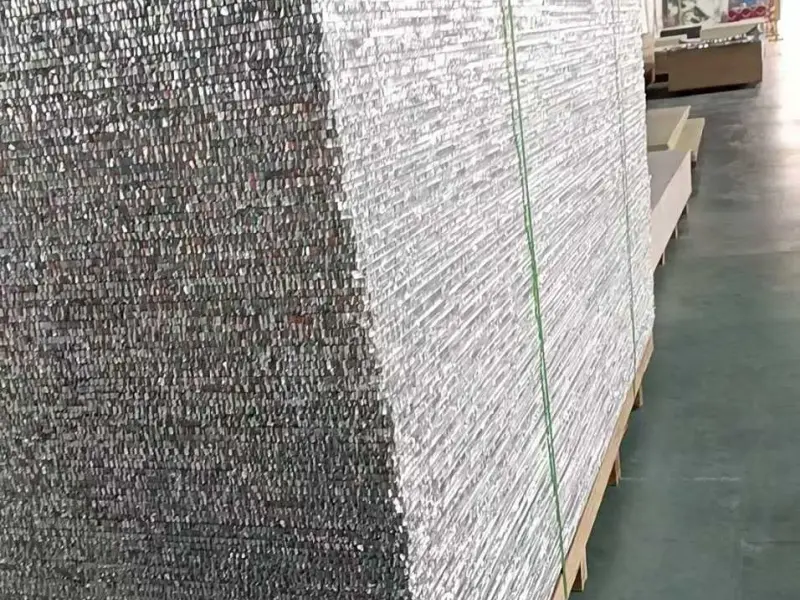
The core contains many small hexagonal cells. This structure provides support across the panel while keeping the overall weight low.
Main Panel Structure
| Panel Part | Common Material | Main Function |
|---|---|---|
| Front skin | Aluminum sheet | Provides the visible facade surface |
| Adhesive layer | Structural bonding adhesive | Bonds skin and core together |
| Honeycomb core | Aluminum honeycomb | Adds stiffness and reduces weight |
| Back skin | Aluminum sheet | Supports the panel structure |
| Edge treatment | Aluminum frame, folded edge, or seal | Improves strength and installation |
The final performance depends on the complete panel design. Aluminum alloy, skin thickness, core density, coating, frame system, and installation method all affect the finished facade.
Why Use Aluminum Honeycomb Panels for Facades?
A facade needs to look good and perform well over time. It must face sunlight, rain, wind, temperature changes, dust, and building movement.
Aluminum honeycomb panels offer a practical balance between appearance, weight, and structural stability.
Main Benefits for Exterior Cladding
- Lightweight material
- High stiffness for its weight
- Flat and smooth surface
- Good corrosion resistance
- Easy to fabricate into custom sizes
- Suitable for many colors and finishes
- Can reduce load on the building structure
- Supports large panel designs
- Easy to clean and maintain
- Suitable for curved and shaped facade areas
- Recyclable aluminum material
- Compatible with many curtain wall systems
Performance Overview of Aluminum Honeycomb Panel for Facade
| Feature | Aluminum Honeycomb Panel for Facade |
|---|---|
| Weight | Lower than solid aluminum plate |
| Surface flatness | High |
| Design flexibility | High |
| Corrosion resistance | Good with proper alloy and coating |
| Panel thickness range | Wide |
| Custom finish options | Many |
| Installation options | Open joint, sealed joint, cassette, concealed fixing |
| Maintenance | Generally low |
| Suitable building types | Commercial, public, residential, industrial |
How the Honeycomb Core Supports the Facade
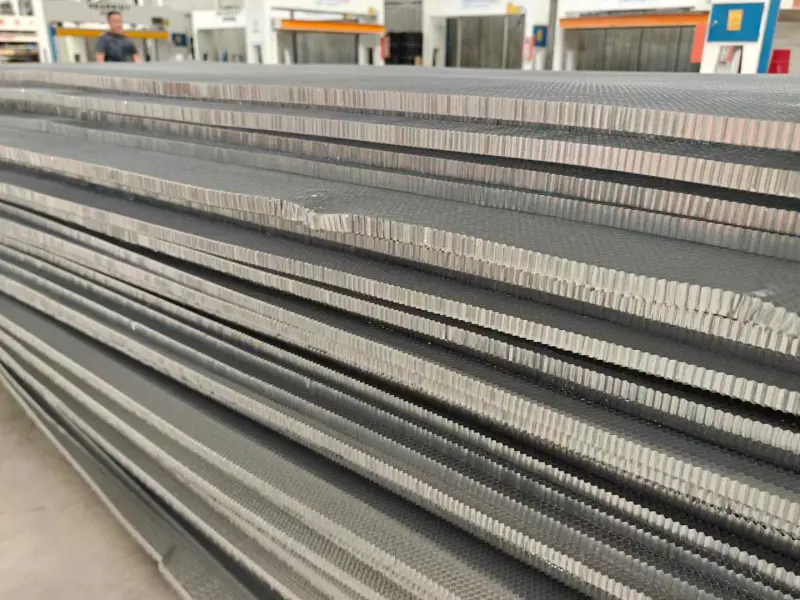
The honeycomb core is one of the main reasons for the panel’s strength-to-weight ratio. It separates the two aluminum skins and helps them work together.
When wind pressure acts on the panel, the outer skin receives the load. The honeycomb core transfers support across the panel. The rear skin adds stability.
Core Design Factors of Aluminum Honeycomb Panel for Facade
| Core Factor | Effect on the Panel |
|---|---|
| Cell size | Affects weight and support |
| Core density | Affects compression strength |
| Core thickness | Affects panel stiffness |
| Foil thickness | Affects core strength |
| Bonding quality | Affects long-term panel performance |
| Core alloy | Affects corrosion and mechanical properties |
A smaller cell size can provide a more stable support surface. A higher-density core can improve strength, but it may increase panel weight and cost.
Common Aluminum Honeycomb Facade Panel Types
Facade projects may require different panel shapes and surface effects. A professional supplier can provide standard flat panels and customized architectural panels.
Flat Aluminum Honeycomb Wall Panels
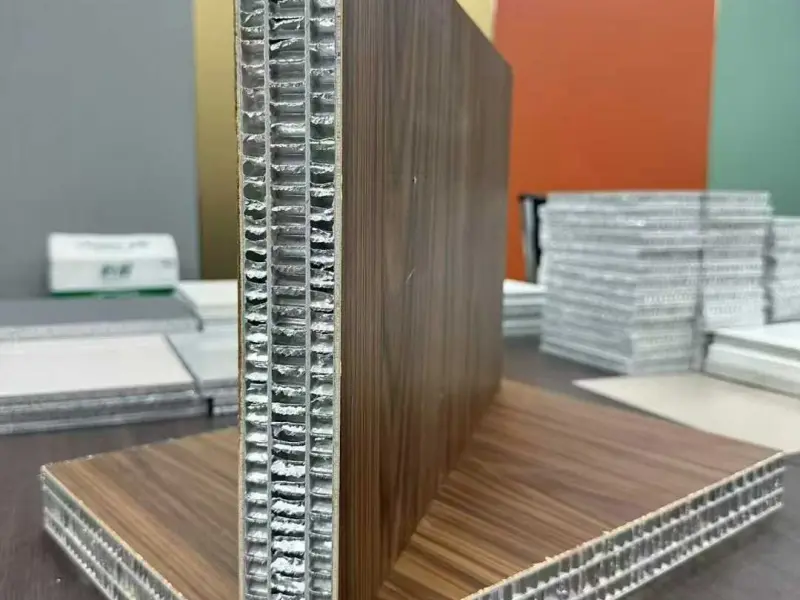
Flat panels are the most common type. They are used for exterior walls, curtain wall sections, soffits, entrances, and large decorative surfaces.
They provide a clean and modern appearance. Large panels can reduce visible joints and create a simple facade design.
| Feature | Flat Facade Panel |
|---|---|
| Surface shape | Flat |
| Typical use | Exterior wall cladding |
| Installation | Cassette system, frame system, rivets, concealed fixing |
| Finish options | PVDF, powder coat, anodized, brushed |
| Main advantage | Smooth visual appearance |
Curved Aluminum Honeycomb Panels
Curved panels are used for special building designs. They can cover round columns, curved walls, arched entrances, airport interiors, and decorative exterior structures.
The factory normally needs a technical drawing or sample before production.
| Item | Curved Panel Requirement |
|---|---|
| Radius | Must be confirmed before production |
| Panel size | Depends on bending design |
| Surface finish | Should be selected before forming |
| Core design | May be adjusted for bending |
| Installation method | Must match the curved structure |
Curved panels can create a strong visual effect, but they need careful engineering and accurate installation.
Perforated Aluminum Honeycomb Panels
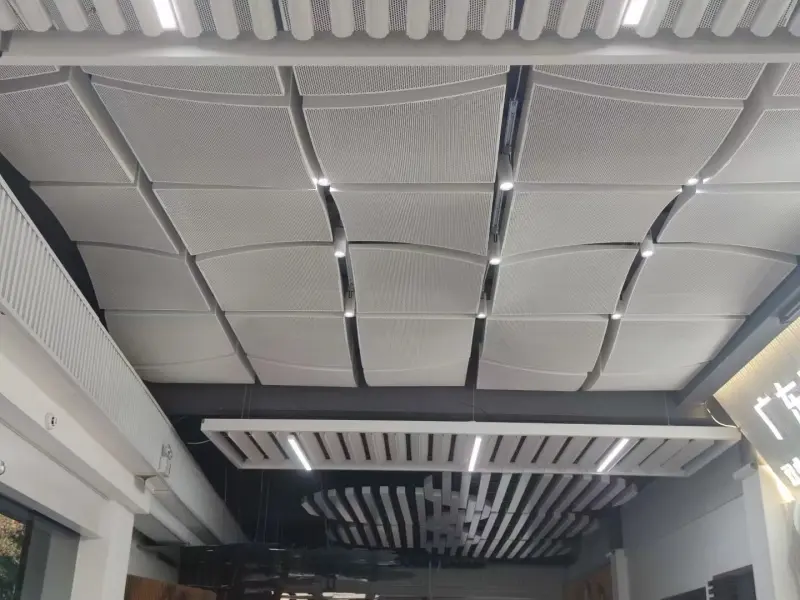
Perforated panels have holes in the visible aluminum skin. They may be used for sun shading, ventilation areas, acoustic facades, parking structures, and decorative building screens.
A perforated design can create different visual effects depending on hole size, shape, spacing, and open area.
| Perforation Type | Common Use |
|---|---|
| Round holes | Decorative walls and ventilation panels |
| Square holes | Modern architectural screens |
| Slot holes | Sunshade and airflow areas |
| Custom pattern holes | Branded and decorative facade designs |
| Micro perforation | Acoustic and fine visual effects |
The factory should review the perforation design because a high open area may affect the panel’s appearance and stiffness.
Corrugated or Ribbed Facade Panels
Ribbed panels have long raised lines or shaped surfaces. They create shadow lines and improve the visual depth of the facade.
They are often used on retail stores, industrial buildings, commercial entrances, parking areas, and modern office walls.
Stone-Look Honeycomb Panels
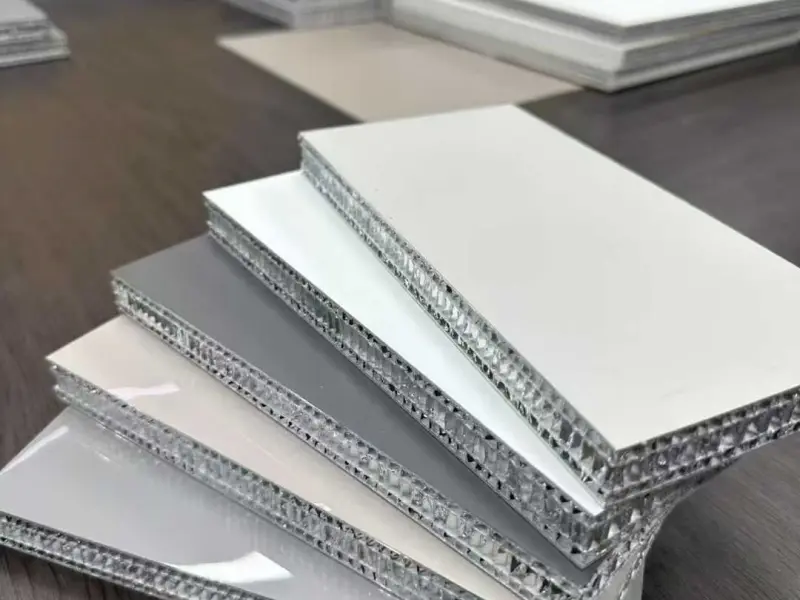
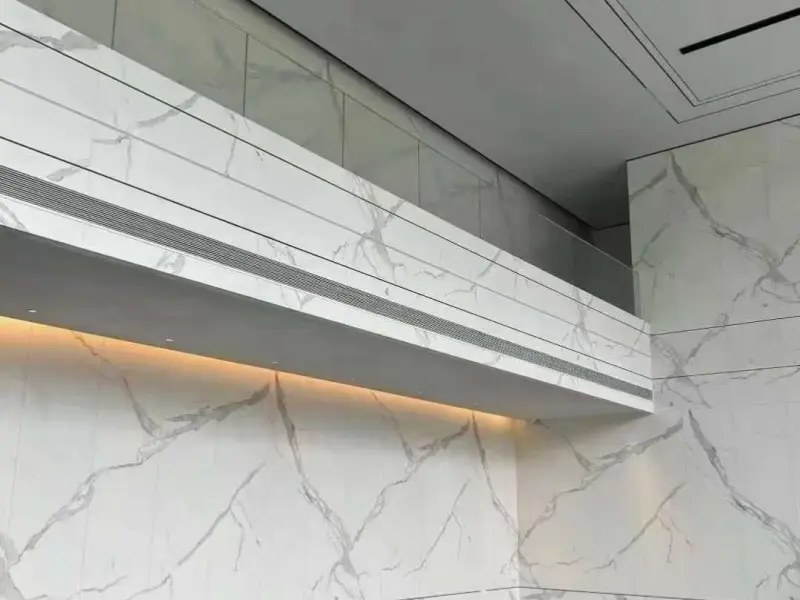
Stone-look aluminum honeycomb panels can provide the appearance of marble, granite, limestone, or other natural stone surfaces. The visible layer may use real stone veneer or a high-quality decorative finish, depending on the product design.
Compared with thick natural stone panels, a honeycomb-backed panel can reduce total weight.
| Feature | Stone-Look Honeycomb Panel |
|---|---|
| Visual effect | Natural stone appearance |
| Panel weight | Lower than thick solid stone |
| Main use | Hotels, lobbies, facades, premium buildings |
| Surface choice | Marble, granite, limestone, custom stone |
| Installation | Mechanical support system required |
Wood-Grain Aluminum Honeycomb Panels
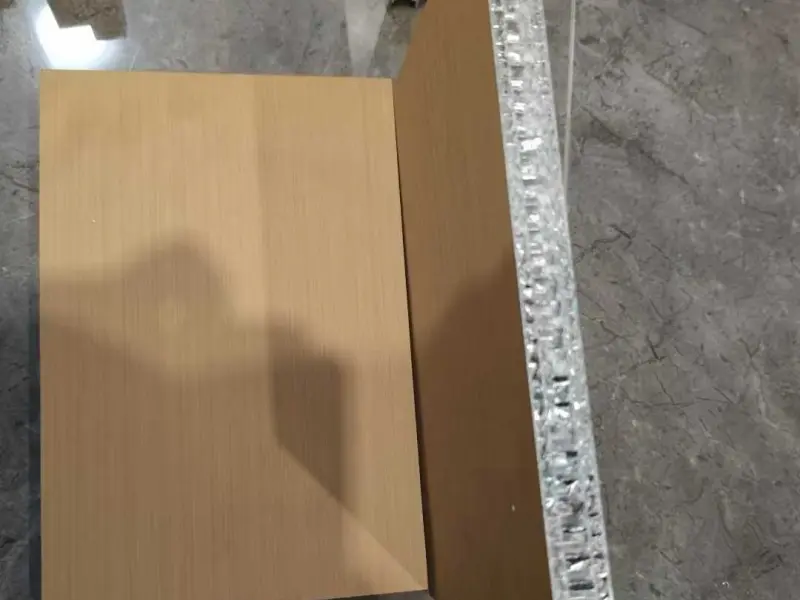
Wood-grain panels create a warm design while providing the durability of aluminum. They are often used for exterior walls, balconies, villa facades, commercial entrances, and ceiling soffits.
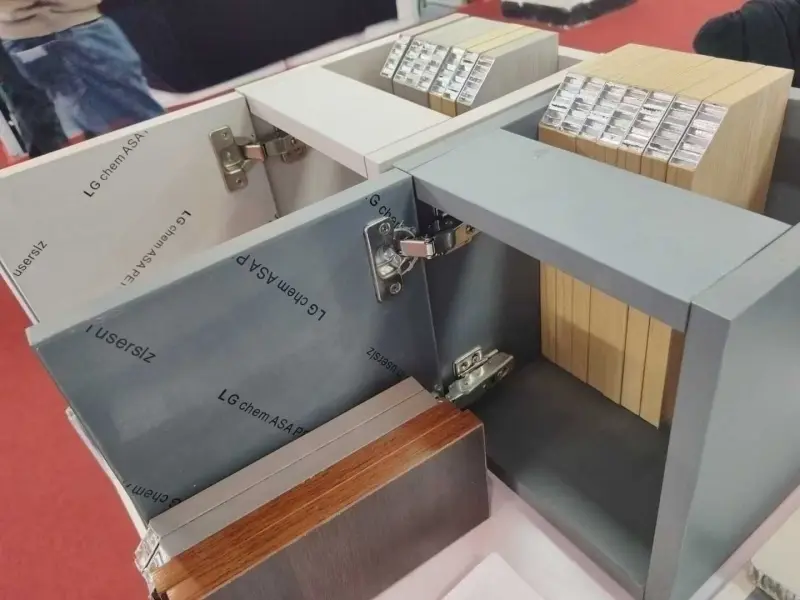
Common wood-grain effects include:
- Teak
- Walnut
- Oak
- Maple
- Dark wood
- Light wood
- Custom wood pattern
For outdoor use, the coating system should be suitable for UV exposure and weather conditions.
Mirror and Brushed Honeycomb Panels
Mirror-finish panels create a reflective appearance. Brushed panels create a modern metal texture. Both are often used in feature walls, entrances, retail facades, canopies, and luxury commercial projects.
Mirror surfaces may require more careful handling because scratches and fingerprints can be more visible.
Aluminum Alloy Options for Facade Panels
The aluminum alloy affects corrosion resistance, strength, forming performance, and surface treatment options.
Common Aluminum Skin Alloys
| Alloy | Main Features | Typical Facade Use |
|---|---|---|
| 3003 | Good formability and corrosion resistance | General facade panels |
| 3004 | Better strength than 3003 | Formed panel products |
| 3105 | Good coating performance | Coated building panels |
| 5005 | Good anodizing quality | Decorative and anodized facades |
| 5052 | Good strength and corrosion resistance | Coastal and demanding projects |
| 5754 | Good strength and formability | Transport and exterior panels |
| 6061 | Good strength and machinability | Special structural elements |
3003 Aluminum Honeycomb Panel for Facade
3003 is a common alloy for general facade panel production. It has good forming performance and corrosion resistance.
It is suitable for painted wall cladding, soffit panels, column covers, and standard architectural projects.
5005 Aluminum Honeycomb Panel for Facade
5005 aluminum is often selected for decorative projects, especially when anodized finishes are required. It can produce a clean and consistent appearance after anodizing.
It is suitable for:
- Anodized facade panels
- Commercial entrances
- Decorative wall systems
- Retail buildings
- Airport and station projects
5052 Aluminum Honeycomb Panel for Facade
5052 aluminum offers higher strength and good corrosion resistance. It is often considered for coastal locations, humid environments, transport facilities, and demanding exterior projects.
5754 Aluminum Honeycomb Panel for Facade
5754 has good strength and good formability. It can be used in facade systems that need reliable outdoor performance and complex fabrication.
Aluminum Temper Conditions of Aluminum Honeycomb Panel for Facade
Temper indicates the hardness condition of the aluminum skin. It affects forming, folding, panel fabrication, and surface performance.
Common Temper Choices
| Temper | General Condition | Typical Use |
|---|---|---|
| O | Soft and annealed | Special forming and curved panels |
| H14 | Half hard | General panel processing |
| H16 | Three-quarter hard | Stronger flat skin applications |
| H18 | Hard condition | Selected flat panels |
| H22 | Partly annealed | Formed facade products |
| H24 | Stable and formable | Standard architectural panels |
| H32 | Strain hardened and stabilized | 5000 series exterior panels |
| H34 | Higher strength condition | Selected durable panel designs |
The best temper depends on the alloy, panel shape, folding design, coating, and installation system.
Panel Thickness and Skin Thickness Options
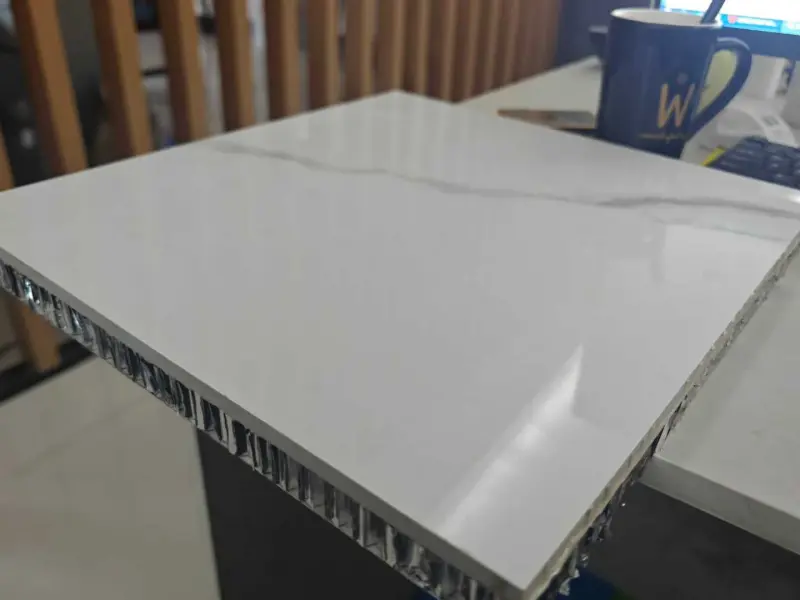
Panel thickness should be selected based on panel size, support spacing, wind load, fixing method, and facade design.
Common Total Panel Thicknesses
| Total Panel Thickness | Typical Application |
|---|---|
| 6 mm | Small interior or light facade features |
| 8 mm | Decorative exterior panels |
| 10 mm | General wall cladding |
| 12 mm | Large facade panels |
| 15 mm | Stronger wall systems |
| 20 mm | Heavy-duty or special facade areas |
| 25 mm and above | Custom structural panel systems |
Aluminum Skin Thickness Options of Aluminum Honeycomb Panel for Facade
| Skin Thickness | General Use |
|---|---|
| 0.5 mm | Light decorative panel |
| 0.7 mm | General architectural panel |
| 0.8 mm | Standard exterior cladding |
| 1.0 mm | Larger facade panel |
| 1.2 mm | Higher strength requirements |
| 1.5 mm | Heavy-duty or custom system |
| 2.0 mm and above | Special panel structures |
A thicker skin can improve dent resistance and panel stability. However, the final panel design should be reviewed as a complete system.
Honeycomb Core Cell Size and Density
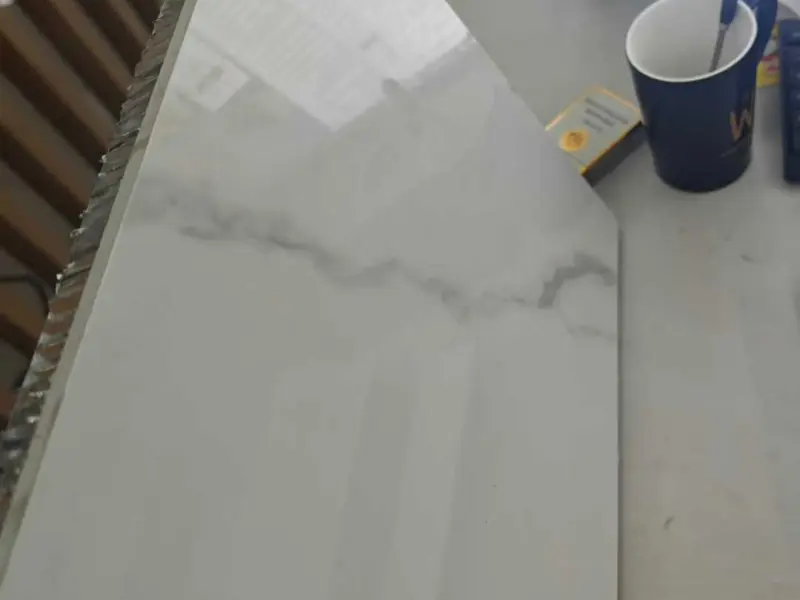
The core structure affects weight, compression strength, and stiffness.
Typical Core Cell Sizes of Aluminum Honeycomb Panel for Facade
| Core Cell Size | General Feature | Common Use |
|---|---|---|
| 3 mm | Fine and stable support | Decorative panel surfaces |
| 4 mm | Balanced support | General facade panels |
| 6 mm | Common core option | Standard wall cladding |
| 8 mm | Lower weight | Large panels |
| 10 mm | Lightweight structure | Custom wide panels |
| 15 mm | Special lightweight design | Selected large panel systems |
Core Density Comparison of Aluminum Honeycomb Panel for Facade
| Core Density | Main Characteristic | Suitable Project Type |
|---|---|---|
| Low density | Lower weight | Decorative cladding |
| Medium density | Balanced strength and cost | General facade systems |
| High density | Higher compression strength | High-load or special areas |
Core density should match the fixing points, panel size, and wind pressure requirements.
Surface Finishes for Exterior Facades
The visible surface is important for both design and durability. Exterior projects need a finish that can handle sunlight, rain, pollution, and temperature changes.
PVDF Aluminum Honeycomb Panel for Facade
PVDF coating is a common choice for exterior facades. It provides good weather resistance and color stability.
It is often used for commercial buildings, high-rise projects, airports, public spaces, and exterior curtain walls.
| PVDF Feature | Value for Facades |
|---|---|
| UV resistance | Helps protect color |
| Weather resistance | Suitable for exterior exposure |
| Color options | Wide range |
| Surface style | Matte, gloss, metallic, custom |
| Cleaning | Generally easy |
Powder Coated Aluminum Honeycomb Panel for Facade
Powder coating provides many color and texture options. It can be used for exterior panels when the coating system is suitable for the project environment.
Common powder coating effects include:
- Matte finish
- Gloss finish
- Fine sand texture
- Rough texture
- Metallic effect
- Custom RAL color
- Special architectural color
Anodized Aluminum Honeycomb Panel for Facade
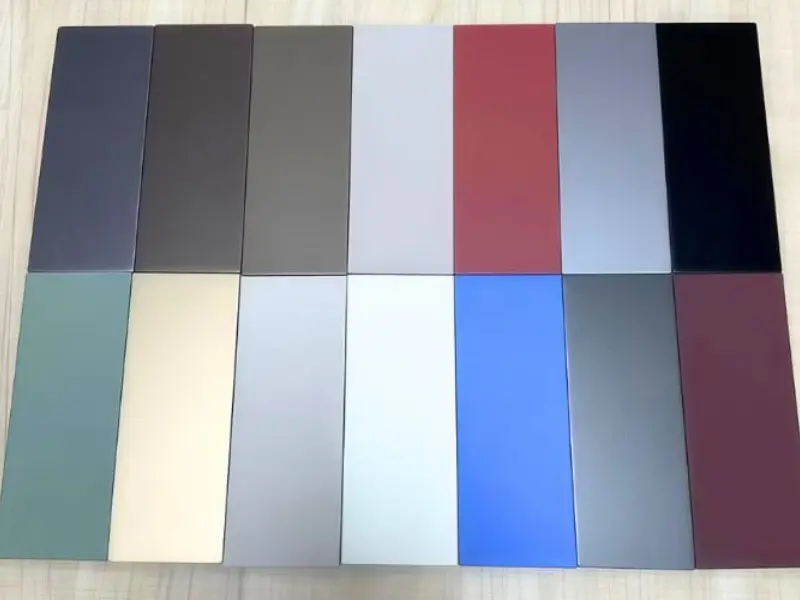
Anodizing Aluminum Honeycomb Panel for Facade forms a protective oxide layer on the aluminum surface. It creates a clean metallic appearance and can improve surface hardness.
Anodized facade panels are suitable for projects that need a natural aluminum look.
| Anodized Finish | Common Appearance |
|---|---|
| Clear anodized | Natural silver metal |
| Champagne anodized | Soft warm metallic tone |
| Bronze anodized | Dark architectural finish |
| Black anodized | Modern premium appearance |
| Brushed anodized | Textured metallic surface |
Fluorocarbon Painted Aluminum Honeycomb Panel for Facade
Fluorocarbon paint can be used for high-performance exterior finishes. It is often selected for major buildings and projects with strict weathering requirements.
Custom Digital Printed Aluminum Honeycomb Panel for Facade
Digital printed aluminum honeycomb panels can show graphics, logos, artwork, maps, or custom patterns. They are suitable for retail facades, exhibition buildings, public spaces, brand centers, and special architectural features.
For exterior use, the printing and clear protective layer should be designed for UV and weather exposure.
Color Choices for Facade Design
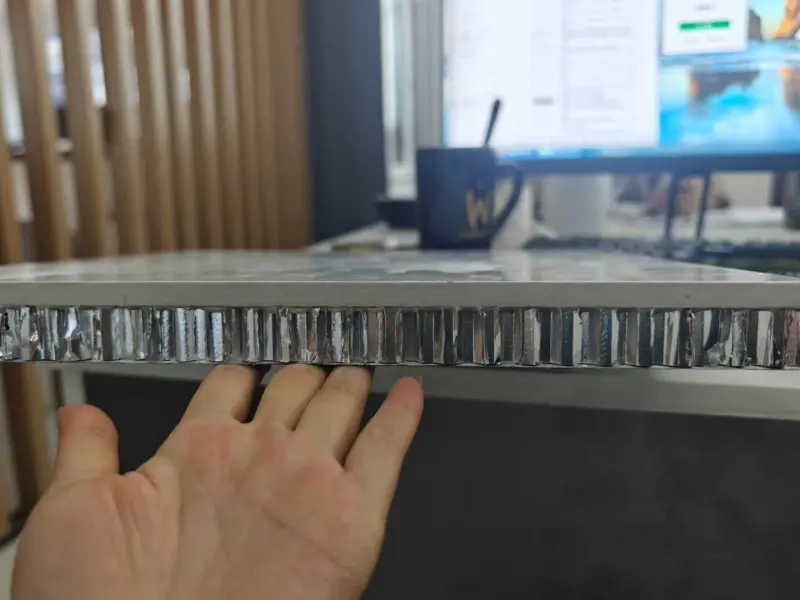
Aluminum honeycomb panels can be supplied in standard and custom colors.
Common Architectural Colors of Aluminum Honeycomb Panel for Facade
| Color Group | Typical Project Use |
|---|---|
| White and off-white | Offices, hospitals, residential projects |
| Grey and silver | Modern commercial buildings |
| Black and dark grey | Premium retail and hotel facades |
| Blue and green | Public buildings and brand projects |
| Red and orange | Retail and feature walls |
| Metallic shades | Airports, stations, modern exteriors |
| Wood grain | Villas, balconies, warm design concepts |
| Stone effect | Hotels, lobbies, luxury facades |
A supplier can match a RAL color, Pantone reference, physical sample, or approved project color standard.
Facade Applications in Different Building Types
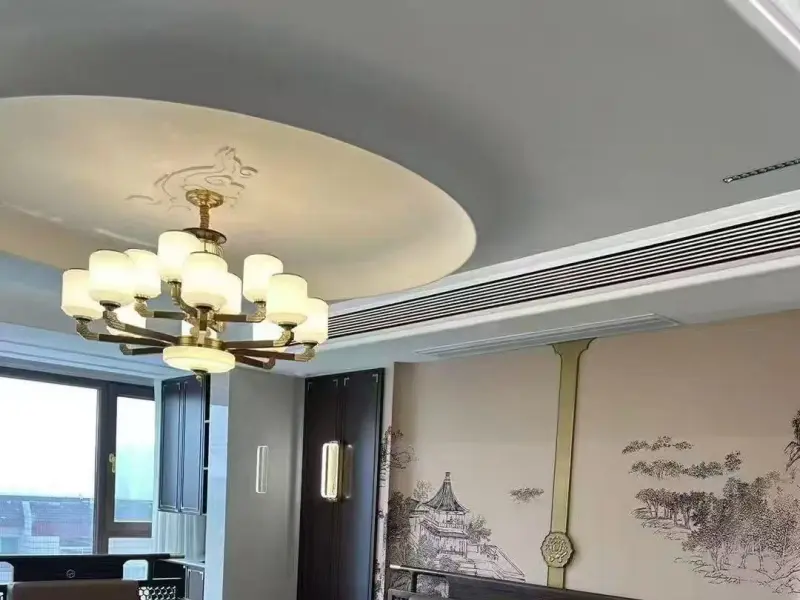
Aluminum honeycomb panels can be used in many building areas. The right panel structure should match the building design and environment.
Commercial Buildings
Restaurant exterior decoration
Office building facades
Shopping mall exteriors
Retail store fronts
Showroom walls
Business center entrances
Bank facade panels
Hotel exterior walls
Public Buildings
- Airport terminal facades
- Railway station walls
- Subway entrances
- Sports center exteriors
- Museum cladding
- School buildings
- Hospital facades
- Government building entrances
Residential Projects
- Apartment building balconies
- Villa exterior walls
- Entrance canopies
- Decorative exterior panels
- Garage wall cladding
- Balcony ceilings
- Exterior column covers
Industrial and Transport Projects
Noise barrier features
Factory office facades
Warehouse entrances
Parking structure panels
Logistics center walls
Transport terminal exteriors
Equipment room cladding
Exterior Wall, Soffit, and Column Applications
Facade Wall Cladding
Wall cladding is the main application for aluminum honeycomb panels. Panels can be installed in vertical, horizontal, or mixed directions.
Large-format panels can create a clean facade with fewer visible joints.
Soffit and Canopy Panels
Soffit panels are installed under roof overhangs, canopies, balconies, and entrance areas. Lightweight honeycomb panels are useful because they reduce load on supporting structures.
Perforated panels may also be used in soffits when ventilation or acoustic performance is needed.
Column Covers
Honeycomb panels can cover square, rectangular, round, and custom-shaped columns. Curved panels may be used for circular columns.
Column covers can improve appearance and hide structural elements, cables, pipes, and irregular surfaces.
Aluminum Honeycomb Panel vs Aluminum Composite Panel
Aluminum honeycomb panels and aluminum composite panels are both used for cladding. Their internal structures are different.
| Feature | Aluminum Honeycomb Panel | Aluminum Composite Panel |
|---|---|---|
| Core material | Aluminum honeycomb core | Mineral or polymer-based core |
| Stiffness | High for its weight | Suitable for general cladding |
| Panel thickness range | Wide | Often standard thicknesses |
| Large panel use | Suitable | Depends on panel system |
| Weight | Lightweight | Lightweight |
| Surface flatness | Very good | Good |
| Custom structure | High flexibility | Depends on product type |
| Typical use | Facades, transport, premium cladding | General exterior and signage panels |
The correct material depends on the facade design, panel size, fire requirements, project budget, local codes, and system approval requirements.
Aluminum Honeycomb Panel vs Solid Aluminum Plate
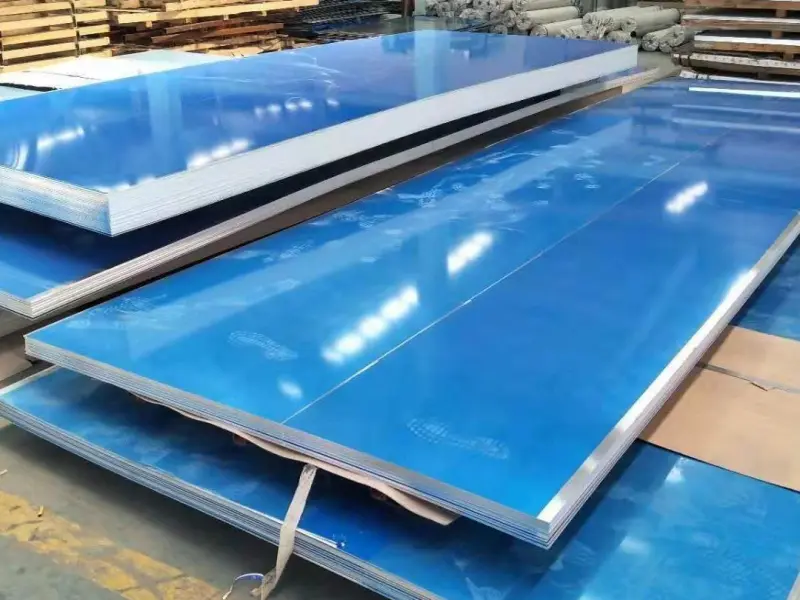
| Feature | Honeycomb Facade Panel | Solid Aluminum Plate |
|---|---|---|
| Weight | Lower | Higher |
| Stiffness-to-weight ratio | High | Good but heavier |
| Large panel handling | Easier in many cases | More difficult |
| Material consumption | Lower for thick panels | Higher |
| Surface flatness | High | Depends on thickness |
| Forming options | Good with panel design | Good but may require more force |
| Best use | Lightweight facade systems | Heavy-duty metal fabrication |
Solid aluminum plate may be selected for special structural or impact-resistant areas. Honeycomb panels are often preferred when a lightweight but rigid facade solution is needed.
Aluminum Honeycomb Panel vs Natural Stone
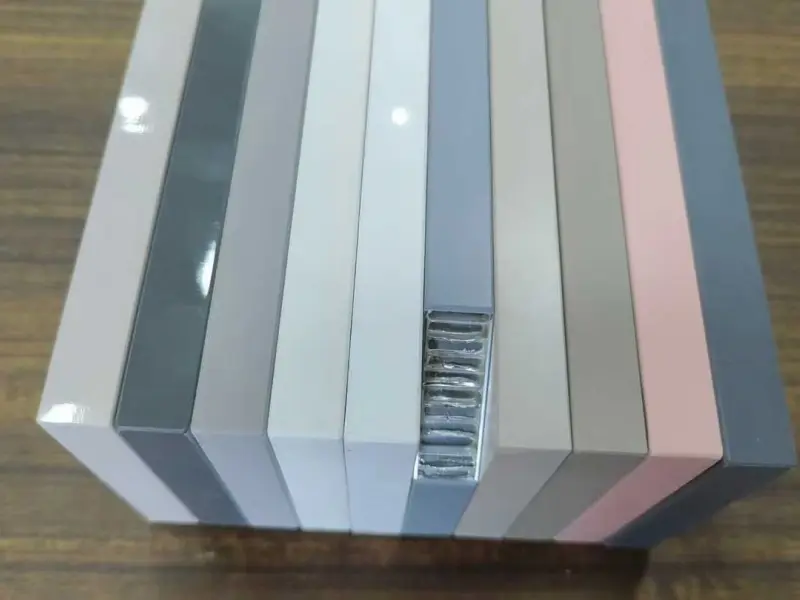

| Feature | Aluminum Honeycomb Panel | Natural Stone Panel |
|---|---|---|
| Weight | Lower | Higher |
| Installation load | Lower | Higher |
| Pattern consistency | High for printed finishes | Natural variation |
| Thickness options | Flexible | Often limited by stone structure |
| Surface options | Metal, paint, wood, stone effect | Natural stone appearance |
| Handling | Easier | Requires careful handling |
| Cost control | Depends on finish and system | Can be high for premium stone |
Stone veneer honeycomb panels can combine a natural stone surface with a lightweight aluminum honeycomb backing.
Wind Load and Panel Size Considerations
Facade panels face wind pressure and wind suction. The required panel thickness, skin thickness, frame design, and fixing points depend on the building location and height.
Factors That Affect Facade Panel Design
| Factor | Why It Matters |
|---|---|
| Building height | Higher buildings may have stronger wind loads |
| Panel size | Large panels need suitable support |
| Fixing spacing | Affects panel stability |
| Skin thickness | Affects dent resistance and stiffness |
| Core density | Affects panel strength |
| Edge design | Supports fixing strength |
| Building location | Coastal and open areas may face stronger wind |
| Installation system | Must transfer load safely |
A qualified facade engineer should confirm wind load, fixing design, movement joints, and project safety requirements.
Fire Performance and Project Compliance
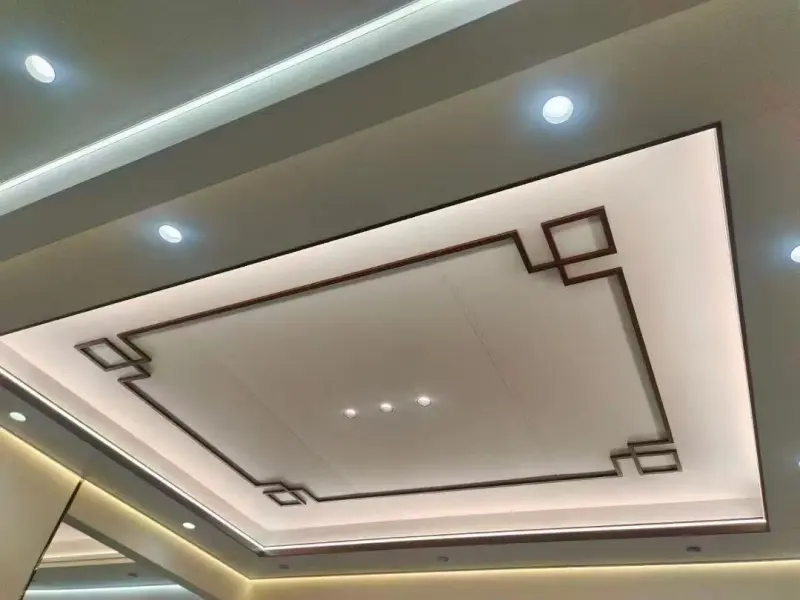
Aluminum is non-combustible. However, the final fire performance of an aluminum honeycomb facade panel depends on the complete product system.
The adhesive, coating, insulation, backing materials, cavities, fixing system, and wall assembly may affect the result.
Important Points to Confirm
- Project fire code requirements
- Required test standard
- Full panel system design
- Core and adhesive details
- Coating type
- Insulation behind the panel
- Air cavity design
- Fire stops and barriers
- Installation method
- Local authority requirements
Do not select a panel based only on the aluminum skin. Request relevant test reports and confirm that the proposed system meets the project requirement.
Fixing Systems for Facade Honeycomb Panels
The installation system is as important as the panel itself. The system should support wind load, thermal movement, water drainage, and safe maintenance.
Open Joint System
Open joint systems leave a visible gap between panels. This creates a modern shadow-line appearance.
| Feature | Open Joint System |
|---|---|
| Appearance | Clear panel separation |
| Drainage | Supports pressure-equalized designs |
| Installation | Common for cassette panels |
| Main need | Proper backing and cavity design |
Sealed Joint System
Sealed joint systems use sealant between panels. This can create a more continuous surface.
The sealant should be compatible with the panel coating and the expected movement of the facade.
Concealed Fixing System
Concealed fixing systems hide the screws or fasteners. They provide a clean exterior appearance.
This type of system requires accurate panel fabrication and installation.
Cassette Panel System
Cassette panels have folded edges. The edges can connect to rails, brackets, or frames.
Cassette systems are popular for modern facade cladding because they create a neat and modular installation method.
Edge Treatment Options
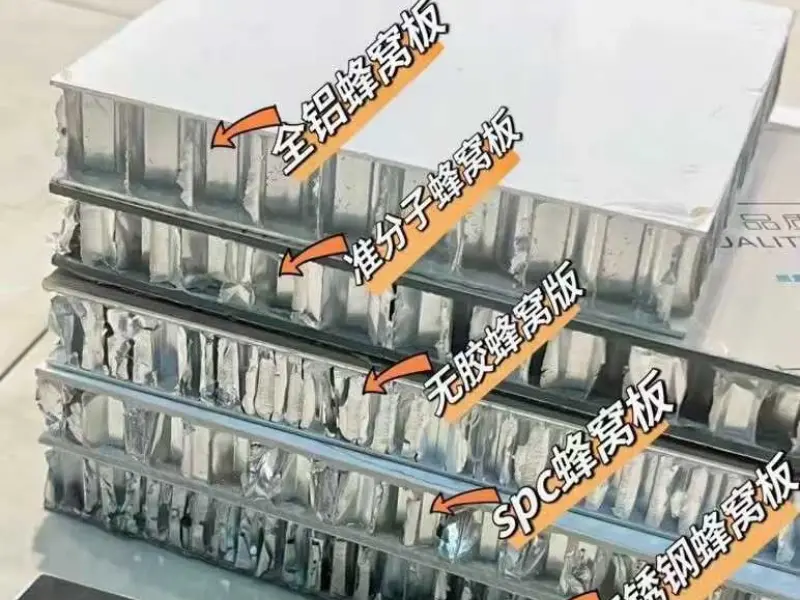
The panel edge affects appearance, strength, drainage, and installation.
| Edge Type | Main Feature | Typical Use |
|---|---|---|
| Open edge | Core edge visible or protected | Interior or special designs |
| Folded edge | Aluminum skin folded around edge | Cassette facade panels |
| Aluminum frame edge | Added structural edge support | Large panels |
| Sealed edge | Protects core from moisture and dust | Exterior wall systems |
| Reinforced insert edge | Supports fixing points | Heavy-duty installation |
| Rounded edge | Soft decorative appearance | Columns and special panels |
For outdoor facade panels, sealed or framed edges are commonly considered to protect the core and support the fixing system.
Custom Fabrication Services
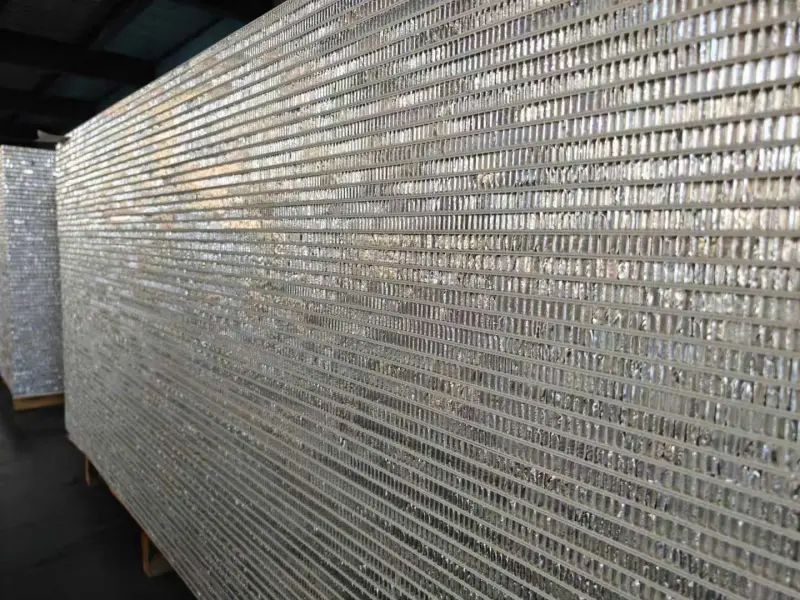
Many facade projects need more than standard panel sizes. Custom fabrication can reduce site cutting and improve installation efficiency.
Available Custom Options
- Custom panel length and width
- Custom thickness
- Custom aluminum alloy
- Custom skin thickness
- Custom core cell size
- Custom core density
- PVDF or powder coating
- Anodized finish
- Wood grain finish
- Stone-look finish
- Perforation
- CNC cutting
- Drilling
- Routing
- Folded edges
- Curved panels
- Corner panels
- Column cover panels
- Pre-installed inserts
- Private-label packing
Information Needed for a Custom Quote
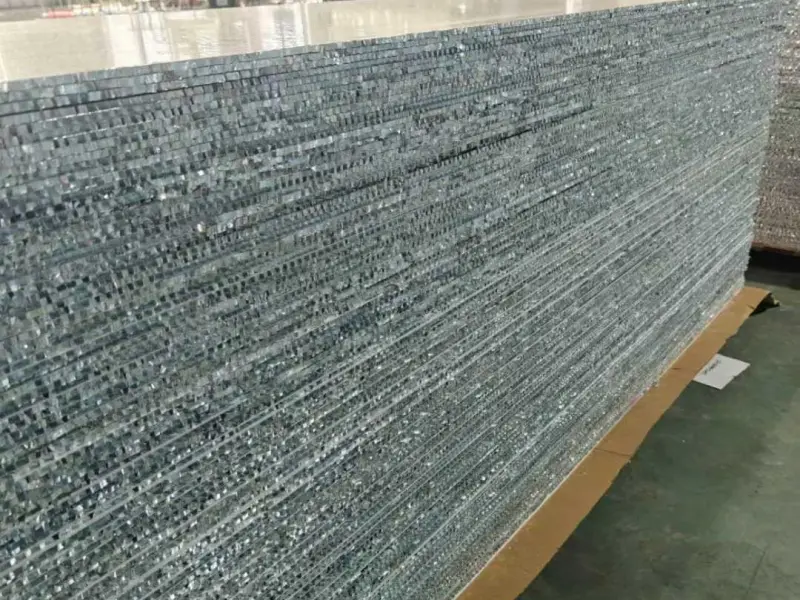
| Information | Why It Is Needed |
|---|---|
| Application area | Helps select the panel structure |
| Panel drawing | Confirms size and shape |
| Total thickness | Determines core and skin design |
| Alloy requirement | Supports corrosion and processing needs |
| Surface finish | Determines coating process |
| Color code | Ensures color matching |
| Quantity | Affects production planning |
| Installation system | Helps design edges and fixing points |
| Project location | Helps assess weather exposure |
| Required documents | Confirms testing and quality needs |
Quality Control for Facade Panels
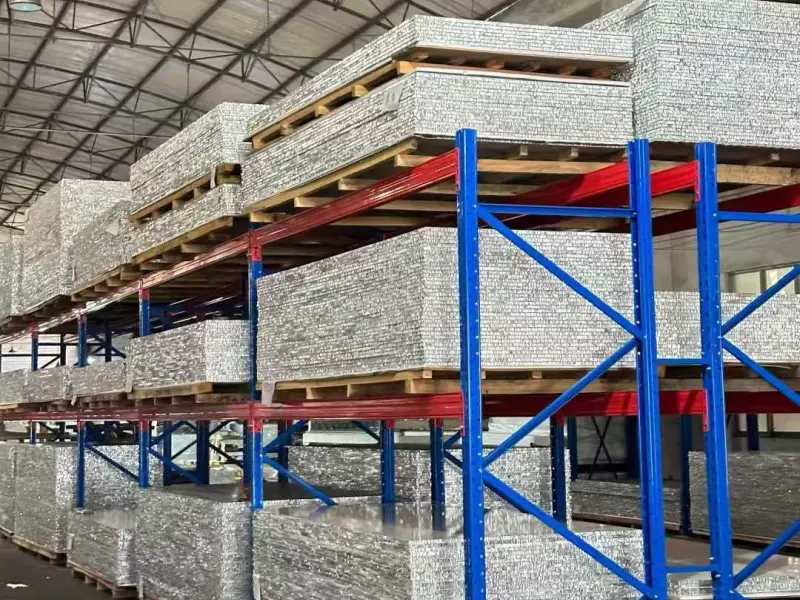
Quality control helps ensure that panels match the approved specification and visual sample.
Main Quality Inspection Items
| Inspection Item | Purpose |
|---|---|
| Panel dimensions | Checks length, width, and thickness |
| Surface flatness | Supports a clean facade appearance |
| Skin thickness | Confirms panel construction |
| Core cell size | Confirms internal structure |
| Bonding quality | Supports panel durability |
| Color consistency | Important for visible facade areas |
| Coating thickness | Supports weather resistance |
| Gloss level | Maintains visual consistency |
| Edge treatment | Supports installation quality |
| Corner condition | Reduces handling damage |
| Protective film | Prevents scratches during transport |
| Packaging | Protects panels during shipping |
For large projects, buyers may request a sample panel, color sample, mock-up, or pre-production approval before full production.
Packing and Transport for Facade Panels
Aluminum honeycomb panels need careful packing. Surface scratches, edge damage, and bending can affect installation and appearance.
Common Export Packing Methods
- Protective film on the visible surface
- Interleaving material between panels
- Foam edge protection
- Corner protectors
- Waterproof wrapping
- Strong wooden pallets
- Wooden crates for special panels
- Clear panel labels
- Installation direction marks
- Export shipping marks
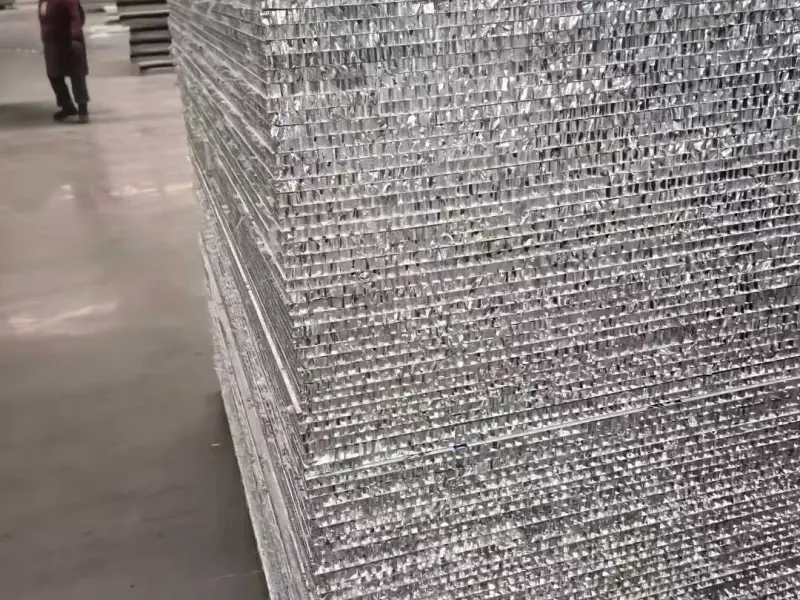
Large panels should be handled with suitable lifting equipment. Panels should be stored on a flat and stable surface before installation.
Cleaning and Maintenance for Exterior Panels
Aluminum honeycomb facade panels usually need simple maintenance. Regular cleaning can help maintain their appearance.
Basic Cleaning Advice
- Use clean water and a soft cloth
- Use a mild neutral detergent if needed
- Rinse the surface after cleaning
- Avoid abrasive pads
- Avoid strong acidic cleaners
- Avoid strong alkaline chemicals
- Test cleaning products on a small hidden area
- Remove construction residue quickly
- Check joints and sealants during regular maintenance
Maintenance frequency depends on the local environment. Coastal, industrial, and high-pollution areas may need more regular cleaning.
Frequently Asked Questions
What is an aluminum honeycomb panel for facade use?
It is a lightweight composite panel with aluminum skins and an aluminum honeycomb core. It is used for exterior wall cladding, soffits, column covers, curtain walls, canopies, and decorative building surfaces.
Are aluminum honeycomb panels suitable for exterior walls?
Yes. They can be used for exterior walls when the correct alloy, coating, edge treatment, panel thickness, fixing system, and installation method are selected.
Which aluminum alloy is suitable for facade panels?
3003, 3105, 5005, 5052, and 5754 are common options. The best alloy depends on the project environment, coating, surface finish, panel design, and required corrosion resistance.
What is the difference between 3003 and 5052 aluminum honeycomb panels?
3003 is a common choice for general architectural panels. It has good forming performance and corrosion resistance. 5052 has higher strength and better corrosion resistance for demanding outdoor or coastal conditions.
What thickness is used for aluminum honeycomb facade panels?
Common total panel thicknesses include 6 mm, 8 mm, 10 mm, 12 mm, 15 mm, and 20 mm. The right thickness depends on panel size, wind load, fixing spacing, and project design.
Can aluminum honeycomb panels be curved?
Yes. Curved aluminum honeycomb panels can be made for round columns, curved walls, arches, and special facade features. The factory needs the required radius and detailed drawing.
Can these panels be perforated?
Yes. Perforated panels can be used for sunshades, ventilation areas, parking facades, decorative screens, and acoustic applications.
Which coating is best for an exterior facade?
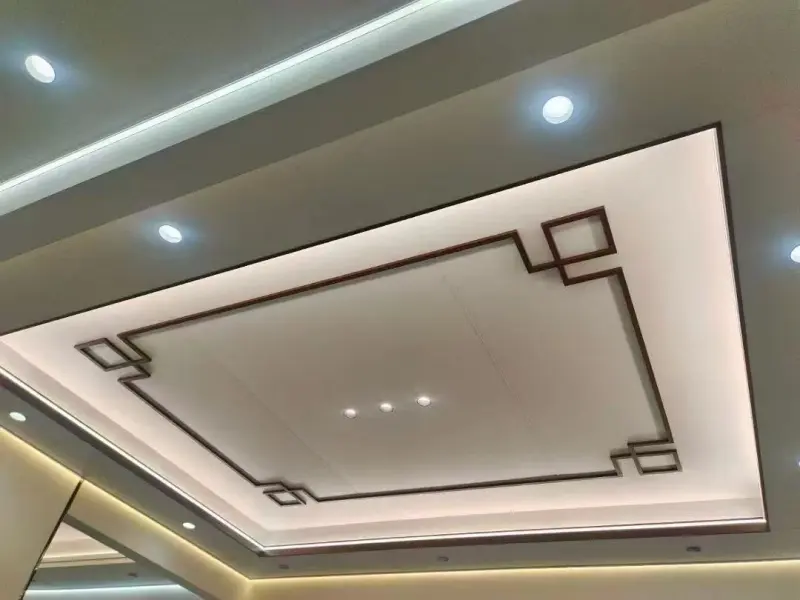
PVDF coating is commonly used for exterior facade projects because it offers good weather resistance and color stability. The final coating choice should match the project environment and warranty requirements.
Are aluminum honeycomb facade panels waterproof?
The panel system should be designed to manage water correctly. The panel surface can resist rain, but the full facade needs proper joints, sealing, drainage, flashing, and installation details.
Are aluminum honeycomb panels fire resistant?
Aluminum is non-combustible, but the complete panel system must be evaluated. Adhesives, coatings, insulation, cavities, and the wall system affect fire performance. Always request relevant system test information.
Can the panels be made in custom colors?
Yes. Panels can be produced in standard RAL colors, custom colors, metallic finishes, wood grain, stone effect, brushed finishes, and other decorative surfaces.
How are aluminum honeycomb facade panels installed?
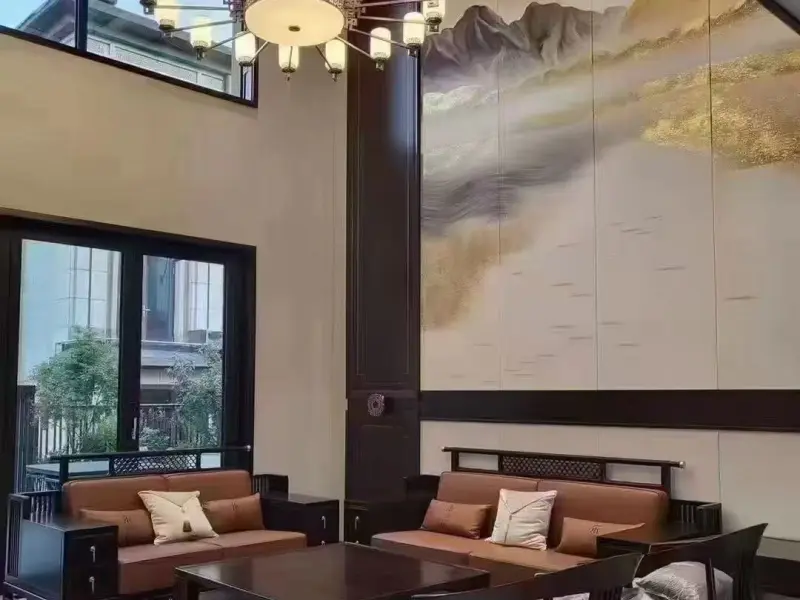
Installation may use cassette systems, rails, brackets, concealed fixing, screws, rivets, or sealed joints. The right system depends on the panel design and building structure.
Can I request samples before bulk production?
Yes. Samples can help confirm color, coating, surface finish, thickness, flatness, and panel structure before final approval.
Choose the Right Aluminum Honeycomb Panel for Your Facade
Aluminum honeycomb panel for facade projects offers a modern solution for lightweight and durable building cladding. It can provide a flat surface, flexible design choices, strong visual impact, and easier handling than many heavy cladding materials.
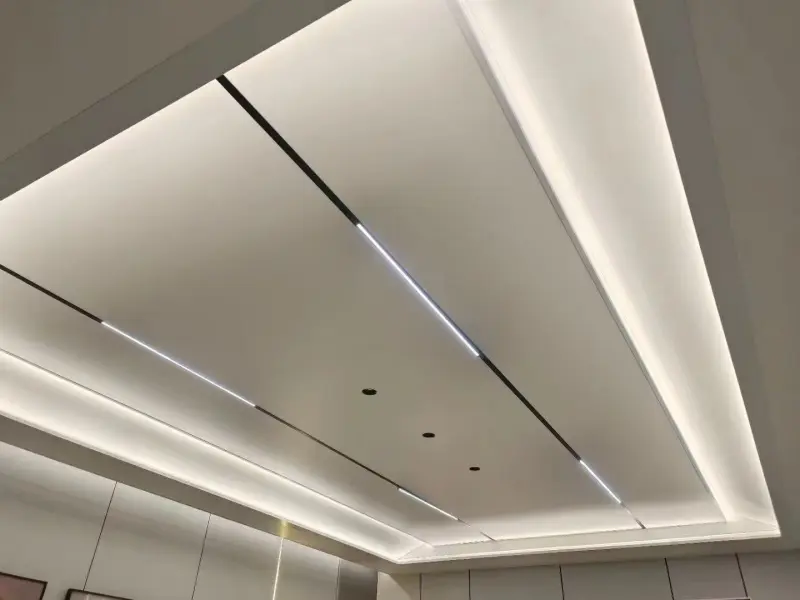
For a standard commercial wall, flat PVDF-coated panels may be suitable. For a high-end entrance, anodized, brushed, mirror, or stone-look panels can create a stronger design effect. For curved walls and columns, custom-shaped honeycomb panels can support more complex architecture.
Before ordering, confirm the panel size, total thickness, aluminum alloy, skin thickness, core structure, coating, edge treatment, fixing system, and required project documents. This helps ensure that the final facade system matches both the design and performance needs.