What Makes 5052 Aluminum Different
5052 is an aluminum-magnesium alloy. It contains 2.2% to 2.8% magnesium and 0.15% to 0.35% chromium. These elements give it a unique set of properties that no other common sheet alloy matches. It is the strongest non-heat-treatable aluminum alloy in everyday use.
The key word is “non-heat-treatable.” You cannot make 5052 harder by baking it in an oven. Instead, strength comes from cold rolling and work hardening. This limits peak strength compared to 6061-T6 but delivers benefits that heat-treatable alloys cannot match: better corrosion resistance, superior formability, and no strength loss after welding.
Why Industrial Buyers Pick 5052 Aluminum Sheet for Industrial Use
| Property | 5052 Rating | What It Means |
|---|---|---|
| Corrosion resistance | Excellent | Outlasts 3003 and 6061 in saltwater and chemicals |
| Formability | Very good | Bends and draws without cracking |
| Weldability | Excellent | Retains strength after welding |
| Fatigue resistance | High | Handles vibration and cyclic loading |
| Cost | Mid-range | Cheaper than 6061, pricier than 3003 |
5052 Aluminum Sheet for Industrial Use vs. Other Alloys: Head-to-Head
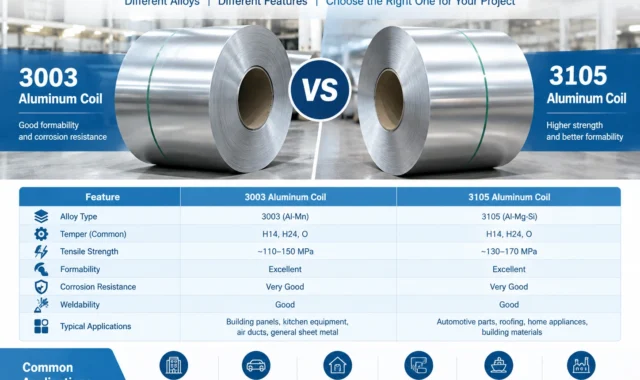
5052 vs. 3003 Aluminum Sheet for Industrial Use
| Feature | 5052 | 3003 |
|---|---|---|
| Main alloy element | Magnesium | Manganese |
| Tensile strength (H14/H32) | 210–260 MPa | 145–195 MPa |
| Yield strength | 130–195 MPa | 115–145 MPa |
| Corrosion in saltwater | Excellent | Good |
| Formability | Very good | Excellent |
| Cost per kg | $3.0–$3.5 | $2.5–$3.0 |
| Best for | Marine, structural, welded parts | HVAC, cookware, decorative panels |
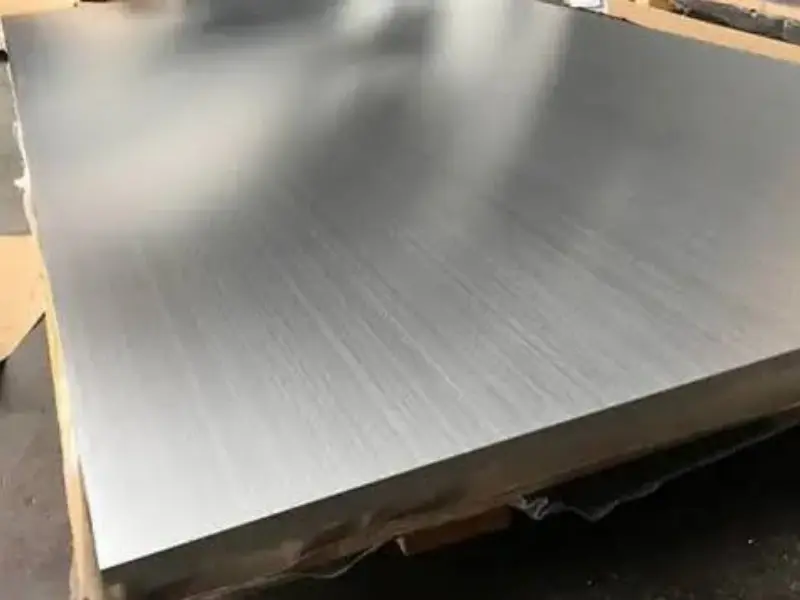
3003 forms easier and costs less. But 5052 is roughly 40% stronger and far more resistant to salt spray and industrial chemicals. For outdoor or load-bearing work, the extra cost of 5052 pays back in longer service life.
5052 vs. 6061 Aluminum Sheet for Industrial Use
| Feature | 5052 | 6061 |
|---|---|---|
| Heat treatable | No | Yes |
| Peak strength | Lower | Higher (T6 temper) |
| Corrosion resistance | Better | Average (needs coating) |
| Formability | Much better | Limited, needs large bend radii |
| Weldability | Better | Good, but loses T6 strength at weld |
| Machinability | Moderate | Excellent |
| Cost per kg | $3.0–$3.5 | $3.5–$4.5 |
| Best for | Formed, welded, corrosive environments | Machined, structural, high-strength parts |
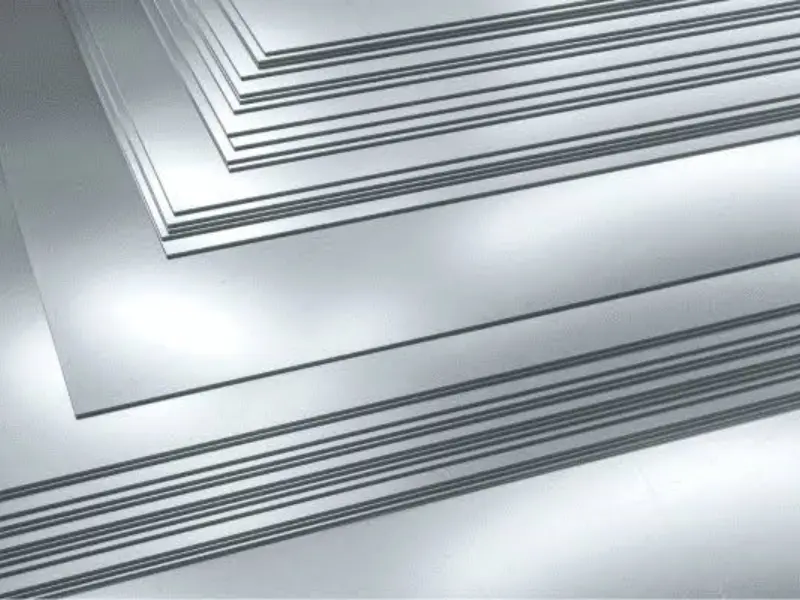
6061-T6 is the choice when absolute strength matters. But it cracks on tight bends, loses hardness when welded, and needs anodizing or painting for outdoor use. 5052 handles forming, welding, and weathering better — making it the practical pick for most fabricated industrial parts.
5052 vs. 5083 Aluminum Sheet for Industrial Use
| Feature | 5052 | 5083 |
|---|---|---|
| Magnesium content | 2.2–2.8% | 4.0–4.9% |
| Tensile strength | 210–260 MPa | 275–350 MPa |
| Corrosion resistance | Excellent | Superior |
| Formability | Better | Good |
| Cost | Lower | Higher |
| Best for | General marine, industrial | Heavy marine, armor, primary structure |
5083 is the upgrade for extreme marine loads and military applications. For most industrial and commercial marine work, 5052 delivers adequate strength at lower cost and better formability.
Temper Options for 5052 Aluminum Sheet for Industrial Use
Temper describes how the metal was hardened after rolling. Each temper balances strength against formability.
| Temper | Hardness | Tensile Strength | Yield Strength | Best For |
|---|---|---|---|---|
| O (Annealed) | Very soft | 170–215 MPa | 65 MPa | Deep drawing, spinning, complex curves |
| H32 | Quarter-hard | 215–265 MPa | 160 MPa | General fabrication, bending, welding |
| H34 | Half-hard | 255–305 MPa | 200 MPa | Higher strength parts, moderate forming |
| H36 | Three-quarter-hard | 275–325 MPa | 240 MPa | Structural panels, limited forming |
| H38 | Full-hard | 290+ MPa | 255 MPa | Maximum strength, minimal forming |
Thickness and Size Options
Standard Thickness Range 5052 Aluminum Sheet for Industrial Use
| Thickness | Gauge | Weight per m² | Typical Industrial Use |
|---|---|---|---|
| 0.5 mm | 24 ga | 1.35 kg | Light enclosures, signs, decorative trim |
| 0.8 mm | 22 ga | 2.16 kg | Trailer skins, appliance panels |
| 1.0 mm | 20 ga | 2.70 kg | Ductwork, small tanks, brackets |
| 1.5 mm | 16 ga | 4.05 kg | Medium structural panels, guards |
| 2.0 mm | 14 ga | 5.40 kg | Heavy brackets, platforms, marine decks |
| 3.0 mm | 11 ga | 8.10 kg | Floor panels, tank walls, ship bulkheads |
| 4.0 mm | 8 ga | 10.80 kg | Structural frames, heavy machinery |
| 6.0 mm | 1/4″ | 16.20 kg | Base plates, armor, mold tooling |
Standard Sheet Sizes
| Size | Dimensions | Area | Best For |
|---|---|---|---|
| 4×8 ft | 1,219 × 2,438 mm | 2.97 m² | General fabrication, CNC cutting |
| 5×10 ft | 1,524 × 3,048 mm | 4.64 m² | Large panels, reduced welding |
| 1500×3000 mm | 1,500 × 3,000 mm | 4.50 m² | European standard, metric tooling |
| 2000×4000 mm | 2,000 × 4,000 mm | 8.00 m² | Extra-large industrial panels |
5052 sheet is available in widths up to 2,650 mm and lengths exceeding 10,000 mm from major mills. These jumbo sizes suit trailer manufacturing and building facade projects where seam reduction matters.
Surface Finishes for Industrial 5052
Mill Finish 5052 Aluminum Sheet for Industrial Use
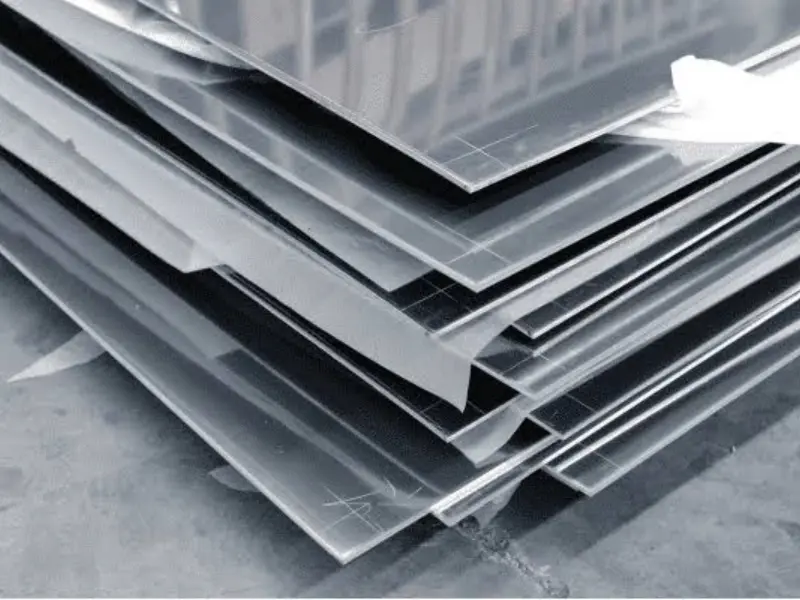
The as-rolled surface with natural silver color and slight roller marks. This is the cheapest option and works fine when the sheet will be painted, coated, or hidden from view. Most structural and industrial parts use mill finish.
Stucco Embossed 5052 Aluminum Sheet for Industrial Use
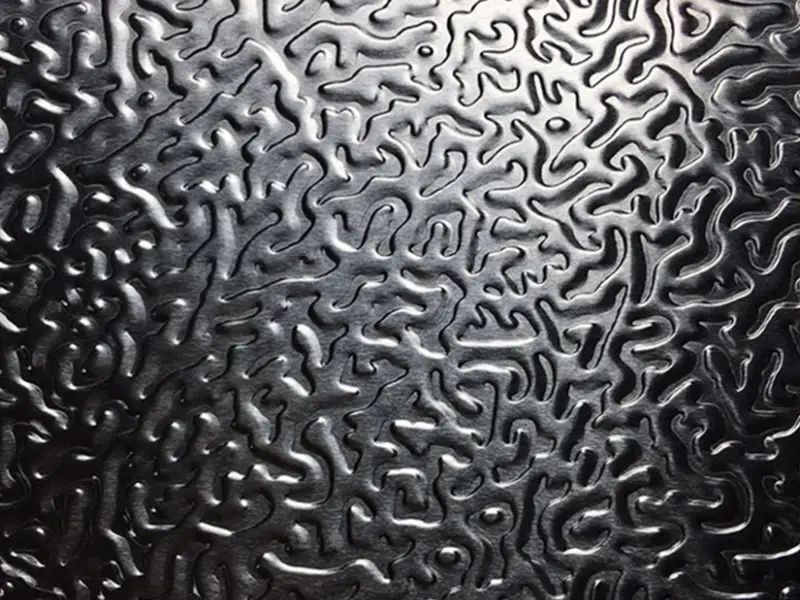
A dimpled orange-peel pattern pressed into the surface. This finish hides scratches, reduces glare, and adds stiffness. It is standard for insulation jacketing, flooring, and decorative panels where appearance matters.
Brushed 5052 Aluminum Sheet for Industrial Use
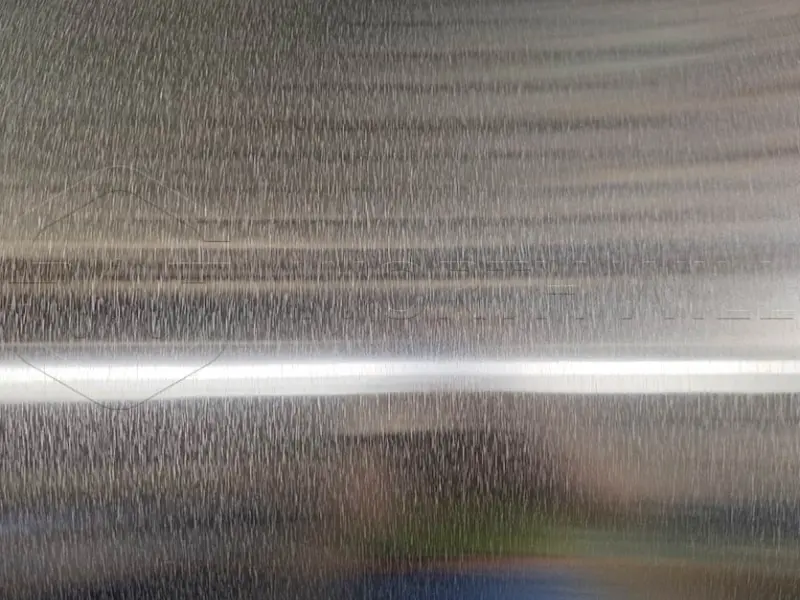
Satin directional lines created by abrasive belts. Used for appliance fronts, trim, and architectural accents where a modern look is desired. Brushed 5052 resists fingerprints better than mill finish.
Anodized 5052 Aluminum Sheet for Industrial Use
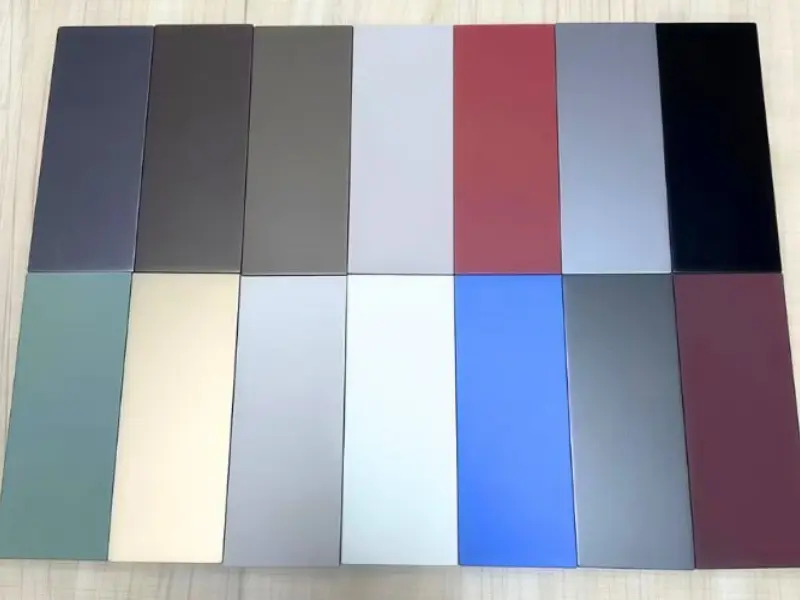
An electrochemical process thickens the natural oxide layer into a hard, wear-resistant coating. Type II anodizing gives 0.01–0.025 mm of protection. Type III (hardcoat) reaches 0.05–0.1 mm for extreme durability. Anodized 5052 takes color well and resists UV fading for 20+ years.
Painted 5052 Aluminum Sheet for Industrial Use
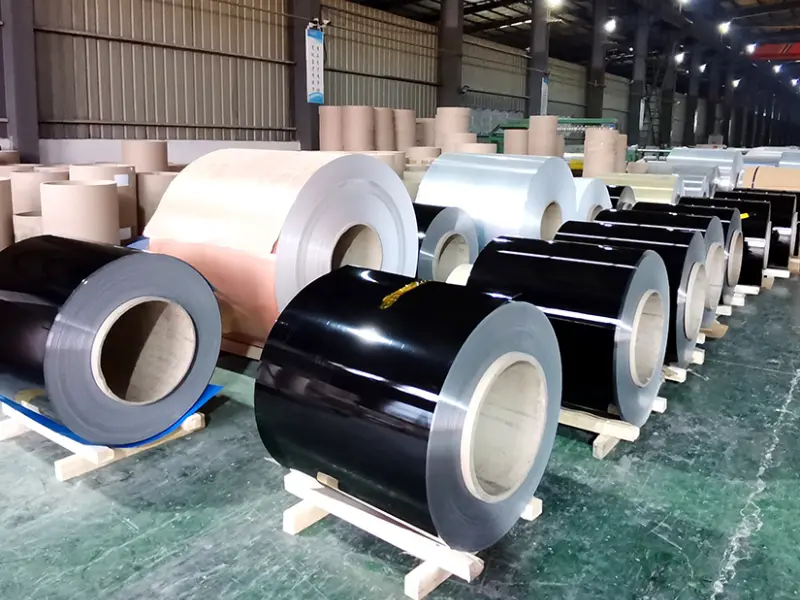
PE (polyester) coatings last 10–15 years outdoors and suit budget projects. PVDF (fluorocarbon) coatings last 20–25 years and resist chalking, fading, and chemical attack. Color options span the full RAL spectrum.
| Finish | Durability | Cost Adder | Best Application |
|---|---|---|---|
| Mill finish | Basic | None | Hidden structural, welding prep |
| Stucco embossed | Good | +5–10% | Flooring, insulation, glare reduction |
| Brushed | Moderate | +10–15% | Appliances, trim, interiors |
| Anodized Type II | Excellent | +15–25% | Architectural, moderate wear |
| Anodized Type III | Superior | +30–50% | Extreme wear, marine, industrial |
| Painted PE | Good | +15–20% | Budget exterior, signage |
| Painted PVDF | Excellent | +25–40% | Premium facades, 20+ year life |
Industrial Applications by Sector
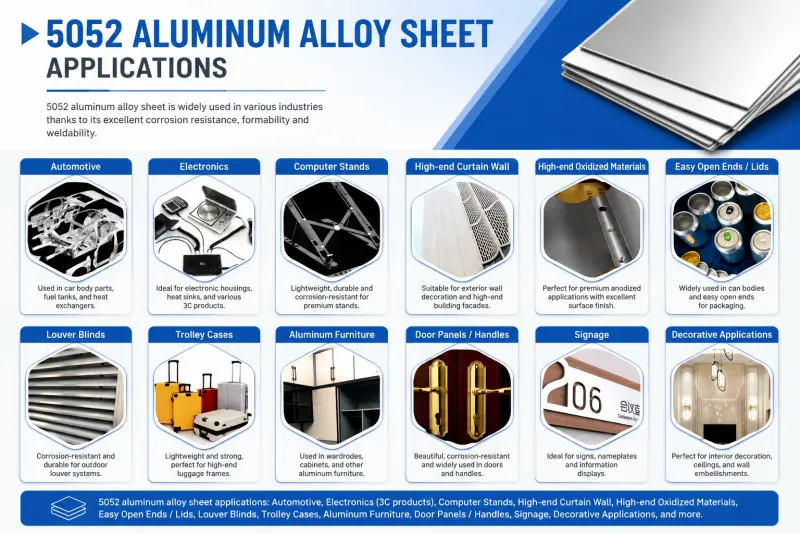
Marine and Shipbuilding
- Boat hulls and deck plating
- Fuel and water tanks
- Superstructure panels
- Hatch covers and door skins
- Offshore platform cladding
- Dock and pier structures
5052 is the marine industry standard. Its resistance to saltwater corrosion eliminates the need for protective coatings in many applications. Welded tanks and hulls maintain integrity because the alloy does not lose strength at the weld joint.
Transportation
- Truck body panels and trailer skins
- Bus and RV exterior walls
- Railway car interiors and exteriors
- Fuel tanks and liquid containers
- Shipping container repairs
- Flatbed trailer flooring
The automotive industry uses 5052 for van trailer roofs, sidewall skins, dump truck floors, and fire engine side panels. The alloy’s fatigue resistance handles road vibration without cracking. Its formability allows complex curves in aerodynamic designs.
Chemical and Processing Equipment
- Pressure vessels and tanks
- Heat exchanger shells
- Pipeline insulation jacketing
- Chemical storage containers
- Processing vessel linings
- Scrubber and filter housings
5052 resists a wide range of industrial chemicals including organic acids, alkalis, and salt solutions. The chromium content improves resistance to stress-corrosion cracking compared to other 5000 series alloys.
Construction and Architecture
- Curtain wall panels
- Roofing and facade systems
- Gutter and downspout fabrication
- Column covers and soffits
- Walkway flooring and grating
- Structural bracing and framing
For coastal buildings, 5052 outlasts 3003 and avoids the maintenance burden of painted steel. Anodized or PVDF-coated finishes match any architectural color scheme while protecting the base metal.
Industrial Machinery
- Machine guards and enclosures
- Conveyor system components
- Platform decking and stairs
- Tooling fixtures and jigs
- Robot arm covers
- Packaging machinery frames
The combination of light weight, weldability, and corrosion resistance makes 5052 ideal for factory equipment that must stay clean and resist coolant spills or washdown chemicals.
Energy and Utilities
- Natural gas tank shells
- Transformer enclosures
- Wind turbine components
- Solar panel mounting frames
- Power plant ductwork
- Nuclear facility non-structural panels
Fabrication and Processing
Welding 5052 Aluminum Sheet for Industrial Use
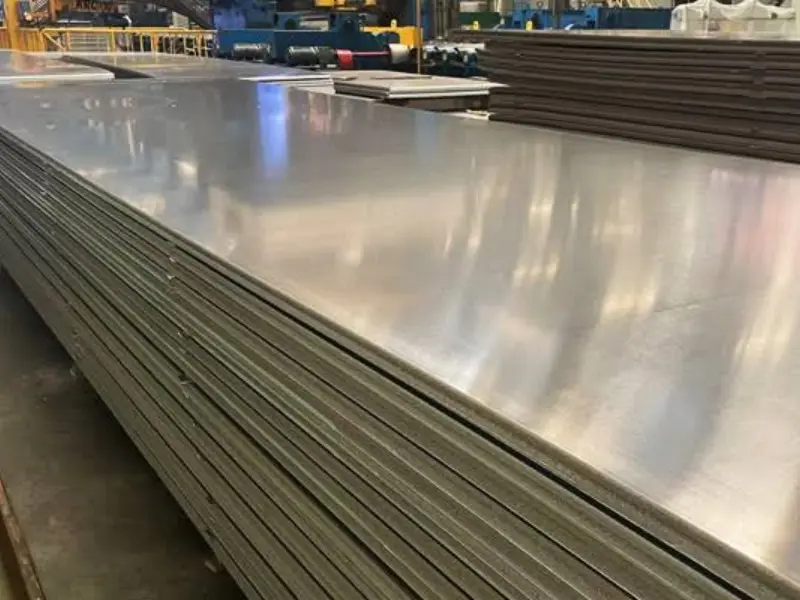
5052 welds cleanly with MIG (GMAW) and TIG (GTAW) processes. Use 5356 filler wire for best color match and corrosion resistance. 4043 filler works but produces a darker weld bead. Post-weld strength remains high because 5052 does not rely on heat treatment for its hardness.
Bending and Forming
Minimum bend radius depends on temper and grain direction:
| Temper | Thickness | Minimum Bend Radius |
|---|---|---|
| H32 | 1.0 mm | 1.5× thickness (1.5 mm) |
| H32 | 2.0 mm | 1.5× thickness (3.0 mm) |
| H32 | 3.0 mm | 2.0× thickness (6.0 mm) |
| H34 | 1.0 mm | 2.0× thickness (2.0 mm) |
| H34 | 2.0 mm | 2.5× thickness (5.0 mm) |
Bend across the grain (perpendicular to rolling direction) for best results. Bending with the grain risks cracking on tight radii.
Machining
5052 machines at moderate speeds with adequate lubrication. Use sharp carbide tools, positive rake angles, and continuous cutting paths. The alloy is softer than 6061-T6, so it requires higher speeds to prevent built-up edge on cutting tools.
Cutting
- Shearing: Clean cuts up to 6 mm thickness
- Laser cutting: Excellent edge quality, no burr
- Plasma cutting: Fast for thick plate, needs cleanup
- Waterjet: No heat-affected zone, best for precision
Quality Standards and Testing
Key Specifications
| Standard | Applies To | Requirements |
|---|---|---|
| ASTM B209 | Sheet and plate | Alloy, temper, mechanical properties, tolerances |
| ASTM B928 | Marine sheet | Enhanced corrosion testing for saltwater use |
| EN 485 | European market | Dimensions, tolerances, mechanical properties |
| GB/T 3880 | Chinese production | National standard equivalent to ASTM |
| AMS 4015 | Aerospace | 5052-O sheet specification |
| AMS 4016 | Aerospace | 5052-H32 sheet specification |
Mechanical Test Requirements
| Test | Method | Typical Result for 5052-H32 |
|---|---|---|
| Tensile strength | ASTM E8 | 215–265 MPa |
| Yield strength | ASTM E8 | 160 MPa minimum |
| Elongation | ASTM E8 | 12% in 2 inches |
| Hardness | Brinell | 60 HB |
| Bend test | ASTM E290 | 180° bend at 1.5× thickness |
| Salt spray | ASTM B117 | No pitting after 500+ hours |
Price Guide for 2026
Base Price by Form
| Product Form | Thickness Range | Price (USD/kg) | Price (USD/m², 2 mm) |
|---|---|---|---|
| Mill finish sheet | 0.5–6.0 mm | $2.80–$3.50 | ~$15.10 |
| Stucco embossed | 0.5–3.0 mm | $3.00–$3.80 | ~$16.20 |
| Anodized Type II | 0.5–3.0 mm | $3.50–$4.50 | ~$18.90 |
| Painted PE | 0.5–2.0 mm | $3.30–$4.20 | ~$17.80 |
| Painted PVDF | 0.5–2.0 mm | $4.00–$5.50 | ~$21.60 |
What Moves the Price
| Factor | Impact |
|---|---|
| LME aluminum ingot | Base metal = 60% of final cost |
| Magnesium premium | 5000 series alloys carry $200–500/ton premium |
| Thickness | Thinner gauges cost more per kg due to extra rolling |
| Width | Sheets over 1,500 mm need specialized mills |
| Finish | Anodizing and painting add 15–40% |
| Order size | FCL orders (20+ tons) unlock best pricing |
China vs. Domestic Pricing
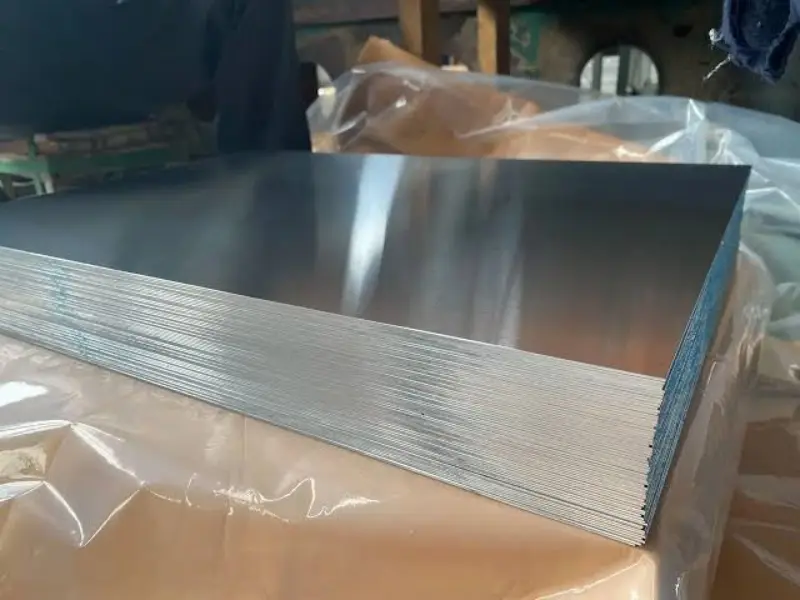
Factory-direct from Chinese mills runs 30–45% below North American and European distributor prices. A 2 mm mill finish 5052-H32 sheet costs roughly $15/m² ex-factory in China versus $22–$26/m² from a US distributor. Sea freight adds $150–$300 per ton. Import duties vary by country. For orders above 10 tons, China sourcing almost always wins on total landed cost.
Buying from China: What to Know
Why China Leads in 5052 Production
- Largest primary aluminum output globally
- Integrated mills from smelting to finishing
- Full range of tempers, thicknesses, and surface treatments
- Established export routes to all major markets
Vetting a Supplier
| Check | What to Verify |
|---|---|
| Experience | 5+ years in 5052 production, marine or automotive references |
| Equipment | 4-high or 6-high cold mills, continuous annealing lines |
| Certifications | ISO 9001, ASTM B209 test reports, mill test certificates |
| Quality control | Online thickness gauges, mechanical testing lab |
| Export record | Previous shipments to your region, customs documentation |
The Order Process
- Send RFQ with exact specs — alloy, temper, thickness, size, finish, quantity
- Receive quotation with FOB price, lead time, payment terms
- Approve samples for surface quality, flatness, and forming tests
- Place PO with 30% deposit
- Monitor production, arrange pre-shipment inspection
- Pay balance against B/L copy
- Receive goods, inspect, release balance if using letter of credit
Typical Lead Times 5052 Aluminum Sheet for Industrial Use
| Product | Production | Shipping | Total |
|---|---|---|---|
| Mill finish, H32 | 2–3 weeks | 3–5 weeks | 5–8 weeks |
| Embossed or coated | 3–4 weeks | 3–5 weeks | 6–9 weeks |
| Wide sheet (>1500 mm) | 3–5 weeks | 3–5 weeks | 6–10 weeks |
Packaging and Shipping
Standard Export Packaging
| Layer | Purpose |
|---|---|
| Protective PE film | Prevents scratches during handling |
| Paper interleaving | Stops sheets from rubbing together |
| Moisture barrier (VCI) | Blocks humidity during sea transit |
| Wooden pallet, steel strapped | Stable stacking, forklift access |
| Corner protectors | Prevents edge damage |
Container Loading
| Container Size | Max Weight | Sheet Capacity (2 mm) |
|---|---|---|
| 20-foot standard | 22–26 tons | ~400–500 sheets (4×8) |
| 40-foot high cube | 26–28 tons | ~500–600 sheets (4×8) |
5×10 and jumbo sheets need careful loading plans. Some mills cut to size from master coils to optimize container space.
Common Problems and Solutions
| Problem | Cause | Prevention |
|---|---|---|
| Cracking when bent | Wrong temper, bending with grain, radius too tight | Specify H32 for forming, bend across grain, follow minimum radius tables |
| Weld corrosion | Wrong filler, inadequate cleaning | Use 5356 filler, clean joints with stainless brush, avoid 4043 in marine use |
| Surface staining | Moisture trapped in packaging, fingerprints | Request VCI film, handle with clean gloves, inspect on arrival |
| Thickness variation | Worn mill rolls, poor QC | Specify ASTM B209 tolerance, measure random samples |
| Flatness issues | Improper tension leveling | Require flatness spec in PO, reject wavy sheets |
| Delayed delivery | Overcommitted mill, raw material shortage | Confirm realistic lead times, lock in contracts for large orders |
Frequently Asked Questions
What is 5052 aluminum used for?
5052 is used for marine hulls, fuel tanks, truck trailers, pressure vessels, chemical equipment, architectural facades, and any industrial part that needs corrosion resistance, formability, and weldability together.
Is 5052 aluminum marine grade?
Yes. 5052 is widely considered marine grade due to its excellent resistance to saltwater corrosion. It is the standard alloy for boat hulls, decks, and marine hardware.
What is the difference between 5052-H32 and 5052-H34?
H32 is quarter-hard with better formability. H34 is half-hard with 15–20% higher strength but requires larger bend radii. H32 is the default for most fabricated parts.
Can 5052 aluminum be welded?
Yes. 5052 welds excellently with MIG and TIG processes. It retains strength after welding because it does not depend on heat treatment for hardness. Use 5356 filler wire for best results.
How does 5052 compare to 6061?
5052 offers better corrosion resistance, formability, and weldability. 6061-T6 is stronger and machines better but cracks on tight bends and loses strength at welds. Choose 5052 for formed and welded parts in harsh environments. Choose 6061 for machined structural components.
What thickness of 5052 should I use?
0.8–1.5 mm for light panels and enclosures. 2.0–3.0 mm for structural brackets and marine decks. 4.0–6.0 mm for heavy machinery and tank walls. Match thickness to load and deflection requirements.
Can 5052 be anodized?
Yes. 5052 anodizes to a bright, uniform finish with fewer defects than 6061. Type II anodizing suits most applications. Type III hardcoat anodizing is used for extreme wear resistance.
How long does 5052 last outdoors?
Mill finish 5052 lasts 20–25 years in marine environments and 25–30 years in normal industrial atmospheres. Anodized or PVDF-coated 5052 extends life to 30+ years with minimal maintenance.
Where can I buy 5052 aluminum sheet wholesale?
China is the largest producer. Factory-direct suppliers offer the best pricing for bulk orders. Look for mills with ISO 9001, ASTM B209 certification, and proven export experience. US and European distributors stock common sizes for faster delivery at higher prices.
5052 aluminum sheet for chemical equipment
5052 aluminum sheet is the workhorse of industrial fabrication. No other alloy combines this level of corrosion resistance, formability, and weldability at a mid-range price point. It outperforms 3003 in strength and saltwater resistance. It outperforms 6061 in forming and welding without heat treatment complications.
For marine applications, 5052 is the default standard. For transportation, it handles road vibration and fuel contact without failure. For chemical equipment, it resists a broad range of industrial media. For construction, it weathers decades of exposure with minimal maintenance.
Buyers should specify H32 temper for general fabrication, H34 for higher strength needs, and O temper only for deep drawing operations. Surface finishes range from mill for hidden parts to anodized or PVDF for visible architectural work.
Sourcing from China offers significant cost savings for orders above 5 tons. The key is vetting suppliers for equipment quality, certification, and export experience. With proper specification and supplier selection, 5052 aluminum sheet delivers decades of reliable service across the harshest industrial environments.