Aluminum trailer sheet builders worldwide are switching from steel to aluminum. The weight savings are real, the corrosion resistance is proven, and the long-term maintenance cost is lower.
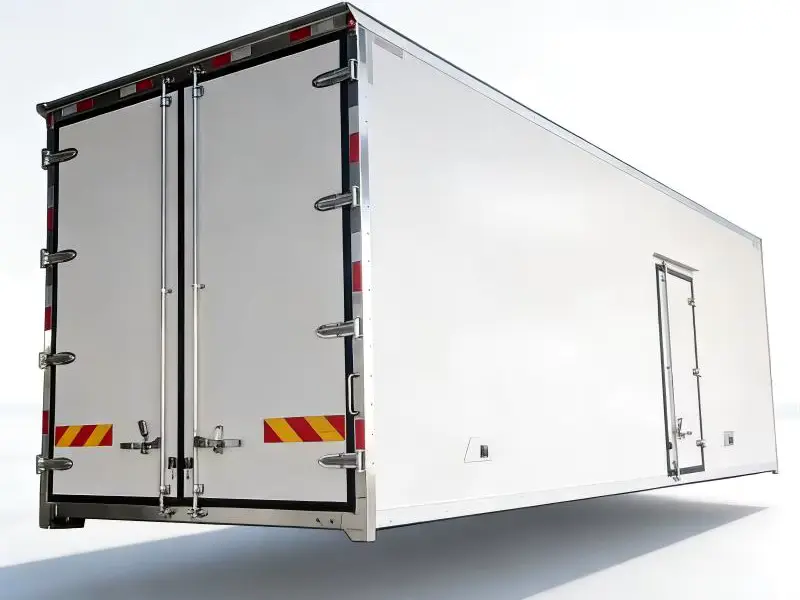
Why Aluminum Has Replaced Steel in Most Trailer Categories
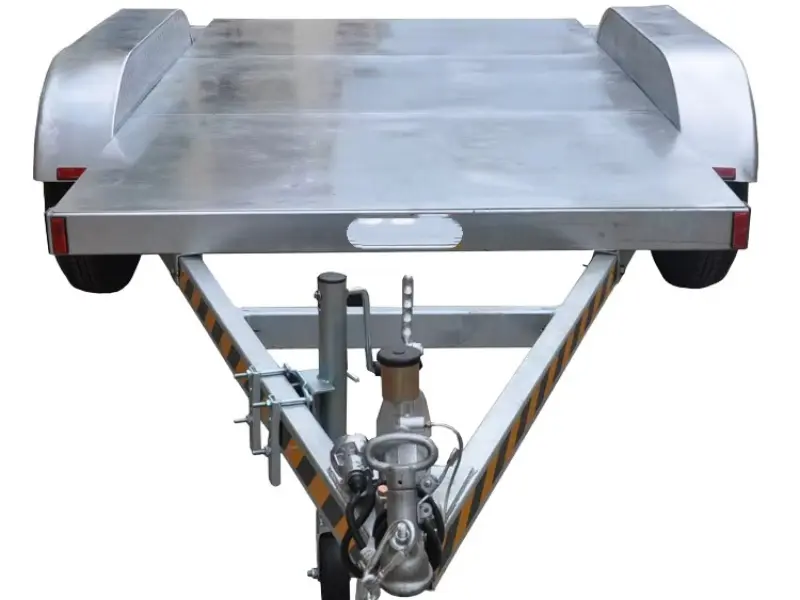
The shift started in the refrigerated trailer market, moved to dry van, then to flatbed and specialty trailers. The reason is simple: every kilogram saved in trailer weight is a kilogram of extra payload capacity. At the same time, aluminum does not rust, which removes the annual repainting and rust treatment cost that steel trailers carry.
The Weight Advantage — Real Numbers
| Material | Density | Weight of 1.5mm Sheet per m² |
|---|---|---|
| Aluminum (5052) | 2.71 g/cm³ | ~4.1 kg |
| Carbon steel | 7.85 g/cm³ | ~11.8 kg |
| Stainless steel | 7.93 g/cm³ | ~11.9 kg |
A typical 13.6-meter dry van trailer uses around 120–150 m² of side and roof panel material. Switching from 1.5mm steel to 1.5mm aluminum saves approximately 900–1,100 kg in body panel weight alone. That is nearly a full ton of extra payload on every trip.
Corrosion, Maintenance, and Service Life
Steel trailers need paint, primer, and regular rust inspection. Salt from winter road treatment accelerates corrosion on undercarriage and lower panels. Aluminum forms its own protective oxide layer. It self-repairs when scratched. In coastal and high-humidity markets, aluminum trailers last 15–25 years with minimal surface maintenance.
Aluminum Products Used in Trailer Manufacturing
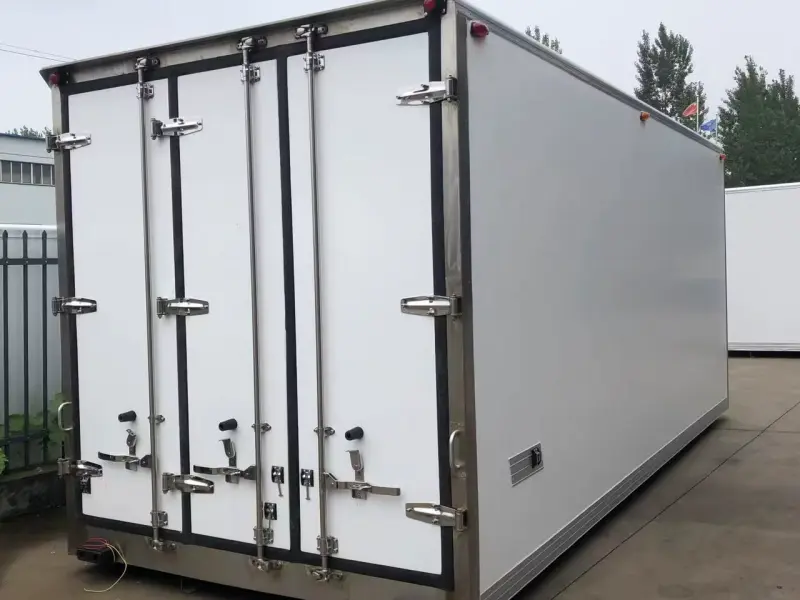
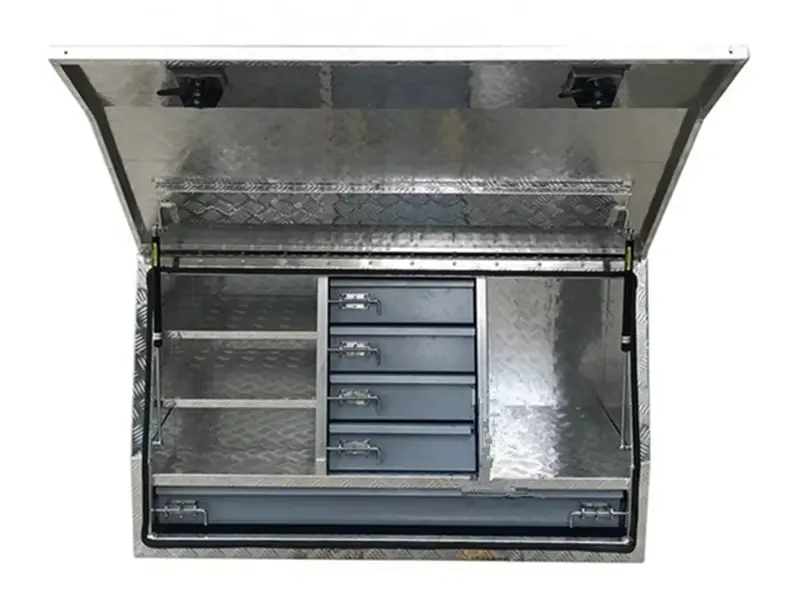
Trailer construction uses four main aluminum product forms. Each serves a different structural or panel role.
Aluminum Sheet for Trailer Bodies
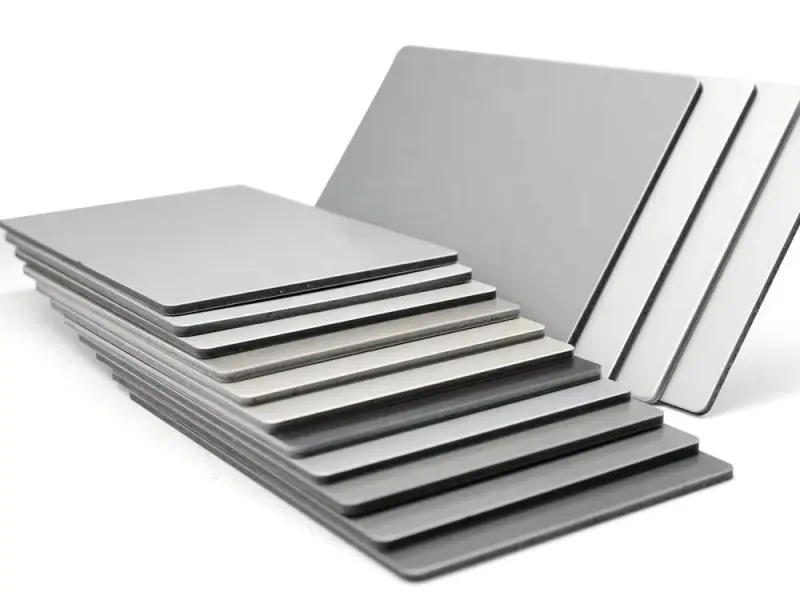
Sheet (under 6mm) is the most used product in trailer manufacturing. It covers side walls, roof panels, interior liners, and door skins. Most trailer sheet runs between 0.8mm and 3.0mm depending on the panel’s structural role.
Aluminum Plate for Floors and Heavy Parts
Plate (6mm and above, though many builders call 3–6mm material “plate” in practice) handles trailer floors, ramps, and structural mounting points. Floor plate must resist point loads from pallets, forklifts, and cargo shifting.
Aluminum Coil for High-Volume Production
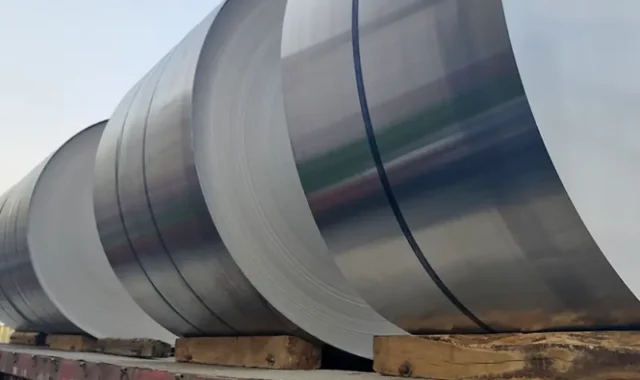
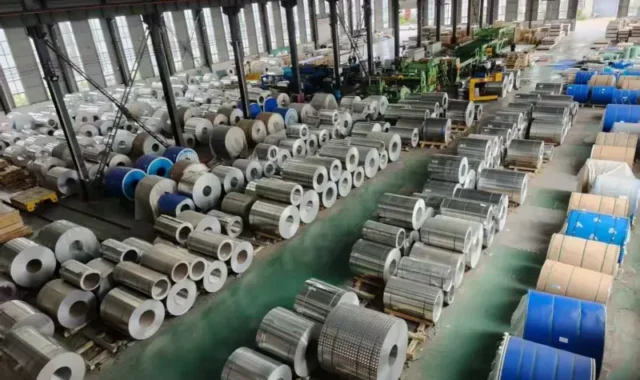
Large trailer manufacturers buy material in coil form and run it through their own roll-forming and cut-to-length lines. Coil supply gives price advantages for volume buyers and allows continuous production without stacking sheet inventory.
Aluminum Extrusions for Frames and Rails
Extruded profiles serve as side rail caps, floor cross members, door frame sections, and roof bows. Common alloys for extrusions are 6061-T6 and 6063-T5, chosen for strength and weld compatibility with the sheet alloys used in the body.
Best Aluminum Alloys for Trailer Manufacturing
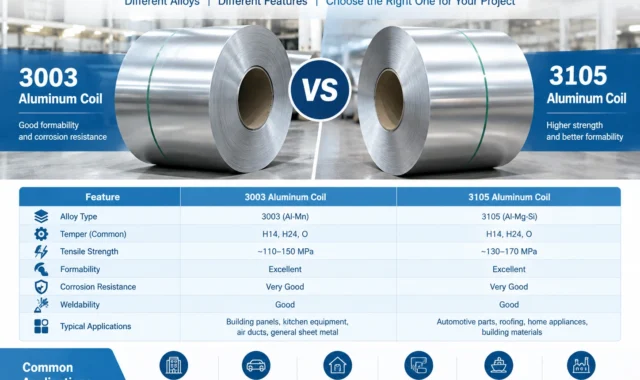
3003 — General-Purpose Trailer Sheet
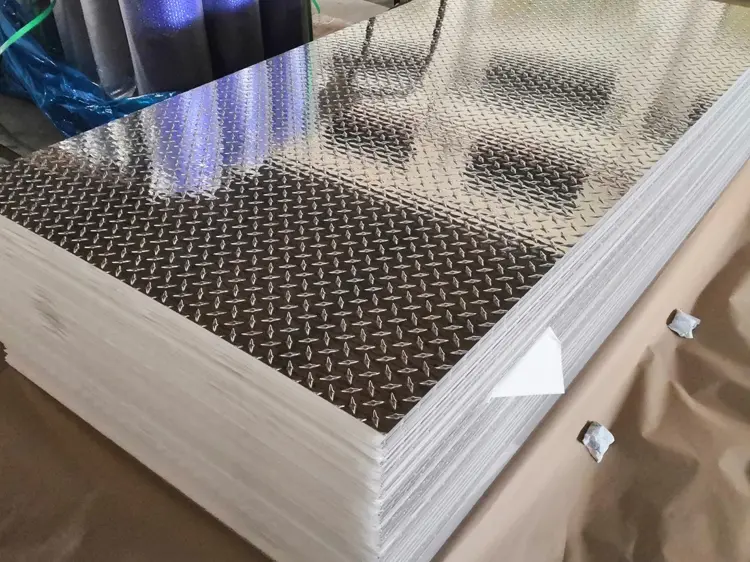
3003 is a manganese-aluminum alloy. It offers better corrosion resistance than pure aluminum and good formability. Fabricators can bend, stamp, and roll it easily without cracking. It is the lowest-cost option among the alloys commonly used in trailers.
Best for: interior liners, roof panels, decorative covers, light-duty trailer sides
| Alloy | Temper | Tensile Strength | Yield Strength | Corrosion Resistance |
|---|---|---|---|---|
| 3003 | H14 | 150 MPa | 145 MPa | Good |
| 3003 | H16 | 175 MPa | 170 MPa | Good |
5052 — The Most Popular Trailer Body Alloy
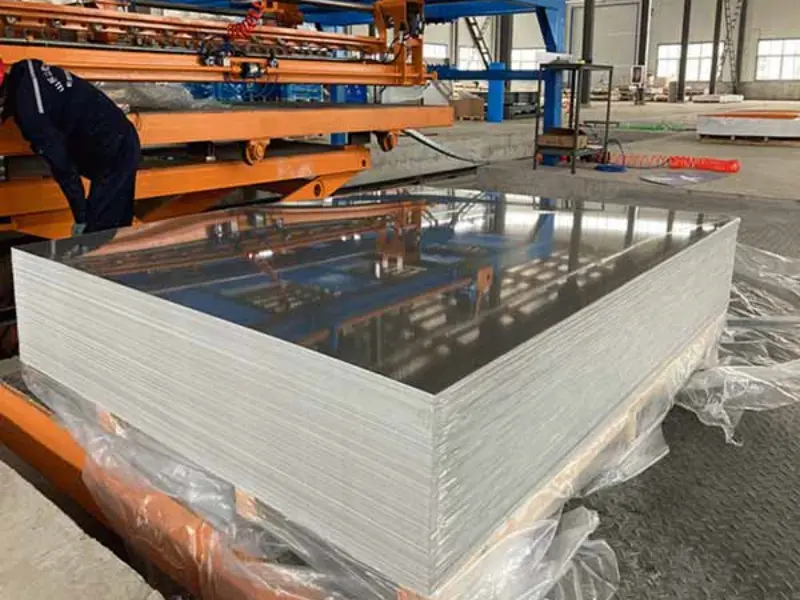
5052 is the go-to alloy for exterior trailer panels worldwide. The magnesium content raises strength significantly above 3003 and gives excellent resistance to saltwater, road chemicals, and outdoor exposure. It welds cleanly with 5356 filler and retains good strength in the heat-affected zone.
Most dry van, refrigerated, and enclosed trailer manufacturers specify 5052-H32 as their standard exterior sheet.
| Alloy | Temper | Tensile Strength | Yield Strength | Corrosion Resistance |
|---|---|---|---|---|
| 5052 | H32 | 228 MPa | 193 MPa | Excellent |
| 5052 | H34 | 262 MPa | 214 MPa | Excellent |
Best for: exterior side walls, roof panels, door skins, fuel tanker bodies, refrigerated trailer panels
5083 — Heavy-Duty and Marine-Grade
5083-H116 is specified where loads are heavy and corrosion exposure is extreme. Ship builders, tank trailer manufacturers, and industrial equipment makers use it. Strength is significantly higher than 5052. It meets ABS and DNV marine certification requirements.
Best for: tanker trailer walls, chemical transport trailers, boat trailer structural parts, heavy equipment transport
| Alloy | Temper | Tensile Strength | Yield Strength | Notes |
|---|---|---|---|---|
| 5083 | H116 | 303 MPa | 215 MPa | Marine certified |
| 5083 | H321 | 303 MPa | 228 MPa | Stress-relieved version |
6061 — Structural Frames and Machined Parts
6061-T6 is the strongest common trailer alloy. After heat treatment, tensile strength reaches 310 MPa. It machines well for bracket and fitting fabrication. Welding requires care — the heat-affected zone loses strength, and post-weld aging is recommended for load-bearing joints.
Best for: trailer frames, subframes, mounting brackets, ramp hinges, mechanical components
Alloy Quick-Selection Guide
| Application | Recommended Alloy | Temper |
|---|---|---|
| Exterior side wall panels | 5052 | H32 |
| Roof panels | 5052 or 3003 | H32 / H14 |
| Interior liner | 3003 | H14 |
| Floor plate | 5052 or 5083 | H32 / H116 |
| Frame and structural | 6061 | T6 |
| Tanker body | 5083 | H116 |
| Ramp and door | 5052 | H32 |
Thickness Selection Guide for Trailer Aluminum
Getting thickness right matters. Too thin and panels flex under load or road vibration. Too thick and you lose payload capacity and pay for material you don’t need.
Thickness by Application
| Thickness | Weight per m² | Application | Trailer Type |
|---|---|---|---|
| 0.8mm | ~2.2 kg | Interior lining, decorative panels | All trailer types |
| 1.0mm | ~2.7 kg | Light side walls, roof panels | Enclosed, utility |
| 1.5mm | ~4.1 kg | Standard exterior side walls | Dry van, enclosed |
| 2.0mm | ~5.4 kg | Commercial dry van, refrigerated walls | Commercial trailers |
| 2.5mm | ~6.8 kg | Heavy-duty panels, door skins | Semi-trailers |
| 3.0mm | ~8.1 kg | Floor plates, structural panels | Flatbed, heavy haul |
| 4.0mm | ~10.8 kg | Ramp surfaces, loading areas | Flatbed, equipment |
| 5.0mm | ~13.5 kg | Heavy-duty floors, tank walls | Tank, industrial |
| 6.0mm+ | ~16.2 kg+ | Structural members, heavy base plates | Heavy industrial |
Panel-by-Panel Thickness Recommendations
Side Walls
Standard commercial trailer: 1.5mm–2.0mm in 5052-H32. Light enclosed trailer: 1.0mm–1.5mm. Heavy freight semi-trailer: 2.0mm–2.5mm.
Roof Panels
Roof panels carry less structural load than sides. 1.0mm–1.5mm in 5052 or 3003 suits most trailers. Refrigerated trailer roofs may go to 2.0mm for insulation panel bonding strength.
Floor Plate
Trailer floors take direct forklift and pallet jack loads. 3.0mm minimum for light-duty. 4.0mm–5.0mm for trailers that see regular forklift traffic. Heavy tank trailer floors: 5.0mm–6.0mm.
Door Skins
Swing doors and roll-up door slats: 1.5mm–2.5mm in 5052-H32. Doors need both stiffness and impact resistance.
Trailer Types and Which Aluminum They Use
Dry Van and Enclosed Cargo Trailers

The largest category. Standard 53-foot dry van uses 5052-H32 at 1.5mm–2.0mm for side walls and roof. Interior liner is often 3003-H14 at 0.8mm–1.0mm. Floor is typically hardwood or aluminum tread plate at 3.0mm–4.0mm.
- Exterior side wall → 5052-H32, 1.5–2.0mm
- Roof → 5052-H32 or 3003-H14, 1.0–1.5mm
- Interior liner → 3003-H14, 0.8–1.0mm
- Tread plate floor → 3003 or 5052, 3.0–4.0mm
Refrigerated Trailers (Reefers)
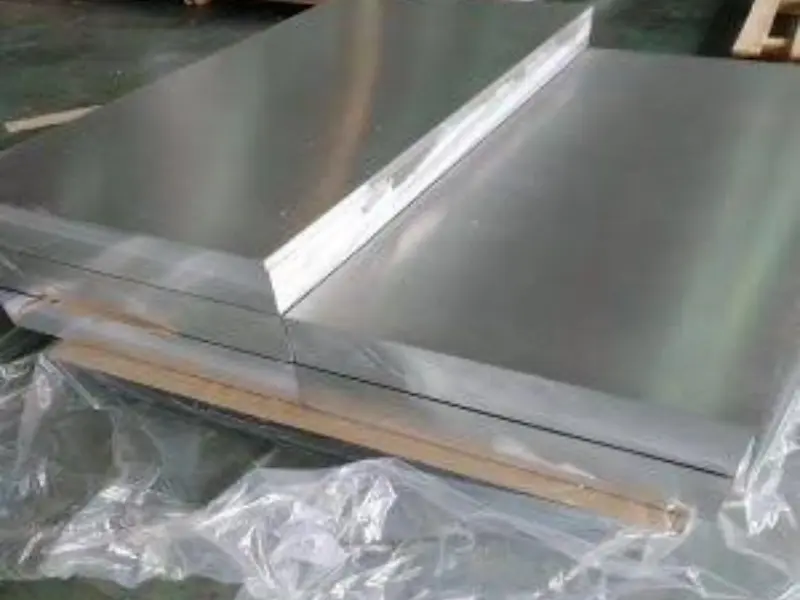
Refrigerated trailers need panels with good thermal bonding properties and resistance to cleaning chemicals. 5052-H32 at 1.5mm–2.0mm for exterior skin. Interior panels are often bonded composite with aluminum face skins at 0.8mm–1.2mm.
Flatbed Trailers
Flatbed trailers use aluminum for the deck — either solid extrusion planks or aluminum tread plate over a steel or aluminum subframe. 5052 or 5083 at 4.0mm–6.0mm for the deck surface. Rail sections and tie-down tracks are aluminum extrusions.
Tanker and Liquid Transport Trailers
Tank trailers carry food-grade liquids, chemicals, or petroleum products. 5083-H116 is the industry standard for the tank shell — it handles chemical exposure and meets pressure vessel fabrication standards. Wall thickness runs 4.0mm–8.0mm depending on product and pressure rating.
Boat and Marine Trailers
Saltwater exposure makes corrosion resistance the top priority. 5052-H32 for frame rails and bunks. 5083-H116 for structural components. Galvanic corrosion between aluminum and steel is managed with isolation tape and nylon bushings.
Utility and Landscape Trailers
Light-duty open trailers. 3003-H14 or 5052-H32 at 1.5mm–2.0mm for side rails and fenders. Floor is often treated lumber, steel, or aluminum tread plate at 3.0mm.
Food Service and Refrigerated Delivery Trailers
Food contact surfaces need clean, non-reactive aluminum. 3003-H14 is common for interior panels where chemical resistance is less critical. 5052-H32 for exterior and structural panels. All welds are ground smooth to food-grade finish.
RV and Camper Trailers
RV builders use aluminum extensively — sidewalls, roof, and underbelly. Thin gauge (0.8mm–1.5mm) in 3003 or 5052 is common for sidewalls that go over a wood or aluminum stud frame. Weight is critical in RV construction.
Surface Finish Options for Trailer Aluminum Sheet
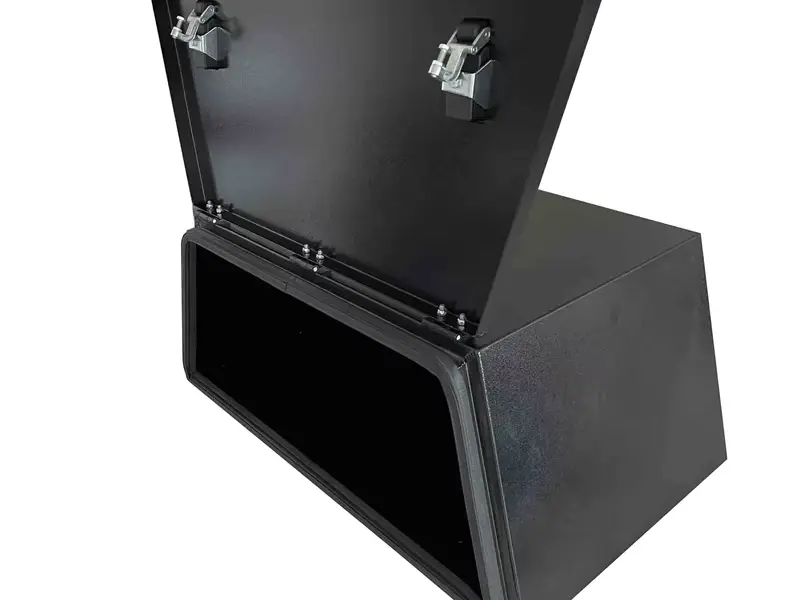
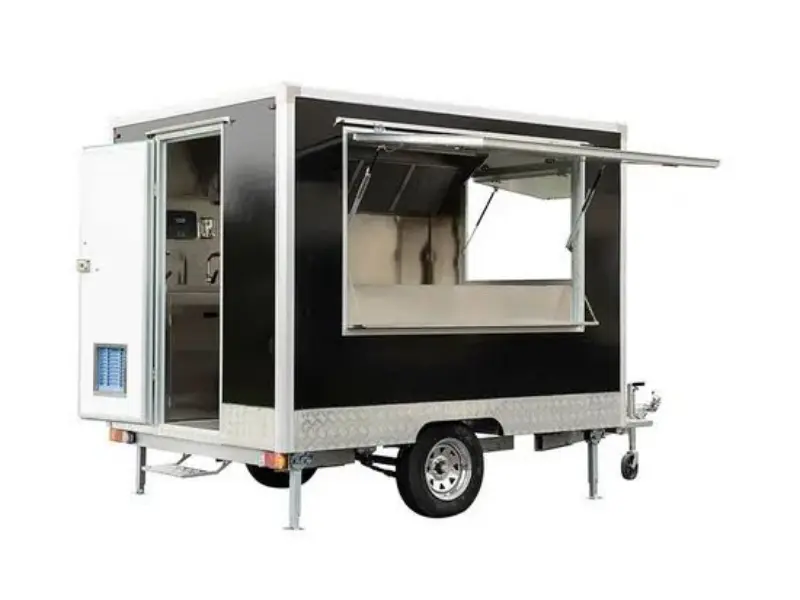
Mill Finish Aluminum Trailer Sheet
Natural surface from the rolling line. Dull silver appearance. Used where the panel will be painted, laminated, or hidden inside a structural assembly. Lowest cost.
Anodized Finish Aluminum Trailer Sheet
Electrochemical oxide layer 10–25 microns. Harder surface, better corrosion resistance, uniform appearance. Used on visible exterior trim, door hardware, and premium trailer cladding. Adds USD 300–500 per ton above mill finish.
Pre-Painted / Coated Aluminum Trailer Sheet
PE or PVDF coating applied on a coil coating line before fabrication. The builder receives panel material ready to cut and form without painting. Common in volume trailer production.
| Coating | Outdoor Life | Use |
|---|---|---|
| Polyester (PE) | 10–15 years | Standard trailer panels |
| PVDF (Kynar) | 20–25 years | Premium exterior cladding |
| Epoxy primer | Indoor only | Under-layer, food contact |
Embossed Tread Plate Aluminum Trailer Sheet
Diamond or five-bar tread pattern pressed into the surface. Used for trailer floors, ramp surfaces, and step plates where slip resistance matters. Most common alloy: 3003 or 5052, thickness 3.0mm–6.0mm.
Bright / Polished Aluminum Trailer Sheet
Reflective surface used for fuel tanker exteriors, decorative trim, and high-end specialty trailers. 1100 or 3003 base, mechanically polished to 6K or 8K finish.
Aluminum vs Steel for Trailer Manufacturing
This comparison is the first question most first-time aluminum trailer buyers ask. Here are the real trade-offs.
| Feature | Aluminum | Carbon Steel |
|---|---|---|
| Density | 2.71 g/cm³ | 7.85 g/cm³ |
| Weight saving (same thickness) | Base | 2.9× heavier |
| Corrosion resistance | Excellent, no paint needed | Rusts — requires coating |
| Tensile strength (5052-H32) | 228 MPa | 400–550 MPa |
| Weldability | Good (TIG/MIG with correct filler) | Easy (MIG/stick) |
| Maintenance cost | Low — no rust treatment | Higher — repaint cycle |
| Initial material cost | Higher | Lower |
| Service life (outdoor) | 15–25 years | 10–15 years with maintenance |
| Payload advantage | +800–1,200 kg per trailer | Base |
| Recyclable value | High — scrap retains value | Moderate |
For commercial carriers running trailers daily, the payload advantage of aluminum pays back the higher initial cost within 2–4 years through extra revenue per trip. For fleets operating near gross vehicle weight limits, aluminum is often the only practical option.
Where Steel Still Makes Sense
Price Factors for Trailer Aluminum Sheet
Aluminum Trailer Sheet By Alloy
| Alloy | Temper | Relative Price vs 3003 Base |
|---|---|---|
| 3003-H14 | Standard | Base |
| 5052-H32 | Standard | +15–25% |
| 5083-H116 | Marine | +30–40% |
| 6061-T6 | Heat treated | +30–45% |
By Thickness and Surface
| Factor | Price Impact |
|---|---|
| Thickness increase (per 0.5mm step) | +8–15% per ton |
| Tread plate pattern vs plain | +8–12% |
| Anodized vs mill finish | +USD 300–500/ton |
| Pre-painted (PE) vs mill finish | +USD 200–350/ton |
| Custom cut vs standard size | +5–15% (cutting fee) |
2025–2026 Price Reference — Mill Direct
| Alloy | Thickness | Price Per Ton (USD) |
|---|---|---|
| 3003-H14 | 1.5mm | 2,500–2,900 |
| 5052-H32 | 1.5mm | 2,800–3,300 |
| 5052-H32 | 3.0mm | 2,850–3,350 |
| 5083-H116 | 4.0mm | 3,100–3,700 |
| 6061-T6 | 3.0mm | 3,300–3,900 |
Manufacturing Process — How Trailer Aluminum Sheet Is Made
Step 1 — Alloy Preparation
Ingots are melted with precise alloy additions. For 5052, magnesium is added to reach 2.2–2.8% Mg. For 6061, both magnesium and silicon are added.
Step 2 — Hot Rolling
Slabs are heated to 400–500°C and hot-rolled down to 6–8mm. This sets the grain structure and initial mechanical properties.
Step 3 — Cold Rolling
Further rolling at room temperature reaches the target thickness with tighter tolerances. Work hardening during cold rolling contributes to H temper strength.
Step 4 — Heat Treatment
For 5052-H32: partial anneal to stabilize properties. For 6061-T6: solution heat treatment at 530°C, quench, then age at 160°C for 8–12 hours.
Step 5 — Leveling and Surface Finishing
Roller leveling for flatness. Surface finishing as specified — anodizing, coating, embossing, or polishing.
Step 6 — Cutting and Inspection
Shear or saw cutting to ordered sizes. Thickness, flatness, mechanical properties, and surface quality checked per ASTM B209 or EN 485.
Choosing a Trailer Aluminum Sheet Supplier
What to Ask Before Ordering
→ Can you supply MTR (mill test report) with chemical composition and mechanical properties? → What is the thickness tolerance on your standard sheet? → Do you offer coil supply for high-volume production lines? → Can you cut custom panel sizes to reduce our fabrication waste? → Do you have experience supplying the trailer industry specifically?
Certifications That Matter
| Certification | Relevance |
|---|---|
| ISO 9001 | Quality management |
| ASTM B209 compliance | US standard for sheet |
| EN 485 compliance | European standard for sheet |
| ABS / DNV approval | For marine-grade 5083 |
| SGS or BV inspection | For large import orders |
Buying from Chinese Mills

China produces the majority of global aluminium sheet and has multiple large rolling mills supplying trailer manufacturers in the US, EU, Australia, and South America. Price advantage on 5052-H32 trailer sheet from Chinese mills runs 20–35% below comparable local distributor pricing in most markets.
| Buying Route | MOQ | Price Level | Best For |
|---|---|---|---|
| Chinese rolling mill direct | 5–20 tons per spec | Lowest | High volume, single spec |
| Chinese trading company | 1–5 tons | 8–15% higher | Mixed specs, smaller orders |
| Local distributor | No minimum | 30–50% higher | Urgent, small quantities |
Standard lead time from Chinese mill: 10–25 days for plain sheet. 20–35 days for coated or embossed material. Sea transit to North America: 18–35 days depending on destination port.
Common Problems When Using Aluminum in Trailer Builds
Wrong Alloy Selection
Using 3003 where 5052 is needed reduces corrosion resistance and structural performance. Always specify alloy and temper — not just “aluminum sheet.”
Incorrect Thickness
Undersizing floor plate leads to deformation under forklift loads. Oversizing adds weight and cost. Use the thickness table in section 5 as a starting reference, then verify with a structural calculation for your specific trailer design.
Welding Difficulties
Aluminum requires TIG or MIG with the correct filler rod and pre-weld cleaning. Oxide on the surface must be removed (wire brush or chemical cleaner) before welding. 5052 welds with 5356 filler. 6061 welds with 4043 filler and may need post-weld aging.
Galvanic Corrosion with Steel Components
When aluminum contacts steel in a wet environment, galvanic corrosion can occur. Isolate aluminum from steel with nylon bushings, isolation tape, or zinc-rich primer on the steel contact surface.
Surface Damage in Transit
Aluminum sheet scratches more easily than steel in handling. Always specify PE protective film for sheet surfaces. Use edge protectors on stacks and avoid dragging sheets across metal surfaces.
Aluminum Trailer Sheet Frequently Asked Questions
What Aluminum Is Best for Trailer Manufacturing
5052-H32 is the most widely used alloy for trailer body panels. It balances strength, corrosion resistance, weldability, and cost better than any other option for exterior applications. For structural frames and machined parts, 6061-T6 is the standard. For heavy tank trailers, 5083-H116 is specified.
What Thickness Aluminum Is Used for Trailer Walls
Standard commercial dry van trailer walls use 1.5mm–2.0mm in 5052-H32. Light enclosed utility trailers use 1.0mm–1.5mm. Heavy freight semi-trailers and refrigerated units typically use 2.0mm–2.5mm for better rigidity and impact resistance.
Is Aluminum Better Than Steel for Trailers
For most commercial applications, yes. The weight saving (nearly 3:1 advantage) means more payload capacity per trip. Aluminum does not rust, which removes the repainting cost and extends trailer service life. The higher upfront material cost is typically recovered in 2–4 years through payload revenue. Steel remains practical only for very heavy structural applications or extremely cost-sensitive utility trailers.
Can Aluminum Trailer Sheets Be Welded
Yes. 5052 and 3003 both weld well with standard MIG or TIG equipment. Use 5356 filler for 5052 and 4043 for 3003 or 6061. Clean the surface of oxide before welding. Avoid welding thin gauge (under 1.5mm) with high heat settings — distortion is harder to control than on steel.
What Alloy Is Commonly Used for Aluminum Trailers
5052-H32 dominates for exterior body panels. 3003-H14 is common for interior liners and roof panels where corrosion demands are lower. 6061-T6 covers frames, rails, and structural members. 5083-H116 is used for tank trailers and marine environments.
Where Can I Buy Aluminum Trailer Sheets Wholesale
For wholesale quantities (5 tons+), buying direct from a Chinese rolling mill gives the best price — typically 20–35% below local distributor pricing. Ask for mill test reports, specify alloy and temper precisely, and arrange SGS inspection before shipment on first orders. For smaller quantities or mixed specs, a trading company that stocks multiple alloys and thicknesses offers more flexibility.
Aluminum Trailer Sheet Final Notes for Trailer Builders
The right aluminum spec for trailer manufacturing comes down to three decisions: alloy, thickness, and surface finish.
Alloy: 5052-H32 for body panels. 6061-T6 for structural parts. 5083-H116 for heavy-duty and tank applications.
Thickness: 1.5–2.0mm for side walls. 3.0–5.0mm for floors. Match to your load requirements, not to the cheapest option.
Surface: Mill finish for panels that get painted or bonded. Tread plate for floors and ramps. Pre-painted for high-volume production where painting in-house adds time and cost.
Order a sample cut before committing to full tonnage on a new alloy or supplier. Verify the MTR. Run a weld test. Then scale up with confidence.