Why Factory Paint Beats Field Paint Every Time
A coated aluminum sheet for roofing arrives at your job site already wearing its final color.
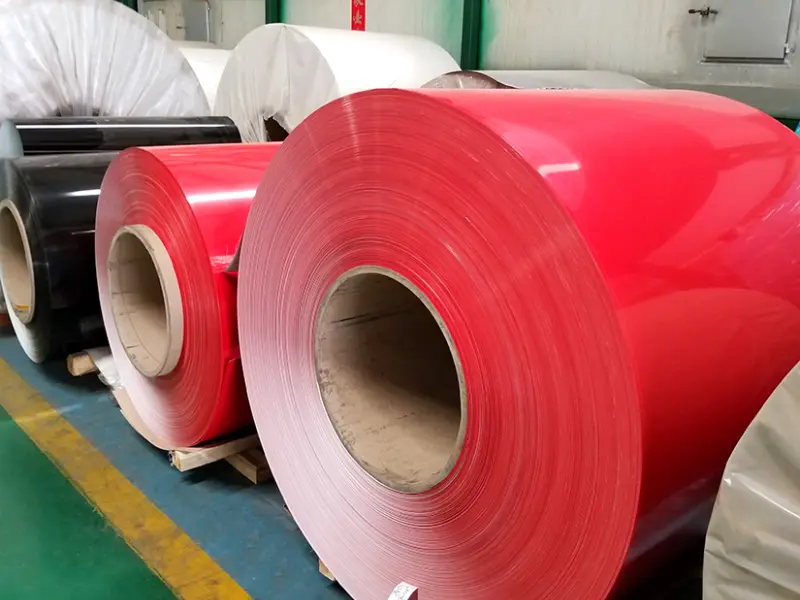
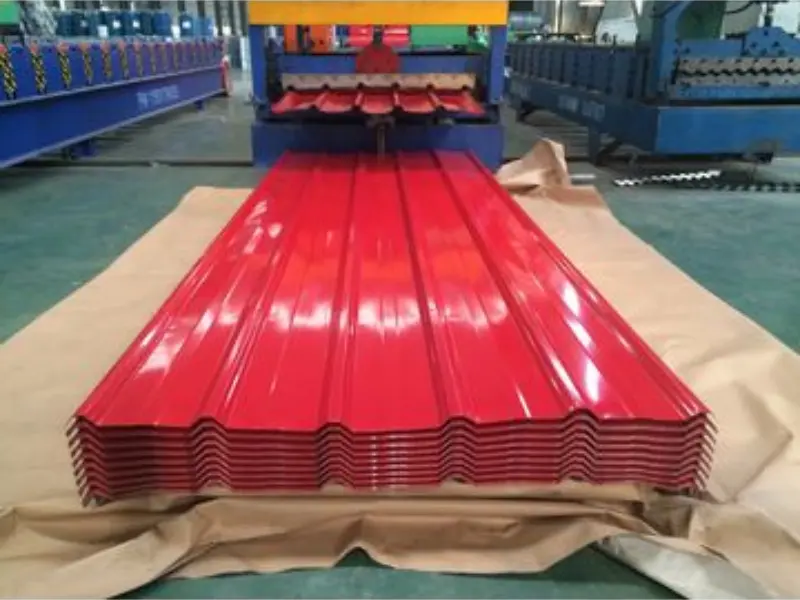
The factory cleans the metal, applies a chemical pretreatment, sprays primer and topcoat, then bakes the whole sandwich at high heat. What you get is a finish that is harder, smoother, and more uniform than anything a brush or spray rig can achieve on a ladder.
Field painting sounds cheaper until you count the labor, the scaffolding, the weather delays, and the touch-ups. A factory-coated roof panel goes up faster.
The crew unloads, cuts, and screws. No tarps. No paint trays. No waiting for dry days. For contractors, that speed turns into profit. For building owners, it turns into a roof that looks the same after ten years as it did on day one.
Alloy Breakdown: The Skeleton Under the Skin
The paint is only as good as the aluminum it sticks to. Different alloys bring different strengths to the table.
3003 Coated Aluminum Sheet for Roofing: The Safe Default
Alloy 3003 carries manganese. It is about twenty percent stronger than pure aluminum. It bends easily on a brake or roll former. It accepts paint without fuss. If you are buying a standard residential roof panel, it is almost certainly 3003 underneath.
3004: A Touch More Muscle
Alloy 3004 Coated Aluminum Sheet for Roofing is close to 3003 but adds a little magnesium. That gives it slightly higher strength. It is popular for standing seam panels that span long distances without sagging. It costs a hair more than 3003 but is still easy to work with.
3105 Coated Aluminum Sheet for Roofing: The Coating Champion
Alloy 3105 is formulated specifically for coil coating lines. The surface chemistry bonds tightly with polyester and fluorocarbon paints. It forms well on automated roll formers. Many large roofing suppliers use 3105 as their standard because it reduces paint peeling and edge creep.
5052: Salt Air Insurance
Alloy 5052 contains magnesium. It is the strongest of the common roofing alloys. It also laughs at salt spray. If your building sits where you can smell the ocean, 5052 is the upgrade worth paying for. It is a little stiffer to bend, so shop-formed panels are more common than hand breaking.
| Alloy | Key Ingredient | Strength | Bendability | Paint Grip | Best Zone |
|---|---|---|---|---|---|
| 3003 | Manganese | Medium | Excellent | Very good | Inland homes, general commercial |
| 3004 | Manganese + Magnesium | Medium-high | Very good | Very good | Long-span panels, light commercial |
| 3105 | Manganese + Magnesium | Medium | Very good | Excellent | Roll-formed profiles, trim |
| 5052 | Magnesium | High | Good | Good | Coastline, marine, chemical plants |
Coated Aluminum Sheet for Roofing Temper States: How Stiff Is Too Stiff
Temper tells you how the metal was treated after the last roll pass. For roofing, you need a sweet spot between floppy and brittle.
H14 Coated Aluminum Sheet for Roofing: The Budget Workhorse
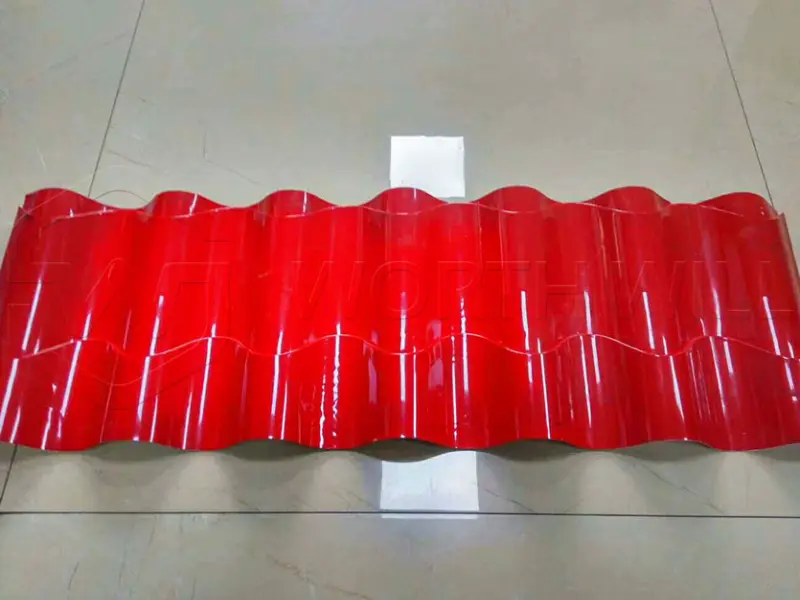
H14 is half hard. It is stiff enough to hold a profile but soft enough to bend on a portable brake. Many corrugated and R-panel roofs use H14 because it is the lowest-cost temper that still holds its shape.
H24 Coated Aluminum Sheet for Roofing: The Stress Reliever
H24 is also half hard, but the factory gave it a stabilization bake. That removes internal stress. After you bend an H24 panel, it stays bent. H14 sometimes springs back open a few millimeters, which costs extra time to recrimp. H24 is the favorite for standing seam and any job where clean lines matter.
H16 and H26 Coated Aluminum Sheet for Roofing: Wide Panel Insurance
H16 is three-quarter hard. H26 is three-quarter hard plus stabilization. Both give you extra rigidity. That means less oil canning on wide, flat panels. The trade-off is a slightly larger bend radius. You see these tempers on commercial jobs where panels run forty-eight inches wide or more.
| Temper | Hardness Level | Springback | Best Panel Style | Typical Alloy |
|---|---|---|---|---|
| H14 | Half hard | Some | Corrugated, R-panel, simple trim | 3003, 3105 |
| H24 | Half hard, stabilized | Very low | Standing seam, long straight runs | 3003, 3105 |
| H16 | Three-quarter hard | Low | Wide commercial panels | 3003 |
| H26 | Three-quarter hard, stabilized | Low | Wide panels, heavy gauges | 3105 |
Thickness Guide: Matching Metal to the Job
Thickness is measured in millimeters or inches. Thicker metal resists wind, hail, and foot traffic. It also weighs more and costs more.
| Thickness (mm) | Thickness (inches) | Weight per sq meter | Best Use | Wind Rating |
|---|---|---|---|---|
| 0.40 | 0.016 | ~1.1 kg | Soffits, porch ceilings, decorative covers | Light |
| 0.50 | 0.020 | ~1.4 kg | Standard residential roofing | Moderate |
| 0.60 | 0.024 | ~1.6 kg | Residential, small commercial | Good |
| 0.70 | 0.028 | ~1.9 kg | Commercial buildings, high wind | High |
| 0.80 | 0.031 | ~2.2 kg | Industrial, hurricane zones | Very high |
| 1.00 | 0.039 | ~2.7 kg | Heavy commercial, architectural | Extreme |
| 1.20 | 0.047 | ~3.2 kg | Structural roofs, special designs | Maximum |
For most houses, 0.50 mm to 0.60 mm hits the mark. It stops oil canning on standard rafter spacing. It handles winds up to one hundred twenty miles per hour when fastened right. For open framing or storm belts, step up to 0.70 mm or 0.80 mm.
Paint Systems: PE, SMP, and PVDF Head to Head
The coating is what you see every day. The resin chemistry decides how many summers the color survives.
PE Polyester Coated Aluminum Sheet for Roofing: The Entry Level
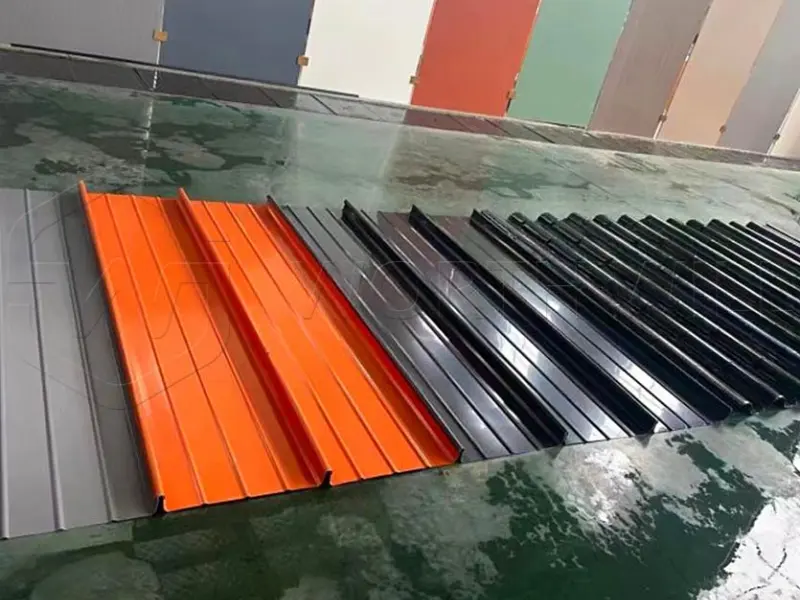
PE paint Coated Aluminum Sheet for Roofing is bright, flexible, and cheap. A PE coated aluminum sheet for roofing keeps its looks for five to eight years in strong sun. After that, fading and chalking start to show. It is fine for sheds, carports, and inland homes where budget beats longevity.
SMP Coated Aluminum Sheet for Roofing: The Middle Ground
SMP is silicone modified polyester. It is harder than PE and resists scratches better. Color life runs ten to fifteen years. It costs less than PVDF. Many agricultural and light industrial roofs use SMP because it balances price and performance.
PVDF: The Long Haul
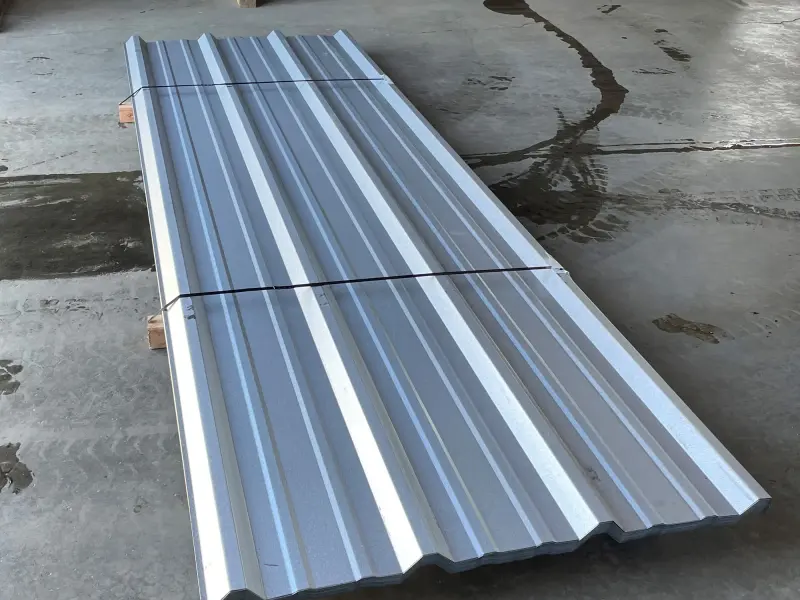
PVDF Coated Aluminum Sheet for Roofing is a fluoropolymer. It shrugs off UV rays, acid rain, and salt spray. A PVDF roof can hold its color for fifteen to twenty years. Some premium systems push past twenty-five. It costs the most upfront. For coastal condos, high-rise towers, and tropical warehouses, it is the only coating that makes sense.
| Coating | Color Lifespan | Scratch Resistance | Cost | Best Climate | Warranty |
|---|---|---|---|---|---|
| PE | 5–8 years | Moderate | Low | Temperate, inland | 5–8 years |
| SMP | 10–15 years | Good | Medium | General outdoor | 10–12 years |
| PVDF | 15–20+ years | Excellent | High | Coastal, tropical, high UV | 15–25 years |
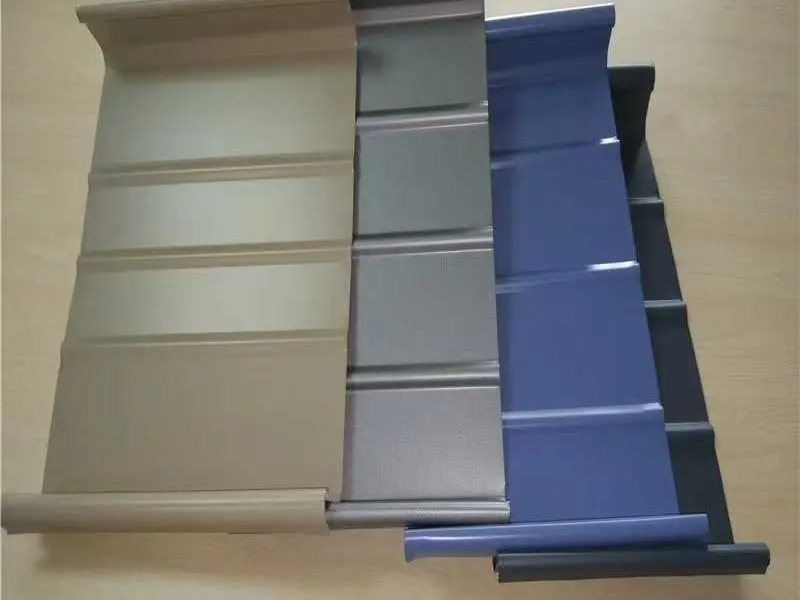
Roof Panel Styles: Standing Seam to Shingle Tile
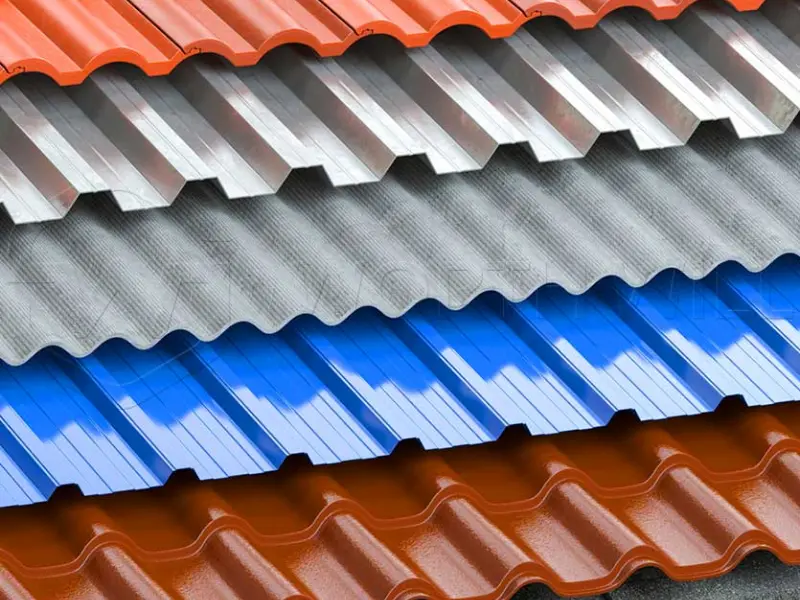
Coated aluminum sheet for roofing comes in many shapes. Each profile changes how water runs and how the building looks.
Standing Seam Coated Aluminum Sheet for Roofing
Long sheets with vertical ribs that lock together. Fasteners hide under the ribs. The look is clean and modern. Leak points are few. Standing seam is the premium choice for homes and offices. It usually needs 0.50 mm or thicker metal in H24 temper.
Corrugated
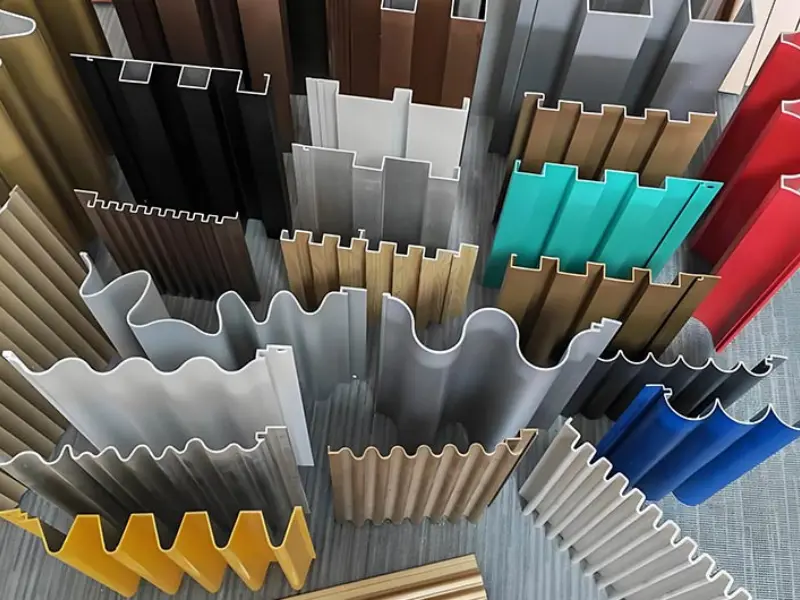
The classic wavy pattern. Water sheds fast. Exposed screws hold it down. It is the cheapest profile and the fastest to install. It works on barns, sheds, and rustic homes. Thickness from 0.40 mm to 0.50 mm is common.
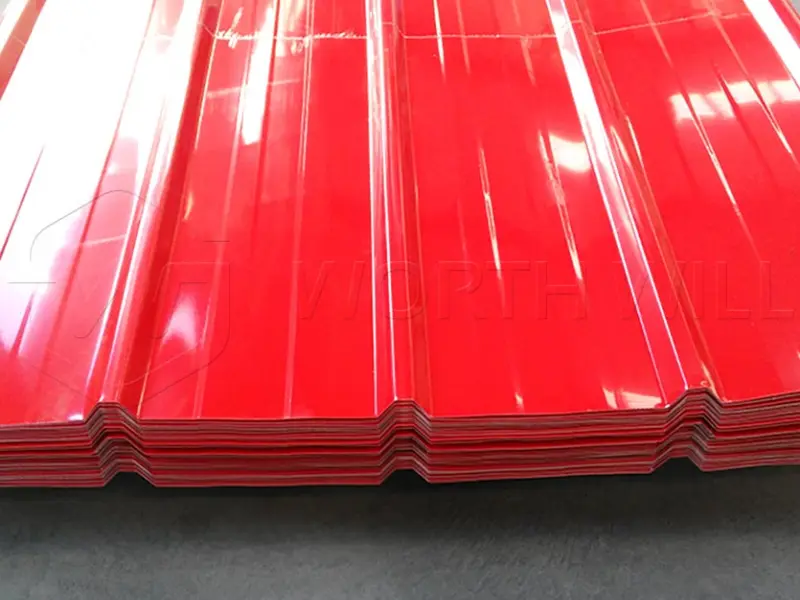
R-Panel and Trapezoidal Coated Aluminum Sheet for Roofing
Boxy ribs with flat pans between them. These profiles are stiffer than corrugated. They cover more area with fewer sheets. They dominate commercial and industrial roofing. Thickness usually runs 0.60 mm to 0.80 mm.
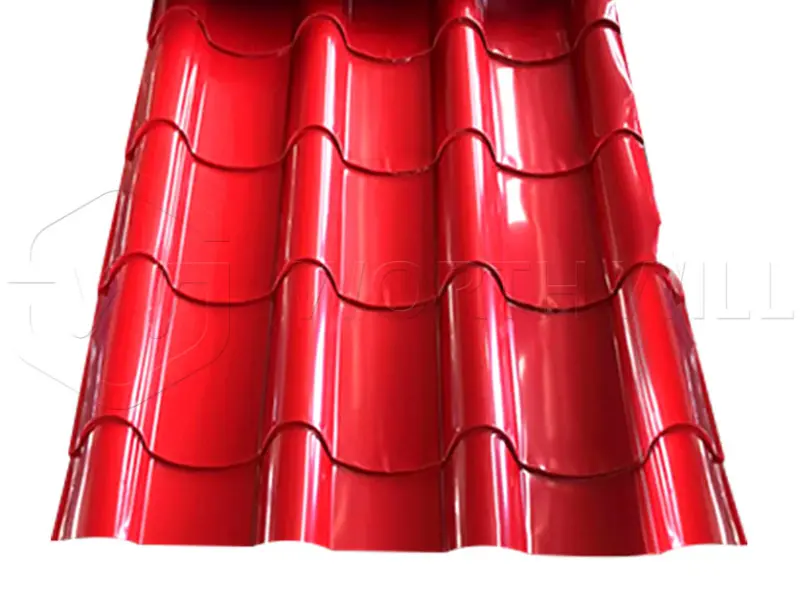
Shingle-Style and Step Tiles Coated Aluminum Sheet for Roofing
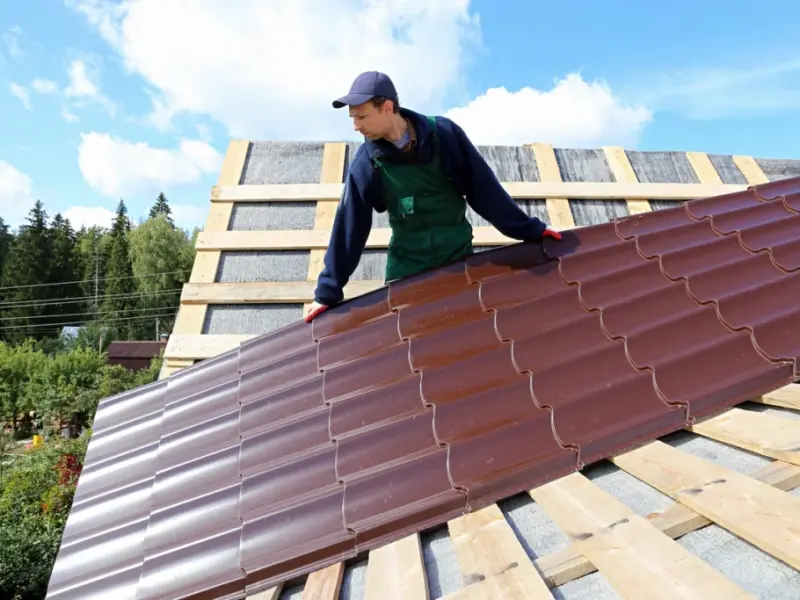
Small panels that interlock like asphalt shingles or clay tiles. They fit historic districts and upscale neighborhoods where codes demand a traditional look. Coated aluminum is lighter than steel or real tile, so older roof decks handle it better.
Flat Pan Coated Aluminum Sheet for Roofing
Low-profile panels with a flat center and small ribs at the edges. Common on carports, balconies, and pergolas. The clean lines suit modern minimalist designs.
| Profile | Look | Fastener Style | Best Building Type | Common Thickness |
|---|---|---|---|---|
| Standing seam | Sleek, vertical lines | Hidden clips | Homes, offices, premium commercial | 0.50–0.80 mm |
| Corrugated | Classic waves | Exposed screws | Barns, sheds, budget homes | 0.40–0.50 mm |
| R-panel / Trapezoidal | Boxy, geometric | Exposed screws | Warehouses, factories, shops | 0.60–0.80 mm |
| Shingle-style | Traditional tile | Concealed or exposed | Historic, upscale residential | 0.40–0.60 mm |
| Flat pan | Minimal, clean | Concealed | Carports, balconies, awnings | 0.50–0.70 mm |
Surface Finishes: Solid, Metallic, and Beyond
Modern coating lines can do more than flat color. The finish changes how the roof plays with light.
Solid Color Coated Aluminum Sheet for Roofing
One uniform shade from edge to edge. Matte, semi-gloss, or high-gloss. White, charcoal, bronze, and forest green are the top roofing colors. This is the standard choice for most jobs.
Metallic Coated Aluminum Sheet for Roofing
Tiny metal flakes in the paint create a shimmer. It looks like anodized aluminum but costs less. Metallic finishes suit contemporary homes and commercial towers that want to catch the sun.
Wood Grain and Stone Coated Aluminum Sheet for Roofing
The coating carries a printed image of timber, slate, or terracotta. From the ground, it looks like traditional material. Up close, it is zero-maintenance metal. Resorts, villas, and themed developments love this look.
Stucco Embossed Coated Aluminum Sheet for Roofing
A light orange-peel texture on the metal. It hides small dents and cuts glare. Some suppliers emboss the base sheet first, then paint over the texture. The result is a tough, low-sheen surface that forgives rough handling.
| Finish | Appearance | Maintenance | Popular Style |
|---|---|---|---|
| Solid color | Clean, uniform | Very low | Any style |
| Metallic | Shimmer, reflective | Very low | Modern, commercial |
| Wood grain | Natural timber | Very low | Rustic, traditional |
| Stone pattern | Slate or clay look | Very low | Mediterranean, historic |
| Stucco embossed | Textured, matte | Low | Industrial, low-glare |
Coated vs Mill Finish: The Honest Comparison
Some buyers think they can buy bare aluminum and paint it themselves. Here is why that rarely works out.
| Factor | Mill Finish Aluminum | Coated Aluminum Sheet for Roofing |
|---|---|---|
| Upfront material cost | Lower | Higher |
| Field painting labor | Expensive and slow | Zero |
| Color match | Hard to achieve | Factory perfect |
| UV protection | None | Built into the resin |
| Corrosion barrier | Natural oxide only | Primer plus paint |
| Warranty on finish | None | 5 to 25 years |
| Total first-year cost | Often higher | Predictable |
When you add up the labor, scaffolding, paint, and touch-ups, field painting usually costs more than buying coated stock. Plus, the factory finish is baked at high temperature. No brush or roller can match that hardness.
Coastal vs Inland: How to Match the Spec to the Map
Where you build changes what you should buy.
Inland Temperate Zones
Inland homes away from salt and harsh chemicals can use 3003 or 3105 alloy with PE or SMP coating. Thickness of 0.50 mm is plenty. The roof will last decades without premium specs.
Hot and Sunny Climates
Desert and tropical sun kills color fast. Upgrade to PVDF coating. The extra UV resistance pays for itself in five years. Alloy 3003 or 3004 is fine. Thickness of 0.60 mm helps resist thermal expansion stress.
Coastal and Marine Zones
Salt air is the enemy. Use 5052 alloy with PVDF paint. Thickness of at least 0.60 mm is wise. Stainless steel fasteners are mandatory. Anything less will show rust streaks and edge creep within a decade.
| Climate Zone | Recommended Alloy | Recommended Coating | Minimum Thickness | Fastener Type |
|---|---|---|---|---|
| Inland temperate | 3003, 3105 | PE or SMP | 0.50 mm | Galvanized or stainless |
| Hot, high UV | 3003, 3004 | PVDF | 0.60 mm | Stainless steel |
| Coastal marine | 5052 | PVDF | 0.60 mm | Stainless steel only |
Where Coated Aluminum Roofs Show Up
This material fits more projects than most people expect.
Solar panel mounts – reflective surface boosts energy yield
Suburban homes – any color, any profile, low maintenance
Beach houses – 5052 alloy with PVDF fights salt air
Agricultural barns – no rust from humidity or animal waste
Warehouses and factories – wide panels go up fast
Airport hangars – light weight allows long spans
Schools and public buildings – long color life cuts budget strain
Restaurant patios – covered dining stays cool and clean
Historic districts – shingle-style panels meet code and look right
Carports and pergolas – flat pan panels in custom colors
Greenhouses – light frame loads, high reflectivity
Mobile homes – low weight is critical for transport
How to Choose Coated Aluminum Sheet for Roofing
Roofing material should be selected according to the building, local climate, roof design, and expected service life.
A good roofing sheet is not simply the thickest or cheapest option. The coating, aluminum alloy, temper, thickness, and forming method all affect the final result.
A simple selection path is:
Roof design → Climate → Alloy → Thickness → Coating → Sheet size → Installation method
For a large roofing project, it is also useful to confirm the material requirements before production. This helps reduce changes during installation.
Standard Sizes and What Ships Fast
Custom sizes are available, but standard dimensions keep costs down and trucks rolling.
| Standard Width | Standard Length | Common Thickness | Typical Profile |
|---|---|---|---|
| 600 mm | 2440 mm | 0.40–0.50 mm | Corrugated, trim |
| 800 mm | 3050 mm | 0.50–0.60 mm | Standing seam |
| 1000 mm | 3660 mm | 0.60–0.80 mm | R-panel, trapezoidal |
| 1200 mm | 4200 mm | 0.60–1.00 mm | Commercial wide span |
Standing seam panels are often 300 mm, 400 mm, or 500 mm wide after the seam overlap. Wider panels mean fewer seams and faster install. But they also need thicker metal to avoid oil canning.
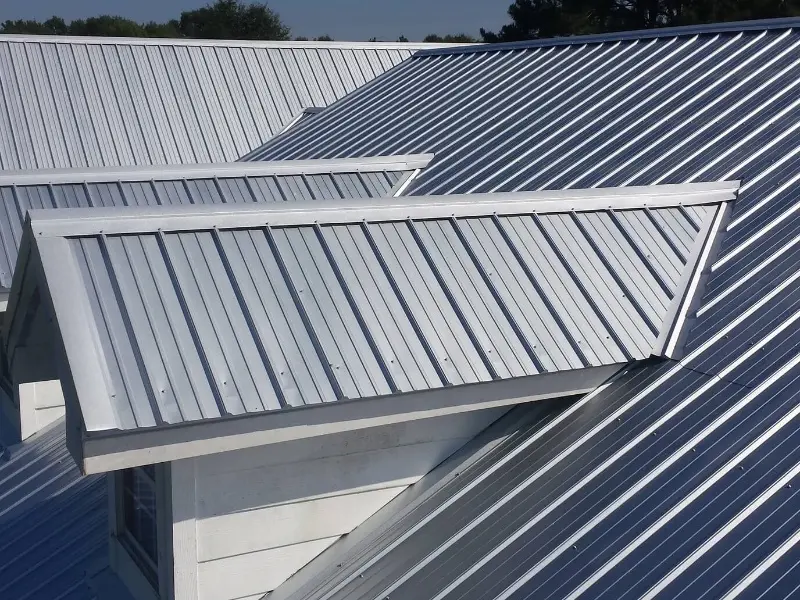
PE Coating vs PVDF Coating for Roofing
The coating system can affect the appearance and outdoor performance of a roofing sheet.
| Feature | PE Coating | PVDF Coating |
|---|---|---|
| Initial cost | Lower | Higher |
| Color selection | Wide | Wide |
| General outdoor use | Suitable | Excellent |
| UV resistance | Good | Very good |
| Color retention | Good | Better |
| Premium projects | Moderate | Excellent |
| Long-term exterior use | Suitable | Preferred for demanding projects |
PE coating can be a practical choice for many standard roofing projects.
PVDF coating is often considered when long-term appearance, weather resistance, and color retention are important.
The coating thickness and paint system should also be confirmed with the supplier.
How Roof Thickness Affects Performance
Thickness has a direct effect on the rigidity and weight of the roofing material.
| Thickness | General direction | Possible use |
|---|---|---|
| 0.5–0.7 mm | Lightweight | Light roofing panels |
| 0.7–1.0 mm | Balanced | General building roofs |
| 1.0–1.5 mm | Higher rigidity | Commercial and industrial roofs |
| 1.5–2.0 mm | Heavy-duty | Special roofing systems |
| 2.0 mm+ | High rigidity | Special structures |
The correct thickness depends on panel width, profile shape, support spacing, wind load, snow load, and installation design.
A thicker sheet is not automatically better. It can increase material cost and roof weight without providing a useful advantage for every project.
Roofing Material Selection at a Glance
| Project condition | Key material factor | Possible direction |
|---|---|---|
| Residential roof | Appearance and durability | Coated aluminum |
| Commercial building | Long-term performance | Painted aluminum |
| Industrial roof | Strength and corrosion resistance | 3003 / 3105 |
| Coastal building | Corrosion resistance | Suitable coating + alloy |
| Lightweight structure | Low material weight | Aluminum sheet |
| Custom roof | Formability | 3003 / 3105 |
| High-sunlight area | UV-resistant coating | PVDF or suitable system |
| Decorative roof | Color and finish | PE or PVDF coating |
The final specification should be based on the actual roof design rather than a single standard thickness.
Aluminum Roofing Sheet and Weather Conditions
Roofing material is exposed to the weather every day.
Different environments create different requirements.
Hot and Sunny Areas
Strong sunlight can affect coating color and surface aging. A suitable exterior coating can help maintain the appearance of the roof.
Coastal Areas
Salt and moisture can increase corrosion risk. Alloy selection, coating quality, edge protection, and installation details should be considered together.
Cold Areas
Temperature changes can cause expansion and contraction. The roofing system should allow appropriate movement.
High-Rainfall Areas
Good drainage and correct panel installation are important. The roofing material should work together with flashing, fasteners, joints, and drainage systems.
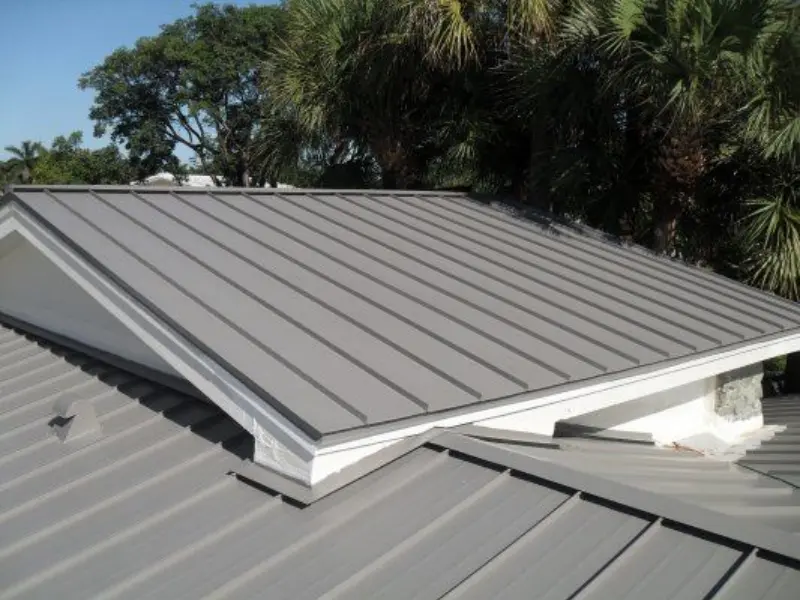
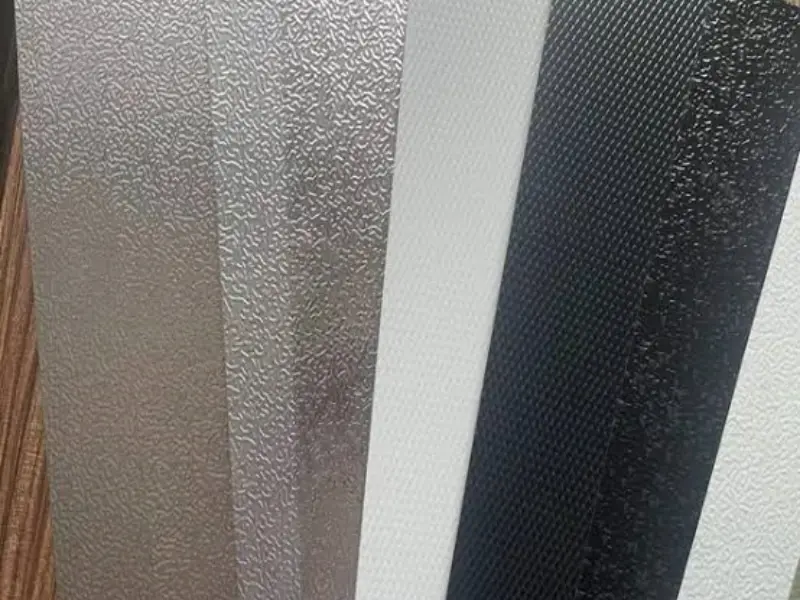
Aluminum Roofing Sheet vs Steel Roofing Sheet
Aluminum and steel are both widely used for roofing, but they have different characteristics.
| Feature | Aluminum | Steel |
|---|---|---|
| Density | Lower | Higher |
| Weight | Lightweight | Heavier |
| Corrosion resistance | Naturally good | Depends on protection |
| Formability | Good | Good |
| Handling | Easier | Heavier |
| Outdoor use | Excellent | Excellent with proper protection |
| Coating options | Many | Many |
| Transportation weight | Lower | Higher |
For projects where low structural weight is important, aluminum can offer an advantage.
For other projects, steel may be selected because of its strength and cost structure. The best material depends on the building design.
Aluminum Sheet vs Aluminum Coil for Roofing
Both sheet and coil can be used in roofing production.
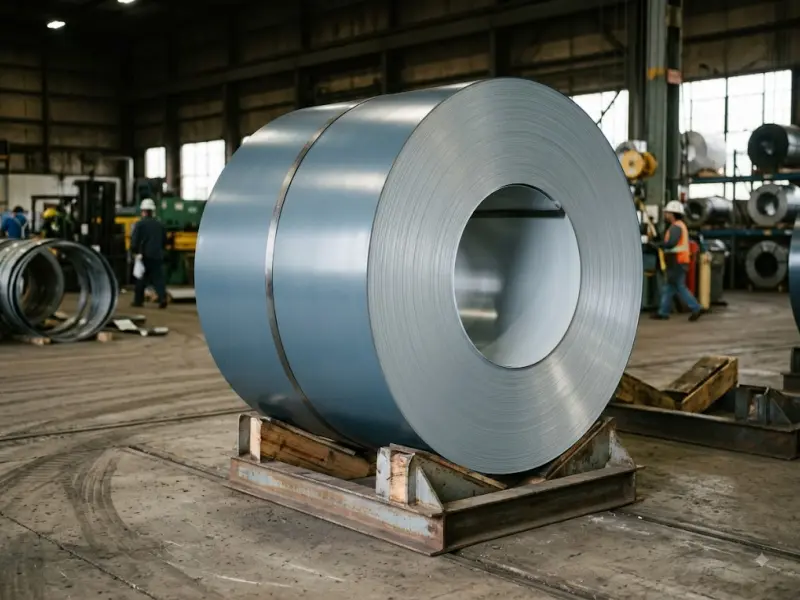
Aluminum sheet is supplied as individual flat pieces. It can be useful when the customer needs fixed panel sizes or sheet-based fabrication.
Aluminum coil is supplied in rolls and can be processed into roofing profiles, standing seam panels, flashing, and other components.
| Item | Aluminum Sheet | Aluminum Coil |
|---|---|---|
| Supply form | Flat sheet | Roll |
| Cutting | Before delivery or fabrication | During processing |
| Large-volume production | Good | Excellent |
| Fixed-size panels | Excellent | Requires processing |
| Roll forming | Possible after processing | Very suitable |
| Custom width | Available | Available |
For a roofing manufacturer with roll-forming equipment, coated aluminum coil may be more efficient. For fabricators that work with flat panels, coated aluminum sheet can be more convenient.
Color Selection for Coated Roofing Sheets
Roof color affects both appearance and building design.
Popular options include:
- White
- Silver
- Gray
- Black
- Blue
- Green
- Brown
- Red
- Custom RAL colors
Light colors can be useful for projects where a bright roof appearance is preferred. Dark colors can create a stronger architectural look.
For commercial projects, custom colors can also match company branding or architectural plans.
Color selection should be confirmed before production because the actual appearance can vary depending on coating system, gloss level, lighting, and viewing angle.
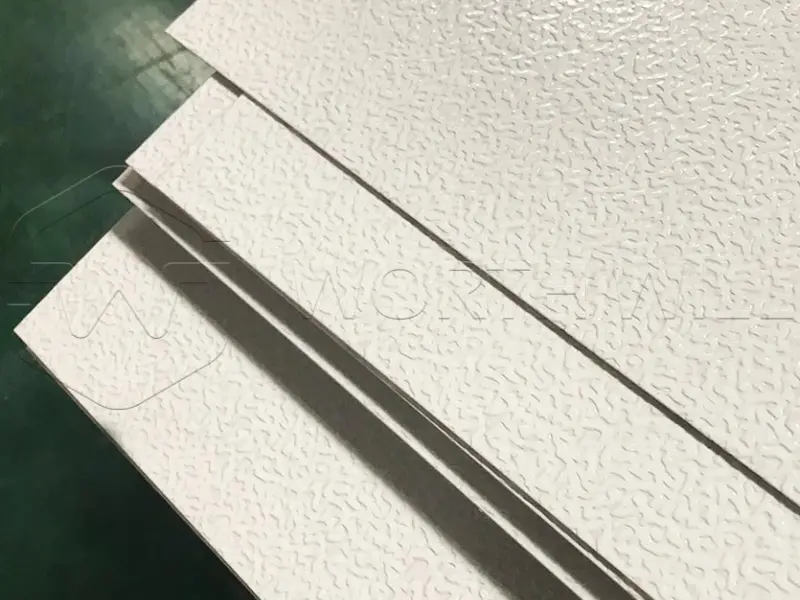
Why Coating Quality Matters More Than Color Alone
A roofing sheet may look attractive when new, but long-term performance depends on more than the color.
Important coating factors include:
→ Coating type
→ Coating thickness
→ Surface preparation
→ Paint adhesion
→ UV resistance
→ Gloss retention
→ Color stability
→ Scratch resistance
A high-quality coating starts with proper surface preparation. The aluminum surface should be cleaned and treated before the coating is applied.
This is especially important for roofing materials exposed to sunlight, rain, humidity, and temperature changes.
Roof Profile and Aluminum Sheet Selection
The same coated aluminum sheet can perform differently depending on the roof profile.
Common profiles include:
| Roof profile | Main characteristic |
|---|---|
| Corrugated | Traditional and practical |
| Trapezoidal | Good structural shape |
| Standing seam | Clean appearance |
| Ribbed panel | Higher profile rigidity |
| Flat panel | Modern appearance |
| Custom profile | Project-specific design |
Profile depth can influence the rigidity and span of the finished roofing panel.
For this reason, the aluminum thickness should be selected together with the profile rather than considered separately.
How Panel Width Affects Roofing Design
Panel width affects installation efficiency and the number of joints.
A wider panel can cover more roof area with fewer seams. However, wider panels may require more careful handling and stronger support.
A narrower panel can be easier to handle but may increase the number of joints.
Wide panel
→ Fewer joints
→ Faster coverage
→ More handling requirements
Narrow panel
→ Easier handling
→ More joints
→ Flexible for smaller areas
The ideal width depends on the roof design, transportation limits, installation method, and production equipment.
Aluminum Roofing Sheet for Custom Projects
Standard sizes are not suitable for every roofing project.
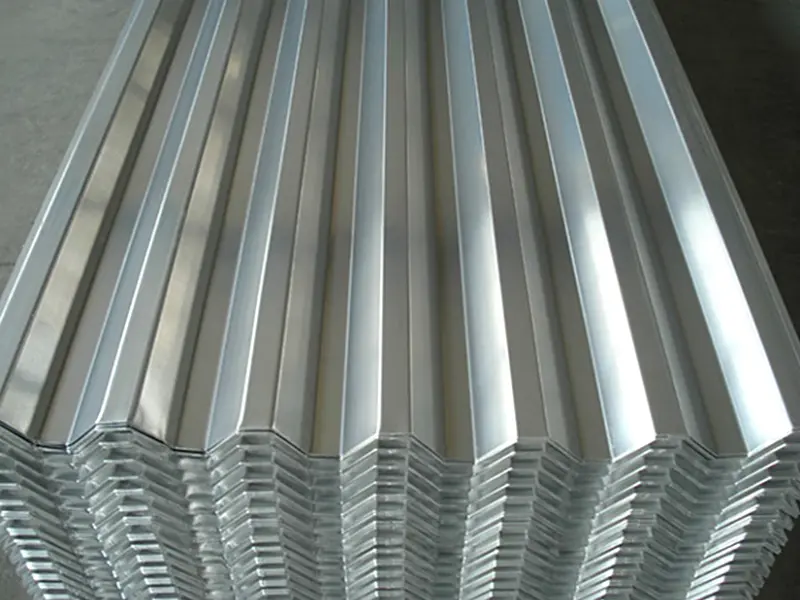
Custom coated aluminum sheet can be supplied according to:
Packaging
Alloy
Temper
Thickness
Width
Length
Coating type
Color
Gloss
Surface finish
Protective film
Custom production can help reduce cutting work and material waste.
For large projects, customers can also provide drawings or detailed dimensions before production.
Reducing Waste During Roofing Production
Material utilization is an important part of roofing cost control.
A simple production plan can be used:
Roof dimensions
↓
Panel layout
↓
Sheet or coil width
↓
Cutting plan
↓
Profile forming
↓
Installation
Choosing the right material width can reduce unused edges and off-cuts.
For manufacturers, this can be more useful than simply looking for the lowest price per kilogram.
What Affects the Price of Coated Aluminum Roofing Sheet?
The final price depends on several factors.
| Cost factor | Why it matters |
|---|---|
| Aluminum alloy | Different alloys have different costs |
| Thickness | More aluminum increases weight |
| Coating | Different coating systems have different costs |
| Color | Standard and custom colors may differ |
| Sheet size | Custom dimensions affect processing |
| Quantity | Larger orders can improve production efficiency |
| Packaging | Export packaging adds protection |
| Freight | Weight and volume affect shipping |
For this reason, a supplier should quote based on the complete specification rather than only giving a general price per kilogram.
How to Compare Two Roofing Suppliers
When comparing suppliers, price should not be the only factor.
A better comparison includes:
Material
→ Alloy
→ Temper
→ Thickness
→ Tolerance
Coating
→ Coating type
→ Coating thickness
→ Color
→ Surface quality
Production
→ Cutting accuracy
→ Flatness
→ Color consistency
→ Quality inspection
Service
→ Custom size
→ Packaging
→ Delivery
→ Technical support
This method gives buyers a clearer picture of the actual value of the product.
Quality Checks Before Shipment
For roofing orders, quality inspection can cover several important points.
| Inspection item | Purpose |
|---|---|
| Alloy | Confirm material grade |
| Thickness | Check specification |
| Width | Check dimensional accuracy |
| Length | Check cutting accuracy |
| Surface | Check scratches and defects |
| Coating | Check coating quality |
| Color | Check color consistency |
| Flatness | Support fabrication |
| Packaging | Protect during transport |
For large orders, inspection records and material certificates can also be supplied when required.
Factory Supply for Roofing Projects
We supply aluminum sheets and coils for different roofing and building applications.
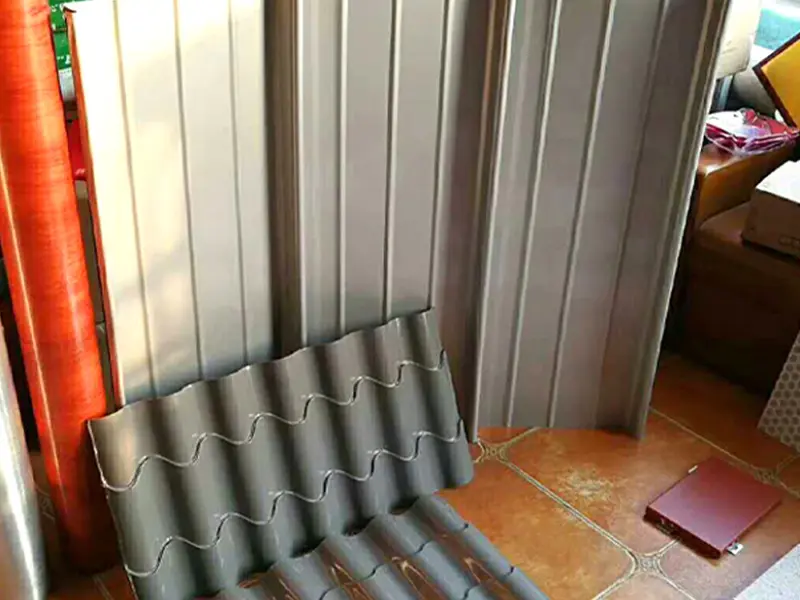
Available material options can include:
Export packaging
3003 aluminum
3105 aluminum
Other suitable aluminum alloys
Different tempers
Mill finish
PE coated aluminum
PVDF coated aluminum
Custom colors
Protective film
Custom sizes
Customers can discuss their required alloy, thickness, width, coating, color, quantity, and delivery requirements before production.
For roofing manufacturers, distributors, contractors, and building material suppliers, customized specifications can be prepared according to the project.
A Simple Buyer Checklist
Before placing an order, check these points:
✓ Building type
Residential, commercial, industrial, or special structure.
✓ Roof profile
Corrugated, trapezoidal, standing seam, ribbed, or custom.
✓ Aluminum alloy
Select according to forming and strength requirements.
✓ Thickness
Match the panel profile and structural design.
✓ Coating
Choose PE, PVDF, or another suitable system.
✓ Color
Select a standard or custom color.
✓ Size
Confirm width, length, and tolerance.
✓ Quantity
Calculate the required area plus reasonable production allowance.
✓ Packaging
Use suitable protection for domestic or export transportation.
✓ Inspection
Confirm the quality requirements before mass production.
Installation Tips That Protect the Coating
A coated roof is an investment. Treat it right during install.
- Use stainless steel or aluminum fasteners. Galvanized steel reacts with aluminum and causes corrosion.
- Do not over-tighten screws. The metal is soft. Over-driving dimples the sheet and can crack the paint.
- Leave space for thermal movement. Aluminum expands more than steel in heat. Clip systems for standing seam must allow the panel to slide.
- Cut with electric shears or a reversed-blade saw. Abrasive blades throw hot chips that stick to the paint and rust.
- Touch up cut edges with matching paint. The raw edge is bare aluminum. A quick dab seals it.
- Lift panels into place. Do not drag them across each other. The coating can scratch.
Frequently Asked Questions
What is the best alloy for a painted residential roof?
Alloy 3003 or 3105 in H24 temper is the standard. Both form well and hold paint. For coastal homes, upgrade to 5052 H32.
How thick should a coated aluminum roof panel be?
For standard homes, 0.50 mm to 0.60 mm is ideal. It resists oil canning and handles most wind loads. For commercial buildings or hurricane zones, use 0.70 mm to 0.80 mm.
How long does the paint last?
PE coating lasts 5 to 8 years before fading. SMP lasts 10 to 15 years. PVDF lasts 15 to 20 years. The metal underneath can last 40 to 50 years.
Can coated aluminum roofing be used at the beach?
Yes, but choose wisely. Use 5052 alloy with PVDF paint. Avoid PE near salt air. Use stainless steel fasteners only.
Does color choice change the price?
Dark colors and bright reds sometimes cost a little more because they need extra pigment. Custom colors outside standard RAL charts also carry a surcharge. Whites, grays, and bronzes are usually the cheapest.
Can I order a custom color for a small job?
Most mills need 3 to 5 tons minimum per custom color. Some distributors keep popular shades in stock for smaller orders. If you need less than one ton, buy from a stocking distributor.
Is coated aluminum roofing recyclable?
Yes. The aluminum base is 100% recyclable. The paint burns off during re-melting. Recycled aluminum keeps its strength. This makes coated roofing a green choice even at end of life.
What is coil coating?
Coil coating is the factory process where paint is applied to a continuous roll of aluminum sheet. The metal is cleaned, primed, painted, and baked in one pass. The result is harder and more uniform than any field-applied finish.
Can I walk on a coated aluminum roof?
Yes, but carefully. Walk on the flat areas near the ribs or fasteners. Avoid the center of wide pans. Use soft-soled shoes. Thicker panels at 0.70 mm or above handle foot traffic better than thin sheets.
How do I clean a coated aluminum roof?
Use a soft brush and mild soapy water. Rinse with a hose. Do not use pressure washers up close. Do not use abrasive pads or strong chemicals. They can dull the paint gloss.