Why Aluminum Is Popular in Modern Boat Building
Best Aluminum Alloy for Boat Building. Aluminum is one of the most widely used materials in marine manufacturing.
Many commercial boats, fishing boats, patrol boats, ferries, and luxury yachts use aluminum alloys because they are lightweight, corrosion resistant, and easy to fabricate.
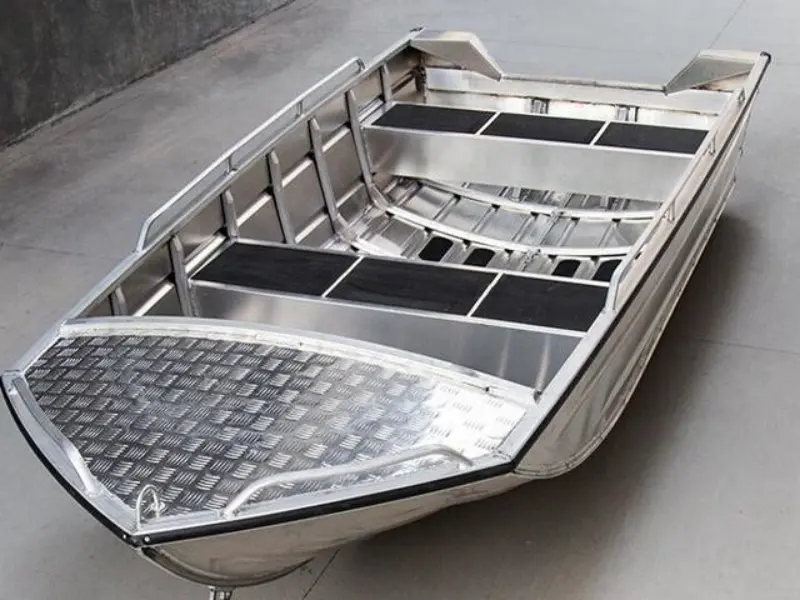
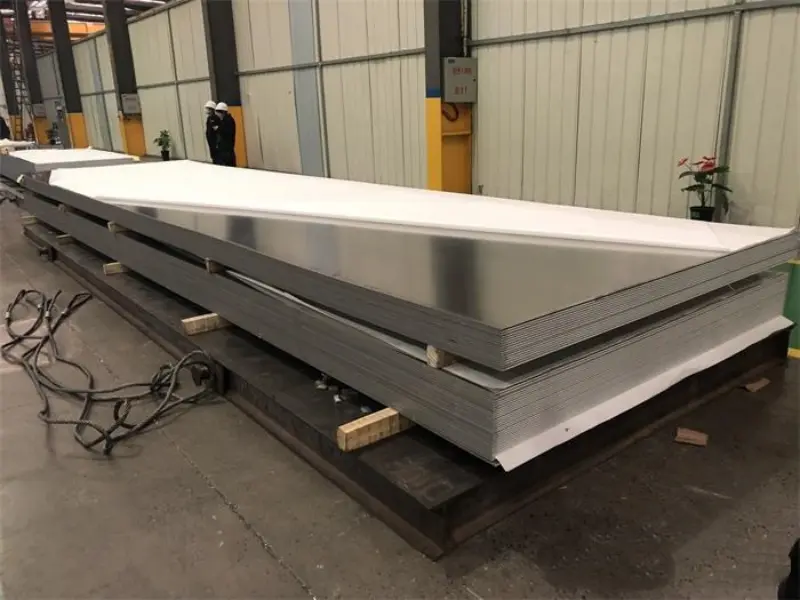
Compared with steel, aluminum reduces overall boat weight and improves fuel efficiency.
Compared with fiberglass, aluminum offers stronger impact resistance and longer service life in many marine environments.
Today, marine grade aluminum is used for:
- Fishing boats
- Passenger ferries
- Military boats
- Workboats
- Yacht structures
- Pontoon boats
What Is Marine Grade Aluminum?
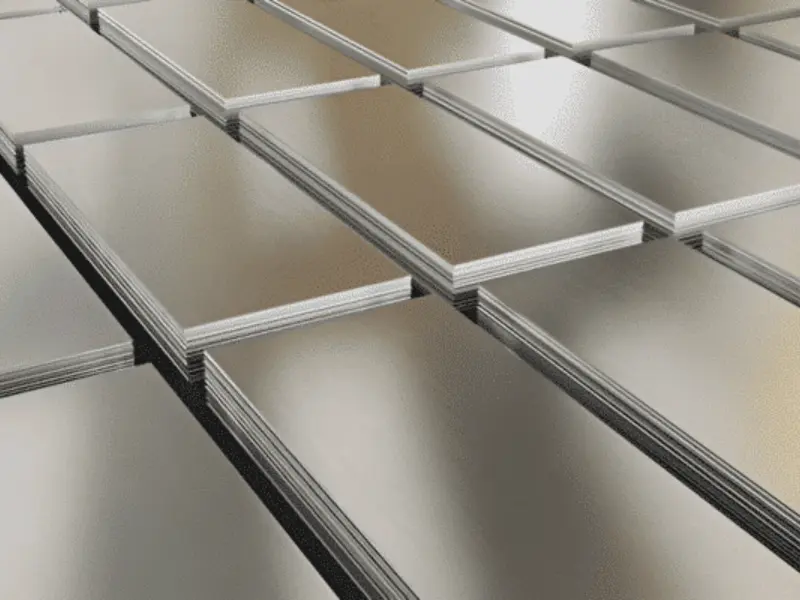
Marine grade aluminum refers to aluminum alloys specially designed for seawater environments. These alloys have strong corrosion resistance and good welding performance with Best Aluminum Alloy for Boat Building.
Marine aluminum alloys usually contain:
- Magnesium
- Manganese
- Small amounts of chromium
These elements improve strength and seawater resistance.
Main Features of Marine Aluminum
| Property | Description |
|---|---|
| Corrosion resistance | Excellent |
| Weight | Lightweight |
| Weldability | Very good |
| Strength | High |
| Maintenance | Low |
| Recyclability | Excellent |
Why Aluminum Is Used for Boat Building
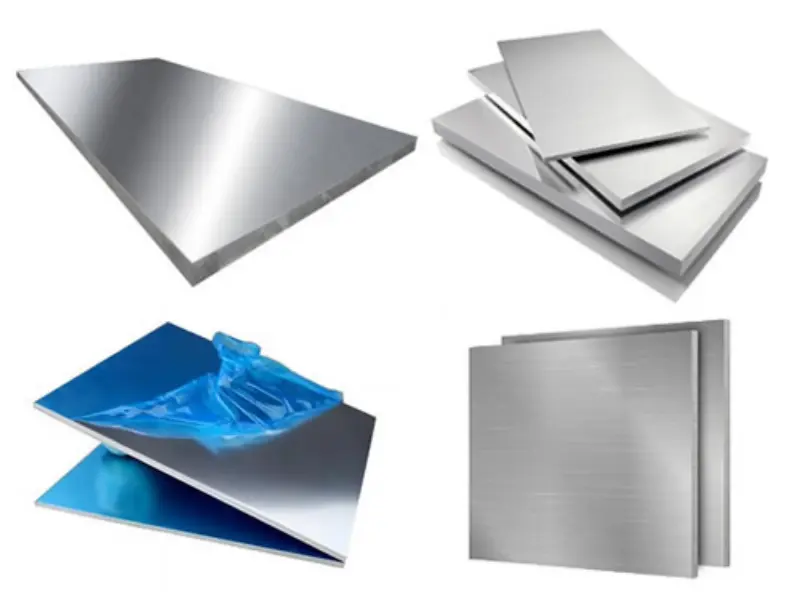
Lightweight Structure
Aluminum boats weigh less than steel boats.
Better Fuel Efficiency
Lower weight helps reduce fuel consumption.
Excellent Corrosion Resistance
Marine aluminum performs well in seawater environments.
Easy Fabrication
Aluminum sheets can be welded, bent, and formed easily.
Long Service Life
Marine grade aluminum can last for many years with proper maintenance.
Best Aluminum Alloys for Boat Building
5083 Aluminum Alloy
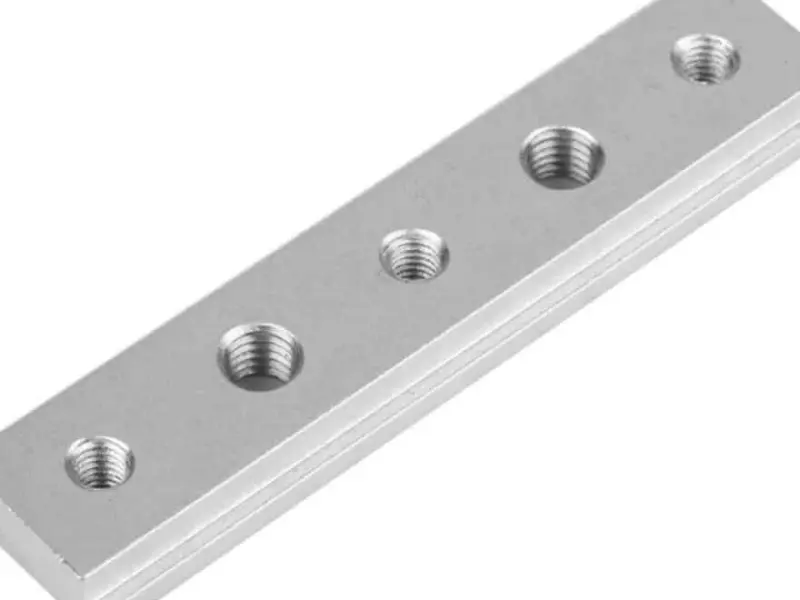
5083 is one of the most popular marine grade aluminum alloys with Best Aluminum Alloy for Boat Building.
Features
| Property | Result |
|---|---|
| Corrosion resistance | Excellent |
| Weldability | Excellent |
| Strength | High |
| Seawater performance | Superior |
Applications
- Boat hulls
- Shipbuilding
- Marine structures
- Offshore platforms
5086 Aluminum Alloy
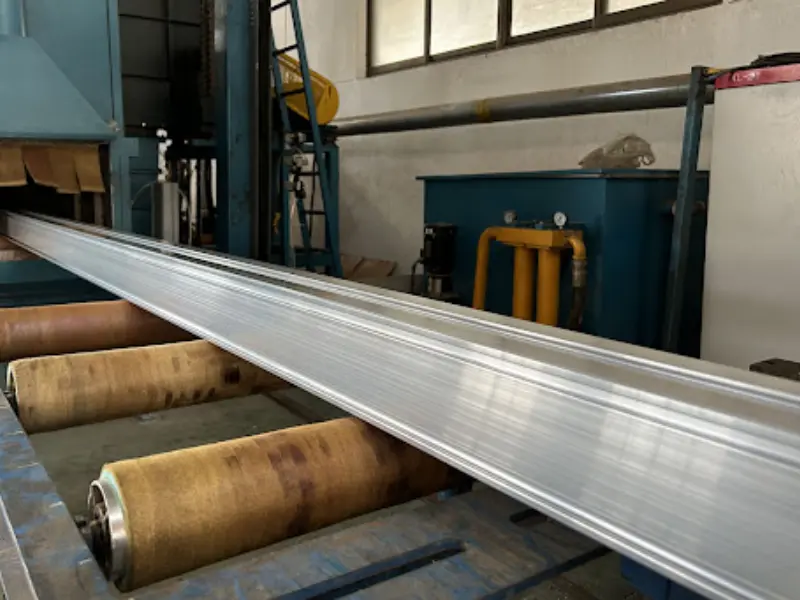
5086 aluminum is widely used for welded boat structures.
Advantages
- Strong seawater resistance
- Good mechanical strength
- Excellent welding properties
Applications
- Patrol boats
- Workboats
- Passenger vessels
5052 Aluminum Alloy
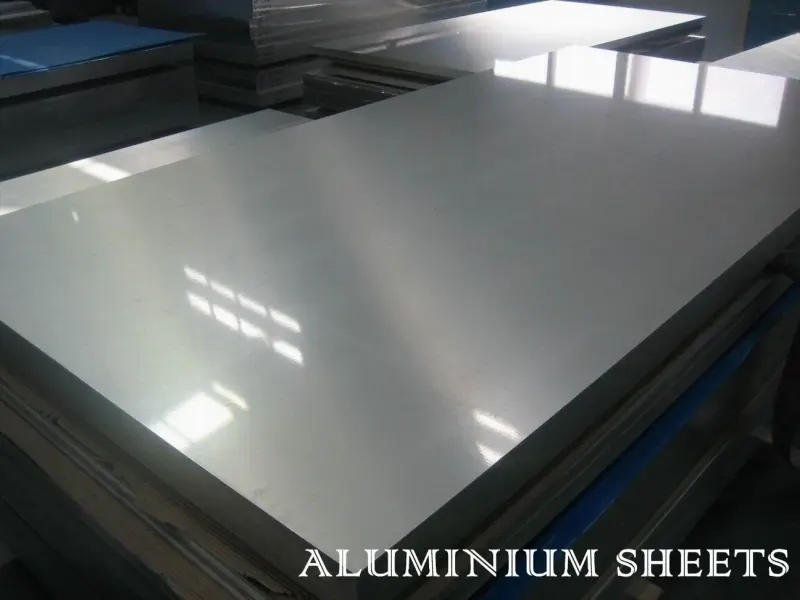
5052 alloy offers good corrosion resistance and flexibility.
Applications
- Small boats
- Fuel tanks
- Interior marine panels
6061 Aluminum Alloy
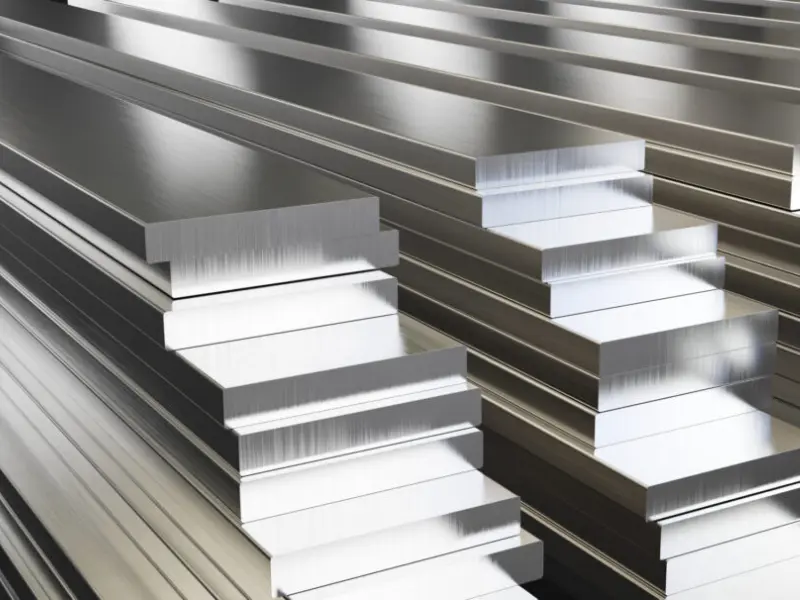
6061 aluminum is widely used for structural marine components.
Features
| Property | Result |
|---|---|
| Machinability | Excellent |
| Structural strength | Good |
| Surface finish | Smooth |
Applications
- Boat frames
- Railings
- Marine accessories
5456 Marine Aluminum
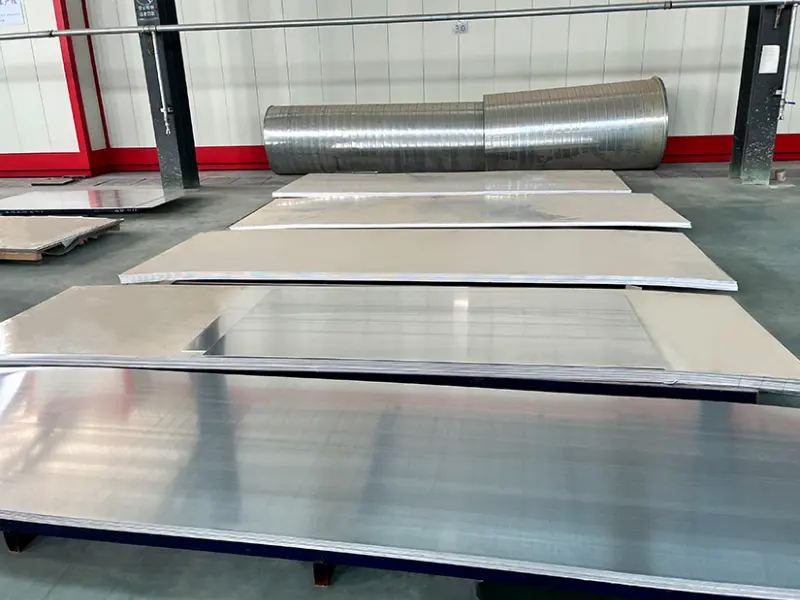
5456 alloy provides higher strength for heavy-duty projects with Best Aluminum Alloy for Boat Building.
Applications
- Large vessels
- Ship structures
- Industrial marine systems
Marine Aluminum Alloy Comparison
| Alloy | Strength | Corrosion Resistance | Weldability | Common Use |
|---|---|---|---|---|
| 5052 | Medium | Very good | Good | Small boats |
| 5083 | High | Excellent | Excellent | Hulls |
| 5086 | High | Excellent | Excellent | Workboats |
| 5456 | Higher | Excellent | Very good | Heavy-duty ships |
| 6061 | Medium | Good | Good | Frames and fittings |
Common Tempers Used in Boat Building
| Temper | Characteristics |
|---|---|
| H111 | Good forming |
| H116 | Marine grade corrosion resistance |
| H321 | Stabilized marine temper |
| T6 | Higher structural strength |
Marine tempers improve seawater durability and structural performance.
Marine Grade Aluminum Sheet Thickness
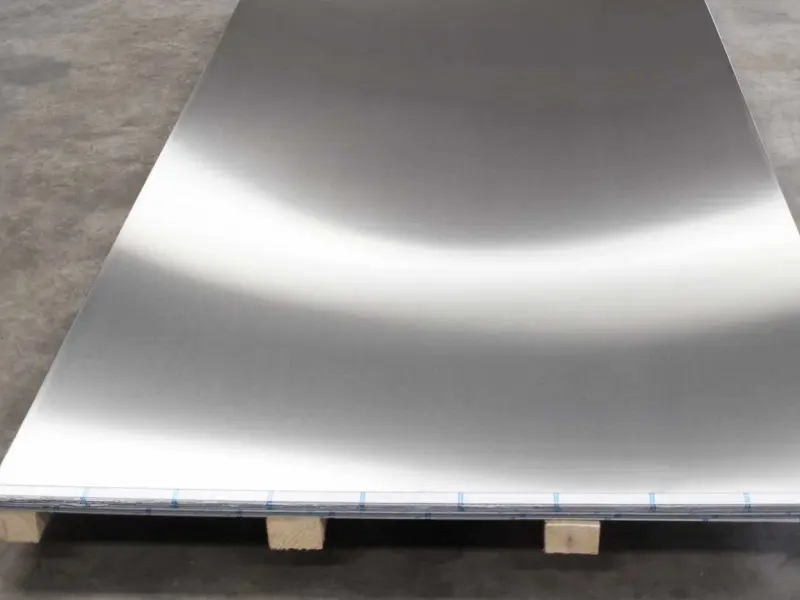
Thin Aluminum Sheets
Thin sheets are suitable for lightweight structures.
| Thickness | Application |
|---|---|
| 1.5 mm | Interior panels |
| 2.0 mm | Small boats |
| 3.0 mm | Deck covers |
Medium Thickness Marine Aluminum
These thicknesses are common for hull construction.
| Thickness | Common Use |
|---|---|
| 4 mm | Fishing boats |
| 5 mm | Boat sides |
| 6 mm | Hull structures |
Heavy-Duty Marine Aluminum Plates
Thicker plates provide stronger impact resistance.
Applications
- Commercial ships
- Ferries
- Offshore vessels
| Thickness | Application |
|---|---|
| 8 mm | Workboats |
| 10 mm | Large hulls |
| 12 mm | Marine structures |
Aluminum Boat Hull Materials
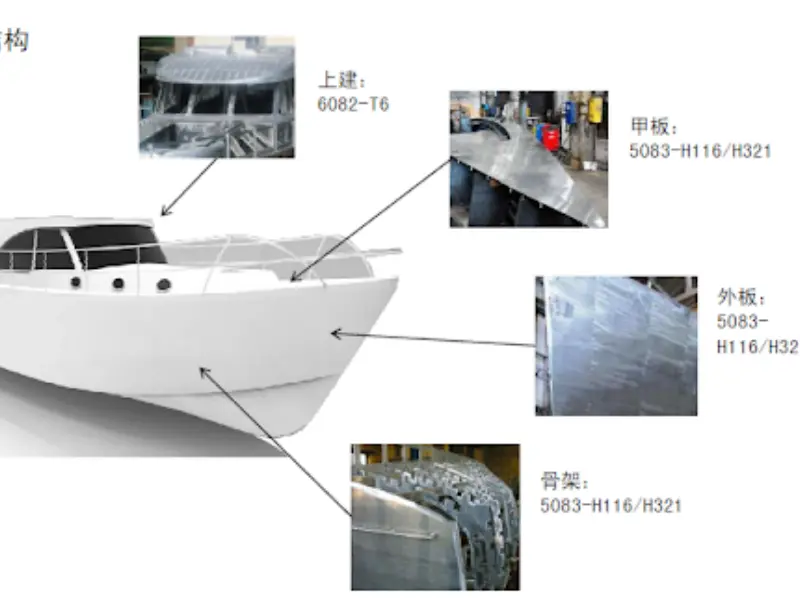
Bottom Hull Plates
The hull bottom requires stronger aluminum plates with Best Aluminum Alloy for Boat Building.
Recommended Alloys
- 5083-H116
- 5086-H116
Side Wall Panels
Side walls often use medium-thickness marine sheets.
Common Thickness
- 4 mm
- 5 mm
- 6 mm
Deck Aluminum Plates
Deck structures require good strength and anti-slip performance.
Popular Products
- Checker plate aluminum
- Non-slip aluminum sheets
Marine Aluminum Extrusions
Aluminum extrusions are widely used in boats.
Applications
- Handrails
- Frames
- Window systems
- Structural supports
5083 vs 5086 Aluminum for Boats
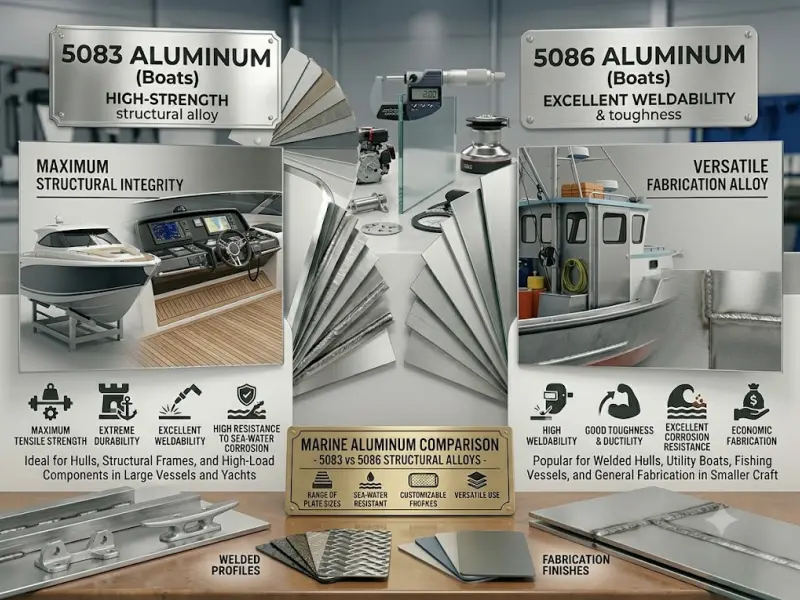
Both alloys are widely used in marine applications.
| Property | 5083 | 5086 |
|---|---|---|
| Strength | Slightly higher | |
| Corrosion resistance | Excellent | |
| Weldability | Excellent | |
| Cost | Medium | |
| Boat application | Hulls |
When To Choose 5083
- High-strength hulls
- Offshore projects
- Heavy marine use
When To Choose 5086
- Welded structures
- Workboats
- Commercial vessels
5052 vs 5083 Aluminum
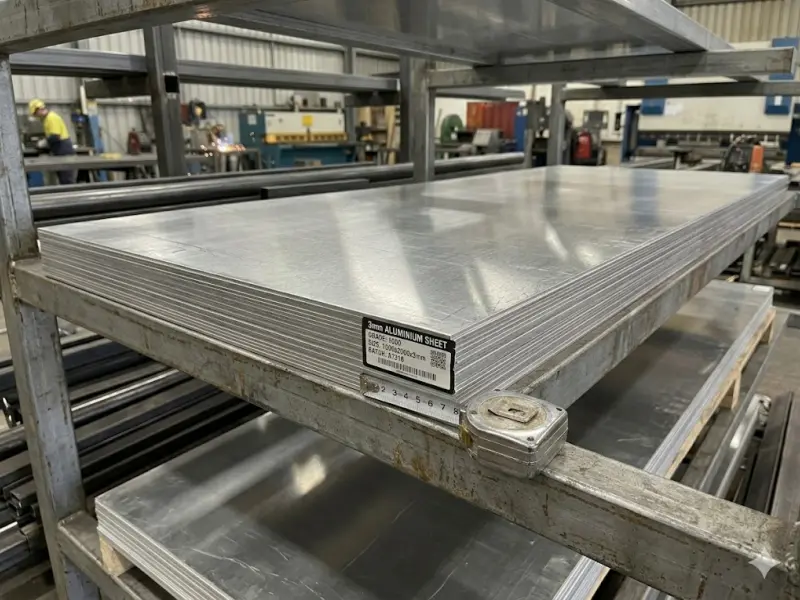
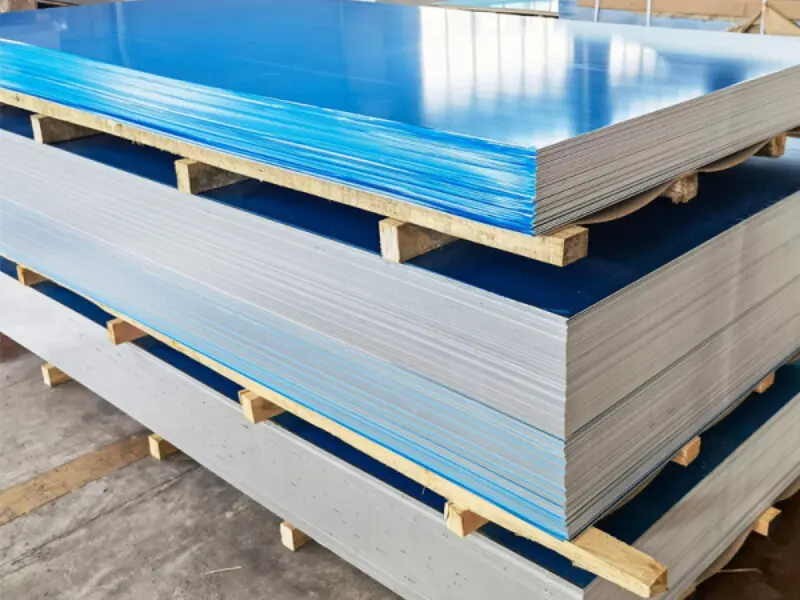
| Property | 5052 | 5083 |
|---|---|---|
| Strength | Lower | |
| Corrosion resistance | Good | |
| Formability | Better | |
| Cost | Lower | |
| Marine use | Light-duty |
5052 is suitable for smaller and lighter marine projects.
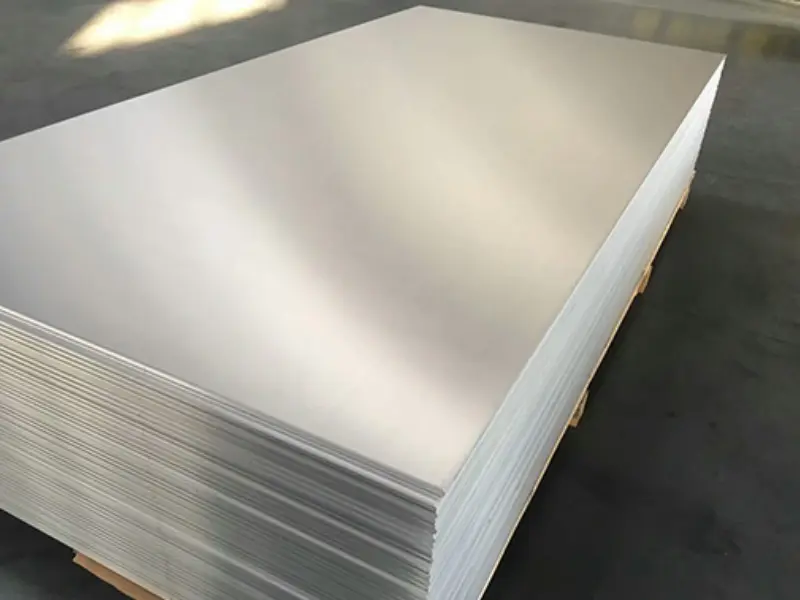
6061 vs 5083 Marine Aluminum
| Property | 6061 | 5083 |
|---|---|---|
| Machining | Better | |
| Corrosion resistance | Lower | |
| Structural use | Good | |
| Hull use | Less common |
6061 is more common in frames and accessories rather than hull construction. Best Aluminum Alloy for Boat Building
Aluminum vs Steel Boat Building
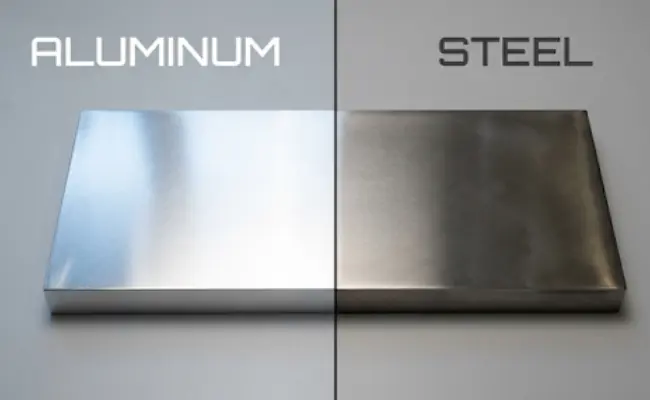
| Property | Aluminum | Steel |
|---|---|---|
| Weight | Lighter | |
| Corrosion resistance | Better | |
| Fuel efficiency | Higher | |
| Maintenance | Lower | |
| Fabrication | Easier |
Aluminum vs Fiberglass Boats
| Property | Aluminum | Fiberglass |
|---|---|---|
| Impact resistance | Better | |
| Weight | Lighter | |
| Repair | Easier | |
| Long-term durability | Strong |
Top Contenders: The Best Aluminum Alloys for Boat Building
When people ask about the best aluminum alloy for boat building, three names usually come up: 5052, 5083, and 6061.
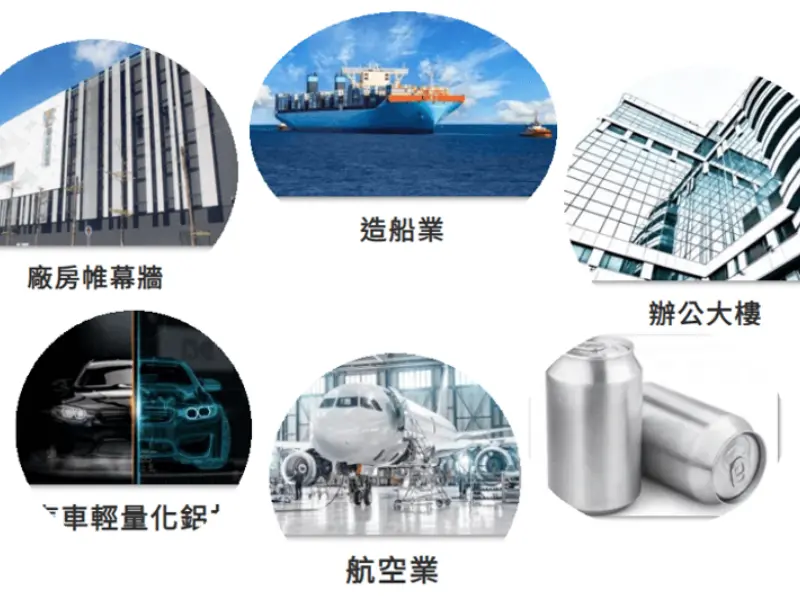
Alloy 5083: The King of the Hull
Alloy 5083 is widely considered the highest-strength non-heat-treatable alloy in commercial use. It is famous for its exceptional performance in extreme environments. If you are building a large ship hull or a vessel that will face heavy seas, 5083 is the industry standard. It maintains its strength even after welding.
Alloy 5052: The Versatile Choice
For smaller boats, fuel tanks, and internal structures, 5052 is excellent. It is more “workable” than 5083, meaning it is easier to bend and shape into curves. It offers very good corrosion resistance and is often more affordable for small-scale projects like rowboats or pontoons.
Alloy 6061: The Structural Backbone
Unlike the 5000 series, 6061 is a heat-treatable alloy. While it has good corrosion resistance, it is primarily used for structural components. Think of railings, window frames, and deck supports. It is very stiff and strong, but you must be careful when welding it, as the heat can reduce its strength near the joints.
Common Surface Treatments for Marine Aluminum
Mill Finish Marine Aluminum
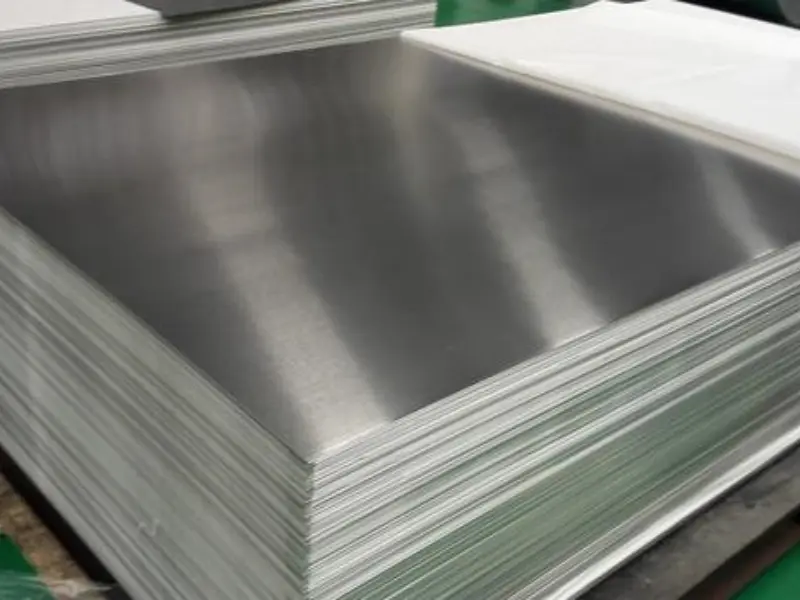
Natural aluminum surface without coating.
Applications
Industrial boats
Hull structures
Anodized Marine Aluminum
Anodizing improves corrosion resistance and appearance.
Applications
- Railings
- Decorative marine parts
- Boat accessories
Painted Marine Aluminum
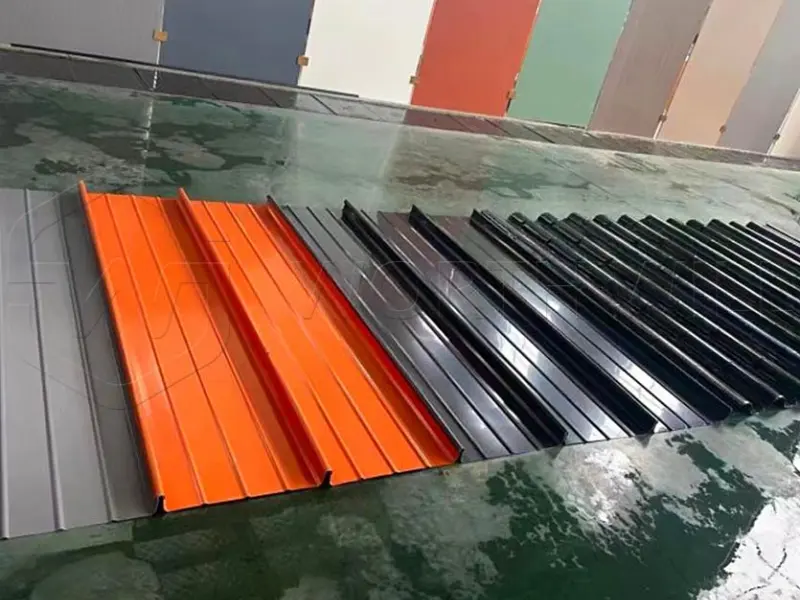
Painted aluminum improves decorative appearance and UV protection.
Applications
Commercial vessels
Luxury boats
Passenger ferries
Applications of Marine Aluminum
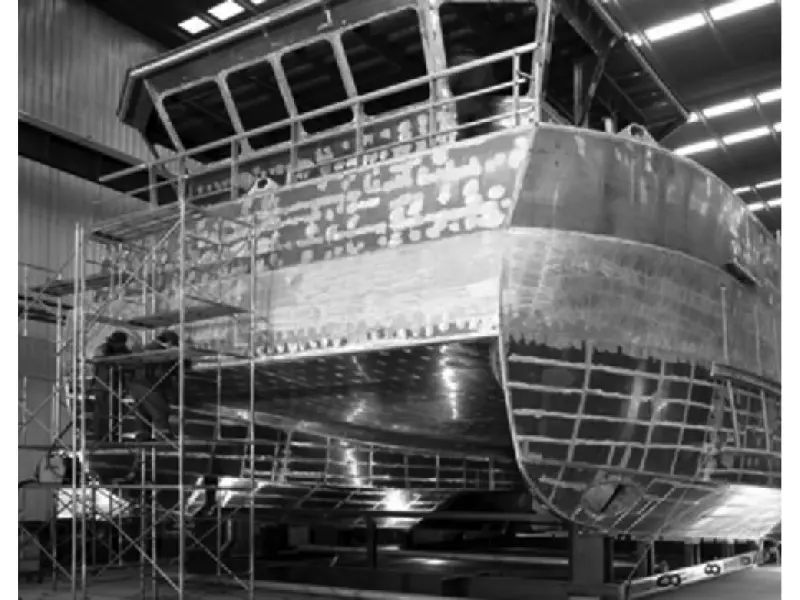
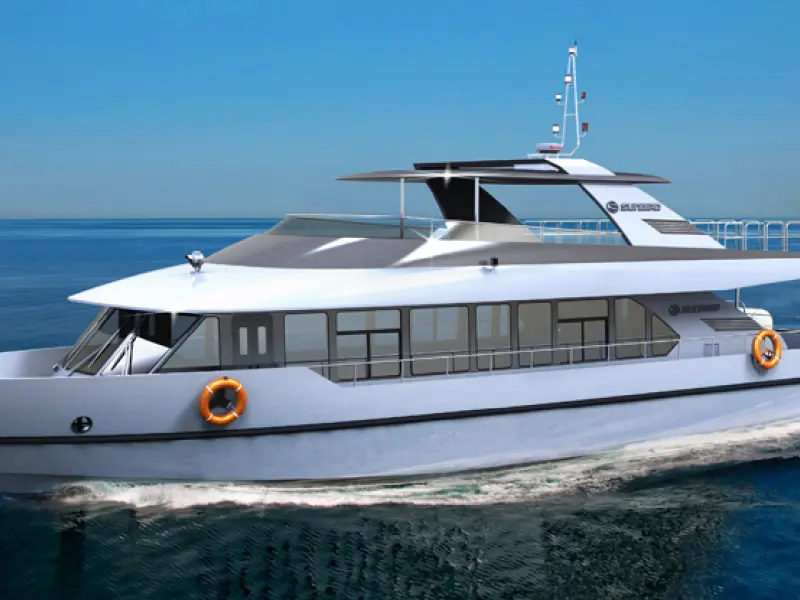
Fishing Boats
Fishing boats require lightweight and durable materials. By Best Aluminum Alloy for Boat Building
Benefits
- Easier operation
- Lower fuel cost
- Strong seawater resistance
Passenger Ferries
Aluminum reduces vessel weight and improves efficiency.
Advantages
- Lower maintenance
- Faster speed
- Longer service life
Patrol Boats
Marine aluminum alloys are common in military and rescue boats.
Features
- High strength
- Lightweight
- Excellent welding
Pontoon Boats
Pontoon boats often use marine aluminum tubes and sheets.
Benefits
- Corrosion resistance
- Stable floating performance
- Easy fabrication
Offshore Structures
Marine aluminum is also used in offshore engineering.
Applications
- Platforms
- Walkways
- Marine support systems
Welding Marine Aluminum Alloys
Proper welding is important in boat manufacturing.
Common Welding Methods
| Method | Application |
|---|---|
| MIG welding | Boat hulls |
| TIG welding | Precision parts |
Important Notes
- Use marine filler wire
- Keep surfaces clean
- Avoid contamination
Marine Aluminum Coil and Plate Supply
Marine aluminum is available in:
- Sheets
- Plates
- Coils
- Extrusions
Common Widths
| Width | Application |
|---|---|
| 1000 mm | Small boats |
| 1250 mm | Hull panels |
| 1500 mm | Large structures |
Packaging and Export Protection
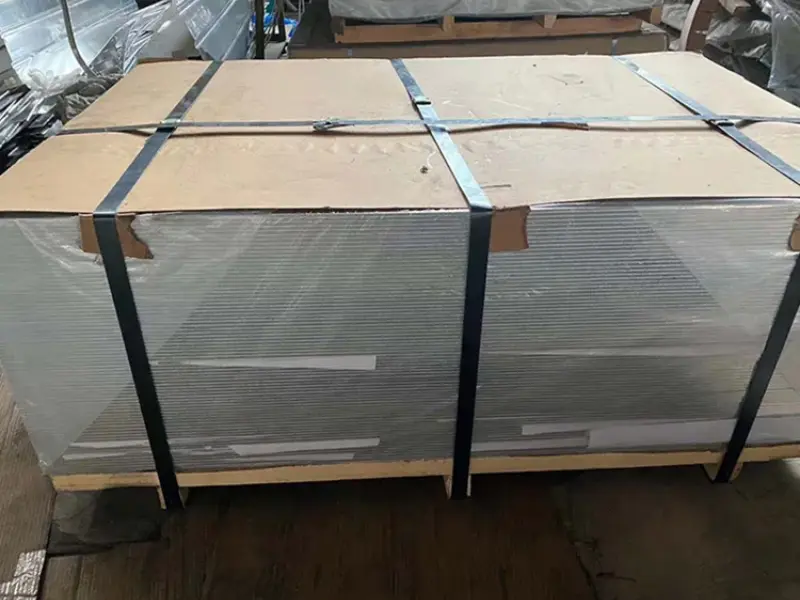
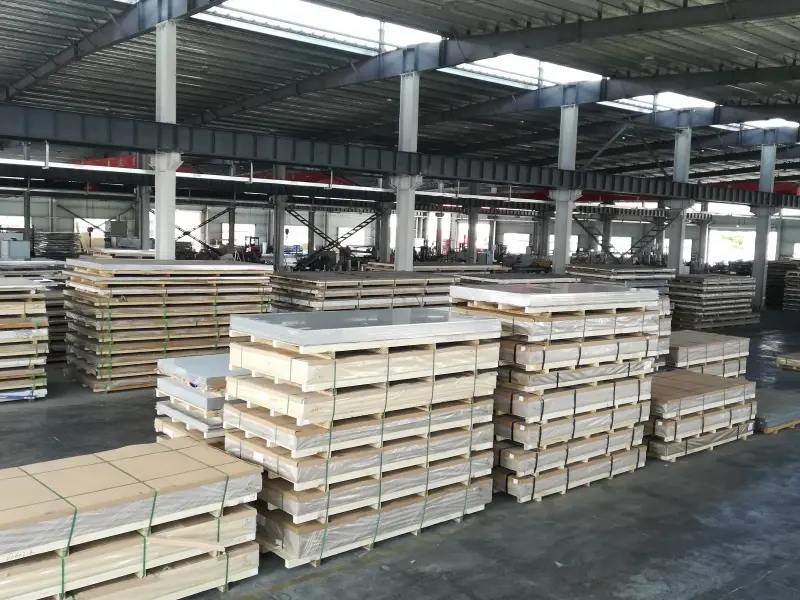
Standard Packaging
| Packaging Type | Protection |
|---|---|
| Waterproof paper | Moisture protection |
| Wooden pallets | Export safety |
| Protective film | Surface protection |
OEM and Custom Services
Professional suppliers can provide:
- Custom marine aluminum sizes
- CNC cutting
- Marine plate processing
- Extrusion fabrication
- OEM packaging
WORTHWILL ALUMINUM supplies marine grade aluminum sheets, plates, coils, and extrusions for boat building and marine engineering projects.
Technical Comparison of Marine Alloys
To help you decide, here is a breakdown of the chemical and mechanical properties of the most popular marine alloys.
Table: Mechanical Properties Comparison
| Alloy & Temper | Yield Strength (MPa) | Tensile Strength (MPa) | Best Feature |
|---|---|---|---|
| 5052-H32 | ~193 | ~230 | Best Workability |
| 5083-H116 | ~215 | ~315 | Highest Corrosion Resistance |
| 5456-H116 | ~230 | ~315 | Extra Strength |
| 6061-T6 | ~240 | ~290 | Structural Rigidity |
Table: Key Chemical Elements (%)
| Alloy | Magnesium (Mg) | Manganese (Mn) | Silicon (Si) | Performance |
|---|---|---|---|---|
| 5052 | 2.2−2.8 | ≤0.10 | ≤0.25 | General Marine |
| 5083 | 4.0−4.9 | 0.4−1.0 | ≤0.40 | Heavy Duty Marine |
| 6061 | 0.8−1.2 | ≤0.15 | 0.4−0.8 | Structural |
Understanding Tempers: H116, H32, and T6
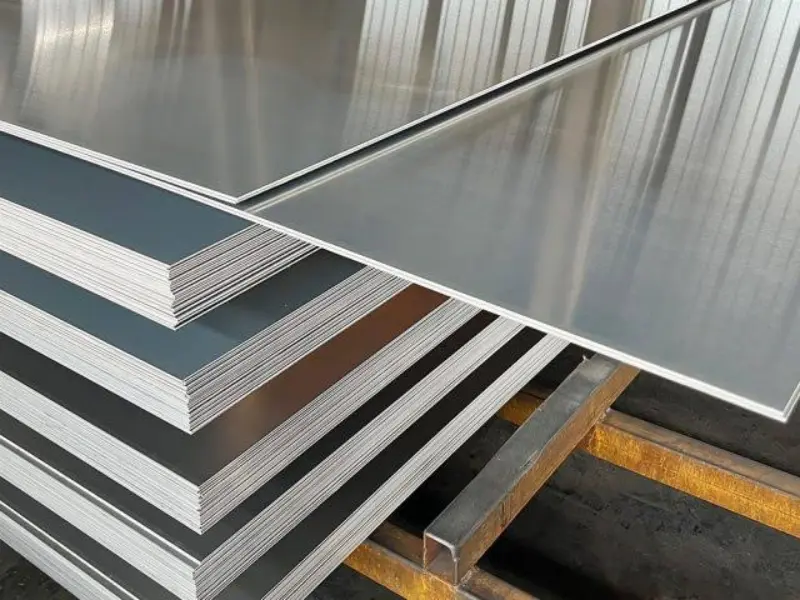
The “Temper” describes how the metal was treated after it was made. For the best aluminum alloy for boat building, the temper is just as important as the alloy.
T6: This is for the 6061 series. It means the metal was solution heat-treated and artificially aged. It makes the metal very hard but less flexible.
H116 & H117: These are the “Gold Standard” for the 5000 series in marine use. They are specially treated to prevent “intergranular corrosion.” This is a type of rot that happens inside the metal in saltwater.
H32: This means the metal was strain-hardened and stabilized. It is common for 5052 and is very easy to bend for boat parts.
Choosing the Right Thickness for Your Boat
The thickness of the plate depends on the size of the vessel and the part of the boat you are building.
Plate Thickness Guide
| Part of the Boat | Recommended Thickness (mm) | Recommended Thickness (inches) |
|---|---|---|
| Small Canoe / Skiff | 2.0 mm – 3.0 mm | ~0.080″ – 0.125″ |
| Medium Fishing Boat | 4.0 mm – 6.0 mm | ~3/16″ – 1/4″ |
| Commercial Ship Hull | 8.0 mm – 12.0 mm | ~5/16″ – 1/2″ |
| Decking / Flooring | 3.0 mm – 5.0 mm | ~1/8″ – 3/16″ |
About Corrosion and Longevity
Does marine aluminum rust?
Aluminum does not rust like steel, but it can corrode. However, marine-grade alloys like 5083 contain magnesium, which stops this process. If used correctly, an aluminum boat can last over 40 years.
Do I need to paint my aluminum boat?
In freshwater, you often don’t need to. In saltwater, many people leave the hull unpainted above the waterline. Below the waterline, “antifouling” paint is used to prevent barnacles from growing.
About Welding and Construction
Is it hard to weld aluminum for boats?
It requires different skills than steel. You must use MIG or TIG welding with the correct filler wire (like 5183 or 5356). It is important to keep the metal very clean before welding.
Can I mix aluminum and steel on a boat?
You must be very careful. If they touch in saltwater, “galvanic corrosion” will happen, and the aluminum will dissolve. You must use special insulation or gaskets between the two metals.

About Purchasing
Why is 5083 more expensive than 5052?
5083 has more magnesium and manganese. It is also harder to roll in the factory. This makes it stronger and better for the ocean, but the production cost is higher.
Can I get custom-cut plates?
Yes. Most factories can use CNC plasma or waterjet cutting to provide the exact shapes you need for your boat kit. This saves a lot of time during assembly.
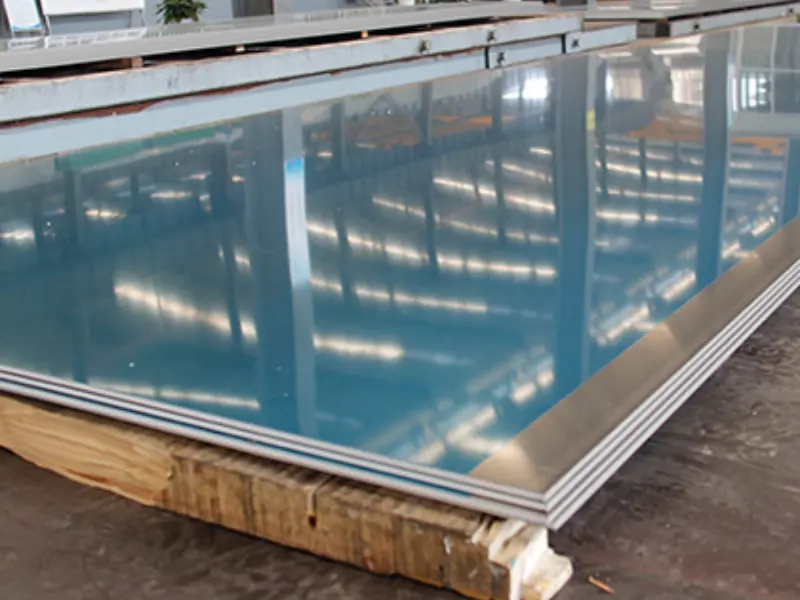
Marine grade aluminum alloys
Marine grade aluminum alloys are important materials in modern boat building and marine engineering. They offer lightweight performance, strong corrosion resistance, excellent weldability, and long service life with Best Aluminum Alloy for Boat Building.
Among all marine aluminum alloys, 5083 and 5086 are the most popular choices for hull construction and seawater applications. Other alloys such as 5052, 5456, and 6061 are also widely used in specific marine components.
With different tempers, thicknesses, and product forms available, marine aluminum sheets and plates can meet the needs of fishing boats, ferries, patrol boats, yachts, and offshore structures worldwide.
Which Alloy Should You Buy?
| Project Type | Best Alloy Choice | Why? |
|---|---|---|
| Ocean-going Yacht | 5083-H116 | Maximum safety and salt resistance. |
| Lake Fishing Boat | 5052-H32 | Easy to shape and very cost-effective. |
| Pontoon Logs | 5052-H34 | Great balance of strength and weight. |
| Handrails & Frames | 6061-T6 | High stiffness for structural support. |
FAQ – Frequently Asked Questions
What Is The Best Aluminum Alloy For Boat Building?
5083 and 5086 are among the best marine grade aluminum alloys for boat hull construction.
Why Is 5083 Aluminum Popular In Marine Applications?
5083 aluminum offers excellent seawater corrosion resistance and strong welding performance.
Is 6061 Aluminum Good For Boats?
Yes. 6061 aluminum is suitable for frames, railings, and structural components.
What Thickness Aluminum Is Used For Boats?
Small boats may use 2–4 mm sheets, while large commercial boats may use 6–12 mm plates.
What Is Marine Grade Aluminum?
Marine grade aluminum refers to aluminum alloys designed for seawater environments.
Which Is Better For Boats, Aluminum Or Fiberglass?
Aluminum offers better impact resistance and easier repair, while fiberglass provides smooth surface appearance.
Can Marine Aluminum Rust?
Aluminum does not rust like steel, but proper maintenance is still important.
What Temper Is Common For Marine Aluminum?
H116 and H321 tempers are commonly used in marine environments.