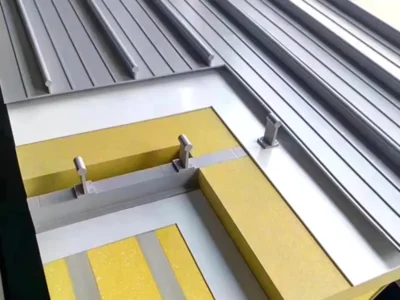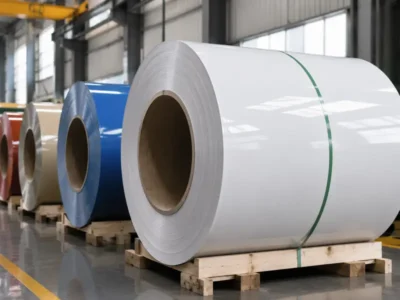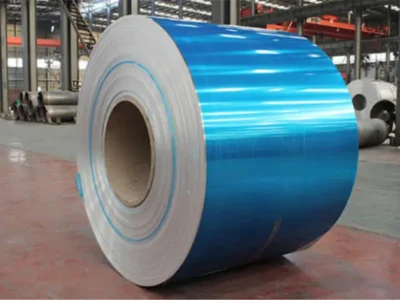
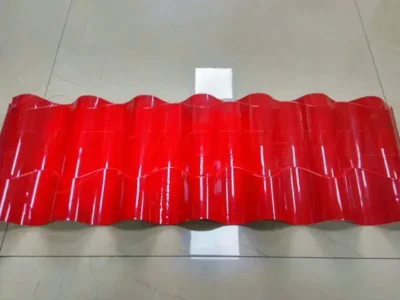

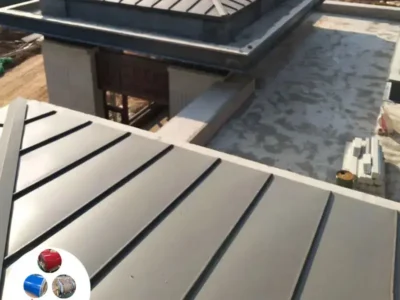
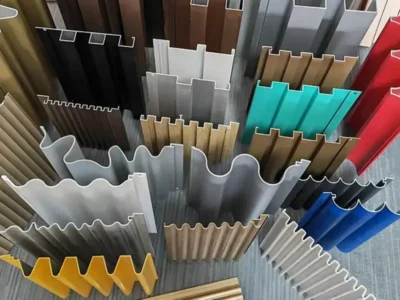
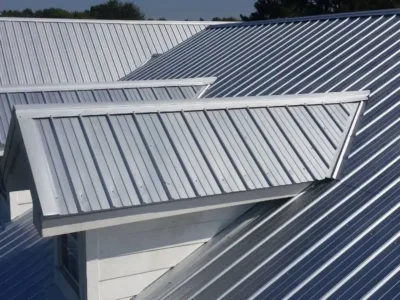
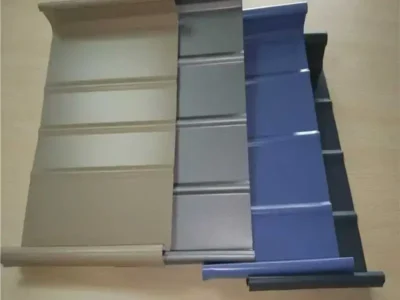
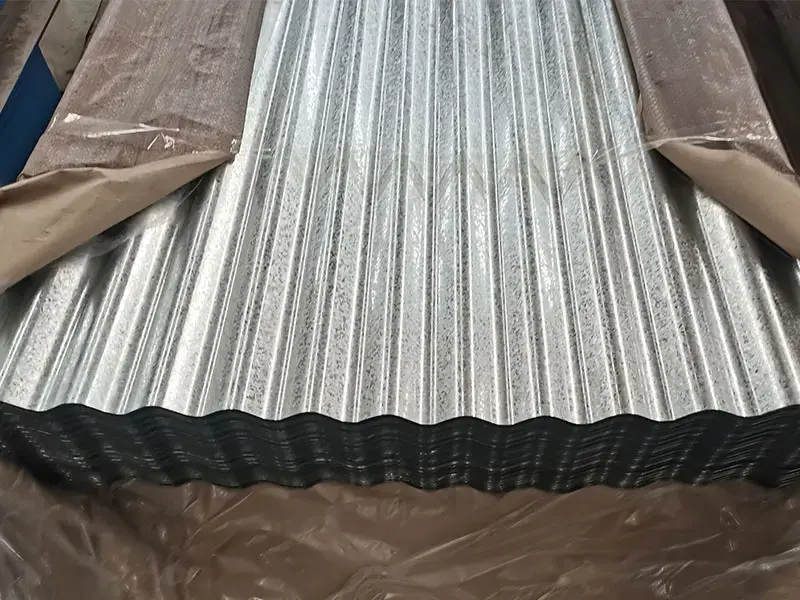
Aluminum corrugated roofing is a lightweight roofing material made from profiled aluminum sheet. The sheet is formed into repeated waves or ribs to improve stiffness and create a practical roof profile.
It is used for residential roofs, commercial buildings, agricultural buildings, workshops, warehouses, garages, carports, canopies, and many other structures.

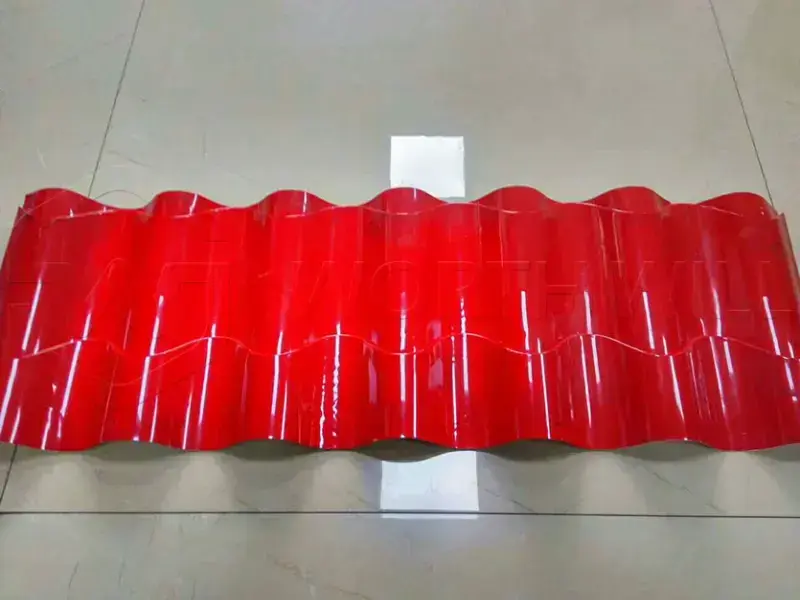
Compared with a flat aluminum sheet, a corrugated profile can cover a larger roof area with less material thickness. The shape also helps water move toward the roof edge.
Aluminum corrugated roofing can be supplied in different alloys, tempers, thicknesses, widths, lengths, profiles, and surface finishes.
A basic specification can be described as:
Alloy → Temper → Thickness → Profile → Width → Effective Width → Length → Coating
This makes it easier for buyers, contractors, and roofing distributors to select the right product.
What Is Aluminum Corrugated Roofing?
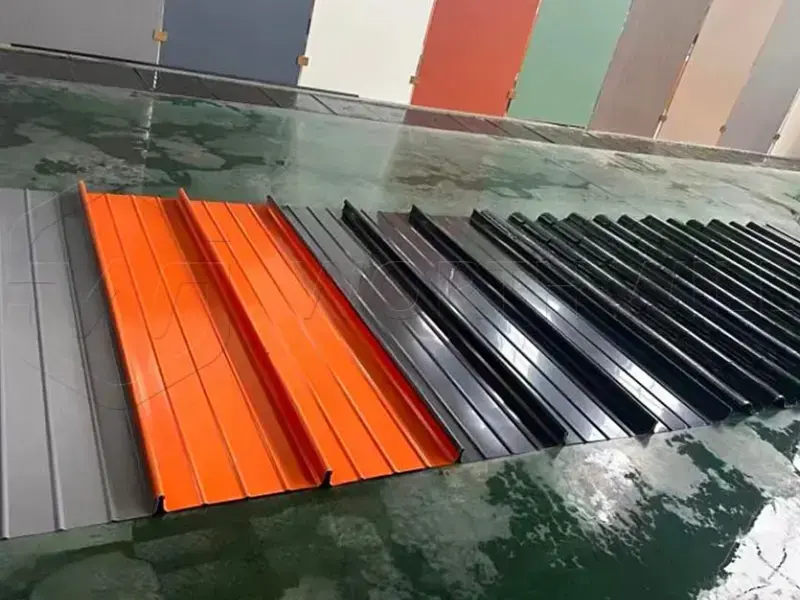
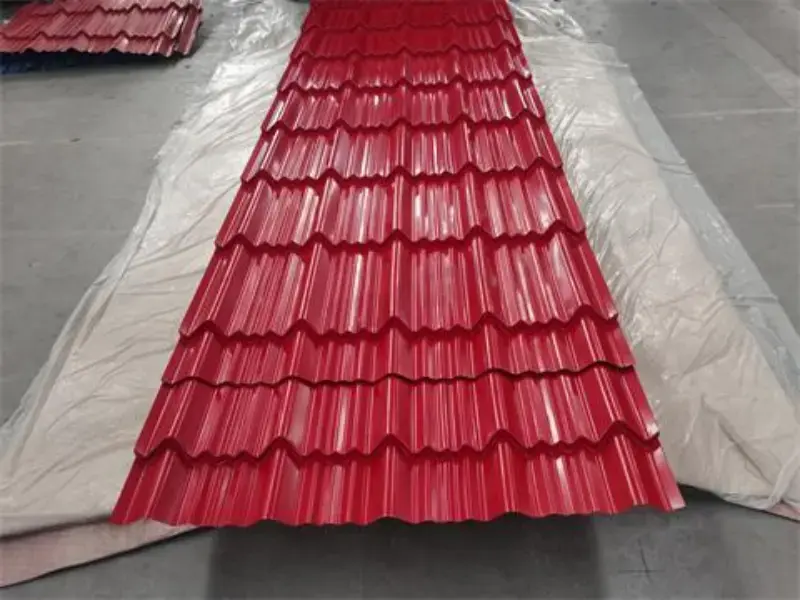
Aluminum corrugated roofing is aluminum sheet that has been roll-formed into a regular profile.
The finished sheet is not flat. It has raised and recessed sections that run along the length of the panel.
This profile provides stiffness and helps the sheet maintain its shape after installation.
A typical production process is:
Aluminum Coil → Leveling → Roll Forming → Profile Shaping → Cutting → Inspection → Packing
The panels can be supplied in standard lengths or cut according to a building’s roof dimensions.
| Item | Typical Option |
|---|---|
| Product | Aluminum Corrugated Roofing |
| Material | Aluminum |
| Thickness | 0.5–1.5 mm |
| Width | Custom |
| Length | Custom or standard |
| Alloy | 1050, 1060, 3003, 3105, 5005, 5052 |
| Temper | O, H14, H16, H18, H24 |
| Surface | Mill, painted, PVDF, PE |
| Profile | Corrugated / ribbed |
| Application | Roofing, walls, canopies |
Actual specifications depend on the profile and production line.
Why Use Corrugated Aluminum for Roofing?
Roofing material needs to balance weight, strength, weather exposure, installation, and service requirements.
Aluminum has several useful properties for roof applications.
It is relatively lightweight and naturally forms a protective oxide layer on its surface.
It can also be roll-formed into different roofing profiles.

The corrugated shape adds stiffness without requiring a very thick flat sheet.
A simple structure is:
Flat Aluminum Sheet + Corrugation → Higher Profile Stiffness
This is one reason thin aluminum can be used for many roofing and cladding applications.
Popular Aluminum Corrugated Roofing Thicknesses
Thickness is one of the first specifications buyers normally check.
Common options include 0.5 mm, 0.6 mm, 0.7 mm, 0.8 mm, 1.0 mm, and 1.2 mm.
0.5mm Aluminum Corrugated Roofing
0.5mm is a lightweight option.
It can be considered for canopies, small buildings, wall cladding, decorative roofing, and applications where low weight is important.
0.6mm Aluminum Corrugated Roofing
0.6mm provides a little more material thickness while keeping the panel relatively light.
It can be used for residential and commercial roofing depending on the profile and support structure.
0.8mm Aluminum Corrugated Roofing
0.8mm is a useful middle option.
It offers more rigidity than thinner panels and can be considered for larger roof areas.
1.0mm Aluminum Corrugated Roofing
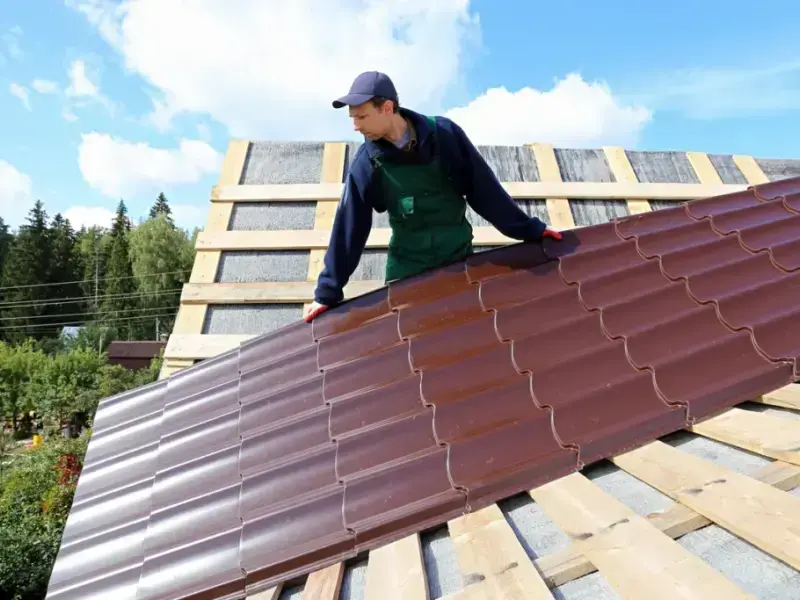
1.0mm aluminum roofing provides a more substantial panel.
It can be considered for industrial buildings, warehouses, workshops, and other projects where higher panel rigidity is required.
1.2mm and 1.5mm Roofing
Thicker aluminum roofing can be used when the project requires additional strength or a special profile.
The final selection should consider the roof span, purlin spacing, wind conditions, snow load where applicable, and engineering requirements.
| Thickness | General Direction |
|---|---|
| 0.5 mm | Lightweight roofing |
| 0.6 mm | General roofing |
| 0.7 mm | Residential and commercial |
| 0.8 mm | Larger roof areas |
| 1.0 mm | Industrial roofing |
| 1.2 mm | Heavy-duty applications |
| 1.5 mm | Special or demanding projects |
These are general product ranges, not structural design recommendations.
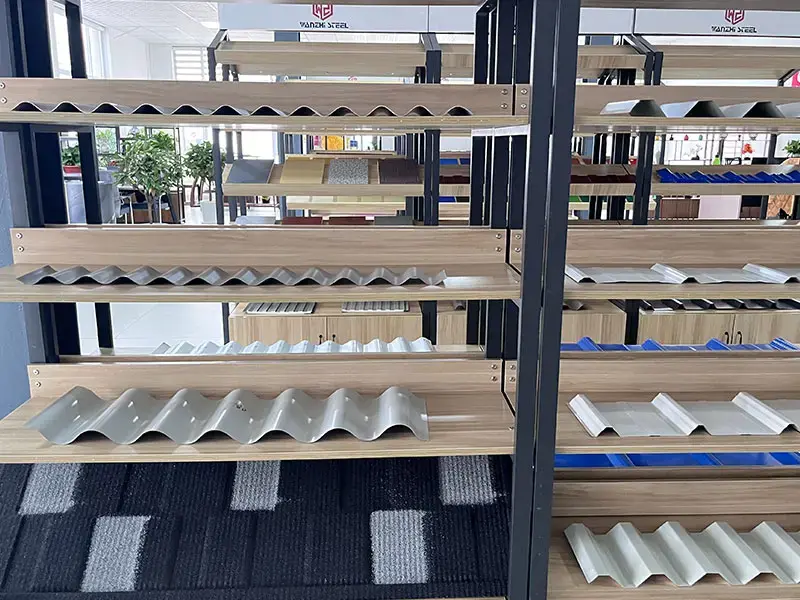
Corrugated Aluminum Roofing Profiles

The profile is just as important as thickness.
Different profiles have different rib heights, pitches, and coverage widths.
Common designs include shallow corrugations, deep corrugations, and ribbed roofing profiles.
| Profile Type | General Character |
|---|---|
| Low corrugation | Simple and lightweight |
| Medium corrugation | General roofing |
| Deep corrugation | Higher profile stiffness |
| Wide rib | Modern appearance |
| Narrow rib | Traditional appearance |
| Custom profile | Project-specific |
A buyer should not compare two roofing panels by thickness alone.
For example, two 0.8mm panels can have different stiffness because their profile shapes are different.
Effective Cover Width vs Overall Width
This is an important point when buying corrugated roofing.

The overall width is the physical width of the sheet.
The effective cover width is the area covered after side laps are considered.
For example:
Overall Width → Side Lap → Effective Cover Width
A panel may be 1000 mm wide but cover less than 1000 mm after overlapping with the next sheet.
| Dimension | Meaning |
|---|---|
| Overall width | Total sheet width |
| Effective width | Actual roof coverage |
| Rib height | Height of the corrugation |
| Pitch | Distance between ribs |
| Length | Panel direction |
| Side lap | Overlap between panels |
For accurate quantity calculations, effective cover width should be used rather than overall width.
Common Aluminum Corrugated Roofing Widths
Widths vary according to the profile.
Typical options may include:
| Overall Width | Possible Use |
|---|---|
| 800 mm | Small roof sections |
| 900 mm | Residential projects |
| 1000 mm | General roofing |
| 1050 mm | Commercial projects |
| 1100 mm | Industrial roofing |
| 1200 mm | Large roof panels |
| Custom | Project-specific |
The available effective width can be different from the overall width.
For large projects, buyers should request the profile drawing before ordering.
Aluminum Roofing Sheet Length
Corrugated aluminum panels can often be produced in custom lengths.

This is useful for reducing horizontal joints.
Common lengths may include:
2 m → 3 m → 4 m → 5 m → 6 m
Longer panels can also be produced when transportation and installation conditions allow.
For example:
Roof Slope → Measure Length → Select Panel Length → Reduce Joints
The maximum practical length depends on the production equipment, transportation, handling, and installation method.
1050 Aluminum Corrugated Roofing
1050 aluminum has high aluminum content and good formability.
It can be used where forming performance and corrosion resistance are important.
1050 corrugated roofing may be considered for:
- Light buildings
- Canopies
- Decorative roofing
- Wall cladding
- Agricultural structures
- General roofing
It is often selected when the project does not require a high-strength structural aluminum grade.
1060 Aluminum Corrugated Roofing
1060 is another high-aluminum-content alloy.
It has good formability and corrosion resistance.
It can be roll-formed into roofing profiles and used for various building applications.
It can be supplied in different thicknesses and surface finishes according to the project.
3003 Aluminum Corrugated Roofing
3003 contains manganese and generally offers more strength than high-purity aluminum grades.
It is a useful option for general roofing and cladding applications.

Possible uses include:
- Residential roofs
- Commercial roofs
- Wall cladding
- Canopies
- Workshops
- Agricultural buildings
3003 can provide a useful balance between strength and formability.
3105 Aluminum Corrugated Roofing
3105 is commonly used in architectural and building-related aluminum products.
It offers good formability and corrosion resistance.
It can be considered for:
- Roofing panels
- Wall panels
- Siding
- Canopies
- Residential buildings
- Commercial buildings
For coated roofing products, 3105 can be a practical alloy option.
5005 Aluminum Corrugated Roofing
5005 is a magnesium-containing aluminum alloy.
It is often used in architectural products where surface appearance is important.
It can be considered for decorative roofing and cladding applications.
5052 Aluminum Corrugated Roofing
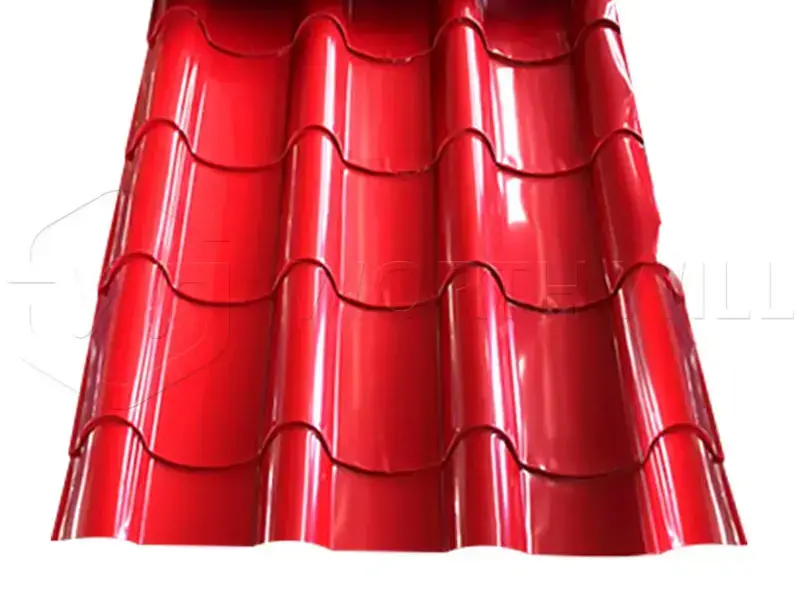
5052 provides higher strength than many 1xxx and 3xxx series aluminum grades.
It also offers good corrosion resistance.
It can be considered for demanding outdoor applications where both strength and corrosion resistance matter.
| Alloy | General Character | Roofing Direction |
|---|---|---|
| 1050 | High aluminum content | Light roofing |
| 1060 | Good formability | General roofing |
| 3003 | Balanced strength and formability | Roofing and cladding |
| 3105 | Building applications | Roofing and siding |
| 5005 | Architectural appearance | Decorative applications |
| 5052 | Higher strength | Demanding outdoor use |
The final alloy should be selected according to the structural design and environment.
Aluminum Roofing Temper Options
Temper affects the mechanical properties and forming behavior of the sheet.
Common conditions include O, H14, H16, H18, and H24.
O Temper
O temper is soft and highly formable.
It can be useful when the roofing material needs significant forming.
H14 and H16
These are strain-hardened conditions with higher strength.
They can be used for roofing products where additional rigidity is desired.
H18
H18 is a harder condition.
It provides higher strength but has lower formability than softer tempers.
H24
H24 is commonly associated with stabilized strain-hardened sheet products.
The available temper depends on the alloy and production process.
| Temper | General Feature |
|---|---|
| O | Soft and highly formable |
| H14 | Medium strength |
| H16 | Higher strength |
| H18 | Hard condition |
| H24 | Strain hardened and stabilized |
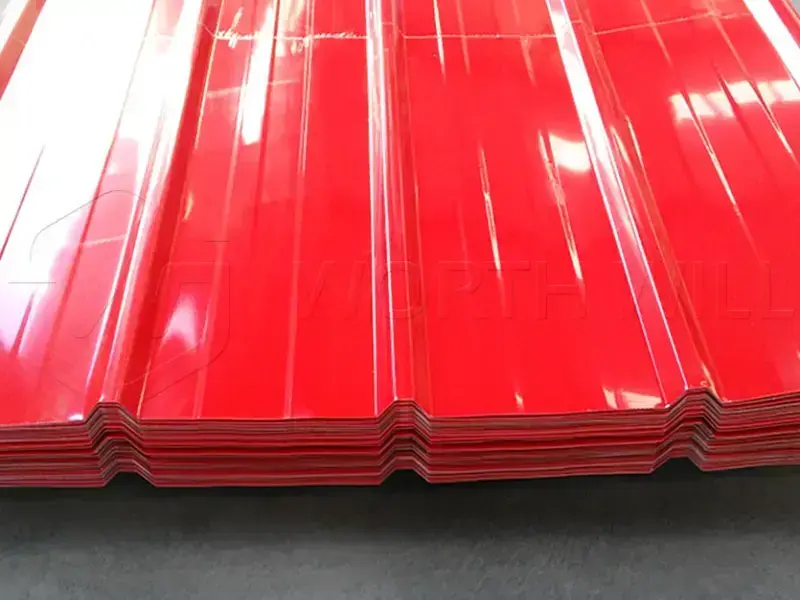
Painted Aluminum Corrugated Roofing
Painted aluminum roofing adds color and can provide additional surface protection.
Common coating systems include PE and PVDF.
PE coatings are often used for general decorative applications.
PVDF coatings are commonly selected for demanding architectural applications where long-term exterior appearance is important.
| Coating | General Direction |
|---|---|
| Mill finish | Natural aluminum |
| PE | General coated roofing |
| PVDF | Architectural exterior |
| Powder coating | Custom colors and smaller projects |
The actual coating thickness, paint system, color, gloss, and warranty should be confirmed with the supplier.
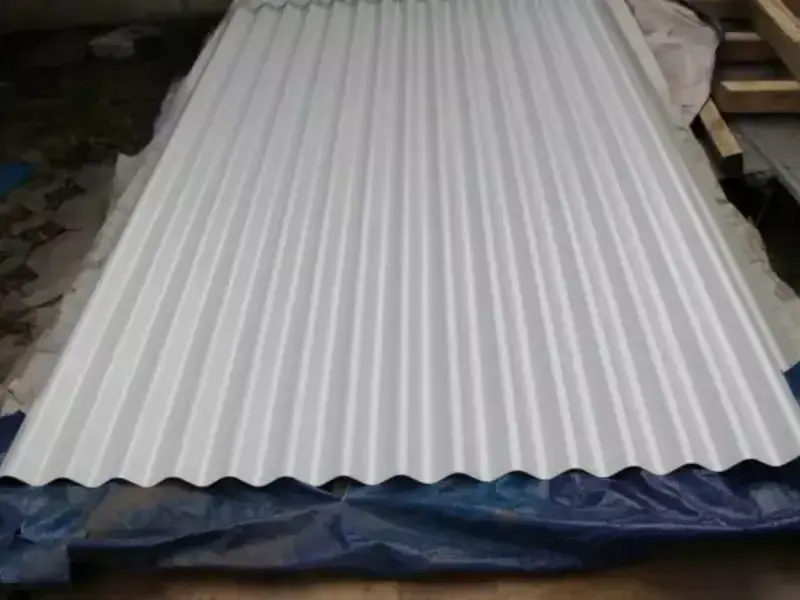
Natural Aluminum Corrugated Roofing
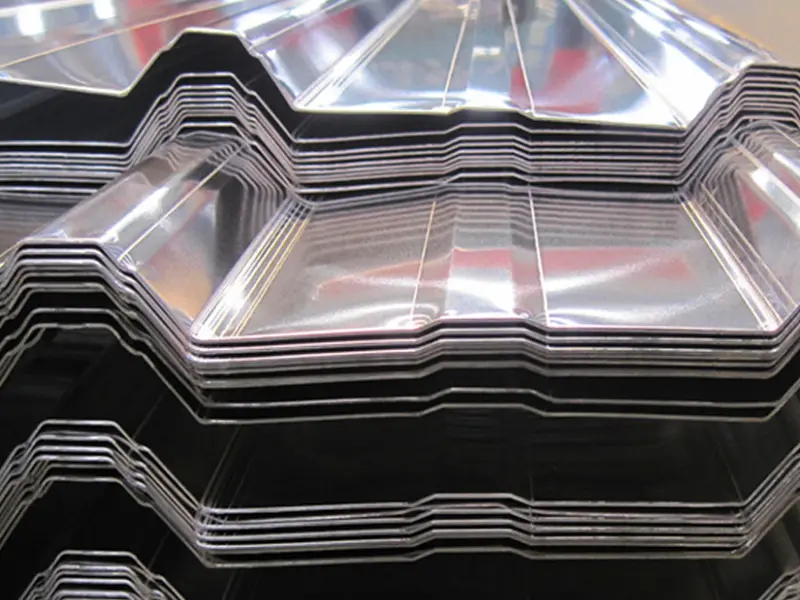
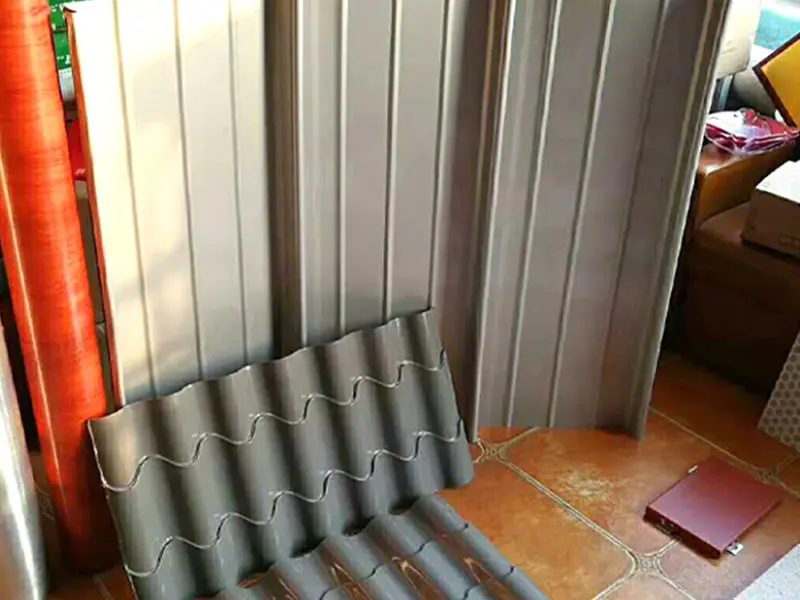
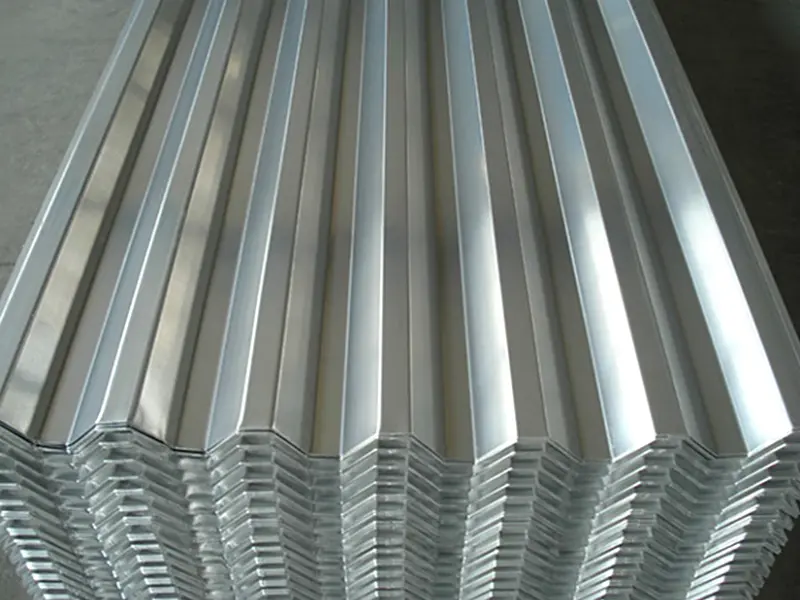
Natural aluminum roofing uses the metal’s original surface appearance.
It can provide a clean silver appearance.
This option is often considered for industrial buildings, agricultural structures, utility buildings, and projects where a natural metal appearance is desired.
It also avoids the need for a decorative color coating.
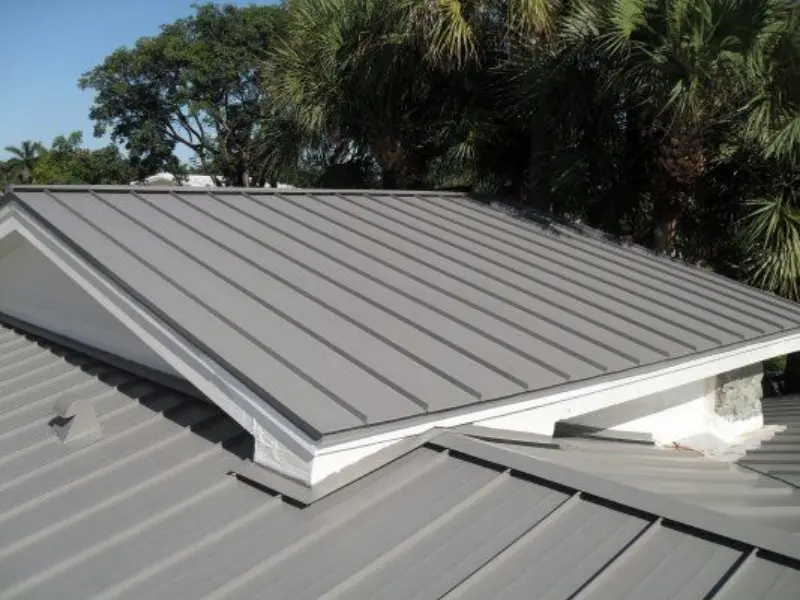
Aluminum Corrugated Roofing for Residential Buildings
Aluminum roofing can be used for houses and other residential structures.
Typical applications include:
- Main roof sections
- Extension roofs
- Garages
- Carports
- Porches
- Garden buildings
- Outdoor kitchens
- Patio covers
For residential roofing, appearance, color, profile, insulation, ventilation, flashing, and drainage all need to be considered together.
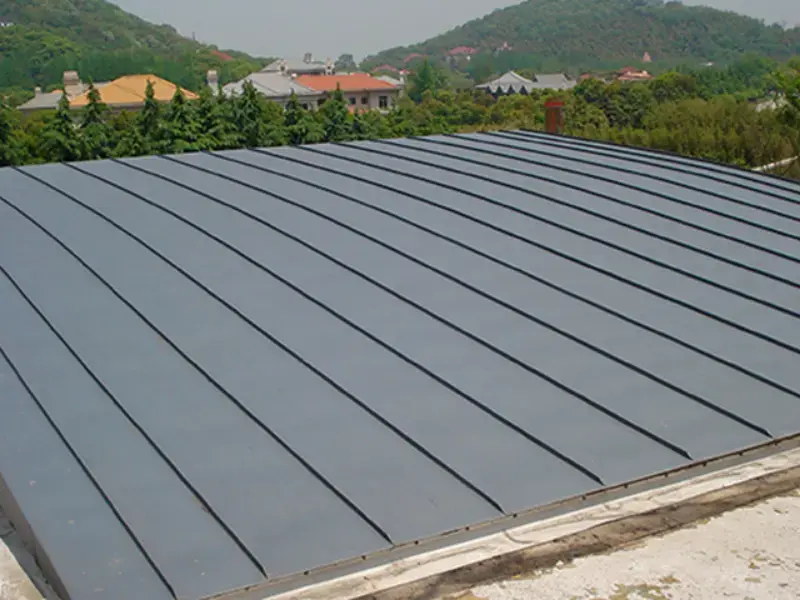
Aluminum Corrugated Roofing for Warehouses
Large warehouses often require long roofing panels.
Aluminum corrugated panels can provide a lightweight roof covering.
Possible applications include:
- Warehouses
- Distribution buildings
- Storage facilities
- Industrial workshops
- Factory buildings
For large buildings, structural calculations should consider wind, snow, roof span, purlin spacing, fasteners, and local building requirements.
Aluminum Corrugated Roofing for Agricultural Buildings
Agricultural buildings can require roofing for large open areas.
Applications include:
- Barns
- Farm storage buildings
- Equipment sheds
- Poultry buildings
- Agricultural workshops
- Feed storage areas
The local environment is important when selecting the alloy and coating.
In coastal or high-humidity environments, corrosion resistance and fastener compatibility should receive additional attention.
Aluminum Corrugated Roofing for Carports and Canopies
Carports and canopies often benefit from lightweight roofing.
Aluminum panels are easier to handle than many heavier roofing materials.
Common projects include:
- Carports
- Walkways
- Bus shelters
- Garden covers
- Patio roofs
- Entrance canopies
- Outdoor storage covers
For these applications, color and profile design can be as important as thickness.
Aluminum Corrugated Roofing for Wall Cladding
Corrugated aluminum is not limited to roofs.
The same profile can sometimes be used for walls.
Applications include:
- Exterior walls
- Industrial walls
- Warehouse cladding
- Garage walls
- Decorative facades
- Interior feature walls
Using the same profile on the roof and wall can create a consistent building appearance.
Aluminum Roofing vs Steel Roofing


Steel roofing is strong and widely available.
Aluminum roofing provides a lower-density alternative and has good natural corrosion resistance.
| Feature | Aluminum | Steel |
|---|---|---|
| Density | Lower | Higher |
| Weight | Light | Heavier |
| Natural corrosion resistance | Good | Usually needs protection |
| Handling | Easier | More demanding |
| Formability | Good | Depends on grade |
| Marine environment | Common option | Requires careful protection |
| Coating | Available | Widely available |
| Recycling | Highly recyclable | Highly recyclable |
Neither material is suitable for every roof.
The correct choice depends on structural design, climate, budget, appearance, and service requirements.
Aluminum Corrugated Roofing vs Flat Aluminum Sheet
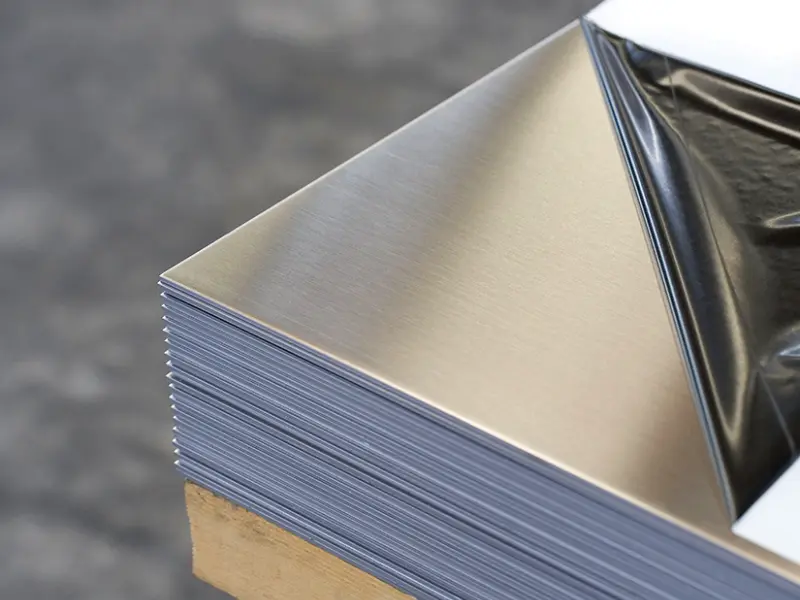
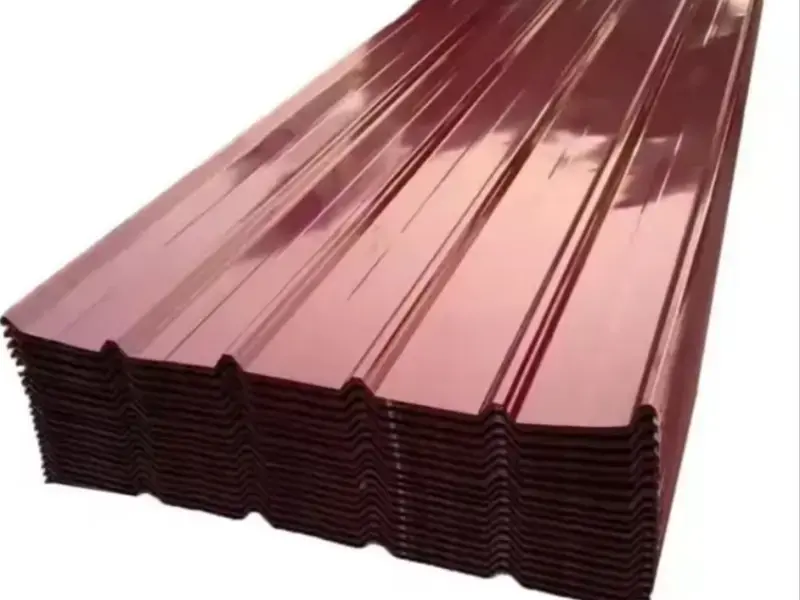
A flat sheet and corrugated sheet use the same basic material but have different shapes.
| Feature | Corrugated Sheet | Flat Sheet |
|---|---|---|
| Shape | Profiled | Flat |
| Stiffness | Higher due to profile | Lower at same thickness |
| Roofing | Common | Less common |
| Cladding | Common | Common |
| Installation | Profile-specific | More flexible |
| Water drainage | Profile supports drainage | Requires design |
| Fabrication | Requires profile equipment | Easier to cut and bend |
For roof applications, the corrugated profile can provide useful structural stiffness.
Aluminum Corrugated Roofing vs Sandwich Panels
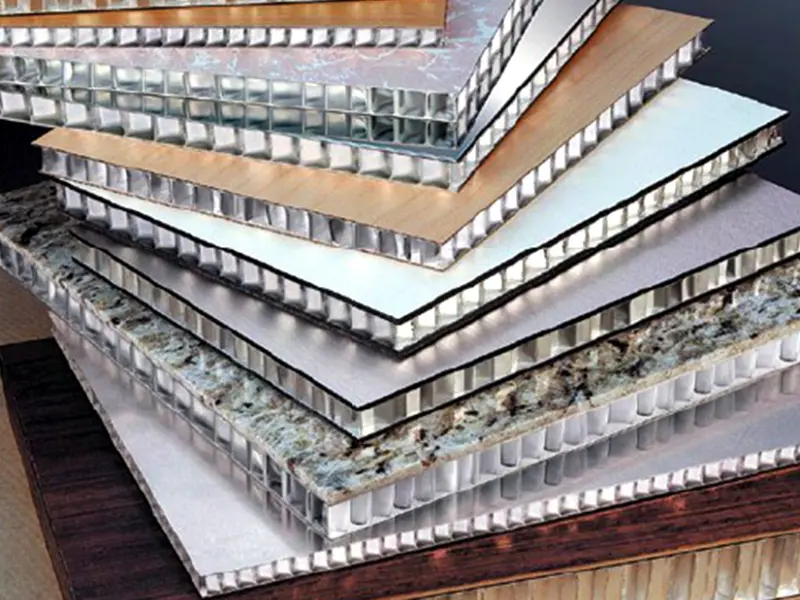
A single corrugated aluminum sheet is different from a sandwich panel.
A sandwich panel normally contains an insulation core between two skins.
| Feature | Corrugated Aluminum | Sandwich Panel |
|---|---|---|
| Construction | Single profiled sheet | Multi-layer panel |
| Insulation | Separate system | Built into panel |
| Weight | Usually lower | Higher |
| Installation | Simple sheet system | Larger panel system |
| Thermal performance | Requires separate insulation | Better integrated insulation |
| Typical use | Roof and cladding | Insulated buildings |
For buildings that need strong thermal insulation, an insulated panel system may be more suitable.
Roofing Profile and Water Drainage
The roof profile helps direct water toward the drainage edge.
However, the profile alone does not make a roof waterproof.
Installation needs suitable:
- Roof slope
- Side laps
- End laps
- Flashing
- Fasteners
- Sealants
- Gutters
- Ridge caps
A basic roof system can be viewed as:
Roof Structure → Roofing Sheet → Fasteners → Flashing → Ridge → Gutter
The exact installation details should follow the roofing system design and local requirements.
How Aluminum Corrugated Roofing Is Installed
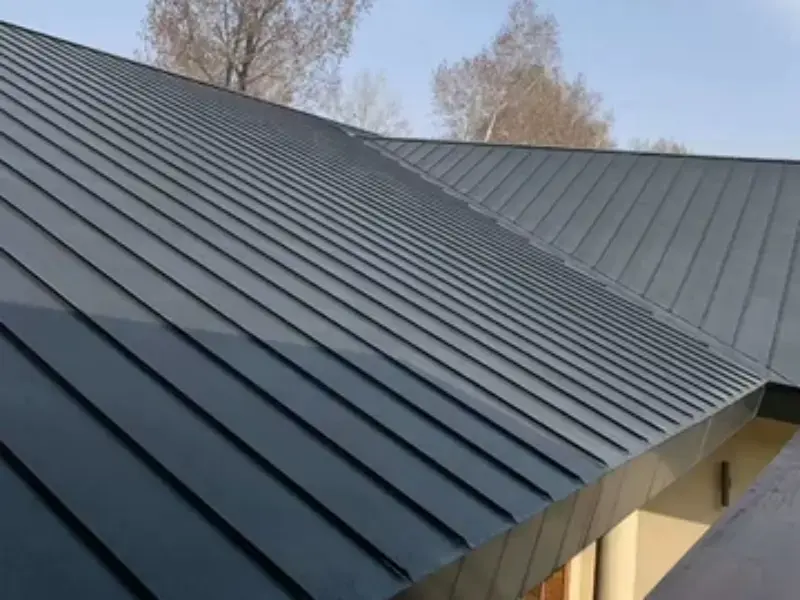
A typical installation sequence may look like:
Measure Roof → Prepare Structure → Install Underlayment if Required → Position Panels → Fix Panels → Complete Side Laps → Install Flashing → Finish Ridge and Edges
Fastener type should be compatible with the aluminum and the supporting structure.
Incorrect fasteners can create corrosion or leakage problems.
The installation method should be based on the specific roofing profile.
Side Lap and End Lap
Corrugated panels often overlap each other.
The side lap joins adjacent panels.
The end lap joins panels along the roof slope when shorter panels are used.
For example:
Panel A → Side Lap → Panel B
and:
Upper Panel → End Lap → Lower Panel
The required overlap depends on the profile, roof slope, weather conditions, and installation system.
How to Calculate Roofing Quantity
Roofing quantity should be based on effective coverage rather than simply dividing the roof width by the overall sheet width.
A simple approach is:
Roof Width ÷ Effective Cover Width = Number of Panels
For roof length:
Roof Slope Length + Required Overlap = Panel Length
Extra material may be needed for cutting, edges, damaged panels, and installation requirements.
For a large project, a professional roof measurement is recommended.
Long Span Aluminum Corrugated Roofing
Long-span panels can reduce the number of horizontal joints.
They may be useful for:
- Warehouses
- Agricultural buildings
- Workshops
- Large canopies
- Commercial buildings
Longer panels also require more attention during handling and transportation.
The maximum practical length depends on panel thickness, profile, production equipment, truck capacity, and installation conditions.
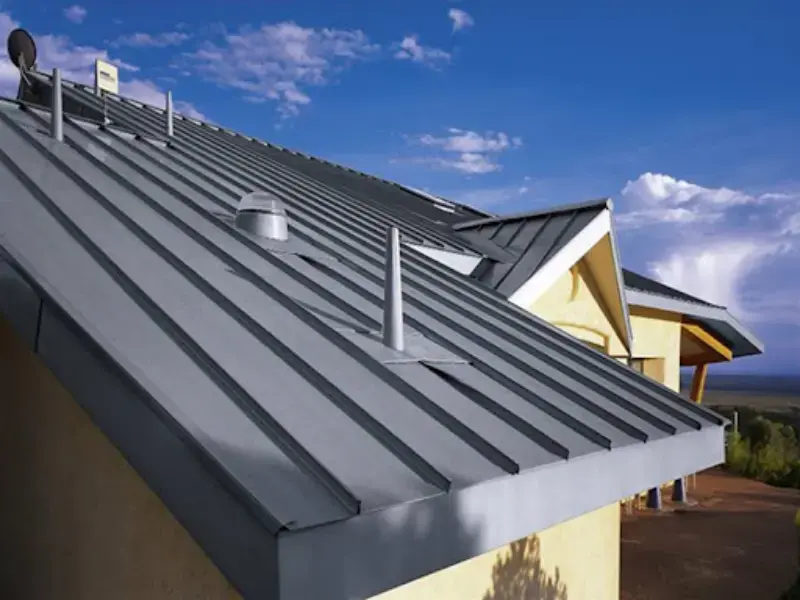
Aluminum Corrugated Roofing for Coastal Areas
Coastal buildings have additional corrosion considerations.
Salt and moisture can increase corrosion risk for many metals.
Aluminum has good natural corrosion resistance, but the entire roofing system still needs careful design.
Important factors include:
- Alloy
- Coating
- Fastener material
- Joint design
- Drainage
- Standing water
- Salt exposure
- Cleaning and maintenance
Avoiding incompatible metal contact can also help reduce galvanic corrosion.
Maintenance of Aluminum Corrugated Roofing
Aluminum roofing normally requires relatively simple maintenance.
Regular inspection can help identify problems early.
Check:
- Loose fasteners
- Damaged panels
- Scratches
- Blocked gutters
- Sealant condition
- Corrosion around fasteners
- Debris accumulation
- Water drainage
Keeping the roof clean can also help maintain its appearance.
Aluminum Corrugated Roofing Color Options
Coated roofing can be supplied in different colors.

Common colors include:
- White
- Gray
- Silver
- Black
- Blue
- Green
- Red
- Brown
Custom colors can also be possible according to the coating system and order quantity.
For architectural projects, buyers may request a specific color standard.
Custom Aluminum Corrugated Roofing
Custom production can cover more than color.
Possible options include:
| Custom Item | Example |
|---|---|
| Alloy | 3003 / 3105 / 5052 |
| Temper | H14 / H16 / H24 |
| Thickness | 0.6 / 0.8 / 1.0 mm |
| Width | 900 / 1000 / 1200 mm |
| Length | 2–12 m |
| Profile | Custom rib |
| Coating | PE / PVDF |
| Color | Standard or custom |
| Edge | Custom |
| Packing | Export packing |
A profile drawing is useful when the customer needs an exact roofing shape.
Quality Control for Corrugated Roofing
Roofing panels should be checked before shipment.
Quality control may include:
- Alloy verification
- Thickness measurement
- Width measurement
- Length measurement
- Profile inspection
- Rib height inspection
- Pitch inspection
- Flatness inspection
- Coating inspection
- Surface inspection
- Color checking
- Edge inspection
For coated products, coating thickness and adhesion may also be checked according to the agreed specification.
Packaging and Shipping
Long roofing panels need suitable packing.

A typical export package can include:
Corrugated Panels → Protective Layer → Edge Protection → Bundling → Waterproof Packing → Pallet or Steel Support → Container
Long panels should be secured carefully to reduce movement during transportation.
For painted roofing, surface protection is particularly important.
How to Request an Aluminum Corrugated Roofing Quote
A useful inquiry should include the basic product information.
For example:
| Specification | Example |
|---|---|
| Product | Aluminum Corrugated Roofing |
| Alloy | 3105 |
| Temper | H24 |
| Thickness | 0.8 mm |
| Overall Width | 1000 mm |
| Effective Width | Supplier to confirm |
| Length | 6000 mm |
| Profile | Corrugated |
| Surface | PVDF |
| Color | Silver Gray |
| Quantity | 2,000 m² |
| Application | Warehouse Roof |
This is much more useful than asking only for the price per sheet.
Aluminum Corrugated Roofing Buying Flow
A simple purchasing process can be:
Roof Type → Profile → Thickness → Alloy → Width → Length → Coating → Quantity
Then:
Quotation → Profile Drawing → Sample → Production → Inspection → Packing → Shipment
For large projects, confirming the profile drawing before mass production can reduce mistakes.
FAQ
What is aluminum corrugated roofing?
It is a profiled aluminum sheet used for roofs, walls, canopies, and other building applications. The corrugated shape provides additional stiffness compared with a flat sheet.
What thickness is common for aluminum corrugated roofing?
Common options include 0.5mm, 0.6mm, 0.7mm, 0.8mm, 1.0mm, and thicker products. The correct thickness depends on the profile and structural requirements.
What aluminum alloy is used for corrugated roofing?
Common alloys include 1050, 1060, 3003, 3105, 5005, and 5052. Building applications often use 3xxx or 5xxx series alloys depending on the required performance.
Is aluminum corrugated roofing suitable for houses?
It can be used for residential roofs, garages, carports, extensions, and other structures. Roof design, local weather, insulation, flashing, and installation requirements should be considered.
Is aluminum roofing better than steel roofing?

They have different characteristics. Aluminum is lighter and has good natural corrosion resistance. Steel offers high strength and is widely used. The right choice depends on the building and environment.
What is the difference between overall width and effective width?
Overall width is the physical width of the panel. Effective width is the actual roof coverage after the side overlap is considered.
Can aluminum corrugated roofing be made in custom lengths?
Yes. Many roll-forming lines can produce panels in different lengths. Maximum length depends on production, transportation, and installation conditions.
Can aluminum corrugated roofing be painted?
Yes. PE and PVDF are common coating options. The available colors and coating specifications depend on the supplier and project.
Is PVDF coating suitable for aluminum roofing?
PVDF coatings are commonly used for demanding exterior architectural applications. The exact coating specification should be confirmed for the intended environment.
Can corrugated aluminum be used for walls?
Yes. Corrugated aluminum panels can be used for exterior wall cladding, industrial walls, warehouse walls, garages, and decorative facades.
Can aluminum corrugated roofing be used near the coast?
Aluminum can be considered for coastal environments because of its corrosion resistance. However, alloy, coating, fasteners, joints, drainage, and metal compatibility should all be considered.
How is aluminum corrugated roofing fixed?
The panels are normally fixed to the roof structure with suitable roofing fasteners. The exact fastener type and spacing depend on the profile and structural design.
How do I calculate the number of roofing sheets?
Use the roof width divided by the effective cover width to estimate the number of panels. Length should be based on the roof slope and required overlap.
Can aluminum corrugated roofing be used for a warehouse?
Yes. It can be used for warehouses, workshops, factories, agricultural buildings, and other large structures. Structural loading and local building requirements should be checked.
What information is needed for a roofing quotation?
Provide alloy, temper, thickness, profile, overall width, effective width if known, length, coating, color, quantity, and application.
Quick Aluminum Corrugated Roofing Guide
| Requirement | Suggested Direction |
|---|---|
| Lightweight roof | 0.5–0.7 mm |
| General roof | 0.6–1.0 mm |
| Heavy-duty project | 1.0 mm+ |
| General alloy | 3003 / 3105 |
| High-strength option | 5052 |
| Natural finish | Mill finish |
| General color coating | PE |
| Architectural exterior | PVDF |
| Long roof | Custom long panel |
| Wall application | Corrugated cladding profile |
| Coastal project | Corrosion-resistant system |
These are general directions. Structural design should determine the final product.
Final Product Selection
The right aluminum corrugated roofing is not determined by thickness alone.
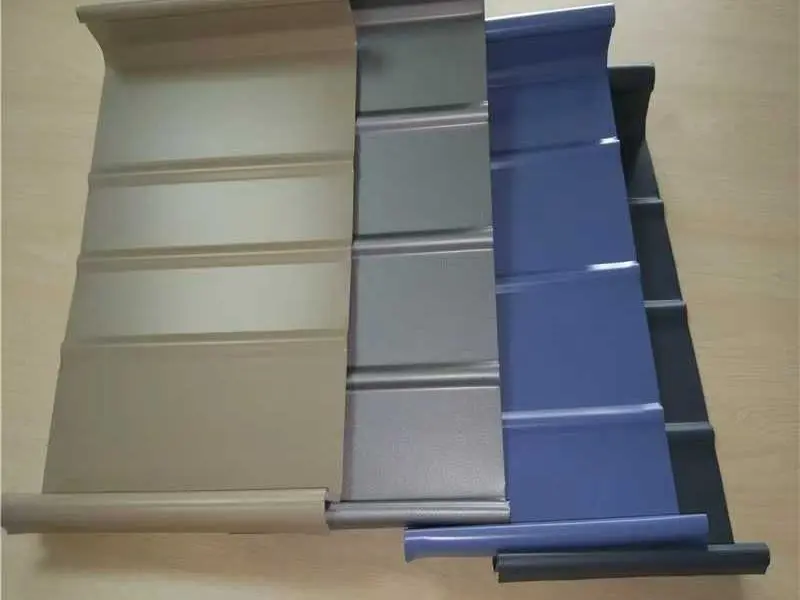
A better selection process is:
Building → Roof Load → Profile → Alloy → Temper → Thickness → Width → Effective Coverage → Length → Coating
For a small carport, a lightweight coated panel may be enough.
For a warehouse, profile stiffness, support spacing, wind load, and panel length become more important.
For a coastal building, corrosion resistance and compatible fasteners deserve more attention.
For an architectural project, coating, color, profile shape, and surface appearance may be the main concerns.
The same aluminum material can therefore be designed into many different roofing systems.