Stucco Aluminium Sheet Suppliers: to Textured Metal for Roofing, Insulation & Beyond
Stucco aluminium sheet sits at the crossroads of function and value. The raised orange-peel texture hides scratches, cuts glare, and adds strength without adding weight.
Contractors, HVAC firms, and roofing crews all keep this material in stock because it works across so many jobs.
If you are sourcing from stucco aluminium sheet suppliers for the first time, the choices can feel wide.
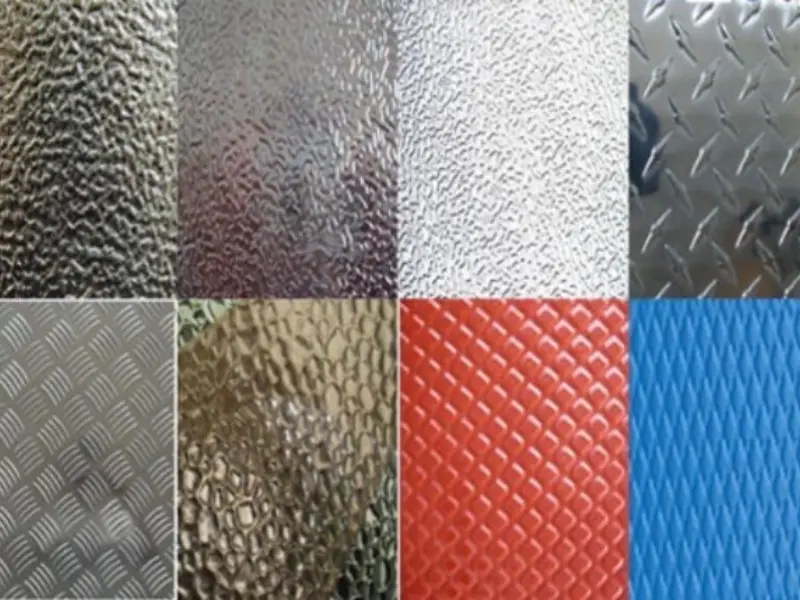
What Is a Stucco Aluminium Sheet?
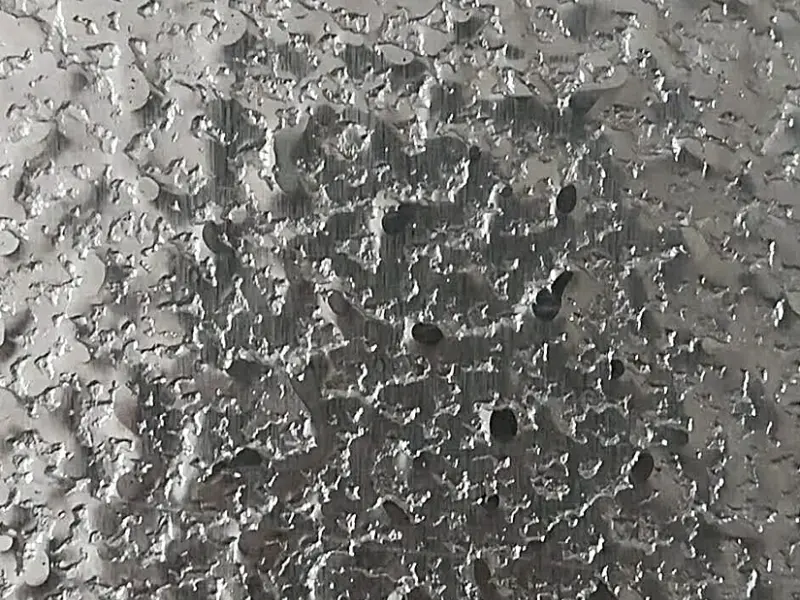
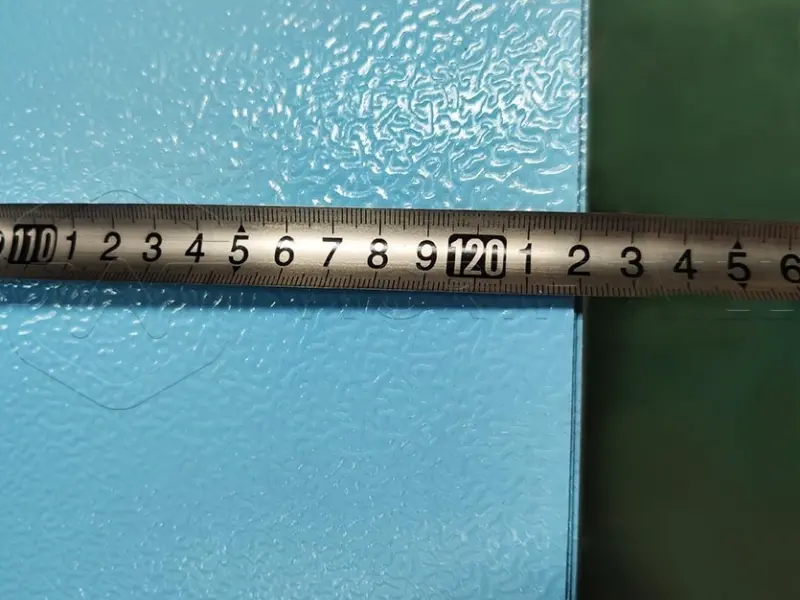
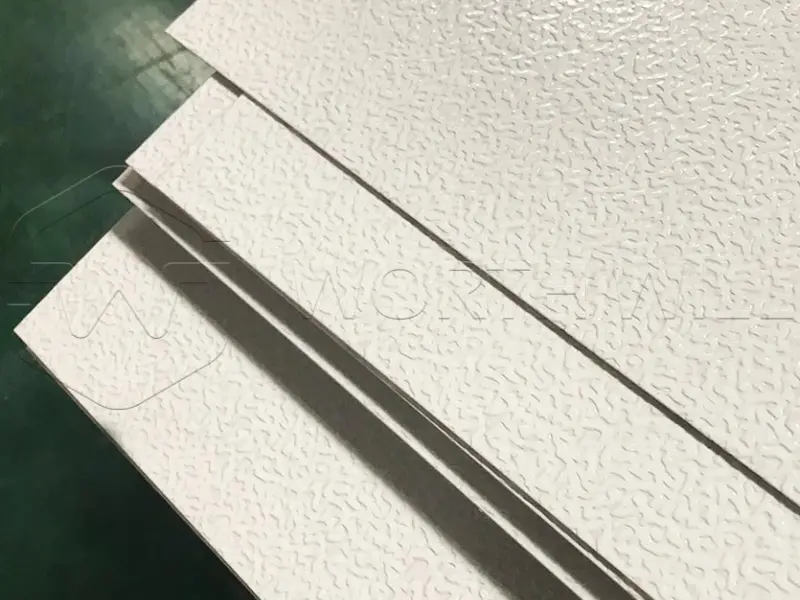
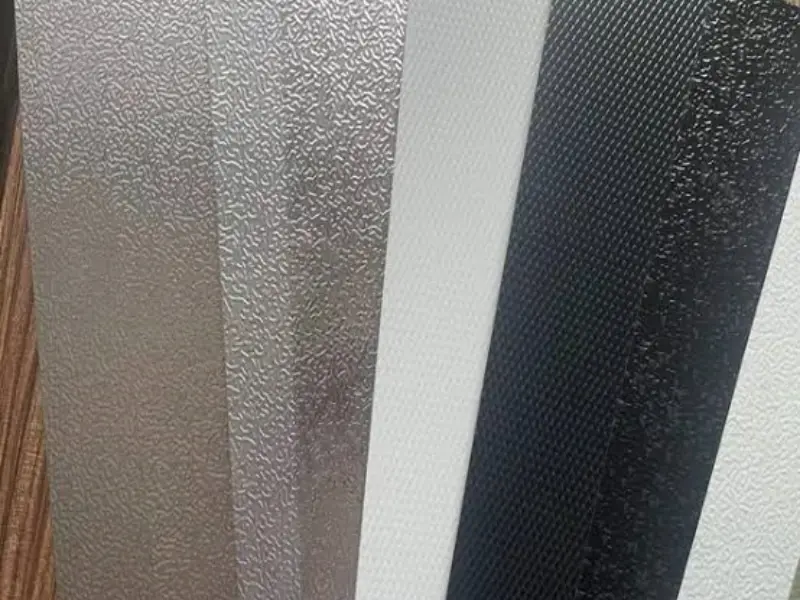
The Basics of the Orange-Peel Texture
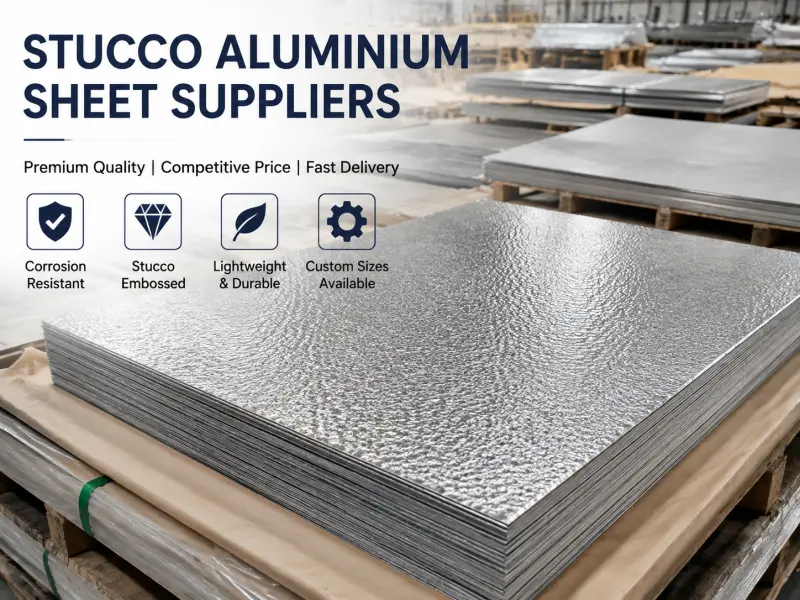
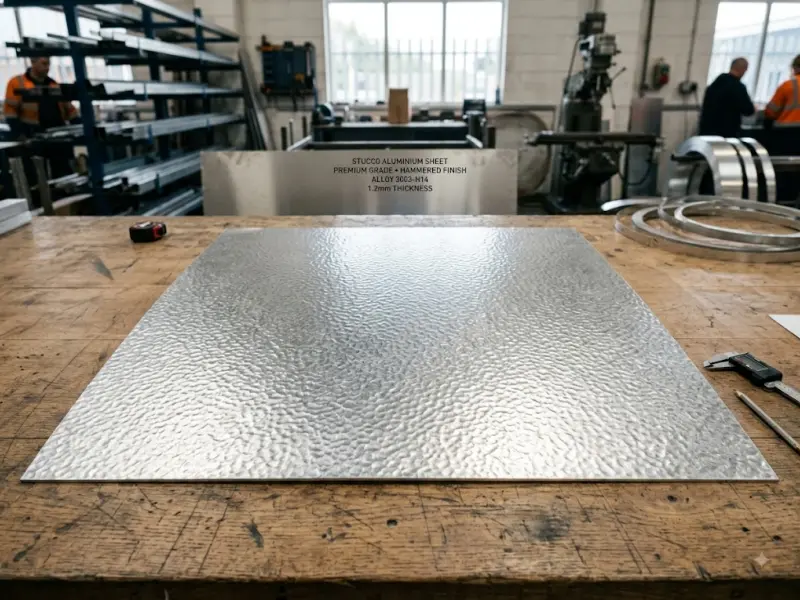
A stucco aluminium sheet is flat aluminium that has been run through embossing rollers. The rollers press a fine, irregular pattern into the surface.
That pattern looks like orange peel or traditional plaster stucco. The process adds no extra material. It simply reshapes the surface of the metal.
The texture does three jobs at once. It scatters light to reduce glare. It stiffens the sheet slightly so it resists oil-canning. And it hides small dents and fingerprints that would show on a smooth mill-finish sheet.
Sheet vs Coil: Two Ways to Buy
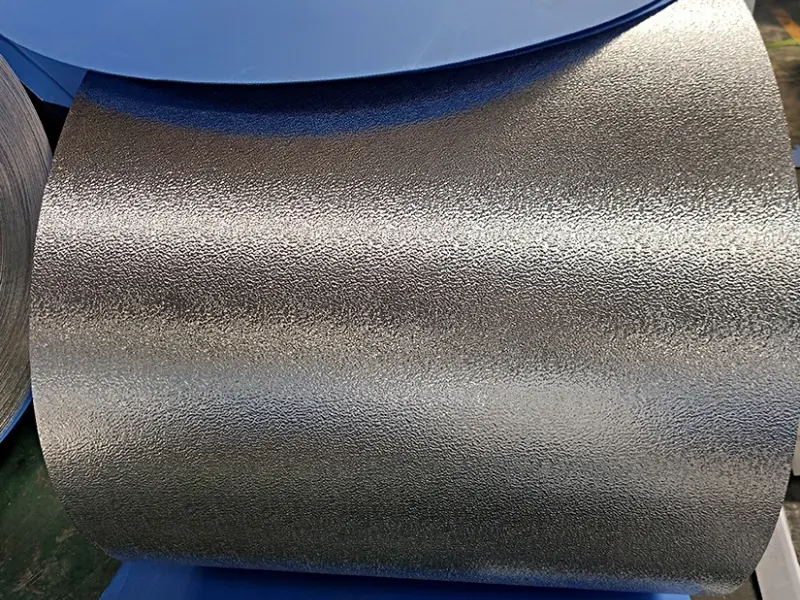
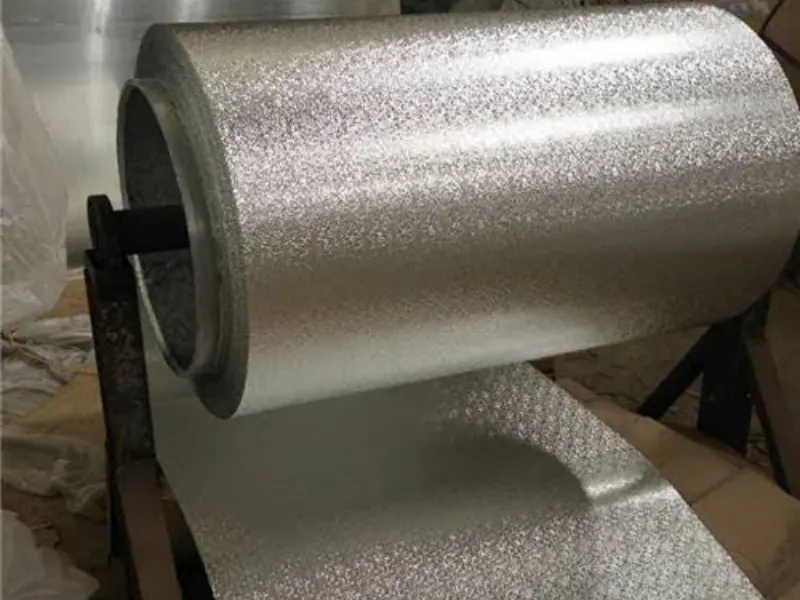
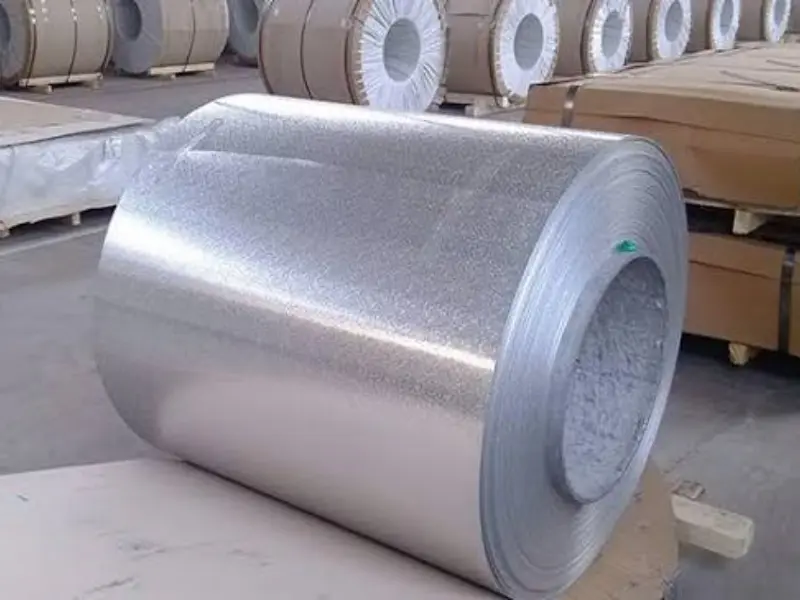
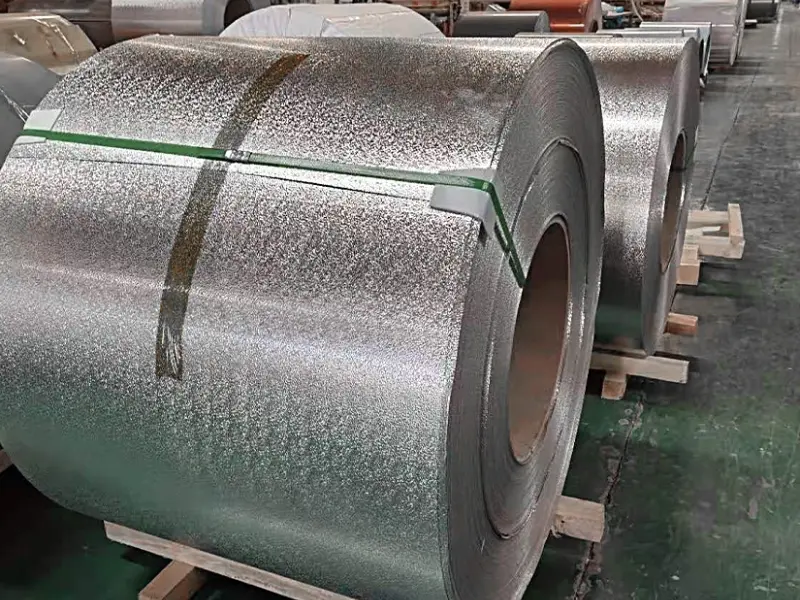
Suppliers sell stucco embossed aluminium as flat sheets or as coils. Sheets arrive cut to size, ready to install.
Coils arrive on a core and let fabricators shear or slit their own blanks. If your shop has a decoiler and shear, coils often cost less per pound.
If you need one panel for a repair job, a cut sheet saves time and scrap.
| Form | Typical Width | Typical Length / Coil Weight | Best For |
|---|---|---|---|
| Flat sheet | 1000–1500 mm | 2440 mm, 3050 mm, or custom | One-off jobs, wall panels |
| Coil | 200–1500 mm | 1.0–2.5 tons per coil | High-volume roll forming |
Why Buyers Choose Stucco Over Flat Sheet
Glare Reduction in Bright Spaces
Smooth aluminium reflects light like a mirror. On a roof or inside a bright plant room, that glare strains eyes and raises temperatures. The stucco texture breaks up the reflection. Light scatters in many directions instead of bouncing straight back. That makes stucco sheet popular for commercial roofing and solar collector housings.
Scratch Hiding for High-Traffic Areas
A smooth sheet shows every scuff from boots, tools, and transport straps. The dimpled surface of a stucco embossed aluminium sheet hides minor damage. Walk-in coolers, trailer interiors, and factory wall cladding all benefit from this forgiving finish.
Slight Stiffening Without Extra Weight
Embossing cold-works the surface and adds a small amount of sectional rigidity. A 0.5 mm stucco sheet feels stiffer than a 0.5 mm flat sheet, even though both weigh the same. That extra rigidity helps long panels span farther between supports without waviness.
Alloy Breakdown: Matching Metal to the Job
The alloy number tells you what was mixed into the aluminium. That mix changes price, strength, and how the metal behaves around salt water or chemicals.
1050 and 1060 Stucco Aluminium Sheet Suppliers: Pure and Affordable
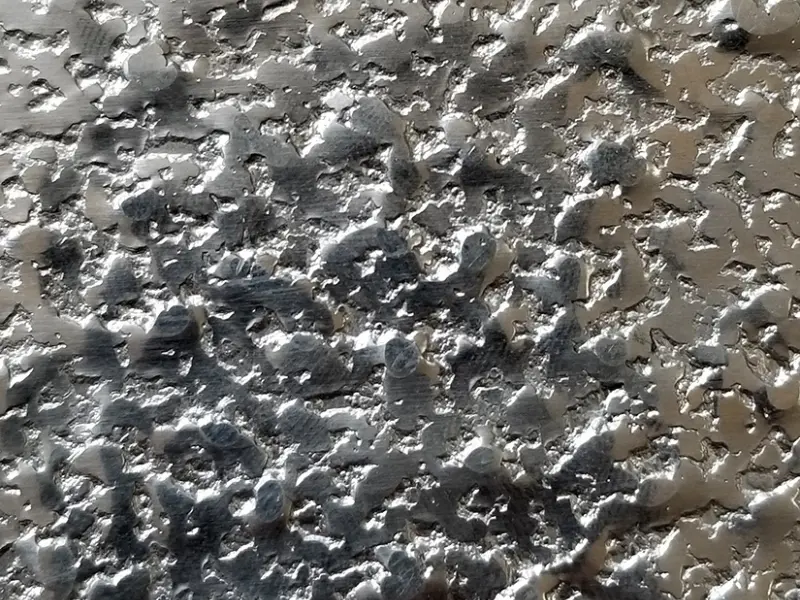
These alloys sit in the 1000 series. They contain 99 percent or more aluminium. That purity gives excellent corrosion resistance and great formability. You can bend 1050-H14 around a tight radius without cracking. The trade-off is low strength. Use 1050 or 1060 for insulation jacketing, refrigerator liners, and decorative panels where loads stay light.
1100 Stucco Aluminium Sheet Suppliers: The General-Purpose Workhorse
1100 is nearly pure aluminium with a small amount of copper. It machines and welds easily. You will see it in chemical equipment, spun parts, and general sheet-metal work. For stucco embossed applications, 1100 offers a bright surface and good value.
3003 Stucco Aluminium Sheet Suppliers: The Industry Standard
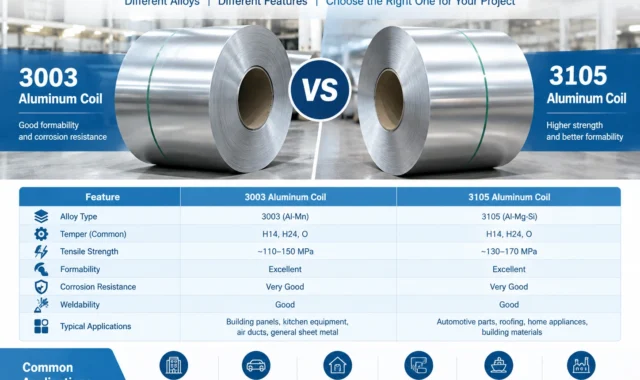
3003 adds manganese to the mix. That addition boosts strength by about 20 percent over 1100 while keeping good workability. It also resists corrosion in most atmospheres. Most stucco aluminium sheet suppliers stock 3003 as their default grade for roofing, guttering, and HVAC duct wrap. If you are not sure which alloy to pick, 3003 is the safest bet.
3004 and 3105 Stucco Aluminium Sheet Suppliers: Stronger 3000-Series Options
3004 adds more magnesium than 3003. That raises strength and makes it a good fit for beverage cans and structural panels.
3105 adds a touch more magnesium and manganese. It forms well and takes paint beautifully. You will find 3105 in pre-painted stucco roofing and wall cladding.
5052 Stucco Aluminium Sheet Suppliers: Marine-Grade Strength
5052 contains magnesium as the main alloying element. It offers the best corrosion resistance of any common non-heat-treatable alloy. Near the coast or in chemical plants, 5052 outlasts 3003 by years.
The downside is higher cost and slightly less formability. Use 5052 for boat hulls, coastal roofing, and salt-air environments.
8011 Stucco Aluminium Sheet Suppliers: The Specialist
8011 is an iron-silicon alloy often used for foil and bottle caps. In stucco form, it shows up in heat-exchanger fins and some insulation products. It is not as common as 3003, but specialist suppliers carry it.
Alloy Comparison at a Glance
| Alloy | Series | Key Element | Strength | Corrosion Resistance | Typical Stucco Use |
|---|---|---|---|---|---|
| 1050 | 1xxx | — | Low | Excellent | Insulation jacketing, liners |
| 1060 | 1xxx | — | Low | Excellent | Decorative panels, signs |
| 1100 | 1xxx | Cu | Low | Excellent | Chemical tanks, general sheet |
| 3003 | 3xxx | Mn | Medium | Good | Roofing, ducting, cladding |
| 3004 | 3xxx | Mn, Mg | Medium-High | Good | Structural panels, cans |
| 3105 | 3xxx | Mn, Mg | Medium | Good | Pre-painted roofing, facades |
| 5052 | 5xxx | Mg | High | Excellent | Marine, coastal, heavy-duty |
| 8011 | 8xxx | Fe, Si | Low | Good | Heat exchangers, foil products |
Temper States and What They Mean
Temper tells you how the metal was treated after rolling. It controls hardness, bendability, and whether the sheet will stay flat after cutting.
H14 Stucco Aluminium Sheet Suppliers: Half-Hard and Easy to Work
H14 means the sheet was strain-hardened to half-hard. It bends well and holds shape after forming. Most insulation jacketing and light cladding use H14 because installers can wrap it around pipes and ductwork by hand.
H16 Stucco Aluminium Sheet Suppliers: Three-Quarter Hard
H16 is stiffer than H14. It offers more strength but needs a larger bend radius. Use H16 when panels must span farther or face higher wind loads.
H24 Stucco Aluminium Sheet Suppliers: Stabilized Half-Hard
H24 starts as H14, then receives a low-temperature heat treatment to stabilize the grain structure. That stabilization prevents age-softening during storage. If your supplier stores sheet for months before delivery, H24 keeps properties more consistent than H14.
H26 and H32: Stronger Still
H26 is three-quarter hard and stabilized. H32 is a 5000-series temper that balances strength and formability. You will see H32 on 5052 stucco sheets for marine use.
O: Dead Soft
O temper means fully annealed. The sheet is as soft as it gets. That makes deep drawing easy but the metal dents with finger pressure. O temper is rare in stucco sheet because the embossing process itself adds some work-hardening.
Temper Selection Guide
| Temper | Hardness | Bendability | Best Use |
|---|---|---|---|
| O | Very soft | Excellent | Deep drawing, spinning |
| H14 | Half-hard | Good | Insulation wrap, light panels |
| H16 | Three-quarter hard | Fair | Roofing, wall cladding |
| H24 | Half-hard, stabilized | Good | Long-term storage, general use |
| H26 | Three-quarter hard, stabilized | Fair | Structural panels |
| H32 | Half-hard (5xxx) | Good | Marine, heavy forming |
Thickness Ranges and Gauge Sizes
Stucco aluminium sheet suppliers stock material from very thin foil up to heavy plate. Most buyers fall into the 0.2 mm to 3.0 mm range.
Common Thicknesses for Insulation
Insulation jacketing usually runs 0.3 mm to 0.8 mm thick. That is roughly 28 gauge to 22 gauge. At this thickness, the sheet is light enough for one worker to handle but thick enough to resist tearing around fasteners.
Common Thicknesses for Roofing and Cladding
Roofing panels typically use 0.5 mm to 1.2 mm. That spans 24 gauge to 18 gauge. Thinner sheets save money but drum in the wind. Thicker sheets cost more but walk better and last longer.
Heavy Gauges for Industrial Use
Truck bodies, walk-in freezer floors, and heavy equipment guards may call for 1.5 mm to 3.0 mm. At these thicknesses, the stucco texture adds real anti-slip value.
Thickness and Gauge Reference
| mm | Inches (approx) | Gauge (approx) | Typical Use |
|---|---|---|---|
| 0.2 | 0.008 | 32 | Fins, light trim |
| 0.3 | 0.012 | 30 | Insulation jacketing |
| 0.5 | 0.020 | 24 | Roofing, ducting |
| 0.8 | 0.031 | 22 | Wall cladding, panels |
| 1.0 | 0.039 | 20 | Structural roofing |
| 1.5 | 0.059 | 16 | Truck bodies, guards |
| 2.0 | 0.079 | 14 | Flooring, heavy panels |
| 3.0 | 0.118 | 11 | Industrial platforms |

Product Types: Sheet, Coil, and Composite
Not every stucco product is a simple flat sheet. Suppliers offer several formats to match different workflows.
Plain Stucco Embossed Sheet
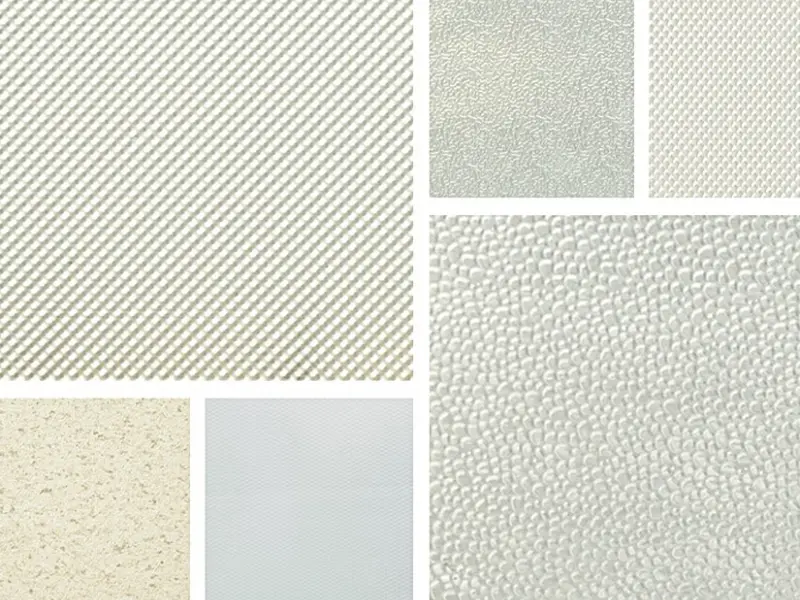
This is the standard product. One side carries the orange-peel texture. The back side is usually mill finish or lightly textured. Plain sheet is the most versatile form. You can cut it, bend it, drill it, and rivet it on site.
Kraft-Paper-Backed Stucco Sheet
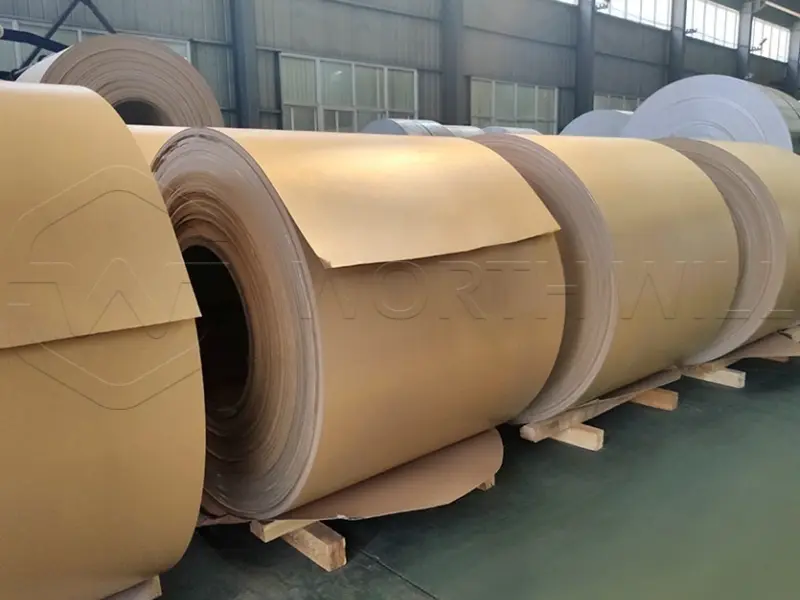
Some suppliers laminate kraft paper to the back side. The paper acts as a moisture barrier and separates the aluminium from insulation foam. It is common in building-wrap and chilled-water-pipe applications. Paper weights range from 30 g/m² to 150 g/m².
Polysurlyn-Coated Stucco Sheet
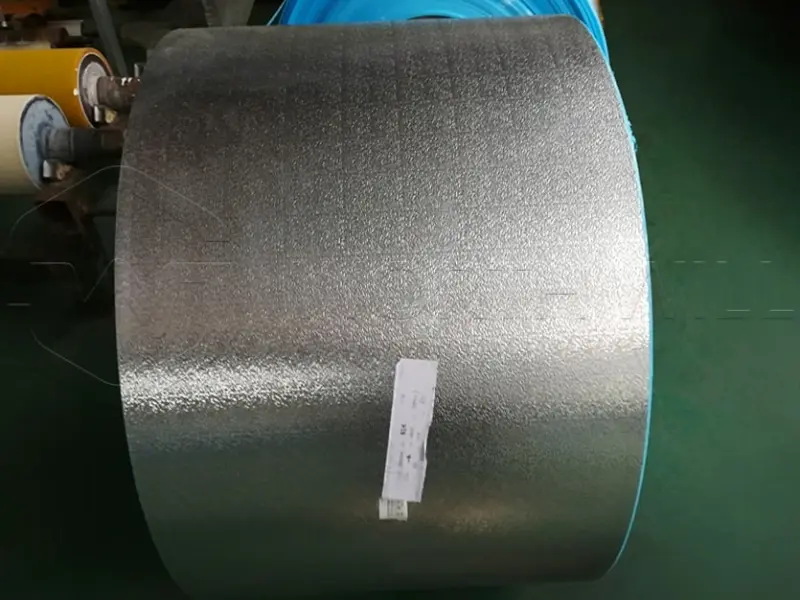
Polysurlyn is a thin polymer film that bonds to the metal. It replaces kraft paper in high-humidity jobs. The film does not absorb water and resists tearing during installation. Most chemical and offshore plants specify polysurlyn-backed stucco sheet for pipe insulation.
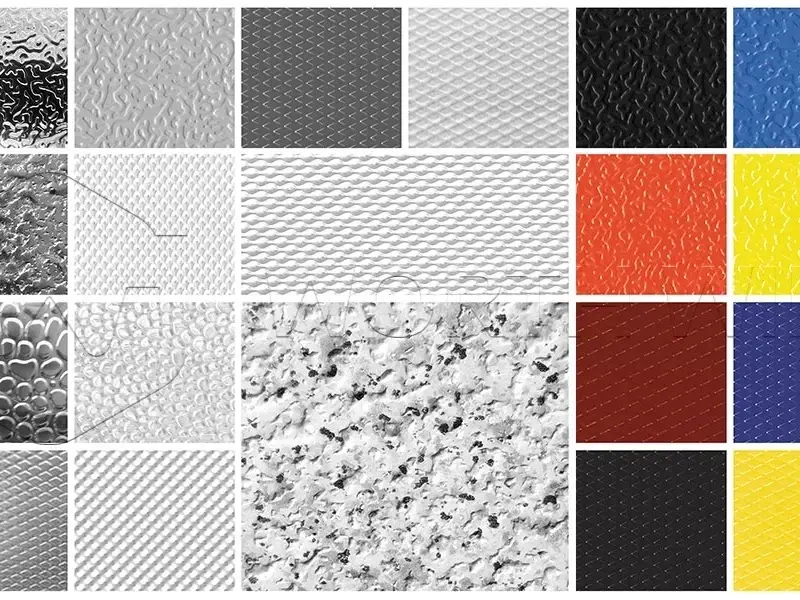
Color-Coated Stucco Sheet
Suppliers apply polyester (PE) or PVDF paint over the embossed surface. The coating adds UV resistance and lets architects match corporate colors. PE coating costs less but fades faster. PVDF coating lasts decades in full sun but adds 30 to 50 percent to the material cost.
Anodized Stucco Sheet
Anodizing grows a hard aluminium-oxide layer on the surface. That layer resists scratches and corrosion. Anodized stucco sheet appears in high-end appliance panels and architectural trim. Film thickness ranges from 3 microns to 25 microns.
Product Format Comparison
| Product Type | Backing / Coating | Best For | Cost Level |
|---|---|---|---|
| Plain stucco sheet | None | General use, budget jobs | Low |
| Kraft-backed | Kraft paper | Building insulation, chillers | Low-Medium |
| Polysurlyn-backed | Polymer film | Humid, chemical, offshore | Medium |
| PE color-coated | Polyester paint | Decorative roofing, signs | Medium |
| PVDF color-coated | Fluorocarbon paint | Coastal, high-UV facades | High |
| Anodized | Oxide layer | Appliance panels, trim | High |
Surface Treatments and Finishes
The texture is only part of the story. How the surface is treated after embossing changes lifespan and appearance.
Mill Finish
Mill finish is the raw metal as it leaves the line. It is slightly dull and may carry faint roller marks. Mill finish is the cheapest option and works fine for hidden insulation jacketing or areas that will be painted on site.
Brightened Finish
Some suppliers pass the sheet through a chemical brightening bath. That removes oxide and leaves a reflective, silvery surface. Brightened stucco sheet is popular for decorative ceiling panels and reflectors.
Brushed Finish Before Embossing
A few suppliers brush the sheet before embossing. The brush marks run under the stucco texture and create a subtle two-tone effect. This finish shows up in modern interior design.
Pre-Painted Finishes
Painted stucco sheet arrives ready to install. Common colors include white, grey, beige, and brown. Custom colors are available from most large suppliers, but they may require a minimum order of five tons or more.
Stucco embossed aluminium is not a niche product. It shows up across dozens of industries.
Where Stucco Sheets Work Best
HVAC and Mechanical Insulation
- Pipe and duct insulation jacketing
- Chiller and boiler wrap
- Equipment-room wall lining
- Under-deck ceiling panels
Refrigeration and Cold Storage
- Walk-in cooler wall and ceiling liners
- Freezer floor panels
- Refrigerated truck bodies
- Cold-store door skins
Roofing and Cladding
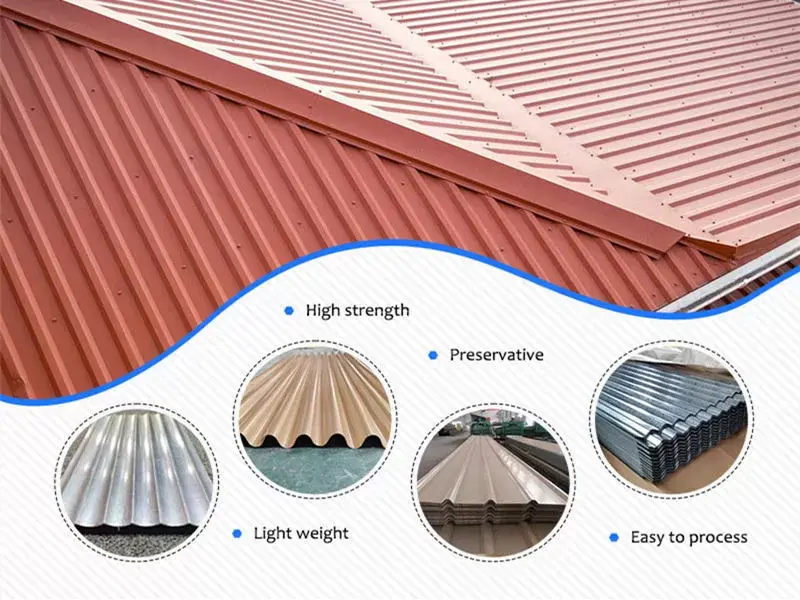
- Commercial metal roofing
- Soffit and fascia panels
- Wall cladding for warehouses
- Solar collector housings
Transportation
- Trailer interior lining
- Bus and rail car ceiling panels
- Truck body siding
- Ship partition walls
General Fabrication
Agricultural building siding
Machine guards and enclosures
Sign backing panels
Exhibition booth construction
Sourcing from Reliable Stucco Aluminium Sheet Suppliers
What to Look for in a Supplier
A good supplier does more than ship metal. They certify the alloy, hold tight thickness tolerances, and pack the material so it arrives flat.
Check these points before you place an order:
- Can they provide a mill test certificate (MTC) with chemical composition?
- Do they stock multiple alloys and tempers, or only one grade?
- What thickness tolerance do they guarantee? ASTM B209 allows ±0.05 mm on thin sheet.
- Do they offer cut-to-length, slitting, or protective film application?
- What is their minimum order quantity (MOQ)? Some mills want five tons. Others will sell one sheet.
Domestic vs Import Suppliers
Domestic suppliers in the US or Europe offer faster lead times and easier returns. Import suppliers, especially from China, often beat prices by 15 to 30 percent. If you import, request samples first. Verify that the embossing depth, alloy, and temper match your spec before committing to a container load.
Questions to Ask Before Buying
- What alloy and temper do you recommend for my application?
- Is the material produced from virgin ingot or recycled scrap?
- Can you apply kraft paper or polysurlyn backing?
- What is the typical lead time for a full coil vs cut sheets?
- Do you stock pre-painted stucco sheet in standard colors?
Price Factors and Budget Planning
What Moves the Price
Several variables affect the quote you receive from stucco aluminium sheet suppliers:
- Alloy: 5052 costs more than 3003. 1050 is the cheapest.
- Thickness: Heavy gauge uses more metal and costs more per square meter.
- Backing: Kraft paper adds a small cost. Polysurlyn adds more.
- Coating: PE paint is affordable. PVDF and anodizing push the price up.
- Quantity: Coil orders in the two-to-five-ton range unlock mill pricing.
- Currency and LME: Aluminium trades on the London Metal Exchange. Prices shift daily.
Rough Price Ranges
These numbers are estimates based on recent market conditions. Always request a fresh quote.
| Product | Thickness | Approximate USD per sq m |
|---|---|---|
| Mill finish 1050-H14 | 0.5 mm | $4–$7 |
| Mill finish 3003-H24 | 0.5 mm | $5–$8 |
| Kraft-backed 3003-H14 | 0.6 mm | $6–$9 |
| Polysurlyn-backed 3003 | 0.8 mm | $8–$12 |
| PE color-coated 3105 | 0.7 mm | $9–$14 |
| PVDF color-coated 3105 | 0.8 mm | $14–$20 |
Saving Money Without Cutting Quality
- Order standard widths (1000 mm or 1220 mm) instead of custom slitting.
- Choose mill finish and paint on site if color is not critical.
- Buy coils instead of cut sheets if your shop can process them.
- Combine orders with other trades to hit volume breakpoints.
Stucco Sheet vs Diamond Plate: Which Texture Wins?
Buyers sometimes confuse stucco embossed sheet with diamond plate. They are both textured aluminium, but they serve different jobs.
Pattern and Grip
Stucco carries a fine, random orange-peel pattern. It offers mild anti-slip properties and mainly hides imperfections. Diamond plate carries a regular grid of raised diamonds. It delivers aggressive slip resistance and is the choice for industrial walkways and step treads.
Weight and Rigidity
At the same thickness, both weigh the same. However, diamond plate feels stiffer because the tall diamonds act like tiny ribs. Stucco sheet relies on the shallow dimples for a modest stiffening effect.
Cost and Availability
Stucco sheet is usually cheaper than diamond plate. The embossing rollers for stucco are simpler and last longer. Diamond plate needs deeper, sharper dies that wear faster. Most stucco aluminium sheet suppliers stock far more stucco than diamond.
Texture Comparison
| Feature | Stucco Embossed | Diamond Plate |
|---|---|---|
| Pattern | Random orange peel | Regular raised diamonds |
| Primary benefit | Glare reduction, scratch hiding | Slip resistance |
| Typical thickness | 0.2–3.0 mm | 1.5–6.0 mm |
| Common alloys | 1050, 1100, 3003 | 3003, 5052, 6061 |
| Cost | Lower | Higher |
| Best for | Roofing, insulation, cladding | Flooring, ramps, steps |
Frequently Asked Questions
What is the difference between stucco and orange peel aluminum?
There is no real difference. “Stucco” and “orange peel” describe the same pattern. Suppliers may use either term. The texture is a random, fine dimple pattern that resembles citrus skin or plaster stucco.
How thick is a standard stucco embossed sheet?
Standard thickness depends on the job. Insulation jacketing usually runs 0.3 mm to 0.8 mm. Roofing and cladding use 0.5 mm to 1.2 mm. Heavy-duty industrial panels run 1.5 mm to 3.0 mm. Most stucco aluminium sheet suppliers stock the full range.
Can stucco aluminum be painted or coated?
Yes. Stucco sheet accepts polyester (PE), PVDF, and anodized finishes. The embossing must happen before coating. Paint flows into the dimples and creates a durable, colored surface. Pre-painted stucco sheet saves field-labor time.
Is 3003 or 1050 better for insulation jacketing?
For most indoor insulation, 1050-H14 works fine and costs less. If the pipes run outdoors or face physical abuse, step up to 3003-H14. The manganese in 3003 adds strength and better corrosion resistance. For coastal or chemical plants, use 3003 or 5052.
What is the best alloy for coastal roofing?
5052-H32 is the best choice for coastal roofing. The magnesium content resists salt spray better than 3003 or 1000-series alloys. If 5052 is not in budget, 3004 or pre-painted 3105 with a PVDF coating will last longer than bare 3003.
How do I verify my supplier’s alloy quality?
Request a mill test certificate (MTC) that lists chemical composition. A 3003 sheet should show 1.0 to 1.5 percent manganese. A 1050 sheet should show 99.5 percent or higher aluminium. If the supplier cannot provide an MTC, the alloy claim is unverified.
Does embossing weaken the sheet?
Embossing thinly stretches the surface and adds a small amount of work-hardening. The overall strength stays about the same. The texture does not create stress risers or cracks if the embossing is done properly.
Can I weld stucco aluminium sheet?
Yes, but the texture makes joint preparation harder. Grind the weld area flat before welding. 3003 welds easily with 4043 filler. 5052 needs 5356 filler. After welding, you can leave the repair area smooth or attempt to match the stucco texture with a hand tool.