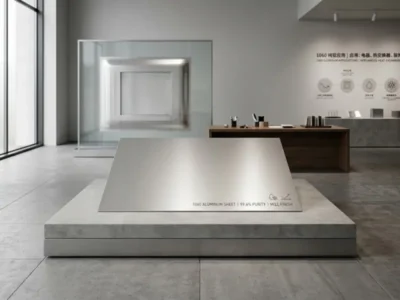
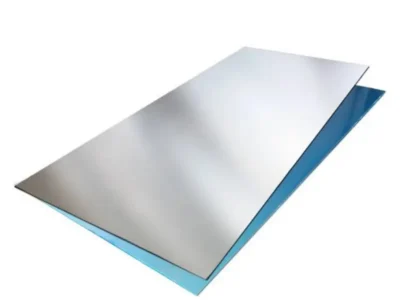
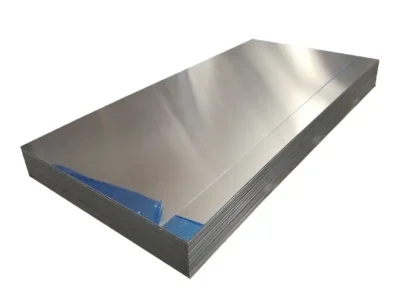

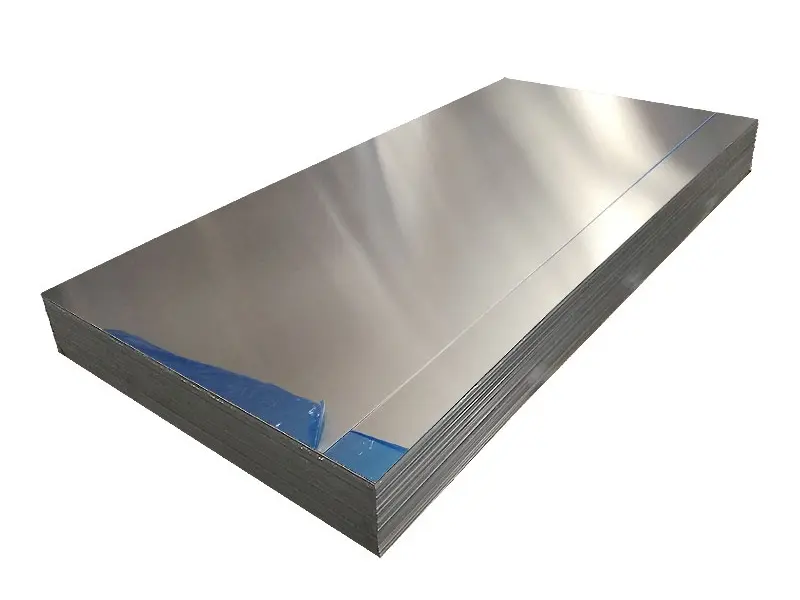
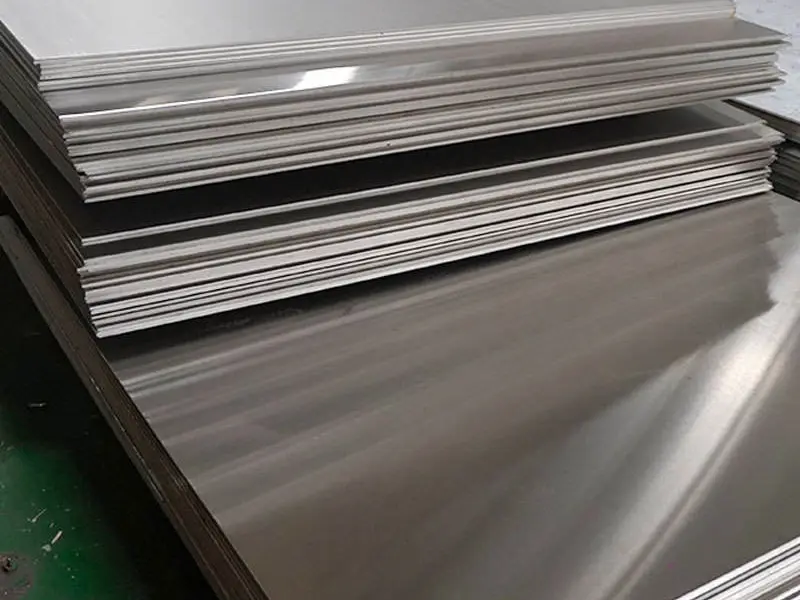
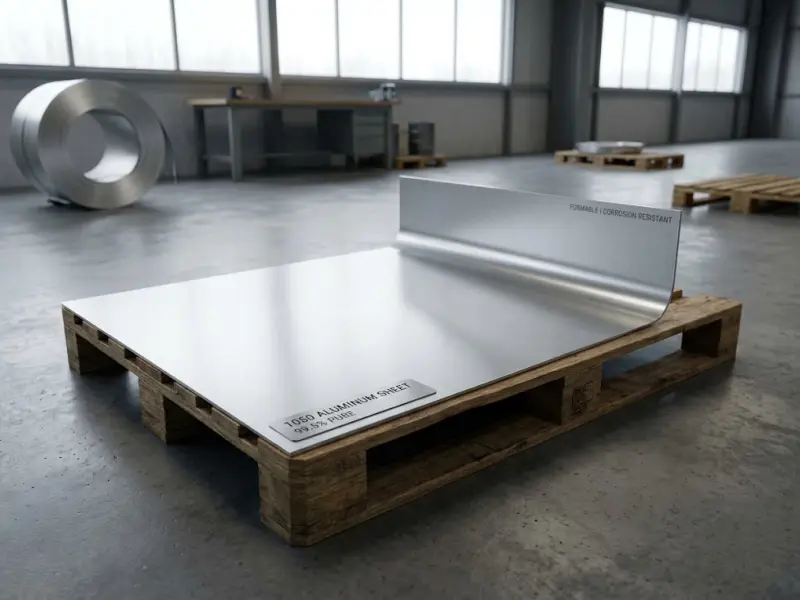
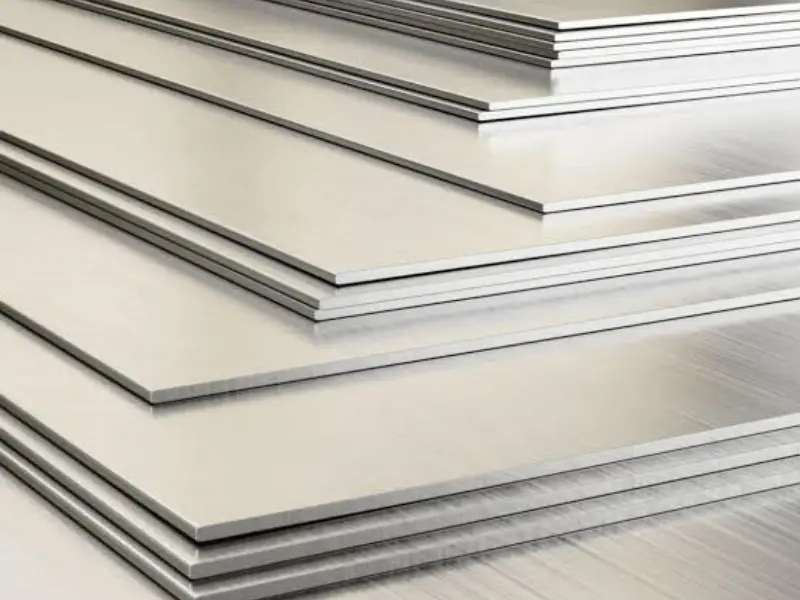
1060 aluminum sheet is a commercially pure aluminum product with a minimum aluminum content of about 99.60%.
It is known for its high electrical and thermal conductivity, good corrosion resistance, excellent formability, and clean surface.
Compared with many alloyed aluminum grades, 1060 aluminum sheet has relatively low strength. Its main value is not high mechanical strength. It is chosen when conductivity, easy forming, light weight, corrosion resistance, and cost are more important.
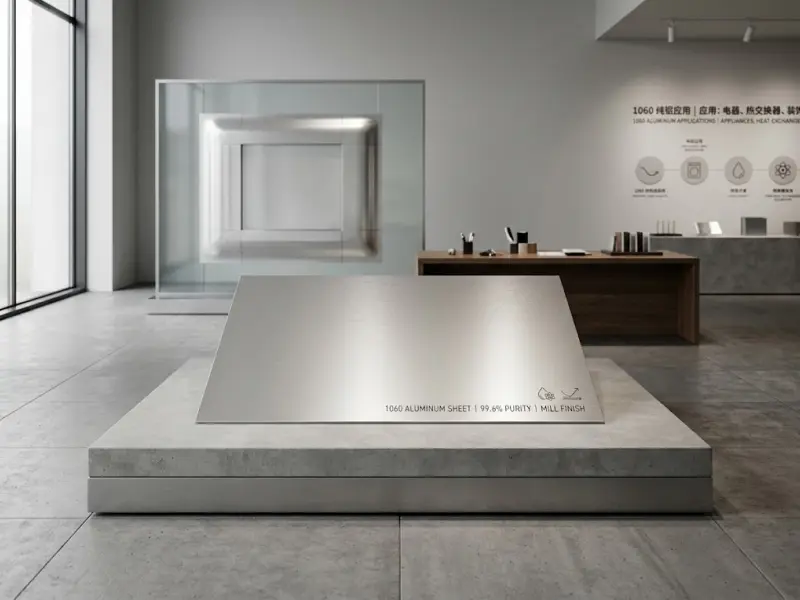
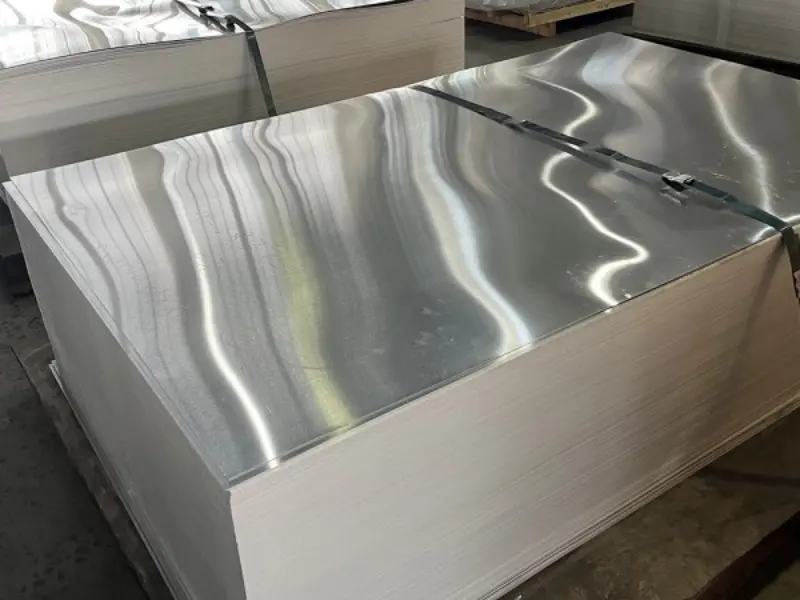
1060 aluminum sheet can be supplied in different thicknesses, widths, lengths, and tempers. Common options include 1060 O, 1060 H12, 1060 H14, 1060 H16, and 1060 H18.
It is used in electrical equipment, heat transfer products, lighting, signs, decoration, insulation, roofing components, kitchen equipment, and general fabrication.
For buyers, the right specification depends on the application. Thickness, temper, surface finish, size, and quantity should be confirmed before ordering.
1060 Aluminum Sheet at a Glance
| Item | Typical Options |
|---|---|
| Alloy | 1060 |
| Aluminum content | ≥99.60% |
| Alloy series | 1xxx series |
| Main characteristic | High purity |
| Common tempers | O, H12, H14, H16, H18 |
| Thickness | 0.2–6 mm commonly available |
| Width | 500–2600 mm |
| Length | Custom |
| Surface | Mill finish, polished, brushed, anodized, painted |
| Shape | Flat sheet, cut sheet, coil |
| Formability | Excellent |
| Corrosion resistance | Good |
| Electrical conductivity | High |
| Thermal conductivity | High |
| Welding | Generally good |
| Machinability | Relatively low |
| Common markets | Construction, electrical, lighting, industrial |
Actual production dimensions depend on the supplier’s equipment and order requirements.
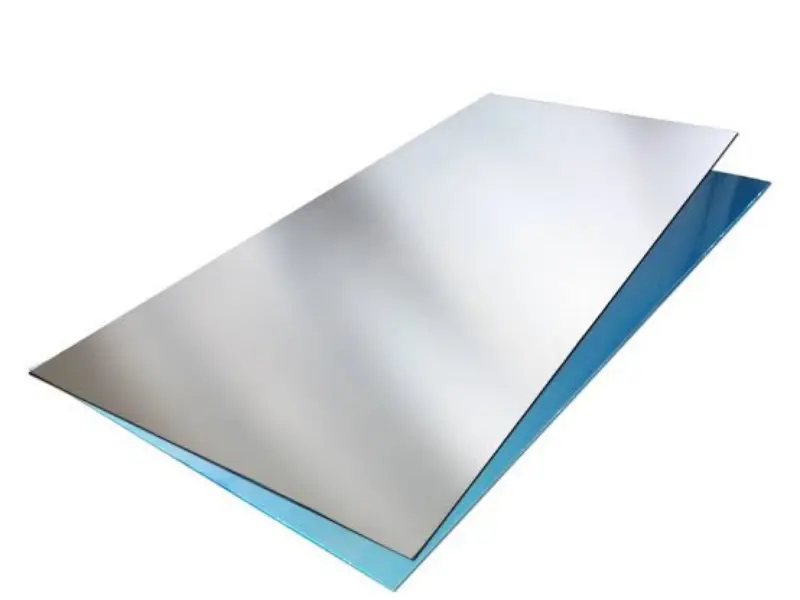
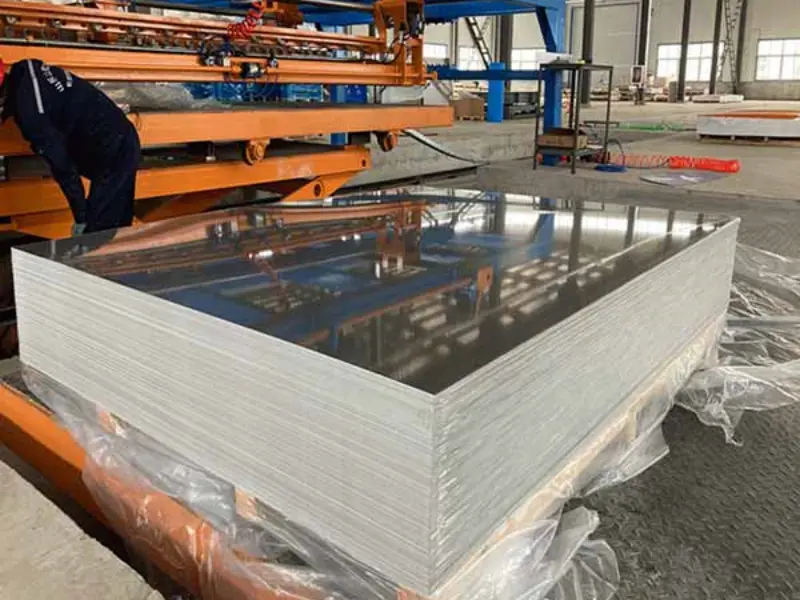
Why Buyers Choose 1060 Aluminum Sheet
1060 is not normally selected because it is the strongest aluminum alloy.
Instead, buyers often choose it for a combination of:
High purity → good conductivity → easy forming → corrosion resistance → low weight
This combination makes it useful for electrical and thermal applications.
It can also be a practical option for products that need frequent bending, rolling, stamping, or forming.
What Is 1060 Aluminum Sheet?
1060 aluminum sheet belongs to the 1xxx series of aluminum alloys.
The 1xxx series is based on commercially pure aluminum. Unlike 5052 or 6061, 1060 contains only small amounts of alloying elements.
This gives the material several useful characteristics:
→ High aluminum purity
→ Good electrical conductivity
→ Good thermal conductivity
→ Excellent formability
→ Good corrosion resistance
→ Easy bending
→ Lightweight construction
The trade-off is lower strength.
Therefore, 1060 is usually selected for applications where the material does not need to carry a high structural load.
1060 Aluminum Composition
The chemical composition is an important reason for the performance of this material.
| Element | Typical Maximum / Requirement |
|---|---|
| Aluminum | ≥99.60% |
| Silicon + Iron | ≤0.80% |
| Copper | ≤0.05% |
| Manganese | ≤0.05% |
| Magnesium | ≤0.03% |
| Zinc | ≤0.05% |
| Titanium | ≤0.03% |
| Other elements | Controlled according to standard |
The exact limits can vary slightly depending on the applicable standard and specification.
The high aluminum content makes 1060 different from alloys such as 3003, 5052, and 6061.
Common 1060 Aluminum Sheet Tempers
The temper has a direct effect on the material’s mechanical properties.
| Temper | General Condition | Formability |
|---|---|---|
| 1060 O | Annealed | Excellent |
| 1060 H12 | Strain hardened | Very good |
| 1060 H14 | Half hard | Good |
| 1060 H16 | Harder condition | Moderate |
| 1060 H18 | Full hard | Lower |
The exact mechanical properties should be checked against the relevant material standard.
1060 O Aluminum Sheet
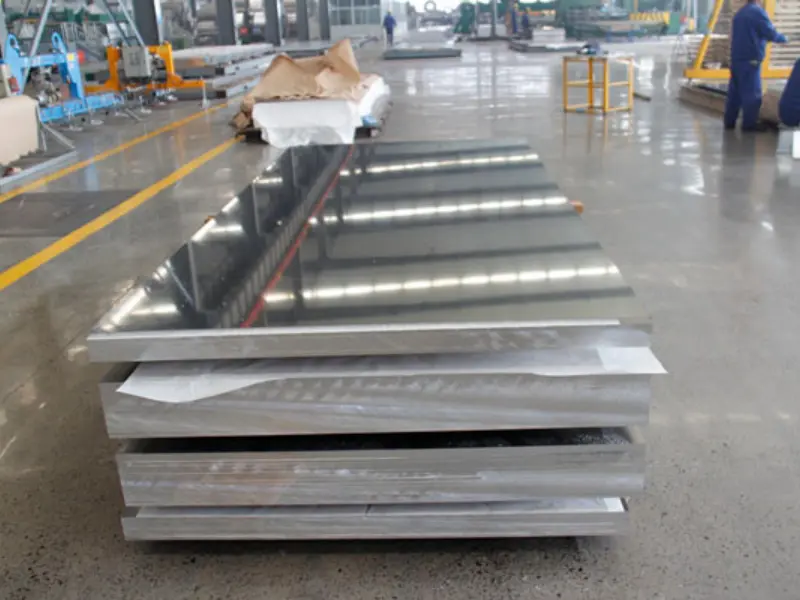
1060 O is the annealed condition.
It is soft and highly formable.
It can be considered when the product needs:
- Deep forming
- Bending
- Stamping
- Rolling
- Complex shapes
- Easy fabrication
For applications where formability is the main concern, 1060 O can be an attractive option.
1060 H12 Aluminum Sheet
H12 is harder than O temper.
It provides a balance between formability and strength.
It may be considered for products that need some additional hardness but still require relatively easy forming.
1060 H14 Aluminum Sheet
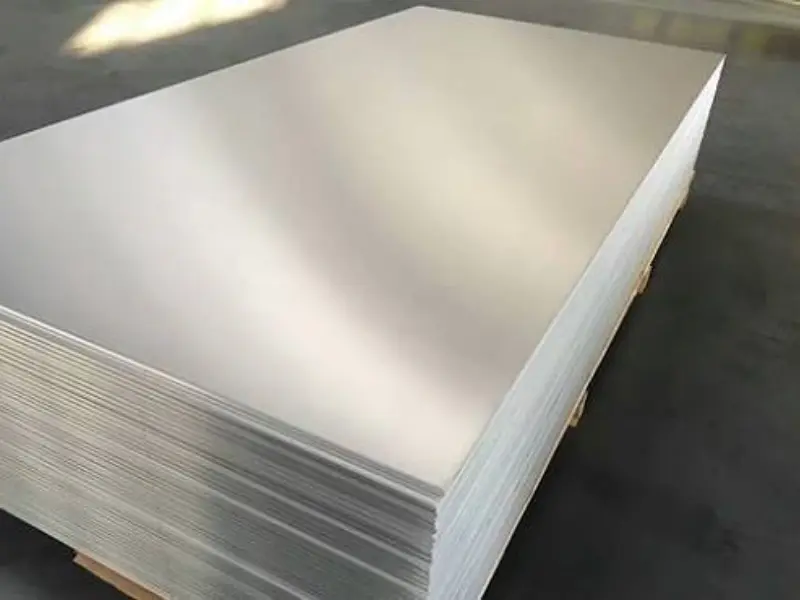
1060 H14 aluminum sheet is one of the commonly requested specifications.
It provides a useful balance between strength and formability.
Typical applications include:
Signs
Lighting products
Decorative panels
General fabrication
Heat transfer components
Electrical products
1060 H16 Aluminum Sheet
H16 has a higher level of strain hardening than H14.
It can be considered when the customer needs more strength and hardness but does not require the highest hardness condition.
1060 H18 Aluminum Sheet
H18 is a harder temper.
It offers higher strength than softer tempers but has lower formability.
It can be suitable for flat products where bending is limited.
1060 Aluminum Sheet Thickness Options
Thickness is one of the most important purchasing specifications.
| Thickness | Inch Approx. | Typical Direction |
|---|---|---|
| 0.3 mm | 0.012″ | Lightweight products |
| 0.5 mm | 0.020″ | Lighting and panels |
| 0.8 mm | 0.032″ | General fabrication |
| 1.0 mm | 0.040″ | Industrial panels |
| 1.2 mm | 0.047″ | Covers and components |
| 1.5 mm | 0.059″ | General fabrication |
| 2.0 mm | 0.079″ | Equipment panels |
| 2.5 mm | 0.098″ | Industrial products |
| 3.0 mm | 0.118″ | Heavy sheet |
| 4.0 mm | 0.157″ | Fabricated parts |
| 5.0 mm | 0.197″ | Thicker panels |
| 6.0 mm | 0.236″ | Heavy-duty sheet |
Not every thickness is available in every temper and width.
For a quotation, buyers should provide the exact thickness rather than only saying “thin aluminum sheet.”
1060 Aluminum Sheet Sizes
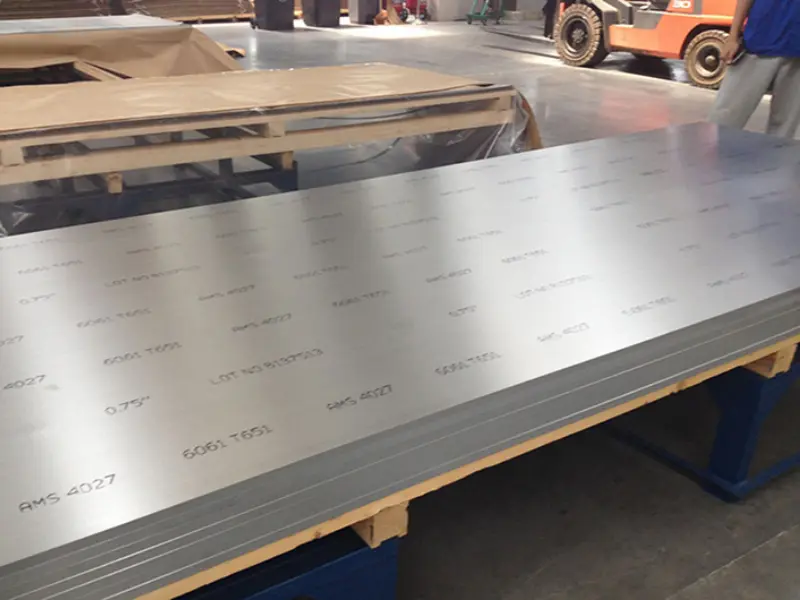
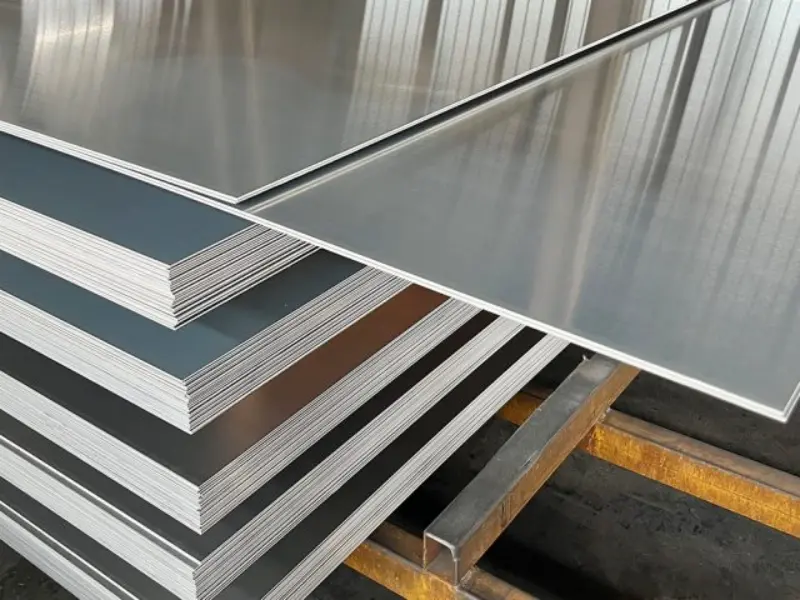
Standard and custom dimensions can be supplied depending on production requirements.
| Width | Length | Common Direction |
|---|---|---|
| 1000 mm | 2000 mm | General fabrication |
| 1220 mm | 2440 mm | Export and construction |
| 1250 mm | 2500 mm | Industrial use |
| 1500 mm | 3000 mm | Large panels |
| 1500 mm | 6000 mm | Large projects |
| Custom | Custom | Special applications |
The popular 4×8 aluminum sheet format is approximately:
48 × 96 inches
1060 aluminum can also be supplied in this size when production and thickness requirements are suitable.
1060 Aluminum Sheet Surface Finishes
The surface can be selected according to the final product.
Mill Finish
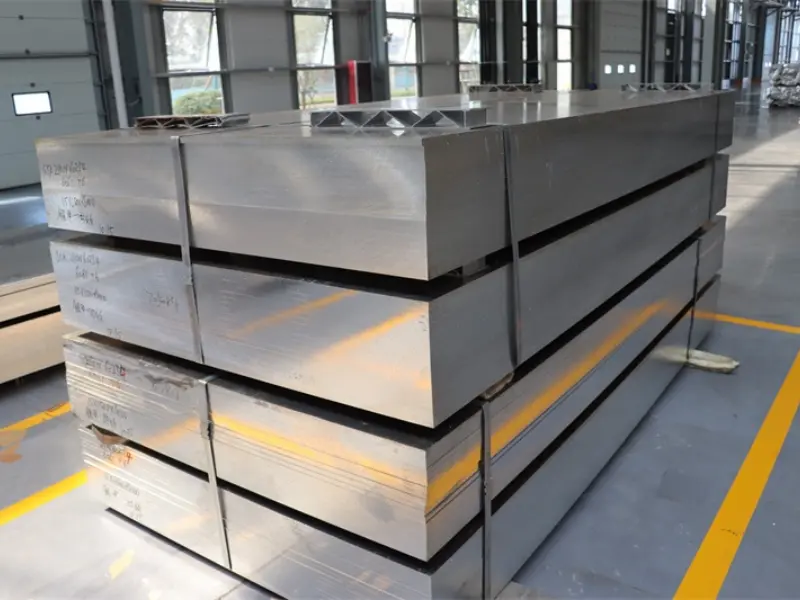
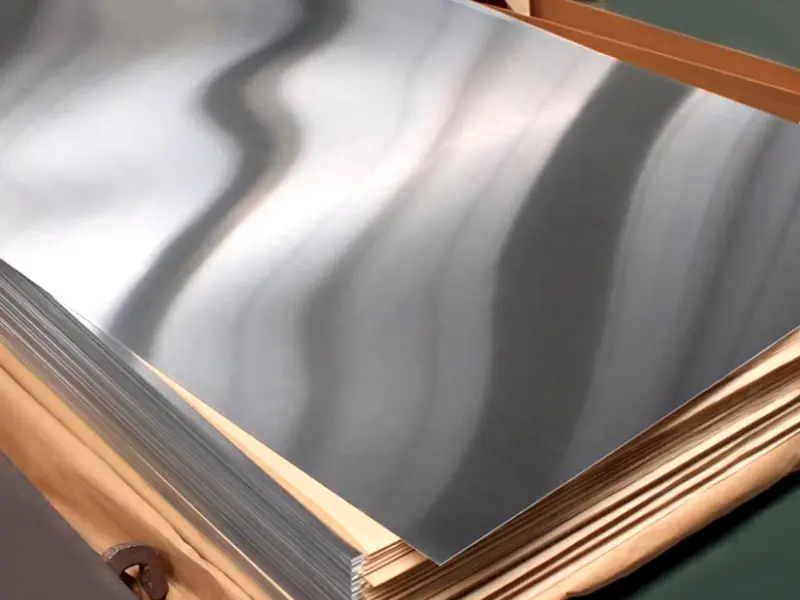
Mill finish is the natural surface produced during rolling.
It is often selected for industrial applications where appearance is not the main requirement.
Mill finish → simple → economical → easy to process
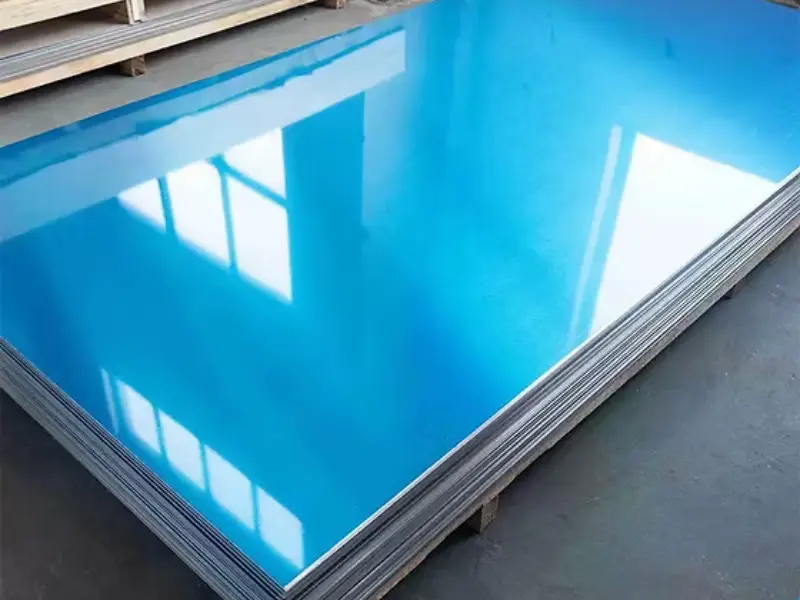
Polished 1060 Aluminum Sheet
Polishing creates a brighter and smoother appearance.
It can be used for:
- Decorative panels
- Lighting products
- Interior products
- Reflective components
- Display products
Brushed 1060 Aluminum Sheet
Brushing creates fine directional lines on the surface.
It gives the material a more decorative appearance.
Typical uses include:
- Interior decoration
- Equipment panels
- Furniture
- Kitchen products
- Signage
- Decorative covers
Anodized 1060 Aluminum Sheet
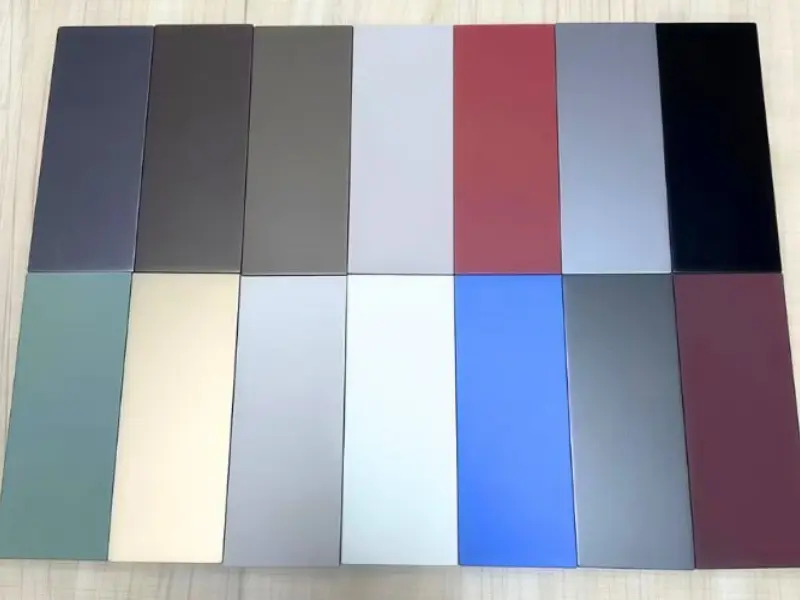
Anodizing creates a controlled oxide layer on the aluminum surface.
It can improve surface appearance and provide additional surface protection.
Possible finishes include:
Custom colors
Natural silver
Black
Bronze
Gold
1060 Aluminum Sheet for Electrical Applications
Electrical conductivity is one of the major reasons to consider 1060.
Its high aluminum purity gives it relatively high electrical conductivity compared with many stronger aluminum alloys.
Potential applications include:
- Electrical panels
- Conductive components
- Transformer-related components
- Busbar-related products
- Electrical equipment
- Power equipment components
- Heat dissipation components
The exact electrical specification should be confirmed when conductivity is a critical design requirement.
1060 Aluminum Sheet for Heat Transfer
Aluminum has good thermal conductivity.
This makes 1060 useful in selected heat transfer products.
Applications may include:
- Heat exchanger components
- Radiator components
- Heat sinks
- Cooling equipment
- HVAC components
- Thermal equipment
- Heat transfer panels
When thermal performance is important, buyers should consider thickness, surface condition, design, and operating temperature together.
1060 Aluminum Sheet for Lighting

1060 is often considered for lighting-related products because it is lightweight, formable, and has a clean metallic surface.
Possible applications include:
- Lamp reflectors
- Lighting housings
- LED components
- Lighting panels
- Decorative lighting
- Reflective surfaces
The final surface finish can be important for products where appearance or reflectivity matters.
1060 Aluminum Sheet for Insulation
Thin aluminum products are widely used as part of insulation systems.
1060 aluminum sheet or thin aluminum material may be used for:
- Pipe insulation jacketing
- HVAC insulation
- Thermal insulation covers
- Equipment insulation
- Building insulation systems
For these products, thickness and surface treatment are usually selected according to the installation environment.
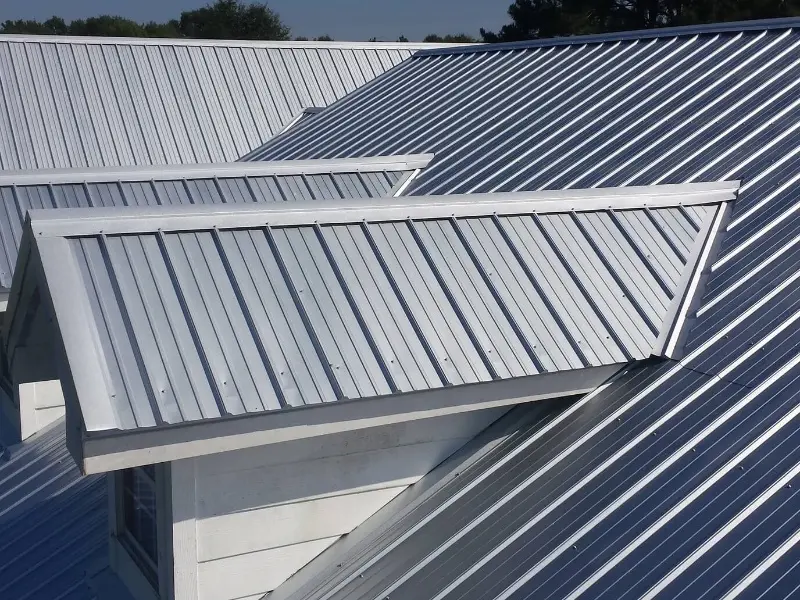
1060 Aluminum Sheet for Roofing
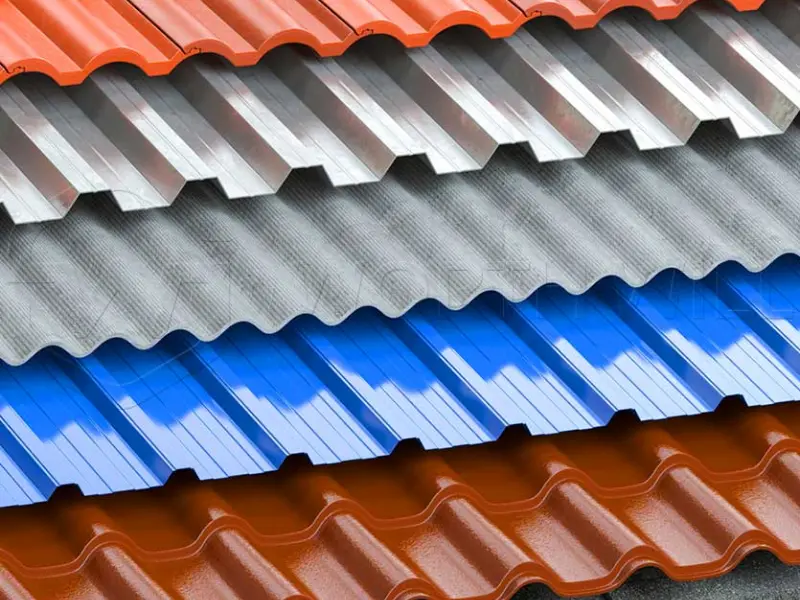
1060 aluminum is corrosion resistant and lightweight, but it has lower strength than many structural aluminum alloys.
It can therefore be considered for selected roofing components rather than every roofing system.
Possible uses include:
- Roofing accessories
- Flashing
- Roof trim
- Decorative roofing parts
- Lightweight roof panels
- Protective covers
For structural roofing panels, the alloy and temper should be selected according to the design load.
1060 Aluminum Sheet for Signage
Aluminum is widely used for signs.
1060 can be considered when the sign requires easy cutting, bending, and forming.
Applications include:
- Advertising signs
- Business signs
- Direction signs
- Industrial signs
- Nameplates
- Decorative signs
- Equipment labels
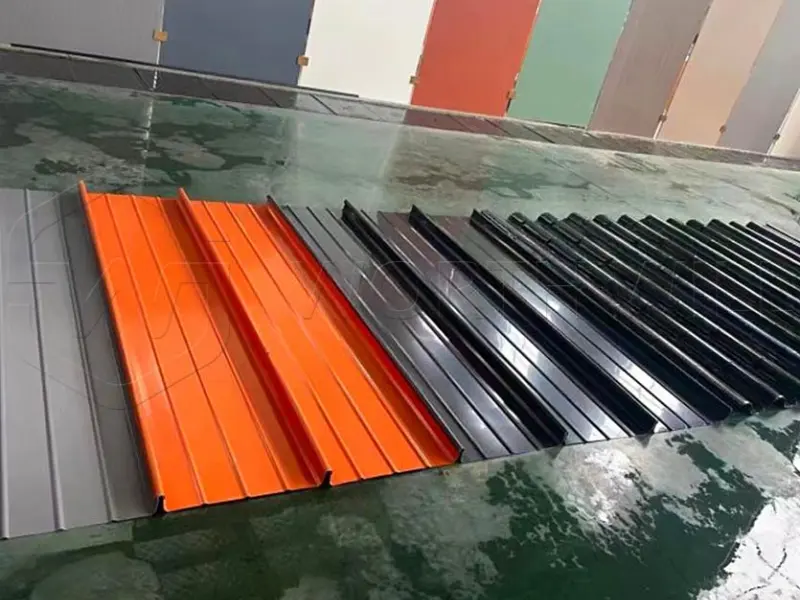
Painted, anodized, polished, or printed surfaces can be used depending on the final design.
1060 Aluminum Sheet for Decoration
The clean metallic appearance of aluminum makes it suitable for decorative applications.
Possible uses include:
- Wall panels
- Ceiling panels
- Interior decoration
- Furniture
- Display stands
- Retail decoration
- Decorative covers
- Architectural details
Different surface treatments can create very different visual effects.
1060 Aluminum Sheet for Kitchen Equipment
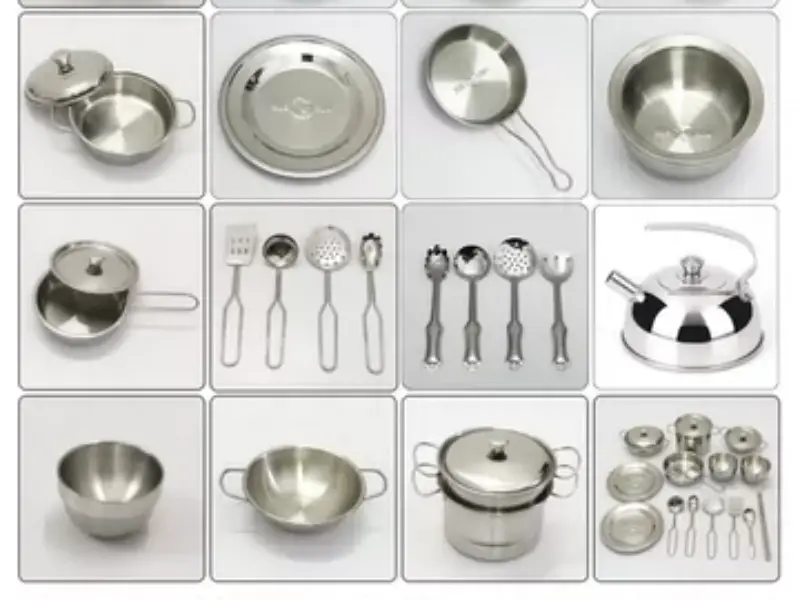
1060 offers good formability and corrosion resistance.
It can be considered for selected kitchen and food-related equipment.
Examples include:
- Kitchen panels
- Containers
- Equipment covers
- Decorative components
- Heat-related components
The exact material specification should be selected according to the applicable food-contact or equipment requirements.
1060 Aluminum Sheet for Fabrication
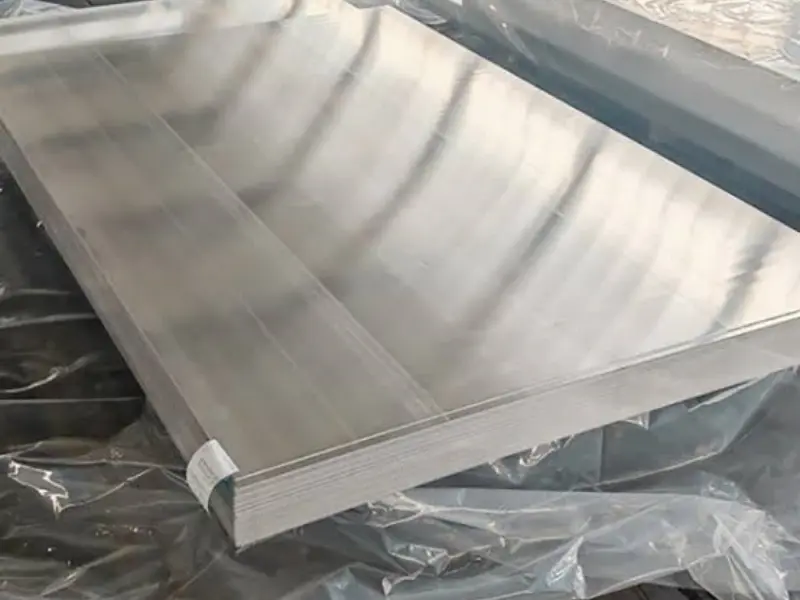
One of the strongest advantages of 1060 is its formability.
It can be processed by methods such as:
→ Cutting
→ Bending
→ Stamping
→ Punching
→ Rolling
→ Spinning
→ Forming
The softer O temper is generally easier to form than harder tempers.
For complex shapes, the temper should be discussed before production.
1060 Aluminum Sheet vs 1050
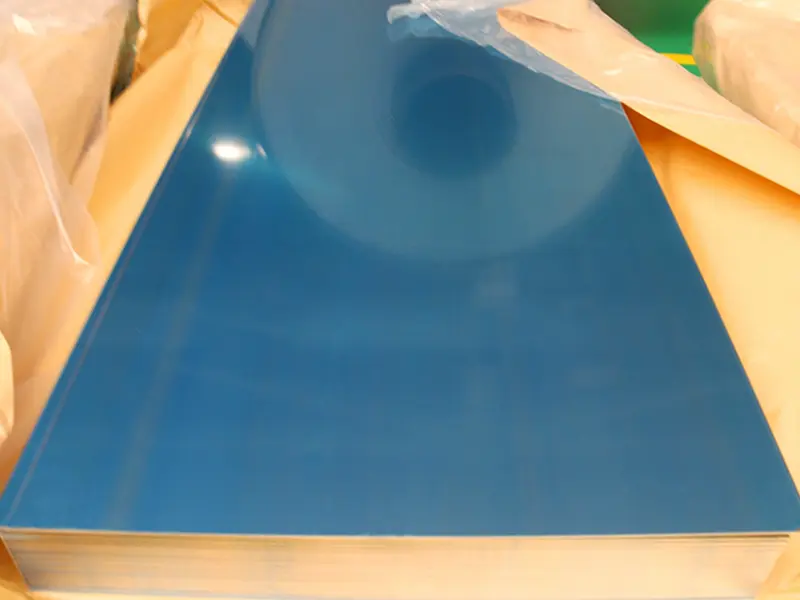
1050 and 1060 are both commercially pure aluminum grades.
They have very similar characteristics.
| Feature | 1050 | 1060 |
|---|---|---|
| Aluminum content | High | ≥99.60% |
| Conductivity | High | High |
| Formability | Excellent | Excellent |
| Strength | Low | Low |
| Corrosion resistance | Good | Good |
| Typical uses | Electrical, decoration | Electrical, heat transfer, general fabrication |
The final choice may depend on the customer’s standard, availability, price, and required chemical composition.
1060 vs 1100 Aluminum Sheet
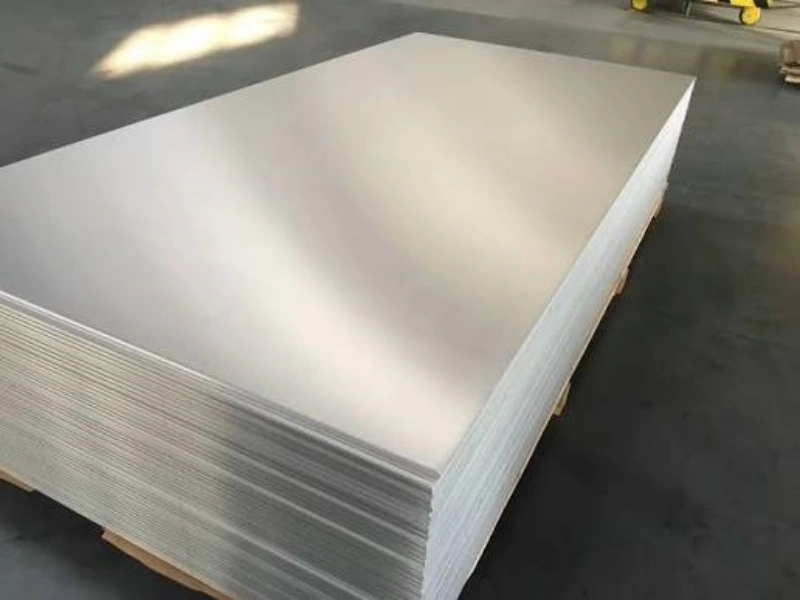
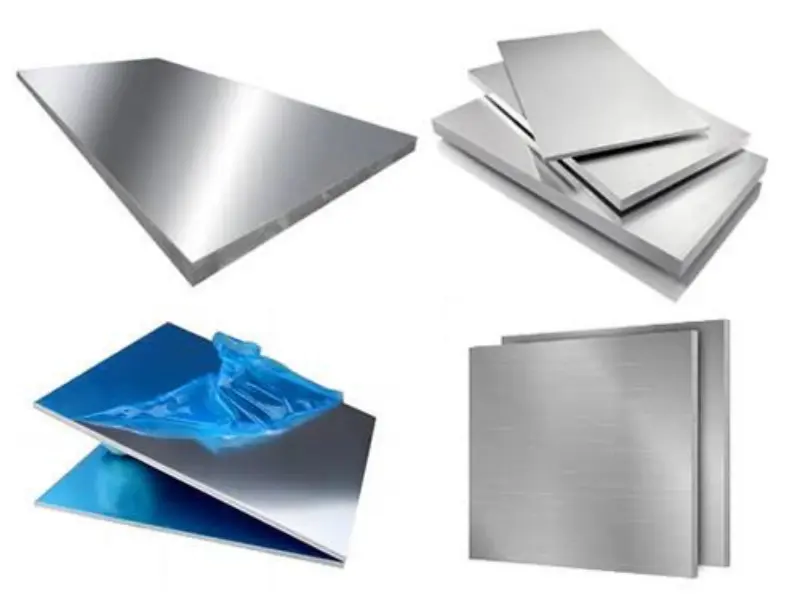
1060 and 1100 are both 1xxx series alloys, but their compositions are different.
| Feature | 1060 | 1100 |
|---|---|---|
| Aluminum purity | Higher | High |
| Formability | Excellent | Excellent |
| Conductivity | High | High |
| Strength | Low | Low to moderate |
| General fabrication | Good | Excellent |
| Electrical use | Very suitable | Suitable |
| Chemical composition | More commercially pure | Contains more alloying additions |
If very high aluminum purity is desired, 1060 can be considered.
If a customer needs a widely used general-purpose 1xxx alloy, 1100 may also be suitable.
1060 vs 3003 Aluminum Sheet
The difference becomes clearer when comparing strength.
| Property | 1060 | 3003 |
|---|---|---|
| Alloy series | 1xxx | 3xxx |
| Main alloying element | Very low additions | Manganese |
| Strength | Lower | Higher |
| Conductivity | Higher | Lower |
| Formability | Excellent | Very good |
| Corrosion resistance | Good | Good |
| Heat transfer | Excellent | Good |
| General panels | Suitable | Very suitable |
1060 is often selected for conductivity and purity.
3003 is often selected when higher strength is needed.
1060 vs 5052 Aluminum Sheet
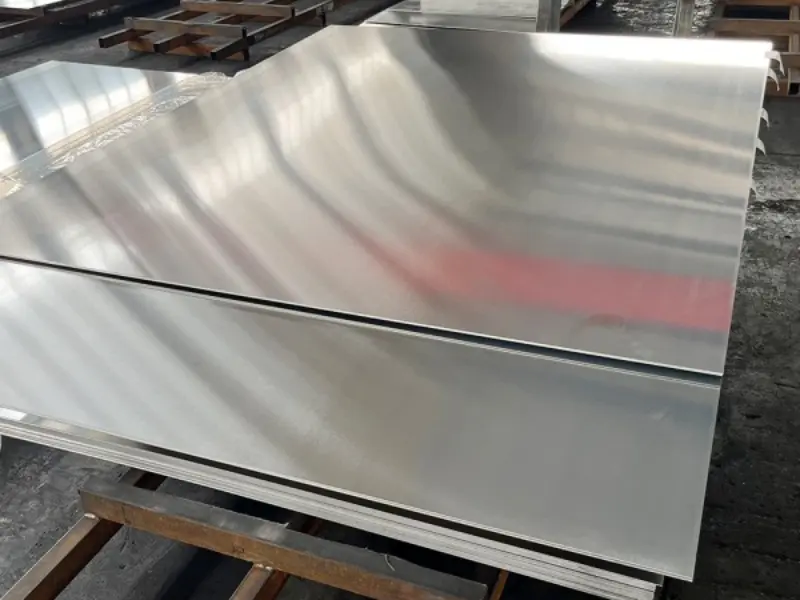
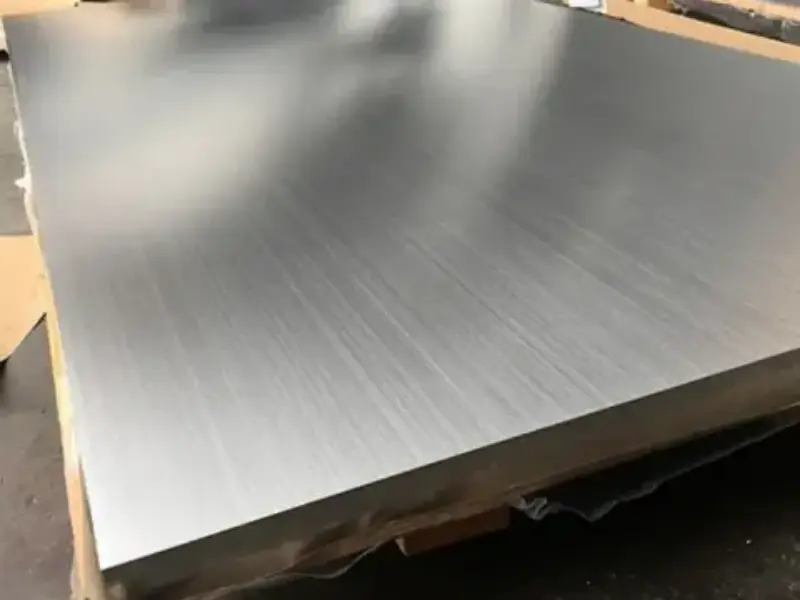
5052 is much stronger than 1060.
| Feature | 1060 | 5052 |
|---|---|---|
| Series | 1xxx | 5xxx |
| Strength | Low | High |
| Formability | Excellent | Good |
| Corrosion resistance | Good | Very good |
| Electrical conductivity | Higher | Lower |
| Marine applications | Limited | Very suitable |
| Structural use | Limited | More suitable |
For marine panels, vehicle parts, and stronger fabricated products, 5052 is usually more appropriate.
For electrical and thermal applications, 1060 can be more attractive.
1060 vs 6061 Aluminum
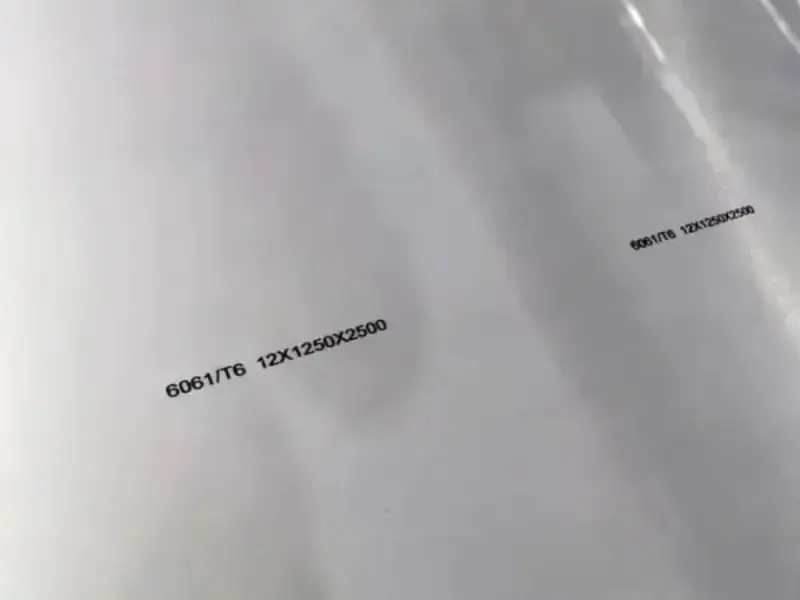
6061 is a heat-treatable alloy with significantly higher strength.
| Feature | 1060 | 6061 |
|---|---|---|
| Strength | Low | High |
| Formability | Excellent | Moderate |
| Heat treatment | No | Yes |
| Conductivity | High | Lower |
| Machinability | Limited | Good |
| Structural applications | Limited | Excellent |
| Heat transfer | Good | Good |
The choice depends heavily on the final application.
If the part must carry a structural load, 6061 may be more appropriate.
If conductivity and easy forming are more important, 1060 may be a better fit.
1060 Aluminum Sheet for Different Industries
A single alloy can serve different markets when the thickness and temper are adjusted.
| Industry | Possible Product | Typical Direction |
|---|---|---|
| Electrical | Conductive sheet | Electrical components |
| HVAC | Heat transfer sheet | Equipment |
| Lighting | Reflector sheet | Lamps and LED products |
| Construction | Trim and panels | Building products |
| Insulation | Jacketing | Pipes and equipment |
| Decoration | Brushed sheet | Interior products |
| Signage | Sign blank | Advertising |
| Kitchen | Formed sheet | Equipment |
| Industrial | Covers and panels | Machinery |
| Packaging | Thin aluminum | Containers and components |
This makes 1060 a versatile material for non-structural applications.
Choosing 1060 O, H14 or H18
The temper should match the manufacturing process.
Complex forming
→ 1060 O
Moderate forming
→ 1060 H12 / H14
Higher hardness
→ 1060 H16
Flat products with limited forming
→ 1060 H18
A harder temper is not automatically better.
If the product must be deeply formed, excessive hardness may increase the risk of forming problems.
How to Choose the Right Thickness
A simple selection method is:
Application → Load → Forming → Thickness → Temper
For a decorative cover, a thin sheet may be enough.
For a larger equipment panel, a thicker sheet may provide better rigidity.
For electrical components, conductivity and the required current-carrying design may be more important than simply increasing thickness.
The final thickness should be based on the actual engineering requirement.
1060 Aluminum Sheet Weight
The theoretical weight of aluminum sheet can be estimated using:
Weight = Length × Width × Thickness × Density
Aluminum has a density of approximately:
2.70 g/cm³
For example, a sheet that is:
1000 mm × 2000 mm × 1 mm
has an approximate theoretical weight of:
5.4 kg
The actual weight can vary slightly because of dimensional tolerances and the exact alloy.
Ordering 1060 Aluminum Sheet
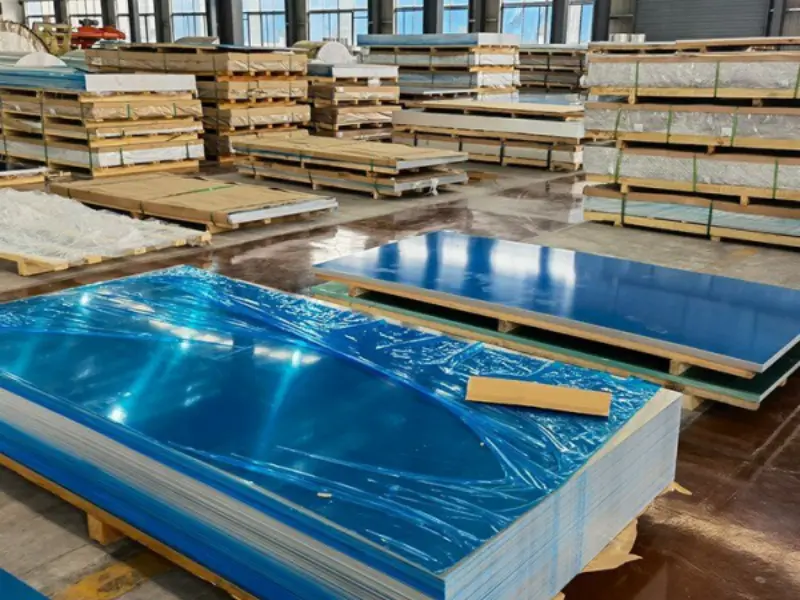
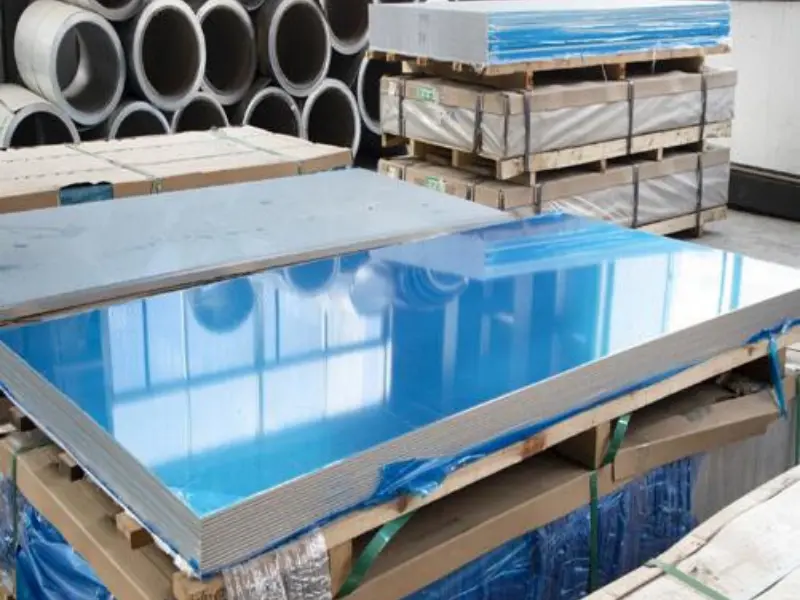
A complete inquiry should include the main specifications.
| Item | Example |
|---|---|
| Alloy | 1060 |
| Temper | H14 |
| Thickness | 1.5 mm |
| Width | 1220 mm |
| Length | 2440 mm |
| Surface | Mill finish |
| Quantity | 5 tons |
| Application | Lighting reflector |
| Packaging | Export wooden pallet |
This is much easier for a supplier to quote than:
“I need 1060 aluminum.”
Custom 1060 Aluminum Sheet
Depending on production capability, custom orders may include:
- Custom thickness
- Custom width
- Custom length
- Custom temper
- Custom surface
- Protective film
- Polishing
- Brushing
- Anodizing
- Cutting
- Slitting
- Special packaging
For large projects, custom sizes can help reduce material waste.
Surface Protection and Packaging
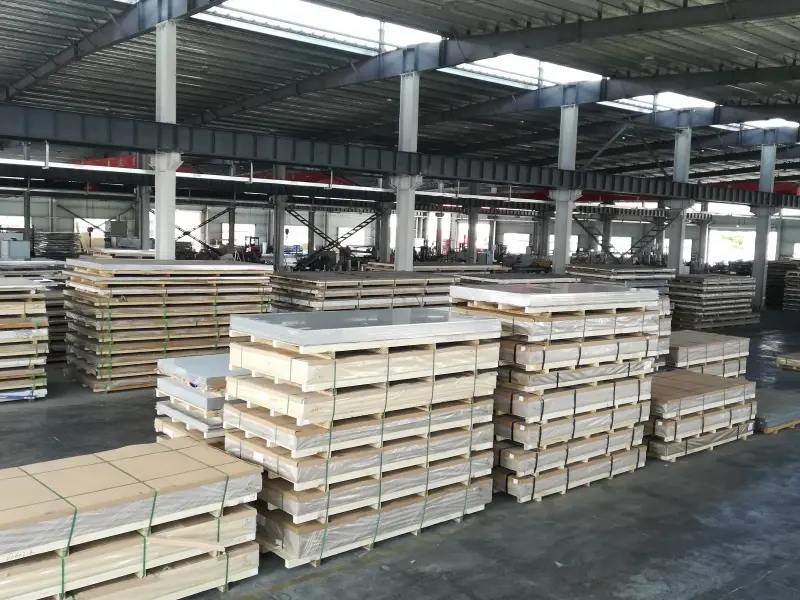
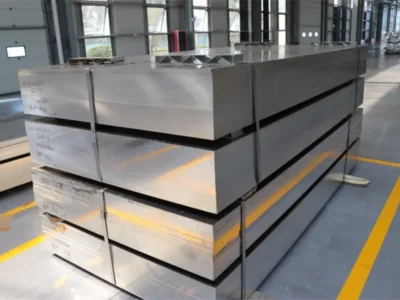
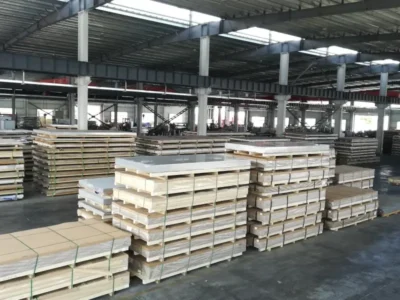
Aluminum sheets can be protected during transportation with different packaging methods.
Common options include:
→ Waterproof paper
→ Plastic wrapping
→ Wooden pallets
→ Wooden cases
→ Steel straps
→ Corner protection
→ PE protective film
For decorative surfaces, protective film can help reduce scratches during cutting, transportation, and installation.
For export orders, packaging should also consider container loading, humidity, lifting, and unloading.
What Information Should Be Included in a Quotation?
A good inquiry can be written in one sentence.
For example:
1060 H14 aluminum sheet, 1.5 mm × 1220 mm × 2440 mm, mill finish, 5 tons, export packaging.
For a customized product:
1060 O aluminum sheet, 0.8 mm × 1000 mm × 2000 mm, polished surface, 2 tons, PE film required.
This gives the supplier the key information needed to calculate a quotation.
Quality Points Buyers Should Check
Before purchasing, buyers can compare:
| Item | What to Check |
|---|---|
| Alloy | 1060 |
| Chemical composition | Meets required standard |
| Temper | O, H12, H14, H16 or H18 |
| Thickness | Actual tolerance |
| Width | Required dimension |
| Length | Required dimension |
| Surface | No serious scratches or dents |
| Flatness | Suitable for the application |
| Mechanical properties | Match the standard |
| Packaging | Suitable for transportation |
| Certification | Required inspection documents |
For industrial orders, the applicable standard should be agreed before production.
Common 1060 Aluminum Sheet Product Types
A supplier may offer several versions of the same alloy.
Flat 1060 Aluminum Sheet
This is the standard flat sheet format.
It is suitable for general fabrication, panels, covers, and industrial products.
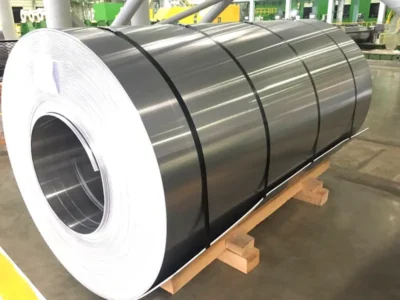
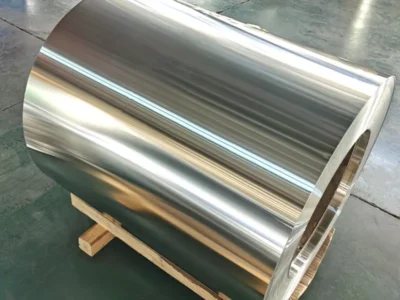
1060 Aluminum Coil
Thin 1060 material can also be supplied in coil form.
Coil can be useful for continuous production and automatic processing.
Typical processes include:
Coil → Leveling → Cutting → Stamping → Forming
1060 Aluminum Foil
Very thin 1060 material can be supplied as aluminum foil.
It can be used in selected electrical, thermal, insulation, and packaging-related applications.
1060 Polished Aluminum Sheet
A polished surface provides a brighter appearance.
It is useful for decorative and reflective products.
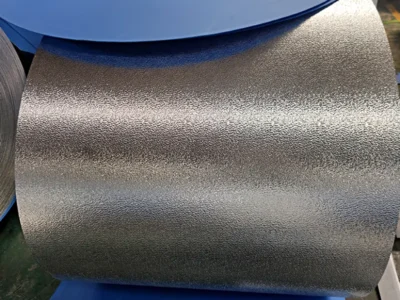
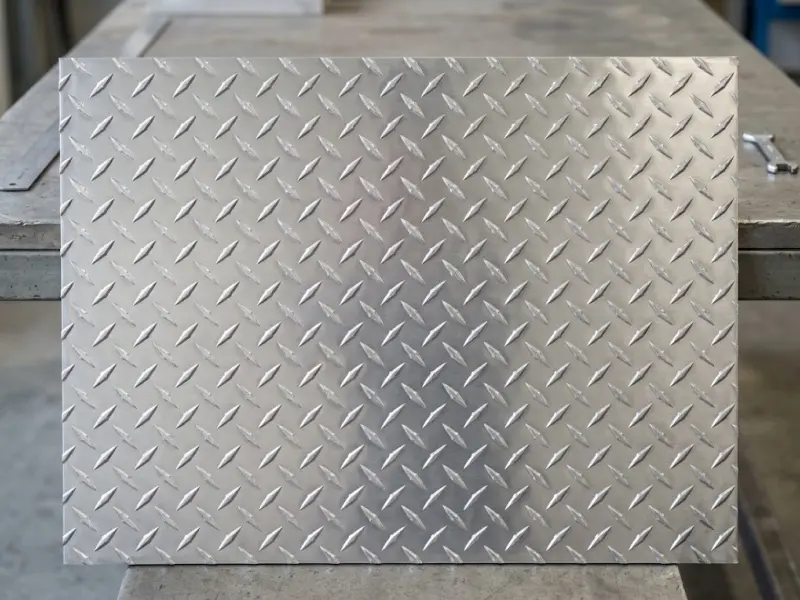
1060 Embossed Aluminum Sheet

Embossing creates a patterned surface.
It can be considered for decorative panels and selected functional applications.
FAQ About 1060 Aluminum Sheet
What is 1060 aluminum sheet?
1060 aluminum sheet is a 1xxx series aluminum product with a minimum aluminum content of about 99.60%. It is known for high purity, good conductivity, excellent formability, and good corrosion resistance.
Is 1060 aluminum pure aluminum?
It is commercially pure aluminum rather than laboratory-pure aluminum. The aluminum content is at least about 99.60% under common specifications.
Is 1060 aluminum stronger than 5052?
No. 5052 is generally much stronger than 1060. 1060 is mainly selected for conductivity, formability, and high aluminum purity.
Is 1060 aluminum easy to bend?
Yes. 1060 has excellent formability. Softer tempers such as O are especially suitable for bending and forming.
What is 1060 H14 aluminum sheet?
1060 H14 is a strain-hardened aluminum sheet with a balance between strength and formability. It is a common specification for general fabrication and formed products.
What is the difference between 1060 O and H14?
1060 O is annealed and softer. H14 is strain hardened and stronger. O is generally easier to form, while H14 provides higher hardness and strength.
What is 1060 H18 aluminum sheet?
H18 is a harder temper of 1060 aluminum. It provides higher strength and hardness but has lower formability than O or H14.
Is 1060 aluminum good for electrical applications?
Yes. Its high aluminum purity gives it relatively high electrical conductivity, making it suitable for selected electrical applications.
How do I order 1060 aluminum sheet?
Provide the alloy, temper, thickness, width, length, surface finish, quantity, application, and packaging requirements. A complete specification helps the supplier provide a more accurate quotation.
Is 1060 aluminum good for heat transfer?
Yes. Its high thermal conductivity makes it suitable for selected heat transfer and thermal management products.
Can 1060 aluminum be welded?
1060 aluminum is generally considered weldable. The welding process should be selected according to the thickness, product design, and final requirements.
Can 1060 aluminum be anodized?
Yes. 1060 aluminum can be anodized. The final appearance depends on the surface preparation and anodizing process.
Can 1060 aluminum be painted?
Yes. The surface should be properly cleaned and prepared before painting to achieve good coating performance.
Is 1060 aluminum suitable for marine applications?
It can resist corrosion, but it has relatively low strength. For many structural marine applications, alloys such as 5052 or 5083 are usually more appropriate.
Is 1060 aluminum suitable for trailers?
It can be used for selected non-structural trailer components. However, 5052 or other higher-strength alloys may be preferred for load-bearing or high-impact trailer parts.
What thicknesses are available for 1060 aluminum sheet?
Common thicknesses range from thin sheet below 1 mm to several millimeters. Thicker material can also be produced depending on the supplier and required standard.
Can 1060 aluminum be supplied in 4×8 sheets?
Yes, 4×8 feet is a common sheet size in some markets. Availability depends on thickness, temper, production equipment, and order quantity.
What surface finishes are available?
Common options include mill finish, polished, brushed, anodized, painted, and other customized finishes.
How much does 1060 aluminum sheet cost?
The price depends on aluminum market prices, thickness, width, temper, surface finish, quantity, processing, packaging, and delivery location. A specific quotation requires the complete product specification.
Related Aluminum Products
Customers looking for 1060 aluminum sheet may also compare:
- 1050 Aluminum Sheet
- 1100 Aluminum Sheet
- 3003 Aluminum Sheet
- 3004 Aluminum Sheet
- 3105 Aluminum Sheet
- 5052 Aluminum Sheet
- 5083 Aluminum Plate
- 5754 Aluminum Sheet
- 6061 Aluminum Plate
- Aluminum Foil
- Aluminum Coil
- Aluminum Checker Plate
- Embossed Aluminum Sheet
- Anodized Aluminum Sheet
- Coated Aluminum Sheet
- Aluminum Roofing Sheet
- Aluminum Strip
- Aluminum Circle
- Aluminum Plate
Comparing several alloys can help buyers select the right balance of strength, conductivity, formability, corrosion resistance, surface finish, and price.
1060 Aluminum Sheet Selection Guide
A simple selection path can help buyers make a quick decision:
Need high purity?
↓ Yes
Consider 1060
↓
Need very easy forming?
→ 1060 O
↓
Need a balance of hardness and formability?
→ 1060 H14
↓
Need higher hardness?
→ 1060 H16 / H18
↓
Need much higher structural strength?
→ Compare 3003 / 5052 / 6061
This approach avoids choosing a material based only on price.

Final Guide to 1060 Aluminum Sheet
1060 aluminum sheet is a practical choice when high aluminum purity and easy processing are more important than high strength.
Its main advantages can be summarized as:
99.60%+ aluminum → high conductivity → excellent formability → good corrosion resistance → lightweight → flexible processing
For highly formable products, 1060 O is worth considering.
For general sheet applications, 1060 H14 is a common option.
For higher hardness, H16 or H18 can be considered.
For applications requiring substantially higher strength, buyers should compare 1060 with 3003, 5052, 5083, or 6061.
The best specification depends on the actual application, not simply the alloy number.