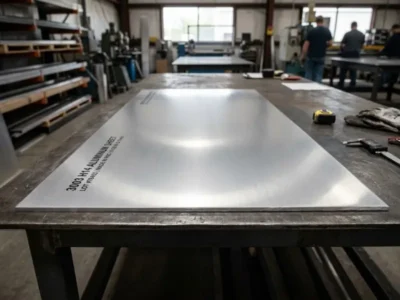
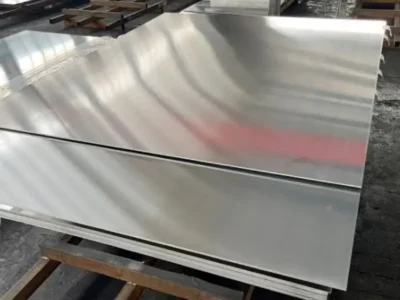
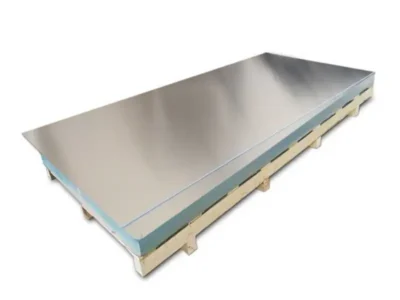
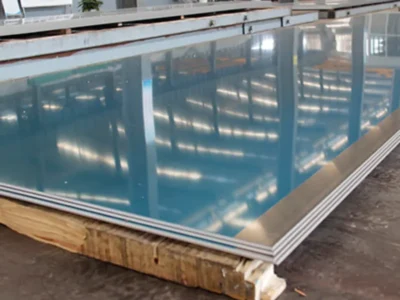
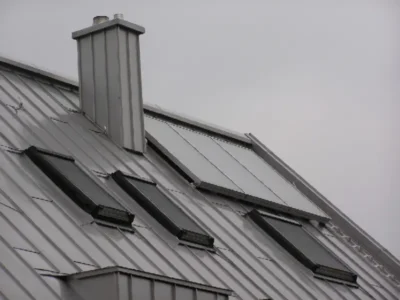


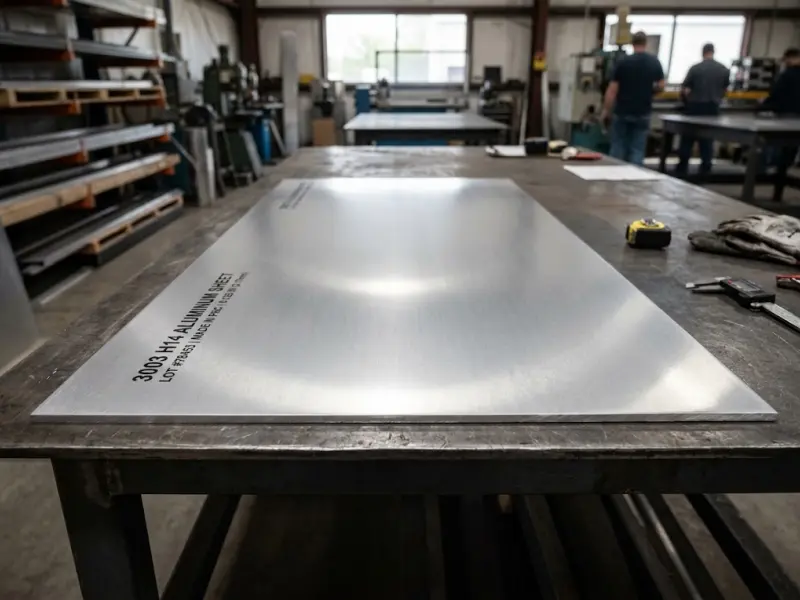
3003 aluminum sheet is one of the most widely stocked aluminum grades in the world.
It offers a solid mix of strength, corrosion resistance, and low cost, which is why it shows up in everything from truck bodies to kitchen equipment.
What Is 3003 Aluminum Sheet
3003 aluminum sheet belongs to the 3000 series, which uses manganese as the main alloying element. This addition gives 3003 better strength than pure 1000-series aluminum, while still keeping good formability and corrosion resistance.
It is a non-heat-treatable alloy. Strength comes from cold working during rolling, not from heat treatment. That makes 3003 sheet consistent and predictable to work with, whether cutting, bending, or welding.
Core Traits of 3003 Aluminum Sheet Metal
- Good general-purpose strength
- Strong resistance to rust and corrosion
- Easy to weld, bend, and form
- Affordable compared to specialty alloys
- Wide stock availability at most metal suppliers
Chemical Composition
Manganese content is what defines the 3003 alloy family.
| Element | Min % | Max % |
|---|---|---|
| Aluminum (Al) | Remainder | — |
| Manganese (Mn) | 1.0 | 1.5 |
| Copper (Cu) | 0.05 | 0.20 |
| Iron (Fe) | — | 0.70 |
| Silicon (Si) | — | 0.60 |
| Zinc (Zn) | — | 0.10 |
This composition gives 3003 roughly 20% more strength than pure aluminum grades like 1100, without a big jump in price.
3003 H14 Aluminum Sheet Specifications
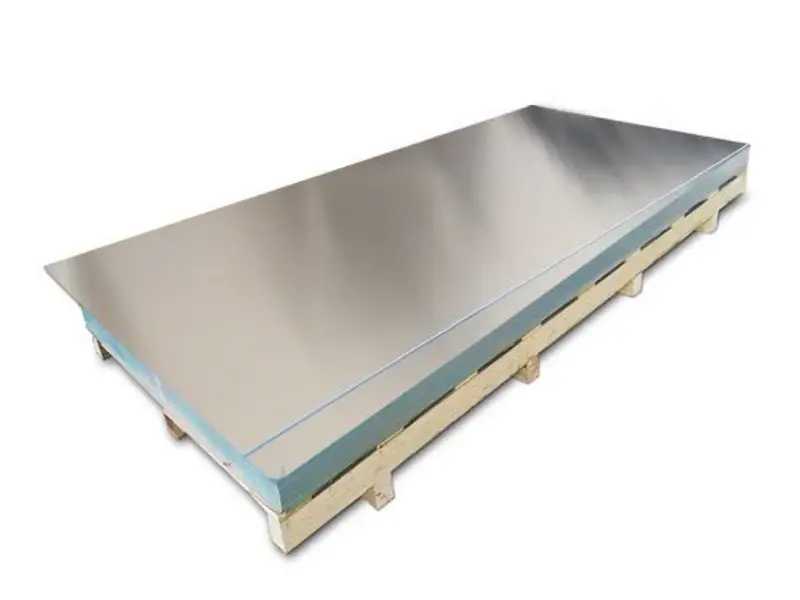
H14 is the most commonly stocked temper for 3003 sheet. Below is a quick specification reference.
| Property | 3003 H14 Value |
|---|---|
| Tensile strength | 22,000 psi (approx.) |
| Yield strength | 21,000 psi (approx.) |
| Elongation | 8–10% |
| Hardness (Brinell) | 40 HB (approx.) |
| Density | 0.098 lb/in³ |
3003 H14 Aluminum Sheet Properties, Simple Terms
- Stronger than O temper, but still bends without much trouble
- Good pick for parts needing a bit more rigidity
- Holds a flat, even surface after cutting and stamping
3003 Aluminum Sheet Price Factors
Price varies based on several factors, so it helps to know what drives the cost up or down before requesting a quote.
- Thickness: thicker sheet costs more per square foot
- Temper: O temper and H18 can carry slight price differences due to processing
- Finish: painted or polished sheet costs more than mill finish
- Order volume: larger orders usually bring a lower per-unit price
- Cut size: custom cut sheets may carry a small upcharge over standard sizes
Finding 3003 Aluminum Sheet for Sale
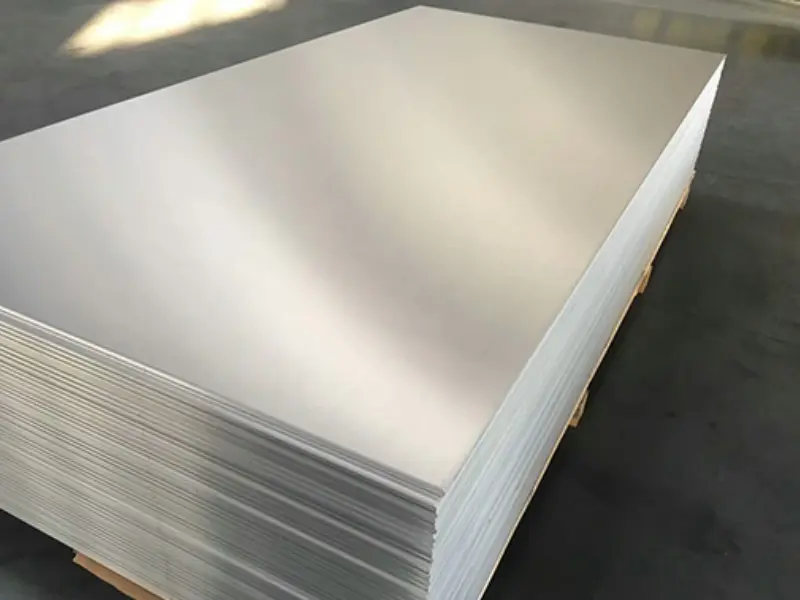
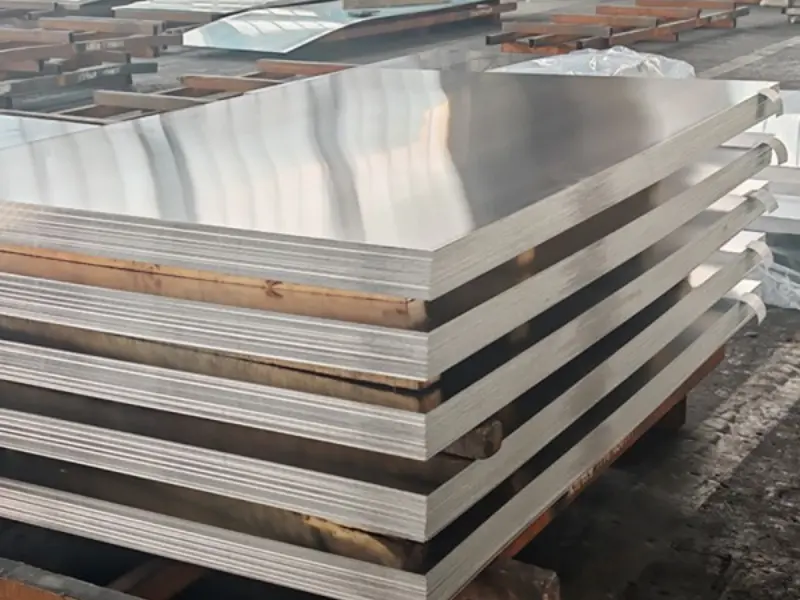
Buyers searching for 3003 aluminum sheet near them can compare local metal suppliers or work with an overseas mill directly for larger volume orders. Ordering directly from a mill often brings better pricing on bulk quantities, while local suppliers suit smaller, urgent needs.

Applications
3003 aluminum sheet metal is used across a wide range of industries.
- Truck and trailer bodies
- Storage tanks and chemical drums
- Kitchen equipment and cookware
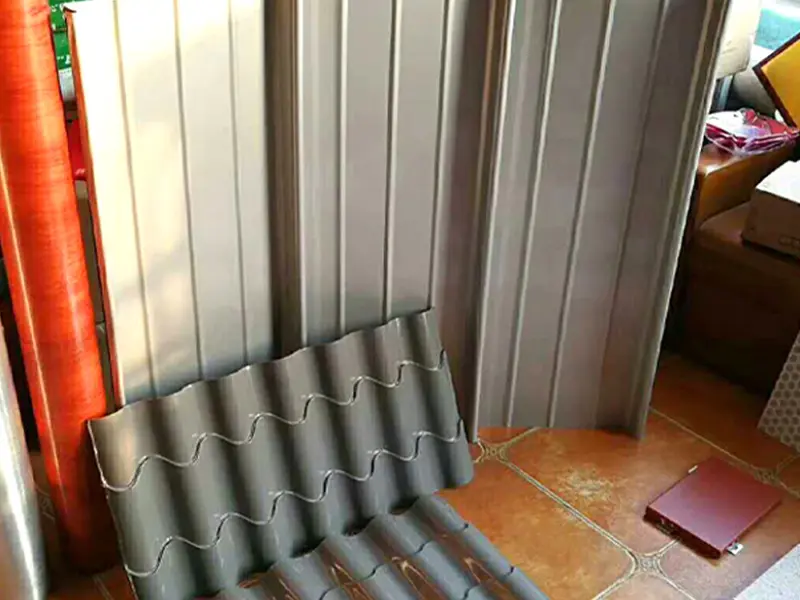
- Roofing and siding panels
- HVAC ductwork
- Signage and nameplates
- General sheet metal fabrication
- Boat trim and light marine parts
Temper Options
Temper choice changes how the sheet behaves during forming and how strong the final part will be.
| Temper | Hardness | Notes |
|---|---|---|
| O (annealed) | Softest | Best for deep forming, most flexible |
| H12 | Light hard | Balance of strength and formability |
| H14 | Medium hard | Most common stock temper |
| H16 | Firmer | Less common, more rigid |
| H18 | Hardest | Least flexible, flattest finish |
3003 O Temper Aluminum Sheet
O temper is fully annealed, meaning it is as soft as the alloy gets. It suits deep drawing, spinning, and tight radius bends where cracking is a risk in harder tempers.
Lower strength than H-series tempers
Easiest 3003 temper to shape
Common for spun parts like cookware and lighting components
Thickness and Weight Reference
3003 aluminum sheet thickness is often listed by decimal inch, fraction, or gauge number. The table below covers common stock sizes.
| Thickness (in) | Thickness (mm) | Weight (lb/sq ft) |
|---|---|---|
| .032 | 0.81 | 0.45 |
| .040 | 1.02 | 0.56 |
| .063 | 1.60 | 0.88 |
| .090 | 2.29 | 1.26 |
| 1/8 (.125) | 3.18 | 1.76 |
| 3/16 (.187) | 4.75 | 2.63 |
.063-inch 3003 sheet is a popular mid-range thickness, often chosen for panels and light structural parts. 1/8-inch 3003 aluminum sheet is a step up, used where more rigidity is needed without moving to heavier plate.
Standard Sheet Sizes
| Width (in) | Length (in) |
|---|---|
| 36 | 96 |
| 48 | 96 |
| 48 | 120 |
| 60 | 144 |
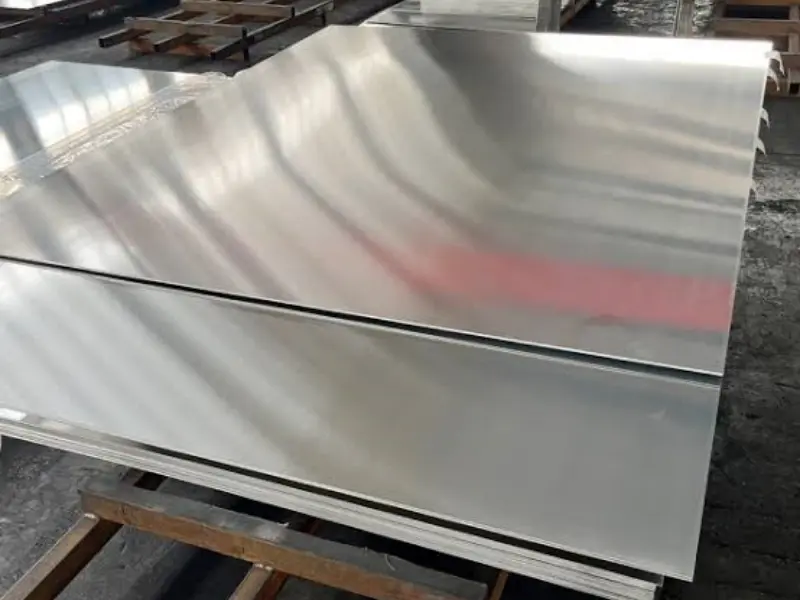
Custom cut sizes are usually available on request, along with coil form for high-volume orders.
Product Types
3003 sheet comes in several finish and form options, each suited to a different job.
Mill Finish 3003 Sheet
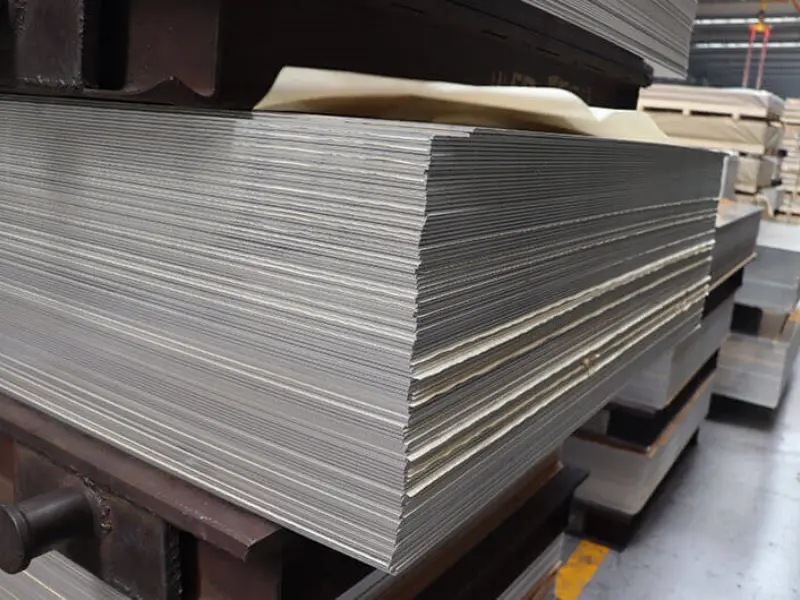
Plain, unpolished aluminum straight from the rolling mill.
Standard choice for structural and fabrication use
Lowest-cost 3003 aluminum sheet option
Common base for painting or powder coating
Painted 3003 Aluminum Sheet
Coated with a baked-on paint finish, often PE or polyester-based.
- Wide color range for trim, siding, and signage
- Added UV protection compared to bare mill finish
- Slightly higher cost than mill finish
Diamond Plate 3003 Sheet
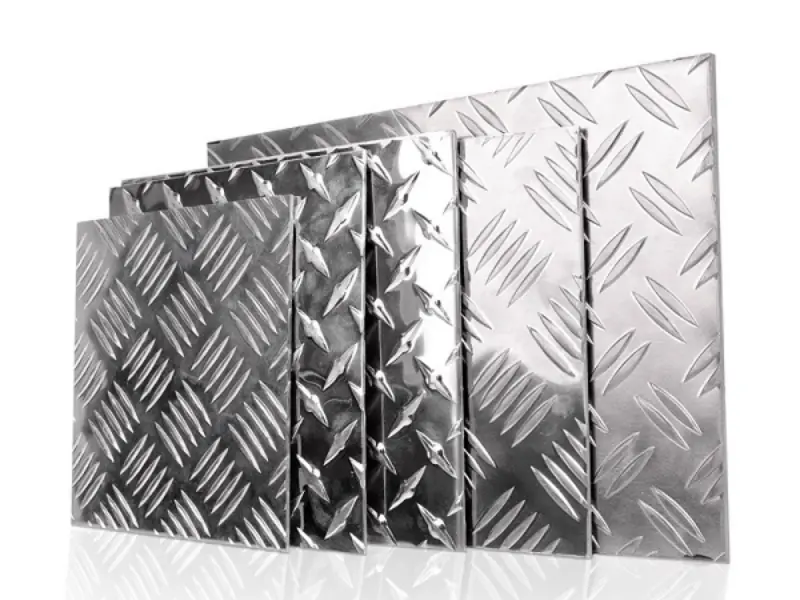
Also called tread plate, with a raised diamond pattern rolled into the surface.
Available in several thickness options
Non-slip surface for flooring and ramps
Common in truck beds and trailer flooring
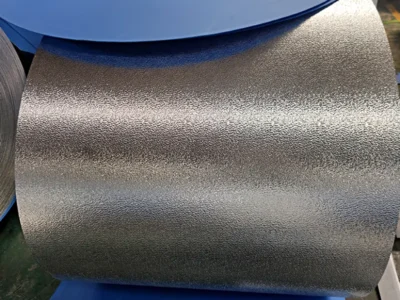
Embossed 3003 Aluminum Sheet

Textured surface, similar to diamond plate but with different pattern styles like stucco.
Popular for cladding and insulation jacketing
Hides minor scratches and handling marks
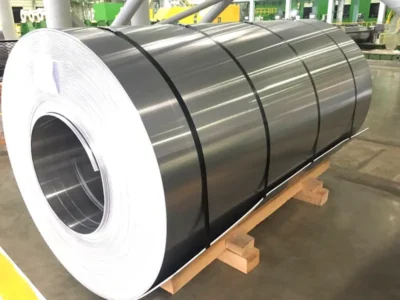
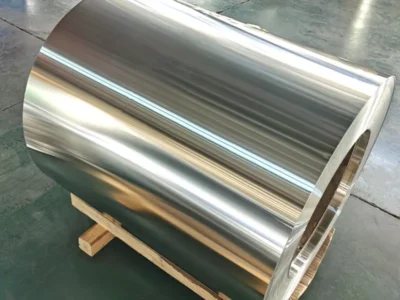
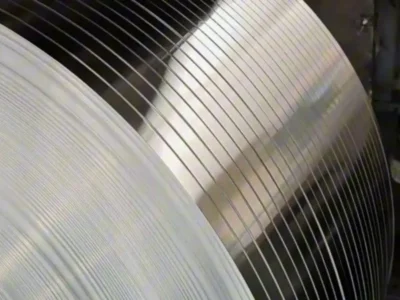
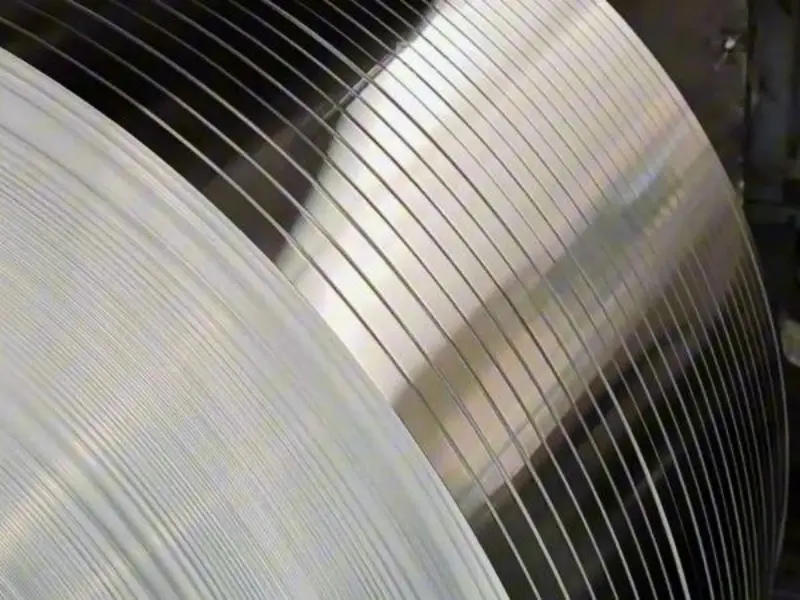
3003 Aluminum Coil
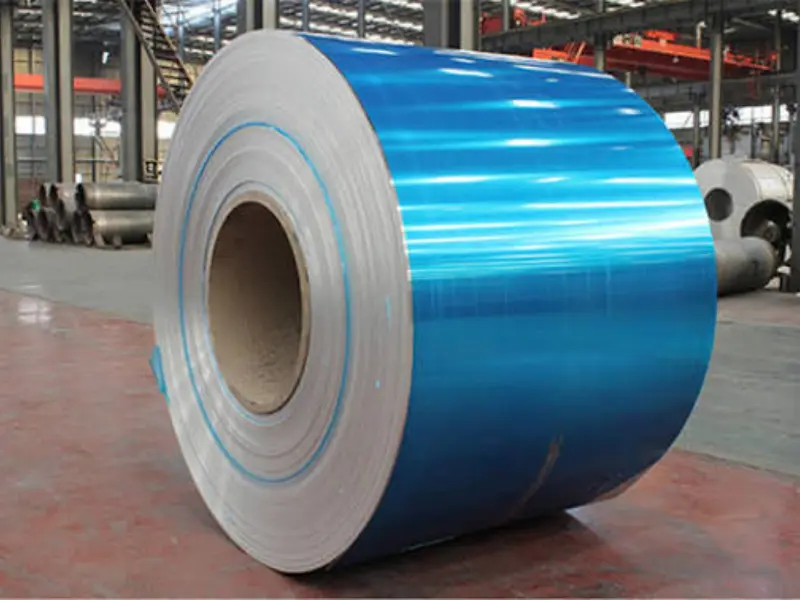
Continuous roll form, suited for roll-forming and slitting operations.
Same temper and thickness range as flat sheet
Sold by coil weight rather than sheet count
Reduces handling time for large fabrication runs
3003 vs 5052 Aluminum Sheet
This is one of the most common comparisons buyers make before ordering. Both are widely available and mid-priced, but they suit different jobs.
| Factor | 3003 Aluminum Sheet | 5052 Aluminum Sheet |
|---|---|---|
| Strength | Moderate | Higher |
| Corrosion resistance | Good | Excellent, including saltwater |
| Formability | Very good | Good |
| Weldability | Good | Very good |
| Typical cost | Lower | Slightly higher |
| Common use | General fabrication, tanks, trim | Marine parts, fuel tanks, structural panels |
5052 aluminum sheet wins where higher strength or saltwater exposure is a factor, such as boat hulls or fuel tanks. 3003 aluminum sheet is the better fit for general fabrication where cost matters and loads are lighter.
Choosing Between 3003 and 5052
→ Building a marine part? Choose 5052 for its saltwater resistance. → Working on general sheet metal fabrication? 3003 is usually the more cost-effective pick. → Need maximum formability for deep draws? 3003 in O temper often bends easier. → Need higher structural strength? 5052 offers a strength edge over 3003.
Why 3003 Aluminum Sheet Is a Practical Choice for Fabrication

3003 aluminum sheet is often selected when a project needs a balance of formability, corrosion resistance, and moderate strength.
It is not the strongest aluminum alloy. It is also not designed for every type of structural work. Its value comes from its balanced performance.
For many fabricators, the main advantage is simple:
Easy to form → Easy to fabricate → Good corrosion resistance → Suitable for many products
This makes 3003 a useful option for parts that need bending, rolling, stamping, or other forming operations.
3003 Aluminum Sheet Selection Guide
The right sheet is not decided by alloy number alone.
A buyer should consider four basic points:
| Selection point | What to consider |
|---|---|
| Alloy | 3003 |
| Temper | O, H12, H14, H16, H18, H24 |
| Thickness | Based on strength and forming |
| Surface | Mill, coated, embossed, or other finish |
A soft temper may be more suitable for forming.
A harder temper can provide better rigidity.
For the same alloy, changing the temper can change the way the sheet behaves during fabrication.
3003 O vs H14 vs H24
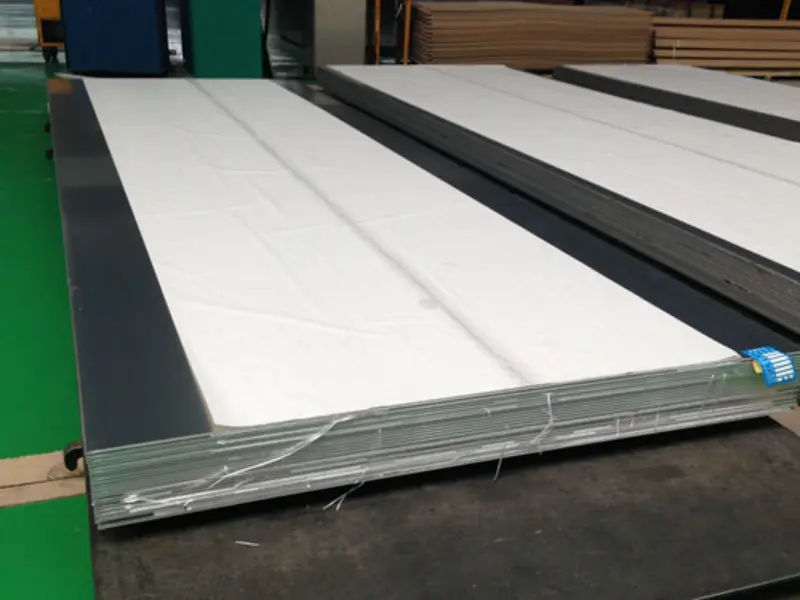
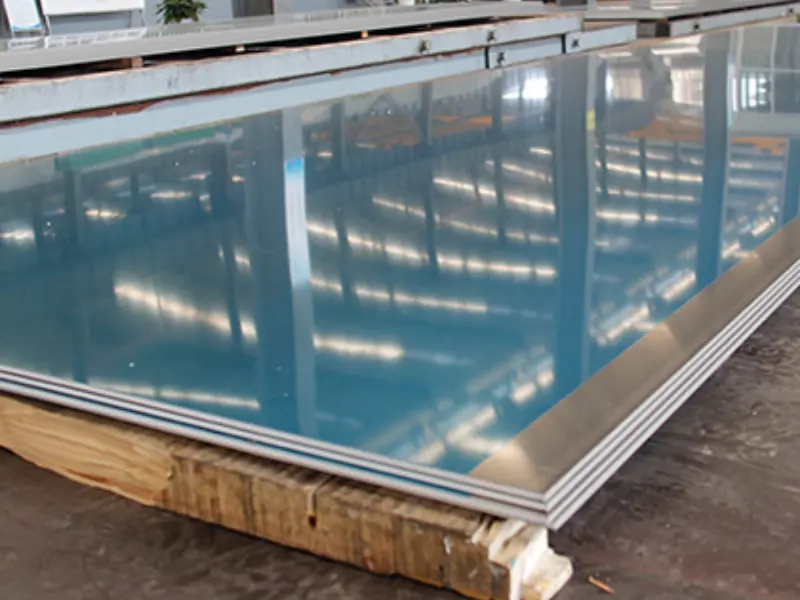
Temper is one of the most useful details to compare when buying 3003 sheet.
| Temper | General condition | Forming | Typical direction |
|---|---|---|---|
| O | Soft | Excellent | Deep forming |
| H12 | Partially hardened | Very good | Forming |
| H14 | Half hard | Good | General fabrication |
| H16 | Harder | Moderate | Panels and formed parts |
| H18 | Hard | Lower | Flat parts |
| H24 | Stabilized | Good | General industrial use |
Need more bending? → Consider a softer temper.
Need more rigidity? → Consider a harder temper.
The final choice should be based on the actual forming process and required dimensions.
What Thickness Should You Choose?
There is no single standard thickness for every project.
| Thickness | General use direction |
|---|---|
| 0.3–0.5 mm | Light panels and formed parts |
| 0.6–1.0 mm | General fabrication |
| 1.2–2.0 mm | Equipment and industrial parts |
| 2.5–4.0 mm | Heavier panels and fabricated components |
| 5.0 mm+ | Special or heavier applications |
A thinner sheet is easier to handle and can reduce material weight.
A thicker sheet provides more rigidity.
The correct thickness should be selected according to load, forming method, dimensions, and installation conditions.
3003 Aluminum Sheet vs 5052 Aluminum Sheet
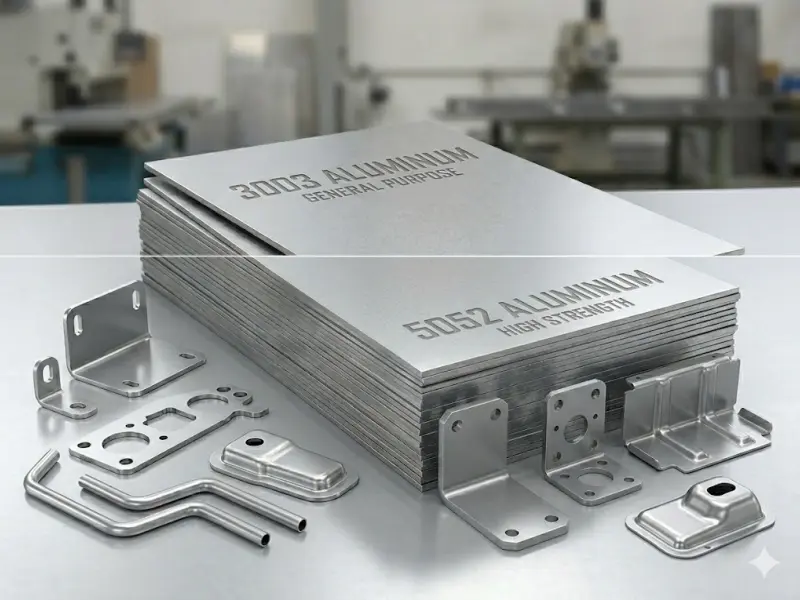
This is one of the most useful comparisons for customers who are not sure which alloy to order.
| Feature | 3003 | 5052 |
|---|---|---|
| Main alloy family | 3xxx | 5xxx |
| Formability | Excellent | Good |
| Strength | Moderate | Higher |
| Corrosion resistance | Good | Very good |
| Welding | Good | Good |
| Deep forming | Very suitable | Suitable |
| General fabrication | Excellent | Excellent |
| Heavy-duty parts | Limited | Better choice |
A simple rule can help:
Forming priority → 3003
Higher strength priority → 5052
However, the final choice should always consider the complete design.
3003 vs 1100 Aluminum Sheet
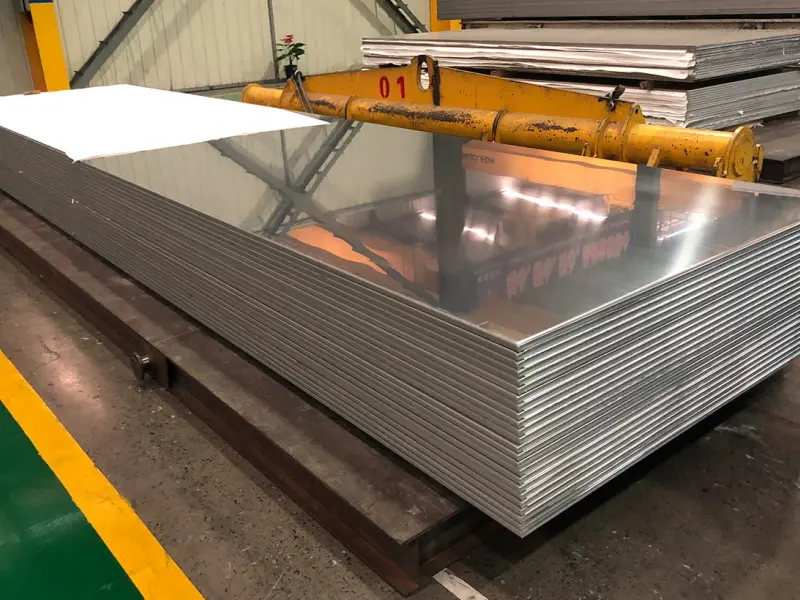
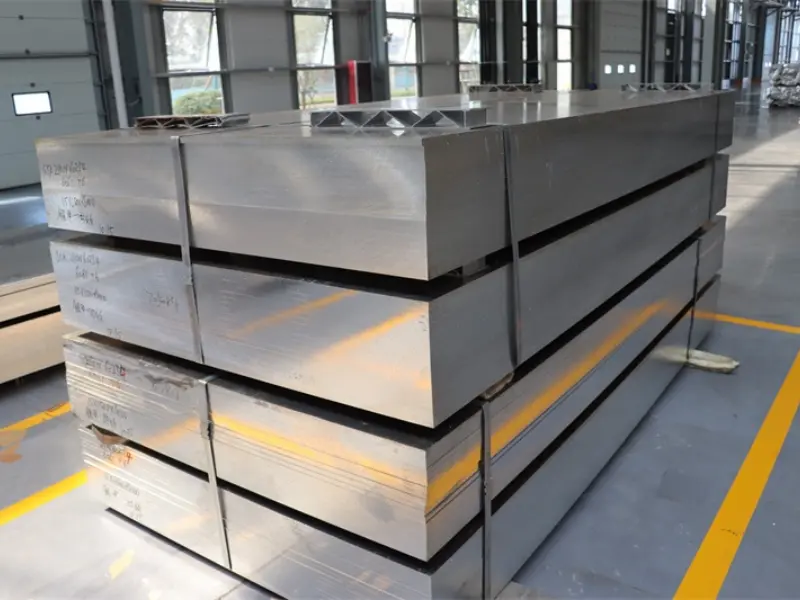
3003 and 1100 are both used in general fabrication, but their performance is different.
| Property | 1100 | 3003 |
|---|---|---|
| Purity | Higher | Lower |
| Strength | Lower | Higher |
| Formability | Excellent | Excellent |
| Corrosion resistance | Good | Good |
| General fabrication | Yes | Yes |
| Strength requirement | Limited | Better |
| Heat exchanger direction | Less common | Common |
When a project needs slightly higher strength while maintaining good formability, 3003 can be a practical alternative to 1100.
What Makes 3003 Suitable for Bending?
Bending performance depends on more than thickness.
The main factors are:
Alloy + Temper + Thickness + Bend Radius + Grain Direction
A soft 3003 sheet can normally be formed more easily than a hard temper.
For tight bends, the material should be tested before mass production.
A simple trial can help confirm:
→ Minimum bend radius
→ Surface condition after bending
→ Edge cracking
→ Springback
→ Final dimensions
This is especially useful for custom fabrication.
Deep Drawing and Stamping Considerations
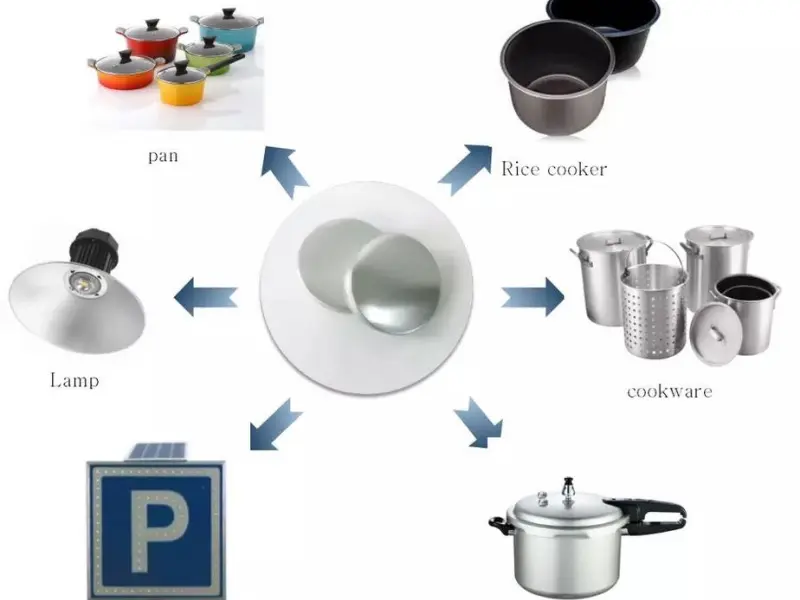
3003 aluminum sheet can be used for forming operations where good ductility is required.
Typical processes may include:
- Stamping
- Bending
- Drawing
- Punching
- Roll forming
- Cutting
- Spinning
The temper should match the forming process.
For deeper forming, a softer material is generally preferred.
For a simple flat panel, a harder temper may be more suitable.
How 3003 Sheet Behaves During Machining
3003 is mainly known for forming rather than high-speed precision machining.
When machining is required, tool selection and cutting conditions should be adjusted for aluminium.
Good practices include:
→ Use sharp cutting tools
→ Control heat buildup
→ Keep the material firmly supported
→ Use suitable cutting parameters
→ Remove chips efficiently
For projects requiring extensive machining, it can be useful to compare 3003 with a more machining-oriented alloy.
Surface Options Beyond Mill Finish
Many customers think only about mill finish when searching for 3003 aluminum sheet.
There are actually several possible surface directions.
| Surface | Visual / functional purpose |
|---|---|
| Mill finish | Standard industrial surface |
| Stucco embossed | Texture and decorative appearance |
| Orange peel embossed | Textured surface |
| Painted | Color and additional surface protection |
| Brushed | Decorative appearance |
| Anodized | Surface finish and durability |
| Polished | Reflective appearance |
| Protective film | Surface protection during fabrication |
The available surface depends on thickness, alloy, processing equipment, and final use.
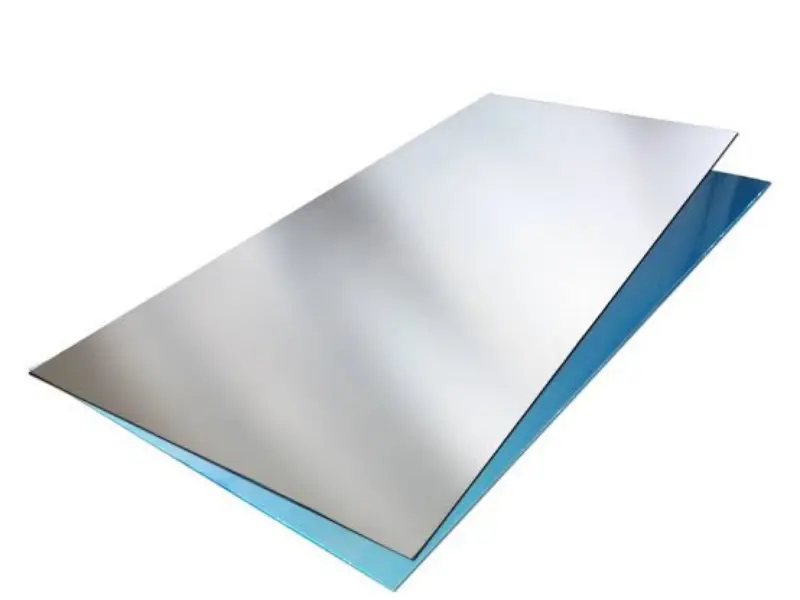
Common 3003 Aluminum Sheet Types
3003 O Aluminum Sheet
→ Soft and highly formable. Suitable for deep drawing, stamping, bending and cookware production.
3003 H14 Aluminum Sheet
→ Provides a good balance of strength and formability. Commonly used for roofing, panels, equipment and general fabrication.
3003 H24 Aluminum Sheet
→ Offers higher strength with good forming performance. Suitable for building panels, HVAC parts and industrial applications.
3003 Embossed Aluminum Sheet
→ Available with stucco, orange peel and other patterns. Suitable for insulation jacketing, decoration and equipment protection.
3003 Coated Aluminum Sheet
→ Available with PE, PVDF and other coatings for improved surface protection and decorative performance.
Main Applications
- Kitchen utensils and cookware
- Frying pans and rice cookers
- Heat exchanger components
- Air conditioning equipment
- HVAC systems
- Roofing panels
- Building wall panels
- Insulation jacketing
- Food processing equipment
- Storage tanks
- Chemical equipment
- Signage and decorative panels
- Industrial components
Product Advantages
→ Good strength-to-weight ratio
→ Excellent formability
→ Good corrosion resistance
→ Excellent bending and stamping performance
→ Good weldability
→ Suitable for deep drawing
→ Easy to cut and fabricate
→ Suitable for surface treatment
→ Available in multiple tempers and finishes
→ Custom specifications available
3003 Aluminum Sheet With Protective Film
For products that will be cut, bent, transported, or installed after delivery, protective film can help reduce surface scratches.
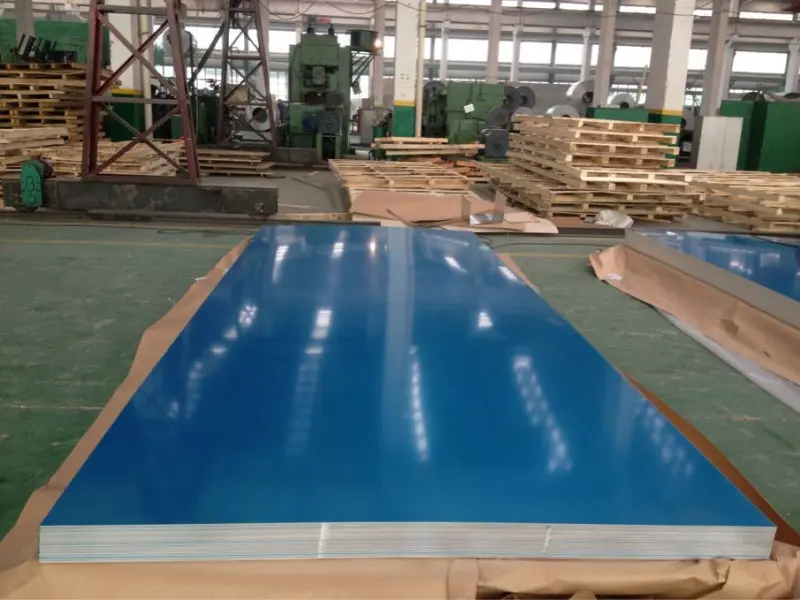
A typical structure is:
Aluminum Sheet
↓
Protective Film
↓
Cutting / Bending
↓
Transportation
↓
Installation
The film type should match the processing conditions.
For example, some applications may need film that can remain on the sheet during bending and installation.
How Coil and Sheet Supply Compare
3003 material can be supplied as flat sheets or coils.
| Feature | 3003 Sheet | 3003 Coil |
|---|---|---|
| Standard pieces | Yes | No |
| Continuous length | Limited | Excellent |
| Cutting required | Less | More |
| Roll forming | Less convenient | Excellent |
| Slitting | No | Excellent |
| Large production | Good | Very good |
| Small orders | Convenient | May be less convenient |
Flat panels → Sheet
Continuous production → Coil
This simple distinction can help customers select the correct material form.
3003 Aluminum Sheet for Roll Forming
When 3003 is used for roll forming, the material must be matched to the machine.
The process normally looks like this:
3003 Coil
→ Feeding
→ Forming Rollers
→ Profile
→ Cutting
→ Finished Component
Thickness, temper, width, and surface condition can all affect the forming result.
For large production runs, a trial roll can help confirm machine settings before full production.
A Simple Material Matching Table
| If your priority is… | Consider |
|---|---|
| Easy bending | 3003 O |
| General fabrication | 3003 H14 |
| Higher rigidity | 3003 H16/H18 |
| Deep forming | Softer 3003 temper |
| Decorative surface | Embossed or coated |
| Outdoor use | Suitable coated or surface-treated option |
| Continuous forming | 3003 coil |
| Individual panels | 3003 sheet |
| Higher strength | Compare 5052 |
This format is useful for buyers who already know their production requirements but are unsure about the exact specification.
How Width Affects Material Efficiency
Width can have a direct effect on material waste.
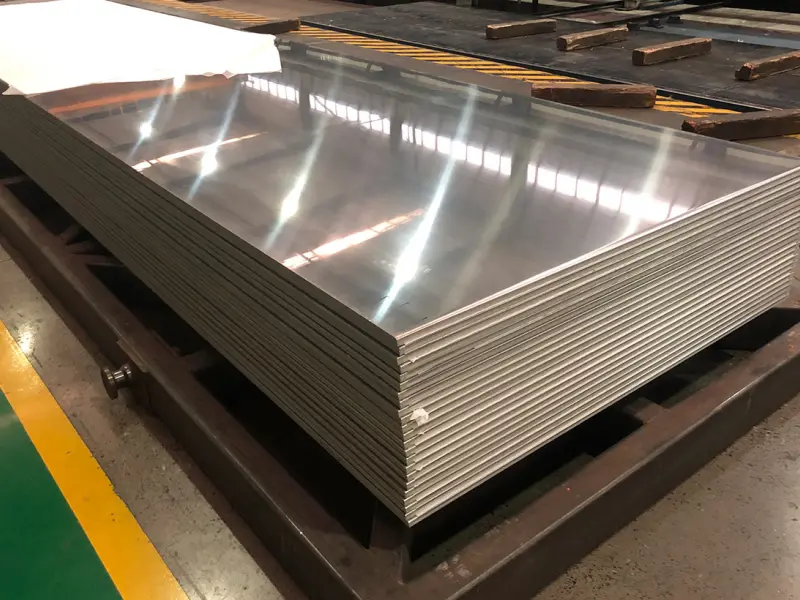
For example, if a production line needs several 200 mm strips, buying a master width that can be divided efficiently may reduce leftover material.
Master Width
↓
Slitting
↓
200 mm + 200 mm + 200 mm + 200 mm
↓
Production
Instead of selecting a width only because it is a standard size, buyers can discuss the cutting pattern with the supplier.
This is particularly useful for large-volume orders.
How to Reduce the Real Cost of 3003 Aluminum Sheet
The lowest price per kilogram does not always mean the lowest project cost.
Consider:
| Cost factor | Why it matters |
|---|---|
| Thickness | Changes material consumption |
| Width | Affects cutting waste |
| Temper | Affects processing |
| Surface | Changes finishing cost |
| Tolerance | Can affect usable material |
| Packaging | Protects material during transport |
| Quantity | Influences production efficiency |
| Slitting | May reduce fabrication work |
A slightly more expensive specification can sometimes reduce total processing cost.
A Quick Cost Comparison Method
When comparing two suppliers, use the same specification.
Same alloy
Same temper
Same thickness
Same width
Same surface
Same quantity
Same packaging
Only then is the price comparison meaningful.
Otherwise, a cheaper quotation may simply be based on a different specification.
What Should Be Included in a 3003 Sheet Inquiry?
A professional inquiry can be very simple.
Alloy: 3003
Temper: H14
Thickness: 1.0 mm
Width: 1220 mm
Length: 2440 mm
Surface: Mill finish
Quantity: 10 MT
Application: Fabrication
Packaging: Export packaging
This gives the manufacturer enough information to prepare a more useful quotation.
Small Batch or Bulk Order?
Different buyers have different purchasing needs.
| Buyer type | Suggested purchasing approach |
|---|---|
| Prototype customer | Small quantity |
| Fabrication shop | Regular sheet sizes |
| Distributor | Mixed specifications |
| Manufacturer | Bulk order |
| Large project | Customized dimensions |
| Roll-forming factory | Coil supply |
For repeated purchases, using a fixed specification can help maintain product consistency.
Quality Check Before Shipment

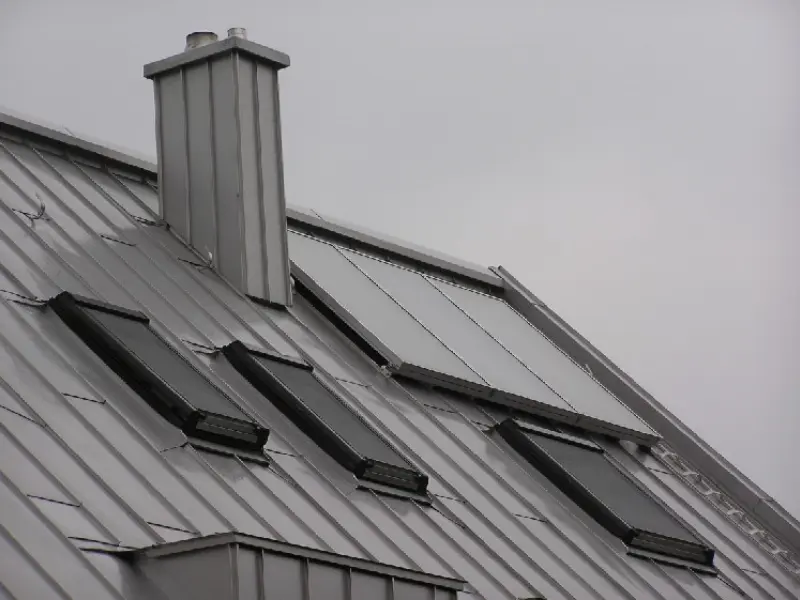
A simple inspection system can cover the main points.
Dimensions
→ Thickness
→ Width
→ Length
Surface
→ Scratches
→ Oil marks
→ Oxidation
→ Embossing quality, if applicable
Material
→ Alloy
→ Temper
→ Mechanical properties
Packing
→ Sheet protection
→ Pallet condition
→ Label information
For larger orders, customers can also agree on inspection requirements before production.
Factory Supply With Flexible Specifications
Our factory can supply 3003 aluminum sheet in different forms and finishes for fabrication, industrial, transportation, construction, and customized projects.
Available options can include:
| Item | Available direction |
|---|---|
| Alloy | 3003 |
| Temper | O / H12 / H14 / H16 / H18 / H24 |
| Thickness | Thin to heavy gauge |
| Width | Standard or custom |
| Length | Custom |
| Surface | Mill / embossed / coated / other |
| Film | Optional |
| Shape | Sheet / coil |
| Slitting | Available for coil |
| Packaging | Export packaging |
Customers can provide their required dimensions, drawings, samples, or production specifications.
From Material Selection to Finished Part
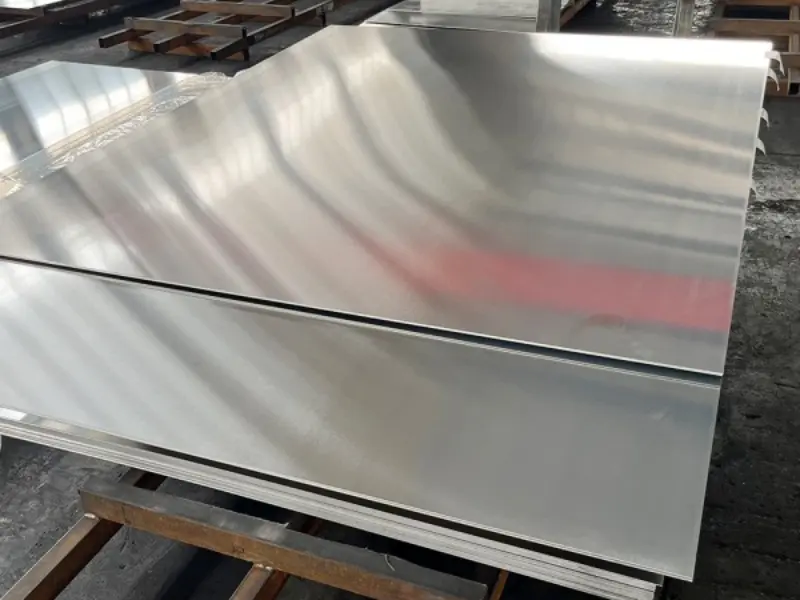
A useful way to understand 3003 aluminum sheet purchasing is to look at the complete chain:
Material Selection
↓
Alloy & Temper
↓
Thickness
↓
Surface
↓
Cutting
↓
Bending / Forming
↓
Assembly
↓
Finished Product
This is why material selection should be made according to the finished part, not simply the raw material price.
Five Questions to Ask Before Ordering
Instead of asking only “What is the price of 3003 aluminum sheet?”, buyers can ask:
→ Is this temper suitable for my forming process?
→ What thickness tolerance can you provide?
→ Can you supply my required width and length?
→ Can you provide mill finish, embossed, or coated options?
→ Can you produce the same specification for repeat orders?
These questions can make supplier comparison much easier.
A More Useful Way to Present 3003 Aluminum Sheet Online
For SEO and customer conversion, you can also add a short “selection path” near the bottom of the page:
Need easy forming?
→ Choose a softer temper.
Need a general-purpose sheet?
→ Consider 3003 H14.
Need higher rigidity?
→ Compare H16 or H18.
Need a textured surface?
→ Consider embossed 3003.
Need continuous production?
→ Choose 3003 aluminum coil.
Need higher strength?
→ Compare 3003 with 5052.
Need custom dimensions?
→ Send the required thickness, width, length, and quantity.
Packaging and Delivery
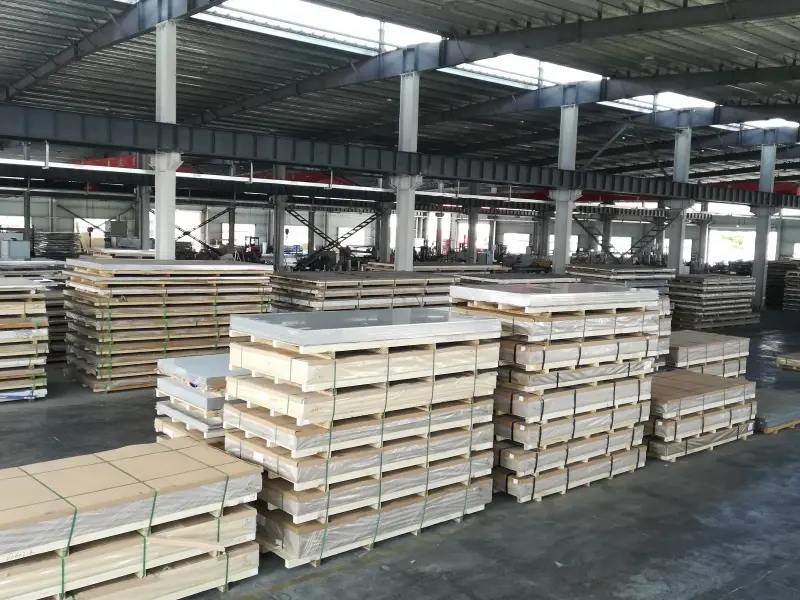
Proper packing keeps the sheet surface free of scratches and moisture damage during transit.
MOQ and lead time depend on thickness, temper, and finish
Interleaved paper or PE film between sheets
Wood pallet or crate packing for export shipments
Coil wrapped with moisture-proof film and edge protection
Frequently Asked Questions
What is 3003 aluminum sheet used for?
It is used for truck bodies, storage tanks, roofing, cookware, HVAC parts, and general sheet metal fabrication, mainly where a balance of strength and cost is needed.
What is the difference between 3003 and 5052 aluminum sheet?
3003 costs less and forms more easily, while 5052 offers higher strength and better resistance to saltwater corrosion.
What thickness does 3003 aluminum sheet come in?
Common thicknesses range from .032 inch up to 1/8 inch and beyond, with .063 inch being a popular mid-range choice.
How much does 3003 aluminum sheet weigh?
Weight depends on thickness. For example, .063-inch sheet weighs about 0.88 lb per square foot, while 1/8-inch sheet weighs about 1.76 lb per square foot.
What is the difference between 3003 H14 and 3003 O temper?
H14 is harder and holds its shape better, while O temper is fully softened and easier to deep-draw or spin without cracking.
Where can I find 3003 aluminum sheet for sale?
Local metal suppliers usually carry standard sizes for quick pickup, while mills offer better pricing on larger custom orders shipped directly.