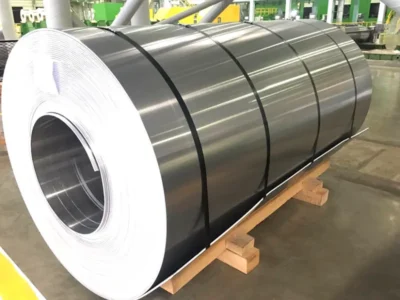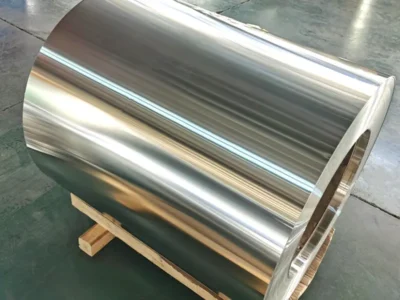
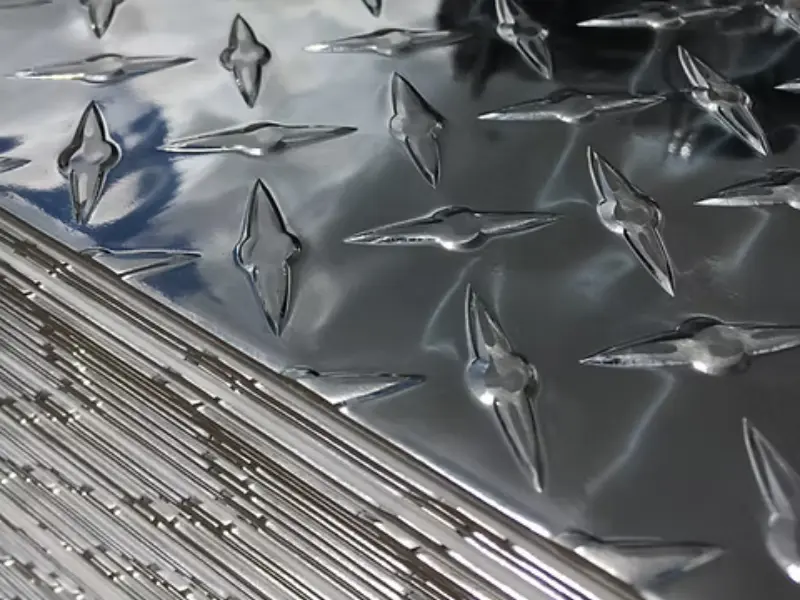
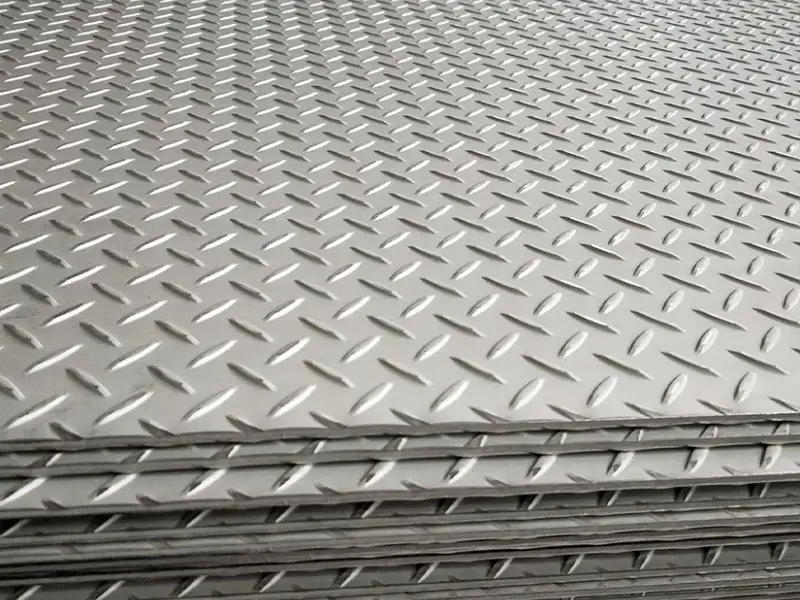
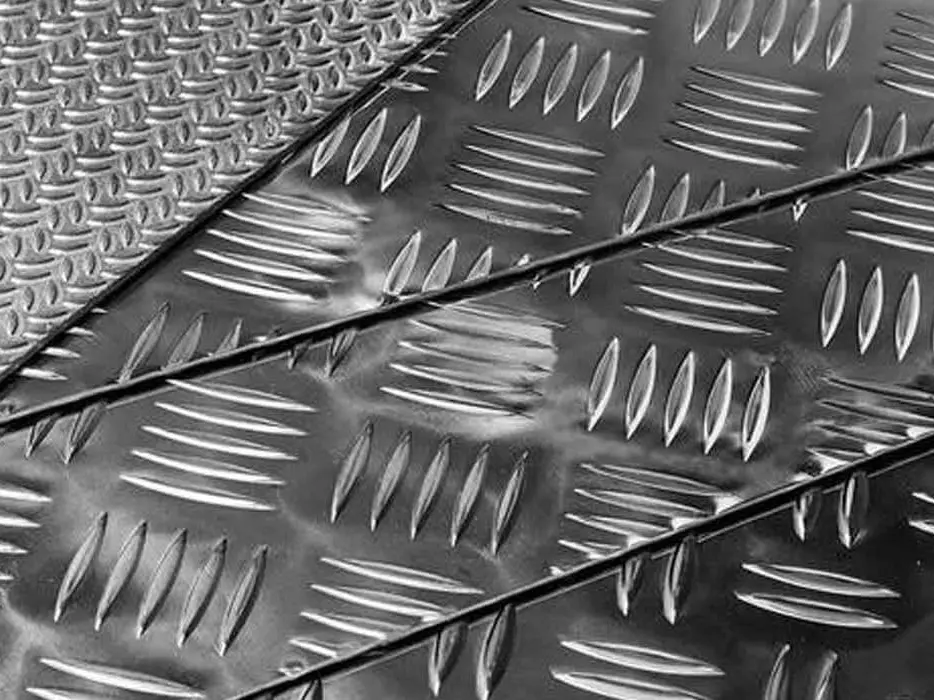
Aluminum Checker Plate is a textured aluminum sheet with a raised pattern on one side. It is also called aluminum tread plate, aluminum diamond plate, or aluminum floor plate.
The raised surface gives the sheet a better grip than a plain aluminum sheet. At the same time, aluminum keeps the material light, easy to cut, and resistant to corrosion.
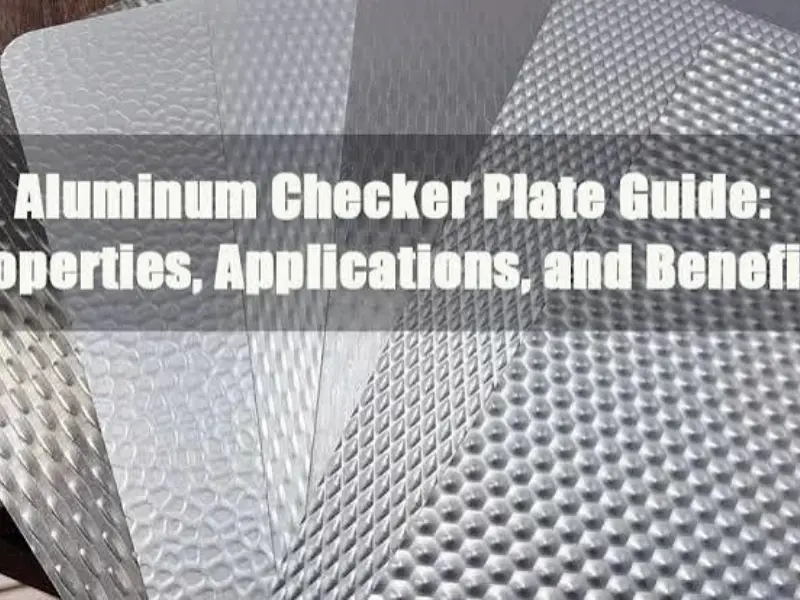

Because of these features, Aluminum Checker Plate is widely used for floors, steps, ramps, trailers, truck bodies, platforms, walkways, workshops, and decorative projects.
Different projects need different aluminum grades, thicknesses, patterns, and tempers. Choosing the right specification is important for strength, weight, forming, and service life.
| Standard | ASTM B209 / EN 485 / GB/T 3880 |
| Packaging | Export seaworthy wooden case or pallet |
| MOQ | 3 Metric Tons |
| Lead Time | 15 – 25 days after deposit |
Specifications are typical ranges. Actual dimensions, mechanical properties and pattern height depend on the selected alloy, temper and production process.
Common Aluminum Checker Plate Types
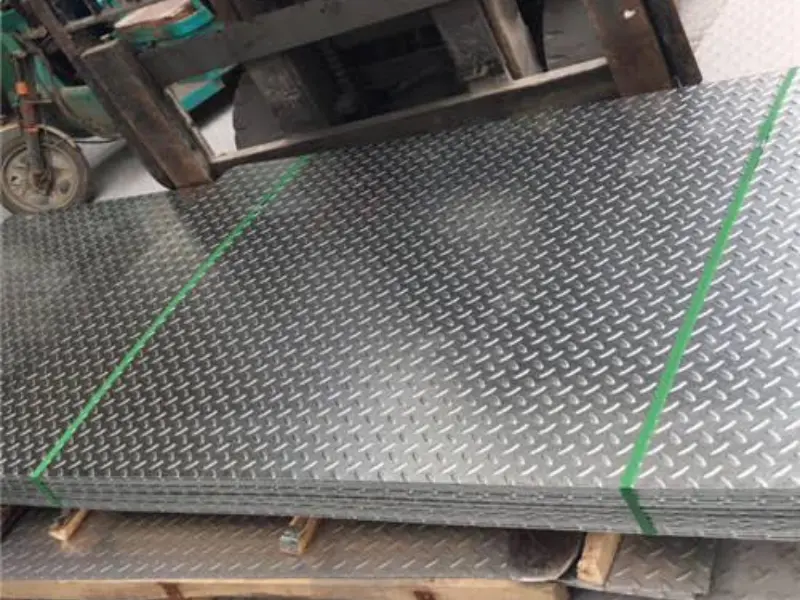
| Type | Alloy | Main Features |
|---|---|---|
| 1050 Checker Plate | 1050 | Good formability and corrosion resistance |
| 3003 Checker Plate | 3003 | Good balance of strength and formability |
| 5052 Checker Plate | 5052 | Higher strength and excellent corrosion resistance |
| 6061 Checker Plate | 6061 | High strength for structural and industrial uses |
| 1 Bar Checker Plate | 3003 / 5052 | Single raised-bar pattern |
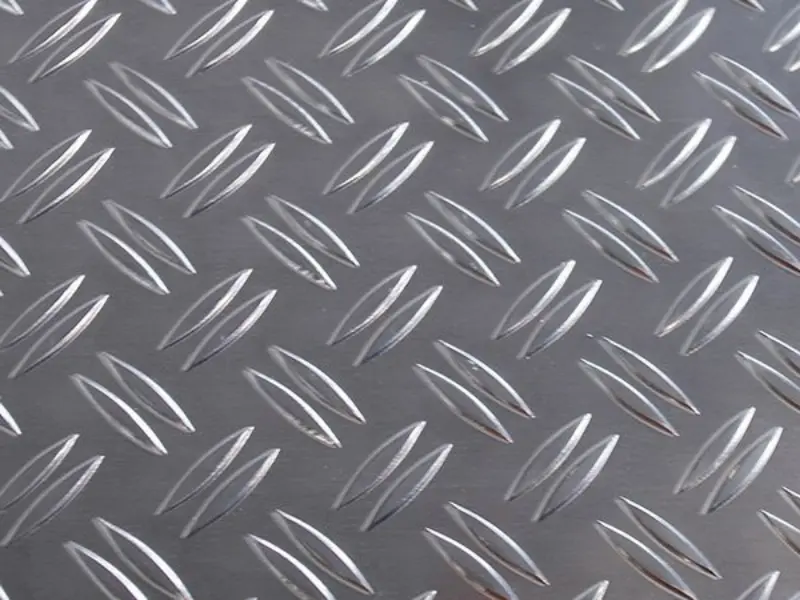
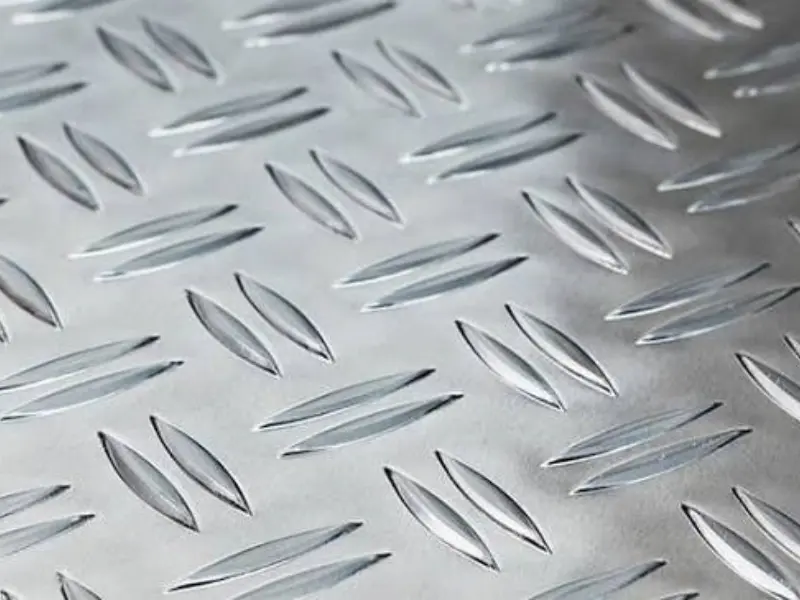
| 2 Bar Checker Plate | 3003 / 5052 | Repeated two-bar pattern |
| 3 Bar Checker Plate | 3003 / 5052 | Textured surface for flooring |
| 5 Bar Checker Plate | 3003 / 5052 | Common choice for vehicle floors and platforms |
| Diamond Checker Plate | 1050 / 3003 / 5052 | Raised diamond-shaped pattern |
| Bright Checker Plate | 1050 / 3003 | Decorative metallic appearance |
Aluminum Checker Plate Alloy Comparison
| Alloy | Main Characteristics | Recommended Uses |
|---|---|---|
| 1050 | High aluminum purity and good formability | Decorative panels and light-duty applications |
| 3003 | Good formability and corrosion resistance | General flooring and transportation |
| 5052 | Higher strength and excellent marine corrosion resistance | Marine, vehicle and industrial applications |
| 6061 | High strength and good machinability | Structural platforms and heavy-duty equipment |
For general-purpose checker plate, 3003 is a practical option. For marine environments or applications requiring higher strength, 5052 may be more suitable. Alloy selection should consider load, forming requirements and operating conditions.
Aluminum Checker Plate Thickness Guide
| Thickness | Typical Applications |
|---|---|
| 1.0 – 1.5 mm | Decorative panels and light-duty covers |
| 1.5 – 2.5 mm | Vehicle interiors and general protective panels |
| 2.5 – 4.0 mm | Stair treads, ramps and industrial flooring |
| 4.0 – 6.0 mm | Truck floors and heavy-duty platforms |
| 6.0 – 8.0 mm | Industrial platforms and demanding applications |
The required thickness depends on the applied load, support spacing, panel dimensions and installation method. The raised pattern height should also be considered when specifying the sheet.
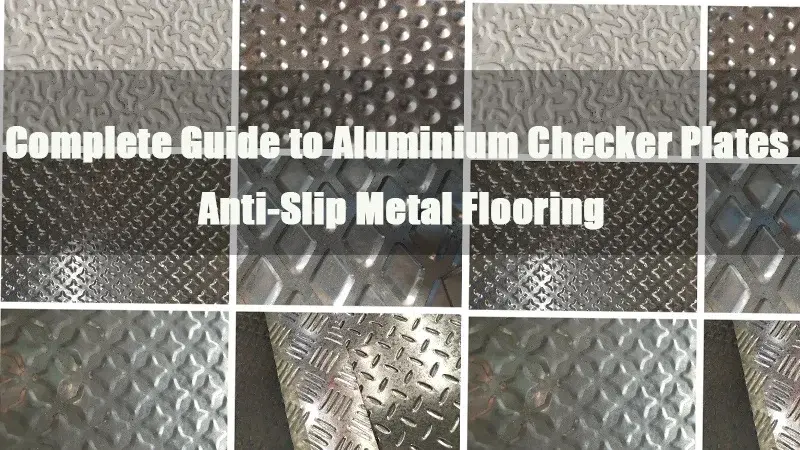
Aluminum Checker Plate Pattern Options
1 Bar → 2 Bar → 3 Bar → 5 Bar → Diamond
Different patterns offer different appearances and surface textures. The 5-bar and diamond patterns are common choices for vehicle floors, walkways and industrial platforms.

When choosing a pattern, consider:
- Required slip resistance
- Foot traffic and equipment movement
- Cleaning and maintenance
- Sheet thickness and pattern height
- Indoor or outdoor use
- Appearance requirements
A raised pattern can improve traction, but it does not guarantee a slip-proof surface. Oil, water, grease and installation conditions can still affect safety.
Aluminum Checker Plate Production Process
Aluminum Slab → Hot Rolling → Cold Rolling → Pattern Rolling → Leveling → Cutting → Inspection → Packing
The pattern is formed during rolling. The finished sheet is then leveled and cut to the required dimensions. Quality inspection may include thickness measurement, width and length checks, surface inspection and mechanical testing where required.
What Is Aluminum Checker Plate?
Aluminum Checker Plate is made from an aluminum sheet with a raised pattern rolled or formed onto the surface.
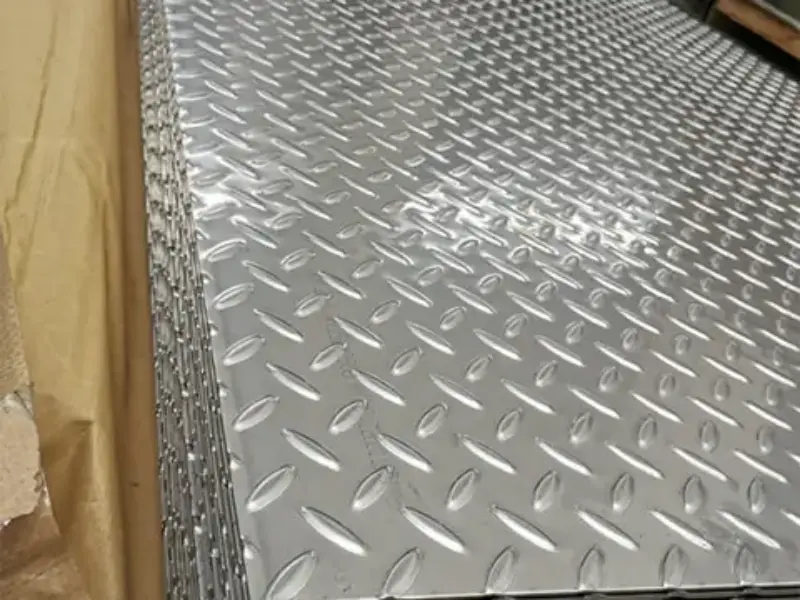
The pattern can be produced in different designs. The most common option is a diamond or one-bar pattern.
The raised surface can help reduce slipping in many dry or wet working environments. It also gives the sheet a strong industrial appearance.
A typical structure looks like this:
Aluminum Coil → Rolling → Pattern Forming → Leveling → Cutting → Inspection → Packing
The material can be supplied as a full sheet, cut-to-size sheet, or coil depending on the production method and application.
| Item | Typical Option |
|---|---|
| Product | Aluminum Checker Plate |
| Other names | Aluminum Tread Plate, Aluminum Diamond Plate |
| Thickness | 1.0–8.0 mm |
| Width | 1000–2000 mm |
| Length | 2000–6000 mm |
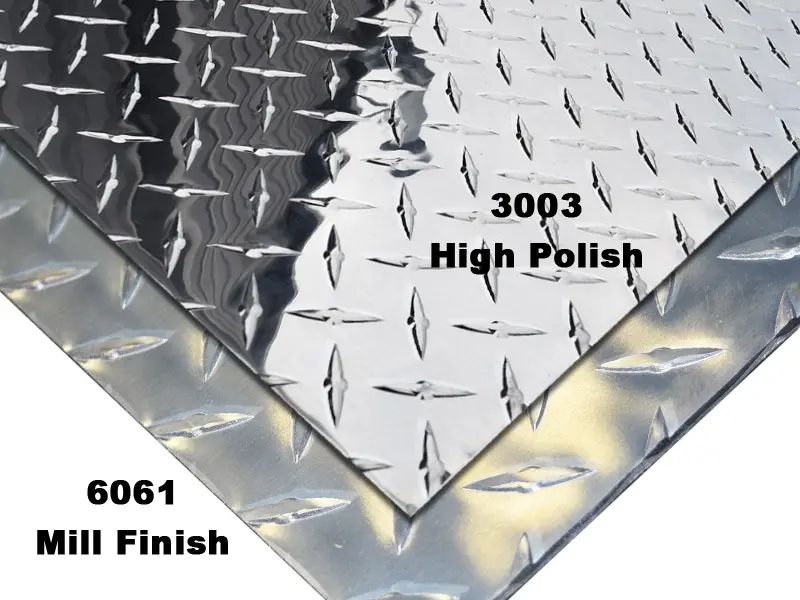
| Common alloys | 3003, 5052, 5083, 6061 |
| Temper | O, H12, H14, H16, H18, H32, H34, T6 |
| Surface | Mill finish, anodized, painted |
| Pattern | Diamond, one-bar, five-bar |
Popular Aluminum Checker Plate Types
Not every checker plate is the same. Buyers often choose the product by thickness, alloy, pattern, and sheet size.
Below are several common product types.
1.5mm Aluminum Checker Plate

A 1.5mm checker plate is relatively light. It is useful when the project needs a textured aluminum surface but does not require a heavy structural plate.
It is often used for wall protection, equipment covers, decorative panels, and light-duty applications.
2mm Aluminum Checker Plate
2mm aluminum checker plate offers a better balance between weight and rigidity.
It can be used for truck interiors, tool boxes, wall panels, steps, and general fabrication.
3mm Aluminum Checker Plate
3mm is a popular thickness for industrial applications.
It provides more rigidity than 1.5mm or 2mm sheet while still keeping the weight lower than many steel alternatives.
Common uses include platforms, ramps, vehicle panels, stairs, and workshop flooring.
4mm Aluminum Checker Plate
4mm aluminum checker plate is suitable for applications that need more mechanical strength.
It is commonly considered for heavy-duty flooring, ramps, truck bodies, machine areas, and industrial platforms.
5mm Aluminum Checker Plate
5mm plate provides a stronger and more rigid surface.
It is useful for heavy-duty platforms, vehicle flooring, industrial walkways, and loading areas.
6mm Aluminum Checker Plate
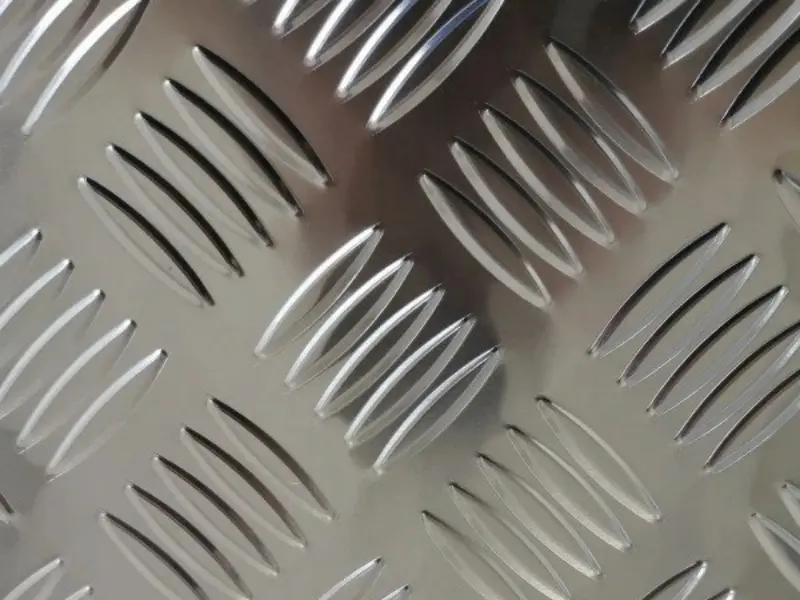
6mm aluminum checker plate is a thicker option for demanding applications.
It is often selected when load capacity and rigidity are more important than minimum weight.
| Thickness | Typical Use |
|---|---|
| 1.0–1.5 mm | Covers, walls, decoration |
| 2.0 mm | Panels, tool boxes, light flooring |
| 3.0 mm | Ramps, steps, truck panels |
| 4.0 mm | Platforms, industrial flooring |
| 5.0 mm | Heavy-duty flooring |
| 6.0 mm | High-load platforms |
| 8.0 mm | Heavy industrial applications |
Aluminum Checker Plate 4×8
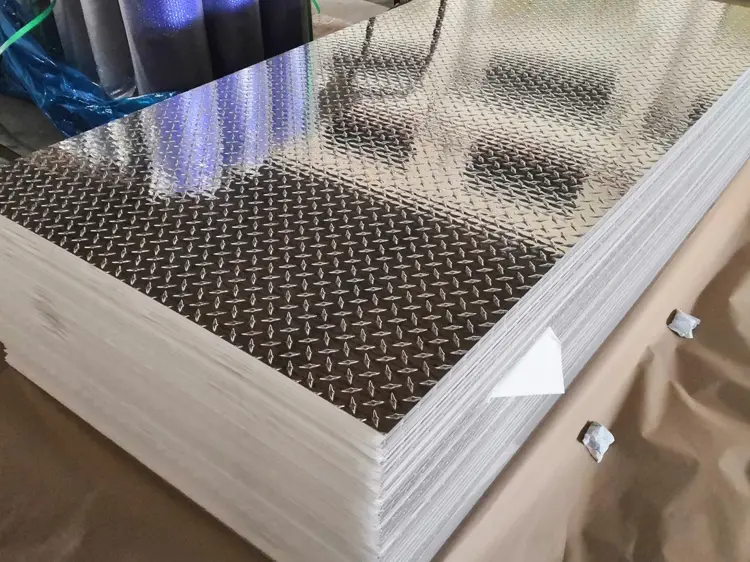
The 4×8 aluminum checker plate is one of the most familiar sheet sizes.
A standard 4×8 sheet is approximately:
4 ft × 8 ft = 1219 × 2438 mm
Actual dimensions can vary slightly according to the supplier and production standard.
The 4×8 format is convenient for truck bodies, trailers, stairs, ramps, flooring, and fabrication projects.
| Size | Approximate Metric Size |
|---|---|
| 4×8 ft | 1219 × 2438 mm |
| 4×10 ft | 1219 × 3048 mm |
| 5×10 ft | 1524 × 3048 mm |
| 1500×3000 mm | 1.5 × 3 m |
| 1500×6000 mm | 1.5 × 6 m |
Custom dimensions can also be produced for larger projects.
3003 Aluminum Checker Plate
3003 is one of the commonly used aluminum alloys for checker plate.
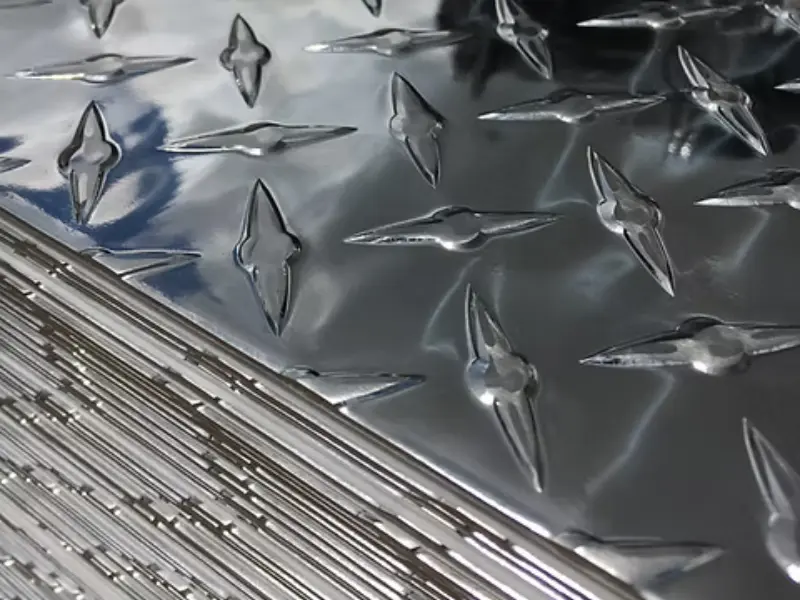
It contains manganese as the main alloying element. It offers a useful balance between formability, corrosion resistance, and strength.
3003 checker plate is suitable for many general-purpose applications.
Typical uses include:
- Truck and trailer panels
- Flooring
- Steps
- Wall protection
- Equipment covers
- Tool boxes
- General fabrication
For buyers looking for a versatile aluminum tread plate, 3003 can be a practical option.
5052 Aluminum Checker Plate
5052 aluminum checker plate is often selected when higher strength is needed.
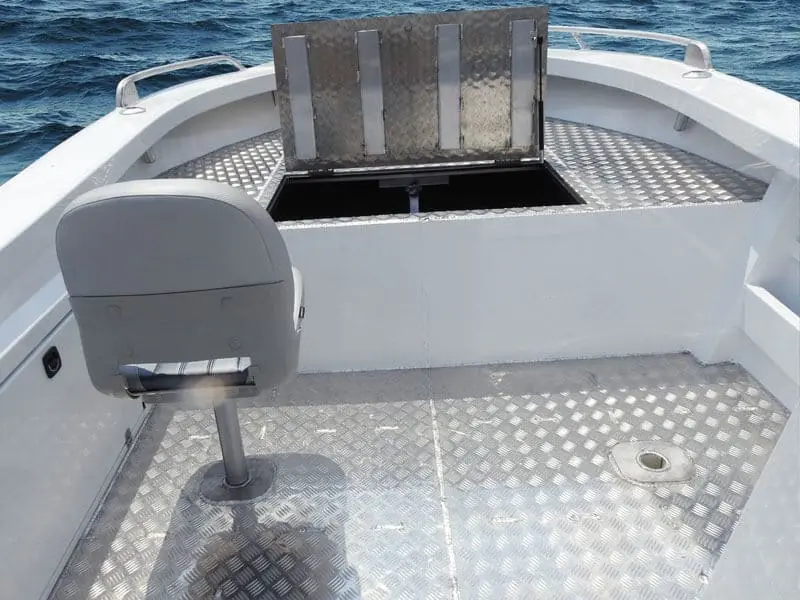
It contains magnesium and has good corrosion resistance. It is also commonly used in marine and transportation-related applications.
Typical applications include:
- Vehicle flooring
- Boat decks
- Marine equipment
- Industrial platforms
- Ramps
- Truck bodies
- Outdoor structures
The final performance still depends on thickness, temper, design, and loading conditions.
5083 Aluminum Checker Plate
5083 is known for its high strength and good corrosion resistance.
It is widely used in marine and industrial applications.
5083 checker plate can be considered for:
- Marine decks
- Offshore equipment
- Heavy-duty platforms
- Industrial flooring
- Transportation equipment
- Structural fabrication
It is normally chosen when the application requires more strength than a general-purpose alloy.
6061 Aluminum Checker Plate
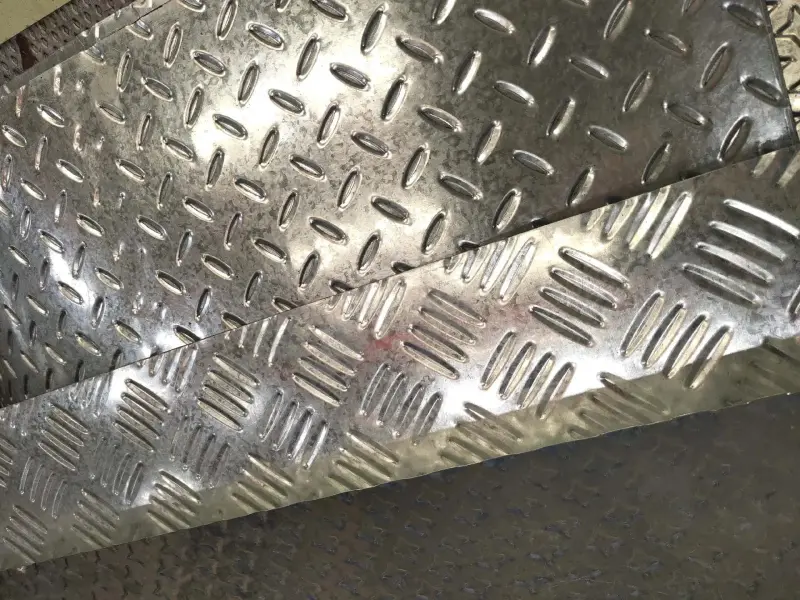
6061 aluminum is a heat-treatable alloy.
It offers higher strength than many common non-heat-treatable aluminum grades. 6061-T6 is a familiar condition in structural aluminum products.
6061 checker plate may be used for platforms, vehicle components, machinery areas, and structural fabrication.
However, it is important to consider the forming and welding requirements before selecting 6061.
| Alloy | General Character | Common Applications |
|---|---|---|
| 3003 | Good balance | General flooring, panels |
| 5052 | Higher strength and corrosion resistance | Marine, vehicles, ramps |
| 5083 | High strength | Marine, heavy-duty use |
| 6061 | Heat-treatable, higher strength | Structural fabrication |


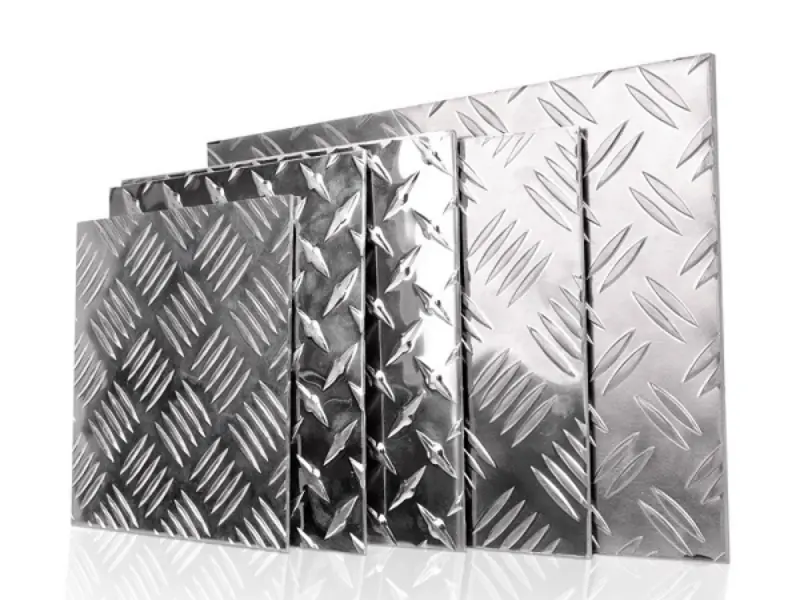
Aluminum Checker Plate Temper Options
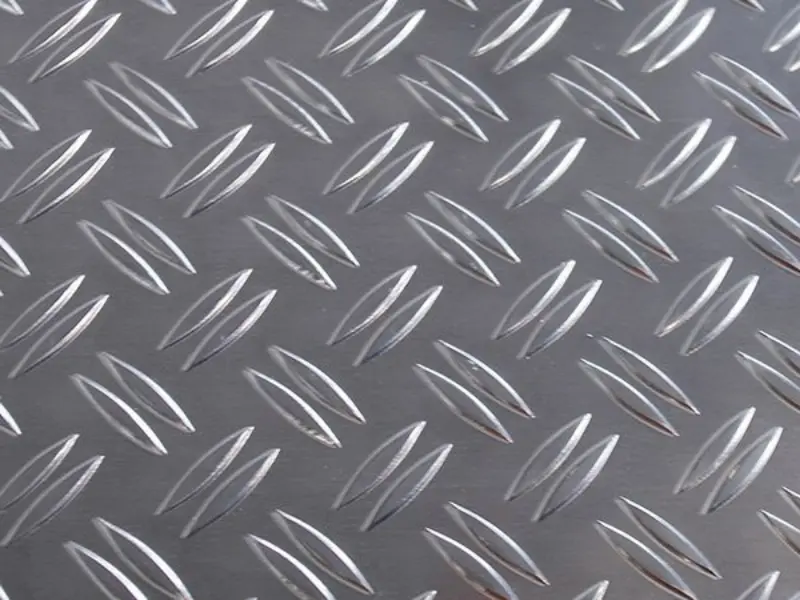
Alloy alone does not describe the complete material.
Temper also affects strength and forming behavior.
Common conditions include O, H12, H14, H16, H18, H32, H34, and T6.
O Temper
O means annealed condition.
It provides high formability and is useful when the sheet needs to be shaped or formed.
H Temper
H tempers are strain-hardened conditions.
They generally provide higher strength than O temper.
T6 Temper
T6 is commonly associated with heat-treated 6061 aluminum.
It offers high strength, but forming behavior is different from softer O temper material.
| Temper | General Feature |
|---|---|
| O | Soft, highly formable |
| H12 | Low-to-moderate strength |
| H14 | Medium strength |
| H16 | Higher strength |
| H18 | High strength |
| H32 | Stabilized, medium strength |
| H34 | Higher strength |
| T6 | Heat-treated high-strength condition |
The exact available temper depends on the alloy and production route.
One-Bar vs Five-Bar Aluminum Checker Plate
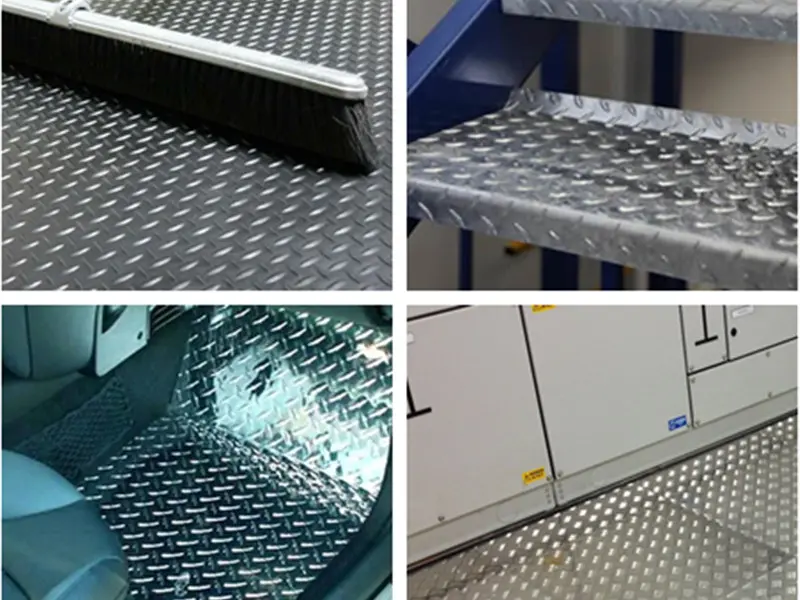
Pattern design is another important choice.
A one-bar pattern has a repeated raised bar design. A five-bar pattern uses a more complex repeated pattern.
Both can provide a textured surface.
| Pattern | Appearance | Typical Use |
|---|---|---|
| One-bar | Simple repeated pattern | Flooring, decoration |
| Five-bar | Repeated group pattern | Industrial flooring |
| Diamond | Classic raised diamond | Trailers, ramps |
| Custom pattern | Special design | Decorative or special projects |
The pattern height and spacing can also affect appearance and surface performance.
Aluminum Checker Plate vs Plain Aluminum Sheet
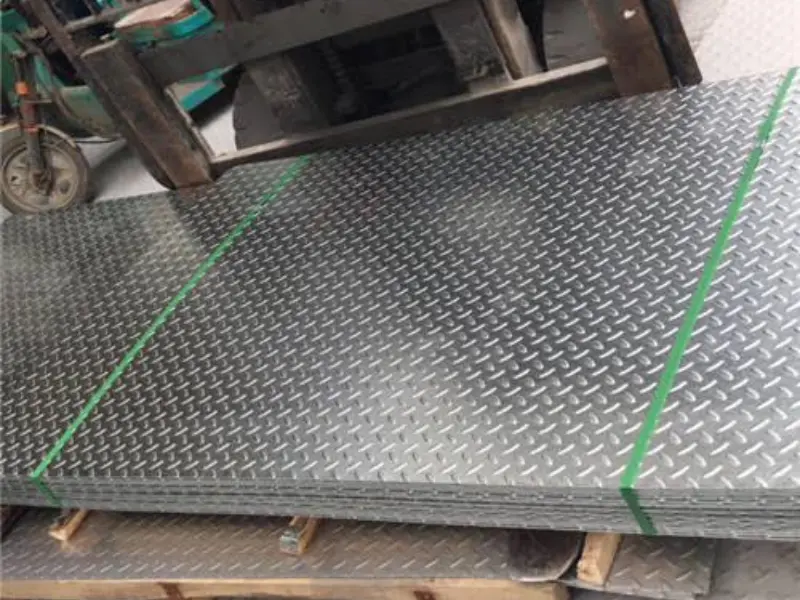
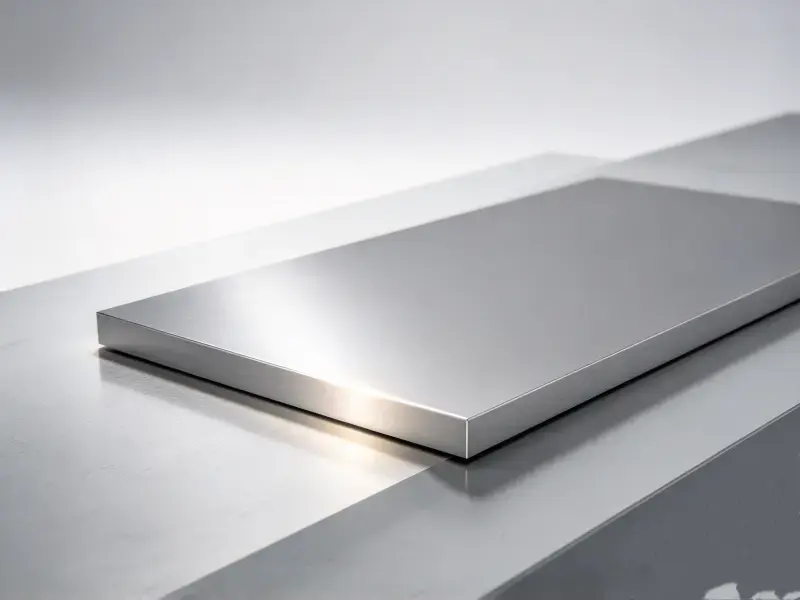
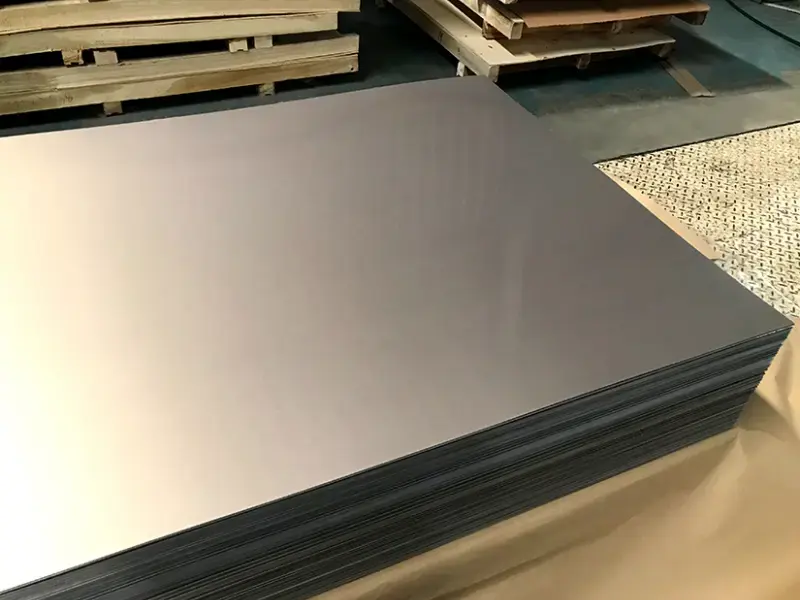
Checker plate and plain sheet serve different purposes.
Plain aluminum sheet has a flat surface. Checker plate has a raised texture.
| Feature | Checker Plate | Plain Sheet |
|---|---|---|
| Surface | Raised pattern | Flat |
| Grip | Better textured surface | Smooth |
| Appearance | Industrial | Clean and simple |
| Flooring | Common | Less common |
| Decoration | Possible | Very common |
| Cleaning | Pattern can hold dirt | Easier |
| Weight | Pattern adds some material | Lower for same base thickness |
If the project needs a textured surface, checker plate can be a useful choice.
If a smooth surface is more important, plain aluminum sheet may be more suitable.
Aluminum Checker Plate vs Steel Checker Plate
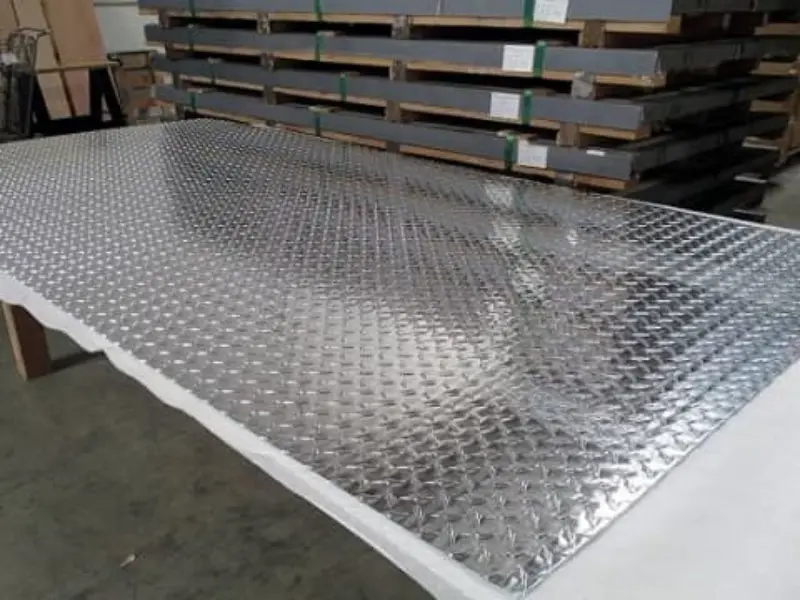

Steel checker plate is strong and widely used in industrial flooring.
Aluminum checker plate has a major advantage in weight.
For the same volume, aluminum is much lighter than steel.
| Feature | Aluminum | Steel |
|---|---|---|
| Weight | Lower | Higher |
| Corrosion resistance | Generally good | Often needs protection |
| Handling | Easier | Heavier |
| Welding | Requires suitable process | Widely used |
| Transportation | Lower material weight | Higher weight |
| Marine use | Common | Requires corrosion protection |
The correct material depends on load, environment, budget, fabrication method, and weight requirements.
Aluminum Checker Plate for Trailers
Trailer manufacturers often use aluminum checker plate for floors, side panels, tool boxes, steps, and protective areas.
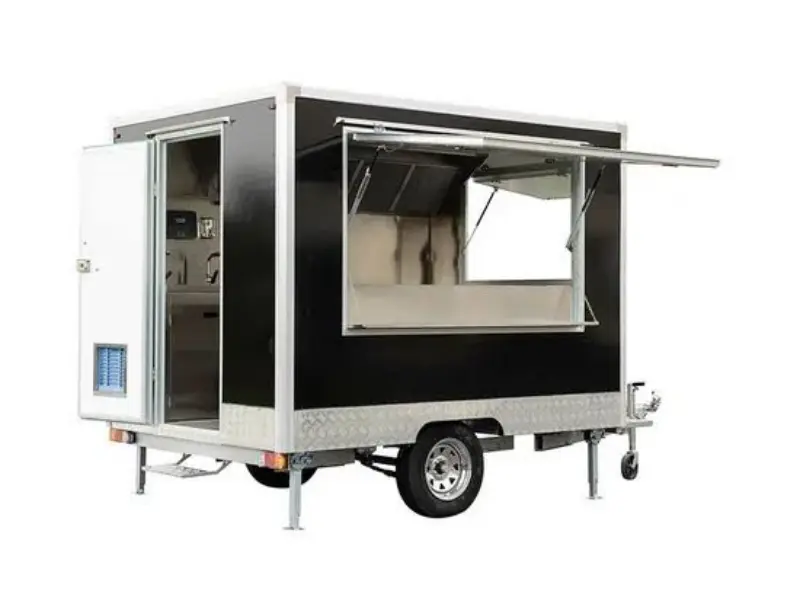
A textured surface can provide a practical working surface.
Common specifications include:
2mm → 3mm → 4mm → 5mm
For trailer flooring, buyers should consider:
Trailer Type → Load → Span → Support Distance → Plate Thickness → Alloy → Temper
The correct thickness should be selected based on the actual load and support structure rather than thickness alone.
Aluminum Checker Plate for Truck Bodies
Truck bodies require materials that balance strength and weight.
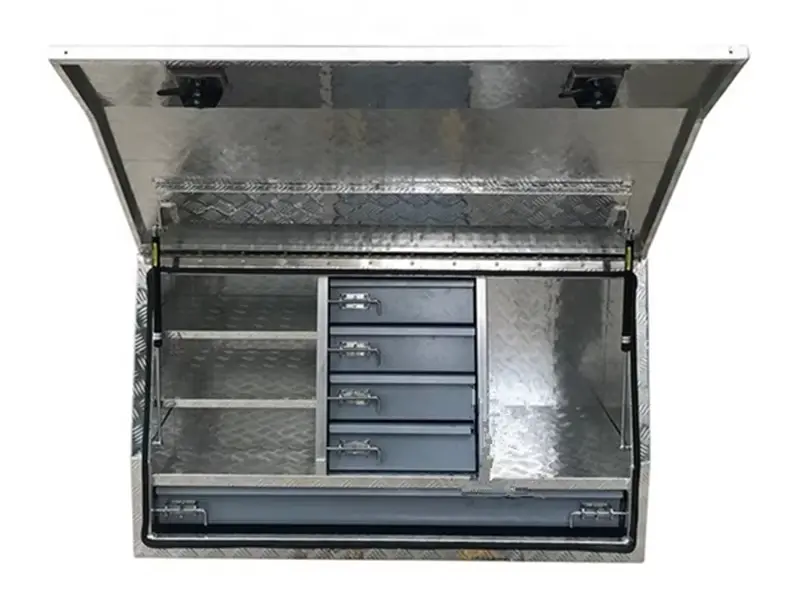
Aluminum checker plate can be used on truck floors, side panels, wheel areas, steps, and storage sections.
Popular choices include 3003 and 5052.
A lighter sheet can help reduce material weight. A thicker sheet can provide greater rigidity.
The final specification should consider the truck structure and expected load.
Aluminum Checker Plate for Ramps
Ramps need a surface that provides good traction.
Checker plate is therefore commonly used for:
- Loading ramps
- Vehicle ramps
- Workshop ramps
- Warehouse ramps
- Access platforms
- Equipment ramps
Thickness should be selected according to ramp length, support spacing, load, and design.
For heavy equipment, a thicker plate may be required.
Aluminum Checker Plate for Stairs and Steps
Checker plate can also be used for steps.
It provides an industrial appearance and a textured surface.
Applications include:
- Industrial stairs
- Trailer steps
- Truck steps
- Machine platforms
- Outdoor stairs
- Maintenance platforms
The plate can be cut and fabricated into stair treads according to the project design.
Aluminum Checker Plate for Industrial Flooring
Industrial floors often need durable and easy-to-fabricate materials.
Aluminum checker plate can be used in areas where weight and corrosion resistance are important.
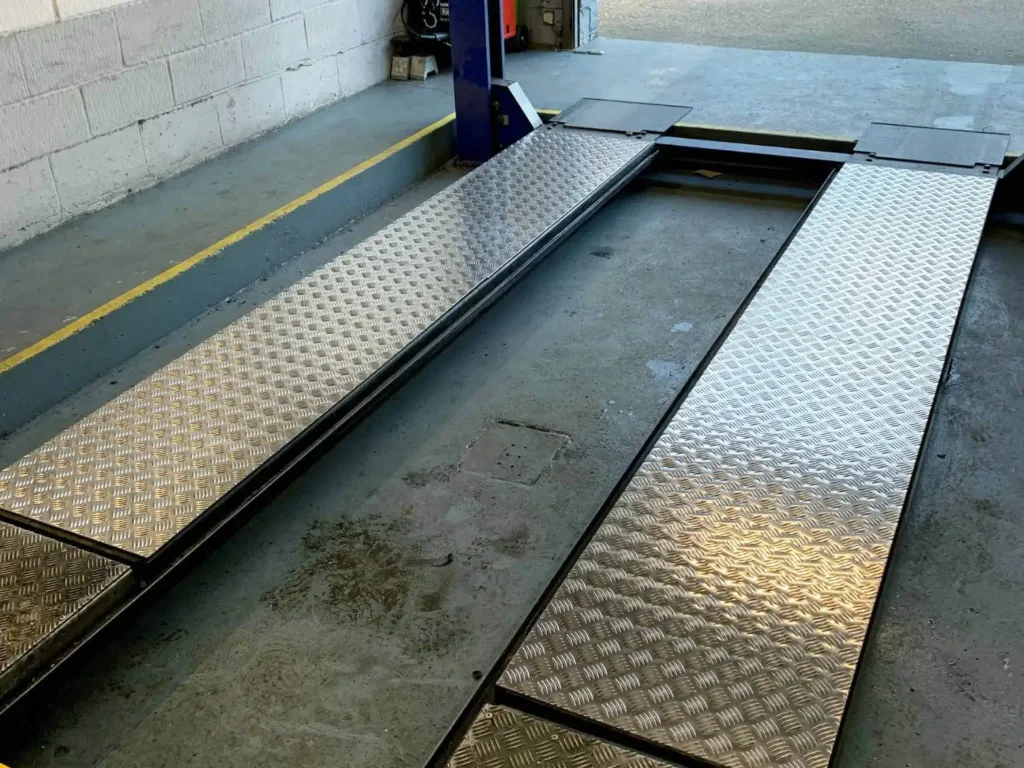
Typical locations include:
- Factory platforms
- Maintenance walkways
- Equipment areas
- Machine rooms
- Storage platforms
- Access walkways
- Processing equipment
For large flooring projects, thickness, support spacing, and fixing method should be confirmed before ordering.
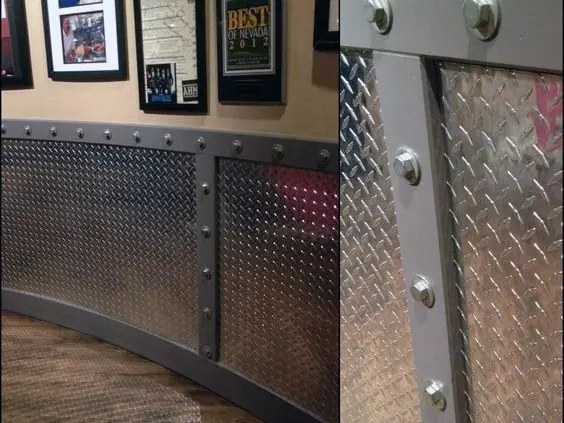
Decorative Uses of Aluminum Checker Plate
Checker plate is not limited to industrial applications.
Its repeated pattern can create a strong technical appearance.
It can be used for:
- Interior wall panels
- Retail displays
- Garage walls
- Workshop decoration
- Vehicle interiors
- Counter panels
- Equipment covers
- Architectural details
For decorative applications, surface finish and pattern appearance can be more important than maximum strength.
Surface Finishes for Aluminum Checker Plate
Mill finish is the standard option.
Other finishes may be available depending on the alloy, pattern, and production process.
| Finish | Main Feature |
|---|---|
| Mill finish | Natural aluminum appearance |
| Anodized | Controlled surface appearance |
| Powder coated | Wide range of colors |
| Painted | Decorative and protective |
| Brushed | Decorative linear texture |
Not every coating is suitable for every checker pattern. Buyers should confirm the available finish before placing a large order.
Common Aluminum Checker Plate Sizes


Different projects require different dimensions.
Standard sizes can help reduce cutting waste.
| Width | Length |
|---|---|
| 1000 mm | 2000 mm |
| 1220 mm | 2440 mm |
| 1250 mm | 2500 mm |
| 1500 mm | 3000 mm |
| 1500 mm | 4000 mm |
| 1500 mm | 6000 mm |
| 2000 mm | 4000 mm |
| 2000 mm | 6000 mm |
Custom cutting is also possible.
For example:
Standard Sheet → CNC Cutting → Cut-to-Size Panels → Finished Components
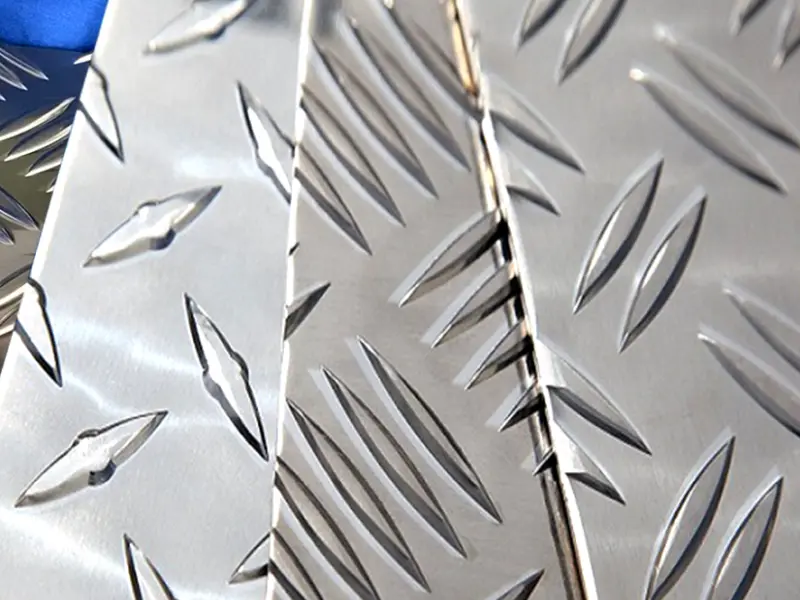
Aluminum Checker Plate Cutting
Checker plate can be processed using several cutting methods.
The method depends on thickness, quantity, tolerance, and final shape.
Common methods include:
- Shearing
- Saw cutting
- Laser cutting
- CNC cutting
- Waterjet cutting
- Punching
For simple rectangular pieces, shearing can be efficient.
For complex shapes, CNC or waterjet cutting may be considered.
Welding and Fabrication
Aluminum checker plate can be fabricated into many products.
Common operations include:
Cutting → Bending → Drilling → Welding → Assembly
The welding process should match the alloy and temper.
Heat from welding can also affect the local material properties. This is important for structural applications.
For fabricated products, buyers should provide drawings or detailed dimensions whenever possible.
What Thickness Should You Choose?
Thickness should not be selected only by appearance.
The correct thickness depends on:
Load + Support Distance + Plate Size + Alloy + Application
A 2mm sheet may work well for a wall panel.
A 5mm or 6mm sheet may be considered for a heavy-duty platform.
For a trailer floor, the correct choice depends on the trailer structure and load.
| Application | Common Thickness Range |
|---|---|
| Decorative panel | 1.0–2.0 mm |
| Wall protection | 1.5–3.0 mm |
| Tool box | 2.0–3.0 mm |
| Trailer panel | 2.0–4.0 mm |
| Steps | 3.0–5.0 mm |
| Ramps | 4.0–8.0 mm |
| Heavy platform | 5.0–8.0 mm |
These are general ranges. Engineering requirements should be checked for load-bearing applications.
How to Choose the Right Aluminum Checker Plate
A simple purchasing flow can make product selection easier.
Application → Load → Alloy → Temper → Thickness → Size → Pattern → Finish → Quantity
For example:
Trailer Floor → Medium Load → 5052 → H32 → 3mm → 4×8 ft → Diamond → Mill Finish
Another example:
Marine Platform → High Load → 5083 → Suitable Temper → 6mm → Custom Size → Checker Pattern
This information allows the supplier to recommend a more suitable product.
What Affects Aluminum Checker Plate Price?

The price is not based on thickness alone.
Several factors affect the final quotation.
| Cost Factor | Effect |
|---|---|
| Aluminum alloy | Different grades have different costs |
| Thickness | More material increases weight |
| Sheet size | Larger sheets use more aluminum |
| Temper | Production route can affect cost |
| Pattern | Pattern production affects processing |
| Surface finish | Coating or anodizing adds processing |
| Cutting | Custom cutting adds labor |
| Quantity | Larger orders may reduce unit cost |
| Packaging | Export packaging affects total cost |
| Freight | Weight and volume affect shipping |
For an accurate quote, buyers should provide the required specification.
Quality Control
A reliable checker plate should have consistent dimensions and a stable surface pattern.
Quality checks may include:
- Thickness measurement
- Width measurement
- Length measurement
- Alloy verification
- Temper verification
- Pattern inspection
- Flatness inspection
- Surface inspection
- Edge inspection
- Quantity checking
- Packing inspection
For export orders, inspection records and material certificates can be provided when required.
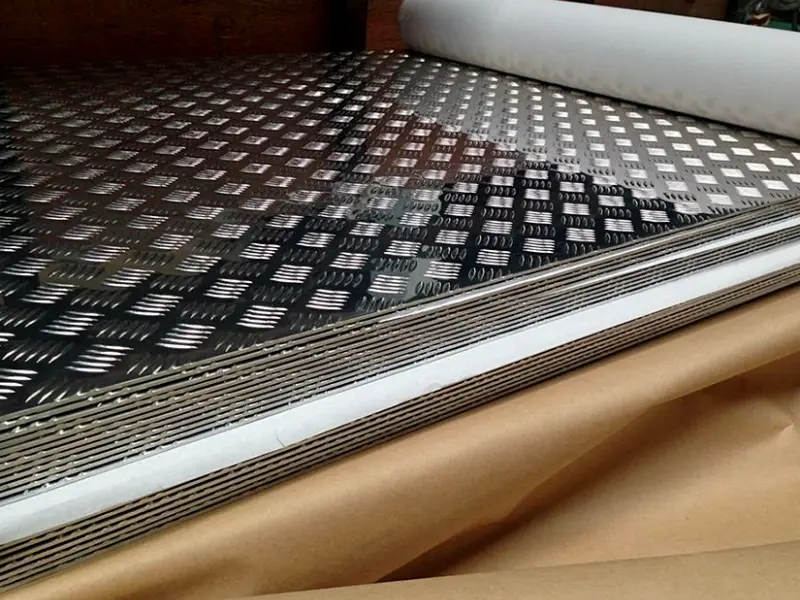
Aluminum Checker Plate Packaging
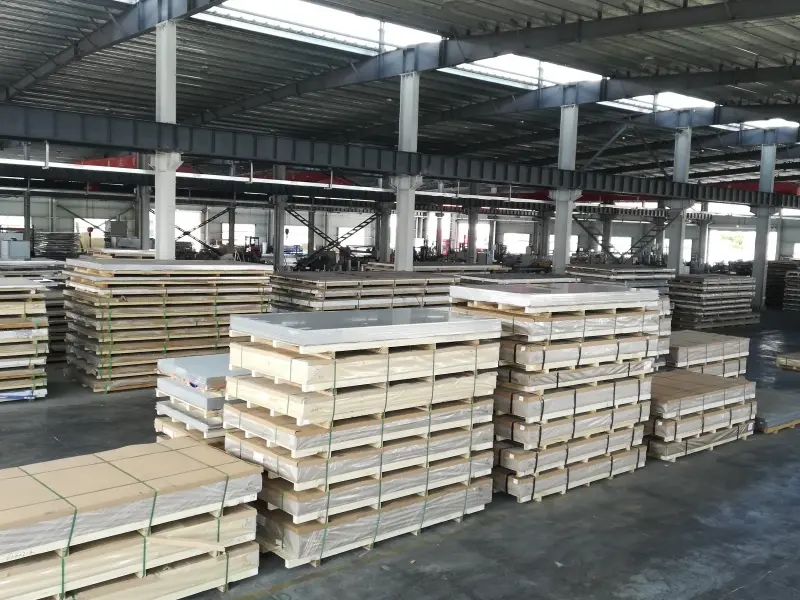
Aluminum sheets can be packed according to transportation conditions.
Common export packaging includes:
Sheet → Protective Film or Paper → Edge Protection → Wooden Pallet → Waterproof Packing → Container Loading
For long-distance shipping, moisture protection is important.
The package should also protect the patterned surface from scratching and impact.
Why Buy Aluminum Checker Plate in Bulk?
For distributors and fabricators, buying in bulk can simplify supply.
A regular supplier can help maintain consistent:
- Alloy
- Temper
- Thickness
- Pattern
- Sheet size
- Surface quality
- Packaging
This is especially useful when the same product is used for multiple projects.
Custom Aluminum Checker Plate
Custom orders can be made for different project requirements.
Common customization includes:
- Custom thickness
- Custom width
- Custom length
- Cut-to-size sheets
- Custom alloy
- Custom temper
- Special pattern
- Surface coating
- Protective film
- Special packaging
For a custom quotation, provide:
Alloy + Temper + Thickness + Width + Length + Pattern + Quantity + Application
For example:
5052-H32 + 4mm + 1500mm × 3000mm + Diamond Pattern + 500 Sheets
This gives the supplier enough information to prepare a quotation.
Aluminum Checker Plate for Different Industries
Transportation
Transportation applications often focus on low weight and durability.
- Truck bodies
- Trailers
- Vehicle floors
- Steps
- Tool boxes
- Loading ramps
- Service vehicles
Construction
Construction projects use checker plate for practical access and protection.
Protective panels
Stairs
Walkways
Platforms
Ramps
Machine areas
Marine
Marine applications require attention to corrosion resistance and alloy selection.
- Boat decks
- Marine platforms
- Walkways
- Equipment covers
- Access areas
5052 and 5083 are common alloy options for marine-related applications.
Industrial
Industrial users may require thicker material and custom cutting.
Industrial stairs
Factory platforms
Machine floors
Maintenance walkways
Equipment bases
Storage platforms
Aluminum Checker Plate or Diamond Plate?
These names are often used for similar products.
“Aluminum checker plate” is common in many markets.
“Aluminum diamond plate” usually refers to a raised diamond pattern.
“Aluminum tread plate” is another widely used term.
| Search Term | Common Meaning |
|---|---|
| Aluminum Checker Plate | Textured aluminum plate |
| Aluminum Diamond Plate | Usually diamond-pattern plate |
| Aluminum Tread Plate | Raised-pattern aluminum sheet |
| Aluminum Floor Plate | Often used for flooring applications |
The exact pattern should always be confirmed before purchase.
Aluminum Checker Plate Buying Checklist
Before sending an inquiry, prepare the following information:
- Product name
- Alloy
- Temper
- Thickness
- Width
- Length
- Pattern
- Surface finish
- Quantity
- Cutting requirements
- Application
- Destination port
A clear inquiry can reduce quotation time.
Specification → Quotation → Sample → Production → Inspection → Packing → Shipment
FAQ
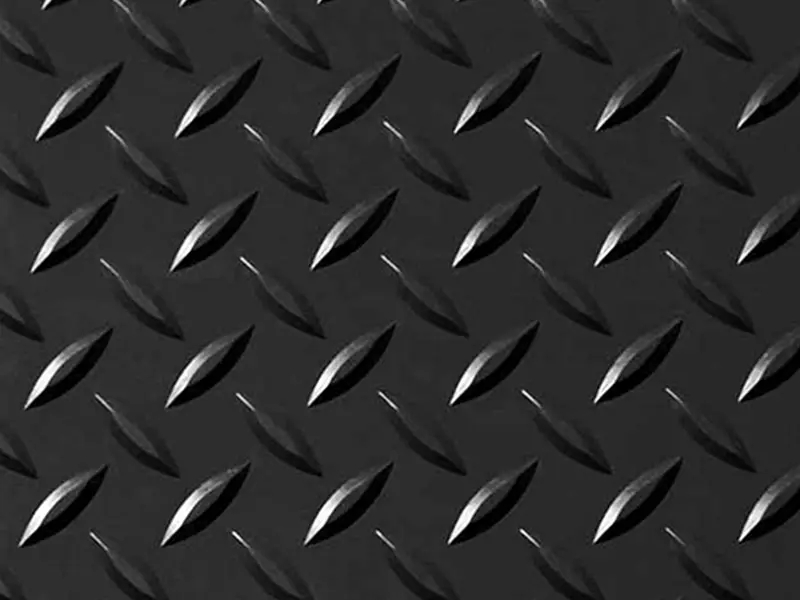
Is aluminum checker plate the same as diamond plate?
They can refer to similar products. Diamond plate usually describes a raised diamond pattern. Checker plate and tread plate are broader terms and can include different raised patterns.
What is the most common aluminum checker plate thickness?
Common thicknesses include 2mm, 3mm, 4mm, 5mm, and 6mm. The best thickness depends on the application and load.
What aluminum alloy is used for checker plate?
3003, 5052, 5083, and 6061 are common options. Alloy selection depends on strength, corrosion resistance, forming, and application requirements.
Is 5052 aluminum checker plate good for outdoor use?
5052 has good corrosion resistance and is commonly considered for outdoor and marine-related applications. The exact suitability depends on the environment and surface condition.
Is aluminum checker plate suitable for trailers?
Yes. It is commonly used for trailer floors, side panels, steps, ramps, and tool boxes. Thickness should be selected according to the trailer design and expected load.
Can aluminum checker plate be cut to size?
Yes. It can be supplied as standard sheets or cut to custom dimensions. Shearing, saw cutting, CNC cutting, laser cutting, and other methods may be used depending on the project.
Can aluminum checker plate be welded?
Yes, aluminum checker plate can be welded with a suitable aluminum welding process. The alloy, temper, thickness, and welding design should be considered before fabrication.
What is the difference between 3003 and 5052 checker plate?
3003 offers good general-purpose performance and formability. 5052 generally provides higher strength and good corrosion resistance. The better choice depends on the application.
Is 6mm aluminum checker plate heavy?
6mm aluminum checker plate is heavier than thinner aluminum sheets, but aluminum is still much lighter than steel for the same volume. The actual weight depends on alloy, sheet dimensions, and pattern.
Can I order 4×8 aluminum checker plate?
Yes. 4×8 ft is a common sheet format. Metric dimensions close to 1219 × 2438 mm are also widely used.
Can aluminum checker plate be used for flooring?
Yes. It is commonly used for industrial floors, platforms, vehicle floors, steps, and walkways. The thickness and support structure should be checked for load-bearing applications.
What information should I send for a quotation?
Send the alloy, temper, thickness, width, length, pattern, quantity, surface finish, and application. If cutting is required, provide the drawing or dimensions.
Quick Specification Guide
| Item | Common Options |
|---|---|
| Product | Aluminum Checker Plate |
| Alloy | 3003 / 5052 / 5083 / 6061 |
| Temper | O / H12 / H14 / H16 / H18 / H32 / H34 / T6 |
| Thickness | 1.0–8.0 mm |
| Width | 1000–2000 mm |
| Length | 2000–6000 mm |
| Pattern | Diamond / One-Bar / Five-Bar |
| Finish | Mill / Anodized / Painted |
| Processing | Cutting / Bending / Drilling / Welding |
| Packing | Wooden pallet / Export packing |
| Service | Wholesale / Custom size / Cut-to-size |
Final Selection Guide
The right aluminum checker plate depends on the job.
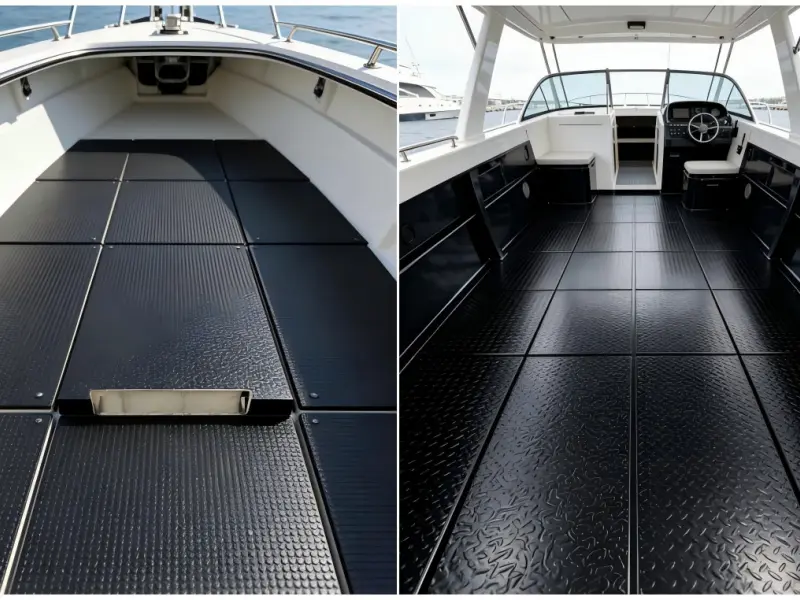
For light panels, a thinner 1.0–2.0mm sheet may be enough.
For truck and trailer applications, 2.0–4.0mm is often considered.
With ramps, platforms, and industrial flooring, thicker 4.0–8.0mm material may be required.
For general applications, 3003 can be considered.
For higher strength and corrosion resistance, 5052 or 5083 may be suitable.
For structural applications, 6061 may be considered when its strength and heat-treated condition fit the design.
The most useful purchasing formula is:
Application → Load → Alloy → Temper → Thickness → Size → Pattern → Surface → Quantity
With the correct specification, Aluminum Checker Plate can provide a practical combination of low weight, corrosion resistance, textured surface, and easy fabrication.