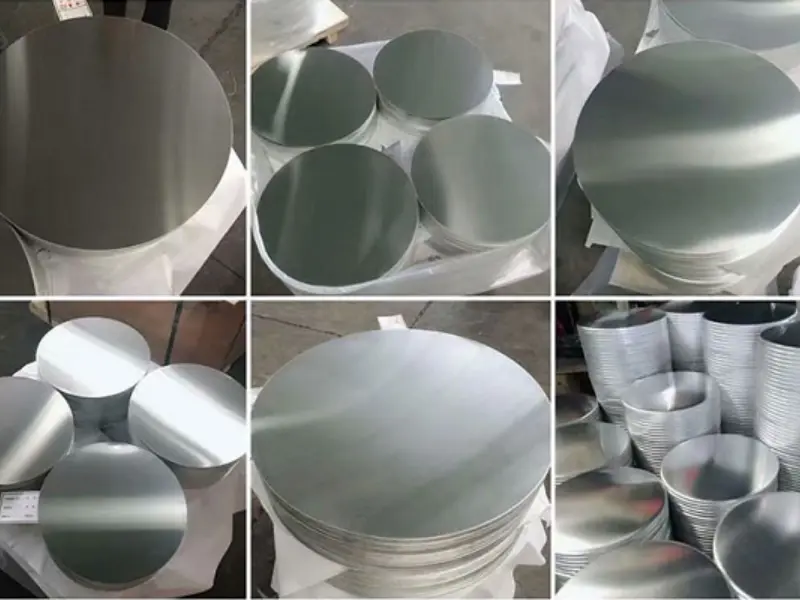
Aluminum circle for cookware manufacturing is the raw material that feeds pot, pan, and cooking equipment factories worldwide.
Buyers in this industry care about more than just alloy and size. Consistent quality, reliable supply, and manufacturing process all affect how smoothly a production line runs.
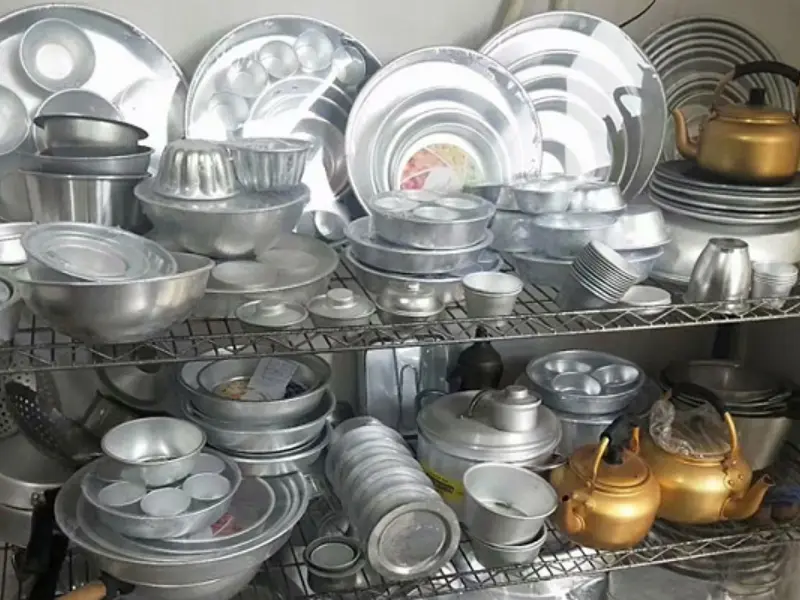
The Role of Circle Supply in Cookware Manufacturing
A cookware factory’s output depends heavily on the quality of the raw circles it receives. A batch with uneven thickness or surface defects can slow down a stamping line or cause failed parts during deep drawing.
Manufacturers buying in bulk usually work directly with a mill or a dedicated circle supplier, rather than cutting their own blanks from full sheet. This keeps production consistent across large order volumes.
What Cookware Factories Look For in a Supplier
- Tight thickness tolerance across every batch
- Consistent alloy composition, batch to batch
- Reliable lead times for repeat orders
- Certification and mill test reports on request
- Ability to scale up for seasonal demand
How Cookware Circles Are Manufactured

Understanding the production steps helps explain why circle quality varies between suppliers.
Casting and Hot Rolling
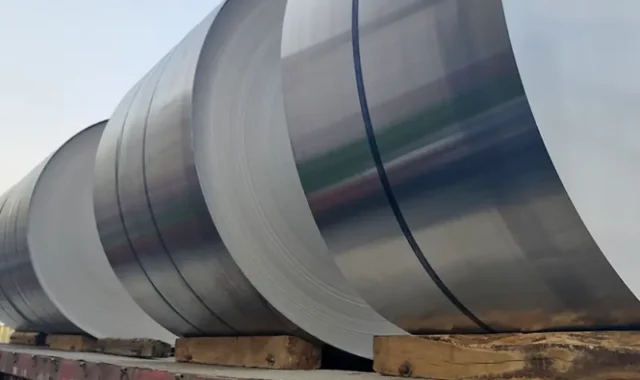
Aluminum ingots are cast, then hot-rolled into thick coil, reducing thickness while setting the grain structure of the metal.
Cold Rolling to Final Gauge
The coil passes through cold rolling mills to reach the exact thickness needed for the finished circle.
Annealing
Heat treatment softens the aluminum to the correct temper, usually O or H14 for cookware applications.
Circle Cutting Aluminum Circle for Cookware Manufacturing
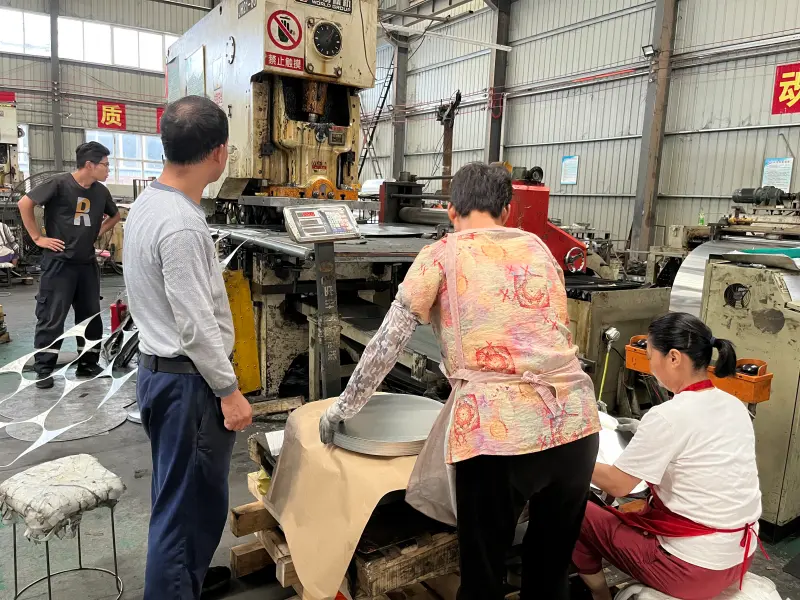
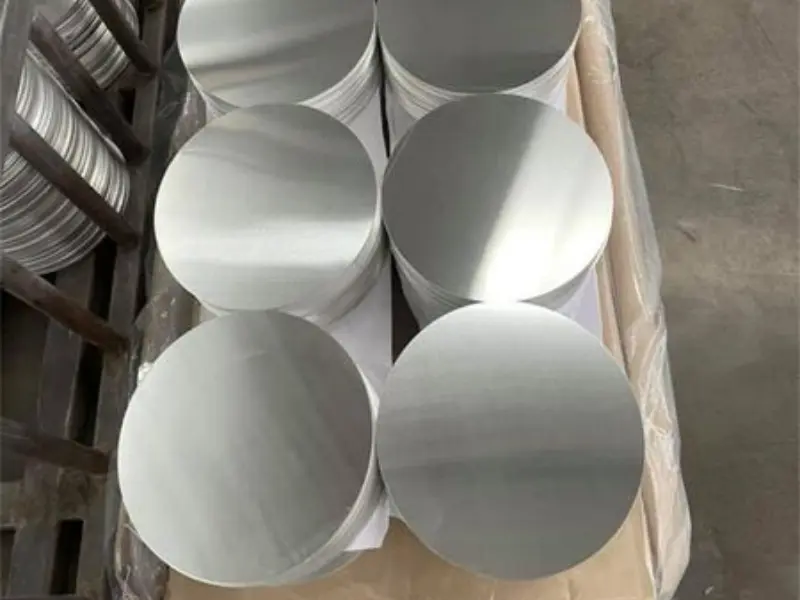
Circles are cut from the coil using stamping presses or CNC blanking equipment, producing a clean, round edge.
Surface Inspection and Packing
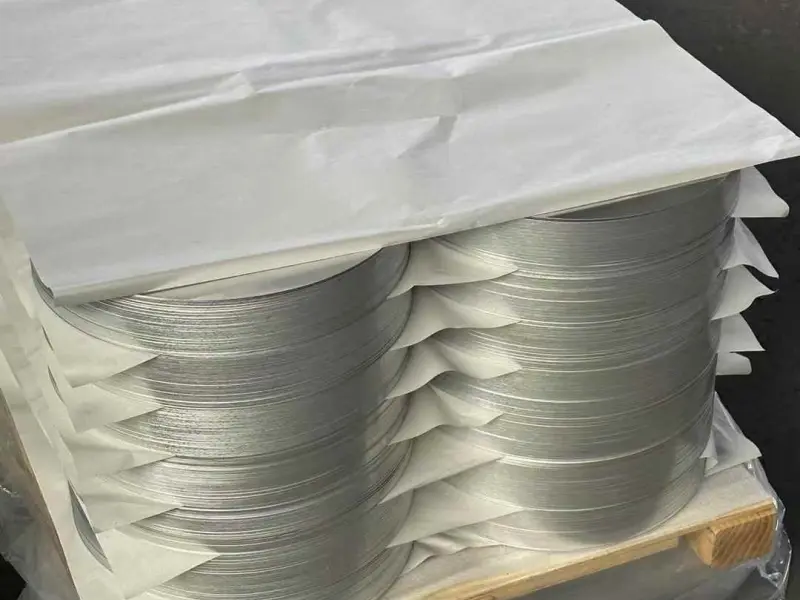
Finished circles are checked for surface defects, then stacked, interleaved, and packed for shipment.
Circle Cutting Methods
The cutting method used affects edge quality, tolerance, and how efficiently material is used.
| Method | Edge Quality | Best For |
|---|---|---|
| Stamping Press | Clean, consistent | High-volume standard diameters |
| CNC Blanking | Very precise | Custom or tight-tolerance diameters |
| Laser Cutting | Smooth, no burrs | Low-volume or prototype runs |
| Coil Slitting + Punch | Good, efficient nesting | Large factory production lines |
Stamping presses remain the standard method for high-volume cookware circle production, since they balance speed, cost, and consistent edge quality.
Why Cutting Method Matters for Manufacturers
- Poor edge quality can affect deep drawing performance
- Inconsistent diameter causes tooling misalignment
- Burred edges may need extra deburring labor downstream
Alloy Selection for Manufacturing Scale
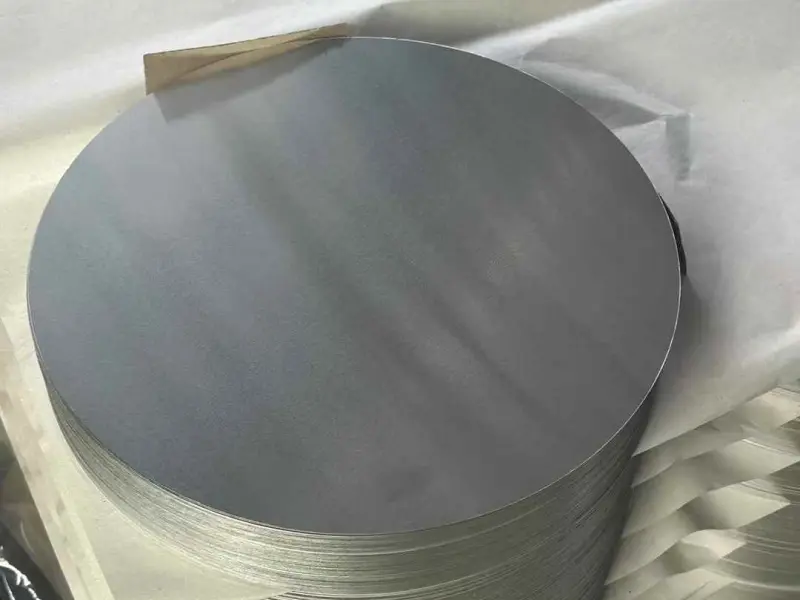
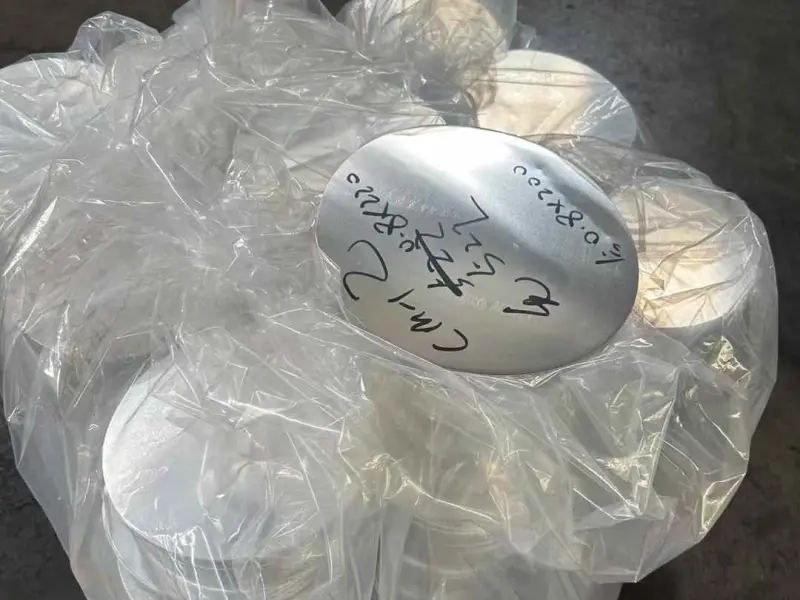
Cookware manufacturers typically standardize on one or two alloys to simplify sourcing and quality control.
| Alloy | Temper | Manufacturing Notes |
|---|---|---|
| 1050 | O | Best drawability, used for premium deep-draw lines |
| 3003 | O / H14 | Most common industry standard, balances cost and strength |
| 3004 | O | Chosen when higher dent resistance is a priority |
| 5052 | H32 | Used for structural or heavy-gauge components |
3003 remains the most widely stocked alloy across cookware manufacturing supply chains, since most mills carry it in volume and pricing stays competitive.
Thickness Tolerance and Quality Standards
For large-scale manufacturing, thickness consistency matters as much as the nominal thickness itself.
| Thickness (mm) | Standard Tolerance | Typical Product |
|---|---|---|
| 1.0 – 1.5 | ± 0.03 mm | Lids, light pans |
| 1.8 – 2.5 | ± 0.05 mm | Standard pots and pans |
| 3.0 – 4.0 | ± 0.08 mm | Heavy-duty cookware |
| 5.0 – 6.0 | ± 0.10 mm | Induction-ready thick-base pans |
Tighter tolerances reduce scrap rates on automated stamping lines, which matters more at manufacturing volume than for small custom orders.
Diameter and Order Volume Reference
Bulk manufacturing orders are often planned around standard diameters to keep tooling costs down.
| Diameter (mm) | Typical Product | Order Volume Pattern |
|---|---|---|
| 120 – 200 | Small pans, lids | High volume, frequent reorder |
| 250 – 350 | Standard frying pans | Highest overall demand |
| 400 – 550 | Large pots, stockpots | Moderate, steady demand |
| 600 – 900 | Commercial cookware | Lower volume, larger unit size |
Standard diameters in the 250mm to 350mm range see the highest demand across cookware manufacturing, since they cover the most common pan and pot sizes.
Product Types Supplied to Manufacturers
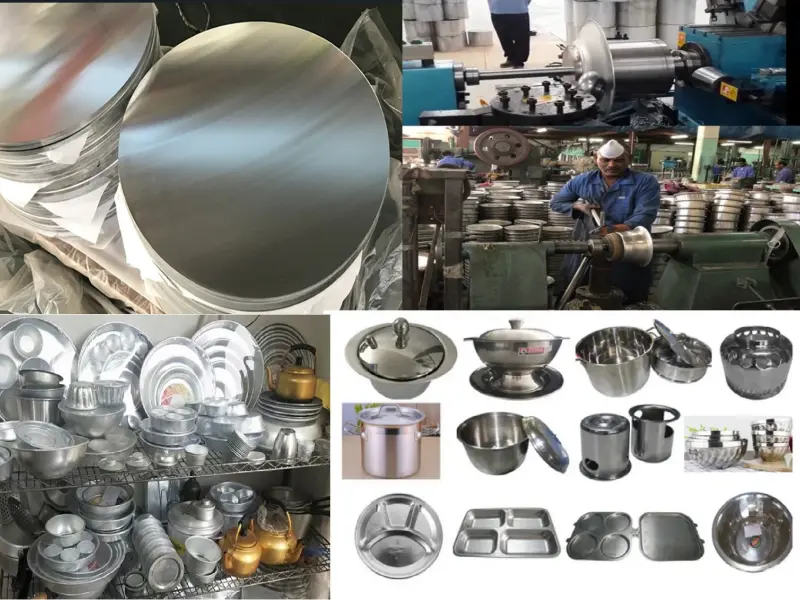
Cookware manufacturers order circles in a few key formats, depending on their production setup.
Bulk Mill Finish Circles
Unpolished circles supplied in large batch quantities.
- Lowest cost per unit for high-volume buyers
- Standard starting point for most cookware production lines
- Surface finishing handled after forming
Pre-Polished Bulk Circles
Circles polished before shipment, supplied at scale.
Ordered under long-term supply agreements for consistent quality
Cuts a finishing step from the manufacturing line
Common for factories producing premium polished cookware
Clad and Multi-Layer Circles
Circles bonded with a steel or stainless layer for induction compatibility.
- Supplied to manufacturers building induction-ready product lines
- Requires specialized bonding during production
- Typically ordered under contract with fixed specifications
Coil-Fed Circle Supply
Circles supplied continuously from coil rather than as individual cut pieces, matched to the buyer’s own cutting line.
- Suited to manufacturers with in-house blanking equipment
- Reduces per-unit cost compared to pre-cut circles
- Requires coordination on coil width and gauge
Bulk Mill Finish vs. Pre-Polished Supply
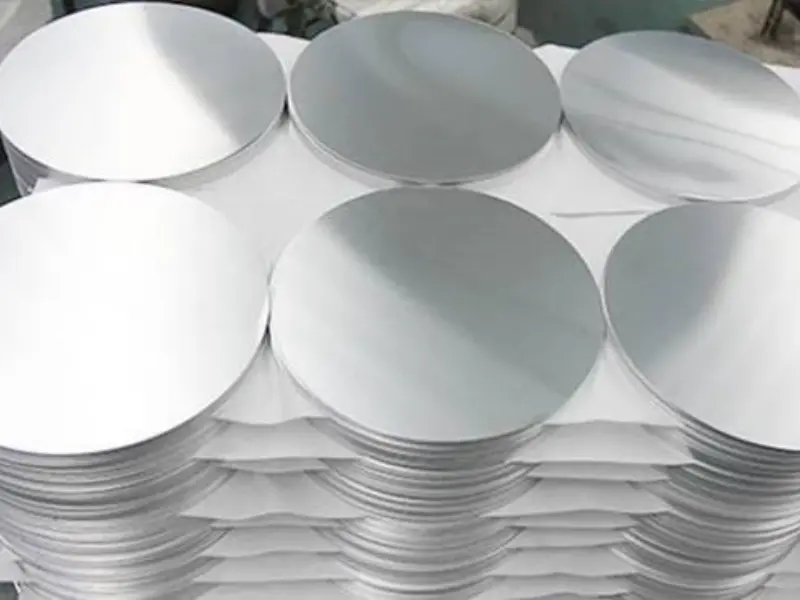
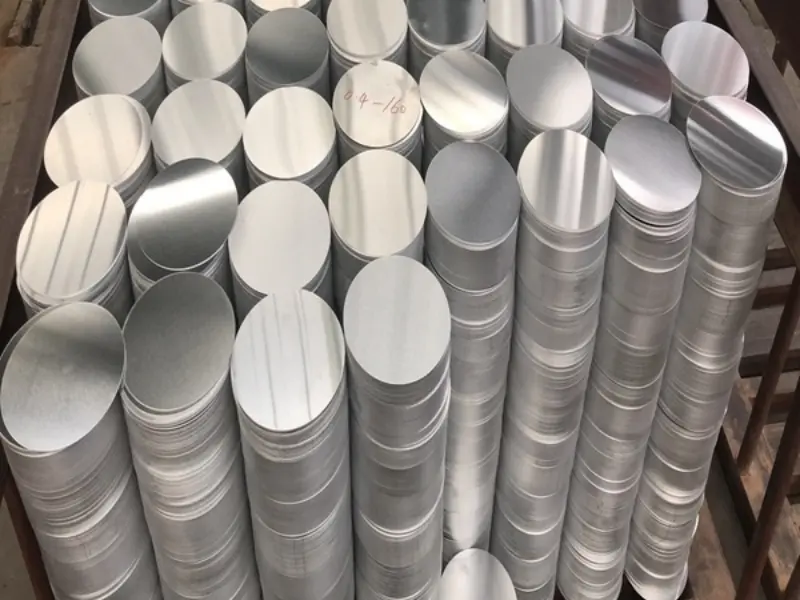
Manufacturers weigh in-house finishing against ordering pre-finished material at scale.
| Factor | Bulk Mill Finish | Pre-Polished Bulk |
|---|---|---|
| Unit cost | Lower | Higher |
| Finishing labor | Required on-site | Already completed |
| Production speed | Slower, extra step | Faster, ready to form |
| Best for | Factories with polishing equipment | Factories without in-house finishing |
Factories with their own polishing lines often save money buying mill finish in bulk. Factories without that equipment may find pre-polished supply more efficient overall, despite the higher unit price.
Sourcing Strategy Guide
→ Running high-volume, standard-size production? Bulk mill finish circles keep unit costs lowest. → Building a premium polished product line? Pre-polished bulk supply saves finishing labor. → Adding induction-ready cookware to your lineup? Source clad multi-layer circles under a supply contract. → Operating your own blanking line? Coil-fed supply usually offers the best per-unit pricing. → Need tight tolerance for automated stamping? Confirm tolerance specs before committing to a bulk order.
1050 vs. 3003 for Manufacturing Scale
Both alloys appear across cookware manufacturing, but they serve different production goals.
| Factor | 1050 Circles | 3003 Circles |
|---|---|---|
| Availability at scale | Good | Excellent, most widely stocked |
| Cost at volume | Similar or slightly higher | Standard, most competitive |
| Drawability | Best in class | Very good |
| Typical manufacturing use | Premium deep-draw lines | Mainstream cookware production |
3003 remains the practical default for most manufacturers due to wide mill availability and stable pricing at volume. 1050 is reserved for product lines where draw depth performance outweighs the small cost difference.
Applications of Aluminum Circle for Cookware Manufacturing
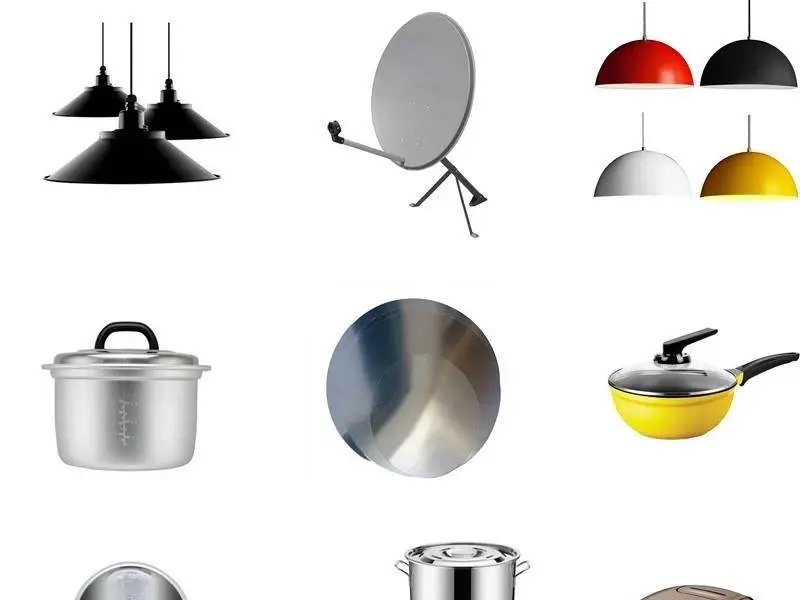
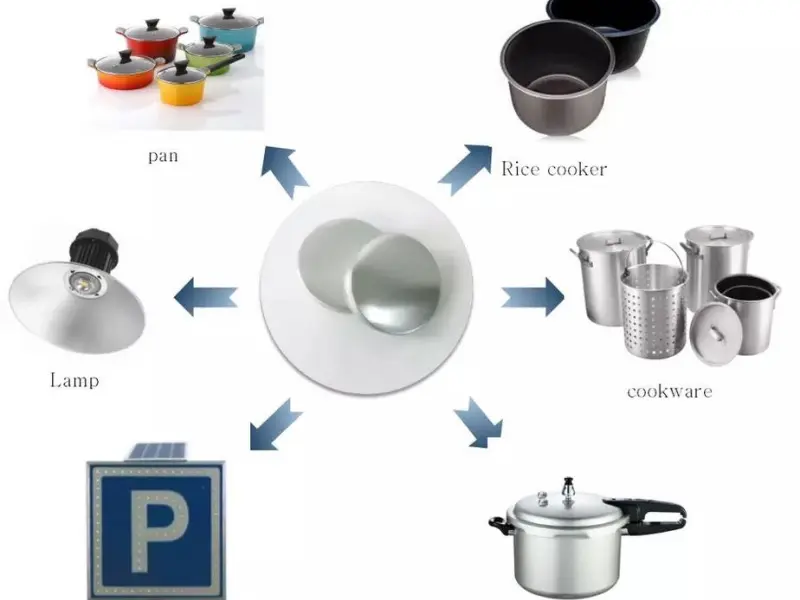
Circles supplied for cookware manufacturing feed a broad range of finished products.
OEM and private-label cookware manufacturing
Frying pans and skillet production lines
Saucepan and stockpot manufacturing
Pressure cooker body production
Lid and cover stamping lines
Bakeware and tray manufacturing
Steamer and insert production
Commercial and catering cookware lines
Why Manufacturers Choose a Dedicated Circle Supplier
Consistent Batch Quality
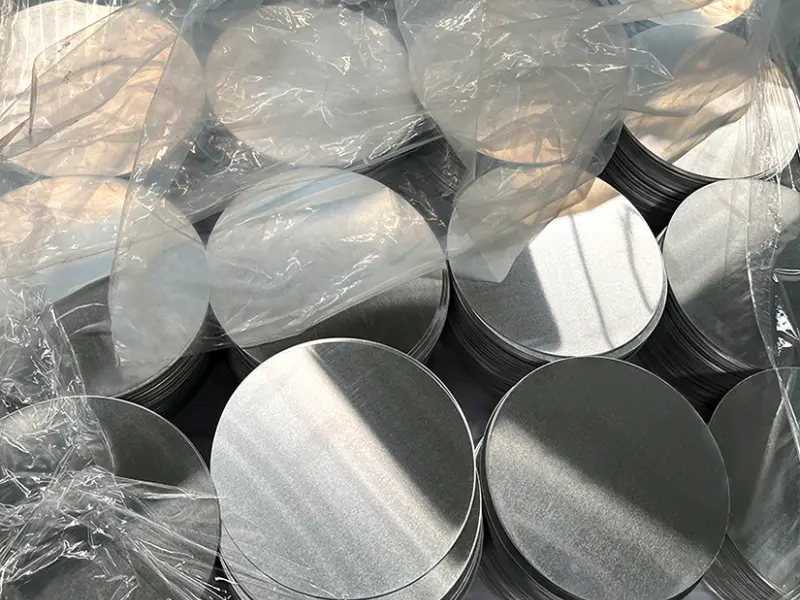
A dedicated supplier controls thickness tolerance and alloy consistency more tightly than ad-hoc sheet cutting in-house.
Scalable Supply for Growing Demand
Established suppliers can scale volume up for seasonal or promotional demand spikes without long lead time surprises.
Reduced Waste and Downtime
Pre-cut circles with tight tolerance reduce scrap rates and tooling misalignment on automated lines.
Access to Specialized Products
Suppliers offering clad, pre-polished, or pre-coated circles let manufacturers add new product lines without new in-house equipment.
From Aluminum Coil to Cookware Blank
The production of cookware often starts with flat aluminum material.
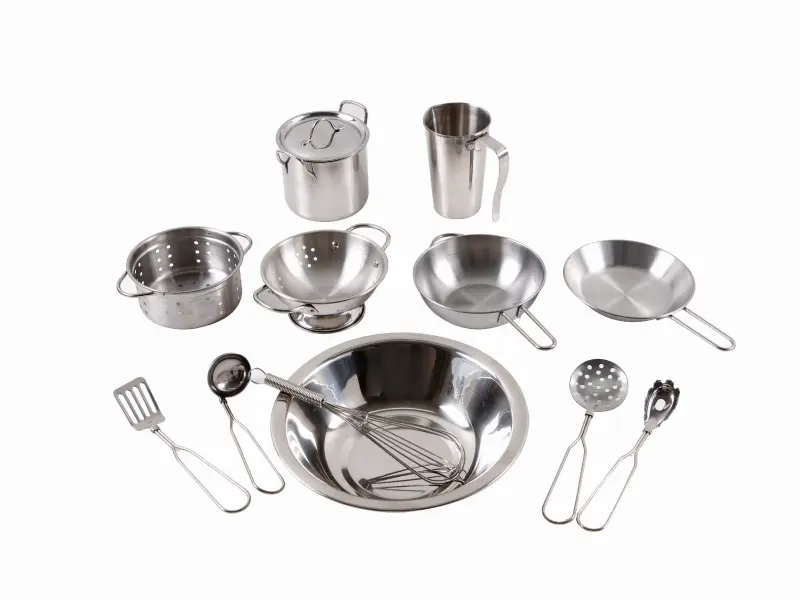
The process of Aluminum Circle for Cookware Manufacturing can be shown in a simple flow:
Aluminum Coil
↓
Leveling
↓
Cutting
↓
Circle Blanking
↓
Surface Inspection
↓
Packing
↓
Cookware Manufacturing
The aluminum circle is not the final cookware. It is the starting blank used for forming the body of a pan, pot, tray, or other kitchen product.
A clean and consistent blank can make the next forming step easier.
Why Blank Quality Matters in Cookware Production
A cookware factory may process thousands or even millions of pieces.
Small differences in the raw material can become more noticeable during mass production.
| Material Factor | Possible Effect |
|---|---|
| Thickness tolerance | Affects final wall thickness |
| Diameter tolerance | Affects forming size |
| Surface quality | Affects final appearance |
| Flatness | Helps improve forming consistency |
| Edge quality | Reduces problems during forming |
| Temper | Changes forming behavior |
For large-volume production, consistency is often just as important as the basic alloy specification.
Deep Drawing: Where Alloy and Temper Become Important
Deep drawing places the aluminum under significant forming stress.
The material needs enough ductility to change shape without excessive cracking or tearing.
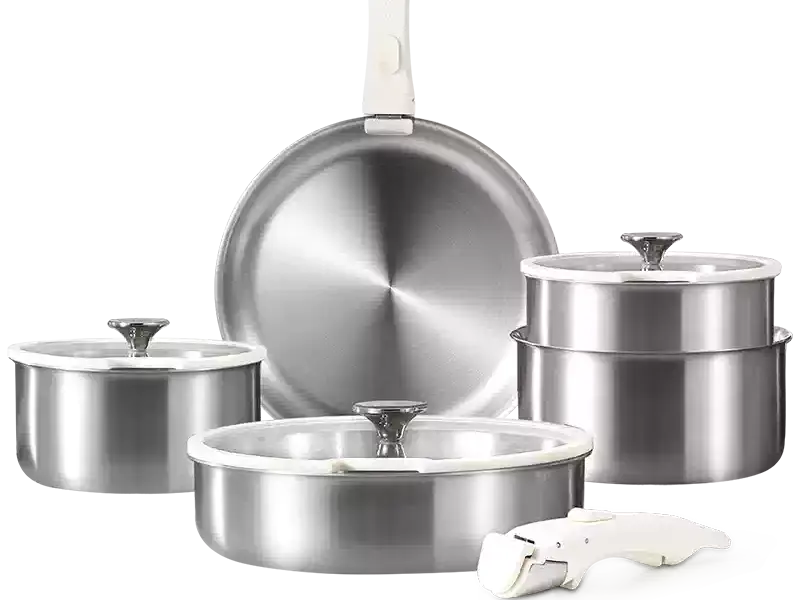
A simple process of Aluminum Circle for Cookware Manufacturing looks like this:
Flat Circle
↓
Pressing
↓
Drawing
↓
Wall Formation
↓
Final Cookware Body
The suitable alloy and temper depend on the cookware design, drawing depth, tooling, and production method.
For demanding forming work, manufacturers often evaluate softer tempers first.
1050 vs. 1060 vs. 3003 Aluminum Circles
Different alloys Aluminum Circle for Cookware Manufacturing can be considered for cookware production.
| Alloy | Formability | Strength | Typical Direction |
|---|---|---|---|
| 1050 | Excellent | Lower | Deep forming and general cookware |
| 1060 | Excellent | Lower | Forming and heat-related applications |
| 1100 | Very good | Low-medium | General kitchen products |
| 3003 | Very good | Medium | Stronger cookware bodies |
| 5052 | Good | Higher | Selected specialty products |
The best alloy is not always the strongest alloy.
For deep drawing, good formability can be more important than maximum strength.
O Temper vs. H14 Temper for Cookware
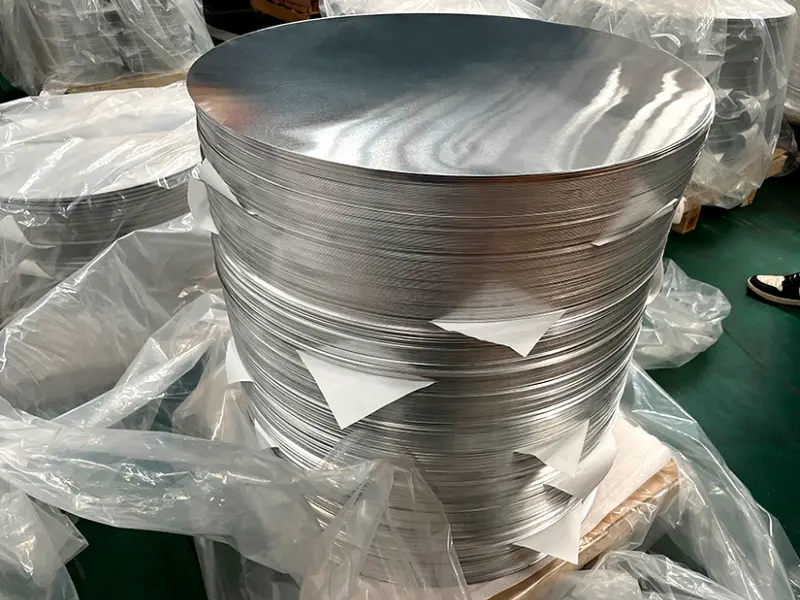
Temper selection can change how the aluminum circle behaves during forming.
| Temper | General Character | Forming Direction |
|---|---|---|
| O | Soft and highly ductile | Deep forming |
| H12 | Partially hardened | Moderate forming |
| H14 | More hardened | Less demanding forming |
| H16 | Higher hardness | Selected applications |
| H18 | Hard | Limited forming |
For cookware blanks that require deep drawing, an overly hard temper may not be the best choice.
The final decision should be based on the forming process and product design.
Circle Diameter Should Match the Final Product
The diameter of the aluminum circle is an important starting dimension.
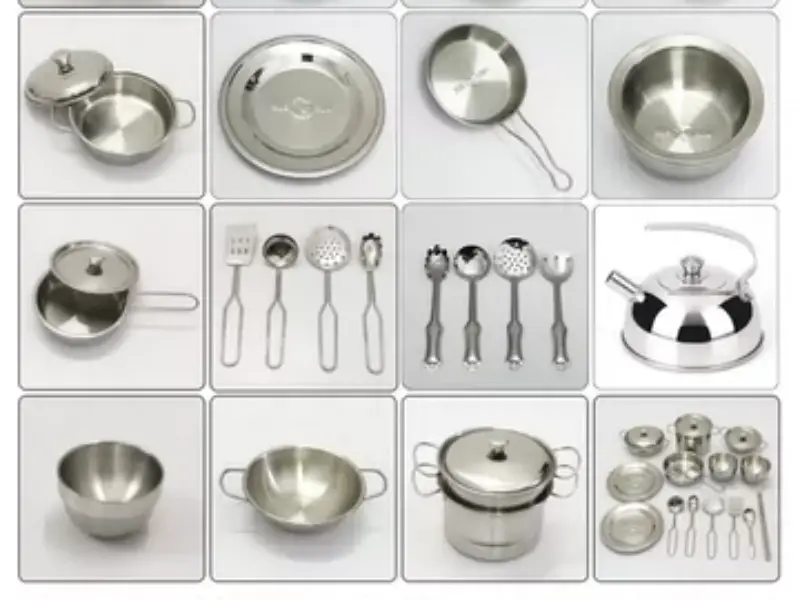
It affects how much material is available for forming.
For example:
Small circle
→ Small pan or component
Medium circle
→ Frying pan or saucepan
Large circle
→ Large pot, tray, or industrial cookware
The required blank diameter should be calculated from the finished cookware dimensions and forming allowance.
Common Aluminum Circle Sizes for Cookware
You can add a simple commercial table like this:
| Circle Diameter | Possible Product Direction |
|---|---|
| 100–150 mm | Small kitchen items |
| 150–200 mm | Small cookware |
| 200–250 mm | Frying pans |
| 250–300 mm | Medium cookware |
| 300–400 mm | Large cookware |
| 400 mm+ | Large pots and industrial products |
These are general ranges. Actual blank size should be confirmed against the final drawing and tooling.
Thickness Selection Is More Than a Weight Decision
A thicker aluminum circle does not simply mean a better cookware product.
The correct thickness depends on:
→ Product size
→ Drawing depth
→ Heat requirements
→ Desired weight
→ Bottom structure
→ Forming method
→ Final wall thickness
| Thickness | General Direction |
|---|---|
| 0.8 mm | Lightweight cookware |
| 1.0 mm | General cookware |
| 1.2 mm | Medium-duty products |
| 1.5 mm | Heavier cookware |
| 2.0 mm | Heavy-duty designs |
| 2.5 mm+ | Selected industrial cookware |
Actual requirements vary by product design.
Surface Quality Can Affect the Final Cookware
The surface of the blank becomes part of the final product.
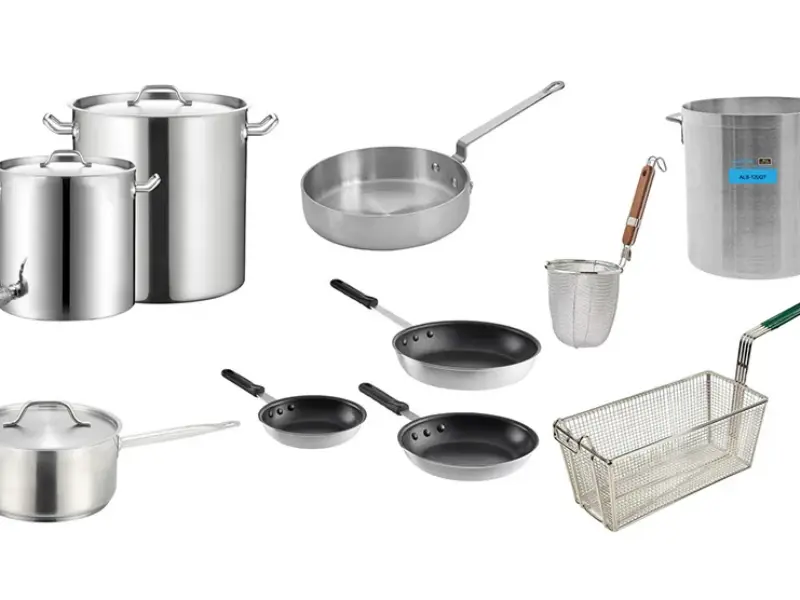
A clean surface helps reduce visible defects after forming.
Manufacturers may check for:
- Scratches
- Oil marks
- Oxidation
- Stains
- Edge cracks
- Surface dents
- Rolling marks
For decorative cookware, surface quality is especially important because the final product may receive polishing, coating, anodizing, or other finishing processes.
Smooth Edge vs. Rough Edge
The edge of the circle should also receive attention.
A poorly cut blank may have:
Burrs
→
Poor handling
→
Possible forming problems
A controlled blanking process can provide cleaner edges and more consistent dimensions.
For automated cookware production, stable edge quality can help reduce interruptions.
Spinning vs. Deep Drawing Aluminum Circle for Cookware Manufacturing
Not all cookware is manufactured in the same way.
| Method | Material Form | Suitable Direction |
|---|---|---|
| Deep drawing | Aluminum circle | High-volume production |
| Metal spinning | Circle blank | Selected shapes |
| Press forming | Circle/sheet | Various cookware |
| Stamping | Circle blank | Repeated parts |
| Machining | Preformed part | Special components |
Deep Drawing
Deep drawing is often attractive for mass production because the process can be repeated efficiently with suitable tooling.
Spinning
Spinning can be useful for selected shapes and smaller production runs.
The choice depends on cookware geometry, quantity, equipment, and production cost.
Cookware Blank Size and Material Yield
Material utilization is another topic worth adding.
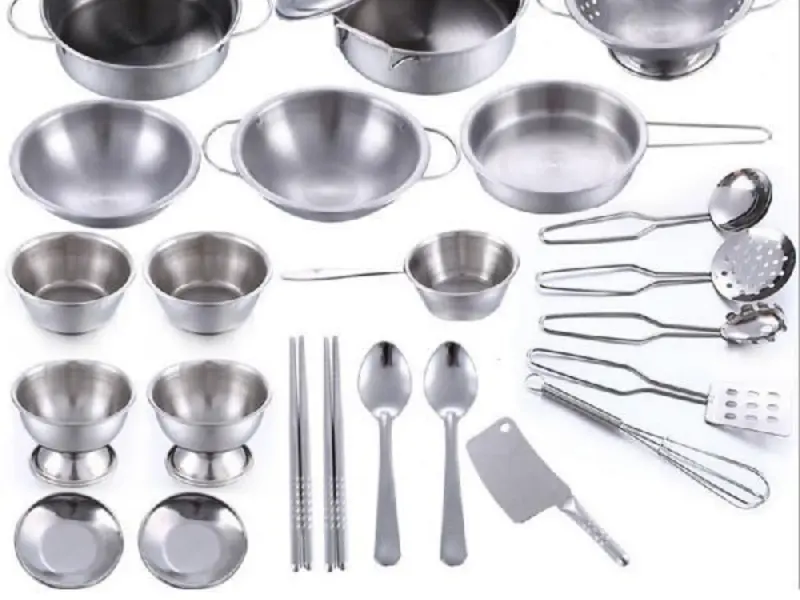
A larger blank does not automatically mean better production.
If the blank is oversized:
More material
↓
Higher weight
↓
More scrap
↓
Higher material cost
If the blank is too small:
Insufficient material
↓
Incomplete forming
↓
Production loss
The goal is to find a suitable blank size for the finished cookware.
A Simple Blank Selection Formula
For preliminary planning, manufacturers can start with the finished product dimensions and forming requirements.
The actual blank calculation depends on the cookware shape.
For a simple round product, the required blank diameter can be estimated from the final geometry and drawing allowance.
For complex cookware, the blank should be confirmed through:
Drawing
→ Tooling
→ Trial forming
→ Measurement
→ Blank adjustment
This is more reliable than choosing a circle diameter only from the finished pan diameter.
One Circle Specification Can Serve Different Products
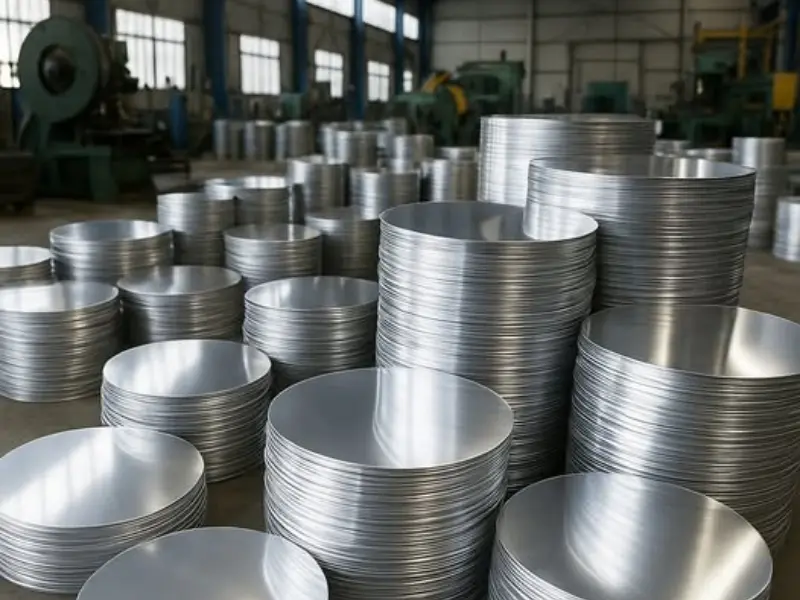
A useful way to show product variety is with a manufacturing map.
1050 Aluminum Circle for Cookware Manufacturing
→ Lightweight cookware
→ Deep-drawn kitchen products
→ General forming
1060 Aluminum Circle for Cookware Manufacturing
→ Kitchen utensils
→ Cookware components
→ Heat-related products
1100 Aluminum Circle
→ General cookware
→ Household products
3003 Aluminum Circle
→ Frying pans
→ Pots
→ Stronger cookware bodies
This type of structure naturally introduces different product types without keyword stuffing.
Cookware Manufacturing: Circle or Sheet?
Some manufacturers may wonder whether to buy aluminum circles or full sheets.
| Factor | Aluminum Circle | Aluminum Sheet |
|---|---|---|
| Ready for forming | ✓ | Requires cutting |
| Material handling | Easy | More handling |
| Production preparation | Lower | Higher |
| Custom blank size | ✓ | ✓ |
| Mass production | Excellent | Depends on process |
| Cutting waste | Can be reduced | Depends on nesting |
For high-volume cookware production, pre-cut circles can reduce preparation work.
Standard Circle vs. Custom Circle
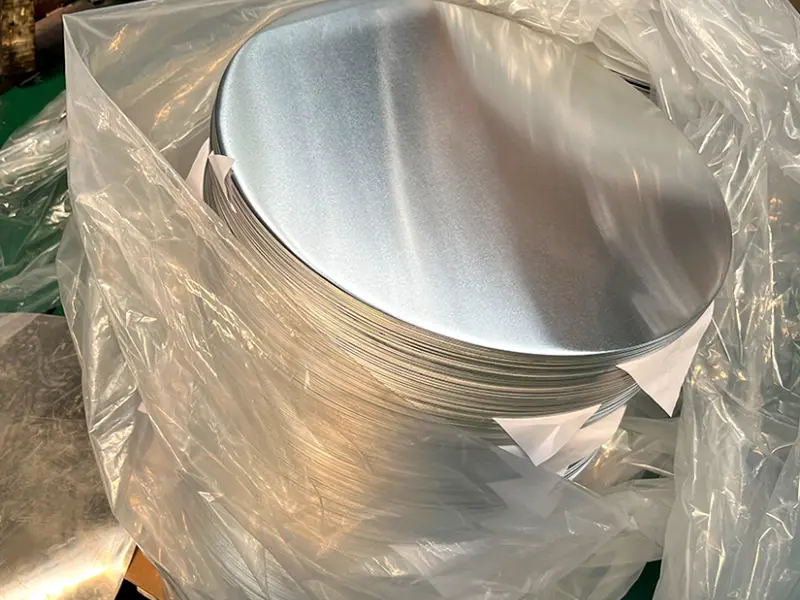
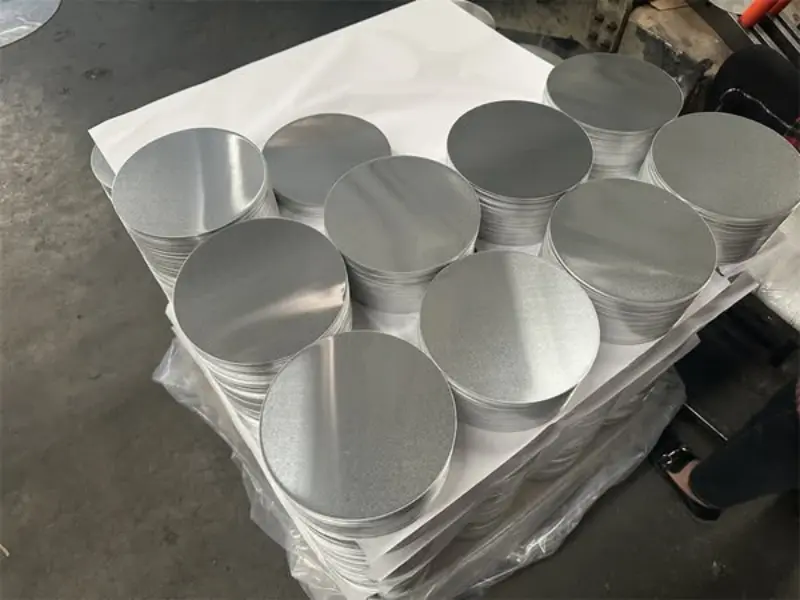
A manufacturer of Aluminum Circle for Cookware Manufacturing does not always need a standard diameter.
Custom aluminum circles can be produced according to the customer’s tooling and product dimensions.
Possible custom options include:
Diameter → Custom
Thickness → Custom
Alloy → Custom
Temper → Custom
Surface → Custom
Edge → Customized according to production needs
This is especially useful when the cookware design is not based on common sizes.
How to Reduce Scrap During Cookware Production
Material efficiency has a direct effect on production cost.
A simple approach is:
Correct blank diameter
Correct thickness
Stable dimensions
Consistent forming
↓
Lower material waste
For large cookware factories, even a small reduction in scrap can become significant over thousands of pieces.
What Should a Cookware Manufacturer Send to the Supplier?
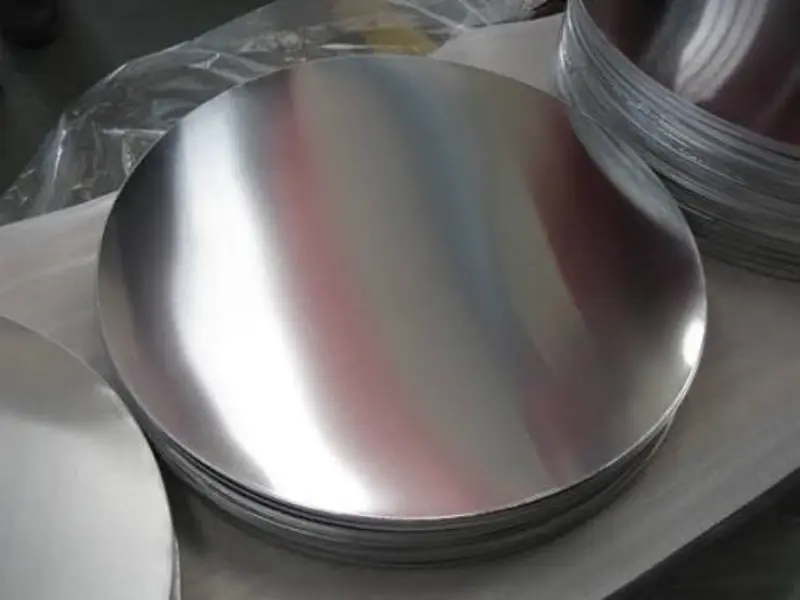
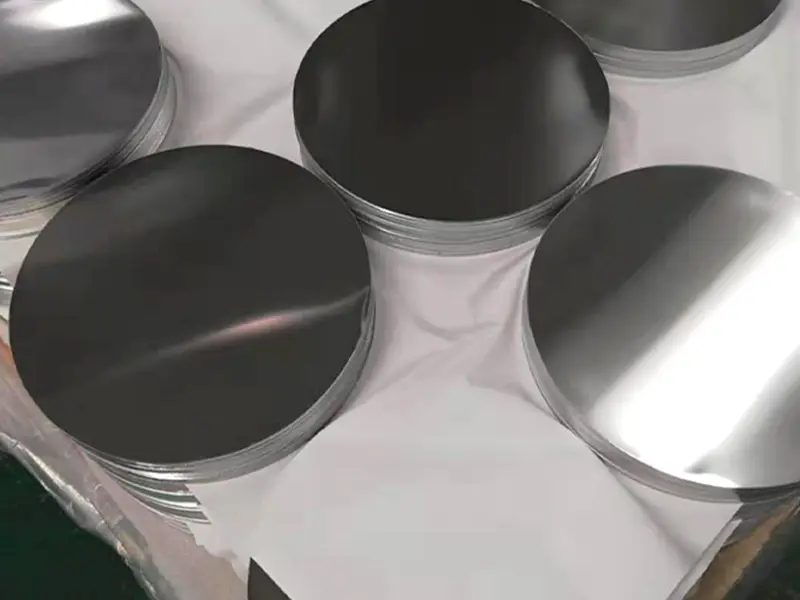
Instead of simply asking for “aluminum circles,” it is better to provide a complete specification.
| Required Information | Example |
|---|---|
| Alloy | 1050 / 1060 / 3003 |
| Temper | O |
| Diameter | 250 mm |
| Thickness | 1.2 mm |
| Surface | Mill finish |
| Quantity | 10 tons |
| Application | Frying pan |
| Forming method | Deep drawing |
| Packaging | Export packing |
This Aluminum Circle for Cookware Manufacturing allows the supplier to recommend a more suitable material.
For cookware factories, the first batch may work well.
The bigger challenge is maintaining the same result across the entire order.
Production Consistency Matters for Large Orders
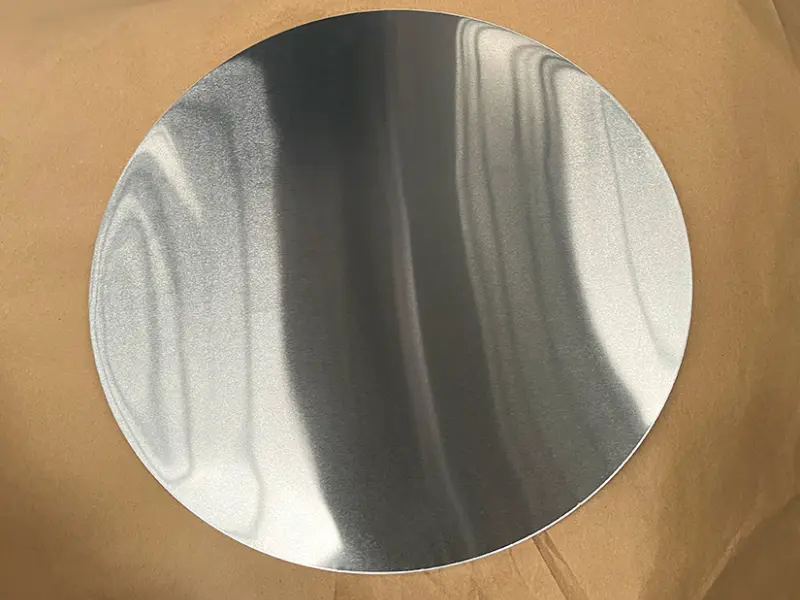
A reliable Aluminum Circle for Cookware Manufacturing supply should focus on:
Same alloy
↓
Same temper
↓
Stable thickness
↓
Stable diameter
↓
Consistent surface
↓
Repeatable forming performance
Cookware Production Cost Is Not Only the Aluminum Price
This is another useful commercial section for your page.
The total manufacturing cost can include:
Aluminum material
Circle blanking
Tooling
Forming
Trimming
Surface treatment
Packaging
↓
Finished cookware cost
A slightly higher-quality blank may sometimes reduce forming problems and material waste.
Therefore, buyers should compare total production cost, not only the price per kilogram.
How to Check a Sample Before Mass Production
A sample test of Aluminum Circle for Cookware Manufacturing can reduce risk.
Material inspection
Check:
- Thickness
- Diameter
- Surface
- Flatness
- Edge condition
Forming test
Then check:
- Cracking
- Wrinkling
- Drawing depth
- Surface marks
- Shape accuracy
Final evaluation
Sample approved
↓
Confirm production specification
↓
Start bulk order
This workflow is especially useful for custom cookware projects.
A Practical Selection Matrix
| Production Need | Suggested Focus |
|---|---|
| Deep drawing | Ductility + suitable temper |
| Low weight | Thin gauge + suitable design |
| Heavy cookware | Greater thickness |
| High-volume production | Consistent circles |
| Decorative cookware | Surface quality |
| Stronger body | Consider 3003 |
| General forming | 1050 / 1060 / 1100 |
| Custom cookware | Custom diameter and thickness |
This kind of matrix gives readers a quick answer and makes the page more useful.
From Order to Production: A Simple Workflow
You can also add this section near the bottom of the page:
1. Send cookware drawing
↓
2. Confirm alloy and temper
↓
3. Select diameter and thickness
↓
4. Produce sample circles
↓
5. Test forming
↓
6. Confirm final specification
↓
7. Start mass production
↓
8. Inspect and pack
This is a strong B2B section because it shows the customer what happens after the inquiry.
Buyer Checklist Before Ordering Aluminum Circles
Instead of another FAQ section, add a checklist:
Material
□ Alloy confirmed
□ Temper confirmed
□ Thickness confirmed
Dimensions
□ Circle diameter confirmed
□ Thickness tolerance confirmed
□ Edge condition confirmed
Surface
□ Mill finish
□ Brushed
□ Polished
□ Coated
□ Other finish
Production
□ Deep drawing
□ Spinning
□ Stamping
□ Other forming method
Order
□ Quantity confirmed
□ Packaging confirmed
□ Delivery requirements confirmed
□ Sample approved
Aluminum Circle for Cookware Manufacturing for sale
| Supporting Page | Main Search Intent |
|---|---|
| Aluminum Circle for Frying Pan | Product + application |
| Aluminum Circle for Pots | Product + application |
| 1050 Aluminum Circle for Cookware | Alloy |
| 1060 Aluminum Circle for Cookware | Alloy |
| 3003 Aluminum Circle for Cookware | Alloy |
| Aluminum Circle for Deep Drawing | Manufacturing |
| Aluminum Circle Thickness for Cookware | Thickness |
| Aluminum Circle Diameter for Cookware | Size |
| Aluminum Circle for Spinning | Processing |
| Aluminum Circle Price for Cookware | Commercial |
| Aluminum Circle Blanks | Product |
| Aluminum Disc for Cookware | Alternative keyword |
Cookware Aluminum Circle for Cookware Manufacturing
→ Aluminum Circle
→ Alloy
→ Temper
→ Thickness
→ Diameter
→ Deep Drawing
→ Spinning
→ Price
→ Custom Manufacturing
Packaging and Delivery for Bulk Orders
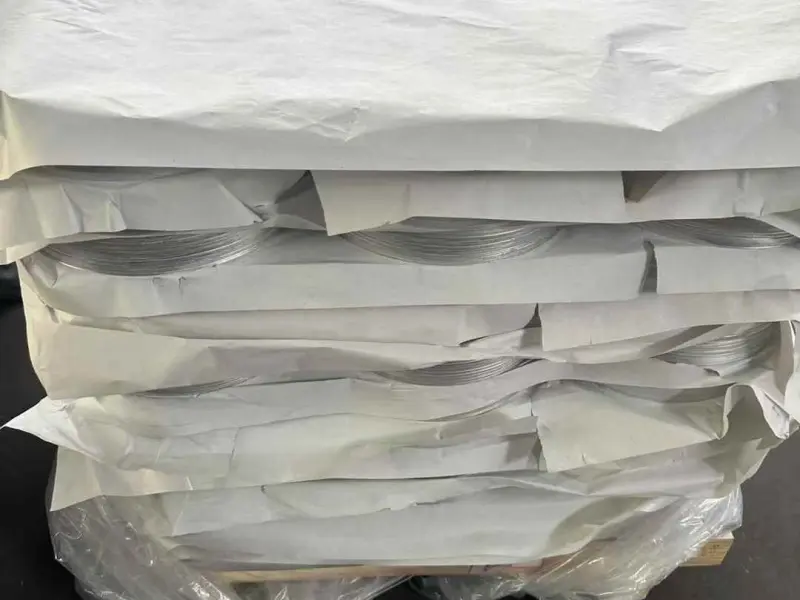
Manufacturing-scale orders need packing that protects large quantities during long-distance shipping.
- Stacked with interleaved paper between every circle
- Banded into fixed-count bundles for easy line counting
- Wood pallet or crate packing suited for container loading
- MOQ and lead time scale with alloy, thickness, and diameter
This is particularly important when the material is used on automatic production lines.
Frequently Asked Questions
What alloy do most cookware manufacturers use?
3003 aluminum is the most common choice across the industry, due to wide availability, stable pricing, and good formability.
How is circle thickness tolerance controlled in manufacturing?
Mills use cold rolling and inspection checks to hold tight tolerances, which matters most for automated stamping and deep-drawing lines.
What cutting method is best for high-volume circle production?
Stamping presses are the standard method for high-volume manufacturing, offering a good balance of speed, cost, and edge quality.
Can circles be supplied pre-polished for manufacturing lines?
Yes. Pre-polished bulk circles are available and can remove a finishing step from the cookware production process.
What diameter sees the highest demand in cookware manufacturing?
Circles in the 250mm to 350mm range see the highest overall demand, matching standard frying pan and saucepan sizes.
Do suppliers offer coil-fed circle supply for factories with their own cutting equipment?
Yes. Coil-fed supply is available for manufacturers with in-house blanking lines, often at a lower per-unit cost than pre-cut circles.