Why Choose Aluminum Diamond Plate 4×8 for Your Project?
When working on heavy-duty flooring or wall protection, choosing the right material is vital. An aluminum diamond plate 4×8 sheet offers exceptional strength, slip resistance, and a modern metallic look.


Many contractors and DIY builders choose an aluminum diamond plate 4×8 because it is lightweight yet durable. Unlike steel, it will not rust easily. This makes an aluminum diamond plate 4×8 perfect for both indoor and outdoor environments.
Core Benefits of Using Diamond Tread Plates
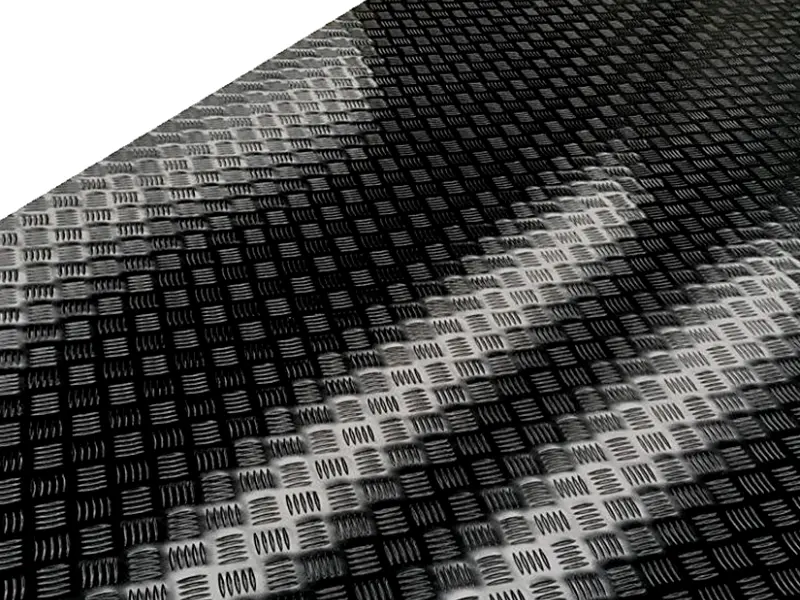

Using an aluminum diamond plate 4×8 brings multiple structural and aesthetic benefits to your workspace:
- High Slip Resistance: The raised pattern prevents slips and falls in wet areas.
- Corrosion Resistance: Natural oxide layers protect the metal from rain and moisture.
- Lightweight Properties: Reduces overall weight on vehicle floors and trailer beds.
- Low Maintenance: Easy to clean with simple soap and water.
Where Can You Use Aluminum Diamond Plate 4×8?
The versatility of an aluminum diamond plate 4×8 allows it to serve many different industries. Here are the primary application fields:
- Trailer Flooring: Used widely in utility trailers, horse trailers, and cargo bed liners.
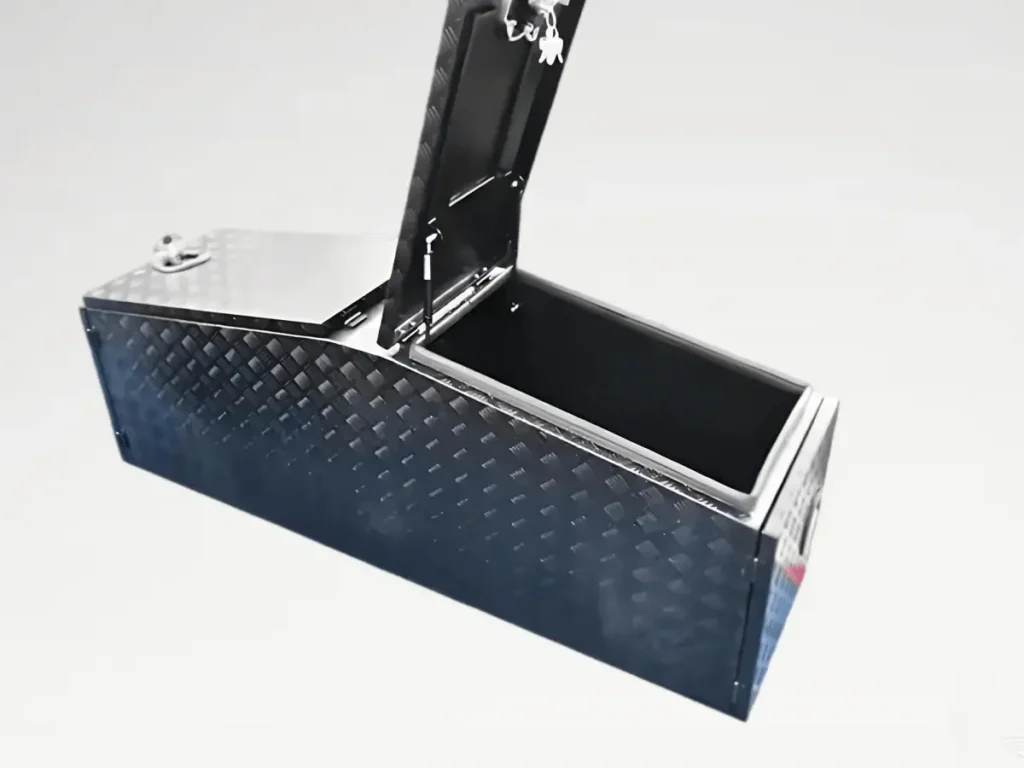
- Toolboxes and Truck Beds: Protects truck tailgates and custom storage boxes from heavy impacts.
- Wall Wainscoting: Adds heavy-duty protection and style to garage walls and workshops.
- Stair Treads and Walkways: Improves safety on industrial staircases, ramps, and platforms.
- Architectural Accents: Popular for interior bars, restaurant trim, and modern furniture design.
Specifications, Alloys, and Technical Data

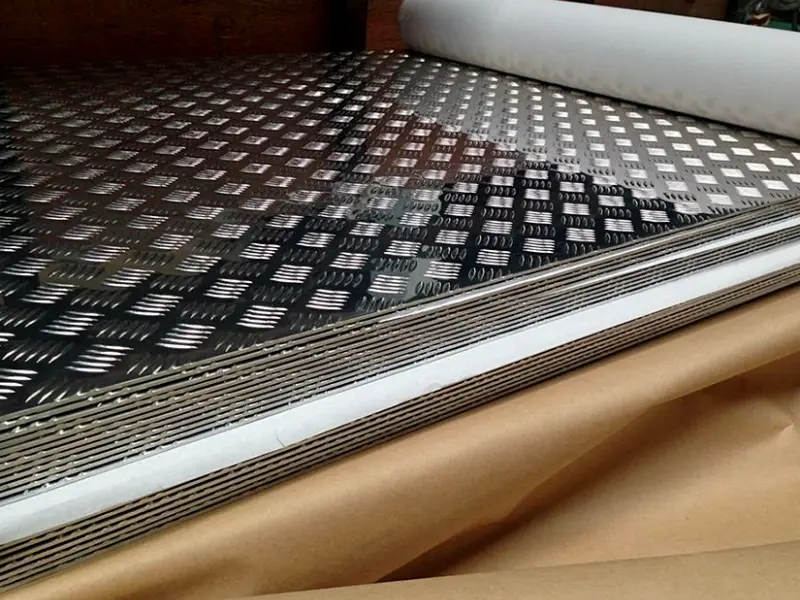
Common Alloys Available for 4×8 Sheets
Different projects require different mechanical properties. Choosing the correct alloy ensures your aluminum diamond plate 4×8 performs as expected.
| Alloy Type | Main Characteristic | Best Application |
|---|---|---|
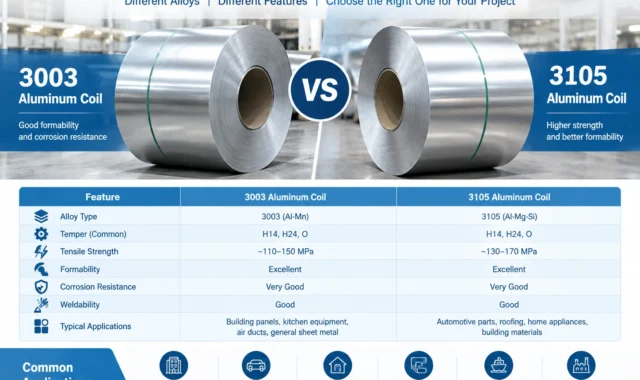
| Alloy 3003 | Great formability and corrosion resistance | Toolboxes, wall panels, and light trim |
| Alloy 5052 | High strength and excellent marine performance | Trailer floors and marine walkways |
| Alloy 6061 | Superior structural strength | Heavy-duty ramps and industrial platforms |
Temper and Hardness Levels
The temper designation defines the hardness and bending capability of your aluminum diamond plate 4×8.
| Temper | Treatment Level | Flexibility & Strength |
|---|---|---|
| H32 | Strain hardened and stabilized | Standard commercial grade, balanced strength |
| H34 | Higher degree of work hardening | Stiff, minimal flex under heavy loads |
| T6 | Heat-treated (for Alloy 6061) | Maximum structural rigidity |
Standard Thickness and Dimensions


An aluminum diamond plate 4×8 measures 4 feet by 8 feet (48 inches×96 inches), but thicknesses vary based on load requirements.
| Thickness (Inches) | Thickness (Millimeters) | Recommended Use Case |
|---|---|---|
| 0.025 in−0.040 in | 0.6 mm−1.0 mm | Decorative wall covering, light trim |
| 0.063 in (1/16″) | 1.5 mm | Toolboxes, kick plates, wall guards |
| 0.100 in−0.125 in (1/8″) | 2.5 mm−3.0 mm | Trailer flooring, heavy-duty truck beds |
| 0.250 in (1/4″) | 6.35 mm | Industrial ramps, heavy vehicle flooring |
Material Comparisons: Making the Right Choice
Alloy Comparison: 3003 vs 5052
Understanding the Difference Between 3003 and 5052 Diamond Plates
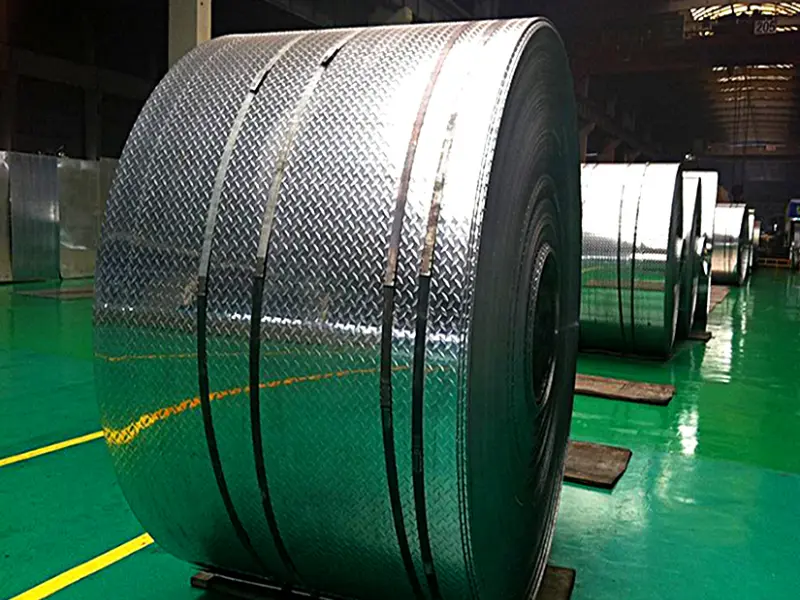
When buying an aluminum diamond plate 4×8, you will often choose between grade 3003 and grade 5052.
Alloy 5052: Contains magnesium. It offers higher tensile strength and superior resistance to saltwater corrosion. It is the preferred choice for marine environments and heavy trailer floors.
Alloy 3003: Contains manganese. It is softer and easier to bend or form into custom shapes. It works best for decorative applications and light utility work.
Finish and Material Comparison
Aluminum Diamond Plate vs Steel Diamond Plate
| Feature | Aluminum Diamond Plate 4×8 | Steel Diamond Plate |
|---|---|---|
| Weight | Lightweight (Easy to handle and install) | Heavy (Requires lifting equipment) |
| Rust Resistance | Excellent (Does not rust under normal conditions) | Poor (Requires painting to prevent red rust) |
| Cost | Higher material cost, lower installation cost | Lower material cost, higher labor cost |
| Appearance | Bright, clean metallic shine | Darker industrial look |
Why 4×8 Aluminum Diamond Plate Is a Popular Size
A 4×8 aluminum diamond plate is widely used because the sheet size is easy to handle and suitable for many common fabrication projects.
A standard 4×8 sheet is approximately 48 × 96 inches, or about 1219 × 2438 mm. The actual finished size may vary slightly according to the production standard.
This size works well for trailer floors, truck panels, ramps, workshop projects, wall protection, and equipment covers.
For smaller parts, a 4×8 sheet can also be cut into several smaller panels.
4×8 Sheet → Cutting → Multiple Panels → Less Material Waste
For buyers who already know the required dimensions, ordering a full 4×8 sheet can also make the quotation process easier.
4×8 Aluminum Diamond Plate Size Options
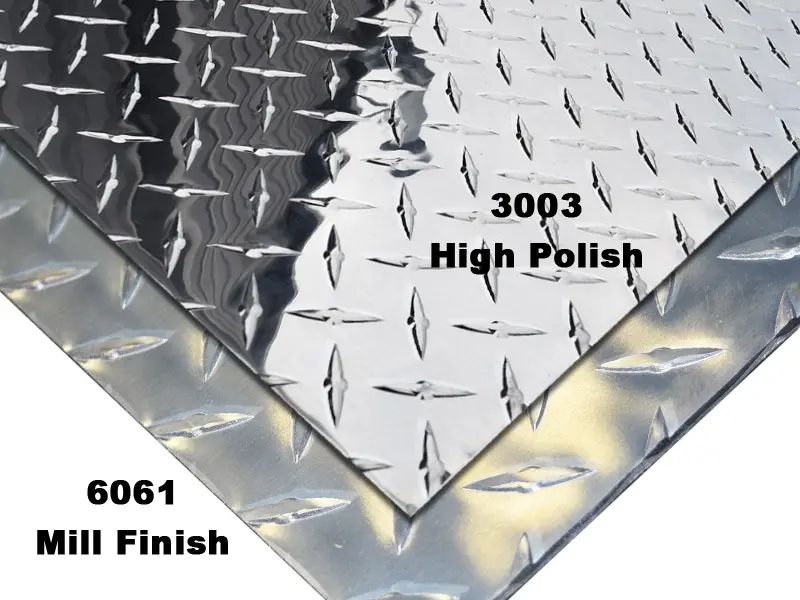
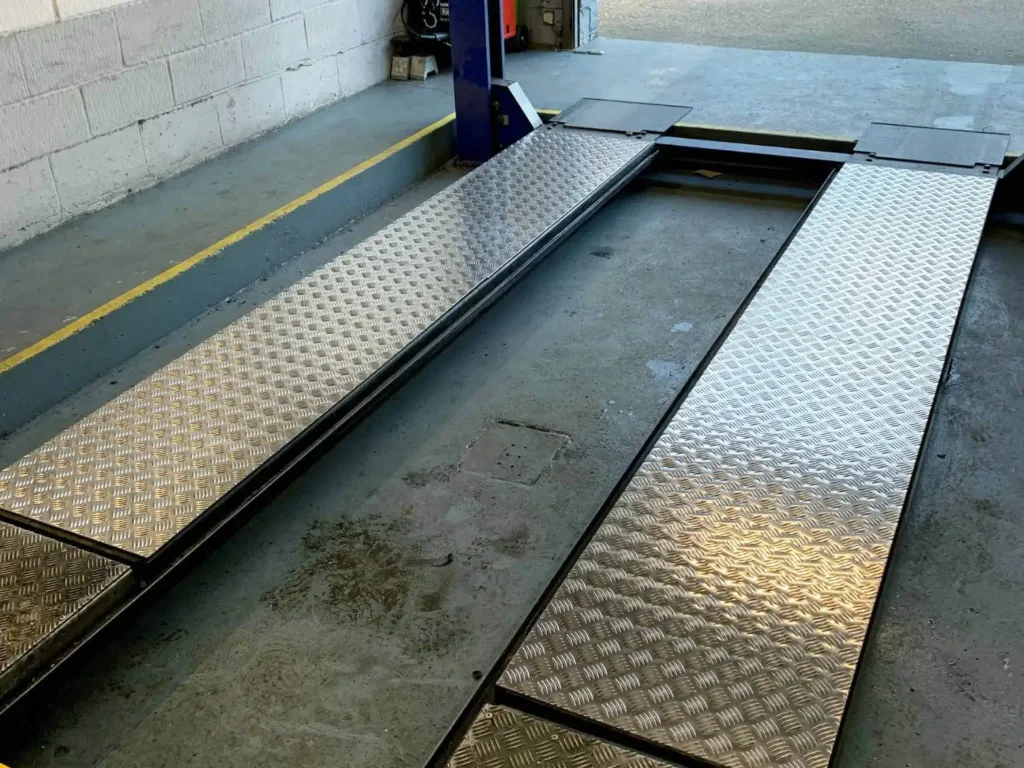
The term “4×8” usually refers to the sheet dimensions, not the thickness.
For example, buyers may search for:
| Product | Approx. Size | Typical Thickness |
|---|---|---|
| 4×8 aluminum diamond plate | 48 × 96 in | 0.063–0.125 in |
| 4×8 aluminum diamond plate | 1219 × 2438 mm | 1.5–3.0 mm |
| 4×8 aluminum tread plate | 48 × 96 in | 2–6 mm |
| 4×8 5052 diamond plate | 1219 × 2438 mm | Custom |
| 4×8 3003 diamond plate | 1219 × 2438 mm | Custom |
The best thickness depends on the application, support distance, expected load, and fabrication method.
How Many Pieces Can You Cut From a 4×8 Aluminum Diamond Plate?
A 4×8 sheet can be divided into smaller pieces according to the project design.
For example, a 48 × 96 inch sheet can potentially be divided into:
- 24 × 48 inch panels
- 24 × 24 inch panels
- 12 × 48 inch strips
- Custom rectangular panels
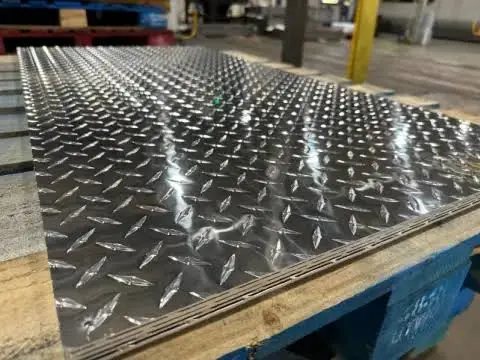
Actual yield depends on the cutting layout and the required dimensions.
For large orders, a cutting plan can help reduce scrap.
Full Sheet → Cutting Layout → Nesting → Finished Pieces
This is useful for fabricators who need several different panel sizes from the same material.
Aluminum Diamond Plate 4×8 Weight
Weight is an important factor when purchasing a full 4×8 aluminum diamond plate.
The actual weight depends mainly on the base thickness, alloy, sheet dimensions, and the additional material in the raised pattern.
A simple theoretical calculation can be used as an initial reference:
Weight ≈ Length × Width × Thickness × Aluminum Density
For example, the theoretical weight of a flat aluminum sheet can be estimated before ordering.
| Base Thickness | 4×8 Sheet Weight* |
|---|---|
| 1.5 mm | Approx. 12 kg |
| 2.0 mm | Approx. 16 kg |
| 3.0 mm | Approx. 24 kg |
| 4.0 mm | Approx. 32 kg |
| 5.0 mm | Approx. 40 kg |
| 6.0 mm | Approx. 48 kg |
*Approximate values for reference. Actual checker plate weight can be different because of the raised pattern and production tolerance.
This information is useful when calculating shipping costs, handling requirements, and vehicle payload.
4×8 Aluminum Diamond Plate for Small Projects
A full 4×8 sheet is not only suitable for large industrial projects.
It can also be useful for smaller fabrication jobs when the buyer wants to cut the material locally.
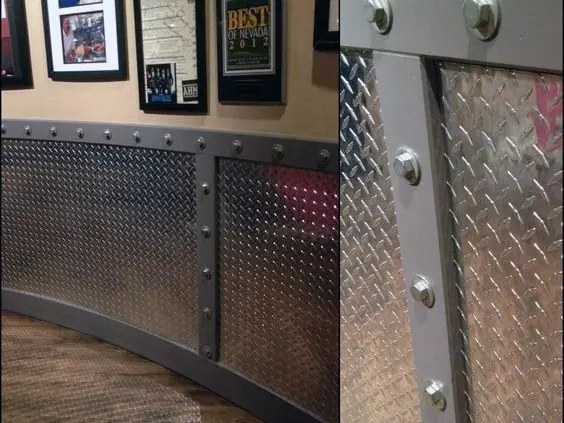
Common small-project uses include:
- Garage floors
- Workbench surfaces
- Tool boxes
- Trailer steps
- Pickup bed protection
- Machine covers
- Wall panels
- Storage cabinets
Buying a full sheet can provide more flexibility when several different components are needed.
4×8 Aluminum Diamond Plate With Cut-to-Size Service
Some buyers do not need a complete 4×8 sheet.
A supplier can cut the material according to the required dimensions.
For example:
4×8 Full Sheet
↓
48 × 24 in
↓
36 × 24 in
↓
18 × 12 in
↓
Finished Panels
Cut-to-size service can reduce on-site work and make installation easier.
When requesting a cutting quotation, provide the dimensions of each piece and the required quantity.
Choosing Between 4×8 and 4×10 Aluminum Diamond Plate
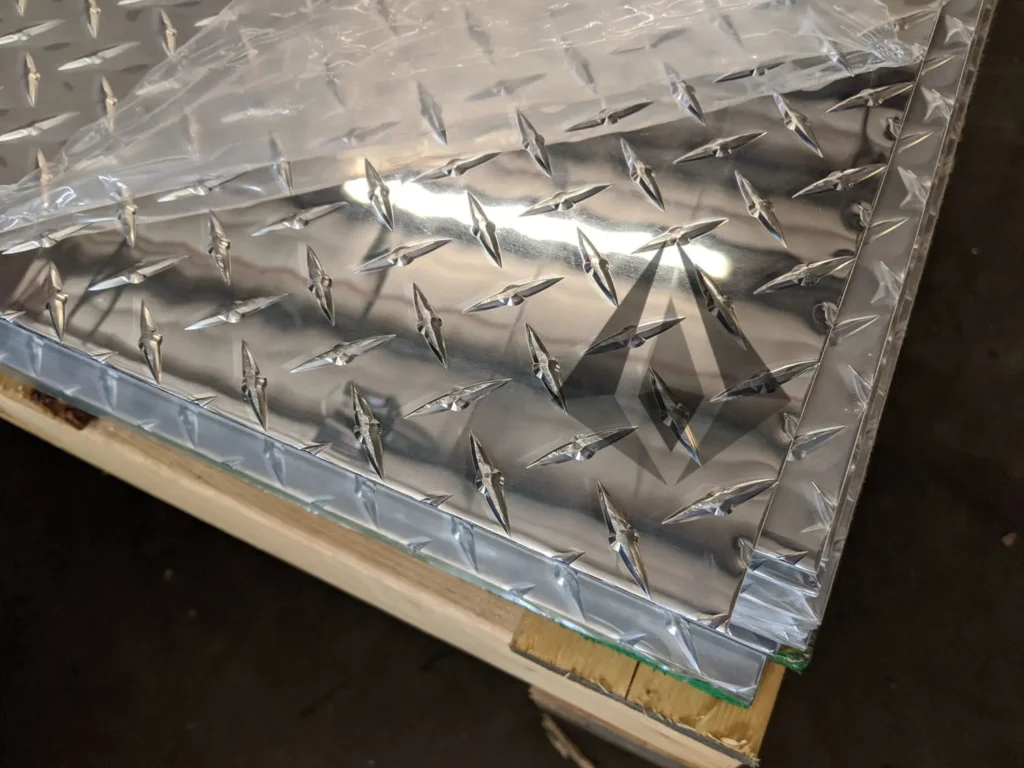
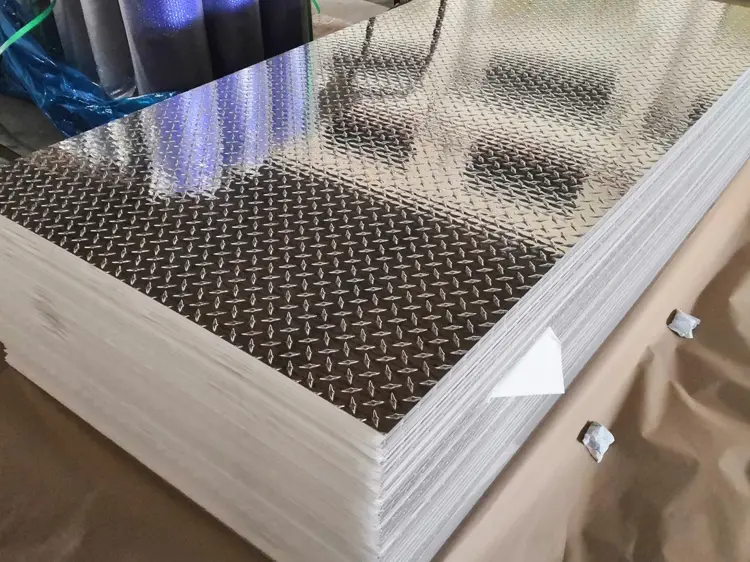
The 4×8 format is not the only common size.
Some projects may benefit from a longer 4×10 sheet.
| Feature | 4×8 | 4×10 |
|---|---|---|
| Approx. length | 96 in | 120 in |
| Handling | Easier | More demanding |
| Large panels | Good | Better |
| Cutting flexibility | Good | More material |
| Storage | Easier | Requires more space |
| Common use | General fabrication | Long panels and larger projects |
For trailers, truck bodies, and long wall panels, a longer sheet may reduce the number of joints.
When Should You Buy a Full 4×8 Sheet?
A full sheet can make sense when several parts will be cut from the same material.
It may be useful when:
- The project needs multiple panels
- Standard 4×8 dimensions fit the design
- Local cutting equipment is available
- The buyer wants to control the cutting layout
- The project requires replacement material later
For a single small part, cut-to-size material may be more convenient.
The choice is mainly between material utilization, handling, cutting cost, and shipping.
Aluminum Diamond Plate 4×8 Ordering Example

A clear specification can make a B2B quotation much faster.
Instead of asking only:
“How much is aluminum diamond plate 4×8?”
A more complete inquiry can look like this:
| Requirement | Example |
|---|---|
| Product | Aluminum Diamond Plate |
| Size | 4 × 8 ft |
| Metric Size | 1219 × 2438 mm |
| Alloy | 5052 |
| Temper | H32 |
| Thickness | 3 mm |
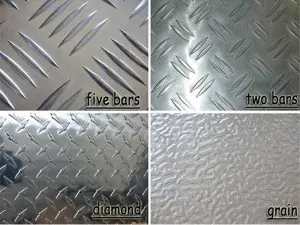
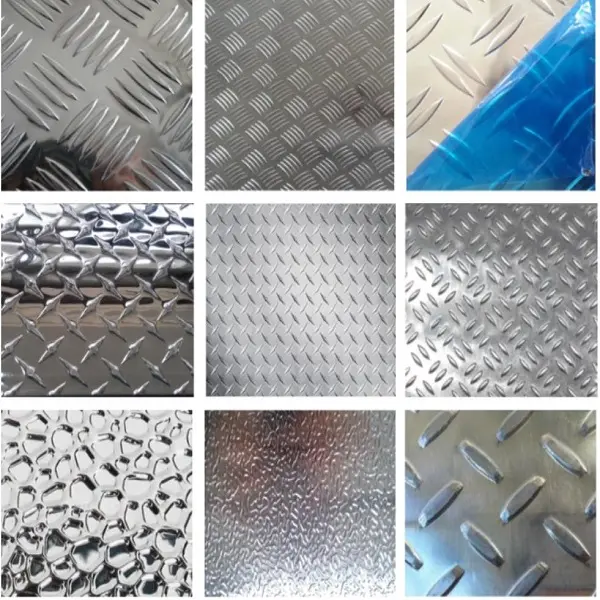
| Pattern | Diamond |
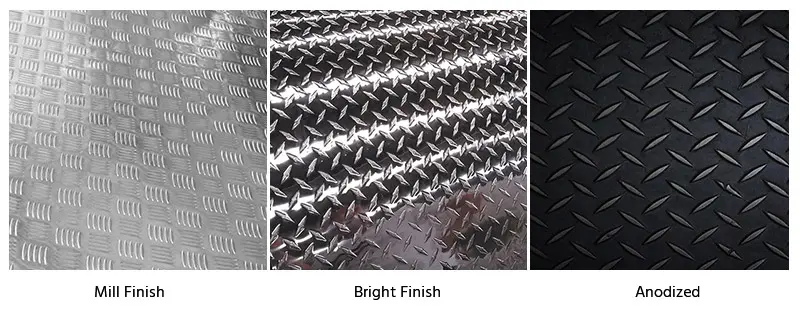
| Surface | Mill Finish |
| Quantity | 100 sheets |
| Cutting | Full Sheet |
| Application | Trailer Flooring |
This format gives the supplier the key information needed for a quotation.
What Makes a 4×8 Diamond Plate Different From a Custom Sheet?
A 4×8 sheet is a standard market size.
A custom sheet can have a different width and length.
For example:
Standard
4 × 8 ft
Long Sheet
4 × 10 ft
Metric
1500 × 3000 mm
Large Format
1500 × 6000 mm
Custom
1320 × 2600 mm
Choosing a standard size can simplify sourcing.
Choosing a custom size can reduce cutting work when the project has fixed panel dimensions.
Surface Pattern and Usable Thickness
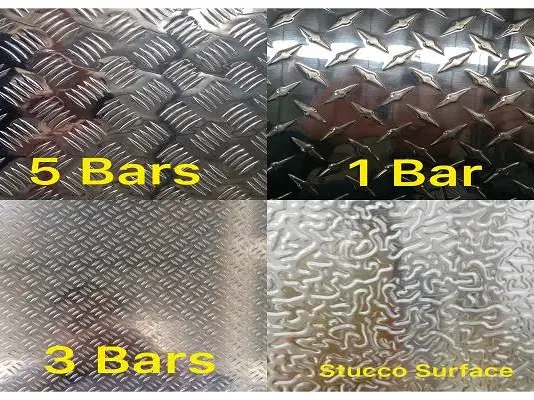
One point buyers should check is how the supplier defines thickness.
For aluminum diamond plate, the quoted thickness may refer to the base thickness or may be described differently depending on the supplier’s specification.
For this reason, buyers should confirm:
Base Thickness + Pattern Height + Total Thickness
For example:
| Specification | Information to Confirm |
|---|---|
| 2.0 mm plate | Base thickness |
| Pattern height | Raised section height |
| Total thickness | Overall surface thickness |
| Tolerance | Production tolerance |
This is particularly important when the plate needs to fit into a fixed frame, channel, or mechanical assembly.
4×8 Aluminum Diamond Plate for Fabricators
Fabricators often care about more than the material itself.
They may also need stable dimensions, flatness, clean edges, and consistent pattern quality.
A good fabrication workflow can be:
Material Selection
↓
Sheet Inspection
↓
Cutting
↓
Drilling / Bending
↓
Welding or Assembly
↓
Final Inspection
This approach is useful for trailer builders, equipment manufacturers, contractors, and metal fabrication shops.
Aluminum Diamond Plate 4×8: Full Sheet or Cut Pieces?
| Buying Method | Suitable For |
|---|---|
| Full 4×8 sheet | Fabricators and large projects |
| Half sheet | Medium projects |
| Cut-to-size | Specific components |
| Multiple cut pieces | Production orders |
| Custom large sheet | Large panels |
The right option depends on the customer’s equipment, labor cost, material usage, and project size.
4×8 Aluminum Diamond Plate Material Selection
The same 4×8 size can be supplied in different alloys.
The dimensions do not determine the material grade.
For example:
4×8 + 3003 + H14
and
4×8 + 5052 + H32
are two different products even though the sheet dimensions are the same.
The key specification is:
Size + Alloy + Temper + Thickness + Pattern
This is a better way to compare quotations from different suppliers.
Aluminum Diamond Plate 4×8 for Wholesale Buyers
For distributors, importing a standard 4×8 aluminum diamond plate can simplify inventory management.
A distributor may keep several popular combinations in stock:
| Stock Type | Example |
|---|---|
| Standard size | 4×8 ft |
| Popular alloy | 3003 |
| Higher-strength option | 5052 |
| Light thickness | 1.5–2.0 mm |
| Medium thickness | 3.0–4.0 mm |
| Heavy thickness | 5.0–6.0 mm |
This creates a product range without requiring too many different sheet sizes.
A Simple 4×8 Aluminum Diamond Plate Selection Formula
Instead of selecting a sheet based only on price, buyers can follow this simple process:
Project → Load → Alloy → Thickness → 4×8 Size → Pattern → Finish → Quantity
For example:
Trailer → Medium Load → 5052-H32 → 3mm → 4×8 → Diamond → Mill Finish → 100 Sheets
This gives a much clearer specification for suppliers and purchasing teams.
Frequently Asked Questions
What is the exact size of an aluminum diamond plate 4×8?
An aluminum diamond plate 4×8 measures exactly 48 inches wide by 96 inches long (4 ft×8 ft), which equals roughly 1.22 meters by 2.44 meters.
Can I cut a 4×8 diamond plate sheet at home?
Yes. You can cut an aluminum diamond plate 4×8 using standard woodworking tools equipped with a carbide-tipped metal-cutting blade or a jigsaw with a metal blade.
Which thickness should I pick for a trailer floor?
For standard utility trailer flooring, a thickness of 0.125 inches (1/8 inch) or 0.100 inches is recommended to safely support foot traffic and heavy cargo weight.
Does aluminum diamond plate fade outdoors?
Over time, raw aluminum can develop a dull oxidation layer when exposed to outdoor elements. Regular cleaning or choosing a treated finish helps maintain its bright silver appearance.