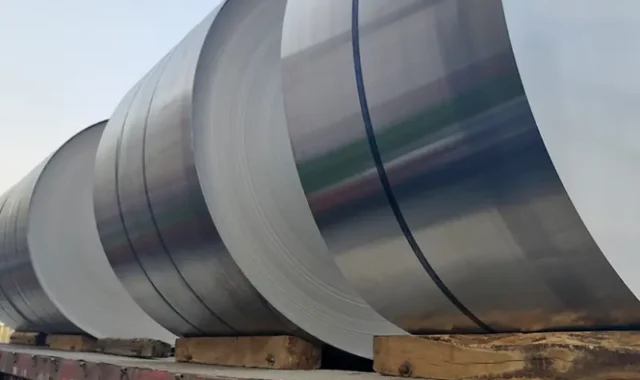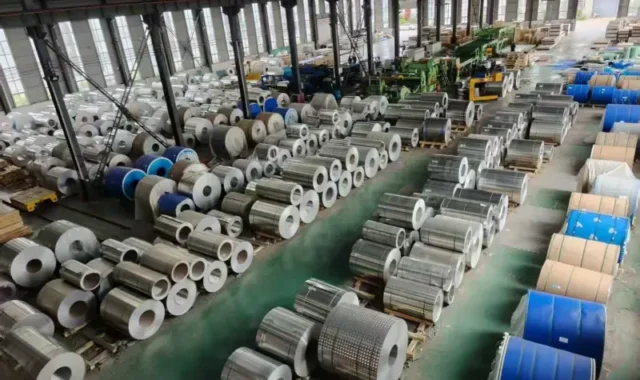
Aluminum Sheet for Building is widely used in modern buildings. It is lightweight, easy to process, and available in many finishes.
Builders use it for exterior walls, roofs, ceilings, decorative panels, window systems, and other construction projects.
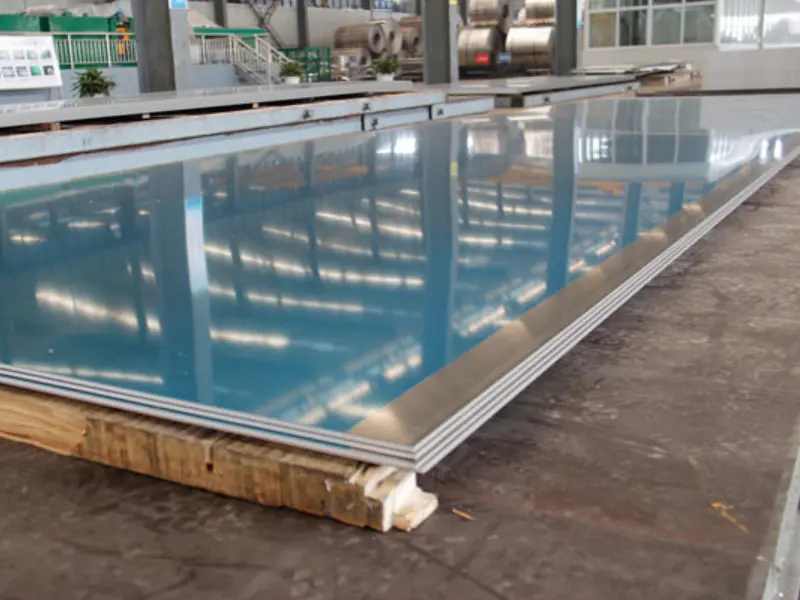
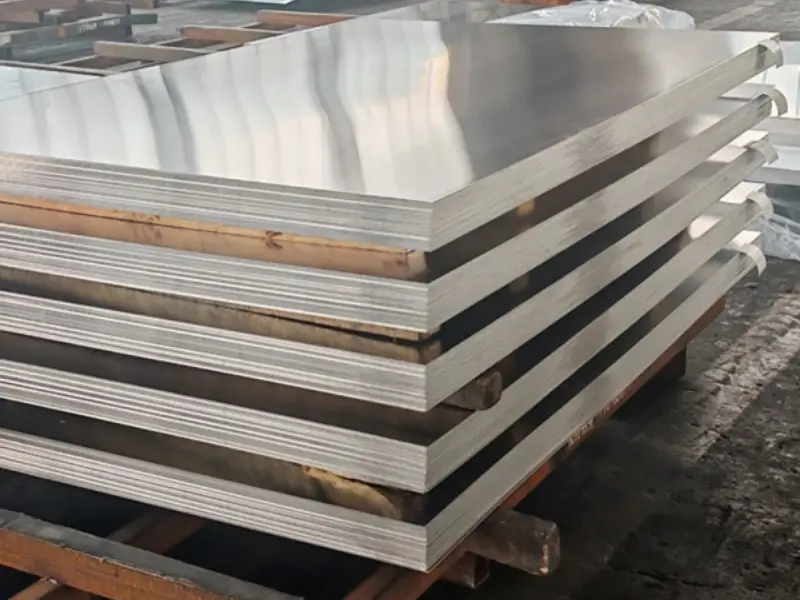
Choosing the right aluminum sheet depends on the application. Some projects need a smooth surface and attractive color. Others need good corrosion resistance, bending performance, or extra strength. Thickness, alloy, temper, and coating also affect the final result.
If you are looking for aluminum sheet for building projects, this guide explains the main product types, common specifications, suitable alloys, and practical selection methods.
What Is Aluminum Sheet for Building?
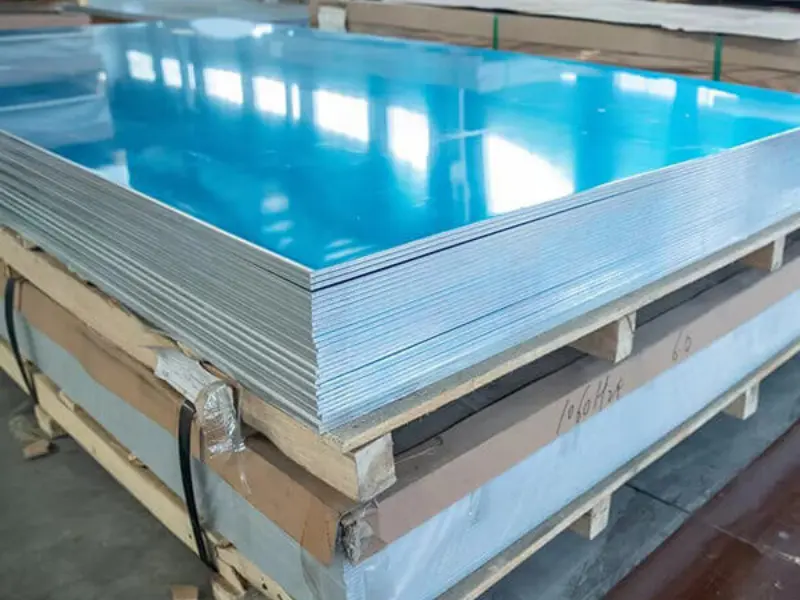
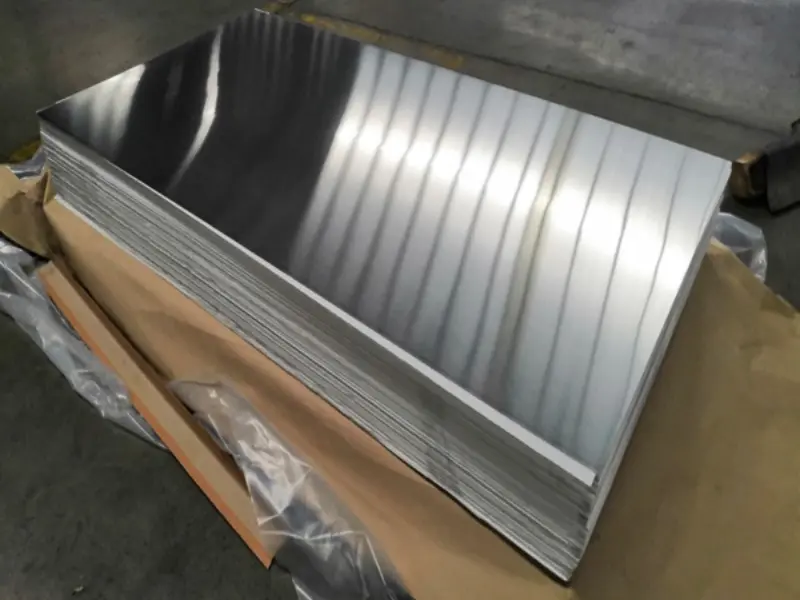
Aluminum sheet for building refers to flat aluminum material used in residential, commercial, industrial, and public construction. It can be supplied as plain sheet, painted sheet, embossed sheet, perforated sheet, or other processed products.
The material can be cut, bent, punched, rolled, and formed into different shapes. It also has a relatively low weight compared with many traditional metal materials. This helps reduce the load on building structures in suitable applications.
Common building products include:
- Aluminum roofing sheets
- Aluminum wall cladding sheets
- Color coated aluminum sheets
- Aluminum ceiling panels
- Aluminum soffit sheets
- Perforated aluminum facade panels
- Stucco embossed aluminum sheets
- Aluminum flashing and trim
- Aluminum sheets for doors and window components
- Aluminum composite panel skins
Not every aluminum sheet is suitable for every building application. The alloy, thickness, finish, installation method, and local building requirements should be checked before purchasing.
Main Types of Aluminum Sheet for Building
Different building projects require different sheet designs. The following products cover many common construction needs.
Plain Aluminum Sheet for General Construction

Plain aluminum sheet has a smooth, uncoated or mill-finished surface. It is a practical option when the sheet will receive further processing or when a simple metallic appearance is acceptable.
Typical uses include flashing, trim, covers, equipment panels, and fabricated building components.
| Common specification | Typical options |
|---|---|
| Alloy | 1050, 1060, 3003, 5052 |
| Temper | O, H14, H24, H32 |
| Thickness | 0.5–6.0 mm |
| Width | 600–1,500 mm |
| Surface | Mill finish or customer-specified finish |
These ranges are examples, not fixed product limits. Thicker plates and wider sheets may be available from some suppliers.
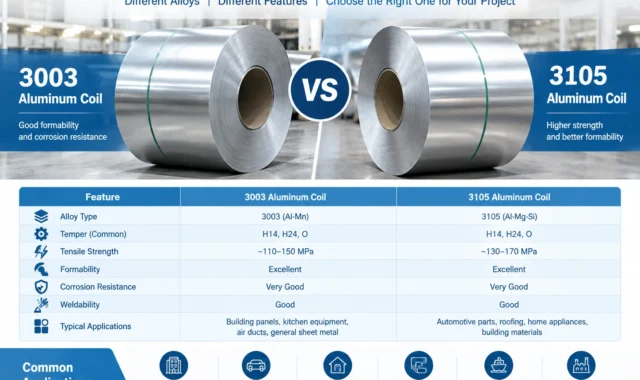
For general construction, 3003 aluminum is often considered when forming performance and corrosion resistance are important. Alloy 5052 may be suitable for components that need higher strength. The final choice depends on the design and working environment.
Color Coated Aluminum Sheet for Exterior Walls
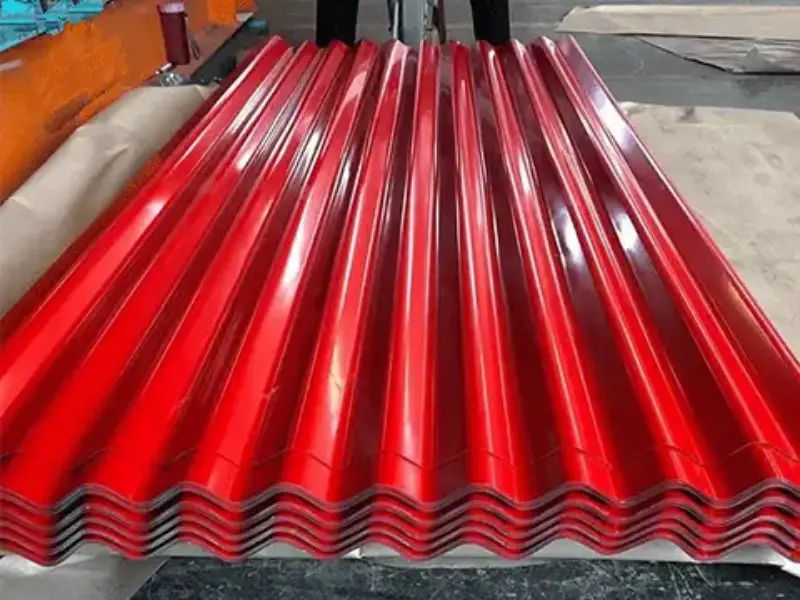
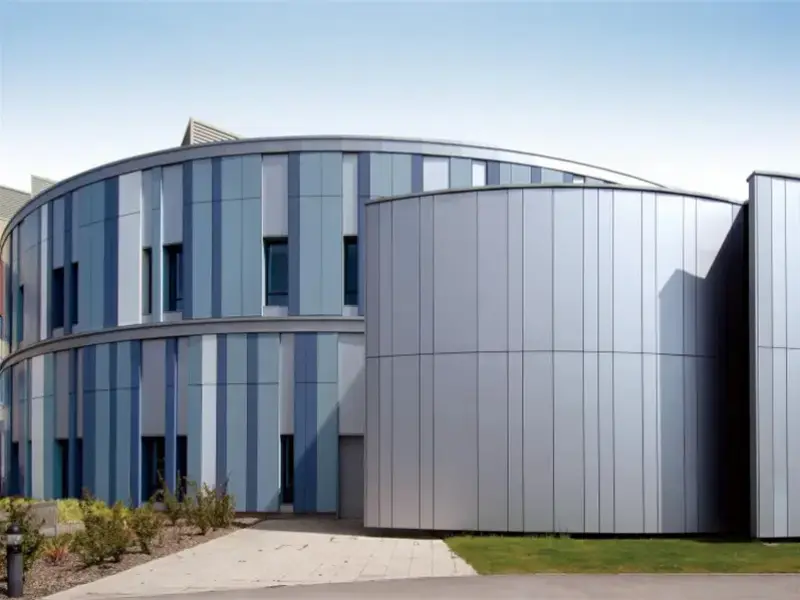
Color coated aluminum sheet has a painted surface. It is used when a building needs a consistent color and a finished exterior appearance.
The coating may be polyester (PE), high-durability polyester, or polyvinylidene fluoride (PVDF). Different coating systems offer different levels of weather resistance, color retention, and cost.
Common applications include:
- Commercial building facades
- Residential exterior decoration
- Wall panels and decorative trims
- Canopies and entrance covers
- Fascia and soffit systems
- Interior wall panels
| Feature | Typical selection |
|---|---|
| Base alloy | 3003, 3105, or other suitable alloys |
| Temper | H14, H24, or project-specific temper |
| Thickness | 0.4–2.0 mm |
| Coating | PE, PVDF, or specified coating system |
| Color | White, gray, black, metallic, or custom colors |
PE coatings may suit many general decorative applications. PVDF coatings are often considered for exterior projects with demanding weather and color-retention requirements.
Actual coating performance depends on the coating system, film thickness, pretreatment, installation, and exposure conditions.
Aluminum Roofing Sheet
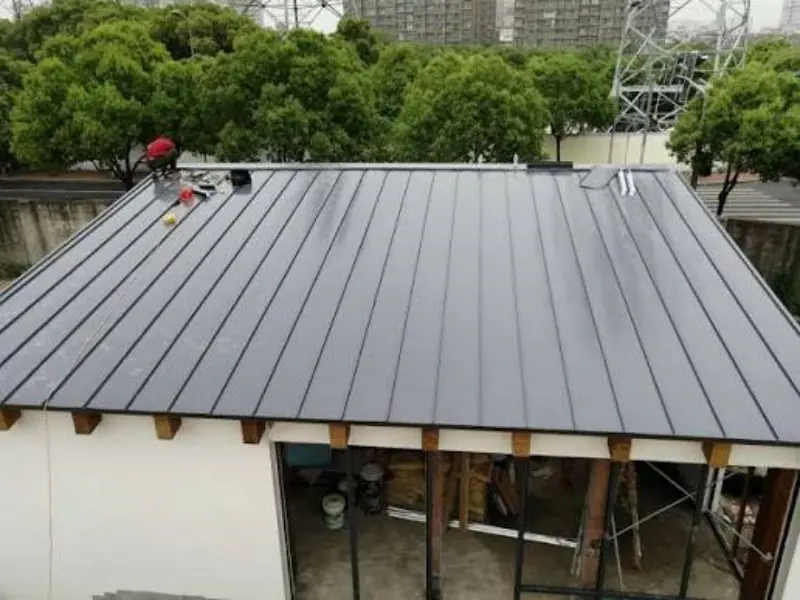
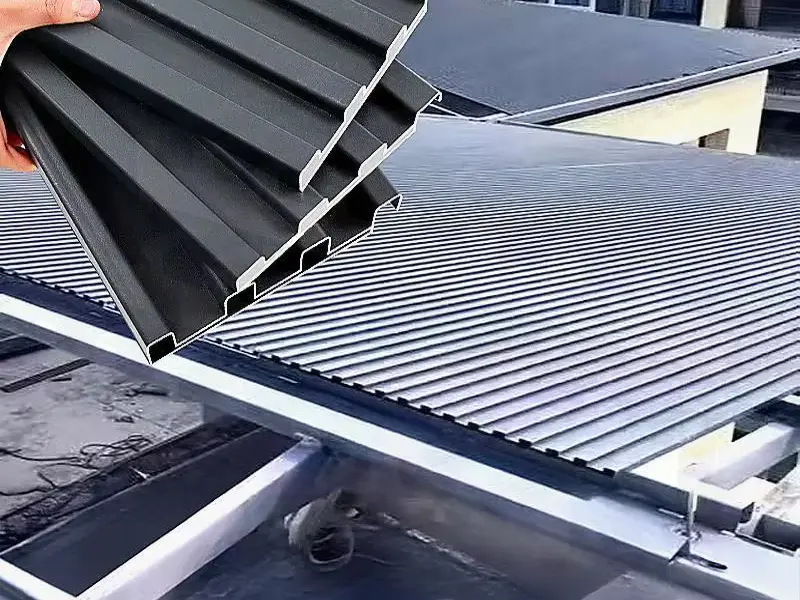
Aluminum roofing sheet is used for roofs on warehouses, factories, workshops, agricultural buildings, and some residential structures. Its low weight can be helpful for roof systems where structural load matters.
Roofing products can be supplied as flat sheets or formed into corrugated and ribbed profiles. The required shape depends on the roof design and support spacing.
| Product type | Main characteristic | Typical application |
|---|---|---|
| Flat aluminum sheet | Smooth surface | Fabricated roof components |
| Corrugated aluminum sheet | Wavy profile | Roofing and wall cladding |
| Ribbed aluminum sheet | Raised ribs | Roof systems and industrial buildings |
| Color coated roofing sheet | Painted surface | Decorative and weather-exposed roofs |
| Insulation-facing aluminum sheet | Reflective or protective facing | Selected insulation assemblies |
Aluminum roofing is not automatically waterproof as a standalone flat sheet. Correct overlaps, fasteners, flashing, drainage, and installation details are important.
Aluminum Wall Cladding Sheet
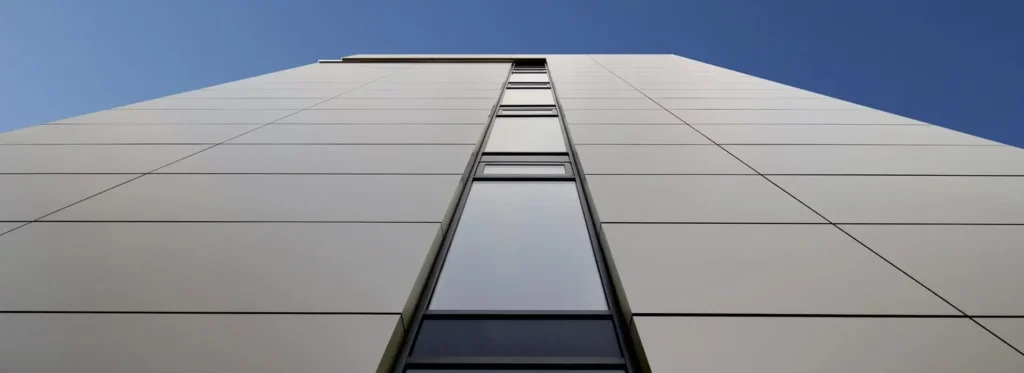
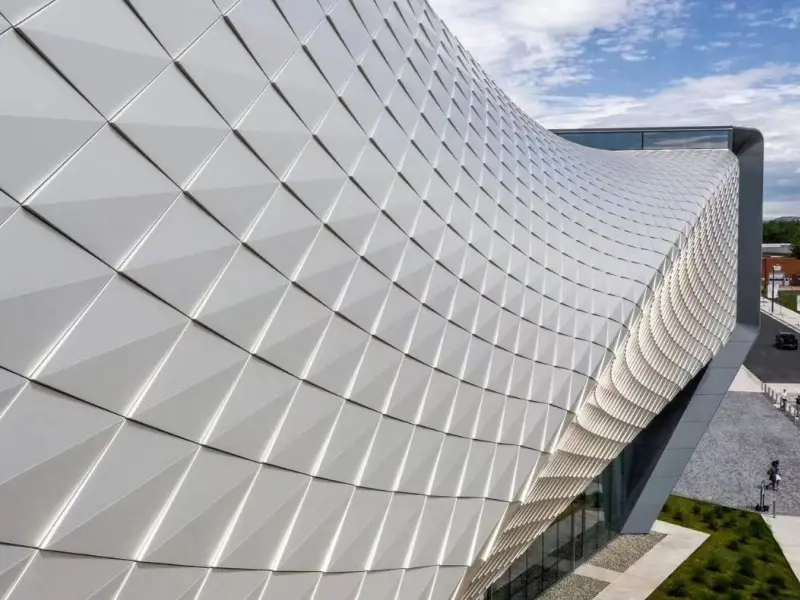
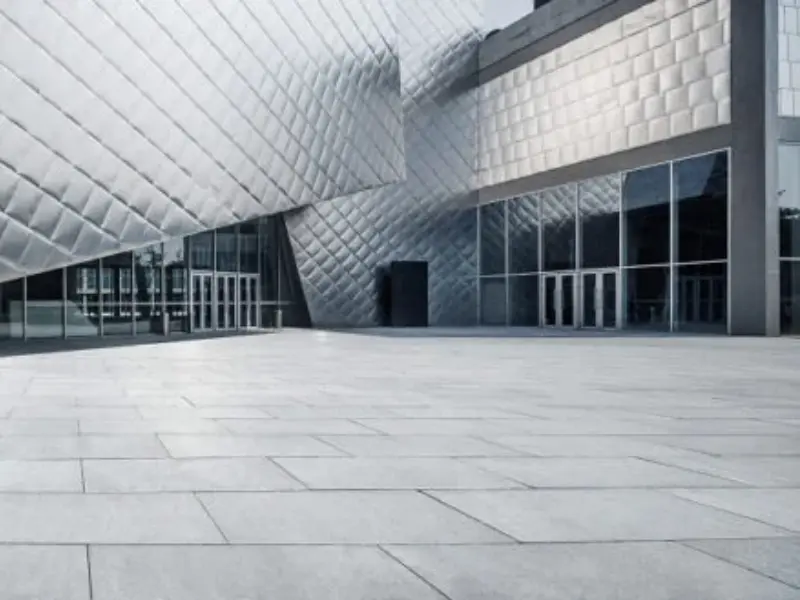
Aluminum wall cladding is used to cover and protect building exteriors. It can create a clean metallic look or a modern colored facade.
Flat sheets can be cut and folded into panels. They can also be processed into cassette panels, corner panels, trims, and other facade components.
Typical applications include:
- Office buildings
- Shopping centers
- Hotels
- Apartment buildings
- Hospitals and schools
- Industrial facilities
- Entrance and lobby decoration
For exterior cladding, buyers should check flatness, coating quality, forming requirements, wind-load design, and fixing details. The panel thickness should be selected according to the panel size and support system rather than appearance alone.
Perforated Aluminum Sheet for Facades and Screens
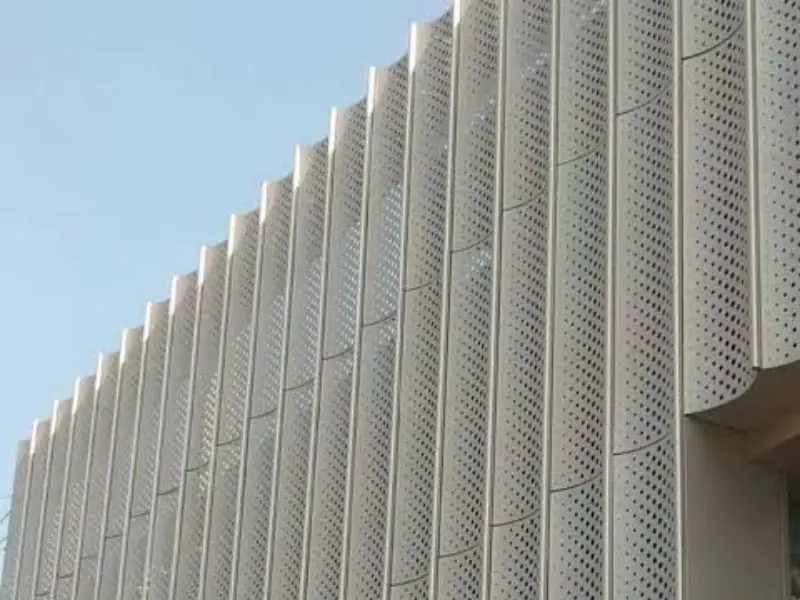
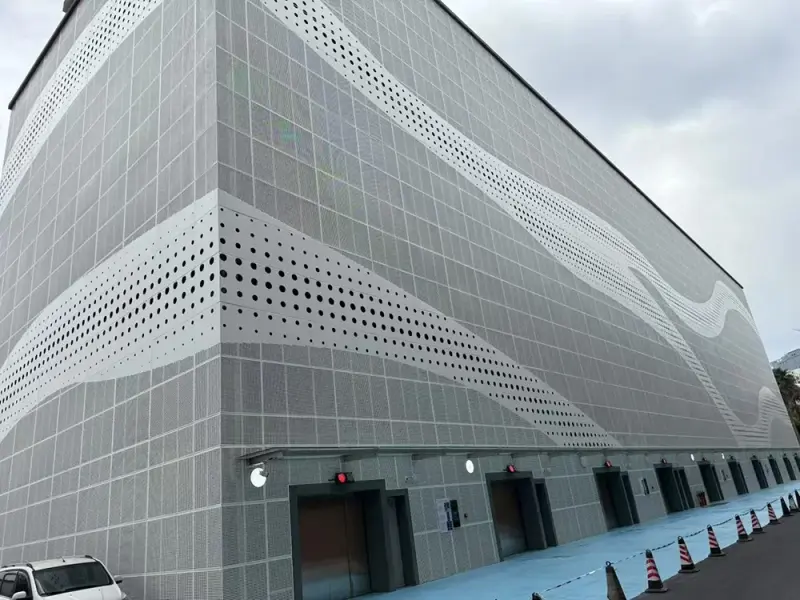
Perforated aluminum sheet contains regularly spaced holes. Hole shape, hole diameter, spacing, and open area can be customized.
This product is used where designers want a lighter visual appearance, airflow, partial screening, or filtered daylight.
Common applications include:
- Ventilated facade screens
- Balcony privacy screens
- Parking garage facades
- Sunshades
- Decorative partitions
- Equipment covers
- Ceiling panels
Perforated sheet has less solid material than an unperforated sheet of the same dimensions. The hole pattern can therefore affect stiffness and load capacity. For large panels or exposed installations, engineering review may be necessary.
Stucco Embossed Aluminum Sheet
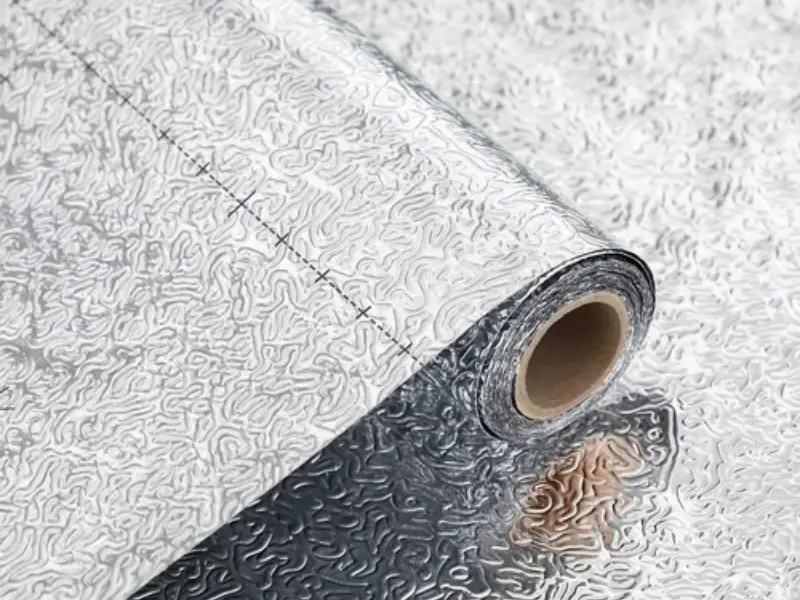
Stucco embossed aluminum sheet has a textured surface. The pattern changes the appearance and may help conceal minor surface marks.
It is used in selected building and building-service applications, including insulation jacketing, equipment cladding, interior panels, and protective covers.
| Item | Common options |
|---|---|
| Alloy | 1050, 1060, 3003, 3105 |
| Temper | O, H14, H24 |
| Thickness | 0.3–1.5 mm |
| Surface | Stucco embossed |
| Additional finish | Plain or coated, subject to availability |
Embossed aluminum is not only a decorative product. It can also be selected for practical fabrication and surface requirements. The pattern, thickness, and alloy should match the intended use.
Aluminum Soffit and Ceiling Sheet
Soffit sheet covers the underside of roof edges and overhangs. Aluminum ceiling sheet is used in interior spaces and selected covered outdoor areas.
These products may be plain, painted, perforated, or formed into linear panels. Perforated versions can be combined with an appropriately designed acoustic backing where sound control is required.
Typical applications include:
- Roof eaves
- Covered walkways
- Shopping mall ceilings
- Office interiors
- Building corridors
- Entrance canopies
For ceiling and soffit systems, surface appearance, panel flatness, corrosion resistance, and installation compatibility are important purchasing factors.
Aluminum Flashing, Trim, and Edge Sheet
Aluminum sheet is frequently fabricated into narrow profiles and folded parts. These products help cover joints, edges, corners, and transitions in a building envelope.

Examples include:
- Roof flashing
- Window and door trim
- Corner covers
- Fascia panels
- Drip edges
- Parapet caps
- Gutter components
- Wall panel finishing strips
For these applications, the ability to bend without cracking may matter more than maximum strength. Alloy and temper should be chosen according to the bend radius, sheet thickness, and fabrication method.
Aluminum Composite Panel Skins
Aluminum composite panels generally consist of two aluminum skins bonded to a core. They are different from solid aluminum sheets.
The aluminum skins are often thin, while the complete panel provides its overall thickness and structural behavior. Composite panels are used for architectural facades, signs, and decorative surfaces.
Buyers should not compare the total thickness of an aluminum composite panel directly with the thickness of a solid aluminum sheet. They are different products with different properties, installation methods, and fire-performance requirements.
Aluminum Sheet Alloys for Building Projects
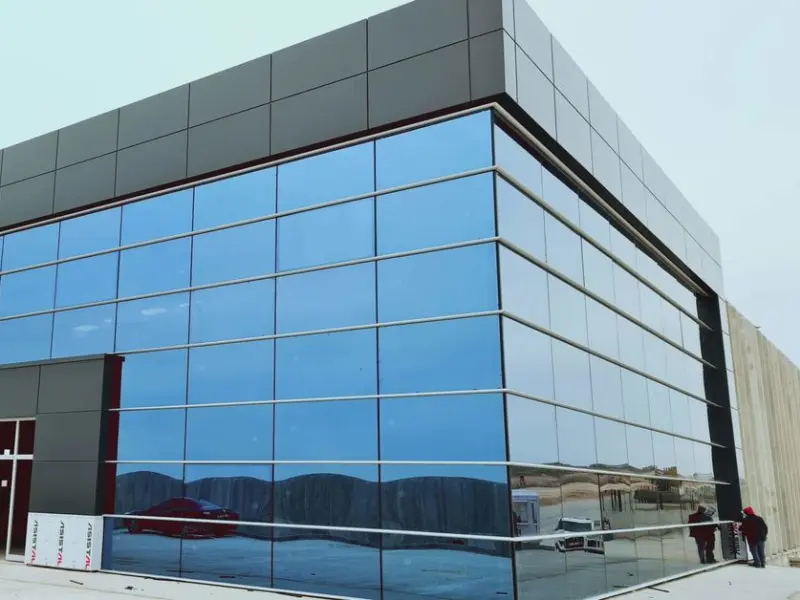
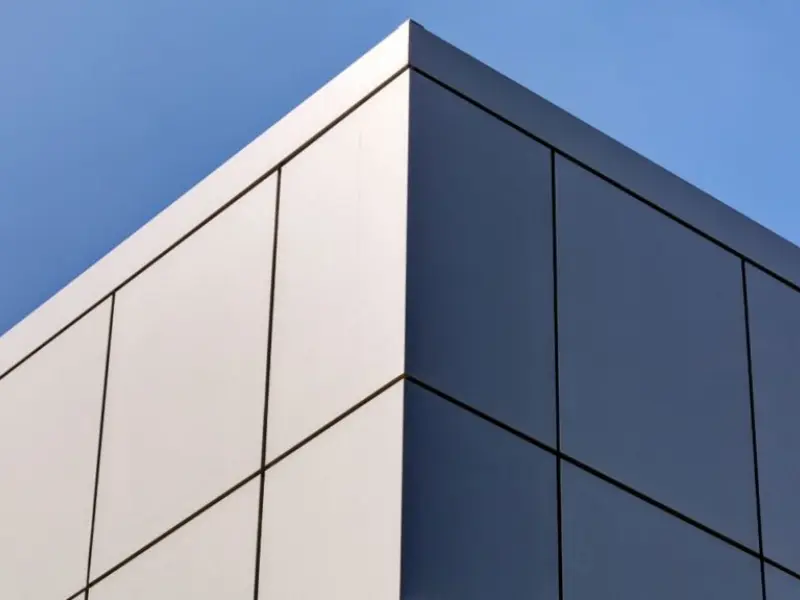
Alloy selection affects strength, corrosion resistance, forming performance, and cost. The most suitable alloy depends on the building component and fabrication process.
Common Aluminum Alloy Comparison
| Alloy | Main characteristics | Potential building uses |
|---|---|---|
| 1050 | High aluminum purity, good formability | Reflective surfaces, simple covers, selected decorative parts |
| 1060 | High purity and good forming performance | General sheet fabrication and selected building components |
| 3003 | Good formability and corrosion resistance | Roofing components, wall panels, flashing |
| 3105 | Commonly used in building and painted sheet products | Siding, roofing, color coated sheet |
| 5005 | Suitable for architectural applications and anodizing in selected finishes | Decorative panels and architectural trim |
| 5052 | Higher strength than many common 1xxx alloys, good corrosion resistance | Fabricated panels and exposed components |
| 6061 | Heat-treatable alloy with good strength | Structural or machined components where design permits |
This table is a starting point for product selection. It does not mean every listed alloy is suitable for every facade or roofing system.
1050 and 1060 Aluminum Sheet for Building

Alloys 1050 and 1060 are commonly selected when high aluminum content and good formability are important. They can be useful for simple covers, reflective parts, and certain decorative applications.
They are not always the best choice for large, highly loaded building panels. If the design requires higher strength, a different alloy may be more suitable.
3003 and 3105 Aluminum Sheet for Building
Alloys 3003 and 3105 are relevant to many general building sheet applications. They can offer a useful balance of formability, corrosion resistance, and practical fabrication.
They are often considered for painted sheet, roofing components, wall cladding, and formed building parts. The exact temper and thickness should be matched to the forming operation and final design.
5005 and 5052 Aluminum Sheet for Building
Alloy 5005 may be considered for architectural panels where surface appearance and anodizing compatibility are important. Alloy 5052 is often considered when higher strength and corrosion resistance are needed.
For coastal areas, industrial environments, and other demanding locations, the whole material system matters. Surface finish, fasteners, dissimilar-metal contact, drainage, and maintenance can all affect service life.
6061 Aluminum Sheet and Plate
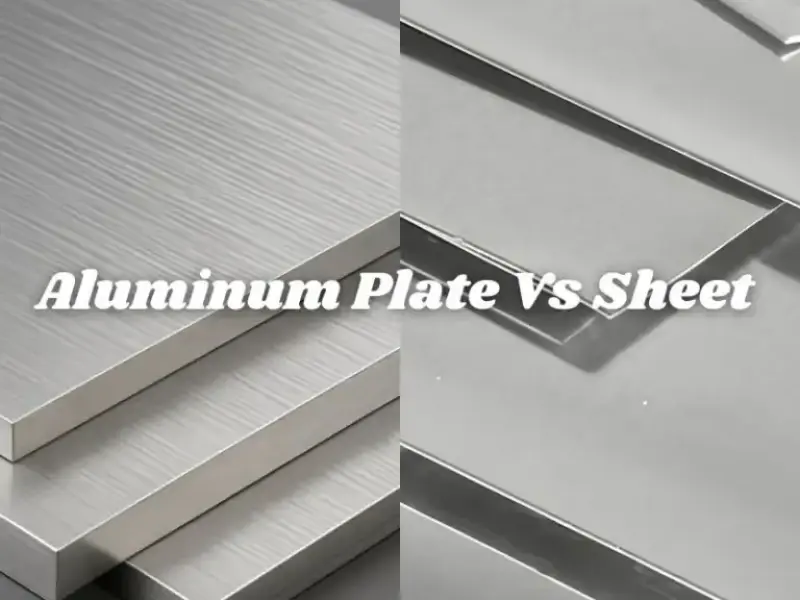
Alloy 6061 is a heat-treatable material available in several tempers. It may be used for machined parts, structural components, brackets, and fabricated elements designed around its properties.
It is not a universal replacement for architectural sheet alloys. For thin, highly formed panels, other alloys may provide more suitable forming behavior.
Aluminum Sheet for Building Tempers: O, H14, H24, and T6
Temper describes the condition of the aluminum after processing. It affects strength, hardness, and forming performance.
| Temper | General meaning | Selection notes |
|---|---|---|
| O | Annealed, relatively soft condition | Useful when high formability is needed |
| H14 | Strain-hardened and partially annealed condition | Used for selected formed sheet products |
| H24 | Strain-hardened and partially annealed condition | Commonly considered for some building sheet applications |
| H32 | Strain-hardened and stabilized condition | Used for suitable 5xxx alloy products |
| T6 | Solution heat-treated and artificially aged | Used for appropriate heat-treatable alloys and applications |
Not every alloy is available or appropriate in every temper. For example, 6061-T6 and 3003-H14 are different alloy-temper combinations with different mechanical properties.
If the sheet will be bent into a tight profile, ask the supplier to confirm bendability for the selected alloy, temper, and thickness.
Aluminum Sheet Thickness for Building

Thickness is one of the most important purchasing decisions. A thin sheet may work for trim or a small decorative cover. A larger exterior panel may need greater thickness or additional stiffening.
The correct thickness depends on panel dimensions, support spacing, wind pressure, fastening method, forming, and project requirements.
Common Thickness Options and Applications
| Thickness | Possible applications | Key consideration |
|---|---|---|
| 0.3–0.5 mm | Selected trim, thin coated sheet, light covers | Support and dent resistance |
| 0.6–0.8 mm | Some formed panels and soffit products | Panel size and fixing method |
| 0.9–1.2 mm | Selected wall panels and fabricated parts | Flatness and stiffness |
| 1.5–2.0 mm | Heavier cladding panels and formed components | Weight, span, and support design |
| 2.5–3.0 mm | Selected architectural panels and fabricated parts | Panel stiffness and processing |
| 4.0–6.0 mm | Heavy-duty covers, base plates, and special building components | Engineering and installation requirements |
These are illustrative ranges, not structural design recommendations. A panel’s shape, width, length, support spacing, and loading can change the required thickness significantly.

0.5 mm vs. 1.0 mm Aluminum Sheet for Building


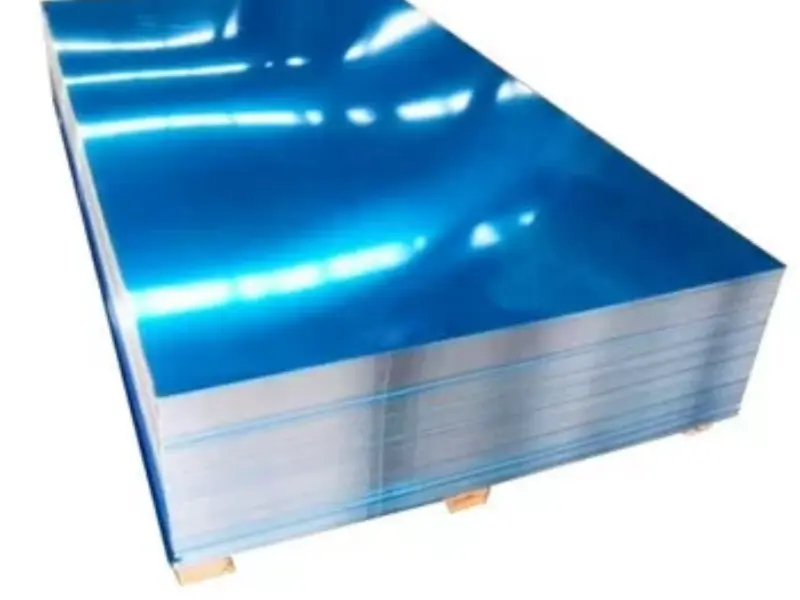
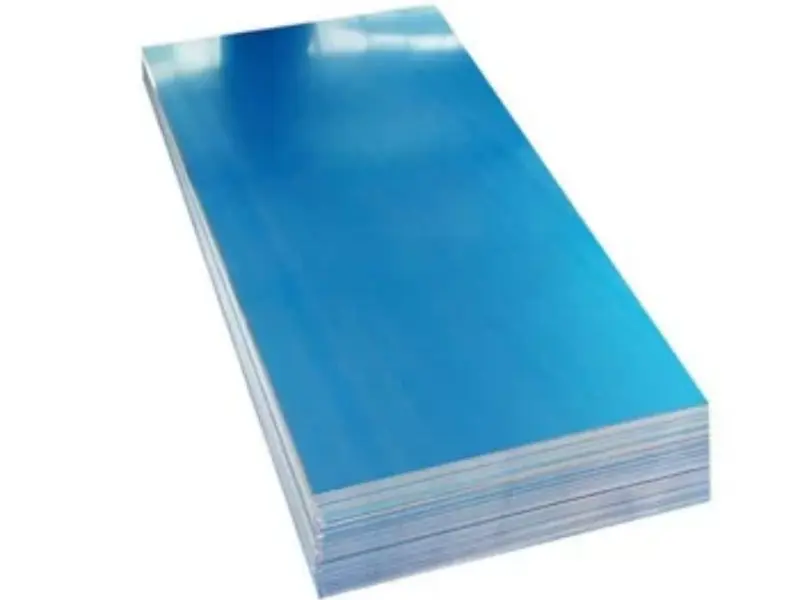
A 0.5 mm sheet is lighter and may be easier to form into simple profiles. It can suit certain trims and lightweight products when properly supported.
A 1.0 mm sheet is thicker and may offer better resistance to handling damage and deformation in comparable designs. However, thickness alone does not establish whether a panel is safe for a specific facade.
1.5 mm vs. 2.0 mm Aluminum Sheet for Building
A 1.5 mm sheet may be suitable for some formed panels and architectural components. A 2.0 mm sheet provides more material and may be preferred for larger or more demanding fabricated parts.
The trade-off is additional weight, material cost, and potentially different forming requirements. Ask the manufacturer to assess the panel dimensions and support system before choosing.
4×8 Aluminum Sheet for Building

A 4×8 aluminum sheet usually refers to a nominal sheet size of 4 feet by 8 feet, approximately 1,219 x 2,438 mm.
This size is useful for many cutting and fabrication projects. It can reduce the need for custom-width processing when the panel layout matches the standard format.
Before ordering, confirm:
- Actual width and length
- Thickness tolerance
- Alloy and temper
- Surface finish and protective film
- Flatness requirements
- Cutting allowance and nesting plan
Other dimensions can be requested for projects with special panel layouts.
Aluminum Sheet Finishes for Architectural Use
Surface finish affects appearance, cleaning, and weather exposure. It should be selected based on the building design and maintenance plan.
Mill Finish Aluminum Sheet for Building
Mill finish has a basic metallic appearance without a decorative paint layer. It is often used for parts that will be processed further or where a simple finish is acceptable.
Color Coated Aluminum Sheet for Building

Color coated sheet is suitable when the project requires a consistent color. Popular choices include white, gray, black, silver, and custom architectural colors.
The coating system should be specified according to the intended environment. Buyers should confirm coating type, coating thickness, color tolerance, and protective-film requirements.
Anodized Aluminum Sheet for Building
Anodizing creates an oxide layer on the aluminum surface. It is used for selected architectural and decorative products where a metallic appearance and surface durability are desired.
The final appearance depends on the alloy, pretreatment, anodizing process, and color. Not every alloy produces the same anodized finish.
Embossed and Patterned Aluminum Sheet for Building
Embossed sheet adds texture to the surface. Other patterns may be produced through forming or specialized finishing.
These products can be useful for decorative panels, equipment covers, and selected interior applications. Pattern depth and sheet thickness should be considered together.
Aluminum Sheet for Building: Applications by Project
Aluminum sheet serves different purposes across the building envelope and interior.
Residential Buildings

Common applications include:
- Roof edge flashing
- Window and door trim
- Soffits and eaves
- Decorative wall panels
- Canopies and porch covers
- Selected roofing components
- Interior decorative panels
The product should match the building style, local climate, and maintenance requirements.
Commercial Buildings
Offices, hotels, shopping centers, and public buildings may use aluminum sheet for:
- Exterior wall cladding
- Entrance canopies
- Column covers
- Decorative facade screens
- Ceiling systems
- Signage and trim
- Roof and drainage details
Large facade panels need careful planning for movement, fastening, drainage, wind loads, and thermal expansion.
Industrial Buildings and Warehouses
Industrial construction often focuses on durability, practical installation, and maintenance.
Potential applications include:
- Roofing and wall systems
- Equipment enclosures
- Protective covers
- Insulation jacketing
- Ventilation screens
- Service-area panels
- Fabricated flashing and trim
The required alloy and finish depend on the exposure conditions and the equipment or structure being covered.
Coastal and High-Humidity Buildings
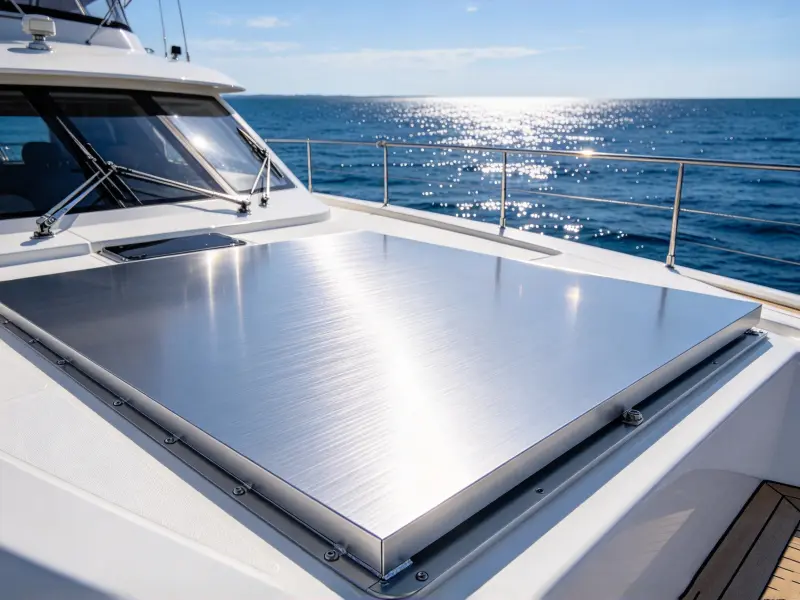
In coastal environments, corrosion resistance is a key concern. Aluminum may be a suitable material for selected applications, but it is not immune to every form of corrosion.
Consider the alloy, coating, fasteners, drainage, and contact with other metals. Salt deposits and trapped moisture can affect performance. The full assembly should be designed for the exposure conditions.
Aluminum Sheet vs. Steel Sheet for Building
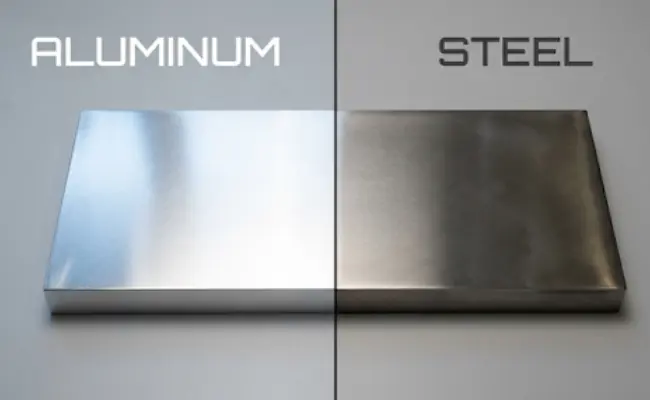
Aluminum and steel are both used in construction. They have different weights, strength characteristics, corrosion behavior, and fabrication requirements.
| Comparison | Aluminum sheet | Steel sheet |
|---|---|---|
| Weight | Lower density | Higher density |
| Strength | Depends on alloy and temper | Depends on steel grade and thickness |
| Corrosion protection | Alloy and finish dependent | Often requires a suitable coating or other protection |
| Forming | Good in suitable alloys and tempers | Depends on grade and thickness |
| Thermal expansion | Relatively high | Generally lower than aluminum |
| Appearance | Metallic, painted, anodized, or textured | Painted, coated, or metallic finishes |
| Purchasing cost | Varies by alloy, finish, and market | Varies by grade, coating, and market |
Aluminum can help reduce material weight. Steel may offer higher strength for a given thickness in many applications. The correct comparison must use the actual grades, dimensions, and design loads rather than material names alone.
Solid Aluminum Sheet vs. Aluminum Composite Panel
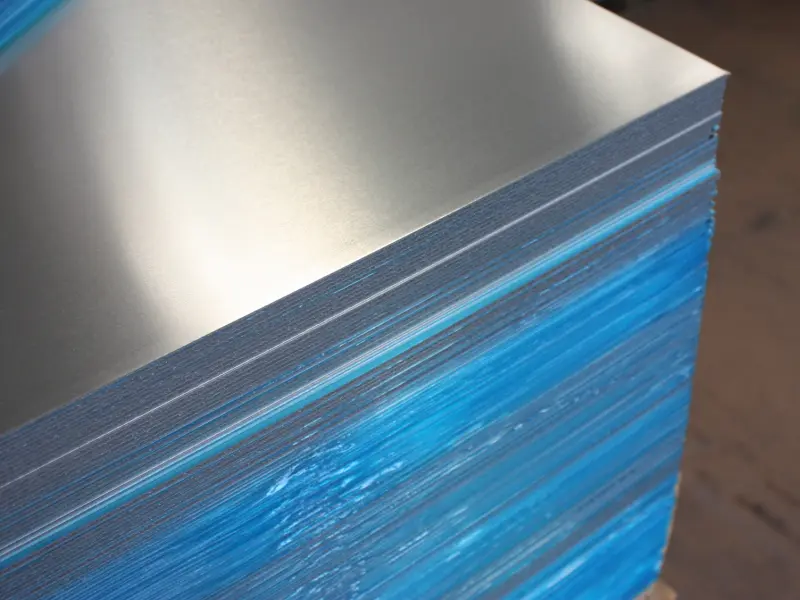
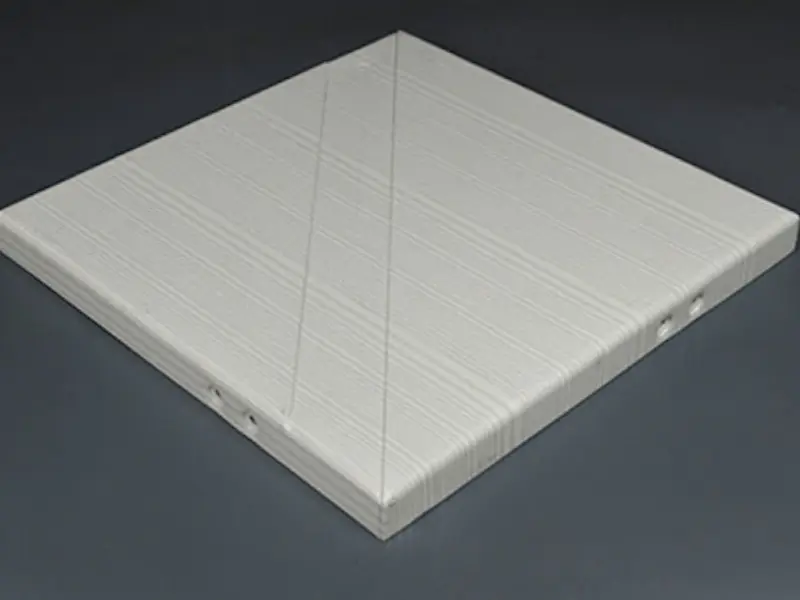
These products can look similar after installation, but their construction is different.
| Feature | Solid aluminum sheet | Aluminum composite panel |
|---|---|---|
| Structure | Solid aluminum throughout | Aluminum skins bonded to a core |
| Processing | Cutting, bending, punching, forming | Panel cutting, routing, folding, and system-specific processing |
| Thickness | Refers to the aluminum material | Often refers to the complete composite panel |
| Typical use | Trim, formed panels, covers, solid cladding parts | Facades, signage, and decorative panels |
| Main purchasing concern | Alloy, temper, thickness, finish | Skin thickness, core, fire performance, bonding, and system design |
For exterior facades, check the building code and fire requirements that apply to the complete installed system. Do not select a composite panel based on appearance alone.
How to Choose the Right Aluminum Sheet for Building
A practical selection process helps reduce material waste and purchasing mistakes.
Start with the Application
Identify whether the sheet will be used for roofing, cladding, soffits, trim, a ceiling, or a fabricated component. Different uses require different mechanical and surface properties.
Confirm Alloy, Temper, and Thickness
Provide the supplier with the expected panel size, forming method, and working environment. If you already have a drawing or specification, share it for review.
Select the Surface Finish
Choose between mill finish, painted, anodized, embossed, or another specified surface. For outdoor applications, consider UV exposure, rain, humidity, salt, and cleaning requirements.
Check the Fabrication Requirements
Confirm whether the sheet needs to be bent, punched, rolled, welded, or cut to a special dimension. Ask about minimum bend radius, protective film, flatness, and edge quality where relevant.
Review Delivery and Quality Requirements
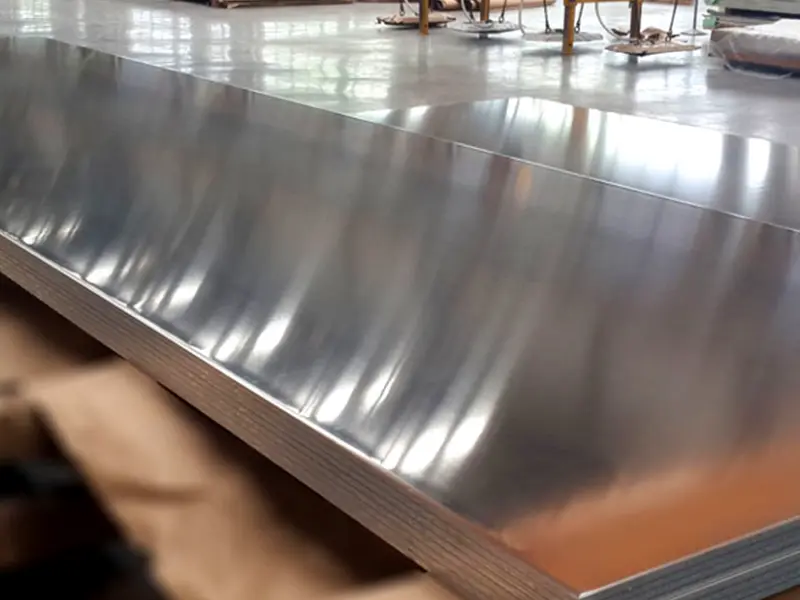
Before ordering, clarify the following points:
- Alloy and temper
- Nominal thickness and tolerances
- Sheet dimensions
- Surface finish and color
- Required quantity
- Packaging method
- Inspection documents
- Production lead time
- Shipping destination and delivery terms
The supplier can then prepare a quotation based on a clear specification rather than a general product name.
Aluminum Sheet Manufacturing and Quality Checks
The manufacturing route depends on the alloy and product type. A typical rolled-sheet process may include:
Ingot preparation → Hot rolling → Cold rolling → Annealing or temper control → Surface finishing → Cutting and slitting → Inspection → Packaging
For color coated aluminum sheet, the process may also include surface pretreatment and coating.
Important quality checks may include:
- Thickness and dimensional inspection
- Surface appearance
- Flatness
- Mechanical properties when specified
- Coating quality and color consistency
- Protective-film condition
- Packaging and identification
Not every order requires the same inspection plan. Buyers should specify any project-related testing or documentation before production starts.
Packaging and Shipping for Building Aluminum Sheet
Aluminum sheet should be packed to reduce scratches, bending, moisture exposure, and damage during transport.
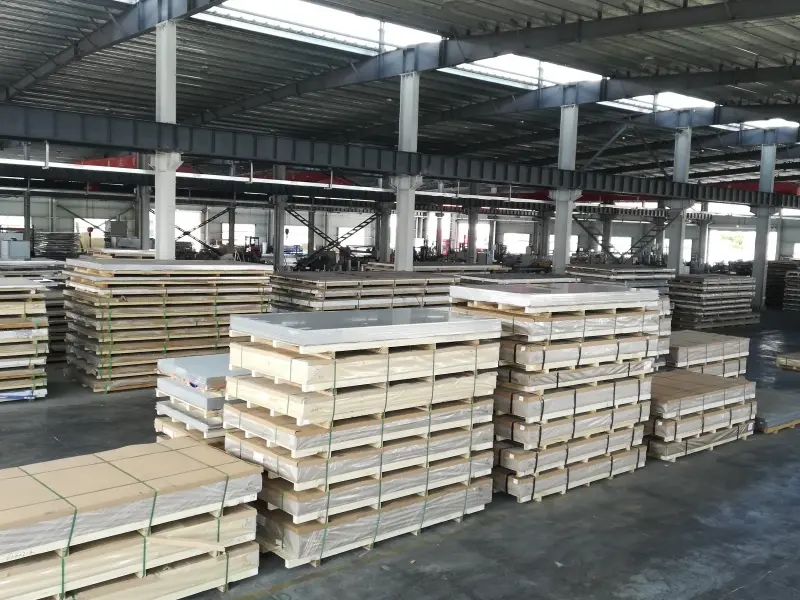
Depending on the product and destination, packaging may include protective film, interleaving paper, moisture-resistant wrapping, wooden pallets, or wooden cases.
For export orders, confirm the package dimensions and weight. Also check whether the cargo will be shipped by container, truck, or another method. Large or long sheets may require special handling.
For coated sheet, make sure the protective film and storage instructions are suitable for the planned transit and installation period.
Why Work with an Aluminum Sheet Supplier?
A suitable supplier should help you match the product to the application, not just provide a price per ton.
When comparing suppliers, consider:
- Experience with architectural and building sheet
- Available alloys, tempers, and thicknesses
- Color and surface-finish options
- Cutting and processing capabilities
- Dimensional tolerance control
- Quality inspection and documentation
- Packaging for domestic or export delivery
- Communication during sampling and production
If your project requires a non-standard dimension or coating, provide the drawing and technical details before requesting a final quotation.
Request a Quote for Aluminum Sheet for Building
To receive a useful quotation, include as much product information as possible.
| Information | Example |
|---|---|
| Product | Color coated aluminum sheet |
| Alloy | 3003 or another approved alloy |
| Temper | H14 or project-specific temper |
| Thickness | 1.0 mm |
| Size | 1,219 x 2,438 mm |
| Surface | PVDF or PE coating, as required |
| Color | RAL color or physical sample |
| Quantity | Required sheets or total weight |
| Application | Exterior wall cladding |
| Destination | Delivery port or project location |
If you are unsure which specification is suitable, share the intended application and panel dimensions first. The supplier can help identify options for technical review and quotation.
Frequently Asked Questions About Aluminum Sheet for Building
Which aluminum alloy is best for building applications?
There is no single best alloy for every building project. Alloys 3003 and 3105 are often considered for general building sheet and painted products. Alloy 5052 may suit applications that need higher strength and corrosion resistance. The final choice depends on the design, temper, finish, and exposure conditions.
What thickness of aluminum sheet is used for building?
Thickness varies with the application. Thin sheets may be used for trim and lightweight covers. Thicker sheets may be selected for larger fabricated panels and heavy-duty components. Panel size, support spacing, loading, and installation method should guide the final selection.
Is aluminum sheet suitable for exterior walls?
Yes, suitable aluminum sheet products are used for exterior wall cladding and decorative facades. The alloy, thickness, coating, fixing system, and weatherproofing details must be selected for the project. Large panels should be checked against relevant structural and building-code requirements.
Can aluminum sheet be used for roofing?
Yes. Aluminum sheet is used in various roofing systems, including corrugated and ribbed profiles. Roof design, drainage, fasteners, overlaps, and flashing details are important. The material should be selected for the expected exposure and structural requirements.
What is the difference between PE and PVDF coated aluminum sheet?
PE and PVDF are different coating systems. PE is commonly used for general decorative applications. PVDF is often selected for exterior projects that require stronger weathering and color-retention performance. Actual performance depends on the complete coating specification and exposure conditions.
Is 3003 aluminum sheet suitable for building cladding?
3003 aluminum sheet can be considered for selected cladding and formed building products. Suitability depends on the thickness, temper, panel dimensions, finish, and design loads. Confirm the full specification with the panel manufacturer or project engineer.
Can aluminum sheet be bent for building panels?
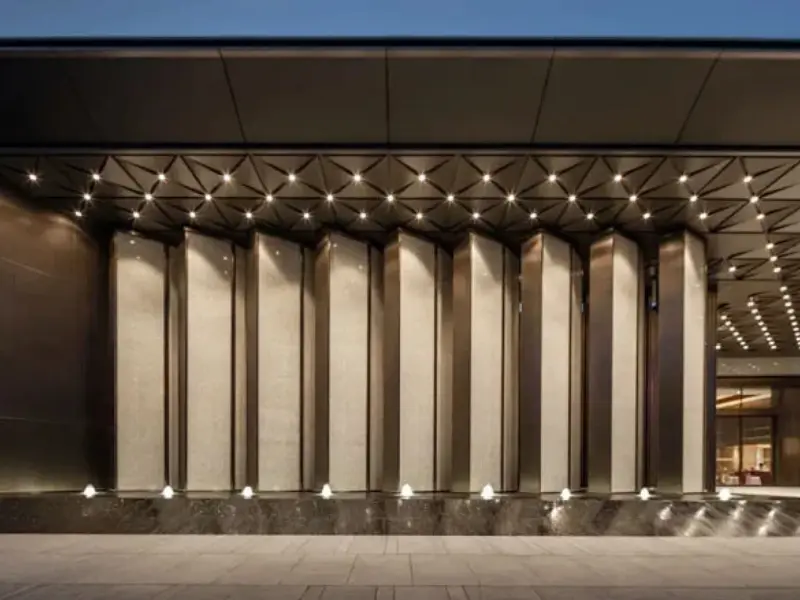
Yes. Aluminum sheet can be bent and formed when the alloy, temper, thickness, and bend radius are suitable. Some combinations are more formable than others. A trial bend or supplier confirmation may be useful for tight bends and visible architectural surfaces.
What is the difference between aluminum sheet and aluminum plate?
The terms are sometimes used differently by suppliers and markets. Sheet generally refers to thinner flat material, while plate usually refers to thicker material. There is no single universal thickness boundary for every industry. Always specify the exact thickness and dimensions when ordering.
Can aluminum sheet be supplied in custom sizes?
Many suppliers can provide custom widths, lengths, cut pieces, or formed products, depending on their equipment. Minimum order quantities and processing limits may apply. Provide a drawing or dimension list to confirm feasibility.
Does aluminum sheet need a coating for outdoor use?
Not every outdoor application needs the same coating. Some products use a mill finish, while others require paint, anodizing, or another protective finish. The right choice depends on the alloy, appearance requirements, climate, and maintenance plan.
How do I calculate the weight of aluminum sheet?
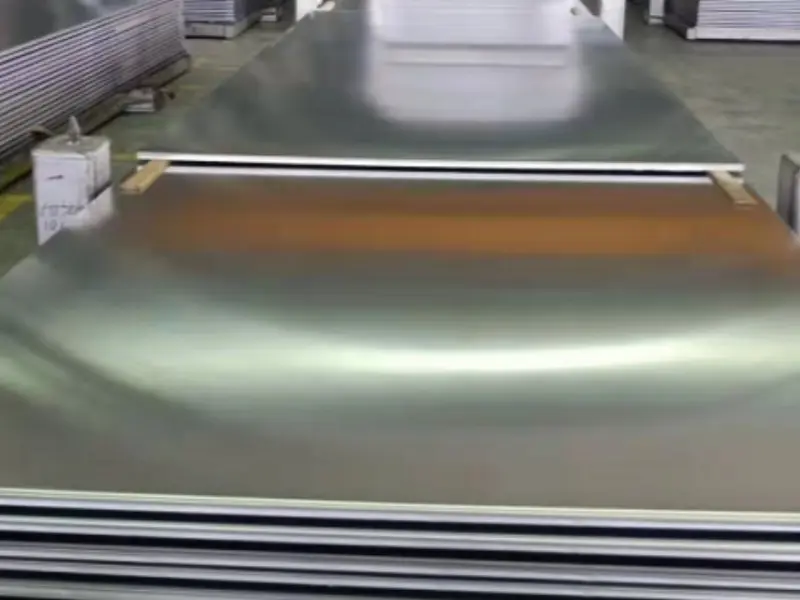
A basic estimate can be calculated using:
Weight (kg) = Length (m) × Width (m) × Thickness (mm) × Density (kg/m³) ÷ 1,000
For a quick estimate using a typical aluminum density of 2,700 kg/m³:
Weight (kg) ≈ Length (m) × Width (m) × Thickness (mm) × 2.7
For example, a sheet measuring 2.438 m × 1.219 m × 1.0 mm weighs approximately 8.0 kg before considering tolerances and packaging. Actual weight varies with the dimensions and alloy.
What information should I provide when requesting a price?
Provide the alloy, temper, thickness, sheet size, surface finish, color if applicable, quantity, application, and delivery destination. If the sheet will be formed or installed in a particular system, include the drawing or relevant technical requirements.