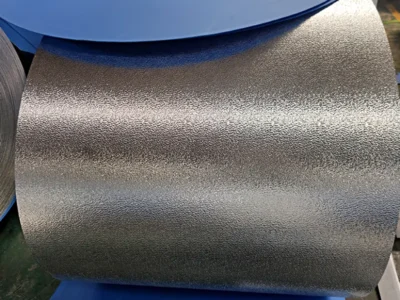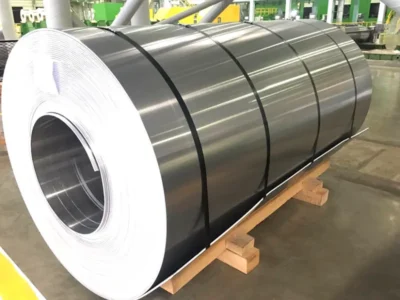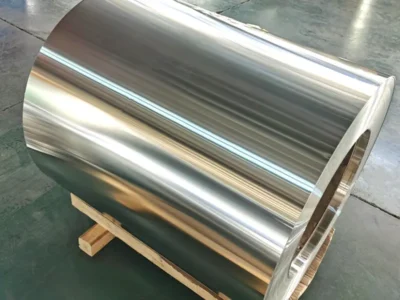
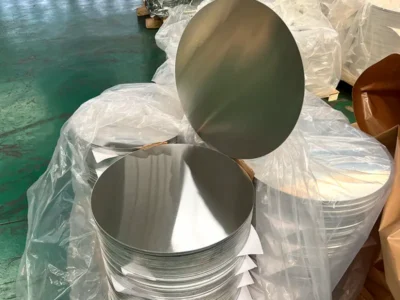
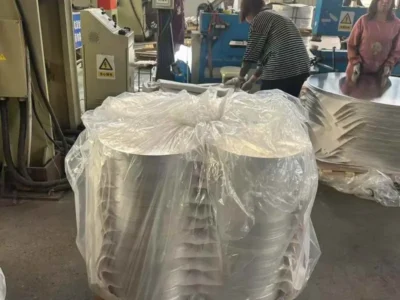
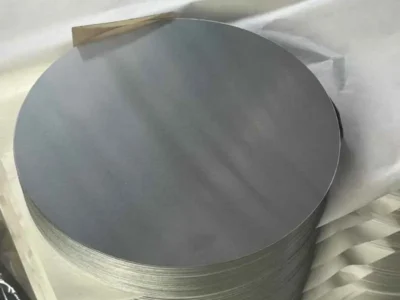
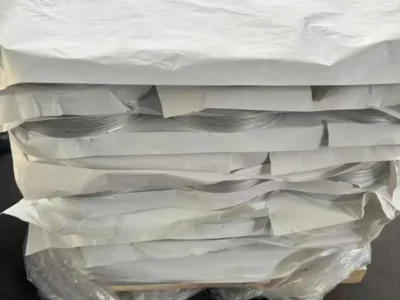
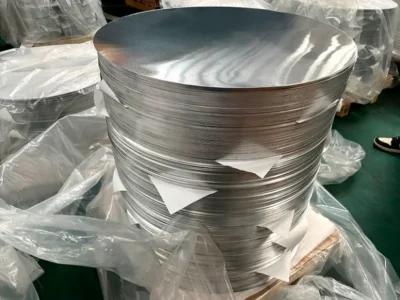
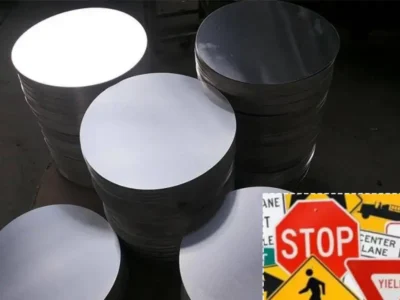

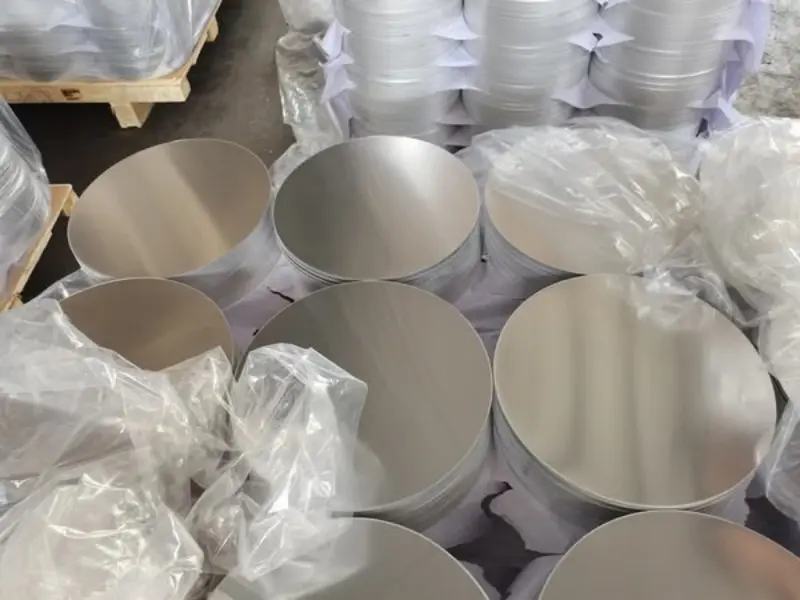
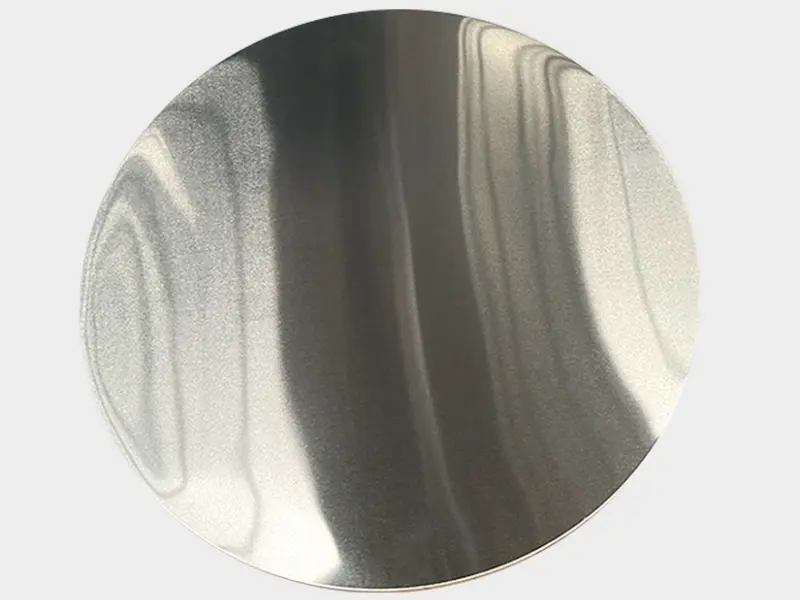
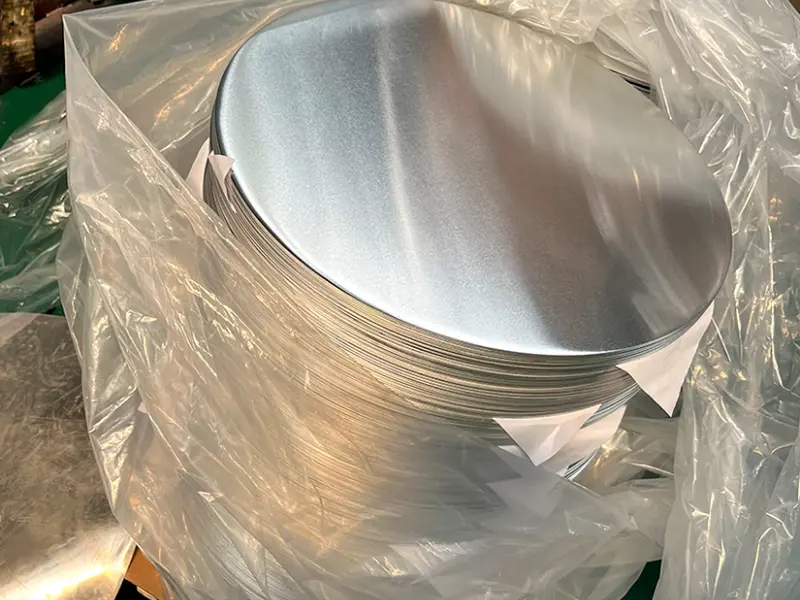
Aluminum Discs 1050 O are round aluminum blanks made from 1050 aluminum alloy in the O temper, also called the annealed condition. They are widely used for forming, spinning, stamping, cookware, lighting parts, signs, containers, and other fabricated aluminum products.
The 1050 alloy has a high aluminum content and good formability. The O temper makes the material soft and easy to shape. This combination is useful when the aluminum disc needs deep drawing, bending, spinning, or other forming processes.
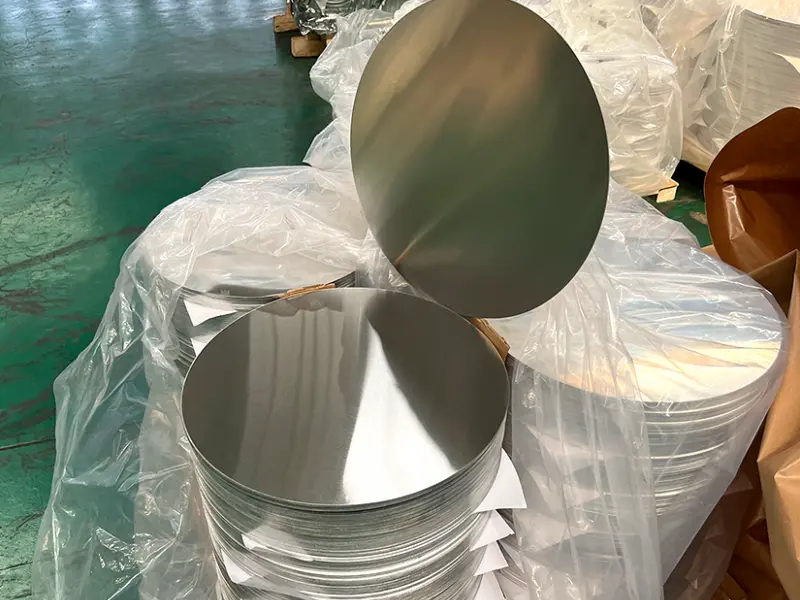
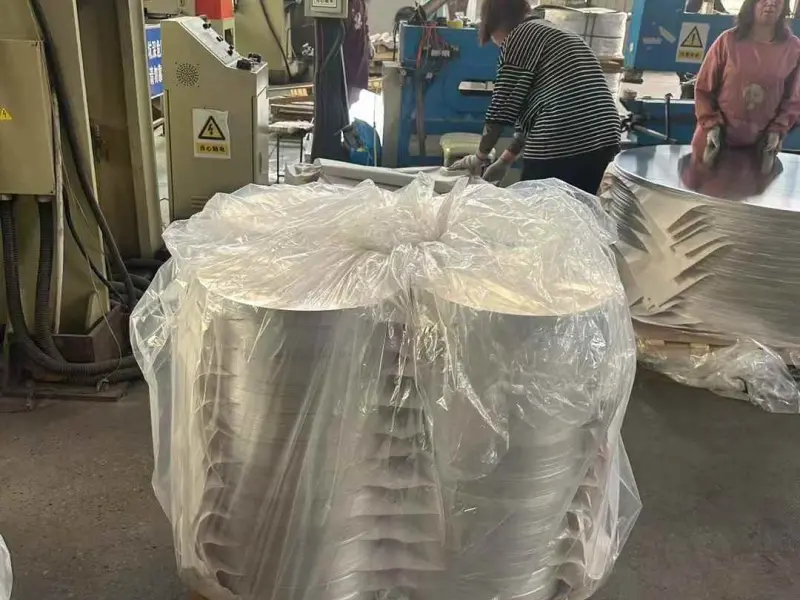
Aluminum discs can be supplied in many diameters and thicknesses. Common sizes include 50 mm, 80 mm, 100 mm, 120 mm, 150 mm, 180 mm, 200 mm, 250 mm, 300 mm, and 400 mm. Custom dimensions are also available depending on the production process.
For buyers, the basic selection process is simple:
Application → Diameter → Thickness → Alloy → Temper → Surface → Edge → Quantity → Packing
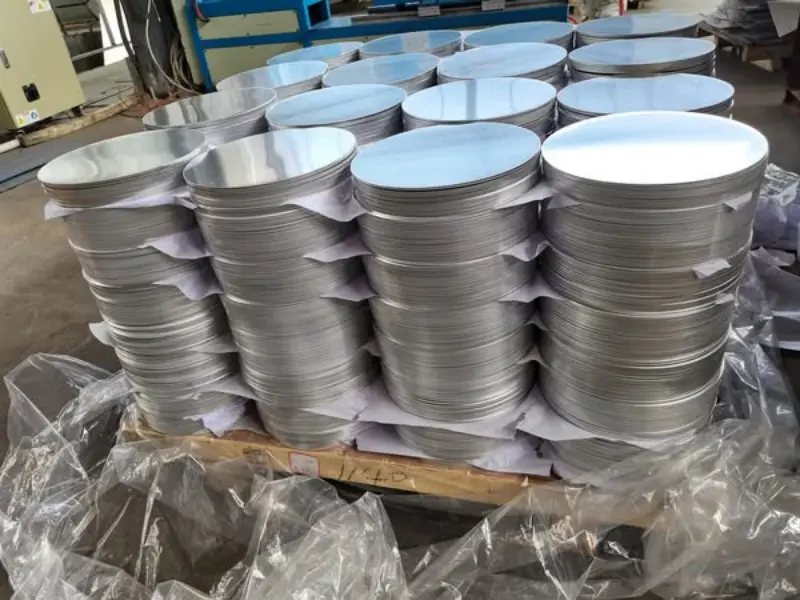
Common 1050 O Aluminum Disc Sizes
| Diameter | Thickness | Typical Use |
|---|---|---|
| 80 – 200 mm | 0.5 – 2.0 mm | Small kitchen and lighting parts |
| 200 – 400 mm | 0.5 – 3.0 mm | Frying pans and appliance components |
| 400 – 600 mm | 0.8 – 3.5 mm | Cookware and formed products |
| 600 – 1000 mm | 1.0 – 5.0 mm | Large cookware and reflectors |
| 1000 – 1500 mm | 1.0 – 6.0 mm | Large industrial and customized parts |
Diameter and thickness can be customized according to the customer’s drawing and forming process.
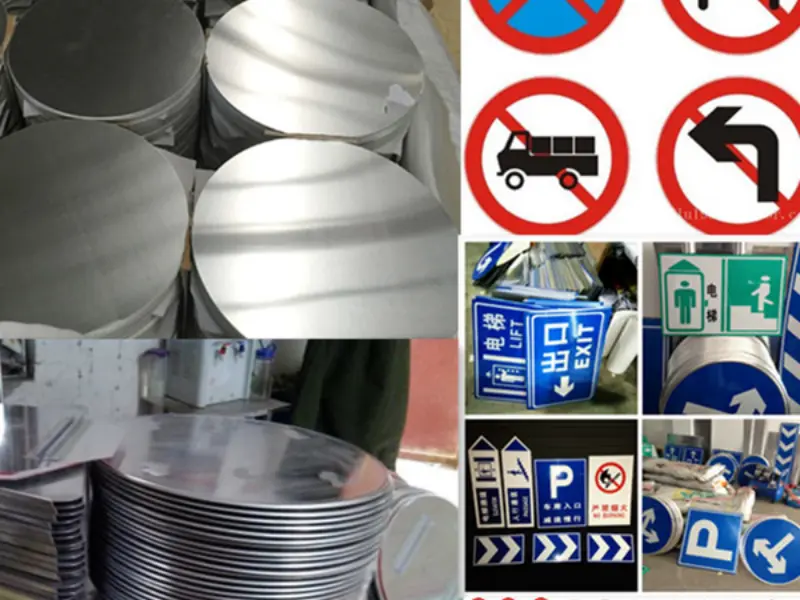
1050 O Aluminum Discs Applications
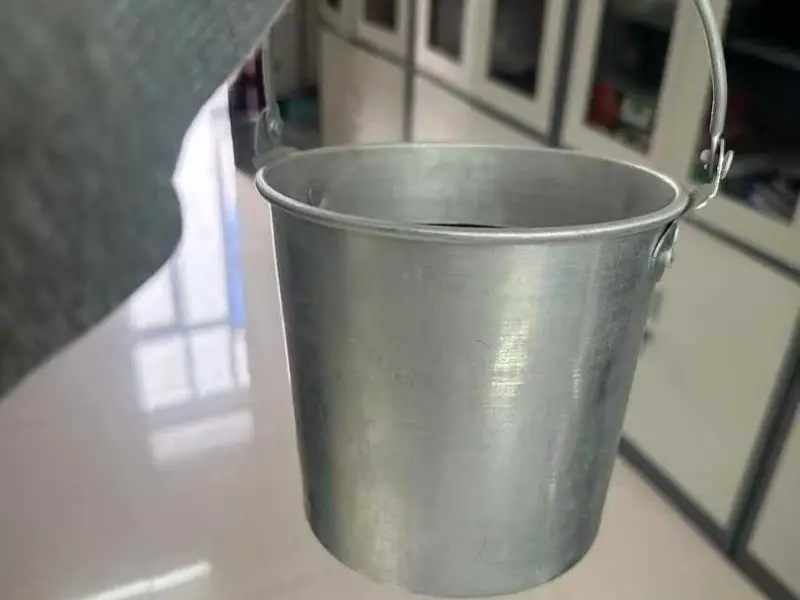
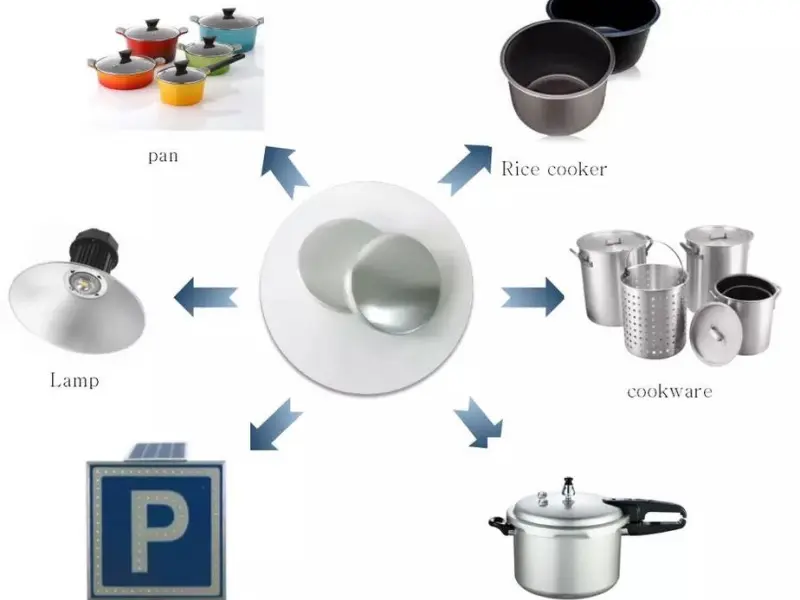
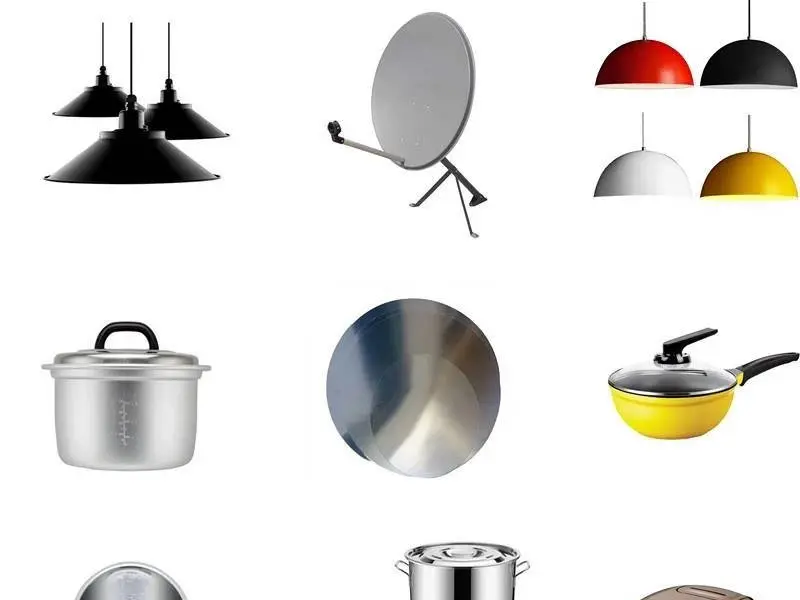
1050 O aluminum discs are mainly used as blanks for products that require stamping, deep drawing, or spinning.
→ Cookware
- Frying pans
- Cooking pots
- Sauce pans
- Baking trays
- Kitchen utensils
- Rice cooker components
- Pressure cooker components
→ Lighting
- Lighting reflectors
- Lamp housings
- LED light components
- Ceiling light parts
- Reflective panels
→ Household Appliances
Appliance covers
Rice cooker parts
Electric cooker components
Kitchen appliance parts
Water heater components
→ Industrial Products
- Spun aluminum parts
- Metal covers
- Circular containers
- Stamped components
- Formed aluminum parts
→ Decorative Products
- Decorative discs
- Nameplates
- Circular panels
- Display components
- Custom metal parts
1050 O Aluminum Discs Forming Performance
The O temper is a soft condition. This makes 1050 O aluminum discs suitable for forming operations that require significant deformation.
1050 O Disc → Stamping → Deep Drawing → Trimming → Spinning → Surface Treatment → Finished Product
The material can be used for:
- Deep drawing
- Stamping
- Spinning
- Bending
- Stretch forming
- Punching
For cookware production, the soft material helps reduce cracking during forming and allows the disc to take the required shape.
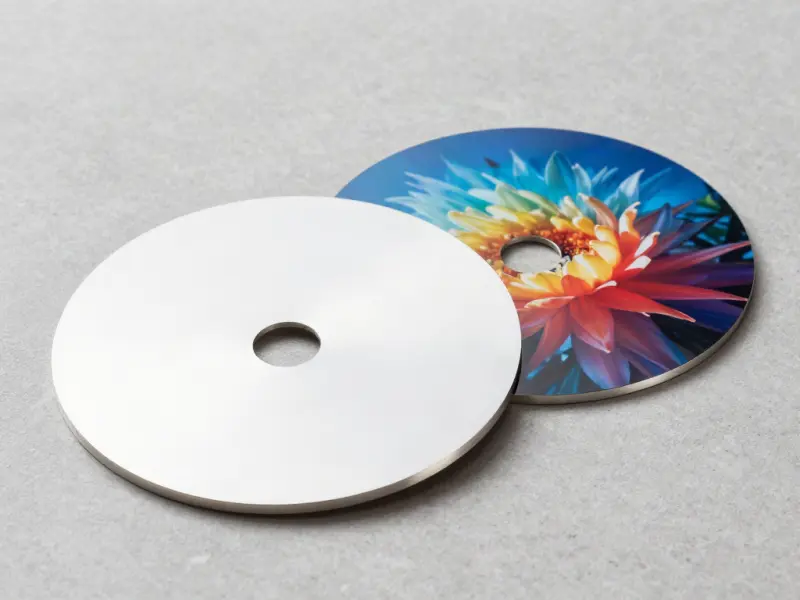
1050 O Aluminum Discs Surface Options

| Surface | Features |
|---|---|
| Mill Finish | Standard surface for general forming |
| Polished | Smooth and bright appearance |
| Anodized | Improved surface protection and decorative finish |
| Brushed | Directional decorative surface |
| Coated | Suitable for specific appearance or protection requirements |
The surface can be selected according to the final product and subsequent processing.
1050 O Aluminum Disc Production
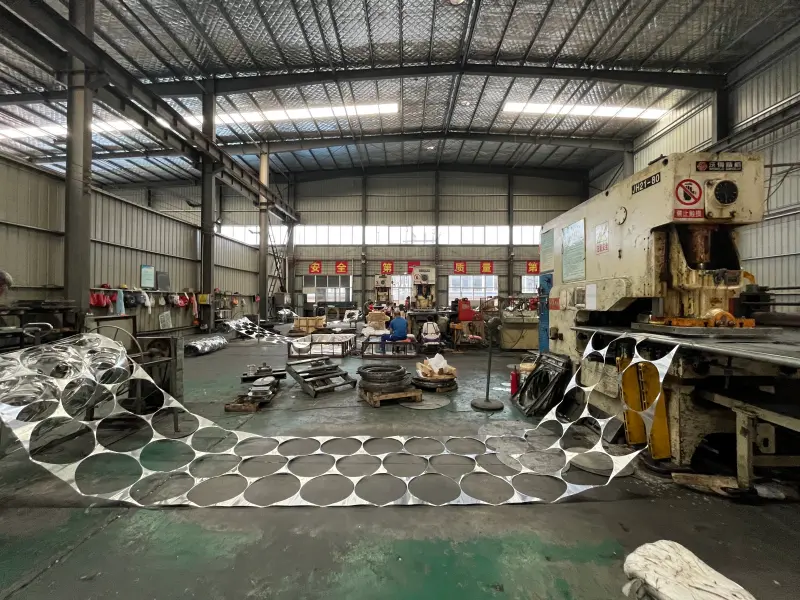
The production process normally starts with 1050 aluminum coil or sheet.
1050 Aluminum Coil → Leveling → Blanking → Punching → Edge Trimming → Deburring → Inspection → Packing
For cookware and other formed products:
1050 O Disc → Deep Drawing / Spinning → Trimming → Cleaning → Surface Treatment → Finished Product
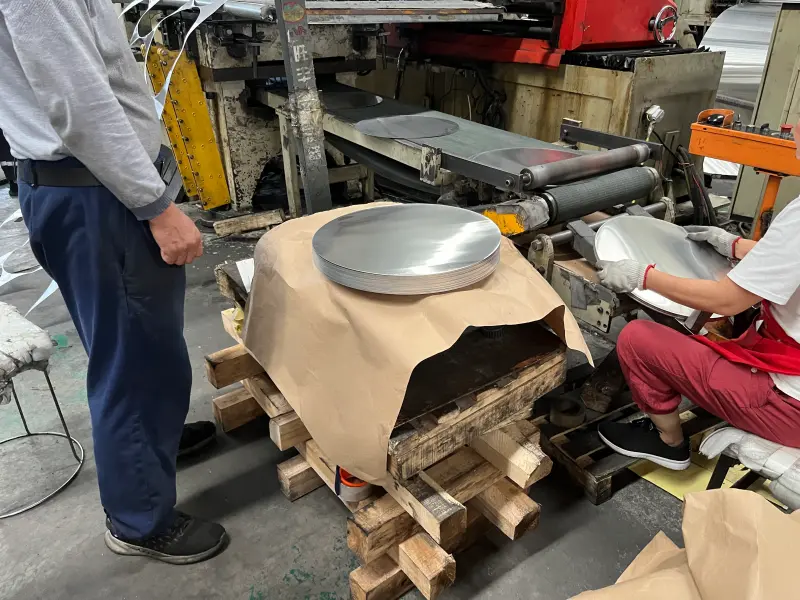
Automatic punching and inspection can help maintain consistent diameter, thickness and edge quality during large-volume production.
1050 O Aluminum Disc Advantages
| Feature | 1050 O Performance |
|---|---|
| Purity | ≥99.5% aluminum |
| Formability | Excellent |
| Deep Drawing | Excellent |
| Corrosion Resistance | Good |
| Thermal Conductivity | Excellent |
| Electrical Conductivity | High |
| Weight | Lightweight |
| Machinability | Good |
| Recyclability | Excellent |
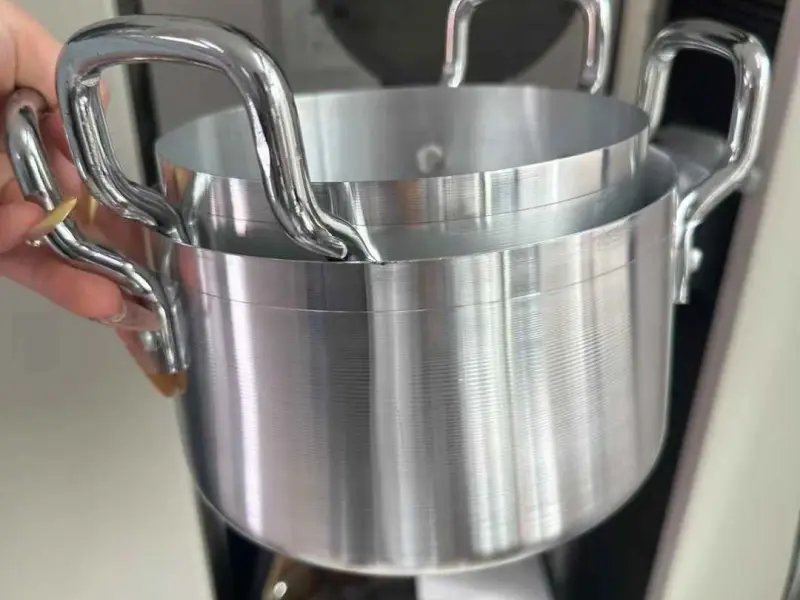
The main reason to choose 1050 O Aluminum Discs is their combination of high purity and excellent forming performance. They are especially suitable for manufacturers that need a soft aluminum blank for deep drawing or spinning.
Custom 1050 O Aluminum Discs
1050 O aluminum discs can be manufactured according to customer requirements.
- Custom diameter
- Custom thickness
- Custom tolerance
- Custom surface
- Custom edge quality
- Custom blank shape
- Custom packaging
- Bulk wholesale supply
- Production according to drawings or samples
What Are Aluminum Discs 1050 O?
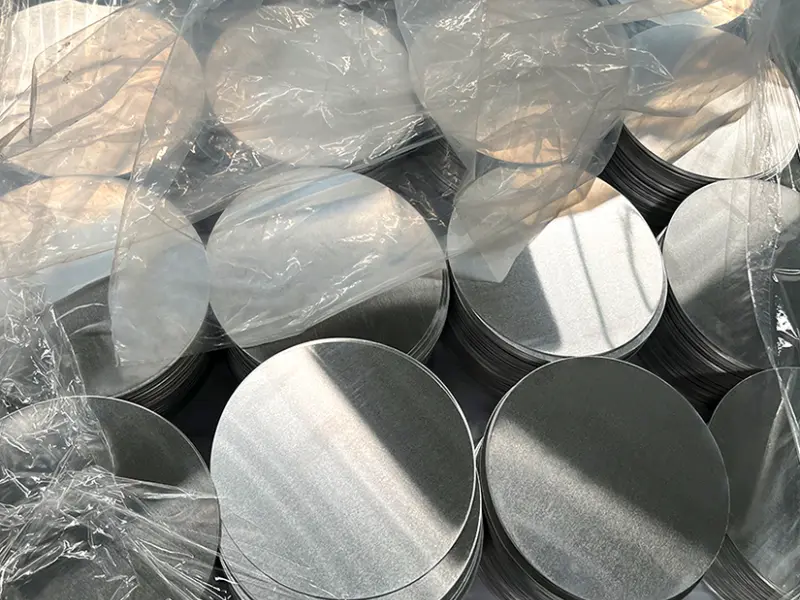
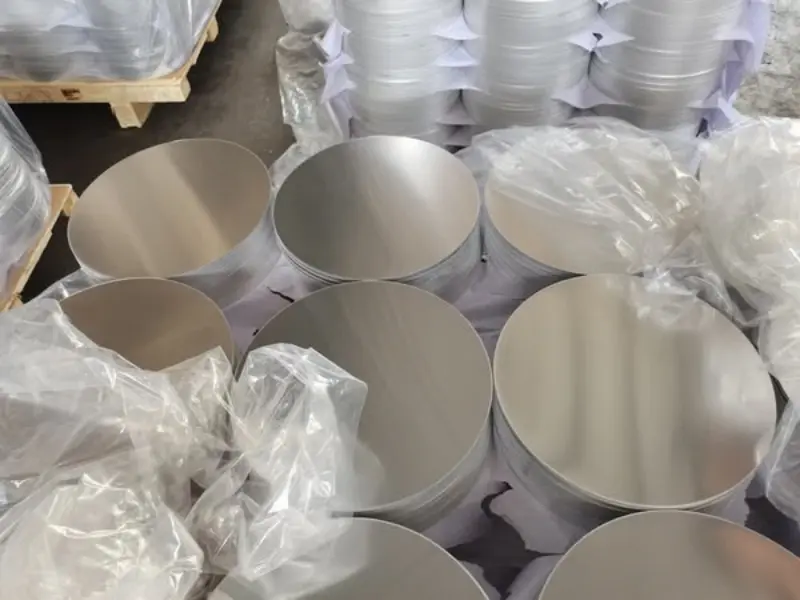
An aluminum disc is a round piece cut from aluminum sheet or coil.
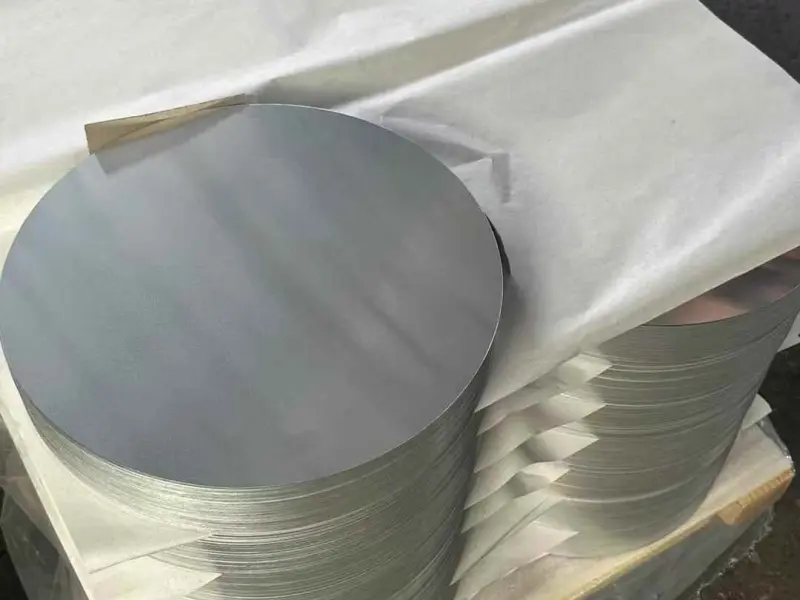
The 1050 O specification describes two important parts of the product:
- 1050 = aluminum alloy
- O = annealed and relatively soft temper
The round shape makes the product suitable for processes that start with a circular blank.
Instead of purchasing a large aluminum sheet and cutting it into circles, manufacturers can purchase ready-made aluminum discs. This can reduce cutting work and material waste.
The discs can be supplied with:
- Plain mill finish
- Smooth surface
- Brushed finish
- Anodized surface
- Coated surface
- Customized edge
- Protective film
The final option depends on the application.
Why Choose 1050 O for Aluminum Discs?
The combination of 1050 alloy and O temper is mainly selected for its high formability.
The material is relatively soft compared with harder tempers. It can therefore be suitable for forming processes where the disc needs to change shape.
Common processes include:
- Deep drawing
- Stamping
- Spinning
- Press forming
- Bending
- Punching
- Cutting
- Embossing
For a buyer, the main advantage is not simply the aluminum content. It is the combination of alloy + temper + thickness + forming process.
1050 Aluminum Alloy at a Glance
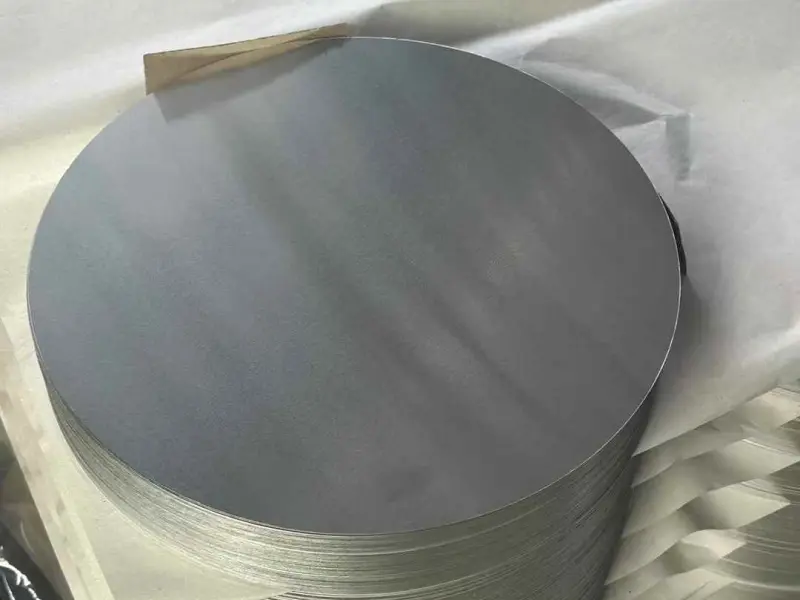
1050 belongs to the 1xxx series of aluminum alloys.
It has a high aluminum content and is known for good corrosion resistance, good electrical conductivity, and good formability.
| Property | 1050 Aluminum |
|---|---|
| Series | 1xxx |
| Main characteristic | High aluminum content |
| Formability | Very good |
| Corrosion resistance | Good |
| Electrical conductivity | High |
| Weldability | Good |
| Machinability | Relatively low |
| Typical temper | O |
| Main advantage | Easy forming |
The exact mechanical and chemical properties depend on the applicable standard and production specification.
What Does 1050 O Mean?
The O temper means the aluminum has been annealed to obtain a soft condition.
This is important for round blanks that will be formed after delivery.
A harder aluminum disc may be difficult to form into a deep shape. A soft 1050 O disc can provide better forming performance for suitable applications.
1050 O for Deep Drawing
Deep drawing is one of the important applications for soft aluminum discs.
The circular blank is placed into a forming tool. Pressure is then applied to change the flat disc into a cup, container, cover, or other shape.
A simplified process is:
Aluminum Disc → Die → Pressing → Drawing → Trimming → Finished Part
The required disc diameter and thickness depend on the finished product.
1050 O for Spinning
Aluminum spinning uses a circular blank and a rotating tool.
The material is gradually formed around a mold.
1050 O can be suitable for products that need good forming ability.
Typical products include:
- Lampshades
- Reflectors
- Covers
- Bowls
- Decorative parts
- Round housings
- Kitchen products
Common Aluminum Disc Diameters
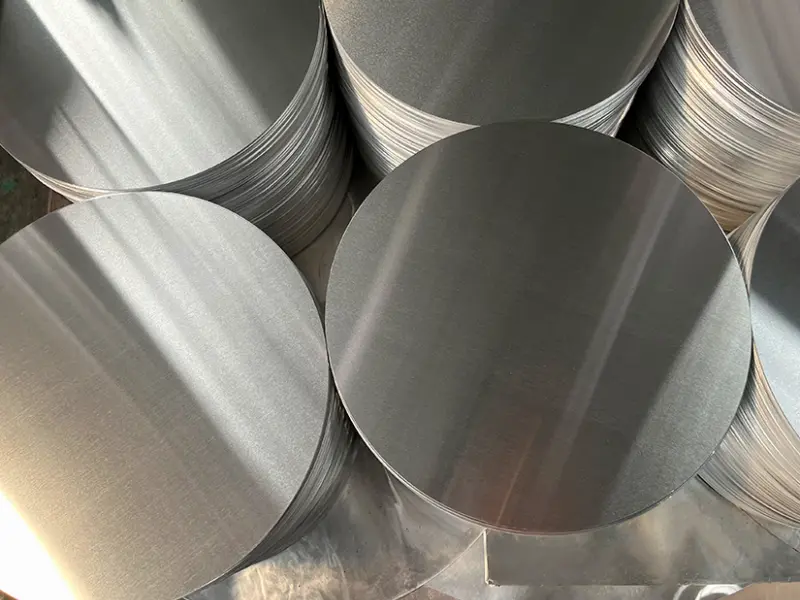
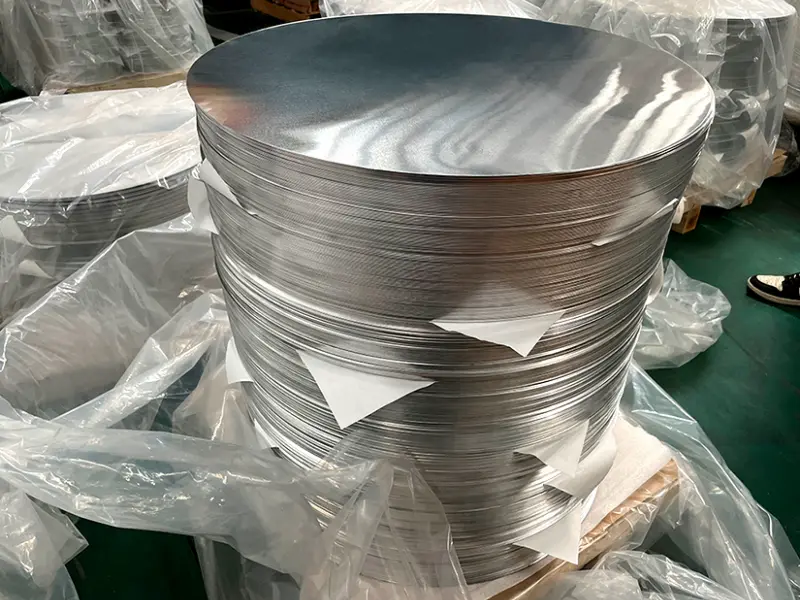
Diameter is one of the most important specifications.
| Diameter | Approx. application |
|---|---|
| 50 mm | Small components |
| 60 mm | Small stamped parts |
| 80 mm | Covers and small containers |
| 100 mm | Kitchen and industrial parts |
| 120 mm | Cookware components |
| 150 mm | Containers and formed parts |
| 180 mm | Medium-sized products |
| 200 mm | Cookware and industrial parts |
| 250 mm | Large formed products |
| 300 mm | Cookware and covers |
| 350 mm | Large round components |
| 400 mm | Large formed parts |
These are examples rather than a fixed product list.
The diameter can be adjusted according to the customer’s mold and finished product.
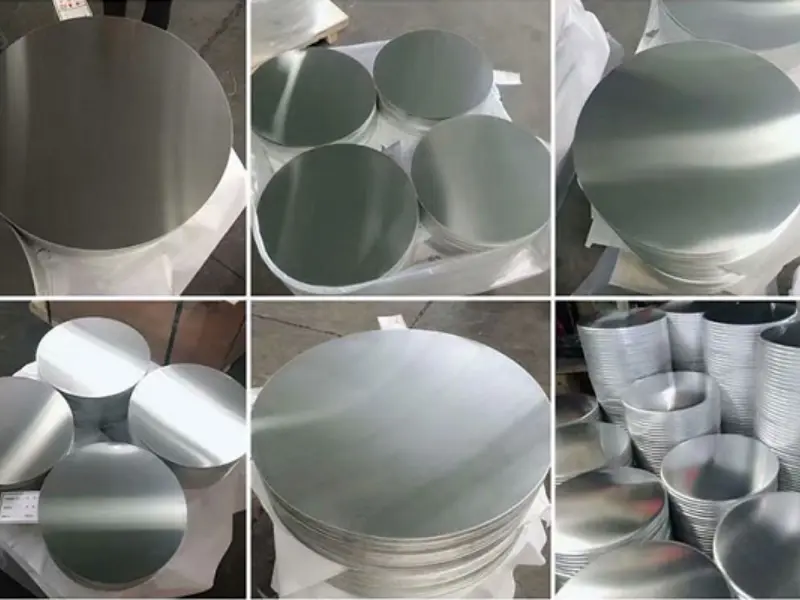
50 mm Aluminum Disc 1050 O
A 50 mm diameter disc is suitable for small products and components.
The small blank can be used where the final part has a compact round shape.
Possible applications include:
- Small covers
- Stamped parts
- Decorative components
- Small containers
- Hardware components
The required thickness depends on the forming depth and final product.
80 mm Aluminum Disc 1050 O
An 80 mm disc provides a larger forming area.
It can be used for small to medium components.
The smooth surface is useful when the finished product will be visible.
100 mm Aluminum Disc 1050 O
100 mm is a practical size for many small and medium products.
It may be used for:
- Small cookware components
- Covers
- Reflectors
- Containers
- Industrial parts
- Lighting components
120 mm Aluminum Disc 1050 O
A 120 mm aluminum disc provides more material for forming.
It can be used when the finished product requires a medium-sized circular blank.
150 mm Aluminum Disc 1050 O
150 mm discs can be used for a wide range of formed products.
They are suitable for applications where the finished diameter is larger than small stamped components.
200 mm Aluminum Disc 1050 O
A 200 mm diameter is often useful for cookware, containers, covers, and industrial parts.
The correct thickness should be selected according to the forming depth and required rigidity.
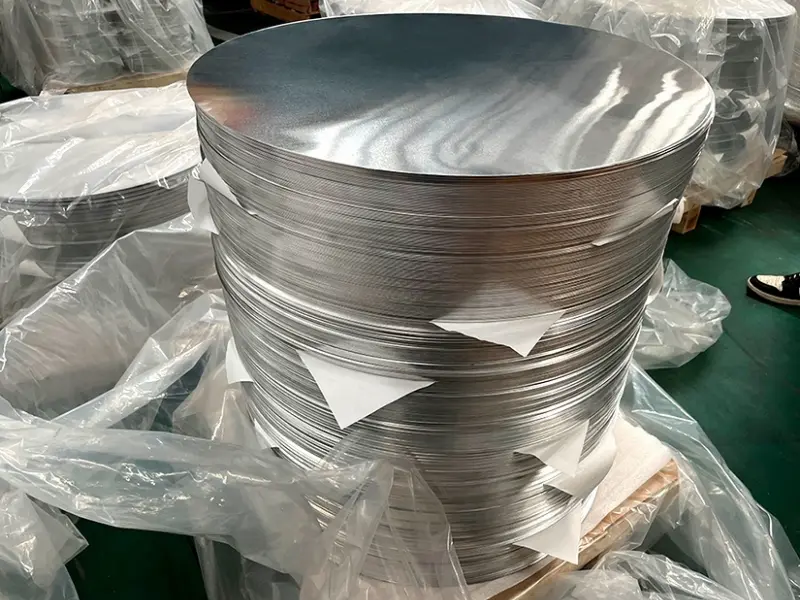
300 mm Aluminum Disc 1050 O
300 mm discs are suitable for larger round products.
Possible applications include:
- Large cookware
- Lighting reflectors
- Industrial covers
- Large containers
- Decorative components
For larger diameters, flatness and thickness control become increasingly important.
400 mm Aluminum Disc 1050 O
A 400 mm aluminum disc is a large circular blank.
It can be used for large formed parts and industrial applications.
The production method should be selected carefully to maintain good dimensional accuracy and surface quality.
Common Aluminum Disc Thicknesses
Thickness is another key specification.
| Thickness | Typical direction |
|---|---|
| 0.5 mm | Light formed products |
| 0.6 mm | Small containers |
| 0.8 mm | General forming |
| 1.0 mm | Cookware and covers |
| 1.2 mm | Medium forming |
| 1.5 mm | Stronger formed parts |
| 2.0 mm | Heavy-duty products |
| 2.5 mm | Industrial components |
| 3.0 mm | Thick round blanks |
The available thickness range depends on the disc diameter, alloy, temper, and production equipment.
0.5 mm Aluminum Disc
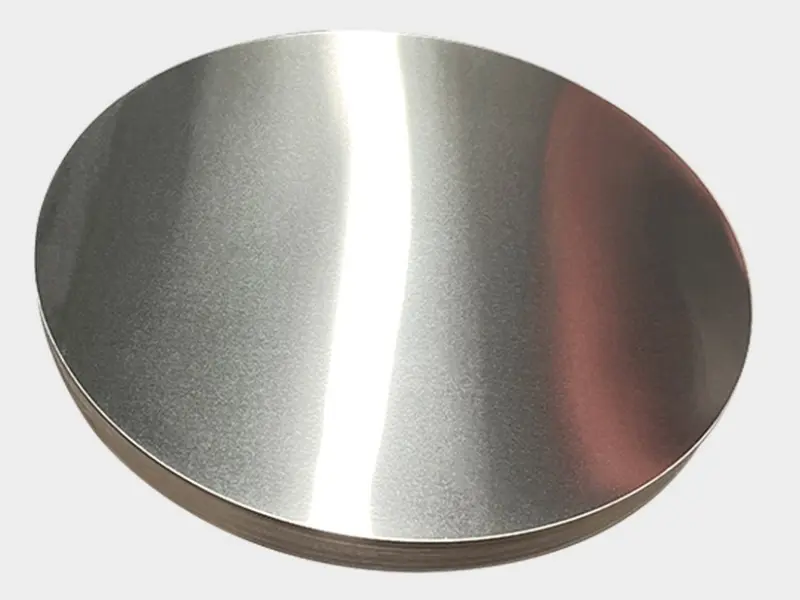
A 0.5 mm disc is relatively light.
It can be used when the finished product does not require a thick wall.
It may be suitable for small stamped or formed parts.
0.8 mm Aluminum Disc
0.8 mm offers a useful balance between weight and rigidity.
It can be considered for general forming applications.
1.0 mm Aluminum Disc 1050 O
A 1.0 mm disc is a common type for many forming applications.
It provides more material than thin 0.5–0.8 mm discs while maintaining good formability in O temper.
Possible applications include:
- Cookware
- Containers
- Covers
- Reflectors
- Lighting parts
- Industrial components
1.5 mm Aluminum Disc 1050 O
A 1.5 mm disc is suitable for products that need greater wall thickness.
It can be used for stronger formed parts and some industrial applications.
2.0 mm Aluminum Disc 1050 O
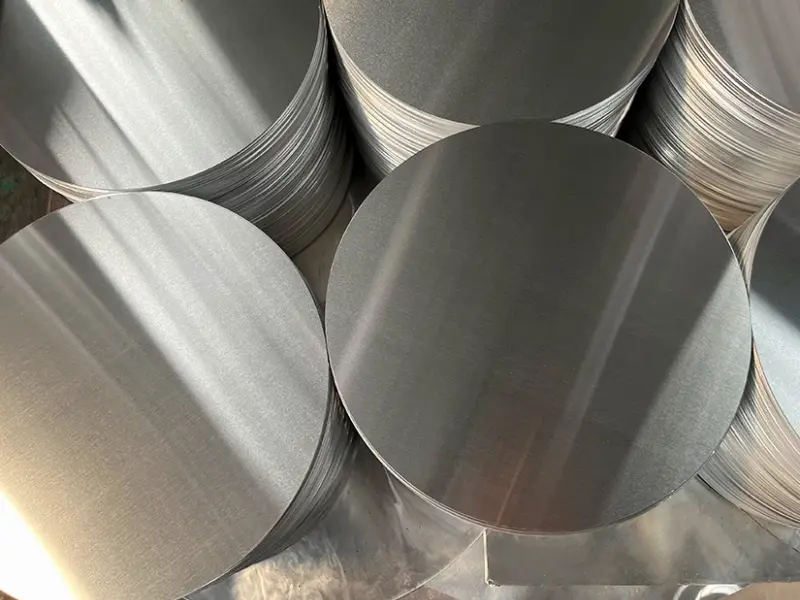
2.0 mm is a thicker option.
It provides greater rigidity but requires more forming force.
The suitability depends on the mold, press, forming depth, and final product.
Diameter and Thickness Selection
Diameter and thickness should be considered together.
| Diameter | Light thickness | Medium thickness | Heavy thickness |
|---|---|---|---|
| 80 mm | 0.5–0.8 mm | 1.0 mm | 1.2–1.5 mm |
| 100 mm | 0.5–0.8 mm | 1.0–1.2 mm | 1.5–2.0 mm |
| 150 mm | 0.6–0.8 mm | 1.0–1.5 mm | 2.0 mm |
| 200 mm | 0.8–1.0 mm | 1.2–1.5 mm | 2.0–2.5 mm |
| 300 mm | 1.0–1.2 mm | 1.5–2.0 mm | 2.5–3.0 mm |
| 400 mm | 1.0–1.5 mm | 2.0 mm | 2.5–3.0 mm |
This table is only a general purchasing reference. The actual specification should be based on the finished part and forming process.
1050 O vs 1050 H14 Aluminum Discs
The alloy can be the same while the temper is different.
| Feature | 1050 O | 1050 H14 |
|---|---|---|
| Condition | Soft | Work hardened |
| Hardness | Lower | Higher |
| Formability | Very good | Lower |
| Rigidity | Lower | Higher |
| Deep drawing | More suitable | Less suitable |
| Stamping | Good | Good for suitable shapes |
| Main focus | Forming | Strength and rigidity |
If the disc needs significant forming, O temper is often considered first.
If the finished part needs greater hardness and does not require deep forming, a harder temper may be considered.
1050 O vs 1060 O Aluminum Discs
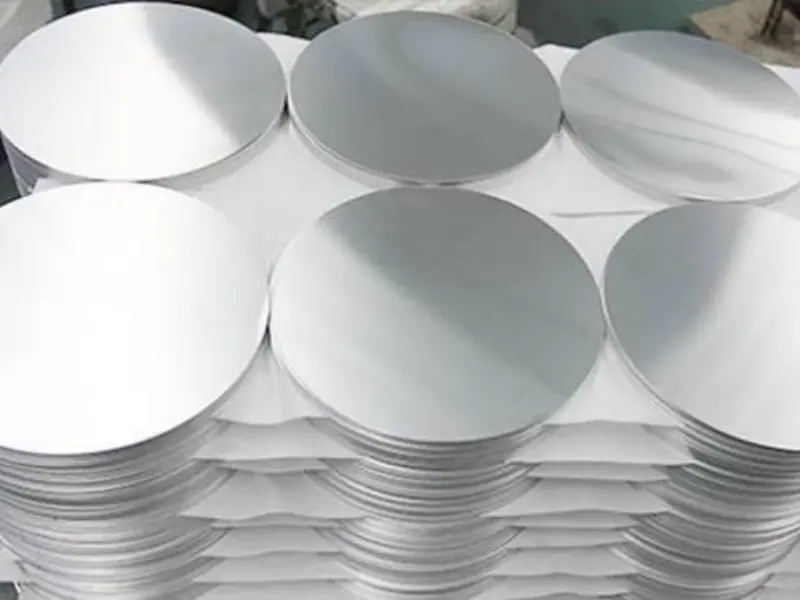
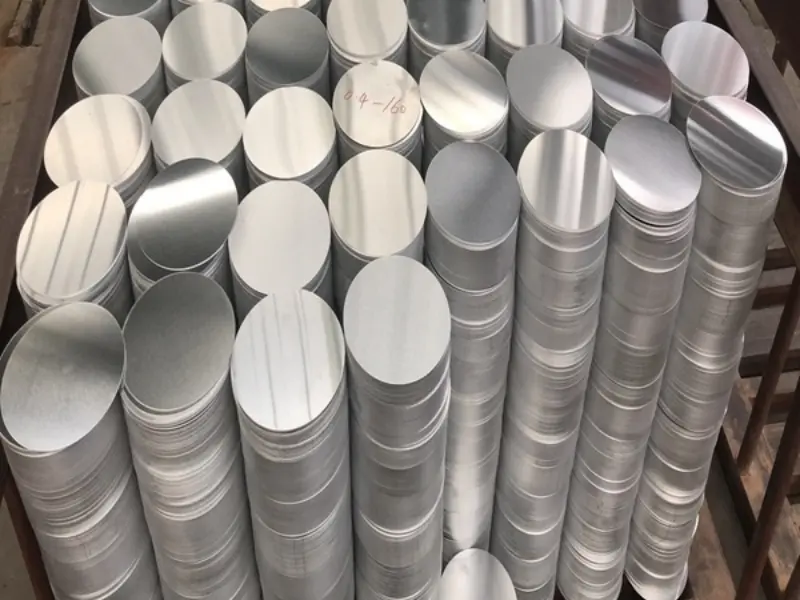
1050 O and 1060 O are both high-aluminum-content materials.
| Feature | 1050 O | 1060 O |
|---|---|---|
| Aluminum content | High | Higher |
| Formability | Very good | Very good |
| Conductivity | High | Higher |
| Strength | Low | Low |
| Common use | Formed discs | General high-purity applications |
The practical difference may be small for some forming applications. The buyer should select according to the required chemical composition and standard.
1050 O vs 3003 O Aluminum Discs
3003 contains manganese and generally provides higher strength than 1050.
| Feature | 1050 O | 3003 O |
|---|---|---|
| Strength | Lower | Higher |
| Formability | Very good | Very good |
| Aluminum purity | Higher | Lower |
| Corrosion resistance | Good | Good |
| Deep forming | Excellent for suitable designs | Good |
| Typical direction | Light forming | Stronger formed products |
For simple deep-forming applications, 1050 O can be attractive.
For products requiring more strength after forming, 3003 may be considered.
1050 O vs 5052 O Aluminum Discs
5052 contains magnesium and provides much higher strength than 1050 in comparable conditions.
| Feature | 1050 O | 5052 O |
|---|---|---|
| Strength | Lower | Higher |
| Formability | Excellent | Good |
| Corrosion resistance | Good | Very good |
| Deep drawing | Very good for suitable designs | Good |
| Marine applications | Limited | More common |
| Lightweight forming | Suitable | Suitable for stronger parts |
The correct choice depends on the finished product rather than strength alone.
Aluminum Discs for Cookware
Cookware is an important application for aluminum circles and discs.
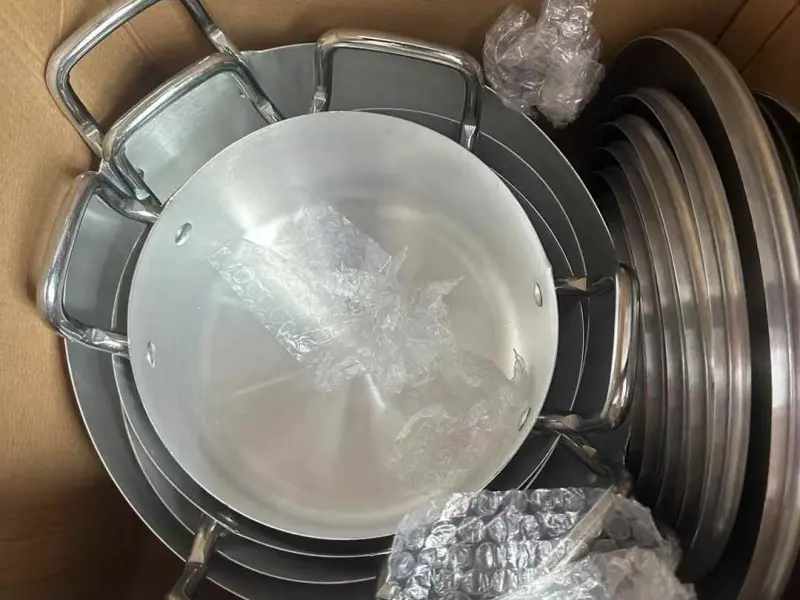
The round blank can be formed into:
- Frying pans
- Saucepan components
- Cooking pots
- Lids
- Bowls
- Containers
- Kitchen accessories
1050 O can be considered when good forming ability is required.
For products intended for food contact, the material and finished product should meet the applicable requirements of the target market.
Aluminum Discs for Lighting

Round aluminum blanks can be used to manufacture lighting components.
Applications include:
- Lampshades
- Light reflectors
- Ceiling light parts
- Reflective covers
- Lamp housings
The smooth aluminum surface can also provide a good base for additional finishing.
Aluminum Discs for Reflectors
Aluminum is commonly used in reflective products.
The disc can be formed and then polished, anodized, coated, or otherwise finished.
Possible applications include:
- Lighting reflectors
- Industrial reflectors
- Solar-related components
- Optical housings
- Decorative reflectors
The surface requirement should be discussed before production.
Aluminum Discs for Containers
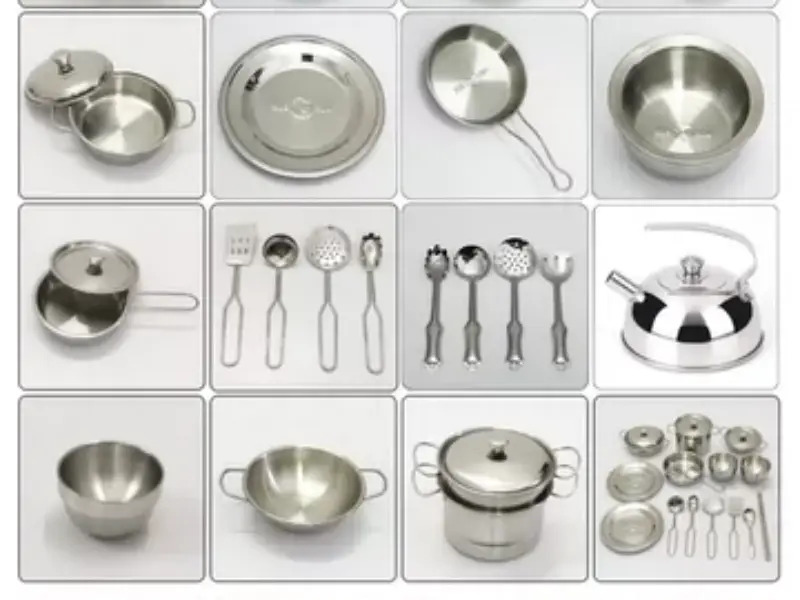
Round blanks can be used to make different containers.
A basic production flow can be:
Disc → Deep Drawing → Trimming → Cleaning → Surface Treatment → Inspection
The blank diameter should provide enough material for the finished wall and flange.
Aluminum Discs for Signs and Decorative Parts
Not all aluminum discs are used for deep drawing.
Flat discs can also be used directly as finished components.
They can be:
- Painted
- Printed
- Anodized
- Engraved
- Laser marked
- Powder coated
This makes them useful for signs, labels, decorative panels, and industrial identification.
Aluminum Discs for Stamping
Stamping is another common processing method.
The aluminum disc is placed into a die and pressed into the required shape.
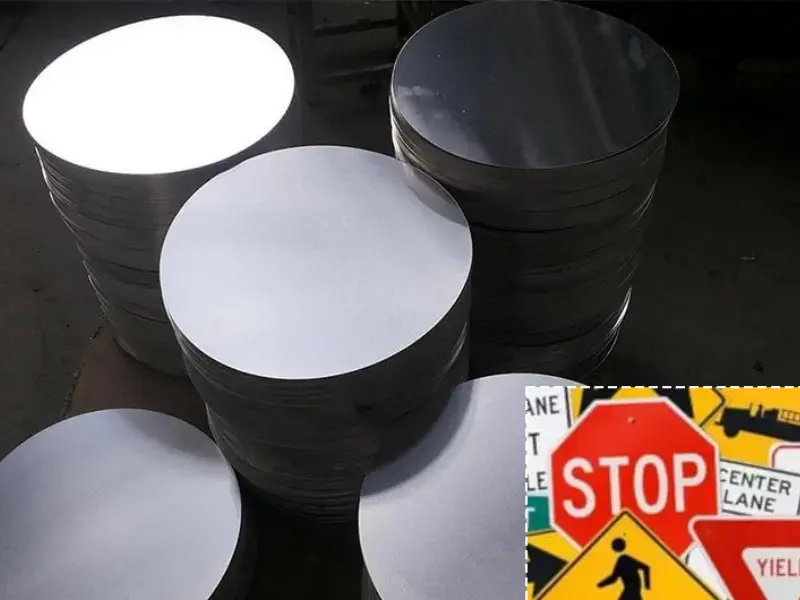
The final result depends on:
- Alloy
- Temper
- Thickness
- Disc diameter
- Die design
- Press force
- Drawing depth
- Lubrication
- Processing speed
For demanding stamping work, buyers should provide drawings or finished-part samples when requesting a quotation.
Aluminum Disc Surface Options
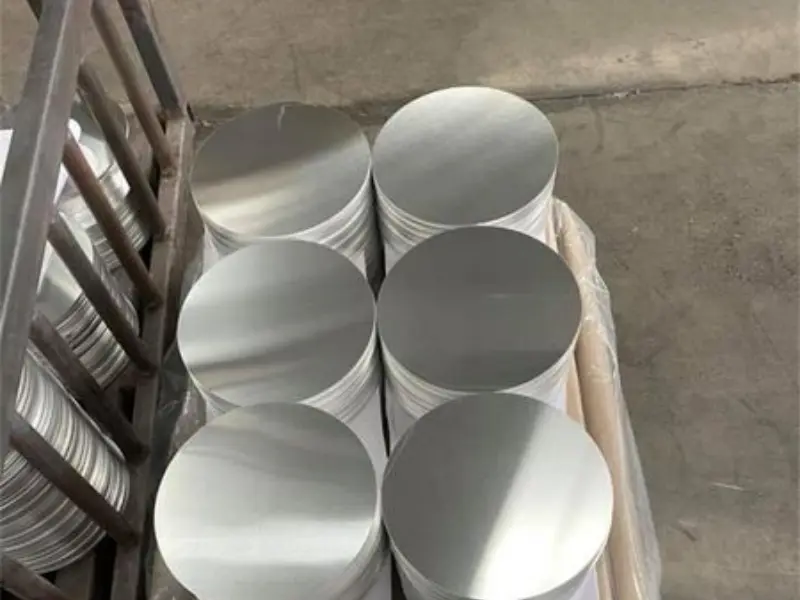
A clean surface is important for many applications.
Common options include:
| Surface | Main feature | Application |
|---|---|---|
| Mill finish | Natural aluminum | General forming |
| Smooth finish | Clean appearance | Visible products |
| Brushed | Linear texture | Decoration |
| Anodized | Decorative and protective | Lighting and architecture |
| Coated | Color and protection | Decorative parts |
| Polished | Bright appearance | Reflectors |
For deep drawing, the surface should also be suitable for the forming process.
Edge Quality
The edge of a disc is important because it enters the forming process.
A good edge should have:
- Consistent diameter
- Clean cutting
- Low burr
- No obvious cracks
- Good roundness
- Stable dimensions
Poor edge quality may affect feeding, forming, and the appearance of the finished product.
Flatness and Roundness
Flatness is important when discs are stacked or automatically fed into a machine.
Roundness is also important for precision forming.
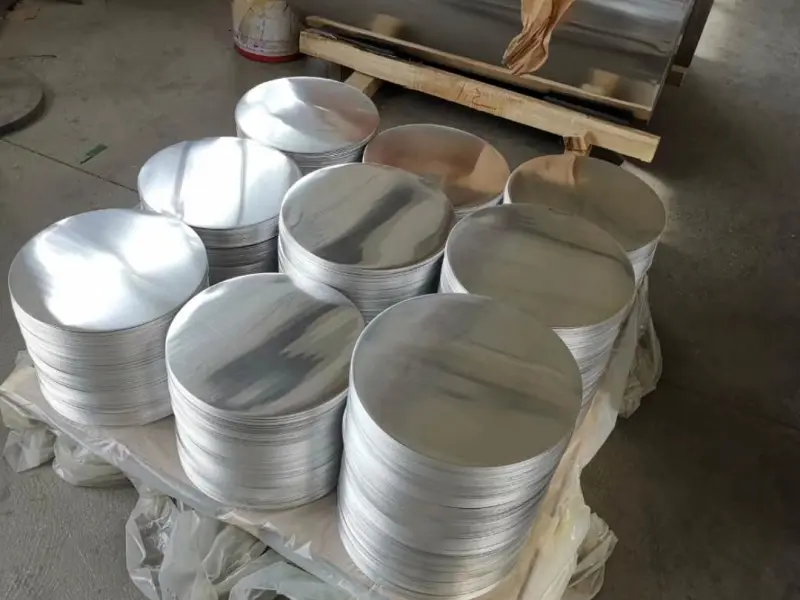
A buyer can specify requirements for:
- Diameter tolerance
- Thickness tolerance
- Roundness
- Flatness
- Edge burr
- Surface quality
For automatic production lines, dimensional consistency is especially important.
Aluminum Discs with Protective Film
If the surface needs additional protection, a protective film can sometimes be used.
This can help reduce:
- Scratches
- Handling marks
- Surface contamination
The film should be selected according to the customer’s forming and processing requirements.
Aluminum Discs for Automatic Production
Large-volume manufacturers often need consistent discs.
For automatic feeding, important factors include:
Diameter consistency + Thickness consistency + Flatness + Edge quality + Surface cleanliness
A stable disc specification can help reduce interruptions during production.
How Aluminum Discs Are Produced
A typical manufacturing process can include:
Aluminum Coil → Leveling → Blanking → Circular Cutting → Deburring → Inspection → Stacking → Packing
For some products, additional processing may be required.
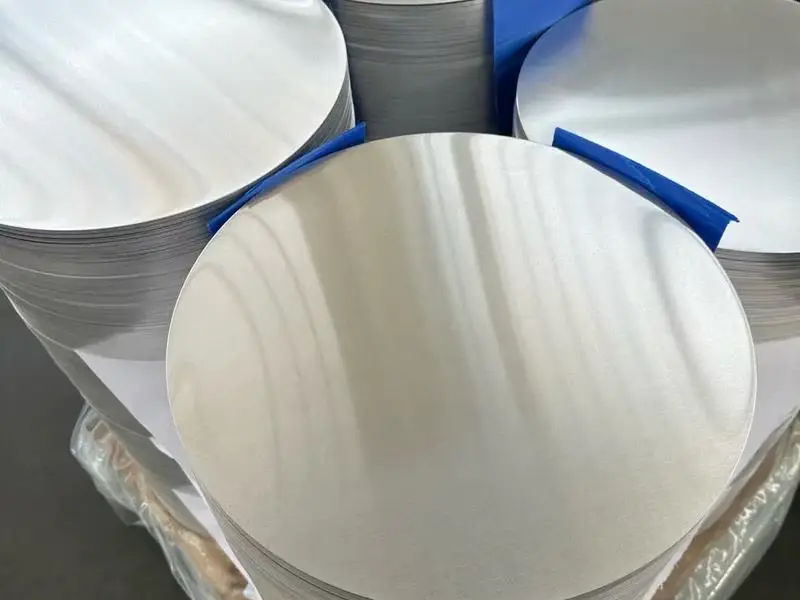
Raw Material
The manufacturer starts with aluminum coil or sheet that meets the specified alloy and thickness.
Blanking
The material is cut into round blanks.
The blanking process must maintain the required diameter and edge quality.
Deburring
If required, edges can be treated to reduce burrs.
This is useful for applications involving automatic feeding or further forming.
Inspection
The finished discs can be checked for:
- Alloy
- Thickness
- Diameter
- Flatness
- Surface
- Edge
- Quantity
Aluminum Disc Weight
The weight of a disc depends mainly on its:
Diameter + Thickness + Aluminum Density
A larger diameter produces a heavier disc.
A thicker disc also increases the weight.
For example, a 300 mm × 1.5 mm disc will weigh much more than a 100 mm × 0.8 mm disc.
For bulk orders, the supplier can calculate the estimated weight per piece and total shipment weight.
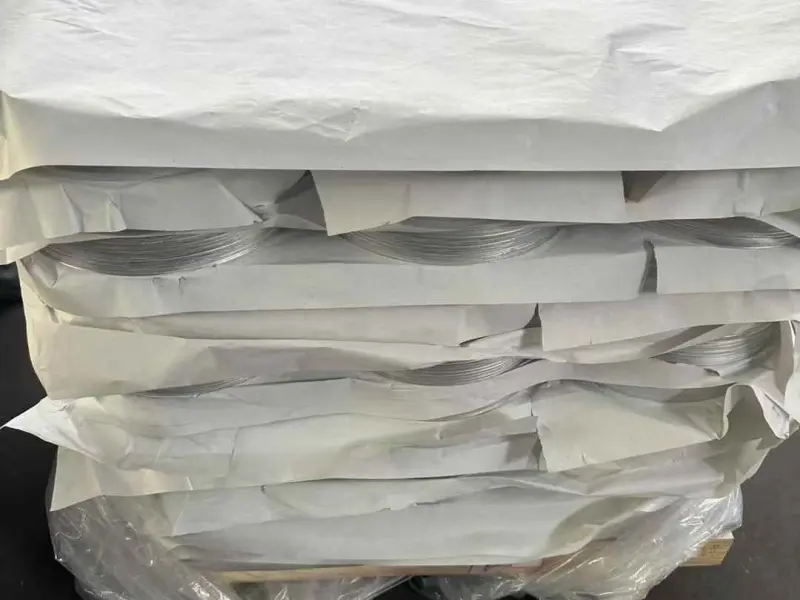
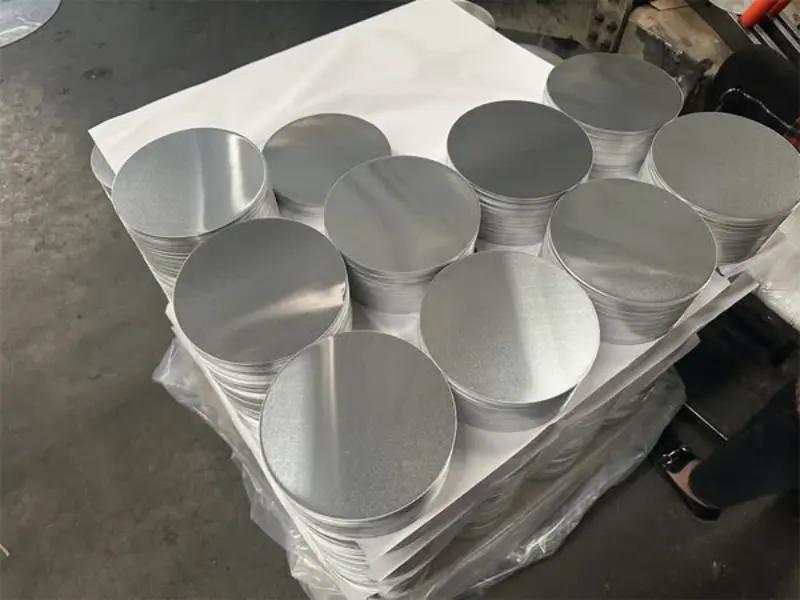
Packaging for Aluminum Discs
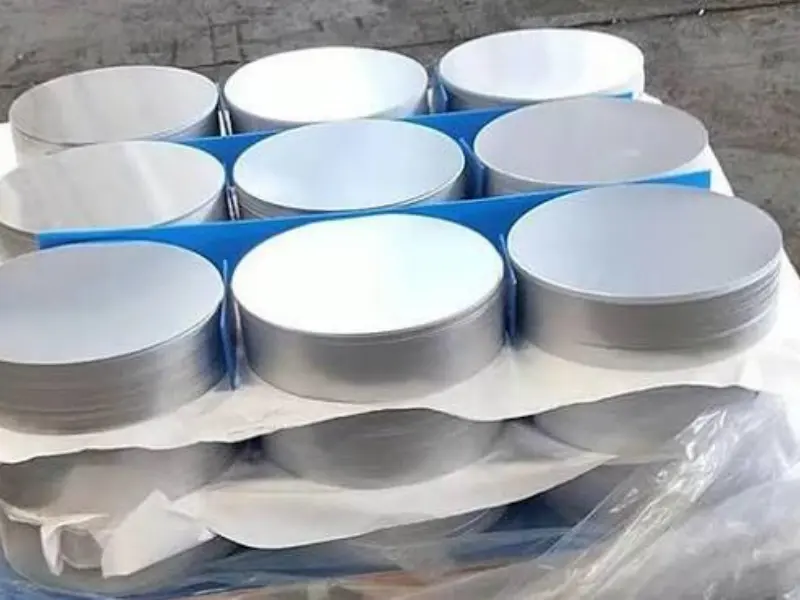
Packaging should protect the surface and edges.
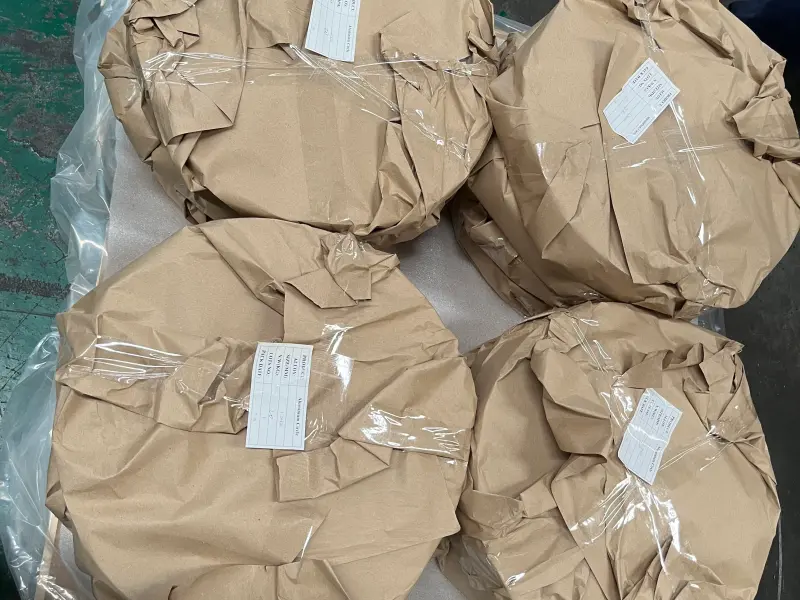
Common packing methods include:
- Wooden pallets
- Cartons
- Protective paper
- Plastic film
- Edge protection
- Shrink wrapping
- Customized export packing
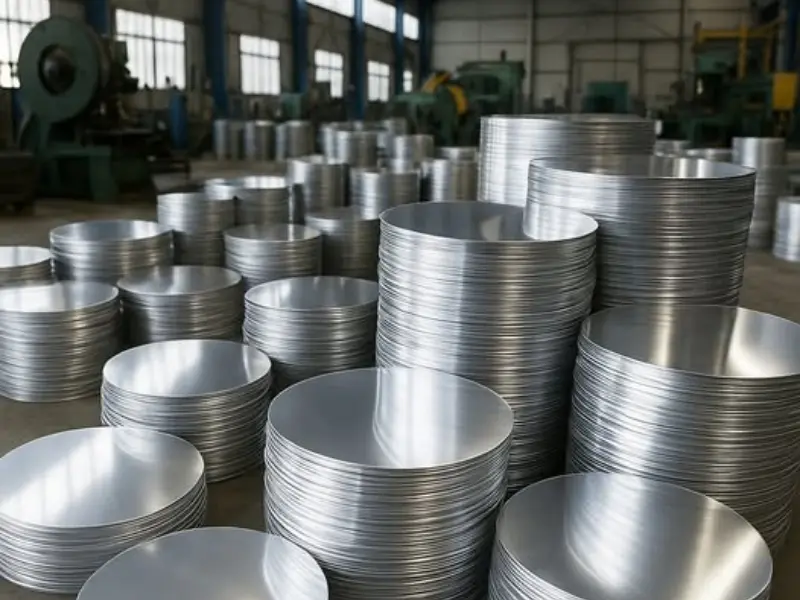
For large quantities, discs can be stacked into bundles.
The packing method can be adjusted according to sea, air, or land transportation.
Small Orders vs Bulk Orders
Aluminum discs are purchased by many types of customers.
Small Quantity
Small orders can be used for:
- Product development
- Sample testing
- Small workshops
- New projects
- Tool testing
Bulk Quantity
Bulk orders are common for:
- Cookware manufacturers
- Lighting manufacturers
- Container manufacturers
- Metal fabricators
- Distributors
- Industrial manufacturers
For repeat orders, buyers can use a fixed specification to improve consistency.
What Affects the Price?
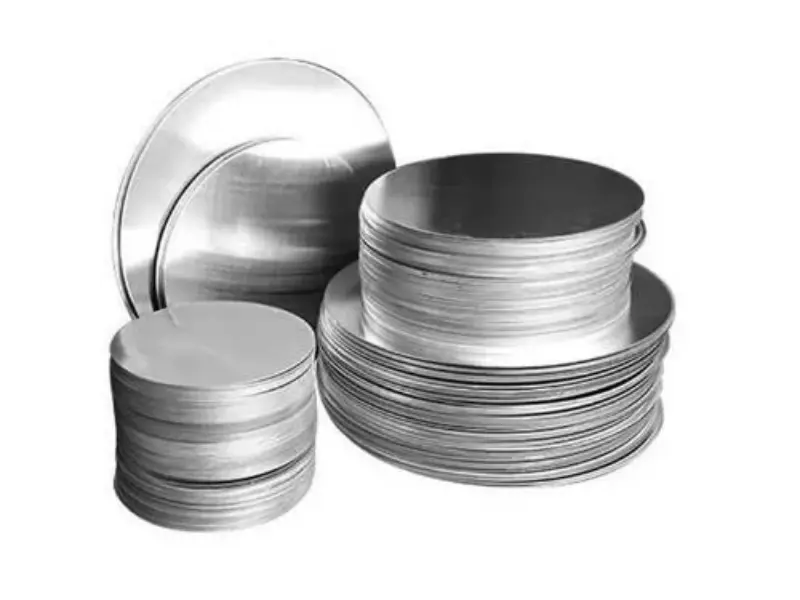
The price of aluminum discs depends on several factors.
| Factor | Why it matters |
|---|---|
| Aluminum market price | Main raw material cost |
| Alloy | Different alloy costs |
| Temper | Processing requirement |
| Thickness | Affects material weight |
| Diameter | Determines blank size |
| Quantity | Influences production efficiency |
| Surface | Extra finishing may add cost |
| Tolerance | Tight tolerances require more control |
| Packing | Special packing adds cost |
| Freight | Depends on destination |
When comparing suppliers, use the same specification.
For example:
1050 O + 1.0 mm + 200 mm + Mill Finish + 5,000 kg
This makes quotations easier to compare.
How to Order Aluminum Discs 1050 O
A simple inquiry should include the main technical information.
Diameter → Thickness → Alloy → Temper → Surface → Quantity → Application
For example:
200 mm → 1.0 mm → 1050 → O → Mill Finish → 10,000 pcs → Cookware
If the product will be deep drawn, it is also useful to provide:
- Finished product diameter
- Finished product height
- Drawing depth
- Tool information
- Production speed
- Drawing method
This information helps the supplier recommend a suitable blank.
Example Product Specifications
| Product | Diameter | Thickness | Alloy | Temper | Application |
|---|---|---|---|---|---|
| Small disc | 80 mm | 0.8 mm | 1050 | O | Small components |
| Standard disc | 100 mm | 1.0 mm | 1050 | O | Forming |
| Medium disc | 150 mm | 1.0 mm | 1050 | O | Containers |
| Cookware disc | 200 mm | 1.2 mm | 1050 | O | Cookware |
| Large disc | 250 mm | 1.5 mm | 1050 | O | Formed parts |
| Large cookware disc | 300 mm | 1.5 mm | 1050 | O | Cookware |
| Industrial disc | 400 mm | 2.0 mm | 1050 | O | Industrial parts |
These specifications are examples. Actual requirements should be confirmed according to the finished product.
Choosing the Right Aluminum Disc
The best specification starts with the finished product.
If Deep Drawing Is the Main Process
Consider:
Deep Drawing → Good Formability → 1050 O → Suitable Thickness → Correct Blank Diameter
If Surface Appearance Is Important
Consider:
Visible Surface → Clean Finish → Surface Protection → Controlled Handling
If Automatic Feeding Is Required
Focus on:
Diameter Tolerance → Flatness → Edge Quality → Burr Control → Consistent Thickness
If Strength Is More Important
Compare 1050 O with alloys such as 3003 or 5052.
A stronger alloy may be more suitable when the finished component needs higher mechanical strength.
Quality Control for 1050 O Aluminum Discs
A reliable production process should control the product from raw material to final packing.
Raw Material → Rolling → Annealing → Leveling → Blanking → Deburring → Inspection → Counting → Packing
Important inspection items include:
- Chemical composition
- Alloy
- Temper
- Thickness
- Diameter
- Flatness
- Roundness
- Edge quality
- Surface quality
- Quantity
For deep-drawing applications, consistency between batches is particularly important.
Why Buy 1050 O Aluminum Discs Directly?
For B2B buyers, direct factory supply can make technical communication easier.
A manufacturer may provide:
- Different diameters
- Different thicknesses
- 1050 alloy
- Other alloy options
- O temper
- Custom tolerances
- Surface options
- Custom packaging
- Bulk production
- Sample orders
- Export packing
The buyer can provide a drawing or sample if the disc is used for a special formed product.
FAQ About Aluminum Discs 1050 O

What are Aluminum Discs 1050 O?
They are round aluminum blanks made from 1050 alloy in the O, or annealed, temper. They are commonly used for forming, stamping, spinning, cookware, lighting parts, and industrial components.
Why is 1050 O suitable for aluminum discs?
1050 provides good formability, while the O temper gives the material a soft condition. This combination can be useful for forming processes such as deep drawing and spinning.
What diameters are available?
Common diameters include 50 mm, 80 mm, 100 mm, 120 mm, 150 mm, 180 mm, 200 mm, 250 mm, 300 mm, and 400 mm. Custom diameters can also be discussed.
What thicknesses can I order?
Typical options include 0.5 mm, 0.8 mm, 1.0 mm, 1.2 mm, 1.5 mm, 2.0 mm, 2.5 mm, and 3.0 mm. Availability depends on the diameter and production requirements.
Is 1050 O good for deep drawing?
1050 O is a soft and highly formable condition and can be suitable for deep drawing. The final suitability depends on the drawing depth, blank size, die design, thickness, and production process.
What is the difference between 1050 O and 1050 H14?
Both use the 1050 alloy, but the temper is different. 1050 O is softer and generally more formable, while H14 is harder and provides greater strength and rigidity.
What is the difference between 1050 O and 3003 O?
3003 O generally provides higher strength, while 1050 O has a higher aluminum content and is very formable. The choice depends on the finished product.
Can 1050 O aluminum discs be used for cookware?
They can be used for suitable cookware applications where their forming properties meet the product requirements. For food-contact products, the material and finished product should meet the applicable regulations and standards in the target market.
Can aluminum discs be custom made?
Yes. Buyers can request custom diameter, thickness, tolerance, surface finish, quantity, and packaging.
Can the discs be used for spinning?
Yes. Soft aluminum discs can be used for suitable spinning applications. The final specification should match the forming tool and product design.
Can I order polished aluminum discs?
Depending on the production line, polished or other surface finishes may be available. Surface requirements should be confirmed before production.
Can I order protective film?
Protective film may be available for suitable products. It should be selected according to the next processing step.
How do I choose the disc diameter?
The blank diameter should be calculated from the finished product shape, forming depth, flange, and trimming allowance. For a new product, a drawing or sample can help the supplier confirm the blank size.
How is the price calculated?
Price depends on aluminum market prices, alloy, temper, thickness, diameter, quantity, surface treatment, tolerances, packaging, and shipping.
What information should I provide for a quotation?
Provide:
Diameter + Thickness + Alloy + Temper + Surface + Quantity + Application
For deep-drawing products, also provide the finished product drawing or dimensions.
What is the MOQ?
MOQ depends on the diameter, thickness, production method, and order quantity. It should be confirmed with the supplier before ordering.
Request a Quote for Aluminum Discs 1050 O
If you are looking for 1050 O aluminum discs for cookware, deep drawing, stamping, spinning, lighting, containers, reflectors, or industrial components, send the basic specification.
Diameter → Thickness → 1050 Alloy → O Temper → Surface → Quantity → Application
Example:
200 mm × 1.2 mm + 1050 O + Mill Finish + 20,000 pcs + Cookware
For custom products, a technical drawing or finished sample can help determine the correct disc diameter and thickness.