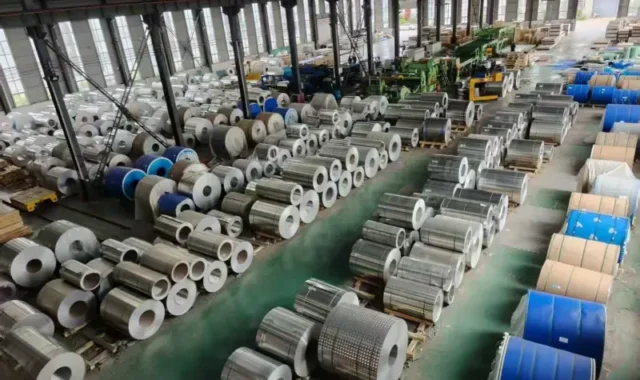
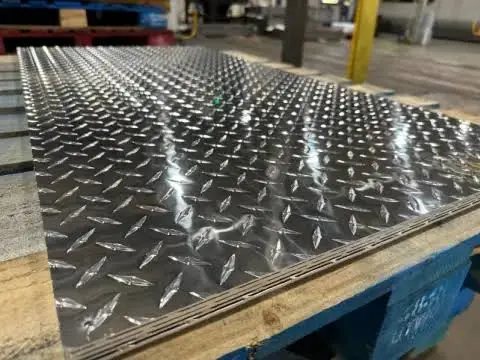
Aluminum tread plate 4×8 is a popular size for construction, transportation, workshops, platforms, stairs, truck bodies, trailers, and industrial projects. The standard 4×8 sheet measures 4 feet × 8 feet, or about 1219 × 2438 mm.
The raised tread pattern gives the sheet a better grip than a plain aluminum sheet. It also gives the surface a strong industrial appearance.
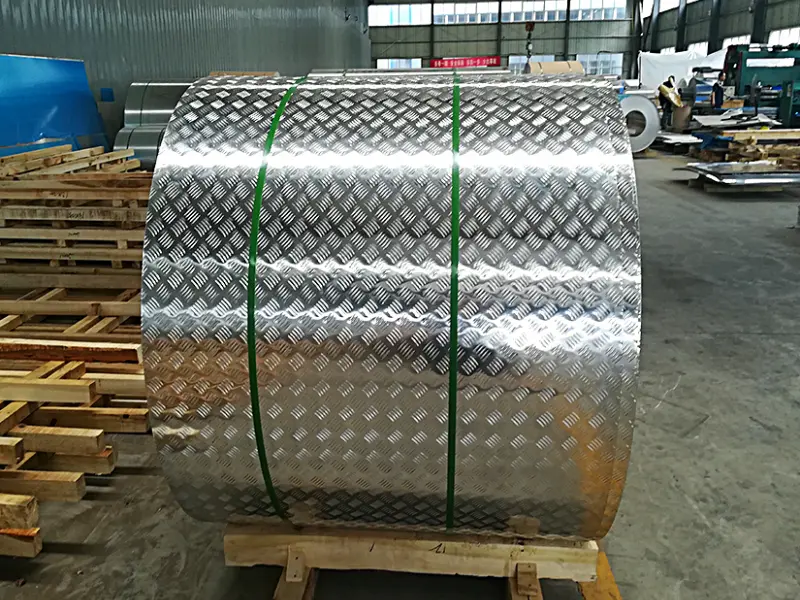
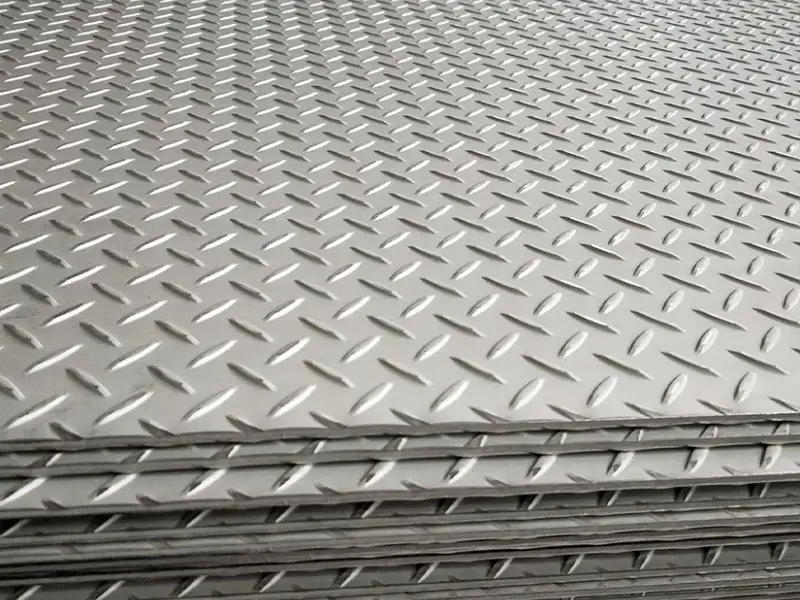
Aluminum tread plate is lightweight, corrosion resistant, and easy to cut. It is available in several aluminum alloys, tempers, thicknesses, and surface patterns.
For wholesale buyers, fabricators, distributors, and project contractors, the 4×8 format is a practical choice because it fits many common fabrication jobs.
What Is Aluminum Tread Plate 4×8?
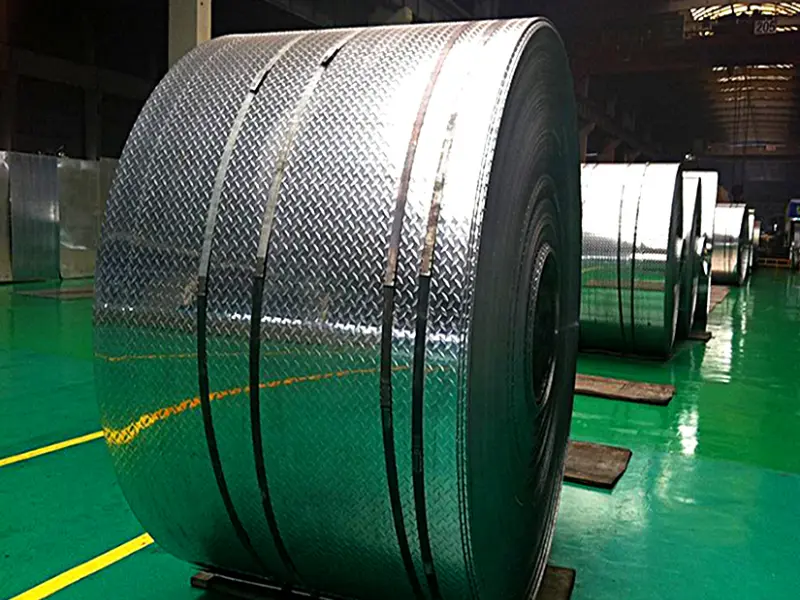
Aluminum tread plate is a flat aluminum sheet with a raised pattern on one side.
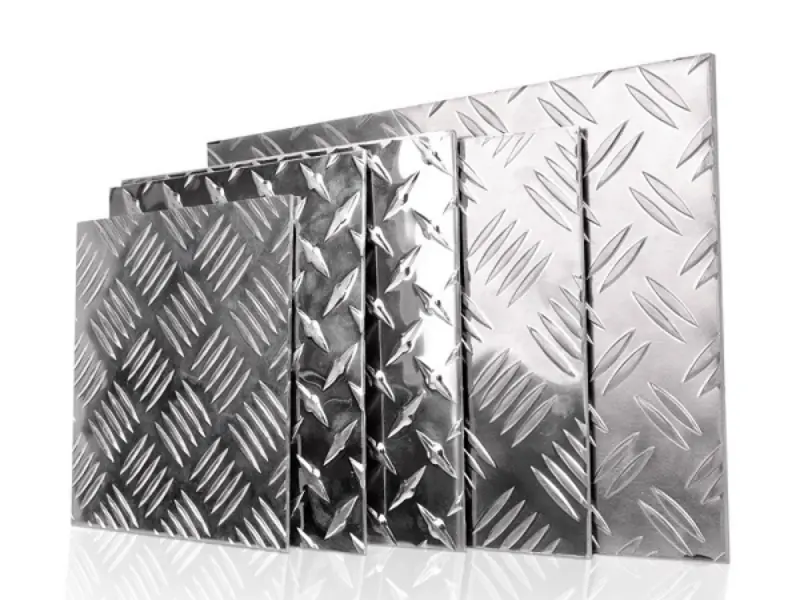
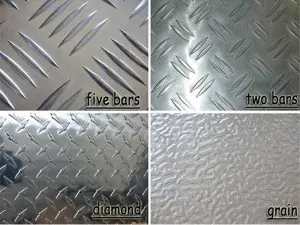
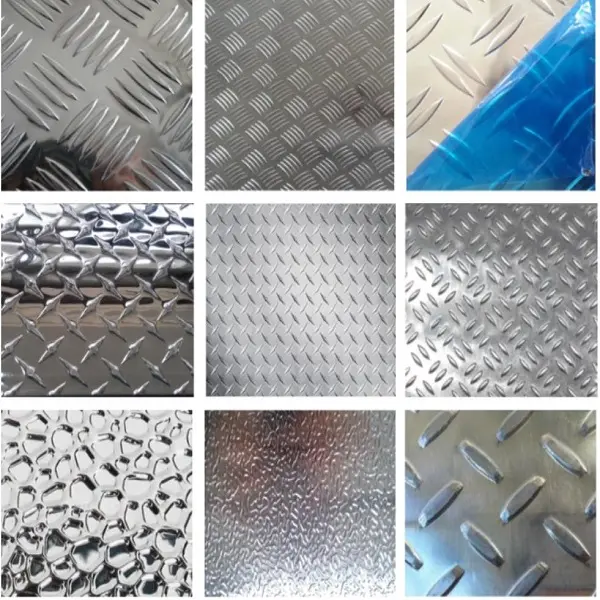
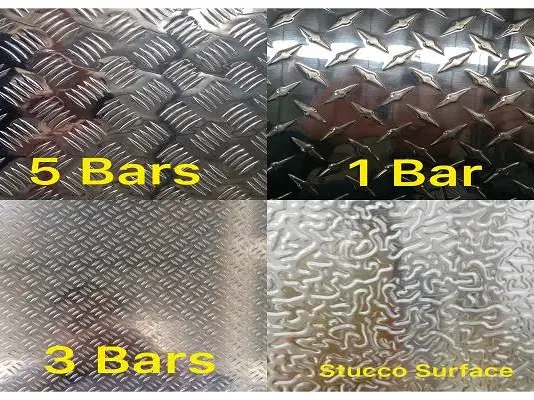
The pattern can be a diamond, one-bar, two-bar, three-bar, or five-bar design. The raised surface helps reduce slipping in many working environments.
The 4×8 aluminum tread plate size is especially common in North American markets. It is also used by customers who need a standard panel size for cutting and fabrication.
A typical 4×8 sheet can be supplied in different alloys and tempers.
| Item | Common Options |
|---|---|
| Sheet size | 4 × 8 ft |
| Metric size | Approx. 1219 × 2438 mm |
| Alloys | 1050, 3003, 5052, 6061 |
| Tempers | H14, H22, H24, H32, T6 |
| Thickness | 1.0–8.0 mm |
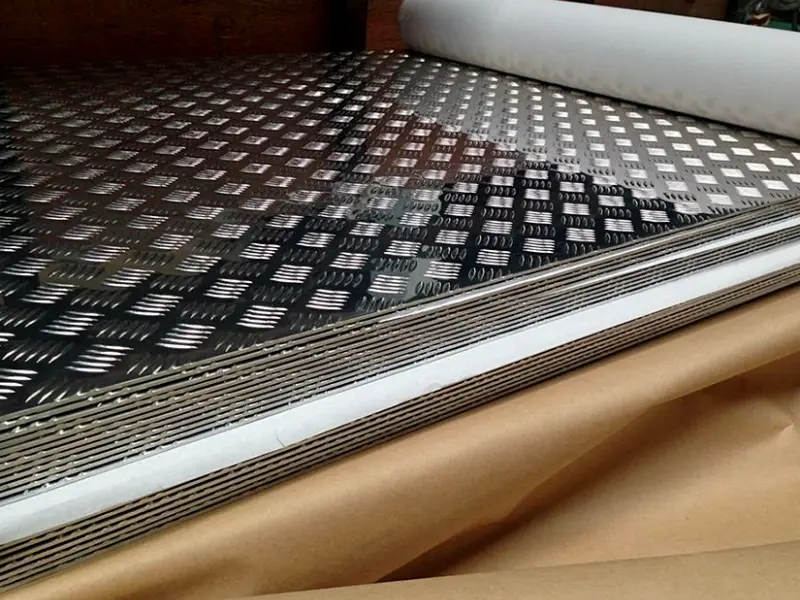
| Pattern | Diamond, 1 bar, 2 bar, 3 bar, 5 bar |
| Surface | Mill finish, polished, anodized |
| Processing | Cutting, bending, punching, CNC |
| Protection | PE film available |
Why Choose a 4×8 Aluminum Tread Plate?
The 4×8 size offers a useful balance between sheet area and handling.
It can cover a large working surface without requiring a very large plate.
Easy to Use
A 4×8 sheet is suitable for many standard fabrication machines. It can be cut into smaller panels, strips, steps, covers, and equipment parts.
Lightweight
Aluminum weighs less than steel.
This can reduce the weight of truck floors, platforms, covers, and mobile equipment.

Good Corrosion Resistance
Aluminum naturally forms a protective oxide layer.
This makes it suitable for many indoor and outdoor applications.
Better Surface Grip
The raised pattern gives the surface more texture.
This is useful for walkways, steps, platforms, ramps, and vehicle floors.
Easy to Fabricate
Depending on the alloy and temper, aluminum tread plate can be cut, drilled, bent, punched, and formed.
4×8 Aluminum Tread Plate Specifications
The right specification depends on the application.
Thickness, alloy, temper, and pattern should be selected together.
| Thickness | Approx. Inch | Typical Use |
|---|---|---|
| 1.0 mm | 0.039″ | Decoration, light covers |
| 1.2 mm | 0.047″ | Light panels |
| 1.5 mm | 0.059″ | Wall and equipment panels |
| 2.0 mm | 0.079″ | General fabrication |
| 2.5 mm | 0.098″ | Platforms and covers |
| 3.0 mm | 0.118″ | Flooring and equipment |
| 4.0 mm | 0.157″ | Heavy-duty panels |
| 5.0 mm | 0.197″ | Industrial floors |
| 6.0 mm | 0.236″ | Heavy-duty applications |
| 8.0 mm | 0.315″ | High-load applications |
The actual usable thickness can depend on whether the stated thickness refers to the base sheet or includes the raised pattern. Buyers should confirm this point before ordering.
Aluminum Tread Plate 4×8 Alloy Options
Different alloys provide different levels of formability, strength, corrosion resistance, and cost.
1050 Aluminum Tread Plate

1050 is a commercially pure aluminum alloy.
It offers good corrosion resistance and excellent formability.
It is often used for decorative panels, light-duty covers, and applications where high strength is not the main requirement.
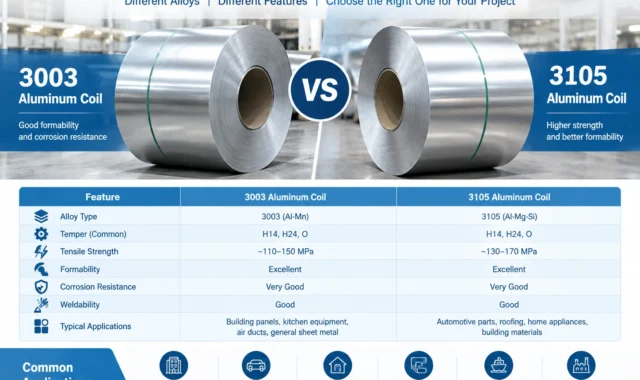
3003 Aluminum Tread Plate
3003 is one of the common choices for aluminum tread plate.
It provides a useful balance of strength, formability, corrosion resistance, and price.
It can be used for flooring, truck bodies, equipment covers, stairs, platforms, and general industrial fabrication.
5052 Aluminum Tread Plate
5052 has higher strength than 1050 and 3003.
It also has good corrosion resistance.
This makes it suitable for transportation, marine-related applications, equipment, ramps, platforms, and areas exposed to moisture.
6061 Aluminum Tread Plate
6061 is a heat-treatable aluminum alloy.
It provides higher strength than many common 1xxx and 3xxx series alloys.
6061-T6 is often selected for structural or heavy-duty applications where strength is important.
3003 vs 5052 Aluminum Tread Plate
The difference between 3003 and 5052 is important for many buyers.
| Feature | 3003 | 5052 |
|---|---|---|
| Strength | Medium | Higher |
| Formability | Very good | Good |
| Corrosion resistance | Good | Very good |
| Welding | Good | Good |
| Common use | General fabrication | Heavy-duty and marine use |
| Cost | Often economical | Usually higher |
Choose 3003 when balanced performance and easy forming are important.
Choose 5052 when higher strength and corrosion resistance are needed.
5052 vs 6061 Tread Plate
5052 and 6061 are often compared for industrial projects.
5052 is a non-heat-treatable alloy with good corrosion resistance and good forming performance.
6061-T6 has higher strength and good machining performance.
| Requirement | Suggested Alloy |
|---|---|
| Easy forming | 5052 |
| Marine environment | 5052 |
| General flooring | 3003 |
| Higher structural strength | 6061-T6 |
| Good corrosion resistance | 5052 |
| CNC machining | 6061-T6 |
The final choice should also consider welding, bending, load, and project design.
Aluminum Tread Plate 4×8 by Pattern
The pattern affects both appearance and surface grip.
Diamond Tread Plate

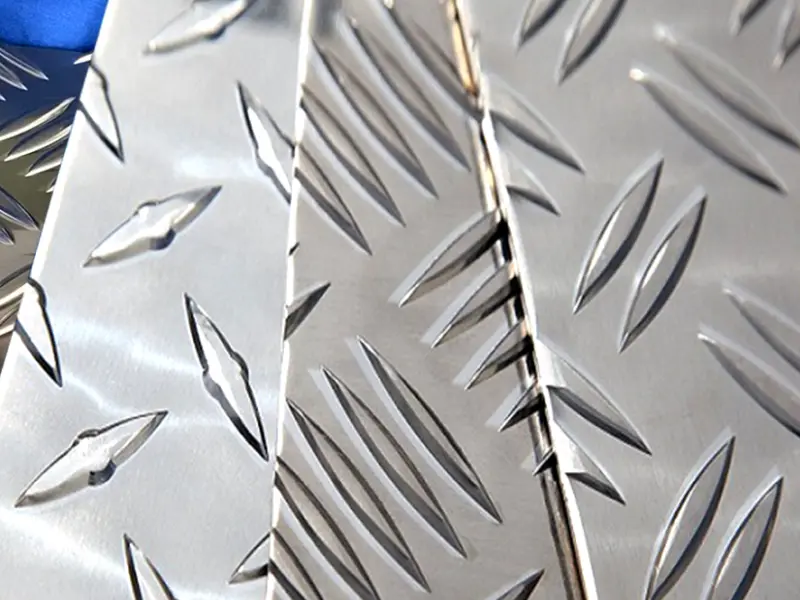
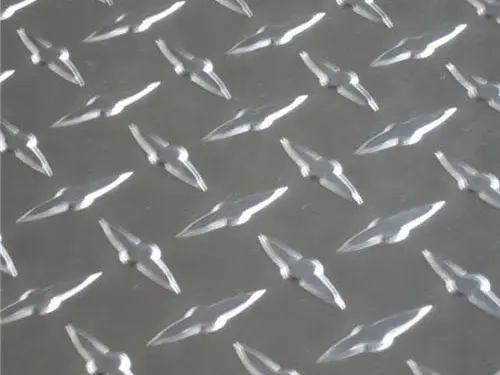
Diamond tread plate is one of the most recognizable aluminum flooring products.
The raised diamond pattern gives the sheet a strong industrial look.
It is widely used for truck beds, steps, ramps, platforms, toolboxes, and equipment covers.
One-Bar Tread Plate
One-bar tread plate has a simple raised bar pattern.
It can be used for decorative and functional panels.
Two-Bar Tread Plate
Two-bar patterns provide a more noticeable textured surface.
They are available for architectural and industrial applications.
Three-Bar Tread Plate
Three-bar designs offer a repeated directional pattern.
They are suitable for flooring and decorative panels.
Five-Bar Tread Plate

Five-bar tread plate has a stronger repeated pattern.
It is commonly selected for platforms, walkways, stairs, and vehicle applications.
Aluminum Tread Plate 4×8 by Thickness
Thickness is one of the most important purchasing factors.
1.0–1.5 mm Tread Plate
Thin tread plate is easy to handle.
It is suitable for:
- Decorative panels
- Wall protection
- Equipment covers
- Light-duty enclosures
- Interior decoration
- Cabinet panels
It should not be selected for high-load flooring without proper structural support.
2.0–3.0 mm Tread Plate
This range is widely used for general fabrication.
Common applications include:
- Truck panels
- Steps
- Ramps
- Platforms
- Equipment covers
- Workshop floors
- Trailer components
4.0–6.0 mm Tread Plate

Thicker plate provides greater rigidity.
It is suitable for heavy-duty platforms, industrial flooring, vehicle components, and machinery areas.
8.0 mm Tread Plate
8 mm aluminum tread plate is designed for demanding applications.
It may be used where greater thickness and rigidity are required.
The final load capacity should always be checked against the supporting structure.
4×8 Aluminum Tread Plate for Flooring
Flooring is one of the main applications for tread plate.
The raised pattern provides additional surface texture.
It is commonly used in:
- Factory walkways
- Workshop floors
- Platforms
- Stairs
- Loading areas
- Truck floors
- Trailer floors
- Ramps
- Industrial equipment
For flooring, buyers should consider thickness, alloy, support spacing, load, and installation method.
A thicker sheet is not automatically the right solution. The complete floor structure matters.
Aluminum Tread Plate for Trucks and Trailers
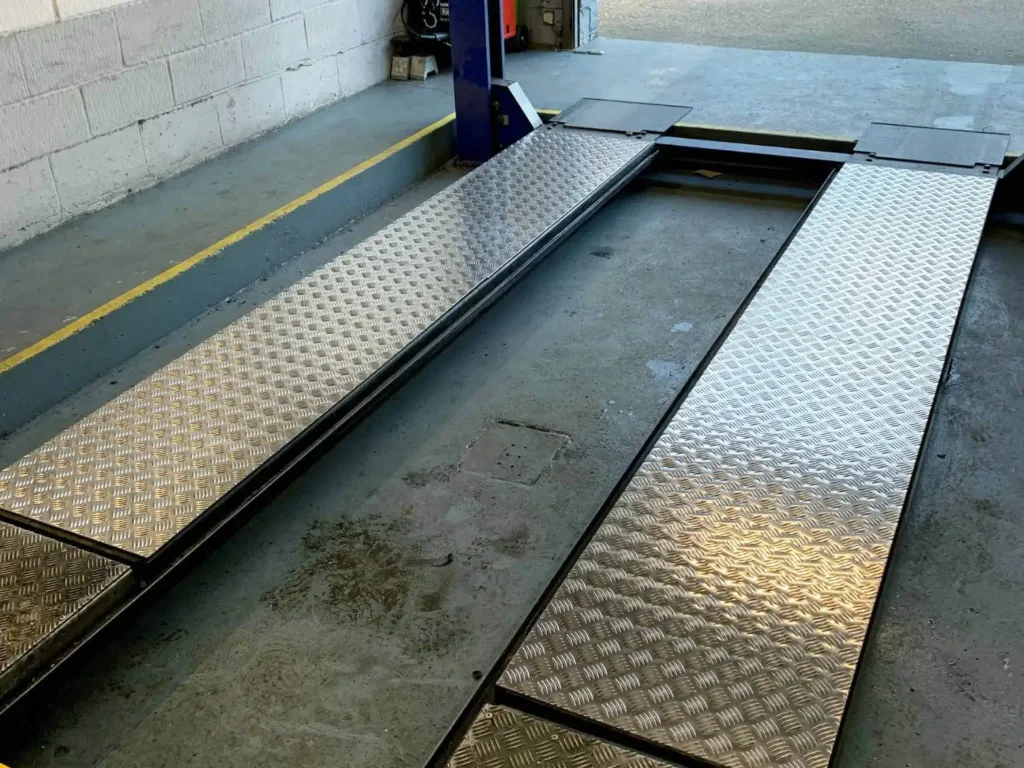
The 4×8 size works well for many truck and trailer projects.
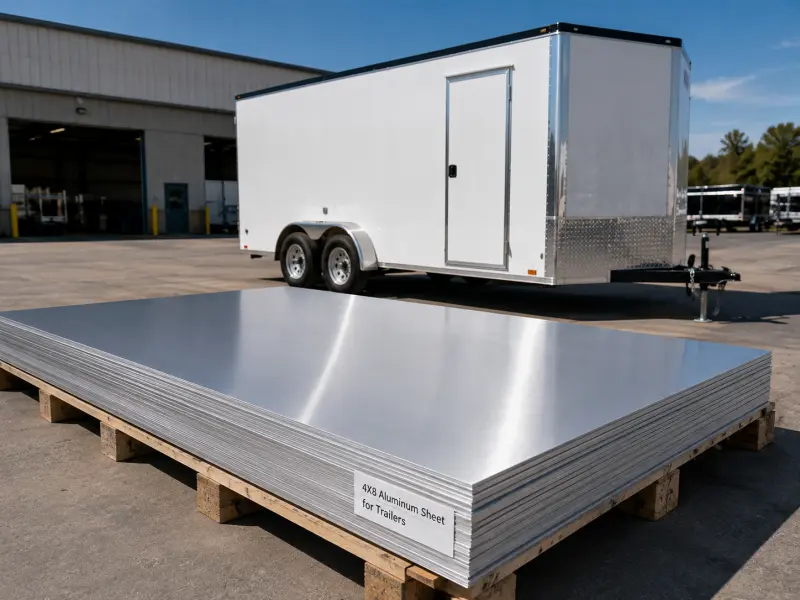
The sheet can be cut into floor sections, side panels, wheel covers, tool compartments, and protective panels.
5052 and 3003 are common choices for transportation-related fabrication.
For a truck floor, thickness should be selected according to expected load and support structure.
Aluminum Tread Plate for Stairs and Steps
Tread plate can be used for stairs and steps because of its textured surface.
It is often fabricated into stair treads, landing panels, and access platforms.
For outdoor steps, corrosion resistance is also important.
5052 can be considered when the product will face moisture or outdoor exposure.
Aluminum Tread Plate for Toolboxes
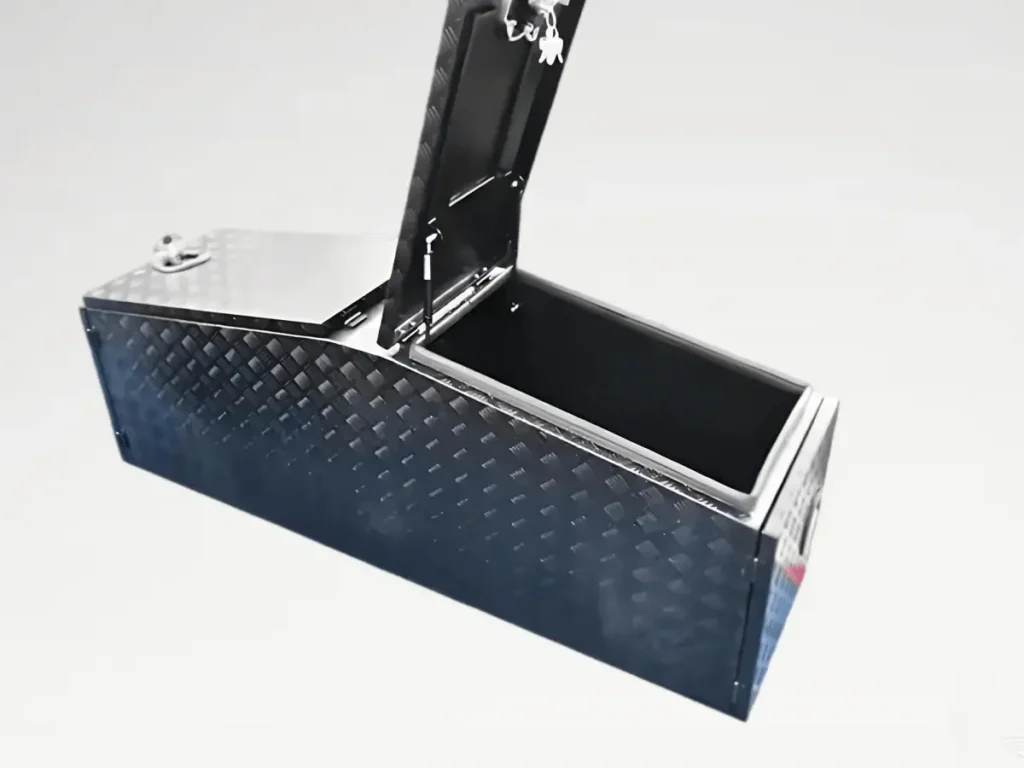
Aluminum tread plate is widely used for toolboxes and storage boxes.
The raised pattern provides a durable appearance and helps hide small surface marks.
Common products include:
- Truck toolboxes
- Trailer boxes
- Workshop storage boxes
- Utility cabinets
- Equipment cases
- Outdoor storage boxes
3003 and 5052 can both be considered depending on forming and strength requirements.
Aluminum Tread Plate for Ramps
Ramps require careful attention to thickness and support.
The tread surface can provide useful grip.
Typical applications include:
- Loading ramps
- Vehicle ramps
- Warehouse ramps
- Equipment ramps
- Access ramps
- Trailer ramps
For a ramp, thickness should not be selected only by appearance. Span and load should also be considered.
Decorative Uses of 4×8 Aluminum Tread Plate
Not all tread plate is used for flooring.
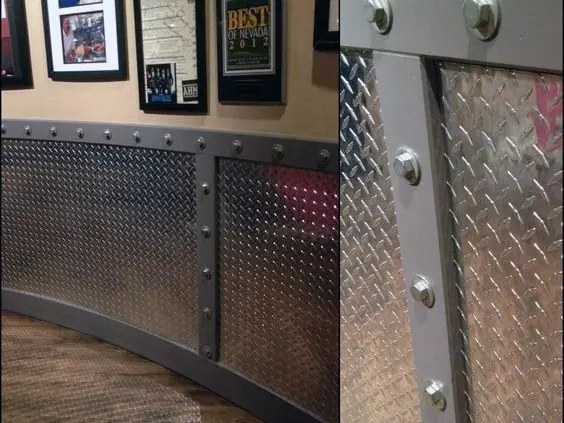
The raised pattern can also create a strong decorative effect.
It can be used for:
- Wall panels
- Retail displays
- Bar counters
- Garage decoration
- Workshop interiors
- Furniture
- Industrial-style interiors
- Vehicle decoration
A 4×8 sheet provides enough area for large decorative panels.
4×8 Aluminum Tread Plate Surface Options
The surface finish affects appearance and protection.
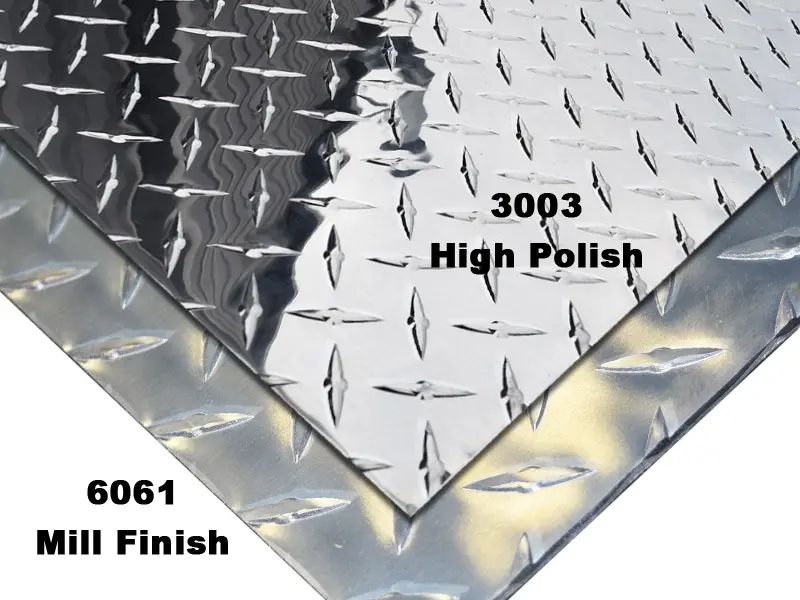
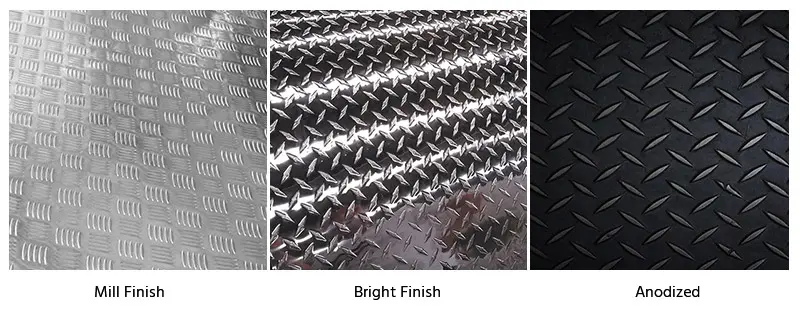
Mill Finish
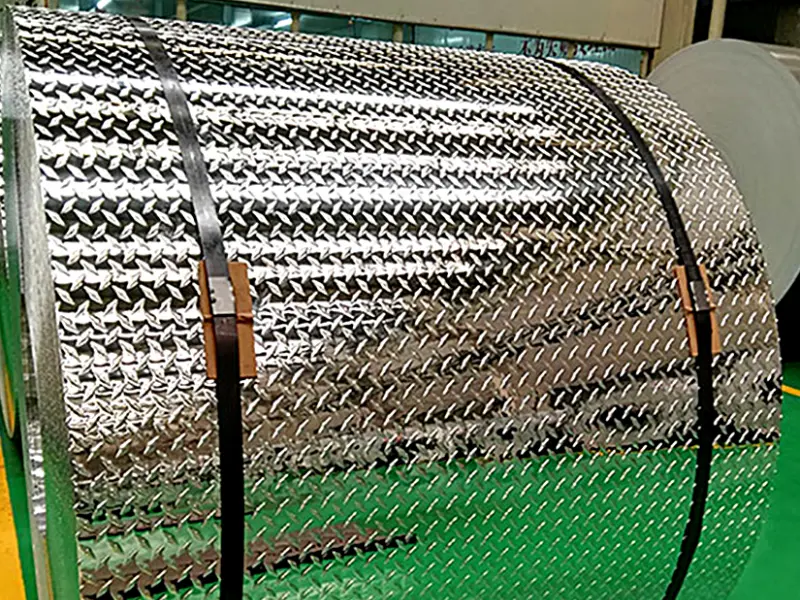
Mill finish is the standard option.
It has the natural aluminum appearance produced during manufacturing.
It is often selected for industrial applications.
Polished Tread Plate
Polished tread plate has a brighter appearance.
It can be used for decorative projects and vehicle customization.
Anodized Tread Plate
Anodizing creates a controlled surface oxide layer.
It can improve surface appearance and provide additional surface protection.
Protective Film
PE protective film can be added before shipment.
It helps reduce scratches during cutting, transportation, and installation.
4×8 Aluminum Tread Plate vs Plain Aluminum Sheet
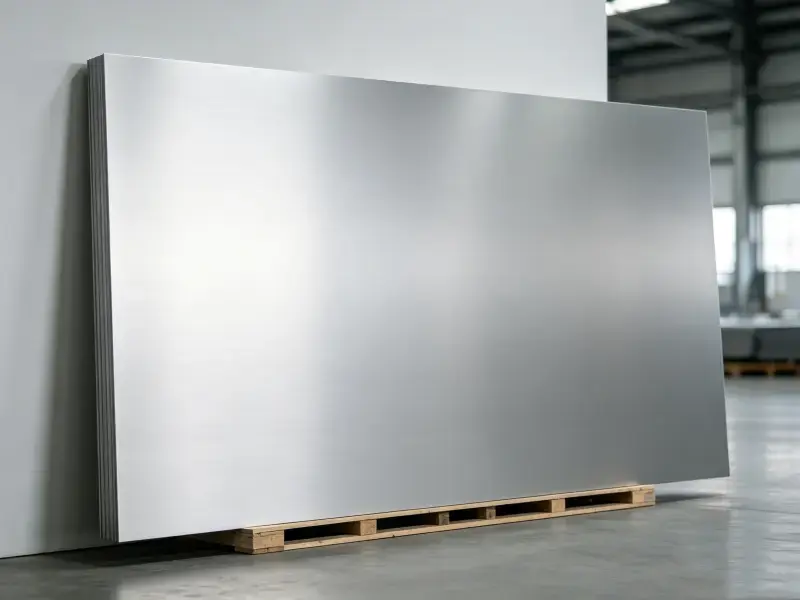
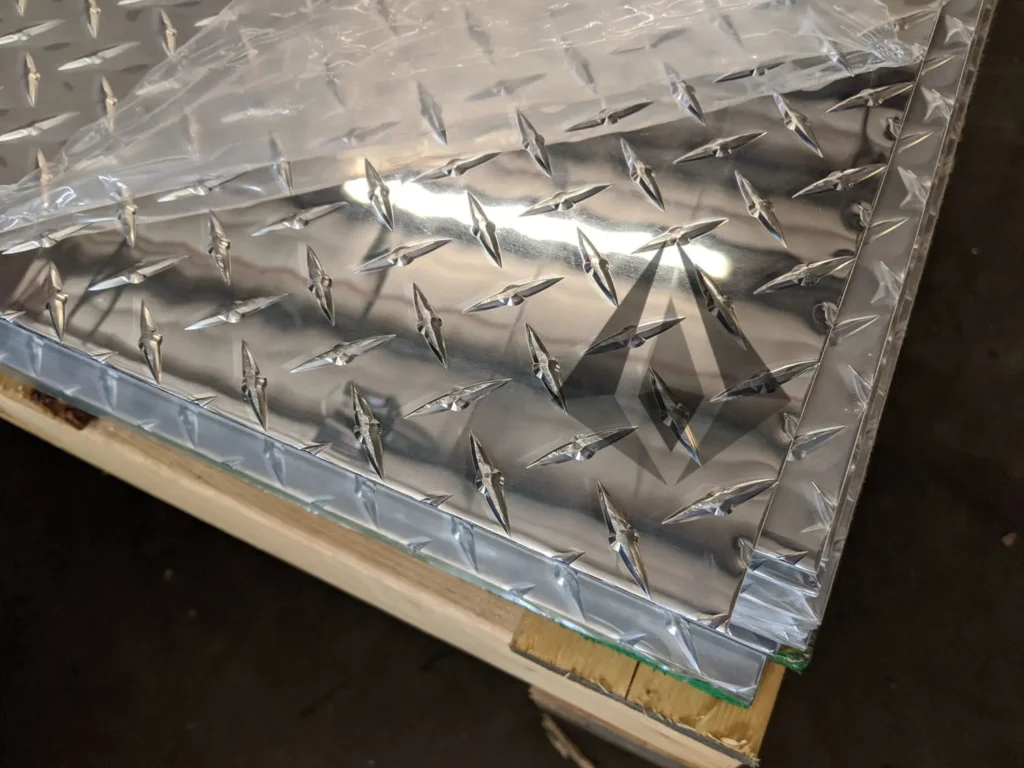
Plain aluminum sheet has a smooth surface.
Tread plate has a raised pattern.
| Feature | Tread Plate | Plain Sheet |
|---|---|---|
| Surface | Raised | Smooth |
| Grip | Higher surface texture | Lower |
| Appearance | Industrial | Clean and simple |
| Flooring | Common | Less common |
| Decoration | Possible | Very common |
| Weight | Slightly affected by pattern | Standard |
Choose tread plate when surface texture is useful.
Choose plain sheet when a smooth surface is required.
Aluminum Tread Plate vs Steel Tread Plate
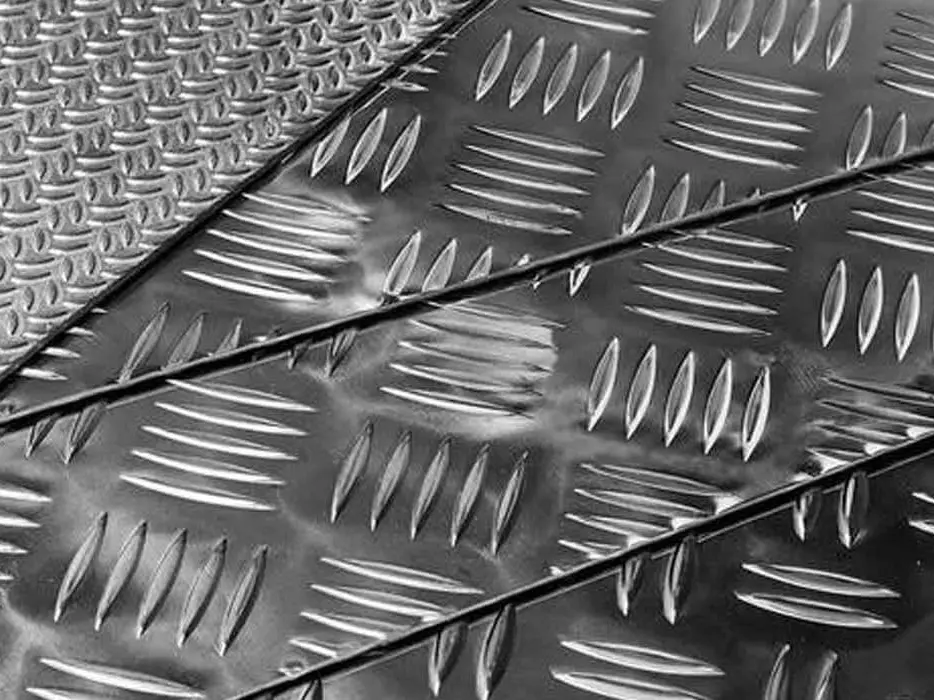
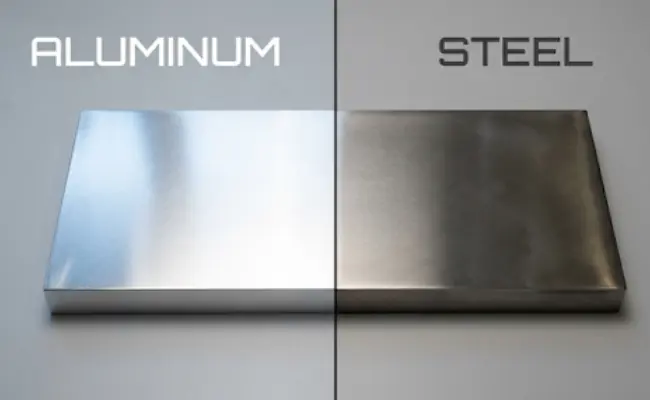
Steel tread plate has high strength but is much heavier.
Aluminum tread plate provides a lower-weight alternative.
| Feature | Aluminum | Steel |
|---|---|---|
| Weight | Lower | Higher |
| Corrosion resistance | Good | Usually needs protection |
| Handling | Easier | More difficult |
| Surface treatment | Many options | Many options |
| Fabrication | Easy with suitable tools | Stronger but heavier |
| Transportation | Useful for weight reduction | Higher weight |
For mobile equipment, reducing material weight can be an important consideration.
3mm vs 4mm Aluminum Tread Plate
The choice between 3 mm and 4 mm often depends on the support structure.
| Thickness | Typical Direction |
|---|---|
| 3 mm | General flooring and panels |
| 4 mm | Higher rigidity and heavier use |
If the sheet will span a larger distance, a thicker option may be considered.
If the sheet has close structural support, 3 mm may be sufficient for some applications.
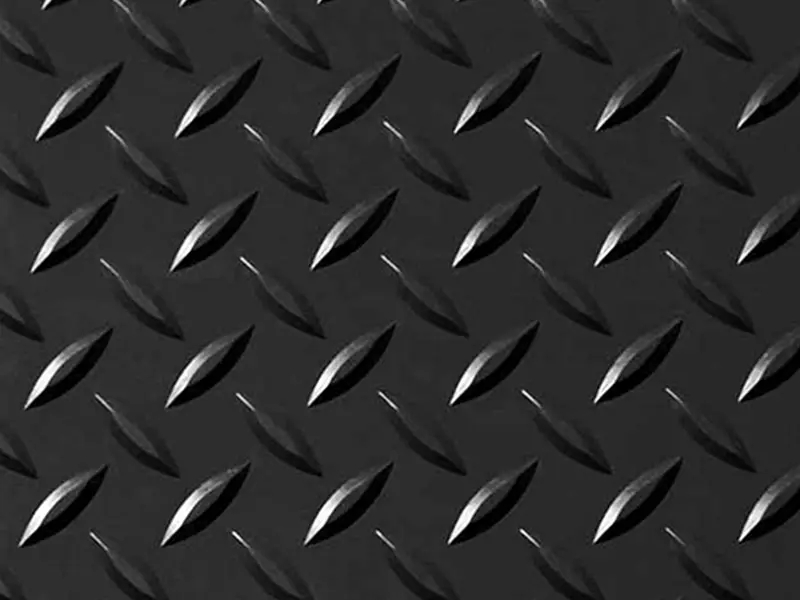
4mm vs 5mm Aluminum Tread Plate

4 mm tread plate provides a good balance between weight and rigidity.
5 mm provides more material and can offer greater stiffness.
For equipment floors and heavier platforms, 5 mm may be considered.
The correct selection depends on the engineering requirements of the project.
4×8 Aluminum Tread Plate Cutting Options
A supplier can provide standard full sheets or cut pieces.
Common cutting methods include:
- Shearing
- Laser cutting
- Saw cutting
- CNC cutting
- Waterjet cutting
For large quantities, pre-cut sheets can reduce workshop labor.
Buyers should provide drawings when special shapes are required.
Custom 4×8 Tread Plate Products
Although 4×8 is a standard size, many customers require custom dimensions.
Possible options include:
| Custom Item | Options |
|---|---|
| Width | Custom |
| Length | Custom |
| Thickness | 1.0–8.0 mm+ |
| Alloy | 1050/3003/5052/6061 |
| Temper | O/H14/H24/H32/T6 |
| Pattern | Diamond/1 bar/2 bar/3 bar/5 bar |
| Surface | Mill/polished/anodized |
| Film | PE protection |
| Cutting | Custom shapes |
Custom cutting is useful for projects where the sheet must fit a specific frame or equipment.
How to Select the Right Aluminum Tread Plate
A simple selection process can make purchasing easier.
Application → Load → Thickness → Alloy → Temper → Pattern → Size → Finish
For example:
Truck floor → Medium load → 3 mm → 3003 → suitable temper → Diamond → 4×8 → Mill finish
Another example:
Marine equipment → Higher corrosion resistance → 4 mm → 5052 → suitable temper → Diamond → Custom size → Protective film
For structural components:
Heavy equipment → Higher strength → 6061-T6 → suitable thickness → Diamond → CNC cutting
This approach helps avoid choosing a product only by price.
Quality Control for 4×8 Aluminum Tread Plate
Quality is important for wholesale orders.
A supplier should check the sheet before shipment.
Thickness
Thickness should be measured at different positions.
Buyers should confirm whether the specified thickness refers to the base sheet or includes the raised pattern.
Sheet Size
The length and width should meet the agreed tolerance.
Pattern Height
The raised pattern should be consistent.
Surface
The surface should be checked for:
- Deep scratches
- Oil marks
- Cracks
- Oxidation
- Uneven pattern
- Color differences
- Edge damage
Flatness
Flat sheets are important for fabrication and installation.
Alloy and Temper
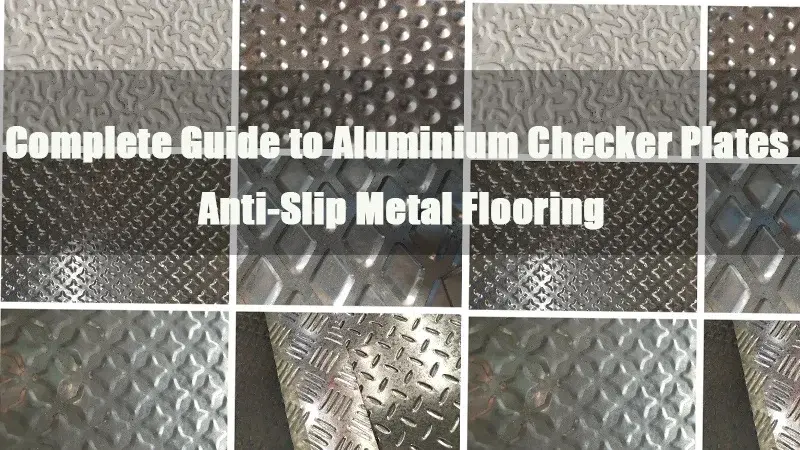
Material certificates can be supplied when required.
For large projects, buyers may request chemical composition and mechanical property reports.
Packaging and Shipping
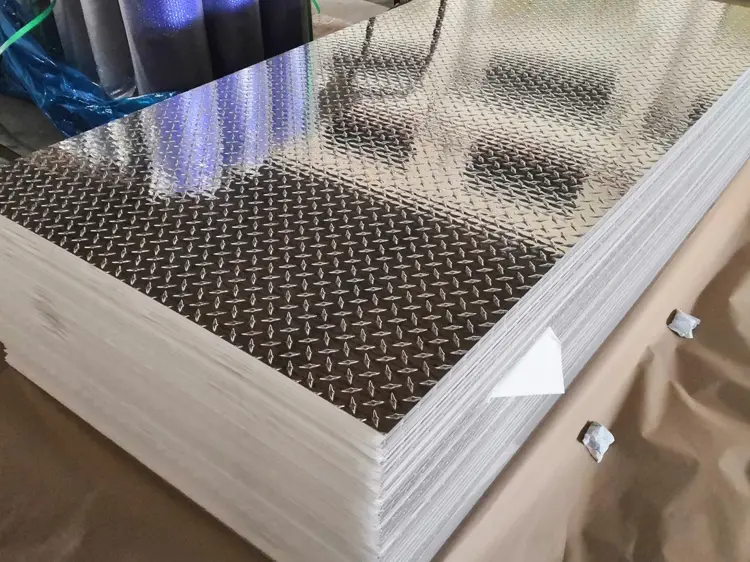
4×8 aluminum tread plate should be properly protected during transportation.
Common packaging methods include:
- Wooden pallets
- Wooden cases
- Steel straps
- Waterproof paper
- PE film
- Corner protection
For container shipping, sheets should be stacked securely.
Moisture protection is important during long-distance transportation.
Factors That Affect Aluminum Tread Plate Price
The price of a 4×8 sheet depends on several factors.
Alloy
Different alloys have different raw material and production costs.
Thickness
Thicker sheets contain more aluminum.
Pattern
Different tread patterns may have different production requirements.
Surface Finish
Polished and special surface finishes can increase the cost.
Quantity
Full-container or bulk orders may receive better production and shipping costs.
Cutting
Custom cutting requires additional processing.
Packaging
Special export packaging can also affect the final price.
Buying 4×8 Aluminum Tread Plate in Bulk
For wholesale buyers, it is useful to provide complete specifications before requesting a quotation.
A clear RFQ can include:
- Product name
- Sheet size
- Alloy
- Temper
- Thickness
- Pattern
- Quantity
- Surface finish
- Protective film
- Cutting requirements
- Packaging requirements
- Delivery destination
For example:
4×8 aluminum tread plate + 3003 H24 + 3 mm + diamond pattern + mill finish + PE film + 500 sheets
This gives the supplier enough information to prepare a more accurate quotation.
Common Buying Mistakes
Choosing Thickness Only by Price
A thinner sheet may cost less but may not provide enough rigidity.
Ignoring Alloy
Different alloys have different forming and strength characteristics.
Not Confirming Pattern
“Aluminum tread plate” can refer to several pattern types.
The pattern should be confirmed before production.
Not Confirming Base Thickness
Buyers should clarify how the supplier defines thickness.
Ignoring Packaging
Large 4×8 sheets can be damaged if they are not properly protected.
4×8 Aluminum Tread Plate Quick Selection
| Project | Suggested Direction |
|---|---|
| Wall decoration | 1.0–1.5 mm |
| Equipment cover | 1.5–2.5 mm |
| Workshop floor | 2.5–4.0 mm |
| Truck floor | 3.0–5.0 mm |
| Stairs | 2.5–4.0 mm |
| Industrial platform | 4.0–6.0 mm |
| Heavy-duty floor | 5.0–8.0 mm |
| Marine equipment | 5052 + suitable thickness |
| Structural parts | 6061-T6 + engineering check |
These are general starting points. Actual thickness should be selected according to load, span, support, and design requirements.
Frequently Asked Questions
What is the actual size of a 4×8 aluminum tread plate?
A standard 4×8 sheet is 4 feet by 8 feet. The nominal metric size is approximately 1219 × 2438 mm. Actual production sizes can vary slightly according to the supplier and market.
What thickness is common for 4×8 aluminum tread plate?
Common thicknesses include 1.5 mm, 2 mm, 2.5 mm, 3 mm, 4 mm, 5 mm, and 6 mm. Heavier applications may require thicker plate.
What alloy is commonly used for aluminum tread plate?
3003 is widely used for general applications. 5052 is useful when higher strength and corrosion resistance are needed. 6061-T6 can be considered for higher-strength applications.
Is 4×8 aluminum tread plate good for truck floors?
It can be suitable for truck floors when the thickness, alloy, support spacing, and expected load are properly selected.
Is aluminum tread plate good for outdoor use?
Aluminum has good natural corrosion resistance. Suitable alloys and surface finishes can be selected for outdoor environments.
What is the difference between aluminum tread plate and diamond plate?
In many markets, “tread plate” and “diamond plate” are used for similar products. Diamond plate normally refers specifically to a raised diamond pattern.
Can 4×8 aluminum tread plate be cut to size?
Yes. It can be supplied as full 4×8 sheets or processed into custom sizes and shapes.
Can aluminum tread plate be bent?
Many aluminum tread plates can be bent, but the suitable bending radius depends on the alloy, temper, thickness, and forming method.
What is the difference between 3003 and 5052 tread plate?
3003 provides good formability and balanced performance. 5052 generally provides higher strength and very good corrosion resistance.
Is 6061-T6 aluminum tread plate stronger?
6061-T6 is a high-strength heat-treated aluminum alloy. It is often selected when strength is more important than easy forming.
Can protective film be added?
Yes. PE film can be added to protect the surface during handling, cutting, shipping, and installation.
Can a supplier provide custom patterns?
Some manufacturers can produce or supply different tread patterns, including diamond and bar patterns. Availability depends on production equipment and order quantity.
What information should I provide when asking for a quotation?
Provide the size, alloy, temper, thickness, pattern, quantity, surface finish, film requirement, and delivery destination. Drawings should be provided for custom cutting.
Why 4×8 Aluminum Tread Plate Works for Many Projects
The 4×8 format is easy to understand and easy to use.
It provides enough surface area for many fabrication jobs while remaining manageable for cutting and installation.
Different alloys make the product suitable for different requirements.
Need general fabrication → 3003
Need higher corrosion resistance → 5052
Need higher strength → 6061-T6
Need economical light-duty material → 1050
Need standard flooring → 3–4 mm
Need heavier-duty flooring → 5–8 mm
Need a common standard size → 4×8 ft
Need special dimensions → Custom cutting
For wholesale projects, choosing the correct combination of alloy, temper, thickness, pattern, and finish is more important than choosing the lowest price alone.
More Aluminum Tread Plate Product Options
A manufacturer can also offer different formats for customers with different requirements.
Standard 4×8 Diamond Plate
A standard choice for flooring, transportation, workshops, stairs, and equipment.
Heavy-Duty Aluminum Diamond Plate
Available in thicker gauges for industrial platforms, truck floors, and high-load applications.
5052 Aluminum Tread Plate
Designed for projects that need stronger material and good corrosion resistance.
6061-T6 Aluminum Tread Plate
Suitable for higher-strength applications and machined components.
Polished Aluminum Diamond Plate
A brighter surface can be used for vehicle decoration, display areas, and interior projects.
Aluminum Tread Plate with PE Film
Protective film helps reduce surface damage during processing and transportation.
Custom Cut Aluminum Tread Plate
Sheets can be cut into steps, covers, panels, strips, and other project shapes.
Final Thoughts
Aluminum tread plate 4×8 is a practical product for many industrial, commercial, transportation, and architectural applications.

The standard size makes it easy to plan material requirements. The raised surface provides useful texture. Aluminum also offers a good combination of low weight, corrosion resistance, and fabrication flexibility.
The best specification depends on the actual application.
For general projects, 3003 is a common choice.
For stronger and more corrosion-resistant applications, 5052 can be considered.
For higher-strength components, 6061-T6 may be suitable.
Thickness should be selected according to load and support conditions.
If you are buying aluminum tread plate in bulk, it is also important to confirm the pattern, base thickness, alloy, temper, surface condition, protective film, cutting tolerance, and packaging before production.