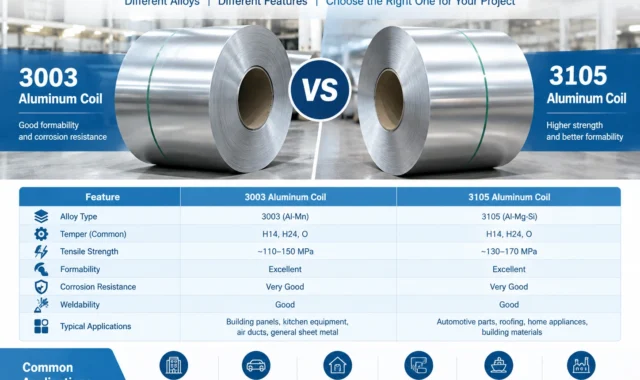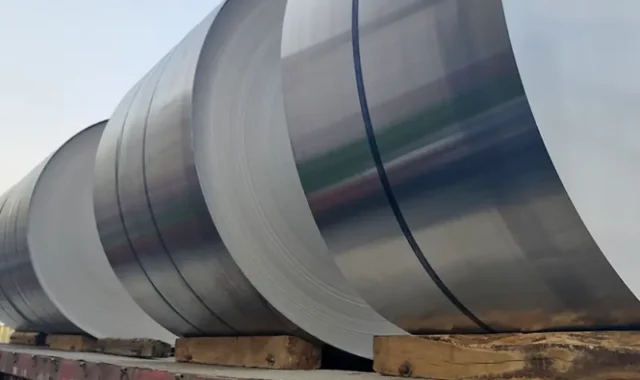
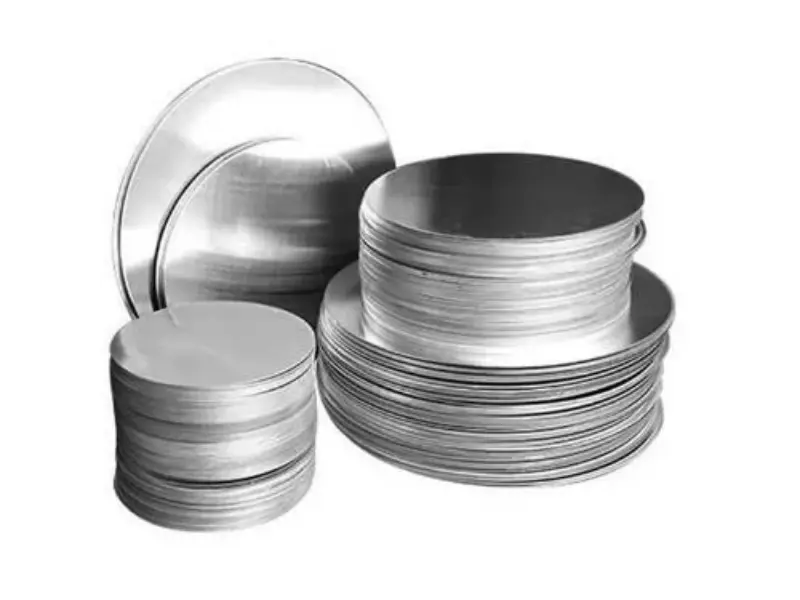
Choosing the right aluminum circle supplier is important for cookware, lighting, traffic signs, pressure vessels, and many other metal products. Aluminum circles are made from aluminum sheet or coil and then processed into round blanks.
A good supplier should offer stable quality, accurate dimensions, suitable alloys, different tempers, and reliable delivery. For large orders, production capacity and quality control are also important.
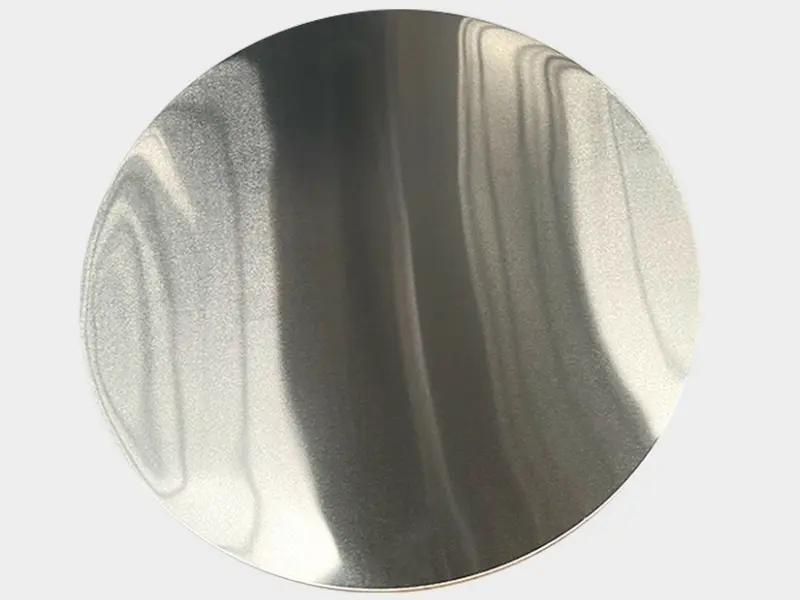
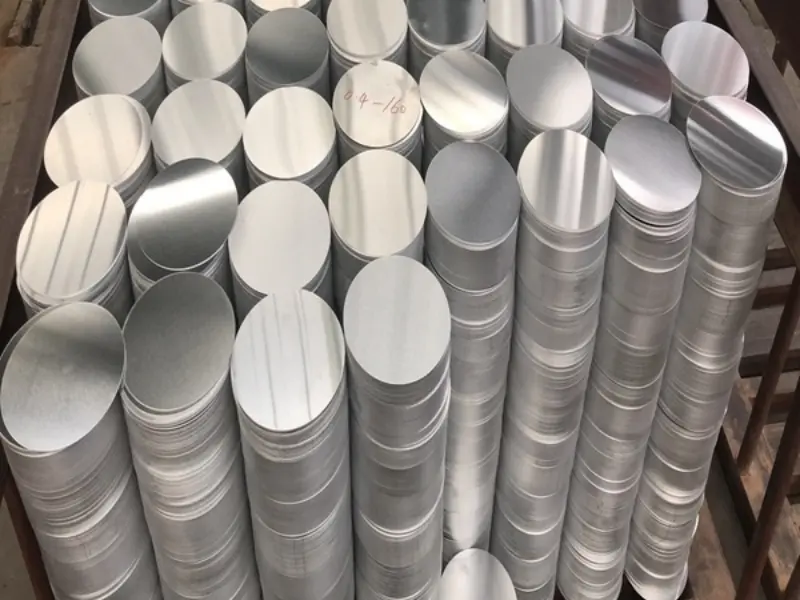
Aluminum circles can be supplied in different diameters, thicknesses, alloys, tempers, and surface finishes. Some buyers need standard round blanks. Others need custom sizes for deep drawing or spinning.
The right material depends on the final product. A cookware manufacturer may need excellent deep-drawing performance. A lighting company may focus more on surface quality. A traffic sign producer may need a specific alloy, thickness, and coating system.
What Is an Aluminum Circle?
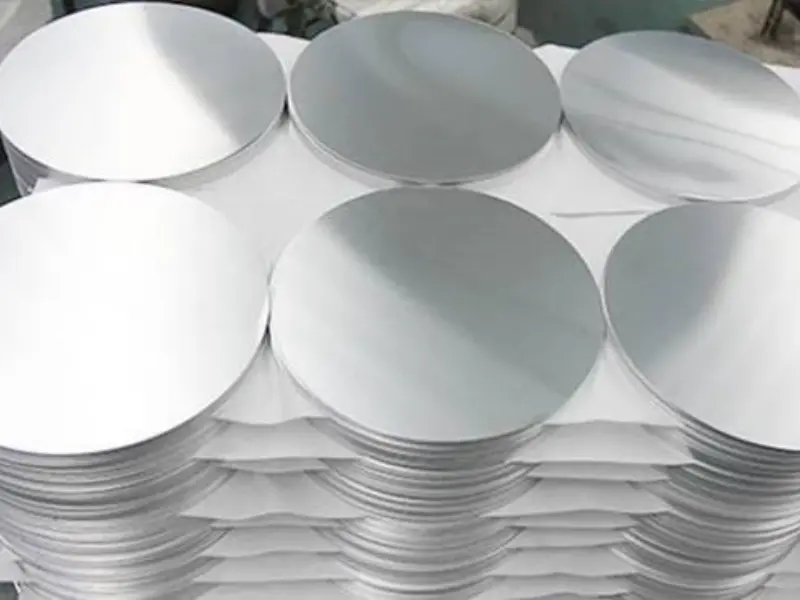
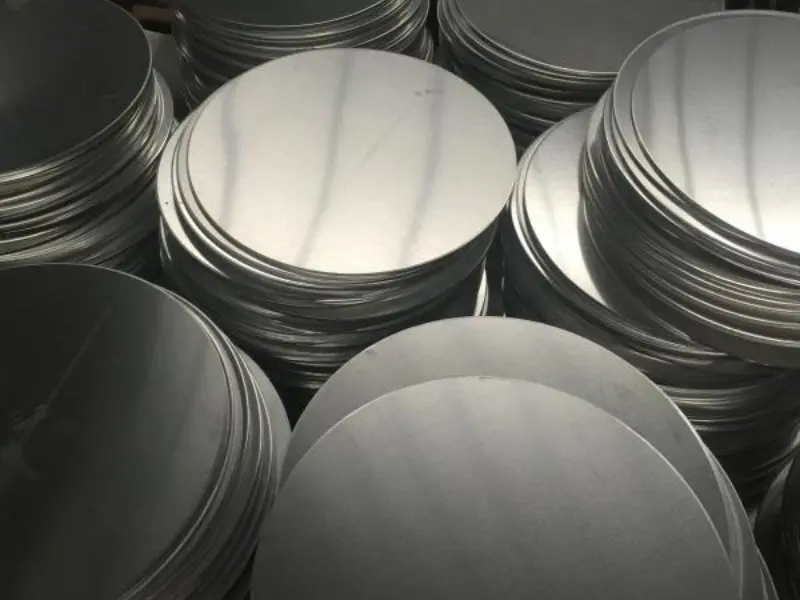
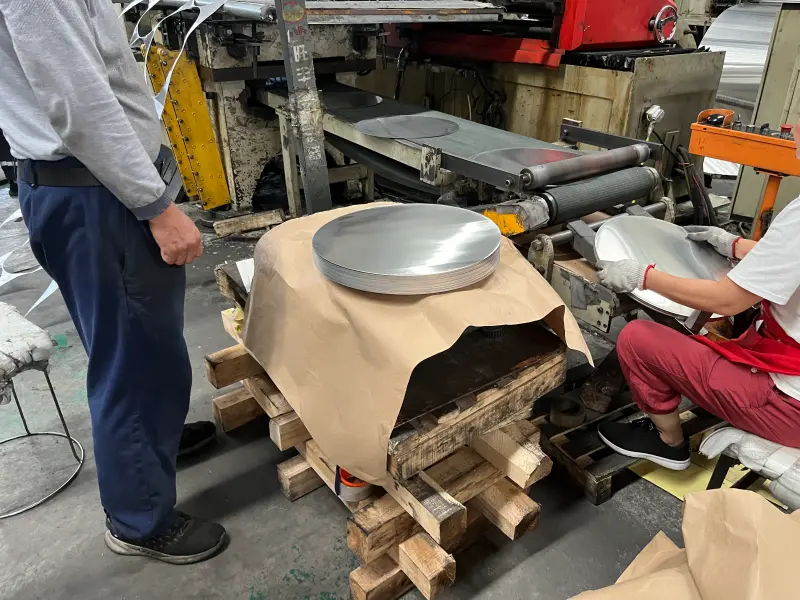
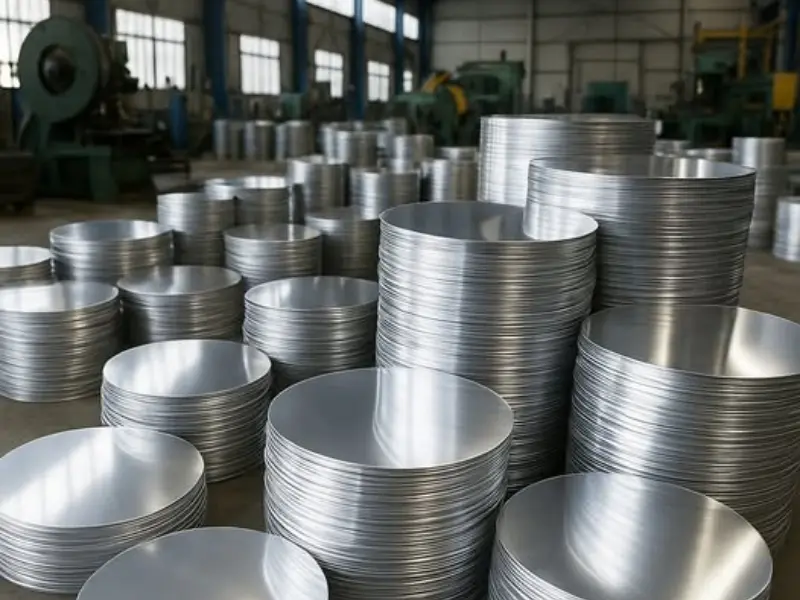
An aluminum circle is a round piece of aluminum produced from sheet or coil.
The manufacturing process normally includes:
Aluminum coil → Slitting or leveling → Blanking → Circle forming → Edge inspection → Surface inspection → Packing
The round blank can then be used for further processing.
Depending on the application, the material can be deep drawn, spun, stamped, anodized, painted, polished, or machined.
| Item | Common options |
|---|---|
| Shape | Round |
| Alloy | 1050, 1060, 1070, 3003, 5052 |
| Temper | O, H12, H14, H16, H18 |
| Thickness | 0.5–6 mm |
| Diameter | 50–1200 mm |
| Surface | Mill finish, anodized, coated |
| Edge | Standard or customized |
| Packing | Pallet, carton, wooden case |
Actual availability depends on the manufacturer and production requirements.
Why Choose a Professional Aluminum Circle Supplier?
A supplier is more than a source of aluminum material. For industrial buyers, the supplier also needs to control size, thickness, surface quality, production consistency, and delivery.
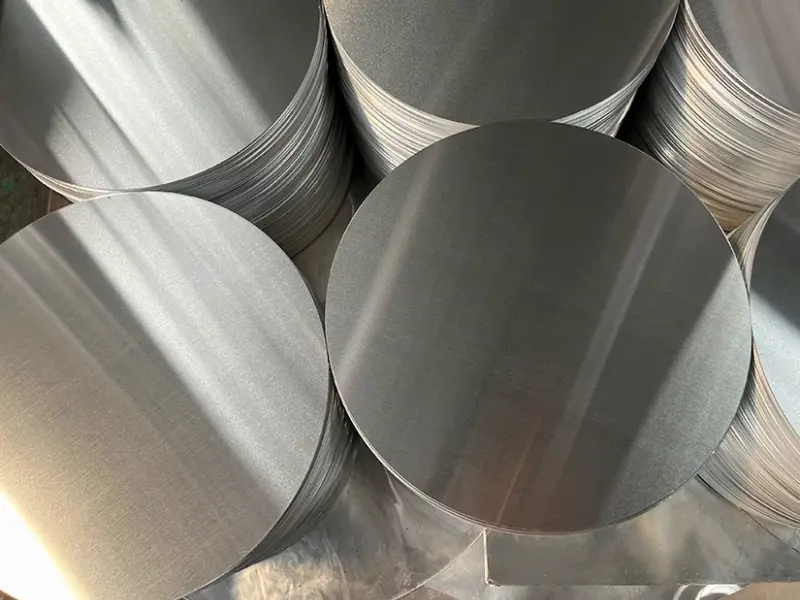
A suitable supplier should be able to provide:
→ Stable raw material supply
→ Multiple aluminum alloys
→ Different tempers
→ Accurate diameter control
→ Uniform thickness
→ Clean surface
→ Smooth edges
→ Custom sizes
→ Export packaging
→ Production inspection
→ Material documentation
For repeat orders, consistent quality is especially important.
If the same product is manufactured every month, differences in diameter, thickness, or forming performance can increase production waste.
Common Aluminum Circle Alloys
Different alloys are used for different products.
1050 Aluminum Circle Supplier
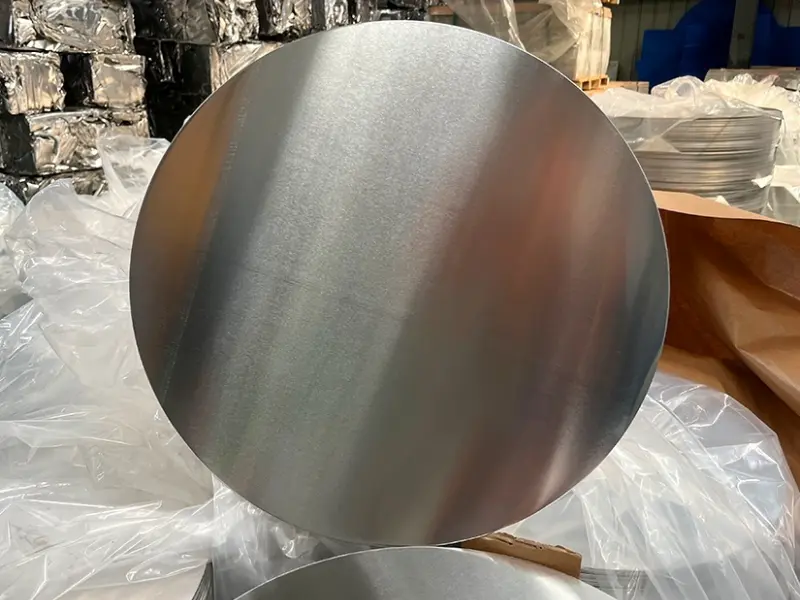
1050 Aluminum Circle Supplier is a commercially pure aluminum alloy with high aluminum content.
It is known for good electrical and thermal conductivity and good formability.
Typical uses include:
- Lighting reflectors
- Kitchenware
- Decorative parts
- Heat-related products
- General stamping
- Electrical components
It is a good option when high strength is not the main requirement.
1060 Aluminum Circle Supplier
1060 offers very good formability and corrosion resistance.
It is commonly considered for products that require simple forming or stamping.
Typical uses include:
- Cookware
- Lighting products
- Reflectors
- Nameplates
- Decorative components
- Industrial containers
Its good ductility makes it suitable for many deep-drawing applications.
1070 Aluminum Circle Supplier
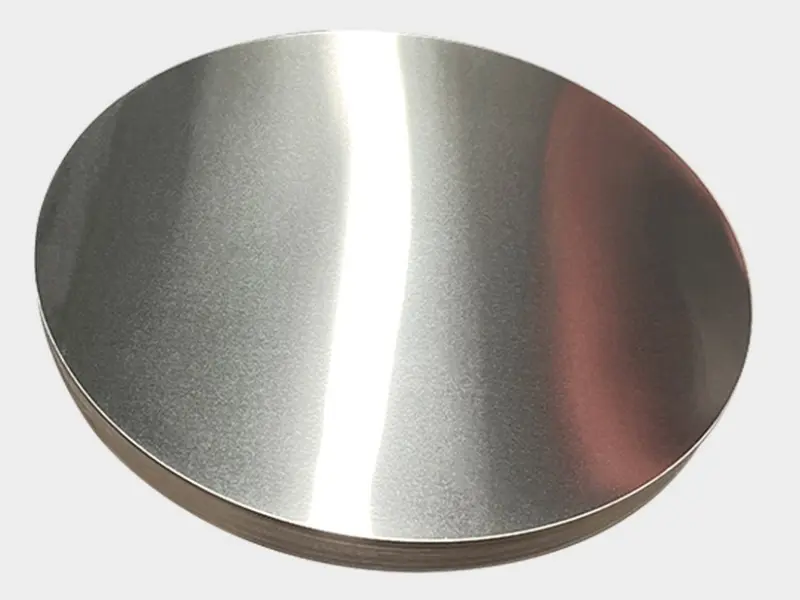
1070 Aluminum Circle Supplier has a high aluminum content and offers excellent electrical and thermal conductivity.
It can be used for:
- Electrical components
- Heat-related products
- Reflective parts
- Cookware
- Industrial applications
This grade is generally selected for its purity and processing performance rather than high structural strength.
3003 Aluminum Circle Supplier
3003 contains manganese and provides higher strength than commercially pure aluminum grades.
It offers a useful balance of formability, corrosion resistance, and strength.
Common uses include:
- Cookware
- Frying pans
- Pressure cookers
- Kitchen equipment
- Industrial containers
- Heat exchangers
3003 is one of the popular choices for cookware manufacturing.
5052 Aluminum Circle Supplier
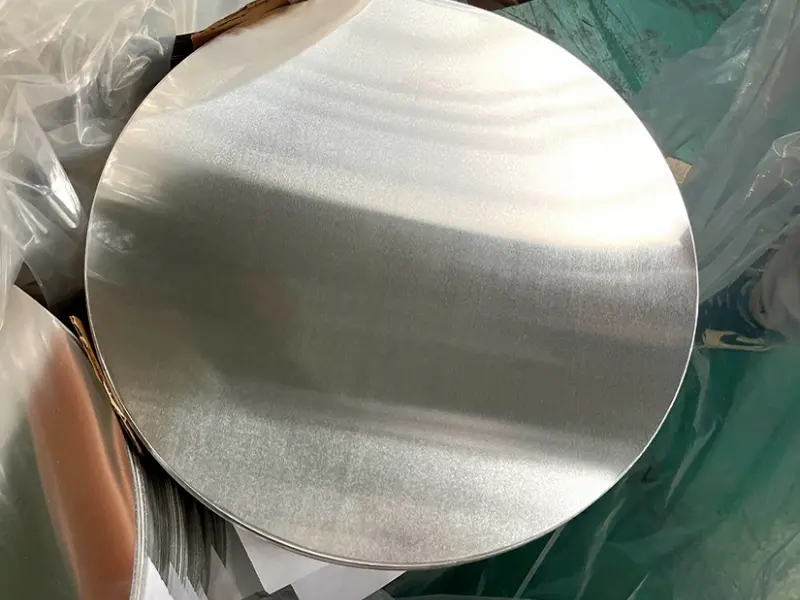
5052 Aluminum Circle Supplier provides higher strength and good corrosion resistance.
It is suitable for applications where the final product needs more mechanical strength.
Possible uses include:
- Industrial components
- Marine products
- Transportation parts
- Tanks
- Equipment parts
- Fabricated products
It may be selected when 1xxx or 3xxx series aluminum does not provide enough strength.
Aluminum Circle Alloy Comparison
| Alloy | Formability | Strength | Corrosion Resistance | Common Use |
|---|---|---|---|---|
| 1050 | Excellent | Low | Good | Reflectors, cookware |
| 1060 | Excellent | Low | Good | Stamping, kitchenware |
| 1070 | Excellent | Low | Good | Electrical and thermal parts |
| 3003 | Very good | Medium | Good | Cookware, containers |
| 5052 | Good | Higher | Very good | Industrial parts |
The best alloy depends on the production process.
For deep drawing, a softer and more formable material may be preferred. For stronger finished components, a higher-strength alloy can be considered.
Aluminum Circle Temper Options
Temper affects hardness, strength, and forming performance.
| Temper | General feature |
|---|---|
| O | Soft and highly formable |
| H12 | Lightly strain hardened |
| H14 | Strain hardened |
| H16 | Higher hardness |
| H18 | Hard temper |
For deep-drawing cookware, soft temper is often considered because the material needs to deform without cracking.
For stamping or less demanding forming, a harder temper may be suitable.
The exact temper should be selected based on the forming process.
Aluminum Circle Thickness
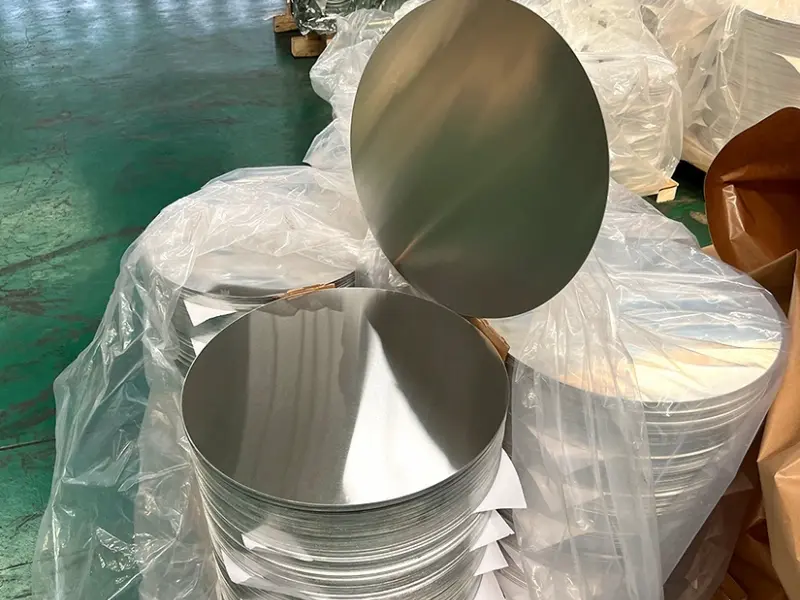
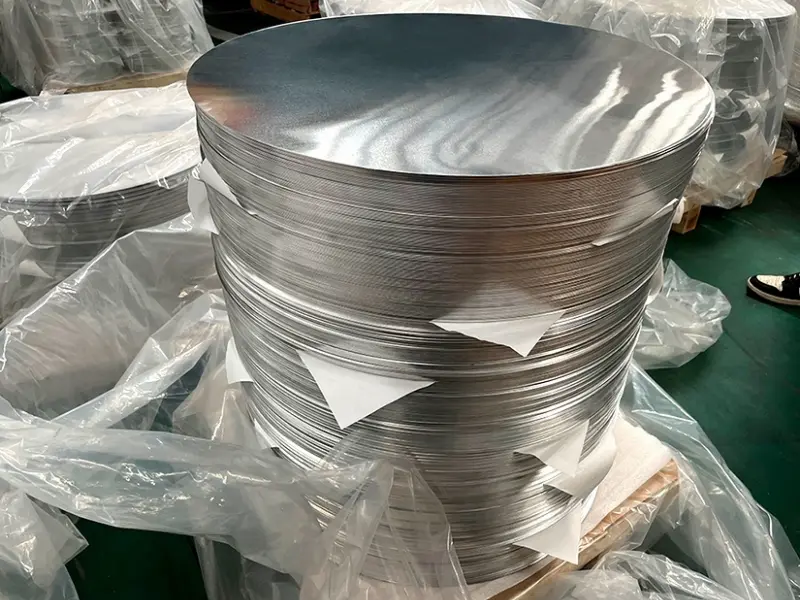
Thickness is one of the key specifications when buying round aluminum blanks.
| Thickness | Possible application |
|---|---|
| 0.5 mm | Small reflectors |
| 0.6 mm | Lighting components |
| 0.8 mm | Kitchen products |
| 1.0 mm | Cookware |
| 1.2 mm | Pans and containers |
| 1.5 mm | Industrial products |
| 2.0 mm | Heavy cookware |
| 3.0 mm | Industrial components |
| 4.0 mm+ | Heavy-duty parts |
A thicker blank provides more material for forming, but it also increases weight and cost.
For deep drawing, thickness uniformity is important. Small differences can affect the final wall thickness and forming behavior.
Aluminum Circle Diameter
Diameter is usually specified according to the final product.
| Diameter | Typical product |
|---|---|
| 80 mm | Small components |
| 100 mm | Small cookware parts |
| 150 mm | Kitchen products |
| 200 mm | Small pans |
| 250 mm | Frying pans |
| 300 mm | Medium cookware |
| 400 mm | Large cookware |
| 500 mm | Large containers |
| 600 mm+ | Industrial products |
Custom diameters can also be produced.
When requesting a quotation, buyers should specify whether the diameter refers to the finished blank size or the required product size.
Deep Drawing Aluminum Circles
Deep drawing is one of the major applications for aluminum circles.
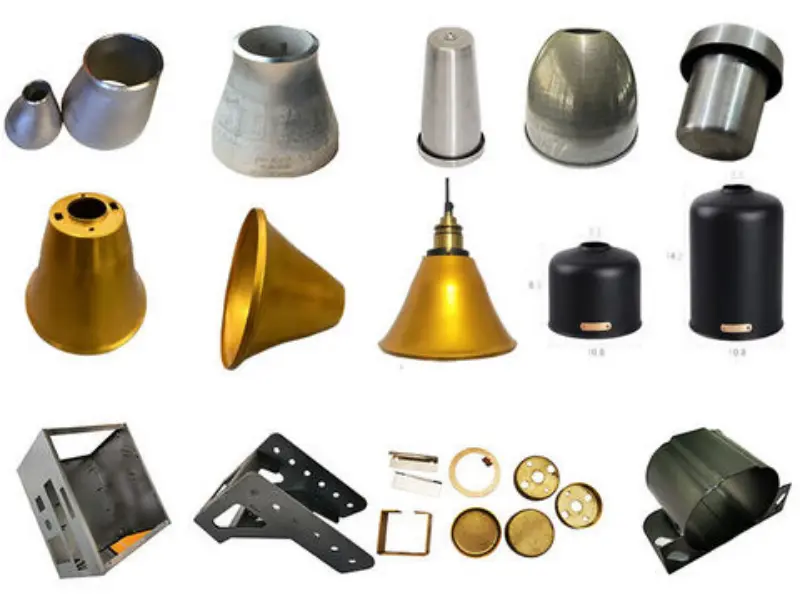
During the process, a flat blank is pressed into a die to create a deeper shape.
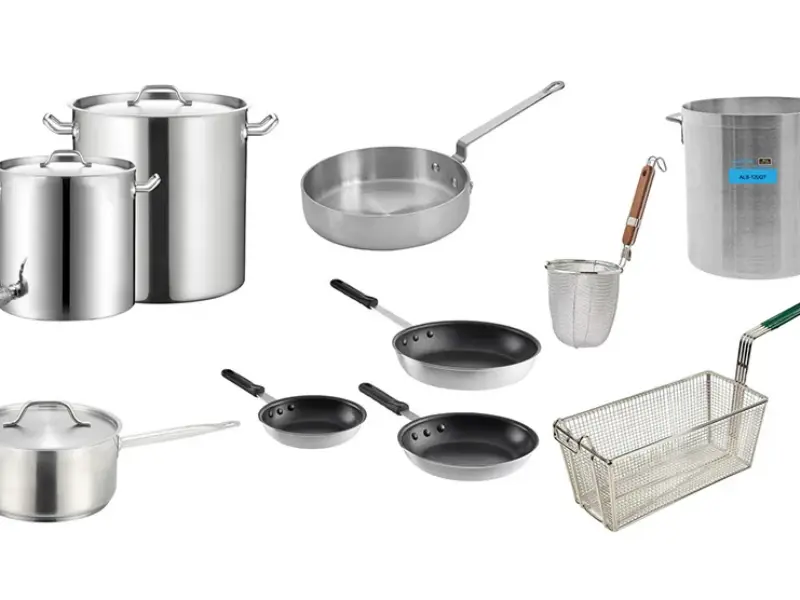
Typical products include:
- Frying pans
- Sauce pans
- Cooking pots
- Pressure cookers
- Food containers
- Industrial containers
- Lighting reflectors
The material must have suitable ductility.
A soft temper is often preferred for demanding forming work.
The blank diameter, thickness, alloy, die design, drawing ratio, and lubrication can all affect the final result.
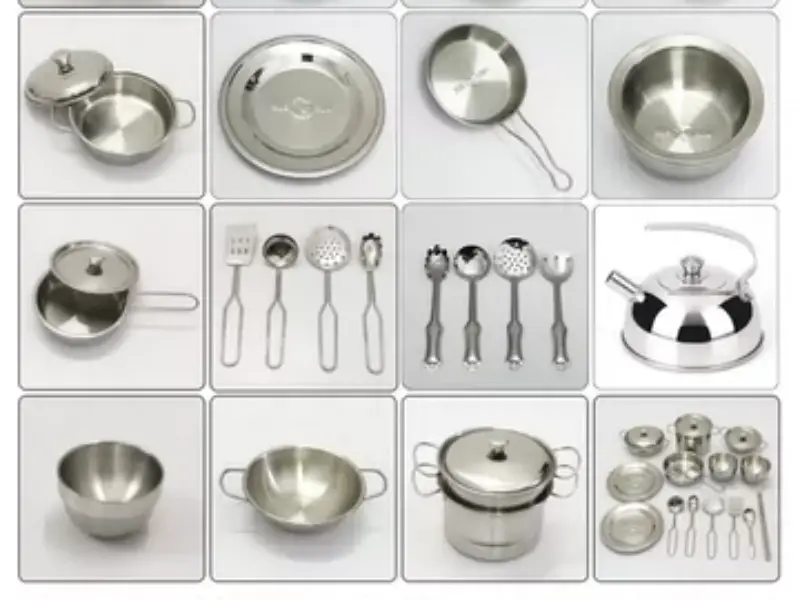
Aluminum Circles for Cookware
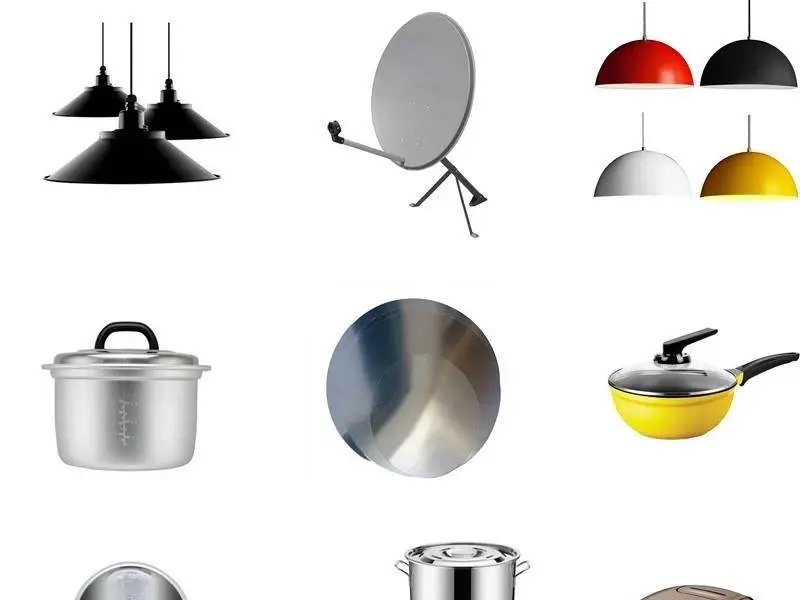
Cookware is one of the most common markets for round aluminum blanks.
The material may be used to make:
→ Frying pans
→ Sauce pans
→ Cooking pots
→ Pizza pans
→ Baking trays
→ Pressure cookers
→ Food containers
Different cookware products require different combinations of thickness and alloy.
3003 is widely considered for cookware because it provides a practical balance of strength and formability.
1050 and 1060 can also be used where high formability is important.
Aluminum Circles for Lighting
Aluminum is widely used in lighting because it is lightweight and has good thermal conductivity.
Round blanks can be formed into reflectors and other lighting components.
Applications include:
- LED reflectors
- Lamp shades
- Downlight housings
- Ceiling light components
- Industrial lighting
- Street lighting components
For visible lighting products, surface quality can be particularly important.
A clean surface helps create a more uniform finished appearance.
Aluminum Circles for Traffic Signs
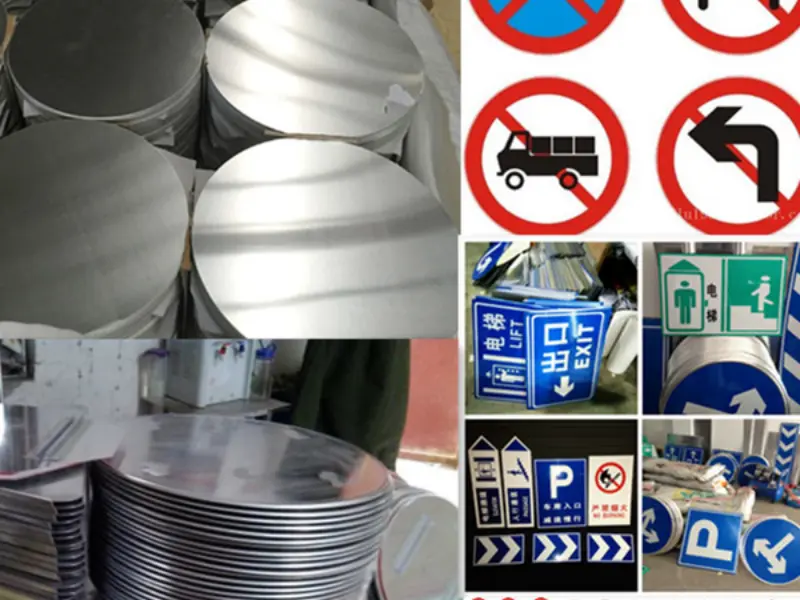
Round aluminum blanks can also be used as the base material for traffic and road signs.
The manufacturing process may include:
Aluminum blank → Cleaning → Surface treatment → Printing or reflective film → Finished sign
The selected alloy and thickness depend on the sign design and local requirements.
Common considerations include:
Coating adhesion
Diameter
Thickness
Flatness
Surface cleanliness
Corrosion resistance
Aluminum Circles for Pressure Cookers
Pressure cooker production requires a material that can withstand forming and the conditions of use.
The blank is often deep drawn into the required shape.
Important specifications may include:
| Specification | Example |
|---|---|
| Alloy | 3003 |
| Temper | O |
| Thickness | 1.5–3.0 mm |
| Diameter | Custom |
| Surface | Mill finish |
| Processing | Deep drawing |
The final specification should be confirmed according to the cookware design and applicable standards.
Spinning Aluminum Circles

Aluminum circles can also be used for metal spinning.
Spinning forms a round blank over a mold or mandrel.
It is used for:
- Lamp shades
- Reflectors
- Kitchen products
- Decorative parts
- Industrial covers
- Circular containers
For spinning, the material needs good ductility and a consistent surface.
The suitable alloy and temper depend on the depth and shape of the finished product.
Stamped Aluminum Circles
Stamping is another common process.
The round blank is placed into a stamping tool and formed under pressure.
It can be used for:
- Electrical parts
- Decorative discs
- Covers
- Nameplates
- Automotive components
- Industrial parts
High-volume stamping projects often require strict dimensional consistency.
Mill Finish Aluminum Circle
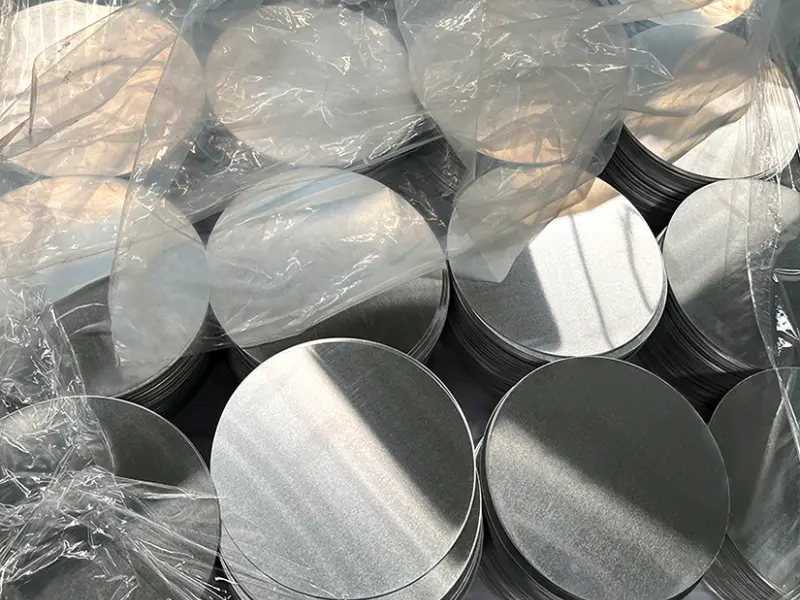
Mill finish Aluminum Circle Supplier is the standard surface produced during rolling and blanking.
It provides a natural aluminum appearance.
This option is often suitable when the customer plans to:
- Paint the product
- Anodize the product
- Polish the surface
- Perform further forming
- Use the material in hidden components
It is also a practical choice when surface appearance is not the main concern.
Anodized Aluminum Circle
Anodized circles have a treated aluminum surface.
The anodizing process creates a controlled oxide layer.
Possible colors include:
- Silver
- Black
- Gold
- Bronze
- Champagne
Anodized round products are often used in decorative and architectural components.
Polished Aluminum Circle
A polished surface provides a brighter appearance.
It can be used for:
- Reflectors
- Decorative products
- Kitchen equipment
- Lighting components
- Display products
The polishing requirement should be specified before production because surface quality can affect the processing cost.
Coated Aluminum Circle
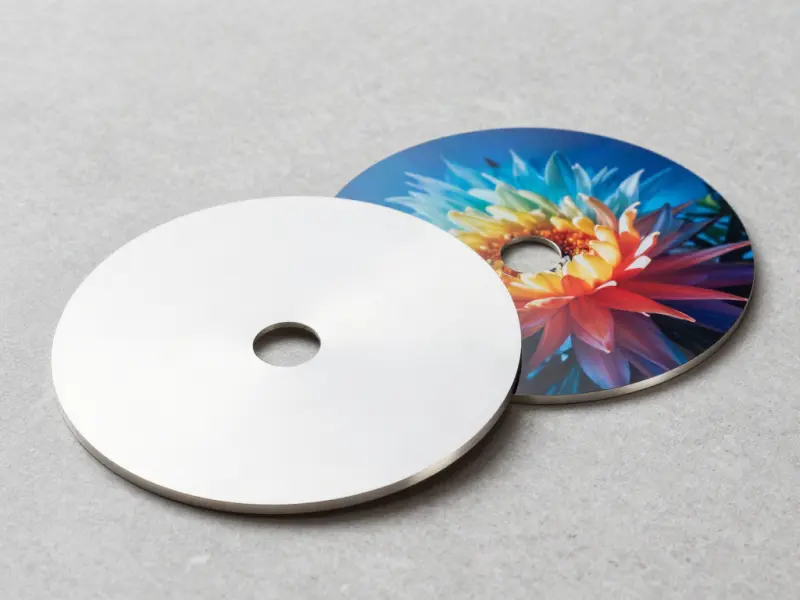
Coated round blanks can be produced for products that need a colored or protected surface.
Possible coating types include:
- Polyester coating
- PVDF coating
- Powder coating
- Other project-specific finishes
Coated material can be used for:
- Signs
- Decorative discs
- Building components
- Equipment covers
- Advertising products
The coating system should match the indoor or outdoor environment.
Plain Circle vs Coated Circle
| Feature | Plain Circle | Coated Circle |
|---|---|---|
| Surface | Natural aluminum | Colored/protected |
| Appearance | Metallic | Custom color |
| Further processing | Easy | Depends on coating |
| Typical use | Cookware, stamping | Signs, decoration |
| Cost | Usually lower | Usually higher |
For deep drawing, the forming behavior of the coating should be considered.
Aluminum Circle vs Aluminum Sheet
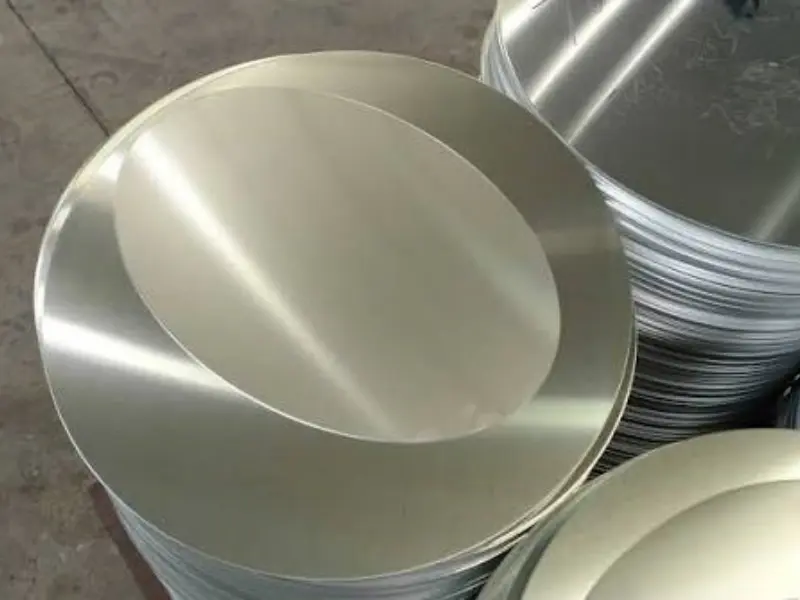
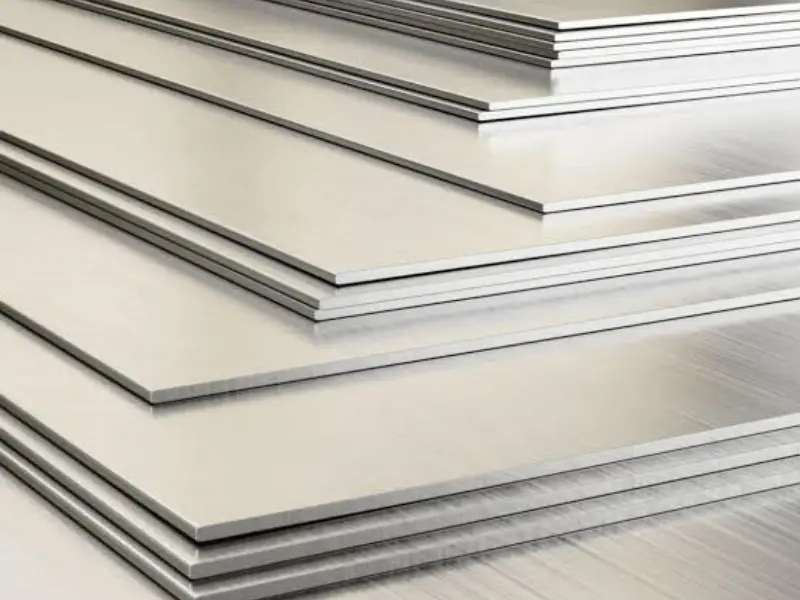
Both products start with aluminum sheet or coil, but they serve different purposes.
| Product | Shape | Main advantage |
|---|---|---|
| Aluminum sheet | Rectangle | Flexible cutting |
| Aluminum circle | Round | Ready for circular forming |
| Aluminum strip | Long and narrow | Continuous processing |
| Aluminum coil | Rolled | High-volume production |
| Aluminum plate | Thick and flat | Structural applications |
Using a pre-cut circle can reduce material preparation time for manufacturers making round products.
Aluminum Circle vs Stainless Steel Disc
| Property | Aluminum Circle | Stainless Steel Disc |
|---|---|---|
| Weight | Lower | Higher |
| Thermal conductivity | High | Lower |
| Formability | Alloy dependent | Alloy dependent |
| Corrosion resistance | Good | Very good |
| Processing | Easy in many grades | Can require more force |
| Common cookware use | Very common | Very common |
The choice depends on product design, cost, weight, thermal performance, and required durability.
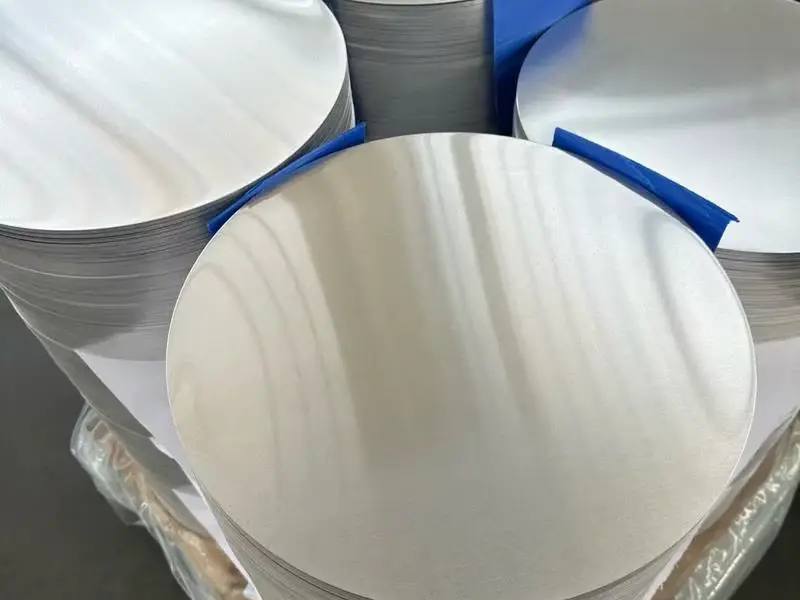
How to Select the Right Supplier
A supplier evaluation should include more than price.
Consider these points:
Material quality
↓
Alloy selection
↓
Temper control
↓
Diameter accuracy
↓
Thickness tolerance
↓
Surface quality
↓
Production capacity
↓
Inspection system
↓
Packaging
↓
Delivery time
↓
After-sales support
A low material price may not be economical if the circles produce excessive waste during forming.
Custom Aluminum Circle Production
Many industrial buyers need non-standard sizes.
A supplier may provide:
- Custom diameter
- Custom thickness
- Custom alloy
- Custom temper
- Custom surface
- Custom edge
- Protective film
- Custom packaging
- Cut-to-size production
For repeated orders, customers can provide a technical drawing or product sample.
This helps the manufacturer understand the actual forming requirements.
Edge Quality Matters
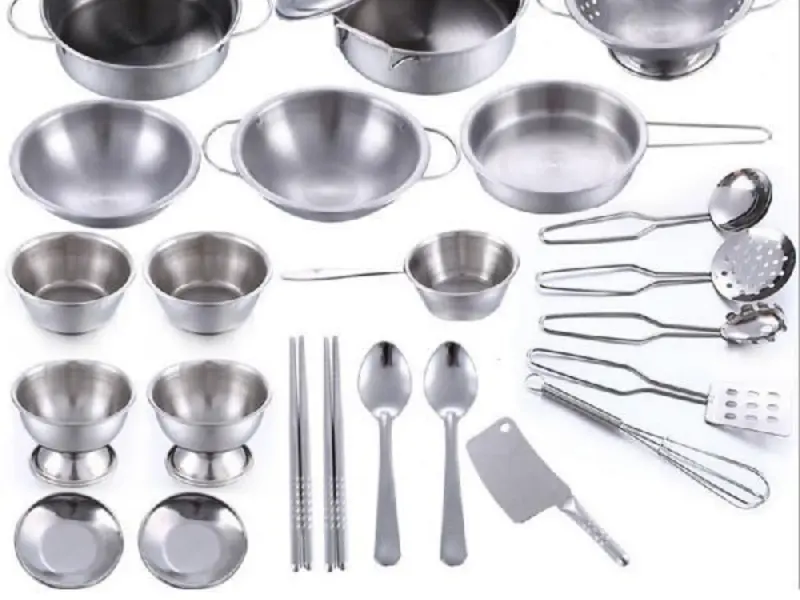
The edge of a round blank can affect production efficiency.
A good blank should have:
- Clean edges
- Consistent diameter
- Limited burrs
- No obvious cracks
- No severe deformation
For high-speed stamping and automated production, edge consistency can help reduce interruptions.
Flatness and Surface Quality
Aluminum Circle Supplier Flatness is important before deep drawing, stamping, or spinning.
Poor flatness can cause problems during automatic feeding or positioning.
Buyers may specify:
- Flatness tolerance
- Surface finish
- Scratch limits
- Oil marks
- Oxidation
- Edge quality
- Thickness tolerance
The requirements should be agreed before mass production.
Quality Control Before Shipment
A professional production process can include several inspection stages.
| Inspection | Purpose |
|---|---|
| Alloy check | Confirm material grade |
| Thickness check | Confirm thickness |
| Diameter check | Confirm dimensions |
| Surface inspection | Check scratches and marks |
| Edge inspection | Check burrs and cracks |
| Flatness check | Confirm shape |
| Quantity check | Confirm shipment quantity |
| Packing inspection | Protect goods during transport |
Material certificates can also be supplied when required.
Packaging for Export Orders
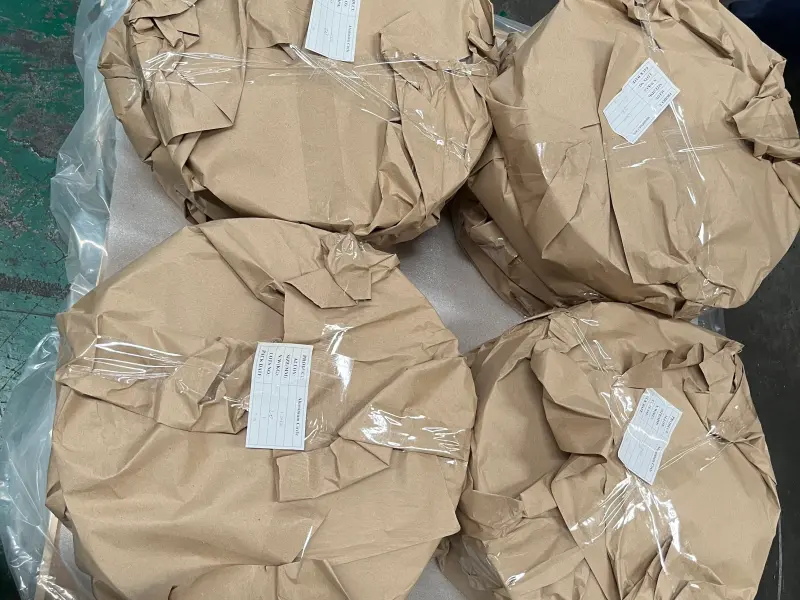
Aluminum circles should be packed carefully to prevent scratches and deformation.
Common packing methods include:
- Wooden pallets
- Wooden cases
- Cartons
- Kraft paper
- Plastic film
- Protective separators
- Steel straps
For export shipments, packaging should be suitable for container transportation.
The packing method can also be adjusted according to the diameter and weight of the circles.
What Affects Aluminum Circle Price?
The final quotation depends on several factors.
| Factor | Effect |
|---|---|
| Aluminum alloy | Different raw material cost |
| Temper | May require additional processing |
| Thickness | More material means higher weight |
| Diameter | Affects material consumption |
| Surface finish | Special finishes increase cost |
| Quantity | Larger orders may reduce unit cost |
| Tolerance | Tight tolerances may require extra control |
| Packaging | Export packaging adds cost |
| Freight | Depends on destination and weight |
For an accurate quotation, provide the complete specification.
How to Request a Quotation
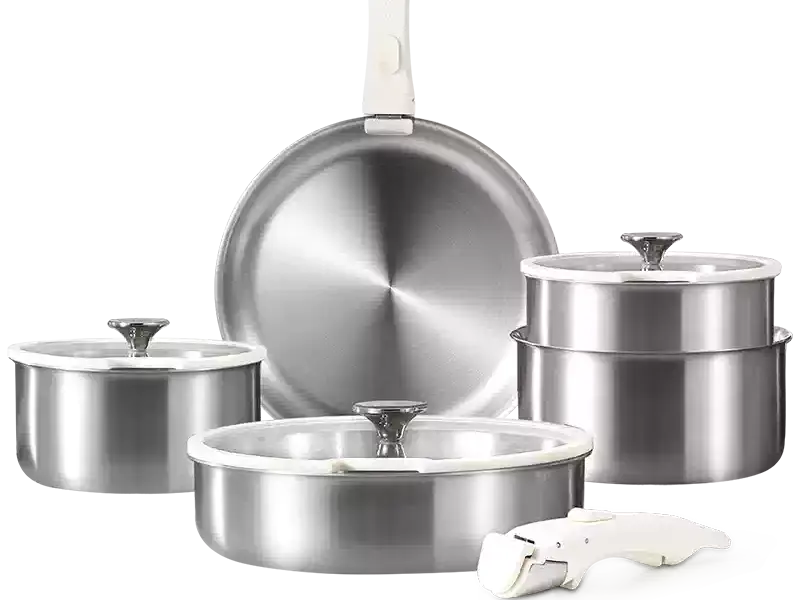
A clear inquiry saves time.
You can send the following information:
→ Alloy
→ Temper
→ Thickness
→ Diameter
→ Surface finish
→ Quantity
→ Application
→ Packaging requirement
→ Delivery destination
Aluminum Circle Supplier For example:
| Requirement | Example |
|---|---|
| Product | Aluminum circle |
| Alloy | 3003 |
| Temper | O |
| Thickness | 2.0 mm |
| Diameter | 300 mm |
| Surface | Mill finish |
| Quantity | 10,000 pcs |
| Application | Frying pans |
| Destination | USA |
This information allows the supplier to calculate the material requirement and provide a more accurate quotation.
Applications Across Different Industries
Aluminum circles are used in many industries.
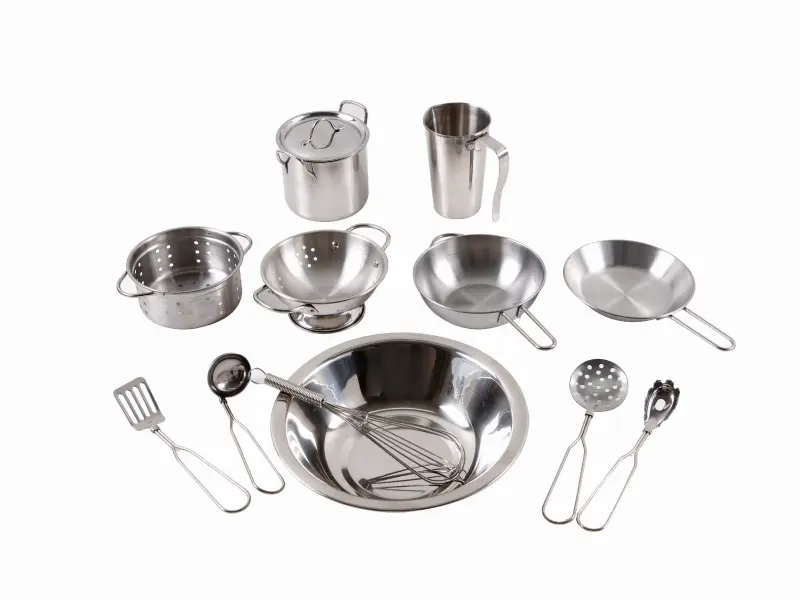
Cookware
- Frying pans
- Cooking pots
- Sauce pans
- Pressure cookers
- Baking trays
- Food containers
Lighting
- LED reflectors
- Lamp shades
- Downlights
- Ceiling lights
- Industrial lamps
Traffic and Signage
Decorative signs
Road signs
Traffic signs
Advertising signs
Industrial Products
- Covers
- Containers
- Components
- Machine parts
- Protective discs
Electrical Products
- Electrical components
- Heat sinks
- Reflective parts
- Conductive components
Architectural Products
- Decorative discs
- Interior components
- Ceiling products
- Display products
Why Buyers Use Pre-Cut Aluminum Circles
Buying ready-made round blanks can simplify production.
Coil or sheet
↓
Cutting
↓
Circle blank
↓
Deep drawing / stamping / spinning
↓
Finished product
The customer does not need to perform the first blanking step.
This can reduce preparation work and improve material utilization when the circle dimensions match the final product.
Choosing Between Standard and Custom Sizes
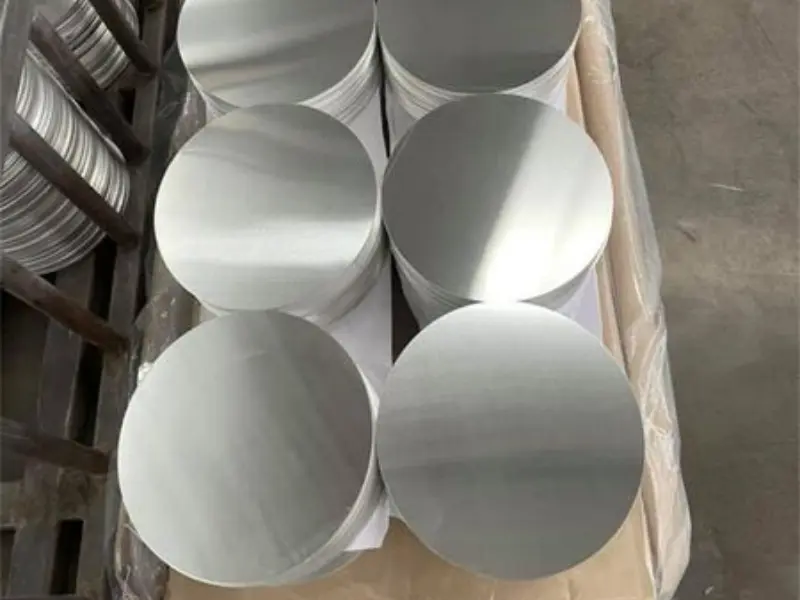
Standard sizes are usually suitable for common products.
Custom sizes can be better when:
- The final product has a special diameter
- Material waste needs to be reduced
- A production line uses fixed tooling
- The customer has a specific drawing
- Large quantities are required
For mass production, even a small change in blank diameter can affect material consumption.
Frequently Asked Questions
What does an aluminum circle supplier provide?
A supplier can provide round aluminum blanks in different alloys, tempers, thicknesses, diameters, and surface finishes. Some suppliers also offer custom cutting and export packaging.
Which aluminum alloy is best for cookware?
3003 is a common choice for cookware because it provides a good balance of formability and strength. 1050 and 1060 can also be used for products that need high formability.
Which aluminum circle is best for deep drawing?
A soft temper with good ductility is generally preferred for deep drawing. The exact alloy and temper should be selected according to the product shape and forming process.
What thicknesses are available?
Common thicknesses range from about 0.5 mm to 6 mm, although thicker or thinner material may be available for specific projects.
How do I choose an aluminum circle supplier?
Compare material quality, production capacity, alloy options, dimensional control, surface quality, inspection, packaging, lead time, and communication. Price should be considered together with product consistency.
Can aluminum circles be used for traffic signs?
Yes. Aluminum round blanks are widely considered for signage. The required alloy, thickness, surface, and coating depend on the sign design and local requirements.
Can aluminum circles be customized?
Yes. Custom diameter, thickness, alloy, temper, surface finish, packaging, and other requirements can be discussed with the manufacturer.
What is the difference between an aluminum circle and an aluminum disc?
In many commercial applications, the two terms refer to the same type of round aluminum product. The preferred term can vary by industry and region.
Can aluminum circles be anodized?
Yes. Aluminum circles can be anodized when the selected alloy and surface condition are suitable for the process.
Can aluminum circles be painted?
Yes. Depending on the application, the surface can be coated or painted. The coating process should be selected according to the final use.
Are aluminum circles suitable for metal spinning?
Yes. Suitable alloys and tempers can be used for spinning. Material ductility and surface quality are important for this process.
What information should I provide for a quotation?
Provide the alloy, temper, thickness, diameter, surface finish, quantity, application, packing requirements, and delivery destination.
Can I order samples before a bulk order?
Many manufacturers can arrange samples. Sample requirements should be agreed before mass production.