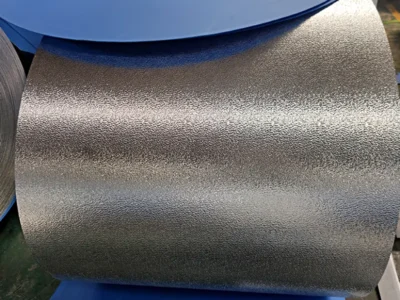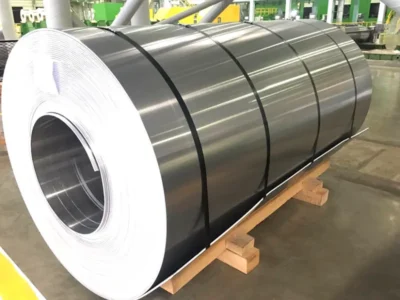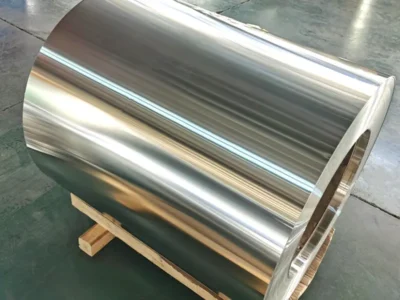
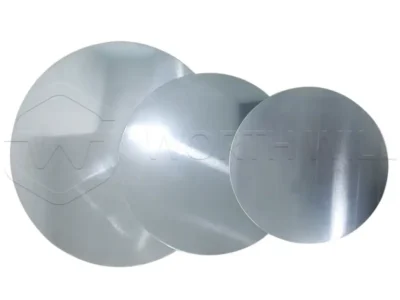
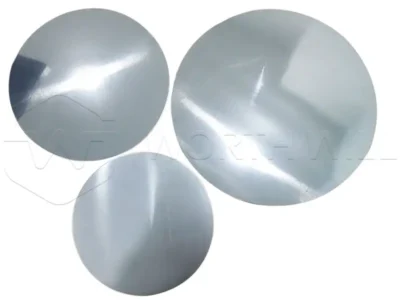
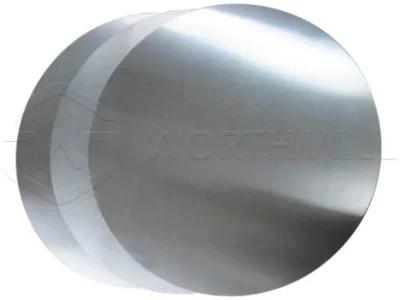
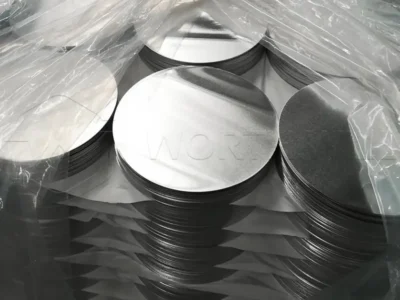
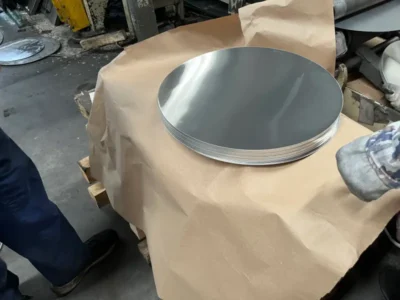
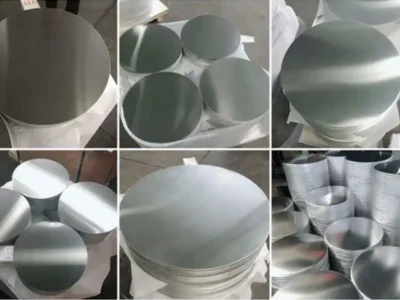
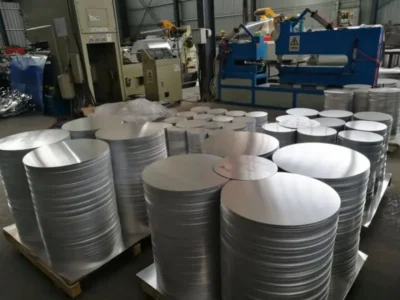

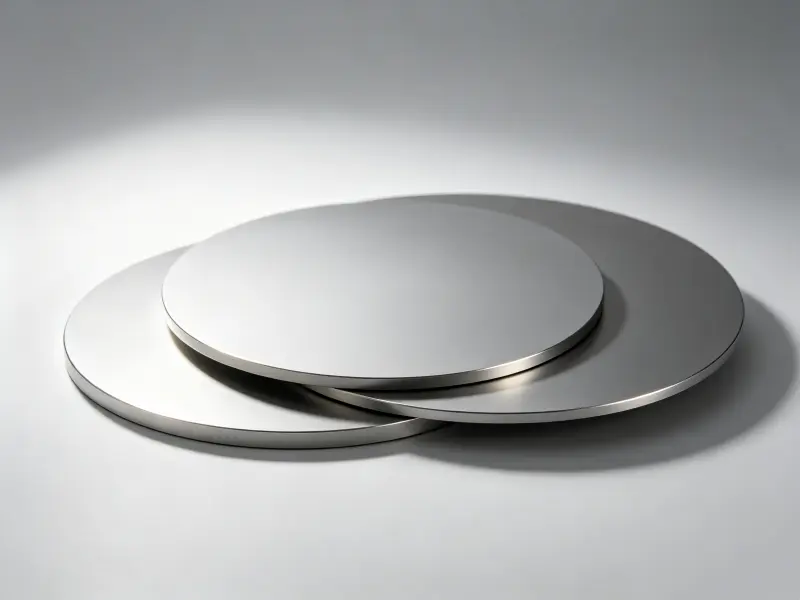
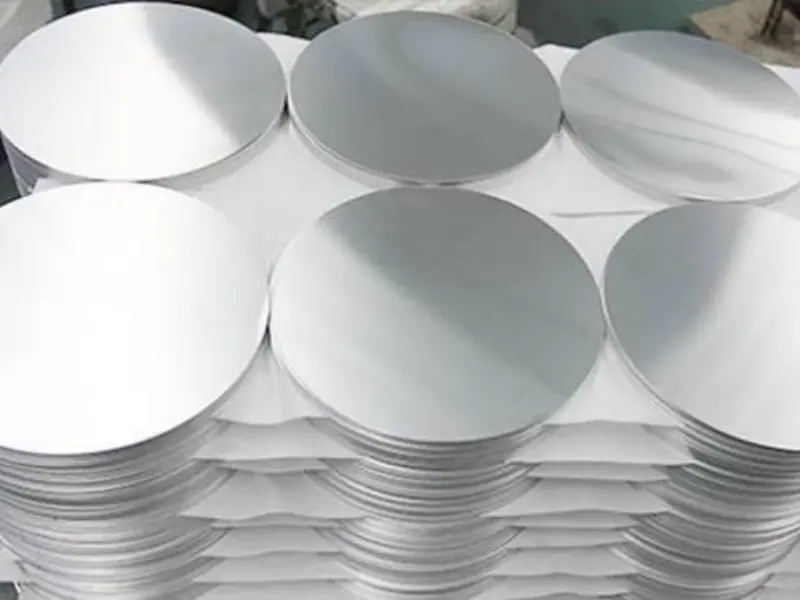
Aluminum Discs 1100 are round aluminum blanks made from 1100 aluminum alloy. They are widely used for stamping, deep drawing, spinning, cookware, lighting, reflectors, industrial parts and many other applications.
Aluminum 1100 has a high aluminum content and good formability. It is easy to cut, press, bend and shape. This makes it a practical material for round aluminum blanks.
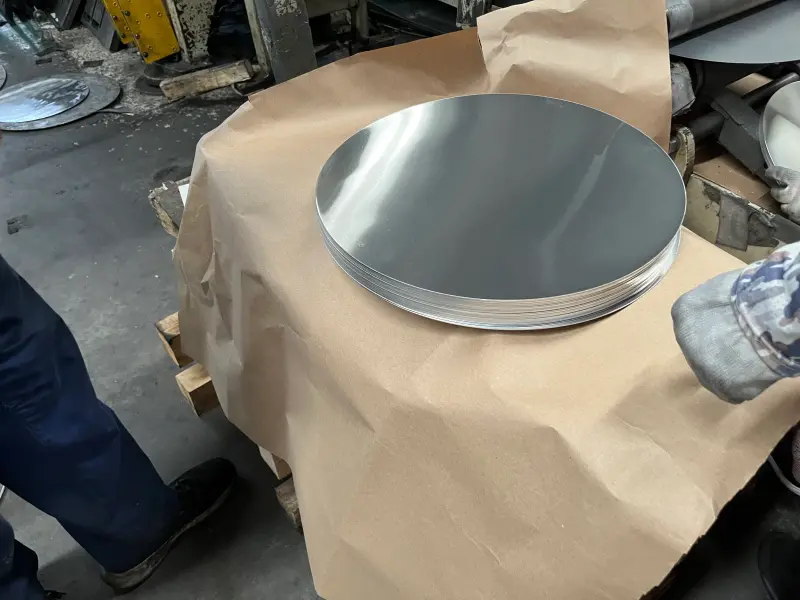
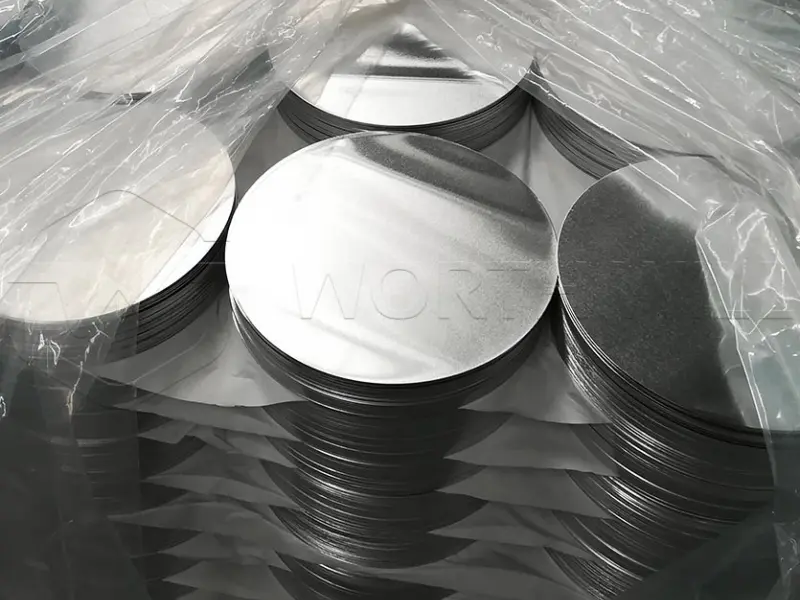
1100 aluminum discs can be supplied in different diameters, thicknesses and tempers. Buyers can also request custom sizes, surface finishes and edge conditions.
A typical specification flow is:
Alloy → Temper → Diameter → Thickness → Edge → Surface → Quantity → Application
The correct specification depends on the forming process and final product.
What Are Aluminum Discs 1100?
An aluminum disc is a round piece of aluminum cut from sheet or coil.
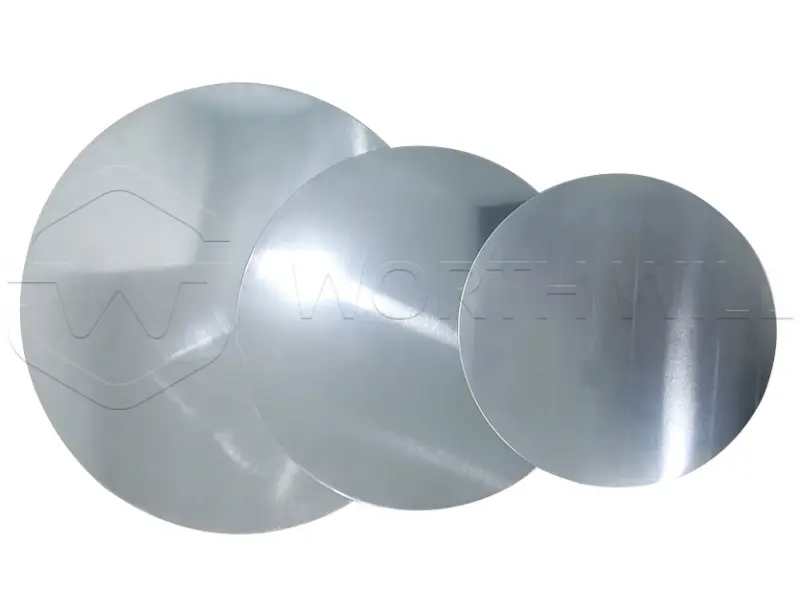
The Aluminum Discs 1100 alloy is a commercially pure aluminum alloy with a minimum aluminum content of about 99.0%. It is known for good corrosion resistance, excellent formability and good electrical and thermal conductivity.
These properties make 1100 suitable for products that need to be formed into round or shallow shapes.
The discs can be produced by punching, blanking or other cutting processes.
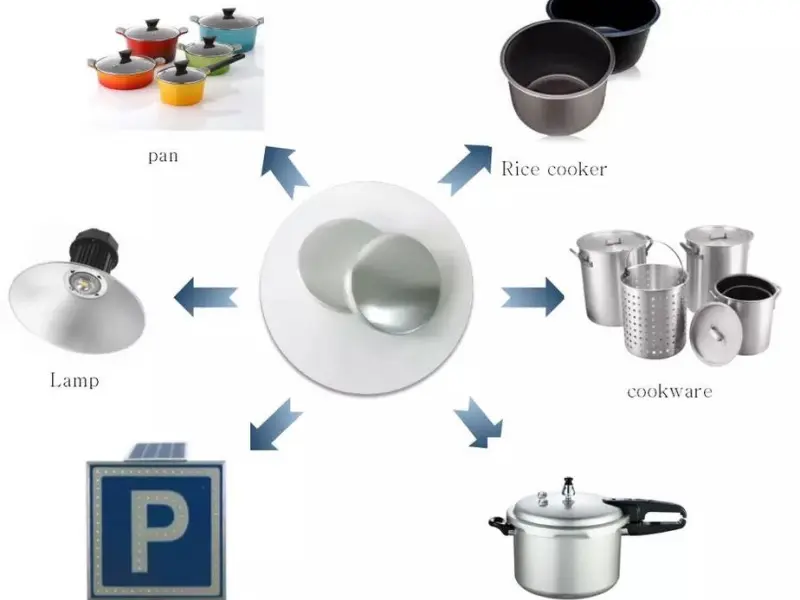
Common applications include:
- Cookware
- Kitchen utensils
- Lighting reflectors
- Lamp housings
- Sign components
- Industrial covers
- Containers
- Spun aluminum products
- Stamped parts
- Decorative products
Why Choose 1100 Aluminum for Discs?
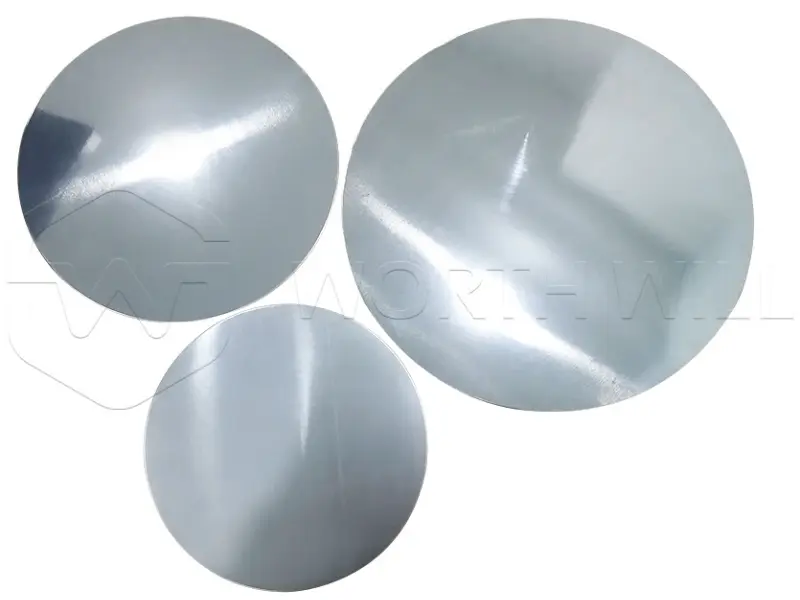
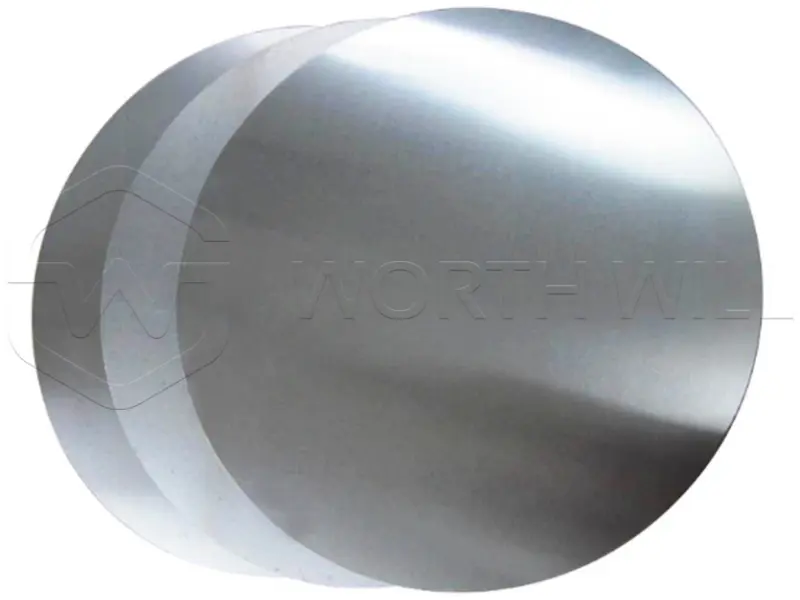
The main advantage of 1100 aluminum is its excellent formability.
For many forming applications, the material needs to move smoothly during pressing or spinning. A suitable 1100 temper can help reduce forming problems.
| Property | 1100 Aluminum |
|---|---|
| Aluminum content | About 99.0% minimum |
| Formability | Excellent |
| Corrosion resistance | Good |
| Thermal conductivity | Good |
| Electrical conductivity | Good |
| Weldability | Good |
| Surface appearance | Good |
| Machinability | Moderate |
| Typical use | Forming and general fabrication |
Aluminum Discs 1100 is not normally selected when very high structural strength is the main requirement.
It is more suitable when formability, surface quality and corrosion resistance are important.
Common Aluminum Disc Sizes
Diameter is one of the most important specifications.
Small discs are often used for compact components. Larger blanks are used for cookware, reflectors and industrial forming.
| Diameter | Typical Application |
|---|---|
| 50 mm | Small components |
| 60 mm | Small stamped parts |
| 80 mm | Lighting and hardware |
| 100 mm | Kitchen and industrial parts |
| 120 mm | Small cookware |
| 150 mm | Containers and reflectors |
| 180 mm | Cookware and spinning |
| 200 mm | Pans and industrial parts |
| 250 mm | Larger formed products |
| 300 mm | Cookware and reflectors |
| 350 mm | Large round components |
| 400 mm | Large cookware |
| 450 mm | Industrial forming |
| 500 mm | Large reflectors |
| 600 mm | Industrial and architectural parts |
| 800 mm | Special large blanks |
Custom diameters can also be produced according to drawings or production requirements.
Aluminum Disc Thickness Options
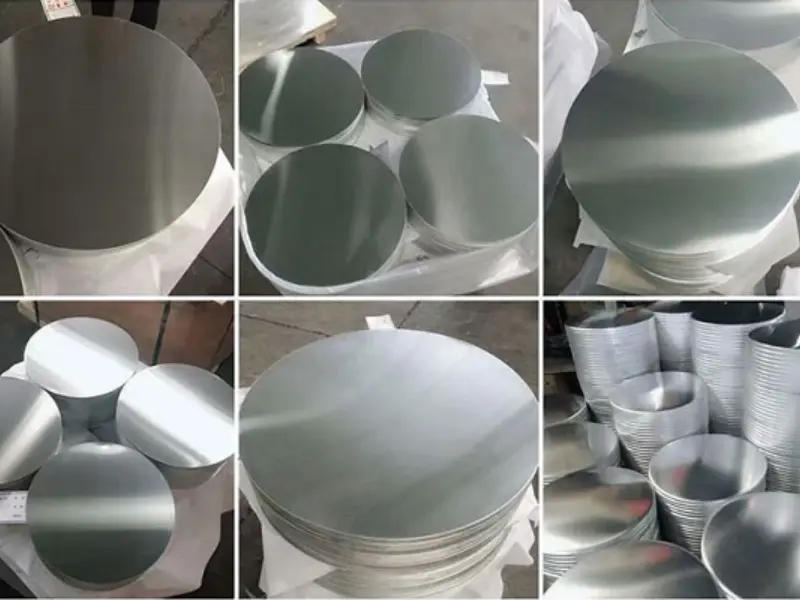
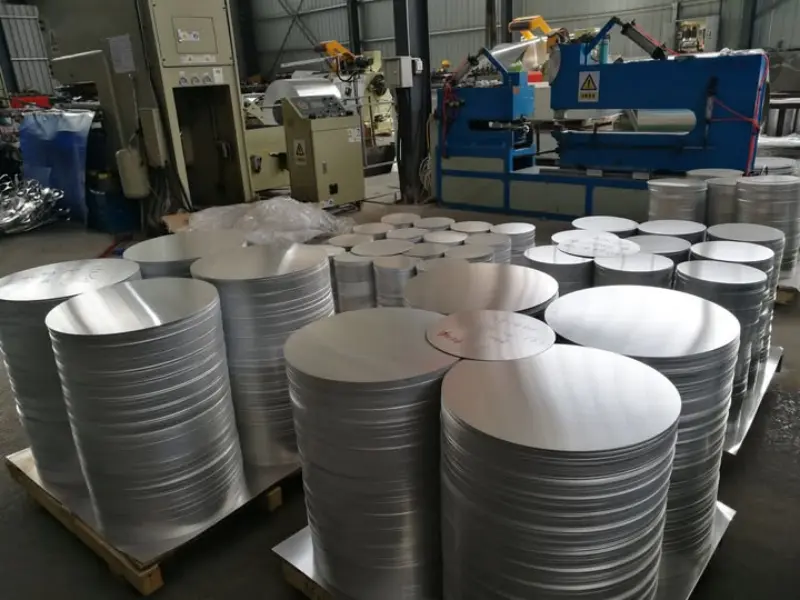
Thickness affects forming performance, weight and final product strength.
Common thicknesses include:
| Thickness | Typical Position |
|---|---|
| 0.40 mm | Lightweight parts |
| 0.50 mm | Thin stamped products |
| 0.60 mm | General forming |
| 0.80 mm | Kitchenware and reflectors |
| 1.00 mm | General industrial use |
| 1.20 mm | Medium-duty products |
| 1.50 mm | Cookware and containers |
| 2.00 mm | Heavy formed parts |
| 2.50 mm | Industrial applications |
| 3.00 mm | Heavy-duty blanks |
The suitable thickness depends on the finished product.
A deeper drawing process may require a different thickness from a simple stamped part.
1100 Aluminum Disc Types by Diameter
Different diameter ranges can serve different markets.
80–120 mm Aluminum Discs 1100
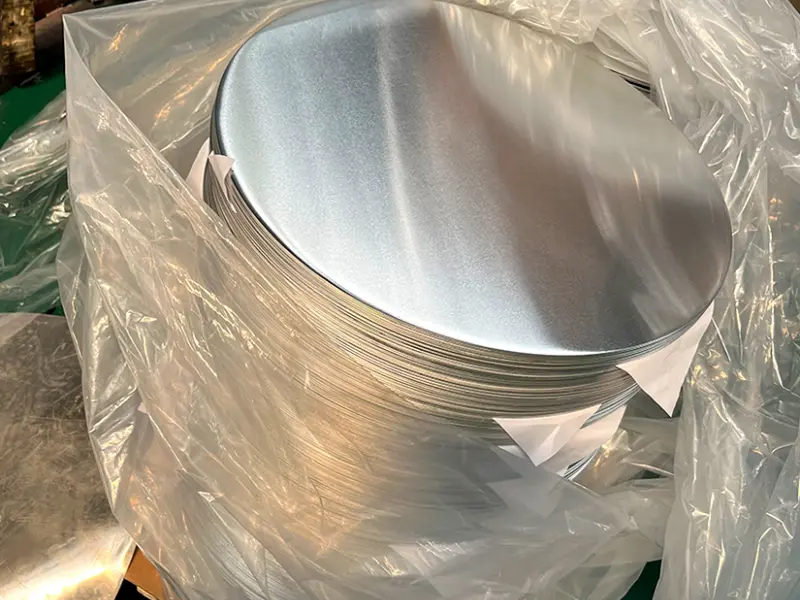
These small round blanks can be used for:
- Small reflectors
- Kitchen accessories
- Stamped covers
- Small containers
- Hardware components
They are easy to handle and suitable for smaller finished products.
150–250 mm Aluminum Discs 1100
This size range is common for general forming.
Applications can include cookware, containers, lighting parts and industrial components.
300–400 mm Aluminum Discs 1100
Larger blanks are useful for:
- Frying pans
- Cooking pots
- Large reflectors
- Industrial covers
- Spun aluminum parts
450–600 mm Aluminum Discs 1100
These larger sizes are often used for industrial forming, large reflectors and special equipment.
600–800 mm and Larger Aluminum Discs 1100
Large aluminum blanks can be produced for special applications.
The manufacturing process needs to control flatness, edge condition and dimensional accuracy carefully.
1100 Aluminum Discs by Thickness and Diameter
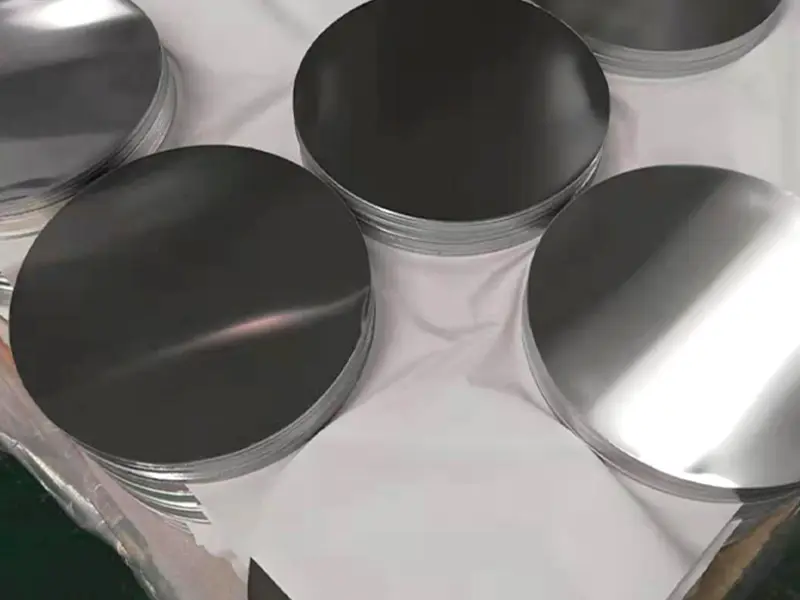
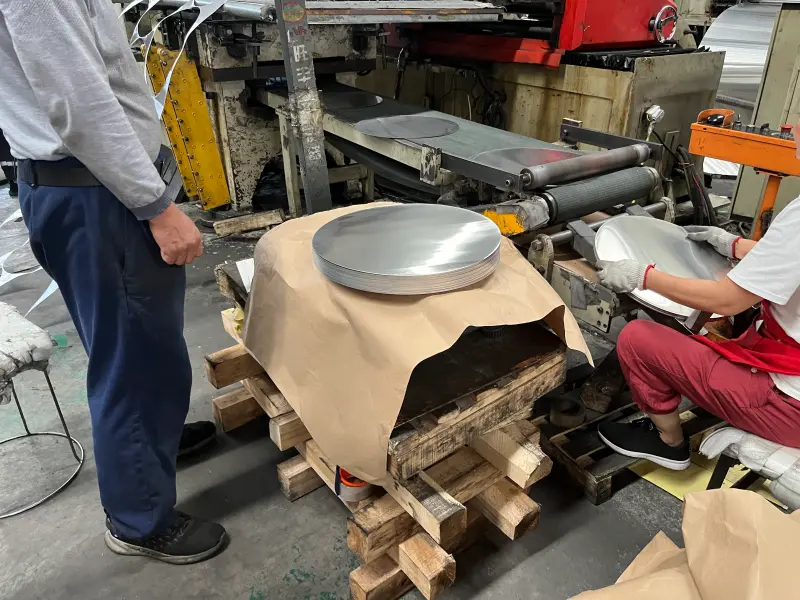
A buyer may combine diameter and thickness according to the final product.
| Diameter | Common Thickness Range |
|---|---|
| 80 mm | 0.50–1.50 mm |
| 100 mm | 0.50–1.50 mm |
| 150 mm | 0.60–2.00 mm |
| 200 mm | 0.80–2.00 mm |
| 250 mm | 0.80–2.50 mm |
| 300 mm | 0.80–3.00 mm |
| 400 mm | 1.00–3.00 mm |
| 500 mm | 1.00–3.00 mm |
| 600 mm | 1.20–3.00 mm |
| 800 mm | 1.50–3.00 mm |
These are general product ranges.
The final specification should be selected according to the forming method and product design.
1100 Aluminum Temper Options
Temper is important when purchasing round aluminum blanks.
Different tempers have different forming characteristics.
| Temper | General Character |
|---|---|
| O | Soft, highly formable |
| H12 | Light work hardening |
| H14 | Medium hardness |
| H16 | Higher hardness |
| H18 | Hard condition |
1100-O Aluminum Discs
1100-O is the softest common condition among these options.
It offers very good formability.
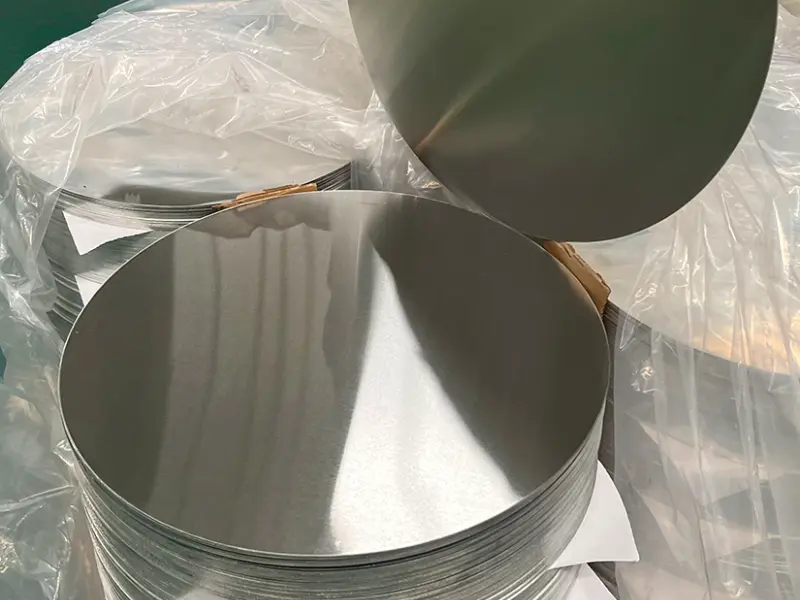
It is often considered for:
- Deep drawing
- Spinning
- Complex forming
- Cookware
- Containers
- Reflectors
When the product requires significant deformation, O temper is often an important option to consider.
1100-H12 Discs
H12 has more strength than O temper.
It provides a balance between formability and strength.
It can be considered for products that need some additional hardness but still require forming.
1100-H14 Discs
H14 provides a higher level of hardness.
It can be useful for products where shape retention is more important.
1100-H16 and H18
These harder tempers can be used when higher hardness is required.
They are generally less suitable for deep forming than O temper.
Deep Drawing with 1100 Aluminum Discs
Deep drawing is one of the important applications for round aluminum blanks.

The basic process is:
Round Blank → Punch → Die → Drawing → Formed Cup
During drawing, the flat disc is changed into a three-dimensional product.
1100 aluminum is suitable for forming applications because of its good ductility.
However, the correct temper, thickness and tooling are important.
For deeper products, multiple drawing operations may be required.
1100 Aluminum Discs for Spinning
Metal spinning is another common application.
The round blank rotates while a forming tool gradually shapes it over a mandrel.
The process can produce:
- Bowls
- Lamp reflectors
- Covers
- Housings
- Conical parts
- Circular containers
1100-O is often considered when high formability is required.
Surface quality is also important for spun products.
1100 Aluminum Discs for Cookware
Cookware is a major application for aluminum round blanks.
The disc can be pressed or spun into the required shape.
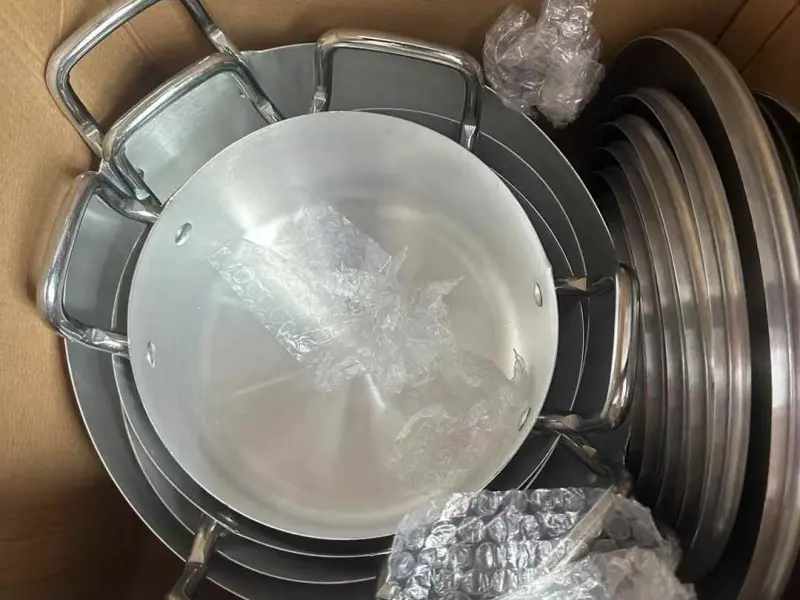
Typical products include:
- Frying pans
- Cooking pots
- Sauce pans
- Baking pans
- Trays
- Food containers
- Kitchen bowls
A typical production route is:
1100 Aluminum Coil → Leveling → Circle Blanking → Edge Inspection → Forming → Surface Treatment → Final Inspection
The exact process depends on the cookware design.
1100 Aluminum Discs for Lighting
Aluminum is widely used for lighting components.
A round blank can be formed into a reflector or lamp housing.
Applications include:
- LED reflectors
- Industrial lamp reflectors
- Street lighting components
- Downlight reflectors
- Decorative lamps
- Ceiling lighting
The surface should be controlled carefully when reflection is important.
Bright or polished finishes may be selected for specific lighting products.
1100 Aluminum Discs for Reflectors
Reflectors need a suitable surface.
The aluminum disc can be formed into different reflector shapes.
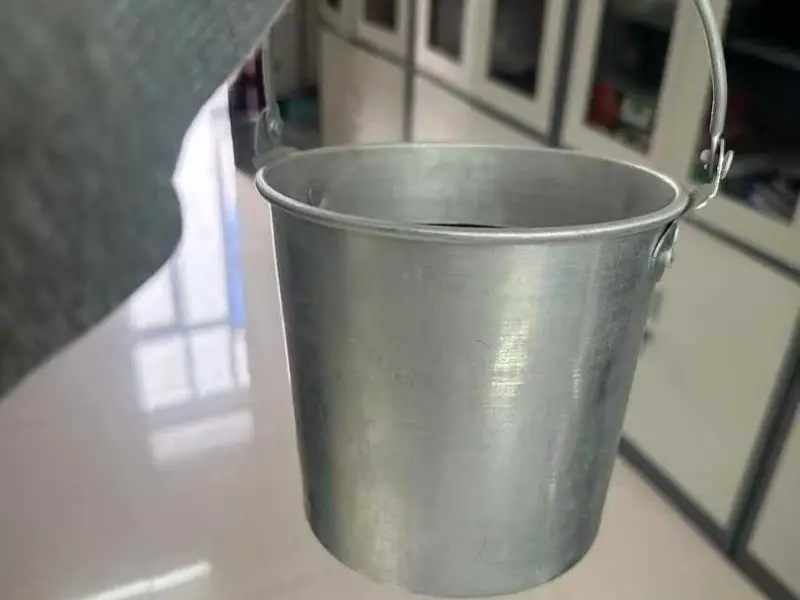
Common applications include:
- Lighting reflectors
- Solar equipment
- Heat reflectors
- Industrial reflectors
- Decorative reflectors
The surface finish should be discussed before production.
A standard mill finish and a bright finish can have very different appearances.
1100 Aluminum Discs for Stamping
Stamping is suitable for mass production.
The round blank is placed into a stamping die and formed under pressure.
Possible products include:
- Covers
- Caps
- Housing parts
- Containers
- Kitchen components
- Industrial parts
For high-volume production, dimensional consistency becomes very important.
1100 Aluminum Discs vs 1050 Aluminum Discs
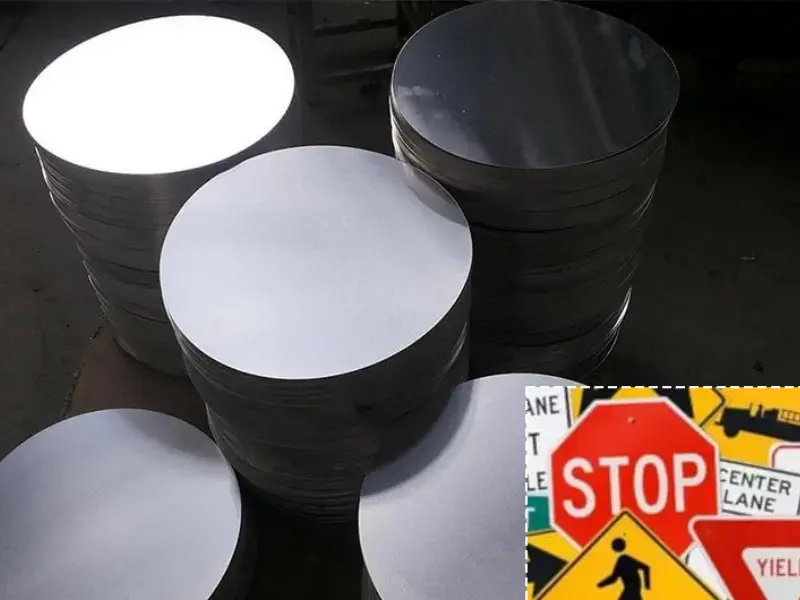
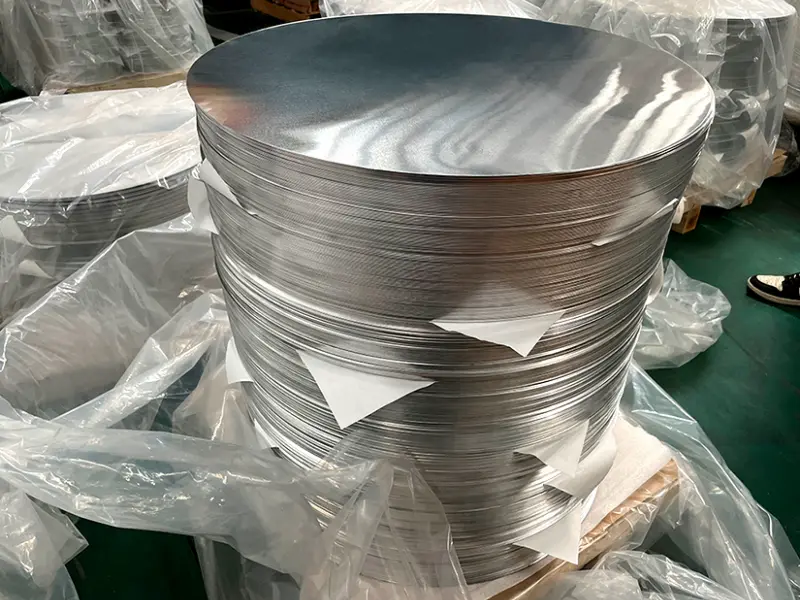
1100 and 1050 are both high-aluminum-content alloys.
However, their standard alloy compositions and typical applications are not identical.
| Feature | 1100 | 1050 |
|---|---|---|
| Aluminum content | ≥99.0% | Typically ≥99.5% |
| Formability | Excellent | Excellent |
| Corrosion resistance | Good | Good |
| Electrical conductivity | Good | Higher |
| Typical use | General forming | Electrical and forming |
| Cookware | Common | Common |
| Deep drawing | Suitable | Suitable |
For general forming products, both can be considered.
The final choice should follow the customer’s specification and product requirements.
1100 vs 1060 Aluminum Discs
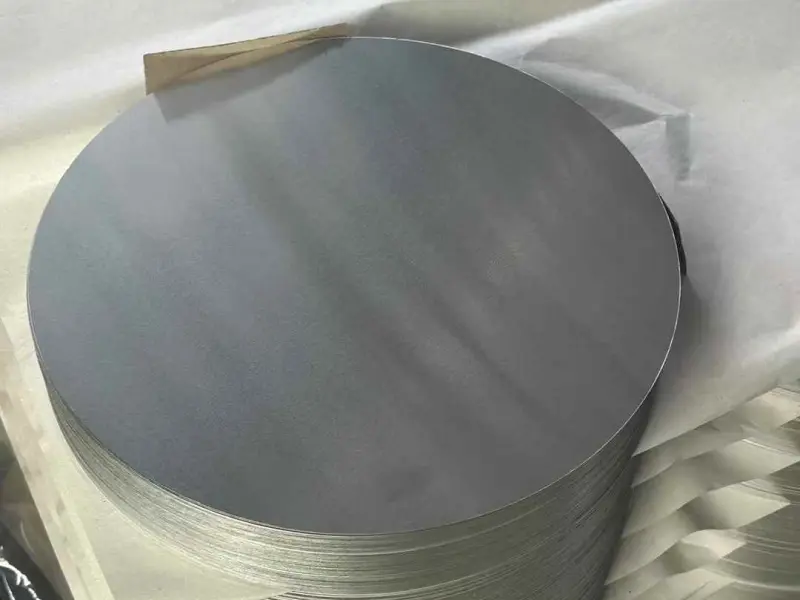
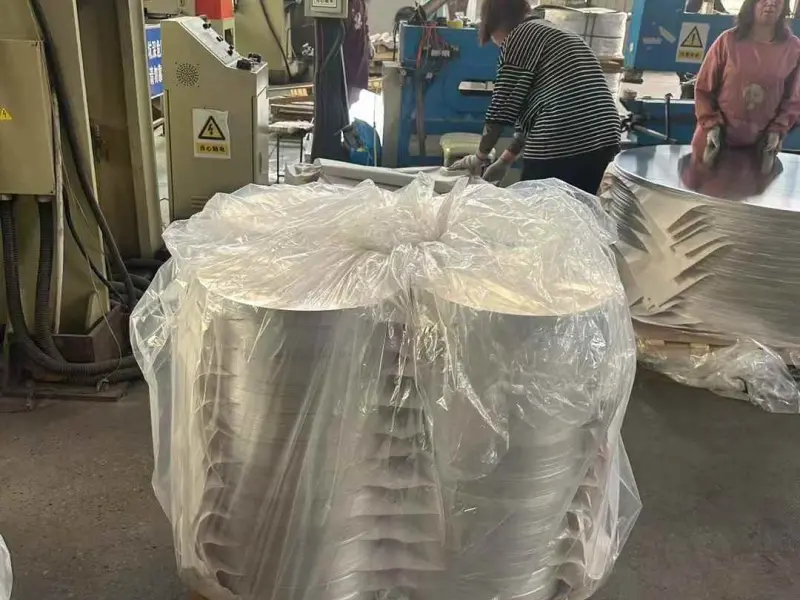
1100 and 1060 both provide high aluminum content and good formability.
| Feature | 1100 | 1060 |
|---|---|---|
| Aluminum content | ≥99.0% | ≥99.6% |
| Formability | Excellent | Excellent |
| Conductivity | Good | Higher |
| Corrosion resistance | Good | Good |
| Cost | Project dependent | Project dependent |
| Forming applications | Wide | Wide |
If conductivity is especially important, 1060 may be considered.
If general forming and standard industrial use are the main requirements, 1100 is also a practical choice.
1100 vs 3003 Aluminum Discs
3003 contains manganese and generally provides higher strength than 1100.
| Feature | 1100 | 3003 |
|---|---|---|
| Strength | Lower | Higher |
| Formability | Excellent | Very good |
| Corrosion resistance | Good | Good |
| Deep drawing | Very suitable | Suitable |
| Cookware | Common | Common |
| Heavy-duty products | Limited | More suitable |
1100 can be attractive when easy forming is the main goal.
3003 can be considered when additional strength is needed.
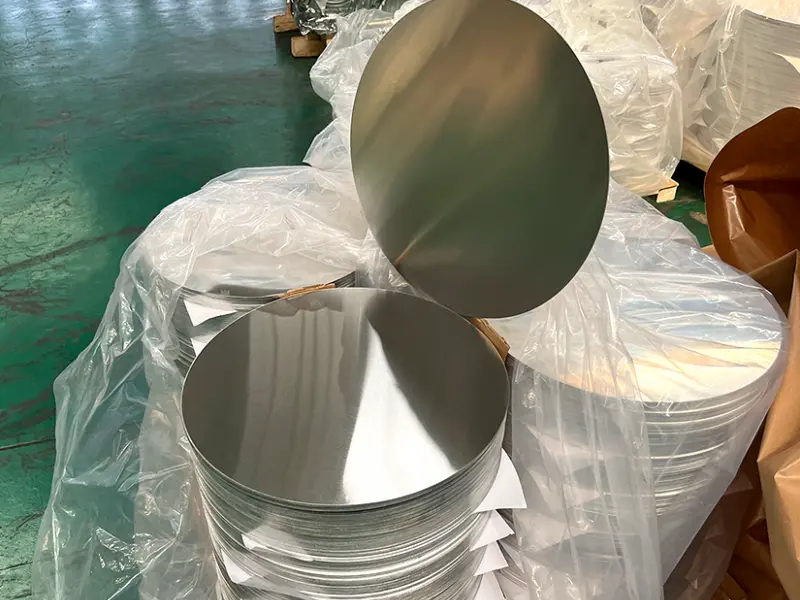
1100 vs 5052 Aluminum Discs
5052 is a stronger aluminum-magnesium alloy.
| Feature | 1100 | 5052 |
|---|---|---|
| Strength | Lower | Higher |
| Formability | Excellent | Good |
| Corrosion resistance | Good | Very good |
| Deep drawing | Very suitable | Depends on temper |
| Marine applications | Limited | Common |
| Structural parts | Limited | More suitable |
The two alloys serve different product requirements.
1100 is generally selected for easy forming and general fabrication rather than high structural strength.
Surface Finishes for 1100 Aluminum Discs
Surface appearance can be customized.
Common options include:
- Mill finish
- Bright finish
- Polished finish
- Brushed finish
- Anodized surface
- Coated surface
- Protective film
For cookware and lighting products, surface requirements should be discussed before production.
The desired finish can affect the raw material selection and production process.
Edge Options Aluminum Discs 1100
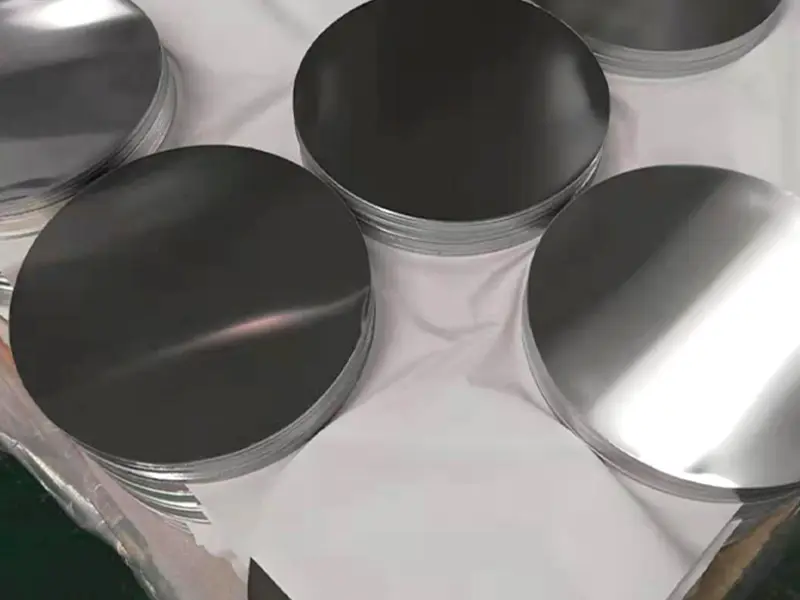
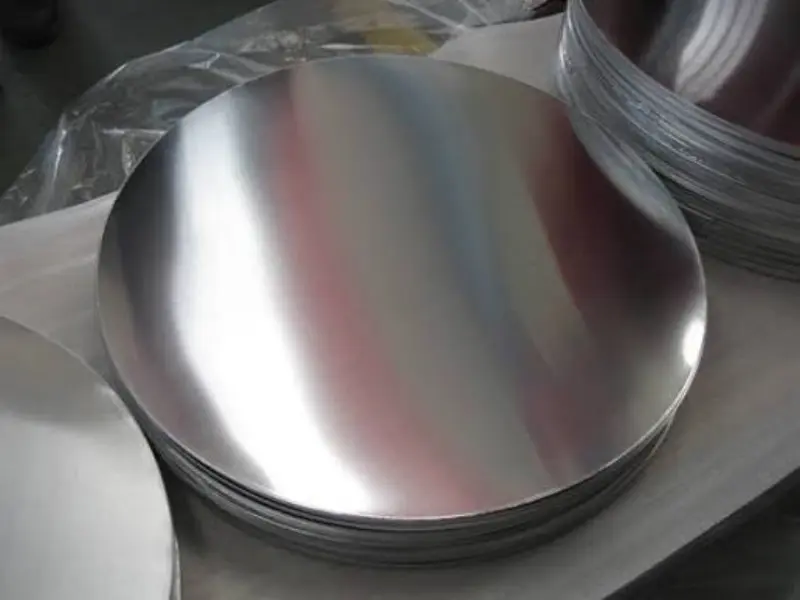
The edge of an aluminum disc can affect forming and handling.
Possible edge conditions include:
| Edge Type | Typical Use |
|---|---|
| Standard cut edge | General products |
| Smooth edge | Consumer products |
| Deburred edge | Safer handling |
| Precision blanked edge | High-quality stamping |
| Custom edge | Special forming |
For deep drawing, edge quality is important.
Sharp burrs can affect tooling and may create problems during forming.
Flatness and Dimensional Accuracy
A good aluminum disc should have consistent dimensions.
Important parameters include:
- Diameter
- Thickness
- Roundness
- Flatness
- Edge condition
- Surface quality
- Burr level
For automatic production lines, consistent diameter can help reduce setup and forming problems.
How 1100 Aluminum Discs Are Manufactured
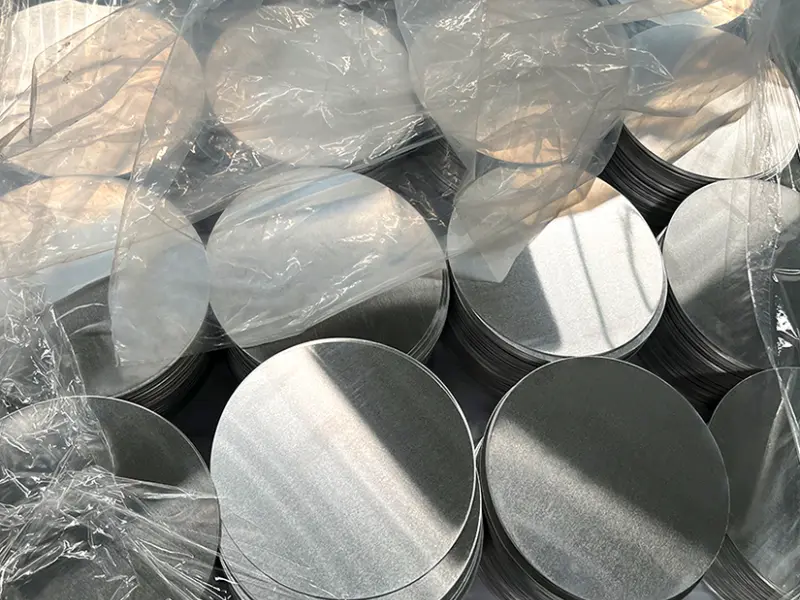
A typical production process is:
1100 Aluminum Coil → Uncoiling → Leveling → Circle Blanking → Edge Control → Inspection → Cleaning → Packing
For some products, the disc may receive additional surface treatment before shipment.
Large production orders can use automated blanking equipment.
This helps maintain consistent dimensions between batches.
Quality Control for Aluminum Discs
Quality inspection can include:
| Inspection Item | Purpose |
|---|---|
| Alloy | Confirm material grade |
| Temper | Confirm material condition |
| Thickness | Control material consistency |
| Diameter | Confirm dimensions |
| Flatness | Reduce forming problems |
| Edge | Control burrs |
| Surface | Check scratches and marks |
| Packaging | Prevent transport damage |
Material certificates can be provided when required by the order.
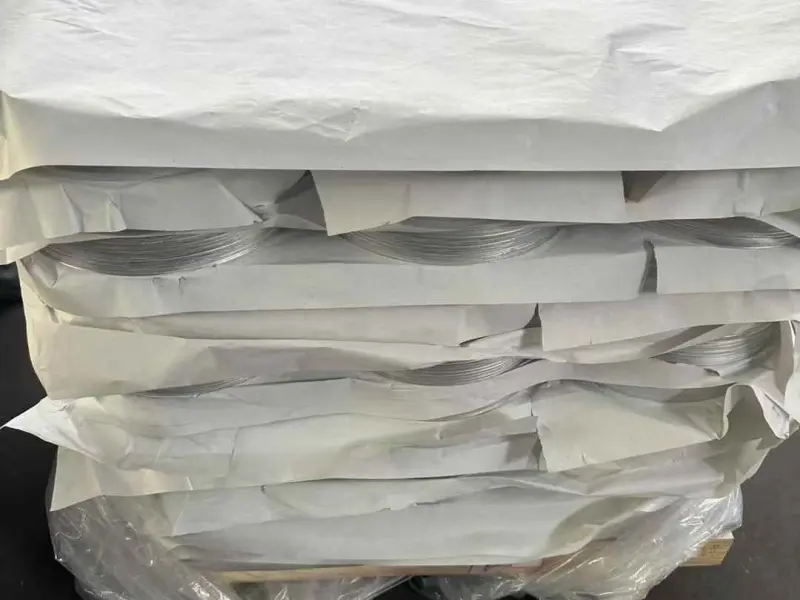
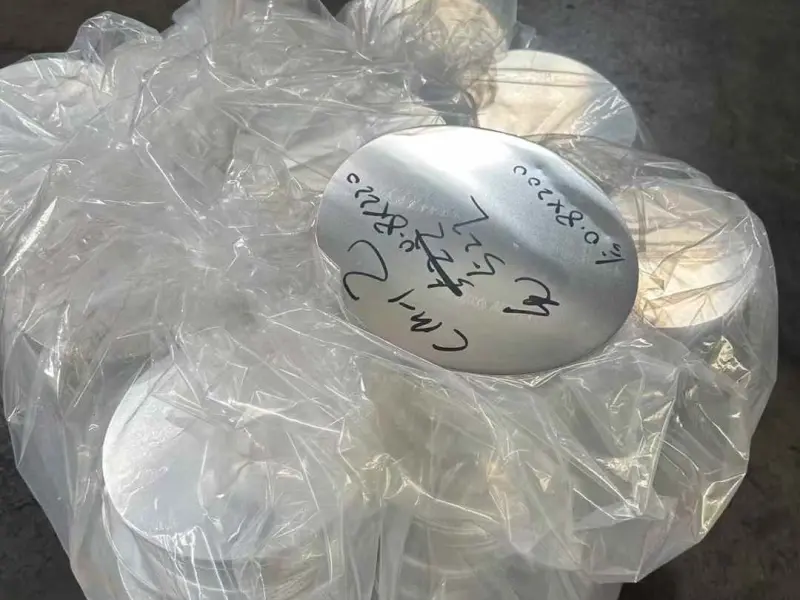
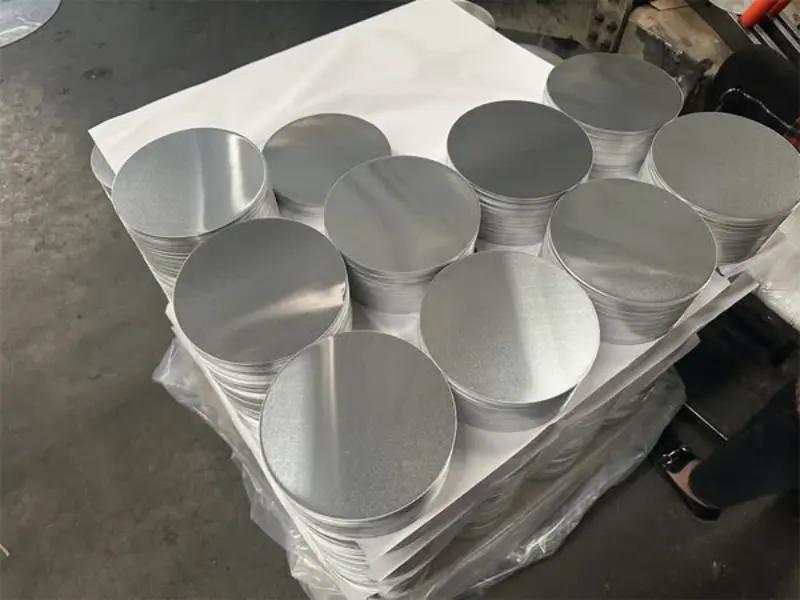
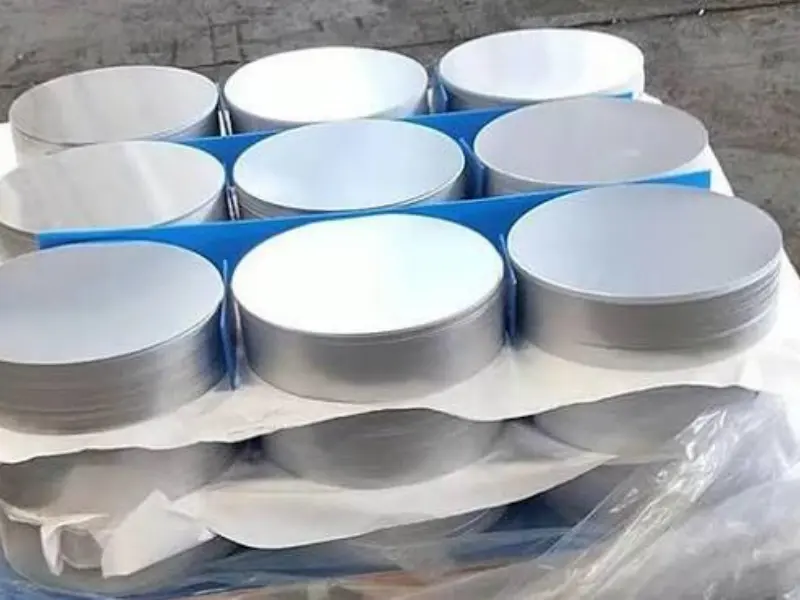
Packaging of Aluminum Discs 1100
Aluminum discs should be protected during storage and transportation.
Common packaging methods include:
- Wooden pallets
- Wooden cases
- Paper interlayers
- Plastic wrapping
- Waterproof paper
- Edge protection
- Steel straps
- Export-grade packing
The discs should be secured to reduce movement during transportation.
For export orders, packaging can be adjusted according to the destination and shipping method.
How to Order Aluminum Discs 1100
A clear inquiry helps suppliers prepare an accurate quotation.
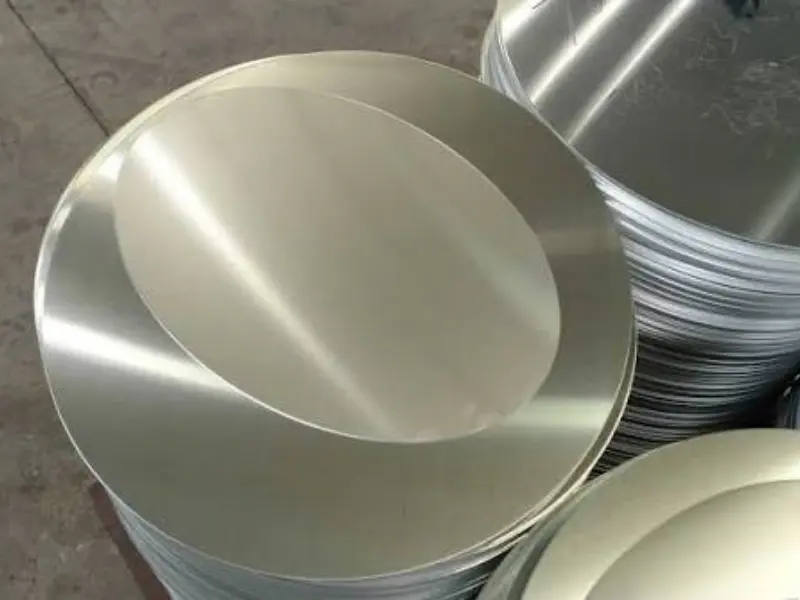
Provide:
Alloy → Temper → Diameter → Thickness → Quantity → Surface → Edge → Application → Destination
For example:
1100-O → Ø300 mm → 1.5 mm → Mill Finish → Smooth Edge → 5,000 pcs → Deep Drawing
For a customized product, a drawing can also be supplied.
What Affects the Price?
The price of 1100 aluminum discs depends on several factors.
| Factor | Effect on Price |
|---|---|
| Aluminum price | Major material factor |
| Thickness | More material increases weight |
| Diameter | Larger blank uses more material |
| Temper | May affect processing |
| Surface finish | Special finishes add cost |
| Tolerance | Tight tolerances require more control |
| Edge treatment | Additional processing may increase cost |
| Quantity | Larger orders can improve production efficiency |
| Packaging | Special export packing affects cost |
| Shipping | Destination affects total landed cost |
For B2B purchasing, it is better to compare quotations using the same specification.
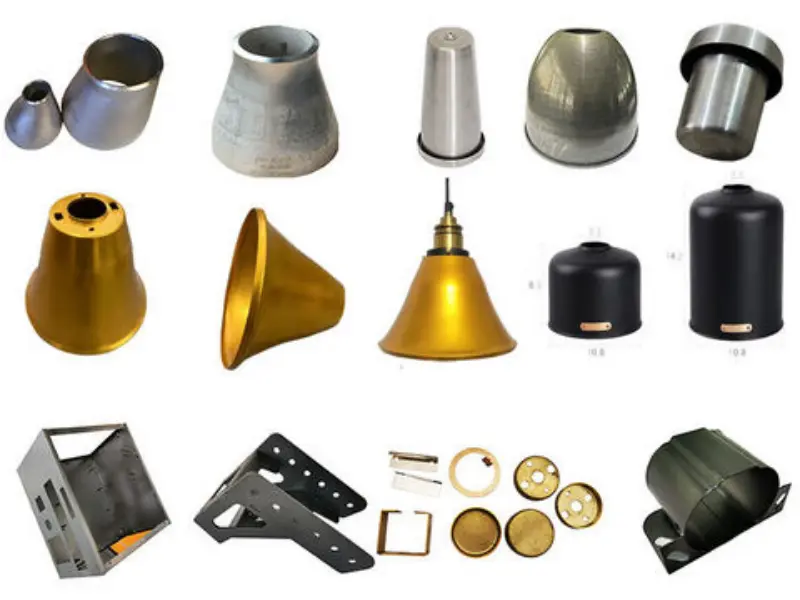
Applications of 1100 Aluminum Discs
The material can be used in many industries.

Kitchenware
- Frying pans
- Cooking pots
- Sauce pans
- Baking trays
- Kitchen bowls
- Food containers
- Lids
Lighting
Decorative lighting
LED reflectors
Lamp housings
Downlight components
Industrial reflectors
Industrial Products
- Circular covers
- Housings
- Containers
- Machine components
- Heat-related parts
- Stamped components
Household Products
- Kitchen accessories
- Decorative parts
- Household containers
- Circular panels
- Utility components
Metal Forming
Bending
Deep drawing
Spinning
Stamping
Press forming
Embossing
Why B2B Buyers Choose Custom Aluminum Discs
Different factories have different forming machines.
A standard disc may not always match the final product.
Custom production allows buyers to specify:
Diameter + Thickness + Temper + Alloy + Edge + Surface + Quantity
This can reduce unnecessary material waste.
It can also make the blank closer to the finished product size.
For high-volume production, this can be an important purchasing consideration.
1100 Aluminum Disc Selection Guide

Before ordering, check the following:
| Item | Example |
|---|---|
| Alloy | 1100 |
| Temper | O / H12 / H14 |
| Diameter | 100–600 mm |
| Thickness | 0.50–3.00 mm |
| Surface | Mill / Bright / Polished |
| Edge | Standard / Deburred |
| Application | Drawing / Spinning / Stamping |
| Quantity | Custom |
| Packaging | Export packing |
| Destination | Port / Factory |
A complete specification helps avoid misunderstandings between the buyer and supplier.
FAQ About Aluminum Discs 1100
What is 1100 aluminum?
1100 is a commercially pure aluminum alloy with a minimum aluminum content of about 99.0%. It offers good formability, corrosion resistance and conductivity.
Are 1100 aluminum discs suitable for deep drawing?
Yes. 1100 aluminum can be suitable for deep drawing, especially in a soft temper such as O. The final result also depends on thickness, tooling, drawing depth and product design.
What is the difference between 1100-O and 1100-H14?
1100-O is softer and provides higher formability. H14 has higher hardness and strength but lower formability than O temper.
What diameters can be produced?
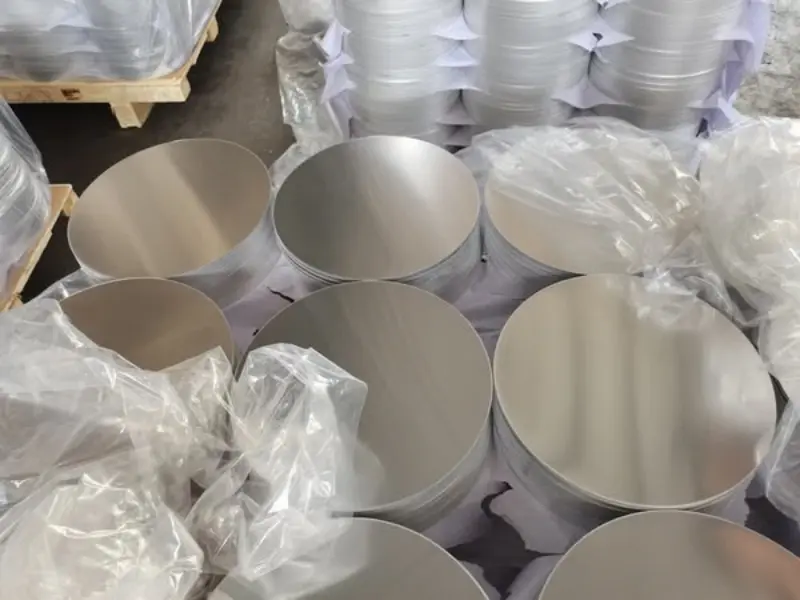
Common diameters can range from about 50 mm to 800 mm or more. Custom diameters can be produced according to production requirements.
What thicknesses are available?
Common thicknesses include 0.40, 0.50, 0.60, 0.80, 1.00, 1.20, 1.50, 2.00, 2.50 and 3.00 mm.
Can 1100 aluminum discs be used for cookware?
Yes. 1100 aluminum discs can be used for cookware such as pans, pots, trays and other formed kitchen products.
Are 1100 aluminum discs suitable for spinning?
Yes. The good formability of 1100 aluminum makes it suitable for many spinning applications.
Can the surface be polished?
Yes. Depending on the product and production process, polished or bright surfaces can be supplied.
Can the diameter and thickness be customized?
Yes. Diameter and thickness can be produced according to the customer’s requirements, subject to production capability.
Can I request a material certificate?
Yes. A material certificate can usually be supplied when required by the purchasing specification.
What information should I include in an inquiry?
Provide the alloy, temper, diameter, thickness, quantity, surface finish, edge condition and application. A drawing is useful for special products.
Is 1100 stronger than 3003 aluminum?
Generally, 3003 provides higher strength than 1100. 1100 is more focused on formability and general fabrication.
Final Specification Table
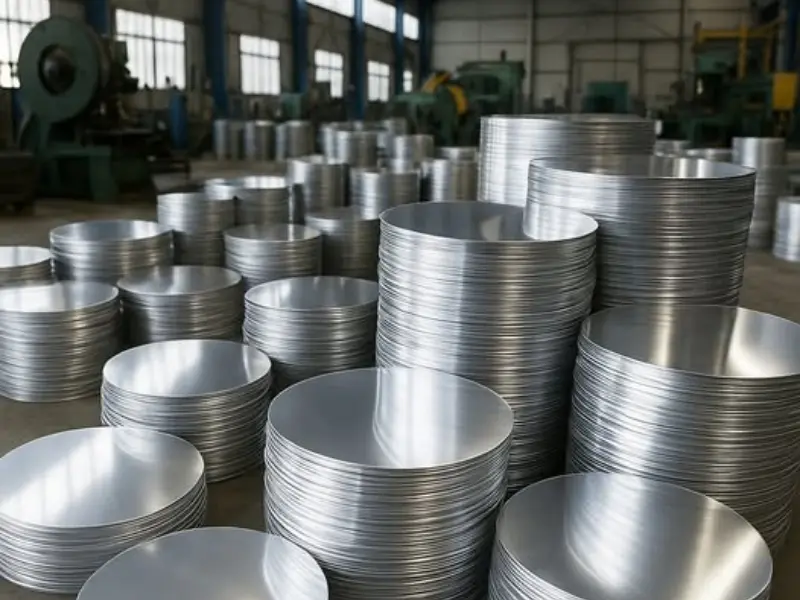

| Specification | Available Options |
|---|---|
| Alloy | 1100 |
| Temper | O / H12 / H14 / H16 / H18 |
| Diameter | 50–800 mm+ |
| Thickness | 0.40–3.00 mm+ |
| Surface | Mill / Bright / Polished |
| Edge | Standard / Smooth / Deburred |
| Process | Blanking / Stamping / Drawing / Spinning |
| Application | Cookware / Lighting / Industrial / Household |
| Packaging | Pallet / Wooden Case / Export Packing |
| Quantity | Custom |
| Certification | Available according to order |
The right aluminum disc is not only about diameter and thickness.
The alloy, temper, surface, edge and forming method should be considered together.
For a new project, providing the final product drawing or application information can help the manufacturer recommend a suitable 1100 aluminum disc specification.