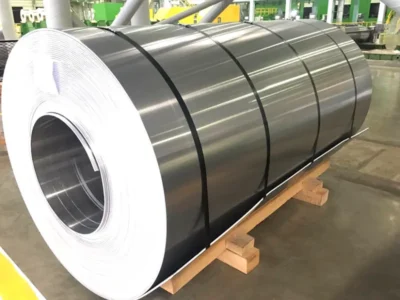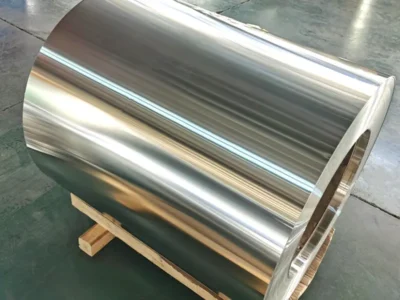
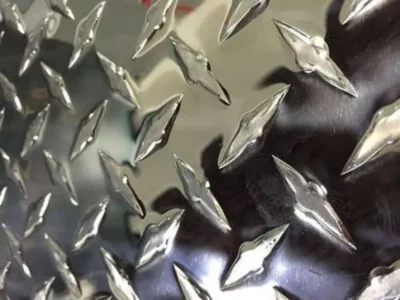
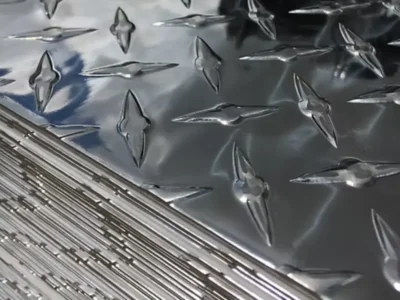

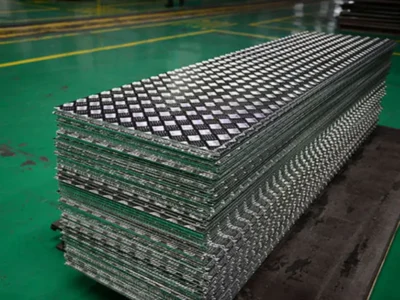
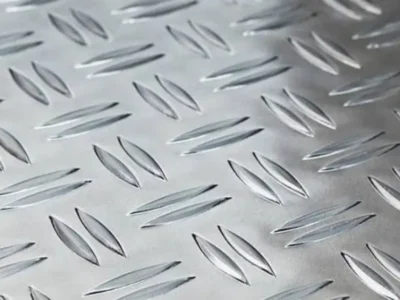
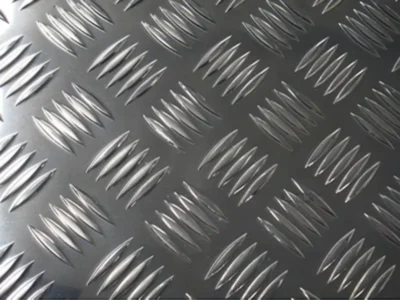
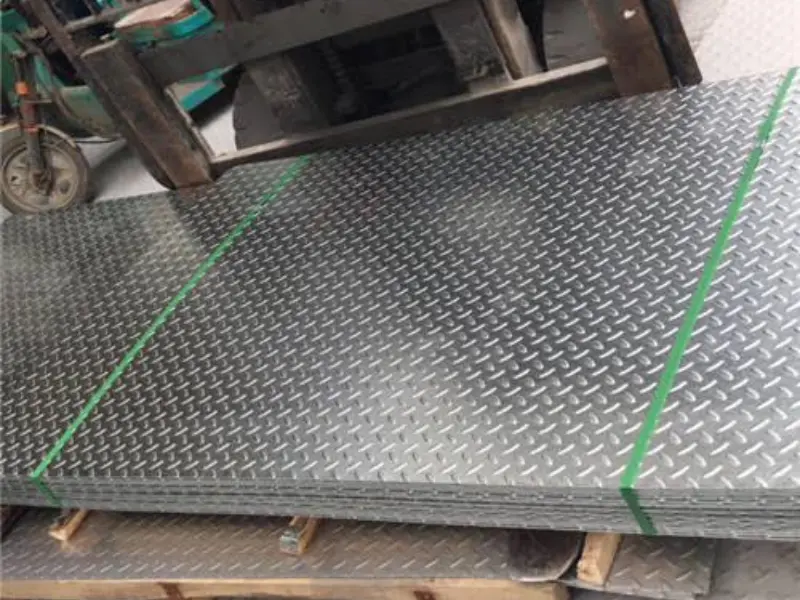
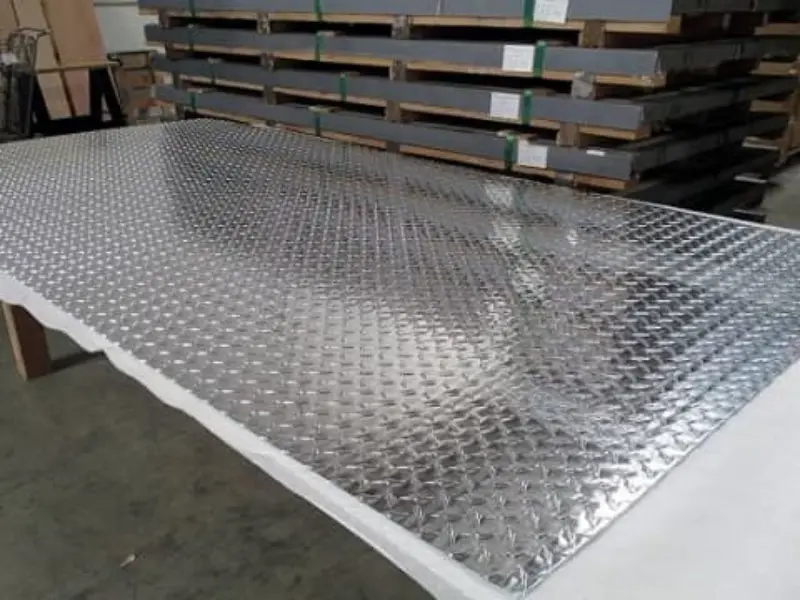
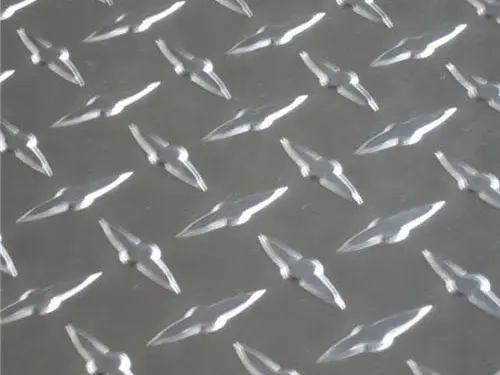
Diamond plate aluminum is a textured aluminum sheet with a raised pattern on one side. It is also called aluminum diamond plate, aluminum tread plate, or aluminum checker plate.
The raised pattern gives the sheet a practical surface and a distinctive appearance. It can improve traction in many applications and also adds a decorative metal look.
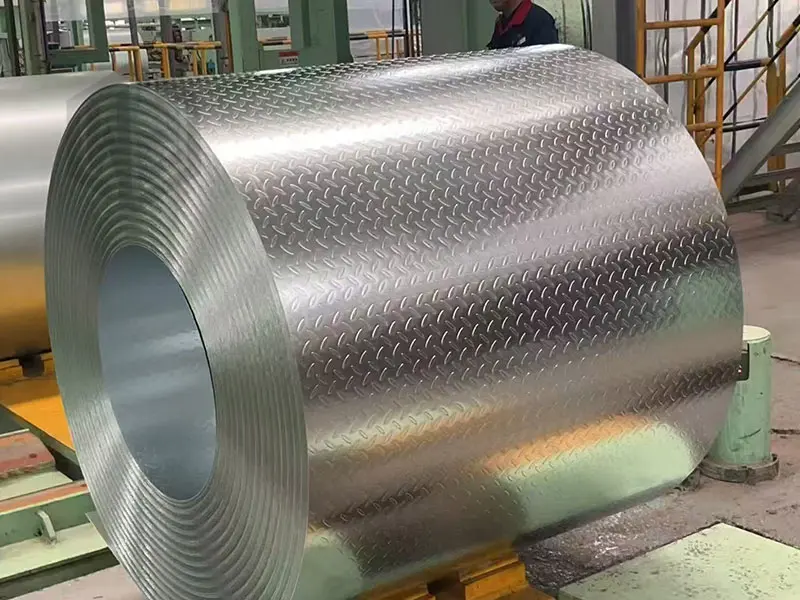

Diamond plate aluminum is widely used for floors, stairs, ramps, platforms, truck bodies, trailers, toolboxes, wall protection, equipment, and architectural decoration.
Different alloys, tempers, thicknesses, sizes, and surface finishes are available. The right choice depends on the application.
For example, a lightweight toolbox may need a different specification from a heavy-duty industrial platform.
Common Diamond Plate Aluminum Types
| Type | Alloy | Main Features |
|---|---|---|
| 1050 Diamond Plate | 1050 | Good formability and corrosion resistance |
| 3003 Diamond Plate | 3003 | Good strength and excellent corrosion resistance |
| 5052 Diamond Plate | 5052 | Higher strength and strong marine corrosion resistance |
| 6061 Diamond Plate | 6061 | Higher strength and good structural performance |
| 1 Bar Plate | 1050 / 3003 | Simple raised bar pattern |
| 2 Bar Plate | 3003 / 5052 | Regular textured surface |
| 3 Bar Plate | 3003 / 5052 | Good grip and decorative appearance |
| 5 Bar Plate | 3003 / 5052 | Dense pattern for flooring |
| Bright Diamond Plate | 1050 / 3003 | Bright decorative surface |
Diamond Plate Aluminum Applications
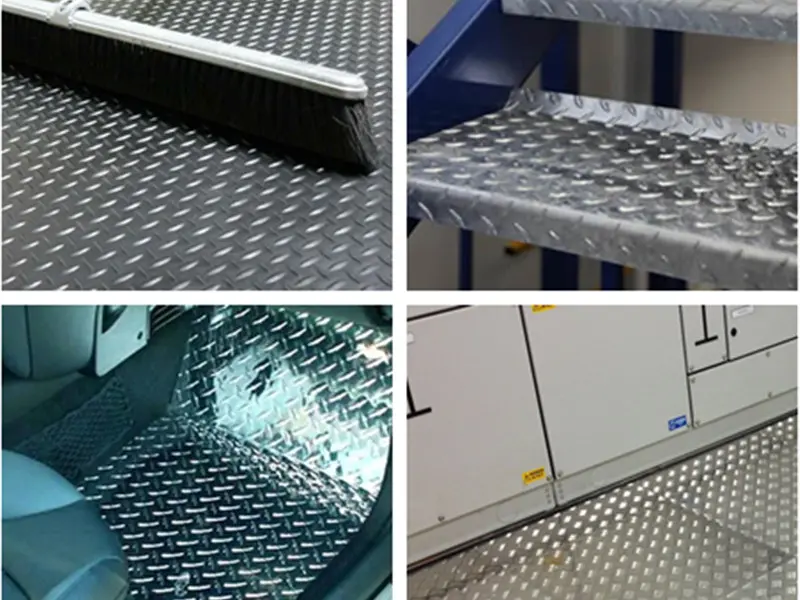
→ Flooring & Walkways
- Factory floors
- Workshop walkways
- Warehouse platforms
- Stair treads
- Ramps
- Loading platforms
→ Transportation
- Truck floors
- Trailer floors
- Vehicle steps
- Truck toolboxes
- Van interiors
- Vehicle body protection
→ Industrial Equipment
Work platforms
Machine platforms
Equipment covers
Maintenance platforms
Protective panels
Industrial stairs
→ Construction
- Building steps
- Access platforms
- Wall protection
- Decorative panels
- Outdoor walkways
- Service platforms
→ Marine & Outdoor
- Boat decks
- Marine walkways
- Dock platforms
- Outdoor stairs
- Equipment platforms
Alloy Selection
| Alloy | Main Advantage | Recommended Use |
|---|---|---|
| 1050 | Excellent formability | Decorative panels, light-duty flooring |
| 3003 | Good strength and corrosion resistance | General flooring and transportation |
| 5052 | Higher strength and marine resistance | Marine, vehicle and heavy-duty use |
| 6061 | High strength | Structural platforms and industrial equipment |
Diamond Pattern Options
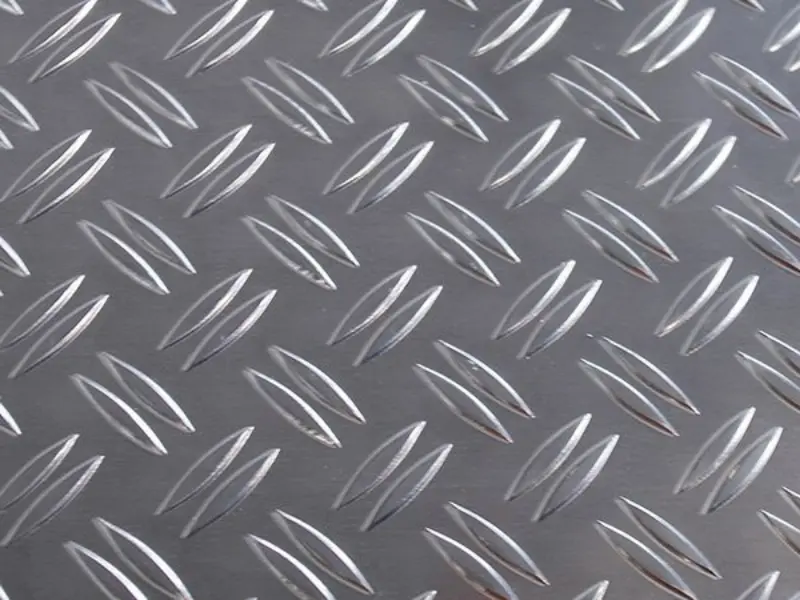
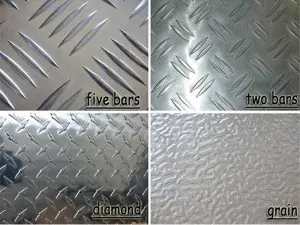
1 Bar → 2 Bar → 3 Bar → 5 Bar → Diamond
The diamond pattern is one of the most common choices for flooring because the raised surface can improve traction. Bar patterns can also be selected when a different visual effect or surface structure is required.
Custom Diamond Plate Aluminum
Diamond plate aluminum can be produced according to customer requirements.
- Custom alloy
- Custom temper
- Custom thickness
- Custom width
- Custom length
- Custom pattern
- Custom pattern height
- Custom surface finish
- Custom packaging
- Bulk wholesale supply
What Is Diamond Plate Aluminum?
Diamond plate aluminum is made by rolling a pattern onto an aluminum sheet.
The raised diamond pattern is usually formed during the rolling process. The base aluminum remains lightweight, while the textured surface provides additional grip and visual appeal.
The pattern can vary by manufacturer and market.
Common options include:
- Single diamond pattern
- 1 bar
- 2 bar
- 3 bar
- 5 bar
- Small diamond
- Large diamond
- Custom tread pattern
The actual pattern height and shape should be confirmed before ordering.
Diamond Plate Aluminum Specifications


The product can be supplied in many sizes.
| Item | Common Range |
|---|---|
| Alloy | 1050 / 1060 / 3003 / 5052 / 6061 |
| Temper | O / H14 / H22 / H24 / H32 / T6 |
| Thickness | 1.0–8.0 mm |
| Width | 100–2500 mm |
| Length | 500–12000 mm |
| Pattern | Diamond / 1 bar / 2 bar / 3 bar / 5 bar |
| Surface | Mill finish |
| Finish | Bright / polished / anodized / coated |
| Form | Sheet / plate |
| Cutting | Standard or custom |
Custom thickness and dimensions can be discussed for project orders.
Popular Diamond Plate Aluminum Types
Diamond plate can be divided into several product types.
3003 Diamond Plate Aluminum

3003 is one of the common alloys for tread plate.
It offers good formability and corrosion resistance.
It can be used for:
- Flooring
- Wall panels
- Toolboxes
- Truck bodies
- Equipment
- Decorative applications
5052 Diamond Plate Aluminum
5052 provides higher strength and excellent corrosion resistance.
It is often selected for transportation, marine, industrial, and outdoor applications.
Common uses include:
- Truck floors
- Trailer floors
- Ramps
- Platforms
- Marine equipment
- Toolboxes
6061 Diamond Plate Aluminum
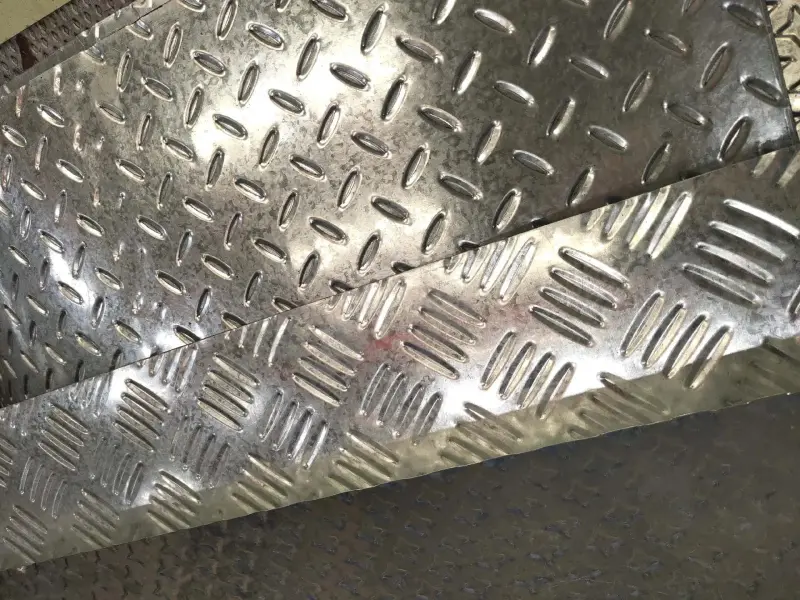
6061 is a heat-treatable alloy.
It offers higher strength and good machinability.
It can be considered for applications where strength is more important.
Typical uses include:
- Industrial platforms
- Machinery
- Structural components
- Heavy-duty flooring
- Transportation equipment
1050 Diamond Plate Aluminum
1050 is a high-purity aluminum alloy.
It offers excellent formability and good corrosion resistance.
It is suitable for lighter-duty decorative and general applications.
1060 Diamond Plate Aluminum
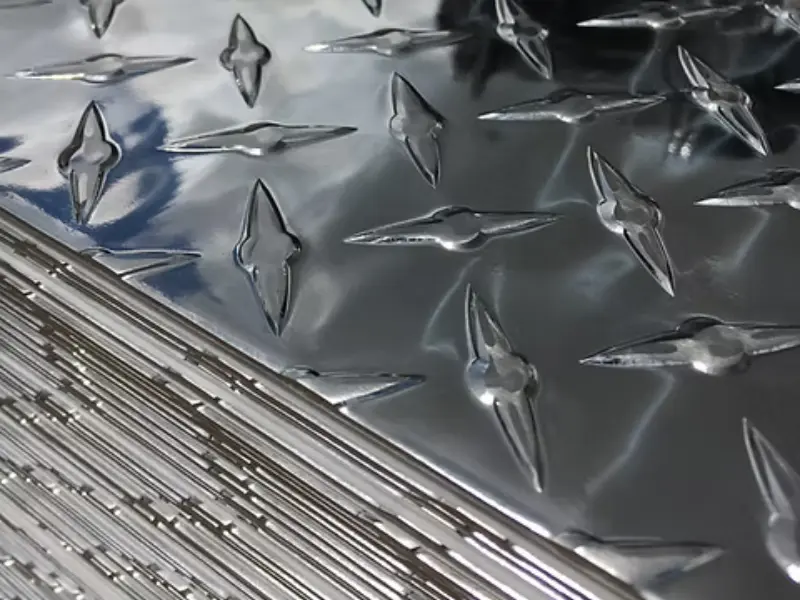
1060 is another high-purity aluminum grade.
It provides good formability and high aluminum content.
It can be used for decorative panels, equipment covers, and selected tread plate applications.
Diamond Plate by Temper
Temper affects the mechanical condition of the aluminum.
The available temper depends on the alloy.
| Temper | General Characteristic | Common Direction |
|---|---|---|
| O | Soft | Forming |
| H14 | Medium hardness | General fabrication |
| H22 | Partially annealed | Tread products |
| H24 | Medium condition | General use |
| H32 | Stabilized | 5000 series applications |
| T6 | Heat treated | Higher strength applications |
For flooring and structural applications, the temper should be selected together with the alloy and design requirements.
Diamond Plate Thickness Options
Thickness is one of the most important buying factors.
A thicker plate normally provides more rigidity, but it also adds weight and cost.
| Thickness | Typical Direction |
|---|---|
| 1.0 mm | Lightweight panels |
| 1.2 mm | Covers and decoration |
| 1.5 mm | Light flooring |
| 2.0 mm | General flooring |
| 2.5 mm | Equipment and platforms |
| 3.0 mm | Heavy flooring |
| 4.0 mm | Industrial platforms |
| 5.0 mm | Heavy-duty applications |
| 6.0 mm | Heavy structures |
| 8.0 mm | Special industrial use |
The actual load capacity depends on the alloy, temper, support spacing, pattern, and installation method.
1.5mm Diamond Plate Aluminum

1.5 mm plate is relatively lightweight.
It can be used for decorative panels, covers, light-duty flooring, and equipment surfaces.
It is easier to cut and handle than thicker plate.
2mm Diamond Plate Aluminum
2 mm is a common middle thickness.
It can provide a balance between weight and rigidity.
Applications can include:
- Toolboxes
- Equipment panels
- Light platforms
- Vehicle components
- Wall protection
- General flooring
3mm Diamond Plate Aluminum
3 mm provides more rigidity.
It is suitable for many industrial and transportation applications.
Typical uses include:
- Truck floors
- Trailer floors
- Platforms
- Ramps
- Stairs
- Machine areas
4mm–6mm Diamond Plate Aluminum
Thicker tread plate is used when greater rigidity is required.
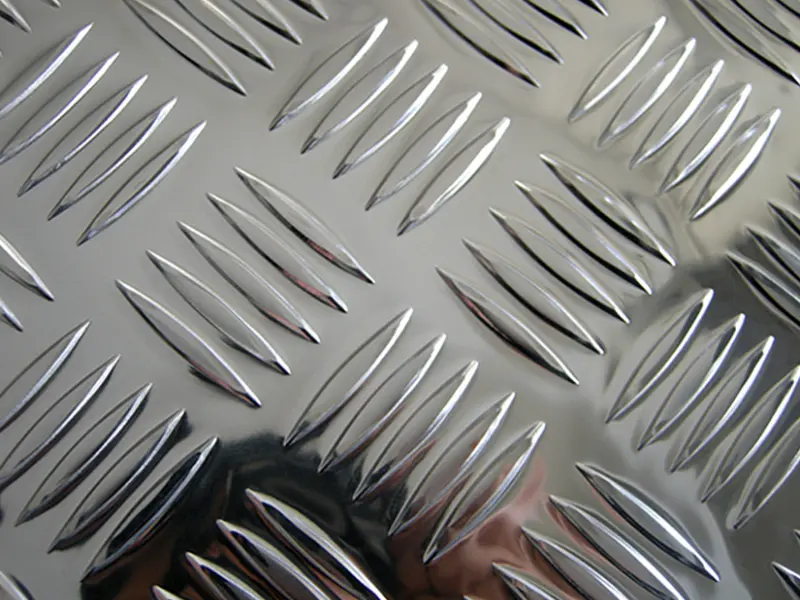
Common applications include:
- Industrial platforms
- Heavy-duty walkways
- Vehicle floors
- Equipment bases
- Loading ramps
- Industrial stairs
The support structure should always be considered when selecting the thickness.
Diamond Plate Aluminum by Pattern
Pattern selection affects appearance, traction, weight, and product style.
Standard Diamond Pattern
This is one of the most recognizable aluminum tread patterns.
It is widely used for flooring, toolboxes, steps, and decorative applications.
1 Bar Aluminum Tread Plate

The raised bars create a directional appearance.
It can be useful for flooring and decorative panels.
2 Bar Aluminum Tread Plate
The two-bar pattern provides a different visual style.
It is often used in transportation and architectural products.
3 Bar Aluminum Tread Plate
Three raised bars create a stronger visual pattern.
It can be used for floors, platforms, and equipment.
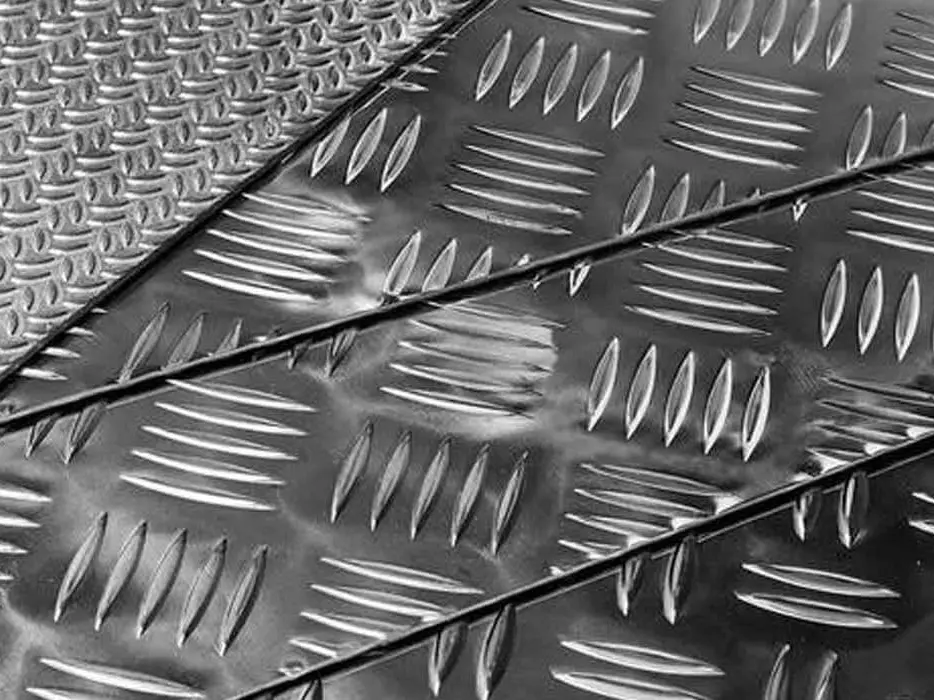
5 Bar Aluminum Tread Plate
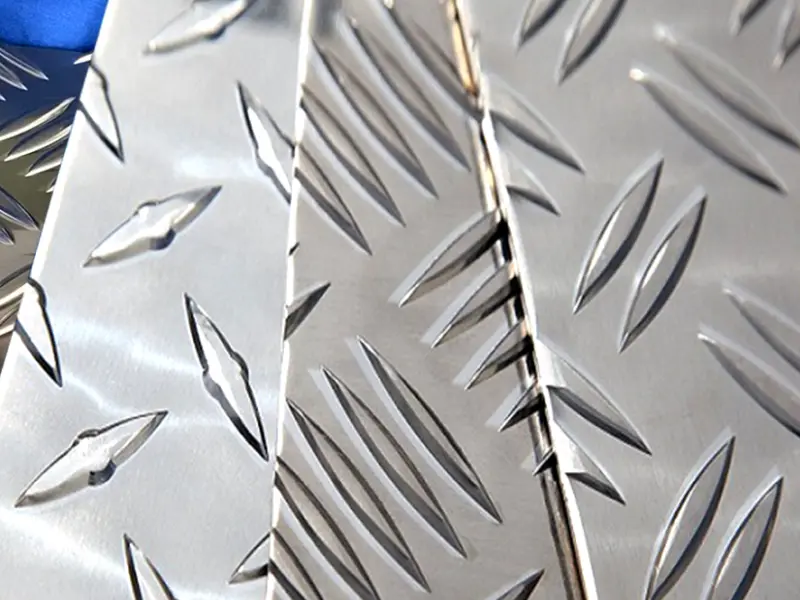
Five-bar tread plate is widely used for industrial flooring and transportation applications.
It is also commonly called 5 bar aluminum checker plate.
Bright Diamond Plate Aluminum
Bright aluminum tread plate has a cleaner and more reflective appearance.
It is often selected for products where appearance matters.
Applications include:
- Truck bodies
- Toolboxes
- Retail displays
- Interior decoration
- Vehicle accessories
- Architectural panels
Mill Finish Diamond Plate
Mill finish is a practical option for industrial use.
It does not require an additional decorative surface treatment.
It is suitable for:
- Industrial floors
- Platforms
- Machine areas
- Equipment
- General fabrication
Polished Diamond Plate
Polishing can increase surface brightness.
It is often selected for decorative and vehicle applications.
The polishing process should be suitable for the raised pattern.
Anodized Diamond Plate
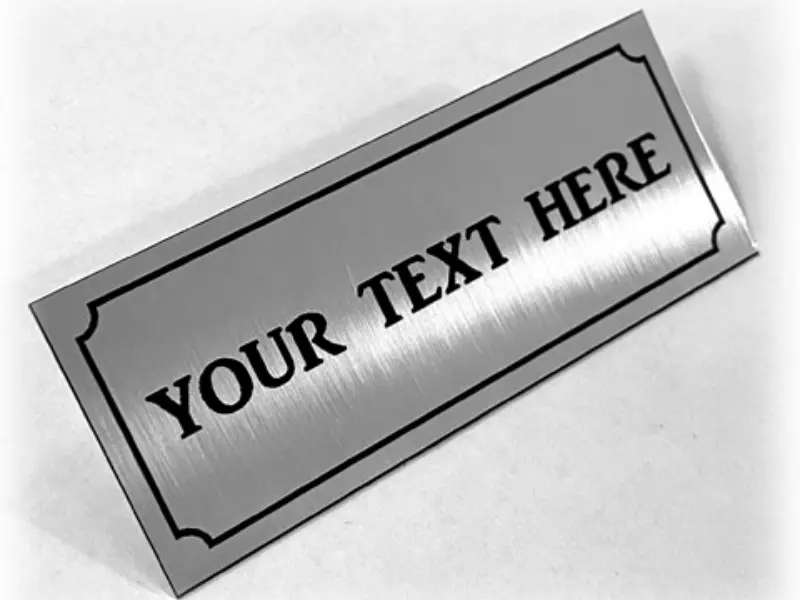
Anodized aluminum has a controlled oxide surface.
It can provide a different appearance and additional surface protection.
Anodized tread plate is useful for selected architectural and decorative applications.
Painted Diamond Plate Aluminum
Painted tread plate can be supplied in different colors.
Common colors include:
- Black
- White
- Gray
- Silver
- Dark gray
- Custom RAL colors
Painted products can be used when the metal surface needs to match a project design.
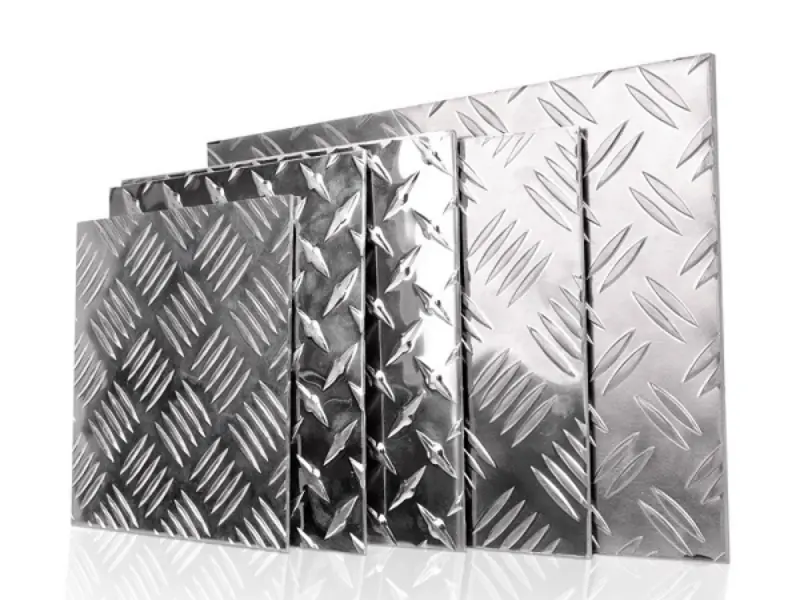
Diamond Plate Aluminum for Flooring

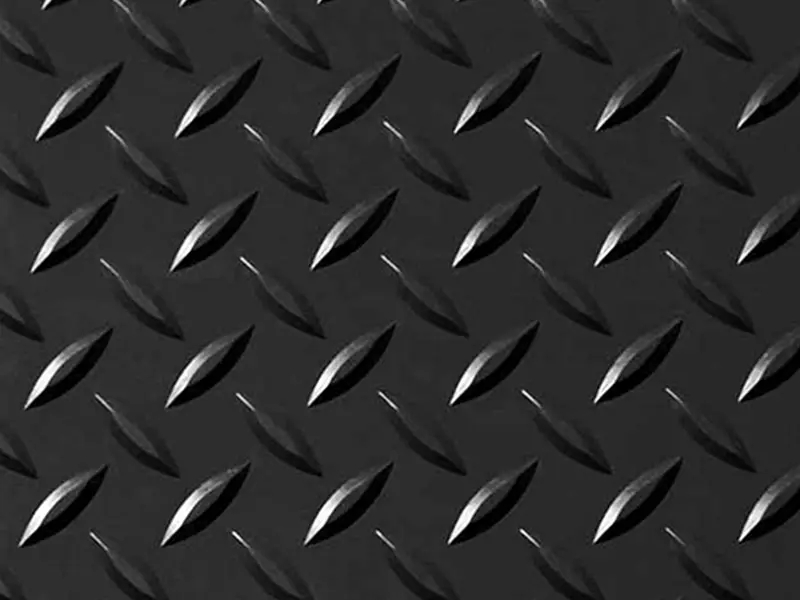
Flooring is one of the most common applications.
The raised surface can provide additional traction compared with a smooth sheet.
Common Flooring Applications
- Industrial floors
- Factory walkways
- Workshops
- Platforms
- Stairs
- Ramps
- Loading areas
- Vehicle floors
- Trailer floors
- Machine platforms
The correct thickness should be selected according to the expected load and support structure.
Diamond Plate for Truck Floors
Aluminum tread plate is widely used in transportation.
It provides a combination of low weight and practical surface texture.
Typical applications include:
- Truck floors
- Truck steps
- Trailer floors
- Tool compartments
- Vehicle platforms
- Service bodies
5052 and 6061 can be considered for different transportation requirements.
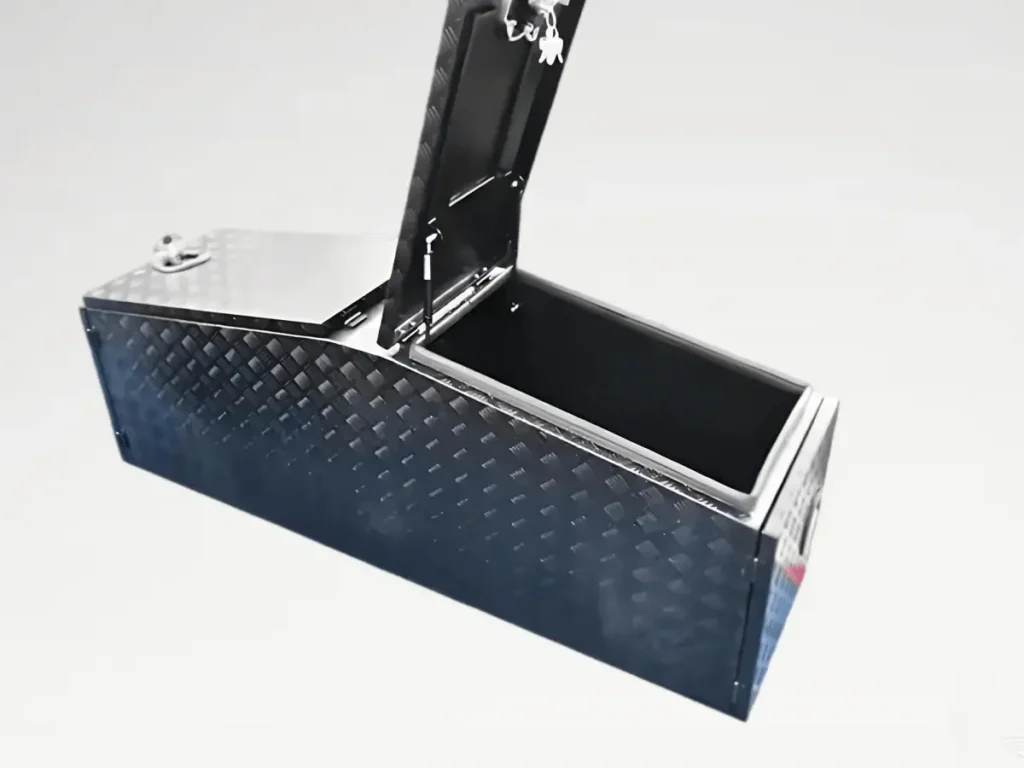
Diamond Plate for Toolboxes
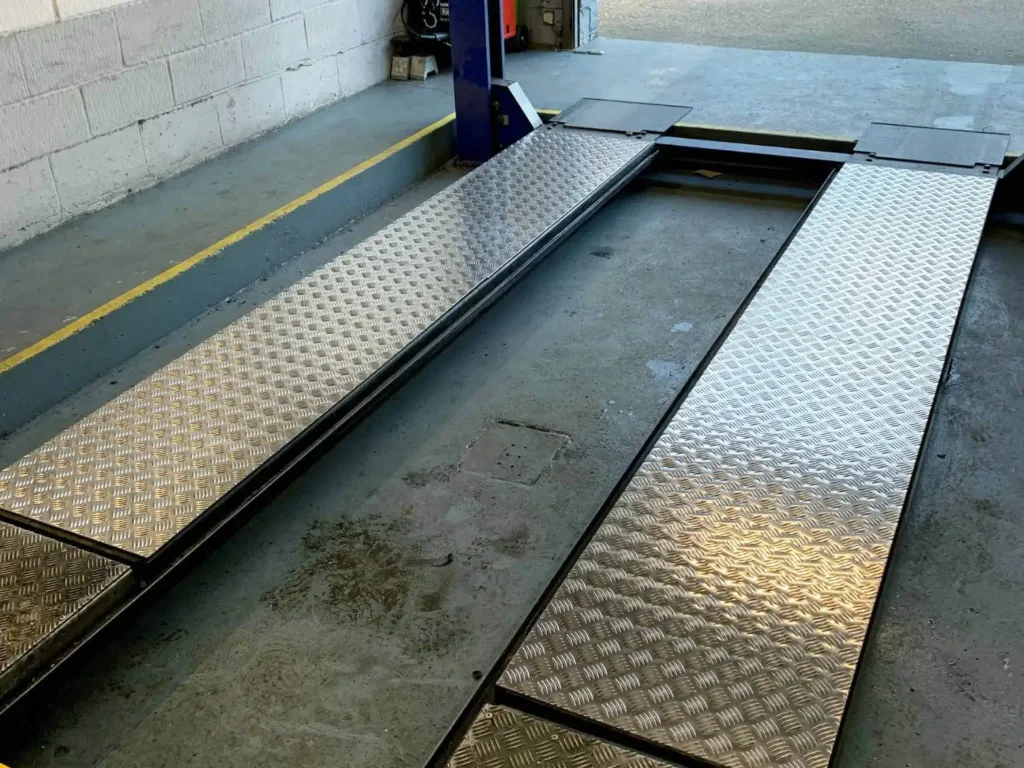
Diamond plate is popular for toolboxes because of its appearance and durability.
Common thicknesses include:
1.5 mm → 2 mm → 2.5 mm → 3 mm
The final thickness depends on the toolbox size and design.
Toolbox Applications
- Truck toolboxes
- Workshop boxes
- Trailer boxes
- Service vehicle storage
- Industrial storage
Diamond Plate for Ramps
Aluminum tread plate can be used for selected ramps.
The raised pattern can help improve traction.
Applications include:
- Loading ramps
- Vehicle ramps
- Equipment ramps
- Service ramps
- Access ramps
For ramps, thickness and structural support are especially important.
Diamond Plate for Stairs
Tread plate can be used for stair treads and steps.
It is suitable for many industrial environments.
Common applications include:
- Factory stairs
- Warehouse steps
- Platform stairs
- Vehicle steps
- Machine access stairs
Edge design and structural support should be considered during installation.
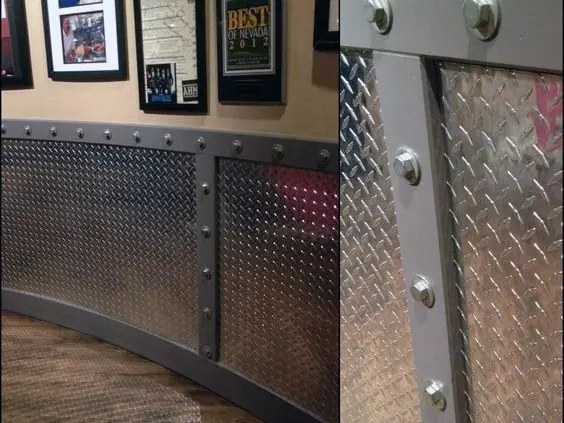
Diamond Plate for Wall Protection
Diamond plate can protect walls and lower surfaces from impact.
It can be installed in:
- Workshops
- Warehouses
- Garages
- Industrial buildings
- Loading areas
- Commercial spaces
A thinner sheet may be enough for wall protection because the main purpose is surface protection rather than structural support.
Diamond Plate for Marine Applications
Aluminum offers good corrosion resistance.
5052 is often considered for marine-related products, while 5083 and other marine-grade alloys can be selected for specific requirements.
Applications may include:
- Boat decks
- Marine walkways
- Steps
- Equipment platforms
- Storage areas
The alloy should be selected according to the marine environment and engineering requirements.
Diamond Plate for Industrial Equipment
Industrial equipment often needs a durable surface.
Tread plate can be used for:
- Machine platforms
- Equipment covers
- Maintenance walkways
- Access panels
- Service platforms
- Protective panels
6061 can be considered when higher strength and machining performance are needed.
Diamond Plate for Decoration
Not every application is industrial.
The raised pattern has a strong visual style.
It can be used for:
- Interior walls
- Bar counters
- Retail displays
- Furniture
- Garage decoration
- Automotive decoration
- Commercial interiors
Bright or polished surfaces are popular for decorative products.
Diamond Plate Aluminum Application Table
| Application | Recommended Alloy Options | Common Thickness |
|---|---|---|
| Wall protection | 1050/3003/5052 | 1–2 mm |
| Toolbox | 3003/5052 | 1.5–3 mm |
| Truck floor | 5052/6061 | 2–5 mm |
| Trailer floor | 5052/6061 | 2–5 mm |
| Stairs | 3003/5052 | 2–5 mm |
| Ramps | 5052/6061 | 3–8 mm |
| Industrial platform | 5052/6061 | 3–8 mm |
| Decoration | 1050/1060/3003 | 1–3 mm |
| Marine | 5052/5083 | Project dependent |
| Equipment | 3003/5052/6061 | 2–6 mm |
These ranges are general starting points. Actual requirements depend on design and loading conditions.
3003 vs 5052 Diamond Plate
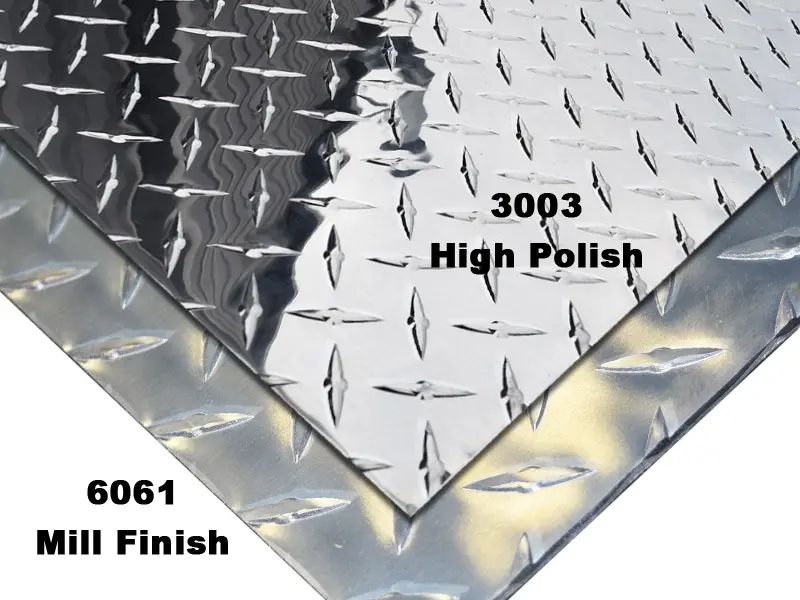
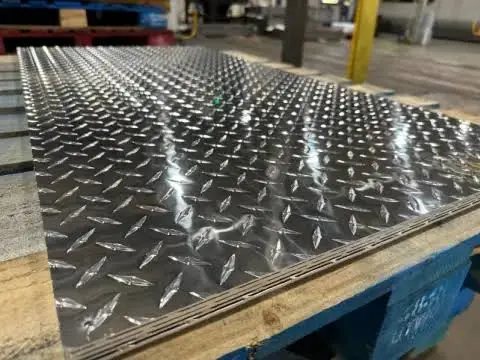
3003 and 5052 are both popular options.
| Feature | 3003 | 5052 |
|---|---|---|
| Strength | Moderate | Higher |
| Formability | Very good | Good |
| Corrosion resistance | Good | Excellent |
| Welding | Good | Good |
| General flooring | Suitable | Suitable |
| Marine use | Limited | Strong option |
| Toolboxes | Suitable | Suitable |
3003 can be useful for general fabrication.
5052 is often selected when additional strength and corrosion resistance are needed.
5052 vs 6061 Diamond Plate
Both alloys can provide useful strength, but they behave differently.
| Feature | 5052 | 6061 |
|---|---|---|
| Series | 5000 | 6000 |
| Heat treatable | No | Yes |
| Corrosion resistance | Excellent | Good |
| Formability | Good | Moderate |
| Machinability | Moderate | Very good |
| Marine use | Strong choice | Application dependent |
| Structural use | Good | Good |
For formed products, 5052 may be easier to work with.
For machined or higher-strength components, 6061 can be useful.
3003 vs 6061 Diamond Plate
3003 is easier to form.
6061 generally provides higher strength in suitable tempers.
Forming → 3003
General tread products → 3003 / 5052
Machined parts → 6061
Higher strength → 6061
Diamond Plate vs Plain Aluminum Sheet
The main difference is the raised pattern.
| Feature | Diamond Plate | Plain Sheet |
|---|---|---|
| Surface | Raised pattern | Smooth |
| Traction | Better | Lower |
| Appearance | Textured | Simple |
| Flooring | Excellent choice | Less common |
| Decoration | Popular | Very flexible |
| Cleaning | Pattern can collect dirt | Easier |
| Weight | Slightly affected by pattern | Standard |
Plain aluminum is often better when a smooth surface is needed.
Tread plate is useful when surface texture is part of the design.
Diamond Plate vs Steel Tread Plate
Both materials can be used for flooring.
| Feature | Aluminum | Steel |
|---|---|---|
| Weight | Lower | Higher |
| Corrosion | Good | Needs protection depending on grade |
| Handling | Easier | Heavier |
| Appearance | Bright metal | Industrial |
| Fabrication | Good | Good |
| Weight saving | Strong | Lower |
Aluminum is often considered when weight reduction is important.
2mm vs 3mm Diamond Plate
2 mm is lighter.
3 mm provides more rigidity.
Lightweight panel → 2 mm
More rigid floor → 3 mm
The support spacing and expected load should also be checked.
3mm vs 5mm Diamond Plate
| Feature | 3 mm | 5 mm |
|---|---|---|
| Weight | Lower | Higher |
| Rigidity | Moderate | Higher |
| Handling | Easier | Heavier |
| Cutting | Easier | More demanding |
| Typical use | Panels, floors | Heavy floors, platforms |
For heavy loads, thickness alone should not be used to determine structural performance.
Diamond Plate Size Options
Standard sizes make transportation and fabrication easier.
| Width | Common Length |
|---|---|
| 1000 mm | 2000–4000 mm |
| 1220 mm | 2440–4000 mm |
| 1250 mm | 2500–5000 mm |
| 1500 mm | 3000–6000 mm |
| 2000 mm | 4000–8000 mm |
| 2500 mm | Custom |
Longer lengths can be discussed depending on production and transportation requirements.
Custom Diamond Plate Aluminum
Custom production can be useful when standard sizes do not fit the project.
Custom Options
- Alloy
- Temper
- Thickness
- Width
- Length
- Pattern
- Surface finish
- Color
- Protective film
- Cut-to-size
- Holes
- Slots
- Special packaging
For large projects, drawings can help confirm the requirements.
Cut-to-Size Diamond Plate
Cut-to-size service can save preparation time.
Instead of buying a large sheet and cutting it on site, customers can order finished blanks.
Common shapes include:
- Rectangles
- Squares
- Strips
- Stair treads
- Floor panels
- Equipment covers
- Custom brackets
For CNC or precision cutting, the drawing should include the required dimensions and tolerance.
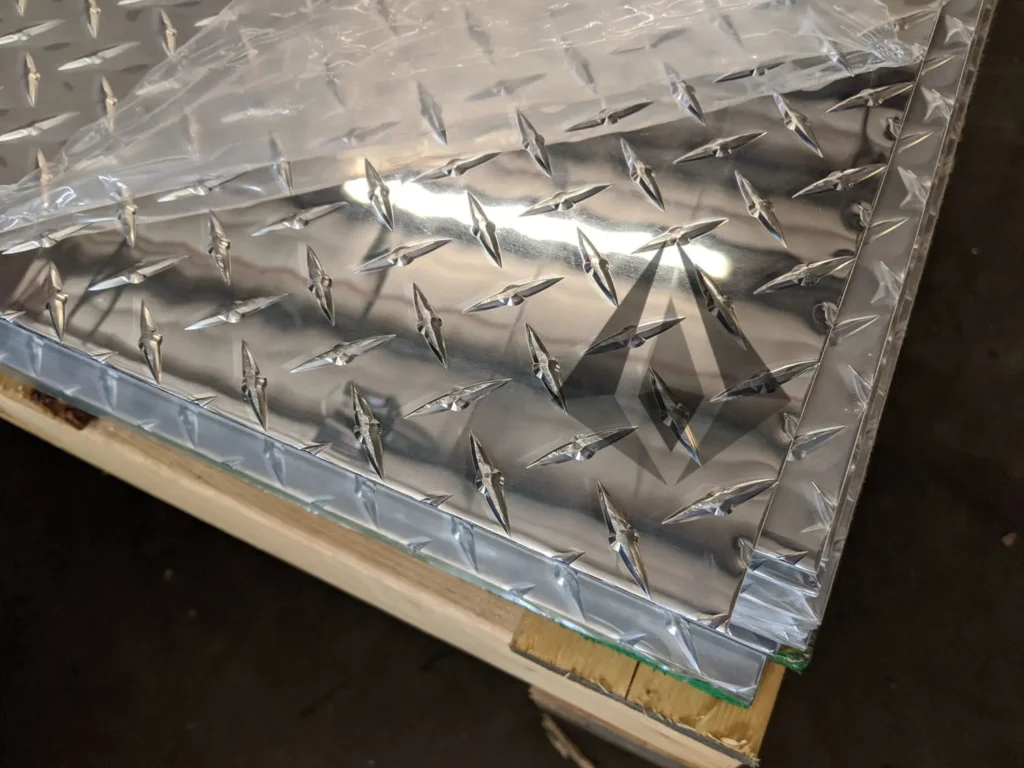
Diamond Plate with Protective Film
Protective film can reduce scratches during transportation.
It can be useful for bright or decorative surfaces.
The film should be selected according to the surface and processing method.
It should also be removed within the recommended time after installation or fabrication.
Diamond Plate Quality Control
Quality is not only about the alloy.
The raised pattern also needs to be consistent.
Important Inspection Points
Thickness
Check the base thickness and agreed tolerance.
Pattern
Check the height, shape, and consistency of the raised pattern.
Flatness
Flatness is important for installation.
Surface
Check for:
- Scratches
- Dents
- Cracks
- Oil marks
- Oxidation
- Pattern defects
Cutting
Check width, length, diagonal, and edge quality.
Alloy and Temper
Confirm the material matches the purchase order.
Common Problems When Buying Diamond Plate
Pattern Height Is Different
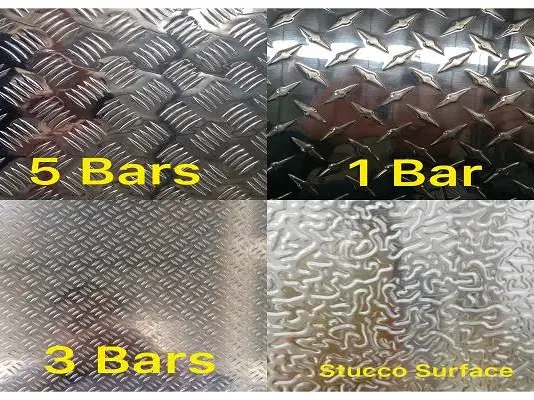
Different suppliers may use different pattern standards.
Always confirm the pattern before placing a large order.
Plate Is Too Thin
The nominal thickness may not match the customer’s expected specification.
Confirm whether the quoted thickness refers to base thickness or total thickness including the raised pattern.
Excessive Surface Scratches
Bright aluminum surfaces can show scratches easily.
Protective film and suitable packaging can help.
Poor Flatness
Uneven sheets can be difficult to install.
Flatness should be discussed for large panels.
Wrong Alloy
A product may look similar but have different mechanical properties.
Always confirm the alloy and mill certificate when required.
How to Choose Diamond Plate Aluminum
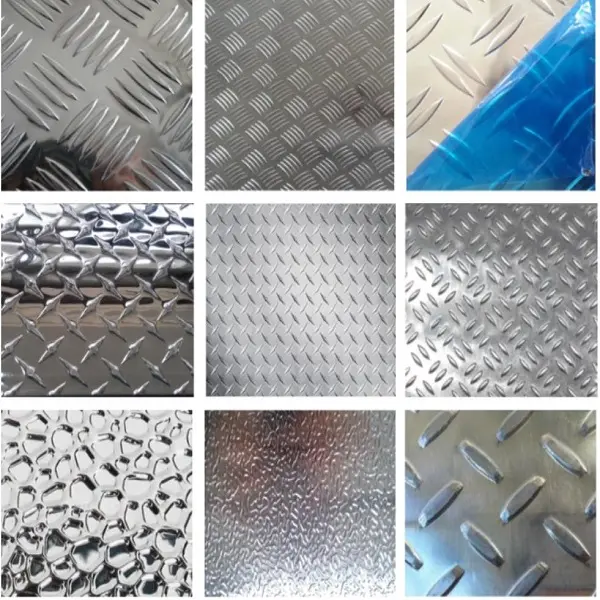
A simple selection path can make purchasing easier.
Floor or platform
↓
Check expected load
↓
Choose thickness
↓
Choose alloy
↓
Select temper
↓
Choose pattern
↓
Confirm size
↓
Select surface
↓
Confirm quantity
↓
Check packaging
For structural applications, engineering calculations should be completed separately.
Buying Diamond Plate for Wholesale
Wholesale buyers normally need stable quality between batches.
The purchase specification should be clear.
Example Wholesale Specification
| Item | Example |
|---|---|
| Product | Diamond Plate Aluminum |
| Alloy | 5052 |
| Temper | H32 |
| Base Thickness | 3 mm |
| Width | 1500 mm |
| Length | 3000 mm |
| Pattern | Diamond |
| Surface | Mill finish |
| Quantity | 10 MT |
| Application | Truck flooring |
| Standard | ASTM B209 |
This type of specification helps suppliers provide a more accurate quotation.
What Affects Diamond Plate Price?
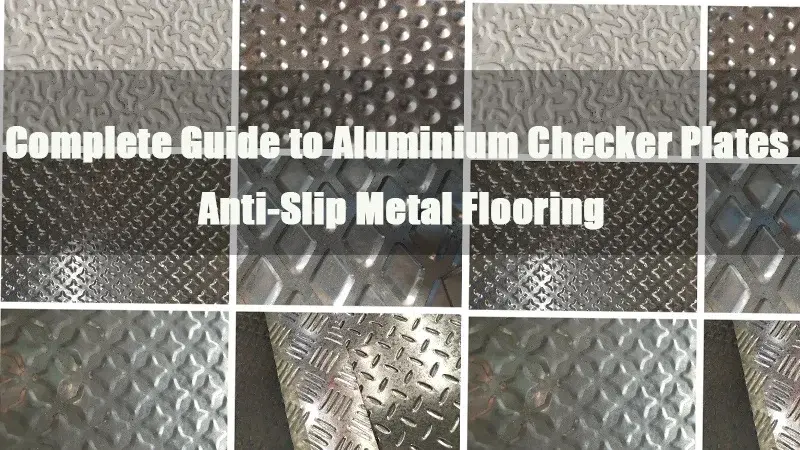
The price depends on several factors.
- Aluminum alloy
- Aluminum market price
- Thickness
- Width
- Length
- Pattern
- Temper
- Surface finish
- Cutting
- Protective film
- Order quantity
- Packaging
- Delivery location
Thicker plate normally costs more because it contains more aluminum.
Special patterns and custom processing can also affect the final price.
How to Reduce Buying Cost
There are several practical ways to control project cost.
Use Standard Sizes
Standard dimensions are usually easier to produce and transport.
Choose the Correct Alloy
Do not automatically select a high-strength alloy if the application does not require it.
Avoid Excessive Thickness
Choose thickness based on actual load and support conditions.
Order in Larger Quantities
Larger production runs may improve manufacturing efficiency.
Combine Standard Products
If several projects use the same alloy and thickness, combining orders may simplify purchasing.
Storage and Packaging
Diamond plate should be stored in a dry environment.
Avoid direct contact with water.
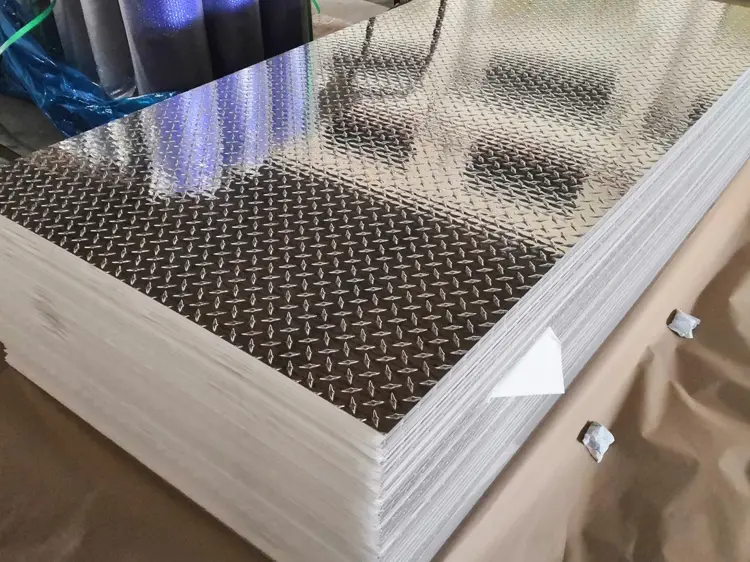
Use proper pallets and separators.
For export shipments, packaging may include:
- Waterproof paper
- Plastic film
- Wooden pallets
- Wooden cases
- Corner protection
- Steel straps
- Container loading protection
The raised pattern should not be damaged during stacking.
Aluminum Diamond Plate for Different Markets
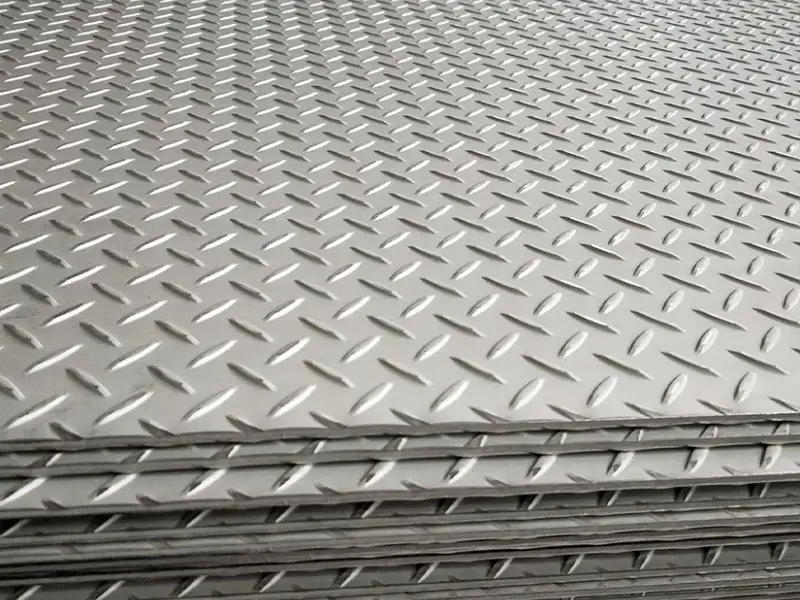
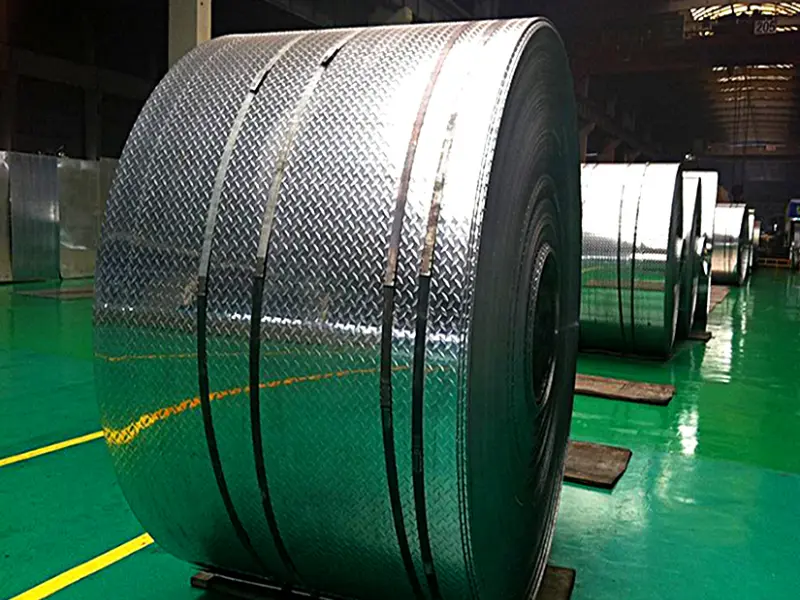
Different industries often prefer different specifications.
| Market | Common Product |
|---|---|
| Construction | 3003 / 5052 tread plate |
| Transportation | 5052 / 6061 |
| Marine | 5052 / 5083 |
| Industrial | 5052 / 6061 |
| Decoration | 1050 / 1060 / 3003 |
| Truck bodies | 5052 |
| Toolboxes | 3003 / 5052 |
| Flooring | 3003 / 5052 / 6061 |
The final selection should be based on local standards and project requirements.
Quick Diamond Plate Selection Guide


For Wall Protection
→ 1–2 mm
→ 1050 / 3003 / 5052
→ Diamond pattern
→ Mill or bright finish
For Toolboxes
→ 1.5–3 mm
→ 3003 / 5052
→ Bright diamond pattern
For Truck Floors
→ 2–5 mm
→ 5052 / 6061
→ Diamond or 5-bar pattern
For Industrial Platforms
→ 3–8 mm
→ 5052 / 6061
→ Heavy-duty tread pattern
For Decorative Projects
→ 1–3 mm
→ 1050 / 1060 / 3003
→ Bright, polished, anodized, or coated surface
FAQ About Diamond Plate Aluminum

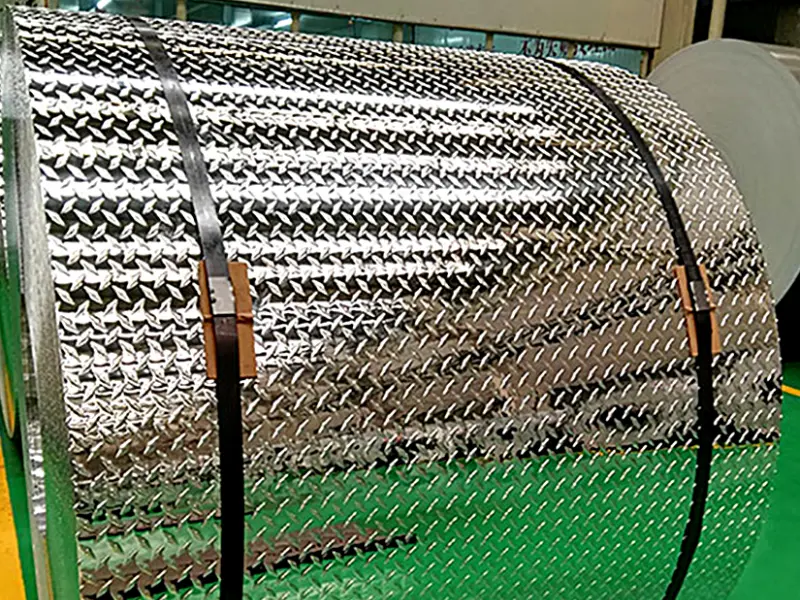
What is diamond plate aluminum?
Diamond plate aluminum is a textured aluminum sheet with a raised diamond pattern. It is also known as aluminum tread plate or aluminum checker plate.
What is diamond plate aluminum used for?
It is commonly used for floors, ramps, stairs, platforms, truck bodies, trailers, toolboxes, wall protection, equipment, and decoration.
What alloy is best for diamond plate?
There is no single alloy for every application. 3003, 5052, and 6061 are common choices for different requirements.
Is 5052 aluminum good for diamond plate?
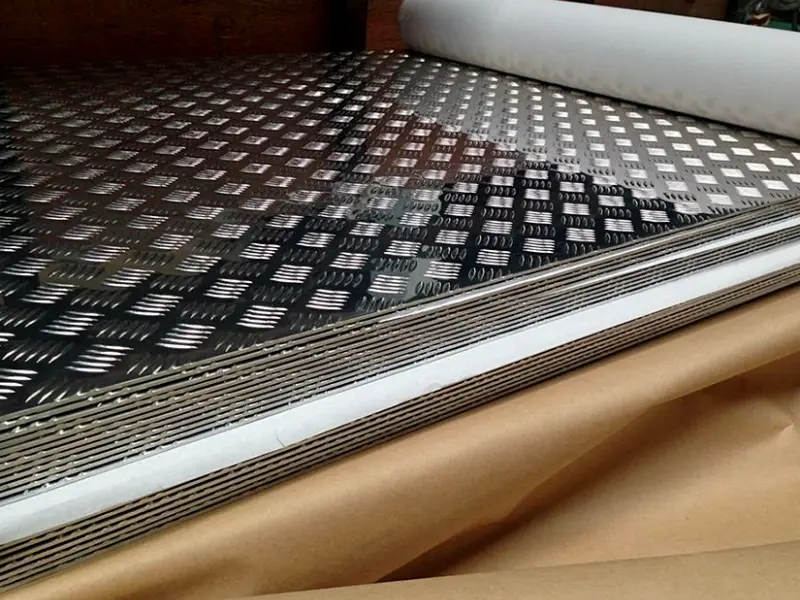
Yes. 5052 offers good strength and excellent corrosion resistance. It is often considered for transportation, outdoor, industrial, and marine-related applications.
Is 3003 aluminum good for tread plate?
Yes. 3003 provides good formability and corrosion resistance. It is widely used for general tread plate applications.
Is 6061 aluminum stronger than 5052?
6061 can provide higher strength in suitable heat-treated conditions. However, 5052 offers excellent corrosion resistance and good forming performance.
What thickness is common for diamond plate?
Common thicknesses include 1.0, 1.5, 2.0, 2.5, 3.0, 4.0, 5.0, 6.0, and 8.0 mm.
Is 2mm diamond plate strong enough for flooring?
It can be suitable for some light-duty flooring applications, but strength depends on alloy, temper, support spacing, span, and expected load.
Is 3mm diamond plate suitable for truck floors?
3 mm can be used for some truck and trailer flooring applications. The final thickness should be selected based on the vehicle design and expected load.
What is 5 bar aluminum tread plate?
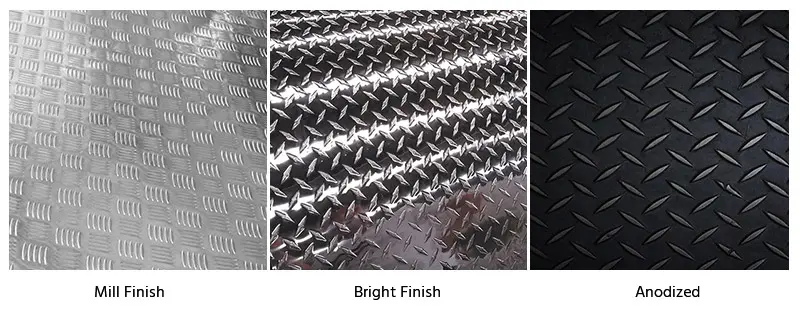
5 bar tread plate has five raised bars in its repeating pattern. It is commonly used for floors, platforms, transportation, and industrial applications.
What is the difference between diamond plate and checker plate?
The terms are often used for similar textured aluminum products. Naming can vary by country and supplier.
Can diamond plate aluminum be welded?
Many aluminum alloys can be welded, but welding characteristics vary by alloy and temper. The welding process should match the selected material.
Can diamond plate aluminum be bent?
Yes, suitable grades can be bent. The required bend radius depends on alloy, temper, thickness, and tooling.
Can diamond plate be cut to size?
Yes. It can be cut into standard or custom dimensions using suitable cutting equipment.
Can diamond plate aluminum be used outdoors?
Yes, aluminum has good atmospheric corrosion resistance. The alloy and surface should be selected according to the environment.
Can diamond plate be used for marine applications?
Yes, suitable aluminum alloys can be used for marine applications. 5052 and 5083 are common choices depending on the product design.
Can diamond plate aluminum be painted?
Yes. The surface should be properly prepared before painting to achieve suitable coating adhesion.
Can diamond plate be anodized?
Suitable aluminum grades can be anodized, although the visual result depends on alloy, surface preparation, and process conditions.
Can I order custom diamond plate?
Yes. Custom alloy, thickness, width, length, pattern, finish, cutting, and packaging can be discussed.
What information should I provide for a quotation?
Provide the alloy, temper, thickness, width, length, pattern, quantity, surface, application, and delivery destination.
Diamond Plate Aluminum Product Ideas
A supplier can offer several product groups instead of only one standard tread plate.
Light-Duty Diamond Plate
1.0–1.5 mm
Suitable for wall panels, covers, decoration, and light-duty applications.
General-Purpose Diamond Plate
2.0–3.0 mm
Suitable for toolboxes, vehicle parts, flooring, and equipment.
Heavy-Duty Diamond Plate
4.0–8.0 mm
Suitable for platforms, ramps, industrial floors, and heavy fabrication.
Decorative Diamond Plate
Bright / polished / anodized
Suitable for interior decoration, retail displays, vehicle decoration, and furniture.
Custom Diamond Plate
Custom alloy → custom thickness → custom pattern → custom size
Suitable for project-based orders and wholesale production.