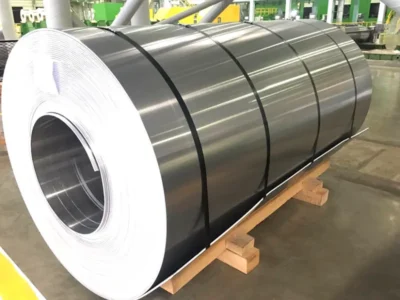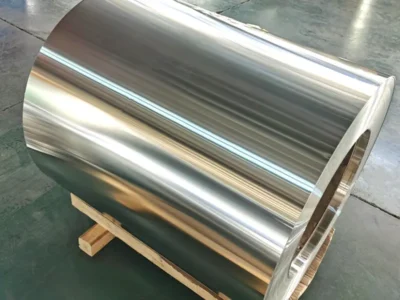
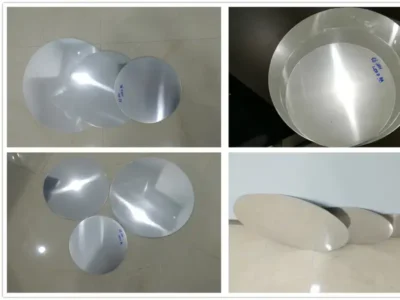


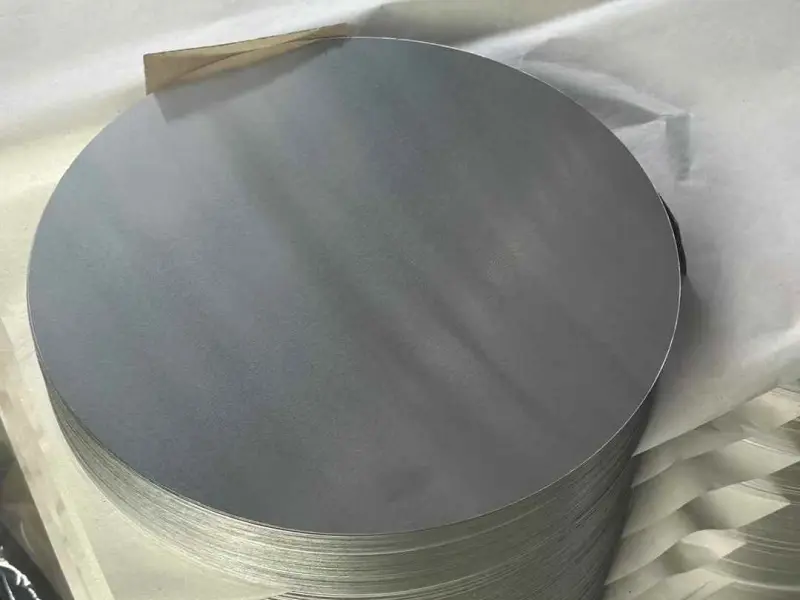
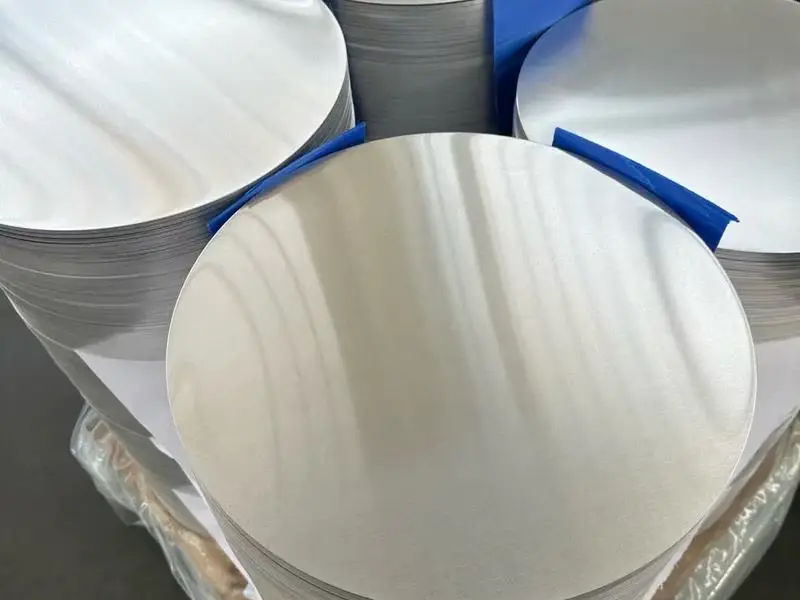
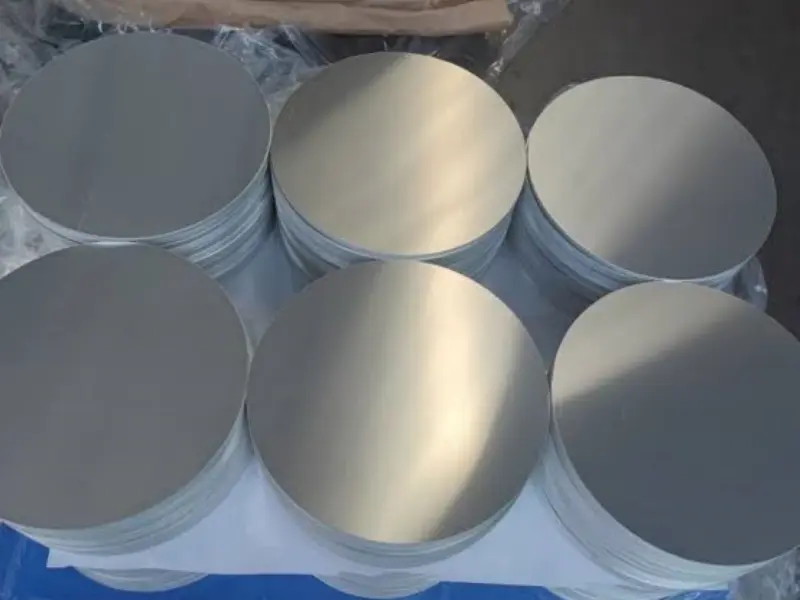
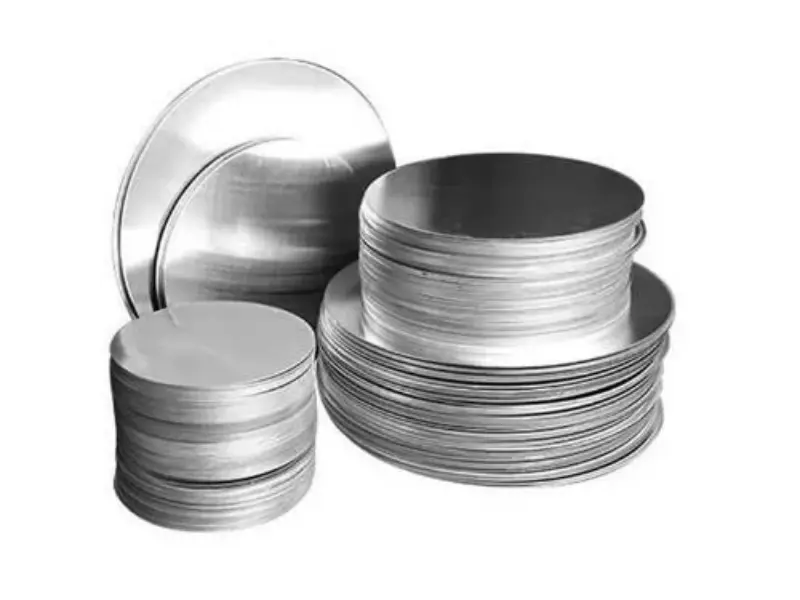
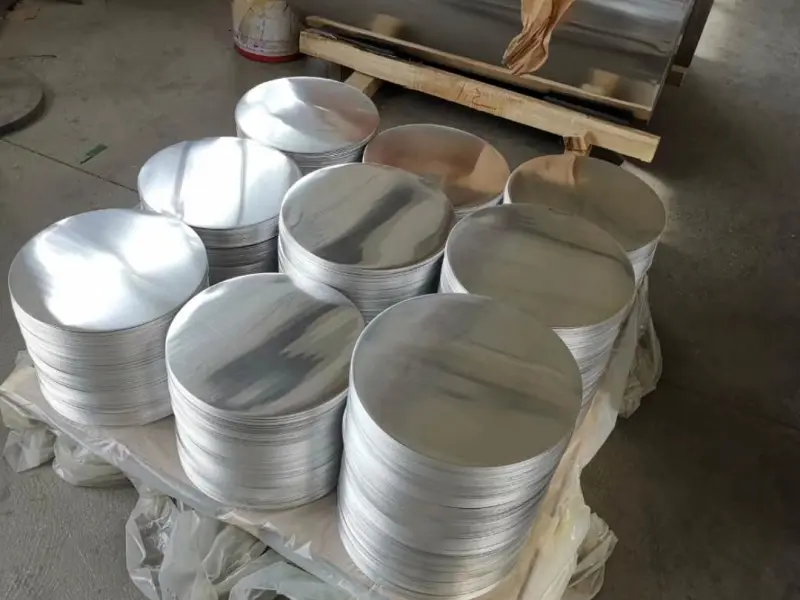
Round aluminum blanks are flat, circular pieces of aluminum used to manufacture cookware, lighting parts, signs, decorative products, industrial components, and many other items.
They are also called aluminum circle blanks, aluminum disc blanks, or round aluminum discs.

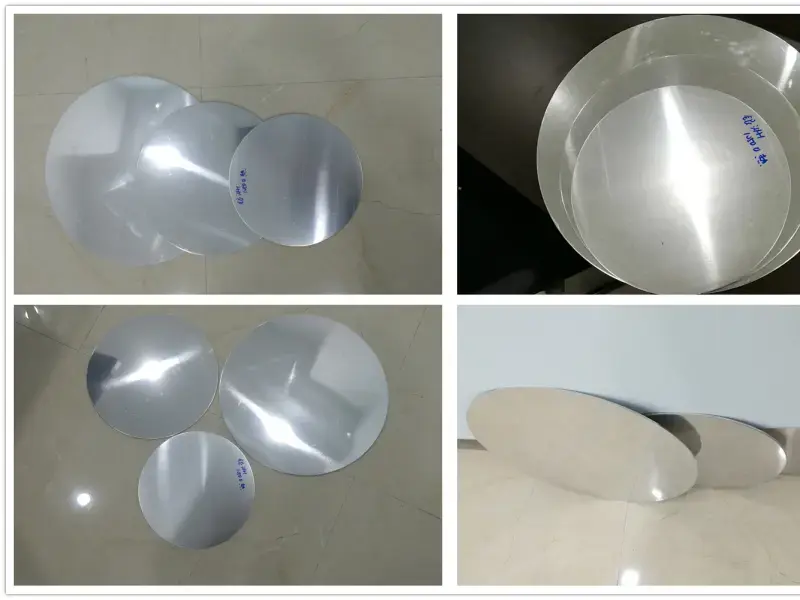
These products are available in different alloys, tempers, diameters, and thicknesses. Buyers can choose mill-finish blanks for further processing or finished blanks with polished, anodized, or coated surfaces.
For manufacturers, wholesalers, and metal fabricators, choosing the right round aluminum blank is important. The alloy affects formability and strength.
The thickness and diameter affect the final product design. Surface quality also matters when the blank will be anodized, painted, polished, or used as a visible part.
What Are Round Aluminum Blanks?

Round aluminum blanks are circular pieces cut from aluminum sheet, strip, or coil. They are usually produced by punching, stamping, laser cutting, or other cutting methods.
The blanks can be used directly or processed into finished parts through deep drawing, spinning, stamping, machining, polishing, or coating.
Unlike rectangular aluminum sheets, round blanks are supplied in a circular shape. This can reduce material waste when the final product is also round.
| Product Detail | Description |
|---|---|
| Product name | Round aluminum blanks |
| Alternative names | Aluminum circle blanks, aluminum disc blanks, aluminum round discs |
| Main shape | Flat circular disc |
| Common alloys | 1050, 1060, 1070, 1100, 3003, 3004, 5052 |
| Common tempers | O, H12, H14, H16, H18, H24 |
| Typical thickness | 0.3–6.0 mm, with other options available |
| Typical diameter | 80–1,500 mm, depending on production requirements |
| Surface finishes | Mill finish, polished, anodized, coated |
| Main processes | Punching, stamping, deep drawing, spinning, machining |
Specifications depend on the product design and production method. Not every alloy, temper, thickness, and diameter combination is available from every manufacturer.
Popular Types of Round Aluminum Blanks
Different round aluminum blanks serve different production needs. Some are designed for deep drawing, while others are selected for decorative finishes or higher strength.
Deep Drawing Aluminum Circle Blanks
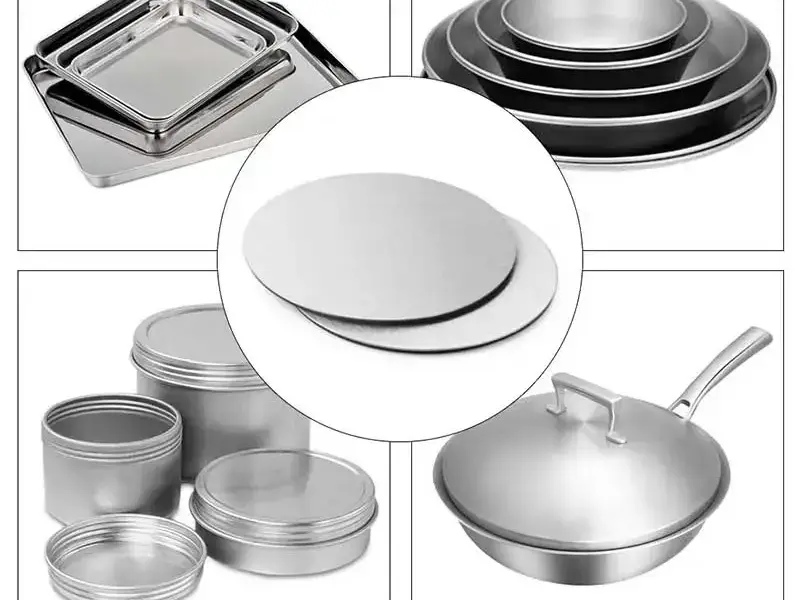
Deep drawing aluminum blanks are used to make hollow products from flat circular material. The aluminum is pressed into a die to create a pot, pan, container, or other formed component.
Alloy 1050, 1060, 1100, and 3003 are common options, depending on the depth and shape of the final part.
| Parameter | Common Options |
|---|---|
| Alloy | 1050, 1060, 1100, 3003 |
| Temper | O |
| Thickness | 0.5–4.0 mm |
| Diameter | 100–800 mm |
| Surface | Mill finish |
| Main feature | Good formability with suitable material selection |
The O temper is soft and often suitable for forming. However, the best alloy depends on the drawing depth, die design, lubrication, and required product strength.
Aluminum Blanks for Cookware
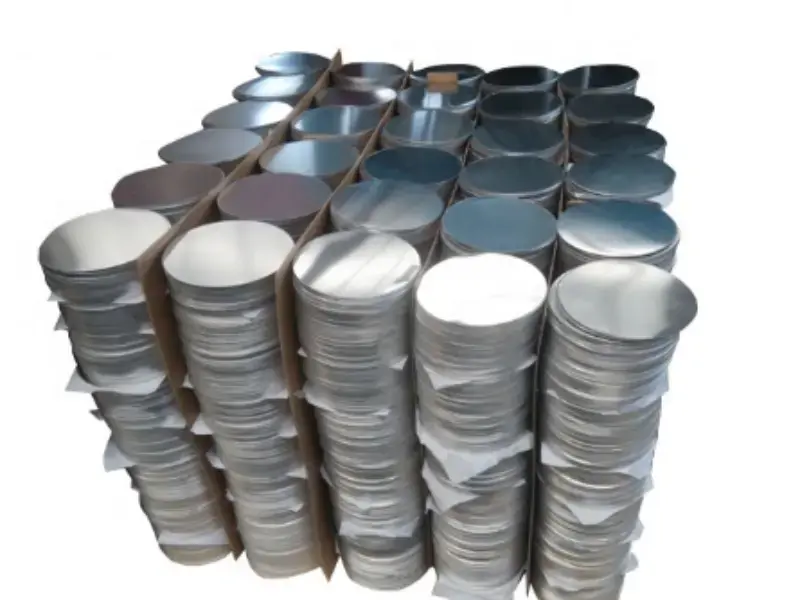
Cookware manufacturers use round aluminum blanks to produce frying pans, stockpots, saucepans, pressure cooker bodies, and other kitchen products.
The blanks may be deep drawn, spun, or pressed into the required shape. Some products receive a non-stick coating, anodized finish, or polished surface after forming.
Typical product options include:
- 1050 O aluminum circle blanks for highly formable products
- 1060 O aluminum blanks for general cookware forming
- 1100 O aluminum discs for household products
- 3003 O aluminum circles for selected cookware applications
- Thicker blanks for larger or deeper cookware bodies
| Cookware Product | Example Blank Diameter | Example Thickness |
|---|---|---|
| Small saucepot | 120–180 mm | 0.8–1.5 mm |
| Frying pan | 180–320 mm | 1.5–3.0 mm |
| Stockpot | 250–500 mm | 1.5–4.0 mm |
| Pressure cooker body | 180–350 mm | 2.0–4.0 mm |
| Small kitchen container | 100–220 mm | 0.5–1.5 mm |
These are indicative ranges, not universal cookware dimensions. The final blank size must account for drawing depth, wall thickness, trimming allowance, and product design.
Spinning Aluminum Round Blanks
Aluminum spinning is a forming process that shapes a flat circular blank over a rotating mandrel. It is suitable for producing round, hollow, or symmetrical parts.
Common applications include:
- Lamp shades and lighting reflectors
- Decorative bowls
- Metal covers
- Round housings
- Industrial containers
- Ventilation components
| Parameter | Common Options |
|---|---|
| Alloy | 1050, 1060, 1100, 3003 |
| Temper | O or another temper suited to forming |
| Thickness | 0.5–3.0 mm |
| Diameter | 100–1,000 mm |
| Main requirement | Stable surface quality and suitable formability |
For spinning applications, buyers should confirm the alloy, temper, grain direction where relevant, and surface condition with the manufacturer.
Stamping Aluminum Disc Blanks
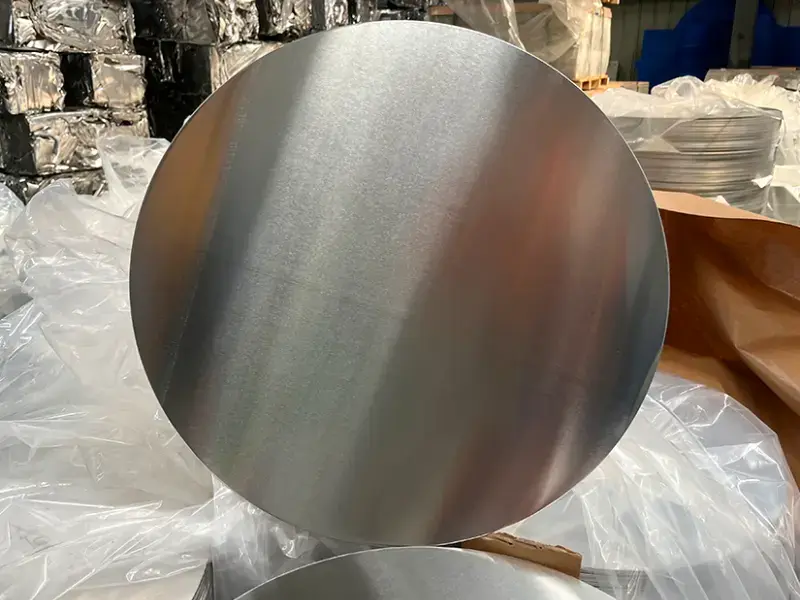
Stamping blanks are used for parts made through pressing, punching, or forming operations. The finished component may be flat or have a shallow formed shape.
Typical applications include electrical covers, round mounting plates, lighting parts, signs, and mechanical components.
| Feature | Typical Choice |
|---|---|
| Alloy | 1050, 1100, 3003, 5052 |
| Temper | O, H12, H14, H24, depending on forming needs |
| Thickness | 0.5–5.0 mm |
| Diameter | 50–800 mm |
| Cutting method | Punching, stamping, or laser cutting |
If the part has holes, slots, or special edges, the blank may require additional punching or machining after the initial cutting process.
Polished Aluminum Round Blanks
Polished round blanks are designed for products where surface appearance matters. They may be used for decorative panels, reflectors, display parts, and visible equipment components.
The finish can be specified as bright, mirror-like, or mechanically polished, depending on the product.
| Item | Options |
|---|---|
| Alloy | 1050, 1060, 1100, or other suitable grades |
| Temper | O, H14, or another agreed temper |
| Thickness | 0.5–3.0 mm |
| Diameter | 80–600 mm |
| Surface | Bright, polished, or mirror finish |
| Main concern | Surface scratches, flatness, and finish consistency |
A polished surface does not automatically mean the product is suitable for deep drawing. For formed decorative parts, confirm that the finish can withstand the required forming process.
Anodized Aluminum Round Blanks
Anodized aluminum blanks have an electrochemically formed oxide layer. This finish can improve surface durability and provide a decorative appearance.
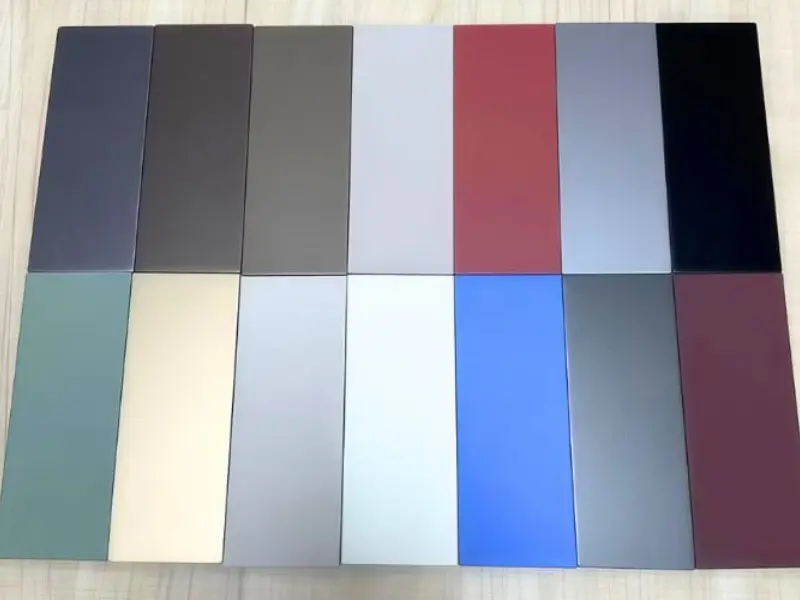
They are used for selected nameplates, decorative components, lighting parts, and equipment covers.
Common options include silver, black, and other colors, depending on the anodizing process.
For blanks that will undergo deep drawing or severe forming, discuss the processing sequence with the supplier. Anodizing before forming may not be suitable for every application because forming can damage the finished surface.
Coated Aluminum Round Blanks


Coated aluminum blanks have a paint or other coating layer. They can be used for decorative products, signs, household items, and selected formed components.
| Coating Type | Main Feature | Typical Use |
|---|---|---|
| Polyester paint | Available in many colors | Decorative products and signs |
| PVDF coating | Often selected for demanding outdoor appearance requirements | Architectural components |
| Clear coating | Provides a transparent surface layer | Selected decorative products |
| Colored coating | Supports product-specific colors | Household and display parts |
For products that require stamping or deep drawing, coating flexibility and adhesion should be confirmed before production.
Round Aluminum Blanks by Alloy and Temper
Alloy selection affects formability, strength, corrosion resistance, and surface quality. Temper affects the mechanical condition of the material and its suitability for forming.
Compare Common Aluminum Alloys
| Alloy | Key Properties | Typical Applications |
|---|---|---|
| 1050 | High aluminum content, good formability and corrosion resistance | Deep drawing, household products, general blanks |
| 1060 | Good formability and conductivity | Cookware components, lighting parts, general discs |
| 1070 | High aluminum content and good conductivity | Selected electrical and specialty components |
| 1100 | Good workability and corrosion resistance | Household items, containers, formed parts |
| 3003 | Manganese-alloyed, good formability and strength for many general uses | Cookware, formed parts, industrial components |
| 3004 | Higher strength than many commercially pure grades; used for selected drawn products | Containers and cookware-related parts |
| 5052 | Higher strength and good corrosion resistance | Equipment covers, stronger formed parts, industrial components |
The best alloy depends on the forming operation and final product. A high-strength alloy is not always the best choice for deep drawing. A highly formable alloy may be more suitable when the part needs a deep shape with fewer forming defects.
1050 vs. 1060 Round Aluminum Blanks
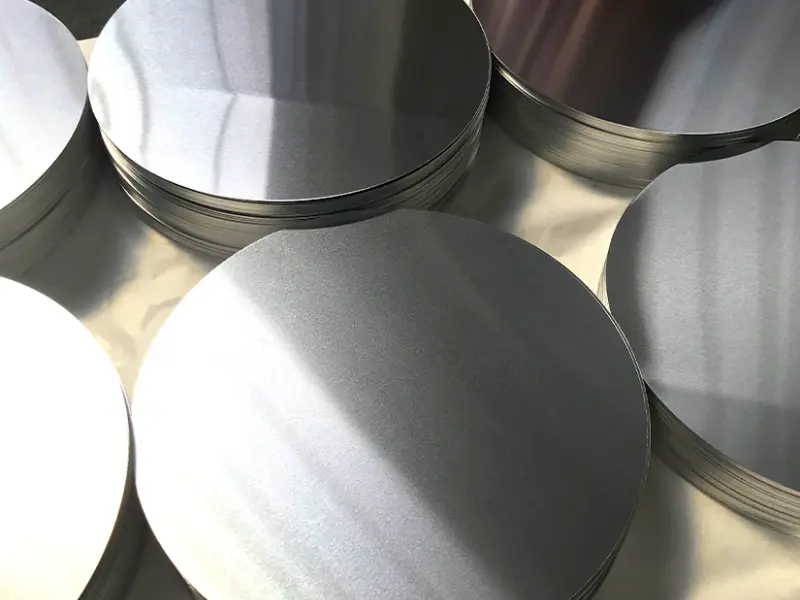
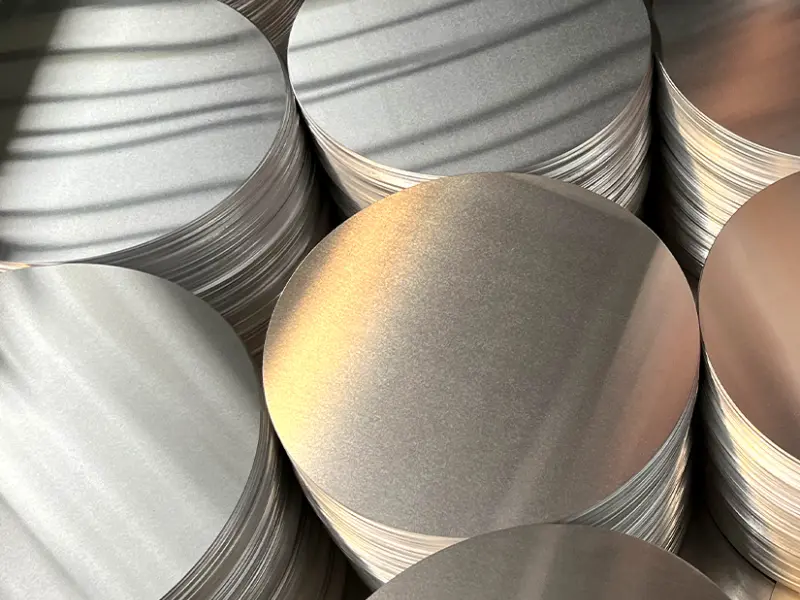
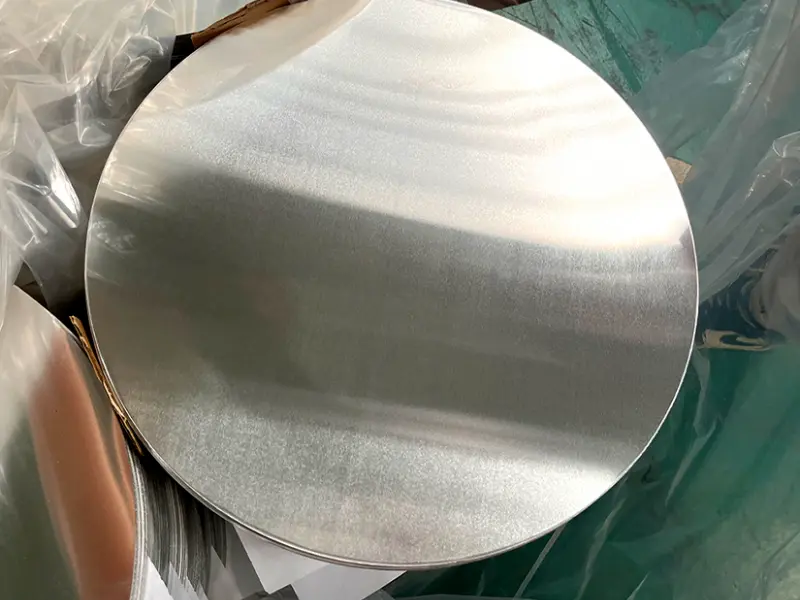
Both 1050 and 1060 Round Aluminum Blanks are commercially pure aluminum grades. They offer good formability and corrosion resistance.
| Comparison | 1050 | 1060 |
|---|---|---|
| Aluminum content | At least 99.5% | At least 99.6% |
| Formability | Good | Good |
| Electrical conductivity | Good | Generally slightly higher due to purity |
| Common use | General forming and household products | General forming and selected conductive parts |
| Selection factor | Product requirements and availability | Product requirements and availability |
For cookware or deep-drawn parts, alloy purity alone does not determine performance. Temper, grain structure, thickness consistency, and tooling also matter.
1100 vs. 3003 Aluminum Blanks


| Comparison | 1100 | 3003 |
|---|---|---|
| Alloy family | 1xxx series | 3xxx series |
| Main alloying element | Commercially pure aluminum with small additions | Manganese |
| Formability | Good | Good |
| Strength | Relatively low | Generally higher than 1100 |
| Common use | General formed components | Cookware, containers, and formed industrial parts |
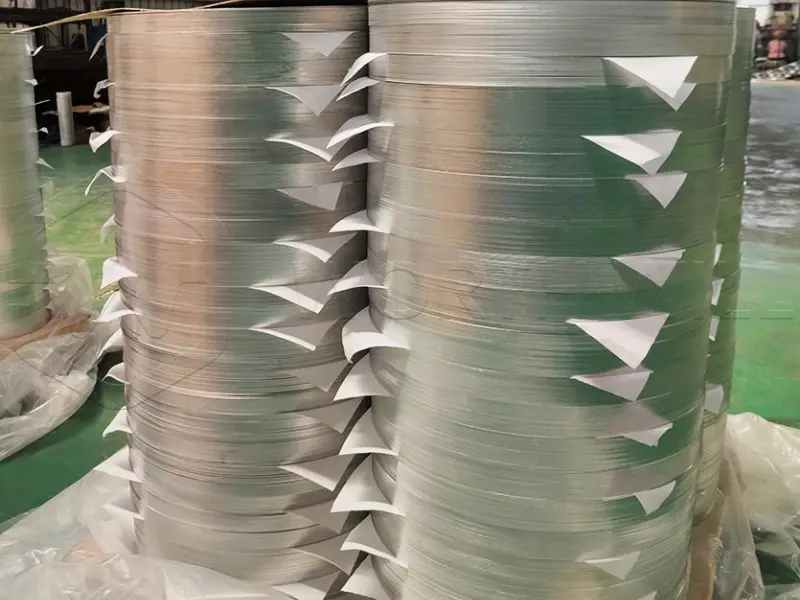
Choose 1100 when its formability and material properties match the product. Consider 3003 when the application needs a balance of formability and higher strength.
Common Temper Options
| Temper | General Meaning | Typical Considerations |
|---|---|---|
| O | Annealed, soft condition | Often selected for deep drawing and severe forming |
| H12 | Strain-hardened, quarter-hard designation | For products needing more strength than O temper |
| H14 | Strain-hardened, half-hard designation | General formed or flat components |
| H16 | Strain-hardened, three-quarter-hard designation | Higher strength than H14 in the same alloy system |
| H18 | Strain-hardened, full-hard designation | Flat parts where limited forming is needed |
| H24 | Strain-hardened and partially annealed | Common in selected sheet products and formed parts |
Temper designations are alloy-dependent. The supplier should confirm the applicable standard and mechanical properties for the exact material.
Round Aluminum Blanks: Diameter and Thickness Guide
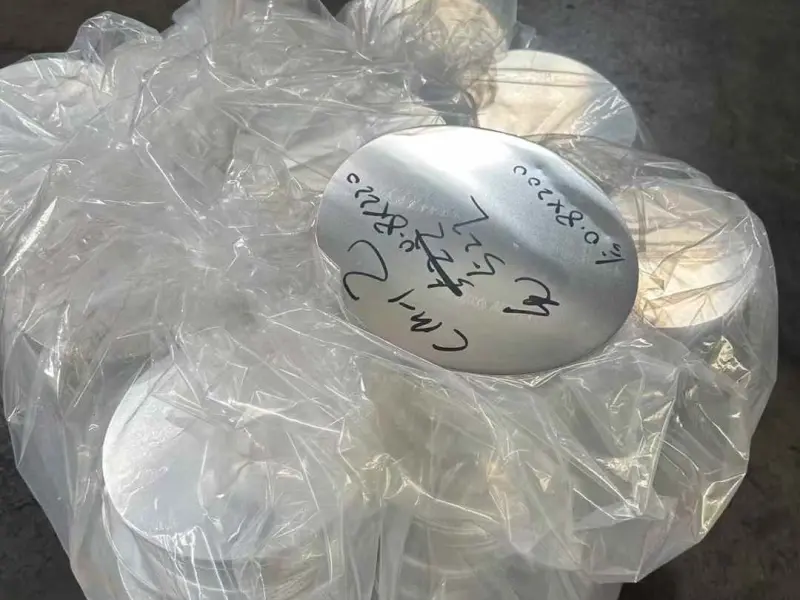
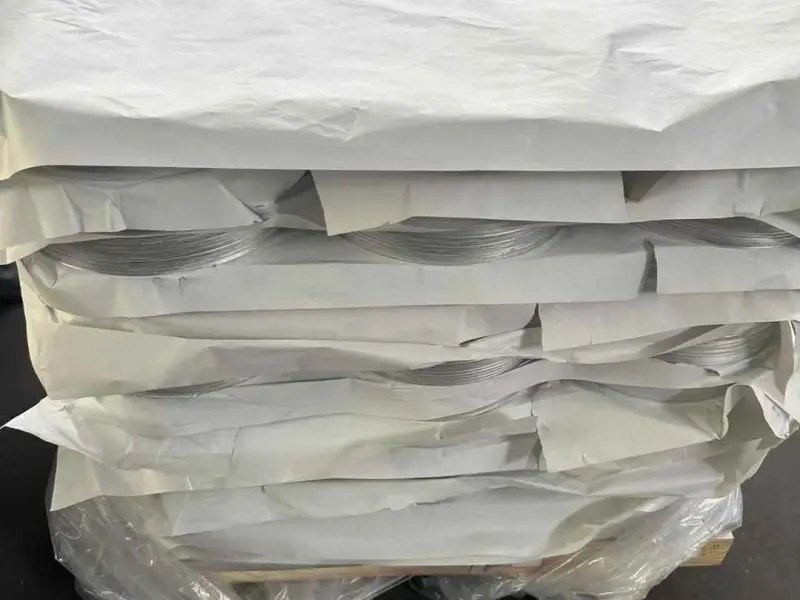
Diameter and thickness are two of the main dimensions buyers need to specify. The right combination depends on the finished part and the production process.
Common Diameter Options
| Diameter | Typical Application |
|---|---|
| 80 mm | Small decorative or industrial components |
| 100 mm | Small round covers and stamped parts |
| 120 mm | Small containers and formed components |
| 150 mm | Household parts and small cookware |
| 180 mm | Frying pan and formed-product blanks |
| 200 mm | General cookware and industrial discs |
| 250 mm | Larger cookware and covers |
| 300 mm | Large formed parts and industrial components |
| 400 mm | Large containers and equipment parts |
| 500 mm | Large spun or formed components |
| 600 mm | Specialized industrial applications |
| 800 mm | Large covers, reflectors, and custom parts |
| 1,000 mm | Large custom circular components |
| 1,200–1,500 mm | Special orders, subject to production capability |
Common Thickness Options
| Thickness | Typical Use |
|---|---|
| 0.3 mm | Thin decorative and light-duty parts |
| 0.5 mm | Small stamped parts and light covers |
| 0.8 mm | Light formed components |
| 1.0 mm | General household and industrial parts |
| 1.5 mm | Cookware and stronger formed components |
| 2.0 mm | Larger cookware and industrial components |
| 3.0 mm | Heavier formed or machined parts |
| 4.0 mm | Heavy-duty circular components |
| 5.0–6.0 mm | Selected industrial or machining applications |
These ranges are examples for product planning. Not every diameter is available at every thickness. For deep drawing, material properties and drawing depth are just as important as the nominal dimensions.
Applications of Round Aluminum Blanks Across Industries
Round blanks are used in many industries because they can be cut to size and processed into different shapes.
Cookware and Kitchenware
Cookware is one of the most familiar applications. Flat circular blanks can be pressed, spun, or drawn into kitchen products.
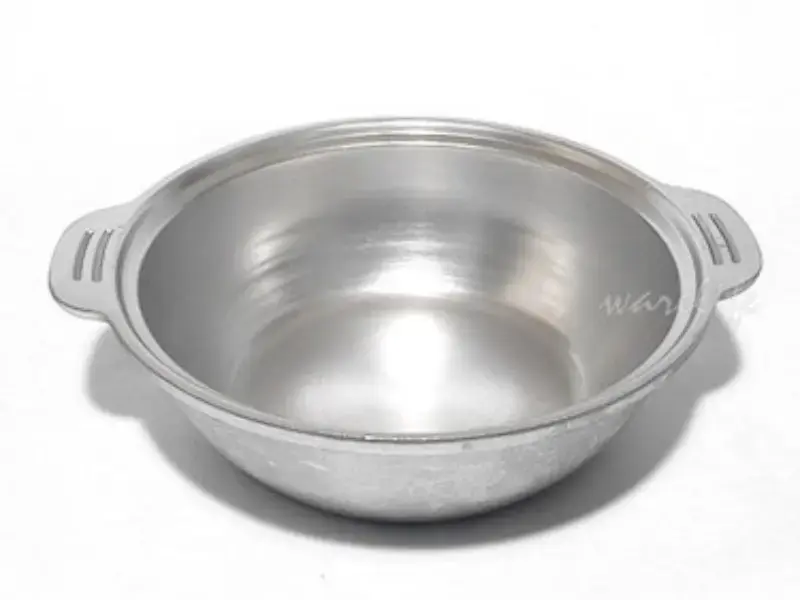
Common applications include:
- Frying pans
- Saucepan bodies
- Stockpots
- Pressure cooker bodies
- Kitchen bowls
- Food containers
- Selected lids and covers
The alloy and temper should be selected based on the depth of forming and the required product strength.
Lighting and Reflectors
Aluminum round blanks can be formed into reflectors, lamp shades, and light housings.
Typical products include:
- Industrial lighting reflectors
- Ceiling light components
- Outdoor lighting covers
- Decorative lamp shades
- Reflective discs
A smooth surface may be important when the part must reflect light evenly. Buyers should specify surface finish and any polishing requirements.
Electrical and Electronic Components
Aluminum blanks are used for selected electrical covers, mounting plates, and circular housings.
Potential applications include:
- Round equipment covers
- Mounting plates
- Heat-spreading components
- Electrical enclosures
- Conductive components where the alloy is suitable
The required conductivity, mechanical strength, insulation arrangement, and machining tolerance should be confirmed for each part.
Signage and Decorative Products
Circular aluminum blanks can be used as the base for round signs, plaques, labels, and decorative panels.

Applications include:
- Round advertising signs
- Decorative wall discs
- Nameplates
- Equipment identification plates
- Custom printed metal products
For printed products, surface preparation and coating compatibility are important. Buyers should confirm whether the blanks are intended for screen printing, digital printing, sublimation, or another process.
Automotive and Machinery Components
Round aluminum blanks can be used for certain stamped, spun, or machined parts in automotive and industrial equipment.
Examples include:
- Circular covers
- Machine guards
- Housings
- Mounting components
- Spun metal parts
- Custom brackets and discs
For load-bearing or safety-related parts, the alloy, temper, mechanical properties, and manufacturing process must meet the component specification.
HVAC and Ventilation Products
Aluminum round blanks may be formed into covers, caps, housings, and other circular ventilation components.

Potential applications include:
- Ventilation covers
- Round ducts and end caps
- Air handling components
- Reflective insulation accessories
- Equipment housings
The correct material depends on the operating environment, forming requirements, and any temperature or corrosion exposure.
How Round Aluminum Blanks Are Manufactured
The manufacturing method affects edge quality, dimensional accuracy, surface condition, and cost.
Punching and Stamping
Punching is widely used for high-volume production. A punch and die cut circular blanks from sheet or coil.
Advantages include:
- High production efficiency
- Consistent dimensions with suitable tooling
- Suitable for large quantities
- Good fit for standardized diameters
Tooling costs and die design should be considered for custom dimensions or small production runs.
Laser Cutting
Laser cutting can produce custom shapes and small batches without a dedicated blanking die.
It may be suitable for prototypes, custom circular components, and products that require different diameters. However, edge condition and production cost should be assessed for the required material thickness and volume.
Shearing and Circular Cutting
Some blanks are made by mechanical cutting or specialized circular cutting equipment. The method depends on the blank size, thickness, tolerance, and production quantity.
Deep Drawing and Spinning After Blanking
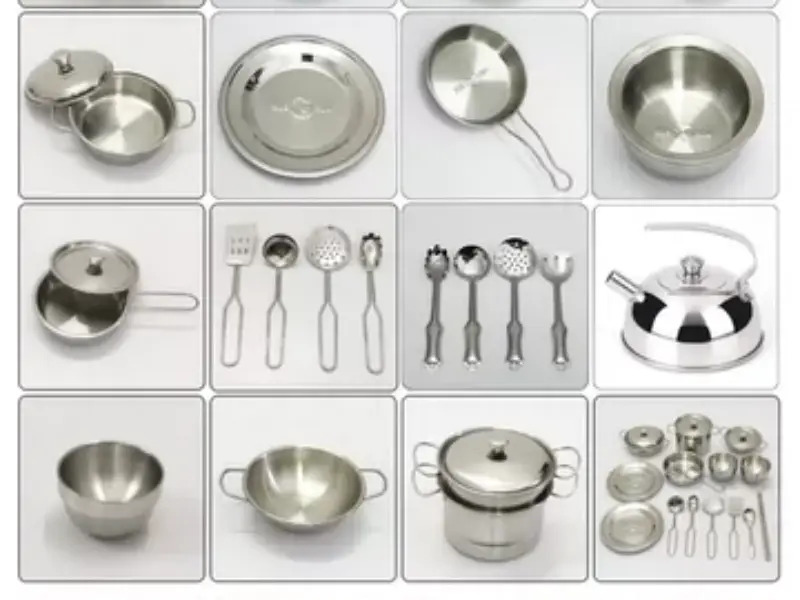
After cutting, the flat disc may undergo deep drawing or spinning to form a three-dimensional product.
For deep drawing, the blank diameter must account for the finished part geometry and trimming allowance. For spinning, the material must have suitable formability and surface quality.
Surface Quality and Tolerance Requirements
Surface quality is important when the round aluminum blank will become a visible product. Dimensional consistency is equally important for automated production.
| Quality Item | What Buyers Should Confirm |
|---|---|
| Diameter tolerance | Permitted variation in the circular dimension |
| Thickness tolerance | Applicable standard and allowable variation |
| Edge quality | Burr level and whether deburring is required |
| Flatness | Acceptable warping or surface deviation |
| Surface condition | Scratches, oil marks, oxidation, or other defects |
| Material grade | Alloy and temper identification |
| Packaging | Protection against scratches and moisture during transport |
For high-volume forming, consistent thickness and material properties can help reduce production problems. If the blanks will be anodized, polished, or printed, discuss the required surface standard before ordering.
Round Aluminum Blanks vs. Aluminum Sheets
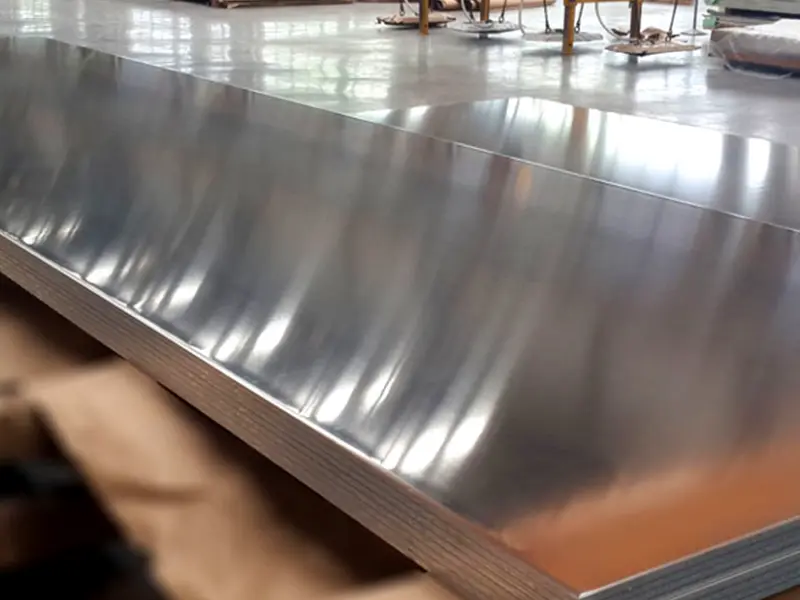
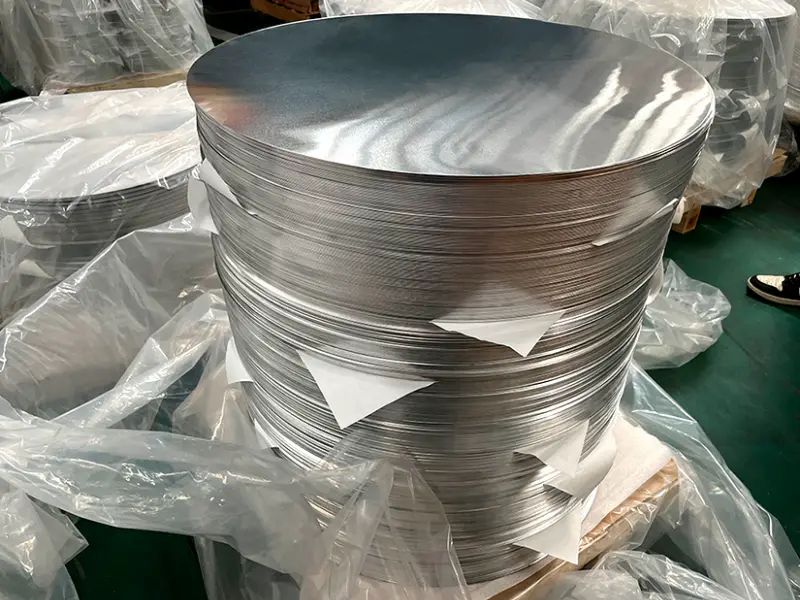
Round aluminum blanks are usually more convenient when the finished part has a circular shape. Aluminum sheets provide more flexibility when the manufacturer needs to cut multiple shapes.
| Factor | Round Aluminum Blanks | Aluminum Sheets |
|---|---|---|
| Shape | Pre-cut circular | Rectangular sheet |
| Processing | Ready for forming or machining | Requires cutting into blanks |
| Material waste | Can be lower for standardized circular parts | Depends on cutting layout |
| Custom shapes | Limited to the supplied blank unless further processed | Flexible for different shapes |
| Best suited for | Cookware, discs, round covers | General fabrication and mixed components |
| Production planning | Easy for repeat circular parts | Useful for varied part sizes |
For high-volume circular parts, ready-cut blanks may reduce cutting work. For small batches or mixed shapes, buying sheet material may offer greater flexibility.
Round Aluminum Blanks vs. Stainless Steel Blanks
Aluminum and stainless steel have different weight, strength, corrosion, and forming characteristics.
| Factor | Aluminum Blanks | Stainless Steel Blanks |
|---|---|---|
| Weight | Lower density | Higher density |
| Thermal conductivity | Generally high | Usually lower than aluminum |
| Corrosion resistance | Good in many environments, depending on alloy | Good, depending on grade and environment |
| Strength | Varies by alloy and temper | Varies by grade and condition |
| Forming | Good with suitable alloy and temper | Good with suitable grade and tooling |
| Typical applications | Cookware, reflectors, covers, formed parts | Durable cookware, industrial parts, corrosion-resistant components |
The best material depends on the finished product. Compare material thickness, forming performance, service conditions, and total manufacturing cost rather than choosing only by weight or price.
How to Order Custom Round Aluminum Blanks
A clear purchase specification helps reduce delays and material mismatches.
Information to Include in Your Inquiry
- Alloy: for example, 1050, 1060, 1100, 3003, or 5052.
- Temper: such as O, H12, H14, or H24.
- Diameter: specify in millimeters.
- Thickness: specify in millimeters.
- Quantity: number of pieces or total weight.
- Surface finish: mill finish, polished, anodized, or coated.
- Processing needs: deep drawing, spinning, stamping, machining, or printing.
- Tolerance: diameter, thickness, flatness, and edge requirements.
- Packaging: specify whether interleaving, protective film, or export packing is needed.
Example Product Specification
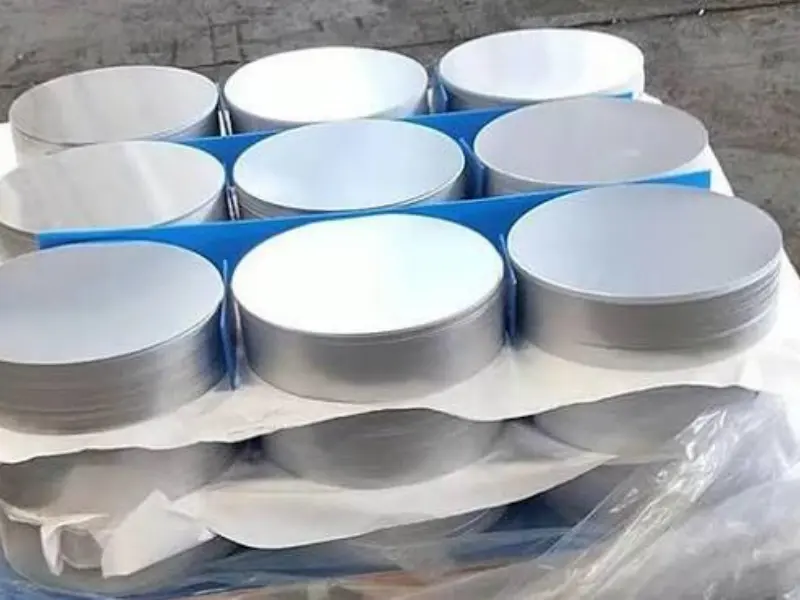
| Item | Example Requirement |
|---|---|
| Product | Round aluminum blanks |
| Alloy | 1050 |
| Temper | O |
| Diameter | 200 mm |
| Thickness | 1.5 mm |
| Surface | Mill finish |
| Edge | Punched, with burr requirements agreed |
| Quantity | 10,000 pieces |
| Application | Deep-drawn cookware |
| Documents | Material certificate, as agreed |
This is an example specification only. The actual dimensions and alloy should be matched to the final product design.
Frequently Asked Questions About Round Aluminum Blanks
What are round aluminum blanks used for?
Round aluminum blanks are used to manufacture cookware, lighting reflectors, decorative signs, equipment covers, industrial housings, and other circular components. They can be stamped, deep drawn, spun, machined, polished, or coated.
Which aluminum alloy is best for round blanks?
There is no single best alloy for all applications. Alloys 1050, 1060, and 1100 are common choices for general forming. Alloy 3003 offers a useful balance of formability and strength for many applications. Alloy 5052 may suit parts that need higher strength or specific corrosion performance.
What is the best temper for deep drawing aluminum blanks?
O temper is often selected for deep drawing because it is soft and formable. The correct temper still depends on the alloy, drawing depth, die design, and final mechanical requirements.
What diameters are available for round aluminum blanks?
Common diameters include 80, 100, 120, 150, 180, 200, 250, 300, 400, and 500 mm. Larger custom diameters may be possible, depending on the manufacturer’s equipment and material specifications.
What thickness should I choose for aluminum circle blanks?
Thickness depends on the finished part, forming depth, required strength, and manufacturing process. Light-duty components may use thinner material, while cookware and industrial parts may require thicker blanks. The part drawing should guide the final selection.
Are round aluminum blanks suitable for cookware?
Yes. Aluminum circle blanks are widely used in cookware production. Suitable alloys and tempers can be pressed, spun, or deep drawn into frying pans, pots, and other kitchen products. The finished cookware must also meet applicable food-contact and product safety requirements.
Can round aluminum blanks be supplied with a polished finish?
Yes, polished or bright-finish options may be available. Buyers should specify the required surface appearance and confirm that the finish is suitable for any later forming, coating, or printing process.
Can I order custom diameter aluminum blanks?
Many manufacturers offer custom diameters. Provide the required diameter, thickness, alloy, temper, tolerance, quantity, and intended application so the supplier can confirm production feasibility.
What is the difference between aluminum discs and round aluminum blanks?
The terms are often used for similar circular aluminum products. Some suppliers use “aluminum discs” for general circular blanks, while “round aluminum blanks” may emphasize material intended for further processing. The exact meaning depends on the supplier’s product range.
How are aluminum blanks packed for export?
Packing depends on blank size, thickness, surface finish, and shipping method. Common methods include stacked pieces with protective paper or film, secured bundles, and wooden cases or pallets. Polished and coated blanks need suitable surface protection.
Are round aluminum blanks available in 5052 alloy?
Yes, 5052 round blanks may be available for applications that need higher strength and good corrosion resistance. However, 5052 is not automatically the best option for deep drawing. The required forming operation and temper should be reviewed before ordering.
How can I reduce waste when buying round aluminum blanks?
Choose a blank diameter that matches the finished part design, account for forming and trimming allowances, and select a cutting method suited to the order quantity. For repeated circular parts, pre-cut blanks can reduce in-house cutting work and simplify production.
Find the Right Round Aluminum Blanks for Your Production
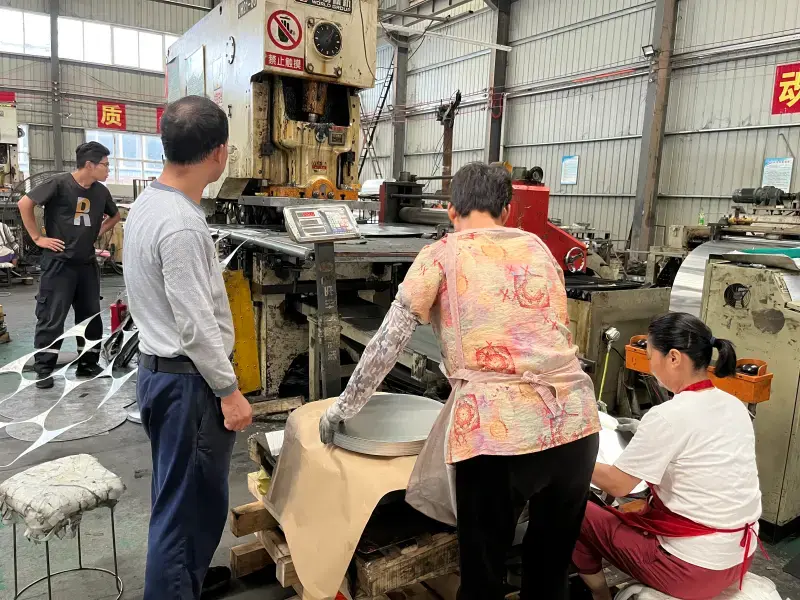
Round aluminum blanks are available in a wide range of alloys, tempers, diameters, thicknesses, and finishes. The right specification depends on whether the final product will be deep drawn, spun, stamped, machined, polished, or coated.
For cookware manufacturers, formability and thickness consistency are key considerations. For lighting and decorative products, surface quality may be more important. For industrial components, strength, tolerance, and service conditions may guide the selection.
When requesting a quotation, provide the product drawing or intended application together with the alloy, temper, diameter, thickness, surface finish, quantity, and tolerance requirements. This helps the supplier recommend a suitable round aluminum blank for your production process.